Meditation could slash the risk of heart attack and stroke (and make you less angry) — Daily Mail

November 13, 2012

Meditation could slash the risk of heart attack and stroke (and make you less angry)

  • Twice daily mantra meditation, where a sound is made repeatedly, may also reduce blood pressure

By Anna Hodgekiss

PUBLISHED: 15:03 EST, 13 November 2012 | UPDATED: 15:03 EST, 13 November 2012

Twice daily mantra meditation, which involves making a sound repeatedly, lowers death rates from heart attack and strokes

Meditation helps reduce the risk of suffering a heart attack or a stroke, according to a new study.

Researchers found that Transcendental Meditation, made popular by the Beatles during the flower power era of the 1960s, could cut heart attack rates by half.

This type of meditation, which involves making a sound repeatedly, lowers death rates from heart attack and strokes.

In the new study, researchers found that people with heart disease who practised transcendental meditation for 20 minutes twice a day were 48 per cent less likely to have a heart attack, stroke or die from all causes compared with those who attended a health education class over more than five years.

Those practicing meditation also lowered their blood pressure and reported less stress and anger.

And the more regularly patients meditated, the greater their survival, said researchers who conducted the study at the Medical College of Wisconsin.

Lead researcher Dr Robert Schneider, director of the Institute for Natural Medicine and Prevention in Iowa, said: ‘We hypothesised that reducing stress by managing the mind-body connection would help improve rates of this epidemic disease.

‘It appears that transcendental meditation is a technique that turns on the body’s own pharmacy – to repair and maintain itself.’

For the study, researchers randomly assigned 201 people – with an average age of 59 – to participate in a transcendental meditation stress-reducing programme or a health education class about lifestyle modification for diet and exercise.

Transcendental Meditation was made popular by the Beatles during the flower power era of the 1960s

The average BMI of the people involved was 32 – classed as obese.

Both groups showed beneficial changes in exercise and alcohol consumption, and the meditation group showed a trend towards reduced smoking.

Although there were no significant differences between the groups in weight, exercise or diet, regular meditation was correlated with reduced death, heart attack and stroke.

Dr Schneider added: ‘Transcendental meditation may reduce heart disease risks for both healthy people and those with diagnosed heart conditions.

‘The research on transcendental meditation and cardiovascular disease is established well enough that doctors may safely and routinely prescribe stress reduction for their patients with this easy to implement, standardised and practical programme.’

The findings were published in the journal Circulation: Cardiovascular Quality and Outcomes.

Follow us: @MailOnline on Twitter | DailyMail on Facebook

More news coverage: Transcendental Meditation May Lower Heart Risk: WebMD Heart Disease Health Center and Transcendental Meditation may reduce death, heart attack and stroke in heart patients—AHA and Science Codex: Meditation may reduce death, heart attack and stroke in heart patients

The Daily Mail does not explain Transcendental Meditation properly. We do not repeatedly make a sound. It is a silent mental practice of experiencing the thought process at more refined levels until the mind transcends thought and arrives at an inner state of restful alertness. This natural level of deep rest releases stress and allows the body to repair itself resulting in improved health.

Transcendental Meditation May Lower Heart Risk: WebMD Heart Disease Health Center

November 13, 2012

Heart Disease Health Center

Transcendental Meditation May Lower Heart Risk

By 
WebMD Health News
Reviewed by Louise Chang, MD

Nov. 13, 2012 — Transcendental Meditation is good for the heart, according to a new study.

The study was funded by the National Institutes of Health. It found that African-Americans with heart disease who regularly practiced TM reduced their risk of death, heart attack, and stroke by 48%.

Researcher Robert Schneider, MD, says those results should apply to the general population. Schneider is director of the Institute for Natural Medicine and Prevention at the Maharishi University of Management (MUM) in Fairfield, Iowa.

“This taps into a universal physical phenomenon that is not related to race, age, culture, etc.,” Schneider says. “This state of restful alertness has restorative benefits for everyone. It’s a way to utilize the body’s own internal pharmacy.”

TM is a trademarked form of meditation. It requires training by a certified teacher to “settle inward” to a place called “transcendental consciousness.” The technique is one of the two pillars underlying education at the Maharishi University of Management, according to the school’s web site.

Health Benefits of TM

The study was a collaboration between MUM and the Medical College of Wisconsin in Milwaukee. Researchers recruited 201 African-American men and women whose average age was 59 and who were generally considered obese.

All of the participants previously had been diagnosed with heart disease. Many of them were current smokers. African-Americans, says Schneider, have a 35% higher risk of dying from heart disease than the general population.

The people in the study were divided into two groups. While both groups continued to receive standard care and medication for heart disease, the study group attended a seven-step course in TM. The people in that group were then instructed to meditate twice a day for 20 minutes for the duration of the study.

Schneider says that the program was standard for TM practitioners and had not been modified for the study.

The comparison group received conventional health education. The people in that group were told to spend at least 20 minutes a day on heart-healthy activities.

Members of both groups were followed for as long as nine years.

In addition to reducing the risk of death, heart attack, and stroke by nearly half, TM also significantly lowered systolic blood pressure, the top number in a blood pressure reading.

Anger control and overall anger also improved. Those who entered the study with either high blood pressure or high stress benefited the most from meditation.

“What this is saying is that mind-body interventions can have an effect as big as conventional medications, such as statins,” says Schneider.

The TM group was expected to meditate 14 times per week. But the researchers found that on average participants only practiced the technique 8.5 times.

They would have done well to stick to their instructions. Those who followed the study guidelines more strictly, Schneider says, had even greater benefits. Their risk reduction was 66%.

Second Opinion

“In cardiology, we are always impressed when we see any effective intervention,” says cardiologist Michael Shapiro, DO, of Oregon Health and Science University in Portland. “But to actually show a reduction in overall mortality — that is really impressive.”

Shapiro, who reviewed the study for WebMD, says that its design appears scientifically rigorous and that its results are likely valid. But he says the study was too small to draw any definite conclusions.

“I am enthusiastic and cautiously optimistic,” says Shapiro. “Overall, I like the study, and it provides justification for a much larger study.”

Shapiro, who practices a different form of meditation, also says that more needs to be learned about what drives these results. He says the reduction in blood pressure, while significant, is likely not enough to account for all of the study’s positive outcomes.

“Meditation can do a whole host of positive things: reduce anger and stress, encourage happiness,” he says. “Who is to say that these are not the most important factors? This study can’t get at the mechanism involved. We don’t know how it works.”

A Cost-Effective Means of Prevention

Transcendental Meditation, says Schneider, is “a simple, effortless, and natural way to settle down to a quiet state of mind.”

But it is not free. According to the Maharishi Foundation USA’s web site, the seven-part introductory TM course that the study participants attended costs $1,500. Financial aid and sliding scale fees are available to those who can’t afford the full amount.

To Schneider, this study shows that TM is a cost-effective means of prevention.

“This is the strongest study ever done on meditation or any mind-body intervention for cardiovascular disease,” he says.

In July 2011, the study was pulled from publication in Archives of Internal Medicine, a last-minute decision made when one of the journal’s reviewers raised questions about the data. Schneider says that in the intervening time, the data was re-analyzed. Also, new data was added and the study underwent an independent review.

“This is the new and improved version,” Schneider says. It appears in the current issue of Circulation: Cardiovascular Quality and Outcomes.

Note: Check November 20 when the next issue comes out in print: http://circoutcomes.ahajournals.org.

Also see: Transcendental Meditation may reduce death, heart attack and stroke in heart patients—AHA

Science Codex: Meditation may reduce death, heart attack and stroke in heart patients

Meditation could slash the risk of heart attack and stroke (and make you less angry) — Daily Mail

Transcendental Meditation may reduce death, heart attack and stroke in heart patients—AHA

November 13, 2012

Meditation may reduce death, heart attack and stroke in heart patients

November 13, 2012

Study Highlights:

  • Twice-a-day Transcendental Meditation helped African Americans with heart disease reduce risk of death, heart attack and stroke.
  • Meditation helped patients lower their blood pressure, stress and anger compared with patients who attended a health education class.
  • Regular Transcendental Meditation may improve long-term heart health.

DALLAS, Nov. 13, 2012 — African Americans with heart disease who practiced Transcendental Meditation regularly were 48 percent less likely to have a heart attack, stroke or die from all causes compared with African Americans who attended a health education class over more than five years, according to new research published in the American Heart Association journal Circulation: Cardiovascular Quality and Outcomes.

Those practicing meditation also lowered their blood pressure and reported less stress and anger. And the more regularly patients meditated, the greater their survival, said researchers who conducted the study at the Medical College of Wisconsin in Milwaukee.

Robert Schneider, M.D., director of the Institute for Natural Medicine and Prevention and dean of Maharishi College of Perfect Health in Fairfield, Iowa. Courtesy MAPI

“We hypothesized that reducing stress by managing the mind-body connection would help improve rates of this epidemic disease,” said Robert Schneider, M.D., lead researcher and director of the Institute for Natural Medicine and Prevention in Fairfield, Iowa. “It appears that Transcendental Meditation is a technique that turns on the body’s own pharmacy — to repair and maintain itself.”

For the study, researchers randomly assigned 201 people to participate in a Transcendental Meditation stress-reducing program or a health education class about lifestyle modification for diet and exercise.

  • Forty-two percent of the participants were women, average age 59, and half reported earning less than $10,000 per year.
  • Average body mass index was about 32, which is clinically obese.
  • Nearly 60 percent in both treatment groups took cholesterol-lowering drugs; 41 percent of the meditation group and 31 percent of the health education group took aspirin; and 38 percent of the meditation group and 43 percent of the health education group smoked.

Those in the meditation program sat with eyes closed for about 20 minutes twice a day practicing the technique, allowing their minds and bodies to rest deeply while remaining alert.

 Participants in the health education group were advised, under the instruction of professional health educators, to spend at least 20 minutes a day at home practicing heart-healthy behaviors such as exercise, healthy meal preparation and nonspecific relaxation.
Researchers evaluated participants at the start of the study, at three months and every six months thereafter for body mass index, diet, program adherence, blood pressure and cardiovascular hospitalizations. They found:
  • There were 52 primary end point events, which included death, heart attack or stroke. Of these, 20 events occurred in the meditation group and 32 in the health education group.
  • Blood pressure was reduced by 5 mm Hg and anger decreased significantly among Transcendental Meditation participants compared to controls.
  • Both groups showed beneficial changes in exercise and alcohol consumption, and the meditation group showed a trend towards reduced smoking. Although, there were no significant differences between the groups in weight, exercise or diet.
  • Regular meditation was correlated with reduced death, heart attack and stroke.

Cardiovascular disease is the leading cause of death worldwide. Death from heart disease is about 50 percent higher in black adults compared to whites in the United States. Researchers focused on African Americans because of health disparities in America.

“Transcendental Meditation may reduce heart disease risks for both healthy people and those with diagnosed heart conditions,” said Schneider, who is also dean of Maharishi College of Perfect Health in Fairfield, Iowa.

“The research on Transcendental Meditation and cardiovascular disease is established well enough that physicians may safely and routinely prescribe stress reduction for their patients with this easy to implement, standardized and practical program,” he said.

Co-authors are: Theodore Kotchen, M.D.; John W. Salerno, Ph.D.; Clarence E. Grim, M.D.; Sanford I. Nidich, Ed.D.; Jane Morley Kotchen, M.D., M.P.H.; Maxwell V. Rainforth, Ph.D.; Carolyn Gaylord-King, Ph.D.; and Charles N. Alexander, Ph.D. Author disclosures are available on the manuscript.

The National Heart, Lung and Blood Institute funded the study.

Follow @HeartNews on Twitter for the latest heart and stroke news.

###

Statements and conclusions of study authors published in American Heart Association scientific journals are solely those of the study authors and do not necessarily reflect the association’s policy or position. The association makes no representation or guarantee as to their accuracy or reliability. The association receives funding primarily from individuals; foundations and corporations (including pharmaceutical, device manufacturers and other companies) also make donations and fund specific association programs and events. The association has strict policies to prevent these relationships from influencing the science content. Revenues from pharmaceutical and device corporations are available at www.heart.org/corporatefunding .

Circulation: Cardiovascular Quality and Outcomes. 2012; 5: 750-758. Published online before print November 13, 2012, doi: 10.1161/ CIRCOUTCOMES.112.967406. November 2012 issue. Stress Reduction in the Secondary Prevention of Cardiovascular Disease: Randomized, Controlled Trial of Transcendental Meditation and Health Education in Blacks. Abstract | Full Text | PDF

Also posted on EurekAlert! http://www.eurekalert.org/pub_releases/2012-11/aha-mmr110812.php

Also see: Transcendental Meditation May Lower Heart Risk: WebMD Heart Disease Health Center

Science Codex: Meditation may reduce death, heart attack and stroke in heart patients

Meditation could slash the risk of heart attack and stroke (and make you less angry) — Daily Mail

TIME Strongest Study Yet Shows Meditation Can Lower Risk of Heart Attack and Stroke

Excellent article by Tom Jacobs on Meditation: Strong Preventative Medicine for Heart Patients

AHA Newsletter: News from the Heart: Update from CEO Nancy Brown for AHA Volunteers (11/15/12) features Dr. Schneider’s study, “meditation reduces cardiovascular risk”

And many major articles around the world, including reports by CNN, CBS, ABC, and NBC.

I also included a review of some of the global news coverage and the report in our university paper the Review: New Study Shows Reduced Mortality, Heart Attack, Stroke (Vol. 28, #6, November 28, 2012). You can also read it in this news post: Results of American Heart Association publishing landmark TM study.

Found in translation: Local literary legend finds her voice by interpreting the words of others

November 12, 2012

Ovation

Local literary legend finds her voice by interpreting the words of others
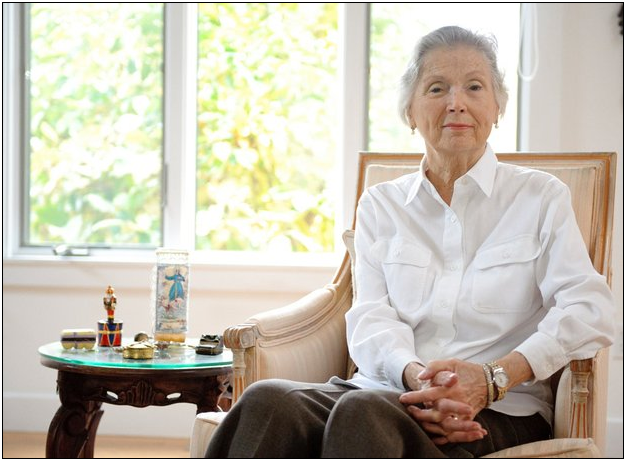
Margaret Peden has spent her career translating Spanish and Latin American works into English. Ryan Henriksen | Buy this photo

By Jill Renae Hicks

Sunday, October 28, 2012

“We who have attempted a translation often disagree in both meaning and expression. I believe nevertheless that there is a perfect translation, and that it lies among the lines of all the versions produced by diligent and sincere ‘readers,’ ” said Margaret Sayers Peden, professor emerita of Spanish at the University of Missouri, in the introduction to one of her works. Near the end of a decadeslong career translating Spanish and Latin American literature into English, Peden was recently awarded the prestigious PEN/Ralph Manheim Medal for Translation. She traveled to New York City to accept her award this week, surrounded by such authors as E.L. Doctorow, Barbara Kingsolver and Susan Nussbaum. Only a handful of translators have been recognized with the award since its inception.

Peden, known by many simply as “Petch,” was born in West Plains and attended MU for her degrees in Spanish. She began her translation career somewhat by chance in the latter part of the 1960s. At the time, she was working on her Ph.D. and came across a small novel by the playwright Emilio Carballido. She told her husband, English Professor William Peden, how interesting it was.

“And he said, ‘Well, you know I can’t read Spanish. Why don’t you translate it?’ ” she remembered. She did — “and I found I loved it, so I just kept doing it.” Peden has translated some 65 books, including most of Isabel Allende’s novels and nonfiction works, books by Carlos Fuentes and Octavio Paz, the writings of intelligent and progressive 17th-century nun Sor Juana Inés de la Cruz, Juan Rulfo’s novel “Pedro Páramo,” and, most recently, Fernando de Rojas’ “Celestina,” a turn-of-the-16th-century work of Spanish literature second in cultural significance only to “Don Quixote.”

That work, published by Yale University Press in 2009, earned Peden the Lewis Galantière Award, sponsored by the American Translators Association. “Celestina” was one of the more complicated works she has translated, Peden said, because of the centuries-old language and the Spanish history she had to research. But she appreciated the challenge of immersing herself in the world from which the tome emerged, and the resultant English translation remains complex in its tragicomic ironies yet is accessible to today’s readers. In comparison, another work Peden said is one of her favorites is Allende’s contemporary memoir “Paula,” which tells the story of her daughter Paula’s coma and subsequent passing, mixed together with vivid, poetic stories of Paula’s and Isabel’s own history and ancestry.

When Peden first began her translation work, she was teaching Latin American literature at MU. Translation courses at universities were not very common, and she did much of the work on her own time. Later she would strive to teach her own students to unearth the true essence of each text while translating, rather than simply switching the language word for word. “I tried to teach my students this: You have to scrape off the words, get down to an under-level. … That’s where the meaning is, below the words,” she emphasized. Gregory Rabassa, a friend and fellow translator, said in Peden’s PEN award statement that her translated characters “speak as they would have had they been born to English and their authors likewise acquire a style in their transformed tongue that is true to what they say or are trying to say.”

Peden will often rewrite five to 10 pages of a work in Spanish at a time, using a combination of both Spanish and English. Then she returns to the beginning and revises, looking up the words she doesn’t understand, and revises again. By the time each book is published, she has pored over it numerous times. She has another hard rule that she judges her work by, a telling aphorism Rabassa passed on to her: “‘You can’t commit the sin of improvement.’ That’s not the point. If it’s a bad book, it has to be a bad book!” she reasoned with a laugh. “Though I try not to ever get one.”

Translating a work is a constant solving of puzzles, Peden noted. “And that’s one of the nice things I love about it, is that you don’t get bored. You can’t get bored.” Often she does as much as or more research than academic writers and critics for the works because she must learn everything she can about a book’s historical and cultural contexts, the way the Spanish language is used in those contexts, and the specific vocabulary and voice of each author — not to mention the voices of all the author’s characters, if applicable. “I don’t have a writing style except the ones I pick up from the books I translate,” Peden explained. “I have done a lot of writing, but that’s not my thing. I’m just better at hearing what somebody else writes.” Indeed, Roberto González Echevarría, Yale professor of Hispanic and comparative literature, praises her ability to nearly turn “herself into” the writers she translates. In his introduction to “Celestina,” he said Peden “is today the most accomplished active translator of Spanish-language literature into English.”

People don’t typically realize how dependent they have been on translations, Peden mused about the often-overlooked role of a translator. “Look at our Western civilization. It came to us in translation: the Greeks, the Bible, all these things.” She is proud to be part of that long tradition and recognizes that she has gained other benefits from walking the “road less traveled” of her chosen career, including a greater tolerance for elements of other cultures she might have felt impatient with before. But Peden added perhaps the best part of her journey has been the relationships she has gained — with her authors, with translators and with other readers who love and respect good literature as much as she. “I’m lucky, the people I’ve met,” she said.

Jill Renae Hicks has previously written arts features for the Tribune and now works as a freelance writer, editor and illustrator. She is interested in the local literary and writing scene and how it connects to the rest of the arts and the greater Columbia community.

Reach Jill Renae Hicks at 573-815-1714 or e-mail jrhicks@columbiatribune.com.

This article was published on page C5 of the Sunday, October 28, 2012 edition of The Columbia Daily Tribune with the headline “Found in translation: ” Click here to Subscribe.

You may be wondering why I posted this well-written article on Margaret Peden, legendary literary translator. There is a personal connection here. Petch is my sweetheart Sally Peden’s step-mother. Petch will be celebrated for her lifetime achievements in translation at Missouri University this Friday, November 16, 2012. I asked her if there was an article about it and she mentioned this one, which came out two Sundays ago. Petch is a great lady, and its always fun being around her and her husband Robert Harper.

UPDATE: Sept 2, 2020: I received a call from a family member that Petch had passed away this summer. I had been wondering how she was doing since it had been several years since we had spoken. Her obituary was posted online July 12, 2020 in The Columbia Daily Tribune, Columbia, MO. You can read it here: Margaret “Petch” Sayers Peden, 1927-2020. It was also published July 9, 2020, courtesy of the family, in the Columbia Missourian: Margaret ‘Petch’ Sayers Peden, May 10, 1927 — July 5, 2020.

I saved it as a PDF with the photo, which I cropped here. You can download it below to get a fuller appreciation for this incredible woman. Here are some of the professional highlights:

Margaret “Petch” Sayers Peden, professor emerita of Spanish at the University of Missouri and renowned translator of Spanish-language literature, passed away at her home on July 5, 2020, surrounded by loved ones. She was 93.

Petch was among the preeminent scholars in the field of translation and one of its greatest champions, working to propel it as a creative effort in its own right.

During and after Petch’s teaching career at the University of Missouri, she continued translating literary works from Spanish to English. She was considered to be one of the leading translators of her time. As a perfectionist, she felt that words could be “unreliable,” “slippery,” “stretchy, treacherous.” She once said, “We [translators] should be evaluated as an actor or opera singer is evaluated, as performing a previously established text.” This acknowledged the complexity of her job as translator, that it was never just finding the English word for the Spanish one, but getting underneath to the essence, or soul of a work. This genius of elucidation is why she was asked to translate works by Carlos Fuentes, Isabel Allende, Pablo Neruda, Octavio Paz, as well as bringing to life her personal hero, the 17th century nun Sor Juana Inez de la Cruz, who, like Petch, was “a woman of genius.” Her deft approach resulted in numerous literary awards including the PEN Translation Prize in 2004, the Lewis Galantiere Translation Prize in 2010 and the PEN/Ralph Manheim Medal for Translation, a lifetime achievement award, in 2012, among many others.

Over five years later, I came across another article, a more personal one, written by Cathy Salter, published Jul 22, 2020 by Boone County Journal: A Literary Remembrance of Margaret Sayers Peden. Cathy and her husband Kit met Petch over two decades ago at a Peden Prize event—an annual event honoring her first husband, Dr. William Peden, (Sally’s father) who founded “The Missouri Review.” She wrote: “More recently, books connected us again when Petch and her second husband, Robert Harper, became regulars at monthly book talks that Kit organizes for Osher Lifelong Learning.” (I’ll paste a little more.)

It was during those monthly Saturday morning gatherings of local writers, published authors, book enthusiasts, poets, and local publishers that we came to know Petch as a true lover of words and the craft of writing. This grand lady has translated over 65 works by esteemed Spanish-language writers—including Isabel Allende, Carlos Fuentes, Octavio Paz, and Pablo Neruda. In 2012, we proudly shared the news that Petch had been awarded the coveted PEN-Ralph Manheim Medal for Translation, a lifetime achievement award.  

Early the following year, Petch reluctantly agreed to do a book talk, saying it would likely be her last.  The morning of her talk, Petch took her audience of 65 fellow lovers of language on a mesmerizing, unexpected literary journey.  She opened by asking, “In the past year, how many of you have read a poem?”  A few hands went up. She then proceeded to introduce us to two of her favorite Spanish-language poets.   

Click the title to finish this wonderful article, also saved as a PDF. It was previously published July 20, 2020 in the Columbia Daily Tribune: Notes From Boomerang Creek: A literary remembrance of Margaret Sayers Peden. Both CDT articles are behind paywalls, why I found other options.

Taylor & Francis published an Obituary in Translation Review Volume 107, 2020 – Issue 1, by Rainer Schulte, Page 135, online Nov 9, 2020: MARGARET “PETCH” SAYERS PEDEN, 1927-2020. They concluded: “The community of translators celebrates the achievements and elegance of Petch Peden.” and encouraged readers to see her obituary in the Columbia Missourian, mentioned above: Margaret ‘Petch’ Sayers Peden, May 10, 1927 — July 5, 2020. (PDF)

Friday, November 14, 2025, Cathy Salter posted this updated remembrance with photos: Celebrating Margaret Sayers Peden. She emailed me, as I had requested, with the link, saying: “Today is the day my weekly blog is published. This one is for the good folks who attended monthly Saturday Morning Book Talks gatherings in Columbia that my darling husband Kit organized for over a decade. As I send it to you, I have a copy of my book Notes From Boomerang Creek in my lap opened to a page with a comment that means the world to me as a writer who loves swimming in a sea of words and memories.”

Cathy added Petch’s blurb for the book from the top of the page under Praise for Cathy Salter’s Notes From Boomerang Creek. “In this delicious book Cathy Salter leads us through the full scope of life’s adventures. Columbia, Missouri has known her for years, and now we share her with a wider world of readers. We follow her down country roads, into U.S. and foreign cities, and enter intimate corners of her life. Be grateful to be showered with luminous words as you turn these pages.” — Margaret Sayers Peden, Award-winning Translator, 2012 Winner of PEN/Ralph Manheim Medal for Translation. The book is available on Amazon.

— Written and compiled (citing sources) by Ken Chawkin for The Uncarved Blog.

Training from the Inside: Treating PTSD with TM

November 11, 2012

Training from the Inside: Treating PTSD with Transcendental Meditation

“I deal with pain every day. I have nerve problems in my leg and the PTSD that the doctors diagnosed me with…functioning becomes impossible, lack of sleep, your work ethic sucks, you can’t focus at work, you can’t do anything, everybody pisses you off…it’s different for everybody. Memories saturate your mind…for me every day is a constant reminder — you relive the same crap over and over and over.” – Sgt James Thrasher, USMC

“I myself have been deployed eight times and been to combat four times. I was diagnosed with PTSD, depression, insomnia. We fight through whatever problems we have, we suck it up, and I did that for many many years. The trauma that I’ve seen the situations that I’ve been through…you take all of that stuff and you put it in a bag and we keep filling up our bag with all these problems rather than dealing with them. – GySgt Richard Wilson, USMC

“What peaked my interest in TM was all the research that’s been done and how incredibly effective it is for trauma, stress…the evidence now is that in combat stress the trauma actually changes the brain so that the ability to self-regulate isn’t there. Meditation helps with information processing, helps with self-regulation. Here we have another tool that is fabulous and they can do for themselves.” – Anna Benson, PhD, Clinical Psychologist

“I was interested in the TM program but I was skeptical at the same time. The power of the TM meditation…it really came out fast and it was surprising to me. Having that inner peace after meditation really really emboldened me to deal with things that I’d been just kind of stuffing away. So to be able to have relief from agitation, have relief from anger, frustration, sleeplessness, alcoholism, drug addiction…that’s huge.” – Sgt James Thrasher, USMC

Uploaded by on Aug 28, 2012

See updated article with photos by Mario Orsatti posted on the TM Blog December 13, 2012: U.S. Marines Talk About the Effect of TM on PTSD.

For more information on the David Lynch Foundation’s Operation Warrior Wellness program please visit http://operationwarriorwellness.org.

For more information on the Transcendental Meditation technique please visit http://tm.org.

Since 2005 the David Lynch Foundation has shared Transcendental Meditation with our most stressed populations. The David Lynch Foundation runs entirely on donations and there is a long list of veterans and sufferers of post-traumatic stress eager to participate.

If you were inspired by this video and would like to make a donation please visit: http://www.operationwarriorwellness.org/how-to-help. Your donations will be used in 3 ways—to help active duty military and veterans suffering from PTS, cadets in training and activated soldiers, and family members of retired and active service personnel. Thank you!

Related news: Soledad O’Brien interviews Russell Simmons and Bob Roth of the David Lynch Foundation on TM for Vets with PTS on CNN’s Starting Point | Military Leaders to Promote Meditation at Iowa Summit to Help Reduce Veteran Suicide EpidemicMatt Kelley of Radio Iowa interviews Jerry Yellin about an Iowa Veterans Summit solution to PTSD | See video highlights of the Iowa Veterans Summit – PTSD and Transcendental Meditation | KTVO News: How one soldier regained his life with help from WWII veteran and TM for PTSDFairfield and Ames war veterans team up to bring meditation (TM) to fellow Iowa vets with PTSD | Mark Newman: Courier: Iowa soldier seeks peace of mind through meditation and medicationMilitary veterans speak on need to increase resiliency: by Diane Vance, Fairfield Ledger | Story County Veteran Once Suicidal Finds Relief from PTSD with Transcendental Meditation: AmesPatch article by Jessica Miller | Veterans speak out on post-traumatic stress, offer a proven way to heal PTSD | Healing the Hidden Wounds of War: open forum for Iowa veterans and their families affected by PTSD, sponsored by Operation Warrior Wellness | Post Traumatic Stress and How Transcendental Meditation Can Help [Infographic] | Meditation Improves Performance at Military University | Meditation Saves A Veteran From PTSD and SuicideDr. Oz on the Benefits of the TM Technique

Cheryl Fusco Johnson interviews Philip Goldberg, author of American Veda: How Indian Spirituality Changed the West

November 8, 2012

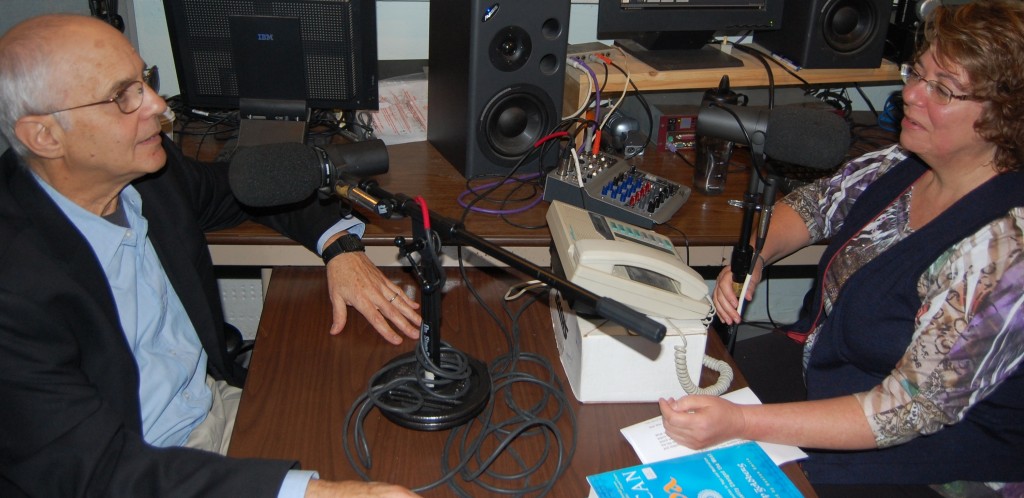
Writers’ Voices host Cheryl Fusco Johnson interviewed author Philip Goldberg on American Veda: How Indian Spirituality Changed the West, at KRUU FM studios, October 12, 2012. The show is now available online: http://www.kruufm.com/node/14325.

Philip Goldberg, American Veda: How Indian Spirituality Changed the West by Cheryl Fusco Johnson

Philip Goldberg with Cheryl Fusco Johnson in KRUU FM studio  Photo: Ken Chawkin

Los Angeles-based author Philip Goldberg is a screenwriter, Huffington Post religious-issues blogger, novelist, and nonfiction writer. His book American Veda: From Emerson and the Beatles to Yoga and Meditation, How Indian Spirituality Changed the West was named one of the top ten books on religion in 2010 by the Huffington Post.

The American Library Association’s Booklist Online awarded it the same honor in 2011. Philip has authored or co-authored nineteen books and has much to say about spirituality, publishing, and how both have changed during his lifetime.

From Cheryl’s Blog: Philip Goldberg: How He Became a HuffPost Blogger

Many people ask Philip Goldberg, author of American Veda: How Indian Spirituality Changed the West, how he became a religious-issues blogger for The Huffington Post. During our Writers Voices radio interview today, Philip explained what happened. Waiting at a bookstore to begin giving a book talk, he was thinking about how few people were there to hear him speak. A woman came into the store looking for something she thought she’d left behind. She noticed Philip standing by a sign advertising the topic of his talk and said, “You should be a blogger for The Huffington Post. My daughter’s an editor there.” Was this a lucky break? Or was it a just reward for the many years Philip spent researching spirituality and honing his writing and speaking skills through repeated practice?

Listen to an earlier show on KRUU FM where Dennis Raimondi interviews Philip Goldberg on Speaking Freely about his latest book American Veda, Nov 22, 2010.

Here is an article about Philip Goldberg and his book American Veda: ‘Vedanta and yoga perfect match for certain American values’.

And here are two related articles by Philip Goldberg: George Harrison: The not-so-quiet Beatle, article by Philip Goldberg in LA YOGA Magazine and Huffington Post: Transcendental Meditation: Topping The Bestseller List Since 1975

Red Dirt Report reviews both “American Veda” by Philip Goldberg and “Transcendence” by Norman Rosenthal.

Dana Sawyer, professor of religion and philosophy at the Maine College of Art, reviewed American Veda for Tricyle: How Hinduism Seeped into American Soil.

My Empowered World also posted the tricyle book review adding photos: From Emerson to the Beatles. Watch a video of MEW’s Luzzette McDonald’s Interview with Author – Philip Goldberg about his books American Veda and The Intuitive Edge. Answering Luzzette’s final question about the one empowering tool he would recommend Phil mentions meditation. He says all the other practices are improved by having a good deep meditation practice. Phil mentions his TM practice, which he has been doing since 1968, and concludes saying he thinks of it as the empowering tool for all the other empowering tools.

See this related article by Phil on THEWORLDPOST: Beatles in India: The Retreat That Reverberates Across the Universe.


Robin Lim Day — CNN Hero Returns to Fairfield, Iowa for a Hometown Hero’s Welcome

November 4, 2012

Robin Lim Day

Robin Lim Returns to Fairfield, Iowa for a Hometown Hero’s Welcome

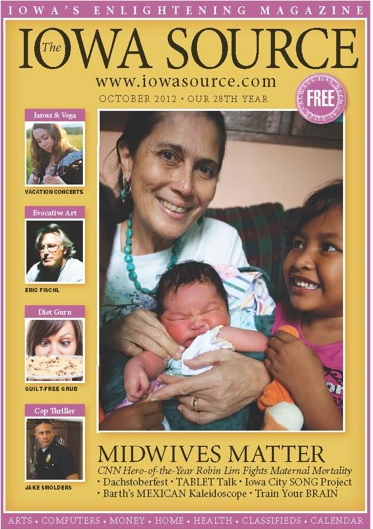
Recent articles on 2011 CNN Hero Robin Lim appear in the October and November 2012 issues of The Iowa Source. Robin was on the October cover in a feature article, Midwives: Better Birth Outcomes, and in the November issue: Robin Lim Honored in Her Hometown.

Mayor Ed Malloy officially declared Robin Lim Day in Fairfield, Iowa on November 13, 2012. Robin is returning to Fairfield to accept the honor and give a free lecture on midwifery and her work in Indonesia Tuesday at 8 p.m. at the Sondheim Center in the Fairfield Arts and Convention Center. Admission is free.

Several events will take place between November 8 to 15, 2012, starting with a free showing of the award-winning documentary film, Guerrilla Midwife, at the Fairfield Public Library. The film was made by Robin’s daughter, Deja Bernhardt, about her mother’s work.

Robin will also be giving a series of talks starting at Des Moines University in the Student Education Center Auditorium at 7 p.m. Sunday. The event at the Sondheim honoring Robin takes place Tuesday night, followed by talks on Wednesday morning at the Maharishi School, on being a hero by pursuing your dreams and passions, and evening at 7:30 p.m. on sustainable parenting, in Dalby Hall in the Argiro Student Center on the Maharishi University campus, concluding Thursday morning at Fairfield Public High School.

In addition to her work in Bali at Bumi Sehat (Healthy Mother Earth), Robin and her team helped save lives and opened a second free clinic and birthing center in Aceh, that part of Indonesia most heavily hit by the tsunami in 2004. She later used her newfound disaster-response skills to aid victims of the earthquake that leveled parts of Haiti in 2010.

Elizabeth Gilbert, author of the best-selling book, Eat, Pray, Love (the last part takes place in Bali), met Robin and had this to say about her: “Robin Lim is what we should strive to be—a great, abundant, generous, warm and tirelessly running faucet of humanity and grace.”

See the Sondheim Center for the Performing Arts announcement CNN Hero of the Year Robin Lim Speaks in her Hometown.

For more information on Robin Lim and her work visit Wikipedia, Bumi Sehat Foundation International, and YouTube Channel.

See Fairfield Ledger: CNN Hero Robin Lim visiting Fairfield and news coverage for Robin Lim is the 2011 CNN Hero Of The Year.

Read a beautiful poem Today by William Stafford

November 1, 2012
“Today” is a beautiful poem written by William Stafford, selected from his book My Name is William Tell by Beth Atchison and contributed to Panhala, which is how I found out about it today.

Today

The ordinary miracles begin. Somewhere
a signal arrives: “Now,” and the rays
come down. A tomorrow has come. Open
your hands, lift them: morning rings
all the doorbells; porches are cells for prayer.
Religion has touched your throat. Not the same now,
you could close your eyes and go on full of light.

And it is already begun, the chord
that will shiver glass, the song full of time
bending above us. Outside, a sign:
a bird intervenes; the wings tell the air,
“Be warm.” No one is out there, but a giant
has passed through town, widening streets, touching
the ground, shouldering away the stars.

~ William Stafford ~

Cancer stories: Greg James restored balance with Maharishi Ayurveda and TM to enjoy his life again

October 28, 2012

FAIRFIELD — October is National Breast Cancer Awareness Month and The Ottumwa Courier asked cancer survivors and/or family members to share their stories. A few people wrote to tell of their experiences and their stories have been running often throughout this month. The editor thanks all the people who participated. Many said they wanted others to know about the experience and to always have hope. Here’s a story from a friend of mine, Greg James, in Fairfield. I never would have guessed he had been through so much, he seems so healthy to me.

Cancer stories: Restore balance and enjoy life

October 25, 2012

“No one has ever survived this kind of cancer,” the Harvard oncologist told me back in September 1988. “It is a rare and very fast-growing form of Non-Hodgkins Lymphoma. Sloane Kettering in New York City has only seen 50 cases in the last 10 years, and no white male 37-year heterosexual has ever survived.  You are Stage 4 with complications (massive pleural effusions).”

“What are his chances of surviving?” asked my family, and the doctor would only cross his fingers.

It was very ironic that I got this cancer, as I was on a media team that was making Deepak Chopra and Maharishi Ayurveda household words. I had been in perfect vibrant health, an active hiker, then (and now).

My father was a hospital administrator and consultant. I grew up with mixed signals: the doctors were brilliant and great people, but their system limited them to drugs and they couldn’t think out of the box; they are brilliant technicians but lack training in vital areas of nutrition and bedside manner. So, I was, from the outset what Bernie Siegel (author of “Love, Medicine, and Miracles”) called a “difficult patient.” Dr. Siegel noted that the patients who take an active interest in their treatment, asking frequent questions and sometimes going against medical advice, were the ones that survive.

It was quickly found that I had a tumor the size of a fist in my throat choking me. That explained a lot! The CHOP protocol worked quickly, dissolving that tumor, and I got through tumor necrosis (the breaking up of the tumor and the spread of that material throughout the body). I was re-admitted to Mass General Hospital in Boston again for a total lack of white blood cells and put on a rescue remedy. Then, two months after my first treatment, I was in Intensive Care Unit for 12 days fighting for my life against pneumonia.

After that, consulting with various doctors outside of the cancer complex at Mass General, I decided to quit the chemo, brain radiation and spinal taps in favor of rebuilding my body with special herbs from India and a rejuvenation protocol (now offered at The Raj in Fairfield). I was totally devastated by the chemo and lack of sleep caused by the Prednizone, and couldn’t hold down food from nausea. My body was trying to throw off the “emergency medicine” and get back to some balance. The Ayurvedic treatments were designed not to cure disease but to promote good health, but they gave me what I needed most: vitality, strength and some hint of happiness.

Meanwhile, the oncologists were upset that I had taken a break from chemo, etc., and told me they had gotten approval for a bone marrow transplant from Dana Farber Institute, a procedure that would “bring me to the brink of death, and then we will re-inject your bone marrow” and I was prescribed three years of continuing chemo, etc. after the transplant. My oncologist quoted a published study and told me that three out of 23 patients had survived this type of bone marrow transplant, which angered me. “You want me to bet my life on one chance in eight? Who is on drugs here, doctor? (I didn’t continue, and saved the insurance company $300,000)”

Ten months after I started, I was back to walking without leg braces (after losing strength from the chemo), and loving life again. I was grateful to have the best of “emergency medicine” and the best of alternative medicine. For a few years after, everyone and their brother was calling me to ask me to talk to their wife or cousin or whomever about their cancer treatment. My answer included these points: realize that the surface condition of cancer is a symptom of an underlying imbalance in the mind-body connection and that this must be restored, and it could be. If your condition is terrible, by all means take allopathic medicines, but don’t be afraid to break from it to get much-needed vitality back through expert-prescribed herbs and rejuvenation therapies. Take “rasayanas,” herbal supplements that promote longevity. First of all, go to an established Maharishi Ayurveda clinic and take the rejuvenation therapy; it will promote your recovery very quickly. And practice verified techniques for improving health, namely Transcendental Meditation. Be honest about your feelings: of course you are scared, that is natural; if you aren’t scared, then somebody isn’t being honest.

People ask me, “So your cancer is in remission?” and I answer, “My health was in remission briefly, but that has been restored.” I change the emphasis because too many people fear the problem without re-defining it: cancer is an opportunity, a forced opportunity, to go deep inside, bring out the strength you need and restore balance to enjoy life.

Greg James

Fairfield

Reprinted with permission from the author

Happy Birthday Katy Perry! Thank you for supporting the David Lynch Foundation

October 24, 2012

The David Lynch Foundation Wishes Happy Birthday to Katy Perry

For her birthday, Katy Perry tweets fans to support Transcendental Meditation for school kids and veterans https://twitter.com/katyperry

Katy Perry says that Transcendental Meditation changed her life and, for her October 25 birthday, she is asking her fans to donate to the David Lynch Foundation, a US-based charity that provides meditation instruction at no charge to inner-city school kids and veterans suffering from the traumatic stress of combat.

In a tweet to her 27 million twitter followers, Perry writes:

“Transcendental Meditation changed my life. For my birthday I would love to pay it forward. In lieu of gifts, donate to www.davidlynchfoundation.org/katyperry.”

Perry joins a growing number of A-list celebs who practice Transcendental Meditation, or “TM”as it is called, including Oprah Winfrey, Ellen DeGeneres, Dr. Mehmet Oz, Russell Simmons, Jerry Seinfeld, Paul McCartney, Ringo Starr, Martin Scorsese, Clint Eastwood, Cheryl Crow, Moby, Ben Harper, and Laura Dern.

On the David Lynch Foundation donation webpage, Perry writes about her support for TM:

“I have been meditating for two years now, and it’s the best thing I have ever done to help bring more creativity, positive energy and peace to my life. When I’m tired, stressed, anxious or depressed, I meditate, and it clears my mind, and makes me feel relaxed and happier. I have shared the meditation experience with my friends, and recommend it to everyone I know.

“I support the David Lynch Foundation because it brings Transcendental Meditation to millions of adults and children all over the world who suffer from post-traumatic stress, such as veterans, inner-city school kids, and women and girls who are victims of violence.

“Please help me celebrate my birthday by making a donation to DLF. Your donation is not only special to me, but to all of the people whose lives you will help through the lifelong gift of meditation.”

Last year, Perry urged her fans to “pay it forward” with donations to the ASPCA to care for abused animals.

For more information, please contact heather@davidlynchfoundation.org.

About The DLF

Find out how Transcendental Meditation is being used to help at-risk students, veterans, and abused women and girls overcome stress. Watch

Celebrity websites have reported the news. See Look to the Stars: The World of Celebrity Giving: Katy Perry Urges Fans To Support Meditation Charity For Her Birthday. All the celebrities listed there are TM-ers who support the David Lynch Foundation. Examiner: Katy Perry birthday wish: 28 million fans support the David Lynch Foundation. MTV: act: Sweet Tweet: Katy Perry Asks for Charitable Donations For Her Birthday