Health India’s Editorial Team says Transcendental Meditation (TM) is taking the world by storm

January 14, 2014

Health India

Transcendental Meditation — a meditation technique that is taking the world by storm

Editorial Team January 14, 2014 at 5:24 pm

Meditation, a simple yet deep-rooted technique that helps you think better, control your emotions with finesse and even makes you a better person. First practiced in India, meditation is a method carried down through the ages. It was first mentioned in the Vedas and is well-known in India as a doorway to nirvana. But now the Americans have woken up to its benefits.

According to study carried out by Fred Travis, director of the centre for brain, consciousness, and cognition at Maharishi University of Management in the US, physiological measures and first-person descriptions of transcendental experiences and higher states have only been investigated during practice of the Transcendental Meditation (TM) technique.

After analysing descriptions of transcendental consciousness from 52 people practicing TM, Travis found that they experienced ‘a state where thinking, feeling, and individual intention were missing, but self-awareness remained’. A systematic analysis of their experiences revealed three themes – absence of time, space and body sense.

‘This research focuses on the larger purpose of meditation practices – to develop higher states of consciousness,’ explained Travis. With regular meditation, experiences of transcendental consciousness begin to co-exist with sleeping, dreaming and even while one is awake.

This state is called cosmic consciousness in the Vedic tradition, said the paper published in the journal Annals of the New York Academy of Sciences. Whereas people practicing TM describe themselves in relation to concrete cognitive and behavioural processes, those experiencing cosmic consciousness describe themselves in terms of a continuum of inner self-awareness that underlies their thoughts, feelings and actions, added the paper.

‘The practical benefit of higher states is that you become more anchored to your inner self, and, therefore, less likely to be overwhelmed by the vicissitudes of daily life,’ said Travis. TM is an effortless technique for automatic self-transcending, different from the other categories of meditation – focused attention or open monitoring.

It allows the mind to settle inward beyond thought to experience the source of thought – pure awareness or transcendental consciousness. This is the most silent and peaceful level of consciousness – one’s innermost self, said the study.

Wondering what it is? Here is all you need to know about the TM technique

Transcendental Meditation?

Also called the TM technique, Transcendental Meditation is a simple practice one does for 20 minutes twice in a day. All you need to do is sit comfortably and close your eyes. This meditation technique is not a religion, philosophy or lifestyle, it is simply a way to reach self-development.

This technique allows your mind to settle and gives you a chance to experience pure awareness, also known as transcendental consciousness. It allows you to experience the most silent and peaceful level of consciousness – your innermost self. It also allows your brain to attain deep rest helping you be more efficient and betters your cognitive functions.

Where did this technique originate?

About 50 years ago, Maharishi Mahesh Yogi introduced Transcendental Meditation to the world. Maharishi Mahesh Yogi is considered the representative of Vedic tradition in our day and age. This form of meditation helped in restoring knowledge and helps people experience a higher state of consciousness. The most important aspect of this technique is that it is still practiced with the same technique and principles as it was when the Vedas were first written, giving it maximum effectiveness.

How do I learn?

The TM technique has local teachers who will guide you through the process. It consists of seven steps after which one can practice the TM technique on their own.

Benefits of the TM technique

The TM technique is known to calm your mind, directly affecting the stress that your brain experiences on a daily basis. According to the experts, practicing the TM technique regularly helps in developing total brain control, thereby making you more equipped to deal with every day stress. It indirectly reduces the production on hormones that are commonly produced when one is stressed and thereby stops the damage that is normally produced.

Apart from all this, a calm mind and body is the best way to protect your body from cardiovascular stress. The TM technique also has great benefits for students, it helps improve their memory, IQ and helps them fight stress.

With inputs from: IANS

Reference: Transcendental Meditation

Related: Transcendental experiences during meditation practice – paper published in @AcademyAnnals.

Health India also posts: Practice Transcendental Meditation to lower BP, heart and mortality risks.

See more news coverage: Transcendental Meditation and lifestyle changes both stimulate genes that reduce blood pressure and extend lifespan.
MUM’s Executive VP Craig Pearson’s visit to South Africa coincided with Nelson Mandela’s funeral

January 13, 2014

Fairfield man guest speaker in South Africa
Craig Pearson’s visit coincided with Nelson Mandela’s funeral
By ANDY HALLMAN | Jan 13, 2014 | The Fairfield Ledger
Photos: Courtesy of CRAIG PEARSON

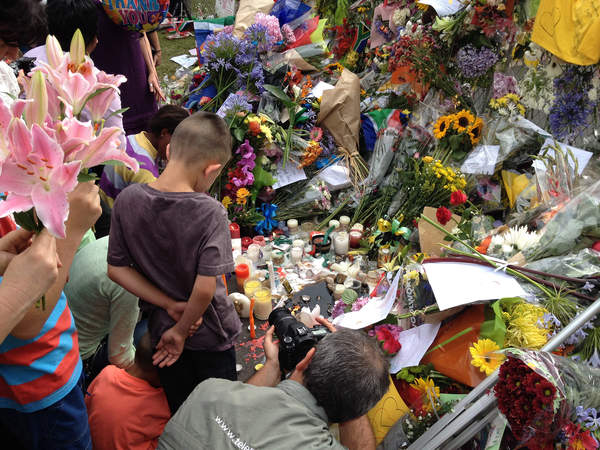
Courtesy of: CRAIG PEARSON People deliver flowers, candles and cards to the home of former president Nelson Mandela in Johannesburg, South Africa, after his death Dec. 5. Maharishi University of Management’s executive vice president Craig Pearson was in the country at the time of Mandela’s death and witnessed how the public responded with kind gestures to the man they admired so much.

People deliver flowers, candles and cards to the home of former president Nelson Mandela in Johannesburg, South Africa, after his death Dec. 5. Maharishi University of Management’s executive vice president Craig Pearson was in the country at the time of Mandela’s death and witnessed how the public responded with kind gestures to the man they admired so much.

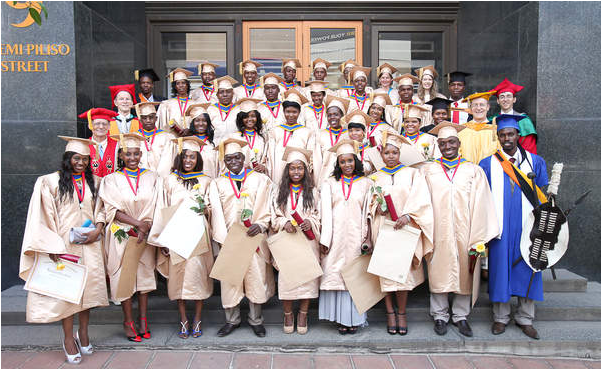
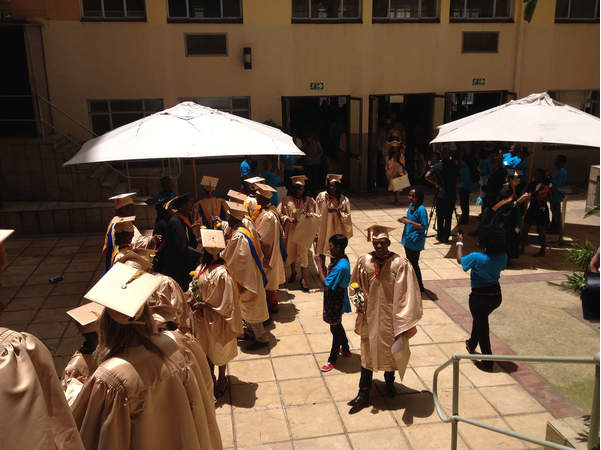
Pearson was in South Africa on official business to give the commencement address at Maharishi Institute in Johannesburg. The institute is a sister organization of M.U.M. and the students who graduated from it received M.U.M. degrees. (Courtesy of: CRAIG PEARSON)

Pearson was in South Africa on official business to give the commencement address at Maharishi Institute in Johannesburg. The institute is a sister organization of M.U.M. and the students who graduated from it received M.U.M. degrees.

The students pictured are the first graduating class of Maharishi Institute in Johannesburg, South Africa. Maharishi University of Management’s executive vice president Craig Pearson, far right in second row, delivered the commencement address at the institute’s graduation ceremony in December. (Courtesy of: CRAIG PEARSON)

The students pictured are the first graduating class of Maharishi Institute in Johannesburg, South Africa. Maharishi University of Management’s executive vice president Craig Pearson, far right in second row, delivered the commencement address at the institute’s graduation ceremony in December.

Maharishi University of Management’s executive vice president Craig Pearson received quite the honor in December when he was asked to give a college commencement address in South Africa.

Pearson just so happened to be in Johannesburg when all eyes were on the country after the death of former president Nelson Mandela on Dec. 5. Pearson was able to witness first-hand the outpouring of support and admiration the locals had for the man who symbolized the nation’s struggle against racial separation.

Upon his arrival in the country Dec. 2, the M.U.M. vice president learned he was staying a mere five blocks from Mandela’s home. Pearson planned to walk by the home to take photos, which would not be too difficult since it was normally a quiet street. Within a few days, the street outside Mandela’s home was packed full of people dropping off flowers and singing songs in honor of their fallen leader.

On the morning of Mandela’s death, Pearson opened his laptop to check the news. He saw a headline that read, “The World Mourns,” and he knew right away what it was about.

“When I went down to take photos outside his home, instead of empty streets there were hundreds and hundreds of people,” he said. “People of every age and skin color were standing there. Singing spontaneously came from this epicenter of the crowd and it rang out until everyone joined in.”

Pearson saw a “mountain range of flowers and hand-written notes” placed on the gate outside Mandela’s home.

“Some of the notes were from children who expressed how they felt about their leader with quotes from ‘Madiba,’ as they called him, which is his tribal name,” Pearson said. “He was also referred to as ‘tata,’ which means ‘father.’”

The Associated Press dubbed Mandela a “master of forgiveness” for his insistence on a peaceful cessation to the state-enforced racial separation known as “apartheid.” Mandela brought apartheid to an end after he became president of the country in 1994. Mandela became the country’s first black president after spending 27 years in prison for championing equality against the white-minority government.

“The significance of what he accomplished goes far beyond the borders of the country,” Pearson said.

After the memorial service for Mandela at a large soccer stadium, South Africans approached Pearson to tell him they were touched by the words of President Barack Obama, who spoke during the service.

Maharishi Institute in Johannesburg held an assembly the day after Mandela died. Pearson was asked to speak at the assembly, and he said it was clear from the other speakers how much Mandela meant to everyone.

“It’s extraordinary to see a leader be so beloved by the people these days,” he said. “Mandela was not without opposition for a long time, but once he became president and people saw he was a harmonizing force, then there was full support for him. I told the students they have a leadership role to play by building on his legacy.”

Pearson said when he visited Mandela’s home he was only able to see the roof because the rest was obscured by a wall. He said that was not unusual and that nearly every house in the city has a wall around it topped with barbed wire.

“They’re beautiful walls and the city has beautiful tree-lined streets,” he said. “Johannesburg claims to have the largest man-made forest, and it really is a forest of a city. When you go on a hill you can see all the trees covering the streets.”

Pearson said Mandela lived in a well-off neighborhood but his house did not seem any more extravagant than his neighbors.

Maharishi Institute, where Pearson gave his commencement address, began in 2006 and is affiliated with M.U.M. in Fairfield. In fact, the students at the institute are actually earning degrees from M.U.M.. In some cases their instruction is provided online and in other cases a professor from M.U.M. travels to South Africa to teach a class in person. The 27 students who received their diplomas in December are the first to graduate from the institute. Pearson said the institute hopes to expand in the near future by adding 1,000 students in February.

Despite the end of state-sanctioned racial discrimination in 1994, blacks still lag far behind whites in educational attainment. Pearson said the institute was founded in Johannesburg to correct for the lack of higher education for blacks.

Students at the institute receive 1.5 years of free education and then begin a work-study program. One form work-study takes is to work at a call center in the same building as the school. Students who don’t work in the call center work as janitors or some other occupation that maintains the school.

“People living in the shanties may get an education through high school but their opportunities for college education are pretty miniscule,” he said. “Maharishi Institute takes the students who are ready for college and gives them a college education at no cost. One student told me he might be in a gang if not for the institute.”

Reprinted with permission from The Fairfield Ledger. The Monday Ledger ran this front page story five columns across with all three photos, two from South Africa, plus one of Craig Pearson. Dr. Pearson also spoke at the graduation of several managers at Neotel, one of the top communications companies in South Africa, who received MBA degrees from MUM.

Also see MUM Executive Vice President Comments on Nelson Mandela and more photos at  link.mum.edu/Mandela.

Transcendental experiences during meditation practice – paper published in @AcademyAnnals

January 13, 2014

Overview of research on individuals experiencing higher states of consciousness published in Annals of the New York Academy of Sciences

Today, millions of Americans say they practice some form of yoga and/or meditation. It’s become a health fad. Yet the goal of these practices seems unknown or elusive to many practitioners — transcendence.

Dr. Travis, PhD, Director, Center for Brain, Consciousness, and Cognition, Maharishi University of Management

Fred Travis, PhD, is the Director of the Center for Brain, Consciousness, and Cognition at Maharishi University of Management

An article: Transcendental experiences during meditation practice, by Fred Travis, PhD, Director of the Center for Brain, Consciousness, and Cognition at Maharishi University of Management, provides an overview of research on individuals experiencing higher states of consciousness. It is published today in Annals of the New York Academy of Sciences: January 2014, Volume 1307, Advances in Meditation Research: Neuroscience and Clinical Applications, pages 1-8.

The paper is based on a presentation Dr. Travis was invited to give at “Advances in Meditation Research” (AMR), a meeting of the nation’s top meditation researchers, which took place a year ago  at the New York Academy of Sciences New York City.

In his paper Dr. Travis explains that different meditations have different effects, and that meditation can lead to nondual or transcendental experiences, a sense of self-awareness without content.

However, after a search of the scientific literature he reported that physiological measures and first-person descriptions of transcendental experiences and higher states have only been investigated during practice of the Transcendental Meditation® (TM) technique.

TM is an effortless technique for automatic self-transcending, different from the other categories of meditation — focused attention or open monitoring. It allows the mind to settle inward beyond thought to experience the source of thought — pure awareness or Transcendental Consciousness. This is the most silent and peaceful level of consciousness — one’s innermost Self.

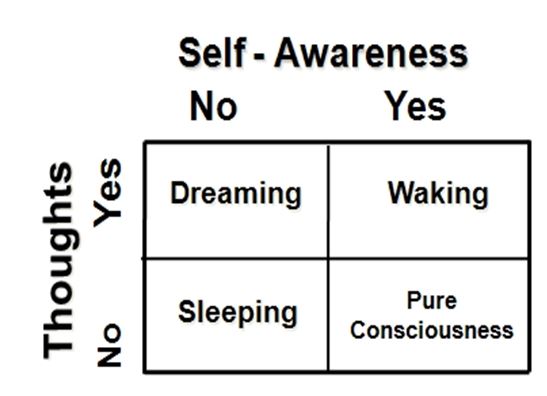
This figure, a 2 X 2 table, compares subjective and objective experiences during waking, sleeping, dreaming, and pure consciousness. As seen in this table, waking state contains a sense of self and mental content, thoughts and perceptions. In contrast, during pure consciousness, there is only Self-awareness, without any sense of time, space, and body awareness.

This figure, a 2 X 2 table, compares subjective and objective experiences during waking, sleeping, dreaming, and pure consciousness. As seen in this table, waking state contains a sense of self and mental content — thoughts and perceptions. In contrast, during pure consciousness (Transcendental Consciousness), there is only Self-awareness, without any sense of time, space, and body awareness.

Dr. Travis discusses a study of descriptions of Transcendental Consciousness from 52 subjects practicing the Transcendental Meditation technique and found that they experienced “a state where thinking, feeling, and individual intention were missing, but Self-awareness remained.” A systematic analysis of their experiences revealed three themes: absence of time, space, and body sense.

Specific physiological changes are associated with this subjective experience of Transcendental Consciousness. These include changes in breath rate, skin conductance, and EEG patterns.

Dr. Travis further explains that with regular meditation, experiences of Transcendental Consciousness begin to co-exist with sleeping, dreaming, and even while one is awake. This state is called Cosmic Consciousness, in the Vedic tradition. The paper presents first-person accounts followed by an overview of the physiological patterns associated with Cosmic Consciousness.

Whereas control subjects describe themselves in relation to concrete cognitive and behavioral processes, those experiencing Cosmic Consciousness describe themselves in terms of a continuum of inner self-awareness that underlies their thoughts, feelings, and actions.

In addition, the Cosmic Consciousness subjects showed the EEG patterns seen during Transcendental Consciousness along with the EEG patterns when they were asleep, and during waking tasks. This leads to higher scores on the Brain Integration Scale developed by Dr. Travis.

Dr. Travis suggests that such higher states of consciousness can be seen as normal developments beyond the classic stages described by Piaget. One simply needs a technique to experience transcendence and thereby facilitate the development of these states. The practical benefit of higher states, he says, is that you become more anchored to your inner Self, and therefore less likely to be overwhelmed by the vicissitudes of daily life.

“This research focuses on the larger purpose of meditation practices — to develop higher states of consciousness,” explained Dr. Travis. “This paper is the outgrowth of meetings at Esalen and the Institute for Noetic Sciences to chart the future of meditation research.”

Source: EurekAlert!

The Annals of the New York Academy of Sciences is the oldest continuously published scientific serial in the United States and among the most cited of multidisciplinary scientific serials worldwide. Established in 1823, the Annals is the premier publication of the Academy, offering volumes of review articles in special topical areas and proceedings of conferences sponsored by the Academy as well as other scientific organizations. You can find out more about them here: http://www.nyas.org/whatwedo/publications/annals.aspx.

Read the Foreword to Advances in Meditation Research: Neuroscience and Clinical Applications, by editor Sonia Sequeira.

Related: Health India’s Editorial Team says Transcendental Meditation (TM) is taking the world by storm

Medical News Today: Overview of research on individuals experiencing higher states of consciousness during transcendental meditation.

A PDF of the study is now available at ResearchGate.

Transcendental Meditation @TMmeditation article in @THR on @DAVID_LYNCH

January 11, 2014

Here is an excellent article about Transcendental Meditation published in the latest issue of The Hollywood Reporter, part of a Health series on how stress effects celebrities and what they do to relieve it. This one is on David Lynch. Click on the title to see the original article with photos.

How David Lynch and His Hollywood Friends Are Bringing Back Transcendental Meditation

One of film’s darkest directors, with help from Jerry Seinfeld and Hugh Jackman, is shining a light by bringing meditation to everyone from PTSD sufferers to inner-city kids.

January 10, 2014 | by Seth Abramovitch

Call it the ultimate comeback. Transcendental meditation — which involves speaking a silent mantra to oneself for 20 minutes, twice daily — is an ancient practice that is now attracting some of Hollywood’s biggest names, who insist that its stress-relief benefits are nothing short of miraculous: Among its most powerful practitioners are Jerry Seinfeld, Hugh Jackman and Russell Brand — who all have become supporters of David Lynch and his plans to bring meditation to people in dire need of stress relief. A directing genius whose dark dreamscapes are littered with severed ears and plastic-wrapped homecoming queens, Lynch, 67, has morphed into one of the world’s most enthusiastic if unlikely TM cheerleaders.

Lynch first encountered TM in 1974, as he searched for ways to combat mounting anger and depression relating to his epic struggle to get his first feature, the mind-bending Eraserhead, to the big screen. “I had a weakness inside,” says Lynch from his Hollywood Hills studio, a splash of sunlight illuminating his famous white pompadour. “That kind of thing, in this business, you’re a sitting duck. You could get slaughtered.” It was then that he decided to try his hand at TM, an ancient practice revived by the late Maharishi Mahesh Yogi, an expat from India who rocketed to stardom during the 1960s as The Beatles‘ spiritual adviser. Lynch feared TM might dull his artistic edge, but he says the opposite happened — it helped him to access untapped fonts of creativity. He even goes so far as to credit the practice with potentially having saved his life: “I was even thinking at the time, ‘If I didn’t have this meditation, I might have seen that a way out was suicide.’ ”

The Twin Peaks mastermind hasn’t missed a single day of meditation in the 40 years since. In 2005, that devotion led him to found The David Lynch Foundation for Consciousness-Based Education and World Peace, a nonprofit that brings TM to inner-city students, veterans with post-traumatic stress disorder and victims of domestic violence. The foundation has taught the fundamentals to more than 500,000 at-risk candidates, and Lynch says the effects have been astonishing: “Before too long, they’re saying, ‘Thank you very much. I got my life back again.’ ” In celebration of Lynch’s birthday on Jan. 20, DLF Live, the foundation’s live-performance arm, is mounting a benefit at the El Rey Theatre, where Ringo Starr is set to receive the Lifetime of Peace & Love Award. Ben Harper and Ben Folds are slated to perform. And on Feb. 27, Dixie Chicks will headline a night at the Beverly Wilshire Hotel honoring record producer (and longtime TM practitioner) Rick Rubin. For the admittedly shy director, Hollywood’s ongoing love affair with TM offers a highly effective method of spreading the gospel. “Life gets better and better and better,” says Lynch of his 40-year journey. “That’s the long and the short of it.”

This Pret-a-Reporter story first appeared in the Jan. 17 issue of The Hollywood Reporter magazine.

@MaharishiU’s Dr. Robert Schneider presents @TMmeditation research to @uiowa Hospitals and Clinics medical staff

January 9, 2014

Doctor touts health benefits of Transcendental Meditation
Written by Sara Agnew, Iowa City Press-Citizen
Jan. 7, 2014 8:55 PM

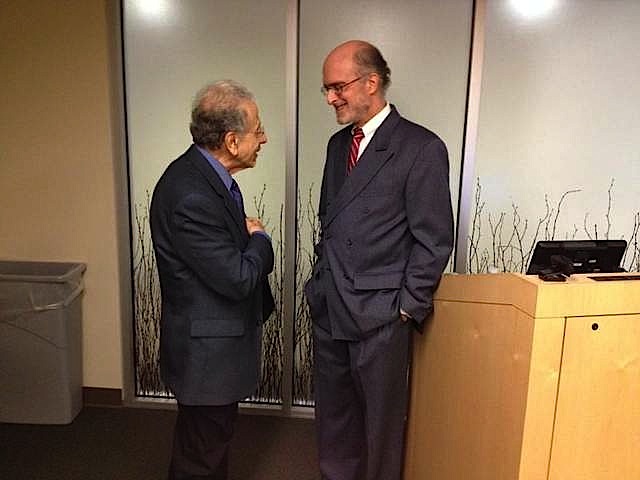
Dr. Francois Abboud, left, talks with Dr. Robert H. Schneider, who spoke with medical staff at University of Iowa Hospitals and Clinics Tuesday about how the practice of Transcendental Meditation can reduce the risk of heart disease and lower blood pressure. / Sara Agnew / Iowa City Press-Citizen

Dr. Francois Abboud, left, talks with Dr. Robert H. Schneider, who spoke with medical staff at University of Iowa Hospitals and Clinics Tuesday about how the practice of Transcendental Meditation can reduce the risk of heart disease and lower blood pressure. / Sara Agnew / Iowa City Press-Citizen

If you want to reduce your risk of cardiovascular disease and lower your blood pressure without taking medication, Dr. Robert H. Schneider has a suggestion: Transcendental Meditation.

Schneider says he has been involved in studies that show this type of meditation can reduce the rate of death from cardiovascular disease by 30 percent and from cancer by 40 percent.

The key is you need to know the “techniques” of Transcendental Meditation to experience the benefits — sitting with your eyes closed for 10 minutes won’t cut it.

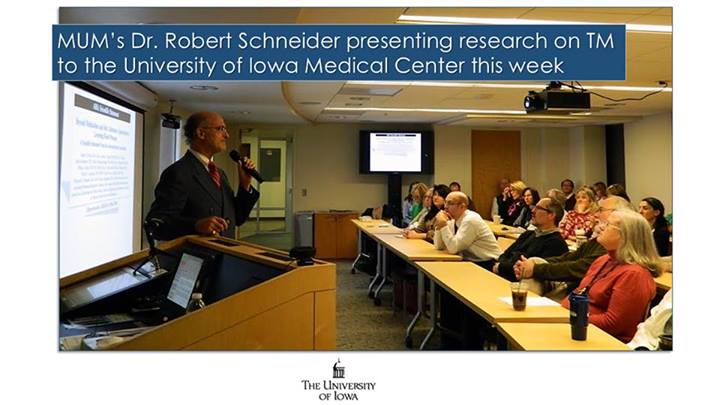
That’s the message Schneider shared with about 40 hospital personnel Tuesday during an hourlong presentation called MIND-BODY-HEART: Evidence for Meditation in Hypertension and Cardiovascular Disease at University of Iowa Hospitals and Clinics. It was his first visit with staff and doctors at UIHC.

“It was breakthrough,” he said of his visit.

Schneider is director of the Institute for Natural Medicine and Prevention and dean of medical programs at Maharishi University of Management in Fairfield. As a physician and scientist, Schneider has spent the past 30 years researching evidence-based natural approaches for treating heart disease, high blood pressure, stress and other cardiovascular factors. Over the past 20 years, he has received more than $20 million in research grants from the National Institutes of Health for his natural approaches to treating heart disease.

Much of his work centers on the benefits of Transcendental Meditation.

Schneider said TM is an effortless technique for “automatic self-transcending.” It allows your mind to settle inward beyond thought to experience the source of thought — pure awareness. This is the most silent and peaceful level of consciousness and what many who practice TM call your innermost self.

“It takes a technique that you learn in an eight-hour course,” Schneider said. “Once you have the technique, it happens quite easily.”

Schneider said humans have an “inborn ability” to practice this type of meditation.

“But we have lost this simple and natural technique,” he said.

Schneider said much of his research about the correlation between mind and body were affirmed last June when the American Heart Association announced that Transcendental Meditation is the only meditation practice that has shown to lower blood pressure. In addition, AHA reported lower blood pressure through TM is associated with substantially reduced rates of death, heart attack and stroke.

Ultimately, Schneider said the AHA recommended that TM be recommended for consideration as an alternative treatment for individuals with blood pressure greater than 120/80 mm Hg.

Schneider said he learned about TM 40 years ago as a college student.

“I was always interested in how we can tap into the body’s own cell repair and healing abilities,” he said. “I thought I’d try it and see if it works.”

He read the research and gave TM a try.

“I found I could study better and learn better and had more energy,” Schneider said.

Later, when he was a fellow in hypertension at the University of Michigan Medical School, Schneider took an interest in the connection between the brain and heart.

“I thought maybe we could use the brain to lower blood pressure,” he said.

Schneider believes his years of research on managing the mind-body connection is paying off as organizations such as the AHA begin recognizing the benefits of TM.

During his presentation at UIHC, Schneider highlighted a 2012 study that showed blacks with heart disease who practiced TM regularly were 48 percent less likely to have a heart attack, stroke or die from all causes compared with blacks who attended a health education class over more than five years.

Those practicing TM also “lowered their blood pressure and reported less stress and anger,” Schneider said.

Schneider is interested in researching how TM can be used to help military veterans recover from post-traumatic stress disorder.

Dr. Francois Abboud, the namesake of UI’s Cardiovascular Research Center, asked, “How will I know if I am meditating correctly?”

Linda Rainforth, a certified TM teacher from Iowa City, said people who are practicing TM reach a “deep, deep level of silence and stillness” in which they experience an “expansion of the mind.”

One listener wondered whether men or women followed through most consistently in practicing TM during research studies.

“Men and women both get results,” Schneider said. “But in some of our studies, there was slightly more compliance with the women.”

If you go

Learn more about Transcendental Meditation by attending one of the following presentations by certified teachers in TM. All presentations will be at the Iowa City Public Library, meeting room E.
• 7:30 to 8:30 p.m. Thursday.
• 3 to 5 p.m. Saturday.
• 6:30 p.m. Jan. 16.
TM sessions also can be by appointment by calling Iowa City Transcendental Meditation Program at 936-1986, 641-472-0827 or 641-919-7282. For more information, go to www.tm.org.

MUM's Dr. Robert Schneider presenting research at UIMC

Dr. Robert Schneider was also interviewed by Steve Smith on KMCD’s MUM Spotlight Show about the American Heart Association’s recommendation of Transcendental Meditation to lower high blood pressure. He also reported on his visit to UI’s Medical Center. Steve asked some great questions. It was a lively discussion. Listen here: http://fairfieldiowaradio.com/audio/spotlight%201-9.mp3. (20:45)

See Dr. Schneider on New Zealand Television’s Breakfast ONE News describing the value of TM for heart health. http://tvnz.co.nz/breakfast-news/meditating-your-heart-video-5602306

@LauraSimon reports on @MaharishiU Accounting students gaining certification in new worldwide financial reporting standard

January 7, 2014

Accounting students at Maharishi University are gaining certification in new worldwide standard in finance

Posted: 01.06.2014 at 6:39 PM by multi-media journalist Laura Simon reporting for ABC KTVO News on the Heartland Connection.

FAIRFIELD, IOWA — Accounting students at Maharishi University are gaining certification in a new worldwide standard for exchanging financial and accounting information.

Extensible Business Reporting Language, or XBRL is required by the agencies of the U.S. government as well as a growing list of international organizations. Balance sheets and income statements are considered examples of this type of documentation. The professor of the course and director of MUM’s MBA program says an XBRL certification makes students more marketable for the workforce.

“More and more there’s going to be this demand for people to know the technical standard that is required to prepare reports and communicate data to these federal agencies and as a result, we have been beginning to train our students to train for careers possibly in XBRL,” Andy Bargerstock, PhD, said.

The course is one credit hour and is offered two to three times a year based on the demand of students wishing to learn XBRL.

Laura Simon gave us a link to the full unedited XBRL Interview 1 6 14.

The full PRWeb press release sent out with our own video is now posted on the MUM website: MUM Accounting Students First in World to Learn New Reporting System Required by US Government Agencies. Click on this link to view it http://link.mum.edu/xbrl.

Related: @MaharishiU Accounting Prof Andrew Bargerstock prepares students for XBRL certification – Ledger.

2013 Annual Report for The Uncarved Blog

January 5, 2014

Here’s a review of my year in blogging. The WordPress.com stats helper monkeys prepared a 2013 annual report for The Uncarved Blog.

Here’s an excerpt:

The concert hall at the Sydney Opera House holds 2,700 people. This blog was viewed about 40,000 times in 2013. If it were a concert at Sydney Opera House, it would take about 15 sold-out performances for that many people to see it.

Click here to see the complete report.

@MaharishiU Dean of Faculty, Dr. Cathy Gorini, interviews author Steven Verney on MUM’s KHOE

January 2, 2014
Steve Verney Cathy Gorini

Steve Verney  Cathy Gorini

Author Steven Verney is interviewed by Dr. Cathy Gorini, Dean of Faculty at M.U.M. on the KHOE radio program “A Chat with the Dean.” Titled “The Best of all Possible Worlds” Steven Verney’s novel is based on his experiences as a teacher of Maharishi Mahesh Yogi‘s Transcendental Meditation.

Steven sprinkles gems of Maharishi’s knowledge before the reader along with threads of life-changing experiences many teachers of TM will relate to while going about the business of bringing enlightenment to the individual and the world and balancing life in the “real world.” Readers have found it difficult to put down this well-written book.

Click to listen: Steven Verney and Cathy Gorini – mp3 58 min, 16.8MB

A generous percentage of book sales will benefit the David Lynch Foundation teaching Transcendental Meditation to at-risk populations.

To find out more about Steven and his book, read this post and listen to an earlier interview on KRUU FM: Writers’ Voices interviews B. Steven Verney, author of “The Best of All Possible Worlds”.

Visit Steve’s new website one of his son’s designed for him http://steveverney.com and blog. Read the overview of the book and see the Xlibris Book Trailer: The Best of All Possible Worlds.

Steven is at work on his second book, about a lama that got away. The main protagonist is also a philosophy professor. I’ve read an excerpt and can’t wait to see the book when it comes out. If it’s anything like his first one, which I thoroughly enjoyed, then we’re in for another treat!

@JerrySeinfeld talks about @TMmeditation at David @LynchFoundation #ChangeBeginsWithin

January 1, 2014

On Tuesday, December 3rd, at the David Lynch Foundation‘s 5th Annual Change Begins Within Gala at the Conrad Hotel in New York City, Jerry Seinfeld took the stage to open the event. We were waiting for this to come out on YouTube. Jerry is absolutely brilliant! He opens with a funny diversion about Amazon and drones, and then segues to the main topic.

Jerry shares how he started Transcendental Meditation in college and has been practicing it for 41 years. But he reveals for the first time that he had only been meditating once a day instead of the twice-a-day instruction. Still, it was because of TM, he says, that he managed to keep it together during the nine years he was producing his successful hit show Seinfeld.

 “When I was doing the TV series in which I was the star of the show, the executive producer, the head writer, casting and editing, for 22 to 24 episodes on network television—not cable! Network—for 9 years. Okay? That’s a lot of work. And I’m a regular guy, pretty much. You know, I’m not one of these crazy people that has endless, boundless energy. I’m just a normal guy. But that was not a normal situation to be in. And so what I would do is every day when everybody would have lunch I would do TM [Transcendental Meditation] and then while we’d go back to work and then I would eat while I was working because I had missed lunch. But that is how I survived the 9 years, it was that 20 minutes in the middle of the day would save me.”

George Shapiro, Jerry’s manager and fellow meditator, had written into Jerry’s contract that he was to not do interviews or be disturbed during lunch hours, when he would go to his trailer during the taping of the Seinfeld show. Now we know why. What we didn’t know was that he was only doing it once a day, at that time. And look what he accomplished!

Jerry’s handling a lot these days, touring on weekends, producing his internet show, Comedians in Cars Getting Coffee, raising 3 young kids, and yet has the energy to enjoy it all, at 60, when he was thinking he should be slowing down. Meditating twice a day has transformed his life. Here’s the part where he mentions Bob Roth reminding him to do his morning meditation, at 6 mins, 54 secs, and what happened as a result.

By the way, David Lynch never missed his twice-daily TM during the over 40 years he’s been meditating. He also used to do his meditation (second), in private, on film sets when everyone else went to lunch.

Bob Roth interviewed Jerry Seinfeld for the new Sirius XM radio show on TM starting January 2014. Jerry is his first guest. David Lynch will also be on an episode of the show, as will other high-profile celebrities and expert guests.

New York is really the hub of American consciousness—media, finance, fashion, food, arts and entertainment. TM has created quite the buzz in the city. It’s a more peaceful and friendlier place to be in these days. 2014 holds much promise. May it bring us greater joy and success. Happy New Year!

Related stories:
George Stephanopoulos interviews Jerry Seinfeld & Bob Roth on the importance of Transcendental Meditation for PTSD
Renowned (TM) meditation teacher Bob Roth featured on The Third Metric and HuffPost Live
Alec Baldwin asks Jerry Seinfeld about learning Transcendental Meditation on Here’s The Thing
Style.com: David Lynch and Italo Zucchelli on their creativity and Transcendental Meditation
David Lynch on Esquire Network, How I Rock It, talking about Transcendental Meditation
David Lynch on meditation in the NewStatesman: Heaven is a place on earth
David Lynch speaks with Alan Colmes about his 16-country tour film Meditation Creativity Peace
Jerry Seinfeld and Howard Stern share stories about their Transcendental Meditation practice

Style.com: David Lynch and Italo Zucchelli on their creativity and Transcendental Meditation

December 25, 2013

Style.com: The Transcendentalists: David Lynch and Calvin Klein Collection’s Italo Zucchelli on their shared passions: creativity and Transcendental Meditation

By Matthew Schneier. Photographs by Olivia Malone
Published December 24, 2013

On a winding road high in the Hollywood Hills, not far from Mulholland Drive, is a Brutalist-looking concrete structure that’s equal parts manse and bunker. It’s the studio of David Lynch, and appropriately for his many pursuits—he is an auteur across media, from film and television to painting, music, self-help books, and coffee roasting—it has a variety of different spaces: a screening room, a recording studio, storage for his photographs and artwork, a kitchen with an industrial-grade espresso machine. (Lynch die-hards may recognize it as the house from Lost Highway.)

I’ve come here from New York, along with fashion designer Italo Zucchelli, to discuss one of Lynch’s abiding passions, Transcendental Meditation. The director established his own nonprofit, the David Lynch Center for Transcendental Meditation and World Peace, in 2005. He credits the practice with much of his success, and he’s devoted as much time to raising awareness of it as he has to virtually any of his other endeavors. His 2006 book, Catching the Big Fish, is dedicated to the subject.

Transcendental Meditation is an ancient practice, but its profile was raised in our era when the Beatles took it up in 1968, under the guidance of its twentieth-century guru, Maharishi Mahesh Yogi. It comes with, and rules out, no religion, faith, or creed, but because of its new-wave aura, it has largely bubbled away at the fringes of culture. Lately, however, it is experiencing a new boom. “In the last year, something tipped,” says Bob Roth, the affable executive director of The David Lynch Foundation for Consciousness-Based Education and World Peace. “If one [particular] thing happened, I haven’t seen it—and I’ve been on the front lines. But something happened, [because] I don’t have enough teachers to teach all the people in New York City who want to learn.”

TM has a very healthy celebrity fan base, which no doubt helps its public profile, and the foundation, which exists to provide scholarships to at-risk populations so they can learn the practice, including schoolchildren, survivors of domestic abuse, and military personnel, has taken advantage of that fact. Paul McCartney, a practitioner, performed at the foundation’s first benefit concert. Hugh Jackman and Jerry Seinfeld, Transcendental Meditators both, were honored at its most recent benefit gala, in December. Mario Batali and Martin Scorsese will both speak at its upcoming conference in February. The list of adherents is even longer. Ellen DeGeneres does it. Oprah does it. Ray Dalio, the founder of Bridgewater Associates, the world’s largest hedge fund, does it. And in the realm of fashion, so does Zucchelli, who is celebrating his tenth year as creative director of menswear for Calvin Klein Collection.

“It” is a relatively simple practice. It consists of devoting twenty minutes twice a day to meditating, which in the Transcendental iteration means silently chanting a Sanskrit mantra. (The mantra must be given by a teacher of Transcendental Meditation, as part of an instruction that can cost upwards of $1,000.) Devotees say that it combats stress, improves mood, and staves off illness and disease. Remarkably, science confirms much of this. The American Heart Association found in a study that Transcendental Meditation, alone among meditation practices it tested, reduces high blood pressure; other studies indicate it can improve functional capacity in patients with congestive heart failure. Over the past forty years, more than 300 studies have been published about the effects of the practice in peer-reviewed medical journals, and the National Institutes of Health and the Department of Defense have both given millions for further testing. While a quick Google search does turn up skeptics and critics—more of charlatan practitioners than of the practice itself—the tide seems to be now firmly in TM’s favor.

“In 1968, meditation was a fad,” says Roth. “In 2013, because of the research, Transcendental Meditation is being incorporated into the actual fabric of our culture.”

There’s something undeniably intriguing about the beatific bliss that Lynch and Zucchelli radiate—in the filmmaker’s case, in stark contrast to his dark, often violent work. I wanted to find out more about the connection they both draw between the practice and their creative lives. Below, condensed and edited, is a transcript of that free-flowing discussion.

Visit Style.com to read this intriguing interview and see the photos.

See David Lynch on Esquire Network, How I Rock It, talking about Transcendental Meditation.

Read the rest of this entry »