Fairfield, Iowa, TM and MUM make national news

June 10, 2016

Many articles have come out in praise of Fairfield, Iowa. Two and a half years ago, Rox Laird, The Des Moines Register’s editorial columnist, published an Opinion piece, Fairfield defines community action, on the city’s civic collaboration and Maharishi University’s Sustainable Living Center. The Smithsonian named Fairfield 7th out of 20 best small towns to visit that year. BuzzFeed named Fairfield one of the coolest small towns in America. And The Iowan had published an article on how Fairfield thinks inclusively creating rural success in Iowa.

I like to think the positive outcome of this latest article on Fairfield, TM and MUM, by Kevin Hardy in The Des Moines Register and the  USA TODAY NETWORK, resulted from a phone call I received on my birthday.

In April, I went to visit my son Nathanael at his new home in the Santa Barbara Riviera. For lunch he took me to The Boathouse at Hendry’s Beach, a well-known outdoor restaurant on the beach by the ocean. While waiting for our food to arrive, an unknown number called my cellphone. It was Kevin Hardy. He told me he covered business, labor and the economy for the Des Moines Register, and was researching why some towns in Iowa were thriving while many were losing population and failing economically. Then he said something that surprised me.

According to the U.S. Census Bureau, Fairfield was Iowa’s fastest-growing city among cities of a similar size. Kevin wanted to know what role I thought Maharishi University of Management had played in the demographic and economic growth of Fairfield.

In addition to some of the longtime established businesses, I  gave him an historical overview how hundreds of meditators came from all over the US and Canada after MIU had moved to town from the mid-1970s onwards. Many would stay and relocate their businesses or start new ones. Also told him about today’s younger entrepreneurs, the new successful ventures they started, and gave him a list of people and companies to visit and interview.

Kevin Hardy and Register photographer/videographer Zach Boyden-Holmes really did their homework. They put together an impressive article that became a national success story! It is reproduced here with permission.  See the full article with 14 photos taken May 9, 2016 by Zach Boyden-Holmes/The Register. I added links for more information.

Why this Iowa town is thriving when so many aren’t
By Kevin Hardy, June 1, 2016

Click here to see a short (1:20) video of Fairfield entrepreneurs.

Fairfield out-performed all of the state’s 15 micropolitan areas in terms of population growth between 2010 and 2015.

FAIRFIELD, Ia. – Take a walk around this town’s bustling square and you’ll see an array of businesses that would rival some shopping malls.

On one corner sits a coffee shop that roasts its own beans in house. Down the block is a store specializing in sustainable children’s clothing and toys. Along another strip, there’s a women’s boutique, a Verizon store and a nutrition company.

The town’s retail center also is home to a salon, a consignment store, a furniture store and an art gallery. Just off the square is a pet spa, a natural remedy store and a photography studio. And for those looking for a bite to eat: a Thai restaurant, an Indian cafe, an Italian spot and a joint peddling pizza and steak.

In fact, local officials count only one vacancy in the storefronts that line shady Central Park. It’s just one more sign of success in this town of 9,500 in a state where most small cities and rural areas are seeing residents leave.

Since 1969, census data show Iowa’s metropolitan areas have gained nearly a half million people, while smaller cities and rural places have lost more than 171,000 residents.

But Fairfield has prospered, particularly in recent years. Between 2010 and 2015, the city saw a 4 percent population gain – a rate that rivaled the growth of some of Iowa’s much larger metro areas.

This southeast Iowa city is known as a magnet for practitioners of Transcendental Meditation at Maharishi University of Management, who flocked here since the 1970’s. Fairfield was able to capitalize on that unique niche, building a surprisingly metropolitan quality of life.

While Fairfield is home to 1,000 fewer jobs than it had 15 years ago, state figures show employers have rebounded in the last five years, adding nearly 700 jobs between 2010 and 2015. During that time, Fairfield went from 714 employers to 751, according to Iowa Workforce Development.

“We have a great quality-of-life culture and an entrepreneurial culture,” said Mayor Ed Malloy. “And we see it is allowing more young people to put down roots in this community.”

Around town, there is no shortage of small-city staples like Casey’s General Store and Pizza Ranch, though Fairfield is better known for its funky coffee houses, shops and restaurants. Locals claim the city is home to more restaurants per capita than San Francisco.

Yet the place that Oprah Winfrey dubbed “America’s most unusual town” is more than just quirky. It’s one of the few nonmetropolitan areas in Iowa posting strong population growth, according to U.S. Census figures. And around town, evidence abounds that Fairfield has done what so many small cities in the Midwest struggle to achieve: attract and retain people.

Troy with MUM Solar Array

Troy Van Beek stands in front of a solar power array his company Ideal Energy installed at the Maharishi University in Fairfield Monday, May 9, 2016. Zach Boyden-Holmes/The Register

TM’s long effect
Maharishi Mahesh Yogi introduced Transcendental Meditation, or TM, in India in the 1950’s.

But he brought his technique and “Consciousness-Based education” to Iowa in 1974, when Maharishi International University moved from Santa Barbara, Calif., to the 1 million empty square feet vacated by Parsons College in Fairfield. (The university later changed its name to Maharishi University of Management.)

While some in the community resisted the influx of meditators, locals say most of those tensions were alleviated years ago.

“As time has gone on, everybody’s meshed seamlessly,” said local designer Linda Pettit.

Pettit, who with her husband owns Finishing Touch interior design, has watched Fairfield thrive over the last 32 years from her storefront on the town square. She ticks off quality-of-life improvements such as a new pool and new recreation center.

She boasts about the many restaurants. And she tells of all the new and unusual businesses that have opened.

“We have a very vibrant community,” she said. “I think a lot of small towns don’t have the diversity that we do.”

Pettit hears about layoffs at plants in nearby Ottumwa. She knows how Iowa farmers are struggling with low commodity prices. But she said that isn’t Fairfield’s storyline.

Her business works on residential and commercial projects. But she’s noticed a slant toward more commercial projects in recent years, as new businesses pop up and old ones invest in upgrades.

“It’s a great place to have a business,” she said.

Iowa’s ‘Silicorn Valley’
Over the years, many TM practitioners and others who visited Fairfield decided to stay.

Once here, they had to find a way to make a living. Some Fairfield residents drive to Ottumwa or Iowa City for work. But many have started small businesses in Fairfield, which has been called “Silicorn Valley” for its mixture of tech startups and entrepreneurial ventures.

“People moved here and they had to figure out how to stay here,” said David Navarrete, spokesman for Sky Factory.

The 38-employee company was founded in 2002 by Bill Witherspoon, an artist who moved to Fairfield for its TM community. A serial entrepreneur, he formed Sky Factory as a means of supporting his family. It creates window and ceiling panels that recreate outdoor views like those of a blue sky or a beachfront.

Sky Factory’s biggest clients are health care providers, as research shows even a simulated view of the outdoors can boost moods for those trapped indoors.

“I think there’s definitely an entrepreneurial spirit here, and I think a lot of that comes from the university,” said Witherspoon’s son, Skye Witherspoon, now the company’s CEO.

Fairfield is also home to a surprising array of manufacturing.
Creative Edge makes intricate flooring for some of the world’s best known hotels, casinos, hospitals and universities. Bovard Studios makes and restores stained glass windows for churches across the country. And a host of businesses manufacture agricultural parts, iron castings, polyethylene piping and laundromat washers and dryers.

So many things are made in Fairfield that the Iowa Economic Development Authority will host an export conference here in the fall.

Fairfield’s biggest employers have grown in recent years, too.

Cambridge Investment Research now employs about 700 and boasts more than $70 billion in assets under its management.

Mixed signals
Like many small cities, some employers in Fairfield report trouble recruiting and hiring, especially with Iowa’s unemployment rate remaining below 4 percent.

Lori Schaefer-Wheaton, president of the 170-employee Agri-Industrial Plastics, said hiring is a struggle. She has 20 openings, a number that has held fairly constant over the last two years, she said.

Fairfield is an anomaly among small cities in Iowa, she said, but she thinks recent population growth is largely related to the university.

“That kind of population growth might show up on our census,” she said. “But I don’t think it changes the dynamics of the workforce in our town.”

Iowa State University Economist Dave Swenson said Fairfield definitely out performs many similarly sized cities. But some signals are mixed: While some measures show recent job growth, other data actually point to employment losses, he said.

“They seem to be demonstrating both demographic and economic growth that stands out,” he said. “The big question is this a short term growth or is it sustainable?”

Natives return home
Meghan Dowd came to Fairfield as a child when her parents migrated here for the TM community.

She moved away for college, then ended up working in television in California.

From there, she visited her mom in Fairfield and realized it was going through a “renaissance,” with monthly art walks, a new events center and lots of cool coffee shops and restaurants. She moved back in 2009 and started Shaktea, a maker of kombucha, a trendy fermented drink.

In Fairfield, she says she can do just about anything she could in a metro city. Plus, it’s much cheaper to buy a home or start a business. (She also started Cado, an organic avocado-based ice cream, featured with a photo in the article and video.)

Her children attend a Waldorf-inspired preschool. And after yearning for a yoga studio, she just opened her own.

“A lot of people moved here, the kids grew up here, but then the kids wanted to go out into the world and experience different things,” Dowd said. “I think that happened and some of that is kind of boomeranging back to Fairfield.”

Jesse Narducci followed a similar path. He returned home to Fairfield a few years ago after living in Colorado and California for more than a decade. He opened Jefferson County Ciderworks just outside of town. He brews hard apple cider and runs a taproom featuring hard-to-find craft brews.

Narducci said many of Iowa’s smaller towns are undesirable places to live because they lack quality places to grab a meal or a drink out. Not Fairfield.

“You don’t have to drive to Iowa City to have a good ale or a good meal,” he said. “I don’t really leave that often. … I’m trying to create my own little paradise out here.”


Read the rest of this entry »

Filmmaker David Lynch to Give Commencement Address at Maharishi University of Management

June 8, 2016

Over 350 to Graduate from Maharishi University, June 18

Over 350 (366) students representing 50 (53) countries will graduate from Maharishi University of Management at the 2016 commencement ceremony at 1:00 p.m., on Saturday, June 18, in the Maharishi Patanjali Golden Dome. The public is invited to attend.

Noted filmmaker David Lynch will offer the 2016 commencement address. He is famous for films such as The Elephant Man, Mulholland Drive, and Blue Velvet. His many awards include a Golden Globe for Best TV Series for his 1990–1991 show Twin Peaks. He recently finished filming a new season of Twin Peaks that will air in 2017.

Graduates include 37 in South Africa

Those receiving diplomas include 74 undergraduates in Fairfield, 37 undergraduates in South Africa, 160 students in the MS in computer science, and 80 students in other graduate programs. About 160 are expected to participate in the ceremony. Those in South Africa attend the Maharishi Institute in Johannesburg for their first two years of college, and then enroll at MUM via distance education for their third and fourth years of study toward a degree in business.

David Lynch to receive honorary doctorate

David Lynch-Adam Bordow

David Lynch photo by Adam Bordow

David Lynch’s preferred method for public speaking is to take questions from the audience; so four students on stage will ask him questions about life-oriented topics that commencement speakers traditionally address.

As part of the commencement ceremony, the university will present Mr. Lynch with a Doctor of World Peace honoris causa degree, “In recognition of the enormous role he has played in promoting Maharishi’s knowledge throughout the world, transforming people’s lives through the work of the David Lynch Foundation, and laying the foundation for a truly peaceful world,” said Dr. Bevan Morris, president of Maharishi University of Management.

His David Lynch Foundation, started in 2005, raises funds to support bringing the Transcendental Meditation technique to those most in need: underserved inner-city students, veterans with PTSD and their families, and women and children who are survivors of violence and abuse. As a result of the Foundation’s activities, hundreds of thousands of people have learned and benefitted from the Transcendental Meditation technique.

“Not only is David transforming lives through his Foundation, he has made countless people aware of the Transcendental Meditation technique throughout the U.S. and around the world,” said Craig Pearson, executive vice-president of MUM. “Many well-known thought leaders in the U.S. have adopted the practice and have publicly endorsed it at events sponsored by his Foundation.”

Lynch’s activities on campus

Lynch has long been an important member of the MUM family, as a member of the Board of Trustees and in lending his name to the David Lynch MFA in Film program. He has connected with the film students via Skype, has spoken in person to a class, and has hosted the students at his studio in Los Angeles.

He has been practicing Transcendental Meditation since 1973, and has spent time on campus on a number of occasions. In 2006, he offered the first of three annual “David Lynch Weekends,” which brought hundreds of visitors to campus to learn about consciousness, creativity, and the brain.

Nominated for 4 Academy Awards

Lynch has been nominated for an Academy Award 4 times: three times as Best Director and once for Best Screenplay. The French government awarded him the Legion of Honor, the country’s top civilian honor, as a Chevalier in 2002 and then an Officier in 2007. He has won France’s César Award for Best Foreign Film two times, as well as the Palme d’Or at the Cannes Film Festival and a Golden Lion award for lifetime achievement at the Venice Film Festival. Mr. Lynch has been described as “the most important director of this era” by The Guardian as well as “the Renaissance man of modern American filmmaking” by Allmovie.

About Maharishi University

Maharishi University of Management (MUM) in Fairfield, IA is a private university featuring Consciousness-Based Education. The accredited traditional curriculum offers bachelor’s, master’s, and doctoral degrees in the arts, sciences, humanities, and business, but also integrates self-development programs. Innovative aspects include the Transcendental Meditation program, one course at a time, and organic vegetarian meals. Visitors’ weekends are held throughout the year. For more information, call the Admissions Office at 800-369-6480 or visit http://www.mum.edu.

Contact: Ken Chawkin, kchawkin@mum.edu, (641) 472-1314

Editor’s note: Check back here for graduation publicity.

Read the rest of this entry »

Australian Yoga Life Magazine features Maharishi Mahesh Yogi in their Early Pioneers of Yoga series

June 7, 2016

AYL-50-coverAustralian Yoga Life is Australia’s longest running yoga magazine and one of The Top Ten Best Yoga Magazines In The World. Their 50th issue (March-May 2016) featured Maharishi Mahesh Yogi and his contribution to meditation. AYL senior writer Peggy Hailstone wrote the article for a new series, Early Pioneers of Yoga, which explores the yoga pioneers of the early 20th century who have shared the teachings of modern yoga. The article first appeared in Australian Yoga Life magazine www.ayl.com.au and is available with permission on The Uncarved Blog. It opens with these two paragraphs.

If not for Maharishi Mahesh, Western meditation might look significantly different. Instead of coming to the cushion, couch, or chair in our aesthetically-pleasing comfortably-furnished lounge room, we’d probably be seated legs akimbo on our roo-skin mat in our sparsely furnished garden shed. And while the loincloth might have given way to shorts and a t-shirt, meditation would likely have endured as an impenetrable pursuit for the mystical and numinous.

This simple act of making meditation accessible is one of the Maharishi’s greatest legacies. Others include opening meditation to scientific investigation; removing the requirements of religiosity, reclusivity and renunciation; packaging and promoting meditation as effortless, simple and natural. The Maharishi’s offering – which he eventually named and trademarked Transcendental Meditation® (TM) – has since produced 40,000 meditation teachers (worldwide) and five million practitioners.

Click this AYL PDF to read the rest of this respectful article on Maharishi.

Related: A Tribute to Maharishi Mahesh Yogi | Les Crane interviews Maharishi Mahesh Yogi | Watch the 1968 film of Maharishi at Lake Louise | The story behind the making of the International History documentary on Maharishi Mahesh Yogi

The Curse of Dementia: On watching a loved one diminish before your eyes, poem by Ken Chawkin

May 29, 2016

I sometimes get depressed seeing what’s happening to my sweetheart over time. She has dementia and lives in a care facility.

I keep my feelings in and don’t burden people with them. Only talk favorably about her. But sometimes I have to write them down. It’s one way to deal with an emotional reaction to a worsening situation. There may be more going on, but I am not always privy to such spiritual transformation.

Writing offers relief. By expressing what I’m feeling, I objectify my feelings in words and no longer hold them in. Then I can rework the words into a poem, and an introduction. This creates a kind of satisfaction. It gives me something else to focus on, and lightens the emotional load.

Hopefully, it will ease the hearts of those carrying a similar burden, should they read this. And maybe inspire them to do the same.

The Curse of Dementia
On watching a loved one diminish before your eyes

This passing of time
Is too fast for comfort

You’re changing but not
Getting any better

As I get used to this
Diminished form of you

I forget who you used to be to me

But this is nothing compared
To what you have lost

Yet who is happier

Mortality marches on
Until it will fall off

This cliff called life

© Ken Chawkin
May 29, 2016
Fairfield, Iowa

Related: An Unwanted Guest | Dementia Blues | Teapot Poem

— Written and compiled (citing sources) by Ken Chawkin for The Uncarved Blog.

Lilac Haiku by Ken Chawkin

May 14, 2016

As I was about to get into my car after visiting Sali at Parkview Care Center, I noticed a sweet aroma. Walking on the lawn towards the willow tree I looked around and noticed lilac bushes in full bloom. Their wonderful perfume inspired this haiku.

image

Lilacs are lovely
Their perfume sweetens the air
Harbingers of Spring

© Ken Chawkin
Fairfield, Iowa
Written May 12, 2016
Posted May 14, 2016

Teapot Poem by Ken Chawkin

May 14, 2016

Teapot smaller size

Teapot Poem

This teapot, a gift for you,
sat on your kitchen table.
Later, we shared it, together.
Now, it sits alone, with me.

© Ken Chawkin
Fairfield, Iowa
May 1, 2016

Scroll down to Responses (5th) to read how this poem came about.

— Written and compiled (citing sources) by Ken Chawkin for The Uncarved Blog.

Norwich University, oldest private U.S. military college, benefits from Transcendental Meditation

May 10, 2016

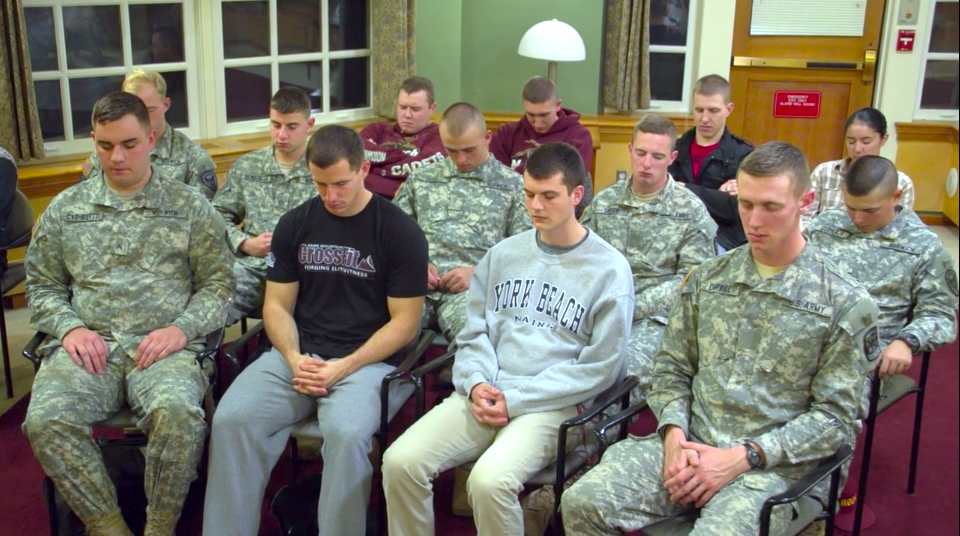
Five years ago the Transcendental Meditation technique was introduced at Norwich University in Vermont, the oldest private military college in the U.S. They began with 30 cadets and now there are 300 at any given time practicing TM on campus.

Dave Zobeck, the TM teacher who began the program, which was funded by the David Lynch Foundation, has a permanent, full-time position teaching TM to cadets, faculty, and administrators at Norwich. Below is a David Lynch Foundation update with a new video report from DLFTV.

TM teacher Dave Zobeck and Norwich University President Dr. Richard Schneider .png

Dave Zobeck and Norwich University President Dr. Richard W. Schneider

Transcendental Meditation at Norwich University

Founded in 1819 near Montpelier, Vermont, Norwich University has educated young adults to become leaders in the community, in business and in the military. It has the distinction of being the birthplace of the Reserve Officers’ Training Corps (ROTC).

Transcendental Meditation (TM) was first introduced to Norwich in 2010 when the longtime donor and supporter Joan Andrews Prentice brought information about TM to Norwich University President Dr. Richard Schneider.

After reviewing articles and research from the David Lynch Foundation Dr. Schneider said, ”I was reluctant—skeptical—but the more I learned, the more confident I became.” After presentations from the David Lynch Foundation, he saw TM as a way to prevent stress and help with focusing and clearing the mind. He decided to be the first to learn TM saying, ”You have to lead from the front . . . ”

In collaboration with Norwich’s board of trustees, the university directors decided on a trial research project for TM. The idea of participating in the trial was presented to all incoming students and their parents in 2010. Thirty new students learned TM and thirty were in a non-meditating control group.

Group TM at Norwich U

For the TM group after learning, ”the reaction was dramatic,” says Dr. Schneider. A typical comment from a student on learning TM: ”After the first week of practicing it, you felt a difference, you felt calmer and much more aware of your surroundings, and you could focus.” Another said, ”TM is the greatest tool that I’ve had for stress-management and for keeping clarity in my life.” Since then the program has grown. Today Dr. Schneider says there are currently 300 TM participants at the University.

Major General (Ret.) Stephen Rippe, a member of the NU board of trustees, says, ”[TM practice] is part of an overall healthy lifestyle. You work out, you take care of your body, you do Transcendental Meditation, it helps you take care of your mind. The powerful part of that is that it actually, physiologically improves your brain functioning.”

Referring to their extremely full day, one young woman said that ”after I do TM, I just get it done instead of sitting around being overwhelmed by so much to do.”

improvement in psychological parameters in students.png

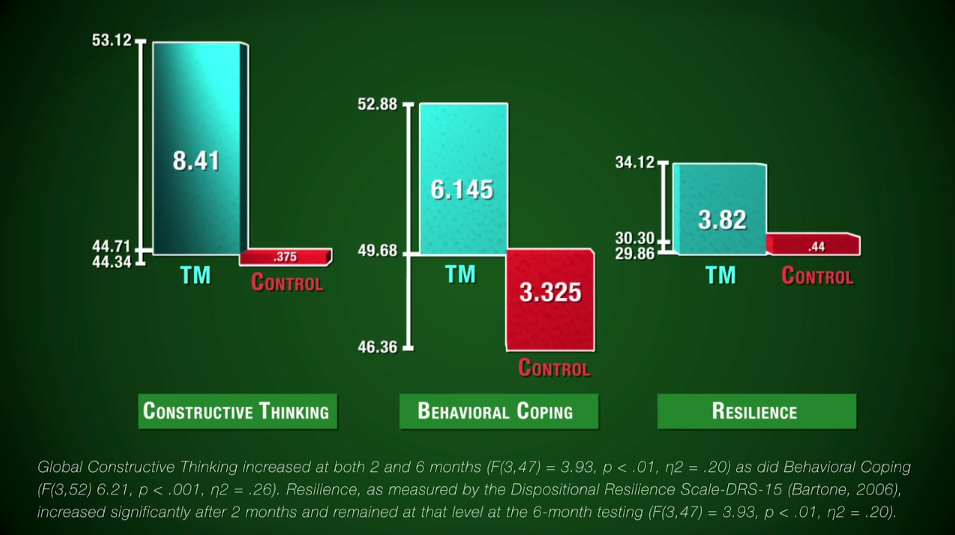
Psychology professor Dr. Carole Bandy reviewed scientific research showing overall improvement in psychological parameters in students, saying, ”constructive thinking, behavioral coping, and resilience all went up significantly.”

Staff and faculty are also practicing TM at Norwich University. As a student says, ”people here want to do what works—we see it as a tool that enables us to handle stress.” Dr. Schneider concludes, ”I think it should be made available to every college student.”

Copyright © David Lynch Foundation

Earlier Related News

The Norwich Guidon: Rooks experiment with meditation

Norwich University President Receives “Resilient Warrior Award” at National Veterans Summit in Washington, DC

Good Morning America anchor George Stphanopoulos interviews Jerry Seinfeld and Bob Roth on the importance of Transcendental Meditation for PTSD.

Read more reports about TM at Norwich University on their website.

A similar situation has occurred in medical education. See The first Transcendental Meditation elective course offered at a major US medical school.

Newly posted Oct 31, 2017: Central Saanich Police Service and Area Police Officers Benefit from #TranscendentalMeditation.

The beautiful views to and from Nathanael’s Santa Barbara Riviera home inspired this short poem

April 20, 2016

My son Nathanael recently moved to the Santa Barbara Riviera and would send me photos of the view from his home. One early misty morning he posted a surreal photo taken from his balcony. It inspired this Santa Barbara Riviera Haiku.

View to Nathanael's home

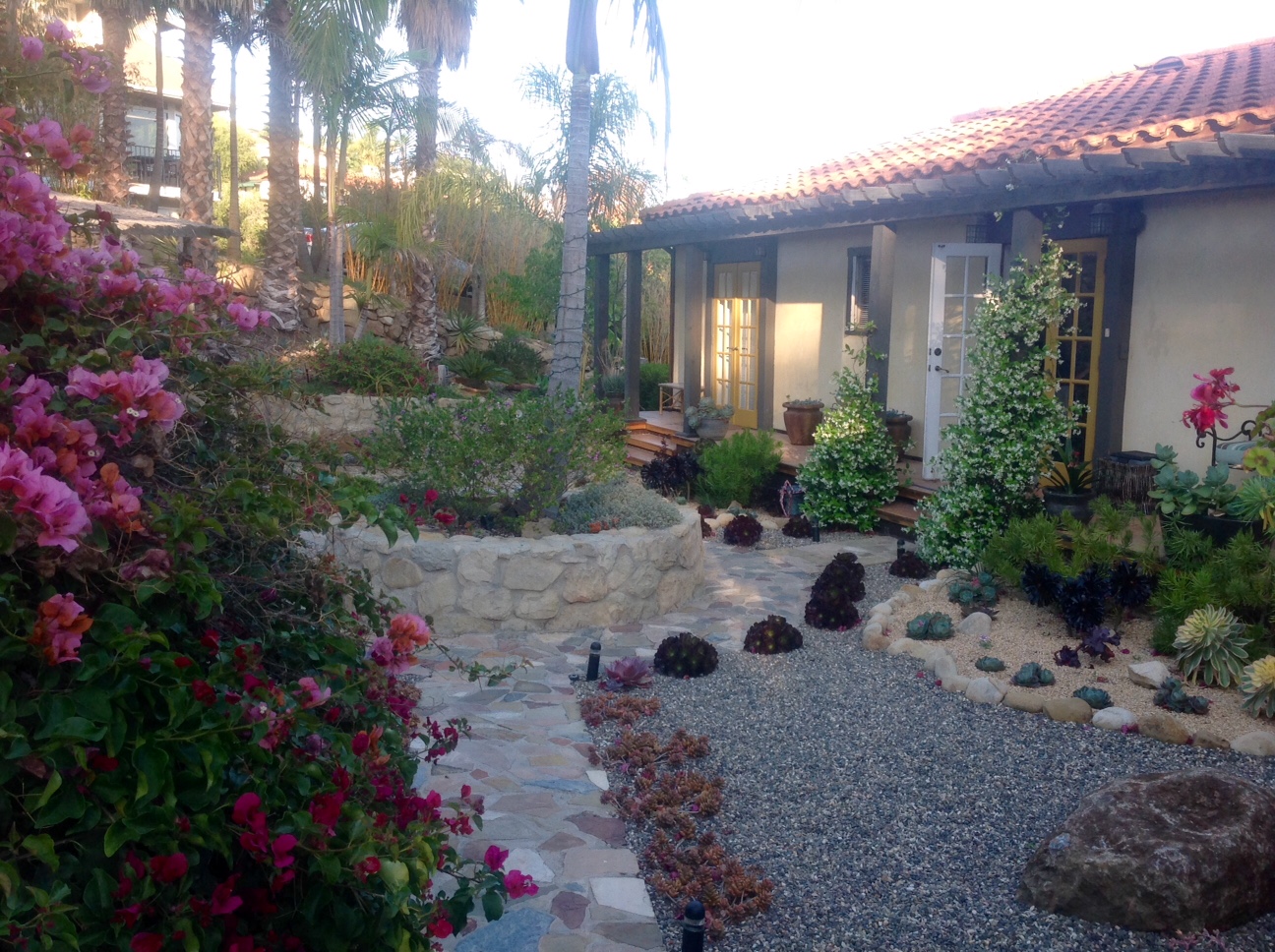
Nathanael had invited me to see for myself how special it is to live there. When I arrived a few days ago, I was struck by the beauty of the place. As I entered the gated property, I sensed a stillness, and noticed the artistic landscaping filled with all kinds succulents and flowering bushes.

As I approached the front steps, I was literally stopped in my tracks, by an overwhelming floral scent. After recognizing it, I had to write a Threshold Haiku, and took a photo of the entrance way to go with it.

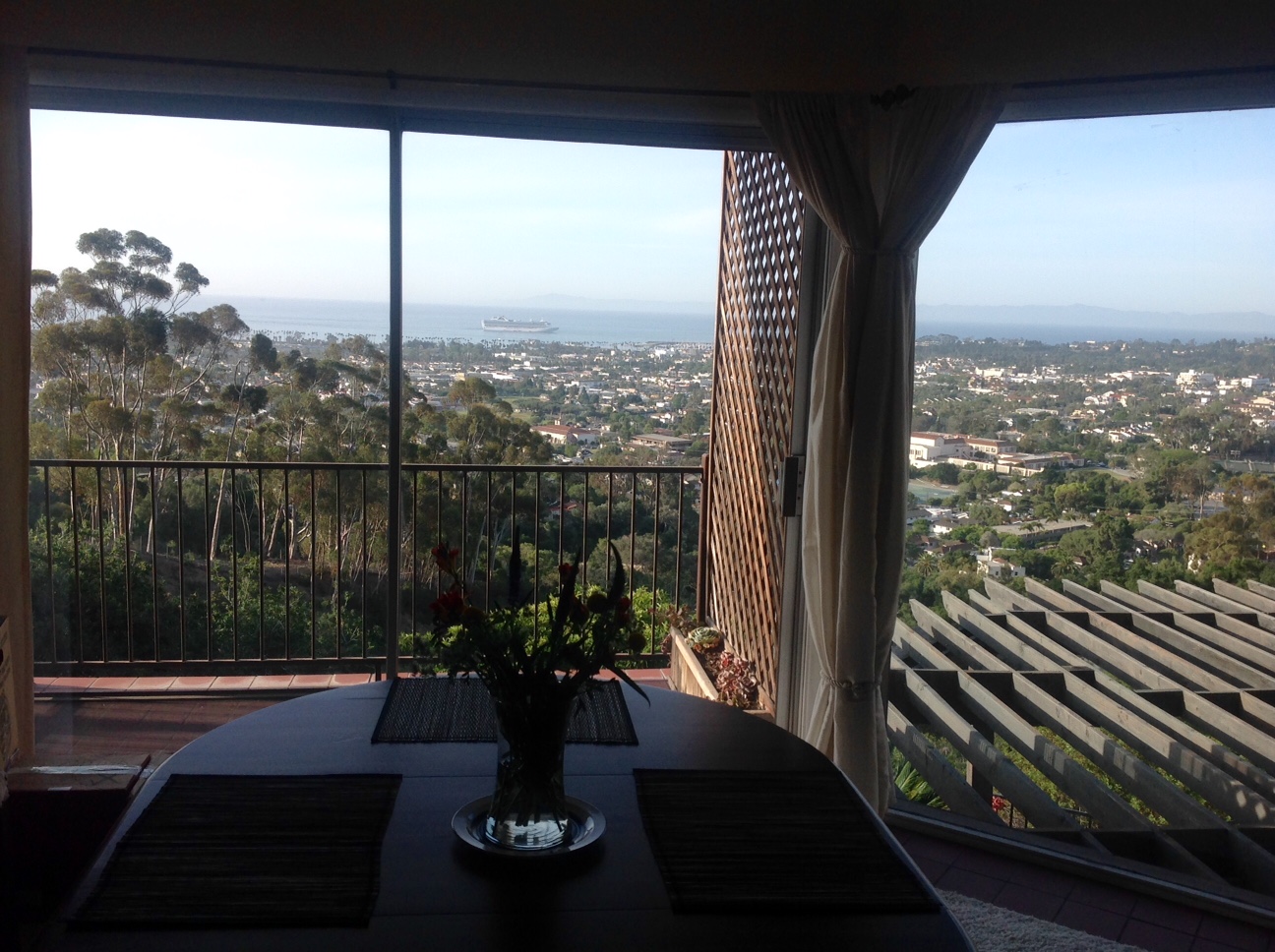
Once inside, I was overwhelmed again, this time by the view from his living room window. It looks out onto the city, the ocean and neighboring Channel Islands, topped by an expansive blue sky. Now I knew what he meant. The view is spectacular! The colorful natural scenery is constantly changing. At night the lights of the city and the stars create a different picture. It’s all very relaxing. You don’t want to leave.

Today I told him how lucky he was to be in this place, in such an incredible location. It’s like living in a painting. He said he had spent time exploring the different Santa Barbara neighborhoods, and was immediately drawn to Toro Canyon, Eucalyptus Hill, and the Riviera. Here’s a picture of the view that inspired yet another short poem.

View from Nathanael's home

You’re living in a painting
In the eye of the artist’s
Object of adoration

©Ken Chawkin
Santa Barbara
April 18, 2016

——————

A bit of history

I remembered the first time I came to Santa Barbara, in April 1974, an exotic welcome relief from the cold Canadian winter. I was a student at MIU, based in a temporary campus in Goleta. The university had rented an enclosed apartment complex. After a few months an actual college campus was purchased and we all moved to our permanent home in Fairfield, Iowa. Those were exciting days. We were pioneers!

The most recent time I was in Santa Barbara was in the summer of 2012 on my way to Greg and Britta Reitman‘s wedding in Ventura. Miriam Kasin, a friend who was living in Santa Barbara at the time, showed me around town for a few days before we drove to the wedding, where we had a fabulous time.

Yesterday, Nathanael took me to see the facility where MIU, now MUM, started in Goleta. That was 42 years ago! The place looked the same, but obviously different. I had turned 30 at that time, 5 years younger than Nathanael is now. By the time I was his age, I would already be married and he would be born a year later. And here we were, together sharing a part of my early history. What a difference a generation has made, thanks to Maharishi Mahesh Yogi!

Where MIU was in Goleta, CA

Central courtyard where MIU had set up campus in Goleta, California

For my birthday, Nathanael took me to The Boathouse at Hendry’s Beach for lunch. While waiting for our food I received a phone call from an unfamiliar caller. Here’s what happened.

Save

Save

Save

Threshold Haiku by Ken Chawkin for Nathanael

April 16, 2016

This haiku was inspired by the overwhelming scent of jasmine that greeted me as I crossed the threshold to my son’s home in the Santa Barbara Riviera.

image

Threshold Haiku

Before entering
The threshold to my son’s home
Pillars of jasmine

©Ken Chawkin
Santa Barbara
April 15, 2016

See more beautiful views to and from Nathanael’s Santa Barbara Riviera home that inspired another short poem.

Two and a half years later while visiting my son again I wrote another haiku about those same plants: Late Autumn in Santa Barbara.

Can group meditation prevent violent crime? Surprisingly, the data suggests yes: New study

April 14, 2016

Large groups practicing the advanced Transcendental Meditation program were associated with significant reductions in U.S. homicide and urban violent crime rates during an intervention period of 2007–2010

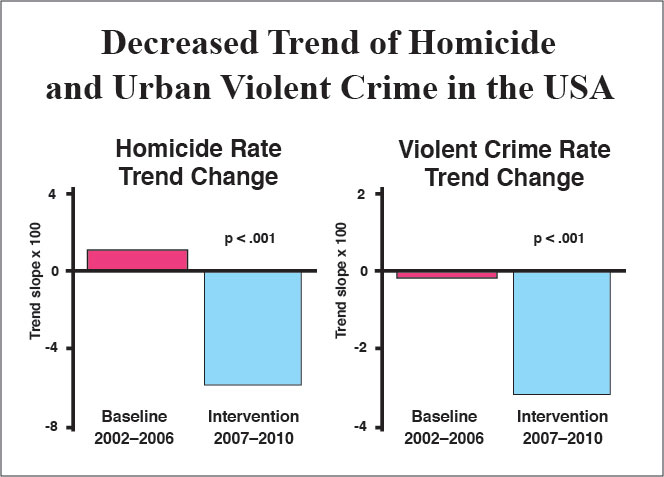
Summary: A new study, in a series spanning decades, suggests again that a sufficiently large group practicing an advanced program of Transcendental Meditation, the TM-Sidhi program, is associated with decreased violence in the whole society. From 2007–2010 the homicide rate dropped nationally 21.2% (5.3% per year), and violent urban crime dropped 18.5% (4.6% per year) for a sample of 206 urban areas nationwide with a population over 100,000. Both reductions were relative to prior trends, 2002–2006.

EurekAlert colors 111462

During 2007-2010 when the size of a group of advanced TM-Sidhi program participants exceeded the threshold predicted to reduce negative trends (√1%), there was a significant shift in the U.S. national homicide rate and urban violent crime. Relative to the baseline period of 2002-2006, the drop in homicide rate was 21.2% (5.3% per year) and 18.5% (4.6% per year) for violent crime.

Can group meditation prevent violent crime?

Can large group meditation lower the crime rate? The most recent in a series of studies spanning decades suggests again that a sufficiently large group practicing an advanced program of Transcendental Meditation, the TM-Sidhi program, is associated with decreased social violence.

For the period 2007–2010, when there was a sufficiently large group, statistical analysis found a significant decrease in both the national homicide rate and urban violent crime rate compared to trends during the baseline period of 2002–2006.

The total drop in the homicide rate relative to the baseline average rate was 21.2% over the four-year intervention period (5.3% per year). Analysis of monthly data showed that a rising trend of U.S. homicides during the baseline period 2002–2006 was reversed during the intervention period 2007-2010 of the study (see graph). Researchers estimate that 8,157 homicides were averted by the highly significant shift from an increasing to a decreasing trend in homicide rates.

The drop in the violent crime rate was 18.5% (4.6% per year). The study found a highly significant shift from a flat trend in 2002–2006 to a declining trend in 2007–2010 for a sample of 206 urban areas nationwide with a population over 100,000 (see graph).

Predicted in advance

Starting in July 2006, advanced meditators assembled at Maharishi University of Management in Fairfield, Iowa, to create a group large enough to have this influence on the U.S. as a whole.

Predictions were lodged with the press and other scientists that significant decreases in violent crime would occur when the group reached or exceeded the theoretically predicted threshold of the square root of 1% of the U.S. population. By January 2007 the group exceeded the required size of 1,725 participants, the square root of 1% of the U.S. population at the time, and remained above or near that level through 2010.

The study was published today in SAGE Open Apr 2016, 6 (2). This journal is a member of the Committee on Publication Ethics (COPE).

A new hypothesis in the social sciences

“I understand it’s a new hypothesis in the social sciences that meditation could have a stress-reducing and coherence-creating effect in society,” said lead author Michael Dillbeck. “But such research is increasingly suggesting that there’s a field effect of consciousness. If you get a large enough group together practicing this technique to experience the field quality of consciousness, these extended ‘field-like’ effects are expressed in society.”

The hypothesis of a field effect of consciousness implies that there is an underlying connection between individuals in much the same way that physics has uncovered greater unity beneath the diversity of matter and energy fields. The more powerfully that underlying field is enlivened, the greater the unifying influence of peace and harmony on the surface levels of life.

The hypothesis was first proposed in 1960 by Maharishi Mahesh Yogi, who introduced the Transcendental Meditation technique. This hypothesis was first confirmed by published research in the 1970s and 1980s when it was observed that those cities that had 1% of the population practicing Transcendental Meditation showed significant increases in positive trends.

The effect was found to be even greater when the advanced TM-Sidhi program was introduced, with observations suggesting that just the square root of 1% of a population could increase harmony and improve diverse measures of the quality of life in society.

Nine peer-reviewed articles, comprising 14 studies, have now been published that support this hypothesized effect.

While the earlier studies were based on groups doing their advanced meditation programs for periods of several weeks or months, this current study was for a number of years, giving researchers an opportunity to study potential long-term changes.

Rigorous statistical analysis

The study’s authors used a battery of diagnostic tests to establish the validity of the key statistical assumptions of the analysis, which utilized “broken-trend intervention analysis” of outcomes, a form of “interrupted time series analysis.”

They also found that alternative hypotheses, such as economic trends, incarceration rates, seasonal cycles, demographic changes, and policing strategies, weren’t sufficient to explain the observed reduction.

For example, violent crime rates fell significantly during the severe recession of 2007–2009 rather than rising as widely expected. According to a leading expert on crime and the economy, this was the first time since World War II in which crime rates failed to rise during a major economic downturn.

See NBC News: Jobless rate up, but crime down: What gives? (Jan 3, 2012). The New York Times published a similar report the previous year: Steady Decline in Major Crime Baffles Experts (May 23, 2011). The Washington Post first reported this news in May 25, 2010: Violent crime in U.S. on the decline.

Important implications for crime prevention

“Given that there are now multiple studies showing a highly significant relationship between a large group practicing the Transcendental Meditation and TM-Sidhi programs and decreased violence in society, this obviously has implications for crime prevention,” Dr. Dillbeck said.

The group that gathered in the period 2007–2010 has now somewhat dispersed. Dr. Dillbeck suggests that if governments were to support the establishment of groups in various countries, so that these groups could be maintained over long periods, it could have a remarkable effect in reducing hostilities and fostering coherence among nations, which could be assessed by further research. Indeed, a number of countries are already creating such groups through private organizations, and gaining increasing governmental support.

###

Societal violence and collective consciousness: Reduction of U.S. homicide and urban violent crime rates. Michael C. Dillbeck and Kenneth L. Cavanaugh, Institute of Science, Technology, and Public Policy, Maharishi University of Management. DOI: 10.1177/2158244016637891

Download a PDF of the study, and a PDF of the EurekAlert! press release. The English press release has been translated into Spanish, Portuguese, French, and German.

NB: SAGE Open is an online open access social science journal.

UPDATE (Mar 14, 2017): See latest studies published in this series: Four-year study finds large advanced Transcendental Meditation group reduces drug-related deaths nationally.