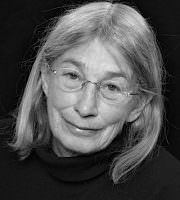
Mary Oliver’s poem, Messenger, was written in her own unique voice, but it must have been influenced by her favorite American poet, Walt Whitman. It’s a perfect poem to share for Thanksgiving, since her poetry is a thanksgiving for being alive in the world, appreciating every living thing in it, and singing their praises. “My work is loving the world…mostly standing still and learning to be astonished…which is mostly rejoicing…which is gratitude…a mouth with which to give shouts of joy.”
My work is loving the world. Here the sunflowers, there the hummingbird— equal seekers of sweetness. Here the quickening yeast; there the blue plums. Here the clam deep in the speckled sand.
Are my boots old? Is my coat torn? Am I no longer young, and still half-perfect? Let me keep my mind on what matters, which is my work,
which is mostly standing still and learning to be astonished. The phoebe, the delphinium. The sheep in the pasture, and the pasture. Which is mostly rejoicing, since all the ingredients are here,
which is gratitude, to be given a mind and a heart and these body-clothes, a mouth with which to give shouts of joy to the moth and the wren, to the sleepy dug-up clam, telling them all, over and over, how it is that we live forever.
You can read more about Mary Oliver and her astonishing poetry in this memorial acknowledgment of her poetic legacy to us.
Here is an added footnote: “Attention is the beginning of devotion.”
I remember Maharishi telling us that whatever we put our attention on will grow stronger in our life. The cornerstone to Mary Oliver’s appreciation of and love for the natural world around her was the power of her attention. She was awake to everything and was always astonished. Her sustained empathic attention to the land and its inhabitants inspired devotional poetry. In this interview, On Being’s Krista Tippett asks Mary Oliver about the role of attention in her work.
Ms. Tippett: I’d like to talk about attention, which is another real theme that runs through your work, both the word and the practice. I know people associate you with that word. But I was interested to read that you began to learn that attention without feeling is only a report. That there is more to attention than for it to matter in the way you want it to matter. Say something about that learning.
Ms. Oliver: You need empathy with it rather than just reporting. Reporting is for field guides. And they’re great. They’re helpful. But that’s what they are. They’re not thought provokers. They don’t go anywhere. And I say somewhere that attention is the beginning of devotion, which I do believe. But that’s it. A lot of these things are said but can’t be explained.
Mary Oliver’s essential message for living a full life
Mary Oliver said: “To pay attention, this is our endless and proper work.” She elaborated it in this 3-line poem, Instructions for living a life: Pay attention. / Be astonished. / Tell about it. And did she ever! It’s how she lived her life, and told us all about it in the gift of her amazing poetry.
For a more enlightened approach to corporate development, read how Nathanael Chawkin offers a vision of leadership that extends beyond single leaders implementing their will upon an organization—one in which mutual self-awareness between individuals contributes to a more functional and higher-achieving whole.
Click the title to read whole article. Here are the opening paragraphs, with a few excerpted quotes.
Studies show that 7 of 10 workers would trade their current jobs for a position that offered them more fulfillment and meaning—a third would even take a pay cut for that offer. Businesses have been taking notice of these findings from the science of motivation. According to a study by PwC, 79% of leaders know that employee fulfillment is paramount to business success. However, only 38% of these leaders are actually making business decisions according to this metric.
In other words, businesses know that to attract the best talent and
maximize the potential of their employees, they have to create cultures
of fulfillment in the workplace. But they are struggling with
implementation.
Nathanael Chawkin, after over six years as an executive coach for an intensive, 52-week integral leadership program, came to see this gap as the difference between what leaders were willing to put into practice themselves and the change they were capable of implementing within their own companies. That’s why he founded Palaestra Leadership in 2016, where he has been on the frontlines of creating cultural change within organizations.
Here are a few quotes from this informative article:
“My whole business is based on the mojo of being ‘on the mat’—building teams who know how to challenge each other through handling conflict and using that to create a whole new level of trust.”
“When you feel psychologically safe enough to take the risk of telling someone the truth about how you see them, of extending yourself for the sake of their personal growth, it is actually the constructive feedback that can make them feel like you really care about them.”
“When employees directly engage in coaching each other, they can learn by doing. You don’t get better by watching me do push-ups. You have to do them yourself to improve.”
“90% of people are willing to coach and be coached,” Chawkin says, citing a study by Imperative. “And that’s how they get a sense of fulfillment.”
I was impressed by this comment posted by Ian Gardner, CEO at Royale EV, one of Nathanael’s clients:
Having worked closely with Nathanael over the last 4 years in both a personal and professional setting I can attest to the power of his process and the pervasive positive impact it has on both company culture and team members personally. I won’t start another company without this commitment being embedded in the culture.
And this one from former associate LeeAnn Mallory, Leadership Coach + Consultant; Organization Alignment Leader; Podcast Host; Board Chair, Conscious Capitalism Dallas:
Nice work, Nathanael! Distributed leadership AND democratized leadership development through peer coaching!
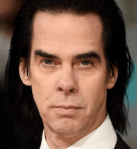
A friend sent me a special post by a famous rocker writing to a fan about his TM practice on his website. I checked online and found last year’s piece by Russell Cunningham, a production editor on sport for the Guardian. This revealing article serves as an appropriate introduction: Nick Cave is showing us a new, gentler way to use the internet.
During these confrontational times, “the quiet reflections of Cave spread peace and compassion and love through a medium renowned for its ability to spread division. In this growing treasure trove of letters to the world, he is showing how to use the web beyond the hubbub of social media, to engage in more reflective and rewarding conversations. That’s no bad thing.”
In issue #69/November 2019 of Nick Cave’s letters, known as The Red Hand Files, the entry is titled: How do I stop fearing the end of the world? He answers a fan’s question: Do you practice meditation? I’ve never read such a profoundly transparent and lyrical testimonial—how TM has evolved him personally and creatively!
He posts a picture of DEMOCRITUS MEDITATING AT THE END OF THE WORLD 1662, and then this answer.
The filmmaker, David Lynch, described the practice of Transcendental Meditation as catching the big fish. I read that he has been practising it since he had a breakdown around the time of making Eraserhead, over forty years ago. He claims he has never missed a meditation. If that is true, I am greatly impressed. The basics of TM are taught during a three session course, at the end of which your teacher gives you a personal mantra. Anyone can do it. It is effortless and there is nothing to get right or wrong. I have been practicing for around six years and found it to be instantly and radically beneficial. So, to answer your question, Maia, from the first time I meditated, I stopped fearing the end of the world.
I found that it also helps with low-level anger, uncommunicativeness, resentments, impatience, passive-aggression, depression, self-obsession, hatred of the world, blaming others, wanting to murder and maim people and a host of other maladies that I had been dragging around and allowing to define me. Meditation modulated my calamitous internal thinking, and the freaked-out tyrant residing in my head that represented the worst possible version of myself was largely deposed.
I also found those big fish down there in the depths, the deep creative ideas which David Lynch talks about, wild, bright and thrilling; but more importantly, I found a fundamental understanding of the next right thing to do, of making the choice of the least destructive course of action.
Unlike some meditation techniques that focus on a life lived entirely within the present moment, Transcendental Meditation seems to radiate backwards and forwards in time, evoking our common humanity and our deep connection to the earth’s inheritance, as it layers us in meaning. It may not hold back the end of the world, but it reduces the element of fear, allowing us to administer to the world more effectively. TM also implements a kind of mysterious reinstating of the soul, a honeying of life, a merciful acceptance of suffering, and reminds us of the incredible privilege it is to be alive.
August 13, 2024: The Late Show with Stephen Colbert: Nick Cave On Singing With Johnny Cash And The Joyful, Uplifting Vibe Of His New Album, ‘Wild God’. The lead singer and songwriter of Nick Cave and the Bad Seeds joins Stephen for a discussion of his latest album and some of his most powerful artistic experiences, including recording a song with Johnny Cash as the legendary artist was near death. Stephen also mentions Nick’s 2022 book of the year, Faith, Hope and Carnage, created from more than forty hours of intimate conversations with the journalist Seán O’Hagan about creativity, grief, and the power of music. At 11:38 in the interview, Stephen, who has had his own share of loss and grief, tells the audience about the accidental death of Nick’s teenage son, and asks him how he has dealt with grief. At 19:09 Stephen asks Nick about The Red Hand Files and asks him to read one letter he had written in reply to a fan’s concerns about living. Enjoy Stephen Colbert’s extended conversation with Nick Cave and check out his latest album ‘Wild God’ when it comes out on August 30th. Excellent interview!
Musician Nick Cave has experienced the death of two of his sons. He tells Anderson Cooper how, over time, these losses have changed his relationship with the world; expanding his heart and widening his “capacity for love.”
Nick Cave feels things like loss and grief deeply, yet he can clearly articulate those feelings. He tells Anderson Cooper how he was so overcome with grief at the unexpected death of his son that it was difficult for him to do basic things. One of them was meditation. At 34:24 Nick tells Anderson how meditating helped him deal with grief. Nick describes one meditation where he was surprised to experience a kind of lightness where the heaviness had lifted, and for a moment he felt that “things were okay.”
— Written and compiled (citing sources) by Ken Chawkin for The Uncarved Blog.
Ancient India created a civilization based on Vedic knowledge, which had a global influence, elevating the other cultures it came in contact with. In “Lost Civilization Re-Emerges,” William T. Hathaway traces its rise and fall, and its current regeneration by Maharishi Mahesh Yogi, who has re-enlivened it by restoring the technique of meditation upon which it was based. Read Hathaway’s full article published on Trans4mind. https://trans4mind.com/counterpoint/index-new-age/hathaway13.html
Some background on “Lost
Civilization Re-Emerges”
When William sent me a short
description and link to his article I asked him to explain where this idea had
come from and why he decided to write about it. He replied:
On my Transcendental Meditation teacher training course in Majorca 1971 Maharishi was asked, “Why are we the ones who are supposed to revive the Vedic knowledge?”
Maharishi looked at the
questioner, a young woman standing at a microphone, and smiled. Then he looked
out over the 2000 people behind her in the large hall and said with a gentle
shrug, “Because we are the ones who lost it.” He gave the word “we” a slight
emphasis to indicate it included him.
Maharishi explained that thousands
of years ago Vedic civilization began in India then spread over the globe,
generating a high quality of life both materially and spiritually. But
eventually the knowledge of effortless transcending, which created and
maintained this advanced culture, was lost. The consciousness of the people and
the quality of their lives declined until humanity veered to its current brink
of self-destruction.
We were part of that whole process
— the developing and the losing — in many lives. Now it’s our job to restore it
through the authentic technique of meditation and create a global age of
enlightenment.
“That’s a pretty big job,” the
woman said.
“But it’s the only one worth doing,” he replied.
Maharishi didn’t go into details
about the ancient civilization because our purpose there was to learn to be TM
teachers, and that would take the full two months of the course. I was
fascinated by the idea of it, though, so I later delved into it in my spare
time from teaching TM and writing books and articles. I found amazing evidence,
ignored by conventional academic scholars, that established the existence of
that global civilization. I wrote this article to do what I could to bring that
evidence to more people and to show them Maharishi and Guru Dev’s crucial role
in restoring the authentic Vedic way of life in India and the world.
###
About the Author
A former professor in MIU’s MA in Professional Writing program, William T. Hathaway is the author of eight books and was a Fulbright professor of creative writing at universities in Germany. He and his wife, Daniela, direct the TM center in Oldenburg, Germany. His novel of the climate change, Wellsprings: A Fable of Consciousness, tells of an old woman and a young man healing nature through techniques of higher consciousness. Chapters are posted at https://www.johnhuntpublishing.com/cosmicegg-books/our-books/wellsprings. His peace novel, Summer Snow, is the story of an American warrior falling in love with a Sufi Muslim (and TM teacher) and learning from her that higher consciousness is more effective than violence. Chapters are posted at http://shattercolors.com/fiction/hathaway_summersnow01.htm.
###
Conscious Life News chose the top photo to go with their publication of William Hathaway’s erudite article. I added photos of Maharishi and William for this post. See previous articles by William Hathaway here.
My son Nathanael Chawkin recently participated in a Forum at the Conscious Capitalism Event in Los Angeles put on by TOMS. While there, Dr. Nikki interviewed him for her Talks Health Podcast. His answer to her question is clear and succinct, using a relevant martial artist example that’s easy to understand on how to receive and give feedback by changing your perspective and becoming more authentic in your communication with others. It’s on his Instagram and YouTube channel. See How to Be More Authentic: Ask For Perspective First – Then Share Your Own! Visit his website for more information www.thepalaestra.com.
Friday, Oct 25, 2019: I saw this funny short video clip on Twitter today. Don’t know where its origin but it’s very clever. John Buchanan tweeted it as a bit of Friday fun. I agreed and shared it with my mailing list. It’s so good I decided to post it for others to enjoy. Wait for it. Sound on.
PS: I had emailed it with my own subject heading—Ever forget where you parked your car? How about your burro? I was going to use that for the blog post title, along with—There’s one way to find out. But I decided to not give anything away, and to just let viewers innocently find out what was going on for themselves. The unexpected ending was hilarious!
Our attention is the greatest gift we can give to someone, or something. It can transform our world. Mary Oliver’s poem, Mockingbirds, teaches us how to listen, and experience the wonders around us.
2000 Tower Oaks Boulevard, Developed and Managed by The Tower Companies, Rockville, MD. Credit: Ron Blunt
This is the first-of-its-kind study on the effects of a Maharishi Vastu designed office building on an architecture and engineering firm’s employee creativity. The company, NIKA, is a tenant in The Tower Companies, 2000 Tower Oaks Boulevard, MVA designed and LEED Platinum building in Rockville, Maryland,close to Washington, DC.
The study, published in Creativity Research Journal, was publicized by EurekAlert!,a service of the American Association for the Advancement of Science, (AAAS). PhysOrg, ScienceCodex, and Bioengineer, were some of the websites that posted the news.
Lead author, Maharishi University of Management Professor Anil Maheshwari, and co-author Margaret Rose Werd, collected more data on other variables, which will be presented in future papers for publication. It was all part of Mrs. Werd’s PhD thesis she is still working on. We thought it impressive that such an important journal would publish the first article on this topic before she even completed her doctorate!Here are the EurekAlert! Summary and press release.
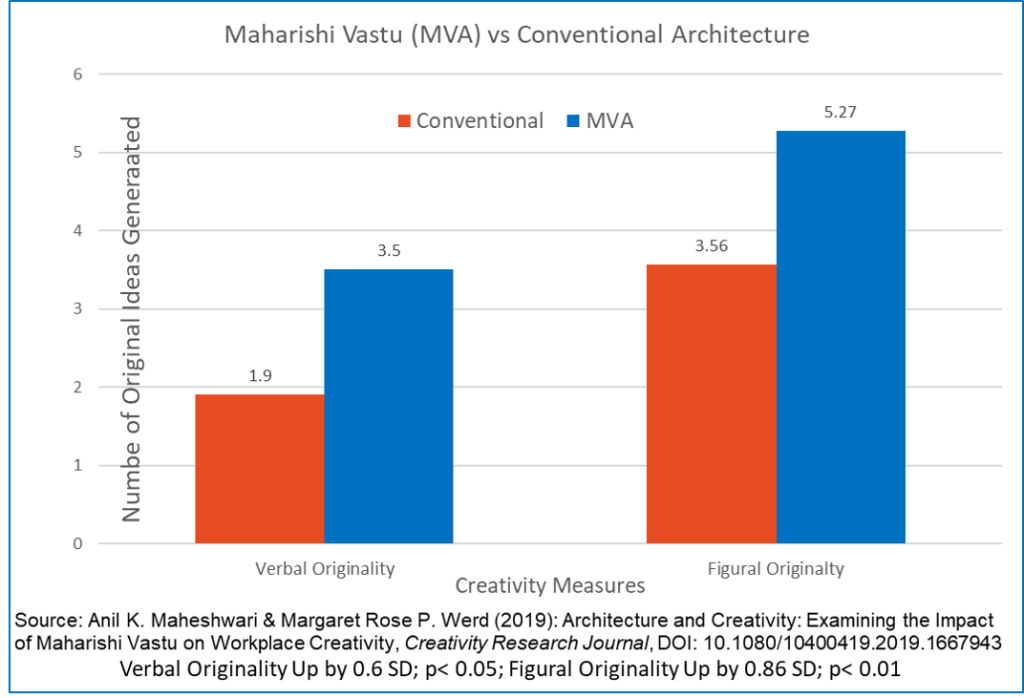
A study published in Creativity Research Journal found creativity increased in an architecture and engineering firm’s employees after moving into a building designed according to Maharishi Vastu® architecture. They scored higher on Torrance Tests of Creative Thinking compared to scores four months earlier in their previous location. Verbal originality rose by 84%; figural originality, 48%; elaboration, 61%; and resistance to closure, 40%. There was less than a 1% possibility the result was due to chance.
New study published in Creativity Research Journal shows Maharishi Vastu architecture increased workplace creativity.
This graph maps the average number of unique, original ideas produced per respondent on y-axis, for two types of tasks against the two building architecture (Conventional vs Maharishi Vastu) on the x-axis. The first pair of bars show that the average number of unique, original ideas produced for a product enhancement task increased from 1.9 to 3.5 or about 84% upon move to Maharishi Vastu. The second set of bars similarly show that the average number of unique, original ideas for a graphical figure completion task increased from 3.56 to 5.27, or about 48% upon move to Maharishi Vastu.
A ground-breaking study published in the September issue of the scholarly Creativity Research Journal found increased creativity in employees who worked in a building designed according to Maharishi Vastu® architecture. In this first study of its kind, employees of an architecture and engineering firm, based in a major metropolitan city in the Eastern United States, moved into a Maharishi Vastu office building and scored higher on the standardized Torrance Tests of Creative Thinking (TTCT) compared to their score four months earlier in their previous location. In particular, they generated 50-80% more original ideas. The study found that there was less than a 1% possibility that the result was due to chance.
“This research experimentally demonstrated that moving from a conventional architecture building into a Vastu building led to large measurable improvements in employee creativity, in particular in the originality of the ideas generated and their open-ended and detailed elaboration,” said Professor Anil Maheshwari of Maharishi University of Management, the first author of this study. “I think every organization, big and small, could benefit from this.”
The study was conducted by Maharishi University of Management with participation from The Tower Companies and NIKA in Rockville, Maryland, a city located just outside of Washington, D.C. 2000 Tower Oaks is a Maharishi Vastu building developed by The Tower Companies in 2008 and was recognized as the largest application of Vedic design in the world. NIKA moved into the building as a new office tenant in 2017.
Architecture in harmony with nature
Maharishi Vastu is a traditional system of architecture that originated in India, and is known there also as vastu or sthapatya veda. Features of Maharishi Vastu include alignment with the cardinal directions; a silent central area called a brahmasthan; specific placement and proportions of rooms; appropriate slope and shape of the land; an unobstructed view of sunrise; a location that’s distant enough from major sources of electromagnetic radiation; and use of natural materials and solar energy. The researchers hypothesized that this architecture would have a wide range of benefits because it is said to be more in harmony with nature.
“It may seem unfamiliar to a Western, scientific perspective, but the fact is that our physiology is intimately tied to the material and rhythms and forces of the earth and sun,” Dr. Maheshwari said. “Traditional systems of architecture, which have arisen in many places around the world over a long span of time, take these things into account. And now we’re intent on seeing whether the supposed benefits can be scientifically verified.” Earlier exploratory studies have documented that specific elements of the Maharishi Vastu system can influence such markers as mental health and heart health.
Greater originality and depth of creativity
The Torrance Test of Creative Thinking (TTCT) includes three assessments of verbal creativity and five of figural creativity. The researchers hypothesized that Maharishi Vastu architecture would show improvement on all eight assessments. Since before-and-after tests can result in higher scores on the second test simply due to being familiar with the testing instrument, TTCT has two different but comparable versions to control for familiarity and learning. One version is used in the initial condition and the other different version is used after the variable/s has been applied. 32 employees took one version of the test in the conventional architecture location, and 22 employees took the second version of the test in Vastu location. Of these, 21 employees were common and took the tests at both locations.
The results of the verbal tests found a statistically significant (p<0.05) increase (84%) in originality (i.e. unique unconventional ideas generated) but not in fluency and flexibility. On the figural tests, which requires subjects to expand on a series of incomplete figures, the results showed a large statistically significant (p<0.01) increase in tests of originality (48%), elaboration (61%), and resistance to closure (40%) (that is, a focus on pursuing new directions to complete a task). Tests of figural fluency and abstract title (ability to name an abstract original concept) did not show an effect.
A boon for the world
NIKA, the architecture and engineering firm that participated in the study, was delighted with the results. “Creativity, especially the sort of figurative creativity measured by TTCT, is an important trait for an architect. The company was pleased to have this objective support for the feeling of greater creativity experienced by their employees,” said Mrs. Margaret Rose Werd, the co-author of this study. She further added that Maharishi Mahesh Yogi and his vision for world vastu for all mankind are the source of the inspiration for this research.
“Not many real estate developers deliver that kind of return on rent!” added Jeffrey Abramson, partner at The Tower Companies. Jon Lipman, AIA, director of Maharishi Vastu services for North America, said, “It appears that Maharishi Vastu architecture can help to solve major challenges that face our cities. I recommend it to developers who aspire to create buildings that promote creativity and the flourishing of life and business.”
This research was the first longitudinal empirical study using standardized measures of creativity to look at the effect of buildings on employee performance in an organization. Data from more organizations would help to validate the results across multiple industries and locations. This research study can be accessed at: https://doi.org/10.1080/10400419.2019.1667943
Nathanael Chawkin on TVSB show Rejoice with Pastor Chuk
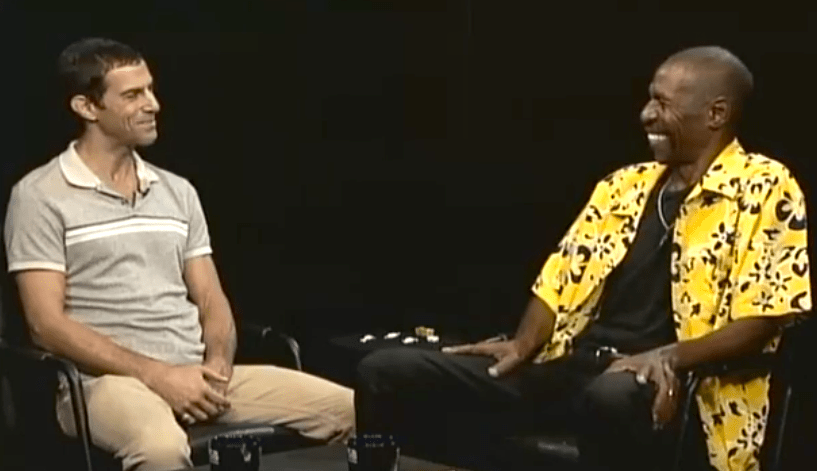
My son Nathanael Chawkin sent me a link to the first in a series of conversations between him and Rev. Charles A. Reed Sr., Pastor, Santa Barbara Worship Center. Pastor Chuk, as he is known, and Nathanael both share a community center space in an old Santa Barbara church built in 1957. Nathanael offers Integral Martial Arts training and group meditation throughout the week, and Pastor Chuk conducts his faith-based services on Sunday mornings. Here is their first delightful discussion on his live TV Santa Barbara show, Rejoice with Pastor Chuk. It’s posted on his Facebook page: “Mystical Experience.” Nathanael posted it on his YouTube channel, with extensive notes: Walk the Talk: The Role of Religion as a Structure of Reflection.