There has been a wave of publicity before, during, and after the largest group of 11,000 TM meditators from 139 countries who gathered at Kanha Shanti Vanam near Hyderabad for 14 days to help create world peace. Here is a sample of some of that news coverage starting with The Week, which came out in their print issue on Sunday, February 4, 2024.
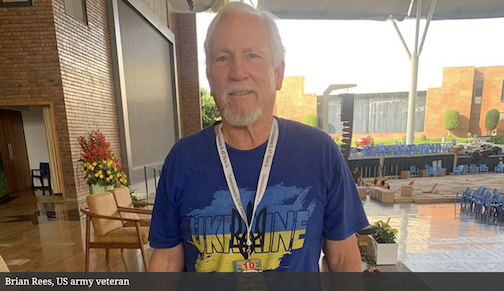
IN EARLY 2005, security checkpoints at the Abu Ghraib prison complex in Iraq―notorious for torture and abuse of its inmates―were overrun by armed militants. The surprise attack met with strong resistance from US coalition forces guarding the site. Several American soldiers suffered injuries, and many militants lost their lives. Brian Rees, a doctor with the US military, remembers rushing out to treat civilian casualties. Whenever he got a chance, he said, he would retreat to a corner and meditate.
I felt I could use TM to reset. It kept me resilient on the ground. It is important to maintain a healthy rhythm.
—Brian Rees, us army veteran
Rees has learned to find peace among chaos. He meditates twice a day―20 minutes each in the morning and in the evening. Transcendental Meditation (TM) has been a source of strength for him while serving in Iraq and in Afghanistan. It helped him beat long periods of boredom and to cope with the shocking sights of blood and gore. “I felt I could use TM to reset. It kept me resilient on the ground. It is important to maintain a healthy rhythm or things can go very wrong,” said the veteran about the benefits of meditation in a war zone.
Rees has introduced hundreds of US veterans to TM in the last 10 years, helping them return to normalcy after stressful missions. He still remembers a veteran telling him just two minutes after attending a session that TM was going to save his life. “The veterans have a lot of questions on why this is happening. But they have no answers,” said Rees. “TM will really help them see hope and remove negative aspects.”
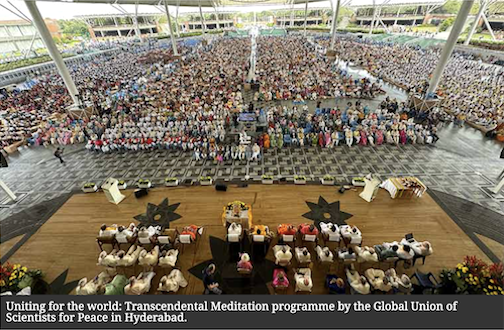
Nearly 4,000 TM practitioners from outside India like Rees and 6,000 Indians took part in a residential meditation programme organised by the Global Union of Scientists for Peace (GUSP), a group that works to carry forward the legacy of the late Maharishi Mahesh Yogi. It was held for two weeks from December 29 at the Kanha Shanti Vanam ashram near Hyderabad. The programme was intended to trigger a world peace field based on a theory propagated by the Maharishi.
Tony Nader, chairman of GUSP, explained the idea behind getting 10,000 people at one place. “The research is based on findings of 50 years that when one per cent of the total population practises Transcendental Meditation in any city, there is a reduction in crime, conflict, hospital admission and road accidents. One per cent of the world population today would be 81 million and it is a big number to bring together for meditation. The Maharishi produced a new technique, which is based on Patanjali yoga sutras, where it was found that the square root of one per cent of the population is enough to achieve the desired effect. It means that instead of 81 million, its square root―9,000―could be used. The number 10,000 was selected to have the safety factor on top of the needed number.”
Nader, who leads TM-related organisations in more than 100 countries, hails from conflict-ridden Lebanon and credits meditation for helping him survive the horrors of the civil war in the 1970s. The 14-day programme saw participants practise basic TM, yoga sutras and flying sutras. Frederick Travis, director of the Centre for Brain, Consciousness and Cognition, Maharishi University of Management, Iowa, used a special device fitted with 19 sensors on a participant to study the impact of group meditation on the brain. He recorded a high coherence in the brain as a result of meditation practised by thousands in the vicinity.
Alex Kutai, a theatre actor-turned PR professional from Israel, said meditation was an antidote to war. Kutai, an active TM teacher, was drawn to the movement after the 1973 Yom Kippur war. “After every war, the interest in TM becomes high. Thousands learned TM after the Yom Kippur war. I thought it could support my well-being,” he said.
Kutai said many people were suffering from trauma, depression and pain because of the ongoing Israel-Gaza conflict. “When people along the Gaza Strip had to be evacuated, we taught them meditation so that they could cope with the loss. We are also teaching TM for free to those who are suffering from the loss of lives of close ones,” he said. Kutai lives in Hararit, a village near the Lebanon border which was created by a community of TM members in the 1980s. Though he has not taught TM to Palestinians, Kutai said he was willing to teach friendly Arabs who reside around his village.
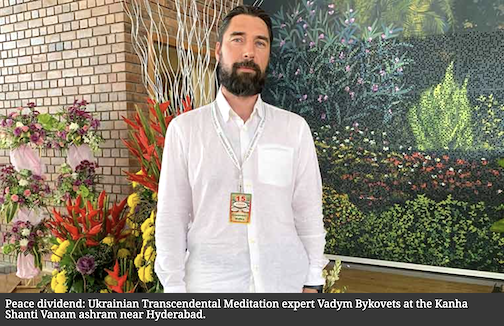
Another participant in the programme was Vadym Bykovets, a Ukrainian who nurses war wounds even though he is not physically involved in the war with Russia. The 49-year-old lives in Lithuania and works in the private sector. He counts his friends and acquaintances among those who died or were seriously wounded. He encourages fellow Ukrainians to practise meditation. “I feel that they are emotionally wounded and stressed. Without meditation, they would feel terrible. They are even scared of loud sounds.” How does meditation help him? “War is a painful topic. Regardless of what information I get from back home, I meditate,” he said. “It cleans my mind and soul, and I do not feel involved in that situation.” The reason Bykovets came all the way to Hyderabad is to support the belief that meditation is the right medium to achieve global peace.
Correction: Maharishi University of Management is Maharishi International University.
# # #
Visit Dr Tony Nader’s Instagram @drtonynader for inspiring photos, excerpts from articles, and video clips from the course and more.
They wrote: Dive into the fascinating world of Dr. Tony Nader, a Lebanese neuroscientist, researcher, and leader of the Transcendental Meditation movement. Discover his inspiring journey from the turmoil of the Middle East’s civil war to becoming a renowned figure in neuroscience. Join RJ Archana as she explores Nader’s insights on the current global conflicts, the roots of youth anger, and the importance of grassroots change. Learn about Nader’s transition from his initial days to his current stature, and gain profound insights into his work, including the founding of the International Journal of Mathematics and Consciousness. Don’t miss this thought-provoking episode on Viral City!
This first video (6:05) features Dr. Tony Nader at Maharishi International University (MIU) in Fairfield, Iowa talking about the need for TM in today’s stressful world. The video opens with students meditating with Dr. Nader. Using EEG, Dr. Fred Travis demonstrates the increase in brainwave coherence of a subject as she starts meditating. Students also discuss the practical benefits from their TM practice.
The second video (7:50) takes place in Medellín, Columbia at one of Father Gabriel Mejia’s shelters for rehabilitating homeless children with addiction problems. One of them went on to become a TM teacher and returned to teach the students how to meditate. They were inspired by the positive transformation and growth in his life.
The third video (5:02) was filmed in a Rhode Island hospital where medical staff were still dealing with the stressful repercussions from the Covid-19 pandemic. TM provided welcome relief from the traumatic loss of life and continues to be taught there. Dr. Nader mentions the David Lynch Foundation’s Heal the Healers Now campaign. They provided the funding for TM instruction, which helped thousands of healthcare professionals during the pandemic. Many continue to meditate regularly.
Embedded below are the videos with their short descriptions posted on the GWI site. Each title and chapter also take you to the BBC StoryWorks pages with the same videos plus 3 slides selected from each per chapter: Nature, Self, Community.
1. TM: Listening to your inner rhythm: Dr Tony Nader has been researching the mind and meditation since he was a medical student. Discover his methods for finding peace in a busy and ever-changing world.
2. TM: A healing journey: For Breiner, meditation had a transformational effect on his life, a lesson which he is now passing on to younger generations.
3. TM: The calm in the storm. Finding a peaceful moment to recalibrate. Ongoing strains on health clinicians from the Covid-19 pandemic are still apparent in hospitals. These medical doctors are finding strength in the moments of peace that Transcendental Meditation can provide.
November 2, 2023: Dr. Sanford Nidich was invited to present at a Ukraine Medical Conference, Current Status of Personalized Medicine: Global Issues and Prospects for Research. The title of his talk: Effects of Transcendental Meditation on PTSD, Depression and Sleep Problems in Veterans, Military Personnel and Other High Risk Groups. At 9:15 into the video, Dr. Nidich makes a PowerPoint presentation covering some of the related scientific research on Transcendental Meditation (TM). I selected Transcript, copied his talk leading up to the PowerPoint, and added a few hyperlinks. The whole video presentation is 29:25 minutes.
Thank you very much for inviting me to speak to this very prestigious conference, Current status of Personalized Medicine: Global Issues and Prospects for Research. It’s very important that we look at alternative approaches, including personalized approaches to medicine. The field is changing very rapidly, and it’s changing for the better. We’re able to help people progress with their disorders. We’re able to talk about and apply preventative medicine much more readily in a more accepted way than ever before.
Today, I wanted to address you on the effects of Transcendental Meditation on PTSD, post-traumatic stress disorder, depression and sleep problems in veterans, military personnel, and other high risk groups. We’ll be covering a lot of the research that’s been published on this very specific and effective program of Transcendental Meditation that has been taught and researched around the world for over the past 4 to 5 decades. It’s something that millions of people have been practicing in the United States and around the world, that many, many people are practicing in Ukraine.
There’s some initial research that is ongoing right now in Ukraine dealing with mental health issues in women. And there are other projects, perhaps with the military there at early stages that are being planned with Transcendental Meditation.
For transparency purposes, I started Transcendental Meditation in my first year of college at George Washington University in Washington, DC. There was hardly any research at the time that I started several decades ago. And since that time, there’s been over 700 research studies alone on Transcendental Meditation and over 400 peer reviewed independent studies on Transcendental Meditation conducted around the world.
Central to that natural system of medicine is the practice of Transcendental Meditation, which is easy to learn, systematically taught to people everywhere in the world in the same way. And it’s really been something that has been a life-changer for many, many people, from veterans and active military to prison inmates to healthcare providers. In terms of women’s health, in terms of the mental health and academic performance of college students and high school students, and in other specific areas of medicine medicine, such as cardiovascular disease, oncology, and other medical disciplines.
It’s been a program that researchers throughout the world have been researching, including very top researchers in the United States at Columbia University Medical School, University of Michigan Medical School, Georgetown University Medical School, and on and on, Howard University in Washington, DC, Cedars-Sinai Medical Center in Los Angeles, California.
So, it’s a practice that is easy to learn. Produces a unique state of restful alertness whereby during the 20 minutes of practice, the brainwave activity becomes more coherent and orderly, leading to greater executive functioning, memory, other cognitive factors. And at the same time that it’s producing a heightened state of alertness, it’s producing very, very deep rest throughout the whole physiology.
It produces a fourth major state of consciousness beyond waking, dreaming, and deep sleep called a state of restful alertness, or a hypo-metabolic state of wakefulness. Again, where the body noticeably feels and experiences, it exudes a very deep state of rest, while at the same time, we’re still fully alert. It’s not a state of hypnosis. It’s not some program that we just practice once a day, and, you know, and when we feel better, we don’t have to practice it.
We practice it twice a day for 20 minutes. And it’s a lifetime program that we can do once we learn it. And there are people who’ve been practicing Transcendental Meditation for well over 40 years now who have learned it in the 70s and 80s. And the reason they do it is because the human potential is enormous.
Consciousness is the new frontier of medicine. And we can expand consciousness. We can develop our own consciousness, which is the basis of our own thinking and behavior. We can produce greater orderliness and balance throughout the whole physiology, throughout the whole mind and body as a result of enlivening pure consciousness at the very basis of all thought and matter.
So there’s a lot to look forward to. It’s truly a new horizon. It’s causing a new paradigm shift where consciousness is seen to be primary, giving rise to all of our thinking and behavior in a very positive, orderly society, beneficial manner.
So what I’d like to do is, is take my time now to address you and go over some of the key scientific research on Transcendental Meditation. So let me see if I can share my screen so that you can be able to see my slides. So the title of my talk is, Effects of Transcendental Meditation on PTSD, depression, and sleep problems in various high risk populations, and I’ll be covering research principally in these areas.
Go to 9:15 in the video to see the 20-minute PPT containing slides of scientific research presented by Dr. Nidich.
— Written and compiled (citing sources) by Ken Chawkin for The Uncarved Blog.
Craig Pearson wrote a cover story on TM research at MIU for The Week’s Yoga Mid-Year Special (July 9, 2023): A BETTER BRAIN IN 20 MINUTES. Meditation research findings at a US university.
The print version is a 6-page spread: A BETTER BRAIN IN 20 MINUTES. A centre for research in America records increased intelligence and improved health in people who practice Transcendental Meditation. (Pages 86-91) Below is the online article with its own title and subtitle.
How about a better brain in 20 minutes?
Transcendental Meditation can increase intelligence and improve health
By Craig Pearson | Issue Date: July 09, 2023 | Updated: July 02, 2023 07:29 IST
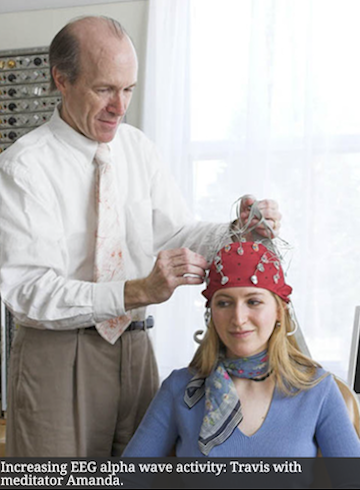
A fourth-year college student named Amanda walks into the laboratory and drops her backpack on a nearby chair. She has just finished her afternoon class on human resource management. The lab director, Dr Fred Travis, greets her and motions her to take a seat in front of the window. As they exchange small talk, Travis places a red cloth cap over the top of her head. It looks something like a ski cap, except for one thing―it has 32 sensors attached to it, connected to an electroencephalograph (EEG) machine that will measure the electrical activity of Amanda’s brain at 32 different points.
He monitors Amanda’s brainwave activity for the next few minutes to establish baseline readings. Then he asks Amanda to close her eyes and continue to sit quietly for a few more minutes. All the while wavy lines are moving across the computer screen, left to right.
Then he quietly instructs her to begin her practice of Transcendental Meditation―and in less than a minute, the waves change dramatically.
It’s clear to the naked eye, without analyzing the signals, that Amanda’s brain has shifted to a significantly more integrated, coherent style of functioning. That is, the different parts of her brain are communicating much more efficiently and effectively with each other.
Outwardly, Amanda appears simply to be sitting comfortably with her eyes closed. But inside, she is experiencing a fourth major state of consciousness.
Travis directs the Center for Brain, Consciousness, and Cognition at Maharishi International University (MIU) in Fairfield, Iowa, in the United States. He is one of the world’s leading scientists in the area of brain functioning and higher human development, with special focus on how the technique of Transcendental Meditation affects brain functioning and promotes personal growth.
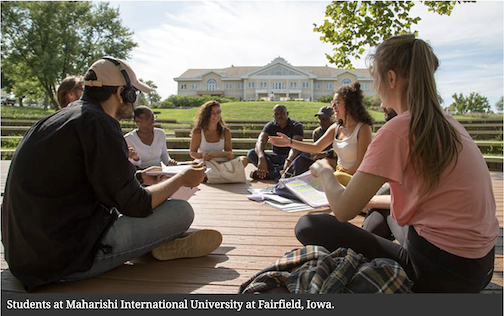
Founded in 1971 by Maharishi Mahesh Yogi, the noted Vedic scholar and scientist of consciousness, MIU is accredited by the Higher Learning Commission. It offers bachelor’s, master’s and doctoral degrees in a wide range of subjects, from art to computer science, from creative writing to sustainable living, from regenerative organic agriculture to Ayurveda. Three quarters of its students come from outside the US, and the student body represents more than 80 countries.
All faculty, staff and students, as well as hundreds of members of the surrounding small-town community, practise the Transcendental Meditation technique. The technique, learned from a certified TM instructor, is a simple, natural, effortless procedure practised for 20 minutes twice each day while sitting comfortably with the eyes closed. It allows the mind to settle inward into a state of quiet―to “transcend,” or go beyond, the constant stream of thoughts and perceptions that fill the mind.
MIU has been a centre for research on Transcendental Meditation since its founding. Its first president, Robert Keith Wallace, conducted the first research on the technique while a PhD student at UCLA. Within two years, he had published his research in Science, Scientific American and the American Journal of Physiology.
His findings were striking. He found that during TM practice, as the mind settles inward, the body settles down into a uniquely deep state of rest, reflected in decreased heart rate, decreased respiration rate, and increased skin resistance. Yet the mind remains entirely awake―more awake than ever, in some respects―reflected in increased EEG alpha activity in the brain.
This combination of deep rest and heightened wakefulness had never been seen before in a laboratory. Wallace described it as a “wakeful hypometabolic state”―“restful alertness,” in simpler English―and he declared it to be a fourth state of consciousness beyond the three familiar states of waking, dreaming, and sleeping.
Wallace was studying the classic state of samadhi, known in the Upanishads as turiya, “the fourth,” and termed Transcendental Consciousness by Maharishi.
This exalted state had been known and celebrated for millennia, in India and in traditions around the world. But Wallace was uncovering the constellation of changes that occur in body during this restfully alert experience―its “neurophysiological correlates.”
The TM technique does not involve focusing or concentrating the mind or attending to one’s thoughts or one’s breathing. It is not “mindfulness.” One does not try to control one’s body’s functions, as in biofeedback. The technique is effortless.
One student describes her experience during TM practice in this way: “I have the experience of transcending all activity and experiencing awareness as an unbounded unity. There is no longer any sense of ‘me’ and ‘not me,’ no longer any thought or feelings or even a body, just the Self, and that is all there is, and that is all I am.”
Yet this simple and natural experience of transcending leads to a host of physiological changes, all in the direction of rest, repair, and balance.
Wallace’s publications sparked a wave of research on the TM technique that has continued to this day. To date, research has been conducted at more than 250 universities and research institutes around the world, and studies have been published in more than 170 journals in a range of fields.
These studies have further detailed the striking physiological changes that take place during the technique. They have also looked at the long-term effects, where the findings have been equally remarkable. These include improved health, increased intelligence (IQ) and creativity, increased self-esteem and self-actualisation, and improved interpersonal relationships.
Many of these findings are notable because they had also never been seen before in modern science. For example, intelligence and creativity grow through childhood but level off in adolescence. Yet with TM practice, these values resume growing regardless of age. TM practice “unfreezes” their growth.
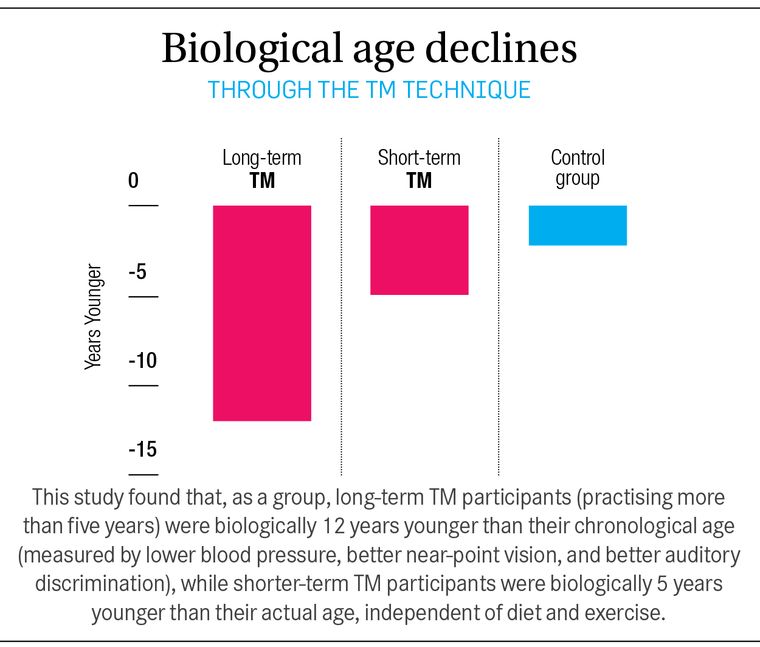
Wallace predicted that, given the TM technique’s ability to dissolve stress, it may affect the rate at which the body ages. Physiologists distinguish between our chronological age (our age in years) and our “biological age”―the age of the body as determined by a cluster of measures.
Wallace found that people who had been meditating more than five years were biologically 12 years younger than their chronological age. Several other studies found that TM practice can extend lifespan by 23%.
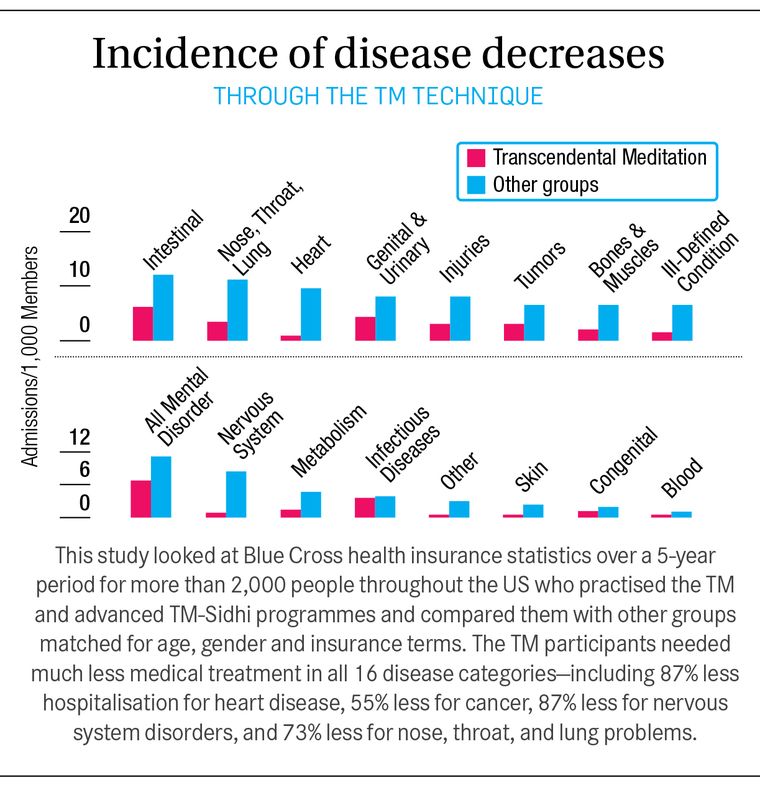
One of the most dramatic findings emerged from health insurance statistics. David Orme-Johnson, then chair of MIU’s psychology department, tracked 2,000 people over a five-year period across the US who practised the TM technique.
The data was collected by Blue Cross, the health insurer. The statistics for the meditation group were compared with those of a control group selected by the insurance company to match the TM group for age, gender, education, profession and insurance terms.
The result: The TM group went to hospital 56% less often for illness or surgery. The differences between the TM group and the control group were significant in all age groups but most conspicuous in older groups. The TM group also required 50% fewer doctors’ visits. The TM meditators had not become disenchanted with doctors―for maternity, they used health care just as much as the control group.
Starting in 1990, research on cardiovascular health became a major focus at MIU. Over the following years, the US government’s National Institutes of Health (NIH) invested more than $25 million dollars in MIU’s research on TM and cardiovascular health. With this support, MIU professor Robert Schneider and his colleagues, in partnership with universities around the US, conducted a series of studies that made headlines worldwide.
Cardiovascular diseases are the leading cause of death globally, according to the World Health Organization, accounting for 32% of all global deaths. Yet modern medicine has failed to cure or even curb this disease or even pinpoint the cause. It has only identified the risk factors.
This is why Schneider’s studies were so newsworthy. He and his teams found that TM practice shows great promise for preventing and even curing cardiovascular disease.
They focused first on hypertension, a leading risk factor for heart disease. They tested the TM programme on elderly African Americans, who have 50% more hypertension than white Americans, twice the level of cardiovascular disease, and a far higher rate of deaths from it. This is because they’re subject to higher chronic socio-environmental stress.
But when they learned the TM technique, their blood pressure dropped significantly, as much as with standard drug treatments―but with no side effects, with higher patient compliance, and at far lower cost. The meditating group also lived longer. Compared with the control group, those in the TM group were 23% less likely to die from any cause, 30% less likely to die from heart disease, and 49% less likely to die from cancer.
In these studies, the subjects made no changes in their diets or exercise habits. The effects were solely due to the regular experience of transcending using the TM technique.
Studies found that TM practice reduces other leading risk factors for heart disease, including cholesterol and free radicals, smoking and alcohol abuse, and psychological and socio-environmental stress.
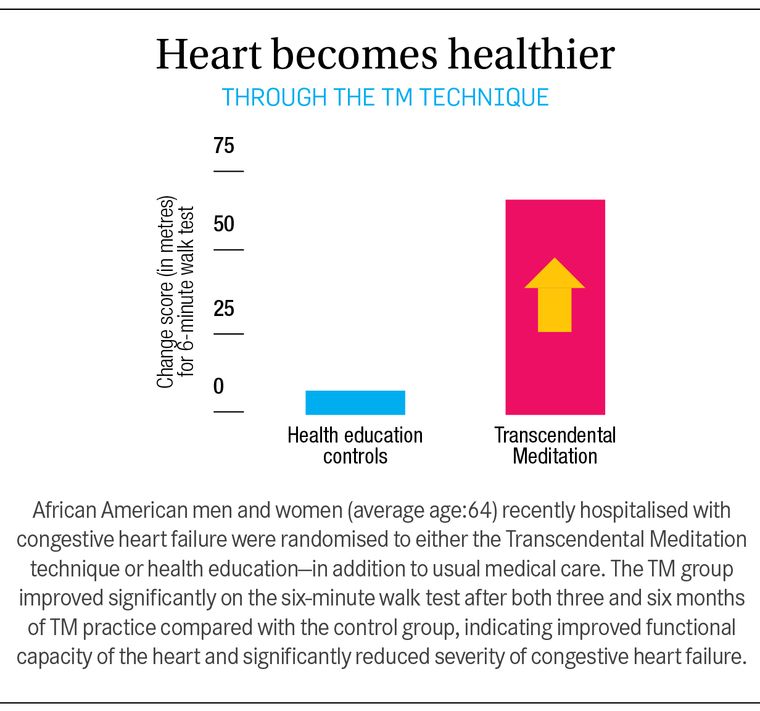
Prevention is the best medicine, but for those who already have heart disease, Schneider and company also found that TM practice can actually reverse its damaging effects. TM practice unclogs arteries and reverses atherosclerosis. It reverses enlargement of the heart (left-ventricular hypertrophy). The practice even reduces the severity of congestive heart failure―and heart failure is the end result of all heart diseases. Again, subjects in these studies made no other changes in their lifestyle beyond their TM practice.
Turning their attention to another global epidemic, Schneider and company found that TM practice significantly reduces the risk of diabetes. One study found that after just 16 weeks of TM practice, patients with both heart disease and type 2 diabetes not only had lower blood pressure, but had also significantly better blood glucose and insulin levels―signifying reduced insulin resistance and more stable functioning of the autonomic nervous system.
“This research shows that the Transcendental Meditation technique helps the body tap into its inner intelligence and normalise function,” Schneider said. “These subjects simply transcended regularly, and their cardiovascular and endocrine systems regained more perfect balance.”
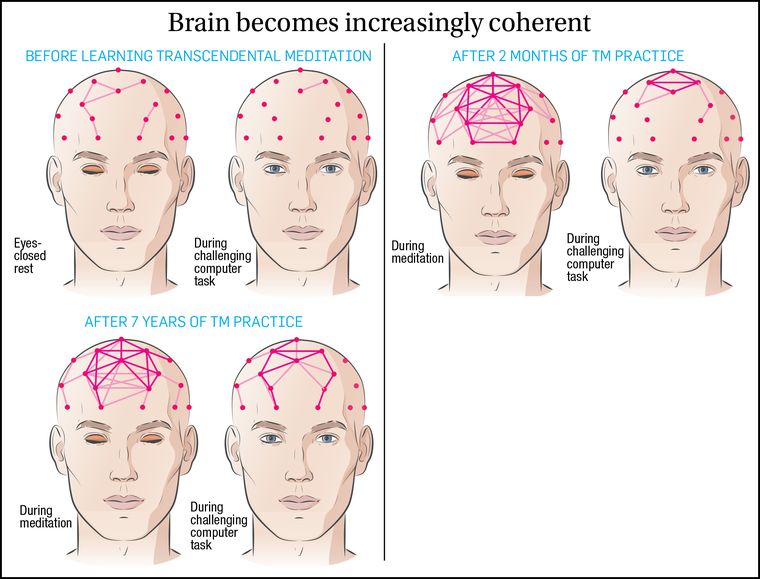
Travis has most recently been looking at how the integrated brain functioning characteristic of TM practice increasingly persists even outside of meditation―over time it becomes the brain’s normal style of functioning.
The computer-generated drawings (above) illustrate alpha-range EEG coherence and how it increases during TM practice―and then increasingly becomes the brain’s normal style of functioning even outside of meditation.
The lighter lines show coherence (communication) between the two linked brain areas of about 70%, the heavier lines coherence of 80% or higher (100% is perfect coherence). The more effectively the various brain areas communicate, the better the brain performs.
“These are really remarkable findings,” Travis said. “Before we started researching the Transcendental Meditation technique, we had no idea that the brain could function with this exceptional level of integration. And now we’ve learned that we can cultivate the brain to function in this way all the time.”
This is also remarkable, because the higher one’s level of brainwave coherence, the greater one’s intelligence, creativity, moral maturity, learning ability, and many other positive values, according to research studies at MIU and elsewhere.
MIU students have the option of receiving a Brain Integration Progress Report. Students have their brainwave coherence measured shortly after they enroll and then again shortly before they graduate, to see how much their brain integration has increased during their years at MIU.
“This is a remarkable contribution to education,” Travis says. “And any school, college or university can implement this same approach and give their students these same benefits, without any changes to their curriculum apart from setting aside two short periods for Transcendental Meditation practice.”
Travis is often asked whether other meditation techniques produce these same results.
“Different meditation techniques involve different mental procedures,” Travis explains, “and therefore they produce different modes of brain functioning.
For example, meditation techniques that involve focusing or concentrating the mind―known as focused attention techniques―produce beta/gamma activity in the brain, typical of any active mental processing.
A second category of techniques, called open monitoring, includes mindfulness procedures, which involve monitoring aspects of one’s experience―one’s thoughts, breathing, sensory perceptions, physical sensations―without evaluating them. These procedures induce theta activity in the brain, seen when people reflect on mental concepts.
The third category, which includes the Transcendental Meditation technique, is called automatic self-transcending. It involves procedures that transcend their own activity, enabling the mind to go beyond (transcend) the meditation process and into the experience of pure consciousness. These techniques elicit frontal alpha-1 coherence, indicating the brain’s executive control centre is functioning in an integrated manner.
“All meditation techniques are not the same,” Travis says. “Other procedures have their value. But so far only the TM technique has been shown to produce this integrated and coherent style of brain functioning along with the wide-ranging constellation of benefits that studies have found.”
Over the past 40 years the technique has been applied in a variety of practical fields, where it has been studied by MIU scientists and others.
In schools, when students and faculty learn the practice, IQ and creativity increase, students’ grades increase, graduation rates increase, and overall school climate improves.
In companies, when managers and employees learn the TM technique, stress declines, illness and absenteeism decline, cooperation increases, productivity increases, and the companies become more profitable.
In prisons, when inmates learn the technique, they sleep better, their health improves, they commit fewer infractions, and most important, they return to prison at a far lower rate than non-meditating prisoners.
Among veterans suffering from PTSD (post-traumatic stress disorder), when they start TM practice, their symptoms decrease markedly, and they reintegrate into their families and the workplace more quickly and easily.
How can such a simple technique produce such a wide constellation of benefits―for cognitive development, for health, for personality growth and interpersonal relationships?
“It’s all about the experience of transcending,” Travis said. “The experience is simple, natural, and incredibly profound. It dissolves stress and resets and rebalances the whole mind-body system. Maharishi likens it to watering the root of a tree, where a single act nourishes the tree’s countless leaves and branches. ‘Water the root to enjoy the fruit,’ he said. Consciousness is the most fundamental value of life, and now we know we can cultivate and improve our lives from that deepest level.”
Healthcare providers (HCP) at three Miami hospitals during the height of the Covid crisis, who practiced the Transcendental Meditation technique (TM), showed a rapid and highly significant reduction in stress-related burnout symptoms such as somatization, depression, anxiety, sleep disturbances, and emotional exhaustion, as well as significant improvement in mental well-being, compared to a parallel matched lifestyle-as-usual group (LAU), according to a new study published today in PLOS ONE.
A total of 65 healthcare providers at the three Miami hospitals (Baptist, Mercy, and Encompass Hospitals), were enrolled in the TM group, as well as 65 parallel match controls. Validated surveys were used to assess burnout and stress-related symptoms including the Brief Symptom Inventory-18 scale (BSI), the Insomnia Severity Index (ISI), the Maslach Burnout Inventory-Human Services Survey (MBI), and the Warwick Edinburgh Mental Well Being Scale (WEMWBS).
After two weeks symptoms of somatization, depression, and anxiety in the TM group showed a near 45% reduction and insomnia, emotional exhaustion and well-being had improved by 33%, 16% and 11% respectively. At three months, the TM group showed mean reductions in anxiety of 62%, somatization 58%, depression 50%, insomnia 44%, emotional exhaustion 40%, and improvement in mental well-being of 18% (Examples Figures 1 – 3). TM appeared easy to learn and was maintained by the subjects within an average weekly TM session completion rate of 83%. (Click on Figures 1-3 to enhance details.)
“The results of this study—one of the largest on the effects of TM in a healthcare setting conducted during the height of the Covid crisis—are dramatic, not just because of the size and significance of the improvements in a variety of burnout indices, but notably in how rapidly the results were seen,” said Mark S. Nestor, M.D. Ph.D., the principal investigator, and lead author of the study. Dr. Nestor is Director of the Center for Clinical and Cosmetic Research in Aventura Florida, and Voluntary Professor at the University of Miami Miller School of Medicine. “This rapid and dramatic improvement in stress-related symptoms is not often seen with the use of medications much less with other easy to learn mental techniques.”
The authors point out that “the study confirms and expands on the previously reported benefits of the practice of TM and its positive psychological impact on healthcare providers in high stress settings and should be considered as a rapid intervention for healthcare worker burnout but certainly may have application to other at-risk populations.”
A month later, Psych News Daily reported: Transcendental Meditation reduces burnout, new study finds. A new study has found that Transcendental Meditation reduced symptoms of burnout and insomnia, while improving overall well-being.
— Written and compiled (citing sources) by Ken Chawkin for The Uncarved Blog.
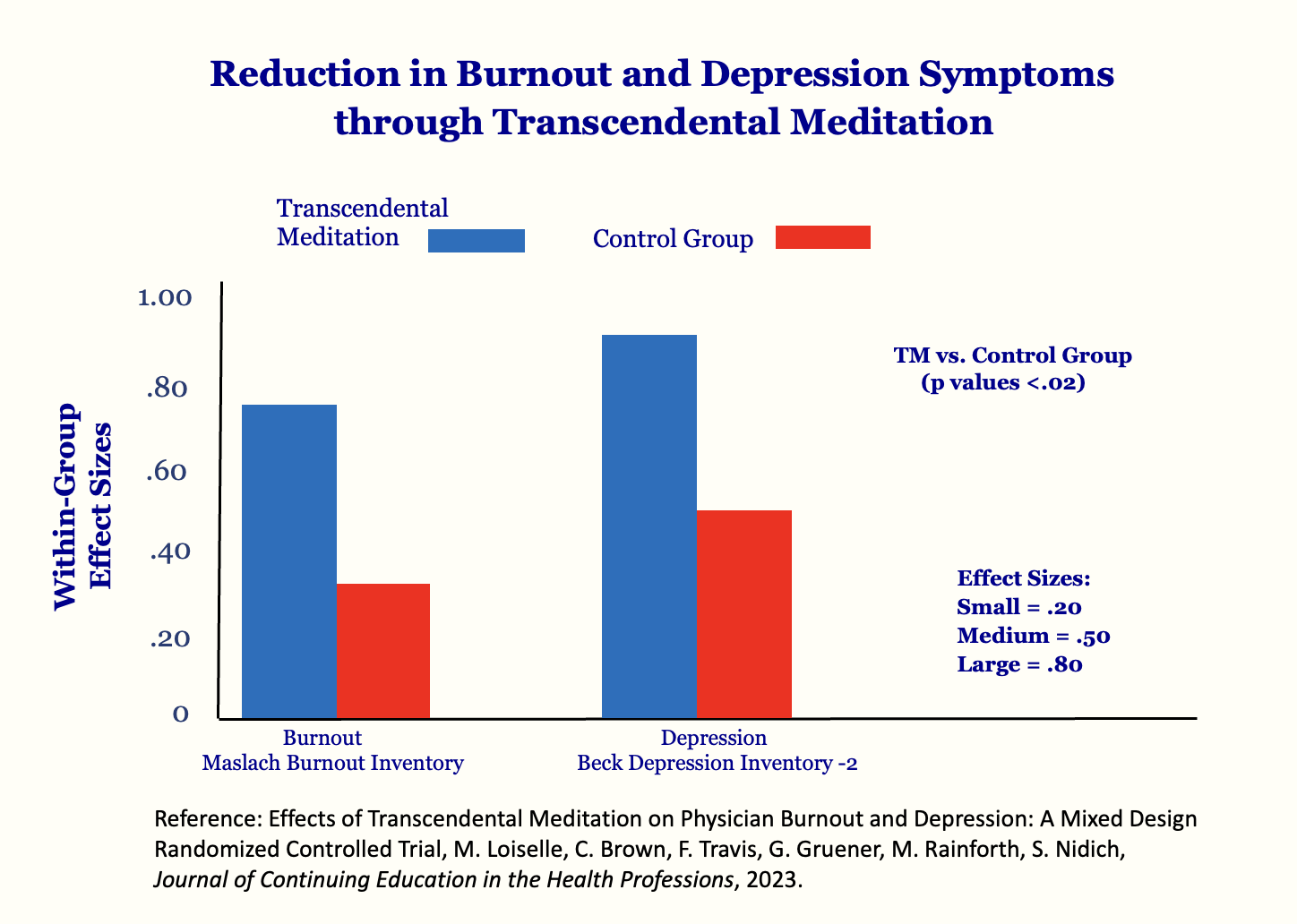
This figure shows the within-group effect sizes (mean change divided by pooled standard deviation) for the Transcendental Meditation group and the treatment-as-usual control group on burnout, as measured by the Maslach Burnout Inventory, and depression symptoms, as measured by the Beck Depression Inventory-2. Between-group statistics comparing TM to the control group yielded significant differences between groups on both burnout and depression symptoms (p values <.02). CREDIT: Maharishi International University Research Institute. (Image posted on EurekAlert!)
According to a randomized controlled study, published in Journal of Continuing Education in the Health Professions, physicians who practiced the Transcendental Meditation (TM) technique showed significant reductions in both burnout and depression symptoms. Research conducted at Stritch School of Medicine, Loyola University Chicago found that practice of Transcendental Meditation produced large effect sizes in decreasing burnout and depression symptoms in academic physicians; controls exhibited smaller effect sizes. The research was done pre-covid.
Marie Loiselle, PhD, lead author and senior researcher at the Center for Social-Emotional Health at Maharishi International University, stated: “Prior to treatment, the physicians were discouraged by the impact that burnout was having on their work and personal lives. To see both burnout and depression reduced significantly across 1- and 4-month posttests for the Transcendental Meditation group indicates a real possibility for alleviating these symptoms throughout the health profession.”
Sanford Nidich, EdD, co-author and director of the Center for Social-Emotional Health, explained that “these findings are consistent with research on Transcendental Meditation recently published in JAMA Network Open and the Journal of the American College of Emergency Physiciansshowing large within-group effect sizes due to TM on burnout and depression symptoms in healthcare provider groups. The findings are also consistent with research on other populations.”
Forty academic physicians were enrolled in the four-month study, comparing the TM technique to treatment-as-usual controls. TM is described as a simple, effortless technique, practiced for 20 minutes twice a day, sitting with eyes closed. TM allows ordinary thinking processes to become more quiescent, resulting in a unique state of restful alertness. Controls continued with their usual care throughout the duration of the study. The primary outcome was total burnout, using the Maslach Burnout Inventory (MBI). The Beck Depression Inventory (BDI-2) was also used to determine effectiveness of TM on depression symptoms over the same time-period.
Repeated measures analysis of covariance was used to assess adjusted mean change scores. Significant improvements were found for the TM group compared to controls in total burnout (P=.020) including the MBI dimensions of emotional exhaustion (P=.042) and personal accomplishment (P=.018), and depression (P=.016).
The following is a sample of responses from semi-structured interviews with TM participants about their experiences:
“I’m more relaxed about things overall, more accepting, calmer, not as revved up by things. I think that is the biggest change.”
“If I am feeling really bothered by the day, I’m able to get over it easier and shift over to focusing on home.”
According to Gregory Gruener, MD, study co-author and Vice Dean for Education, Stritch School of Medicine, Loyola University Chicago: “Longevity in a career that will last 40 to 50 years requires a physician to embrace the ‘long-view’. While knowledge, skills and attitude are fundamental, Transcendental Meditation provides the clarity of mind and calmness that makes this journey as enjoyable and fulfilling as the destination.”
*
Funding support: This study was supported by grants from Loyola University and other private foundations and individual donors.
News Coverage: This study was published Jan 26, 2023 and publicized with an embargoed press release via EurekAlert! It was reported in the medical press. Helio requested a copy of the study and published their review Feb 3, 2023. But you have to register to read it.
When lead author Marie Loiselle read this news she shared her wish that this will motivate more health professionals to start TM and more programs like the one Carla and Duncan Brown teach at Stritch School of Medicine to be implemented.
The evidence continues to mount, which makes it a wise, health-conscious decision, and, since the pandemic, an almost necessary one. Some physicians have also been prescribing TM for their patients. It is a viable alternative and should be covered by health insurance.
It seems to be a matter of time, which reminds me of this famous quote attributed to German philosopher Arthur Schopenhauer: “All truth passes through three stages. First, it is ridiculed. Second, it is violently opposed. Third, it is accepted as being self-evident.”
Burnout is pervasive among physicians and has widespread implications for individuals and institutions. This research study examines, for the first time, the effects of the Transcendental Meditation (TM) technique on academic physician burnout and depression. Mixed methods findings suggest the TM technique is a viable and effective intervention to decrease burnout and depression for academic physicians.
2024 Update: A second Editorial, this one in the Spring 2024 – Volume 44 – Issue 2 of the Journal of Continuing Education in the Health Professions, announced The 2023 Paul Mazmanian JCEHP Award for Excellence in Research was given to Marie Loiselle and her research team for their original study! Their TM and physician burnout paper was selected from 231 original research papers submitted to JCEHP.
— Written and compiled (citing sources) by Ken Chawkin for The Uncarved Blog.
World Journal of Social Science publishes study showing that group practice of the TM and TM-Sidhi techniques by √1% of a population decreased multiple stress indicators in the U.S.. Scientists call for a group to create world peace.
During a five-year demonstration period, a group of 1725 meditators practiced the Transcendental Meditation and TM-Sidhi techniques twice daily to create coherence in US collective consciousness. Murders, rapes, aggravated assaults, robberies, infant mortality, drug-related deaths, vehicle fatalities, and child deaths by injuries all decreased, by 6% to 21% compared to the seven previous years. When the size of the group decreased over the next five years, stress began to increase again on all indicators. (Summary for EurekAlert! Press Release.)
Every year during 2000 to 2006 there were tens of thousands of stress-related tragedies in the U.S.. Official statistics from the FBI and Centers for Disease Control indicate that there were 15,440 murders, 93,438 rapes, and 86,348 child and adolescent deaths from accidents each year to give a few examples. This current study, published in the World Journal of Social Science, is the longest and most comprehensive of 50 studies to demonstrate what has been named the Maharishi Effect, in honor of Transcendental Meditation (TM) and Maharishi International University (MIU) founder Maharishi Mahesh Yogi.
The results can be seen in the chart below. The blue line indicates that during the Baseline period of 2000 to 2006 the size of the TM and TM-Sidhi group located at Maharishi International University in Fairfield, Iowa increased to reach the √1% of the U.S. population (1725 people) and stayed there for five years during the Demonstration period from 2007 to 2011. All stress indicators immediately started decreasing. In the Post period when the size of the group size began to decline the rate of decrease in stress slowed and then it reversed and began to increase.
Indicators of Stress in the United States
The size of the MIU TM and TM-Sidhi Group is indicated by the blue line, the eight indices of stress in the United States are represented by the lines in different colors, and the US stress index—the mean of all eight variables—is indicated by the red line. The figure shows a phase transition to a global reduction of negativity in the U.S. when the critical threshold of the √1% of the U.S. population was practicing the TM and TM-Sidhi program together in a group. When the Group size dropped significantly, the trend was reversed.
Lead author Dr. David Orme-Johnson said: “What is unique about this study is that the results are so visually striking and on such a large scale. We see reduced stress on multiple indicators at the predicted time for the entire United States over a five-year period. And when the size of the group declined, national stress began increasing again. Clearly, the group was causing the effect.”
“What is unique about this study is that the results are so visually striking and on such a large scale. We see reduced stress on multiple indicators at the predicted time for the entire United States over a five-year period. And when the size of the group declined, national stress began increasing again. Clearly, the group was causing the effect.”
Lead author Dr. David Orme-Johnson
Co-author Dr. Kenneth Cavanaugh commented: “This study used state-of-the-art methods of time series regression analysis for eliminating potential alternative explanations due to intrinsic pre-existing trends and fluctuations in the data. We carefully studied potential alternative explanations in terms of changes in economic conditions, political leadership, population demographics, and policing strategies. None of these factors could account for the results.”
The fact that all variables started decreasing only after the square root of one percent of the U.S. was reached indicates a phase transition. Like when water does not turn to ice until 32◦ F is reached, national stress did not start decreasing until the U.S. √1% transition threshold was achieved.
The fact that all variables started decreasing only after the square root of one percent of the U.S. was reached indicates a phase transition. Like when water does not turn to ice until 32◦ F is reached, national stress did not start decreasing until the U.S. √1% transition threshold was achieved.
The chart shows that in 2013 when the size of the TM and TM-Sidhi group quickly dropped all stress indicators abruptly increased. Apparently, the rapid drop in national coherence shook the nation.
The scientists used regression analysis to estimate how many deaths and events were reduced by the meditator group. For example, image 2 shows the red dotted line representing the Baseline trend projected into the Demonstration and Post periods. During the Demonstration period drug-related deaths (the black line) fell to 14% below their Baseline trend and were another 15 % lower during the Post period, for a total of 79,941 fewer drug deaths. The chart also shows that in the absence of the coherence creating group drug deaths eventually returned to their Baseline level.
Drug-Induced Deaths in the U.S.
IMAGE 2: The red dotted line is the number of Drug Deaths forecasted from the Baseline trend. The black line is the actual number of Drug Deaths. Similar analyses were conducted for all variables and the results are displayed in the Table.
TABLE: RESULTS OF REGRESSION ANALYSES. The first column shows the number of events per year during the Baseline period (Intercept). The second column shows the change per year during the Baseline (Slope). The third, fourth, fifth, and sixth columns show the thousands of events averted during the Demonstration, during the Post periods, the total events averted, and percent change, respectively. The last column shows the estimated total events averted by each individual participant in the MIU TM and TM-Sidhi group.
The unified field level of natural law
The finding that the effect was holistic, causing all variables to move up and down together, supports the theory expressed by both Maharishi from the Vedic perspective and by quantum physicist and MIU president Dr. John Hagelin from quantum field theory that the TM and TM-Sidhi groups are creating coherence in collective consciousness from the unified field level of natural law. This is big. It is evidence of the existence of the unified field from a completely different approach than using particle accelerators and detecting gravity waves.
This discovery of the unified field is more than just an intellectual knowledge. It is arguably the most immediately highly practical technological discovery in the history of science. The invention of the wheel mobilized humanity. The printing press, radio, the telephone, the internet, and satellites increased our ability to communicate with each other across vast distances and time. The discovery of DNA opened our minds to the subtle mechanics of natural law underlying the evolution and growth of all life forms. These are among the greatest scientific discoveries of all time. But what discovery can reduce human suffering as comprehensively as group meditation?
Relationship between individual and collective consciousness
The paper reviews the many concepts of collective consciousness as they have occurred throughout history in the sciences and humanities. None have practical applications as Maharishi’s does and none have been so empirically verified.
The paper discusses Maharishi’s theory, which holds that every individual automatically contributes to collective consciousness and reciprocally, collective consciousness influences every individual. This is universally true whatever the form of government—democracy, republic, monarchy, communism, or dictatorship.
It is essential for every individual to use evidence-based technologies to reduce their own stress and at the same time, the responsibility of every government to provide these technologies to everyone.
The paper summarizes the hundreds of studies showing that practice of TM increases coherence in the individual, as indicated by such measures as increased brain coherence, decreased anxiety, depression, and anger, increased creativity, increased IQ and emotional and social intelligence, and decreased PTSD symptoms, prison recidivism, drug and alcohol addictions, and sickness rates in all categories of disease. More coherent individuals form a more coherent society.
The Howard and Alice Settle Foundation
A grant for 75 million dollars from the Howard and Alice Settle Foundation provided stipends for participants to be in the group and provided funding to bring several hundred visiting TM-Sidhi experts from India to further augment the MIU group. Dr. Orme-Johnson commented: “This is a lot of money, but the savings from the 10% reduction in crimes would save over 200 billion dollars, not to mention all the other savings from reducing other sources of stress in the country.”
Scientists call for a group to create world peace
The paper concludes with a call to create a permanent √1% group for the whole world, 8,000 participants practicing the TM and TM-Sidhi program together in one place. And as an engineering safety factor, a √1% group on every continent is needed. The world is so interconnected, no one is safe until everyone is safe, all living in harmony. This is easily within reach of any government or the world’s wealthiest citizens. The person who does it will be remembered as the greatest leader in history.
IMAGE 3: GROUP MEDITATION AT MAHARISHI INTERNATIONAL UNIVERSITY. Since 1979 twice daily group meditations have been held at MIU in Fairfield, Iowa for the purpose of creating coherence in the U.S. and world collective consciousness.
. . . . .
JOURNAL: World Journal of Social Science. ARTICLE TITLE: Field-Effects of Consciousness: A Seventeen-Year Study of the Effects of Group Practice of the Transcendental Meditation and TM-Sidhi Programs on Reducing National Stress in the United States. PUBLISHED: Dec 14, 2022. DOI:10.5430/wjss.v9n2p1 METHOD OF RESEARCH: Data/statistical analysis. SUBJECT OF RESEARCH: People. ADDITIONAL INFORMATION: The published article contains 5 Tables and 10 Figures (Graphs).
This summer, co-author David W. Orme-Johnson sent out an introduction to the latest Maharishi Effect research study. The previous TM study published on this M.E. research was the fourth in a series at the time. That post also listed the previous three studies: Follow-up study suggests large advanced TM groups reduced murder rates in large US cities. This latest and fifth large-scale study looks at the total national homicide rates before, during, and after the experimental period. This is a new development, which further confirms the efficacy of this approach. What follows is Dr. Orme-Johnson’s synopsis.
The study found that during the years when the size of the coherence creating group at MIU practicing the Transcendental Meditation and TM Sidhi techniques reached the predicted national threshold of the square root of 1% of the US population (1725 people) that the rate of national homicides fell dramatically and that when the size of the group decreased once again to below threshold, that homicides turned around and started increasing again.
As there were no known alternative explanations for this phenomenon, because it was predicted in advance, and because it replicates dozens of previous studies, this study provides a powerful new layer of evidence that the group practice of this technology creates coherence in an underlying field of collective consciousness in which we all live and are connected.
Co-author Kenneth Cavanaugh offered some points about the paper.
Sections 1 and 2 of the paper contain a very readable and full discussion of Maharishi’s knowledge of collective consciousness. The final section (Section 6, Discussion) of the paper is also a very readable and nontechnical discussion of possible alternative explanations for the findings and the search for an explanation of the Maharishi Effect from the point of view of modern science.
The article was published in an open access journal with an Asian focus with the hope that its publication will help to increase support in India, Thailand, Nepal and other countries in that region for creation and expansion of large peace-creating groups there, as well as globally. So anyone can download a copy (or read it online) without charge and circulate it freely to others. The URL for this paper is https://doi.org/10.5430/sass.v8n1p1.
New Study Shows Improvement in U.S. Homicide Trends Linked to Group Practice of the Transcendental Meditation® and TM-Sidhi® Programs
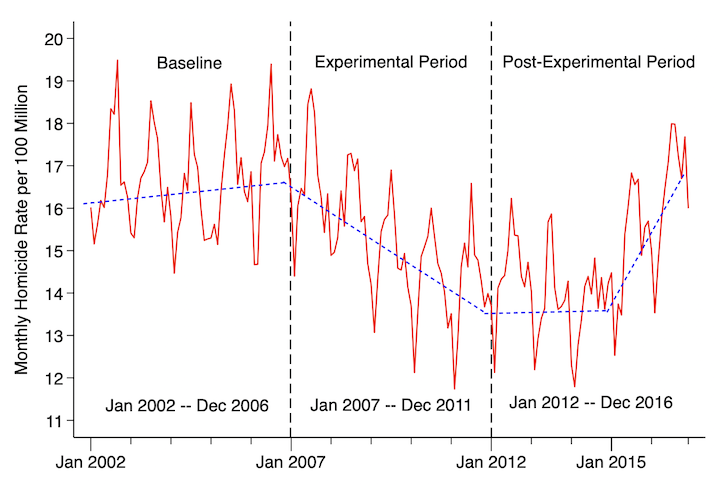
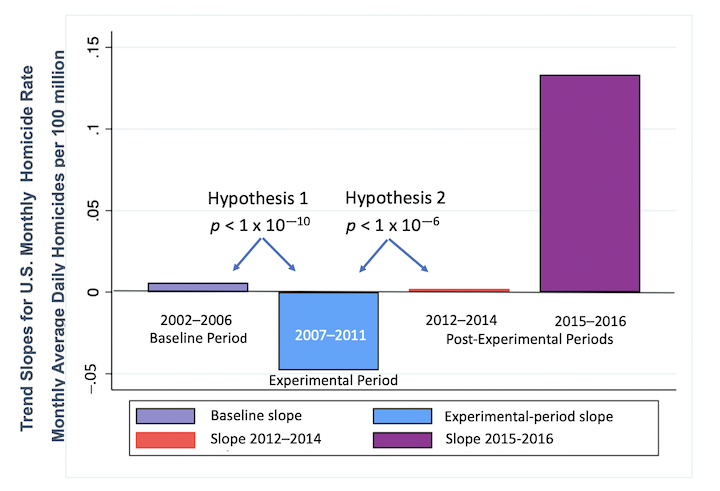
A newly published, peer-reviewed study of a 15-year social experiment reports a highly significant 19.3% reduction in U.S. monthly homicide trend 2007-2011 when the average size of a large U.S. group practicing the Transcendental Meditation and TM-Sidhi programs exceeded a theoretically predicted critical threshold. This improved trend was significantly reversed during 2012-2016 after the size of the group declined substantially below the predicted size required to create a measurable reduction in national trends of violent crime: the square root of 1% of the U.S. population (1,725 participants).
When the average size of the group at Maharishi International University (MIU) in Fairfield, Iowa USA was above the predicted threshold during the 2007-2011 “experimental period,” an estimated 10,594 homicide fatalities were averted as a result of the decline in homicide trend relative to the baseline trend for 2002-2006. The probability that the reduced homicide trend could be attributed to chance variation was reported to be less than 1 in 10 billion (p < 1 x 10⁻¹⁰).
As predicted, this declining trend in homicide rates was then significantly reversed in the “post-experimental” period 2012–2016 when, due to reduced funding, the size of the MIU group fell below the critical threshold. During the first post-experimental subperiod 2012-2014, the steeply declining homicide trend leveled out, shifting to a flat trend. (See Figure 1 and Figure 2 below.) The probability that this predicted increase in trend (relative to the experimental-period) could be explained by chance was less than 1 part in a million (p < 1 x 10⁻⁶ ).
During the second post-experimental subperiod 2015-2016, homicide rates soared when the group size declined more steeply. The probability of observing this increase in trend relative to the experimental period trend was less than 1 in 100 billion billion (p < 1 x 10–20).
The authors conclude that the theoretically predicted decline and subsequent increase in homicide trend could not be plausibly explained by other factors such as changes in police staffing, policing strategies, incarceration rates, the proportion of U.S. youth age 18-25, seasonal factors including temperature, or economic factors such as unemployment rates and rates of inflation; nor were the results attributable to pre-existing trends or violation of statistical assumptions for the time series regression analysis.
Dr. Cavanaugh remarked: “There are now 32 research articles published in independent, peer-reviewed scientific journals or in proceedings of scientific conferences that validate the effectiveness of this consciousness-based approach to reducing the stress and tensions in national consciousness that fuel the growth of violence, crime, and conflict in society. This evidence-based, cost-effective approach offers an urgently needed solution for reducing the upsurge of social violence and conflict afflicting the U.S. and many other countries globally.”
Figure 1. Monthly U.S. homicide rate per 100 million people (mean daily rate per month) 2002-2016 with seasonally adjusted, fitted trend segments from time series regression analysis.
Figure 2. Monthly rates of change for the U.S. homicide rate (trend slopes) for the four trend segments of the segmented-trend regression model: baseline period, experimental period, and two post-experimental subperiods. The p-values indicate a statistically significant decrease in slope from baseline trend to experimental-period trend (supporting Hypothesis 1) and significant increase in slope from experimental period to the slope for post-experimental trends 2012-2014 and 2015-2016 (supporting Hypothesis 2). The p-value for the difference between the experimental trend slope and that for the 2015-2016 trend is p < 1 x 10–20 (not shown in Figure 2).
Ancient architecture system as preventative medicine
Having understood the ill-effects of sick building syndrome and the need to better conserve energy by incorporating green features, architects are also utilizing certain elements of an architectural design system shown to reduce stress, improve sleep, promote physical and mental health, thereby improving the quality of life for its inhabitants.
MVA is a holistic wellness architectural system that aligns buildings with nature’s intelligence, creating balanced, orderly, and integrated living environments with the goal of improving occupants’ lives in several areas.
“We were surprised to find that something so ancient has so much to tell us about how buildings can improve our health and productivity,” said Jon Lipman, AIA, lead author and director of the Institute for Vedic Architecture at Maharishi International University.
Some of the key findings of the review include:
Sleeping with one’s head to the east or south is associated with positive health outcomes, such as lower heart rate, blood pressure, and serum cholesterol levels.
Homes with south entrances are associated with poorer mental health and more financial problems.
Facing east while working is associated with greater brain coherence and faster task completion.
Occupants of Maharishi Vastu architecture homes or office buildings show higher creativity and report improved health and quality of life.
Previous research on the impact of buildings focused primarily on assessing stress reduction and increasing comfort and well-being. The findings of this review reinforce the growing recognition that building design plays a key role in both causing and even potentially solving humanity’s health challenges.
“Modern medicine now recognizes the powerful effects of the ‘envirome’ on health,” said study co-author, Robert Schneider, MD, FACC, and Dean of the College of Integrative Medicine at Maharishi International University.
“The envirome,” he explained, “includes all the natural and man-made elements of our environment throughout the lifespan, notably the built environment. This review of the science suggests that buildings constructed according to principles of Maharishi Vastu architecture function as positive elements in the envirome to enhance mental and physical health and well-being. Further advances in neuroscience offer plausible physiological explanations for these effects.”
Maharishi Vastu architecture is the recent revival of an ancient architectural system from South Asia. Maharishi Mahesh Yogi, the founder of the Transcendental Meditation organization, systematically integrated over 20 principles into a uniquely comprehensive building system.
Some of the principles included in this system are:
The building’s main entrance is oriented to the east or north.
The building’s walls align with the cardinal directions.
The floor plan assigns key functions to specific locations within the building.
The floor plan enables occupants to face the most ideal directions during work and sleep.
The architectural plans must adhere to consistent and precise guidelines.
In keeping with the idea of providing a healthy environment, the system emphasizes non-toxic, natural materials, increased fresh air, and reduced electromagnetic radiation.
The results of the review suggests that Maharishi Vastu architecture offers a viable approach for using architectural design as a tool for promoting mental and physical health.
KABC in Los Angeles invited Maharishi Vastu architect and US director Jon Lipman on ABC7 Eyewitness News to talk about the recently published review of scientific research on MVA. It aired live Tuesday, May 10, 2022 in their 7:30 AM segment, Study: Home design can affect your health. Here is the 4:20 minute video.
Introduction to Maharishi Vastu architecture
Following news of this published paper, Jon Lipman posted Introduction to Maharishi Vastu architecture. This lively 20 minute video introduces viewers to the main elements of Maharishi Vastu, relates MVA homeowners’ experiences and gives some lovely examples of MVA homes around the world.
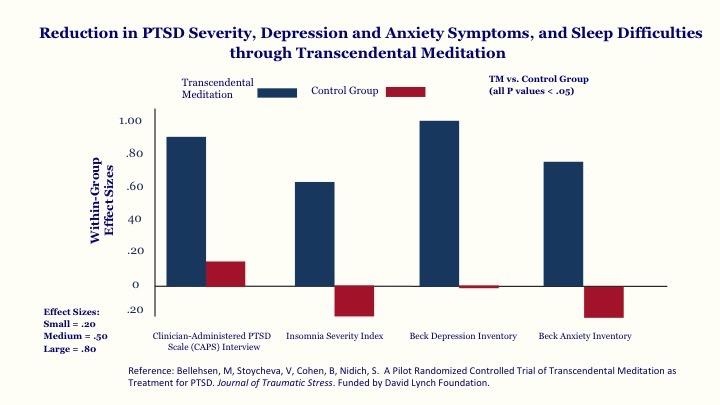
Veterans with PTSD who practiced the Transcendental Meditation technique showed significant reductions in PTSD symptom severity, according to a new study published today in Journal of Traumatic Stress. Fifty percent of the meditating veterans no longer met criteria for PTSD after three months compared to only 10 percent of controls. The randomized controlled study also showed significant reductions in veterans’ symptoms of depression and anxiety, and sleep difficulties.
Fifty percent of veterans who practiced the Transcendental Meditation technique for three months no longer met criteria for PTSD compared to only 10 percent of controls. Meditating veterans also showed significant reductions in symptoms of depression and anxiety, and sleep difficulties. This figure shows the unadjusted mean change in PTSD symptoms, based on the Clinician-Administered PTSD Scale (CAPS), for the Transcendental Meditation group compared to the treatment-as-usual control group (all P values <.05) over the three-month intervention period.
Veterans with PTSD who practiced the Transcendental Meditation technique showed significant reductions in PTSD symptom severity, according to a new study published today in Journal of Traumatic Stress. Fifty percent of the meditating veterans no longer met criteria for PTSD after three months compared to only 10 percent of controls. The randomized controlled study also showed significant reductions in veterans’ symptoms of depression and anxiety, and sleep difficulties.
“Transcendental Meditation is a non-trauma-focused, easy-to-learn technique that was found in this study to improve PTSD symptoms, likely through the experience of physical rest,” said Mayer Bellehsen, Ph.D., director of the Unified Behavioral Health Center for Military Veterans and their Families, Northwell Health, and study principal investigator. “In contrast to commonly administered therapies for PTSD that are trauma-focused and based on a patient’s recall of past traumatic experiences, this intervention does not require extensive review of traumatic history, which some individuals find difficult to engage in. This intervention may therefore be more tolerable for some individuals struggling with PTSD.”
The randomized controlled trial, conducted at Northwell Health in Bay Shore, New York, assigned 40 veterans with documented PTSD to either the Transcendental Meditation (TM) group or treatment as usual control group. The TM treatment provided 16 sessions over 12 weeks, with twice-a-day daily home practice. PTSD symptom severity was assessed with the Clinician-Administered PTSD Scale for DSM-5 (CAPS-5), and patient self-report with the PTSD Checklist for DSM -5 (PCL-5).
The results showed large effect sizes, indicating a strong TM treatment impact in reducing trauma symptoms for both PTSD measures. Other factors associated with trauma, such as depression and anxiety symptoms and sleep problems, also showed a strong impact of TM treatment.
“This trial corroborates the findings of a large clinical trial published in The Lancet Psychiatry,” said Sanford Nidich, Ed.D., Director of the Center for Social-Emotional Health at Maharishi International University Research Institute, and study co-investigator. “The current study further supports the effectiveness of Transcendental Meditation as a first-line treatment for PTSD in veterans. The availability of an additional evidence-based therapy will benefit veterans, both by offering them a greater range of options and by serving as an alternative treatment strategy for those who don’t want to engage in trauma-focused treatment or who aren’t responding to a previous PTSD intervention.”
The authors point out in their research paper that TM may positively affect trauma symptom severity through the reduction of hyperarousal symptoms. Previous research has shown that TM practice decreases physiological responses to stressful stimuli. In addition, recent research indicates that TM may improve resilience and positive coping strategies, providing further benefit to both veterans and active military personnel.
Many science and international news outlets posted the news, including this excellent report in Medical News Today (PDF). And Jim Dwyer MD produced and tweeted this 60-seconds MediBlurb: Transcendental Meditation for PTSD in Veterans, which airs on regional radio in Arizona.






 The Uncarved Blog