Prisoners have one of the highest rates of lifetime trauma of any segment of society, with recent surveys showing that 85% have been a victim of a crime-related event, such as robbery or home invasion, or physical or sexual abuse. Trauma is associated with higher rates of recidivism (returning to prison) and mental and physical health conditions, including cardiovascular disease.
A randomized controlled trial of 181 male Oregon state correctional inmates found that the Transcendental Meditation program significantly decreased total trauma symptoms, anxiety, depression, dissociation and sleep disturbance subscales, and perceived stress compared to controls over a four-month period. Trauma symptoms and perceived stress were assessed using the Trauma Symptoms Checklist and the Perceived Stress Scale.
Within the TM group, a 47% reduction in total trauma symptoms was observed over the course of the four-month study. Further post-hoc analysis showed a 56% reduction within the TM group for those with the highest level of trauma symptoms above the mean in baseline trauma scores.
Compliance with TM practice was high. Of those randomized to learn the TM program, 88% completed the initial seven-step TM course (total of five sessions) and over 80% were regular with their daily TM practice over the course of the four-month study, which included weekly meetings to ensure continued correct effortless practice.
“To date this is the largest randomized controlled trial with the Transcendental Meditation program on trauma symptoms,” said Dr. Nidich, lead author of the study and director of Maharishi University of Management Center for Social and Emotional Health. “These findings, along with previous published research on veterans, active military personnel, international refugees, and other at-risk populations provide support for the value of the Transcendental Meditation program as an alternative treatment for posttraumatic stress.”
“I have watched inmates learn Transcendental Meditation and become more human after a long and isolating period of becoming less human,” said study co-author Dr. Tom O’Conner, Assistant Professor of Criminal Justice at Western Oregon University. “TM helps to awaken, deepen, and solidify the kind of transformational process that we so badly need in our overburdened and costly correctional system.”
The study, Reduced trauma symptoms and perceived stress in male prison inmates through the Transcendental Meditation program: A randomized controlled trial, was published in The Permanente Journal, and funded by the David Lynch Foundation.
Read more valuable information about this study in the press release, from where this content was excerpted, on EurekAlert!/AAAS.
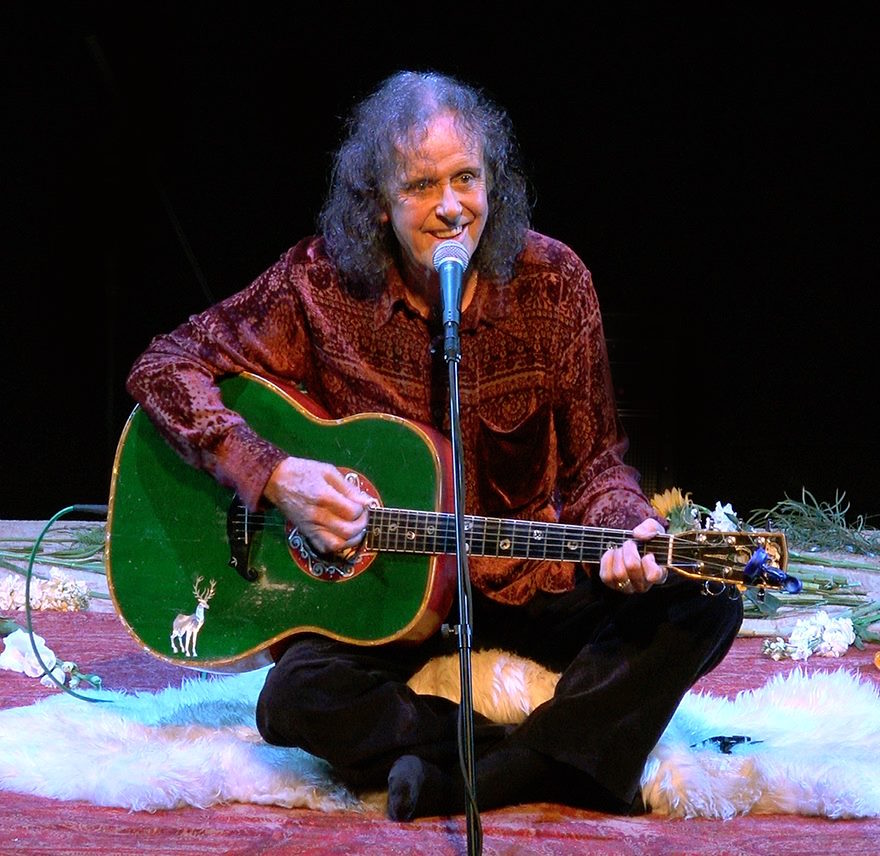
DONOVAN was here over Labor Day Weekend. He played two concerts Sunday night during Fairfest 2016, Fairfield, Iowa’s Roots Music Festival. The first was a fundraiser for Maharishi University’s Global Scholarship Fund at the Fairfield Arts & Convention Center‘s Stephen Sondheim Center for the Performing Arts, and the second was with Bonnie Paine and friends to close out the 3-day musical event on the Main Stage outside. Donovan had never played back-to-back performances like that, but it turned out very well.
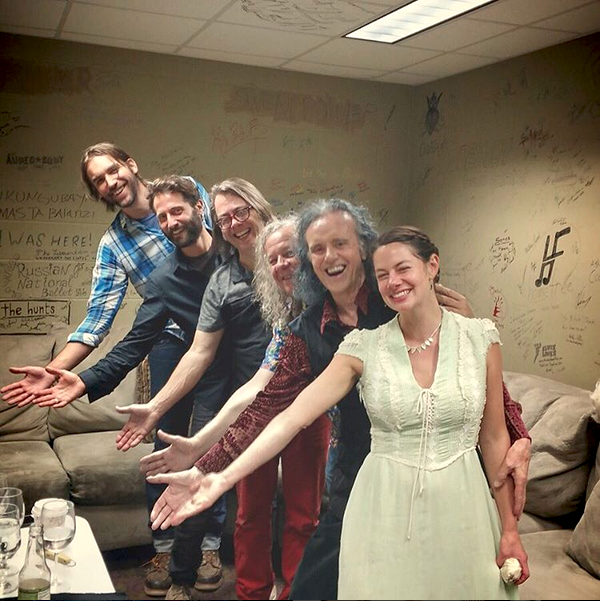
After arriving and having lunch, Donovan met the band at the Sondheim theater and went to work rehearsing with them. It was impressive! They consisted of Elephant Revival’s singer Bonnie Paine (percussion), and two from her group, top to bottom: Daniel Rodriguez (guitar, banjo) and Dango Rose (bass), joined by Arthur Lee Land of Great American Taxi (guitar), and Tim Carbone of Railroad Earth (violin, organ).
The MUM concert in the Sondheim was special and intimate, filled mostly with meditators. Donovan then joined the band on the Main Stage after their performance. In both the rehearsal and the concert, Donovan encouraged each one of the musicians playing his songs. They all really enjoyed themselves, as did the audience, and drew the largest crowd of the 3-day event! See video clips below. After the concert, Donovan invited them back to his Green Room to share stories about the music business. What a magical treat for them all!!! Producer Michael Sternfeld took the group photo, choreographed by Donovan.
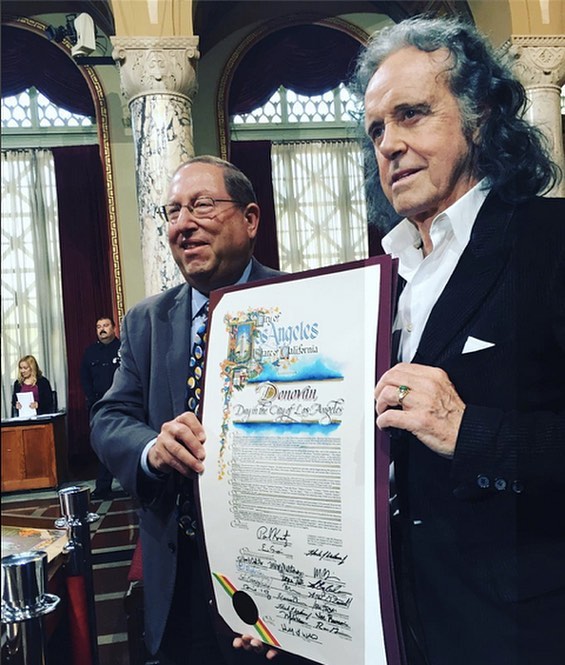
Donovan Day in LA
Thank you Mayor Eric Garcetti and Councillor Koretz of City Hall Los Angeles for this singular honor to mark the Fiftieth Birthday of my song SUNSHINE SUPERMAN reaching number one on the Billboard Top 100. A love song for Linda yes, but also when we met we both knew we were on the same journey to raise awareness of a higher consciousness for the future generations. We are still on that journey. Come to my 21 city SUNSHINE SUPERMAN AMERICAN TOUR and share this birthday with me. — Donovan
It’s interesting that Donovan will receive this award in John Lennon’s name. Donovan also had a positive influence on John when the Beatles were with Maharishi in India. John had asked Donovan to show him how he played his guitar. Donovan said it was the claw hammer style he had learned from another musician. It was based on a banjo-picking style converted to guitar.
In a way, it came full circle for John, since his mother, Julia, had taught him how to play chords on a banjo she had given him before he picked up the guitar. John wrote Julia and Dear Prudence using that style. Paul picked it up his way and wrote Mother Nature’s Child and Black Bird. George Harrison said Donovan was all over The Beatles White Album. Donovan mentions all this and more in a Rolling Stone interview (April 19, 2012) after he was inducted into the Rock and Roll Hall of Fame. Watch the video: Donovan: On teaching guitar technique to Beatles.
A Labor Day lunch was hosted by Mayor Ed and Vicki Malloy. Some guests brought their Donovan records and posters for him to sign, and took pictures. In attendance were Bevan Morris, John and Kara Hagelin, and other leading members of the Fairfield/MUM community.
After lunch, Donovan regaled us with stories from Rishikesh, India at Maharishi’s ashram with the Beatles, Mike Love, Prudence Farrow, and others. He told us stories of his times with Maharishi, and a vivid dream he had of him, a week before coming here for the America wing of his 50th anniversary tour.
Donovan then asked me to share the story of what Maharishi had said about him. When I was with Maharishi at Lake Louise, one of my course mates had asked Maharishi about George Harrison and Donovan. About Donovan, Maharishi said he was the most sensitive boy he had ever met.
A few months before he was to join the Beatles and the others in India, Donovan said he was interviewed by John Carpenter for Rolling Stone’s premier issue, (1st and 2nd issues, Nov 9 & 23, 1967). In Part 1, he made a statement that summarized his approach to music: “There’s only one thing in the end, and that’s singing truth in a pleasant way.”
Read more posts on Donovan here. If you can, see him in concert this time around. Check Donovan’s website for a list of concert dates and locations.
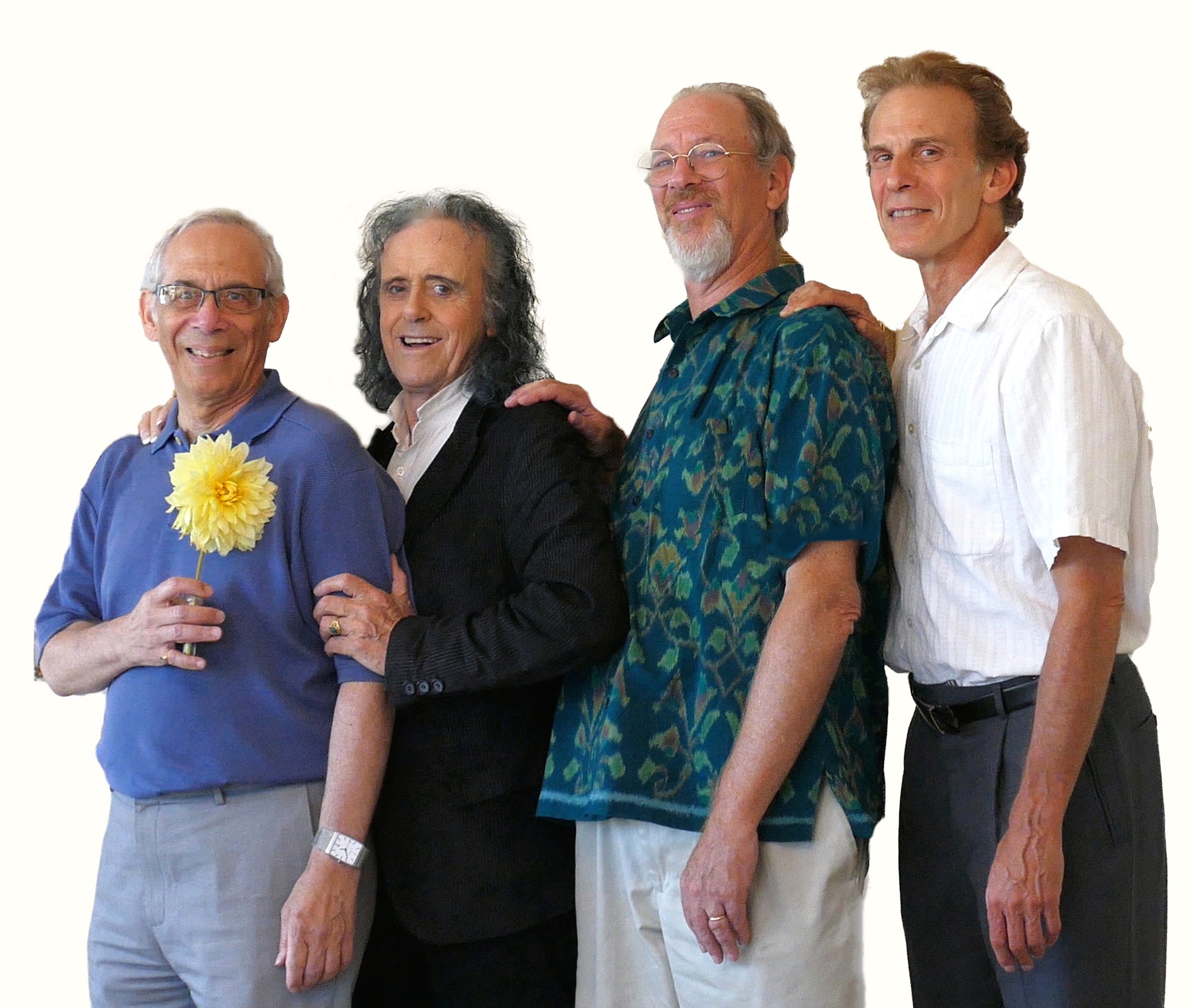
After his last interview for A Fairfield Documentary, a few of us had our picture taken with Donovan. He directed the photo shoot, taken by Werner Elmker. From the tallest to the shortest: Michael Sternfeld, who produced the Sondheim Concert, Bill Goldstein, who introduced the MUM International scholarship students, Donovan, and myself, Ken Chawkin. (Click photo to enlarge it.)
I must say, of all the times I’ve interacted with Donovan over the years, I found him to be most generous and patient with his time and energy while interacting with everyone. Not much ego there, but a very sensitive loving soul, who was kissed by the lord and filled with song to wear his love like heaven. He truly is an evolved Hurdy Gurdy Man, a gift of a rare flower to our garden! Looking forward to seeing him in Fairfield again, next time with his lovely wife Linda.
Update (March 7, 2019): Last year, January 11, 2018, Donovan sent us a link to his interview with Mike Greenblatt for Goldmine Magazine, which had come out the day before: Donovan: Psychedelia’s Poet Laureate. In it he tells the story of how he met the Beatles, shared songwriting with Paul, his spiritual friendship with George, his learning TM from Maharishi, and their trip to India to learn more. And the rest is history, our history!
Premiered last year at SXSW, with a theatrical run this spring, and now on DVD, Paul Dalio’s first full-length feature film, Touched With Fire, is a love story between two bipolar poets that reveals the relationship between illness and creativity.
Dalio was inspired by Kay Redfield Jamison’s book, Touched with Fire: Manic-Depressive Illness and the Artistic Temperament, which explores the link between great art and bipolar disorder. He read that many famous writers, poets, and artists suffered from this mania and may have produced their work because of it. Their genius was touched with fire.
This was a welcome relief for Paul who had become bipolar. He now saw himself no longer in clinical terms as a social outcast without a cure, but as a creative artist who was dealing with a neurological imbalance.
The most well known example of that heightened state was Vincent Van Gogh’s Starry Night. The painting is a kind of leitmotif throughout the film, even materializing as a literal hallucination by the main characters.
Reflecting on his own experience of being bipolar, Paul wanted people suffering with the illness, and those concerned with their health, to better understand what they are going through, that they are not necessarily crazy, perhaps gifted, and to help remove the stigma associated with the disease.
He compares the manic highs and depressive lows of the disease to the seasons. The film’s palatte of colors reflects the changing emotions within and between the main characters. Attempts to control these mood swings with drugs create deadening side effects, part of the conflict within their relationship.
In his Huffington Post blog, Touched With Fire, Paul asks: How much more receptive would a patient be to treatment if the patient was told that the treatment was to nurture a gift they had, instead of terminate a disease they had?
Director Dalio gave author/psychologist Kay Redfield Jamison a role in the film as herself, to explain how the right balance of medication can help rather than hinder a manic personality. Marco is concerned that the medications are stopping him from feeling any emotions, and is destroying his creativity. From her own experience, Kay shares with them how “medication can tamp the fire down a bit without losing that gift.” She tells him, with the right dosage, which takes time, she became even more productive than before becoming bipolar.
Cast and Crew
Paul Dalio wrote, directed, edited and scored Touched With Fire, his feature-film debut starring Katie Holmes and Luke Kirby, with other performances by Griffin Dunne, Christine Lahti and Bruce Altman.
Paul’s longtime friend, Jeremy Alter, produced the film, along with Kristina Nikolova, Paul’s wife and fellow student at the NYU Film School, who convinced him to make this semi-autobiographical film. Their teacher, Spike Lee, is the executive producer.
The brilliant acting in this passionately moving film is intensely engaging. Holmes (Carla) and Kirby (Marco) play two poets with bipolar disorder whose art is fueled by their emotional extremes. When they meet in a treatment facility, their chemistry is instant and intense driving each other’s mania to new heights. They pursue their passion, which breaks outside the bounds of sanity, swinging them from fantastical highs to tormented lows until they ultimately must choose between sanity and love. Watch the official trailer.
Comments from the Critics
The New York Times Critic’s Pick wrote: “Luke Kirby and Katie Holmes boldly meet the challenge of playing bright, high-strung artists. An extraordinarily sensitive, nonjudgmental exploration of bipolar disorder and creativity.” Read the Review: ‘Touched With Fire,’ a Love Story Between Two Bipolar Poets.
This is a powerful film! We witness their struggles from the inside out. More reviews are listed on the film’s website.
The Role of Poetry in the Film
In one of the interviews from the Special Features of the DVD, Paul Dalio talks about the value of poetry in his life, and for the main characters in the film. “It was only when I met my wife that my heart became more tender, and I actually started reading poetry, which I never did, and I started writing poetry.”
Paul describes the transforming power of poetry to heal and create beauty. He speaks from his own personal experience as someone who has dealt with the ups and downs of this disorder while trying to become a writer, composer, and filmmaker. The film is an amazing testament to his artistic achievement! See his bio under Cast & Crew for more details.
“Poetry at its best has the deepest expression of being in the worst hell, and having no choice but to bring some kind of aesthetic meaning to it, and some kind of beauty to it, just to even cope with it. (and) Only by being forced down there to such a hell are you forced to bring that much beauty to that hell, and in the process it becomes a healing. And so it was natural how it wove itself into the film, as these two characters use it to cope with their psychosis, and to deal with coming out of their situation.”
Charlie Rose: ‘Touched With Fire’ (Feb. 4, 2016) Director and writer Paul Dalio, actor Luke Kirby, and psychologist Kay Jamison discuss the movie “Touched with Fire” and the connections between bipolar disorder and creativity. (18:51) Paul does mention his use of medication and meditation, which he elaborates upon in this next video.
At a David Lynch Foundation-hosted screening of the film, Paul opened up about his own struggles with bipolar and how pivotal the practice of Transcendental Meditation has proved to be in living a happy, healthy, and creatively rich life. “TM is the difference between surviving with bipolar and thriving with bipolar. I never stopped meditating, without fail,” he says. “That’s when my doctor, Norman Rosenthal, witnessed the power of TM and was so blown away he decided to do a study on the effects of TM.” Paul was responsible for Dr. Rosenthal restarting his long-lapsed TM practice, which led to the publication of two best-selling books on the subject. Visit NORMAN ROSENTHAL, MD for details. See Thriving with Bipolar – A Conversation with Writer/Director Paul Dalio.
Video of Marbling Art Animation of Starry Night and Van Gogh
Check out this amazing video on marbling art animation of Starry night and a Van Gogh self-portrait: Van Gogh on Dark Water Animation. The Turkish artist is Garip Ay, and the ancient technique of painting on water to marble paper is called Ebru.
The Unexpected Math Behind Van Gogh’s “Starry Night”
Physicist Werner Heisenberg said, “When I meet God, I am going to ask him two questions: why relativity? And why turbulence? I really believe he will have an answer for the first.” As difficult as turbulence is to understand mathematically, we can use art to depict the way it looks. Natalya St. Clair illustrates how Van Gogh captured this deep mystery of movement, fluid and light in his work. Visit TED-Ed for more.
Fast forward: A new study found that the skies in Van Gogh’s “Starry Night” align with current models of atmospheric turbulence. NBC News’ Ellison Barber spoke with astrophysicist Adam Frank on the science behind the iconic swirly sky. See this fascinating and revealing report: New research finds Van Gogh’s ‘Starry Night’ skies align with physics.
Don McLean’s song to “Vincent” (Starry, Starry Night)
Don McLean’s compassionate acknowledgement in song to “Vincent” (Starry, Starry Night), was used with images of Vincent Van Gogh’s paintings, and lyrics to the song, in this beautiful video compiled by a YouTuber who uploaded it to explain his love of Van Gogh’s art to a dear friend whose first language is not English. The video has been seen over 71 million times with thousands posting comments! He never imagined it would have received so many views and comments, and is glad he was able to share it. Not many dry eyes are left after hearing/seeing it.
Here is a series of five stories exploring Transcendental Meditation written by Jackie Chesser and published in The Dispatch and The Rock Island Argus. Click the titles to see each one of them online with photos at QCOnline. Or click Dispatch-Argus-May 2016 articles to see a PDF of them all together, courtesy of The Dispatch/Argus.
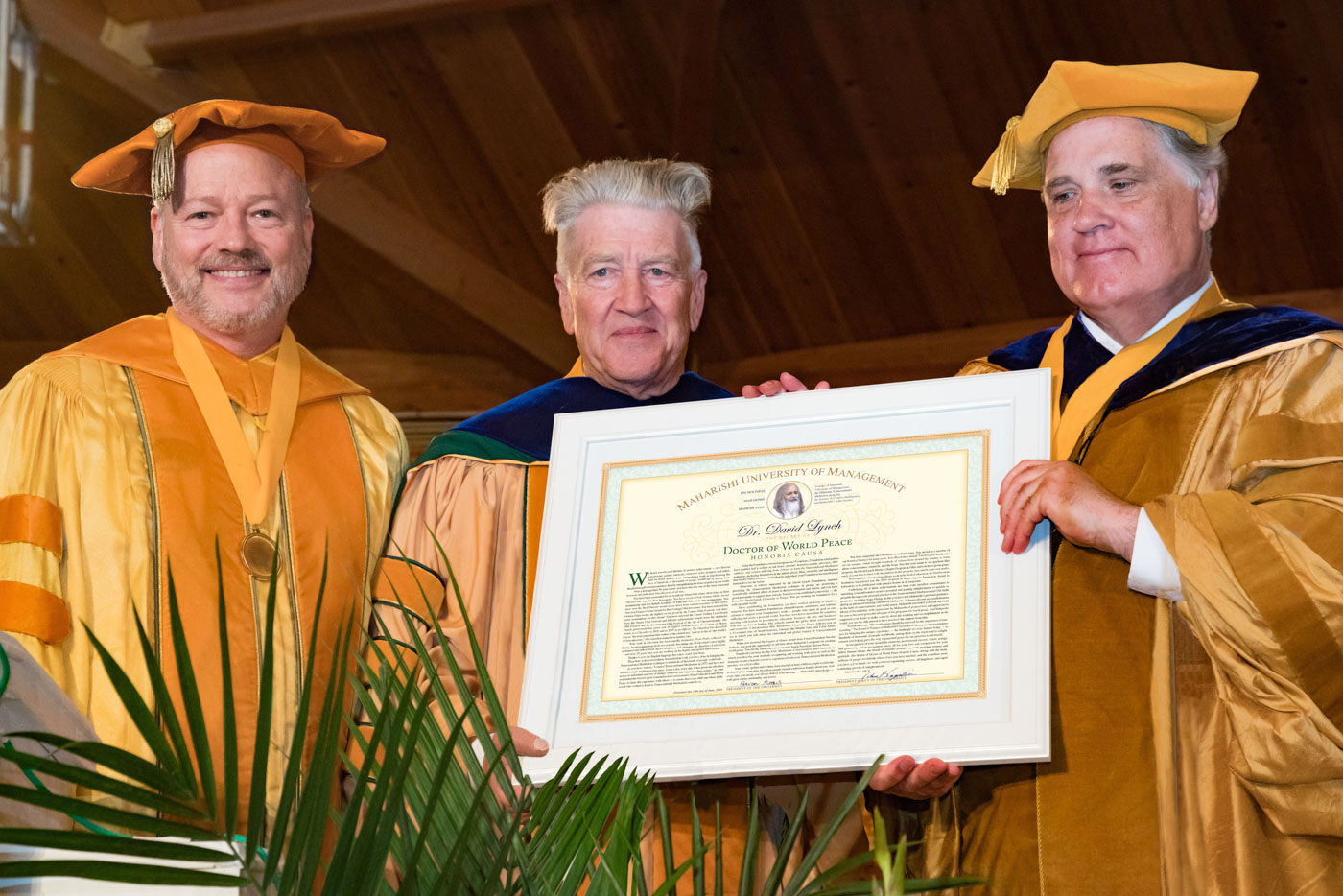
During their 2016 commencement ceremony on June 18th, 2016, Maharishi University of Management was proud to feature world-renowned filmmaker David Lynch, who was presented with a Doctor of World Peace honoris causa degree. Instead of a traditional graduation speech, Mr. Lynch held a spontaneous Q and A session with students about life-oriented topics that commencement speakers traditionally address. Here is that lively interactive commencement address. (19:37).
*Advice worth sharing from the world’s most influential people and the editors of TIME
About MUM
Maharishi University of Management (MUM) in Fairfield, IA is a private university featuring Consciousness-Based℠ Education. The accredited traditional curriculum offers bachelor’s, master’s, and doctoral degrees in the arts, sciences, humanities, and business, but also integrates self-development programs. Innovative aspects include the Transcendental Meditation® program, one course at a time, and organic vegetarian meals. Visitors Weekends are held throughout the year. For more information, call the Admissions Office at 800-369-6480 or visit http://www.mum.edu.
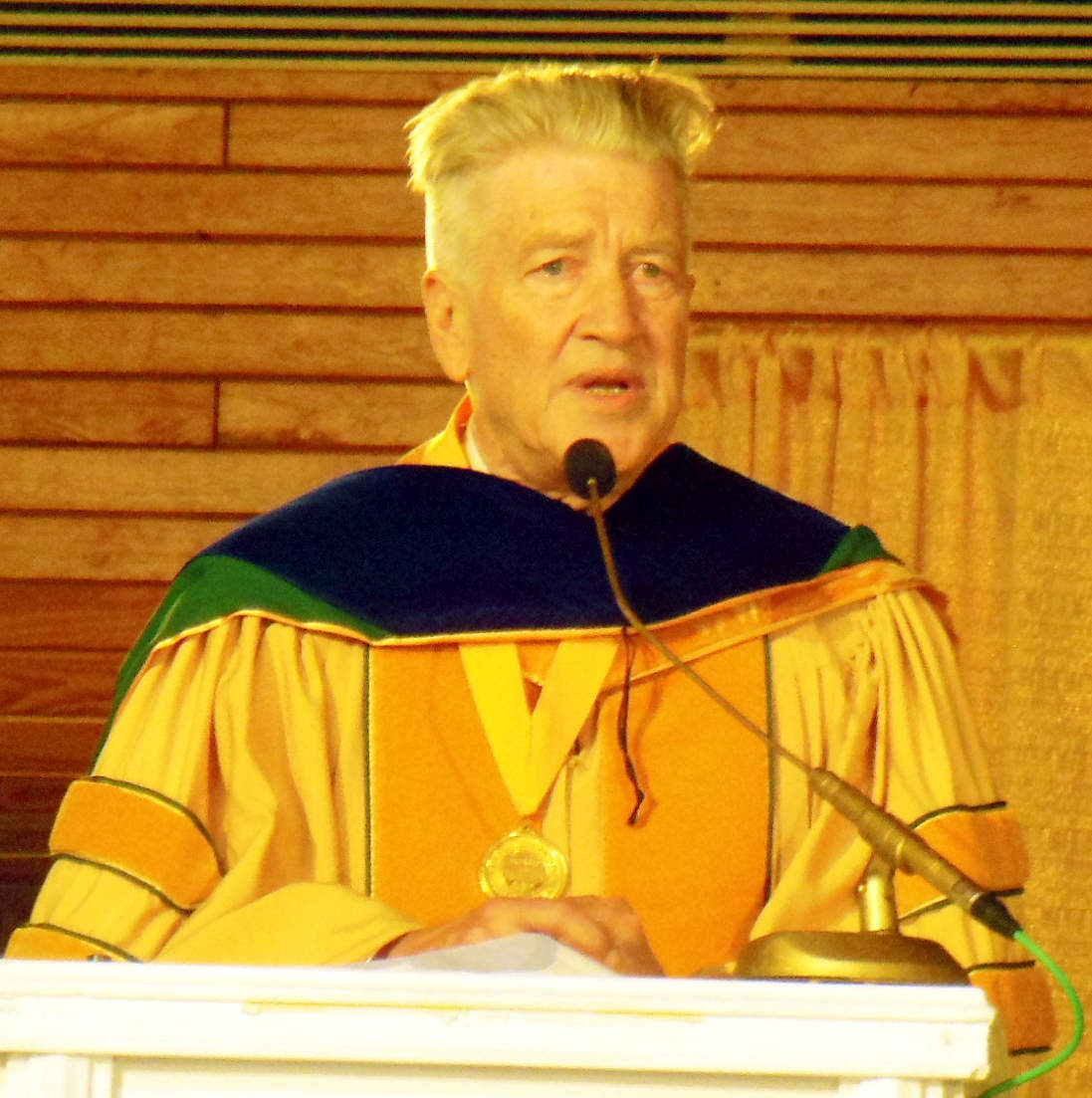
Photo by: ANDY HALLMAN/Ledger photo: Filmmaker David Lynch addresses the graduating students of Maharishi University of Management Saturday in the Maharishi Patanjali Golden Dome. In the fall of 2013, the university debuted the David Lynch Master of Arts in Film program.
Saturday was a gorgeous day for a graduation as 366 students at Maharishi University of Management received their degrees in the Maharishi Patanjali Golden Dome.
The list of graduates included 268 graduate students and 98 undergraduates from 53 countries. The foreign country with the most students graduating was Ethiopia with 42, followed by China with 41. Nepal, Egypt and Bangladesh each had at least 10 students graduating. Nearly one half of the students graduating, 168, earned their degrees in computer science.
The graduating class included a few interesting pairs. Touch Phai and his son Pakrigna Phai, both from Cambodia, had the honor of receiving their degrees together Saturday. Brothers Christian and Nicolas Martina from Argentina graduated together, as did the brother-sister pair of Naamee and Nahshon Yisrael from Chicago.
The commencement speaker was someone the students and faculty have come to know well: filmmaker David Lynch. M.U.M. president Bevan Morris read a long list of accolades Lynch has earned in his career, such as his Golden Globe for Best TV Series for his 1990–1991 show “Twin Peaks,” which he is filming a new season of that will air in 2017.
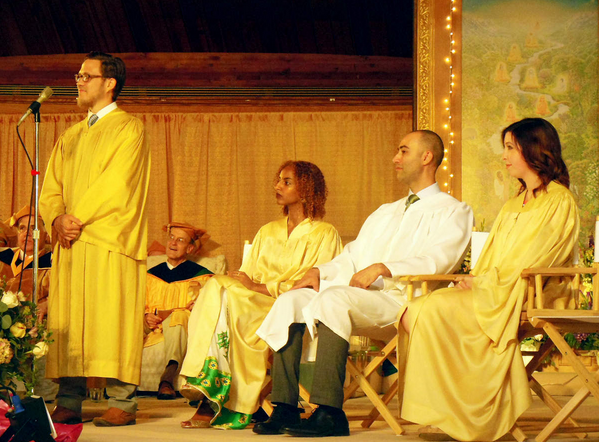
(left to right) Adam Delfiner, Afomeya Bekele, Asaad Saad, Laura Muzzarelli
Lynch’s speech was unconventional in that rather than deliver prepared remarks, he asked four graduating students to join him on stage and ask him questions. He insisted that he not be told of the questions ahead of time. The four students selected for this honor were Afomeya Bekele, Asaad Saad, Adam Delfiner and Laura Muzzarelli.
The students asked the accomplished filmmaker a wide range of questions about what makes a meaningful life, what the world will look like in 10 years and whether he would have done anything differently in his youth.
When Bekele learned she was one of the students who would ask Lynch questions, she turned to Facebook for advice on what questions to ask. She asked him when it was appropriate to trust one’s intuition, to which Lynch said that intuition should generally be trusted and that it was the No. 1 tool for artists, businessmen and women and many other careers.
Bekele said she particularly liked what Lynch said about getting ideas, which was that they are not so much invented as “caught.”
Saad is a computer science major and a graduate instructor. He sent emails to his students to ask what questions to ask, then chose the best ones. He asked Lynch about his interactions with the founder of the university, Maharishi Mahesh Yogi. Lynch has begun filming scenes for a documentary on Maharishi’s time traveling from northern to southern India, and Saad was curious when the documentary would be finished.
Lynch said of Maharishi that he was the “greatest master who ever walked the earth” and he gave out profound knowledge during his lifetime. Lynch said there were two keys to a better life: practicing Transcendental Meditation and drinking coffee.
On the question about his documentary of Maharishi, Lynch said that he was busy with the third season of “Twin Peaks,” but that once that is finished, he would be able to devote more time to finishing his other projects.
Andrew Rushing
Andrew Rushing, who majored in Maharishi Vedic Science, was the school’s valedictorian and also gave a speech. Rushing said he had little more than a week to prepare his speech.
“My goal was to inspire the 2016 class to reflect on what we’ve accomplished and to encourage them to do great things,” he said.
During his speech, Rushing told the audience, “Just by being your true self, you act as a conduit for goodness in the world.”
Runzjao Xie
Twenty-year-old business student Runzhao Xie was recognized as the youngest graduate. Xie graduated from Maharishi School of the Age of Enlightenment in 2012, and said he could have graduated from M.U.M. as early as last year but a professor whose class he needed was not available to teach it.
“My parents were both in education, so that got me interested in academics at a young age,” he said.
Xie said he specialized in accounting and took five accounting classes in a row before university officials advised him to branch out into other subjects. He has a summer internship with Andrew Bargerstock, chair of the accounting department.
Physics professor John Hagelin speaks about the exciting opportunities and responsibilities he will have Sept. 12 when he becomes the university’s new president, taking over from Bevan Morris, who held the position for 36 years.
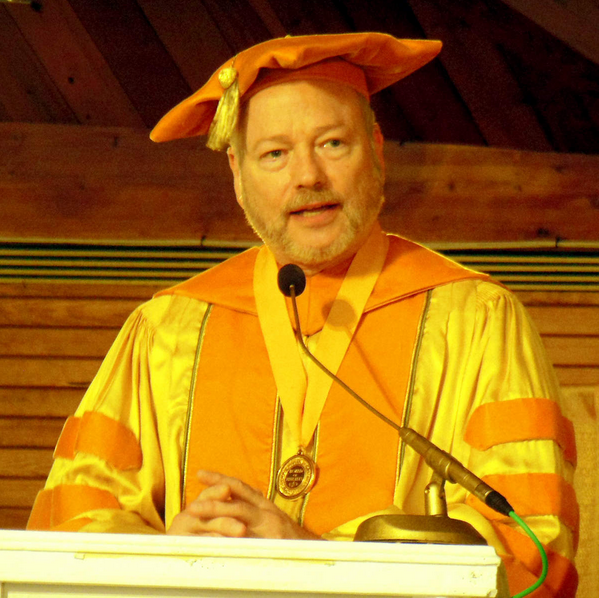
Also announced during Saturday’s ceremonies was that John Hagelin will become the university’s new president effective Sept. 12, known as Founder’s Day at the university. He will assume the role held by Bevan Morris for the past 36 years. For the first time in its history, M.U.M. awarded post-doctoral degrees Saturday, which it bestowed upon both Morris and Hagelin. (Correction: These new post-doctoral degrees were announced and described, but will be bestowed on Drs. Morris and Hagelin Sept. 12, 2016.)
Hagelin has been a member of the faculty at M.U.M. since 1984. In addition to teaching physics, he has held many positions of leadership such as director of the Institute of Science, Technology and Public Policy and president of the David Lynch Foundation for Consciousness-Based Education and World Peace.
Reprinted with permission. All photos taken by Andy Hallman for Ledger photo. The 4 photos, embedded here in the article where relevant, are in an online slideshow format, with their captions, underneath David’s photo, starting with John Hagelin. The article and 5 photos appear on the front page of Monday’s Ledger concluding on page 7.
Over 350 to Graduate from Maharishi University, June 18
Over 350 (366) students representing 50 (53) countries will graduate from Maharishi University of Management at the 2016 commencement ceremony at 1:00 p.m., on Saturday, June 18, in the Maharishi Patanjali Golden Dome. The public is invited to attend.
Noted filmmaker David Lynch will offer the 2016 commencement address. He is famous for films such as The Elephant Man, Mulholland Drive, and Blue Velvet. His many awards include a Golden Globe for Best TV Series for his 1990–1991 show Twin Peaks. He recently finished filming a new season of Twin Peaks that will air in 2017.
Graduates include 37 in South Africa
Those receiving diplomas include 74 undergraduates in Fairfield, 37 undergraduates in South Africa, 160 students in the MS in computer science, and 80 students in other graduate programs. About 160 are expected to participate in the ceremony. Those in South Africa attend the Maharishi Institute in Johannesburg for their first two years of college, and then enroll at MUM via distance education for their third and fourth years of study toward a degree in business.
David Lynch to receive honorary doctorate
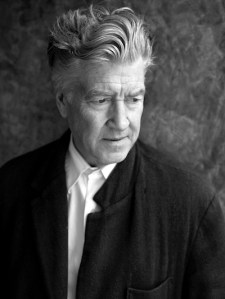
David Lynch photo by Adam Bordow
David Lynch’s preferred method for public speaking is to take questions from the audience; so four students on stage will ask him questions about life-oriented topics that commencement speakers traditionally address.
As part of the commencement ceremony, the university will present Mr. Lynch with a Doctor of World Peace honoris causa degree, “In recognition of the enormous role he has played in promoting Maharishi’s knowledge throughout the world, transforming people’s lives through the work of the David Lynch Foundation, and laying the foundation for a truly peaceful world,” said Dr. Bevan Morris, president of Maharishi University of Management.
His David Lynch Foundation, started in 2005, raises funds to support bringing the Transcendental Meditation technique to those most in need: underserved inner-city students, veterans with PTSD and their families, and women and children who are survivors of violence and abuse. As a result of the Foundation’s activities, hundreds of thousands of people have learned and benefitted from the Transcendental Meditation technique.
“Not only is David transforming lives through his Foundation, he has made countless people aware of the Transcendental Meditation technique throughout the U.S. and around the world,” said Craig Pearson, executive vice-president of MUM. “Many well-known thought leaders in the U.S. have adopted the practice and have publicly endorsed it at events sponsored by his Foundation.”
Lynch’s activities on campus
Lynch has long been an important member of the MUM family, as a member of the Board of Trustees and in lending his name to the David Lynch MFA in Film program. He has connected with the film students via Skype, has spoken in person to a class, and has hosted the students at his studio in Los Angeles.
He has been practicing Transcendental Meditation since 1973, and has spent time on campus on a number of occasions. In 2006, he offered the first of three annual “David Lynch Weekends,” which brought hundreds of visitors to campus to learn about consciousness, creativity, and the brain.
Nominated for 4 Academy Awards
Lynch has been nominated for an Academy Award 4 times: three times as Best Director and once for Best Screenplay. The French government awarded him the Legion of Honor, the country’s top civilian honor, as a Chevalier in 2002 and then an Officier in 2007. He has won France’s César Award for Best Foreign Film two times, as well as the Palme d’Or at the Cannes Film Festival and a Golden Lion award for lifetime achievement at the Venice Film Festival. Mr. Lynch has been described as “the most important director of this era” by The Guardian as well as “the Renaissance man of modern American filmmaking” by Allmovie.
About Maharishi University
Maharishi University of Management (MUM) in Fairfield, IA is a private university featuring Consciousness-Based Education. The accredited traditional curriculum offers bachelor’s, master’s, and doctoral degrees in the arts, sciences, humanities, and business, but also integrates self-development programs. Innovative aspects include the Transcendental Meditation program, one course at a time, and organic vegetarian meals. Visitors’ weekends are held throughout the year. For more information, call the Admissions Office at 800-369-6480 or visit http://www.mum.edu.
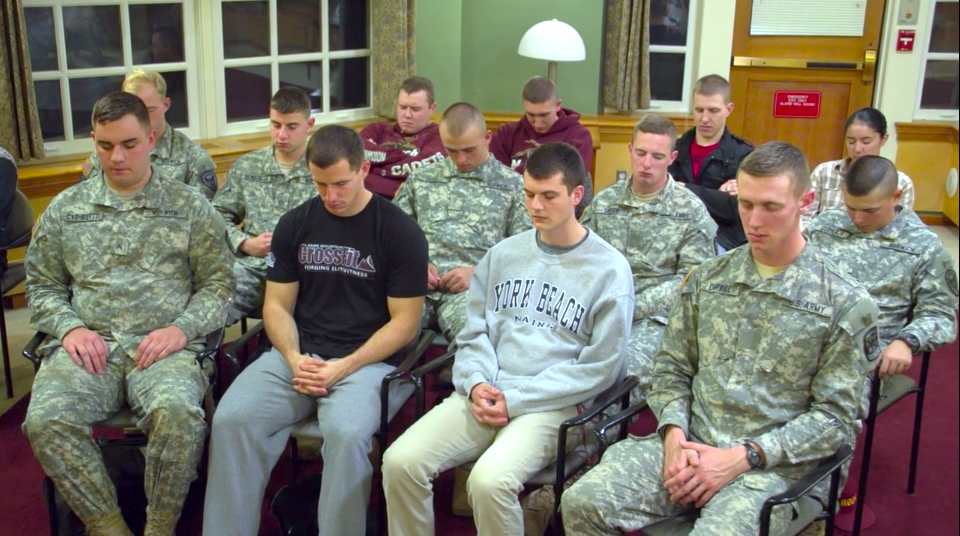
Five years ago the Transcendental Meditation technique was introduced at Norwich University in Vermont, the oldest private military college in the U.S. They began with 30 cadets and now there are 300 at any given time practicing TM on campus.
Dave Zobeck, the TM teacher who began the program, which was funded by the David Lynch Foundation, has a permanent, full-time position teaching TM to cadets, faculty, and administrators at Norwich. Below is a David Lynch Foundation update with a new video report from DLFTV.
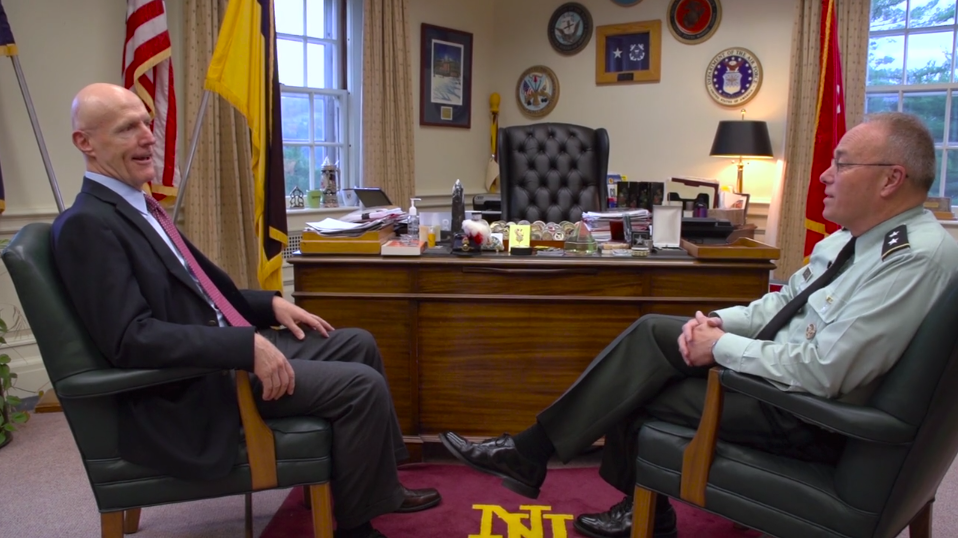
Dave Zobeck and Norwich University President Dr. Richard W. Schneider
Transcendental Meditation at Norwich University
Founded in 1819 near Montpelier, Vermont, Norwich University has educated young adults to become leaders in the community, in business and in the military. It has the distinction of being the birthplace of the Reserve Officers’ Training Corps (ROTC).
Transcendental Meditation (TM) was first introduced to Norwich in 2010 when the longtime donor and supporter Joan Andrews Prentice brought information about TM to Norwich University President Dr. Richard Schneider.
After reviewing articles and research from the David Lynch Foundation Dr. Schneider said, ”I was reluctant—skeptical—but the more I learned, the more confident I became.” After presentations from the David Lynch Foundation, he saw TM as a way to prevent stress and help with focusing and clearing the mind. He decided to be the first to learn TM saying, ”You have to lead from the front . . . ”
In collaboration with Norwich’s board of trustees, the university directors decided on a trial research project for TM. The idea of participating in the trial was presented to all incoming students and their parents in 2010. Thirty new students learned TM and thirty were in a non-meditating control group.
For the TM group after learning, ”the reaction was dramatic,” says Dr. Schneider. A typical comment from a student on learning TM: ”After the first week of practicing it, you felt a difference, you felt calmer and much more aware of your surroundings, and you could focus.” Another said, ”TM is the greatest tool that I’ve had for stress-management and for keeping clarity in my life.” Since then the program has grown. Today Dr. Schneider says there are currently 300 TM participants at the University.
Major General (Ret.) Stephen Rippe, a member of the NU board of trustees, says, ”[TM practice] is part of an overall healthy lifestyle. You work out, you take care of your body, you do Transcendental Meditation, it helps you take care of your mind. The powerful part of that is that it actually, physiologically improves your brain functioning.”
Referring to their extremely full day, one young woman said that ”after I do TM, I just get it done instead of sitting around being overwhelmed by so much to do.”
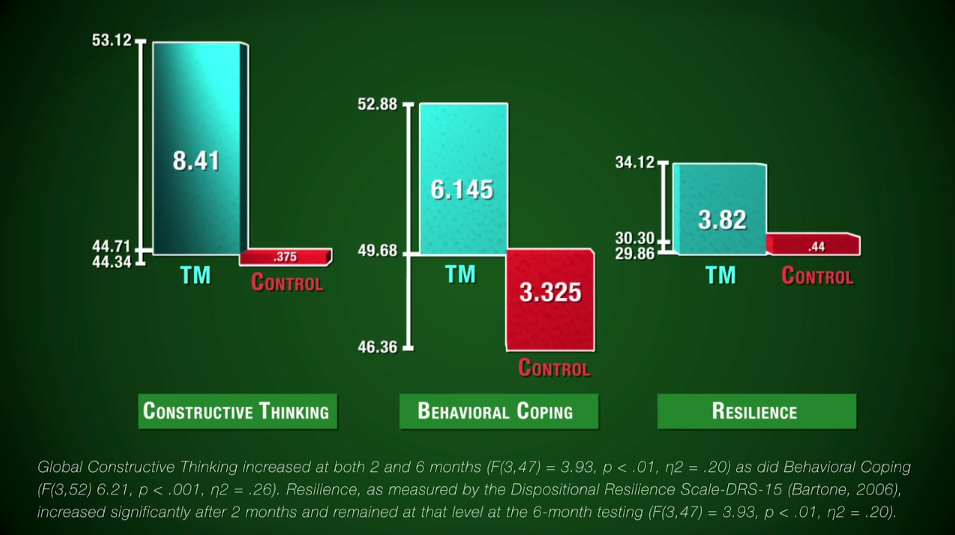
Psychology professor Dr. Carole Bandy reviewed scientific research showing overall improvement in psychological parameters in students, saying, ”constructive thinking, behavioral coping, and resilience all went up significantly.”
Staff and faculty are also practicing TM at Norwich University. As a student says, ”people here want to do what works—we see it as a tool that enables us to handle stress.” Dr. Schneider concludes, ”I think it should be made available to every college student.”
Between 2007-2009 the iconic American director David Lynch made a series of trips to 16 countries in Europe and the Middle East to talk about Transcendental Meditation, Creativity, and Peace.
Wherever he went David was met by hundreds of fans and honored by several film societies. He spoke with heads of state, educators, the press, and local meditators inspiring them to form peace-creating groups.
Footage from these events was taken by film students and film institutes in cities on the tour and sent to David, who, along with his editor, turned it into the film titled, “Meditation Creativity Peace.”
Interwoven throughout the documentary is an excellent interview with a French journalist at an historic art studio in Paris where David goes to create his lithographs. Besides being a talented creative artist in various visual media, David is also an excellent teacher. The way in which he illustrates and explains how TM works and what it can do for us as human beings is absolutely brilliant!
David’s explanations on TM & Creativity from the Documentary
The complete brilliant explanation that David gave the French interviewer about TM was incorporated in sections into the documentary. It was filmed at Idem Printing Studio in Paris, where David works on his own art projects. Someone later edited those segments together and added a background soundtrack in this video: David Lynch explains Transcendental Meditation. Several years later, this talk was posted minus the distracting music: David Lynch gives a profound description of Transcendental Meditation.
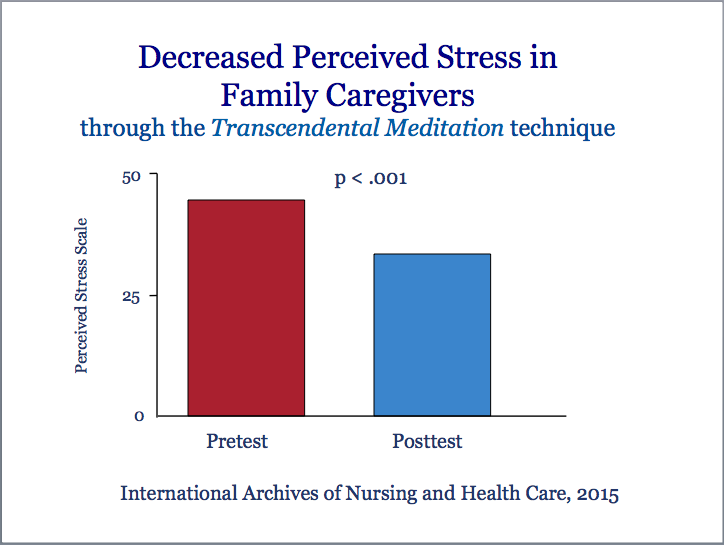
Millions of Americans looking after elderly infirmed family members at home suffer from impaired immune function, heart disease, and other factors resulting in a higher mortality rate. A new study finds Transcendental Meditation reduces stress in family caregivers.
Perceived stress was assessed using Cohen’s Perceived Stress Scale (PSS). Results showed significant reductions due to practice of the TM technique.
A pilot study published in International Archives of Nursing and Health Care (Volume 1, Issue 2) found the Transcendental Meditation technique helped reduce stress associated with care-giving over a two-month period. Research, involving 23 caregivers looking after a family member or friend with Alzheimer’s or other chronic medical conditions, found improvements in perceived stress, spiritual well-being and mood assessed by standard instruments. Qualitative evaluation suggested improvements in energy level and resilience and reduced psychosocial stress. Link: bit.ly/1oNH7kt.
See the EurekAlert! press release with graphs, links, and personal accounts from several caregivers looking after loved ones at home.
This scale shows an increase in caregivers’ spiritual well-being—a sense of meaningfulness in life and faith or optimism in the future—due to TM.
PRWEB: MUM Researchers Find Transcendental Meditation Reduces Stress in Family Caregivers. Researchers at Maharishi University and Kaiser Permanente Northwest found Transcendental Meditation reduced the stress associated with caregiving. A pilot study involving 23 caregivers taking care of a family member with Alzheimer’s or other chronic medical conditions experienced reduced perceived stress, improved well-being and mood over a two-month period.

 Premiered last year at SXSW, with a theatrical run this spring, and now on DVD, Paul Dalio’s first full-length feature film,


 The Uncarved Blog