Denise Levertov, in her poem, Of Being, describes the mysterious experience of inner happiness, of just being. Though provisional in time, it is removed from great suffering and fear, and hails from an eternal inner source. Her description sounds like a taste of bliss consciousness, which is self-sufficient, not dependent on anything outside itself, and out of time — transcendental pure Being.
Of Being
By Denise Levertov
I know this happiness
is provisional:
the looming presences—
great suffering, great fear—
withdraw only
into peripheral vision:
but ineluctable this shimmering
of wind in the blue leaves:
this flood of stillness
widening the lake of sky:
this need to dance,
this need to kneel:
this mystery:
# # #
Denise Levertov must have also written Primary Wonder after becoming present to the “quiet mystery” that sustains everything.
Naomi Shihab Nye says something similar in her poem, So Much Happiness, where “there is no place large enough / to contain so much happiness, / you shrug, you raise your hands, and it flows out of you / into everything you touch.”
William Stafford also describes something similar in his poem, Just Thinking, where he appreciates the value “of just being there.”
Here is a poem I wrote on this subject in the early 90’s: Seeing Is Being.
Speaking Of Being, a mysterious bird in this Wallace Stevens poem, Of Mere Being, also uses the image of wind moving slowly in the branches, and teaches us the wonder of just being our self.
Derek Walcott, when he wrote his poem Love After Love, described it as withdrawing into a world of silence, and creating from there, as if in a trance, being blessed by “a kind of fleeting grace” if something happens.
Besides the magical experience of writing such a poem, I also see it as an experience of inner transformation, a time when you first acknowledge the value of just your self. Walcott instructs the reader to “Give back your heart / to itself, to the stranger who has loved you / all your life, whom you ignored / for another, who knows you by heart.”
ET: Why Celebs Are Obsessed With Transcendental Meditation Entertainment Tonight http://et.tv/2CFjfWU
Publishedthis high-powered 2-minute news clip shows why so many stars are using this silent practice to really unplug. Featured in the report are Katy Perry, Hugh Jackman and Deborra-Lee Furness, Cameron Diaz, Fergie, Chrissy Metz, Jerry Seinfeld, Oprah and Tom Hanks. It’s a veritable free celeb-filled TM promo! Watch it on ET, MSN, AOL, Yahoo, or here: https://goo.gl/CzKDaf.
What do you do to unwind after a long, hard day at work? Some of us like to veg out on the couch, drink a glass of wine, or — in the case of some of the world’s top business leaders — practice meditation. Specifically, Transcendental Meditation.
Transcendental Meditation is a technique that involves closing your eyes, 20 minutes twice a day, so that you can “experience a field of calm deep within.”
Bob Roth, a teacher of the technique and author of the book “Strength in Stillness: The Power of Transcendental Meditation,” joined us to discuss its popularity in the finance industry and some of the health benefits that you can receive from it.
David Brancaccio: So the guy who founded the biggest hedge fund in the world, Ray Dalio at Bridgewater Associates, does Transcendental Meditation. He’s proud of it. He is not alone here in the financial services capital of the world?
Bob Roth: No, and actually, Ray’s been doing it for almost 50 years, and he says it gives him energy, it gives him focus, it gives him clarity, it gives him creativity. It wakes up the creative centers in the brain. And he also says it allows him to be like a ninja — great term — where everything is coming at him very fast. But inside, it’s coming at him slow motion, and he can really discern, he can really make the correct decisions. It’s really important to him. As a matter of fact, he’s made it available to 700 of his employees at Bridgewater.
Brancaccio: And he’s not alone on Wall Street?
Roth: No, hedge funds, banks, financial services, institutions, as well as media companies and everyone else. Anywhere stress is a problem and the need to be focused and creative and innovative and a good problem solver — why not? It’s a simple tool and it’s accessible to anyone.
Brancaccio: So not just the finance and private equity crowd, I see you were doing something with Jerry Seinfeld — the comedian — the other day?
Roth: Again, we live in an epidemic of stress, we live in an epidemic where things are going faster and faster and faster. It requires creativity. Again, focus. Clarity of mind. And stress can overcome that. Stress can cloud thinking. And Jerry Seinfeld is a comedian — has to be on his toes and is alert every moment of the day. So he’s also been meditating for over 40 years, and he says it’s hard enough to get to the top. And people in business will know that it’s much tougher to stay at the top, so he says his 20-minute practice twice a day of TM is a game changer for him.
Brancaccio: Bob, the book emphasizes that the approach here isn’t hard. How can it not be difficult? All you have to do to make me think of something is to tell me not to think of something.
Roth: There are types of meditation that we hear about. You have to clear your mind of thoughts. You have to believe in stuff. You have to focus and concentrate. Fortunately, that’s not Transcendental Meditation. I like to use the example of an ocean. Waves on the surface, turbulent waves on the surface, the depth of the ocean naturally silent. Our mind is the same, and we’d all like to have some inner calm or inner equilibrium. But where do you find it? Well, there’s the level of the mind deep within; it is already calm. That’s the hypothesis. And in Transcendental Meditation you learn a technique. You get what’s called a mantra, which is a word or a sound from a teacher. Nothing mystical here, just a tool. And then you learn how to use it to access that calm, that settledness, that equilibrium. The results are immediate. The research shows — and there is a lot of published research to show this —they’re long term, they’re cumulative.
Brancaccio: Published research — you mean scientific, peer-reviewed?
Roth: Peer reviewed in the American Medical Association Journal, American Heart Association Journal. For example, the National Institutes of Health have given tens of millions of dollars to show that Transcendental Meditation is as effective, if not more effective, for reducing high blood pressure and other ailment sides of heart disease than even anti -hypertensive medication — with no side effects.
Brancaccio: I know,but you must run into people who are suspicious of this. I remember in the book, when you first started out, you didn’t even want to tell your family members what you were up to outside.
Roth: That was back in 1969. Yeah, times, have changed and I think times have changed with the regard meditation has. No. 1, the problem with stress is greater than it’s ever been before. And we also know from medical science it’s more damaging than we ever thought. Second, we go to the medicine chest. “Oh, I’m stressed. What am I going to take?” “Well, fine, you can take Ambien if you can’t sleep, and your child can’t study so you give him Ritalin. All these medications, they have side effects. Or else we self-medicate. Alcohol. Too much coffee. The problem of stress is getting worse. We know we’re on a trajectory that’s not getting better. And why not take a few minutes out of the day and just access that calm, that equilibrium that lies within.
I’ll tell you one quick story. So a Wall Street guy came into the office sent by his meditating wife, I’m sure, and he came with his 14-year-old kid. And the guy said, “I really want to learn, it’s done great stuff for my wife. I’m under a lot of pressure. I’m not sleeping well, but 20 minutes twice a day — who’s got the time? I don’t got the time.” And I think the son was set up by the wife, because the son said, “Dad, there’s 1,440 minutes in a day. You don’t have 40 minutes for self care?” When he said self care, I knew it was the wife. “You don’t have 40 minutes to take care of yourself?”
So this is done first thing in the morning. You get up 20 minutes earlier, it’s better than sleep. It’s a deeper rest than sleep. And you do it sometime at the end of the day to get rid of stress and you sleep better at night and you enjoy your family more during the day.
Brancaccio: Let me just ask one last quick business model question. If you pay to learn how to do Transcendental Meditation, are you signing up like a gym membership and you’re stuck for life?
Roth: Transcendental Meditation is actually taught through the Center for Leadership Performance and/or TM.org. It’s a nonprofit organization. You do pay an initial course fee, like you would to do any educational program, and then that’s it for life. And part of the course fee when you pay to learn goes to teach veterans to learn for free. So you’re really contributing to people who really need the meditation and may not have access to it.
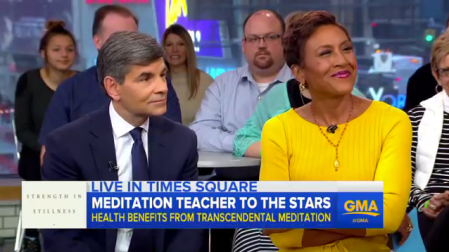
Bob Roth sat down with Robin Roberts and George Stephanopoulos to discuss the benefits of Transcendental Meditation on Good Morning America Live in Times Square. His new book, Strength in Stillness: The Power of Transcendental Meditation, came out today, Feb 6, 2018.
Along with many A-list celebrities who have learned TM from Bob Roth—Oprah Winfrey, David Letterman, Ellen Degeneres, Hugh Jackman, Russell Brand, Katy Perry, Michael J. Fox, Tom Hanks, Martin Scorsese, Stella McCartney, and many more—Robin and George are also students of his.
Bob says, “We’re talking in Transcendental Meditation a medical tool that can just give anyone access whether they believe in it or not. You can be a 100% skeptical. And anyone can learn it—how to allow the active thinking mind to just access calm. And when that happens, your body, according to research, gains a profound state of rest.”
Bob Roth describes how TM works to George Stephanopolous & Robin Roberts
Bob explains, “In Transcendental Meditation we just effortlessly access these deeper, quieter, calmer levels that are already there. And it happens effortlessly because the nature of the mind is to be drawn to something more satisfying, and inside, most satisfying.”
Robin adds the notion of having no expectations, then brings up the issue of time, the amount of time needed to meditate for 20 minutes twice a day. Bobby then relates a true, funny story about that.
George says, “I think it creates time. If you do 40 minutes a day, you go through the rest of the 22, 23 hours, feeling more calm, more focused, more connected to everyone around you, and that’s invaluable.”
Robin says, “It calms you and energizes you at the same time. It’s the oddest thing.” George, who was very skeptical when he learned, reiterates, “Exactly!”
I really appreciate how Bob keeps coming back to TM basics in this interview when he describes the nature of our minds at the surface and at the depth. “Transcendental Meditation is a very natural technique that gives effortless access to the stillness that lies within.”
They actually started 15 minutes later, so fast forward to watch it below. Hugh Jackman and Deborra-Lee Furness open the evening, then invite Bob Roth up to the stage. Bobby later invites Jerry Seinfeld to join him on stage around 40 minutes in.
Jerry is on for 15 minutes. In the first 7 minutes he shares where he first learned TM as a college student and says it gave him “the greatest rest that there is in the world.” Joking about how busy and tiring it is to live and work in New York City, he tells everyone they need to learn how to recharge naturally. Jerry loves life and says, “TM is the greatest tool for work.”
In the next half of the discussion Jerry talks about his work for the David Lynch Foundation. Bob starts to tell the story of how they asked Jerry to perform for a fundraiser. Jerry takes over and tells it like it was in his own hilarious way, when he found out he was going to be on the same stage that night with Beatles Paul and Ringo who were headlining the first Change Begins Within benefit concert at Radio City Music Hall. He also takes questions from the audience. Definitely one of the highlights of the evening!
Proceeds from today’s event and sales of the book will go towards teaching women and children who are survivors of domestic violence and sexual assault to meditate through the Manhattan Family Justice Center.
Visit the book’s website www.stillnessbook.com and scroll down to see Events & Tour Dates for book signings at locations around the country, some with other celebrities joining Bob Roth. Below that you will also find featured print and online news and stories, as well as a video library with event, television, radio, and podcast appearances.
More News Coverage on Bob Roth and his Book Launch
On Wed, Feb 7, Bob was interviewed by Rosanna Scotto and Lori Stokes on Good Day NY FOX 5 | WNYW. Rosanna posted a photo on Instagram of the 3 of them. The next book event followed that evening at the 92Y On Demand. It was moderated by Tony, Emmy and Golden Globe-winning actress and writer Mary-Louise Parker. Watch their wonderful conversation here.
More news coverage continues to come out. Feb 10, 2018, The Guardian published this excellent article: Top US meditation teacher brings his message to stressed-out Britons. Guru Bob Roth, who numbers Katy Perry and Hugh Jackman among his fans, is to set up a TM project in London schools.
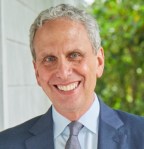
Bob Roth @Alexander Berg
Bob Roth is the most experienced and sought-after meditation teacher in America. Over the past forty-five years, Bob has taught Transcendental Meditation to thousands of people, from billionaire CEOs to combat-scarred veterans, to at-risk students in violence-filled schools, to leading figures in government, business, medicine, media, the arts, and more. In addition to serving as the CEO of the David Lynch Foundation he also directs the Center for Leadership Performance.
In Strength in Stillness, Roth breaks down the science behind meditation in a new, accessible way. He highlights the three distinct types of meditation—focused attention, open monitoring, and self-transcending—and showcases the evidence that the third, Transcendental Meditation, is the most effective and efficient way to reduce stress, access inner power, and build resilience. Free of gimmicks, mystical verbiage, and over-inflated research studies, the book is a simple and straightforward guide to calming mind, body, and spirit.
I just love this funny video clip of Russell Brand and Bob Roth promoting the British and American cover versions of Strength In Stillness. Bob says it’s available in 9 different languages. Watch what Russell has to say about it all.
• Watch a replay of Bob Roth and David Lynch talk about Transcendental Meditation and the work of the David Lynch Foundation. The evening, hosted by Writers Bloc Presents, took place at the Wilshire Ebell Theatre in Los Angeles on Feb 12, 2018.
January 12th has been traditionally celebrated as the birthday of Maharishi Mahesh Yogi. This year, January 12, 2018, is the centenary of his birth. After taking a Week of Silence at the start of every year, Maharishi would use the occasion of his birthday to inaugurate a new theme for the new year for his worldwide Transcendental Meditation Movement. See a PDF of Maharishi’s Achievements for each year.
For example, on January 12, 1975, after hearing of a few cities in the United States where 1% of the population were practicing TM and the crime rate had gone down compared to similar cities where it had gone up, he inaugurated the year as the Dawn of the Age of Enlightenment, saying, “Through the window of science, we see the Dawn of the Age of Enlightenment.”
On January 18, 2011, The Times of India published an article about Maharishi by Lane Wagger, The Prime Mover of Life. In this article, titled, Transcendental Meditation, Lane Wagger recalls the legacy of Maharishi Mahesh Yogi for his centenary year. Don’t know the date and paper it was published in, but here is an image of the article I had converted into a PDF: Maharishi’s Legacy by Lane Wagger. If you open it, go to Tools, Rotate Clockwise, then Zoom up to 110% to read it.
These remembrances are just a fraction of what he had accomplished. He created schools, universities, revived ancient Vedic medicine, architecture, music, encouraged scientific research on TM, and so much more. Maharishi’s Vedic knowledge and technologies continue to transform millions of people’s lives for the better, and for that we are very thankful. Jai Guru Dev.
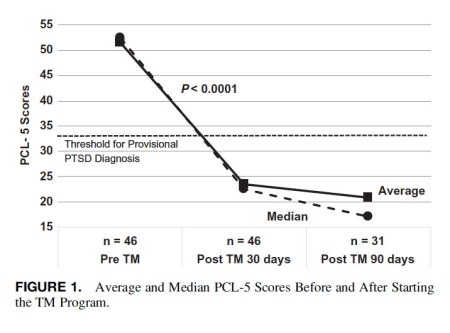
SUMMARY: A study published in Military Medicine showed that after 30 days of practicing the Transcendental Meditation (TM) technique, 80% of the 46 veterans and active-duty personnel no longer had PTSD. All participants had been clinically diagnosed with PTSD using a standard assessment. By comparison, standard treatments for PTSD—prolonged exposure therapy, cognitive processing therapy, and medication—are only partially successful: approximately two-thirds of patients receiving cognitive processing therapy or prolonged exposure still have PTSD after treatment.¹
Participants in the study went from an average PCL-5 pretest score of 51.52 (with a score of 33 or above indicating PTSD) to an average posttest score of 23.43 after 30 days of practicing Transcendental Meditation (TM).
Veterans of the war in Vietnam, the Gulf War, Somalia, Iraq, and Afghanistan suffering from post-traumatic stress disorder (PTSD) found significant relief from their symptoms as a result of practicing the Transcendental Meditation (TM) technique, according to a new study published in Military Medicine. (PDF)²
The 41 veterans and 5 active-duty soldiers in the study had been diagnosed with clinical levels of PTSD, as measured by the PTSD Checklist-Civilian (PCL-5). After one month, 87% had a clinically significant decrease of more than 10 points. The reduction was so great that 37 participants (80%) had their symptoms reduced to below the clinical level, meaning that they were no longer considered to have a disorder.
The effect size, which is a measure of the magnitude of a treatment, was 1.91. This is unusually high, with a value of .8 considered to be a strong effect. In addition, the very low p-value (p < 0.0001) indicates these results were probably not due to chance. The study included a 90-day posttest; PTSD symptoms continued to improve.
“It’s remarkable that after just one month we would see such a pronounced decrease in symptoms, with four out of five veterans no longer considered to have a serious problem with PTSD,” said lead author Robert Herron.
More effective than standard treatment
By way of comparison, the standard treatment, which entails veterans attending counseling and re-experiencing their trauma as part of the therapy, is typically only partially successful, with approximately two-thirds still suffering from PTSD after being treated.
“Transcendental Meditation is very easy to do and results come quickly,” said James Grant, Director of Programs for TM for Veterans, which provided partial funding for this study. “TM promotes self sufficiency – it’s a tool that the veteran can use for life, on his or her own.”
In addition, research has shown that Transcendental Meditation has a positive benefit for many of the conditions associated with PTSD, such as high anxiety, insomnia, depression, and high blood pressure.
“Because it works on the neurophysiological level to reduce stress, it has broader impact than cognitively-based therapies,” he said.
Veterans able to help themselves
An interesting facet of the study was that the veterans were recruited through media advertising rather than through a veterans hospital.
“The importance of this study is that it shows that veterans are able to help themselves,” said lead author Robert Herron. “After learning about the opportunity to participate in the study, they went to local Transcendental Meditation centers to be instructed in the practice.”
Dr. Herron said that because of their huge caseload, the Veterans Administration hasn’t been able to help all veterans in a timely manner. And veterans are often in desperate need of help.
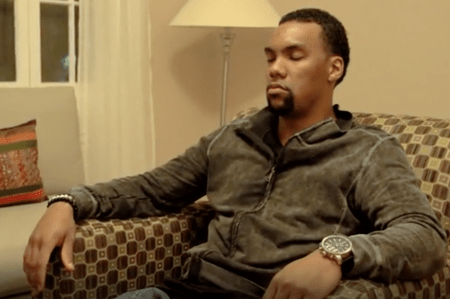
Veteran practicing Transcendental Meditation
“The veterans involved were pleased that they were able to do this on their own, and no doubt the VA hospitals appreciate that there are therapeutic approaches that can be undertaken without the costly intensive care of a therapist that treatment typically entails,” he said.
Dr. Grant said some veterans are reluctant to go to counseling because of the perceived stigma, but that there’s no stigma associated with meditation, which is widely practiced by healthy people.
Practiced 20 minutes twice a day
The participants learned the standard Transcendental Meditation technique, which is practiced 20 minutes twice a day. The study found that the veterans who practiced twice a day as recommended had greater benefits than those who practiced once a day.
This approach to meditation, which was introduced in the West by Maharishi Mahesh Yogi beginning in the late 1950s, has been widely researched over the past 50 years, with over 400 peer-reviewed studies. It is unique in that it doesn’t entail contemplation or concentration and is easy to learn and effortless to practice.
“Researchers have been calling for new approaches to PTSD treatments, and Transcendental Meditation seems to be particularly effective,” Dr. Grant said. “Veterans who elect to learn Transcendental Meditation themselves can find significant reductions in PTSD. The results are promising and suggest that this is a treatment modality that deserves more rigorous study as a potential treatment for PTSD.”
DoD supports researchon TM
The current study follows four previous studies on veterans that suggested a benefit for PTSD. Because of these promising findings, the U.S. Department of Defense has supported a randomized controlled trial involving 210 veterans that is now nearing completion.
“The evidence is mounting that Transcendental Meditation is an effective treatment for PTSD,” said Colonel Brian Rees, MD, coauthor of the current study. Dr. Rees was the lead researcher on two earlier studies on Congolese refugees suffering from PTSD, and found a significant benefit after just 10 days of TM practice.
Funding for veterans to learn the Transcendental Meditation technique in this study was provided by the Wege Foundation of Grand Rapids, Michigan.
Watch veterans describe their PTS symptoms and how TM changed their lives in this video made by the David Lynch Foundation: Real PTS Relief for our Veterans.
Listen to this excellent interview about TM for Veteranswith Colonel Dr. Brian Rees on Better Worldlians, Podcast #109 — Aired November 7, 2016, in honor of Veterans Day: Transcendental Meditation and PTSD.
David Lynch Foundation CEO Bob Roth talks TM with BUILD host Charles Thorp
David Lynch Foundation (DLF) CEO Bob Roth joined BUILD Series NYC host Charles Thorp to talk about the work of the global charitable organization. DLF addresses the epidemic of trauma and toxic stress among at-risk populations. It hosted “Change Begins Within: Healing the Hidden Wounds of War,” a benefit dinner and conversation, which featured meditating actors Tom Hanks and Mary Louise-Parker. The proceeds benefited David Lynch Foundation programs, including the Center for Excellence in Military Health, a division of the David Lynch Foundation helping veterans and those in the armed services dealing with post-traumatic stress (PTS). Watch this engaging interview here: https://goo.gl/zpKLwa.
Bob Roth, DLF CEO. (Photo Alexander Berg)
Bob Roth is the most experienced and sought-after meditation teacher in America. Over the past forty-five years, Bob has taught Transcendental Meditation to thousands of people, from billionaire CEOs to combat-scarred veterans, to at-risk students in violence-filled schools, to leading figures in government, business, medicine, media, the arts, and more. In addition to serving as the CEO of the David Lynch Foundation he also directs the Center for Leadership Performance.
In Strength in Stillness, Roth breaks down the science behind meditation in a new, accessible way. He highlights the three distinct types of meditation—focused attention, open monitoring, and self-transcending—and showcases the evidence that the third, Transcendental Meditation, is the most effective and efficient way to reduce stress, access inner power, and build resilience. Free of gimmicks, mystical verbiage, and over-inflated research studies, Strength in Stillness is a simple and straightforward guide to calming mind, body, and spirit. Read more here: www.stillnessbook.com.
Watch this excellent book promo video, containing excerpts from various presentations, interviews, and famous meditators talking about what TM does for them, and others in need, on Bob Roth’s (@meditationbob)Twitter feed.
Jan 10, 2018: Bob Roth explained his book on his Facebook page live.
This is the one-year anniversary of the start of my trip to India. A year ago today, I boarded a very long non-stop flight from Chicago to New Delhi. After clearing customs I went to an airport bank to change some money. It took a while, but a driver who had been sent to pick me up waited to take me to a Holiday Inn, where I finally crashed. The next morning another driver took me to the airport for a flight to Jabalpur. My sister and brother-in-law where there to welcome me when I arrived, which was very nice. We then traveled to the holy Narmada River, to fulfill the prime purpose of my long journey.
As it turned out, November 14, 2016 was a very significant day in three major religious traditions at this celebratory time of year. We hired a boatman, and after some special prayers, I spread Sali’s ashes on this peaceful celestial river as he rowed the boat towards and around a small Mother Narmada Temple at the foot of the Gwari Ghat.
This took place during the late afternoon on a Monday, a moon day, but the largest full moon in 70 years, the supermoon! It was highly significant, worthy of Sali’s spiritual merit she had earned offering a lifetime of one-pointed devoted service to Maharishi Mahesh Yogi, founder of the Transcendental Movement. Some of his ashes had been spread at this holy place as well.
It was evening by the time we arrived at the Bijouri Campus in the Brahmasthan of India. During my 3-week stay there I would meet many wonderful meditators and sidhas from different countries around the world who came for the Maharishi India Courses, to meditate and enjoy the recitations of the Maharishi Vedic Pandits. It was a very healing atmosphere to settle into. Just what I needed, thanks to my family.
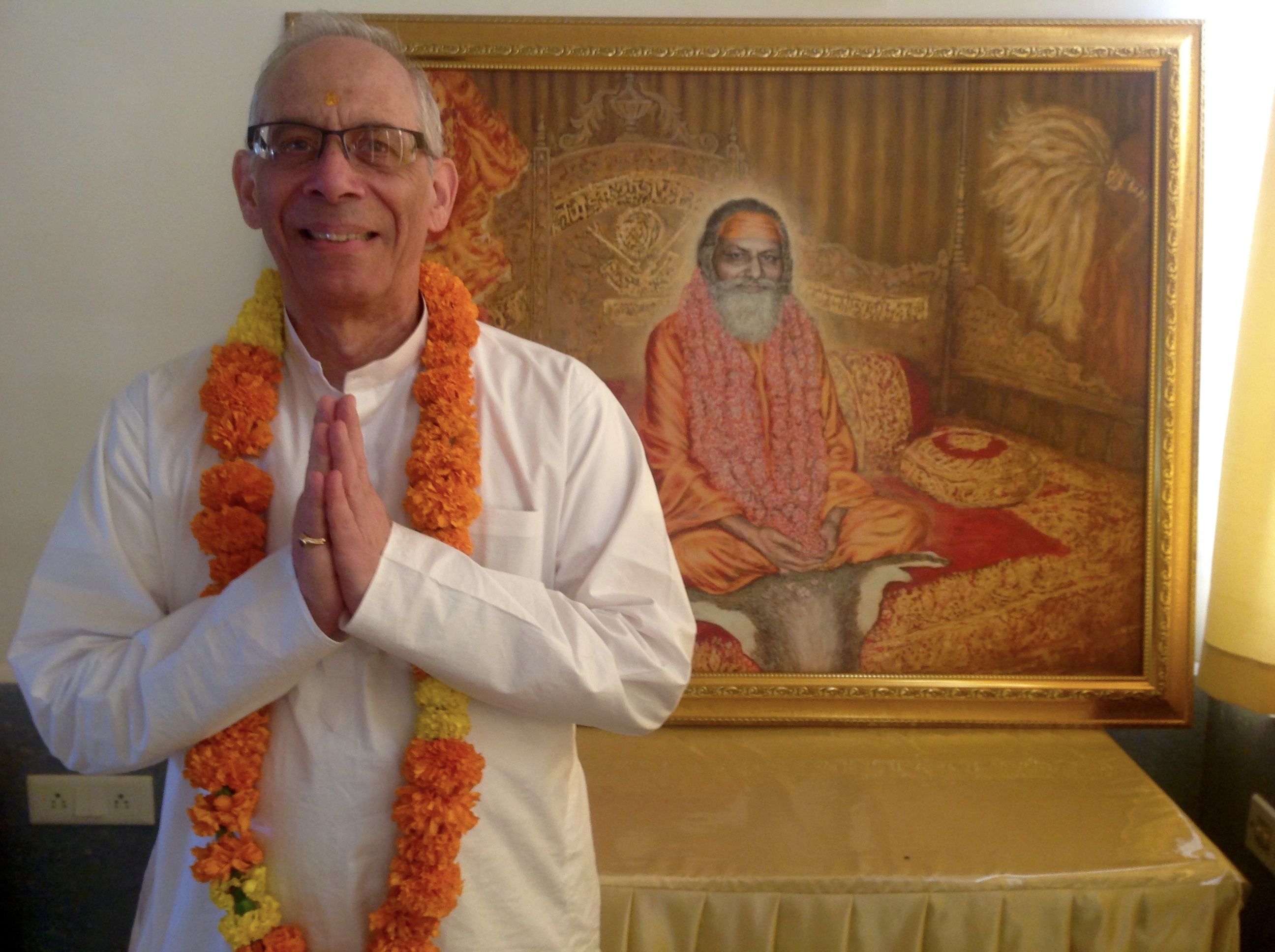
Traditional Indian Greeting
To start our course, we were each given a special welcome by the Maharishi Vedic Pandits and garlanded with flowers. Here is a photo of me, taken last year, November 16, 2016, after that warm reception.
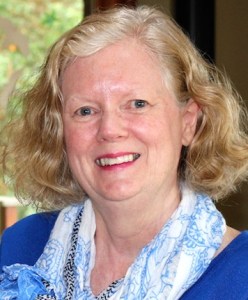
I purposefully stood in front of a large beautiful painting of Guru Dev, Maharishi’s master. I had purchased a print of this latest painting of Guru Dev the previous summer, having seen it featured at Art Fifty Two in Fairfield during a reception for the artist and her work. I had taken a photo of Frances Knight at the gallery standing in front of the original painting. You can also see part of a large Holy Tradition painting on the back wall behind her, one of many she had painted in the past.
Visiting the Maharishi Vedic Pandit Campus
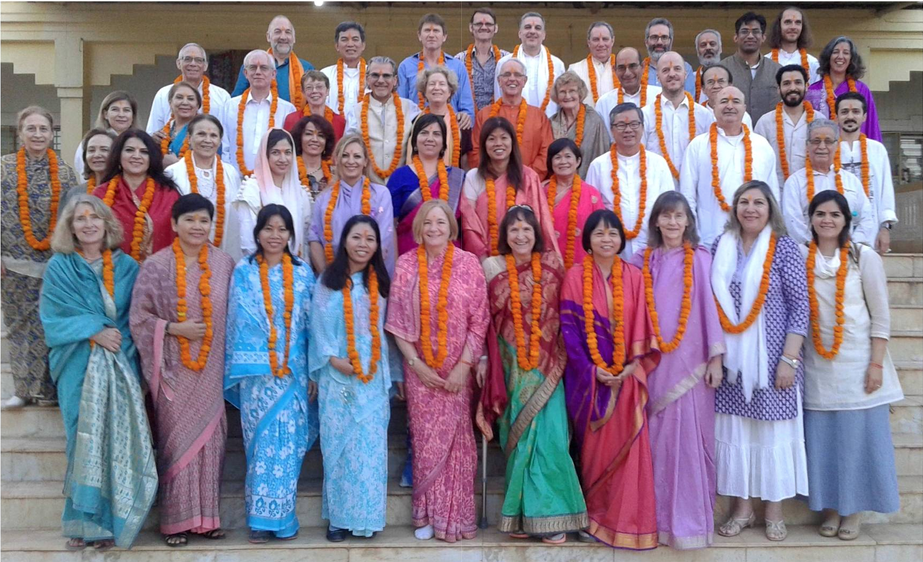
On one of our trips we were taken to the geographical center of India known as the Brahmasthan. We shared a short group meditation and took photographs. And once a week we were driven to the Maharishi Vedic Pandit campus to hear 1,500 pandits recite Atirudrabhishek, an ancient Vedic performance to create world peace.
Sitting there with my eyes closed listening to the powerful Vedic recitation, I started to feel a deeply relaxing peacefulness growing inside my body. Soon, much to my surprise, I started to smile, then chuckle! I felt an inner happiness welling up within me that was totally unexpected. This bliss was a welcome contrast, a relief from the grief I was carrying around with me, mourning the loss of my sweetheart. This profound experience was worth the long tiring trip over there!
We put on traditional Indian clothing for these special occasions and posed for a group photo before boarding the buses back to our campus. I am standing in the upper second-to-last row on the far left. The course participants came from England, Ireland, USA, Canada, several European and Asian countries, Israel, Australia, and many from Iran. We were a diverse and harmonious group.
Now that I finally transferred all of my photos from my iPad onto my computer, I could post some of them related to this story. Who knows, maybe other photos will spark new stories.
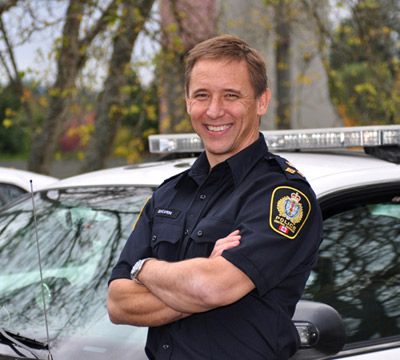
The Canadian Women’s Wellness Initiative [CWWI]—the women’s wing of the Transcendental Meditation organization in Canada—has partnered with the Central Saanich Police Service [CSPS] near Victoria, British Columbia to offer Transcendental Meditation to their officers and staff. Given how stressful law enforcement can be, this comes as welcome news, for police officers and the general public.
The study, conducted by Kwantlen Polytechnic University psychologist Lisa Kitt for the Vancouver Police Union, surveyed officers in the Vancouver Police Department. Of the 1,100 officers who were emailed questionnaires, 765 replied, a participation rate of more than 70 per cent, which is considered extraordinarily high for a social sciences study. The report found that approximately 32 per cent of the respondents were in the diagnostic range of PTSD.
The results show that police departments must address the mental health issues confronting officers. “They’re suffering,” Kitt said in an interview. “They’re suffering and they want people to know.”
Kitt explained that the post traumatic stress experienced by officers is the result of years of stressful job-related calls, witnessing distressing deaths and repeated violence.
Moved by the article, Helen decided to reach out to the Central Saanich Police Service with a solution. When she mentioned the 30% statistic in her presentation to the Central Saanich officers, some indicated that it may be higher, since officers may not want to report signs of PTSD due to concerns they may be overlooked for promotion.
Central Saanich Police Service and Area Police Officers Learn and Benefit from Transcendental Meditation
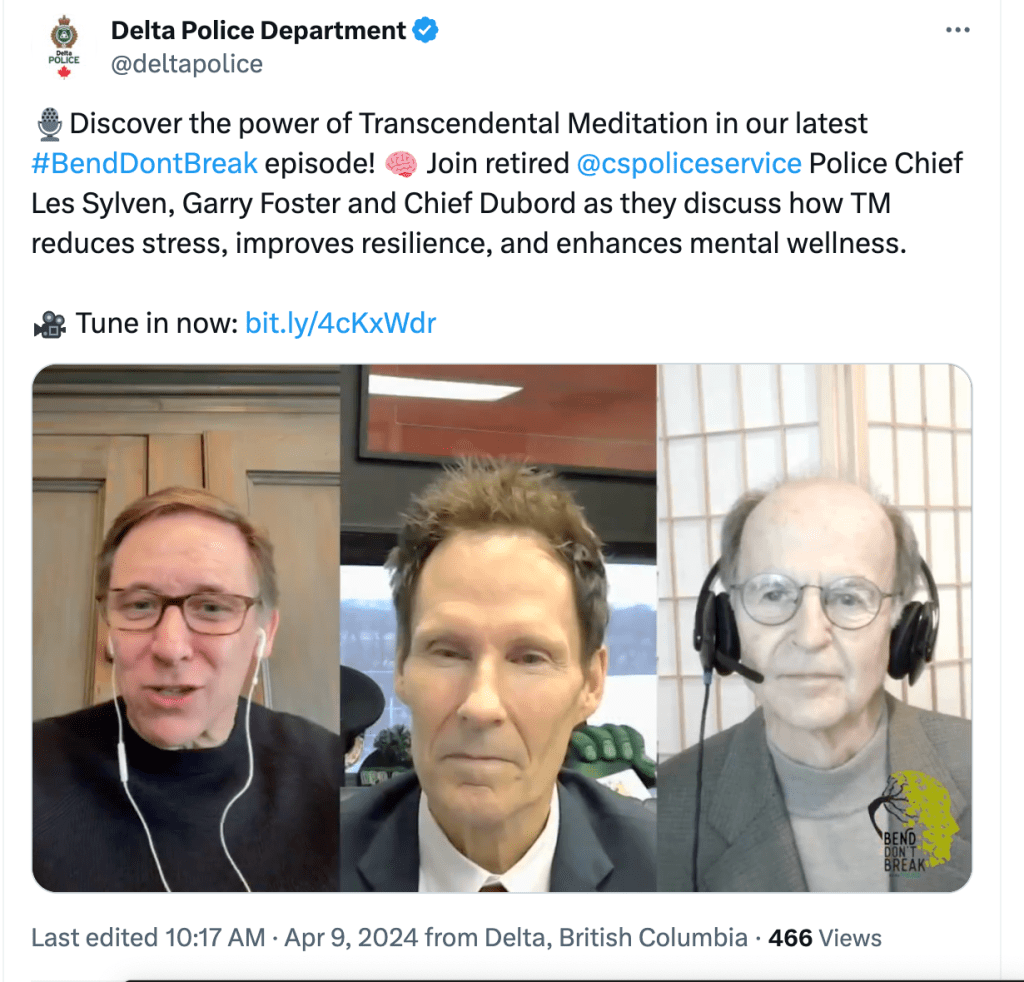
CSPS Police Chief Les Sylven
When Helen Foster-Grimmett approached CSPS Police Chief Les Sylven to ask him about including their wellness program for his officers and staff, he agreed, based on his own personal experiences with the meditation technique. “I feel very fortunate to have found TM early in my policing career. I believe daily TM practice has helped me deal with the long-term physical and emotional demands that come with serving the community through police work.”
Chief Sylven said that his TM practice helped him stay calm, present, and focused during many high-risk and complex situations. With regular TM practice, he believes that other police officers would experience similar benefits, including decreasing the wear and tear caused by years of shift work and sudden adrenaline surges, which may lead to serious illnesses.
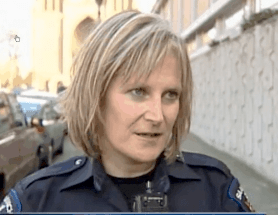
Constable Kathleen Thomson
Kathleen Thomson, Constable [retired], who was with the Saanich Police Department for over a decade, also took the wellness training with the CSPS officers. After being instructed in TM, Thomson said she found that each sitting of meditation was like having a restorative vacation.
“Afterwards I have sustained, fresh energy. I feel far more settled, and little things that used to bother me, don’t as much anymore.” She says she feels more present, and more easily able to listen to and engage with others without her mind wandering. “Each sitting of meditation leaves me feeling both incredibly relaxed and energized at the same time. I wish I’d discovered TM years ago.”
Reviewing the ongoing project, Police Chief Sylven said, “Recently, we have been very fortunate to have some of our staff trained in TM. This training has included not only our police officers, but also our valuable civilian employees who support them. They are often the first to interact with the public when they need help.”
Less Reactive, More Responsive
Although it has only been a few months since the program was introduced, some of Chief Sylven’s people are already noticing subtle differences, including feeling less reactive and more responsive. At the end of the day they often sit to meditate together.
“This is particularly rewarding for me,” says Sylven, “as I know how important it is that we go home to our loved ones and families feeling calm, present, and at our best for them.” To better support officer wellness Police Chief Sylven feels it would be ideal to have a meditation room in every police department in Canada.
Along with the Central Saanich Police Service officers, several officers from other policing departments also took part in the training.
Helen Foster-Grimmett has been invited to join Chief Sylven in speaking about this wellness program for police officers at the Central Saanich Police Service during an upcoming conference that will be attended by 11 British Columbia municipal Mayors, 11 Police Chiefs, and 11 Police Boards.
Researched TM Benefits Specifically Relevant for Police Officers
• greater resilience • greater ability to focus and have broader comprehension at the same time [field independence studies; formerly thought to not improve beyond early adulthood] • faster reaction time • decrease in PTSD • decrease in general stress • better decision-making [fewer “knee-jerk” reactions] and higher moral reasoning • reduced insomnia, anxiety, depression • reduced alcohol or substance abuse • reduction in high blood pressure • reduction in sick days • increased brain coherence • restfully alert mind • increased energy, less fatigue • decreased cortisol [stress hormone]
Contact Information
For more information about the Transcendental Meditation program for police officers at the Central Saanich Police Service and on-going outreach programs, contact Helen Foster-Grimmett at Helenbythesea@shaw.ca.
A month following Helen’s article, Dec 29, 2017, Transcendental Meditation for Women published, Extinguishing Stress in Women Firefighters, by Deboragh Varnel. Deboragh is a TM teacher, Director of the Vancouver TM for Women Centre, and National Board Member of the Canadian Women’s Wellness Initiative. She brings the TM program to women in high stress professions, including firefighters, police, first responders, nurses and teachers.
Transcendental Meditation in Military and Medical Education
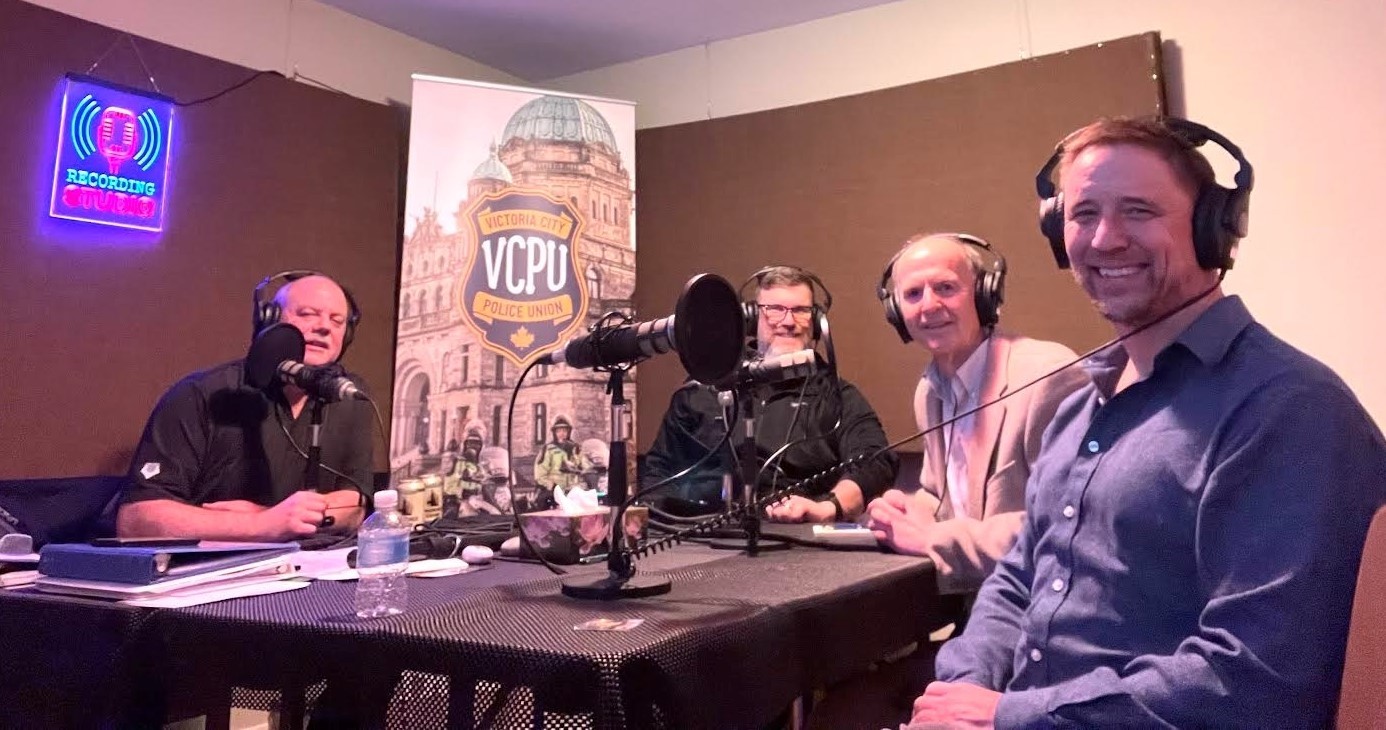
Victoria City Police Union (VCPU) True Blue Podcast
(Left-Right) S/Sgt Matt Watterman; Constable Todd Mason, Victoria Police; Garry Foster, TM Teacher; Les Sylven, retired Police Chief, Central Saanich Police, PhD Candidate, University of Victoria. (Todd and Les practice TM.)
Update: (March 2021) Helen’s husband and TM teacher Garry Foster appeared with Police Chief Les Sylven on Victoria City Police Union, VCPU’s True Blue Podcast. Garry said that Police Chief Les Sylvan’s contribution about halfway through added a lot to the discussion. Constable Todd Mason organized it and invited Garry, and S/Sgt Matt Waterman was a very supportive host. This is great exposure for TM. Les has retired from the police force and is pursuing a PhD at the University of Victoria exploring leadership in the RCMP. Enjoy this (55:40) podcast posted on their website: Transcendental Meditation – Garry Foster & Les Sylven. Also posted on their Apple Podcast, Google Podcast, and Spotify.
I discovered jazz in high school and soon became aware of Bill Evans. An accomplished musician educated in classical music, he chose to become a jazz pianist instead, and took elements of those influences to create his own unique style.
As a young man, Evans went on to compose and perform modal music with Miles Davis. Miles praised Bill’s contribution in the groundbreaking Kind of Blue LP released in the summer of 1959 by Columbia Records, often considered the best-selling jazz album of all time. Evans later left Davis to play solo, and form his own jazz trios. Bill Evans became one of the true jazz legends of our time.*
In this intimate 1970 interview and concert at the rural home of Finnish host Ilkka Kuusisto, a very wealthy and very highly regarded classical musician, with jazz musicians in the family, Evans was asked if his group practiced. He explained that “the trio has never rehearsed. … All the things that we play have grown out of performance.” They shared “a natural development through common desire to make it more musical all the time as much as we can.” It was “freedom with responsibility…to the total performance.”
In his solo work, Bill Evans’s Peace Piece is musical onomatopoeia. The calming repetitive left hand chords juxtaposed with the right hand animated notes evoke fluttering doves of peace calling to each other. Pure genius! It reminds me of the French impressionistic sounds of Erik Satie, Claude Debussy, and Ravel, but this is distinctly his own music.
“Peace Piece” was an unrehearsed modal composition he recorded December 15, 1958 for his Everybody Digs Bill Evans LP released in early 1959 on the Riverside label (Riverside RLP 1129). It’s been hailed as one of the most beautiful and evocative solo piano improvisations ever recorded. I totally agree. One of the most beautiful jazz recordings I’ve ever heard. A peaceful masterpiece. A masterpiece of peace!
In this 1966 documentary, Bill Evans talks with his composer brother Harry about the creative process and self-teaching. Evans spoke of a Universal Mind. “I believe that all people are in possession of what might be called a universal musical mind. Any true music speaks with this universal mind, to the universal mind in all people. The understanding that results will vary only in so far as people have or have not been conditioned to the various styles of music in which the universal mind speaks. …”
Click SHOW MORE under that video to read the rest of the transcription. Evans also analyzes the melody and harmonics of Star Eyes, and performs other pieces, in between musical discussions with his brother.
Bill Evans (August 16, 1929–September 15, 1980) was one of the most famous jazz pianists of the twentieth century. Along with McCoy Tyner and Oscar Peterson, he was the force behind the biggest evolution in jazz since Art Tatum and Bud Powell.
Evans won seven Grammys during his career, the first for Conversations With Myself (1963), [which I had bought back then] although not for his most celebrated work, Sunday At The Village Vanguard (1961) with bassist Scott LaFaro and drummer Paul Motian.
His use of impressionistic harmony, his inventive interpretation of traditional jazz repertoire, and his syncopated and polyrhythmic melodic lines influenced a generation of pianists, including Herbie Hancock, Denny Zeitlin, Chick Corea, and Keith Jarrett, and his work continues to inspire younger pianists such as Fred Hersch, Bill Charlap, and Lyle Mays, as well as other musicians such as guitarist John McLaughlin.
In 1994, Bill Evans was posthumously awarded a “Lifetime Achievement Award” by the National Academy of Recording Arts and Sciences (NARAS) “for altering the course of jazz piano with his lyrical, impressionistic solo and trio recordings, characterised by the understated intensity, distinctive chord voicings, and unique harmonic sensibility that opened up the vocabulary of modern jazz.”
Taken from the notes to the video: Bill Evans was often asked to perform “Peace Piece” in later years after the 1959 recording, but he usually resisted, claiming that it had been the inspiration of the moment, and not something that could be recreated, he considered it as a one-time thing. Only on this occasion in 1978 he performed “Peace Piece” with the Bill Evans Dance Company in Seattle. This Peace Piece, extracted from the video, recorded in 1978, is probably the only recorded performance after “Everybody Digs Bill Evans” from 1959. Peace Piece is a “practiced improvisation” and you can hear how Bill adapts his playing to the choreography of the dancers compared to his 1959 solo performance.
Emanuil Ivanov covers Bill Evans Peace Piece 2022
Emanuil Ivanov performed Bill Evans – Peace Piece beautifully at Bulgaria Hall, Sofia on October 3, 2022 as a Prayer for Peace. It is the closest to the original. Ivanov’s playing is very refined and delicate, capturing the peaceful feeling perfectly.
September 24, 2025, Daniel Anastasio posted on Instagram how Bill Evans came to write Peace Piece. He said he came into the studio to record Leonard Bernstein’s Some Other Time from his musical On The Town. But he never got past the opening bars because they turned into this: and he starts playing Bill’s improvisation. He gives a commentary about playing in the moment and not trying to be perfect. I posted a comment on his reference to the left hand playing like a non-wavering mantra while the right hand improvises, suggesting another metaphor, like a metronome, explaining the proper use of a mantra in meditation. Another reminded him that the right hand evolves a melody based on bird calls! True genius. I agreed and said: Exactly! That’s why I call this Peace Piece musical onomatopoeia.
— Written and compiled (citing sources) by Ken Chawkin for The Uncarved Blog.


 In Strength in Stillness, Roth breaks down the science behind meditation in a new, accessible way. He highlights the three distinct types of meditation—focused attention, open monitoring, and self-transcending—and showcases the evidence that the third, Transcendental Meditation, is the most effective and efficient way to reduce stress, access inner power, and build resilience. Free of gimmicks, mystical verbiage, and over-inflated research studies, the book is a simple and straightforward guide to calming mind, body, and spirit.

 The Uncarved Blog