Archive for the ‘Peace’ Category

Oprah says she and her staff meditate, enjoy a Quiet Time twice a day—Facebook Live interview

September 17, 2011

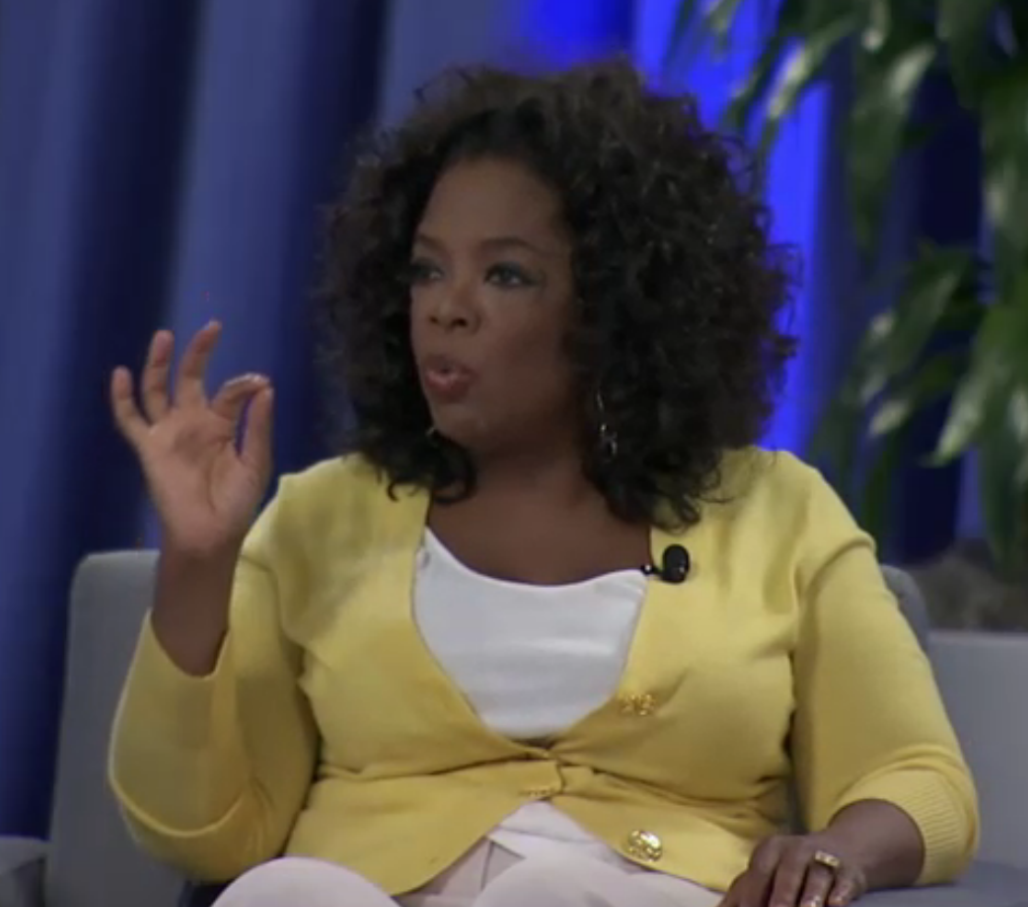
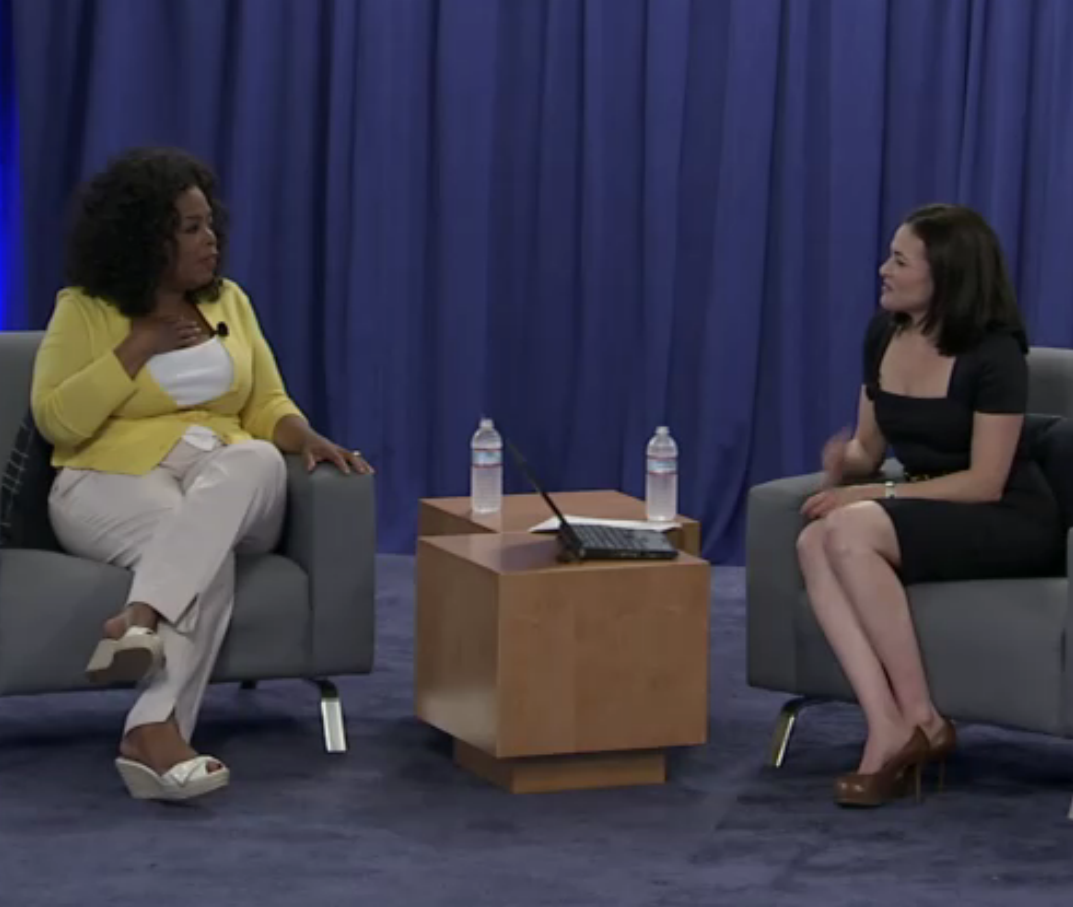
Oprah and Facebook COO Sheryl Sandberg enjoy a lively discussion.

This was news to me. Did you know that Oprah was interviewed on Facebook Live? Live Interview with Oprah Winfrey – Sept 8, 2011. Since I’m not on Facebook I didn’t go there to look for it. So I did a Bing search and found it posted on talkbytes.com. Oprah sat down with Facebook COO Sheryl Sandberg for an enjoyable talk. Besides Sandberg, members of the Facebook crowd also got to ask Oprah questions, along with online participants.

Oprah is quite the talker. She is a great communicator and teacher. She sincerely wants to bring more consciousness into the lives of her viewers, and shares some revealing valuable lessons she’s learned over the years. Around 9:15 minutes into this enjoyable 1 hour interview, Oprah tells Sheryl that she and her OWN company offices in Chicago and LA have now incorporated meditation, a Quiet Time, twice a day into their schedule. Hopefully, we’ll hear more about this in a future show.

There were so many wise things Oprah said about her life, the evolving philosophy of her program, from entertaining and shocking her viewers, to helping them empower themselves. She feels her mission is to help people become the best they can be. Here is a partial transcript from the section on meditation. Sheryl asks Oprah what was it in her that helped her become who she is today.

Oprah: I think that the same thing that is in me is in everybody else, and when you close your eyes sometimes and you get really still…like one of the things that we are doing at my companies now is everybody is learning to meditate. And everybody gets all thrown by the word, meditation. So I said to them the other day: Let’s not call it meditation, let’s just call it Quiet Time, because…

Sheryl: Like my kids. They get Quiet Time.

Oprah: Yes, yes. Because when you teach your children meditation, you don’t say, we’re going to me-di-tate. You say, let’s have some Quiet Time. So twice a day now, at OWN, in Chicago and Los Angeles, we take Quiet Time…where you…literally…

So I have…having grown up in rural Mississippi, alone with my grandmother, I had a lot of quiet time. I had a lot of time to touch the stillness inside me. And the truth is, that’s where God lives. God lives in the space of stillness. Whatever you chose to call God, or not call God. It doesn’t matter whether you chose to call it or not, that stillness is always there, that awareness space.

…where you live, where the capital You resides, is not in the thoughts, but in the awareness, in that space. So I have lived in that space, of awareness for myself for a very long time. I can’t even remember…

You know, all of us has that space were you’re willing to get still, because the world will try to tell you everything about yourself, and…we have so many voices, in our heads and on our Facebook pages telling us everything. But, to know, really, what to do and how to be guided in your life, you have to go to that still space where the bigger You, the greater You, resides. And I have it, and so does everybody else who’s listening to us right now.

Sheryl: Get ready Facebook, we’re going to be meditating. (Sheryl gives the peace sign).

Oprah (laughs): Ya…ha ha ha

Sheryl: Twice a day.

Oprah: It changes the energy of everybody in your company. I mean, for years I’ve wanted to do it. And I knew that, because I didn’t start out that way. And I started out my school doing it too in South Africa.

Have a moment where you can go into that space, so that you’re not just talking and operating outta the top of your head, and you’re not just moving in your action-external self, but that you’re bringing a deeper sense of who you really are.

For a review of the show with quotes, here’s an article about it in The Huffington Post: Oprah At Facebook: Incredible (VIDEO). The video is posted there, as it also is on talkbytes.com: Oprah Forces Her Employees to Meditate, which is unfair since Oprah doesn’t force her employees to participate in such programs, she just provides it to them as a Quiet Time option, a time to chill out—something we can all benefit from in this fast-paced crazy world. You can lead a horse to water, but you can’t make him drink.

This first show is now posted on Facebook: http://livestre.am/11yid.

It’s a great interview. Enjoy!

Also see Reports of Oprah’s visit to Fairfield, Iowa in the news Oct 19+20, 2011: Fairfield Ledger: Oprah visits Maharishi School, Fairfield | KTVO: Oprah and her jet land in southeast Iowa | Oprah Winfrey Meditated in Fairfield Iowa Tonight with Other Transcendental Meditation Meditators: Oprah Jets into Fairfield and MeditatesInspiring Developments | Mount Everest | Emporium. And Oprah meditates with ladies in MUM Golden Dome, which includes links to an interview with Dr. Oz, reported in examiner.com: Oprah Discusses Her Life After the Practice of Transcendental Meditation. And a recent post on the TM Blog Oprah Winfrey talks TM with Dr. Mehmet Oz. For more, see: Some Reports on Dr. Oz’s Interview with Oprah about TM and her Next Chapter. And this latest news: Oprah writes in O Mag about her visit to TM Town and meditating with ladies in their Golden Dome.

Fairfield Resident Helps Veterans Recover

September 10, 2011

Eastern Iowa News Now

Fairfield Resident Helps Veterans Recover

Posted September 9, 2011 10:50 pm
by Kathleen Serino/SourceMedia Group News

FAIRFIELD – Meditation is the best medicine for military veterans, some say.

Filmmaker David Lynch is set to announce on Sunday a $500,000 matching grant to teach Transcendental Meditation to veterans and active military with Post-Traumatic Stress Disorder (PTSD), according to a news release from Operation Warrior Wellness, an outreach campaign sponsored by the David Lynch Foundation.

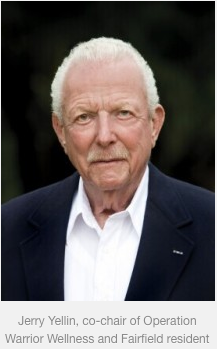
Lynch is inviting major donors to match the grant, which he hopes will be met by Veteran’s Day, Nov. 11, the release says. And Hollywood actors like Russell Brand and Paul McCartney are responding, said Jerry Yellin, co-chair of the initiative that he helped create in March 2010.

Yellin, a World War II veteran, Fairfield resident and author of “The Resilient Warrior, Healing the Hidden Wounds of War,” said he is currently giving four free presentations to 150 veterans in Minnesota on behalf of the campaign.

The 87-year-old said he suffered from PTSD for 30 years before he found Transcendental Meditation (TM), and now talks to veterans, active soldiers and their families about his story and how much it helped him recover.

“These guys are doing exactly what they should be doing and I hope they get their funding,” said Norman Rosenthal, MD, psychiatrist and clinical professor at Georgetown University.

Rosenthal, 61, a researcher on TM and PTSD said, “This very gentle technique had a very powerful effect within a month.”

“It relieves stress, and all of these guys have gone through stress. Big time,” said Yellin of the TM technique.

Yellin said his outreach continues with wife, Helene, and Vietnam veteran Dan Burks, also from Fairfield, to visit military bases, academies and other military organizations.

This entry was posted in War and tagged David Lynch, Fairfield Iowa, Jerry Yellin, Operation Warrior Wellness. Bookmark the permalink.

Responses:

Ken Chawkin says:
September 10, 2011 at 10:39 am

Thank you, Kathleen, for this inspiring and hopeful story. For more information, visit http://www.operationwarriorwellness.org/.

Also seeStar Tribune: Meditation brings peace to war vets | Medication or Meditation for Veterans with PTSD? | The Chippewa Herald: Soldiers with PTSD may benefit from meditation technique | WEAU13News: Veterans learn about meditation for treating post traumatic stress (includes video) | TwinCities.com Pioneer Press: Ruben Rosario: Recovered veteran’s latest mission: helping those like him | Global Good News: Health: Recovered veteran’s latest mission: helping those like him | Stars and Stripes: Celebrities push for transcendental meditation to treat PTSD


Medication or Meditation for Veterans with PTSD?

September 9, 2011

 National Office • 654 Madison Avenue • Suite 806 • New York, NY 10065 Tel: 212-644-9880 • OperationWarriorWellness.org

MEDICATION OR MEDITATION
FOR VETERANS WITH PTSD?

Filmmaker David Lynch Announces $500,000 Matching Grant
to Teach Transcendental Meditation to 10,000 Veterans

Iconic filmmaker David Lynch will announce this September 11 a $500,000 matching grant to be used to teach the Transcendental Meditation technique to 10,000 veterans with post-traumatic stress disorder (PTSD) and their families.

Lynch is inviting philanthropists and foundations to match the offer by Veterans Day, November 11, 2011.

Hollywood directors Clint Eastwood, Martin Scorsese, and George Lucas, as well as Dr. Mehmet Oz, Paul McCartney, Jerry Seinfeld, and Russell Brand have joined Lynch in support of the outreach.

Lynch’s veteran’s initiative comes from Operation Warrior Wellness (OWW), a division of the David Lynch Foundation, a 501(c)(3) nonprofit established in 2005 to bring Transcendental Meditation to at-risk populations.

Jerry Yellin, a distinguished World War II fighter pilot and national co-chair of Operation Warrior Wellness, said the need is urgent for Lynch’s initiative. “We are in a crisis of epidemic proportions. More soldiers died from suicide last year than died in combat. This is unconscionable. We must give our active duty personnel and our veterans something more than a handful of pills to help them overcome the nightmare of PTSD. Research shows Transcendental Meditation is the best way to go.”

Ed Schloeman, a Marine Vietnam service disabled veteran and national co-chair of Operation Warrior Wellness, says Americans need to help their military, now:  “I call on civilian America to support the men and women who are returning from Iraq and Afghanistan—alive but wounded. Let’s come together for our military, as they have come together for us.”

Evidence-Based Meditation

According to Norman Rosenthal, M.D., psychiatrist, clinical professor of psychiatry at Georgetown University Medical School, and author of the New York Times bestseller, Transcendence, research on the Transcendental Meditation technique on OEF-OIF veterans as well as Vietnam veterans demonstrates its effectiveness for reducing symptoms of PTSD—and treating a number of the disorders associated with the illness. Findings include:

Reduced PTSD: 40 to 50 percent reduction in PTSD symptoms, including depression, anxiety, flashbacks, and insomnia (see PTSD)

Greater resiliency: Reduced stress levels and quicker recovery from stress (see Resiliency to stress)

Reduced cardiovascular disease: Decreased blood pressure, harmful cholesterol, and atherosclerosis; and a 47 percent reduction in cardiovascular-related mortality (see Cardiovascular disease)

Decreased substance abuse: Decreased smoking, alcohol, and drug abuse (see Substance abuse)

Decreased medical expenditures: 14 percent reduction in annual medical expenditures, as compared to the norm (see Decreased healthcare utilization)

“Operation Warrior Wellness is giving our dedicated service men and women a meditation technique that is a traumatic stress buster—it’s not hocus-pocus,” said David Lynch. “When they get this simple, effortless technique they will get their lives back.”

Operation Warrior Wellness is working with veterans’ service organizations, army bases, and military colleges to bring Transcendental Meditation to active duty personnel and veterans and their families.

• For more information on how to contribute to the matching grant campaign of Operation Warrior Wellness, please contact Heather Hartnett at 212-644-9880, or email Heather@OperationWarriorWellness.org.

• Veterans of four wars, from WWII to the present, launched the OWW initiative in December 2010. Researchers and celebrities joined founding veterans Jerry Yellin, Ed Schloeman, and Col. Brian Rees, MD, at a press conference and inaugural gala event at the Metropolitan Museum of Art in New York City.

• In June this year, CNN anchor, Candy Crowley, hosted an event honoring the initiative at American University in Washington, DC. Crowley concluded: “The initial research offers so much hope: reduced anxiety, depression, hypervigilance, and insomnia, as well as reductions in substance abuse, violent behavior, and suicidal tendencies—better than many things being tried and at far less a cost.”

• For recent press coverage of Operation Warrior Wellness visit the OWW News and Archives.

• More news coverage, including  interviews, and the NYC OWW launch at Urban Zen, is also available on this blog’s archive.

• To arrange press interviews with leaders of Operation Warrior Wellness, please contact Steve Yellin at 641-455-9999, or email Steven@OperationWarriorWellness.org.

News Reports: , Paul McCartney Examiner: Paul McCartney lends support to 9/11 TM veterans outreach | The PR Newswire press release, Medication or Meditation for Veterans With PTS?, was also posted by: The Sacramento Bee | MarketWatchDigitalJournal.com | Hola Arkansas | SunHerald.com | SYS-CON MediaRedOrbitMedIndia | Virtual Press Office: Filmmaker David Lynch Announces $500,000 Matching Grant to Teach Transcendental Meditation to 10,000 Veterans | SourceMedia Group: Kathleen Serino for Eastern Iowa News Now: Fairfield Resident Helps Veterans Recover (more articles listed there) | Odewire: Diving deep with David Lynch | Wall Street Journal: A Transcendental Cure for Post-Traumatic Stress by David Lynch and Norman E. Rosenthal | Huffington Post: What Meditation Did for Me: A War Vet’s Story.

ABC News: Study finds meditation helps soldiers overcome trauma, PTSD

June 28, 2011

Study finds meditation helps soldiers overcome trauma, PTSD

Short video link: http://bcove.me/dug2ceme

By Cynne’ Simpson WJLA – ABC 7

June 28, 2011 – 06:45 pm

More than 20 percent of soldiers returning from Iraq and Afghanistan suffer from post-traumatic stress disorder, according to the Department of Defense.

New research suggests one way to combat the symptoms is through meditation.

David George was sleeping in his cot during his deployment to Iraq when a car bomb exploded 25 yards away.

“I turn the lights on, and see a white cloud billowing into the room,” the 27-year-old recalls. “All the windows were blown out.”

Since then, he’s struggled with PTSD, is often anxious, angry and depressed. At one point, back at home in Maryland, he stopped himself from buying a pistol.

“I never bought a pistol because I was pretty sure I was going to shoot myself,” George said.

His mother noticed a change in her son’s behavior, too. “When he came back, he was not the boy I raised,” Julia Elena George said.

Medications and therapy didn’t help. George started drinking heavily.

Then he joined a study for veterans with PTSD using transcendental meditation, a mind-based practice involving repeating a mantra to focus one’s thoughts.

“It made me feel, and that’s the biggest sense I lost,” George said. “From that moment, I knew it was something I’d do for the rest of my life.”

The study’s findings are published in this month’s Military Medicine journal. The study found participants saw their symptoms reduced by half within two months of participating in the meditation.

Dr. Norman Rosenthal says transcendental meditation settles down the nervous system.

“People become calmer, less reactive, less jumpy,” he said. “I think the time is right for us to seriously consider this as a viable treatment.”

George meditates twice a day and says he finally feels like himself again.

“There’s something else than pills or therapies or substance abuse – there’s yourself that you can always count on,” he said.

George is working with operation warrior wellness and the David Lynch foundation to reach their goal to help 30,000 veterans through transcendental meditation in the next three years.

Short URL: http://wj.la/kKqDh3

Huffington Post: Transcendental Meditation: Topping The Bestseller List Since 1975

June 21, 2011
Philip Goldberg
Interfaith Minister, author of ‘American Veda:
How Indian Spirituality Changed the West’

Transcendental Meditation: Topping The Bestseller List Since 1975

Posted: 06/21/11 08:10 AM ET

When I saw a book about Transcendental Meditation (TM), written by a scientist, had landed on the New York Times bestseller list, my reaction was to quote the great Yogi of Berra: “It’s déjà vu all over again.”

In 1975, “TM: Discovering Inner Energy and Overcoming Stress” was propelled onto the list when its lead author, psychiatrist Harold Bloomfield, appeared on Merv Griffin’s syndicated TV talk show (the Oprah of its day) with TM founder Maharishi Mahesh Yogi. The book remained a bestseller for six months, and then had a solid run on the paperback list. During that period, Merv devoted a second show to Maharishi, and TM centers could barely keep up with the demand. By the end of 1976, over a million Americans had learned to meditate.

This was the culmination of a remarkable eight-year run that began when the Beatles famously learned the TM and sojourned at Maharishi’s ashram in India. Between that watershed moment and the two Merv programs, meditation moved from the counterculture to the mainstream, from weird to respectable, from youthful mind expansion to middle-age stress remedy. Now, the celebrity meditators were not rock stars but Clint Eastwood and Mary Tyler Moore, and you could not get more mainstream than the nation’s big screen hero and its TV sweetheart.

The route from esoteric mystical discipline to respectable relaxation technique was paved by science. It started in the late ’60s when a young meditator named Robert Keith Wallace was persuaded by his guru, Maharishi, to study the physiology of TM. The research became his Ph.D. dissertation, and then a Science magazine article in 1970. Wallace’s follow-up study, conducted with Harvard cardiologist Herbert Benson, was published in 1971 in The American Journal of Physiology and Scientific American. The data sparked an avalanche of research. By 1975, a substantial body of evidence had demonstrated the efficacy of meditation on various measures of physical and mental health.

Now comes another psychiatrist, Norman E. Rosenthal, with “Transcendence: Healing and Transformation through Transcendental Meditation.” Once again, celebrity endorsements add pizzazz, in this case Mehmet Oz, David Lynch, Martin Scorcese and Russell Simmons, with cameo appearances by the gray eminences, Ringo Starr and Paul McCartney. And once again science confers credibility. Whereas Bloomfield was fresh out of his Yale residency when Merv Griffin showcased his book, Rosenthal has 30 years of distinguished clinical research and more than 200 scholarly articles under his belt. And by now TM has been the subject of over 300 peer-reviewed articles. The book describes the most recent findings, many of them involving common maladies such as ADHD, PTSD and hypertension, but not limited to medical conditions.

That meditation is good for you is no longer an eye-opening news flash. But the new book’s bestsellerdom suggests that a new generation wants to hear the message. In this era of soaring anxiety, depression and health costs, perhaps the only people who don’t think that’s a good thing are the makers of pharmaceuticals.

As someone who has chronicled the transmission of Eastern spirituality to the West, I hope that this time around we can avoid some of the pitfalls of the past. As the title of Rosenthal’s book “Transcendence,” suggests, meditation is not just a medical intervention. The deeper purpose has always been the development of higher consciousness, as described in the Vedic tradition from which practices like TM derive. But when yogic methods become medicalized and their benefits quantified, they tend to get disconnected from their spiritual roots — a loss for all of us.

Another consequence of the popularization of meditation was the rise of imitation practices. Health experts, self-help mavens and entrepreneurs did everything they could to de-Hinduize and de-Indianize the practice. Recently, we’ve seen a similar tendency as practices derived from Buddhism were secularized as “mindfulness.” The advantage of this adaptation, of course, is that it makes such practices far more accessible. The downside is that something vital can be lost in translation, thereby diminishing their effectiveness. Modernizing the language is one thing, but tinkering with the ingredients of a meditation practice is not unlike changing a medical formula or a food recipe.

Finally, in the past, all forms of meditation were lumped together as if their differences were inconsequential. People who should have known better assumed that the initial TM data could be applied to just about anything that resembled meditation. That techniques practiced differently would produce identical outcomes defies logic, yet the premise was accepted on faith and promoted by both healthcare professionals and New Age promoters. Recent findings have corrected that mistake to a large extent, and current researchers are sorting out which practices produce which results under which circumstances.

The scientific investigation of ancient spiritual practices might be one of the most important advances of the modern era. But we have to proceed with care and discernment, assimilating the methods without obscuring or dishonoring their roots. If we get careless, we can dilute them, corrupt them and otherwise fail to harness their full potential. It’s happened to some extent already, and it’s happening as we speak in the trendy world of yoga studios, where complex and profound teachings are being reduced to fitness exercises. Rudyard Kipling’s assertion that “East is East and West is West and never the twain shall meet” turned out to be mistaken, to our everlasting benefit. But we have to make sure that East does not become West.

Link to article, comments, and this blogger’s books: http://www.huffingtonpost.com/philip-goldberg/transcendental-meditation_b_880098.html.

Here is the first TM bestseller, now out again: Transcendental Meditation: The Essential Teachings of Maharishi Mahesh Yogi. The classic text revised and updated by Jack Forem (Oct 8, 2012).

Listen to Philip Goldberg on KRUU FM: Cheryl Fusco Johnson interviews Philip Goldberg, author of American Veda: How Indian Spirituality Changed the West on October 12, 2012, and Dennis Raimondi interviews Philip Goldberg on Speaking Freely about his latest book American Veda on Nov 22, 2010.

The Power of The Collective, by John Hagelin

June 15, 2011

SHIFT: AT THE FRONTIERS OF CONSCIOUSNESS
IONS: JUNE–AUGUST 2007 #15
THE MYSTIQUE OF INTENTION

A remarkable series of scientifically credible studies has shown a link between group meditation and lowered incidents of violence and crime. And why not? argues Hagelin: If meditation is good for the individual, it should also be good for the collective. From June 7 to July 31, 1993, up to 4000 participants of Maharishi Mahesh Yogi’s Transcendental Meditation and TM-Sidhi Programs gathered together in Washington, DC, to form a Group for a Government Global Demonstration Project. Under the direction of Dr. John Hagelin, violent crime in Washington, DC was significantly reduced as predicted during the time of this World Peace Assembly. The study presenting these findings was published in Social Indicators Research. What follows is a report of that study presented in the context of a talk Dr. Hagelin gave in a Holland videocast to the Noetic Sciences (IONS) regional conference on February 18, 2007, in Tucson, Arizona, titled: “A New Science of Peace: The Effects of Group Meditation on Crime, Terrorism, and International Conflict.” The editor of Shift magazine excerpted, abridged, and edited that talk into this article, The Power of the Collective, for their June-August 2007 issue on The Mystique of Intention. You can download a PDF of the complete article Shift-The Power of the Collective.

THE POWER OF THE COLLECTIVE
John Hagelin

We’re living in an epidemic of stress. Doctors report an alarming rise of stroke, hypertension, and heart disease—now called metabolic syndrome—all of which are diseases of stress. As a result, we would expect to see stressed behavior in society, and it turns out there is plenty of it: crime, domestic violence, terrorism, and war.

Since meditation provides an effective, scientifically proven way to dissolve individual stress, and if society is composed of individuals, then it seems like common sense to use meditation to similarly defuse societal stress. A reduction in crime and stress-related behavior would then be expected to follow.

Nobody would have ever guessed—I wouldn’t have guessed—the extraordinary degree to which you can reduce social violence through meditation, because it doesn’t take everyone meditating to generate profound effects. A relatively small number of people meditating together has a powerful spillover effect, reducing stress throughout a surrounding area in a measurable way. That’s the phenomenon I want to focus on. That’s where the really interesting physics and metaphysics can be found.

REAL-WORLD EFFECTS

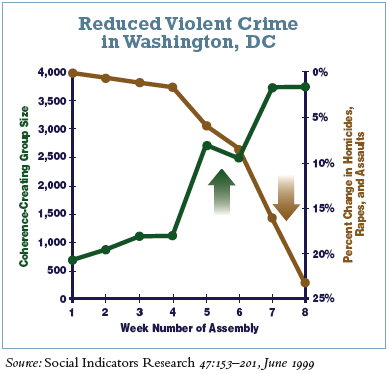
A study I conducted in the summer of 1993 in Washington, DC, shows rising crime levels over a period of six months, which take place every year as the temperature gets hotter between the winter and the summer. People stay out later, they are more aggravated and agitated, they get into more fights, and the crime rate goes up. This is an absolutely known annual trend. From June through July of that summer, we brought to the area a large number of practicing meditators and trained quite a few others. When the group reached a particular size—2,500 (ultimately reaching 4,000)—which was about halfway through the period, there was a distinct and highly statistically significant drop in crime compared to expected rates based on previous data, weather conditions, and a variety of other factors.
We collaborated with the local police department, the FBI, and 24 leading, independent criminologists and social scientists from major institutions, including the University of Maryland, the University of Texas, and Temple University, who used highly sophisticated research tools to control for variables such as weather. Everyone ended up agreeing on the language, the analysis, and the results, and those results were quite astonishing. We predicted a 20 percent drop in crime, and we achieved a 25 percent drop. Just before the study, the Washington, DC, chief of police went on television and said something like, “It’s gonna take a foot of snow in June to reduce crime by 20 percent.” But he allowed his department to participate in the experiment by collecting and analyzing the data. In the end, the police department signed on as one of the authors of a published paper (see Social Indicators Research 47:153–201, June 1999).

In this case it was only a few thousand people in a city of about a million and a half. So a relatively small group was influencing a much larger group. This is what is so fascinating. And it has implications for more than just crime. In my opinion the most immediate implications today in the world are stopping ethnic wars, the conflict in the Middle East, and so on. And in fact a similar experiment was done during the peak of the Israel-Lebanon war in the 1980s. We found that on days when the numbers of meditators were largest (and also on the subsequent day), levels of conflict were markedly reduced—by about 80 percent overall. This turned out to be a statistically significant effect and also a surprising one, because there were only about 600 to 800 people meditating in the midst of this entire conflict and the highly stressed surrounding population.

The results were published in Yale University’s Journal of Conflict Resolution (32:776–812, December 1988), which also published a letter urging other universities, collaborators, and groups to repeat this study. The editors felt that the implications of this were so far reaching, so fundamentally important, that it must be repeated to test the likelihood that the results were a statistical fluke. And that’s exactly what happened over the next two and a quarter years. During this 821-day period, seven subsequent experiments were performed to examine the effects of group meditation on the Israel-Lebanon war. These groups gathered in Israel, in Lebanon itself in the actual conflicted neighborhoods, and at locations throughout the Middle East, Europe, and other parts of the world.

In each case, when the size of the group reached the threshold that was predicted (based on previous research) to have an effect, there was a marked and statistically significant reduction of violence. We have also found in other studies that in the geographic vicinity of such a meditating group, people experienced physiological changes—increased EEG coherence, reduced plasma cortisol, increased blood levels of serotonin, biochemical changes, and neurophysiological changes—as if they were meditating.

When you put all these studies together, the likelihood that the reductions of violence were simply coincidental—a statistical fluke—was less than one part in 10 million million million (1019). An overwhelming number of papers documenting more than sixty different experiments of group meditation’s effect on conflict have been published in peer-reviewed scientific journals that have the most stringent standards for research. I believe it is the most rigorously established and thoroughly tested phenomenon in the history of the social sciences.

“I think the claim can be plausibly made that the potential impact of this research exceeds that of any other ongoing social or psychological research program. It has survived a broader array of statistical tests than most research in the field of conflict resolution. This work and the theory that informs it deserve the most serious consideration by academics and policy makers alike.”

—David Edwards, PhD
Professor of Government
University of Texas at Austin

The rest of this compelling article continues below with the subheading STRINGS AND SPACE-TIME. If you don’t see it here, scroll below and click on Read the rest of this entry at the bottom of this post to continue reading.

You’ll also come across a subsection added after the article titled, TM and Intention. It was part of a conversation between the editor of Shift magazine and the team at the Maharishi University of Management.

* * * *

Around the same time, as a companion piece, Byron Belitsos interviewed John Hagelin for the IONS online Intention Downloads. It is truly spectacular. To elaborate and elucidate on the subject, Byron asked some great questions on the differences between meditation and intention. Dr. Hagelin’s brilliant replies really took this current Intention debate to a deeper more comprehensive level of understanding, equating intention with thought, distinguishing between thinking and consciousness, and how one can enhance one’s intentions multifold from a deeper level of consciousness. You can listen to the 23:12 minute interview published June 26, 2007 by clicking Download as mp3. Click on View Transcript under the description to read it. Here is their introduction to that interview:

Intention Downloads Interview: John Hagelin
Visionary: John Hagelin, PhD

In this interview, quantum physicist and former Presidential candidate John Hagelin explains the difference between intention and consciousness, which opens the door on a fascinating discussion of how spending time in deep meditation in the “nuclear” level of thought can multiply the efficacy of intentions. Residing in object-free consciousness connects us to a field of pure, unlimited, creative potential, which in turn ripples out through the quantum field, affecting our lives and even large systems in positive ways. He cites studies he has been involved in showing that a critical mass of meditators has correlated with significantly lowered crime rates. He also predicted similar effects on complex systems from hurricanes to stock markets, with positive results so far. Scientific study of such effects is gaining steam and his ambitious Invincible America Assembly project plans to take this work to the next level, training a critical mass of meditators to positively affect the rates of violence for the entire planet.

JOHN HAGELIN, PhD, is a quantum physicist, educator, public policy expert, and one of the world’s foremost proponents of peace. He is director of the Institute of Science, Technology, and Public Policy, and international director of the Global Union of Scientists for Peace. For more information, go to http://hagelin.org.

Research Links: www.permanentpeace.org and www.invincibility.org.

Also posted on www.MeditationAsheville.org

* * * *

See: Group Meditations Reduce Crime, As Predicted
And Explanation to Steady Decline in Major Crime

(more…)
Donna Karan and David Lynch collaborate to launch “Operation Warrior Wellness-NYC”

June 9, 2011

For those who either didn’t know about or missed the Urban Zen-David Lynch Foundation collaboration to launch Operation Warrior Wellness in New York City, here is the rebroadcast from that night, June 7, 2011, on Lifestream: http://livestre.am/OpBh. This special event was co-hosted by NY fashion designer Donna Karan at her Urban Zen Foundation and Hollywood filmmaker David Lynch.

Bob Roth, VP of the David Lynch Foundation, emceed the spectacular evening, which opened with an amazing performance by Miri Ben-Ari “The Hip-Hop Violinist.” Moving presentations were given by Jerry Yellin; Russell Simmons; research psychiatrist and author Norman Rosenthal, MD; Iraq Vet, MUM’s David George and his mother Julia; a Marine reading a letter from his father; Dan Burks and his family; a short visual presentation on the brain under stress and then on meditation by Fred Travis; David Lynch, Donna Karan; and a Q&A between Bob Roth and David Lynch.

Together Donna and David partnered to create change from within for veterans and their families who suffer from Post-Traumatic Stress Disorder. On June 7th, Donna Karan and David Lynch celebrated the New York City launch of “Operation Warrior Wellness-NYC.” Learn how Transcendental Meditation aids in healing the mind and body as they proudly present Dr. Norman Rosenthal, author of Transcendence: Healing and Transformation through Transcendental Meditation (Tarcher/Penguin June 2011). Proceeds from the sale of Dr. Rosenthal’s book will be donated to this outreach for veterans.

David and Donna also took great pride in presenting “The Resilient Warrior Award for 2010” to Captain Jerry Yellin, decorated World War II fighter pilot, and Master Sergeant Ed Schloeman, distinguished Vietnam Marine veteran, who both serve as national co-chairs of Operation Warrior Wellness.

Please share this with your friends and anyone who might feel motivated to want to donate to the David Lynch Foundation’s Operation Warrior Wellness Program. The goal is to raise enough funds to teach the first 10,000 Veterans with PTSD, from any war, and their families, to bring relief from suffering. Alternate URL: http://bit.ly/urbanzen-dlf-oww.

TM Reduces Veterans PTSD Symptoms by 50%

June 1, 2011

Veterans Show a 50% Reduction in PTSD Symptoms
After 8 Weeks of Transcendental Meditation

WASHINGTON | Wed, June 1, 2011, 9:00am EDT

Veterans of the Iraq/Afghanistan wars showed a 50 percent reduction in their symptoms of post-traumatic stress disorder (PTSD) after just eight weeks of practicing the stress-reducing Transcendental Meditation technique, according to a pilot study published in the June 2011 issue of Military Medicine (Volume 176, Number 6).

The study evaluated five veterans, ages 25- to 40-years-old, who had served in Iraq, Afghanistan or both from 10 months to two years involving moderate or heavy moderate combat.

The study found that Transcendental Meditation produced significant reductions in stress and depression, and marked improvements in relationships and overall quality of life. Furthermore, the authors reported that the technique was easy to perform and was well accepted by the veterans.

The Clinician Administered PTSD Scale (CAPS) was the primary measure for assessing the effectiveness of TM practice on PTSD symptoms. CAPS is considered by the Department of Veterans Affairs as the “gold standard” for PTSD assessment and diagnosis for both military Veteran and civilian trauma survivors.

The paper’s senior researcher, Norman Rosenthal, M.D., is clinical professor of psychiatry at Georgetown University Medical School and director of research at Capital Clinical Research Associates in Rockville, Maryland. Dr. Rosenthal was the first to describe seasonal affective disorder (SAD) and pioneered the use of light therapy as a treatment.

“Even though the number of veterans in this study was small, the results were very impressive,” Rosenthal said. “These young men were in extreme distress as a direct result of trauma suffered during combat, and the simple and effortless Transcendental Meditation technique literally transformed their lives.”

The findings were similar to those from a randomized controlled study of Vietnam veterans conducted by researchers at the University of Colorado School of Medicine. In that study, published in the Journal of Counseling and Development in 1985, after three months of twice-daily TM practice, the veterans had fewer symptoms than those receiving   conventional psychotherapy of the day.  In fact, most of the TM-treated subjects required no further treatment.

“Even though the combat experiences of OEF/OIF veterans and Vietnam veterans are quite different, the fact that our study corroborates the results of the previous study tells us that this technique has the potential to be an effective tool against PTSD and combat stress, regardless of combat situation,” explained Sarina Grosswald, EdD, co-researcher on the study.

Rosenthal hypothesizes that Transcendental Meditation helps people with PTSD because regular practice produces long-term changes in sympathetic nervous system activity, as evidenced by decreased blood pressure, and lower reactivity to stress. “Transcendental Meditation quiets down the nervous system, and slows down the ‘fight-or-flight’ response,” he said.  People with PTSD show overactive fight-or-flight responses, making them excellent candidates for Transcendental Meditation.

Rosenthal points out that there is an urgent need to find effective and cost-effective treatments for veterans with combat-related PTSD. “The condition is common, affecting an estimated one in seven deployed soldiers and Marines, most of whom do not get adequate treatment.  So far, only one treatment—simulation exposure to battleground scenes—has been deemed effective, but it requires specialized software and hardware, trained personnel and is labor intensive.

“Based on our study and previous findings, I believe Transcendental Meditation certainly warrants further study for combat-related PTSD,” says Rosenthal.

Rosenthal is the author of a new book, “Transcendence: Healing and Transformation through Transcendental Meditation,” which will be released by Tarcher Penguin on June 2, 2011. For those wanting to interview Dr. Rosenthal, contact his publicist, Dean Draznin Communications, Inc., 641-472-2257, dean@drazninpr.com.

Results of the new “PTSD and Meditation” study will be announced at special presentations: Tuesday evening, June 7, in New York City, and Wednesday evening, June 8, in Washington, DC.

Watch: Reduction of PTSD Symptoms in Veterans with Transcendental Meditation.

FACT SHEET

Post-Traumatic Stress Disorder (PTSD)

  • A new report paints a stark picture of the toll on the U.S. military of almost a decade of war: higher stress and lower morale. The report, released Thursday, May 19, 2011, at the Pentagon, relied on questions to soldiers and Marines in Afghanistan in July and August of last year and compared responses with similar surveys in 2005 and 2009. The report noted “significant decline in reports of individual morale” as well as “acute stress rates significantly higher” than in earlier years. Source: CNN: New Pentagon study finds psychological toll from years of fighting.
  • VA’s suicide hotline receives 10,000 calls per month from active and retired servicemen. There are 950 suicide attempts per month by veterans receiving care from the VA. 18 veterans commit suicide each day, 5 of them are under the care of the VA. Source: Army Times: 18 veterans commit suicide each day.
  • The Rand Corporation’s study “Invisible Wounds of War” revealed a disturbing truth about the health of our military as recently as 2008:  Over 300,000 returning veterans from Iraq and Afghanistan suffer from PTSD or major depression.  According to the Rand report, these “invisible wounds” take a high toll—impacting veterans’ quality of life, hindering their performance at work, straining their families, and placing them at greater risk for violent and self-destructive behaviors. The economic cost of these disorders is equally great—reaching as high as $6 billion over 2 years. Yet, despite the heavy toll of PTSD and depression, only half of affected veterans seek care, and only a third of those who do, receive adequate treatment. Thus, over 80% of affected veterans remain without needed help.

The Transcendental Meditation Technique

  • The Transcendental Meditation technique is an effortless technique practiced 10-20 minutes twice a day sitting comfortably with the eyes closed.
  • TM is not a religion or philosophy and involves no new beliefs or change in lifestyle.
  • Over 350 peer-reviewed research studies on the TM technique confirm a range of benefits for mind, body and behavior.
  • Several studies have compared the effects of different meditation practices and found that Transcendental Meditation provides deeper relaxation and is more effective at reducing anxiety, depression and hypertension than other forms of meditation and relaxation. In addition, no other meditation practice shows the widespread coherence throughout all areas of the brain that is seen with Transcendental Meditation.
  • The Transcendental Meditation technique is taught in the United States by a non-profit, educational organization.

Source: EurekAlert! Veterans show a 50 percent reduction in PTSD symptoms after 8 weeks of Transcendental Meditation.
The Huffington Post: Top Research Psychiatrist Promotes Meditation for Healing and Transformation.
Fox News.com: Could Transcendental Meditation Help Veterans Suffering From Post-Traumatic Stress Disorder?
The Epoch Times by Ginger Chan: Post-Traumatic Stress Disorder Reduced by Meditation.
Insidermedicine: Transcendental Meditation May Help Veterans with PTSD (Video)
ABC News/Health: ABC News: Meditation Heals Military Vets With PTSD
Medical News Today: Veteran PTSD Symptoms Significantly Reduced After 8 Weeks Of Transcendental Meditation
Click here for more articles and news videos on TM and PTSD posted on The Uncarved Blog.

Could Transcendental Meditation Help Veterans Suffering From Post-Traumatic Stress Disorder?

May 30, 2011

Could Transcendental Meditation Help Veterans Suffering From Post-Traumatic Stress Disorder?

By Dr. Norman Rosenthal

Published May 29, 2011 | FoxNews.com

Washington –  Editor’s note: Norman Rosenthal, M.D.’s pilot study on PTSD will appear in the June 1 issue of “Military Medicine.” He is the renowned psychiatrist and 20+ years NIH researcher who identified seasonal affective disorder (SAD) and developed the light therapy for treating it.

As Memorial Day approaches, it is fitting that we remember the debt owed, in the words of Winston Churchill, by so many to so few — those men and women who have fought and, in some cases, paid the ultimate price, so that the rest of us can live in freedom and safety.

Here in Washington, D.C., there will be formal ceremonies at Arlington Cemetery and informal ceremonies at the monuments that mark the wars that claimed too many. Likewise, throughout our great country, people will be remembering, grieving, reflecting.

Allow me to share with you the stories of five veterans, who are very much on my mind this Memorial Day. These five young men participated in a study under my direction to determine whether meditation could help assuage the painful and disabling aftermath of their service in Iraq, Afghanistan or both. While serving, all were exposed to the horrors of war in one form or another. They saw their fellow soldiers and the enemy killed at close quarters, directly experienced the blasts of powerful bombs or improvised explosive devices, and drove along country roads, never knowing when they would drive into the next ambush.

After returning to the U.S., these young men were among the huge number of soldiers and Marines (1.6 million and counting) who have suffered the devastating effects of post-traumatic stress disorder (PTSD). Symptoms of this condition vary, but typically involve hypervigilance (jumpiness, irritability), detachment, avoidance of situations that trigger memories of the traumatic events, flashbacks and nightmares – as memories spring unbidden into consciousness, accompanied by drenching sweat, a pounding heart and other signs of system overload. Needless to say, living with these symptoms can feel like torture. To escape, some resorted to drugs, alcohol or even suicide.

Surveys show that only half of those affected by PTSD seek help. According to one of the five men in our study (I’ll call him Joe), “My biggest fear was being unemployed and unmarketable in the work force. I believe that if, as a retired soldier, I were to whisper any of my symptoms, it would mean certain unemployment and immediate loss of security clearance.”

That’s why Joe chose a research study instead of receiving care through conventional channels. The only current treatment for combat-related PTSD approved as effective is aversive deconditioning – which involves exposing patients to simulated battlefield conditions by means of specialized computer equipment operated by specially trained personnel.

As you can imagine, this is far from universally available, and studies show that half of those suffering from combat-related PTSD receive inadequate care. To make matters worse, a recent Pentagon study found that after almost a decade at war, the U.S. military is showing “a significant decline in individual morale” and a significant increase in self-reported “acute stress” as compared with data from just two years ago.

Clearly new approaches to treating traumatized veterans are sorely needed. The approach we took in our small pilot study was to teach the young men Transcendental Meditation (TM). Once properly taught, this simple technique can be easily carried out twice a day – which is exactly what these young men did. While the specific results of the study are currently in press in the refereed journal Military Medicine, it is fair to say that they were highly encouraging.

Transcendental Meditation is known to be able to reduce responses to stress, as evidenced, for example, by its capacity to lower blood pressure in numerous controlled studies. TM appears to quiet the fight-or-flight response system, which is on overdrive in people with PTSD.

It is now over a year since the study ended and three out of the five veterans I was able to reach are still meditating daily, and still enjoying it. Here’s how Joe describes the effects of his daily routine. “I now feel, after practicing T.M. daily: that I can relax before the day and unwind completely at day’s end; I can be more orderly and think more clearly before acting; I project a positive vibe at work; the thoughts of events that were disturbing or causing problems for me are less detailed; I am thankful for what I have and where I am in my life.”

One final reflection this Memorial Day: Shouldn’t we consider teaching T.M. to some of our other traumatized soldiers and Marines? It is relatively cheap and easy to do, requires no special equipment, and causes few if any side-effects. If even a small percentage of people with PTSD were to obtain the kind of benefits Joe reports, then teaching our wounded warriors to meditate promises an abundant return on our investment.

Norman E. Rosenthal, M.D. is Clinical Professor of Psychiatry at Georgetown University and the author of “Transcendence: Healing and Transformation Through Transcendental Meditation.” (Tarcher Penguin, 2011).

###

Watch researchers discuss: Reduction of PTSD Symptoms in Veterans with Transcendental Meditation and video Highlights from the Operation Warrior Wellness News Conference. Listen to Dennis Raimondi’s recent interview with Dr. Norman Rosenthal on Speaking Freely, KRUU 100.1 FM, The Voice of Fairfield. See press releases on study: TM Reduces Veterans PTSD Symptoms by 50%. Click here for more articles and news videos on TM and PTSD posted on The Uncarved Blog.

Also see: Transcending a Different Type of PTSD — Helping Children of the Night

Explanation to Steady Decline in Major Crime

May 24, 2011

Institute of Science, Technology and Public Policy
Maharishi University of Management • Fairfield, Iowa 52557 • ISTPP.org

PRESS RELEASE

Steady Decline in Major Crime Baffles Experts
New York Times • May 23, 2011

The number of violent crimes in the United States dropped significantly last year, to what appeared to be the lowest rate in nearly 40 years, a development that was considered puzzling partly because it ran counter to the prevailing expectation that crime would increase during a recession. In all regions, the country appears to be safer. The odds of being murdered or robbed are now less than half of what they were in the early 1990s, when violent crime peaked in the United States. Small towns, especially, are seeing far fewer murders: In cities with populations under 10,000, the number plunged by more than 25 percent last year.

Dramatic Decline in U.S. Violent Crime Rates Confirms (Again) Predictions by Transcendental Meditation Experts in Iowa

(Maharishi Vedic City, IA) News today that violent crime in America has fallen to its lowest levels in nearly 40 years may have baffled authorities but comes as yet another confirmation of the effectiveness of the “Invincible America Assembly” at Maharishi University of Management and in Maharishi Vedic City, Iowa, where for the past five years thousands of advanced Transcendental Meditation experts have assembled to demonstrate the power of group meditation for reducing societal stress and therefore cutting crime and violence in America.

This assessment comes from Dr. John Hagelin, world-renowned quantum physicist, executive director of the Institute of Science, Technology and Public Policy, and director of the Invincible America Assembly, where nearly 2000 people from 60 countries have gathered to practice Transcendental Meditation and its advanced techniques, including Yogic Flying, together to promote “coherence in national consciousness.”

“As predicted five years ago before the launch of the Invincible America Assembly, there has been a dramatic and sustained decrease in violent crime in the United States since the Assembly began. In fact, the number of murders is now the lowest in four decades, according to the FBI Uniform Crime Reports,” Dr. Hagelin said.

Dr. Hagelin countered the conventional wisdom of experts who foresee a return to the trend in rising crime, and predicted that violent crime in the nation will continue to fall as the number of meditation experts in the Invincible America Assembly increases from the current 2,000 to the next target of 2,500.

For information and to interview Dr. Hagelin, please contact Ken Chawkin at +1-641-470-1314 or kchawkin@mum.edu.

# # #

See: Group Meditations Reduce Crime, As Predicted
And The Power of The Collective, by John Hagelin