Archive for the ‘Literature’ Category

Poetry helps us imagine what it’s like to be human. ~ Mark Strand (1934–2014)

December 5, 2014

Mark Strand, former U.S. poet laureate (1990-1991) and winner of the Pulitzer Prize for Poetry (1999), felt strongly that writing and reading poetry could make us better human beings. “Poetry helps us imagine what it’s like to be human,” he said in an Inscape interview last year.
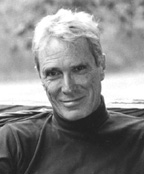
Percy Bysshe Shelley had famously said, “Poets are the unacknowledged legislators of the world.” When Mark Strand was asked what he thought the function of poetry was in today’s society, he replied: “It’s not going to change the world, but I believe if every head of state and every government official spent an hour a day reading poetry we’d live in a much more humane and decent world. Poetry has a humanizing influence. Poetry delivers an inner life that is articulated to the reader.”

Indeed, especially if they were as transformed by poetry as Mark Strand, who wanted to feel himself “suddenly larger . . . in touch with—or at least close to—what I deem magical, astonishing. I want to experience a kind of wonderment.”

Last week, one of my poet friends, Roger Pelizzari, emailed me about the passing of Mark Strand, and included a favorite poem of his, My Name. Roger included a link to an earlier Paris Review interview: Mark Strand, The Art of Poetry No. 77, with his friend Wallace Shawn, from which I’ve included interesting excerpts.

I was surprised and sorry to hear the news of Strand’s passing and checked the Paris Review for an update. I found Memoriam Mark Strand, 1934–2014, under The Daily by Dan Piepenbring, and sent it to Roger.

Media from around the world published Obituaries reviewing the Canadian-born, American poet’s accomplished literary career. The LA Times described Mark Strand as “a revelatory poet who addressed love and death in his poems, but in radically lyrical, revelatory ways.”

This poem is filled with the wonderment he sought, and seems a fitting memorial, prophetically written in the poet’s own magical words.

My Name

Once when the lawn was a golden green
and the marbled moonlit trees rose like fresh memorials
in the scented air, and the whole countryside pulsed
with the chirr and murmur of insects, I lay in the grass,
feeling the great distances open above me, and wondered
what I would become and where I would find myself,
and though I barely existed, I felt for an instant
that the vast star-clustered sky was mine, and I heard
my name as if for the first time, heard it the way
one hears the wind or the rain, but faint and far off
as though it belonged not to me but to the silence
from which it had come and to which it would go.

(more…)

Charles Bukowski sang the life victorious, thanks to his having learned Transcendental Meditation

August 17, 2014

I first posted this wonderful poem by Charles Bukowski in the summer of 2014 and later found out that he had learned Transcendental Meditation towards the end of his life. So I’ve updated it in early 2021 with three different sources behind this story.

a song with no end

when Whitman wrote, “I sing the body electric”

I know what he
meant
I know what he
wanted:

to be completely alive every moment
in spite of the inevitable.

we can’t cheat death but we can make it
work so hard
that when it does take
us

it will have known a victory just as
perfect as
ours.

“a song with no end” by Charles Bukowski (1920-1994), from The Night Torn with Mad Footsteps. © Black Sparrow Press, 2001. (On Amazon)

he apparently loved meditation

Towards the end of a Dec 31, 2006 New York Times article, David Lynch’s Shockingly Peaceful Inner Life, Alex Williams writes: The filmmaker sees no contradiction between inner harmony and external edginess. “I heard Charles Bukowski started meditation late in his life,” Mr. Lynch said, referring to the poet laureate of Skid Row, who died in 1994. “He was an angry, angry guy, but he apparently loved meditation.”

meditation allowed him to be creative in his later months

In this 89.3 KPCC interview Bukowski’s wife said that he lost some ground after being diagnosed with leukemia at age 73. He got it back with transcendental meditation. “It allowed him to open up a space within himself to say these words about himself dying,” said Linda Bukowski. “These later poems, death poems, are so acute and so awake and aware and I think that had a lot to do with how meditation allowed him to be creative in his later months and write these poems, that I still cannot read.”

I checked with a friend who has taught TM to many celebrities and she replied: “I instructed Charles (or Hank as he liked to be called) and his wife, Linda, a few years before he passed away. He was a lovely man at that time of his life. I wonder if he was meditating when he wrote this beautiful piece.”

That’s probably how David Lynch would have known since they’re longtime TM friends. She later emailed to say that she had taught Bukowski around 1992. So based on this information and what Linda had said, chances are this poem could have been written during those final years of his life while he was meditating regularly.

a related post

Cartoon wisdom from Karl Stevens appears in this week’s print edition of The New Yorker. Time Out Boston wrote on the back of his book, Failure, “Karl Stevens may be the closet thing to a Charles Bukowski equivalent working in comic art. Except Stevens is way classier….” When Stevens was working on Failure, “I was struggling with alcoholism which I think was where the comparison lies. I stopped drinking a couple months before beginning to learn TM. Obviously the practice was crucial to helping me focus on living a cleaner life. ”Peace of mind and heart arrives when we accept what is.”

accepting what is

William Butler Yeats wrote about The Coming Of Wisdom With Time. It seems to have come to Bukowski toward the end of his life. See his full quote posted on NITCH’s Instagram. Only now did I realize who Karl Stevens was quoting!

“I have been alone but seldom lonely. I have satisfied my thirst at the well of my self and that wine was good, the best I ever had, and tonight sitting staring into the dark I now finally understand the dark and the light and everything in between. Peace of mind and heart arrives when we accept what is: having been born into this strange life we must accept the wasted gamble of our days and take some satisfaction in the pleasure of leaving it all behind. Cry not for me. Grieve not for me. Read what I’ve written then forget it all. Drink from the well of your self and begin again.”

— Written and compiled (citing sources) by Ken Chawkin for The Uncarved Blog.

Another “death poem” was found and posted: Charles Bukowski’s poem The Laughing Heart instructs us to find the light and improve our life. I added more content about his learning TM towards the end of his life.

Emily Dickinson’s Solitude is Vedic Nivartatwam

August 17, 2014

Emily Dickinson beautifully, concisely describes the transcendental self-referral value of true inner solitude by realizing her unbounded Self.

There is a solitude of space
A solitude of sea
A solitude of death, but these
Society shall be
Compared with that profounder site
That polar privacy
A soul admitted to itself —
Finite infinity.

When Emily admits the self to the Self, she reiterates the Vedic injunction to transcend, retire, Nivartatwam, into that infinitely silent, Shivam, infinitely peaceful, Shantam, undivided, Advaitam, fourth, Chaturtham, state of consciousness, Atma, the Self.

Emily Dickinson succinctly describes the eternal nature of Love in this short but powerful poem.

Derek Walcott had his own way of describing this return to love, to one’s Self, in Love after Love.

Read how Emily Dickinson wanted her poems to look on the page, described in Rebecca Mead’s Back of the Envelope in The New Yorker: Poesy Dept. | January 27, 2014 Issue. See Emily D.-envelope poems.

Related poem: For Emily Dickinson the brain is wider than the sky and deeper than the sea—a finite infinity.

Famous Poets and Poems lists 1779 of Emily Dickinson’s poems!

Two famous quotes on courage and commitment by Marianne Williamson and William H. Murray

August 14, 2014

Here are two famous quotes I’ve admired that have to do with overcoming our fears, believing in ourselves, and having the courage to commit to our dreams, which then moves Nature to support us in ways we never would have imagined. They seem to be related in an important way — having the confidence and courage to commit to ourselves and fulfill our life’s purpose.

The first quote, having the courage to overcome our fears to become our true self, is from Marianne Williamson’s book, A Return To Love. It’s often been mistakenly attributed to Nelson Mandela, who used it in his 1994 Inaugural Speech.

Our deepest fear is not that we are inadequate. Our deepest fear is that we are powerful beyond measure. It is our light, not our darkness that most frightens us. We ask ourselves, “Who am I to be brilliant, gorgeous, talented, and fabulous?” Actually who are you not to be?

YOU ARE A CHILD OF GOD. Your playing small does not serve the world. There is nothing enlightened about shrinking so that other people won’t feel insecure around you. We were born to manifest the glory that is within us. And as we let our light shine we unconsciously give other people permission to do the same. As we are liberated from our own fear, our presence automatically liberates others.

This second quote, on commitment, was thought to have been written by Goethe, but it is from William H. Murray, author of The Scottish Himalayan Expedition (J.M. Dent & Sons Ltd, London, 1951).

Until one is committed, there is hesitancy, the chance to draw back. Concerning all acts of initiative (and creation), there is one elementary truth, the ignorance of which kills countless ideas and splendid plans: that the moment one definitely commits oneself, then Providence moves too. All sorts of things occur to help one that would never otherwise have occurred. A whole stream of events issues from the decision, raising in one’s favor all manner of unforeseen incidents and meetings and material assistance, which no man could have dreamed would have come his way. Whatever you can do, or dream you can do, begin it. Boldness has genius, power, and magic in it. Begin it now.

W. H. Murray’s book details the first Scottish expedition in 1950 to the Kumaon range in the Himalayas, between Tibet and western Nepal. The expedition, led by Murray, attempted nine mountains and climbed five, in over 450 miles of mountainous travel. You can read more about this on About.com: German Myth 12: The Famous “Goethe” Quotation.

I just came across a similar post by Joseph Ranseth: 3 of the Greatest Quotes – W.H. Murray, Henry David Thoreau & Marianne Williamson. Ranseth cites the more complete Murray quote in context, where he describes the initial steps he and his party were taking before they actually started the mountain-climbing part of the expedition. Their commitment and follow-through precipitated Providence moving in their favor, which explains how he came to write about the power of commitment and its results. Murray also acknowledged and paraphrased a translation of Goethe’s couplet at the end of his quote.

The article also includes a selection from Thoreau’s Walden, Chapter 18. He also went in the direction of fulfilling his dreams when he chose to live self-sufficiently at Walden Pond. He described his opening up to deeper more universal laws of nature during his two-year seclusion and how that impacted his life. The quote ends with these famous lines: “If you have built castles in the air, your work need not be lost; that is where they should be. Now put the foundations under them.” But what proceeds them is quite profound. I recommend you read that section of the blog post.

Marianne Williamson’s quote reminds me of Jim Carrey’s Commencement Speech he gave at MUM this year where he told students they will only have two choices in life — love or fear. He said, “Choose love, and don’t ever let fear turn you against your playful heart.”

Watch Videos of MUM 2014 Graduation with Jim Carrey and see Some Reports on @JimCarrey’s Commencement Speech at MUM @MaharishiU #mumgraduation.

For Hafiz the role of an enlightened poet is to connect humanity with the joy of the divine

July 16, 2014

A CRYSTAL RIM
by Hafiz

The
Earth
Lifts its glass to the sun
And light — light
Is poured.

A bird
Comes and sits on a crystal rim
And from my forest cave I
Hear singing.

So I run to the edge of existence
And join my soul in love.

I lift my heart to Beloved
And grace is poured.

An emerald bird rises from inside me
And now sits
Upon the Beloved’s
Glass.

I have left that dark cave forever.
My body has blended with His.

I lay my wing
As a bridge to you

So that you can join us
Singing.

(“The Gift” – versions of Hafiz by Daniel Ladinsky)

Canadian poet P.K. Page describes a phantom bird in This Heavy Craft.

A mysterious bird in this Wallace Stevens poem teaches us the wonder of just being our self.

Love after Love, by Derek Walcott, resonates deeply when you first acknowledge yourself.

Another poem by Hafiz via Ladinsky describes the spiritual transformation of loving deeply within himself.

See 3 beautiful and profound short poems by Hafiz about the nature of God within us.

Hafiz, via Ladinsky, reminds us when we love those in our care we are brought closer to God

Winding up the year with inspiration from Hafiz

Hafiz’s poem, God Pours Light, awakens the soul and frees the mind from debating words about it

Here is an enlightening article on Hafiz and Maharishi’s Science of Consciousness by Rebecca Busch.

Found this lovely YouTube channel by Enea B, which combines poetry with visuals and music.

A mysterious bird in this Wallace Stevens poem teaches us the wonder of just being our self

July 16, 2014

Of Mere Being

The palm at the end of the mind,
Beyond the last thought, rises
In the bronze distance.

A gold-feathered bird
Sings in the palm, without human meaning,
Without human feeling, a foreign song.

You know then that it is not the reason
That makes us happy or unhappy.
The bird sings. Its feathers shine.

The palm stands on the edge of space.
The wind moves slowly in the branches.
The bird’s fire-fangled feathers dangle down.

Wallace Stevens

The Palm at the End of the Mind: Selected Poems and a Play

William Stafford in his poem, Just Thinking, also appreciates the value “of just being there.”

Canadian poet P.K. Page describes a phantom bird in This Heavy Craft.

Hafiz via Ladinsky describes the spiritual transformation of loving deeply within himself

July 16, 2014

Another wonderful poem by Hafiz translated by Daniel Ladinsky in “A Year With Hafiz” is The Root of the Rose. It’s a testament to the transformational power of loving from deep within the Self.

The Root of The Rose

In this cup I am drinking from, I can see the Face
behind every face
.

A well now, where creation has been drawn, I am.
How can a jug being carried on the top of my head
contain everything?

A galaxy can appear in the reflection of a small
clear pool.

Right where the moon may appear smiling at you
from a body of still water . . . a fish might leap out

and swallow that orb whole, and who is to say,
maybe even lay it at your feet?

Within an arm’s reach is all I desire, so I am never
in want.

The root of the Rose I have become, from loving
the way I did.

A Year With Hafiz: Daily Contemplations
Daniel Ladinsky, July 13, page 215

The image of the fish swallowing the moon reminds me of a poem by Rolf Erickson called Mirror Lake.

For Hafiz the role of an enlightened poet is to connect humanity with the joy of the divine.

See 3 beautiful and profound short poems by Hafiz about the nature of God within us.

Hafiz, via Ladinsky, reminds us when we love those in our care we are brought closer to God.

Hafiz’s poem, God Pours Light, awakens the soul and frees the mind from debating words about it.

Also see Leave something in the marketplace by Hafiz. Related: Poems by Rumi and Octavio Paz open our minds to a more cosmic perspective. My poem, As Above, So Below, shares the same cosmic sentiment.

Here is an enlightening article on Hafiz and Maharishi’s Science of Consciousness by Rebecca Busch.

Love after Love, by Derek Walcott, resonates deeply when you first acknowledge yourself. Only then can you truly love. A Blessing of Solitude by John O’Donohue complements Derek Walcott’s Love after Love.

Winding up the year with inspiration from Hafiz

Poems by Rumi and Octavio Paz open our minds to a more cosmic perspective

June 27, 2014

Rumi and Octavio Paz on Discovering a more Cosmic Perspective

Rumi

I am so small I can barely be seen.
How can this great love be inside me?

Look at your eyes. They are small,
but they see enormous things.

(The Essential Rumi by Coleman Barks)

~

Octavio Paz

Brotherhood
Homage to Claudius Ptolemy

I am a man: little do I last
and the night is enormous.
But I look up:
the stars write.
Unknowing I understand:
I too am written,
and at this very moment
someone spells me out.

(Collected Poems by Octavio Paz, translated with Eliot Weinberger)

~

Here is a haiku I wrote that shares a similar sentiment. It was published in 13 Ways to Write Haiku: A Poet’s Dozen for The Dryland Fish, and in Five Haiku for This Enduring Gift.

 Forest Flowers

tiny white flowers
a constellation of stars
so low yet so high

© Ken Chawkin

 ~

An even more cosmic understanding our relationship to the universe comes from the Vedic Literature — “Yatha pinde tatha brahmande, yatha brahmande tatha pinde” — “As is the individual, so is the universe, as is the universe, so is the individual” or “As is the atom, so is the Universe” or “As is the human body, so is the Cosmic Body” or “As is the Microcosm, so is the Macrocosm”, or succinctly as “As Above, So Below.” See my poem As Above So Below.

Another expression is “Anor aniyan mahato mahiyan — “Smaller than the smallest is larger than the largest” i.e., our essential nature, our Self, is beyond measure, infinite, unbounded, transcendental.
 

Mary Oliver’s Summer Day is filled with wonder

June 23, 2014

The Summer Day

Who made the world?
Who made the swan, and the black bear?
Who made the grasshopper?
This grasshopper, I mean–
the one who has flung herself out of the grass,
the one who is eating sugar out of my hand,
who is moving her jaws back and forth instead of up and down,
who is gazing around with her enormous and complicated eyes.
Now she lifts her pale forearms and thoroughly washes her face.
Now she snaps her wings open, and floats away.

I don’t know exactly what a prayer is.
I do know how to pay attention, how to fall down
into the grass, how to kneel down in the grass,
how to be idle and blessed, how to stroll through the fields,
which is what I have been doing all day.
Tell me, what else should I have done?
Doesn’t everything die at last, and too soon?
Tell me, what is it you plan to do
with your one wild and precious life?

~ Mary Oliver ~

(New and Selected Poems, Volume I)

The question that Mary Oliver asks her readers at the end of this poem reminds me of the ones she asks at the end of her Swan poem. 

Related: Mary Oliver’s poem, Praying, is a lesson on attention, receptivity, listening and writing, and Mary Oliver’s transcendent experience At the Lake, put into words, might leave you breathless.

Other poems: The Journey by Mary Oliver | Wild Geese by Mary Oliver, photo by Ken West | Varanasi by Mary Oliver in A Thousand Mornings.

See this remembrance of Mary Oliver with links to more of her poems.

Love after Love, by Derek Walcott, resonates deeply when you first acknowledge yourself

June 22, 2014

Just received this beautiful poem, Love after Love, written by Derek Walcott. To me it’s about coming back to yourself, discovering and loving your self. It can be a sweet, quiet awakening, when you recognize it, open your heart to it, to who you are.

I remember when it happened to me, living alone in a room I was renting in a house in North Vancouver. I finally let go of all the distracting reasons to search for happiness outside myself, in wanting to love another person or be loved by them, or some thing to do I thought would make me happy. I just stopped and discovered the loving stranger who was there, and accepted myself instead, as if for the first time. Took more than half my life for it to finally happen, but was quietly surprised and pleased when it did. Derek Walcott describes this process of self-recognition and acceptance so well, so powerfully.

Love after Love

The time will come
when, with elation
you will greet yourself arriving
at your own door, in your own mirror
and each will smile at the other’s welcome,

and say, sit here. Eat.
You will love again the stranger who was your self.
Give wine. Give bread. Give back your heart
to itself, to the stranger who has loved you

all your life, whom you ignored
for another, who knows you by heart.
Take down the love letters from the bookshelf,

the photographs, the desperate notes,
peel your own image from the mirror.
Sit. Feast on your life.

A Blessing of Solitude by John O’Donohue, from Anam Cara: A Book of Celtic Wisdom, profoundly complements this theme by Derek Walcott.

After a little research I discovered Derek Walcott to be an amazing man, an artist, poet, professor and playwright. Acknowledged as the greatest living poet in the English language, he won the Nobel prize for Literature in 1992. He taught at Boston University for 20 years. Turns out he also taught in Canada. In 2009, Walcott began a three-year distinguished scholar-in-residence position at the University of Alberta. In 2010, he became Professor of Poetry at the University of Essex.

Born in Saint Lucia, Derek Walcott was influenced by his mixed racial and cultural heritage. He married a Trinidadian, raised a family there, and built the Trinidad Theatre Workshop. For someone who was in search of his own identity, both as a person and an artist, this poem represents a coming back to one’s essential self. It resonates deeply with the thousands who have read it. It was first published in Sea Grapes, and later in Derek Walcott, Collected Poems, 1948-1984, and The Poetry of Derek Walcott 1948-2013.

Here are a few videos worth watching: a BBC documentary, Derek Walcott; an interesting Canadian TV interview, Nobel Laureate Derek Walcott on his life and work; and a poetry reading: Derek Walcott: The Perpetual Ideal is Astonishment | 92Y Readings. Here is a more recent poetry reading at the 92nd Street Y: Derek Walcott with Glyn Maxwell and Caryl Phillips. He reads Love after Love at 26:25.

Listen to this excellent July 13, 2014 BBC Radio 4 interview where Nobel Laureate poet Derek Walcott talks about his life and work at home on St Lucia: Derek Walcott: A Fortunate Traveller (28 mins).

Here is an excerpt of Derek Walcott reciting his poem, Love After Love, in a new documentary film about him, POETRY IS AN ISLAND, by Ida Does.

You can see a short video of Derek Walcott responding to the World Premiere of POETRY IS AN ISLAND, uploaded Oct 2, 2013. You can also see an interview with Derek Walcott by DBSTV St.Lucia in May 2014 where he comments on the film. For more information visit www.walcottfilm.com and facebook.com/PoetryIsAnIsland.

Withdrawing into silence, being blessed by “a kind of fleeting grace”

I was surprised to see these comments from Derek Walcott in the Paris Review, Issue 101, Winter 1986: Derek Walcott, The Art of Poetry, No. 37. Since Walcott seems to equate poetry and prayer in this discussion, interviewer Edward Hirsch asks him how he writes. He describes it as withdrawing into a world of silence, and creating from there, as if in a trance, being blessed by “a kind of fleeting grace” if something happens.

“But I do know that if one thinks a poem is coming on—in spite of the noise of the typewriter, or the traffic outside the window, or whatever—you do make a retreat, a withdrawal into some kind of silence that cuts out everything around you. … I’m not a monk, but if something does happen I say thanks because I feel that it is really a piece of luck, a kind of fleeting grace that has happened to one. Between the beginning and the ending and the actual composition that goes on, there is a kind of trance that you hope to enter where every aspect of your intellect is functioning simultaneously for the progress of the composition. But there is no way you can induce that trance.”

Update: On March 17, 2017, Nobel laureate, poet, playwright, and painter Derek Walcott died at age 87. Here are a few of the many articles that appeared in the world press: The Guardian, The New Yorker, The New York Times, The Los Angeles Times.

— Written and compiled (citing sources) by Ken Chawkin for The Uncarved Blog.