Archive for November, 2009

Can stress-reducing Transcendental Meditation help CHD patients prevent future heart attacks?

November 6, 2009

EurekAlert! Banner

Public Release: 6-Nov-2009

Can stress-reducing Transcendental Meditation help CHD patients prevent future heart attacks?

The National Institutes of Health’s National Heart, Lung, and Blood Institute will fund a $1 million collaborative study by the Center for Natural Medicine and Prevention at Maharishi University of Management Research Institute and Columbia University Medical Center to determine whether the stress-reducing Transcendental Meditation technique can help patients with coronary heart disease (CHD) prevent future heart attacks, strokes and death.

The 12-week “Randomized Controlled Trial of Stress Reduction in the Secondary Prevention of Coronary Heart Disease in African Americans,” will be conducted at Columbia University Medical Center in New York City. The trial will examine 56 patients who have had a heart attack or bypass surgery, angioplasty, or chronic angina.

“For decades, stress has been implicated in the cause and progression of heart disease,” said Robert Schneider, M.D., F.A.C.C., lead author and director of the NIH-funded Center for Natural Medicine and Prevention. “And while standard cardiac rehabilitation usually includes supervised exercise and lifestyle education, it does not usually include a formal stress reduction program.

“Now, for the first time, this study will evaluate whether adding stress reduction through the Transcendental Meditation technique to conventional cardiac rehabilitation will aid in the treatment of serious CHD compared to conventional cardiac rehabilitation alone,” Dr. Schneider said.

Patients will be carefully evaluated before and after the study for changes in their coronary artery disease with the most advanced noninvasive methods for measuring cardiac function—PET or positron emission tomography. According to Sabahat Bokhari, MD, Director of Nuclear Cardiology at Columbia University Medical Center and study co-director, “PET is an innovative imaging technology that allows us to visually and non-invasively study blood flow to the heart. With this state-of-the-art technology, doctors can now measure the blood flow to the heart and thus quantify the full impact of stress reduction on CHD.”

The NIH funding allocation is part of the Obama Administration’s American Reinvestment and Recovery Act—or economic stimulus bill. Competition for the funding was fierce with more than 20,000 applications for the Challenge Grants category and only 840 awarded. “In the current climate of health care reform, the purpose of this grant is to find more effective treatments for heart disease and thereby find more effective ways to reduce health care costs,” Dr. Schneider said.

“The NHLBI’s Recovery Act funds will make it possible to evaluate Transcendental Meditation as a promising tool in helping to prevent heart attacks, strokes, and death related to coronary events. This is worthwhile research since we know that strong emotional stress can lead to conditions such as arrhythmia and hypertension,” said NHLBI Director Elizabeth Nabel, M.D.

Results from several earlier trials on the Transcendental Meditation program found reductions in risk factors for heart disease, such as hypertension, psychological stress, insulin resistance, and build-up of atherosclerosis in the arteries, with indications of reduced mortality from heart disease. This newly funded study will directly evaluate coronary artery disease and continue to examine the potential of meditation for improvements in cardiovascular health.

###

Fast Facts on Coronary Heart Disease:

  • Coronary heart disease (CHD) is the leading cause of death in the United States
  • There are nearly 1.5 million heart attacks per year in the US, according the American Heart Association
  • An American will suffer a heart attack every 34 seconds
  • Coronary heart disease is also the leading cause of soaring health care costs; more than $475 billion spent annually on treating CHD, including
    • $100,000 for each coronary bypass surgery
    • $50,000 for each angioplasty
    • $30,000 for each diagnostic cardiac catheterization
  • There are nearly 500,000 coronary artery bypass grafts and 1.3 million angioplasties performed every year
  • Stress is thought to contribute to development of CHD

Paul McCartney’s son says he’s ready to follow in dad’s footsteps

November 5, 2009

Paul McCartney’s son says he’s ready to follow in dad’s footsteps

November 4, 5:29 AMBeatles ExaminerSteve Marinucci

JamesMcCartneyJames McCartney, son of former Beatle Paul McCartney, will play his American debut concert Nov. 14 at Maharishi University in Fairfield, Iowa. The younger McCartney will perform during the fourth annual David Lynch “Change Begins Within” Weekend, Nov. 13 to 16. Also performing will be Donovan, who joined the Beatles in Rishikesh. Blueser Laura Dawn and her group The Little Death will fill out the bill.

The concert comes a little more than 40 years after James’ father, Paul McCartney, traveled to Rishikesh, India, to study Transcendental Meditation with Maharishi Mahesh Yogi.

“James has a way with melody and a set of pipes, which are more than a match for his dad’s,” a recent article in the UK Sun declared.

In a statement issued for the concert, he said this is something he’s been working towards for a while.                                                                               

“I have been playing music since I was nine and writing along the way. I met my band about a year ago. Producer David Kahne introduced us — and my dad, Paul, helped.”

McCartney says his father played a big role in helping him develop his musical talent. “My dad taught me guitar when I was nine. I play a Fender Stratocaster, which Carl Perkins gave me from the seventies, and a Gibson Les Paul that my dad gave me — heart red.

“The band consists of me, 32, on guitar, piano, and vocals; Brian Johnson, 28, on drums; Steven Bayley, 32, on guitar, synthesizers, toy piano, and harmonies; and Charles Turner, 27, on bass and harmonies, McCartney states. “I am from London and Sussex, Brian and Charlie are from Allerton, Liverpool, where my dad grew up, and Steve is from Birmingham. Brian and Charlie used to be in the Dead 60s and Steve used to be in The Open.”

The group is touring and also in the midst of recording an album. “We are mixing our album in Hog Hill Studio, Sussex. The words on the album refer to spirituality, love, family, trying to sort out one’s own life, and many other things. I have written the songs over a ten-year period,” he says.

“The music was inspired by the Beatles, Nirvana, the Cure, PJ Harvey, Radiohead — and all good music. It is basically rock ‘n ‘roll, clean sounding, and vocal.”

Just like his dad.

Natural Solutions: Meditation for Minors

November 5, 2009

naturalsolutions


Published:10/01/2009

Meditation for Minors

By Cara MacDonald

Here’s a shocker: One of the film industry’s most brilliant minds once felt anything but brilliant. While working on his breakout film Eraserhead in the mid-’70s, David Lynch had “everything I could ever want to make the film—the best equipment, the best place to live … but I wasn’t happy; I felt a kind of hollowness.” He began practicing Transcendental Meditation (TM), which let him connect to a creativity within that has inspired him throughout his career. In 2005, he created the David Lynch Foundation, which offers scholarships to schools to fund instruction in TM with the hopes of reducing stress and increasing well-being and creativity in children. Natural Solutions talked to Lynch about how meditation changed his world—and why he wants to pass it on.

On meditation and creativity:
I like to say that ideas are like fish. The small fish swim on the surface but the big fish swim at the depths of the ocean. TM expands your conscious mind so you can catch the really big ideas.

On how meditation affects his films:
It allows me to effortlessly “dive within” and experience that ocean of creativity, intelligence, happiness, love, and dynamic peace. Mulholland Drive was first shot as a television pilot; the executive hated it and turned it down. I had the chance to make it a feature film, but I didn’t have all of the ideas. I went into meditation and after about 10 minutes, ssssst! The ideas came like a string of pearls.

On what inspired him to bring TM to schools:
I attended a high school play put on by meditating students at Maharishi School in Fairfield, Iowa, and I was totally amazed at how bright and shiny, how natural and powerful, how much “themselves” these students were. Then I heard about the terrors of modern education, how afraid children are to even go to school because of the violence, drugs, and stress. So I wanted to do what I could to offer meditation to any student anywhere in the world.

On how TM helps kids succeed in school:
It’s done for 10 to 15 minutes twice a day as part of the school’s “quiet time” program. Everyone in the school benefits. I hear all the time about a child getting Ds and Fs, close to being expelled, and then he or she learns to meditate and, within a few weeks or months, she is getting As and Bs. The schools are transformed from being literally hellholes of violence and fear to centers of learning and creativity. That’s the report we get from principals and parents.

On why meditation is vital for a child:
It’s important for everyone to meditate, not just children. But think about how great it is to start your life developing your full creative potential, and growing in enlightenment, brightness, happiness, inner strength, intelligence, creativity, and dynamic peace.
—Cara McDonald

How to introduce meditation to your kids:
• Encourage downtime and regular exercise to trigger the relaxation response. • Educate yourself before considering meditation for your child. Check out tm.org for free workshops that explain the TM concept. • Visit davidlynchfoundation.org for school grant and scholarship information.

© 1999-2009 Natural Solutions: Vibrant Health, Balanced Living/Alternative Medicine/InnoVision Health Media

Paul McCartney’s son to perform in U.S. concert in November

November 2, 2009

Paul McCartney’s son to perform in U.S. concert in November

James,Paul,Mary

James McCartney, son of former Beatle Paul McCartney, will perform with his band Light Nov. 14 in a concert during the upcoming Visitor’s Weekend at the Maharishi University of Management in Fairfield, Iowa.

The 6:45 p.m. Nov. 14 concert will also feature Laura Dawn and Little Death and singer Donovan. It’s part of Visitor’s Weekend Nov. 13-15 at the University that acts as an open house for prospective students.

Film maker David Lynch will be host for the event. A concert benefit for his David Lynch Foundation earlier this year at New York’s Radio City Music Hall featured Paul McCartney, Ringo Starr and Donovan.

For more information, see the university’s website.web statistics

More About: James McCartney and the concert.

Pirene’s Fountain: Feature Interview: Iowa Poet Rustin Larson

November 1, 2009

Pirene's FountainPirene’s Fountain

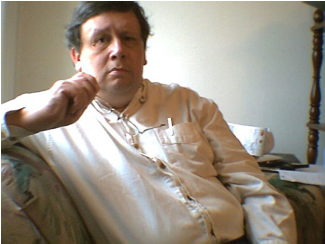
Rustin Larson

Any given Sunday or Monday, if your radio’s tuned to KRUU 100.1 in Fairfield, Iowa, you’ll catch Rustin Larson hosting his talk show with the quirky-hip title: “Irving Toast, Poetry Ghost.” With an eye on creating a venue for poets, Larson spent several years in magazine publishing, but the venture ran its course. Still looking to showcase writers, he met with the KRUU station manager, who gave him free reign. “Irving” (the spirit of poetry who lives in the hearts of all) hit the airwaves in April 2008, and features live readings and interviews with new and established poets.

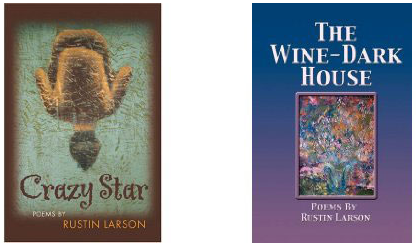
A published poet and writer himself, the five-time Pushcart nominee has authored three poetry collections, Loving the Good Driver (Mellen Poetry Press, 1996) Crazy Star (Loess Hills Books, 2005) and most recently–The Wine-Dark House (1st World Publishing, 2009). His work has appeared in The New Yorker, The Iowa Review, North American Review, Poetry East, Atlanta Review and others.

Mr. Larson credits a high school creative writing class for piquing his interest and serving as a catalyst for future endeavors in the field. He received his B.A. in Literature from Maharishi International University in Fairfield Iowa, an M.F.A. in Writing from Vermont College of Norwich University in Montpelier, Vermont, and has taught writing in a variety of settings.
In 2000 he won the Editor’s Prize from Rhino Magazine, and has also received awards for his poetry from the National Poet Hunt and the Chester H. Jones Foundation. He was an Iowa Poet at the Des Moines National Poetry Festival in 2002 and 2004, and featured writer in the DMACC Celebration of the Literary Arts in 2007 and 2008. Prior to launching his own popular show, Larson’s work had been highlighted on the public radio shows, “Live from Prairie Lights” and “Voices from the Prairie.”

Click here to read this wonderful review and samples of Rustin’s poetry, and interview, as he discusses his experiences as a student, poet, editor, teacher, blogger, and talk show host. Read more about Rustin in these interviews and poetry book reviews at The Iowa Source.