Posts Tagged ‘Transcendental Meditation’

David Lynch on Transcendental Meditation: an interview with David Servan-Schreiber in Paris

April 26, 2010

What is Transcendental Meditation?

David Lynch Interview with Dr. David Servan-Schreiber

Paris, April 17, 2010

David Lynch, director, tells David Servan-Schreiber, MD, PhD, about the benefits of a daily use of Transcendental Meditation. Mr. Lynch is working on a film about the life of Maharishi Mahesh Yogi, who brought back Transcendental Meditation in Occidental countries in the 60s. Interviewed in Paris, April 17, 2010. Here is a link to the full interview posted on DailyMotion: http://dai.ly/a9wgDS.

Visit the David Lynch Foundation to see the amazing work that is being done for at-risk populations: www.davidlynchfoundation.org

This interview was later uploaded onto YouTube in 4 parts by on Jun 22, 2010, in English and French versions. It includes this bio on the interviewer, Dr. David Servan-Schreiber.

Paris, 17 April 2010. Dr. David Servan-Schreiber, MD, PhD, is a French physician and neuroscientist. Clinical professor of psychiatry at the University of Pittsburgh School of Medicine, he is also co-founder of the Center for Integrative Medicine at the University of Pittsburgh Medical Center. Following his volunteer activity as physician in Iraq in 1991, he was one of the founders of the US branch of Médecins Sans Frontières (Doctors Without Borders), the international organization that was awarded the Nobel Peace Prize in 1999. He also served as volunteer in Guatemala, Kurdistan, Tajikistan, India and Kosovo. In 2002 he was awarded the Pennsylvania Psychiatric Society Presidential Award for Outstanding Career in Psychiatry.

Author of “Healing Without Freud or Prozac” (translated in 29 languages, 1.3 million copies sold), and “Anticancer, a New Way of Life” (translated in 35 languages, New York Times and international best-seller, 1 million copies in print) in which he discloses his own diagnosis with a malignant brain tumor at the age of 31 and the treatment program that he put together to help himself beyond his surgery, chemotherapy and radiotherapy.

Dr. David Servan-Schreiber is also a regular columnist for Ode Magazine and other publications, and the founder of the French anti-cancer site Guerir.org (“Healing”). See also www.anticancerbook.com.

I just checked his website and discovered that after a 20-year battle with cancer, David Servan-Schreiber passed away on July 24, 2011.

New studies presented at Society of Behavioral Medicine 31st Annual Meeting show reduced depression with Transcendental Meditation

April 7, 2010

New studies show reduced depression with Transcendental Meditation

The Transcendental Meditation technique was effective at reducing symptoms of depression, according to studies conducted at Charles Drew University in Los Angeles and University of Hawaii in Kohala. Both results will be presented April 9th at the 31st Annual Meeting of the Society of Behavioral Medicine in Seattle, Washington. Participants included African Americans and Native Hawaiians, 55 years and older, at risk for cardiovascular disease. Those with clinically significant depression reduced depressive symptoms by 48%. Click here to see EurekAlert! press release with graphs, facts on study design, and facts on depression.

Ireland’s Edwin McGreal interviews Mike Love for The Mayo News

April 6, 2010

INTERVIEW Mike Love of The Beach Boys

The legendary Beach Boys singer on Pet Sounds, Paul McCartney, clean living, Brian Wilson, modern music and more.

Monday, 05 April 2010 14:28

The beach boys

Mike Love, not war

The Beach Boys will bring some welcome Californian sunshine to Castlebar this June. Edwin McGreal spoke to founding band member, music legend Mike Love last week.
Mike Love is not your typical rock’n’roll  star. No sordid tales of debauchery, very little evidence of skeletons in his closet and, nearly 50 years after The Beach Boys were formed, he’s still going strong, playing around 150 shows a year.
Love, now aged 69, is a very relaxed and positive person, which is not surprising when you listen to such upbeat songs as ‘Good Vibrations’ and ‘I Get Around’, summer anthems that have put a pep in the step of millions for over 40 years.
And he and The Beach Boys will bring their sounds of summer to the TF Royal Theatre on June 26 (albeit minus Brian Wilson and Al Jardine).
So, still going strong all these years later, where does he get his energy?
“We don’t burn the candle at both ends like we might have done in the early 60s,” Love explained, speaking from his southern California base last week. “The Beach Boys are primarily a vocal group, we always emphasise our harmonies, and you can’t sing those kind of harmonies if you’re going to destroy yourself. I personally learned transcendental meditation [from renowned Indian guru Maharishi Mahesh Yogi, who taught many celebrities, including the Beatles]. I keep doing that every day and it is profoundly relaxing and repairs a lot of wear and tear mentally, emotionally and physically. It gives you a really nice outlet for stress rather than taking to the bottle or smoking a lot of pot or other drugs.
“People in my own family like my cousin Dennis [Wilson, founding member] became addicted to alcohol and various types of drugs and he ended up drowning in 1983, long before he should have passed away. Then my cousin Carl [Wilson, founding member] passed away of lung cancer 12 years ago. But then he started smoking when he was 13 so these lifestyle choices we make can have a tremendous impact on your health and well-being.”
Musically, the ’60s was a roller-coaster journey for The Beach Boys. There was the outstanding success of their totemic album ‘Pet Sounds’ in 1966, but the release of ‘Good Vibrations’ the same year is one Love looks back on with particular fondness.
“I think, artistically, ‘Good Vibrations’ has to be right up there. It stands on its own. It is so unique. Also I wrote the words and I came up with the chorus – ‘I’m pickin up good vibrations/she’s giving me excitations’. It stands the test of time and is still an amazing song today, that is the song I was happiest to be involved with.”
Subsequent decades didn’t prove as successful, with the exception of ‘Kokomo’ reaching Number 1 in 1988. Love admits that Brian Wilson’s well-publicised problems did play a part, but it wasn’t all bad for the band to be minus their front man.
“Brian pretty much became a recluse for several years and he didn’t take as dynamic a part in the production of our recordings. My cousin Carl played a bigger part, Bruce Johnston played a bigger part. Instead of Brian being ‘the Stalin of the studio’ as I used to call him, it became a bit more democratic. I don’t think it was reasonable that the [early success] would keep up forever, but the ’60s did provide the foundation of our continued success to this day.”
Moving to modern day musicians, Love has no particular favourites, but he’s exposed to the full gamut by his children. Some good, some not so good.
“I unfortunately get exposed to some rap music from my 14-year-old daughter but I also get exposed to Leona Lewis, Beyonce and Alicia Keys, those are pleasant exposures. I don’t think I’m obsessed with any new artist but I’m not against them either. I’m just as likely if I’m driving around to throw on the oldies channel just out of morbid curiosity to see if they’re going to play a Beach Boys song,” admitted Love, laughing at the thought.
Love hints that talks have taken place of a touring reunion with Brian Wilson and Al Jardine to mark the 50th anniversary of the band. For now, it is Love, together with long-time member Bruce Johnston and others who tour under the Beach Boys name – but the dynamic is the same, according to Love.
“What we like to do every night is prove we can recreate those songs like they’re meant to be sung. We have got nothing but compliments recently on how fantastic the show sounds …The special part [of touring] is recreating those songs and doing the absolute best job we can and seeing the audience join in and have a great time with us.”
Still sending those good vibrations.

Elsewhere on mayonews.ie
INTERVIEW Click here for the full interview
AUDIO Click here for Audio interview
COMPETITION Click here win tickets

DLF.TV Documentary: Saving the Disposable Ones

April 2, 2010
Saving the Disposable Ones

THE PROJECT

“The street children in Colombia are called ‘the disposable ones’ and they live and sometimes die on the streets. These children are unloved, unwanted, and endure abuse on many levels. Colombians are a kind and generous people but crime related to cocaine trafficking has made cities such as Medellin among the most violent in the world. Surviving on the streets is a harsh business. Children as young as six fall into prostitution and many escape the torments of their existence by sniffing glue.” — Stuart Tanner, Director

IT DOESN’T HAVE TO BE THIS WAY

As Stuart reveals in his deeply moving new film, there is a Catholic priest in Colombia, Father Gabriel Mejia, who has worked quietly to provide street children relief from their struggle for survival and support to create a better life for themselves.

Starting in Medellin in the mid-1980’s, Father Gabriel opened the first Center de Hogares Claret: a place where children could come for a good meal and a safe place to sleep. In the late 1980’s, he traveled to the United States where he learned Transcendental Meditation. He knew immediately that he had found the answer to the overwhelming stress the children suffered from living on the streets. As the power of the drug cartels waned, the number of Father Gabriel’s orphan shelters increased. Now, in 2010, there are 47 shelters under Father Gabriel’s direction, which are spread across all of Colombia. His center of operations in Medellin is the former home of Pablo Escobar, the now deceased drug lord.

“In the rough part of Medillin there is an orphan center where children as young as six years old can come to seek solace,” Stuart recalls. “At the center the children can shower and get a good meal. The children are free to come and go as they wish. There is no pressure on them to stay; it is an open house. Father Gabriel has learned through his work with the street children that the desire to move away from their life on the streets must come from within the children themselves. Many of the children are addicted to sniffing glue or gasoline so the process of becoming free of this dependency is a difficult and gradual one. As part of their rehabilitation the children learn to meditate. This is combined with gentle guidance from Father Gabriel and other members of the Foundation.”

As Stuart’s film documents, over time an extraordinary transformation in the lives of the children takes place. They are freed from the torments they endured living on the streets, recover from their drug addictions and begin to gain an education. “The Foundation established by Father Gabriel embodies the wisdom, patience and knowledge that is required to rescue the ‘disposable’ children, restore their rights, their dignity and offer them a much brighter future,” Stuart says.

“The basic therapy is love. Love is the imperial medicine for any illness or disorder. When a child feels they are welcome, when a child feels an educator is concerned about them, the child who came from violence and hostility of the streets, from being mistreated and who became aggressive, they change. The child changes.”

“When a child starts to practice Yoga every day, morning and afternoon. When a child closes the eyes and begins to meditate, when a child practices the Sidhis, they open themselves up to a field of infinite possibilities, as Maharishi says. The world opens for the child. And then the child discovers their essential nature, which is love.

“I think that we’re all committed to transforming the world we’re all living in. We have to leave a better world than the one we found. I believe in solidarity. I believe the solution is within every person. Within each one of us there is a sanctuary, and the moment we take refuge there, we can enter it. Solutions come from every person. When we put them together, there are many solutions. We must globalize love.” Father Gabriel Mejia

The David Lynch Foundation

The David Lynch Foundation has currently provided over 120,000 scholarships around the world including tens of thousands in Latin America. The proceeds from this premiere will go towards the David Lynch Foundation programs in Latin America, including Father Mejia’s Foundation, providing meditation instruction to at-risk populations. The program is offered on a voluntary basis, at no cost to the school or organization. Visit davidlynchfoundation.org for more information on programs and initiatives.

SUPPORT AT-RISK YOUTH

The David Lynch Foundation has currently provided tens of thousands of scholarships in Latin America. The proceeds from this film will go towards DLF programs in Latin America, including Father Mejia’s Foundation.

online
WORLD PREMIERE
April 8, 2010, 7:45pm
Fairfield, IA
Watch the extended #trailer
See Saving the Disposable Ones: World Premiere Poster for David Lynch Foundation Documentary along with longer clips from the film.

See the Saving the Disposable Ones article by Linda Egenes in Issue 11 of Enlightenment: The Transcendental Meditation Magazine.

We can now watch “Saving the Disposable Ones” at this site.

“Heyam Dukham Anagatam” — Avert the danger that has not yet come

March 20, 2010
Click here for India News from Daily India

How transcendental meditation can prevent war and terrorism

From ANI

Washington, March 20: A new research paper has pointed how militaries worldwide could use the Transcendental Meditation and TM-Sidhi program, founded by Indian spiritual guru Maharishi Mahesh Yogi, as a non-religious and scientifically verified way to prevent war and terrorism.

When used in a military context, these meditation practices are known as Invincible Defense Technology (IDT).

The research paper describes the concept of a “Prevention Wing of the Military,” a group of military personnel that practices the advanced TM-Sidhi program twice daily as a group.

A group that reaches a critical threshold in size has been scientifically shown to reduce collective societal stress.

The paper hypothesizes that war, terrorism, and crime are caused by collective societal stress.

The absence of collective stress translates into the absence of tension between countries, between religious groups, or even within individual terrorists.

The paper proposes that, by applying this non-lethal and non-destructive technology, any military can reduce societal stress and prevent enemies from arising.

If IDT prevents the emergence of enemies, the military has no one to fight, so the nation becomes invincible.

Over 50 scientific studies have found that when 1percent of a given population practices Transcendental Meditation, or when sufficiently large groups practice the TM-Sidhi program together twice daily, measurable positive changes take place throughout society as a whole.

The studies show decreased violence, crime, car accidents, and suicides, and improved quality of life in society.

The paper reviews IDT research, such as a study published in the Yale University-edited Journal of Conflict Resolution showing that an intervention by a civilian group in Israel resulted in a 76 percent reduction in war deaths in neighboring Lebanon.

Seven subsequent, consecutive experiments over a two-year period during the peak of the Lebanon war found that war-related fatalities decreased by 71 percent, war-related injuries fell by 68 percent, the level of conflict dropped by 48 percent, and cooperation among antagonists increased by 66 percent.

A follow-up study published in the Journal of Social Behavior and Personality found that the likelihood that these combined results were due to chance is less than one in a quintillion.

A global-scale study published in the Journal of Offender Rehabilitation documented a 72 percent drop in international terrorism when IDT groups were large enough to affect the global population.

According to David R. Leffler, the research paper’s author, “This new approach, derived from the ancient Vedic tradition of India, is supported by over 50 scientific studies. IDT can create victory before war, and can assist in peacemaking, peacekeeping, and peacebuilding.”

Copyright Asian News International/DailyIndia.com

I used the photo of Maharishi from a similar article on IndiaTalkies website posted by Nitesh on Mar 20th, 2010 and filed under Science / Technology.

Military Application of Transcendental Meditation Gaining Acceptance

March 18, 2010

Paper on Invincible Defense Technology published in peer-reviewed Pakistani journal

The Journal of Management & Social Science published a paper titled “A New Role for the Military: Preventing Enemies from Arising – Reviving an Ancient Approach to Peace,” indicating that the military application of the Transcendental Meditation technique has merit. The paper discusses how militaries worldwide could use the Transcendental Meditation® and TM-Sidhi® program, founded by Maharishi Mahesh Yogi, as a non-religious and scientifically verified way to prevent war and terrorism.

Permalink to this article

Donovan & Friends Perform Benefit Concert for David Lynch Foundation

March 15, 2010

Donovan headlines benefit concert on March 19

Proceeds to benefit Transcendental Meditation program

Legendary folk-rock-pop troubadour Donovan, known for hits such as “Mellow Yellow,” “Sunshine Superman,” “Hurdy Gurdy Man” and more, will headline a benefit concert for the David Lynch Foundation on Friday, March 19 at the El Rey Theater.

Doors will open at 7:30 p.m. Tickets are $25 for general admission and $110 for VIP seating and a meet and greet with Donovan after the show, and can be purchased through Ticketmaster.

“The Beatles and I brought back from India the lost art of meditation,” Donovan said. “Now, with David Lynch, we pass it on to thousands of students worldwide. Join us to help save the world.”

He will be joined by his daughter Astrella Celeste and backing band Jerry Vivino, Scott Healy and Mike Merritt from the Conan O’Brien late night band, Danny Saber on guitar with special guests Jack Maness from Sublime, The Global Sound Lodge featuring Lanny Cordola and Matt Sorum of Guns N’ Roses, Velvet Revolver and The Cult, Amrita Sen and more.

Matthew St. Patrick, from Six Feet Under, will host the evening performances.

The El Rey Theater is located at 5515 Wilshire Blvd., Los Angeles 90036.

About Donovan
Donovan was one of the few artists to collaborate on songs with Beatles Paul McCartney, John Lennon and George Harrison. Donovan has played with folk greats Pete Seeger, Joan Baez and Bob Dylan, as well as rock musicians Jimmy Page, Jon Bonham and John Paul Jones of Led Zeppelin, Jeff Beck, and Brian Jones of The Rolling Stones.

Recently Donovan completed the successful album “Beat Cafe” as well as a new box set, “Try For The Sun: The Journey of Donovan,” and a book, “The Autobiography of Donovan: The Hurdy Gurdy Man” (Arrow Books).

Donovan is now heading up the musical wing of the David Lynch Foundation, fulfilling his 40-year interest in Transcendental Meditation. Donovan, his wife Linda, Paul McCartney and Ringo Starr are currently promoting Transcendental Meditation in schools.

About The David Lynch Foundation
The David Lynch Foundation for Consciousness-Based Education and World Peace was founded in July 2005 by award-winning filmmaker David Lynch with the immediate goal of teaching one million at-risk youth to meditate. The foundation has already provided more than 100,000 scholarships for students to learn the Transcendental Meditation technique, as well as inmates and guards in prisons, formerly homeless men in re-entry programs, soldiers with PTSD returning from Iraq and Afghanistan, and American Indians suffering from diabetes.

Sources: The David Lynch Foundation & David Lynch Foundation Television

David Lynch in Reykjavik, Iceland

March 5, 2010

David Lynch Answers Grapevine Questions On TM

He also thinks Icelanders are, in fact, very hip.

11.5.2009
Words by Haukur S. Magnússon

As you probably know by now, Grapevine cover-star (and awesome director) David Lynch ventured to Iceland this month to preach the gospel of Transcendental Meditation and announce a nationwide project to bring “enlightenment, prosperity and peace to the people of Iceland.” We were of course intrigued by all this, and set up an interview with the man who’s self-portrait graces the cover of our latest issue. However, his answers didn’t make it back to us in time to run it in the print-edition of Grapevine, so we just did a little article about our experiences at his lecture (as well as a side-bar explaining TM) but they’re here now, ripe for your reading.

Grapevine: Can you explain shortly what Transcendental Meditation means to you personally?

Personally, Transcendental Meditation is a way to bring great bliss from within.

Does the practice affect all areas of your life – or does it inhabit its own special corner? Is it, for instance, reflected in your art in some way (for instance thematically or in the process of creation)?

Transcending, they say, is a holistic experience so it does affect all areas of life in the most positive way. With brain research, they see on the EEG machine a most wondrous phenomenon. When a person truly transcends (i.e., experiences the deepest level of life – the ocean of pure totality of consciousness within) the entire brain is engaged.

Transcending is the only experience in life that engages the full brain – total brain coherence it’s called. For me, it serves the work in the following ways: I have found that i have much more happiness in the doing. I have found that ideas flow more freely. I have found intuition (the #1 tool of the artist) growing more and more and i feel the heavy weight of negativity (anxieties, nervousness, worries, fatigue, depressions, angers, fears) lifting and therefore much more freedom in life and work.

Are there times where you are more involved in the practice, where you lean on it more heavily?

I have meditated twice a day for 36 years.

How did your brief visit to Iceland come about? Is this something that has been in the works for a while, or was it a spontaneous idea? Have you made such visits to other nations or regions over the years?

The visit to Iceland came about seemingly spontaneously. My Icelandic friend, Joni Sighvatsson [producer Sigurjón Sighvatsson], and I were talking on the telephone a month before my visit. We were both speaking of Iceland’s bankruptcy and thought Iceland could really use Transcendental Meditation and a peace creating group to bring peace, security, affluence and prosperity.

A whole bunch of things came together and it was really great to feel the receptivity and the growing determination of many to get these programs going in Iceland. Iceland is the 20th country i have visited talking about meditation and peace.

If I understand you correctly, you are presenting TM as a failsafe way to bring ones life to harmony. Does TM, then, offer “complete freedom from the world’s strife and confusion” or is it rather a “useful tool” for maintaining a well-balanced life?

Enlightenment does bring complete freedom from the world’s strife and confusion. But balance is the thing. Balance doesn’t mean a compromise. I think true balance brings totality – the full potential of the human being. Full potential of the human being is called enlightenment. Enlightenment answers all questions, ends all suffering and all negativity. Maharishi calls supreme enlightenment having 200% of life – 100% of all that which is unmanifest and 100% of all manifestation – totality, unity.

At your Háskólabíó event, as well as in press releases sent out prior to it, the word “science” got thrown around a lot. For instance, you emphasized that the project was “not an experiment, but rather a scientific demonstration of 50 years of research verifying the benefits of the Transcendental Meditation program for the individual and entire society.”

Furthermore, the TM program’s official web-site enshrouds itself very much in an “air of science,” if you will, taking on the appearance of a major pharmaceutical company rather than a foundation that’s presenting the ancient, spiritual act of inward meditation with possible religious connotations.

Appearances aside, i think many of our readers are interested in knowing whether you consider TM to be:

A) A plain, scientific method (something purely physical

B) An exercise program for the mind)

C) A religion

D) A form of spiritualism without any religious affiliations.

This is a very interesting and good question you have asked. For me, i started Transcendental Meditation for this thing called enlightenment and this thing called bliss. And i saw it as a spiritual path. We live in what they call a “scientific age” and many people think meditation is some kind of mysticism, some kind of Eastern religion, or some kind of path that requires renunciation or giving up of worldly pleasures.

Maharishi’s Transcendental Meditation is for what they call the “householder.” that means men and women in activity. Nothing needs to be given up when practicing Transcendental Meditation. One just adds 20 minutes of meditation in the morning and evening and that does everything.

Maharishi wanted Transcendental Meditation to be researched from a scientific point of view and that’s why there have been the 600 or 700 research studies over the years. Many people find a comfort knowing that TM and its benefits have been objectively verified by science.

It is such an interesting time because quantum physics for instance has now discovered and verified the existence of the unified field at the base of all matter and mind – at the base of anything that is a thing. This unified field is the same field that one experiences when transcending. Quantum physicists says that everything that is a thing has emerged from this field of unity in a process they call “spontaneous sequential symmetry breaking.” ancient Vedic science – the science of consciousness – has always known about this unified field. And Vedic science knows precisely the numerous steps consciousness goes through from the unmanifest level of unity to all levels of manifestation. It is so great to see that with each step forward modern science takes, it verifies the ancient Vedic science.

The unified field is for quantum physics – and Vedic science – the home of all the laws of nature. These laws hold everything and we’re coming to a point where the spiritual aspects of life can be written in a physicist’s equation.

Transcendental Meditation is not a religion, it’s a mental technique that opens the door for any human being to the unified field – the deepest level of life. It is an ancient form of meditation and a real gift because it gives “effortless transcending” because the mantra Maharishi gives turns the awareness 180 degrees within. And once pointed within, one naturally and effortlessly dives deeper because each deeper level of mind and intellect has more happiness. The human mind always wants to go to fields of greater happiness, so it effortlessly dives, and at the border of intellect, effortlessly transcends and experiences the ocean of totality of consciousness, infinite happiness, bliss, unified filed, transcendent, home of all the laws of nature, constitution of the universe, etc, etc.

It is the experiencing of the unified field that does everything for the human being. Intellectual knowledge is great, but it will never bring total fulfillment. It is this profound experience of unity – of bliss – of pure consciousness that is missing from our lives. Once a person gets this experience on a daily basis – reestablishes his or her connection with this oneness, then things really begin to change for the better. Every time we experience this deepest level of life, we infuse some of it and we begin to rapidly unfold our full potential

This ocean of consciousness within has qualities; it is an ocean of infinite intelligence, creativity, happiness, love, energy, peace. All these qualities begin to expand. The side effect of the expansion of consciousness is negativity begins to recede. Things like tension, anxieties, stress, sorrow, depression, hate, anger and fear begin to lift away. This brings freedom, and those all-positive qualities expanding bring great benefits to all aspects of life. So it is a scientific and spiritual path. People from all religions practice Transcendental Meditation as well as agnostics and atheists.

Experience this field of unity and watch things get better.

Is there a system of ethics connected to the practice of TM?

No.

Aside from the above, are you yourself a man of religion? If so, does TM in any way affect your religious practices, or are the two completely separate?

Religious people who practice TM say that because understanding grows, they understand their religion more. And because appreciation for all things grow, they appreciate their religion more.

What about the Maharishi Mahesh Yogi? How closely did you follow his teachings, especially those unconnected to TM? I am referring, for instance, to the Maharishi Vedic sciences, in terms of their approach to health, architecture, agriculture and music.

Maharishi, among other amazing contributions revived the ancient Vedic knowledge and put all the Vedic texts back together into a systematic science of consciousness. Veda means pertaining to total knowledge. It is a huge science – so beautiful – telling us so many things for a life to flow with mother nature. But again if Maharishi had only brought Transcendental Meditation, that effortless technique that allows us to experience pure consciousness, that would have been amazing in and of itself. Get that experience and all the rest will follow.

Did you consider any of the cult allegations that were widespread in the seventies and eighties?

Of course I experienced the discomfort of this false accusation. I always wondered why people called TM a cult. I never felt I belonged to some group. I took this technique as a personal thing. I never wanted to be in any club or group. I wanted to go my own way, make my own decisions.

Expanding consciousness actually glorifies differences. All diversity is appreciated fully in the light of total unity. Meditators do not all become the same, on the contrary they each become more and more themselves. However i have found a common link between meditators – I like being with them as they all reflect a great deal of happiness.

These days, all of these misconceptions about TM are disappearing and only a few strange voices rail against this meditation for reasons unknown to me. So many varied human beings have benefited from this technique that anyone with even an ounce of intelligence can see that it is the most positive of practices.

Finally, can you share your favorite memory of your brief visit? What stood out, if anything?

I was very impressed by the numerous paintings I saw in almost every building I entered. It seems that everyone in Iceland is an art collector and appreciates art. This was very impressive to me and the rapidly changing weather was astonishing also. I was also impressed by the camaraderie among Icelandic people – and their hipness.

Source: The Reykjavik Grapevine – Life

TM activates DMN, the brain’s “ground state”

March 4, 2010

A new EEG study conducted on college students at American University found they could more highly activate the default mode network, a suggested natural “ground state” of the brain, during their practice of the Transcendental Meditation technique. This three-month randomized control study is published in a special issue of Cognitive Processing dedicated to the Neuroscience of Meditation and Consciousness, Volume 11, Number 1, February, 2010.

Specifically, the study found the TM technique:

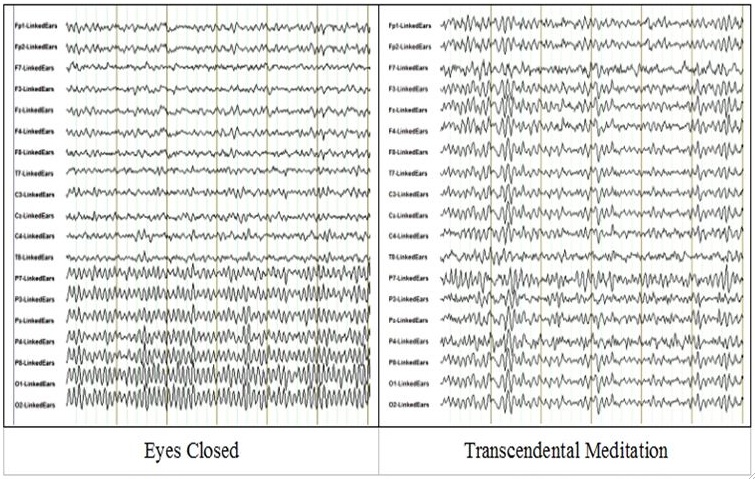
  • Produces a unique state of “restful alertness,” as seen in the markedly higher alpha power in the frontal cortex and lower beta and gamma waves in the same frontal areas during TM practice.
  • Creates greater alpha coherence between the left and right hemispheres of the brain suggesting the brain is working as a whole.
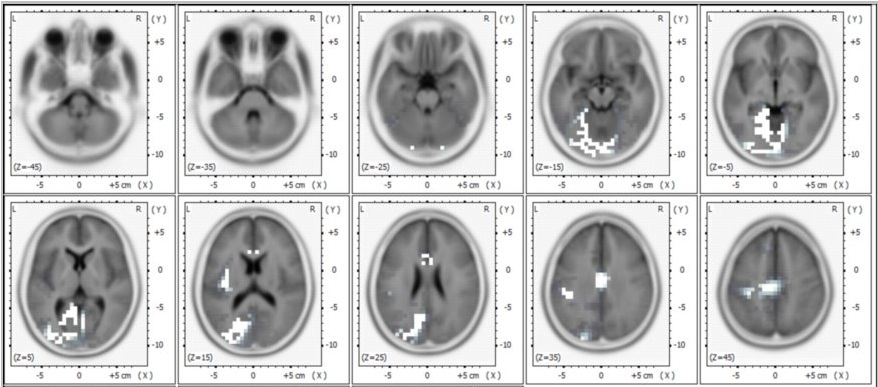
  • Enhances an individual’s sense of “self” by activating what neuroscientists call the “default mode network” in the brain. (This is considered the natural ground state of the brain, glimpsed by neuroscientists during eyes-closed rest but more fully activated during Transcendental Meditation practice.)

“The finding of significant brain wave differences between students practicing the Transcendental Meditation technique and those simply resting with their eyes closed is especially convincing because subjects were randomly assigned to conditions, and testing was conducted by a researcher unaware of the experimental condition to which the subject had been assigned,” said David Haaga, Ph.D., coauthor and professor of psychology at American University.

“Research has already shown that simply closing one’s eyes and relaxing increases the default mode. A significant additional finding of this new study is that activity in the default mode increases during TM compared to simple eyes-closed rest,” said Fred Travis, Ph.D., lead author and director of the Center for Brain, Consciousness, and Cognition at Maharishi University of Management. “Different meditation techniques entail various degrees of cognitive control. Thus, activation patterns of the default mode network could give insight into the nature of meditation practices.”

Previous published research, funded by the NIH, shows TM practice decreases high blood pressure, atherosclerosis, cholesterol, stroke, and heart failure.

Comparative EEG Tracings

These raw EEG tracings during eyes-closed rest (left) and Transcendental Meditation (right) represent 18 tracings over 6 seconds. The top tracings are from frontal sensors; the middle tracings are from central sensors; the bottom tracings are from parietal and occipital sensors [back]. Note the high-density alpha activity in posterior leads during eyes-closed rest, and the global alpha bursts across all brain areas during Transcendental Meditation practice.

eLORETA Images of Significance Differences

These are eLORETA images of sources of alpha EEG during TM compared to eyes-closed rest in the default mode network (the white areas).

Images credit: Cognitive Processing, Volume 11 (2010), Issue 1

Article title: A self-referential default brain state: patterns of coherence, power, and eLORETA sources during eyes-closed rest and Transcendental Meditation practice, DOI: 10.1007/s10339-009-0343-2. Also on PubMed.

Laboratory Note: The work of the Center for Brain, Consciousness, and Cognition at Maharishi University of Management is summarized and featured in this same issue:

Transcendental Meditation for Barbados Prisoners

February 21, 2010

Prisons Superintendent pushes transcendental meditation for prisoners

Posted by admin on 2/19/10 • Categorized as Crime/police

Prisoners at the Dominica State Prison have received the opportunity to learn the art of transcendental meditation, as well as engage in competitive indoor and outdoor sports on the prison’s compound, according to Superintendent of Prisons Algernon Anthony Charter.

In his address at the closing of the January Criminal Assizes at the High Court of Justice on Thursday Charter said the transcendental meditation program which recently started is intended to help change the behaviour of prisoners.

“This will help them to relax …. We hope that it will help them to see and behave differently,” Charter noted.

He assured that this program would not give prisoners the power or ability to abandon the prison grounds.

“The inmates who are going to do transcendental meditation, we give the assurance that they will not leave the prison shores … we offer opportunities hoping that they change their cognition,” Charter said.

“We are also going to start very soon some competitive sports between the inmates, booth indoor and outdoor,” he added.

A skills training program is being conducted at the institution, where prisoners are taught construction.

“We continue to do some skills work with inmates in terms of construction. We are constructing a new kitchen, bakery, mess hall and stall room facility with the help of the inmates,” Charter informed.

He also gave an account of the population of the state prison, stating that 275 inmates are housed there – four females and 271 males.

Sixty-nine males and one female are convicted from the High Court, while 143 males and three females were sentenced at the Magistrate’s Court. Fifty-six males are on remand, including three males standing for trial.

The superintendent said that there are a small number of juveniles enrolled at the prison. They are housed separately from the adults. Charter said that most violent fights occur among juveniles.

Hermisha Rolle/staff reporter.