Posts Tagged ‘the Beatles’

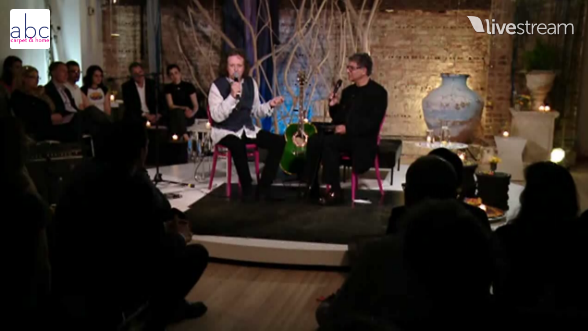
Donovan and Deepak talk about meditation, music, on abc carpet & home via livestream

May 2, 2012

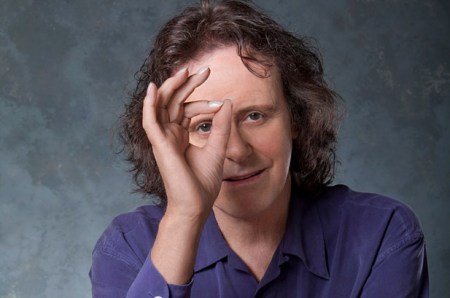
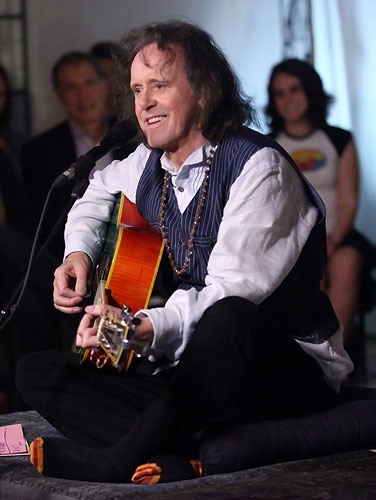
Astrid Stawiarz/Getty Images

Here’s an online streaming event with Donovan and Deepak talking about the old days with Maharishi, Transcendental Meditation, The Beatles, and the music from the 60’s. Thanks to Linda, Donovan’s wife and muse, for suggesting Donovan be on this special event: http://livestre.am/1IWyp on abc carpet & home via @livestream.

Also see: Donovan shares his excitement and fulfillment after playing at the Rock and Roll Hall of Fame | Billboard interview: Donovan Q&A: Catching Up With a Folk Rock Superman | Ode to Donovan by Meghan for Altavoz: Conan introduces Donovan while holding the DLF Music vinyl box-set “Music That Changes The World” | Donovan Inducted into Rock and Roll Hall of Fame | Donovan and Ben Lee on Good Day LA | The former Beatles Paul McCartney and Ringo Starr reunion for David Lynch’s benefit concert airs on New York’s THIRTEEN, Sunday, April 29

Donovan shares his excitement and fulfillment after playing at the Rock and Roll Hall of Fame

April 21, 2012

Donovan on Playing at the Hall of Fame

April 16, 2012 | By Eric Helton

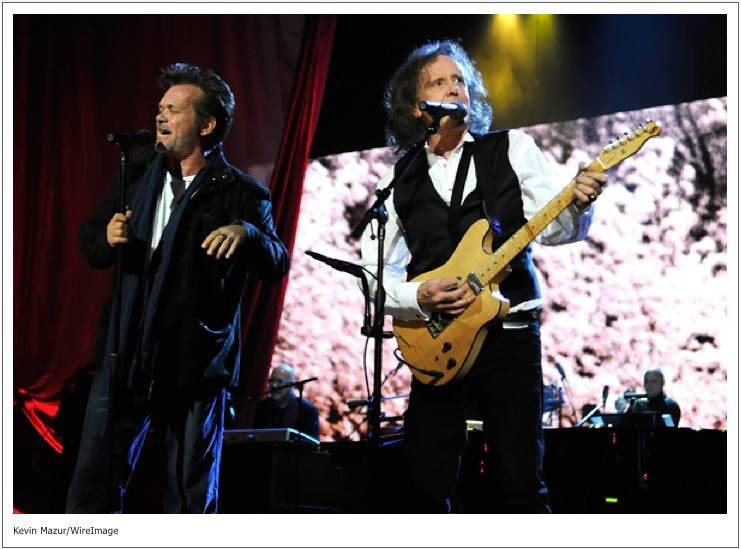
Donovan closed out his performance at the Rock and Roll Hall of Fame with a special version of his hit “Season of the Witch” with John Mellencamp, which he said afterward was “a great joy.” “I feel like something has been fulfilled on stage tonight which sums up my contribution to this extraordinary world of music,” the singer told Rolling Stone.

Click On performing with John Mellencamp to see video on Rolling Stone.
—————
Donovan: On teaching guitar technique to Beatles April 19, 2012 | By Eric Helton, Max Tiberi. Watch the video: Songwriter recalls studying Transcendental Meditation with Fab Four.
—————
Rock Cellar Music: The Interview
Donovan is BACK!
1960s Icon Is in Rock Hall of Fame. What’s Next? (Interview)
April 2012 by Greg Feo and Jeff Cazanov
—————
Listen to Michael Castner of WSJ’s The Daily Wrap interview Donovan about Transcendental Meditation: http://podcast.mktw.net/wsj/audio/20120418/pod-wsjdwdonovontm/pod-wsjdwdonovontm.mp3
—————
Related: Billboard interview: Donovan Q&A: Catching Up With a Folk Rock Superman | Ode to Donovan by Meghan for Altavoz: Conan introduces Donovan while holding the DLF Music vinyl box-set “Music That Changes The World” | Donovan Inducted into Rock and Roll Hall of Fame | Spinner: Donovan Q&A, on Dylan Rivalry, Helping Paul McCartney Write ‘Yellow Submarine’
—————
Visit http://www.donovan.ie for more interviews. See a list of related articles and videos on Donovan’s Induction into the Rock N Roll Hall of Fame
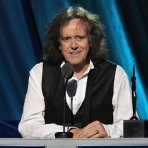
John Mellencamp Inducts Donovan Into The Rock And Roll Hall Of Fame.
Donovan’s acceptance speech/poem is posted on Govinda Gallery by Chris Murray on May 2, 2012: Rock Around the Clock: From Kid Rock to Chris Rock. Backstage with Donovan at the Rock and Roll Hall of Fame.

Acceptance Poem

“From my wandering days on lonely sands
where I sang my song to the moon and stars
To the world’s great stage , honoured am I
to sing my song to a million fans

Always my wish to be of service
to ease emotion deep in the heart
Always your poet , a shaman am I
to lead us all to the realm within

Yet I was branded for my beauty
yet protected by my art
Many plundered me for booty
only one did steal my heart

How she keeps it in her casket
still remains a mystery
Like the moonrise in a sunset
like the silence of the sea

Thank you for this bright green laurel
resting now upon my brow
Thank you Goddess , thank you Muses
thank you … Fellow Artists All”

– Donovan Leitch Copyright ©All Rights Reserved.
Rock & Roll Hall of Fame Acceptance Poem
Cleveland, Ohio
April 14 2012

Billboard interview: Donovan Q&A: Catching Up With a Folk Rock Superman

April 12, 2012

In the three months since Donovan received the news that he will be inducted into the Rock and Roll Hall of Fame, he has stepped up his activity in front of the film, TV and music industries. He performed at  the Sundance Film Festival, made numerous private performances for music supervisors and delivered a sold-out chat and performance at L.A.’s Grammy Museum.

“Good Day L.A.,” the morning show of the Los Angeles’ FOX affiliate, devoted daily segments to Donovan during the last week of  March, culminating in a live performance on March 30. Next up is the induction ceremony on April 14, which will be followed by Sony Legacy’s release of “The Essential Donovan” on April 17. HBO will air the Hall of Fame ceremony/concert on May 5.

In an interview held at his daughter’s home in the Hollywood Hills, Donovan spelled out his plan for the Rock Hall concert. “‘Sunshine Superman’, I cannot not play, but I would like to preface it with an acoustic song, probably ‘Catch the Wind.’ We’ll follow with ‘Season of the Witch.’ It looks like Jim James of My Morning Jacket (will join in). We played together at Radio City for the meditation concert and I got on really well with him so I will have the younger generation there.”

The meditation concert he referred to was held in 2009 for the David Lynch Foundation that funds the teaching of Transcendental Meditation for school-age children. Donovan, who turns 65 in May, has been an avid supporter of the Lynch Foundation, contributing a track last year to “Download For Good: Music That Changes The World.” A copy of the CD was on the coffee table so our conversation, which would touch on  poets from the 18th century up through the Beat Generation, Bob Dylan and his last studio album, the underrated 2004 release “Beat Café,” began with TM.

Billboard: Last year we heard a new song from you, “Listen.” As one of the first and most visible people to experience TM in India, how has it affected your music?

Donovan: In the early days when the Beatles and I went to India and returned, we knew our fans should have it and then the world should have it. We needed it. Flash forward 35 years later (April 4, 2009) and Paul (McCartney) and Ringo (Starr) and Donovan and David Lynch are on the stage at Radio City Music Hall announcing to the world how schools have applied this meditation. Fear and anger and doubt have been subdued somewhat. It doesn’t mean that you’ll never be angry or filled with doubt again, but you won’t hold on to it —  all things the Maharishi spoke of. This one was designed to be very applicable to the Western way of thinking. My dream was to (figure out) how do we bring in a new generation of songwriters? As it progressed, I wrote songs with meditation in them. The Beatles wrote songs with meditation in them.

What was the first song you were aware of writing because of TM?

“Happiness Runs” is the most direct one, which I wrote while in India with the Beatles and one Beach Boy (Mike Love) and Mia Farrow. Before India in ’68 I was always looking for songs where people could sing along. It’s part of the job to be a poet, folk singer — children’s songs, rounds, circular songs. And so I made this circular song “Happiness Runs” and it directly references meditation because it says ‘happiness runs in a circular motion/thought is like a little boat upon the sea.’ Simple words, but profound. More rocking was the “Hurdy Gurdy Man.” In the 18th century the hurdy gurdy man played the instrument the hurdy gurdy and he traveled from town to town and he brought the news. So I related the hurdy gurdy man in the song to the teacher, the Maharishi, who brings us songs of love.

When you said meditation affected your songwriting, the first thing I thought of was “There is a Mountain.” What’s its origin?

It comes from a Zen haiku, but it is a koan as well — the clever question asked of the student by the Zen master. “First there is a mountain, then there is no mountain, then there is.” “The caterpillar sheds its skin/to find the butterfly within.” It’s very literal. If we could discard our skin, our hard husk of persona, it’s an obvious description that inside there is a softer human. I found (sayings) in old books and by putting them into songs, I hoped they would trigger a question in the listener. By giving it a rhythm it has an attraction — people were singing my lyrics not knowing what they were about.

On a certain level, you were far ahead of your time. Musicians of the last decade seem to understand you better than the musical community of the 1980s and ’90s. Have you sensed that?

I could sit cross-legged in front of 20,000 people and play solo with one guitar (in the early 1970s tours) and a pin could drop and (be heard). I assumed even then, that everything I was singing they knew. It was just a veil hiding it. That didn’t mean that the outside world would understand the Donovan magic or the songwriting. But I have been recognized, extraordinarily so, by the audience. We’re talking 17 top 100 singles, selling out all the great concert halls of the world — Sydney Opera House, Hollywood Bowl, Royal Albert Hall, Carnegie Hall. One gets recognized by one’s peers and journalists who have a lot of experience and have studied and know where the various parts of my music came from.

There were so many facets to your music – there was a dramatic change from “Catch the Wind” to “Cosmic Wheels” and that’s just 10 years. What made you want to be more than a folk singer and bring so many other elements into your music?

I’m a sponge. When I was younger I absorbed so much music and (the story) is always the same — passed on by an older Bohemian who has a house that becomes a crossroads for visitors. Such a one was in the town of St. Albans for me. Such a one was in Minnesota for Dylan. It’s where the older Bohemian says I know what you’re up to; you better spend a few days with my record collection. In it is everything – folk, jazz, blues, classical, baroque, spoken word. I was so fascinated that I absorbed all of the styles, even the antique music of Sicily, rare flamenco from 1928. It was fascinating to me that I started dressing my lyrics in all kinds of costumes musically. Many of my contemporaries had one or two styles — folk, blues. But when I did “Sunshine Superman,” begun in 1965 and finished in May 1966, and presented so many genres blended, it was a natural thing to me. It represented what the Bohemian said: all the cultures should share the planet. That meant be brave, break the rules and walk over the genre lines and blend. I could see how it made me difficult to pin down.

At the beginning of it all, though, was folk music.

It was. (As a young boy) all the relatives would come around, the room would be cleared and a chair would be put in the middle. And a slightly tipsy relative would be pushed into the chair to sing their one song. These songs I didn’t know at the time, were folk songs from the Scottish and the Irish, about the troubles and the migrations.  Only later, when I was 15, did I learn these were called folk songs. After that my father’s record collection of Sinatra and my mother’s Billie Holiday and five-piece jazz groups from the ’30s and musicals. When I was 15 ,that would be Everly Brothers and Buddy Holly and I’d collect all the records. At 16, I plugged into a (college) campus for nine months and became aware of the older Bohemians who introduced me to the jazz club, the folk club and the coffee house and the art school and soon the blues club. After that it was easy for me to fuse (styles); I just wanted to see how far it could go. The base is always the same – the guitar and the vocal.

At some point early on, you made the decision to write songs, which many folk singers of the early 1960s did not do.

I much more wanted to be recognized as a poet than as a musician. Poetry is still looked upon as something ineffectual, narcissistic. In actual fact, the Bohemian poets in the ’40s,  their mission was to return poetry to popular culture. When you bring a poet into popular culture, two lines from a poem can alter a whole nation, it can bring a government down. The beat poets were wrong when they thought poetry would come back on the wings of jazz. Some poets were improvising with jazz improvisers in clubs, but improvisational poetry only works within improvisational music. When folk jumped into bed with rock, the form of the folk ballad would allow the new lyric (to thrive), first with Bobby Dylan then with myself and Joni Mitchell, Leonard Cohen, Neil Young. The Beatles realized it, too. They were from the Irish tradition of social activism  (in poetry) but didn’t know it. I somehow knew it, because my father had brought me up reading poetry to me of social change.  Before I heard Woody Guthrie, my father was reading poems of social consciousness to me —  Wordsmith, Coleridge, Shelly. I got fired with the zeal that we could bring something (literate) to the fans of pop music to get their teeth into.

You arrived in the U.S. as a folkie but sign to Epic and become a rock star. A conscious decision?

It came to a boil in May 1965 when Joan (Baez), Bobby and I met (as documented) in (the film) “Don’t Look Back.” At the time, folk singers, classical and jazz musicians released albums, pop music went on 45s. I was a bit ahead, releasing a single. That bit of harmless plastic, the 45, I realized was cheap, available and millions of Baby Boomers bought them. There was already something going on that I was joining (socially conscious folk-rock music). But the folk singers rebelled,saying ‘We’re not plugging in our banjos and guitars.’ Nobody understood that folk could meet pop or rock.

It wasn’t until 2004 when you did “Beat Café” that you really exposed the importance of poets on your work. Why did you decide the time was right for that project?

I was exploring the Bohemian cooking pot that was going on when folk and jazz and poetry were mixing in these special hangouts. (Producer) John Chelew suggested that I and (the bassist) Danny Thompson (record). He said ‘That’s unique when you and Danny play a drone. I’ll pay for it. Come in and we’ll do the drone for an hour.’ Before I went in, I couldn’t do just a drone. We were recording at Capitol so I thought I’ll write a song for Danny that will be like Peggy Lee’s ‘Fever.’ I’ll get  a bass line going and I’ll write about when we used to play in the clubs. It was simple. We went into the studio and did the track. My wife, Linda, was in the studio. She knows her stuff and says there’s only one drummer who can join this thing, (Jim) Keltner. In came Jim. Set up his whole kit never knowing what it was about, having never played with Danny. He’s got the big kit set up and  I went (sings bass line). He looked at me laughed, ‘OK I’m in.’ And we sang about life in the beat cafes.

Good as the album is, the shows were even better – you mixed talk about poets and their affect on your writing.

San Francisco was particularly touching because Michael McClure was there. He jumped on stage and did (a poem). In New York, in Joe’s Pub, a girl stood up on a table and pumped it out. Nobody knew her. I took it on tour in the U.K., but it wasn’t the same. Before I took it on tour, I said it can only be in a small room, a  Bohemian café and there just aren’t enough of them.

You’ve been active this year, getting out to places such as the Sundance Film Festival to perform at the BMI Snow Ball and at the musical instrument trade show NAMM. What will come out of this activity?

The music supervisors have always been friends of mine and (publisher) Peermusic is introducing me to all these (projects). I would love to do a soundtrack with the right director – I have a love of cinema and by extension TV and commercials. I’m fascinated that Gibson wants to make me a custom cherry red J-45, which I used for every album up through 1969. It was stolen in 1970 — a fan walked into a stadium in 1970 and out with the J-45. It’s never been returned. I carried around the J-45 nostalgically as a second guitar while I played my new custom guitar, the moon shaped guitar designed by Tony Zemaitis. When Gibson heard there was a wanted poster out, they decided to make a guitar. To have a custom guitar and then possibly a line of guitars for my fans, that’s a lovely thing.

VIDEOS

These videos were embedded in the interview: “Catch the Wind” — 1964, “Cosmic Wheels” — 1972, and Bob Dylan And Donovan.

Donovan Tribute Week on Good Day L.A. All week they were saluting Donovan as he gets inducted into the Rock and Roll Hall of Fame. Watch the Interviews in their Video Player.

Donovan Tribute Week, Poe Performs “Season Of The Witch”

Eric Burdon “Spills The Wine” Saluting Donovan!

Jackie DeShannon “Puts A Little Love In Our Hearts”

Smothers Brothers’ Tommy Gives “Big-ups” to Donovan

Spencer Davis “Keeps On Running” and Salutes Donovan!

Donovan Week Continues With Tribute From Jon Anderson of “YES”.

The Essential…Donovan!! – Live On Good Day L.A.: interview and singing

Listen to WKSU: Scottish singer-songwriter looks back at his career with WKSU’s Bob Burford: Donovan still mellow as Rock Hall honors awaits

Visit http://www.donovan.ie/en/ for more interviews.

Related posts: Ode to Donovan by Meghan for Altavoz: Conan introduces Donovan while holding the DLF Music vinyl box-set “Music That Changes The World” | Donovan Inducted into Rock and Roll Hall of Fame | Donovan and Ben Lee on Good Day LADonovan GDLA and Off-Ramp Interviews | Donovan to be Named Icon at BMI London Awards | Mellow Fellow Donovan


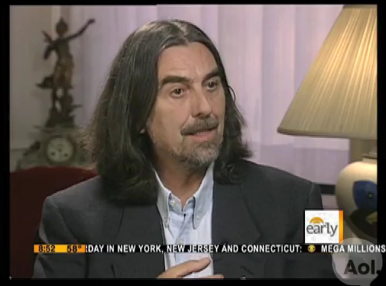
The Early Show looks at Martin Scorsese’s ‘George Harrison: Living in The Material World’

October 11, 2011

“Our true nature is consciousness and bliss.” George Harrison

‘The Early Show’ Takes a Look at Martin Scorsese’s ‘George Harrison: Living in The Material World’ 10/05/11. Click here to see the TV Replay.

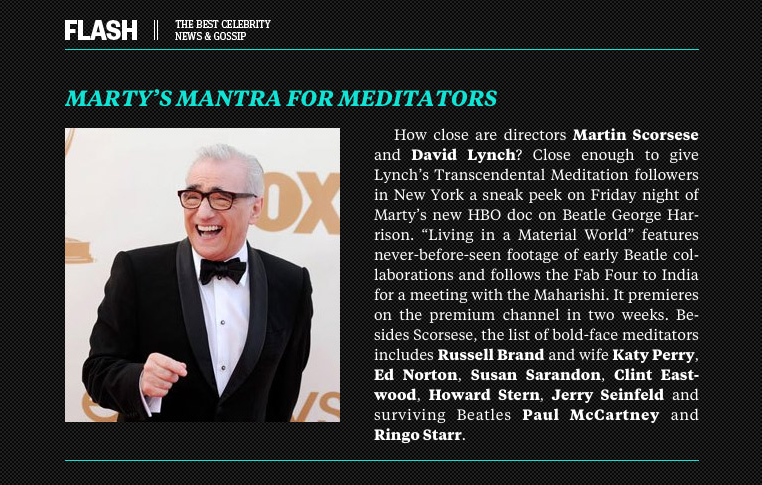
Also see The Daily: Marty’s Mantra For Meditators and Martin Scorsese’s film, George Harrison: Living in the Material World, premiers at the Sondheim Center for the Performing Arts in Fairfield, Iowa.

The Daily: Marty’s Mantra For Meditators

September 29, 2011

Wednesday, September 28, 2011

Also see: Martin Scorsese’s film, George Harrison: Living in the Material World, premiers at the Sondheim Center for the Performing Arts in Fairfield, Iowa

Maharishi Mahesh Yogi on History International Channel (November 2007)

June 2, 2010

For those of you who missed the A&E biopic on Maharishi Mahesh Yogi, aired on their History International Channel, November 28, 2007. See this updated post with the complete documentary film. A translated voice-over in French is available in 5 parts on YouTube: Maharishi Mahesh Yogi – Documentaire – 1/5 2/5, 3/5, 4/5, 5/5.

ITN Factual, a production company based in London, UK, was commissioned by A&E, Arts and Entertainment channels, to do a film biography on Maharishi Mahesh Yogi. Producer/Director Fiona Procter came to Fairfield, Iowa in October 2007 and the show was aired on the History International Channel on Nov 28, 2007. Interviews included Drs. Bevan Morris and John Hagelin, David Lynch, Donovan, Mike Love, Teresa Olson, Jerry Jarvis, Alan Waite, Deepak Chopra, and others, with footage of students meditating at Maharishi School, Yogic Flying at Maharishi University, and visuals of the Tower of Invincibility, the Golden Dome, MUM Campus, and Maharishi Vedic City. There was historical footage of the Beatles. Segments from Alan Waite’s documentary on Maharishi, Sage for a new Generation, were amply used, and precious early personal footage from Eileen Learoyd’s private collection in Canada were found and portions sent to the producer, which appeared throughout the film. Enjoy!

Also Watch the 1968 film of Maharishi at Lake Louise. See New film shows David Lynch retracing Maharishi’s footsteps from North to South India and the start of the TM movement.

For more information on Maharishi’s Transcendental Meditation Program here is a list of some country websites: United States: http://www.tm.org | Canada: http://www.maharishi.ca | Latin America: http://www.meditacion.org | Brazil: http://www.meditacaotranscendental.com.br | England: http://www.t-m.org.uk | France: http://www.mt-maharishi.com | Germany: http://www.meditation.de | Australia: http://meditationsydney.org.au | New Zealand: http://www.tm.org.nz | Africa: http://www.tm-africa.org | South Africa: http://tm.org.za | India: http://www.maharishi-india.org/programmes/p1tm.html | Japan: http://www.maharishi.co.jp | China: http://www.tmchina.org. Find out where you can learn Transcendental Meditation in other parts of the world:  http://intl.tm.org/choose-your-country.

David Lynch to shoot film about TM guru Maharishi Mahesh Yogi in India

November 18, 2009


Daily  News & Analysis

Wednesday, November 18, 2009 4:39:00 PM
David Lynch to shoot film about TM guru Maharishi Mahesh Yogi in India
ANI

Oscar nominated director David Lynch will make a film about Transcendental Meditation (TM) guru Maharishi Mahesh Yogi, according to reports. He will reportedly visit India next month in this connection.

This documentary film about the life and teachings and knowledge of Maharishi will involve interviews with people, including a 97-year man associated with him, reports suggest.

David Keith Lynch, 63, has been attempting to introduce TM in schools globally. The Guardian, British daily newspaper from London, described Lynch as “the most important director of this era.”

Welcoming Lynch to India for this new venture, acclaimed Indo-American statesman Rajan Zed, in a statement in Nevada (USA) today, urged world filmmakers to explore many finer and deeper things India offered, instead of just focusing on poverty and crime.

Zed, who is a chairperson of Indo-American Leadership Confederation, pointed out that planet’s most multidimensional country India had snowcapped mountains, palm-fringed and sun-washed beaches, glorious temples, colourful festivals, rich philosophy and spirituality, abundant historical sites, wildlife safaris, recharging treks, historic trade routes, cultural wealth, etc.

Maharishi, who died last year at an age of about 91, introduced TM technique worldwide, and wished to change the world with it.

He initiated ‘The Beatles’ and was associated with various celebrities like American rockers ‘The Beach Boys’, musician Mick Jagger, hairdresser Vidal Sassoon, Golden Globe winner Mia Farrow (Rosemary’s Baby), etc.

He reportedly established about one thousand TM centres worldwide and had about four million followers.

© 2005-2009 Diligent Media Corporation Ltd. All rights reserved

Cynthia Lennon, Pattie Boyd, and the Beatles

November 15, 2009

the armenian reporter

Cynthia, Pattie, and the Beatles

Former wives of John Lennon and George Harrison in Yerevan

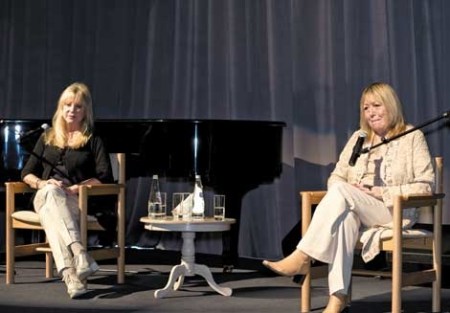
Cynthia Lennon-Pattie BoydPattie Boyd and Cynthia Lennon during their live interview at the Special Events Auditorium. German Avagyan

by Maria Titizian

Published: Saturday November 14, 2009 in Cafesjian Center for the Arts

Yerevan – John Lennon and George Harrison were two of the four Beatles, one of the most iconic rock groups in history. Their former wives, Cynthia Lennon and Pattie Boyd, were in Yerevan for the grand opening of the Cafesjian Center for the Arts last week. They took part in a live interview with Michael De Marsche, the museum’s executive director, in the brand-new and beautifully appointed Special Events Auditorium, located at the top floor of the complex.

The first-time-ever joint appearance of Cynthia Lennon and Pattie Boyd, took place in Yerevan. Arranging for that to happen was no small feat, according to De Marsche, who recounted the many telephone calls and arrangements that the museum made to ensure their participation at the opening. Watching the interaction of these two phenomenal women on stage was like taking a trip down memory lane.

Those in attendance at the live interview at the Cafesjian Center for the Arts cut across a large swath of Armenian society, including Armenia’s deputy foreign minister Arman Kirakossian who was there with his family. Their nostalgia for the Beatles has a deeper meaning.

The music of the Beatles was repressed during the Soviet era but an underground culture was able to smuggle in and disseminate their music in innovative ways. Their influence was immense; some like the last Soviet leader Mikhail Gorbachev, would say that the cultural, social, and musical revolution they inspired manifested itself years down the road. “More than any ideology, more than any religion, more than Vietnam or any war or nuclear bomb, the single most important reason for the diffusion of the Cold War was the Beatles,” Mr. Gorbachev has said.

For over an hour, Cynthia and Pattie disclosed intimate moments they shared with their husbands and each other, from fame to drug abuse, to alcoholism, and eventually to break-ups both marital and musical. Those turbulent early years when the Beatles were on the road to becoming one of the most legendary music groups of all times, the wives were along for the ride. However, as they recounted, the ride wasn’t always smooth. Pattie Boyd was very honest when recalling that tumultuous time of her life, “With a lot of help from a psychotherapist I have learned and am a much stronger person now. I am thankful to be free.”

“We have survived,” Cynthia Lennon said. “We have lost so many people along the way.” Indeed, Paul McCartney and Ringo Starr are the sole surviving members of the Beatles. John Lennon was shot and killed in front of his apartment building on December 8, 1980, by Mark David Chapman. George Harrison died of lung cancer in his Hollywood Hills mansion on November 29, 2001.

Cynthia Lennon, nee Powell, met John Lennon at the Liverpool Art College in 1957. “We were young and very much in love,” she recalled. The two married in 1962, after Cynthia became pregnant with their son, Julian. Lennon left her shortly after their return from India in 1968 to be with Yoko Ono. In 1978, Cynthia wrote A Twist of Lennon, which included her own illustrations and poetry, and a later biography on the famous Beatle titled simply, John in 2005.

Pattie Boyd was a model and photographer. In the 60s she modeled in London, New York, and Paris and appeared on the UK and Italian covers of Vogue. She met George Harrison in 1964 when she was cast in The Beatles film “A Hard Day’s Night.” She said at the time that Harrison was “the most beautiful man I had ever seen.” They were married in 1966; Paul McCartney was the best man. They divorced in 1974, after which Boyd married Eric Clapton. One of the audience members asked her how she came to be with Clapton. “Eric kept coming over [to the house she shared with Harrison] and began declaring his love and passion for me,” she said. “Because I was being ignored by my husband and being young, I found it irresistible. Maybe if we weren’t so young, maybe we could have made it work.”

Boyd’s book, Wonderful Today: George Harrison, Eric Clapton and Me, which came out in 2007, was on the New York Times bestseller list.

For both Cynthia and Pattie, their fondest memories go back to the time they were all in India in 1968, after the Beatles renounced drugs and became followers of Indian mystic Maharishi Mahesh Yogi. “It was an idyllic, positive situation at the foothills of the Himalayas,” said Ms. Boyd. “I loved it there.”

“The holidays, the times we went away together” is what Cynthia Lennon remembers as the best times.

“When George, John, Cynthia, and I went to Tahiti and sailed on a boat” is what Pattie Boyd said was her fondest memory.

They were hard-pressed to reveal which Beatle song they liked most. “They’re all so different. It’s here, there, and everywhere,” said Cynthia. “But I think that Sergeant Pepper was the most unbelievable album.”

Pressed to say which Beatles song she liked most, Boyd – who is known to be the inspiration for some of George Harrison’s songs – said, “It’s difficult to say which one is my favorite, but ‘All You Need is Love,’ is so strong and profound.”

Someone from the audience wanted to know if there were any hidden messages in the Beatles’ songs. “No, people wanted there to be messages, but there weren’t any,” Cynthia assured the audience.

Questions were asked about what Cynthia’s son, Julian Lennon, was doing musically. Cynthia explained that he completed an album about a year ago, but is still trying to get the best deal, “hopefully by next year.”

Following the live interview, the two women were available for book signings and Pattie’s exhibition of photographs was opened to the public. Ms. Boyd spent a few minutes speaking with the Armenian Reporter, in between signing her books.

She said that this was her first visit to Armenia and to the region in general. “After this book signing, I can’t wait to go out and explore the city,” she smiled. “I want to go to Vernissage and the museum at Republic Square.”

About the Cafesjian Center for the Arts, she said: “I am so blown away; I think this is the most exciting building I have ever seen architecturally; it is so wonderful. I want to bring my friends from London here next year.” She went on to explain that the design of the museum, the different installations on each floor and the gardens were “absolutely beautiful. It’s so beautifully done and the attention to detail is exquisite.”

Cynthia Lennon and Pattie Boyd both seem to have have found peace and happiness. “I am very, very happy,” Cynthia explained. “The one person who has given me strength and hope is my son and my new husband…. It’s important to still have a sense of humor.”

(c) 2009 Armenian Reporter

Also see The Morton Report, by Jaan Uhelszki, Contributor, September 7, 2011: Pattie Boyd: Rock’s Most Beautiful Muse.

I remember you were the one who introduced everyone to the Maharishi. Tell me about that, and do you still do some kind of spiritual practice now?

Yeah, I still meditate. I was meditating. Along with a girlfriend I learned Transcendental Meditation and I told George about it. Then the Maharishi was coming to England and I wanted to see him. And I wanted George to meet him. At that time, Paul wanted to meet him as well. That’s why we all went and listened to his lecture, and he was obviously very happy when he heard that they were in the audience, and he wanted to meet them. When he did he suggested that we all go to Wales for a few days to learn more about meditation: he wanted to initiate them. It was really awful because while we were up there, their manager Brian Epstein died. It was just awful. One can think how extraordinary that the one person who had been guiding them throughout their career, from the beginning of their career, died, just as this spiritual leader is taking over.

Did it feel like a baton had been passed?

Yes. Well, no, it didn’t last for very long for some of them, but it did for George, for the rest of his life.

Also see Prudence Farrow — subject of the Beatles song Dear Prudence — visits India’s Kumbh Mela and The former Beatles Paul McCartney and Ringo Starr reunion for David Lynch’s benefit concert airs on New York’s THIRTEEN, Sunday, April 29

In this Prime Time Russia Today news spot, uploaded on Jul 17, 2011, a reporter asks Pattie Boyd about her trip to India with the Beatles in the context of a her photography exhibit.

Q: A section of this exhibit is dedicated to the Beatles and your trip with them to India, particularly George Harrison. How important was that time spent in India for you?

A: It was a very very special time. I loved being in India and I loved everything that we learned from Maharishi, which was an extended course on meditation. And it was very, it was wonderful being there at that time because the Beatles were particularly prolific. They wrote most of the songs for the White Album while we were in India.