Posts Tagged ‘stress’

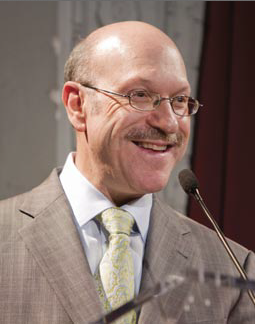
John Hagelin speaks on meditation as a powerful tool for health, education & post-traumatic stress at TEDxWomen 2012

December 6, 2012

Enjoy this powerful, clear and concise talk by John Hagelin at TEDxWomen 2012 in The Paley Center for Media, Washington, DC. The theme of the 2-day conference was The Space Between. Dr. Hagelin’s PowerPoint presentation highlighted meditation as a powerful tool for health, education and post-traumatic stress. He concluded his presentation with a short video of how people’s stressed lives were transformed by the Transcendental Meditation technique. These at-risk groups were able to learn TM through scholarships from the David Lynch Foundation. Dr. Hagelin’s concluding remarks beautifully summed up the saliant point of his talk delivered in Session Two, Saturday morning, Dec 1, 2012, published Dec 4, 2012 by : “The Space Between” –TED Conference Explores the Value of Meditation.

“Medically, scientifically, the most powerful antidote to stress, and the key to optimal brain functioning, is to transcend.” — John Hagelin.

John Hagelin, Ph.D., is a world-renowned quantum physicist, science and public policy expert, educator, author, and leading proponent of peace.

Dr. Hagelin has conducted pioneering research at CERN (the European Center for Particle Physics) and SLAC (the Stanford Linear Accelerator Center). He is responsible for the development of a highly successful Grand Unified Field Theory based on the superstring—a theory that was featured in a cover story of Discover magazine.

In addition, Dr. Hagelin is one of the world’s preeminent researchers on the effects of meditation on brain development, and the use of meditation to address critical problems in the field of education, rehabilitation, and post-traumatic stress.

Dr. Hagelin is a recipient of the prestigious Kilby Award, which recognizes scientists who have made “major contributions to society through their applied research in the fields of science and technology.” The award recognized Dr. Hagelin as “a scientist in the tradition of Einstein, Jeans, Bohr and Eddington.”

Dr. Hagelin has appeared often on ABC’s Nightline and Politically Incorrect, NBC’s Meet the Press, CNN’s Larry King Live!, and other programs. He has been regularly featured in the Washington Post, the New York Times, the Wall Street Journal, and other major metropolitan newspapers.

TEDxWomen was curated and produced by The Paley Center for Media. In the spirit of ideas worth spreading, TEDx is a program of local, self-organized events that bring people together to share a TED-like experience. At a TEDx event, TEDTalks video and live speakers combine to spark deep discussion and connection in a small group. These local, self-organized events are branded TEDx, where x = independently organized TED event. The TED Conference provides general guidance for the TEDx program, but individual TEDx events are self-organized.* (*Subject to certain rules and regulations)

Also see The Power of The Collective, by John Hagelin | John Hagelin — “Only Higher Consciousness Can Transform Our World” — Beyond Awakening Blog | Conscious TV: John Hagelin – The Core of Nature | John Hagelin, Ph.D., Speaks on the Nature of Consciousness and the Universe

Excellent article by Tom Jacobs on Meditation: Strong Preventative Medicine for Heart Patients

November 14, 2012

Meditation: Strong Preventative Medicine for Heart Patients

New research finds major health benefits of meditation for African Americans with heart disease.

November 13, 2012 • By for Pacific Standard

Meditation is usually thought of as a practice of healthy, well-off white people and Asians. But newly published research suggests it can produce hugely significant health benefits in a very different demographic group: African Americans with heart disease.

A study of that followed 201 African Americans for an average of five years found those who meditated regularly were far more likely to avoid three extremely unwelcome outcomes. Compared to peers participating in a health-education program, meditators were, in that period, 48 percent less likely to die, have a heart attack, or suffer a stroke.

“It appears that Transcendental Meditation is a technique that turns on the body’s own pharmacy—to repair and maintain itself,” said Dr. Robert Schneider, the paper’s lead author and director of the Institute for National Medicine and Prevention at the Maharishi University of Management in Fairfield, Iowa. His research is published in the American Heart Association journal Circulation: Cardiovascular Quality and Outcomes.

The paper was originally scheduled to be published in 2011 in the journal Archives of Internal Medicine, but was withdrawn just before being posted “to allow time for review and statistical analysis of additional data.” The AHA’s Maggie Francis reports that the paper “went through peer review, statistical review, editorial discussions, and the authors of the article were responsive to the review process.”

While, two decades ago, research from Maharishi University was often regarded with skepticism, the institution is now well-regarded for its scholarly work.

Schneider and his co-authors undertook this research in part because African Americans “suffer from disproportionately high rates” of mortality due to cardiovascular disease. As we have reported, this may in part reflect high stress levels, the result of living in a society where racial prejudice continues to linger.

The study was conducted at the Medical College of Wisconsin in two phases: From 1998 to 2003, and from 2004 to 2007. Participants were African Americans whose blood flow to the heart was seriously obstructed. Specifically, at least one of their coronary arteries had been narrowed by at least 50 percent.

The patients’ mean age was 59; almost half reported an income of under $10,000. Males slightly outnumbered females. Around 40 percent were cigarette smokers; their mean body mass index was just over 32, making them, on average, clinically obese.

They were randomly divided into two groups. Half took part in a cardiovascular health education program, in which they “were advised to spent at least 20 minutes a day at home practicing heart-healthy behaviors,” including exercise and eating healthy food.

The others were taught the technique of Transcendental Meditation, and encouraged to engage in this activity for 20 minutes each day. “Follow-up and maintenance meetings were held weekly for the first month, biweekly for the next two months, and monthly thereafter,” the researchers write.

The researchers followed up on the participants an average of 5.4 years after they initially joined the experiment. They found those in the meditation group were 48 percent less likely than their peers to have suffered one of three negative outcomes: a heart attack, a stroke, or death from any cause.

“There was a significant association between regularity of home (meditation) practice and survival,” the researchers report. “The subgroup of subjects who were regular in their TM practice had a 66 percent risk reduction, compared with the overall sample risk reduction of 48 percent.”

Regular meditators also reduced their blood pressure, on average, and reported feeling less anger than they did before beginning the experiment.

“This trial did not address the effects of other mind-body, meditation-type interventions on clinical events,” the researchers note. So it’s not clear if these apparent health benefits were the result of some specific aspect of Transcendental Meditation, or would apply to any regimen involving deep breathing and clearing one’s mind.

Nevertheless, as the researchers note, this appears to be the first randomized, controlled trial to find the risk of mortality, heart attack and stroke declined “with the individual practice of a relatively simple mind-body intervention.”

It’s some of the clearest evidence yet that reducing stress through regular meditation can have a positive effect on one’s physical health.

About Tom Jacobs
Staff writer Tom Jacobs is a veteran journalist with more than 20 years experience at daily newspapers. He has served as a staff writer for The Los Angeles Daily News and the Santa Barbara News-Press. His work has also appeared in The Los Angeles Times, Chicago Tribune and Ventura County Star.
###

Transcendental Meditation May Lower Heart Risk: WebMD Heart Disease Health Center

November 13, 2012

Heart Disease Health Center

Transcendental Meditation May Lower Heart Risk

By 
WebMD Health News
Reviewed by Louise Chang, MD

Nov. 13, 2012 — Transcendental Meditation is good for the heart, according to a new study.

The study was funded by the National Institutes of Health. It found that African-Americans with heart disease who regularly practiced TM reduced their risk of death, heart attack, and stroke by 48%.

Researcher Robert Schneider, MD, says those results should apply to the general population. Schneider is director of the Institute for Natural Medicine and Prevention at the Maharishi University of Management (MUM) in Fairfield, Iowa.

“This taps into a universal physical phenomenon that is not related to race, age, culture, etc.,” Schneider says. “This state of restful alertness has restorative benefits for everyone. It’s a way to utilize the body’s own internal pharmacy.”

TM is a trademarked form of meditation. It requires training by a certified teacher to “settle inward” to a place called “transcendental consciousness.” The technique is one of the two pillars underlying education at the Maharishi University of Management, according to the school’s web site.

Health Benefits of TM

The study was a collaboration between MUM and the Medical College of Wisconsin in Milwaukee. Researchers recruited 201 African-American men and women whose average age was 59 and who were generally considered obese.

All of the participants previously had been diagnosed with heart disease. Many of them were current smokers. African-Americans, says Schneider, have a 35% higher risk of dying from heart disease than the general population.

The people in the study were divided into two groups. While both groups continued to receive standard care and medication for heart disease, the study group attended a seven-step course in TM. The people in that group were then instructed to meditate twice a day for 20 minutes for the duration of the study.

Schneider says that the program was standard for TM practitioners and had not been modified for the study.

The comparison group received conventional health education. The people in that group were told to spend at least 20 minutes a day on heart-healthy activities.

Members of both groups were followed for as long as nine years.

In addition to reducing the risk of death, heart attack, and stroke by nearly half, TM also significantly lowered systolic blood pressure, the top number in a blood pressure reading.

Anger control and overall anger also improved. Those who entered the study with either high blood pressure or high stress benefited the most from meditation.

“What this is saying is that mind-body interventions can have an effect as big as conventional medications, such as statins,” says Schneider.

The TM group was expected to meditate 14 times per week. But the researchers found that on average participants only practiced the technique 8.5 times.

They would have done well to stick to their instructions. Those who followed the study guidelines more strictly, Schneider says, had even greater benefits. Their risk reduction was 66%.

Second Opinion

“In cardiology, we are always impressed when we see any effective intervention,” says cardiologist Michael Shapiro, DO, of Oregon Health and Science University in Portland. “But to actually show a reduction in overall mortality — that is really impressive.”

Shapiro, who reviewed the study for WebMD, says that its design appears scientifically rigorous and that its results are likely valid. But he says the study was too small to draw any definite conclusions.

“I am enthusiastic and cautiously optimistic,” says Shapiro. “Overall, I like the study, and it provides justification for a much larger study.”

Shapiro, who practices a different form of meditation, also says that more needs to be learned about what drives these results. He says the reduction in blood pressure, while significant, is likely not enough to account for all of the study’s positive outcomes.

“Meditation can do a whole host of positive things: reduce anger and stress, encourage happiness,” he says. “Who is to say that these are not the most important factors? This study can’t get at the mechanism involved. We don’t know how it works.”

A Cost-Effective Means of Prevention

Transcendental Meditation, says Schneider, is “a simple, effortless, and natural way to settle down to a quiet state of mind.”

But it is not free. According to the Maharishi Foundation USA’s web site, the seven-part introductory TM course that the study participants attended costs $1,500. Financial aid and sliding scale fees are available to those who can’t afford the full amount.

To Schneider, this study shows that TM is a cost-effective means of prevention.

“This is the strongest study ever done on meditation or any mind-body intervention for cardiovascular disease,” he says.

In July 2011, the study was pulled from publication in Archives of Internal Medicine, a last-minute decision made when one of the journal’s reviewers raised questions about the data. Schneider says that in the intervening time, the data was re-analyzed. Also, new data was added and the study underwent an independent review.

“This is the new and improved version,” Schneider says. It appears in the current issue of Circulation: Cardiovascular Quality and Outcomes.

Note: Check November 20 when the next issue comes out in print: http://circoutcomes.ahajournals.org.

Also see: Transcendental Meditation may reduce death, heart attack and stroke in heart patients—AHA

Science Codex: Meditation may reduce death, heart attack and stroke in heart patients

Meditation could slash the risk of heart attack and stroke (and make you less angry) — Daily Mail

Transcendental Meditation may reduce death, heart attack and stroke in heart patients—AHA

November 13, 2012

Meditation may reduce death, heart attack and stroke in heart patients

November 13, 2012

Study Highlights:

  • Twice-a-day Transcendental Meditation helped African Americans with heart disease reduce risk of death, heart attack and stroke.
  • Meditation helped patients lower their blood pressure, stress and anger compared with patients who attended a health education class.
  • Regular Transcendental Meditation may improve long-term heart health.

DALLAS, Nov. 13, 2012 — African Americans with heart disease who practiced Transcendental Meditation regularly were 48 percent less likely to have a heart attack, stroke or die from all causes compared with African Americans who attended a health education class over more than five years, according to new research published in the American Heart Association journal Circulation: Cardiovascular Quality and Outcomes.

Those practicing meditation also lowered their blood pressure and reported less stress and anger. And the more regularly patients meditated, the greater their survival, said researchers who conducted the study at the Medical College of Wisconsin in Milwaukee.

Robert Schneider, M.D., director of the Institute for Natural Medicine and Prevention and dean of Maharishi College of Perfect Health in Fairfield, Iowa. Courtesy MAPI

“We hypothesized that reducing stress by managing the mind-body connection would help improve rates of this epidemic disease,” said Robert Schneider, M.D., lead researcher and director of the Institute for Natural Medicine and Prevention in Fairfield, Iowa. “It appears that Transcendental Meditation is a technique that turns on the body’s own pharmacy — to repair and maintain itself.”

For the study, researchers randomly assigned 201 people to participate in a Transcendental Meditation stress-reducing program or a health education class about lifestyle modification for diet and exercise.

  • Forty-two percent of the participants were women, average age 59, and half reported earning less than $10,000 per year.
  • Average body mass index was about 32, which is clinically obese.
  • Nearly 60 percent in both treatment groups took cholesterol-lowering drugs; 41 percent of the meditation group and 31 percent of the health education group took aspirin; and 38 percent of the meditation group and 43 percent of the health education group smoked.

Those in the meditation program sat with eyes closed for about 20 minutes twice a day practicing the technique, allowing their minds and bodies to rest deeply while remaining alert.

 Participants in the health education group were advised, under the instruction of professional health educators, to spend at least 20 minutes a day at home practicing heart-healthy behaviors such as exercise, healthy meal preparation and nonspecific relaxation.
Researchers evaluated participants at the start of the study, at three months and every six months thereafter for body mass index, diet, program adherence, blood pressure and cardiovascular hospitalizations. They found:
  • There were 52 primary end point events, which included death, heart attack or stroke. Of these, 20 events occurred in the meditation group and 32 in the health education group.
  • Blood pressure was reduced by 5 mm Hg and anger decreased significantly among Transcendental Meditation participants compared to controls.
  • Both groups showed beneficial changes in exercise and alcohol consumption, and the meditation group showed a trend towards reduced smoking. Although, there were no significant differences between the groups in weight, exercise or diet.
  • Regular meditation was correlated with reduced death, heart attack and stroke.

Cardiovascular disease is the leading cause of death worldwide. Death from heart disease is about 50 percent higher in black adults compared to whites in the United States. Researchers focused on African Americans because of health disparities in America.

“Transcendental Meditation may reduce heart disease risks for both healthy people and those with diagnosed heart conditions,” said Schneider, who is also dean of Maharishi College of Perfect Health in Fairfield, Iowa.

“The research on Transcendental Meditation and cardiovascular disease is established well enough that physicians may safely and routinely prescribe stress reduction for their patients with this easy to implement, standardized and practical program,” he said.

Co-authors are: Theodore Kotchen, M.D.; John W. Salerno, Ph.D.; Clarence E. Grim, M.D.; Sanford I. Nidich, Ed.D.; Jane Morley Kotchen, M.D., M.P.H.; Maxwell V. Rainforth, Ph.D.; Carolyn Gaylord-King, Ph.D.; and Charles N. Alexander, Ph.D. Author disclosures are available on the manuscript.

The National Heart, Lung and Blood Institute funded the study.

Follow @HeartNews on Twitter for the latest heart and stroke news.

###

Statements and conclusions of study authors published in American Heart Association scientific journals are solely those of the study authors and do not necessarily reflect the association’s policy or position. The association makes no representation or guarantee as to their accuracy or reliability. The association receives funding primarily from individuals; foundations and corporations (including pharmaceutical, device manufacturers and other companies) also make donations and fund specific association programs and events. The association has strict policies to prevent these relationships from influencing the science content. Revenues from pharmaceutical and device corporations are available at www.heart.org/corporatefunding .

Circulation: Cardiovascular Quality and Outcomes. 2012; 5: 750-758. Published online before print November 13, 2012, doi: 10.1161/ CIRCOUTCOMES.112.967406. November 2012 issue. Stress Reduction in the Secondary Prevention of Cardiovascular Disease: Randomized, Controlled Trial of Transcendental Meditation and Health Education in Blacks. Abstract | Full Text | PDF

Also posted on EurekAlert! http://www.eurekalert.org/pub_releases/2012-11/aha-mmr110812.php

Also see: Transcendental Meditation May Lower Heart Risk: WebMD Heart Disease Health Center

Science Codex: Meditation may reduce death, heart attack and stroke in heart patients

Meditation could slash the risk of heart attack and stroke (and make you less angry) — Daily Mail

TIME Strongest Study Yet Shows Meditation Can Lower Risk of Heart Attack and Stroke

Excellent article by Tom Jacobs on Meditation: Strong Preventative Medicine for Heart Patients

AHA Newsletter: News from the Heart: Update from CEO Nancy Brown for AHA Volunteers (11/15/12) features Dr. Schneider’s study, “meditation reduces cardiovascular risk”

And many major articles around the world, including reports by CNN, CBS, ABC, and NBC.

I also included a review of some of the global news coverage and the report in our university paper the Review: New Study Shows Reduced Mortality, Heart Attack, Stroke (Vol. 28, #6, November 28, 2012). You can also read it in this news post: Results of American Heart Association publishing landmark TM study.

Transcending Stress by Norman Rosenthal, M.D. for Decision Magazine

October 1, 2012

Decision Magazine, a UK business publication, featured an article on TM in the Wellness section of the Summer 2012 issue: Transcending Stress: Transcendental Meditation offers a promising remedy for workplace stress says NORMAN E ROSENTHAL M.D. Download a PDF of Decision Summer 2012 to see the article laid out with images on pages 48-49.

Transcending Stress by Norman Rosenthal, M.D.

It’s not stress that kills us; it’s our reaction to it. – Hans Selye

It is a matter of broad consensus that stress in the workplace has reached epidemic proportions. So bad has the problem become, that stress is now a more common cause of long-term sick leave than stroke, heart attack, cancer and back problems, according to a report by the Chartered Institute of Personnel and Development. Workplace stress has been labeled “The Black Death of the 21st Century.”

Common causes of workplace stress include excessive workload, poor management style, workplace restructuring, and problems at home. As the great pioneer in stress research, Hans Selye, observed, it is not the stress itself, but how we react to it that affects its impact on our bodies and minds. During economic downturns, such as we are facing at present, ordinary workplace difficulties become more stressful because workers feel insecure about their job stability and fearful of losing their job, especially because it is often difficult to find a new one.

Stress takes a toll on both body and mind. It is a major contributor to cardiovascular disease, the number one killer in developed countries. In addition, it predisposes to anxiety and depression, both enormous mental health problems. For those who of us who are concerned about performance and productivity in the workplace, it is crucial to find remedies for toxic work stresses. Such remedies will also lead to healthier workers, with fewer days off sick, lower health care bills, and extra years of productivity. There are many available “stress management” programmes. In this piece, I make the case why a simple but powerful technique, Transcendental Meditation (TM), should rise to the top of the list.

Why Transcendental Meditation?
TM is a simple technique of meditation, taught in a standardized one-on-one way over the course of a week. The instructor gives the student a mantra, along with instructions as to how to use it. TM is simple to learn and easy to practise. Ideally, the practitioner should sit comfortably with eyes closed for two sessions of 20 minutes each per day.

As a researcher and physician, I have been impressed by the scope and extent of research data supporting the benefits of TM (over 330 peer-reviewed articles to date). Much of this research has a direct bearing on the damaging physical effects of stress. For example, controlled studies have shown multiple physical benefits of TM versus controlled treatments, such as: (1) Reduction in blood pressure that is both statistically and clinically meaningful; (2) Actual reversal of arterial narrowing in the carotid arteries which carry blood to the brain; (3) increased longevity over the course of years (a finding that has been replicated). From the point of physical wellbeing alone, TM is worth practising.

But there is more. A meta-analysis of 146 treatment groups found that TM reduced anxiety to a greater extent than other approaches. Likewise, five controlled studies in people not recruited specifically for depression showed that practising TM was followed by a reduction in depression symptoms to a greater extent than control treatments. Evidence suggests that the improved blood pressure seen with TM is mediated by decreased anxiety. In other words, TM seems to be acting as a shock absorber, decreasing the impact of stress on both mind and body.

No other “stress management technique” has anywhere close to this amount of hard data in support of its claims to reduce stress.

Beyond its effects on stress reduction, TM has also been shown in numerous studies to improve levels of self-actualization – a term used to describe the need for people to be the best they can be. This benefit may result from the direct effects of TM on the brain, which include increased brain coherence. Brain coherence means that the firing patterns in different parts of the brain correspond to one another. Higher levels of brain coherence have been associated with higher levels of performance, both in businessmen and athletes.

How do the benefits of TM play out in the workplace?
To begin, let us hear from two leading business people, who are regular meditators and have praised TM’s benefits: Ray Dalio, founder of Bridgewater, the largest hedge fund in the world; and Oprah Winfrey, media icon and CEO of Harpo Studios. Dalio has said that TM has helped him make up for lost sleep and has made his patterns of thinking “more centered and creative.” With TM, he says, “Life got better and everything became easier.” He reports dealing with challenges in a calm, clear-headed way, which allows him to put things in perspective – “like a ninja.” Winfrey was so pleased with her own personal experience with TM that she provided TM training free of charge to all members of her organization. Her observations: “You can’t imagine what has happened. People are sleeping better. People have better relationships. People interact with other people better. It’s been fantastic.”

Many other CEOs and business leaders have reported similar benefits in their organizations. How can we understand these extraordinary transformations?

How can TM help work-stress?
Let me count the ways. TM results in:
1. Increased brain coherence that is associated with increased levels of accomplishment
2. Reduced stress responses producing more clarity, less reactivity, and better decision-making. As Dalio put it, “I am centered – not hijacked by emotion”
3. Enhanced creativity, even with aging
4. Better physical health
5. Greater harmony

At every level of organization, TM promotes harmony. This applies within the mind of the meditator, between mind and body, and in groups. Once the meditator learns the practice and develops the habit, the 40 minutes spent per day is rapidly repaid in the form of improved performance and efficiency. How wonderful it is to think that this quiet twice-daily practice might turn out to be a remedy for “The Black Death of the 21st century!”

Norman E. Rosenthal, M.D is author of Transcendence: Healing and Transformation Through Transcendental Meditation (Hay House, 2012).

An updated reprint edition by Tarcher is available in North America on Amazon.

Click here for more posts on Norman Rosenthal on my blog, and also visit Norman Rosenthal’s website and blog: http://normanrosenthal.com.

For more information on Transcendental Meditation for business executives and companies please visit www.tmbusiness.org.

Norman Rosenthal spoke in Chicago on Light and Transcendence—alternative modalities to reduce stress, optimize health

September 11, 2012

Norman Rosenthal, M.D., was in Chicago September 5-7 to deliver a series of talks at various medical, educational, and public venues. His main theme was using Light and Transcendence as alternative approaches to reduce stress and optimize health. Dr. Rosenthal addressed 200 people at the University of Chicago Gleacher Center Wednesday evening, spoke on Thursday with staff and students at Stritch School of Medicine at Loyola, and talked with health care and other professionals as a guest of the Chicago Lakeshore Hospital at a Friday luncheon.

Dr. Norman E. Rosenthal is the world-renowned psychiatrist and author whose research in describing seasonal affective disorder (SAD) and pioneering the use of light therapy has helped millions of people. The New York Times best-seller, Transcendence: Healing and Transformation Through Transcendental Meditation, is out in paperback this month (September 2012), with a Foreword written by Mehmet C. Oz M.D., and a new concluding chapter, After Transcendence.

At the same time, Winter Blues: Everything You Need to Know to Beat SAD, which the New York Times called “a landmark book,” is being released in its revised and updated fourth edition. It includes a chapter, Meditation for the Winter Blues.

Stressful times affect health and happiness

Economic challenges, the feeble job market and information overload, not to mention the drought, conspire to stretch people to the breaking point. Everyone is experiencing some degree of stress and anxiety in their lives. In fact, the NIMH (National Institute of Mental Health) estimates that 40 million adults, one in seven, have some type of anxiety disorder.

Dr. Rosenthal pointed out the current epidemic of stress has resulted in cardiovascular disease as well as psychiatric disorders. It effects everyone from war veterans to the general public. “Having witnessed the mental and spiritual anguish of many hundreds of people,” he said, “I find the potential clinical power of this technique (TM) amazing.”

Transcendental Meditation—a simple effective solution

A Clinical Professor of Psychiatry at Georgetown University Medical School, Dr. Rosenthal was initially very skeptical about the effectiveness of the Transcendental Meditation technique for beating stress and anxiety. After examining the research, however, he said, “I came to scoff and remained to pray,” paraphrasing a famous line from Irish writer, playwright, and physician Oliver Goldsmith‘s poem The Deserted Village.

Dr. Rosenthal at University of Chicago Gleacher Center explained three different categories of meditation and how they effect the brain producing different results

The former NIMH researcher explained three different categories of meditation and how they effect the brain. He said having the right instruction in meditation can make a world of difference in the results.

Dr. Rosenthal described research examining the Transcendental Meditation program resulting in hard evidence not seen with other meditation techniques. He cited improvements in cardiovascular health, reduced drug, alcohol and tobacco use, reduced PTS symptoms in veterans, and studies showing significant reductions in health care costs and utilization resulting from twice daily TM practice.

Mr. Ulrich Sandmeyer, co-owner with his wife Ellen, of Sandmeyer’s Bookstore, an independent Chicago bookseller, brought Dr. Rosenthal’s books to every event. He does this service for speakers 3-4 times a week and has done so for 20 years.  He said that Norman Rosenthal was the most compelling speaker he has ever encountered. Coming from Mr. Sandmeyer that says a lot!

Thanks to Carla Brown, Ed.D., co-director of the Transcendental Meditation Program in the Greater Chicago Area, for organizing these events for Dr. Rosenthal and for sending us some highlights of the tour.

Click on Transcendental Meditation Visualized [Infographic] to see this new post on Dr. Rosenthal’s blog. He says, “The infographic below is brought to you as a resource and extension of the book ‘Transcendence,’ which features some of the main points about Transcendental Meditation that I highlighted in the book.”

Related posts on this topic

Dr. Norman Rosenthal gives an engaging talk to medical staff at Northern Westchester Hospital

PsychCentral reviews Norman Rosenthal’s book Transcendence: Transcendental Meditation: What Is It and How Does It Work?

Dr. Catherine Ulbricht interviews psychiatrist and author Dr. Norman Rosenthal for Natural Standard

A Transcendental Cure for Post-Traumatic Stress by David Lynch and Norman E. Rosenthal

Additional information on Norman Rosenthal, Transcendence and Winter Blues are listed below and available in his Press Kit.

(more…)

First international article on TM in Education: Meditation helps students, by Dana Micucci

August 7, 2012

International Education: Meditation helps students

By Dana Micucci

Published: Tuesday, February 15, 2005

NEW YORK — New research appears to be strengthening the case for teaching Transcendental Meditation in U.S. schools, showing it to be a means to improve the concentration of students and a way to enhance their physical and mental well-being.

Proponents say that students who meditate daily are calmer, less distracted and less stressed and less prone to violent behavior.

A study conducted at the Medical College of Georgia in Augusta, Georgia, which will be published in the April issue of the American Journal of Hypertension, found that Transcendental Meditation reduced high blood pressure in African-American teenagers. The study tracked 156 inner-city black adolescents in Augusta, Georgia, with elevated blood pressures. Those who practiced 15 minutes of Transcendental Meditation twice daily steadily lowered their daytime blood pressures over four months compared to non-meditating teens who participated in health education classes and experienced no significant change.

The technique was developed 50 years ago by the Maharishi Mahesh Yogi, and consists of silently repeating a mantra for about 20 minutes a day. It found its way into classrooms 30 years ago after Robert Keith Wallace, a medical researcher at the University of California, Los Angeles, published the first study on its positive physiological effects.

Since then, studies at universities like Harvard, Stanford and UCLA have shown that Transcendental Meditation can ease stress and enhance both physical and mental health and behavior.

Bolstered by these studies, groups of educators, parents and physicians across the United States have turned to Transcendental Meditation as a possible antidote to rising anxiety, violence and depression among students. Committees for Stress-Free Schools were established last year in New York, Washington, Los Angeles, Chicago and other cities. These committees serve as information resources about the potential benefits of meditation for students and teachers.

Transcendental Meditation is a simple mental technique that can have profound physiological effects,” says Gary Kaplan, a neurologist and clinical associate professor of neurology at New York University School of Medicine and chairman of the New York Committee for Stress-Free Schools. “It produces a state of restful alertness that provides the body with deep, rejuvenating rest and allows the mind to reach higher levels of creativity, clarity and intelligence.”

However, initial efforts to introduce the teaching of Transcendental Meditation in schools were controversial. Opponents criticized it as a religious practice and in the mid-1970s a group of citizens brought a lawsuit against several New Jersey high schools, forcing them to withdraw their programs. At the time, a New Jersey court ruled that Transcendental Meditation had religious overtones and therefore could not be offered in a public school.

“The challenge lies in educating people that although Transcendental Meditation is rooted in the Indian Vedic spiritual tradition, it is not a religious practice,” says Kaplan.

At the Fletcher-Johnson School, an elementary and junior high school in a rough Washington neighborhood, meditation has been reported to help to improve student performance and reduce fighting. George Rutherford, the principal who introduced Transcendental Meditation 10 years ago, said, “We saw immediate results.”

He added, “There was a lot of violent crime around the school. But after we trained our students in Transcendental Meditation, they were calmer. There was less fighting, and attendance increased. Students scored better on standardized tests. Transcendental Meditation helped to remove a lot of their stress.”

Now, as principal at Ideal Academy (Public Charter School) in Washington, Rutherford is training teachers in Transcendental Meditation to combat teacher burnout.

At the Nataki Talibah Schoolhouse in Detroit, an elementary and middle school, students and teachers have been practicing Transcendental Meditation twice daily for the past seven years. Carmen N’Namdi, co-founder and principal of the school, says that “given the enormous stresses of today’s world, children, like adults, need to learn how to rest and relieve tension.”

Recent research spearheaded by Rita Benn, director of education at the Center for Complementary and Alternative Medicine at the University of Michigan, found that meditating students at Nataki Talibah Schoolhouse were happier, handled stress better, had higher self-esteem and got along better with their peers than non-meditating students at another Detroit school.

In addition to improving the emotional and social development of children, meditation can also be effective in treating brain disorders such as attention deficit hyperactivity disorder, according to a study conducted in April 2004 at Chelsea School in Silver Spring, Maryland, a private school for children with learning disabilities.

“We compared students before and after they learned Transcendental Meditation,” said the principal investigator, Sarina Grosswald, president of S J Grosswald & Associates, a consulting firm in medical education in Alexandria, Virginia. “Kids who practiced Transcendental Meditation for 10 minutes twice each day for three months reported being calmer, less distracted, less stressed, and better able to control their anger and frustration.”

This New York Times article was first published earlier that day by the Paris editor of the International Herald Tribune. Click on Meditation helps some students to download a PDF of this groundbreaking article on the front page of the Tribune’s Education section.

Around that time in early 2005, the David Lynch Foundation for Consciousness-Based Education and World Peace had been established to provide Transcendental Meditation to at-risk students around the world. Today many educational institutions have successfully implemented this Quiet Time program in their schools.

The David Lynch Foundation has since gone on to provide scholarships for TM instruction for other at-risk populations: Native American Indians, the homeless, prisoners, girls and women victims of abuse, and veterans from all wars and their families suffering from post-traumatic stress.

For more information and videos on these programs, visit www.davidlynchfoundation.org.

For veterans, visit www.operationwarriorwellness.org.

For a short overview see these Excerpts From David Lynch Foundation Videos: Changing Lives With Transcendental Meditation.

Search for more DLF and OWW articles and videos posted on this blog.

Star Tribune: Meditation brings peace to war vets

May 17, 2012

Meditation brings peace to war vets

May 16, 2012 | Lifestyle | Star Tribune | Kristin Tillotson

Transcendental meditation has its detractors, but many veterans say it helps them with post-war stress.

Fernando Franco, who served in both Bosnia and Iraq, uses meditation techniques to control stress. — Photo: Carlos Gonzalez, Star Tribune

Like many veterans, Fernando A. Franco had trouble sleeping through the night.

A major in the Minnesota National Guard, he was deployed twice between 2003 and 2007, once to Bosnia and once to Iraq, with barely six months’ break in between. The place where he was stationed near Balad, Iraq, was nicknamed “Mortaritaville” because “we were attacked every day,” he said.

After Franco got back home to St. Paul, he was hard-wired to wake up at 3 every morning, the same hour that in Mortaritaville he and his fellow soldiers would start hearing the shells aimed their way and brace for battle. Once he woke up, he’d stay up, living in a state of perpetual exhaustion.

“It really affected not only my work, but my relationship with my wife and kids,” he said. Then he heard about TM.

Transcendental meditation, or TM for short, is hailed by its devotees as good for just about anything that ails you. Skeptics call it everything from a bunch of hooey to a brainwashing cult, but those who do it daily claim they feel calmer, have more energy and feel healthier, both mentally and physically, than they used to. It’s not a religion, they say, just a practice that reduces anxiety and improves well-being.

Now the U.S. military — not known for embracing the mystical — has taken note. The Department of Veterans Affairs has invested $5 million in a dozen trial programs studying TM’s effects on post-traumatic stress disorder (PTSD), including one at the Minneapolis VA Health Care System.

The VA hopes to recruit 30 vets for the trial beginning in about a month, said spokesman Ralph Huessner, noting that it should not be confused with Mindfulness-Based Stress Reduction, a different meditation program already offered.

‘A part of the universe’

Franco, 49, works in human resources for Target Corp. No matter how busy he gets, he always takes 20 minutes twice a day, at about the same time every day, to meditate, using the discipline he learned as a soldier to strictly maintain his schedule.

“The only way to get the full benefit is to do it morning and afternoon, no matter what,” he said, “even if you have to do it standing up in a bathroom stall.”

TM practitioners call the state they go into one of “restful alertness.” Transcendence is achieved, they say, by repeating a mantra and emptying the mind. So how does it feel?

“There is a moment when you go into a void, an emptiness, and you feel a part of the universe,” Franco said. “It’s like in the movie ‘Avatar’ when the creature says they are a part of everything. That’s how I would explain it.”

He first heard about TM for veterans through Operation Warrior Wellness, an initiative launched last year by the foundation run by film director and TM advocate David Lynch.

“I’m Roman Catholic, but I’m very open-minded about Eastern philosophies,” Franco said.

In October, he attended training classes at the TM center in St. Paul. Six months later, he usually sleeps through the night and has passed his enthusiasm for TM along to his 15-year-old son.

“When you come back from war, where you’ve learned to shut down your emotions, you have to relearn how to be with your family,” he said. “It helps you not only to reconnect with yourself, but other people. I’ve also noticed I’m able to concentrate better.”

Some critics of the TM movement have accused it of being a religion, of amassing wealth for its leaders, and of brainwashing. Franco, who learned TM through a scholarship from Operation Warrior Wellness, said he’s seen none of that.

“I have never felt coerced into making this a religious path, and have encountered people of all faiths  who do it,” he said. “I have never been asked to make a donation.”

Although Franco said he does not have PTSD, he thinks meditation could help veterans who do.

“It’s different for everyone, and you still might need counseling and pills, but TM is one of the best tools for stress out there,” he said.

The draw of Oprah’s blessing

Long, white and stately, the local Peace Palace — which is what the international TM network calls its specially constructed education centers — sits just off a freeway frontage road on the eastern edge of St. Paul. Next door to an insurance office and a hop and a skip from Culver’s, the Maharishi Invincibility Center is hard to miss, an Eastern architectural presence in Midwestern suburbia.

At a recent open house, center director Billie Jean Billman led visitors on a tour. Since Oprah aired a special extolling the virtues of TM in April, Billman said, there has been a spike in interest. The center recently doubled its instructors from two to four.

“TM is not a panacea for everything, but it’s a non-pharmacological process that wakes up the body and the brain,” Billman said.

Two veterans who recently started TM, Sarah Ditto and Pat Watson, were also on hand to describe the benefits they’ve experienced.

“I was amazed at how completely calm I felt,” said Watson, 54. “It’s like pancake batter spreading across a griddle, slowly turning golden brown. You really are resting but awake. After I meditate, people ask me what I’ve been doing.”

“I was really energized after the first time I did it,” said Ditto, 25, who works with disabled veterans at the Metropolitan Center for Independent Living in St. Paul. “I went home and did a bunch of yard work. It’s helped me to focus better, too.”

Ditto likes to visit the center to do her meditating because its minimally decorated rooms are ideal for it. But, she says, she sometimes encounters a problem.

“I meditate facing Culver’s, and instead of my mantra I start saying in my head, Chocolate custard. Chocolate custard. Chocolate custard.”

Kristin Tillotson • 612-673-7046

For more information visit these websites:

www.tm.org and www.operationwarriorwellness.org.

Related articles: Washington Post: VA testing whether meditation can help treat PTSDPOLITICO: Coping with PTSD | Norwich University President Receives “Resilient Warrior Award” at National Veterans Summit in Washington, DC | Washington Post: Does Transcendental Meditation help veterans with PTSD? | Transcendental Meditation Drastically Turns Life Around For Veteran With PTSD | David Lynch gives $1M to teach vets meditation | David Lynch donates $1 million in grants through his foundation to teach veterans to meditate | Replay of David Lynch Foundation Launch of Operation Warrior Wellness Los Angeles | Post Traumatic Stress and How Transcendental Meditation Can Help [Infographic]

Meditation for Students: Results of the David Lynch Foundation’s Quiet Time/TM Program in San Francisco Schools

December 24, 2011

David Lynch Foundation Event in San Francisco: Meditation for Students

The David Lynch Foundation held a benefit gala in San Francisco on June 1 at the Legion of Honor, to showcase the successes of a five-year project to bring the stress-reducing Transcendental Meditation technique to students in inner-city San Francisco schools. In this video, you will hear James Dierke, principal of Visitacion Valley Middle School talk about the unprecedented academic achievements of his meditating students; iconic filmmaker David Lynch talk about the inspiring work of his foundation among at-risk populations; and Dr. Norman Rosenthal, internationally renowned psychiatrist and NY Times bestselling author, discuss the amazing results of scientific research on the TM technique. See other featured past events posted on the David Lynch Foundation website. To hear more about the David Lynch Foundation and it’s programs, please visit: http://www.davidlynchfoundation.org.

Uploaded by on Jul 7, 2011.

See selected highlights of Inspiring results from the TM-Quiet Time Program in the San Francisco Unified School District.

Combating Stress in Police Work and Preventing Crime, Terrorism, and War

September 28, 2011

Combating Stress in Police Work

By: John Theobald, M.S.
Former N.Y.P.D. Officer and Former Professor of Criminal Justice at the New York Institute of Technology

With: David Leffler, Ph.D.
Executive Director, Center for Advanced Military Science (CAMS)

Introduction

In 1965 I was a member of the New York City Police Department, assigned to a specialized anti-crime unit. In this capacity, I saw firsthand the types of stressors police officers were subject to, and the maladaptive ways in which many dealt with them. I subsequently left the department and returned to college and then graduate school. I eventually started a criminal justice program through the continuing education department of the New York Institute of Technology. The program grew, and in the 1970s reached an enrollment of 12,000 police officers from various police agencies across the New York metropolitan area.

At that time it was becoming increasingly clear that the stress factor in police work was manifesting in high rates of divorce, alcohol abuse, suicides, and other acting-out behaviors. Having experienced it firsthand, I was determined to seek some method that could help ameliorate this situation.

I began to research the various stress-reduction methods available. The Transcendental Meditation® program appeared to be the best approach because it was widely available, could be practiced anywhere at any time, and had unparalleled success at addressing these personal problems faced by police. Research indicated that Transcendental Meditation (TM®) practice could help alleviate the negative effects of stress. It was clear that the TM technique would also increase awareness of potentially dangerous situations, preparing anyone for any possible outcome.

Shortly after learning the TM technique, I noticed the marked reduction in my own stress levels, and decided to make this opportunity available to the students in the college program. It was only later, when many police officers were practicing the TM technique, that I fully realized how beneficial it truly was.

I arranged through centers in the ten metropolitan counties to teach any police officers who wanted to learn. At this time, college courses were offered in various police precincts and other locations throughout the New York Metropolitan area. Introductory TM lectures were offered at some of these locations, with interested officers going to their individual TM centers to learn the practice. Word spread to their associates and about 6,000 police officers learned to meditate.

Feedback from students was received for many years, both in the college program and, in some cases, years later, by individual police officers who said they were “still TM-ing.” Comments from students consistently indicated overwhelmingly positive results. One of the most common reports was an increase in their shooting scores. Others reported feeling more aware, especially in life-threatening situations. This is important because in an effort to protect and save lives, law enforcement officers may sometimes resort to using deadly force.

For example, there was a story of an officer and his partner who were called to a situation in a very dangerous part of New York City. While walking in an alley, they were ambushed. A shot rang out, and his partner fell wounded to the ground. This officer drew his revolver and quickly shot five assassins, killing four and disabling the fifth. He later reported if it were not for his regular TM practice, he would have been killed. Despite the overwhelming odds against him, the policeman said he was able to maintain his composure under fire. He skillfully and accurately shot his weapon during this dangerous and highly stressful situation. (The revolvers used by New York area police at that time could only fire six rounds, so the situation was much more critical than it would be in modern times where weapons can fire fifteen or more rounds.)

Read the entire article at: http://www.police-writers.com/articles/combating_stress_in_police_work.html

This article was published in India, USA, Somalia, Ethiopia, South Korea and Australia in The World News: The International News Magazine, The Mangalorean, Mareeg, The Seoul Times, Ethiomedia.