Posts Tagged ‘Maharishi University of Management’

Great article on TM helping students boost grades shows the Beatles were way ahead of their time

June 22, 2013

Here is that great article written by , Science Correspondent for The Telegraph, published June 11, 2013, 9:00PM BST: Transcendental Meditation may boost student grades. He says, It may have seemed simply a phase in pop history, but it seems the Beatles may have been on to something after all during their fabled journey to India.
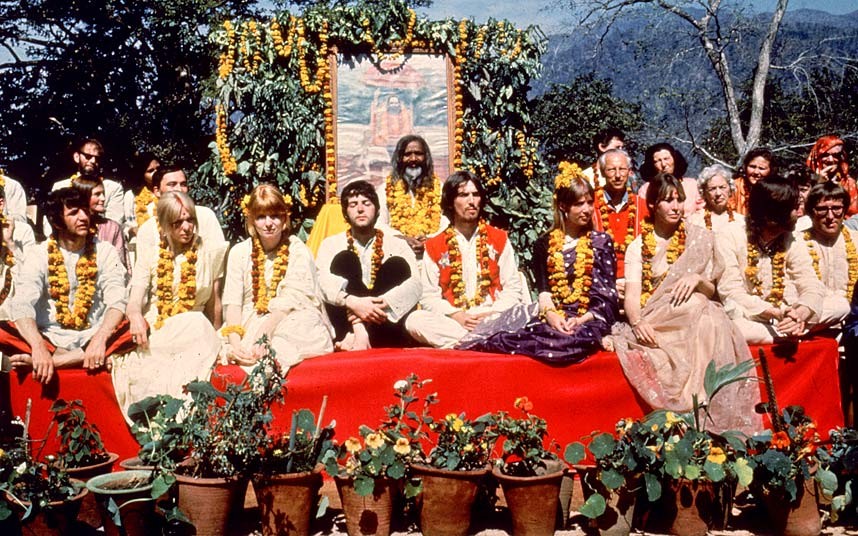
BEATLES_2587635kIt seems the Beatles may have been on to something after all during their fabled journey to India.  Photo: GETTY IMAGES

A form of meditation made popular by John Lennon and his band mates during the “flower power” era has been found to improve students’ grades.

A study of school pupils found that performing two 20-minute sessions of Transcendental Meditation each day improves academic achievement.

The practice involves sitting still with eyes closed while chanting a mantra – also sometimes derided as “oming”.

It became synonymous with hippy culture in the 1960s after The Beatles embraced it following a visit to India where they were taught the technique by the late Maharishi Mahesh Yogi.

Now a growing body of research is suggesting it can have a positive effect on people’s lives.

Recent studies have shown that it can be used to treat high blood pressure and help people overcome psychological problems.

The latest research found that US school pupils who performed the meditation technique had higher graduation rates than those who did not.

The effect was even greater among those who had the lowest academic grades, the research conducted by the University of Connecticut and Maharishi University of Management, Iowa, found.

Researchers found that Transcendental Meditation increased the number of students graduating by 15 per cent while among those with the lowest academic grades, a further 25 per cent graduated compared to those not meditating.

Professor Robert Colbert, from the Neag School of Education at the University of Connecticut, said: “Transcendental Meditation appears to hold tremendous promise for enriching the lives of students.”

He added that the meditation technique was a viable method for turning around “poor student academic performance and low graduation rates”.

Sanford Nidich, a professor of education at Maharishi University of Management who conducted the research, added: “These results are the first to show that the Transcendental Meditation program can have a positive impact on student graduation rates.

“The largest effect was found in the most academically challenged students.

“Recently published research on increased academic achievement and reduced psychological stress in urban school students may provide possible mechanisms for the higher graduation rates found in this study.”

It is estimated that around 6 million people now practice Transcendental Meditation around the world.

The technique aims to concentrate the mind inwards by uttering the mantra and is intended to empty the mind of thoughts and feelings.

Proponents of the technique claim it can aid concentration and help to rid them of negative emotions.

The Beatles’ time with Maharishi Mahesh Yogi, at his teaching centre in the foothills of the Himalayas in 1968, produced some of the most famous images of the Fab Four, dressed in white and draped in flower garlands.

It was also one of their most productive periods musically, with Lennon declaring that between them they wrote around 30 new songs during their visit to Rishikesh.

The tracks, which ended up on The Beatles, also known as the White Album, and Abbey Road, include Back in the USSR, Blackbird, Revolution and Mean Mr Mustard.

In an interview conducted in 2009, Paul McCartney and drummer Ringo Starr spoke candidly about how the meditation technique helped them.

Starr said: “Since then, sometimes a lot, sometimes a little, I have meditated. It is a gift he [the Maharishi] gave me.”

McCartney added: “It wasn’t all about meditation, it’s just you were focused – but yeah, there were very blissful moments.

“It is one of the few things anyone has ever given to me that means so much to me. For us, it came at a time when we were looking for something to stabilise us at the end of the crazy sixties.”

McCartney has also in the past called for Transcendental Meditation to be used in schools.

He said: “I believe that in the future meditation could be as commonplace in schools and society as eco-awareness is now. It interests me that an ancient cure may be the solution to a modern problem.”

The new research, which involved 235 students in their senior year at an urban school on the US east coast, was funded by the David Lynch Foundation, which has been campaigning to have meditation incorporated into the school day.

They claim that where meditation has been used in schools, it has helped to reduce stress and anxiety in pupils while also lowering suspension rates.

The foundation was set up two years ago by film director David Lynch after he used meditation to overcome his own anger issues.

Describing the difference it has made to his life, he said: “When I started meditating I had a real anger in me, and I would take this out on my first wife.

“Two weeks after I started meditating, this anger lifted.”

See EurekAlert! press release for the study: Transcendental Meditation positively impacts student graduation rates, new research shows.

See this related post on some of the news coverage: New study shows TM significantly improved school graduation rates, world press reports.

This article was later highlighted on the University of Connecticut Neag School of Education website on their Spotlight page reporting the latest news: Transcendental Meditation May Boost Student Grades.
See The former Beatles Paul McCartney and Ringo Starr reunion for David Lynch’s benefit concert airs on New York’s THIRTEEN, Sunday, April 29.

Iowa Senator Tom Harkin inspires M.U.M.’s Class of 2013 with his Top Ten Rules to Live By

June 2, 2013

Iowa Senator Tom Harkin Inspired M.U.M.’s Class of 2013 with his Top Ten Rules To Live By at the University’s largest graduating class.

In true David Letterman-style, Iowa Senator Tom Harkin presented the M.U.M. Class of 2013 with his top-10 list—Harkin’s Top Ten Rules To Live By. Senator Harkin gave the Commencement Address after receiving an honorary doctorate from the University and inspired everyone with his humorous wit and down-to-earth wisdom.

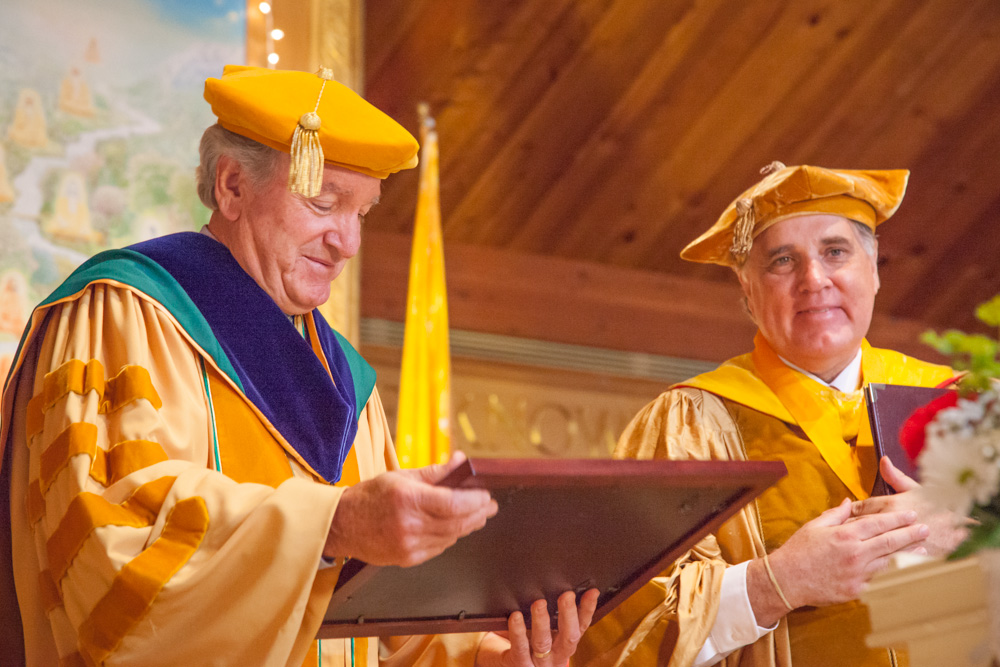
Senator Tom Harkin receives an honorary doctoral degree from M.U.M. President Dr. Bevan Morris.

Senator Tom Harkin receives an honorary doctoral degree from M.U.M. President Dr. Bevan Morris. / Ken West Photography

Iowa Senator Tom Harkin received an honorary Ph.D. from Maharishi University of Management before delivering the Commencement Address at the start of M.U.M.’s Graduation exercises, which took place last Saturday, May 25, 2013, in the Maharishi Patanjali Golden Dome of Pure Knowledge.

The University’s 38th Commencement graduated its largest class ever of 334 students from 54 countries, out of the 88 represented on campus. The Class of 2013 included 251 graduates and 83 undergraduates. Check this link to see a menu of videos from M.U.M.’s Commencement 2013 http://www.mum.edu/commencement-2013. See the full PRWeb press release here bit.ly/17bxT6k for more details.

Senator Harkin was awarded a Doctor of Laws Honoris Causa degree for his extraordinary lifelong service and compassionate and progressive leadership for the state of Iowa and the United States of America. He has served in the Senate since 1985 and also served in the House of Representatives from 1975–1985. He is chairman of the Senate Committee on Health, Education, Labor and Pensions and is the seventh most senior Senator overall.

In his introduction, M.U.M. president Dr. Bevan Morris said, “We honor you for a lifetime of service to the State of Iowa and the United States of America, and your compassionate and progressive leadership. You have recognized that the quality of American life is shaped by the quality of American education.”

He said that Senator Harkin has been a very good friend of the University and greatly enjoyed all his visits here. “He has given us advice and encouragement for all the University’s programs—for natural methods of prevention of disease, organic agriculture, sustainable living, our Sustainable Living Center, as well as to our town, which is rising to being one of the greenest in the nation, under the leadership of Mayor Ed Malloy.”

Senator Harkin began his commencement address on a humorous note. He thanked the University for this distinguished award and said, “I come before you with a measure of humility. I realize I was probably selected to be your speaker today because Oprah wasn’t available.” This elicited a lot of laughter as he was referring to Oprah’s visit to Fairfield last year, which she aired, including a profile of the Maharishi School on the M.U.M. campus.

He then went on to say, “But I do want you to know of my highest respect and admiration that I have for this university, for what you have done, what you have become here, in Iowa, the nation, and the world, and especially for what I consider to be the best holistic approach to education and wellness in life at any university anywhere on the globe.”

He was referring to Maharishi University’s unique system of Consciousness-Based education and leadership role in wellness research and sustainability. M.U.M. was designated as a Center for Natural Medicine and Prevention and has received over $25 million from the NCCAM and NHLBI over the past 20 years to conduct collaborative medical research on the use of Transcendental Meditation as a complementary alternative approach to treat hypertension and cardiovascular disease in underserved minority populations, the results of which have been published in top peer-reviewed scientific journals.

The most recent study was published and publicized by the American Heart Association. Last year the AHA Journal Circulation published a long-term study showing a 48% lower risk of heart attack, stroke and death in a group already afflicted by heart disease that learned the practice of Transcendental Meditation. And this year the AHA published a paper recommending Transcendental Meditation as the only meditation practice that has been shown to lower blood pressure.

“Graduation,” Harkin said, “is one of the five great milestones in life; the others being birth, marriage, death, and the day you finally pay off your student loans.”

“I know exactly what you’re thinking. You’re wondering, ‘How long is that guy gonna talk?’ The answer is not long.”

To answer he quoted advice from Father John Ryan, the Irish priest in his hometown when he was first asked to give a commencement address. The role of a commencement speaker is like the body at an old-fashioned Irish wake: “They need you in order to have the party but they don’t expect you to say very much.”

Senator Harkin said he chose a method for the day’s occasion that has imparted wisdom to millions of people throughout the years—“I speak of course, not of the Ten Commandments, but of David Letterman’s top ten list.” But his were more like suggestions for students to choose, depending on which ones they liked.

Harkin’s Top Ten Rules To Live By

10. Don’t panic. You will find a job. Don’t worry. “My confidence is based on one thing — because you came to the right school. I have nothing, as I said, but admiration for what this university has accomplished in such a short period of time. In a unique way you have put the ‘higher’ in higher education.”

“You folks would agree with William Butler Yeats who said that education is not about filling up a bucket but lighting a fire. And you carry that one step further. At this university education is also about training, focusing, freeing the mind. It’s about raising consciousness. Here you have been beautifully prepared intellectually and spiritually for all the challenges you will face in the world out there, so you should go forth with confidence.” He encouraged students to move to smaller Iowa towns to make a contribution.

(more…)

Senator Tom Harkin gives Commencement Address during Graduation day at M.U.M.

May 31, 2013

The Fairfield Ledger

Graduation day at MUM

By ANDY HALLMAN | May 28, 2013

Iowa Sen. Tom Harkin, right, gives the sign language symbol for “I love you” during his commencement address Saturday afternoon inside the Maharishi Patanjali Golden Dome of Pure Knowledge at Maharishi University of Management. Also pictured is M.U.M. vice president Craig Pearson.

Iowa Sen. Tom Harkin, right, gives the sign language symbol for “I love you” during his commencement address Saturday afternoon inside the Maharishi Patanjali Golden Dome of Pure Knowledge at Maharishi University of Management. Also pictured is M.U.M. vice president Craig Pearson.

Reprinted with permission from The Fairfield Ledger

More coverage: Iowa Senator Tom Harkin delivers M.U.M.’s commencement address—report by KTVO’s Laura Simon.

See Iowa Senator Tom Harkin inspires M.U.M.’s Class of 2013 with his Top Ten Rules to Live By.

Iowa Senator Tom Harkin delivers M.U.M.’s commencement address—report by KTVO’s Laura Simon

May 26, 2013

An Iowa Senator delivers MUM’s commencement address
by Laura Simon for KTVO News | Saturday, May 25, 2013

Iowa Senator Tom Harkin speaking at the M.U.M commencement ceremony.  / Laura Simon

Iowa Senator Tom Harkin speaking at the M.U.M commencement ceremony. / Laura Simon

FAIRFIELD, IOWA — The Morales-Rivera family moved from Chile to Iowa in 1984 in pursuit of the American Dream.

“We wanted a consciousness-based education for our daughters,” Tina Morales-Rivera said.

That place for a Consciousness-Based℠ education was at Maharishi University. Tina is graduating with a master’s degree and her 26-year-old twin daughters are receiving their bachelor’s degrees.

“It’s a beautiful thing,” Tina said. “It’s a great privilege. It’s really an honor to be with my daughters today.”

The Class of 2013 is made up of 334 students who represent 54 countries. This includes 251 graduates and 83 undergraduate degrees.

“They graduated their largest class in history which really underscores the trend the university’s going through right now,” Mayor of Fairfield Ed Malloy said. “They really are on a growth path.”

“I’ve been to a lot of commencements and I don’t think I’ve ever been on a platform where I’ve had as many different nations represented as there are here,” Iowa Senator Tom Harkin said.

Senator Harkin delivered a humorous, yet moving commencement speech. He says the most important thing to remember in life is to be apart of something bigger than yourself.

“Get involved in something,” Harkin said. “Think about the pebble you throw in the pond that makes waves that get bigger and bigger and bigger. Even if you’re a pebble, even if you’re not a senator or a governor, that doesn’t make any difference, you can start something in a community.”

The Morales-Rivera twins plan on taking Senator Harkin’s words to heart, furthering their media and communications education in the fall to obtain their master’s degrees.

“We’ve always loved movies and simply the world of media,” Coral Morales-Rivera said. “We want to change it and bring it to be more self-conscious of the beauty of life.”

For more information see the MUM press release announcing the MUM 2013 Awards Ceremony the night before and today’s graduation. An archive of it can be seen on Livestream. An archive of the graduation will be posted at a later time on the MaharishiUniversity YouTube Channel.

More coverage: Senator Tom Harkin gives Commencement Address during Graduation day at M.U.M.

See Iowa Senator Tom Harkin inspires M.U.M.’s Class of 2013 with his Top Ten Rules to Live By.

Students build tiny house in M.U.M.’s Sustainable Living Program — Andy Hallman, Fairfield Ledger

May 16, 2013

Students build tiny house

Article and Photos by ANDY HALLMAN | May 16, 2013

This slideshow requires JavaScript.

A class at Maharishi University of Management is building a “tiny house,” just 12-feet-by-20-feet, for one of its teaching assistants to live in.

The class is appropriately called “Tiny Houses” and is taught out of the Sustainable Living Department. The teaching assistant and M.U.M. student who will live in the house is Heather Caldwell, who will share the tiny home with her daughter, Ellie, and son, Henry.

Ellie said the house “looks awesome.”

“There’s not excess space, so it’s going to encourage us to go outside more,” she said.

Henry said he thought the house would be bigger than it seemed Wednesday.

“I’m thinking of having a hatch in my room so I can go out onto the roof,” he said. “I think I’ll get used to the size of it.”

Caldwell and her family plan to move into the house in June.

The eight-member class is a little more than two weeks old. Caldwell designed a floor plan for the home. The entire class built walls and a floor according to Caldwell’s specifications. Wednesday afternoon, the class wanted to see the fruits of its labor so it assembled the floor and walls outside the library on the M.U.M. campus.

No heavy machinery was used to install the walls. About 12 people, including the class members and a few stray volunteers, hoisted the walls into place by hand.

Wednesday’s construction project was simply a demonstration to show Caldwell and the class what the tiny house would look like once it’s done. The class will disassemble the house and move it to its more permanent location near Abundance EcoVillage.

Mark Stimson, head of the building track in the M.U.M. Sustainable Living Program, is the professor for the class. He said his class’s project is part of a growing movement of people building small homes. One of the reasons people are turning to such tiny houses is financial.

“You can build your own home for just a few thousand dollars,” he said. “You can live without a mortgage. It’s a lifestyle and priority choice. If your priority is not to be a slave to your house but to live in a nice, tight, comfortable little house, and spend your money on other things, then you might consider building a tiny house.”

Stimson said Caldwell spent about $4,000 on building materials for the home.

Another major reason people choose to build small dwellings is to conserve energy. The small homes are easy to heat and cool. Stimson said many rely on renewable sources of energy such as solar power to heat them in the winter.

“A lot of them have no utility bills,” he said. “They produce all of their own energy.”

Caldwell’s home will feature large glass windows on the south side to take advantage of the sun’s rays in the winter.

Stimson said most of his students had no experience in construction prior to his class.

“We’re only two weeks into the class and they are already working at a clean, professional level,” he said. “It’s gratifying to me to see the change from three Mondays ago when we started the course till today. They’ve really come a long way. I tell my students that when they’re done with this course, they should be able to go anywhere in the country and be under a roof in two weeks.”

The class spends several hours per day in hands-on construction projects and also studies architecture in a traditional classroom setting. All the students in the class create a floor plan for a home they would like to build.

In order for the class to build a tiny house, someone has to pay for the materials. Stimson said that does not present a problem because people in Fairfield are lining up for tiny homes, especially now that students are donating their labor to build them.

Fairfield’s city ordinances do not allow a house of such small size to be built within the city limits, which is part of the reason Caldwell will build hers outside the city limits near Eco Village. Another reason she is building it there is because she wants to start a community of tiny homes.

Caldwell said she got the idea to move into a tiny house in December. She liked the idea of building an inexpensive home, and she was looking for a senior project to complete in order to graduate.

“In the Sustainable Living Program, we’re all about reduce, reuse and recycle,” she said. “We’re all very close here at the university. It’s cool to have classmates, who are people I care about, help build your house.”

Stimson said the course teaches students how to use space efficiently and creatively, which is especially necessary in a tiny house where there is so little of it.

“One thing in the house serves two or more functions,” he said. “[Caldwell’s] reading nook is going to turn into a guest bed. Some people put their dish drainers right above the sink, which is also where they store their dishes, so you don’t have to dry your dishes and put them in a cupboard. You just let them drain down into the sink.”

Caldwell said solar panels will supply electricity to her home. Her septic system will employ a composting toilet. Heat will be supplied by the solar panels and a wood stove. The house will be 12 feet high on one side and 11 feet high on the other. Rain will be collected from the roof for use in the house.

The course on tiny houses premiered earlier this year. Stimson said the class is so popular he has agreed to teach it next year and most likely will for many years.

Published with permission from The Fairfield Ledger, this article covered almost the entire front page, including three large photos down the right side, and another one on the back inside page with the rest of the article.

More news coverage: Tiny House’ offers big benefits to save energy and money — KTVO’s Kate Allt reports from MUM.

Maharishi University Computer Science Students Continue to Solve Problems and Win Competitions

May 2, 2013
Maharishi University of Management students Khongor Enkhbold, left, and Khasan Bold, right, talk to M.U.M. Public Relations Officer Ken Chawkin, back, about their online computer programming competitions. Enkhbold and Bold claimed fifth and seventh place, respectively, in a nationwide competition earlier this year, which earned them an all-expenses-paid trip to Silicon Valley.

Maharishi University of Management students Khongor Enkhbold, left, and Khasan Bold, right, talk to M.U.M. Public Relations Officer Ken Chawkin, back, about their online computer programming competitions. Enkhbold and Bold claimed fifth and seventh place, respectively, in a nationwide competition earlier this year, which earned them an all-expenses-paid trip to Silicon Valley.

Programmers always find more puzzles to solve
Fairfield Ledger article and photo by News Editor ANDY HALLMAN
This article appeared on the bottom half of the front page May 01, 2013.

Khongor Enkhbold and Khasan Bold are masters at solving riddles.

The kind of riddles Enkhbold and Bold like to solve are those that require an intimate knowledge of mathematics and computer programming. Enkhbold and Bold are students at Maharishi University of Management, where they both are seeking a master’s degree in computer science. The two regularly compete in online contests with people around the world where they have to write an algorithm to solve a vexing problem.

Bold said the reason he competes is not to win prizes but to learn more about computer science. Oftentimes, the only prize for winning these competitions is pride. Not all are like that, though.

Enkhbold and Bold performed so well in an online contest earlier this year they won an all-expenses-paid trip to Silicon Valley in California. They met with professionals from 14 technology companies, including social media sites Twitter and Facebook.

Enkhbold said the problems in these competitions tend to be related to mathematics and formulas. Some are abstract while others deal with everyday topics. In fact, Twitter came up in one of the students’ recent competitions.

The contestants were given tweets from Twitter users such as president Barack Obama, singer Justin Bieber, basketball player LeBron James and the corporation Google, among others. Based on the tweets the contestants receive from each Twitter user, they write an algorithm that can predict who wrote a tweet when the author’s identity is unknown.

The algorithm the contestants write must parse the sentence in search of clues that give away the author. For instance, Google is an institution and not an individual person. Enkhbold said he noticed Google would not include the word “I” in its tweets, so he knew that any tweet that included that word could not have come from Google.

Bold said the contestants learn Twitter users often write about the same subject in tweet after tweet. This allows the contestants to write their code in a way that if that subject appears in a tweet, they have a good idea which Twitter user it came from.

“If the person is talking about Selena Gomez, the user should be Justin Bieber,” Bold said, referring to Bieber and Gomez’s courtship.

In the Twitter-user contest, there is no single correct algorithm that is sure to yield a perfect result every time. The object of the contest is to write a code that works better than any other contestant’s code. However, some of the competitions have a single, optimal solution the contestants must find.

Enkhbold and Bold are both from Mongolia, where they fostered a thirst for online competitive puzzles. They were both interested in computers at a young age. The two met at the National University of Mongolia six years ago and have been friends ever since. They spend a considerable portion of their time away from school competing against other programmers around the world.

“If I have free time and there’s a competition going on, I participate,” Enkhbold said. “I compete three to four times a month. Some competitions last two hours while others last one or two days.”

Enkhbold and Bold won several computer-programming competitions even before enrolling at M.U.M. In 2010, they were on a three-person team that won the championship cup for all of Mongolia. In 2009, they won bronze medals in the ACM International Collegiate Programming Competition in Shanghai, China.

Published with permission from The Fairfield Ledger.

Related story: Maharishi University Students Win National Collegiate Hackathon Competition, Visit Silicon Valley High Tech Companies.

Fairfield learns about mission to Mars from Dane Elsa Jensen, MSSS mission operations manager

April 25, 2013

Fairfield learns about mission to Mars

By ANDY HALLMAN | Apr 24, 2013

Elsa Jensen holds a photograph of “Curiosity,” NASA’s rover that is studying and photographing Mars. Jensen helped develop Curiosity’s cameras, which she spoke about April 13 at the Argiro Student Center on the campus of Maharishi University of Management.

Elsa Jensen holds a photograph of “Curiosity,” NASA’s rover that is studying and photographing Mars. Jensen helped develop Curiosity’s cameras, which she spoke about April 13 at the Argiro Student Center on the campus of Maharishi University of Management.

A woman who helped design the cameras that have taken photographs on Mars spoke to a few hundred people April 13 at the Argiro Student Center at Maharishi University of Management.

Elsa Jensen is the mission operations manager for Malin Space Science Systems in San Diego. She helped develop the science cameras on NASA’s Mars rover, “Curiosity.”

Jensen was born and raised in Denmark. She has had an interest in space exploration as long as she can remember. She spoke about how entering the space program seemed like an unrealistic goal in her youth, and she assumed she would have to find another outlet for her passion.

A schoolteacher once asked her what she wanted to be when she grew up. She told him she wanted to go to space, but she added she knew little girls from Denmark don’t go to space.

“Why not?” the teacher responded, and with that Jensen embarked on a quest to fulfill her dream.

NASA launched the Curiosity rover from Earth in November 2011 and landed it on Mars in August 2012. The rover is a robot that is controlled from Earth. It can move on wheels, take photographs and collect data about Mars’s climate and geology by analyzing the chemical composition of rocks on the planet.

Jensen said people in the audience were probably curious why NASA sent a rover to Mars.

“We wanted to explore,” she said. “We wanted to reach farther than mankind has ever reached before.”

The rover’s intended destination was a crater in the middle of a mountain. This site was chosen because it would be the most interesting scientifically since the rover could study multiple layers of sediment in a small area. It is tasked with finding out if Mars could have supported life at one time.

Jensen said the camera her company designed for Mars takes photographs in red, green and blue pixels, just as many cameras do on Earth. She said the photographs on Mars appear comparable to those taken with a 2-megapixel camera.

Curiosity has a camera on an arm which it can extend 6 feet. The rover took a series of pictures of itself with its arm extended. Jensen and her crew pieced those photos together to get a self-portrait of Curiosity without its arm in the picture, making it appear someone or something else took the photo.

Jensen’s work with the rover has produced a few stressful situations, none more stressful than what has been dubbed the “seven minutes of terror.” That is the length of time between Curiosity’s entry into the Martian atmosphere and when it touched down. That was when Curiosity was most likely to crash.

The first problem Curiosity encountered was the heat. Curiosity descended to the Martian surface in a protective heat shell because the friction of traveling through the atmosphere produced a temperature of 3,800 degrees Fahrenheit.

The other problem Curiosity faced was speed. The spacecraft was traveling 13,000 miles per hour upon entering the atmosphere. A parachute slowed the craft down to 200 miles per hour. Once Curiosity was two kilometers above the surface, it released its parachute and turned on a jetpack on its bottom side that allowed it to gradually descend. As it approached 20 meters above the surface, the rover itself was lowered on a tether from its jetpack so it did not land in the middle of the dust storm the jetpack had created.

Jensen not only told the audience about Curiosity’s descent but actually showed a video of it from the Mars Orbiter, an orbiting satellite 400 miles above the surface.

Jensen and her team members work according to Martian time instead of Earth time so they can be at their posts when the rover and orbiter are sending information back to Earth. A Martian day is slightly longer than an Earth day at 24 hours and 40 minutes.

NASA has made exciting discoveries about Mars because of Curiosity. Jensen said the rover has found key chemical ingredients such as carbon, hydrogen, nitrogen, phosphorous and sulfur.

“The mineralogy indicates a long interaction with liquid water,” she said.

Jensen said she was able to manage the stress of her job through Transcendental Meditation, which she learned a week before Curiosity landed on Mars.

Published with permission from The Fairfield Ledger.

Two years later a former Computer Science MUM faculty member would make the top 100 cut for a trip to Mars! Read the Des Moines Register cover story: Former Iowan among finalists for Mars trip.

Maharishi University featured in ALT magazine

April 24, 2013

Journalism students from Grandview University in Des Moines, Iowa came to Maharishi University of Management in Fairfield, Iowa to find out what we were all about. The result of that visit is this article, MAHARISHI, which can be found in Volume 7 of ALT Magazine. You can see it online, pages 25-26/33, http://altmagonline.com/Maharishi, and can download a PDF to see the layout as it appears in print on pages 46-49, http://altmagonline.com/wp-content/uploads/2013/04/ALTVol7.pdf.

IMG_1157

Google describes Transcendental Meditation as “A technique for detaching oneself from anxiety and promoting harmony and self-realization by meditation and repetition of a mantra.”

In a Southeastern Iowa town, TM, or Transcendental Meditation®, is the method the Maharishi community eats, sleeps and breathes.

Maharishi Mahesh Yogi developed the TM technique that the students of the Maharishi University of Management, a liberal arts school (M.U.M.), use everyday to decompress and get away from the stresses of college and everyday life.

STUDENT PERSPECTIVES

Hannelore Clemenson, a 32-year-old student from Des Moines and single mother, has been a student for two years at MUM and practices TM daily.

Clemenson found Fairfield and TM by word of mouth. Her dance teacher suggested going to MUM and when she thought her son was missing out on “small town life” she made the trip to Fairfield and hasn’t left.

Clemenson said, “I came across this school ten years ago and it was always a possibility and something definitely different from all the other schools I had been to before. If I was going to go back to school with my son it was going to have to be a special place.”

The soft-spoken Clemenson said MUM provides students with a Consciousness-Based℠ education that helps get rid of fatigue and stress and keeps students awake in class. M.U.M. uses block scheduling, which means they have only one class a month and attend six days a week.

IMG_1110-300x200Clemenson said the classes are very hands on, which allows her to pursue music depending on which class she has that particular month. With the block scheduling, students take one class for an entire month, allowing them to do more in-depth projects.

Class is only part of the MUM college experience. Clemenson, along with the rest of the M.U.M. students, are required to take a six-week course that introduces the students to Maharishi’s knowledge. In the second week, students are taught how to meditate and learn the proper technique of meditation. Students are required to meditate for 20 minutes before coming to their morning class, and after their morning class is completed they do a ten-minute meditation, which Clemenson said is very helpful.

“That’s really benefited me, even though it’s not a full meditation. I have a lot of stomach problems, so when I started meditating before I went to eat it helped soothe me,” Clemenson said.

When the afternoon classes end around 2:45 p.m., students take a break and attend their second full meditation together.

Clemenson said, “It’s a really nice way to unwind and shake your eyes from the computer screen. It’s just 20 minutes, twice a day, it’s the most incredible thing. I’ve noticed it’s changed me little by little. All these things have improved; the way I operate, the way I think and react to things, it’s just happened and I’m grateful everyday that I do this.”

Clemenson said, “Learning TM was the best thing that’s happened to me; it’s sweet to have that be a part of everybody’s life.”

AHEAD OF ITS TIME

IMG_1143Have you ever been in a building that creates more energy then it uses? Or in a building that is held up by tree logs and made entirely of Earth blocks? It’s unlikely because many of us haven’t been to Fairfield, Iowa to visit Lawrence Gamble and his Sustainable Living Center.

The Sustainable Living Center on the Maharishi campus is a classroom, a workshop and an office building, all while not leaving behind a carbon footprint.

On a sunny day, the center will generate ten or twenty times more power than what is actually used and on an annual basis, the building produces 30% more than what they use, for not only electricity, but for heating and cooling as well. The building has produced 3,000 more kilowatts than what it’s used.

The building is one of a kind, made entirely of earth blocks that were formed by former M.U.M. students and large tree logs that support the building. Everything in the building is all-natural.

The paint that goes on these earth blocks is made of sand, chopped straw and cow manure which helps everything stick together. The building is heated by a flow of water running throughout the entire center and is lit only by strategically placed windows. In classrooms, the desks that students sit in are hand-made from wood.

MISTER GREEN

Gamble, the Curriculum Director for the Department of Sustainable Living, said, “A large percentage of energy in a building like this is for lighting, and there are environmental consequences for building solar panels and wind generators, so we want to use that energy really wisely.”

Gamble continued by saying the classrooms stay lit by, “Putting the windows in the right places.” The building has taller windows that allow more light to enter and the main corridor is designed to let light in.

Gamble said, “In our program, what we are designed to do is give students the skills to be successful in a world that doesn’t exist yet. We are giving them a way of looking at the world with a new set of eyes, and we are trying to give them a broad perspective.”

Sustainable Living Programs are comparable to environmental science classes, and the area that M.U.M. and Gamble decided to focus on was environmental problem solving.

“We rolled our sleeves up and got right to work asking ourselves what are the practical things we can start doing now,” Gamble said. “The development of consciousness, which is kind of the central unique feature of M.U.M., is essential to this whole process.”

Another feature to the Sustainable Living Center is the Greenhouse or student lounge. The windows in the Greenhouse face south and this is one of the main ways the building is heated. Solar panels sit on top of the Greenhouse and provide shade in the summertime. With the sun’s position in the summer, the panels shade the windows so that the building does not get unnecessary heat, keeping the building cool.

Gamble said, “We like to do a lot of project based learning. I’ve taken kids to an island off the coast of Alaska.”

He said that him as well as a group of students over a period of years, helped setup solar powered energy in an Alaskan Village.

The students that worked on that project learned how to install solar panels and when they returned they started their own company. Last year, they sold a million dollars worth of solar panels.

Gamble, as well as every other professor at M.U.M. believes TM is essential for a student to fully maximize their potential in the classroom.

Gamble said, “Transcendental Meditation has such a simple way of allowing your mind to settle down, get deep rest and have that experience of being inside you that everything in nature is connected. Then when you come out of that meditation and you study sustainable living, you are intellectually exploring how everything is connected.”

MEDITATION BENEFITS

Transcendental Meditation, TM, benefits more than studying habits. According to tm.org, the techniques help develop the brain and increase creativity and intelligence while improving decision making and problem solving skills.

THE BRAIN OF TM

Dr. Fred Travis, Director for the Center of Brain, Consciousness and Cognition at M.U.M. studies the brain to understand consciousness.

Travis said, “The brain is the interface between us and the world. The brain is a way that allows us to actually see the world and interact with the world.”

Travis, who taught at Iowa Wesleyan College in Mount Pleasant, Iowa, said M.U.M. is different from other places he’s taught at.

“It’s quite unlike any other place,” Travis said. “The students don’t have their heads on the table, they keep you on your toes with very challenging questions.”

Travis said that when the brain is stressed and tired, it doesn’t allow you to take in as much information as it would if you were rested and aware. By adding TM it opens the student’s mind and brain to an entirely new way of thinking.

Travis observed that stress takes frontal executive circuits off line and so keeps students from being able to see larger implications of what they are learning.  He noticed that the students he taught at Iowa Wesleyan were are able to follow the lecture, but he couldn’t tell them everything that he knew.

“What you would be giving them is very much superficial, facts and how the facts relate,” Travis said. “The more fundamental ideas of underlying principles and how this relates to the meaning of life and how it relates to the environment, you can’t go into that because they don’t have the framework to take it in.”

Travis believes that the scheduling at M.U.M. plays a major role in how the students succeed in the classroom.

“At M.U.M., students take one class at a time. Instead of juggling two or three courses at once, you can focus on one subject,” Travis said. “The part of your brain used when you focus is the memory center. The part of the brain during multitasking is that part of your brain that has to do with sequencing.”

Travis said, “TM practice adds another engine to learning. Learning requires localized areas of the brain to function. In contrast, TM practice is a process of transcending and the brain is restful and alert as suggested by global alpha brain coherence.”

With regular TM practice, these brain changes are seen during a person’s daily activity after meditation practice. This gives a new platform to see the world. You are more awake, and more alert.

Writers Joey Aguirre & Stephanie Ivankovich Designer Allie McFayden Photographer Stephanie Ivankovich

I asked Fred Travis to revise his quotes to appear closer to what he said. – Ken Chawkin

1. Dining Hall 2. Argiro Lobby Flags 3. SLC Tree Posts 4. SLC Earth Blocks 5. Veda Bhavan:CBCC

See this article from Drake University journalism honor students: Students find their centers at Maharishi.

Maharishi University conference focuses on health: Pam Peeke speaks on food addictions

April 19, 2013

Maharishi University conference focuses on health (audio)

April 19, 2013 By
Pam Peeke

Dr. Pamela Peeke

A conference in southeast Iowa on Saturday promises to address recent discoveries and solutions “to help enhance individual life and change the world.

Physician, scientist and best-selling author, Dr. Pamela Peeke  will address America’s addiction to food, which she says is a rampant national epidemic.

Dr. Peeke, the chief medical correspondent for nutrition and fitness for Discovery Health TV, says a new study from the National Institutes of Health proclaims food addiction a reality.

“This is groundbreaking,” Peeke says. “This is a milestone. This affects everything from public health to what goes on in your pantry. This changes up the whole discussion about what we eat and what it does to us. It even changes our genes. It causes organic changes in our brain.”

In some ways, food addiction may be harder to beat than drugs, she says, since drug addicts don’t emerge from rehab to see billboards urging them to take more drugs. We’re surrounded by temptations to eat in all forms of media, she says, which makes it difficult to kick a food addiction.

“The mass majority of people who are overweight or obese are food addicted to one degree or the other,” Peeke says. “The people who are in the worst shape are the ones who have cross-addictions, more than one addiction. They’re a smoker, they may have some alcohol issues, drugs, whatever else. It’s almost un-American not to be food addicted.”

Dr. Peeke says being food-addicted is as severe as any other addiction. “Once you find out you’re either teetering on the brink of or you really have an all-out situation with a food addiction, then you need to do what you do for any addiction, detox and recovery.”

Her talk is called, “Your Brain’s Reward Center: Hacked by a Cupcake,” and she’ll talk about the neurological basis of food addictions. Peeke is among eight speakers headlining the day-long conference called “Our Conscious Future” at Maharishi University of Management in Fairfield.

Download and listen to Matt Kelley’s interview with Pamela Peeke  4:55.

Please check the website and register online for Free Online Streaming Option. Now available: Our Conscious Future Schedule of Presentations.

Related news: Our Conscious Future: Leading Visionaries Offer TED-Style Talks at Maharishi University April 20 and Dr. Pamela Peeke to speak at Maharishi University visionary conference event

Related articles by Linda Egenes for Enlightenment: The Transcendental Meditation® Magazine:

How the TM Technique Can Help Stop Food Addiction: An Interview with Dr. Pam Peeke

Saving the Disposable Ones: TM Practice Offers a New Life to the Street Children of Colombia

Our Conscious Future: Leading Visionaries Offer TED-Style Talks at Maharishi University April 20

April 19, 2013

Fairfield, Iowa (PRWEB) April 18, 2013

The Institute of Science, Technology and Public Policy at Maharishi University of Management presents a visionary conference event titled, Our Conscious Future.

On Saturday, April 20th, eight remarkable thought leaders and innovators will converge on the MUM campus to present TED-style talks that will go right to the heart of what it means to be fully human in the 21st century.

Each speaker will explore different facets of mind, body, society and consciousness and present the most recent discoveries and solutions to help enhance individual life and change the world. These ideas are emerging to create new paradigms for humankind—paradigms that can potentially enrich individual life and change the world.

The short presentations, featuring world-class speakers and local luminaries, will be in the style of the intellectually stimulating TED Talks that are popular on the Internet.

Featured speakers and their topics include:

Dr. Pamela Peeke, internationally-renowned physician, scientist, “medutainer” and expert in the fields of nutrition, stress, and fitness explores the neurological basis of food addiction: Your Brain’s Reward Center: Hacked By a Cupcake.

Father Gabriel Mejia, a renowned humanitarian who has rescued over 100,000 children off the streets of Columbia, restoring their rights and dignity, offering them a brighter future: Love and Transcendence: The Secrets of Lasting Rehabilitation.

Thomas McCabe, mathematician, entrepreneur, author and software pioneer, who has shifted his focus from an exploration of how algorithms think to the math of how we think: Inner Genius, Empathy & the Math of Your Mind.

John Hagelin, world-renowned quantum physicist and peace proponent has forged a connection between quantum mechanics, our inner experience, and lasting peace: Higher States: Harnessing the Power of Consciousness to Fulfill Your Desires and Change the World.

Robert Keith Wallace: from his breakthrough discovery of a fourth major state of consciousness to recent developments in the brain signatures of high-performance individuals, this ground-breaking scientist continues to expand our vision of human potential. Dr. Wallace will present The Neurophysiology of Peak Performance, with neuroscientist Fred Travis who has published papers on this topic.

Lonnie Gamble: with the mind of an engineer, the dedication of an educator and the heart of a community activist, this sustainability bioneer has blazed a visionary trail in the sustainability movement: The Sustainability Revolution & the Transformation of Humankind.

Prudence Farrow Bruns, Sanskrit scholar and film producer, the meditative muse for the Beatles’ “Dear Prudence” offers her personal insights on the evolution of yoga in the West, beginning with her seminal time in India with Maharishi and the Beatles: The “Dear Prudence” Story.

Special Music Performances by the Chamber Singers of Southeast Iowa, MUM’s International Ensemble, and more. Additional Speakers to be Announced.

Saturday, April 20 • 1:00-4:30 & 7:45-9:30 pm • Dalby Hall • Argiro Student Center • MUM campus • Register Now • Space is Limited

For information and to register, see http://www.mum.edu/our-conscious-future

Admission is $25 general, $15 for staff, faculty, and IAA, and $10 for MUM students.

Please check the website and register online for Free Online Streaming Option. Now available: Our Conscious Future Schedule of Presentations.

Founded in 1971, Maharishi University of Management (MUM) offers Consciousness-Based℠ Education, a traditional academic curriculum enhanced with self-development programs like the Transcendental Meditation® technique. Students are encouraged to follow a more sustainable routine of study, socializing and rest without the typical college burnout. All aspects of campus life nourish the body and mind, including organic vegetarian meals served fresh daily. Located in Fairfield, Iowa, MUM is accredited by The Higher Learning Commission and offers bachelor’s, master’s, and doctoral degrees in the arts, sciences, humanities, and business. Visitors Weekends are held throughout the year. For more information, call the Admissions Office at 800-369-6480 or visit http://www.mum.edu.

Related news in The Fairfield Ledger and Radio Iowa:

Dr. Pamela Peeke to speak at Maharishi University visionary conference event

Maharishi University conference focuses on health: Pam Peeke speaks on food addictions

Related articles by Linda Egenes for Enlightenment: The Transcendental Meditation® Magazine:

How the TM Technique Can Help Stop Food Addiction: An Interview with Dr. Pam Peeke

Saving the Disposable Ones: TM Practice Offers a New Life to the Street Children of Colombia

Replays available on Livestream:

Part one starts @10:00: http://new.livestream.com/mum/events/2039710/videos/16900526
Part two starts @28:00: http://new.livestream.com/mum/events/2039710/videos/16941492

MUM Achievements reported on the event: MUM Hosts Conference on Consciousness 

UPDATED

See Our Conscious Future Highlights here. Visit the Consciousness Talks Archive to see these and other inspiring presentations.

Save