These days we are constantly bombarded with social media and advertising messages on our portable devices. Life has become a lot more complicated than in the past. This short poem by Wu-Men reminds us to take time to notice the simple pleasures that each season brings. And with a peaceful mind we can enjoy our best life.
I first discovered this text as one of a four-book compilation by Paul Reps and Nyogen Senzaki in Zen Flesh, Zen Bones: A Collection of Zen and Pre-Zen Writings, published by Tuttle in 1957. I had bought a paperback copy of the 1961 Doubleday Anchor Book from a Montreal used book store in 1967 and carried it around with me.
That summer, I had an awakening experience, and those contradictory koans I read somehow made sense. I had become a seeker and learned Transcendental Meditation (TM) on September 30, 1967, three weeks after Maharishi had visited Expo 67 to speak at the Youth Pavilion. This was during Canada’s Centennial Year and what was considered to be one of the most successful World’s Fairs of the 20th century.
When the school year started, I set up a SIMS club—a chapter of the Students International Meditation Society—then arranged for and publicized a TM Introductory Lecture on the Loyola College campus. Other new meditators had done the same at McGill University, and Sir George Williams University, which, with Loyola, would later become Concordia University.
Many hundreds of students learned TM that school year in Montreal, and some of us would go on to become TM teachers. The same situation occurred in cities across Canada and the United States. It was an exciting time, especially when the Beatles had learned TM and went to Rishikesh, India to study with Maharishi. “Dear Prudence” Farrow Bruns was on that course, along with Beach Boy Mike Love and Donovan. From June 10-14, 1968, I joined other meditators to study with Maharishi at Lake Louise.
I never imagined that posting a little poem by Zen master Wu-men would awaken memories of reading Zen Flesh, Zen Bones, and learning to meditate all those years ago. TM continues to help me live a better life.
Also enjoy reading the fine poetry of Ryōkan, another Zen master.
Stephen Mitchell later translated and read Tao Te Ching by Lao Tzu (The Book of The Way). I first enjoyed reading The Way of Life According to Laotzu translated by Witter Bynner. George Harrison was inspired to write “The Inner Light” based on Chapter 47 of this ancient text. It was first released March 15, 1968 by the Beatles as a B-side to “Lady Madonna”.
— Written and compiled (citing sources) by Ken Chawkin for The Uncarved Blog.
Prudence Farrow Bruns, PhD, is the daughter of actress Maureen O’Sullivan and award-winning writer/director, John Farrow. She has been practicing the Transcendental Meditation technique for 48 years, and has been a teacher of the TM program for 46 years.
It all started so simply. It was 1966, and 18-year-old Prudence Farrow was sitting on a bluff overlooking the Pacific Ocean at her brother’s home in Los Angeles. She was reading a book on meditation when she heard a voice say, “If you’re interested in meditation, I know just the meditation for you.”
The voice was that of Peter Wallace, a friend of her brother. Peter had spent six months traveling through India, where he met Maharishi Mahesh Yogi and began the Transcendental Meditation technique. He told her how simple and effortless the technique was, and yet how profound the experience and benefits could be.
“It was the simplicity of the practice that struck me most,” Prudence said. “I’d been trying different methods of meditation for some time, but they had all been complicated and difficult. When Peter described a simple, natural practice of diving deep within, I knew he was truly onto something.”
So Prudence learned the TM technique at UCLA. After experiencing the positive effects of TM for herself, Prudence wanted more. She wanted to meet Maharishi and to study with him. “At that time Maharishi had courses in India,” says Prudence. “He brought people there, and they studied for three or four months with him. You meditated for long periods under his guidance.”
On January 23, 1968, three days after her 20th birthday, Prudence traveled with Maharishi from New York to Rishikesh, India to attend her TM teacher training course. And that’s when the “Dear Prudence” story really began.
The Beatles Make the Scene
One month after Prudence arrived in Rishikesh, The Beatles showed up to study with Maharishi. While they all spent some time there, John Lennon and George Harrison stayed the longest.
“The Beatles were all very nice, humble, modest, kind, and down-to-earth people,” Prudence remembers. “I was closest to John and George, since they were my ‘course buddies’ during our studies with Maharishi. We were supposed to look out for each other during the course.”
Prudence (left) sat next to Ringo in course photo.
Prudence soon became known for her tendency to keep to herself in her room, focused on her meditation practice. “I was deeply immersed in my studies and meditation, locked away in my quarters. John, as my course buddy, was concerned and wanted to bring me out of my room to enjoy the experience more.”
John and George would come over to her room and play their guitars, encouraging her to come out and sing with them. It was this experience that became the inspiration for their song “Dear Prudence” in which John sings, “Dear Prudence, won’t you come out to play?”
Before he left Rishikesh, George mentioned to Prudence that they had written a song about her, but she had no idea what it was. She didn’t hear the song until it came out on their 1968 album The Beatles, commonly known as the “White Album.”
Prudence’s dedication to her meditation practice did pay off. After four months, she graduated from the course and became one of the first and youngest teachers of the Transcendental Meditation technique at that time.
But that was just the beginning of the “Dear Prudence” story.
Prudence Comes out to Play
Once she completed her teacher training course in India, Prudence definitely did come out to play. Over the past 46 years, she’s instructed thousands of people in the TM technique throughout the United States and Canada. She married TM teacher Al Bruns in 1969, and they have three children and four grandchildren.
She’s produced Hollywood feature films and a play in Manhattan. She was an assistant to the curator of the “Theatre Collection” of the Museum of the City of New York. She has been a magazine writer. She’s written two books.
Prudence earned a BA, an MA, and a PhD from the University of California at Berkeley. She received her doctoral degree in 2007, with a major in South Asian Studies and Sanskrit. She has made presentations to conferences at numerous universities, including Harvard, the University of Texas at Austin, and the University of Hawaii. She’s taught courses at UC Berkeley and Rutgers University.
TM and Yoga
Prudence continues to teach the TM program in Florida. In fact, she’s the most successful teacher in the U.S. at setting up Affiliate Programs in yoga studios. Maybe that’s not so surprising, considering that she’s a lifelong yoga practitioner, and she opened a yoga institute in Boston back in 1967.
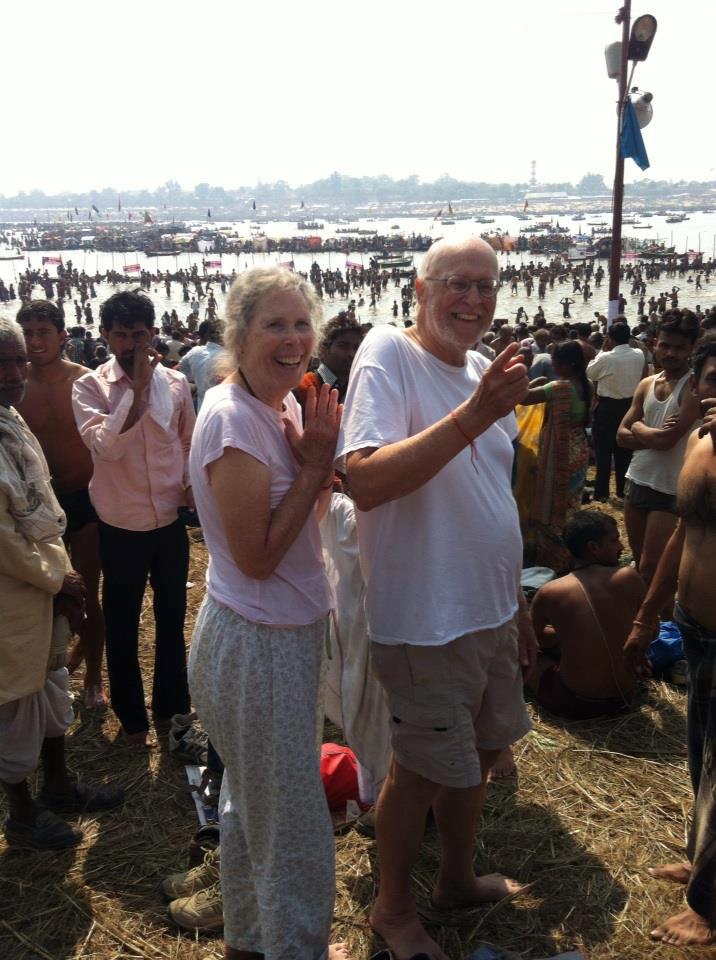
Prudence attended India’s Kumbh Mela last year.
Maharishi Foundation created the Affiliate Program to bring TM to yoga studios and fitness centers. When a studio becomes an Affiliate, their members can learn TM at a reduced course fee, and the studio receives a share of the income. Everyone benefits—the new TM student, the yoga studio, and the local TM teachers.
Today most people think of yoga as a series of physical postures. But Maharishi has explained that in the Yoga Sutras, Patanjali identifies eight limbs of yoga, and the eighth limb is Samadhi or transcendental consciousness. Maharishi said that with the practice of TM, Samadhi is actually the easiest limb of yoga to achieve, since no effort is required. We simply tap into the natural tendency of the mind to go within, to transcend, and that transcendence nourishes and supports all the other limbs.
“I do think that Transcendental Meditation is—of the meditations that are available to us—the most direct, and the simplest,” says Prudence. “When you meditate, when you transcend, it allows your heart and mind to balance. And when they’re balanced, that’s when you are really healthy. You are happy. You’re happy mentally, happy emotionally, and happy spiritually. Those three are all components of what make a human being, so that connection to transcendence is absolutely necessary for health.”
Creating a Better World
Fortunately for us all, Prudence did come out to play.
“The years of meditating have enriched my life so much,” Prudence says. “And that’s why at this point in my life, I’m giving back. We need a better world. We need people to be more conscious, to be more evolved. And expanding the mind, like TM does, is absolutely vital to bring about stronger people. If you can strengthen people inside, you’ve changed the world.”
So even today, 48 years later, the “Dear Prudence” story continues.
[In July 2018, this article was updated and published in Enjoy TM News.]
Years later, The Beatles released many versions of their songs on the 50th Anniversary of The White Album, now out on Spotify, which include The Esher Tapes. There are 3 versions of Dear Prudence there: the Esher version of John Lennon singing on guitar; one of just vocal, guitar, and drums; and the 2018 mix.
Another beautiful song that John Lennon wrote about his experience with Transcendental Meditation was, Across the Universe. Spotify included John Lennon on guitar singing Across The Universe–Take 6.
NEW: Enjoy TM News posted this more recent discussion. Mario Orsatti, the host of TM Talks and Senior Teacher of the Center for Health and Wellness, a division of the David Lynch Foundation, interviewed Dr. Bruns on June 14, 2020. This popular episode was rebroadcast on September 4, 2022. Watch the interview with Dr. Prudence Farrow Bruns (55:17)
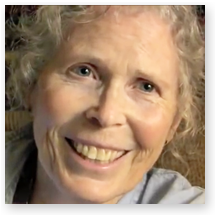
Enjoy this video portrait of Prudence Farrow Bruns, the inspiration for the Beatles song “Dear Prudence”. Prudence discusses her personal journey, meditating with the Beatles in India, the transformation her generation tried to bring about in the world, and the change that can only come from within through Transcendental Meditation.
Directed, shot and edited by Kryshan Randel, music by Mike Pellarin, produced by David Shaw for iTranscend TM, a concept created by Ashley Cooper. For more information on Transcendental Meditation, visit these websites: http://maharishi.ca (Canada) and http://www.tm.org (USA).
Both videos appear on the iTranscend TM YouTube channel series along with other heartfelt testimonials from new meditators, meditators dicussing meditation, and portraits of veteran meditators — people from all walks of life telling their stories — a physiotherapist, bakery story owner, musician, students, sharing how they are realizing their potential through the profound life-changing benefits of their Transcendental Meditation practice. And this video is an edited composite of some celebrities talking about the value of meditation, TM, in their lives: iTranscend Hollywood.
This wonderful interview is also available from Ted Henry & Jody Cleary on Vimeo. Retired TV journalist Ted Henry conducts interviews with spiritual people for Souljourns. Last month he interviewed Prudence Bruns Farrow. You can also see the interview on their Vimeo channel: http://vimeo.com/67166559. Here is their introduction to the video:
SOULJOURNS – PRUDENCE FARROW BRUNS, HER LIFE WITH TM AND MAHARISHI MAHESH YOGI
From the very beginning Prudence Farrow Bruns recognized an added layer or texture to her life, a spiritual dimension that would take her deep within.
She was among the first in the West to become initiated into Transcendental Meditation and in the mid sixties she traveled to Rishikesh, India to learn to become a TM teacher. Her own teacher in India, Maharishi Mahesh Yogi who is credited for bringing TM to the world.
In India with her at this time, her sister and acclaimed actress, Mia Farrow, The Beatles, Mike Love of the Beach Boys, Donovan and others.
Prudence and her husband, Albert Bruns who is also a TM instructor, live in Seagrove along the Gulf of Mexico in Northwest Florida.
The interview was recorded in Seagrove, Florida in May, 2013.
I previously posted Mary Oliver’s poem, Praying, and Philip Goldberg emailed me to say that someone recently showed him the last poem in her new collection (A Thousand Mornings). He said, “It’s called ‘Varanasi,’ and it’s exquisite.” I started looking for it and found the poem posted by another poet, Bob Arnold, on his website. After reading it I agreed – it’s stunning! That’s why I’m posting it here for you to enjoy. I also came across a musical video of the poem with images from the Ganges. After you’ve read the poem, see Diane Walker’s poetic reaction to it below. But take a break from this busy introduction, and then enjoy the enlightened peaceful simplicity of Mary Oliver’s visit to Varanasi.
“One thing I do know is that poetry, to be understood, must be clear. It mustn’t be fancy. I have the feeling that a lot of poets writing now are – they sort of tap dance through it. I always feel that whatever isn’t necessary shouldn’t be in a poem.”
Prudence Farrow says the Beatles were “real people”
The subject of a Beatles song is among the many foreign pilgrims visiting India’s Kumbh Mela festival.
Prudence Farrow, about whom John Lennon wrote the song Dear Prudence, is also sister of Hollywood actor Mia Farrow.
The Kumbh Mela, which is held every 12 years, is billed as the world’s biggest gathering of humanity.
Millions of Hindu ascetics and pilgrims take a dip at Sangam, the confluence of the Ganges and Yamuna rivers in Allahabad city.
Ms Farrow says she waited for four decades to come to the Kumbh Mela.
She had first visited India in 1968 as a student of meditation and met the Beatles at Indian guru Maharishi Mahesh Yogi’s retreat in Rishikesh.
“I wanted to come to the Kumbh with the Maharishi, but that never happened,” she told the BBC. Her guru died in 2008.
This year Ms Farrow finally made it to the Kumbh Mela with her husband Albert Bruns.
‘Exotic’
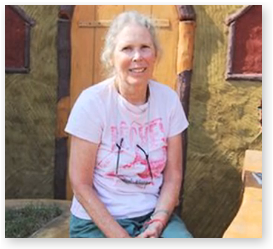
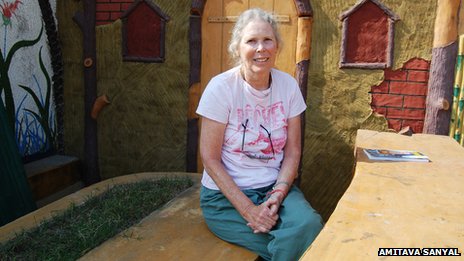
“India has changed so much since I first came here,” says Ms Farrow, 65, sitting in the brightly-painted porch of her rented flat in Allahabad.
“Back then it was exotic. We were staying in the forest outside Rishikesh. Life was quite agricultural even in the cities.
“There were animals on the road, there were very few telephones and there was hardly any electricity where we were staying.”
Ms Farrow says she was in for a shock when she first arrived at the festival ground last month.
At first, she insisted on staying in one of the tens of thousands of tents that have been put up on the banks of the river.
Ms Farrow, who has a doctoral degree in South Asian studies and runs foundations to promote meditation, says she was in search of “an inner silence”.
But, ironically, the blare of three loudspeakers every morning at the festival grounds shattered her peace and she shifted into the city.
This was, she says, in sharp contrast to the peaceful times she spent with her sister Mia at her guru’s retreat in Rishikesh in 1968.
At the retreat, the Farrow sisters met the Beatles.
“Because of Mia there were too many people coming in and out of our block,” says Ms Farrow.
“And then in the evenings George Harrison would jam with John Lennon and others would join in. I wasn’t getting the silence.
“People said: ‘You are being too fanatical, you should come out.’ Yes, I was extreme because I thought it was a privileged time. I still think it was the most important time in my life.”
So while the rest of the students partied, Ms Farrow says she locked herself up in her room and practised meditation.
That is when, she says, Lennon, wrote the song Dear Prudence, which appears on the band’s White Album.
DEAR PRUDENCE
Dear Prudence, won’t you come out to play
Dear Prudence, greet the brand new day
The sun is up, the sky is blue
It’s beautiful and so are you
Opening verses of Dear Prudence, written by John Lennon
The song’s hand-written lyrics, lined with doodles, sold at a Sotheby’s auction in 1987 for $19,500 (£12,800).
“The reason he wrote I was beautiful – and there were much more beautiful people around – was because I was so much like George,” says Ms Farrow.
“George and I were there for very much the same reasons – we were both very spiritual and we wanted to find a solution for ourselves and the world. George would say that through his music he wanted to help people become more settled, more quiet and more sensitive.”
Ms Farrow says she did not want to meet the Beatles as “great people never lived up to their image”.
Did they disappoint her?
“What didn’t disappoint me was that they were still real people. They weren’t more important than anybody else,” says Ms Farrow.
“Fame has that quality – it corrupts you. You begin to feel that you’re separate from other people, you’re more powerful. But they didn’t have that.
“They were going through the same things as we were. That’s why they were the voice of the times.”

 The Uncarved Blog