Posts Tagged ‘David Lynch Foundation’

President Clinton to Address the American Indian Sustainability Conference at Maharishi University

September 22, 2009


American Indian Initiatives
David Lynch Foundation

Post Office Box 738, Winnebago, NE 68071
AmericanIndianSustainableConference.org • 603-464-9989

President Clinton to Address
the American Indian Sustainability Conference
at Maharishi University via Video Message

Tribal leaders will collaborate with University faculty to bring
meditation, organic agriculture, renewable energy to Indian Country

President Bill Clinton will deliver the opening address via a special videotaped message to leaders of Indian Country who will be participating in the American Indian Sustainability Conference, which will be held September 25 to 27 at Maharishi University of Management in Fairfield, Iowa.

The leaders are assembling to explore how modern organic agriculture and renewable energy technologies combined with traditional meditation techniques and natural medicine practices can be used to build healthy, sustainable American Indian communities.

Special guest speakers include Joe A. Garcia, President of the National Congress of the American Indian; Robert Cook, President of the National Indian Education Association; Lucille Ecohawk, strategic planner for the Casey Family Programs; and Katherine Campbell education specialist with the Bureau of Indian Education.

The speakers will hold a news conference on Friday, September 25, 11 am (CDT), at Maharishi University of Management, Dalby Hall, in Fairfield, Iowa. The news conference will also be broadcast live on the Internet at http://www.AmericanIndianSustainableConference.org.

A key feature of the weekend event, according to Prosper Waukon, a hereditary leader – Thunderbird Clan, Winnebago Tribe of Nebraska, is a five-point plan for sustainability, developed by the Hocak Elders Council, Inc., of the Winnebago Reservation. The plan includes the scientific knowledge and techniques to:

• Dramatically improve academic performance and reduce the stress and violence that permeate impoverished Indian communities

• Prevent and reverse diabetes, which strikes 80 percent of Native Peoples, through a comprehensive program for stress reduction, healthy diet, and lifestyle changes

• Generate clean energy and economic self-sufficiency for American Indians by harnessing Nature’s wind and solar resources

• Provide healthy, nutritious food and economic self-sufficiency for American Indians through the establishment of organic agricultural greenhouses

• Safeguard the precious land, language, and culture of American Indian tribal communities, which are the foundation for systemic change

For information and registration: www.AmericanIndianSustainableConference.org.

Conference Brochure

Hollywood Today reports on American Indian Conference

September 20, 2009


American Indian Conference to Focus on Health, Sustainability

September 20, 2009

Stocel+drum

STOLCEL of the WSANEC First Nation performs traditional recitation at international conference in Holland

Leaders of Native Indian tribes from around the US and Canada will gather on the campus of Maharishi University of Management in Fairfield, Iowa, for an international conference September 25-27 entitled “Building Healthy, Sustainable American Indian Communities.”

Conference speakers include Joe A. Garcia, president of the National Congress of American Indians; Robert Cook, president of the National Indian Education Association; Lucille Echohawk, strategic advisor for the Casey Family Programs; and Kevin Skenandore, acting director of the Bureau of Indian Education.

Conference hosts and participants include the Hocak Elders Council, Inc., the Indian Health Services (IHS), the National Congress of American Indians (NCAI), the National Indian Education Association (NIEA), the Bureau of Indian Affairs (BIE), Winnebago Tribal Health Services (WTHS), the Winnebago Treaty Hospital-IHS, and the David Lynch Foundation.

For more information see conference website and video on TM and Diabetes Among Native Americans: http://www.americanindiansustainableconference.org/

See Indian Country Today article, Sustainability quest: http://bit.ly/4vNhWo

Also News From Indian Country article, Indian Country leaders meet in Iowa to explore new approaches to sustainable communities: http://bit.ly/JUOM7

Canadian First Nations participants include STOLCEL [John Elliott], Tekahnawiiaks [Joyce King], and Tim Paul. STOCEL is a cultural and language custodian for his [Saanich] People and speaks extensively on culture and language and history; Tekahnawiiaks [Joyce King] is currently the Director of the Akwesasne Justice Department and is on the Mohawk Council of Akwesasne; and Tim Paul, is Executive Director of the Maliseet Nation Conservation Council of New Brunswick. http://mncc.ca/

STOLCEL will be receiving an honorary Ph.D. from M.U.M. for his lifelong work to revive the mother tongue of the Saanich People, his contribution as Co-Founder of FirstVoices, the world’s first web-based Aboriginal language archive, and for his discovery of the connection between the traditional language of his people and the underlying intelligence of Nature available in the sounds and structure of Veda, which he made in collaboration with M.U.M. founder Maharishi Mahesh Yogi. [See BACKGROUNDER on STOLCEL]

Tekahnawiiaks [Joyce King] will be speaking twice at the conference: on Education, and on Safeguarding Culture and Language. She lives on the Akwesasne Reserve near Cornwall, Ontario, along the border between Canada and NY State. Her bio is available online: <http://www.tekahnawiiaks.com/bio.html>.

Tim Paul will speak on his own experience with TM and the lowering of his blood sugar levels, as well as his keen interest in the “eco village” model at MUM, and the desire of the Maliseet Nation Conservation Council to incorporate many of the “sustainable technologies” demonstrated there, in his own Maliseet communities throughout New Brunswick.

The conference will showcase Consciousness-Based education, prevention-oriented health care, renewable energy, organic agriculture, and cultural preservation.

Researchers will also present the results of several controlled studies on the effects of the Transcendental Meditation® technique for reducing acute stress and behavioral problems among hundreds of at-risk American Indian youth at the Winnebago (Nebraska), Pine Ridge (South Dakota), and Passamaquoddy (Maine) reservations.

Findings to date show the Transcendental Meditation technique promoted higher scores on standardized state tests of mathematics and reading, 25% less absenteeism, a 20% drop in disciplinary incidents, and 30% higher graduation rates among the meditating young people compared to controls.

“The timing is perfect for this conference because the need is so great among the tribes,” said John Boncheff, who is co-director of the Transcendental Meditation program at the Winnebago reservation. “The Transcendental Meditation technique is not only helping students perform better in school, but it’s also helping both adults and children to overcome the terrible epidemic of diabetes, which strikes up to 80 percent of all American Indians.”

Dr. Boncheff said that it’s also helping American Indians reconnect with their spiritual heritage and traditional culture.

—————————–

BACKGROUNDER

STOLCEL [John Elliott]

(Photos available upon request)

STOCEL is a descendant of the hereditary family of Chiefs of the WSANEC [Saanich] People and lives on the Tsartlip Reserve near Victoria, Vancouver Island, British Columbia. He is the Co-Founder of ‘First Voices’, the world’s first web-based Aboriginal language archive. This web-based archive allows predominantly oral tradition languages of any aboriginal nations to be recorded, uploaded, saved, and learned in perpetuity by future generations online, rather than becoming obscure or obsolete when the Elders or fluent speakers pass away. As a result of his initial inspiration, there are now over 60 First Nations archiving their languages online, with 35 of those now publicly available for First Nations’ youth and non-mother tongue speakers to learn their languages: <http://www.firstvoices.com/>.

STOCEL is the Chair of the Subcommittee on Language for the First Nations Education Council for British Columbia, as well as the Chair of the Saanich Native Heritage Society, and is an active member on the Board of Governors of the First People’s Cultural Foundation. He has been teaching, developing curriculum, and preserving aboriginal languages for thirty years.

STOLCEL holds First Nations’ Language Certification from the British Columbia College of Teachers. He has taught in all grades and is now teaching Grades 7-10 in the SAANICH Tribal School as well as SENTOTEN for adults at the University of Victoria.

STOLCEL is being honored with of the degree of Doctor of Natural Law Honoris Causa by Maharishi University of Management for his work to bring out the connection of traditional language and the underlying field of Nature that upholds every culture in peace and progress.

In STOLCEL’s words: “There is never time enough time in the day for all the work that has to be done. Our languages are the key to ancient knowledge. Inside each language is the pattern of how to live in harmony with the earth and all the living things. More today, than ever, this knowledge is needed. Each time another language dies forever, our ancient connections to all life, our knowledge of the plants the animals, the trees and our mother earth is lost.”

Canadian Contact: Christopher Collrin, 506-471-5598, collrin@gmail.com

US Contact: Ken Chawkin, 641-470-1314, kchawkin@mum.edu

Meditation: Effective New Aid for Students with ADHD

September 14, 2009

David Lynch Foundation
Office of ADHD and Other Learning Differences

714 19th St. S. • Arlington, VA • 703-823-6933 • ADHD-TM.org • sgrosswald@tm.org
Contact: Ken Chawkin, 641-470-1314, kchawkin@mum.edu

Meditation: Effective New Aid for Students with ADHD

National conference to showcase research and classroom experience during National ADHD Public Awareness Month

WEDNESDAY, SEPTEMBER 30 • 12:00 NOON (ET)
Webcast online at ADHD-TM.org http://adhd-tm.org

A panel of physicians and scientists will report on the benefits of a simple meditation practice for aiding students diagnosed with ADHD during a national medical webinar, which will be hosted by the David Lynch Foundation on Wednesday, September 30, 12 noon (ET).

The webinar, which comes on the final day of National ADHD Public Awareness Month, will report on published research on the effects of the Transcendental Meditation technique for improving academic achievement and executive brain function while reducing learning disorders, anxiety, depression, metabolic syndrome, diabetes, and heart disease.

Conference panelists

Sarina Grosswald, Ed.D. George Washington University-trained cognitive learning specialist; lead researcher on a pioneering study on the Transcendental Meditation technique and ADHD; and Executive Director of the David Lynch Foundation’s Office of ADHD and Other Learning Differences.

Norman E. Rosenthal, M.D. Senior Researcher in Psychiatry and Psychobiology for 20 years at the National Institute of Mental Health; currently Clinical Professor of Psychiatry at Georgetown University; and Medical Director of Capital Clinical Research Associates in Bethesda, MD.

William Stixrud, Ph.D. Clinical Neuropsychologist and Director of William Stixrud and Associates, specializing in the evaluation and treatment of children, adolescents, and adults with learning, attention, and/or social/emotional difficulties; Assistant Clinical Professor of Psychiatry at the George Washington University Medical Center.

Over 50% reduction in stress and anxiety, and improvements in ADHD symptoms

One recent study, published in the December 2008 issue of the peer-reviewed Current Issues in Education followed a group of 10 middle school students with ADHD who were practicing the Transcendental Meditation technique twice a day in school. After three months, researchers found over 50% reduction in stress and anxiety, and improvements in ADHD symptoms.

“The effect was much greater than we expected,” said Sarina J. Grosswald, Ed.D., a George Washington University-trained cognitive learning specialist and lead researcher on the study. “The children also showed improvements in attention, working memory, organization, and behavior regulation.”

Grosswald said that after the in-school meditation routine began, “teachers reported they were able to teach more, and students were able to learn more because they were less stressed and anxious.”

Prior research shows ADHD children have slower brain development and a reduced ability to cope with stress.

Stress interferes with learning

“Stress interferes with the ability to learn—it shuts down the brain,” said William Stixrud, Ph.D., a Silver Spring, Maryland, clinical neuropsychologist and co-author of the study.

“Medication for ADHD can reduce the symptoms for some children, but it is marginally or not effective for others. Even for those children who show improved symptoms with the medication, the improvement is often insufficient,” Stixrud said.

According to the Centers for Disease Control, almost 50% of the 4.5 million children (ages 4-17) in the United States diagnosed with ADHD are on ADHD medication—and the majority of those on medication stay on it in adulthood. Stixrud said there is growing concern about the health risks and side effects associated with the common ADHD medications, including mood swings, insomnia, slowed growth, and heart problems. In 2006 the FDA required manufacturers to place warning labels on ADHD medications, listing the potential serious health risks.

These high risks and growing concerns are fueling parents’ search for alternatives that may be safer for their kids.

“There is already substantial research showing the effectiveness of the TM technique for reducing stress and anxiety and improving cognitive functioning among the general population,” Dr. Grosswald said. “What’s significant about our findings is that among children who have difficulty with focus and attention, we see the same results. TM doesn’t require concentration, controlling the mind or disciplined focus. The fact that these children are able to do TM and do it easily shows us that this technique may be particularly well suited for children with ADHD.”

The David Lynch Foundation is a nonprofit, 501(c)(3), which has provided more than $7 million in scholarships to teach Transcendental Meditation to over 100,000 at-risk students throughout the United States, Latin America, the Middle East, and Africa.

###

Additional resources

1. Transcendental Meditation reduces ADHD symptoms among students: New study Dissatisfaction with medication spurs interest in meditation

2. Transcendental Meditation buffers students against college stress: Study Research at American University shows meditating students react better to stress, are less fatigued, have more ‘integrated’ brains

3. New study shows Transcendental Meditation improves brain functioning in ADHD students A non-drug approach to enhance students’ ability to learn

4. Girls with ADHD more prone to depression, anxiety than boys; meditation helps

5. TM improves brain function in ADHD students

INDIAN COUNTRY TODAY: Sustainability quest: Tribes to gather for conference of meditation and renewal

September 11, 2009

Indian Country Today

Sustainability quest

Tribes to gather for conference of meditation and renewal

By Rob Capriccioso

Story Published: Sep 15, 2009

FAIRFIELD, Iowa – Organizers are preparing for a unique gathering of tribal elders, leaders and members to focus on building sustainable communities through meditation, renewable energy, organic agriculture and cultural preservation.

The event, billed as the “International Conference on Building Healthy, Sustainable American Indian Communities,” is largely being put together by the Hocak Elders Council, the Ho-Chunk Elders Advisory Council, the David Lynch Foundation and members of the Winnebago Tribe of Nebraska.

It will be held at the Maharishi University of Management in Fairfield, Iowa Sept. 25 – 27. Planners expect hundreds of participants to attend.

“We are very excited to be able to help offer this one-of-a-kind experience,” said Bob Roth, vice president of the David Lynch Foundation, which focuses on spreading scientifically-proven stress-reduction Transcendental Meditation technique to at-risk youth.

The meditation techniques focus on regular, quiet reflection times aimed at reducing stress and its harmful health impacts.

Studies have shown the methods to have health benefits, such as curbing behavioral disorders in youth and reducing the need for insulin in those with Type 2 diabetes.

Planners with the foundation are using the conference as a platform to highlight their commitment for the past three years to a project called the “Model American Indian Community Initiative” on the Winnebago Reservation.

The project strives to help at-risk youth relieve stress through meditation. It has achieved some promising results which conference organizers are eager to share.

John Boncheff, an event organizer who co-directs the Winnebago project, said Indian youth in the program are not only doing better in school, they are absent less and have a better chance of graduating.

Esteemed Indian leaders have taken note. Joe A. Garcia, president of the National Congress of American Indians; Robert Cook, president of the National Indian Education Association; Lucille Echohawk, a strategic planner for Casey Family Programs; and Kevin Skenandore, acting director of the Bureau of Indian Education are scheduled to attend and present at the sustainability gathering.

The Pine Ridge Reservation in South Dakota and the Passamaquoddy Tribe of Maine have started similar projects, hoping for equally positive results. Planners said many more tribal leaders have requested information.

Roth said it has been an honor to see more tribes get involved and for Native Americans to teach each other the benefits of healthy meditation and its similarity to some traditional spiritual beliefs.

Prosper Waukon, a leader with the Hocak Elders Council and a citizen of the Winnebago Tribe, said the project has also attracted keen interest from his tribe’s elders.

In 2007, Waukon said several older tribal members took a trip to Maharishi University to learn about transcendental meditation, which the institution strongly promotes. Many were suffering from debilitating side effects of diabetes and wanted to understand ways to meditate to improve their well-being.

Some of the elders have since been able to dramatically better their health outcomes, and some rely much less on diabetes medications, Waukon said.

“Many elders found there was something missing with medication alone. Using meditation to relieve stress ended up helping them connect with traditional ways. It has been a win-win situation.”

As a part of studying the elders’ progress, IHS has contributed $560,000 to the project in in-kind testing services. They are hopeful that IHS may end up promoting the program to more tribes in the future upon seeing positive results.

Information about the elder diabetes program will also be highlighted at the conference.

Waukon said the event won’t just be about promoting sustainability through meditation. It will also feature sessions on organic farming, wind and solar energy development and cultural preservation.

“These are areas of sustainability that all connect to each other,” he said, adding that experts in the various fields will be in attendance.

Boncheff would like the conference to raise awareness of the Winnebago project’s success and to see what can be done to take it to the next level. He is hopeful that at least seven more tribes launch similar sustainability projects by next year.

For people who can’t afford to attend the conference, it will be Web cast online. Registration information and more details are also available online.

On February 1, 2012, Indian Country Today published an article, Transcendental Meditation Combating Diabetes in Indian Country, by Mary Annette Pember.

David Lynch Foundation Honored

September 10, 2009

Picture 40

Naturalheroes

THE 
DAVID LYNCH 
FOUNDATION

Promotes a Peaceful World  For Our Children

By Tom Citrano

NATHEROSDavidLynch“In today’s world of fear and uncertainty, 
every child should have one class period a day to dive within himself and experience the field of silence – bliss – the enormous reservoir of energy and intelligence that is deep within all of us. This is the way to save the coming generation.” David Lynch, founder and chairman of the David Lynch Foundation for Consciousness-Based Education and 
World Peace.

This month’s Natural Heroes are Mr. Lynch and the people at the David Lynch Foundation. Director and Producer David Lynch (Blue Velvet, Twin Peaks, Elephant Man, Eraserhead, Mulholland Drive) started his foundation to provide funds for students to learn meditation through Transcendental Meditation centers, hospital-sponsored wellness programs, boys and girls clubs, before-and-after school programs and in schools when invited by the administration.

Instruction is voluntary and provided to children after parental permission has been granted and at no cost to the family, organization or school. This year the David Lynch Foundation granted millions of dollars guaranteeing thousands of students, teachers and families a chance to learn meditation.  The Foundation also funds independent research to study the effects of meditation on creativity, intelligence, brain function, academic performance, ADHD and additional learning disorders, substance abuse and depression.

Lynch believes that stress is taking a big toll on children today. He looks for a day when developing student’s creative potential is part of every school’s curriculum. David Lynch has been a TM practitioner for over 30 years and explains, “There are hundreds of schools, thousands of students, who are eager to relieve stress and bring out the full potential of every student by providing this Consciousness-based education.”

The David Lynch Foundation targets the benefits of TM for students in the following areas:

CLASSROOM STRESS

Children need to feel safe in school because pressure, stress and fear undermine learning. Dr. William Stixrud, Ph.D., a clinical neuropsychologist in Silver Spring, Maryland, specializing in work with children and adolescents, has studied the effects of stress on the developing brain and had this to say about the David Lynch Foundations programs, “Educators have long known the optimal mind/body state of a student is one of relaxed alertness. The question has been how does the student get there? The answer is The Transcendental Meditation Program.”

CLINICAL DEPRESSION
Ten million children in America have been diagnosed as clinically depressed and take antidepressant medications. Most of these medications are categorized as having serious side effects. A study (funded in part by the Daimler/Chrysler Fund and the General Motors Foundation) on meditating children at an inner-city Detroit middle school confirms what previous gathered data and research has documented: The Transcendental Meditation program increases happiness, self-esteem, and self-worth, while also reducing anxiety and depression.

LEARNING 
DISORDERS
If left untreated, ADHD impacts the child in several ways – causing impulsivity, distractibility, hyperactivity and inattentiveness. ADHD is also associated with sleep disorders, depression, bipolar disorder and other disorders. Almost 90% of children diagnosed with ADHD are on medications. Linda Handy, Ph.D., educator and principal of The Waldorf School in Silver Spring, Maryland believes it’s easier for teachers to hold the attention of students who meditate, “Transcendental Meditation has a great effect on students’ learning ability. Teachers can teach more – so students can learn more.”

HIGH BLOOD PRESSURE

High blood pressure is no longer an adult disease. Studies show adolescence is a critical time for the development of hypertension and other coronary disease risk factors. Increasing rates of childhood obesity are further driving up the numbers of children and teens living with hypertension. Vernon Barnes, Ph.D., research scientist at the Georgia Prevention Institute of the Medical College of Georgia in Augusta studied the effects of TM on a random sample selected from a group of 5,000 teens with hypertension. Barnes had this to say about the results, “Decreases in blood pressure observed in the present study have clinical significance. The decreases, if maintained into adulthood, are enough to potentially decrease a child’s long-term risk for heart disease and stroke.”

FULL BRAIN POTENTIAL

Science has confirmed that our brains are not fully developed at birth. As we grow and mature, the brain is being recreated to support all of our new and changing thoughts, decision and behavior. There are different areas of the brain for seeing, hearing, thinking, feeling, etc. The part of the brain that is most critical for evaluating all the information is the frontal lobes. Stressful experiences keep the frontal lobes from developing. Research verifies the TM technique is unique in its ability to exercise this critical part of the brain – to make the brain healthier and better able to work together as a whole.

ACADEMIC ACHIEVEMENT

In his book, A Record of Excellence, Ashley Deans, Ph.D., director of The Maharishi School in Fairfield, Iowa recounts the achievements of his school, which is accredited by the State of Iowa and the Independent Schools Association of the Central States, “Hundreds of scientific studies on Transcendental Meditation program and more than 30 years of classroom experience should be enough to convince anyone that Consciousness-Based education can make education complete, healthy, harmonious and productive.”

For more information about 
the David Lynch Foundation 
and its programs, visit davidlynchfoundation.org.

If you have a Natural Hero in 
your life, send an email to: heroes@nugreencity.com and tell us about that special someone who’s making our city and the planet a better place.

http://www.nugreencity.com/2009/09/naturalheroes-3/

Beach Boys concert ‘fun, fun, fun’ for all

September 8, 2009

Beach Boys concert ‘fun, fun, fun’ for all


By BOB SAAR for The Hawk Eye


Published online: 9/8/2009

You might guess a band almost half a century old would be populated with superannuated blokes of yore.

Ah, but there are no old guys in the Beach Boys.

There were a lot of “old” baby boomer fans in the audience during Monday’s outdoor concert at Fairfield Middle School, but they were as uninhibited as any bunch of today’s teenagers ogling the Jonas Brothers.

The Beach Boys, centered around originals Mike Love and Bruce Johnston, included lead guitarist and music director Scott Totten, keyboardist Tim Bonhomme, Randell Kirsch on bass, guitarist Christian Love — son of Mike Love — and John Cowsill on drums.

You remember the Cowsills. Sure you do — that family band with the hit “Hair.”

Cowsill provided perfect surf drums for the two-hour concert, keeping many of the more than 4,000 concertgoers up and prancing the entire time. Those “old” folks did the Pony, the Swim, the Shimmy — long-forgotten go-go dances called up from collective memory by the jungle beat of surf music.

Kirsch, who has the daunting job of covering Beach Boy guru Brian Wilson’s high parts, relishes his spot.

“That’s the funnest job in the band,” he said.

Iowa band The Nadas provided the walk-in music with a solid set of roots rock.

“They were spot on awesome,” Iowa City musician Jason Bolinger said.

The main show began when Fairfield Mayor Ed Malloy lauded Love with a proclamation, introducing the 68-year-old singer as “Fairfield’s Energy Czar Emperor.” The concert was a benefit for the David Lynch Foundation and the Fairfield Arts and Convention Center, as well as a kickoff for Fairfield’s new Green Sustainability Plan aimed at energy conservation.

Love practices transcendental meditation at the Maharishi University of Management in Fairfield. MUM was founded by Maharishi Mahesh Yogi; the TM master was popular in the ’60s with the Beach Boys, the Beatles and other music and movie stars.

“Little Honda” got things up and running. At least a few aging Boomers recalled that the song is about motorcycles, not cars.

The vocals took a few songs to loosen up to the point of being totally tuned in and running smoothly, and that was OK — after all, the original band didn’t always hit all eight cylinders in concert.

And it was good and swell that this band didn’t do a clone routine, a “Mike Love Karaoke Hour.” They did all Beach Boy hits — my, those boys had a lot of hit singles — and they were the Beach Boys, without the Wilson boys, sure, but a real band, not some broken-down fossil staggering around the stage with the rights to a band name and a cadre of grungy sidemen to prop him up.

“Barbara Ann,” “Surfin’ Safari,” “California Girls,” “Surfer Girl,” “Sloop John B.” The concert list was seemingly endless.

“Wouldn’t it be nice” was quite nice: “We could be happy,” the band sang, and the crowd sang with them, extremely happy to be there on a storybook Indian summer day in Iowa.

Johnston’s lead vocals, especially on “Do You Wanna Dance?” were as clean and pure as any 25-year-old crooner touring today.

“Why Do Fools Fall In Love,” “Don’t Worry Baby,” “Good Vibrations,” God Only Knows.”

Children frolicked with their elders. Beach balls careened in the sky. Souls soared. People grew younger with each new tune.

A hotrod medley, of course: “Little Deuce Coupe,” “Shut Down,” “I Get Around” — one of surfdom’s best angsty laments — and “409.”

The old people knew the song referred to Chevy’s 409 cubic inch V8 engine coveted by hotrodders of the era. It is not known how many youngsters present wondered why this legendary group was singing about bathroom cleaning products.

The encore was not begged; everyone knew what was coming: “Fun, Fun, Fun.”

All had fun yesterday in Fairfield, all but the police, who had nothing more to do than direct traffic for the polite, smiling concertgoers.

“No fun for me today,” one Jefferson County deputy said. “I gotta work.”

Lynch Foundation Media Relations Director Ken Chawkin said the show was special for the band’s TM enthusiasts, especially Love.

“This must be a huge thrill for Mike, because he’s been coming here for years to meditate and take rejuvenation treatments,” Chawkin said of Love.

Perhaps that explains why there are no old guys in the Beach Boys.

Love was not too worn out afterward to echo the enthusiasm of the well-wishers who surrounded him backstage.

“I think it’s great here in Iowa,” he said. “This place is really special.”

The event producer for the David Lynch Foundation, Michael Sternfeld, was as upbeat as everyone else at the end of the show.

“There’s something about the audiences at Fairfield. … There’s something special here,” he said. “This was the ultimate experience. In terms of energy, we just nailed it.” He stopped to smile up into the blue. “We created serious good vibrations.”

Yeah, man. Good vibes and a whole lot of fun.

http://www.thehawkeye.com/story/beachboys-090809

Beach Boys’ Mike Love recharges at The Raj

September 6, 2009


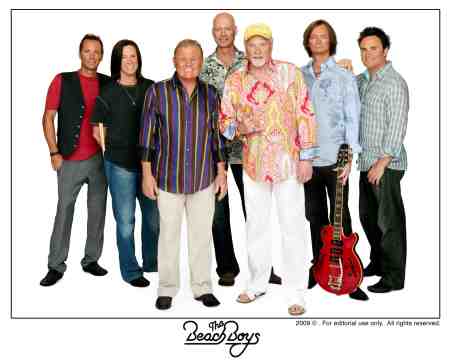
Picture 28WHITE_GROUP_8x10_lo-resSPECIAL TO THE REGISTER
The Beach Boys, from left: Christian Love, John Cowsill, Bruce Johnston,
Randell Kirsch, Mike Love, Scott Totten, Tim Bonhomme. Johnston and
Love have been members of the band since the 1960s.

By SOPHIA AHMAD
September 4, 2009
sahmad@dmreg.com

With its tight falsetto harmonies and sunny lyrics, the Beach Boys’ sound is immediately recognizable to both young fans – who consider it a retro band – and to older fans who grew up on hits such as “California Girls” and “Surfin’ USA.”

The legendary ensemble that has been entertaining audiences since 1961 will perform Monday in Fairfield – a quick return trip to Iowa after a recent show Aug. 14 at Meskwaki Bingo-Casino-Hotel in Tama. But Monday’s outdoor concert on Labor Day at a middle school in Fairfield also will deliver a different “vibration” for singer Mike Love. “My main place for rest and relaxation and recharging has been the Raj and meditating in the domes,” Love said last month during a stopover in Fairfield. The Raj is a Fairfield spa that integrates holistic practices into its treatments.

And Love routinely practices transcendental meditation (T.M.) inside the domes of Maharishi University of Management, founded by Maharishi Mahesh Yogi.

Love, one of the remaining 1960s members of the Beach Boys, will be named Energy Czar for the day by Fairfield Mayor Ed Malloy. He will also help unveil the city’s 40-point Green Sustainability Plan, funded by an $80,000 grant from Iowa’s Office of Energy Independence. The plan calls for energy conservation and support of local farms, among other initiatives. “Energy independence is something that is close to my children and grandchildren and their children’s heart,” Love said.

Proceeds from Monday’s concert also will benefit the David Lynch Foundation, which supports T.M. education, and the Fairfield Arts and Convention Center.

Love is a longtime fan of the eastern Iowa city.

“I’ve been going to Fairfield for a few decades,” he said. “One time I came here for three weeks and did treatments every day, and that was fantastic. I never felt better. “Transcendental meditation is so important to Love that he wrote a song about its founder: “Cool Head, Warm Heart.”

“Maharishi said once in a meeting, ‘You need a cool head and a warm heart,’ so I made a little sound out of it,” Love said about his inspiration for the song.

Love, who performs nearly 150 concerts per year, said he has a special connection to Iowa and its “small-town environment.” He recalled a recent memory of the “little gem in the heartland” when he landed at a Tucson airport. “This woman that drove me from the airport said she heard us at the Dance-land Ballroom in Cedar Rapids … Now how ironic is that?”

Additional Facts
The Beach Boys with The Nadas

WHEN: Monday, gates open at noon.

WHERE: Fairfield Middle School Outdoor Field, 404 West Fillmore

TICKETS: $12-$37.50 through Iowatix. Proceeds benefit the David Lynch Foundation and the Fairfield Arts and Convention Center

INFORMATION: www.fairfieldacc.com

http://bit.ly/4swpoN

Also see Mike Love, Not War | Ireland’s Edwin McGreal interviews Mike Love for The Mayo News | Mike Love of the Beach Boys on Stories of Success | Beach Boys concert ‘fun, fun, fun’ for all | Beach Boys bringing green concert to tiny Fairfield

Time Out Abu Dhabi: Transcendental Meditation

September 3, 2009

Transcendental meditation
Dismissed by cynics, applauded by medics, transcendental meditation is nothing if not controversial

‘It was a great gift,’ said Sir Paul McCartney earlier this year. ‘For me it came at a time when we were looking for some stability towards the end of the crazy ’60s. It’s a lifelong gift that we can call on any time.’

At a press conference for Change Begins Within (an initiative that hopes to get one million children involved in transcendental meditation, or TM, put together by Twin Peaks director David Lynch), Macca’s fond enthusiasm was somewhat at odds with the general malaise that soured the Beatles’ meditation retreat back in 1968. After the fab four followed Maharishi Mahesh Yogi (the man credited with introducing the Indian-Himalayan meditation technique to the West) to Rishikesh, India, John Lennon dismissed him as a charlatan. Though he apologised for his youthful outbursts later, it seemed impossible that a Beatle-tarnished reputation could ever be wiped clean.

Not so. By the mid-’70s some 40,000 Americans per month were reportedly signing up for classes, many of whom found the simple, schedule-friendly techniques so beneficial that they practise it to this day. David Lynch, a practitioner since 1973, has said that a mere fortnight of twice-daily practice was all it took to reduce the angers and anxieties that controlled his life at the time. ‘Those negative things started lifting,’ he said recently. ‘It sounds strange, but I appreciated and enjoyed the doing of things more.’ It’s not just the ageing hippies who talk it up, either. Empirical evaluations have shown that the technique can have an effect on human physiology, reducing stress levels significantly and even having some positive effect on heart diseases. Even the science bods are recommending it now.

‘It’s practised by people of all levels of intelligence, of all ages, cultures and religions,’ explains Surendra Kumar, a teacher at the Creative Intelligence Consultancy in Dubai. ‘There are many reasons they come to us. Some just want to learn, others come for health reasons and many just want to be happy in life.’ Surendra is willing to travel to teach keen students – a kind of TM delivery service, if you will. In fact, he recently finished a TM course in Abu Dhabi, which was hailed a success by its participants.

A misconception commonly held is that TM has religious connotations – possibly cultish in nature. Again, this was an unfortunate by-product of the Maharishi’s association with The Beatles: George Harrison, in particular, was an enthusiastic advocate of Indian religions, and many observers jumped to conclusions. ‘It has nothing to do with religion,’ says Surendra with the air of a man who has had to deal with this line of questioning before. ‘It’s a peaceful mental activity that takes the mind to deeper levels of the thinking process. Though it was only introduced to the Western world 50 years ago, it’s as old as life itself.’ It is estimated that six million students have studied TM in that short space of time, a number that puts it slightly beyond the realms of cult status.

But, why TM rather than other forms of meditation? Put simply: people seem to find it easier. Whereas other techniques require you to blank the mind (often the largest hurdle for many students), or focus on a single aspect, TM uses a repetitive technique – a series of vocal vibrations or sounds, often with no meaning – to lull the mind into a peaceful state, ‘transcending’ the regular thoughts and conundrums that bombard us from minute to minute.

Unfortunately, the mumbo jumbo associated with TM is hard to avoid. Wondering what the effects of ‘bliss consciousness’ and ‘self-referral intelligence’ might be, we spoke to Arif Dawood, a participant on the recent Abu Dhabi course. ‘I’ve done several types of meditation and heard about TM a long time ago,’ he explains. ‘I would say it’s one of the easiest to practise and, although it’s too early to notice any major benefits, it certainly makes me feel very relaxed.’

If it’s so easy, why bother finding a teacher? Well, just as you might benefit from instruction in the gym, an experienced teacher can help shape the techniques to suit your situation. Whether you come to it as a student of relaxation, for health reasons, or even via an out-of-control Beatles obsession, one thing quickly becomes apparent: transcendental meditation may be as old as the hills, but in this frenetic modern world where instant results are imperative, you might find it’s a lifelong gift you wouldn’t wish to return.

For more information on arranging a TM course in Abu Dhabi, call the Creative Intelligence Consultancy on 050 207 0347 or email info@tm.ae. A website will soon be up and running at http://www.tm.ae

Time Out Abu Dhabi 30 August 2009

http://tinyurl.com/kupav7

3 Comments:
Posted by: Dr. Jean Tobin on 01 Sep ‘ 09 at 03:54
Thank you for this article highlighting the benefits of Transcendental Meditation. I’ve read quite a few articles on the subject and your treatment is more precise and fair than most. I wanted to share with your readers a summary of the research on TM. TM distinguishes itself not only in how easy it is to practice, when learned from a qualified teacher, (TM.org) but also in how effective it is when compared with other mental techniques. There has been so much rigorous research validating the benefits of TM in all areas of life. The majority of these studies compared TM to other practices or control groups. 350 peer-reviewed research studies were conducted on over 10,000 subjects who were practicing the TM technique. These studies included numerous randomized controlled trials, along with eight meta-analyses of 597 separate studies on the effects of meditation. The studies were conducted at Harvard Medical School, Yale Medical School, Stanford Medical School, University of PA, University of Kentucky, and more than 200 other independent institutions, and were done by 360 scientists from 29 countries. Learning TM was the best decision I ever made. It has improved my life in every possible way. Thanks again for bringing your readers attention to an important topic.

Posted by: kennyji on 31 Aug ‘ 09 at 18:37
This has to be the most intelligently written article so far assessing the value of the Transcendental Meditation technique for the average individual that I’ve come across. It sifts out the misunderstandings of a confused past and enlightens its readers to the practical benefits of this simple but effective technique for living a less stressed and more productive fulfilling lifestyle. Thank you.

Posted by: Archie on 31 Aug ‘ 09 at 15:21
I love TM and have been practicing it twice a day for over 35 years. It has enriched my life in ways that I never could have expected but would never want to have had to do without. Yes, it has been a lifelong gift that I wouldn’t return for anything in the world. Thank you, Maharishi.

Beach Boys bringing green concert to tiny Fairfield

September 2, 2009

Posted Online:

Beach Boys bringing green concert to tiny Fairfield

Comment on this story
By Shane Brown, sbrown@qconline.com

More photos from this shoot
Photo: John Greenwood / staff
Lead singer Mike Love, left, and Bruce Johnson on keyboards and vocals are shown in the April 9 file photo during their concert at the i wireless Center in Moline. On Labor Day, the Beach Boys will close out their summer tour onstage in the tiny community of Fairfield, Iowa, in what’s being dubbed as one of the nation’s first ‘green’ rock concerts. ‘We need to move in the direction of energy independence,’ explains Love, ‘and what better place to start than Fairfield — the heartland of America.’

Watch out, Iowa. The “undesirable element” is headed your way.

But first, a little history.

The year was 1983, and our nation’s land management and conservation was in the hands of a fellow named James Watt, Secretary of the Interior to the Reagan administration. Watt’s tenure was marked by controversial decreases in environmental funding and deregulations to oil and mining companies. But nothing was more controversial than Watt’s decision to ban a July 4th performance at the National Mall in Washington, D.C., from a group he said would draw “an undesirable element” — The Beach Boys.

It’s no coincidence that Watt handed in his resignation papers later that year. At the time, the band’s frontman, a flabbergasted Mike Love, tried to defend his group. “We sing about patriotic themes — like ‘Surfin’ U.S.A.!’ ” Twenty-five years later, James Watt is a footnote in history, Mike Love still sings about surfing, and the Beach Boys remain the most outspoken celebrity advocates of global environmental reform.

On Labor Day, the group will close out their summer tour onstage in the tiny community of Fairfield, Iowa, in what’s being dubbed as one of the nation’s first “green” rock concerts.

“We need to move in the direction of energy independence,” explains Love, “and what better place to start than Fairfield — the heartland of America.”

What better place, indeed. Fairfield may seem like little more than a blip on the state map of Iowa, but this little town is making big headlines in its attempts to lead the nation in eco-friendliness. Fairfield Mayor Ed Malloy is a national leader in the field, recently having been named one of the “15 Greenest Mayors in America” by MSN.com. The concert will serve as the kick-off to Fairfield’s 40-point initiative to become “America’s Model Sustainable City.”

“We want to create a model community,” says Malloy, “a virtual template that other small towns can adopt to create the same results.”

The show will feature demonstrations of clean energy projects and sustainable practices, as well as educational booths to teach simple ways at becoming more energy independent. Bio-diesel generators will be provided by the Quad-Cities’ own Rexroat Sound, and Malloy is currently in discussions with Alliant Enegy to turn the entire event into a “green-powered concert.”

Why Fairfield? That’s an easy one. Love’s been coming to the small town for decades. At the center of Fairfield is the Maharishi University of Management, the U.S. home for studies of the ancient art of transcendental meditation (TM.) Love’s been a follower of the TM movement since being introduced to the technique in 1967 by a couple of familiar faces.

“We were performing at a UNICEF show,” Love says. “And up come John Lennon and George Harrison. We get to talking about TM, and two months later, I’m headed to India with the Beatles and Donovan to study with the Maharishi.” The Maharishi Mahesh Yogi was for years the public face of the TM movement and the creative force responsible for the University opening in Fairfield in 1974, forever transforming this quiet Iowa town.

Fairfield is also home to The Raj, a health spa that focuses on the ancient health system of Ayurveda. The treatment programs are said to restore balance and reawaken the body’s natural healing mechanisms. Love is a fan.

“Ayurvedic treatments help reverse the aging process,” Love explains, “and when you’re doing 160 concerts a year like me, it helps.”

Proceeds from the concert will go to support the newly built Fairfield Arts and Convention Center, as well as the David Lynch Foundation, a pro-TM organization created by the eccentric director of “Blue Velvet” and “Twin Peaks.” The Foundation works to provide free TM training and “consciousness-based education” to children across the globe, as well as funding independent research into the effects of the program on creativity, depression, intelligence, and brain function.

“The Transcendental Meditation technique has been so incredibly valuable to me,” Love says. “I can only imagine how beneficial it will be to kids in neighborhoods full of stress, tension, and crime.”

But the focus of the event remains on energy independence. At the event, Love will be bestowed with the honorary title of “Energy Czar of Fairfield” for the day, a title he takes somewhat begrudgingly.

“I tried to tell them that the Bolsheviks killed the Czar,” says Love with a grin. “I prefer Energy Emperor.”

But Love turns serious when the talk turns toward green technologies.

“The Beach Boys are in favor of anything that leads to energy independence in the U.S. Fairfield can be a model and an inspiration, and we’re happy to lend a hand. We as a nation need to be fully energy independent within the next 20 years if not sooner.”

Get Love talking about energy and you’ll barely be able to get a word in edge-wise. During our interview, he spoke eagerly of the new Chevy Volt, the future hybrid set to launch in 2010 with an unbelievable 230 miles per gallon estimate.

“Daddy needs to take your T-bird away and replace it with a Chevy Volt,” he says with a smile.

But Love is forgetting one thing. He’s about to take the stage in small-town Iowa. Does it ever concern him that The Beach Boys are wrapping up their tour in a veritable beach-free state where you could probably count the number of surfers on one hand?

“Hey, now,” he says, not missing a beat. “Wait a second. Do I need to remind you of the lyrics to the song? It’s ‘if everybody HAD an ocean across the USA,’ not ‘has.’ Iowans will do just fine.”

“Besides,” he said with a laugh, “we sing songs about cars, too. Just make sure they’re fuel-efficient hybrids.”

Beach Boys in Fairfield

The Beach Boys’ 2009 Endless Summer Tour will arrive in Fairfield, Iowa, on Labor Day — Monday, Sept. 7.

Opening for the band will be Quad-Cities favorites The Nadas.

Don’t say you heard it from us, but we’re hearing whispers of potential special guests at the gig — and with recent TM benefit shows pulling in the likes of Moby, Sheryl Crow, Donovan, and Paul McCartney… anything’s possible.

For tickets, directions, and parking information, call (641) 472-2787.