
Posts Tagged ‘Consciousness-Based education’

Maharishi University of Management featured in Education Executive Magazine — Spring 2012

April 14, 2012

Maharishi University of Management

Higher Education – Spring 2012 (pages 62-63)

Open Mindedness

Transcendental Meditation® helps students at Maharishi University of Management enhance their learning, the institution says.
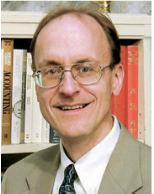
All successful administrators believe firmly in the missions of their institutions, but the connection runs deeper for Dr. Craig Pearson, executive vice president of Maharishi University of Management (MUM). After graduating from Duke University in 1971 and feeling disillusioned from the tumultuous impact of the Vietnam War, Pearson discovered the practice of Transcendental Meditation (TM).

“I saw a need for change, and I wanted to participate in that and I wanted it to be meaningful,” Pearson says. “Finally, I realized it would be a nice contribution to make to this society that I lived in if I taught TM.” After he became versed in teaching TM, Pearson discovered an opportunity to teach at MUM, and what has followed has been a learning experience that has lasted more than 30 years.

“I’ve had just an amazing range of opportunities and experiences here,” Pearson says.

Located in Fairfield, Iowa, MUM was founded on the practice of TM, brought to light from the ancient Vedic tradition by Maharishi Mahesh Yogi, a Vedic sage who taught the practice in his native India before traveling the world with it. Not a religion or philosophy, TM is a simple, effortless technique practiced for 20 minutes at the start and end of each day that allows the mind to settle to a state of inner quiet. Those who practice TM say it can help expand consciousness and expand the mind’s capacity for learning. This is why the university’s approach is called Consciousness-BasedSM education.

“This is huge for education,” Pearson says, adding that studies have shown growth of intelligence and other measures of personal development to level off during adolescence. Practicing TM, research suggests, unfreezes that potential and allows the mind to continue growing.

Same, But Different

Aside from the beginning and end of each day, when students and faculty join in practicing TM, Pearson says MUM offers the same curriculum one would find at a top university elsewhere in the world. “If you or anybody were to come to MUM and walk around during the day, you would find a lot that’s similar to what’s going on in universities around the world,” he says. “If you were to go into a Shakespeare class, it’s the same Shakespeare.”

Where MUM differs from other universities, of course, is the 20-minute TM sessions twice a day, built into the daily schedule. Pearson says this has a profound impact on the campus culture and in the performance of its student body and the overall feeling on the campus. Pearson says TM significantly reduces stress and mental fatigue by allowing the mind effortlessly to relax and settle inward rather than focus on the outside world.

“These days, one of the things most problematic on college campuses is stress,” he says.

Through TM, students at MUM are able to expand their consciousness to a point where learning and personal growth are practically unlimited, Pearson claims. The implications for higher education are significant, he adds. “Now human development can be unfrozen, now it can continue to develop,” he says, adding that the university has found student IQs increase after enrolling. One study, for example, found IQ to increase an average of 4 points after one year and 9 points after 4 years.

Expanding Future

The university’s application of TM in the curriculum has implications for more than student performance and stress levels, Pearson says. It also affects enrollment trends, as nearly 75 percent of MUM’s student body consists of transfer students from other institutions. Most of them discover the university on the Internet, but an increasing number are hearing about it by word of mouth.

“Since that’s our mission, students come because they’re attracted to the mission,” Pearson says. “They transfer because they’re not satisfied with where they are.”

As the concept of meditation becomes more popular through yoga classes and other fitness regimens, MUM has seen a long-term upswing in enrollment. The university’s current enrollment of about 1,100 is double what it was five years ago, and nearly triple what it was 10 years ago, according to Pearson. “Now, meditation is mainstream and the idea of meditation in education isn’t so unusual,” he adds.
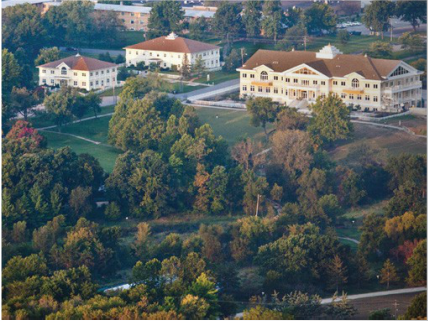
To deal with the continuing growth, the university 11 years ago embarked on an ambitious campaign to reconstruct its campus. Originally built as Parson’s College before it closed in 1973, the MUM campus has torn down 45 old buildings and has invested substantially in renovating a number of others. Additionally, 60-plus new buildings have been constructed on campus. The newest building is the university’s Sustainable Living Center, which, when completed, will be unique in the world, embodying four different sustainable building philosophies and completely off the grid with respect to heating/cooling, electricity, water, and sewage. Pearson says the university’s commitment to sustainability is another attractive feature for many students, citing the campus’ all-organic, vegetarian menu.

Pearson says the university hopes to reach an enrollment of 2,000 in the years to come, with a long-term vision of approximately 8,000 students. To help achieve that goal it has established an endowment campaign with an initial goal of $50 million. Pearson says the campaign has received some very good initial support, and that those funds will be used for scholarships, faculty support, academic programs, and campus development.

Seeing the university grow has been a rewarding experience for Pearson, and he says he believes the education students receive at MUM will give them a consciousness-based approach to decision making that will be needed to solve the world’s greatest problems.

“It’s one thing to change the way we get our power or food, but our students recognize there needs to be a change in the kind of consciousness that created those types of problems, and I’m very inspired by that,” he says.

—Chris Petersen
Copyright 2012 Education Executive Magazine. All Rights Reserved.

Links to the online version with only one photo: http://www.education-executive.com/index.php/higher-education/1125-maharishi-university-of-management and digital edition: http://www.nxtbook.com/nxtbooks/phoenix/eduexec_2012spring/#/64 of the two-page layout containing photos of Craig Pearson, Argiro Student Center, MUM campus, and the Aladdin Food Management Services ad.

MUM President Dr Bevan Morris Suggests Ghana Should Consider Consciousness-Based Education

February 3, 2012
   Education  |  3 February 2012

Consider Consciousness-Based Education
Through 15 Minutes Quiet Time

The President of Maharishi University of Management in the United States, Dr Bevan Morris, says the country should consider the adoption of consciousness-based education through which a learning technique known as transcendental meditation or ‘quiet time’ is used to improve academic performance and discipline in schools.

He explained that transcendental meditation was a simple technique to aid the development of total brain functioning so that students could unfold the inner reserves of brain potentials by increasing their creative intelligence, reducing their stress and anxiety and having greater success in their academic performance.

At a presentation on consciousness-based education in Accra, Dr Morris said scientific evidence was so strong that the technique could change students’ lives in positive ways, adding that more than 51 countries in the world had adopted the technique which was working well for their students.

“They (students) just need 10 to 15 minutes practice in the morning and in the afternoon, added to their regular academic programme. They (students) just sit down comfortably in a chair and close their eyes and follow a simple technique that allows the mind to settle down to a more restful stage until they (students) reach a stage of restful alertness where the whole body is deeply relaxed and the mind is silent and peaceful, and when they come out from that they come out with great joy and energy to go ahead and study what they have to study during the day,” he said.

The act, he said, led to excellent academic results and better behavior where the problem of misbehavior such as fighting, destruction of school property and bullying in school was common around the world.

Dr Morris said in tackling indiscipline, it was not adequate to enforce rules and regulations which students were asked to adhere to.

He said with the evidence and experience all over the world, it would be great opportunity for Ghana to look at the practice seriously to be introduced in schools in the country.

The teachers of transcendental meditation, he said, went through four or five months of intensive study to become skillful, adding that there were already teachers of transcendental meditation in Ghana.

Dr Morris said the university was ready to assist in the implementation of transcendental meditation in the country.

He said in practicing the technique, pre-tertiary students could adopt 10-15 minutes while tertiary students could adopt 20 minutes in the morning and afternoon.

He said in the course of transcendental meditation, students did not need to concentrate on anything but would just relax their mind.

Dr Morris said transcendental meditation was not a religious practice, and that it was only a systematic development of brain functioning and higher consciousness.

“TM comes from an ancient tradition in India, ”he emphasised.

The President of Maharishi Foundation in Ghana, Dr T.K. Orgle, said there were two training centres at Labone and Odorkor.

He said TM was being practiced at a school in Chorkor.

The Headmaster of the Manhean Senior High School, Mr Joseph Amuah, said it was up to the country to decide which way to go, as far as transcendental meditation was concerned.

Source: Emmanuel Bonney – Daily Graphic
Also see Permanent World Peace CAN be created says Dr Morris

Maharishi University’s Rao and Bargerstock published in Management Accounting Quarterly

January 15, 2012

Rao and Bargerstock published in Management Accounting Quarterly

Rao and Bargerstock

Manjunath Rao, a Ph.D. candidate at Maharishi University of Management, and his doctoral thesis advisor, Associate Professor, Andrew Bargerstock,  had a paper published in the Fall 2011 issue of Management Accounting Quarterly, the refereed online journal of the Institute for Management Accountants (IMA).

Rao noticed an apparent disconnect with companies not walking their talk. It seems the more mature lean manufacturing plants are still using the older standard costing methods. The paper, Exploring the Role of Standard Costing in Lean Manufacturing Enterprises: A Structuration Theory Approach, was posted online the first week of the year, and presents the theory and research plan for his dissertation. It will address why a majority of manufacturers continue to use traditional standard cost accounting even as they adopt lean manufacturing.

Rao will attempt to understand the nature of this discrepancy, and demonstrate the need for change, for companies to become more current in the way they do business. The system of Lean Management focuses on adding value to customers while streamlining operations and eliminating waste. It grew out of management principles used by the remarkably successful Toyota Motor Corporation.

Mr. Rao said he is very pleased with all of the support the IMA has given him for this research. “The IMA helped me in collecting data for my research by sending out the survey questionnaire to their members, and last June they invited me to participate in their 92nd Annual Conference at Orlando, Florida.”

Lean Accounting Award from the Lean Enterprise Institute Goes to an Accounting Professor and 2 Ph.D. Candidates

Winners of the LEI Excellence in Lean Accounting Award

In September, 2011, Rao was recognized nationally as one of two Ph.D. students who were awarded the Lean Accounting Student of the Year. An accounting professor and two doctoral candidates received 2011 Excellence in Lean Accounting Awards, sponsored by the nonprofit Lean Enterprise Institute (LEI) at the seventh annual Lean Accounting Summit in Orlando, Florida.

And last month, Rao received a $4,000 research grant from the IMA’s Research Foundation’s Doctoral Student Grant Program. The Program is designed to assist accounting doctoral students who are pursuing research that has the potential to contribute to the management accounting profession.

Accounting Methods: Lean vs. SCVA

According to Lean accounting theory published in numerous books and articles, mature lean manufacturing companies are expected to eliminate the use of standard costing and variance analysis (SCVA). However, field reports suggest that many companies continue to retain SCVA even after they have successfully implemented an effective system of work cell metrics.

SCVA is taught worldwide as the traditional method for controlling costs in manufacturing operations by averaging input costs and quantities over the entire production process. It involves setting quantitative average cost and quantity targets for key categories of inputs: material, labor and overhead. Reports are typically generated each month that summarize and compare actual costs to standard costs. Differences (variances) are investigated to determine root causes of unexpected results.

By contrast, in a lean manufacturing company, work cell teams (typically 6-10 people who perform a few sequential tasks) develop the relevant data they need to control quality and costs in real time (as compared to monthly reports with SCVA). From the perspective of Lean Management, work cell metrics are clearly superior to SCVA reports. Mature lean companies are therefore expected to eliminate the more outdated method of reporting.

Surprisingly, there has been no significant research study that has tested the lean accounting theory that mature manufacturers will eliminate SCVA. Rao’s research will gather such information via survey and he will also collect data to understand why companies are retaining SCVA.

Structuration Theory and Vedic Science

Rao utilized GiddensStructuration Theory, a general social theory model, to test the relevancy and completeness of questions on his survey. In his dissertation, Rao will show how Giddens’ theory mirrors Maharishi’s consciousness-based Samhita concept that explains the relationships among the knower, the known, and process of knowing.

“For a long time there was a debate in Western Sociological Sciences regarding Objective versus Subjective approach to knowledge,” explains Rao. “Giddens adopted a reconciliatory approach by stating that objective and subjective approaches are two sides of the same coin. He formulated the structuration theory wherein he introduced three concepts: Structure (object), Agency (subject), and Systems (wherein duality of structure and agency interact).”

According to Rao, “This three-concept model clearly overlaps with the Samhita model where Maharishi speaks of the same three concepts using the language of Vedic Science: Chandas (object), Rishi (subject), and Devata (process or Systems).”

Giddens also emphasizes the interaction of these concepts in three dimensions: Domination, Signification and Legitimation, which Rao says also mirror other concepts in Maharishi’s Vedic Science, the three gunas, or  fundamental operating principles found in nature (Prakriti) and their doshic counterparts, qualities known as Rajas (Pitta=Domination), Sattva (Vata=Signification) and Tamas (Kapha=Legitimation). If any one of these goes out of balance, problems occur.

To summarize Giddens, the Agency Dominates, through a System, which Signifies, and creates a Structure, which becomes Legitimate. This locks others into the existing interpretation of Reality. People get stuck, and there is no room to change to another way of looking at the world, managing or accounting more effectively on the work being done.

It is human nature to resist change, and that includes companies. A quote from Arthur Schopenhauer (1788-1860) on recognizing truth, accepting a different worldview, a different paradigm, seems very relevant here: All truth passes through three stages. First, it is ridiculed. Second, it is violently opposed. Third, it is accepted as being self-evident.

Research from a Consciousness-Based Education Framework

Rao credits M.U.M. founder, Maharishi Mahesh Yogi, for his “Samhita” concept, the togetherness of three basic elements, Rishi, Devata, and Chandas, or Knower, Knowing, and Known, a unique feature of Maharishi University of Management’s Consciousness-Based Education, which, Rao says, made it easier for him to understand difficult material.  “I was able to grasp the wholeness of the problem without getting lost in the details. It has helped me see the forest without getting lost in counting the trees.”

According to Dr. Bargerstock, Rao’s dissertation adviser, “Manjunath’s research has garnered significant attention by experts in the field of lean accounting.  In June 2011, the IMA invited Manjunath to give a poster presentation of his research plan at their annual conference in Orlando, Florida.  In September, 2011, he was named as one of two Ph.D. students nationally who were recognized as Lean Accounting Students of the Year at the Lean Accounting Summit in Orlando, FL.  In December, Manjunath received a research grant award of $4,000 from the IMA.  And now, he is recognized again by the IMA with the publication of this article.  We are very pleased with the progress of Manjunath’s dissertation.”

This is Mr. Rao’s first published article. “I am really thrilled to have my article published even while working on my Ph.D. dissertation.”  He says, “This has made it easier for me to establish relevance for my research in addressing issues currently faced by the management accounting profession.”

Manjunath Rao is a Certified Cost and Works Accountant from India (Grad “CWA), a Certified Management Accountant (CMA), with MBA and Masters in Accountancy (MSA) degrees from the US. He hopes to complete his Ph.D. in Management by June of this year.

Source: Rao and Bargerstock Article Published in Management Accounting Quarterly.

Reported in Iowa Association of Independent Colleges and Universities: MUM Student Receives National Management Accounting Grant, and in MUM’s Achievements and The Review.

Related articles: Maharishi University MBA Students Win National Business Simulation Competition and Iowa and Nepal Rotary Clubs Provide Well for City in Nepal.

SIERRA: AMERICA’S COOLEST SCHOOLS: Maharishi University of Management

August 22, 2011

The Nonconformist Class | AMERICA’S COOLEST SCHOOLS

Going green may finally be “normal,” but some schools with eco-agendas remain miles from mainstream

By Tim McDonnell

Maharishi University of Management

Courtesy of Shane Ernest

The Beatles’ onetime spiritual adviser, the late Maharishi Mahesh Yogi (sometimes called the “giggling guru”), founded Maharishi University of Management, in Fairfield, Iowa, as a place for “consciousness-based education.” The school’s buildings face east and have a central nucleus, and rooms are aligned with the sun’s movement according to the strictures of an ancient Indian architectural style. The first U.S. university to offer a four-year degree in sustainable living, MUM balances modern clean technology and 5,000-year-old Vedic philosophy based on Sanskrit texts.

The dining hall serves food that’s entirely vegetarian and organic. To graduate, each student is required to have maintained a plot on the campus’s farm. Above, students celebrate the completion of their permaculture class with a feast made of ingredients harvested from their gardens.

Attending to the earth is hardwired into the school’s signature (and trademarked!) practice, Transcendental Meditation. From it, says Robbie Gongwer, the program developer for MUM’s Sustainable Living Center, “students get this subjective experience of an interconnectedness to life.”

Students find their centers at Maharishi

May 6, 2011


The  Spring 2011 issue of DUH Magazine, Drake University Honors Magazine, in Des Moines, Iowa, describes the unique features of living and learning at Maharishi University of Management, in Fairfield, Iowa, including conversations with teachers, administrators, and students. In the editor’s letter, The spark behind this year’s magazine, Editor-in-Chief Jessica Kinkade comments on the theme for their Spring issue, and how the feature article written by Josie Berg-Hammond exemplifies that theme. Here’s an excerpt:

We chose spark … because we wanted to write stories that would get people thinking—that would spark ideas and curiosity. So this magazine is intended as a catalyst—something to inspire you to have new conversations. … And what sparks conversation and change more than differences? And being open to those differences and letting things inspire us?

Our biggest feature story, written about Maharishi University of Management in Fairfield, Iowa, is perhaps the most genuine example of what it means to be open to this spark of inspiration. l can’t remember how I first heard about the Maharishi, but I was shocked to find out the whole school practices Transcendental Meditation every day. No one in Des Moines seemed to know about it, and I got in my head that it must not be a real school. It couldn’t be. But writer Josie Berg-Hammond was determined to get the real story and see what it was all about. She came back from her visit smiling from ear to ear.

Before l’d even read her story, she was so excited about it. She met so many new people and they were all so friendly. They told her about their schedules, how they eat organic foods, meditate every morning, are in bed by 10 p.m. and only take one class at a time. It all sounds so different from Drake, but the people, the core of the Maharishi community, are still just people … just like us. Their university experience has been a little different from ours, but they sparked thoughts in Josie, and that comes through in her story. The differences between two university communities sparked new relationships and conversations, and what is life about if not those new adventures?

This article was featured in their EVOLUTIONS section of the magazine.

Students find their center at Maharishi

Most high school students look forward to college as a time of new experiences: new friends, new classes, new parties. One thing most students don’t think about: meditation. For students at Maharishi University of Management (MUM) in Fairfield, Iowa, however, that’s at the top of the list.

The four-year, accredited university was founded by Maharishi Mahesh Yogi. The school, originally called Maharishi International University, took over the campus of a recently closed university in 1974 and opened its doors to hoards of students eager to learn through Consciousness-Based education. Now, the school has 1,233 full-time students, both undergraduate and graduate. While the school has many non-traditional students going back for second degrees or graduate school, there are many more students who arrive fresh out of high school.

Four years ago, when he was a high school senior, Brian Faulkner, 22, had a tough decision to make. He could go to a school where he could continue playing soccer or go to MUM where he could continue practicing Transcendental Meditation (TM).

“Now I feel like, thank God I came here,” Faulkner says.

Faulkner has been practicing TM since he was about 4, and it was important to him to continue the practice through college. Even though he had been in the habit for a while, Faulkner said his friends were surprised when he decided to go to MUM.

“The vast majority of my friends never knew I did TM,” Faulkner says. “Some thought I was in a cult; others just said, ‘OK, if you’re happy.’”

“It’s not a cult,” says first year student, Supriya Vidic, 26.

Vidic started school at Maharishi after six years of military service. She says she was ready to reach an inner peace she felt she was missing while she served in the military.

“It’s a total 180 from where I came from,” Vidic says. “With the military, I traveled outwards. Here I travel inwards.”

[TRANSCENDENTAL MEDITATION]
Many students find MUM because they’re looking for something different. Students want to focus on themselves just as much as on their schoolwork. For most, the regular practice of TM is crucial to their educational journey.

First year students are enrolled in an introductory course when they first begin at MUM. This gender-separated experience helps ease students into the MUM way of life. One of the most important things students learn in the class is how to practice TM.

TM is not something that someone can begin on his or her own. While anyone can learn, the practice must be taught. In its most basic form, TM is the practice of closing the eyes, sitting still and settling the mind. Students and professors alike believe TM allows the mind to transcend to a point of pure awareness, allowing the mind to rest deeply and the brain to function with more coherence.

Fred Travis, an MUM professor, says it takes about four days to learn TM and about six months to stabilize it.

“We can ask every student who comes here to learn TM because they can do it. It’s not unattainable,“ Travis says. “Once you get the idea of how the mind transcends, you can do it on your own.”

Students meditate for 20 minutes in the morning and 20 minutes in the afternoon or evening. Travis said this rests the brain and is crucial to Consciousness-Based education.

“You settle down to pure wakefulness,” Travis says.

[CONSCIOUSNESS-BASED EDUCATION]
A healthy vegetarian diet, low homework load and TM are all a part of MUM’s system of Consciousness-Based education. Classes at MUM are set on a block system. This means that students go to one class five days a week from 10 a.m. to 3 p.m. Students are completely immersed in one course for a month and then take a three-day weekend and start up another month-long course.

Professor Travis has spent his career crusading for Consciousness-Based education. He suggests that a switch to this type of learning creates a less stressful, more fruitful academic experience for both professor and student.

“Consciousness-Based education says that the student is the core,” Travis says.

The method encourages less homework, more class time on one subject, sleep, exercise and a healthy diet. Students are encouraged to be in bed by 10 p.m. and are never assigned more than an hour and a half of homework each night, leaving them time to hang out with friends or join extra-curricular groups.

Travis believes that this type of lifestyle is much better than the classic education model. Most students at other universities take about five classes a semester and spend varied amounts of time on homework—all-nighters fueled by energy drinks—for different classes, which often leads to a sporadic schedule. Travis doesn’t think that’s right.

“You don’t sleep, you don’t get good food and then you go out and party,” Travis says. “The brain has no time to relax.”

Travis also finds the class structure of traditional universities lacking. Instead of a lecture class with a final exam at the end, he believes students should be interacting with each other and the professor in order to retain information.

“Final exams are structured forgetting,” Travis says. “With active learning, the professor stops talking and lets the students talk.

[THE FOOD]
Just like any other college campus, MUM has a cafeteria where many of the students eat three meals a day. But MUM’s cafeteria is 100 percent vegetarian with mostly local food and vegan options. And in a world of pre-prepared meals, the MUM cafeteria relies on fresh ingredients every day, often newly harvested from its own garden.

Though most people would find the food at MUM to be a huge step up from the classic cafeteria fare, it’s not always easy to get accustomed to it. According to Ila Zeeb, the director of the first year experience at MUM, students don’t always like the food right away. “For some students, this food is a huge change from home,” Zeeb says.

While many students do enroll as vegetarians, others are confronted with a completely different diet.

Graham Torpey, 24, who graduated from Syracuse University and is now a graduate student at MUM, is thrilled with the meal offerings.

“Man, my health was bad when I was at Syracuse,” Torpey says. “This place is a treasure trove for me. Now, I have a great meal every day.”

The students are also knowledgeable about what food is offered in the cafeteria. Brooke Hadfield, 28, a second-year student from Australia, says it’s important to her to know about her food.

“The honey is the only thing here today that I can think of that isn’t organic,” Hadfield says. “I mean, where else do you get organic food for every meal?”

[SOCIAL LIFE]
Once their bellies are full of organic quinoa and locally grown vegetables, many students head back to their dorm rooms for the evening. Of the 1,233 full-time students at MUM, 544 live on campus. At MUM, students have a single room to themselves, which the university cites as a way to ensure that students have their own quiet, private space.

The dormitories don’t discriminate based on age or gender. That means at MUM, where there is an abundance of nontraditional students, a 20-year-old could have a 60-year-old student for a neighbor. Students don’t seem to mind, though, embracing the opportunity to live in harmony with any age.

“I, personally, like the variety and diversity of ages and culture in the dorms,” Hadfield says. “There’s inherent peace in this environment. It’s easy to live amongst other ages.”

When students aren’t doing their hour and a half of homework in their dorm rooms, Hadfield assures that they’re partying just like any other college student. “The social life here is so much fun,” Hadfield said. “I’m more social here than I am anywhere else.”

Although Des Moines may be the “big city” of Iowa, MUM’s home city, Fairfield, has a pretty bumpin’ social scene. Faulkner described the downtown area as “an oasis of creativity.” In a town of about 9,500, Fairfield has more restaurants per capita than San Francisco and a booming art and music scene. Along with its resident university, Fairfield provides young adults with unique social experiences.

Students and professors at MUM are the first to admit their school is different from most. Transcendental Meditation and Consciousness-Based education are crucial to their academic and personal life. Students are joined together not just by school pride, but also by a deeper journey of self-exploration.

“MUM is a place to grow,” Hadfield said. “A place to expand our potential to function in the most healthy way; the most conscious way.”

To see how the article actually looked, click on this title, Students find their center at Maharishi, to download a pdf of it. This article originally appeared in Drake University Honors Magazine, Spring 2011. The staged photos taken by photographer Sarah Andrews and used with this article actually have nothing to do with our students. That was one of the editor’s decisions for the colorful layout. 

Final note: As part of her final school project, Josie creating a website linking Iowa farmers to Des Moines chefs who are serving their food. So if you’re planning on eating locally in Des Moines, check out the Capital Palate.

See this article by Grandview University journalism students: Maharishi University featured in ALT magazine.

Drake University Honors Magazine’s main feature: Students find their center at Maharishi University

May 5, 2011

This post was moved to: Students find their centers at Maharishi.

I’ve removed the old post and replaced it with this newer one. You can access it here: Students find their centers at Maharishi. Now you don’t have to download the pdf of the article to read it, unless you want to see how it was laid out, and I’ve edited down the editor’s letter to the relevant section. It’s an excellent article, and a great example of an intelligent, open-minded student from a different university who was curious enough to want to find out what MUM was all about. She shares what she learned from visiting with students, faculty and administrators at MUM in this wonderful article.

Enjoy and share this with anyone who may be curious to find out more about Consciousness-Based education at Maharishi University of Management, especially potential students. They can always come to one of our Visitors Weekends and experience for themselves what it’s like to be at MUM.

Thank you.

Ken

Report on the Victoria School for Ideal Education

March 10, 2011

Victoria School for Ideal Education

Hilary Hillman, a Community News Specialist for The Daily, files a report on the Victoria School for Ideal Education. Have a look inside this Canadian  independent elementary school in Victoria, BC where children practice Transcendental Meditation twice a day. The younger children perform a simple walking meditation version of the technique, which does not involve any special breathing or centering techniques as mentioned in this report. Children over 10 years of age practice TM sitting comfortably with eyes closed. In these seemingly more progressive times, the introduction of yoga and/or meditation, especially the  Transcendental Meditation technique, is becoming part of an ongoing healthy trend in education.

Also see this wonderful video on the Victoria School for Ideal Education posted in this Message from Monique.

Maharishi University students get academic credit for daily Transcendental Meditation (TM) practice

November 13, 2009

NewsBlaze

Published: November 12,2009
Send to a friend
Letter to the Editor
AddThis

Response to “Hindus Laud University of Colorado-Boulder Over Meditation Center”

Hindus Laud University of Colorado-Boulder Over Meditation Center

It seems that UCB is just starting to catch on. MUM, Maharishi University of Management, located in Fairfield, Iowa, has offered CBE, Consciousness-Based education, for 35 years, where students, faculty, and staff all practice TM, the Transcendental Meditation technique, twice a day.

Students receive RC credit, research in consciousness, as part of their curriculum. Meditation rooms are made available for students to practice their twice-daily non-religious TM technique. And there are two large golden domes over 25,000 square feet each, one for men and one for ladies, where students, faculty, staff, and meditating townspeople all gather twice a day, morning and evening, to practice TM and the TM-Sidhis program, including Yogic Flying, for world peace.

These ancient meditative practices revived by the founder, Maharishi Mahesh Yogi, dramatically lower stress-related risk factors and increase clarity and orderliness in brain functioning. The results show up in students’ academic and athletic performances as well as improved individual and social well-being. Students are happier and more productive, and don’t resort to alcohol or drug abuse, or express violent behavior.

For those who wish to worship according to their own faith, students attend multi-denominational services in town, and a room is also available for Muslim students who wish to use their prayer rugs to pray. MUM’s diverse student population of over 1000 comes from over 65 different countries this year. And enrollment is growing as more and more discover what this unique university has to offer.

All food is organic vegetarian, some of it grown locally in the university’s large green houses. Visit http://www.mum.edu or come for a Visitors Weekend. One of the most popular Visitors Weekends is the annual David Lynch Weekend. Also check out the David Lynch Foundation website for details.

Ken Chawkin
Media Relations Director
Maharishi University of Management
The David Lynch Foundation
E: kchawkin@mum.edu
W: http://www.mum.edu
W: http://www.davidlynchfoundation.org
B: https://kenchawkin.wordpress.com

David Lynch Foundation Honored

September 10, 2009

Picture 40

Naturalheroes

THE 
DAVID LYNCH 
FOUNDATION

Promotes a Peaceful World  For Our Children

By Tom Citrano

NATHEROSDavidLynch“In today’s world of fear and uncertainty, 
every child should have one class period a day to dive within himself and experience the field of silence – bliss – the enormous reservoir of energy and intelligence that is deep within all of us. This is the way to save the coming generation.” David Lynch, founder and chairman of the David Lynch Foundation for Consciousness-Based Education and 
World Peace.

This month’s Natural Heroes are Mr. Lynch and the people at the David Lynch Foundation. Director and Producer David Lynch (Blue Velvet, Twin Peaks, Elephant Man, Eraserhead, Mulholland Drive) started his foundation to provide funds for students to learn meditation through Transcendental Meditation centers, hospital-sponsored wellness programs, boys and girls clubs, before-and-after school programs and in schools when invited by the administration.

Instruction is voluntary and provided to children after parental permission has been granted and at no cost to the family, organization or school. This year the David Lynch Foundation granted millions of dollars guaranteeing thousands of students, teachers and families a chance to learn meditation.  The Foundation also funds independent research to study the effects of meditation on creativity, intelligence, brain function, academic performance, ADHD and additional learning disorders, substance abuse and depression.

Lynch believes that stress is taking a big toll on children today. He looks for a day when developing student’s creative potential is part of every school’s curriculum. David Lynch has been a TM practitioner for over 30 years and explains, “There are hundreds of schools, thousands of students, who are eager to relieve stress and bring out the full potential of every student by providing this Consciousness-based education.”

The David Lynch Foundation targets the benefits of TM for students in the following areas:

CLASSROOM STRESS

Children need to feel safe in school because pressure, stress and fear undermine learning. Dr. William Stixrud, Ph.D., a clinical neuropsychologist in Silver Spring, Maryland, specializing in work with children and adolescents, has studied the effects of stress on the developing brain and had this to say about the David Lynch Foundations programs, “Educators have long known the optimal mind/body state of a student is one of relaxed alertness. The question has been how does the student get there? The answer is The Transcendental Meditation Program.”

CLINICAL DEPRESSION
Ten million children in America have been diagnosed as clinically depressed and take antidepressant medications. Most of these medications are categorized as having serious side effects. A study (funded in part by the Daimler/Chrysler Fund and the General Motors Foundation) on meditating children at an inner-city Detroit middle school confirms what previous gathered data and research has documented: The Transcendental Meditation program increases happiness, self-esteem, and self-worth, while also reducing anxiety and depression.

LEARNING 
DISORDERS
If left untreated, ADHD impacts the child in several ways – causing impulsivity, distractibility, hyperactivity and inattentiveness. ADHD is also associated with sleep disorders, depression, bipolar disorder and other disorders. Almost 90% of children diagnosed with ADHD are on medications. Linda Handy, Ph.D., educator and principal of The Waldorf School in Silver Spring, Maryland believes it’s easier for teachers to hold the attention of students who meditate, “Transcendental Meditation has a great effect on students’ learning ability. Teachers can teach more – so students can learn more.”

HIGH BLOOD PRESSURE

High blood pressure is no longer an adult disease. Studies show adolescence is a critical time for the development of hypertension and other coronary disease risk factors. Increasing rates of childhood obesity are further driving up the numbers of children and teens living with hypertension. Vernon Barnes, Ph.D., research scientist at the Georgia Prevention Institute of the Medical College of Georgia in Augusta studied the effects of TM on a random sample selected from a group of 5,000 teens with hypertension. Barnes had this to say about the results, “Decreases in blood pressure observed in the present study have clinical significance. The decreases, if maintained into adulthood, are enough to potentially decrease a child’s long-term risk for heart disease and stroke.”

FULL BRAIN POTENTIAL

Science has confirmed that our brains are not fully developed at birth. As we grow and mature, the brain is being recreated to support all of our new and changing thoughts, decision and behavior. There are different areas of the brain for seeing, hearing, thinking, feeling, etc. The part of the brain that is most critical for evaluating all the information is the frontal lobes. Stressful experiences keep the frontal lobes from developing. Research verifies the TM technique is unique in its ability to exercise this critical part of the brain – to make the brain healthier and better able to work together as a whole.

ACADEMIC ACHIEVEMENT

In his book, A Record of Excellence, Ashley Deans, Ph.D., director of The Maharishi School in Fairfield, Iowa recounts the achievements of his school, which is accredited by the State of Iowa and the Independent Schools Association of the Central States, “Hundreds of scientific studies on Transcendental Meditation program and more than 30 years of classroom experience should be enough to convince anyone that Consciousness-Based education can make education complete, healthy, harmonious and productive.”

For more information about 
the David Lynch Foundation 
and its programs, visit davidlynchfoundation.org.

If you have a Natural Hero in 
your life, send an email to: heroes@nugreencity.com and tell us about that special someone who’s making our city and the planet a better place.

http://www.nugreencity.com/2009/09/naturalheroes-3/