DONOVAN to Perform Free Online Benefit Concert

January 22, 2010

DONOVAN IN CONCERT LIVE ON THE WEB SUNDAY

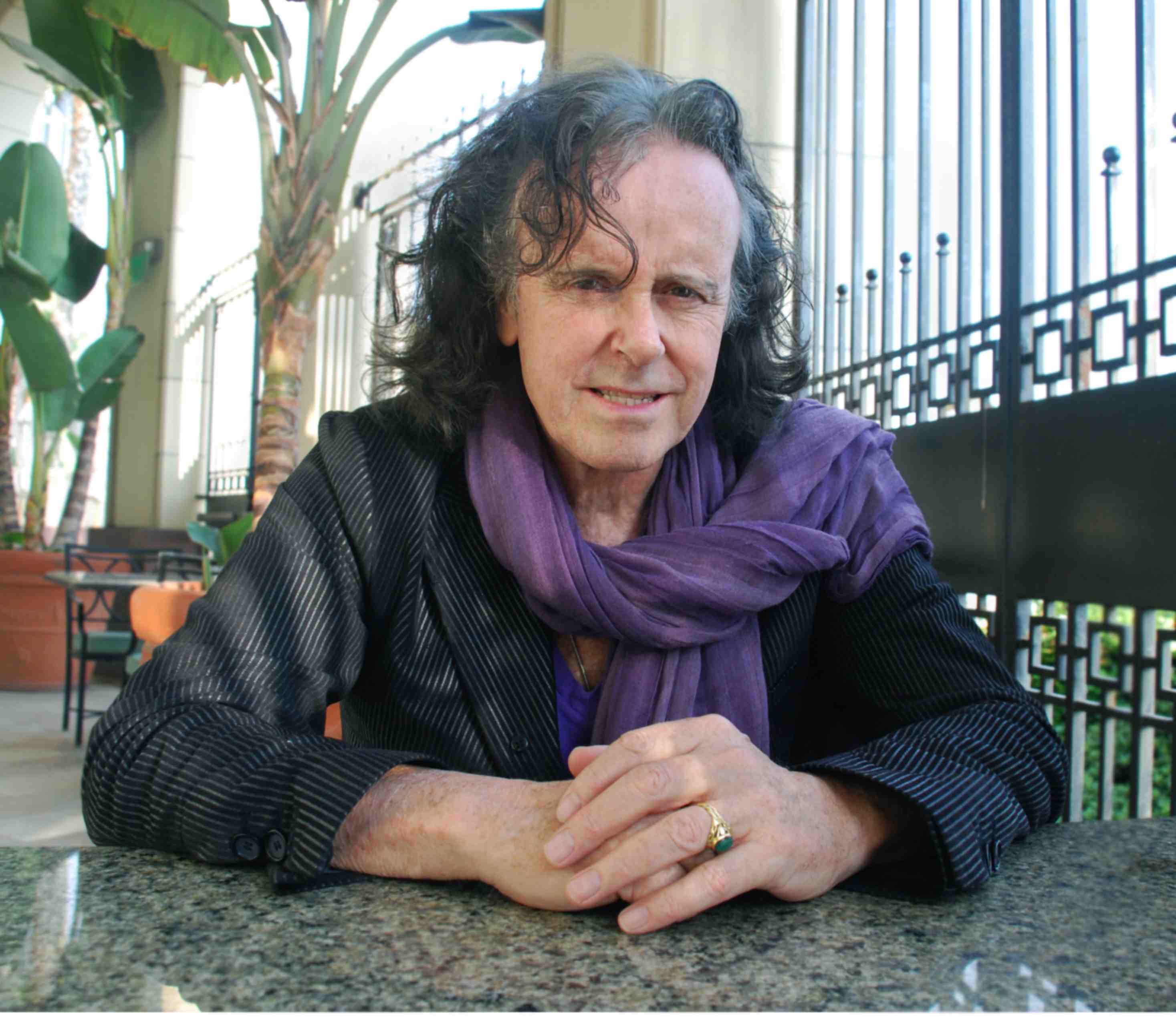
Donovan will be giving a concert at Munich’s Cuvilliés Theater as the start of his activities on the Social Web; the performance will be streamed live on Donovan.ie

Donovan is inviting fans and the online community to watch his sold-out concert live on the Internet this Sunday. He will perform his hit songs and cult classics as well as showcasing songs from his new work RITUAL GROOVE as a run up to his forthcoming world tour 2010/2011. Special guest will be talented musician Claudia Koreck, one of the hottest newcomers in Germany.

The show will be streamed live Sunday, January 24, at 8:30 p.m. CET worldwide thanks to the professional live streaming technology and video production of TV1.EU, and a true broadband connection by BT, British Telecom. This World Wide Charity Concert is to benefit ‘Schools Without Stress’ (Germany). Also see DLF.TV, and the David Lynch Foundation. http://twitter.com/DAVID_LYNCH

The Link to the Live Stream will be on Donovan’s new Website http://www.donovan.ie/live. News of the free live webcast concert is also on Donovan’s Facebook and Twitter pages. His fans just love the idea of streaming the concert! http://www.facebook.com/DonovanOfficial & http://twitter.com/donovanofficial.

“Donovan fans worldwide now have the opportunity to take part in an extraordinary concert experience directly from their computers at home. While watching the concert Donovan’s Online Friends can share their experience on facebook or twitter”, says Monty C. M. Metzger, CEO of the Social Media Marketing Agency, Ahead of Time. http://twitter.com/montymetzger

This “Social Media for Social Activism” musical event will support the charity project “Schule ohne Stress” (Schools without Stress) and will increase awareness about the positive effects of the Transcendental Meditation (TM) technique on creativity, intelligence, brain functioning and academic performance.

The legendary folk-rock pop troubadour Donovan began his career as an itinerant folk musician and created acoustic hits like Catch The Wind, Colours, Mellow Yellow, and Buffy Saint Marie’s Universal Soldier.  Other megahits include Jennifer Juniper, Sunshine Superman, Hurdy Gurdy Man, Season of the Witch, There is a Mountain, Atlantis, and other beautiful songs, which appeared on later albums, like Sutras, produced by Rick Rubin.

Dr. Donovan Leitch is a Green-Activist and received a Doctor of Letters from the University of Hertfordshire, an honorary medal as “Officer of Arts & Letters” by the French government, and was named BMI Icon in 2009.

Donovan was one of the few artists to collaborate on songs with the Beatles, contributing lyrics and vocals to the song Yellow Submarine. Donovan influenced Paul McCartney, John Lennon, and George Harrison in their guitar styles, and during his career played with folk music greats Pete Seeger, Joan Baez, and Bob Dylan, as well as rock musicians Jimmy Page of Led Zeppelin and Brian Jones of the Rolling Stones.

This is Donovan’s first global World Wide Web performance—a musical historic event. The concert is sold out! Viewers wishing to join Team DONOVAN and make a donation are invited to visit betterplace.org. Donations start from 1 Euro! http://www.betterplace.org/groups/donovan

LAFCA Choose David Lynch’s “Mulholland Drive” Best of the Decade

January 12, 2010

Best of the Decade: “Mulholland” Tops LA Critics’ List

by Peter Knegt (Updated 5 hours, 22 minutes ago)
posted on January 12, 2010

An image from David Lynch’s “Mulholland Drive,” named the best film of the decade in a survey by the LAFCA.

The Los Angeles Film Critics Association (LAFCA) announced their selections for the best of the 2000s, with “Mulholland Dr.,” from director David Lynch, topping the list.  The LAFCA’s choices were announced today by Brent Simon, President of LAFCA. This is the organization’s inaugural survey of the decade in cinema.

“Famously salvaged from a rejected TV pilot, Lynch’s film stands as both a cautionary tale and a mascot for the triumph of art and personal vision in an industry that, from where we sit, often seems actively devoted to the suppression of both,” the organization said in an essay announcing its choice.

“Deep love, respect and gratitude to the L.A. Film Critics Association for choosing Mulholland Dr. as the film of the decade,” said director David Lynch when informed of the distinction, in a statement. “I am really thrilled by this honor, thank you.”

“Mulholland Dr.” beat out 189 other selected titles, which were chosen by 41 LAFCA members who participated in the vote. In 2001, “Mulholland Dr.” was the group’s runner-up for best picture, placing second to Todd Fields’ “In the Bedroom.”

The film also topped a recent list of the best 150 movies of the decade published on the Film Comment website, and the recent indieWIRE survey of nearly one hundred film critics and bloggers, with Wong Kar-wai’s “In The Mood for Love” at number two and Edward Yang’s “Yi Yi” at number three. “In The Mood For Love” was surprising omission from the LAFCA list.

The top 10 Films of the Decade list from LAFCA:

1. Mulholland Dr. –  David Lynch
2. There Will Be Blood –  Paul Thomas Anderson
3. Eternal Sunshine of the Spotless Mind –  Michel Gondry
4. Brokeback Mountain –  Ang Lee
5. No Country for Old Men –  Joel and Ethan Coen and Zodiac –  David Fincher (tie)
6. Yi Yi –  Edward Yang
7. 4 Months, 3 Weeks and 2 Days – Cristian Mungiu and The Lord of the Rings – Peter Jackson (tie)
8. Spirited Away –  Hayao Miyazaki
9. United 93 – Paul Greengrass (tie) and Y Tu Mama Tambien –  Alfonso Cuaron (tie)
10. Sideways –  Alexander Payne

The rules of the selections, as explained by the LAFCA: “Each critic was invited to submit a weighted ballot of 10 films. On ranked ballots, the No. 1 choice received 10 points, No. 2 received 9 points, No. 3 received 8 points, and so on. On unranked ballots, each film received 5.5 points. The organization freely allowed votes for franchises (i.e., The Lord of the Rings trilogy), short films (The Heart of the World), films that premiered at festivals in the ‘90s but didn’t play U.S. theaters until the ‘00s (Audition), films that premiered at festivals in the ‘00s but won’t play U.S. theaters until the ‘10s (Wild Grass), and even films that were made four decades ago (Army of Shadows).”

Check out the LAFCA’s 2009 awards here.

A personal note: How auspicious, as today, Jan 12, is also the birthday celebration of David’s guru, His Holiness Maharishi Mahesh Yogi, founder of the TM technique, of whom David is making a documentary film.

Common Relaxation Technique Can Help Lower Your Blood Pressure and Protect Your Heart

January 11, 2010

Mercola.com bills its free, twice-weekly newsletter as “The World’s Most Popular Natural Health Newsletter.”  Each e-mail has 4-5 timely health tips, most of which seem to be based on recently published research.


Common Relaxation Technique Can Help Lower Your Blood Pressure and Protect Your Heart

Posted by: Dr. Mercola
January 09 2010 | 4,653 views

A just-published study suggests the practice of meditation may bring cardiovascular and mental-health benefits.

The research, followed close to 300 students, half of whom practiced transcendental meditation for 20 minutes once or twice daily over three months. A subgroup of subjects in the meditation group who were at increased risk for hypertension significantly lowered their blood pressure and psychological distress, and also bolstered their coping ability.

The average reduction in blood pressure in this group — a 6.3-mm Hg decrease in the top (systolic) number of a blood pressure reading and a 4-mm Hg decrease in the lower (diastolic) number — was associated with a 52 percent reduction in the risk of developing hypertension in the future.

Meditators who were not at increased risk for hypertension saw a reduction in psychological distress, depression, and anxiety as well as increased coping ability.

Sources:

U.S. News & World Report

American Journal of Hypertension, December 2009

Dr. Mercola’s Comments:

As the new year begins and you resolve to make healthier lifestyle choices, I strongly encourage you to add a few minutes of meditation to your daily routine.

Just 20 minutes a day can begin to make a big difference in how you feel mentally, physically and emotionally.

When your mind is calm and your emotions are within your control, you’re in a much better position to tackle all your normal responsibilities plus the goals you’ve set for yourself.

Feelings of stress and overwhelm that keep you stuck in unhealthy behaviors can be greatly relieved by a regular practice of meditation. As the clouds in your head clear and anxiety is minimized, you’ll be amazed at how energized and capable you feel.


Community Comments

Falk
Posted On Dec 19, 2009

I suppose for the same reason that history repeats itself we find that a study now shows that meditation can elicit positive changes in our physiology and mental state.  This is NOT new news.  I learned TM back in the early 90’s and was made aware of studies at that time showing that TM could have a positive effect on hypertension among other things.  We seem to forget what we already know, over and over again.

BLockton
Posted On Jan 09, 2010

Dr. Mercola, I’m curious why when reporting a study citing transcendental meditation as the specific modality used you would then turn around and attribute the results to other meditation techniques that weren’t studied. There was no basis from the study reported to leap to that conclusion. It strikes me as being somewhat akin to quoting research that perhaps found that Lexus has a high safety rating in front-end impacts, and then turning around and recommending that your readers buy Yugos, Fords, and any other car of their choice if they want to stay safe in a front-end collision because the study showed that if you were in a car during a front-end collision, you would be safe. Whatever the merits of the other car manufacturers, even if they are equally safe or safer, the quoted study would only have talked about Lexus, and the results couldn’t be extrapolated to other cars.

In the case of this meditation study, the results were specifically attributed to transcendental meditation and not to all meditation techniques, so the results cannot be legitimately extrapolated to other meditation techniques.  Faulty analysis, I’m afraid, but you may not have been aware that there are differences between techniques of meditation, and differences in the physiological response to those techniques.  In fact there are myriad studies that show other forms of meditation have not demonstrated the same benefits as TM. – (Oh, and as at least 3 of the researchers are known to me as being instructors of the transcendental meditation program as taught by Maharishi Mahesh Yogi, there is no doubt they were referring to the particular form of meditation and not using “transcendental meditation” as a generic term.)

Hope this was helpful.

kennyji
Posted On Jan 09, 2010

With reference to citing TM studies and comparing them to other forms of meditation, there have been several published meta-analyses comparing the Transcendental Meditation technique to many other relaxation and meditation methods. It was statistically found that the effect size on certain variables like anxiety, and other risk factors, was twice as large with TM than with the other practices, which were no more effective than placebo. A paper, including a visual summary of the meta-analyses, Five Meta-Analyses Comparing the Transcendental Meditation Program with Other Meditation and Relaxation Techniques, can be found at TruthAboutTM.org. http://bit.ly/4TWDIA

Neural imaging and EEG studies indicate that TM practice creates a unique brain pattern: it is the only meditation technique known to create widespread brainwave coherence. The TM technique also produces deeper rest than other practices, and studies show the technique to be more effective at reducing anxiety and depression and increasing self-actualization. A website, Ask The Doctors, discusses results from other forms of meditation and TM at http://bit.ly/5z087e.

Also, take a look at some of the peer-reviewed published studies on the Transcendental Meditation technique at this site: http://bit.ly/RHgA5.

Over 40 years, and 700 scientific research studies later, the TM technique continues to demonstrate the health benefits to mind, body, and behavior, for the individual and society as a whole. Further studies continue to add to this impressive body of research on the most widely studied and practiced technique for health and human development.

Thank you for this opportunity to share this information with you and your readers.

Max Perelman to present “The Green Dragon” at M.U.M. and discuss Sustainable Building in China

January 9, 2010

The Sustainable Living Department of Maharishi University of Management will offer a free showing of the film, The Green Dragon, in Dalby Hall on Monday, January 11, 8:00 pm, at the Argiro Student Center.

The Green Dragon, a documentary film, tells the story about the potential for expanding sustainable construction and development in China. This film portrays the sheer scale of China’s construction industry while engaging the viewer in the reality of how this industry works. It also provides an in-depth discussion of the barriers and opportunities for China to ‘go green.’

“The rapid development of China’s green building movement, from nothing in 2000 to what is now, approximately 4 million m2 of green building construction (not including sustainable developments), is a story worth telling,” says Ken Langer, President, EMSI, an international leader in green building and sustainable community design consulting. For reference, the US now has 12.5 million sqm after 30 years of a green building movement.

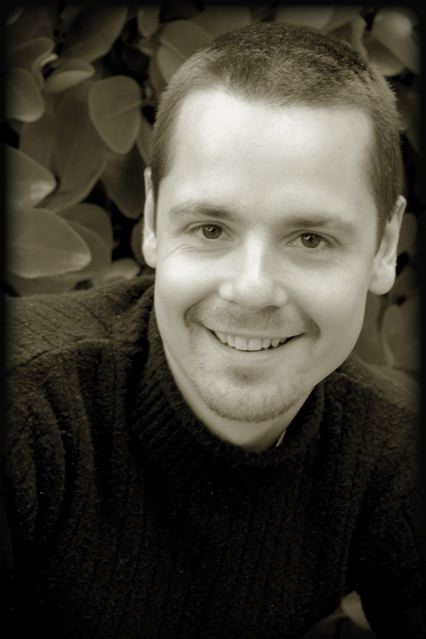
Max Perelman

Max Perelman is the research director and co-producer of the Green Dragon Media Project,  a 9-week research and filming expedition to 9 cities along China’s east coast. Interviewees included Chinese government officials as well as the leaders of major developers, professional services firms and product manufacturers.

Based in California, Max Perelman will be in Iowa to show the film, followed by a Q & A session. “Before making this film I had no idea of what an amazing journey I was embarking on. I had been told that over half the world’s construction takes place in this one country, but only when you see it do you believe it.”

Max Perelman is a LEED Accredited Professional and is a project manager with BuildingWise, LLC a high performance building consulting firm headquartered in Moss Landing, CA. Max is also the president of American Environmental & Agricultural, Inc., an import/export and trade consulting firm specializing in environmental technologies and focused on trade between Asia and North America. He is also an advisor to the Joint US-China Cooperation on Clean Energy. Max speaks and reads Japanese and Mandarin Chinese.

Max has a BA from Cornell University, as well as an MBA and MA in International Environmental Policy from the Monterey Institute of International Studies. He has presented at a number of green building conferences including the USGBC’s Greenbuild 2007 in Chicago and WestCoastGreen 2008 in Silicon Valley. He has also published research in the Woodrow Wilson Center’s China Environment Series.

Max’s recent volunteer work includes fundraising for strawbale construction in the Chinese provinces of Heilongjiang and Sichuan, and volunteering for the local Pacific Grove, CA city government as a Planning Commissioner.

While visiting M.U.M. and Fairfield, Max Perelman will also meet with students, faculty, and community leaders, and anyone else interested in sustainable building, international environmental policy, and urban development in China and the US.

This event is free and open to the public.

For more information, email sustainableliving@mum.edu and visit the film’s website www.greendragonfilm.com.

ABC Nightline News Report on TM, M.U.M., Maharishi Vedic City, and David Lynch in Iowa

January 8, 2010

A positive Iowa news report for your enjoyment and edification. (Postponed again, sorry.) Just aired last night, July 5, 2010. http://bit.ly/cDxWqj


http://abcnews.go.com/Nightline/transcendental-meditation-vedic-city-iowa/story?id=9218475

Transcendental Meditation Thrives in Iowa
Adherents of Transcendental Meditation Have Called Hawkeye State Home Since ’70s
By John Berman and Maggie Burbank
Jan. 8, 2010

When you think of Iowa, you think of cornfields, you think of caucuses, you think of old-fashioned country-living.

Chances are, you don’t think of meditation <http://abcnews.go.com/Entertainment/popup?id=7249295>  and communal living.

Welcome to Maharishi Vedic City, Iowa — the only city in the country built on the tenets of transcendental meditation <http://abcnews.go.com/Health/MindMoodNews/story?id=7263240> , for meditators, by meditators.

Meg and Erik Vigmostad moved here from St. Louis in 1982.

“We wanted to come to a meditating community,” said Meg Vigmostad. “We had two children at the time, one of them was an infant, and we felt like it was the best place to bring up our children <http://abcnews.go.com/Health/MindMoodNews/story?id=7263240> .”

Watch the full story tonight, Jan 8, 2009 on “Nightline” <http://abcnews.go.com/nightline>  at 11:35 p.m. ET

Vigmostad acknowledged that the couple’s families thought they were “crazy” for making the move. Crazy, because those words, “transcendental meditation,” sound, well, different. Many people first heard of transcendental meditation, or TM, in the 1960s, when the Beatles started following Maharishi Mahesh Yogi, the official founder of TM.

“Transcendental meditation is a simple technique practiced for about 15-20 minutes sitting comfortably in a chair with the eyes closed,” said Bob Roth, a national director of the TM program. “It allows the body to get a profound state of rest while the mind just settles down and experiences a state of inner wakefulness, inner calm, inner coherence.”

The followers of Mahesh Yogi — mostly from East and West Coast universities — moved to Iowa en masse in 1974 to set up their own college, the Maharishi University of Management. The group chose Iowa because that is where they could find the land.

Now the settlement features two huge domes, one for men and one for women, with residents streaming in to meditate together twice a day.

But at the university and in the city, the commitment to Vedic principles of natural law and balance, derived from ancient Sanskrit texts, goes far beyond meditation. The community has banned the sale of nonorganic food within its boundaries. And that’s not all.

“The primary characteristics of Vedic architecture, the most obvious one, is that ideally, buildings face east, the direction of the rising sun,” said Jon Lipman, the country’s leading Vedic architect.

‘Greater Happiness’
Lipman says the buildings at the university and most new houses in town are constructed in line with ancient precepts.

“Just like the organs in the human body, there is a right place for different kinds of functions within a building,” Lipman said.

“And so, a kitchen is typically in one location. A living room in a house is typically in another location.”

Every Vedic building has a silent core known as a Bramastan, which is lit by a skylight and is never walked on. Lipman claims miraculous effects.

“The results are that, families find that their lives are improved, that there’s greater family harmony, that there is greater financial success, there’s greater happiness,” said Lipman. “There are many many cases where members of a family had disharmony between them, and it dissolved when they moved into a Vedic home. There are many cases where even such things as chronic diseases were abated by moving into a Vedic home.”

Lipman said “it’s a real challenge” to be poor, unhappy or unhealthy if you live in a Vedic building.

The Vigmostads live in a Vedic house, and seem like happy customers.

“It feels harmonious, it feels orderly, there’s a lot of silence here that was definitely not in our other house that we owned,” said Meg Vigmostad.

The talk of order and inner peace might sound unbelievable. But it is also the work of Vedic City to make it all … believable. Fred Travis, director of a university facility called the Center for Brain Consciousness and Cognition, demonstrated an EEG monitor of neurological electrical activity that he said shows that TM makes the brain more organized.

“What this is measuring is the electrical activity of the brain,” Travis explained as a member of the community hooked up to the machine sat and meditated.

“You see this one going up and down?” Travis said, pointed to a gauge. “Look at the one next to it. It goes up and down in a similar way. This is called coherence. When the similarity of two signatures are very close, it suggests those two parts of the brain are working together.

Neurologist Gary Kaplan, a proponent of TM, said such “coherence” will bring happiness, success — even world peace.

“What we notice is that this electrical activity becomes more harmonious or coherent between left and right hemispheres,” Kaplan said. “There have been studies that have documented that the TM technique, when practiced in large groups, seems to have some effect on society in general, whether it’s in war-torn areas where people are sitting to meditate together, or in high-crime areas that the trends reverse when you have larger groups meditating together.”

David Lynch and TM
It is a lot to digest — but then you don’t really have to. The TM followers insist they are not a cult. They all have normal jobs, for the middle of Iowa, and they are not out to recruit you. They just want you to know the option is there.

Famed filmmaker David Lynch spends a lot of time in Vedic City. He started the David Lynch Foundation, which, in the last four years, has provided scholarships for over 100,000 kids to learn to meditate for free in schools across the country.

“It’s not a religion. It’s not against any religion, it’s not mumbo-jumbo. It truly does transform life,” Lynch told ABC News. “Kids come to school and they meditate together for 15 minutes in the morning. And before they go home they meditate for 15 minutes. A lot of them come from, you know, bad situations, and so this gives them this thing you know, at the beginning and the end of the day, the rest of the time you just watch the violence stop. Watch relationships improve. Watch happiness in the hallways, in the classroom, watch creativity flow more and more, watch that heavy weight that we are living under gently lift away.”

“Nightline” was told there wasn’t enough time to properly learn transcendental meditation on a short trip to Vedic City. But to get a feeling of the Vedic way of life, we did visit the Ayurveda Health Spa in Vedic City — the leading spa of its kind in the country. Ayurveda is a system of health and healing involving food and behavior that originated in India thousands of years ago.

“We take your pulse, we put three fingers on the right hand,” explained Mark Toomey, an Ayurvedic health expert at the spa. “And it’s what I would say is like plugging into the inner intelligence of the body.”

Toomey said he can learn a lot from feeling a person’s pulse. He demonstrated on our correspondent.

“It’s a strong pulse,” Toomey said. “That means that, good expression of intelligence. It’s clear. Your pulse has a little bit of tension there, so maybe you’re working a little too hard, too many deadlines.”

Next up was the Shirodhara treatment.

“So what we’re going to be doing is pouring this oil for about 20 minutes on your forehead, in a continuous stream,” said Toomey. “Your job is just to relax and enjoy.”

And what’s so wrong with that? In Vedic City, they have made that their way of life … in the middle of Iowa.

“We really have all we need here,” said Meg Vigmostad. “You can go to a city anytime. But this is sort of a haven, you know? And it’s a place of comfort, and community.”

Copyright © 2010 ABC News Internet Ventures
——————————————————–

Here are two of my favorite famous relevant quotes on understanding truth and accepting the changes they bring for the better—a paradigm shift.

All truths are easy to understand once they are discovered;
the point is to discover them.
— Galileo Galilei (1564–1642)

All truth passes through three stages.
First, it is ridiculed. Second, it is violently opposed.
Third, it is accepted as being self-evident.
— Arthur Schopenhauer (1788-1860)

Amazing Video: EXTREME SHEPHERDING

January 5, 2010

These creative characters (BaaaStuds) took to the hills of Wales armed to the teeth with sheep, LEDs and a camera, to create a huge amazing LED display. Of sorts. Looks like they did it as a promotional video for the Samsung LED TV. CBS interviewed these Welsh shepherds and got the story behind this hugely successful (around 14 million views by now) viral video campaign. It seems Samsung commissioned a commercial in which lit up sheep move to choreographed movement, Elizabeth Palmer reports. Harry Smith spoke with the Scottish men behind the sheep.

Coalescing Poetry: Creating a Uni-verse

December 31, 2009

COALESCING POETRY
(into seven haiku forms)
Creating a Universe

Poetry began
the process of creation
deep within itself

the first sound came from
a vowel in the bowel
of the universe

but it soon collapsed
choking on a consonant
with nowhere to go

looking to itself
it remembered what it was
and started dancing

tapping syllables
the sound fractured into forms
causing attraction

elements combined
into a cosmic language
sounding out all things

same thing with these words
as they break and make themselves
into poetry

© Ken Chawkin

For more details on this transformation, see this blog post with thoughts on language, translation, and creation.

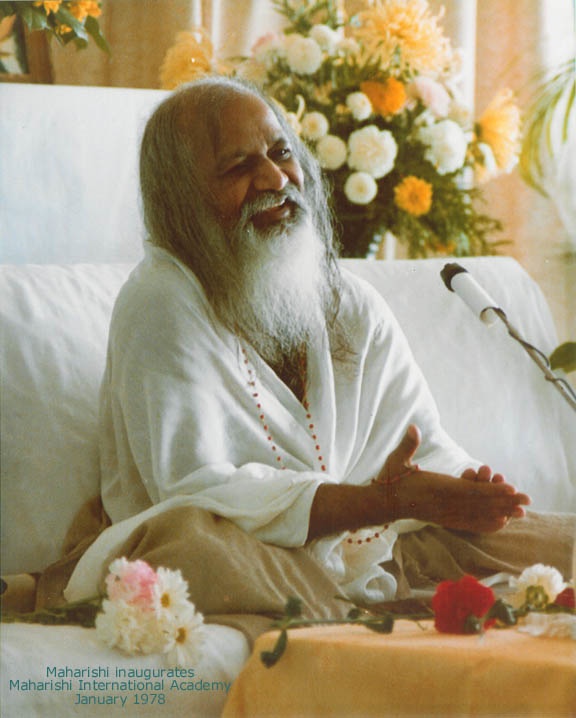
Maharishi in Canada, January 1978

December 28, 2009


Maharishi Mahesh Yogi

Jai Guru Dev

Maharishi International Academy

Kingsway, Lake of Bays, Ontario, Canada

Mailing Address:
P.O. Box 6500, Huntsville, Ontario, P1H 2J8 Canada
Telephone: 1-705-635-9041
Fax: 1-705-6359686
E-mail:
maharishiworldpeacebay@maharishi.ca

An email from Canadian friends.

Silence

December 28, 2009

SILENCE

Silence vibrating is Creation.

Silence flowing is Love.

Silence shared is Friendship.

Silence seen is Infinity.

Silence heard is Adoration.

Silence expressed is Beauty.

Silence maintained is Strength.

Silence omitted is Suffering.

Silence allowed is Rest.

Silence recorded is Scripture.

Silence preserved is Our Tradition.

Silence given is Initiating.

Silence received is Joy.

Silence perceived is Knowledge.

Silence stabilized is Fulfillment.

Silence alone is.

—author unknown

The poem about Silence was written by a course participant on the Teacher Training Course (TTC) held in Mallorca, 1971. At the end of the evening meetings, Maharishi often asked if anyone had a poem they would like to read out. One of the course participants (CP’s) read out his poem, “Silence”, which has been incorrectly attributed to Maharishi. This clarification came from someone on that course.

Also see Telling the Story of Silence by Ken Chawkin.

Mellow Fellow Donovan

December 28, 2009


MELLOW FELLOW; Crowned a musical icon, Donovan has other priorities…: such as introducing Scotland to transcendental meditation

By JOHN DINGWALL

He is the singer-songwriter who helped out The Beatles.

And his music is still enjoyed four decades after he found fame thanks to a brilliant back catalogue that includes hits such as Mellow Yellow and Hurdy Gurdy Man.

Donovan, 63, has recently been recognised as a legend with a BMI Awards Icon Award but talking to the singer there are none of the airs and graces you might expect from someone who can regard himself as being right up there with the legends of pop and rock royalty.

Instead, Donovan is down to earth. And right now he is more concerned with saving Ayrshire’s River Doon from environmental catastrophe than bragging about his own career highs.

To help the river, Donovan has put a new melody to the famous Burns poem The Banks O’ Doon in the year of Homecoming Live.

His rendition of the Burns poem aims to highlight the plight of the Doon, which is under threat from new power company plans to divert the famous river, which inspired many of Burns’ famous poems.

Donovan revealed: “Everything that can be done to save it is so important. I’ve even recorded a song to raise awareness called Save The Doon, which is available on iTunes.”

Instead of trying to plug his music, Donovan wants Scots to get behind a petition to save the river, insisting I mention http://www.savethedoon.com.

Clearly a man with a conscience, Donovan is finally being recognised for his influence on pop and rock despite starting out as a folk musician.

His BMI award recognises the UK and European songwriters and publishers of the past year’s most played BMI songs on US radio and television. The Icon designation is given to BMI songwriters who have bestowed “a unique and indelible influence on generations of music makers.”

He has joined an elite list of past honorees that includes Bryan Ferry, Peter Gabriel, Ray Davies, Van Morrison, the Bee Gees, Isaac Hayes, Dolly Parton, James Brown, Willie Nelson, Hall & Oates, Paul Simon, Steve Winwood and many more.

It’s a fitting tribute to the singer who transformed popular music in the 1960s and went on to build a legendary career. In the 1960s, he enjoyed 11 consecutive Top 40 hits, including Mellow Yellow, Sunshine Superman, Wear Your Love Like Heaven, There Is a Mountain, Lalena, Epistle to Dippy, Atlantis, Hurdy Gurdy Man, and Jennifer Juniper, all of which he wrote.

His songs have contributed to the soundtracks of films and TV series including Goodfellas, Election, Dumb and Dumber, Rushmore, The Simpsons, Nip/Tuck, Ugly Betty and Clueless.

A huge influence on The Beatles, Donovan became one of an elite handful of artists who collaborated on songs with the band.

He recalled: “I was a friend of The Beatles and I remember being at my place in London one Sunday morning and there was a knock on the door. It was Paul McCartney standing there with his guitar.

“He said, ‘I’ve got this song but I’m having trouble with the lyrics.’ So I told him to come in and he sang a bit of Yellow Submarine. I went into the other room and worked on it for a bit then came back out and sang him a line for the song.

“He said, ‘That’ll do.’ It was funny because The Beatles were really famous and almost to prove the point a policeman came to the door and said, ‘Mr. McCartney, is that your car parked there?’ In those days on a Sunday morning, the streets would be deserted. There was Paul’s sports car badly parked. Instead of giving him a ticket, the policeman asked if he could have the car keys to move it for him. That was the way it was in those days. Even then The Beatles were like royalty.”

Donovan was just 18 years old when he made his first records in 1964, immediately drawing comparisons with Bob Dylan.

He said: “Every British band from the Stones to the Beatles were copying all the American pop and blues artists – this is the way young artists learn. There’s no shame in mimicking a hero or two – it flexes the creative muscles and tones the quality of our composition and technique. I sounded like him for five minutes – others made a career of his sound.”

While Beatlemania was gripping the UK and the US, in 1965, Donovan’s song Catch the Wind earned an Ivor Novello Award for best contemporary folk song. It was the first time the honor was bestowed on an artist’s debut single. Hard at work on a new album entitled Ritual Groove, Donovan is planning to tour throughout 2010, giving him a chance to return to his roots.

Born and brought up in Maryhill, Glasgow, he is hoping to establish Scotland’s first university in Transcendental Meditation.

Donovan said: “During the past two years myself and my wife Linda and David Lynch have traveled the world, presenting the meditation technique of Maharishi Mahesh, Yogi and attracting mass media attention. The technique is now transforming education and students wellbeing wherever it has been introduced.”

It was in 1968 that Donovan, The Beatles, Paul Horn and other seekers of enlightenment went to India to study with their teacher Maharishi. On his return Donovan was at the forefront in promoting meditation to the West.

He said: “The Beatles and I had searched for a teacher of meditation, as we knew from our studies of the books that this was the way truly to make humankind aware of what we were doing to each other and to bring peace to the world .We found Maharishi and he found us.”

In April of this year, the David Lynch Foundation for Consciousness-Based Education and World Peace, of which Donovan is the musical wing, put together an incredible line-up of Donovan, Paul McCartney, and Ringo Starr, for a concert at Radio City Music Hall, New York City.

Lynch, best known for films such as Blue Velvet and Mulholland Drive, has acknowledged the important role that Donovan’s example gave in bringing him to meditation 39 years ago.

Donovan said: “We had earmarked some land just outside Edinburgh and planned to name it the Donovan University of Transcendental Meditation or the Transcendental Meditation University but there are some hoops that we’d have to go through.

“David Lynch and I have introduced it to schools all over America and it has done wonders for the children’s self-esteem. If they could introduce it here it might give a lot of kids self respect they need to go on and make something of their lives.”

http://bit.ly/78BIEi

(c) 2009 Sunday Mail; Glasgow (UK). Provided by ProQuest LLC. All rights Reserved.

A service of YellowBrix, Inc.

The American Chronicle, California Chronicle, Los Angeles Chronicle, World Sentinel, and affiliates are online magazines for national, international, state, and local news. We also provide opinion and feature articles. We have over 5,000 contributors, over 100,000 articles, and over 11 million visitors annually.