Military Application of Transcendental Meditation Gaining Acceptance

March 18, 2010

Paper on Invincible Defense Technology published in peer-reviewed Pakistani journal

The Journal of Management & Social Science published a paper titled “A New Role for the Military: Preventing Enemies from Arising – Reviving an Ancient Approach to Peace,” indicating that the military application of the Transcendental Meditation technique has merit. The paper discusses how militaries worldwide could use the Transcendental Meditation® and TM-Sidhi® program, founded by Maharishi Mahesh Yogi, as a non-religious and scientifically verified way to prevent war and terrorism.

Permalink to this article

Paul McCartney and Nancy show up to see James play, and surprise the small Brighton club audience

March 18, 2010

BRIGHTON NEWS Proud Sir Paul cheers on Macca Jnr

3:34pm Thursday 11th March 2010

By Jackie Stevens

Paul McCartney and his girlfriend Nancy dropped into a dingy basement venue in Brighton to watch his son James play to a crowd of 70 punters this week.

For a performer used to playing 50,000-seater stadiums, Brighton’s Audio must have taken Paul McCartney back some 50 years to the earliest beginnings of his career.

But if he found the venue for one of his 32-year-old son’s first public gigs humble, he wasn’t giving it away, as he was every inch the proud father, dancing, cheering and capturing every moment on a small hand-held video camera as James played a storming rock concert.

Sir Paul and Nancy Shevell, who’d arrived straight from a Paris fashion show looking like a rock chick, knew every word of every song as James alternated blistering rock tunes, like New York Times, with delicate acoustic numbers and some stunning piano performances, including the haunting Spirit Guide.

Paul and Nancy sang along – even as James shrieked his way through the expletive-ridden Glisten – dancing about in the corner by the cigarette machine, whistling and whooping, even heckling after some songs.

While James, backed by a three-piece band, gave an impressive vocal performance, at times sweet and beautiful, at others reaching high notes that might defy his tenor father; between songs he merely muttered their titles and barely smiled throughout the tight 50 minute set.

Paul, however, gave him a lesson in showmanship just making the trip across the empty dance floor to the bar.

Passing by the stage, balancing three pint-glasses of soda water in his hands, Macca Senior called to his son, “Hello James, how are you?” James, preparing for his next song, ignored him in a‘yeah, dad,’ embarrassed-teenager kind of way.

But while playing, James often looked across to his father and dedicated two songs to him. The second, “I Love You Dad,” which James played on a mandolin, was the only one Paul didn’t sing along to – though Nancy did, enthusiastically.

After he’d sung the final, “I love you Dad, more than you can know.” Paul called out, “I love you too.”

James finished with Angel – not a Robbie Williams cover but a catchy melodic song which seems to refer to his mum, Linda, who died in 1999 when he was only 20.

It’s become a favourite with his ever-growing Facebook fanclub – and will probably be his first hit once he has taken his pick of the major record labels, including Warner, EMI and Universal, who are keen to sign him up and release the album that has been 10 years in the making.

As soon as the last chord faded, James scurried off, leaving the crowd cheering and demanding an encore.

“Just one more!” someone said. “Two more!” shouted Paul McCartney, but James did not reappear.

After the concert James and Paul mingled with the audience, posing for photos.

James, who seemed fazed by the surge of the crowd wanting autographs, commented that it was the first time his father had seen him play in public. “It’s been great – very special.”

Asked why there was no encore, he said, “We didn’t have any more to play; we need more tunes.”

James has another seven gigs to play on his 14 day UK tour, which is his first worldwide.

Asked why he’s kept it so low-key, with barely any promotion, he said, “We just need to perfect it first.”

Coming from someone who had just proved himself an accomplished multi-instrumentalist and impressive vocalist, one wonders what standards he is setting himself.

Paul and Nancy, unaccompanied by any security, exited by the front door and, before jumping into his car, Paul happily waved to surprised passers-by on Brighton seafront, before heading back to Peasmarsh.

© Copyright 2001-2010 Newsquest Media Group

PS: There is another fine article on James published in the Daily Record: James McCartney: I was in the womb when dad sang Mull of Kintyre.. now I want musical career of my own

The close-up photo of Paul and James McCartney was taken from The Sun.

Also see Audience Goes Wild for James McCartney | Paul McCartney’s son says he’s ready to follow in dad’s footsteps | McCartney wins over Fairfield audience in U.S. debut concert | James McCartney Performs on GDLA | James McCartney sings Angel on David Letterman.

I discovered some surprising connections between Nancy Shevell, Paul McCartney’s new wife, and his first wife, Linda McCartney, and Barbara Walters. See Who Is Nancy Shevell, Paul McCartney’s New Wife?

Donovan GDLA and Off-Ramp Interviews

March 15, 2010

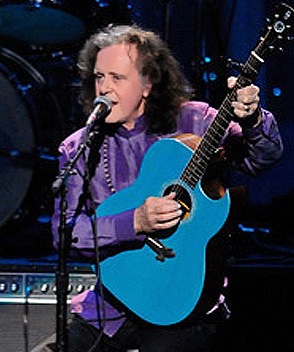
Donovan and Astrella on GDLA

Monday, 15 Mar 2010, 11:40 AM PDT

Los Angeles – Legendary singer Donovan was one of the few artists to collaborate on songs with Beatles and he has played with folk greats Pete Seeger, Joan Baez and Bob Dylan, and has even played with rock legends the Rolling Stones.

Donovan and daughter Astrella visit by “Good Day LA” to talk about a benefit concert for the David Lynch Foundation.

Donovan will be joined by his daughter Astrella Celeste to headline a benefit concert for the David Lynch Foundation on Friday, March 19 at the El Rey Theater in Los Angeles.

For more info on the concert log onto:  www.donovan.ie/en/


Off-Ramp Special Podcast – Donovan in Concert

Monday, March 8, 2010.

They gave us the keys to the podcast, so now we can send out special editions when we’ve got great stuff to share … like 60s icon Donovan and his guitar in studio. This is the full version of the piece we’ll run this weekend on the broadcast edition of Off-Ramp.              Download

Donovan Live at the Mohn Broadcast Center

Donovan is headlining a concert at the El Rey Theatre March 19th to benefit the David Lynch Foundation, which works to teach at-risk schoolkids to meditate. Donovan learned how to meditate with the Beatles and the Maharishi back in the 1960s. In our Off-Ramp interview, Donovan talks about the old days, reducing students’ stress and reliance on ADHD drugs, and the benefits and drawbacks of fame. He also sings three of his favorites. (COME INSIDE for info on the concert, a link to Lynch’s foundation, and to see who is taller — Donovan or Off-Ramp host John Rabe.)

1 comment

Gary Kaplan
5 days, 19 hours ago

Sublime! Donovan is our hero. What a great service he is doing for mankind.

Donovan & Friends Perform Benefit Concert for David Lynch Foundation

March 15, 2010

Donovan headlines benefit concert on March 19

Proceeds to benefit Transcendental Meditation program

Legendary folk-rock-pop troubadour Donovan, known for hits such as “Mellow Yellow,” “Sunshine Superman,” “Hurdy Gurdy Man” and more, will headline a benefit concert for the David Lynch Foundation on Friday, March 19 at the El Rey Theater.

Doors will open at 7:30 p.m. Tickets are $25 for general admission and $110 for VIP seating and a meet and greet with Donovan after the show, and can be purchased through Ticketmaster.

“The Beatles and I brought back from India the lost art of meditation,” Donovan said. “Now, with David Lynch, we pass it on to thousands of students worldwide. Join us to help save the world.”

He will be joined by his daughter Astrella Celeste and backing band Jerry Vivino, Scott Healy and Mike Merritt from the Conan O’Brien late night band, Danny Saber on guitar with special guests Jack Maness from Sublime, The Global Sound Lodge featuring Lanny Cordola and Matt Sorum of Guns N’ Roses, Velvet Revolver and The Cult, Amrita Sen and more.

Matthew St. Patrick, from Six Feet Under, will host the evening performances.

The El Rey Theater is located at 5515 Wilshire Blvd., Los Angeles 90036.

About Donovan
Donovan was one of the few artists to collaborate on songs with Beatles Paul McCartney, John Lennon and George Harrison. Donovan has played with folk greats Pete Seeger, Joan Baez and Bob Dylan, as well as rock musicians Jimmy Page, Jon Bonham and John Paul Jones of Led Zeppelin, Jeff Beck, and Brian Jones of The Rolling Stones.

Recently Donovan completed the successful album “Beat Cafe” as well as a new box set, “Try For The Sun: The Journey of Donovan,” and a book, “The Autobiography of Donovan: The Hurdy Gurdy Man” (Arrow Books).

Donovan is now heading up the musical wing of the David Lynch Foundation, fulfilling his 40-year interest in Transcendental Meditation. Donovan, his wife Linda, Paul McCartney and Ringo Starr are currently promoting Transcendental Meditation in schools.

About The David Lynch Foundation
The David Lynch Foundation for Consciousness-Based Education and World Peace was founded in July 2005 by award-winning filmmaker David Lynch with the immediate goal of teaching one million at-risk youth to meditate. The foundation has already provided more than 100,000 scholarships for students to learn the Transcendental Meditation technique, as well as inmates and guards in prisons, formerly homeless men in re-entry programs, soldiers with PTSD returning from Iraq and Afghanistan, and American Indians suffering from diabetes.

Sources: The David Lynch Foundation & David Lynch Foundation Television

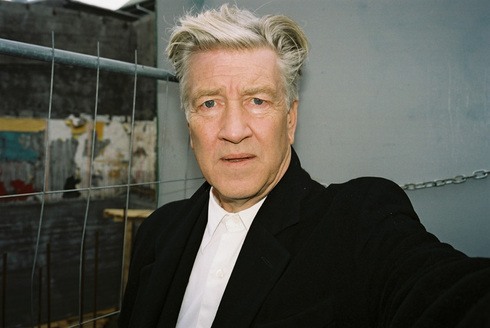
David Lynch in Reykjavik, Iceland

March 5, 2010

David Lynch Answers Grapevine Questions On TM

He also thinks Icelanders are, in fact, very hip.

11.5.2009
Words by Haukur S. Magnússon

As you probably know by now, Grapevine cover-star (and awesome director) David Lynch ventured to Iceland this month to preach the gospel of Transcendental Meditation and announce a nationwide project to bring “enlightenment, prosperity and peace to the people of Iceland.” We were of course intrigued by all this, and set up an interview with the man who’s self-portrait graces the cover of our latest issue. However, his answers didn’t make it back to us in time to run it in the print-edition of Grapevine, so we just did a little article about our experiences at his lecture (as well as a side-bar explaining TM) but they’re here now, ripe for your reading.

Grapevine: Can you explain shortly what Transcendental Meditation means to you personally?

Personally, Transcendental Meditation is a way to bring great bliss from within.

Does the practice affect all areas of your life – or does it inhabit its own special corner? Is it, for instance, reflected in your art in some way (for instance thematically or in the process of creation)?

Transcending, they say, is a holistic experience so it does affect all areas of life in the most positive way. With brain research, they see on the EEG machine a most wondrous phenomenon. When a person truly transcends (i.e., experiences the deepest level of life – the ocean of pure totality of consciousness within) the entire brain is engaged.

Transcending is the only experience in life that engages the full brain – total brain coherence it’s called. For me, it serves the work in the following ways: I have found that i have much more happiness in the doing. I have found that ideas flow more freely. I have found intuition (the #1 tool of the artist) growing more and more and i feel the heavy weight of negativity (anxieties, nervousness, worries, fatigue, depressions, angers, fears) lifting and therefore much more freedom in life and work.

Are there times where you are more involved in the practice, where you lean on it more heavily?

I have meditated twice a day for 36 years.

How did your brief visit to Iceland come about? Is this something that has been in the works for a while, or was it a spontaneous idea? Have you made such visits to other nations or regions over the years?

The visit to Iceland came about seemingly spontaneously. My Icelandic friend, Joni Sighvatsson [producer Sigurjón Sighvatsson], and I were talking on the telephone a month before my visit. We were both speaking of Iceland’s bankruptcy and thought Iceland could really use Transcendental Meditation and a peace creating group to bring peace, security, affluence and prosperity.

A whole bunch of things came together and it was really great to feel the receptivity and the growing determination of many to get these programs going in Iceland. Iceland is the 20th country i have visited talking about meditation and peace.

If I understand you correctly, you are presenting TM as a failsafe way to bring ones life to harmony. Does TM, then, offer “complete freedom from the world’s strife and confusion” or is it rather a “useful tool” for maintaining a well-balanced life?

Enlightenment does bring complete freedom from the world’s strife and confusion. But balance is the thing. Balance doesn’t mean a compromise. I think true balance brings totality – the full potential of the human being. Full potential of the human being is called enlightenment. Enlightenment answers all questions, ends all suffering and all negativity. Maharishi calls supreme enlightenment having 200% of life – 100% of all that which is unmanifest and 100% of all manifestation – totality, unity.

At your Háskólabíó event, as well as in press releases sent out prior to it, the word “science” got thrown around a lot. For instance, you emphasized that the project was “not an experiment, but rather a scientific demonstration of 50 years of research verifying the benefits of the Transcendental Meditation program for the individual and entire society.”

Furthermore, the TM program’s official web-site enshrouds itself very much in an “air of science,” if you will, taking on the appearance of a major pharmaceutical company rather than a foundation that’s presenting the ancient, spiritual act of inward meditation with possible religious connotations.

Appearances aside, i think many of our readers are interested in knowing whether you consider TM to be:

A) A plain, scientific method (something purely physical

B) An exercise program for the mind)

C) A religion

D) A form of spiritualism without any religious affiliations.

This is a very interesting and good question you have asked. For me, i started Transcendental Meditation for this thing called enlightenment and this thing called bliss. And i saw it as a spiritual path. We live in what they call a “scientific age” and many people think meditation is some kind of mysticism, some kind of Eastern religion, or some kind of path that requires renunciation or giving up of worldly pleasures.

Maharishi’s Transcendental Meditation is for what they call the “householder.” that means men and women in activity. Nothing needs to be given up when practicing Transcendental Meditation. One just adds 20 minutes of meditation in the morning and evening and that does everything.

Maharishi wanted Transcendental Meditation to be researched from a scientific point of view and that’s why there have been the 600 or 700 research studies over the years. Many people find a comfort knowing that TM and its benefits have been objectively verified by science.

It is such an interesting time because quantum physics for instance has now discovered and verified the existence of the unified field at the base of all matter and mind – at the base of anything that is a thing. This unified field is the same field that one experiences when transcending. Quantum physicists says that everything that is a thing has emerged from this field of unity in a process they call “spontaneous sequential symmetry breaking.” ancient Vedic science – the science of consciousness – has always known about this unified field. And Vedic science knows precisely the numerous steps consciousness goes through from the unmanifest level of unity to all levels of manifestation. It is so great to see that with each step forward modern science takes, it verifies the ancient Vedic science.

The unified field is for quantum physics – and Vedic science – the home of all the laws of nature. These laws hold everything and we’re coming to a point where the spiritual aspects of life can be written in a physicist’s equation.

Transcendental Meditation is not a religion, it’s a mental technique that opens the door for any human being to the unified field – the deepest level of life. It is an ancient form of meditation and a real gift because it gives “effortless transcending” because the mantra Maharishi gives turns the awareness 180 degrees within. And once pointed within, one naturally and effortlessly dives deeper because each deeper level of mind and intellect has more happiness. The human mind always wants to go to fields of greater happiness, so it effortlessly dives, and at the border of intellect, effortlessly transcends and experiences the ocean of totality of consciousness, infinite happiness, bliss, unified filed, transcendent, home of all the laws of nature, constitution of the universe, etc, etc.

It is the experiencing of the unified field that does everything for the human being. Intellectual knowledge is great, but it will never bring total fulfillment. It is this profound experience of unity – of bliss – of pure consciousness that is missing from our lives. Once a person gets this experience on a daily basis – reestablishes his or her connection with this oneness, then things really begin to change for the better. Every time we experience this deepest level of life, we infuse some of it and we begin to rapidly unfold our full potential

This ocean of consciousness within has qualities; it is an ocean of infinite intelligence, creativity, happiness, love, energy, peace. All these qualities begin to expand. The side effect of the expansion of consciousness is negativity begins to recede. Things like tension, anxieties, stress, sorrow, depression, hate, anger and fear begin to lift away. This brings freedom, and those all-positive qualities expanding bring great benefits to all aspects of life. So it is a scientific and spiritual path. People from all religions practice Transcendental Meditation as well as agnostics and atheists.

Experience this field of unity and watch things get better.

Is there a system of ethics connected to the practice of TM?

No.

Aside from the above, are you yourself a man of religion? If so, does TM in any way affect your religious practices, or are the two completely separate?

Religious people who practice TM say that because understanding grows, they understand their religion more. And because appreciation for all things grow, they appreciate their religion more.

What about the Maharishi Mahesh Yogi? How closely did you follow his teachings, especially those unconnected to TM? I am referring, for instance, to the Maharishi Vedic sciences, in terms of their approach to health, architecture, agriculture and music.

Maharishi, among other amazing contributions revived the ancient Vedic knowledge and put all the Vedic texts back together into a systematic science of consciousness. Veda means pertaining to total knowledge. It is a huge science – so beautiful – telling us so many things for a life to flow with mother nature. But again if Maharishi had only brought Transcendental Meditation, that effortless technique that allows us to experience pure consciousness, that would have been amazing in and of itself. Get that experience and all the rest will follow.

Did you consider any of the cult allegations that were widespread in the seventies and eighties?

Of course I experienced the discomfort of this false accusation. I always wondered why people called TM a cult. I never felt I belonged to some group. I took this technique as a personal thing. I never wanted to be in any club or group. I wanted to go my own way, make my own decisions.

Expanding consciousness actually glorifies differences. All diversity is appreciated fully in the light of total unity. Meditators do not all become the same, on the contrary they each become more and more themselves. However i have found a common link between meditators – I like being with them as they all reflect a great deal of happiness.

These days, all of these misconceptions about TM are disappearing and only a few strange voices rail against this meditation for reasons unknown to me. So many varied human beings have benefited from this technique that anyone with even an ounce of intelligence can see that it is the most positive of practices.

Finally, can you share your favorite memory of your brief visit? What stood out, if anything?

I was very impressed by the numerous paintings I saw in almost every building I entered. It seems that everyone in Iceland is an art collector and appreciates art. This was very impressive to me and the rapidly changing weather was astonishing also. I was also impressed by the camaraderie among Icelandic people – and their hipness.

Source: The Reykjavik Grapevine – Life

TM activates DMN, the brain’s “ground state”

March 4, 2010

A new EEG study conducted on college students at American University found they could more highly activate the default mode network, a suggested natural “ground state” of the brain, during their practice of the Transcendental Meditation technique. This three-month randomized control study is published in a special issue of Cognitive Processing dedicated to the Neuroscience of Meditation and Consciousness, Volume 11, Number 1, February, 2010.

Specifically, the study found the TM technique:

  • Produces a unique state of “restful alertness,” as seen in the markedly higher alpha power in the frontal cortex and lower beta and gamma waves in the same frontal areas during TM practice.
  • Creates greater alpha coherence between the left and right hemispheres of the brain suggesting the brain is working as a whole.
  • Enhances an individual’s sense of “self” by activating what neuroscientists call the “default mode network” in the brain. (This is considered the natural ground state of the brain, glimpsed by neuroscientists during eyes-closed rest but more fully activated during Transcendental Meditation practice.)

“The finding of significant brain wave differences between students practicing the Transcendental Meditation technique and those simply resting with their eyes closed is especially convincing because subjects were randomly assigned to conditions, and testing was conducted by a researcher unaware of the experimental condition to which the subject had been assigned,” said David Haaga, Ph.D., coauthor and professor of psychology at American University.

“Research has already shown that simply closing one’s eyes and relaxing increases the default mode. A significant additional finding of this new study is that activity in the default mode increases during TM compared to simple eyes-closed rest,” said Fred Travis, Ph.D., lead author and director of the Center for Brain, Consciousness, and Cognition at Maharishi University of Management. “Different meditation techniques entail various degrees of cognitive control. Thus, activation patterns of the default mode network could give insight into the nature of meditation practices.”

Previous published research, funded by the NIH, shows TM practice decreases high blood pressure, atherosclerosis, cholesterol, stroke, and heart failure.

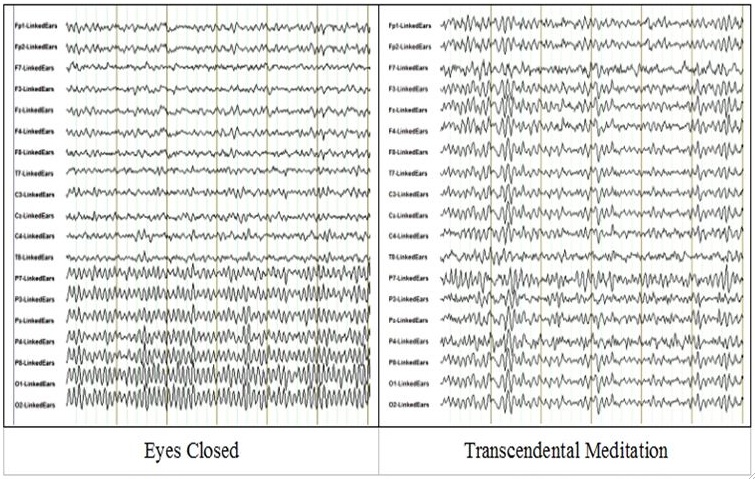
Comparative EEG Tracings

These raw EEG tracings during eyes-closed rest (left) and Transcendental Meditation (right) represent 18 tracings over 6 seconds. The top tracings are from frontal sensors; the middle tracings are from central sensors; the bottom tracings are from parietal and occipital sensors [back]. Note the high-density alpha activity in posterior leads during eyes-closed rest, and the global alpha bursts across all brain areas during Transcendental Meditation practice.

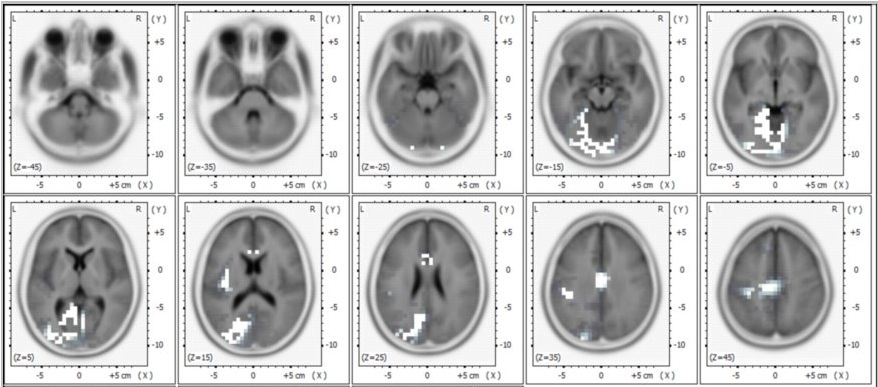
eLORETA Images of Significance Differences

These are eLORETA images of sources of alpha EEG during TM compared to eyes-closed rest in the default mode network (the white areas).

Images credit: Cognitive Processing, Volume 11 (2010), Issue 1

Article title: A self-referential default brain state: patterns of coherence, power, and eLORETA sources during eyes-closed rest and Transcendental Meditation practice, DOI: 10.1007/s10339-009-0343-2. Also on PubMed.

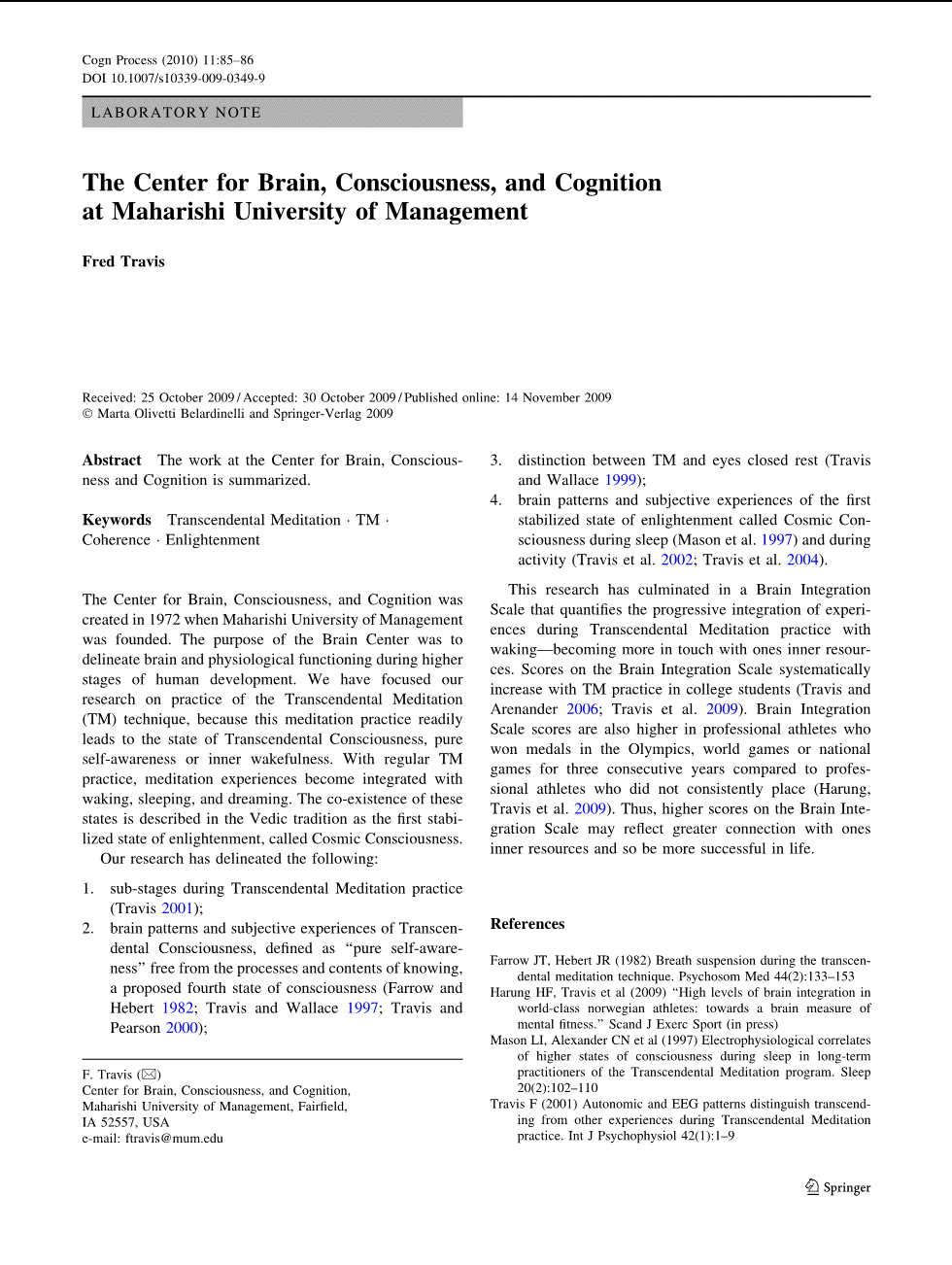
Laboratory Note: The work of the Center for Brain, Consciousness, and Cognition at Maharishi University of Management is summarized and featured in this same issue:

A Haiku on Haiku Poets

March 2, 2010

Haiku Poets

Poets in Pastures
Contemplate Infinity
While chewing their cud!

The Poet by Ken Chawkin

February 26, 2010

The Poet

Man is made in the image of God

he composes as he moves walking within his own world

people, things, impressions, enter get transformed, reconstructed become part of his inner landscape

they make their way out again envoys, wearing masks, metaphors made of sounds, words, images

he hears them, sees them he is the observer and the observed the poet and the poem

he becomes the poem the poem contains him together they embody the world

.

And God said, “Let us make man in our own image, in our own likeness.” Genesis 1:26a, 27

I am one, may I be many. Having created the creation, the creator entered into it. Taittiriya Upanishad 2.6.1

.

—Ken Chawkin For Bill Graeser

Written November 6, 2004 Modified April 20, 2007

Also see The Poet by Rolf Erickson

The Poet by Rolf Erickson

February 26, 2010

The Poet

There are no worlds but images
that can be put into words
never quite perfectly.

But close enough
close enough to keep the poet alive.

The poet stands on the corner
of the town square
greeting passers-by with haiku.

The same old words pieced together
somehow new
words in ways that no one ever heard before.

There are no images but feelings
that grasp for words
like a blind man seeing with fingertips.

The poet lives in the world of feeling
searching for loopholes
for a way to say just one perfect thing
and keep on living.

There are no feelings but unity
where words cannot survive
that intense pressure of perfection.

Unity—
there are no words
there are no images
there are no worlds.

No, not even this one.

The poet longs for unity
his moment of perfection
but cannot go there and still make poems.

He walks the edge of the canyon
one foot on earth
the other reaching out over the abyss
searching for solid air.

—Rolf Erickson
For Ken Chawkin
April 20, 2007

Also see The Poet by Ken Chawkin, and Mirror Lake by Rolf Erickson.

Girls with ADHD more prone to depression, anxiety than boys; meditation helps

February 23, 2010

DAVID LYNCH FOUNDATION
Office of ADHD and Learning Differences
70 Broad Street, New York, NY 10004
Tel: (703) 823-6933 • sgrosswald@tm.org

Girls suffer from delayed ADHD diagnosis, more prone to depression than boys
Meditation helps alleviate stress, reduce symptoms

A growing number of experts say the number of children with ADHD is greater than estimated because girls are often under-diagnosed. There are also differences in symptoms between the genders. “Girls are more likely to have the attentional type of ADHD, which can lead to difficulty in paying attention and focusing, rather than to disruptive behavior, which is more indicative of the behavior of boys with ADHD,” says Sarina J. Grosswald, Ed.D., a George Washington University-trained cognitive learning specialist who heads up the David Lynch Foundation’s education and health outreach to girls. “As a result, the ADHD diagnosis may be missed in as many as 50% to 75% of girls. On average, girls are diagnosed 5 years later than boys. As girls move into adolescence, those with ADHD are more likely to have clinical depression or anxiety disorders.”

A study published in the American Journal of Psychiatry’s online edition of January 15, 2010 followed 187 6- to 18-year-old girls with and without ADHD over an 11-year period. Reporting on this long-term study, Reuters Health pointed out that girls with the disorder were more likely than their peers to develop depression, anxiety, eating disorders, or other psychiatric problems by the time they reached adulthood.

Concerns about ADHD medications

While in some cases a child cannot function without medication, there is growing concern about the health risks and side-effects associated with the common ADHD medications, including mood swings, insomnia, tics, slowed growth, and heart problems.

A new study, the first of its kind, released February 17, 2010 by the Government of Western Australia’s Department of Health, found that “long-term use of drugs such as Ritalin and dexamphetamine may not improve a child’s social and emotional well-being or academic performance.” The chair of the Ministerial Implementation Committee for Attention Deficit Hyperactivity Disorder in Western Australia said in the Department’s press release, “We found that stimulant medication did not significantly improve a child’s level of depression, self perception or social functioning and they were more likely to be performing below their age level at school by a factor of 10.5 times.”

“Medication for ADHD is very effective for some children, but it is marginally or not effective for others. Even for those children who show reduced symptoms with the medication, the improvement is often insufficient or accompanied by troubling side-effects,” said William Stixrud, Ph.D., a Silver Spring, Maryland, clinical neuropsychologist.

Stress interferes with ability to learn

“Virtually everyone finds it difficult to pay attention, organize themselves and get things done when they’re under stress,” explained Stixrud. “Stress interferes with the ability to learn—it shuts down the brain. Prior research shows ADHD children have slower brain development and a reduced ability to cope with stress.” added Stixrud.

The Transcendental Meditation (TM) technique may be an effective and safe non-pharmaceutical aid for treating ADHD, according to a recent study published in the online peer-reviewed journal Current Issues in Education.

The pilot study was conducted in a private K-12 school for children with language-based learning disabilities. Participation was restricted to 10 students, ages 11-14, who had pre-existing diagnoses of ADHD. About half of the students were on medication. The students meditated at school in a group for 10 minutes, morning and afternoon. After three months, researchers found over 50% reduction in stress and anxiety, and reduced ADHD symptoms in the entire group.

Stixrud, co-author on the TM-ADHD study, said, “It stands to reason that the TM technique, which reduces stress and organizes brain function, would reduce ADHD symptoms.”

Meditation improves classroom experience

“The effect was much greater than we expected,” said Sarina Grosswald, lead researcher on the study. “A 50 % reduction in anxiety and depression symptoms is dramatic,” she explained. “This can be especially valuable for girls who are more prone to these types of symptoms. The children also showed improvements in attention, working memory, organization, and behavior regulation. After the in-school meditation routine began, teachers reported they were able to teach more, and students were able to learn more because they were less stressed and anxious.”

Grosswald added, “There is substantial research showing the effectiveness of the TM technique for reducing stress and anxiety, and improving cognitive functioning among the general population. What’s significant about these new findings is that among children who have difficulty with focus and attention, we see the same results. TM doesn’t require concentration, controlling the mind or disciplined focus. The fact that these children are able to do TM, and do it easily, shows us that this technique may be particularly well suited for children with ADHD.”

Parents pleased with results

Andy and Daryl Schoenbach’s daughter was diagnosed with ADHD in second grade. Like most ADHD children she was taking medication. “The medication helped but had mixed results—she still lost focus, had meltdowns, and the medications affected her sleep and appetite,” said Andy, who lives with Daryl in Washington D.C. “She was not performing close to her potential and we didn’t see the situation improving. So at the end of seventh grade when her doctor recommended increasing the medication, we decided it was time to take a different course—stopping the medication and using Transcendental Meditation.”

“The results were quite remarkable,” Daryl said. “The twice daily meditations smoothed things out, gave her perspective, and enabled her to be in greater control of her own life when things started falling apart. It took some time, but it gradually changed the way she handled crises and enabled her to feel confident that she could take on greater challenges—in her own words, ‘climb a mountain.’”

“Everyone noticed the change,” Andy added.

Ongoing research

A soon-to-be-published second study on TM and ADHD shows that after 3 months of practice the TM group demonstrated more efficient brain functioning (as measured by EEG) compared to the control group during a difficult visual-motor task. The TM group also showed improvements in language skills on a cognitive performance test.

Students reported that they felt calmer, less stressed, and better able to concentrate on their schoolwork. They also said they were happier since they started TM.

###

For interviews, contact Dr. Grosswald
Bio available upon request

Sarina J. Grosswald, Ed.D.
Executive Director
Office of ADHD and Learning Differences
David Lynch Foundation
(703) 823-6933
sgrosswald@tm.org
sfschools@tm.org

FACT SHEET

Attention Deficit Hyperactivity Disorder (ADHD)

· The Center for Disease Control reports that nearly 50% of the 4.5 million children (ages 4-17) in the United States diagnosed with ADHD are on ADHD medication—and the majority of those on medication stay on it in adulthood.

· The rate of prescriptions for Attention Deficit Hyperactivity Disorder in the U.S. has increased by a factor of five since 1991—with production of ADHD medicines up 2,000 percent in 9 years.

· The commonly used drugs for ADHD are stimulants (amphetamines). These drugs can cause persistent and negative side-effects, including sleep disturbances, reduced appetite, weight loss, suppressed growth, and mood disorders. The side-effects are frequently treated with additional medications to manage insomnia or mood swings. Almost none of the medications prescribed for insomnia or mood disturbances are approved by the Food and Drug Administration (FDA) for use with children.

· The long-term health effects of ADHD medications are not fully known, but evidence suggests risks of cardiac disorders and sudden death, liver damage and psychiatric events. It has also been found that children on long-term medication have significantly higher rates of delinquency, substance use, and stunted physical growth.

The Transcendental Meditation Technique

· The Transcendental Meditation technique is an effortless technique practiced 10-20 minutes twice a day sitting comfortably with the eyes closed.

· TM is not a religion or philosophy and involves no new beliefs or change in lifestyle.

· Over 350 peer-reviewed research studies on the TM technique confirm a wide range of benefits for mind, body and behavior.
· Several studies have compared the effects of different meditation practices and found that Transcendental Meditation provides deeper relaxation and is more effective at reducing anxiety, depression and hypertension than other forms of meditation and relaxation. In addition, no other meditation practice shows the widespread coherence throughout all areas of the brain that is seen with Transcendental Meditation.

· The Transcendental Meditation technique is taught in the United States by a non-profit, educational organization.

· More information can be obtained by calling 888-LEARN-TM or visiting www.ADHD-TM.org, www.AskTheDoctors.com, or www.TMEducation.org.

###

NB: After posting this article, a new study came out on July 26, 2011: New study shows Transcendental Meditation improves brain functioning in ADHD students: A non-drug approach to enhance students’ ability to learn.

A random-assignment controlled study published today in Mind & Brain, The Journal of Psychiatry (Vol 2, No 1) found improved brain functioning and decreased symptoms of attention-deficit/hyperactivity disorder, ADHD, in students practicing the Transcendental Meditation® (TM) technique. The paper, ADHD, Brain Functioning, and Transcendental Meditation Practice, is the second published study demonstrating TM’s ability to help students with attention-related difficulties.

See TM improves brain function in ADHD students, also reported in the TM Blog: New study finds TM boosts brain functioning and helps students with ADHD.

And this new important related article posted in The Huffington Post on meditation helping kids get off ADHD drugs came out in Jan 6, 2012: ADHD Drug Shortage: Can Meditation Fill the Gap?