Archive for the ‘Other poems’ Category

In the Parkview Cave—a tanka for Sali inspired by Sarah during an acupuncture treatment

April 21, 2012

In the Parkview Cave
A tanka for Sali inspired by Sarah during an acupuncture treatment

I come to see you
A sanyasin in a cave
Doing her tapas

The transformation is there
Self-contained, blissful, you are

© Ken Chawkin
April 21, 2012
Fairfield, Iowa

My first haiku, Transformed, is appropriate here.

Yunus Emre says Wisdom comes from Knowing Oneself — a Singularity that contains the Whole

April 1, 2012

I tried to make sense of the Four Books*,
until love arrived,
and it all became a single syllable.

(*Torah, Psalms, Gospel, Quran, considered by Islamic tradition to be four Divinely revealed books.)

From #21, page 43, chapter II, The Way of Love, in The Drop That Became The Sea, Lyric Poems of Yunus Emre. Translated from the Turkish by Kabir Helminski and Refik Algan.

This theme of the single syllable, the first letter of the alphabet, containing everything, is reiterated in this poem #26, page 52, chapter III, Necessary Lessons, where wisdom is equated with Self-knowledge.

Wisdom comes from knowing wisdom.
Wisdom means knowing oneself.

If you do not know yourself,
what is the point of reading books?

The point of reading is to know something real.
Since you have read and do not know it,
reading is useless.

Don’t say, “I’ve read, I’ve learned.”
Don’t say, “I’ve worshipped a lot.”

If you don’t accept the Perfect Man,
all other works are futile.

The meaning of the Four Books is clear and complete.
It shows itself in the first letter, aleph.

If you don’t know what aleph is,
what do you know of reading?

You recite every syllable of the alphabet.
You say “Aleph,” but how little it means.

Yunus Emre says:
“Hey Hoja, you’ve made a thousand pilgrimages
but never been welcomed by a single heart.”

(more…)

Sali’s Shakti (a two-tanka poem)

March 13, 2012

Sali’s Shakti
(a two-tanka poem)

They say your power
Used to shine…from your bright mind
Now…it’s through your heart

From you…flow Beauty and Grace
Love lights…in your eyes and face

How does this happen…
That I love you even more…
You fulfill my heart…

This force that draws…me…to you
Wants to make…a One…from two

© Ken Chawkin
March 12/13, 2012
Fairfield, Iowa, USA

The Inner History of a Day by John O’Donohue

March 4, 2012

The Inner History of a Day

No one knew the name of this day;
Born quietly from deepest night,
It hid its face in light,
Demanded nothing for itself,
Opened out to offer each of us
A field of brightness that traveled ahead,
Providing in time, ground to hold our footsteps
And the light of thought to show the way.

The mind of the day draws no attention;
It dwells within the silence with elegance
To create a space for all our words,
Drawing us to listen inward and outward.

We seldom notice how each day is a holy place
Where the eucharist of the ordinary happens,
Transforming our broken fragments
Into an eternal continuity that keeps us.

Somewhere in us a dignity presides
That is more gracious than the smallness
That fuels us with fear and force,
A dignity that trusts the form a day takes.

So at the end of this day, we give thanks
For being betrothed to the unknown
And for the secret work
Through which the mind of the day
And wisdom of the soul become one.

John O’Donohue (1954–2008)

From To Bless the Space Between Us: A Book of Blessings.

Related: What To Remember When Waking by David Whyte.

Also see For a New Beginning by John O’Donohue.

John O’Donohue was an inspiring Irish philosopher, poet, and mystic who lived in the West of Ireland. His native tongue was Gaelic. His Ph.D. dissertation in the field of philosophical theology developed a new concept of Person through a re-interpretation of Hegel. He insisted in his work on beauty as a human calling and a defining aspect of God, and much of his writing drew from pre-Christian Irish Celtic perspectives. He was well known for his bestselling book Anam Cara. In the year of his death his book of blessings, Benedictus, was published. For a list of his books visit Amazon.com.

Listen to Krista Tippett interview John O’Donohue On Being: The Inner Landscape of Beauty.

What Turkish Sufi poet Yunus Emre realized — everything was found within his cosmic body

February 28, 2012

Ever come across a poem that encapsulates what you’ve read lately or thought about in the past? I found one today in a book I was sampling on Amazon, The Drop That Became the Sea: Lyric Poems, a collection of poems written by Yunus Emre, (1240-1321), translated by Kabir Helminski and Refik Algan.

Yunus Emre was the first in a great tradition of Turkish Sufi troubadours who celebrated the Divine Presence as the intimate Beloved and Friend. Called the greatest folk poet in Islam, the songs of this Sufi dervish are still popular today.

He was a contemporary of Rumi, who lived in the same region of Anatolia. Rumi composed his collection of stories and songs for a well-educated urban circle of Sufis, writing primarily in the literary language of Persian. Yunus Emre, on the other hand, traveled and taught among the rural poor, singing his songs in the Turkish language of the common people.

A story is told of a meeting between the two great souls: Rumi asked Yunus Emre what he thought of his great work the Mathnawi. Yunus Emre said, “Excellent, excellent! But I would have done it differently.” Surprised, Rumi asked how. Yunus replied, “I would have written, ‘I came from the eternal, clothed myself in flesh, and took the name Yunus.'” That story perfectly illustrates Yunus Emre’s simple, direct approach that has made him so beloved.

The poem I’m referring to begins, We entered the house of realization. Inside they find the earth and sky, night and day, the planets, the many veils in the body, what the scriptures say, and more. In that realized state, the poet witnesses everything inside the body; the infinite within the finite, the eternal within the temporal. His body is cosmic, an expression of totality.

It reminded me of the work of Maharaja Adhiraj Rajaraam (Professor Tony Nader, MD, PhD), a neuroscientist and Vedic scholar. Under the guidance of His Holiness Maharishi Mahesh Yogi, Professor Nader showed how the individual is cosmic.

The body, he says, is a manifestation of Natural Law—the Veda and Vedic Literature—the underlying blueprint that creates the individual body and the cosmic body, the Universe, a microcosm of the macrocosm. Yatha pinde tatha brahmande. See link to video at end of this article.

One aspect of the Vedic Literature is Jyotish, Vedic Astrology. Dr. Tony Nader shows a precise one-to-one relationship between the fundamental structures and functions of human physiology (Individual life) and the fundamental structures of Natural Law (Cosmic life). These fundamental structures of Natural Law connect individual intelligence with cosmic intelligence — the basic structures of the human nervous system with their cosmic counterparts. In this chart, the nine Grahas (planets), are shown where they are found in the different aspects of our physiology and their influences.

This first book by Dr. Nader, Human Physiology — Expression of Veda and the Vedic Literature, discusses all 40 aspects of the Vedic Literature and their expressions in the body.

Over a decade in the making, Dr. Nader’s new book, Ramayan in Human Physiology, reveals an understanding of the underlying unity that makes us human — the eternal reality of the Ramayan in the structure and function of the human physiology. Surprisingly, the Ramayan is not just a mythic tale assigned to an ancient culture in a distant past, but a description of the universal transformations continually taking place within our own bodies. Here is a book preview.

Yunus Emre expresses a similar understanding in poem #4, page 20, chapter I, The Dervish Way, in The Drop That Became The Sea.

We entered the house of realization,
we witnessed the body.

The whirling skies, the many-layered earth,
the seventy-thousand veils,
we found in the body.

The night and the day, the planets,
the words inscribed on the Holy Tablets,
the hill that Moses climbed, the Temple,
and Israfil’s trumpet, we observed in the body.

Torah, Psalms, Gospel, Quran—
what these books have to say,
we found in the body.

Everybody says these words of Yunus
are true. Truth is wherever you want it.
We found it all within the body.

A related example was highlighted by Dr. Nader in a press conference when he referenced ‘Abdu’l-Bahá [quoting The Imam Ali], from The Secret of Divine Civilization: “Dost thou think thyself only a puny form, when the universe is folded up within thee?”

Speaking of microcosm-macrocosm, here is an interesting saying from The Conversations (Maqalat) of Shams of Tabriz (Hazret Shams al-Din of Tabriz), Rumi’s master, which gives you a different perspective on the internal life of a saint:

The microcosm is hidden in the creation of man
and the macrocosm is the outer universe.
But for prophets the outer universe is the microcosm
while the inner universe ıs the macrocosm.

These two videos of Maharishi Mahesh Yogi answering questions from the press: As is the cosmic life, so is the individual life, and I am the Self, I am the body, I am the Veda, I am the universe, I am totality, explain the cosmic significance of these Vedic expressions and their practical applications in our daily lives.

See this New Video: Dr. Tony Nader speaks about the Ramayana in Human Physiology, which explains how the whole body is made of Veda, which also structures the cosmic body, the universe, and how the activities described in the Ramayana are a scientific description of the growth and evolution of the human physiology to it’s fully developed enlightened state.

See Sufi poet Hakim Sanai says transcend belief to enter into the mystery.

See Yunus Emre says Wisdom comes from Knowing Oneself — a Singularity that contains the Whole
Sufi poet Hakim Sanai says transcend belief to enter into the mystery

February 27, 2012

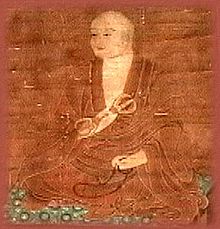
Sufi poet, Hakim Sanai, best known for The Walled Garden of Truth, is revered as one of the 3 great Sufi teachers, along with Attar and Rumi. He says a lot in these few choice words:

Belief brings me close to You
but only to the door.
It is only by disappearing into
Your mystery
that I will come in.

See What Turkish Sufi poet Yunus Emre realized — everything was found within his cosmic body and Yunus Emre says Wisdom comes from Knowing Oneself — a Singularity that contains the Whole.

so love tanka

February 18, 2012

so love tanka
“i carry your heart with me(i carry it in my heart)” — e.e. cummings

you quicken our hearts
(and our eyes start to well up)
saying, i LOVE you!

so precious, so mutual,
so open, so deep, so true!

© Ken Chawkin
February 18, 2012
Fairfield, Iowa

i carry your heart with me by e.e. cummings

February 14, 2012

For Valentine’s Day: i carry your heart with me by E.E. Cummings

[i carry your heart with me(i carry it in]

i carry your heart with me(i carry it in
my heart)i am never without it(anywhere
i go you go,my dear;and whatever is done
by only me is your doing,my darling)
                                                      i fear
no fate(for you are my fate,my sweet)i want
no world(for beautiful you are my world,my true)
and it’s you are whatever a moon has always meant
and whatever a sun will always sing is you

here is the deepest secret nobody knows
(here is the root of the root and the bud of the bud
and the sky of the sky of a tree called life;which grows
higher than soul can hope or mind can hide)
and this is the wonder that’s keeping the stars apart

i carry your heart(i carry it in my heart)

“[i carry your heart with me(i carry it in]” Copyright 1952, © 1980, 1991 by the Trustees for the E. E. Cummings Trust, from Complete Poems: 1904-1962 by E. E. Cummings, edited by George J. Firmage. Used by permission of Liveright Publishing Corporation.

Source: Complete Poems: 1904-1962 (Liveright Publishing Corporation, 1991)

E. E. Cummings reads I Carry Your Heart With Me (I Carry It In My Heart) in this video: How E.E. Cummings Writes A Poem.

While this beautiful E.E. Cummings poem is about the intimate unity of the lover for his beloved, Love after Love, by Derek Walcott, resonates deeply when you first acknowledge yourself, the basis for a healthy loving relationship.

I found and bought a version of the poem beautifully sung by Julia Smith with piano accompaniment. Later, no longer available as a single, I discovered it was included as the first of an 8-song album with the same title, I Carry Your Heart, released Aug 30 2010 on Amazon Music. The 25-minute album was posted 5 years later on YouTube, allowing me, in November 2023, to finally embed this moving song, I Carry Your Heart (feat.Julia Smith).

Famous Poets and Poems lists 153 of E.E. Cummings poems. See quotes by e.e. cummings.

This poem, so love tanka, was inspired by e.e. cummings and my muse.

Emily Dickinson succinctly describes the eternal nature of Love in this short but powerful poem.

INSPIRATION, a poem by Nathanael Chawkin

January 25, 2012

“Be patient, listen quietly, the writing will come. The voice of the writing will tell you what to do.” — Donald M. Murray, America’s writing teacher.

I came across a poem my son Nathanael wrote 20 years ago, a month after he turned eleven. A few weeks into the school year, his Grade Six teacher at Maharishi School gave the students a writing assignment. Their homework was to write a poem for class the next day. The pressure was on. I don’t recall much of the details, but I do remember Nathanael saying he had a problem with this. We discussed it. He felt strongly that you couldn’t force a poem into existence; it had to come naturally, from inspiration. I agreed and suggested he express that idea somehow in his poem. He was determined to send his teacher a message. What he wrote blew me away. He was inspired!

INSPIRATION

A poem comes naturally,
Not forced, not assigned, not sought for.
A poem should be inspired,
Not under pressure, surely not, for,
A poem is spontaneous, creative. How?
It is the nature of the poem to slip out.
That’s what you must allow.
So sit back and relax
For you must be patient,
And of course, do not rush.
A poem comes naturally,
Here it comes,
Hush.

© Nathanael Chawkin
September 24, 1991

This idea of allowing, even encouraging writing to come spontaneously reminds me of a poem written by William Stafford—A Course in Creative Writing, in response to educators at a conference expecting writing instructors to clearly spell out how and what their students should write, and by implication, to praise or blame them accordingly. This left no room for students, or their teachers, to express their own creativity, and no guidance to help them find their own voice, something that was not part of their methodology.

Stafford was about process, not necessarily product, and acted more as a facilitator than an instructor. He tried hard to not offer any praise or blame, fearing students would then write to please him and not themselves. He also avoided giving students any grades in his classes. I think they would grade themselves or each other based on their evaluation of their work. You can imagine the frustration this must have caused the administration. He was considered an odd ball, a heretic to the status quo at that time. But that would change. His approach would start a revolution in the teaching of creative writing.

This poem, William Stafford—You and Art, speaks volumes about the writer who is open to “making mistakes” and following his own voice down new paths of expression. It’s a beautiful description of the maturation of an artist and the source of inspiration. You can read more William Stafford poems on my blog.

Another great exponent of teaching writing was Donald M. Murray.  A journalist, Murray was invited to teach journalism at the University of New Hampshire. He admittedly knew nothing about teaching, but was obviously an accomplished writer, having won the Pulitzer Prize for editorial writing in 1954 at the age of 29. So he looked to his own process as a writer and broke it down into the different stages he would go through to end up with a polished piece of writing.

One of Murray’s earliest books, Learning By Teaching, is a selection of articles on writing and teaching. It’s filled with examples of the steps he would go through as a writer, writing and rewriting to gain clarity; the stages of teaching he evolved through, from lecturer, to modeler, to facilitator, to getting out of the way; and quotes about writing by other writers. We used it as our textbook in a workshop to become writing facilitators. We learned how to conduct writing conferences to help students with their writing. The course taught me a lot about the craft of writing, the different stages, from pre-writing, to draft, to rewriting, editing, to final draft, and the teaching of it.

A comprehensive book on Murray and his work was published October 2009 by Heinemann: The Essential Don Murray: Lessons From America’s Greatest Writing Teacher. I love the opening quote from the book’s press release: New book offers lessons from writing teacher Don Murray. It affirms my son’s sentiment: “Be patient, listen quietly, the writing will come. The voice of the writing will tell you what to do.” — Don Murray.

Murray helped Donald Graves with his writing. Graves started a revolution by watching how young children wrote in school. He brought what he had learned from Murray into the classroom and taught teachers how to become writers themselves, then how to apply this approach with their students. Read this excellent article by Kimberly Swick Slover about Graves called The Write Way. It also mentions how Murray turned him into a writer. Same thing in this excellent video interview with Donald H. Graves and Penny Kittle.

Now creative writing classes are student-centered and process-oriented, with teachers openly modeling their own process as writers, and facilitating students to do the same, allowing and enabling them to become genuine writers, from draft to publication.

Although I never had the opportunity to meet or study with either Murray or Stafford, both were seminal influences. They acted as a guide from the side, not a sage from the stage. They taught about writing as writers and poets in classes, workshops, and through their articles, interviews, books and poems. I thank them for helping me, and thousands of other writers and teachers, to better understand the writing process.

Here is one of my first poems on the subject, Writing—a poem on the writing process. After the poem, I add a short piece about Murray and Stafford. I would share these poems and thoughts with Nathanael. It seemed to have gone deeply into him. Like father, like son.

Other inspiring posts about writing are: Writers on Writing–What Writing Means To Writers, Elizabeth Gilbert—Some Thoughts On Writing, and Words of Wisdom on Writing from Literary Lights. You may also enjoy Burghild Nina Holzer inspires us to write and discover who we are and what we have to say.

Also see A Tanka about my son’s Aikido teacher.

A new post: The perils of praise or blame for young writers. New ways to help students find their own voice.

Singing Image of Fire, a poem by Kukai, with thoughts on language, translation, and creation

January 2, 2012

We read in Genesis that creation came into being with the first utterance: “Let there be light.” So sound came first, then light, followed by forms. Interestingly, the seemingly nonsensical phrase, abracadabra, a magician says when performing a trick, derives its meaning from the ancient biblical language, Aramaic: abraq ad habra, which means, “I will create as I speak.” I discovered that on page 170 of Poemcrazy: Freeing Your Life with Words, a delightful book on finding and writing poetry in many creative simple ways, by Susan Wooldridge, writer, poet and teacher.

This poem by Kukai says a lot about language, creation, consciousness, and our integral relationship to things.

Singing Image of Fire

A hand moves, and the fire’s whirling takes different shapes,
Triangles, squares: all things change when we do.
The first word, “Ah,” blossomed into all others.
Each of them is true.

This poem on language, translation, and creation, the pictorial/written representation of vocal sounds and meanings, was written by Kūkai (空海), also known posthumously as Kōbō-Daishi (弘法大師 The Grand Master Who Propagated the Buddhist Teaching), 774–835, a Japanese monk, civil servant, scholar, poet, artist, and founder of the Shingon or “True Word” school of Buddhism. He allegedly developed the system using Chinese characters to write Japanese words. The word “Shingon” is the Japanese reading of the Kanji for the Chinese word Zhēnyán (真言), literally meaning “True Words”, which in turn is the Chinese translation of the Sanskrit word mantra (मन्त्र). The concern was to be as true as possible when translating texts, to have and use the right word when describing something. The Sanskrit language had this perfect one-to-one correspondence between name and form.

The poem was mentioned in Nine Gates: Entering the Mind of Poetry (HarperCollins, 1997) by Jane Hirshfield, a classic collection of essays about the mysterious ways poetry comes to us. In her chapter, The World is Large and Full of Noises: Thoughts on Translation, she highlights this theme with What Rainer Maria Rilke inscribed on the copy of The Duino Elegies he gave his Polish translator.

When I read that line in Kukai’s poem, about the first word, “Ah,” blossoming into all others, and each of them being true, it reminded me of what Maharishi Mahesh Yogi says about the first sound of creation, “A”, how it represents infinity collapsing to a point, “K”, and through its own sequential self-interacting dynamics, creates the whole alphabet, words, verses of Rk Veda, the whole Vedic literature, and their subsequent forms, the universe. This is part of Maharishi’s Apaurusheya Bahashya, the unwritten commentary of the Veda, unfolding itself and commenting on itself to itself. Apaurusheya Bhashya: Rk Veda is said to be nitya, eternal, and apaurusheya, uncreated. Maharishi explains that the sequential unfoldment of Rk Veda is its own uncreated, or unmanifest, commentary on itself, rather than that of an individual making an ‘external’ commentary on Rk Veda.

See Maharishi’s Apaurusheya Bhashya discussed in Everything is made of Vedic Sounds by William F. Sands, PhD. Also see Modern Science and Vedic Science: An Introduction by Kenneth Chandler, PhD.

In his Introduction to Maharishi Vedic University, Maharishi gives us a comprehensive cosmic perspective on the role Sanskrit, the language of Nature, plays in the process of creation. Through the self-interacting dynamics of pure consciousness, the Self, or Atma, reverberates within itself and creates the eternal uncreated sounds of the Veda, its own language, which in turn express themselves into forms—the individual body, Sharir, and the cosmic body, Vishwa. The eternal Silence and its own inherent Dynamism, evolve all parts of itself constantly referring them back to their source. He says it’s a start-stop process of Infinity collapsing to a point, referring it back to Itself, and evolving the next sequential sound, and subsequent form. Full realization, or enlightenment, comes when one comprehends all of creation: Atma, Veda, Sharir, Vishwa, Brahman, or Totality, as the full potential of one’s own consciousness. Aham Brahmasmi. I am totality.

On Page 65 Maharishi writes, “The basic process of change, this basic process of transformation, continuously maintains the momentum of evolution of different levels of expression, creating different levels of manifestation upholding the process of evolution.

“It is this that promotes the eternally self-referral dynamics of Samhita into the sequential evolution of sound, speech, forms of speech in alphabets, words, phrases, verses etc., with corresponding material forms. This process continues eternally, resulting in the ever-expanding universe.” (Samhita is the togetherness of Rishi, Devata, Chhandas; knower, process of knowing, and known.)

I’ve written a poem about this process in Coalescing Poetry: Creating a Universe, (into haiku forms).

To learn more about the source of words, creation, both literal and literary, and their connection to consciousness, read: The Flow of Consciousness: Maharishi Mahesh Yogi on Literature and Language.

Also see: Before He Makes Each One by Rainer Maria Rilke.

Nine years later I posted: Japanese culture: poetic aesthetics, artistry, and martial arts, inspired me to write haiku and tanka.