Archive for the ‘David Lynch Foundation’ Category

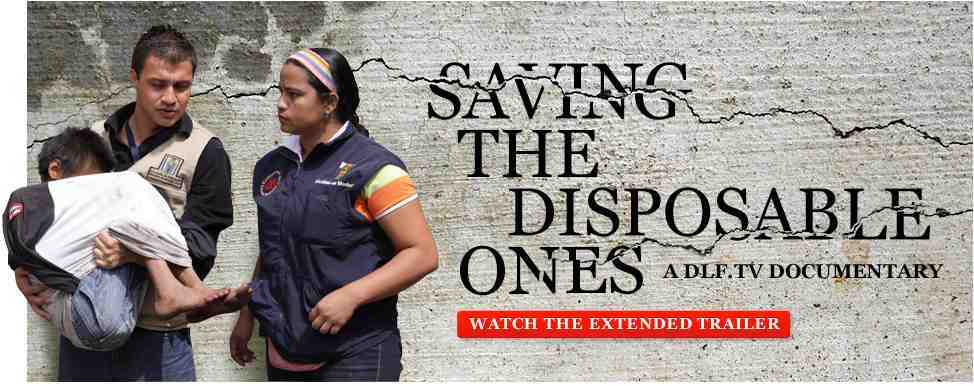
Saving the Disposable Ones: World Premiere Poster for David Lynch Foundation Documentary

April 3, 2010

URL to download and view full size poster of Saving the Disposable Ones

Watch the extended trailer now

DLF.TV Documentary: Saving the Disposable Ones

We can now watch “Saving the Disposable Ones” at this site.

See the Saving the Disposable Ones article by Linda Egenes in Issue 11 of Enlightenment: The Transcendental Meditation Magazine.

DLF.TV Documentary: Saving the Disposable Ones

April 2, 2010
Saving the Disposable Ones

THE PROJECT

“The street children in Colombia are called ‘the disposable ones’ and they live and sometimes die on the streets. These children are unloved, unwanted, and endure abuse on many levels. Colombians are a kind and generous people but crime related to cocaine trafficking has made cities such as Medellin among the most violent in the world. Surviving on the streets is a harsh business. Children as young as six fall into prostitution and many escape the torments of their existence by sniffing glue.” — Stuart Tanner, Director

IT DOESN’T HAVE TO BE THIS WAY

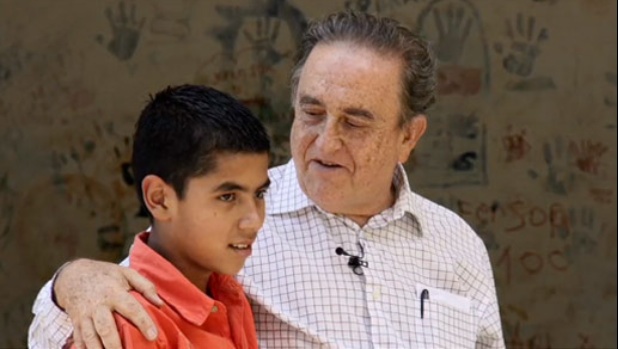
As Stuart reveals in his deeply moving new film, there is a Catholic priest in Colombia, Father Gabriel Mejia, who has worked quietly to provide street children relief from their struggle for survival and support to create a better life for themselves.

Starting in Medellin in the mid-1980’s, Father Gabriel opened the first Center de Hogares Claret: a place where children could come for a good meal and a safe place to sleep. In the late 1980’s, he traveled to the United States where he learned Transcendental Meditation. He knew immediately that he had found the answer to the overwhelming stress the children suffered from living on the streets. As the power of the drug cartels waned, the number of Father Gabriel’s orphan shelters increased. Now, in 2010, there are 47 shelters under Father Gabriel’s direction, which are spread across all of Colombia. His center of operations in Medellin is the former home of Pablo Escobar, the now deceased drug lord.

“In the rough part of Medillin there is an orphan center where children as young as six years old can come to seek solace,” Stuart recalls. “At the center the children can shower and get a good meal. The children are free to come and go as they wish. There is no pressure on them to stay; it is an open house. Father Gabriel has learned through his work with the street children that the desire to move away from their life on the streets must come from within the children themselves. Many of the children are addicted to sniffing glue or gasoline so the process of becoming free of this dependency is a difficult and gradual one. As part of their rehabilitation the children learn to meditate. This is combined with gentle guidance from Father Gabriel and other members of the Foundation.”

As Stuart’s film documents, over time an extraordinary transformation in the lives of the children takes place. They are freed from the torments they endured living on the streets, recover from their drug addictions and begin to gain an education. “The Foundation established by Father Gabriel embodies the wisdom, patience and knowledge that is required to rescue the ‘disposable’ children, restore their rights, their dignity and offer them a much brighter future,” Stuart says.

“The basic therapy is love. Love is the imperial medicine for any illness or disorder. When a child feels they are welcome, when a child feels an educator is concerned about them, the child who came from violence and hostility of the streets, from being mistreated and who became aggressive, they change. The child changes.”

“When a child starts to practice Yoga every day, morning and afternoon. When a child closes the eyes and begins to meditate, when a child practices the Sidhis, they open themselves up to a field of infinite possibilities, as Maharishi says. The world opens for the child. And then the child discovers their essential nature, which is love.

“I think that we’re all committed to transforming the world we’re all living in. We have to leave a better world than the one we found. I believe in solidarity. I believe the solution is within every person. Within each one of us there is a sanctuary, and the moment we take refuge there, we can enter it. Solutions come from every person. When we put them together, there are many solutions. We must globalize love.” Father Gabriel Mejia

The David Lynch Foundation

The David Lynch Foundation has currently provided over 120,000 scholarships around the world including tens of thousands in Latin America. The proceeds from this premiere will go towards the David Lynch Foundation programs in Latin America, including Father Mejia’s Foundation, providing meditation instruction to at-risk populations. The program is offered on a voluntary basis, at no cost to the school or organization. Visit davidlynchfoundation.org for more information on programs and initiatives.

SUPPORT AT-RISK YOUTH

The David Lynch Foundation has currently provided tens of thousands of scholarships in Latin America. The proceeds from this film will go towards DLF programs in Latin America, including Father Mejia’s Foundation.

online
WORLD PREMIERE
April 8, 2010, 7:45pm
Fairfield, IA
Watch the extended #trailer
See Saving the Disposable Ones: World Premiere Poster for David Lynch Foundation Documentary along with longer clips from the film.

See the Saving the Disposable Ones article by Linda Egenes in Issue 11 of Enlightenment: The Transcendental Meditation Magazine.

We can now watch “Saving the Disposable Ones” at this site.

TM brings relief to veterans suffering from post-traumatic stress disorder (PTSD)

March 19, 2010

Medill on the Hill reporters are undergraduate students in Northwestern University’s Medill School of Journalism. They serve as mobile journalists, filing quick updates on news events around Washington, especially from Capitol Hill; as enterprise reporters finding original stories; and as Web producers and reporters. They are covering Washington and posting stories to Medill on the Hill aimed at a young audience to report on how and why what happens in Washington matters to 18- to 24-year-olds. The students’ work is supervised by Medill Associate Professors Mary Coffman and Matt Mansfield, who are based in the school’s Washington program.

The war within: Overcoming trauma, veterans find strength in meditation and yoga

by Samantha Michaels

Mar 05, 2010

WASHINGTON — When David George finished his military tour in Iraq a few years ago, he departed a war zone and returned home to Brookeville, Md.

Physically removed from the battlegrounds, however, his body hadn’t yet shaken the battle.

“One day I was standing in line at a [store] and I smelled burning rubber,” he said. “All of a sudden my brain turned on a switch: I started sweating, my heart started pounding, hyper vigilance kicked in. Everything went into war mode, just standing in line trying to buy chips and soda.”

Like a growing number of veterans, this 26-year-old infantryman was diagnosed with post-traumatic stress disorder (PTSD), a severe anxiety condition which results from trauma. Estimated to afflict more than 300,000 Iraq and Afghanistan veterans, PTSD is often treated with counseling and medication.

But in George’s case, salvation came with meditation, not medication.

“With meditation, I had a break from the anxiety attack that had become my life,” he said.

In January, the Department of Defense announced it would allocate $1 billion of its 2011 budget to research and care for traumatic brain injuries like PTSD. As the number of PTSD cases skyrockets and the military devotes more funds to treating them, George’s story provides a glimpse into the promise of alternative therapies like meditation and yoga.

“Even if we’re army strong, we’re still human,” said Sue Lynch, executive director of There and Back Again, a non-profit organization that uses yoga, meditation and a number of other therapies to promote wellness among servicemen. “We have emotions which are going to come out somehow, so why not learn tools to shift recovery into a positive experience of self-care?”

Invisible Wounds: Military Veterans and Mental Health

Since the beginning of the Iraq and Afghanistan wars, mental health has been a growing concern for the military. Between 2001 and 2007, one in seven combat veterans sought help for mental illness, and according to VA records, about half of these cases involved PTSD. One in five patients seen last year in VA’s health care facilities had a mental health diagnosis.

Experts believe the prevalence of PTSD may be even greater, because VA records exclude a number of patients, including veterans treated at storefront VA Centers, active-duty soldiers, and veterans who have not sought treatment.

PTSD can manifest as nightmares, flashbacks, insomnia, anger, depression or hyper vigilance. Attempting to deal with these symptoms, many veterans withdraw from friends and family.

“In order to do the things we did over there, and to live with the things we saw, you’ve got to be angry,” said George, one of 47 soldiers injured during a car bombing in Iraq. “It’s a disgusting feeling that’s part of war culture, and only war culture. When you come home you’re told to forget about it, because you can’t act or feel that way. You try to detach that anger from yourself, though it’s a part of you and your brain.”

Soldiers undergo physical training before deployment, but they often lack emotional tools to cope with trauma.

“When things break down it’s along other axis as well—emotional and spiritual dimensions,” said Colonel Brian M. Rees, a medical corps command surgeon who served in Afghanistan and Iraq.

Yoga: Reintegrating mind with body

To overcome the breakdown, some veterans use yoga.

“In combat there’s trauma and you feel helpless, and then you go to the VA and you’re on medication and you feel helpless,” said Lynch, a veteran of Operation Iraqi Freedom. “Yoga gives control to the vets, allowing them to take charge.”

During war, a soldier’s mind may go blank to avoid stress—a survival mechanism which often lingers with negative consequences after conflict.

“Victims of trauma carry a brokenness, a division of mind and body that needs to be reintegrated,” said David Alan Harris, an award-winning therapist who worked with former child soldiers in Sierra Leone.

The term “yoga” is derived from the Sanskrit word “yuj,” which means “to unite” or “to integrate.” Often incorporating exercise, breathing and meditation, it promotes balance.

“Body-based techniques help PTSD patients self-sooth,” said Rebecca Milliken, a licensed counselor and dance movement therapist who has worked with prison inmates. “They identify parts of their bodies that feel safe and relaxed, so when a flashback comes, they can go to a safe place in their minds.”

For Eric Fretz, a Navy veteran who served three deployments off the Persian Gulf, yoga helped relieve severe stress and depression.

“I’d be out running and thinking about stuff, and I’d start crying, and I couldn’t stop,” he said. “That’s off-putting for somebody who’s never had an issue of emotional control…Yoga became a life vest, and I was clinging to it.”

At some VA medical centers, veterans take classes in Yoga Nidra, an ancient practice that resembles guided meditation. The technique uses relaxation and breathing exercises to deconstruct the thoughts and emotions which trigger PTSD.

Yoga classes provide group support for veterans who have withdrawn from family and friends.

“The kind of camaraderie that exists in a VA hospital among veterans would be a great resource to draw on in building the trust that’s necessary for exploration through movement,” said Harris.

Still, yoga instructors face a challenge: some soldiers are skeptical of the practice.

“There’s a soldier culture of manliness that isn’t a perfect fit for yoga,” said Fretz, who added that the poses can ultimately leave “even the toughest guys whimpering.”

Transcendental Meditation: Targeting the Mind

A number of military physicians also believe meditation can help veterans recover from PTSD. Some experts say Transcendental Meditation (TM) is particularly beneficial.

Practiced twice daily for 15 minutes, TM is a self-awareness technique of Indian origin. Sitting with eyes closed, participants enter a state of restful awareness. The physical effects are helpful for PTSD patients who operate under heightened stress levels.

“Severe stress can shut down the prefrontal cortex, which is like the commander-in-chief of the brain,” said Dr. Sarina Grosswald, the executive director of PTSD and stress-related disorders for the David Lynch Foundation. “TM rebalances the brain chemistry.”

During TM, the body reaches a level of rest equivalent to deep sleep—undergoing a reduction in heart rate, breath rate and blood flow to the limbs. At the same time, blood flow to the brain increases, reactivating the prefrontal cortex and improving communication with other areas of the brain.

“TM creates the brain waves associated with settled-ness,” said Grosswald. “As you experience it over and over, these brain connections get stronger, and the connections related to trauma begin to fade away.”

Dissatisfied with his medication, George relieved pain with drugs and alcohol before discovering TM. With meditation, he reconnected with himself.

“Practicing TM was like being in the zone—like when you’re ready to kiss somebody, you both know it’s right and a spark flies in your chest,” he said. “Except it was something I triggered within myself, something I did to myself. Within the first month I realized I was an individual that I’d been ignoring.”

Despite success stories, experts face obstacles as they promote TM on a greater scale. Rees has led scientific studies to gain support, but he said people don’t always recognize TM’s distinctive benefits.

“There is a lack of differentiation between TM and other meditative techniques,” he said.

Still, he continues to recommend TM to military patients.

“We should be exploring TM,” he said. “It’s a stone that has remained unturned.”

Investing in mental armor

Secretary of Veterans’ Affairs Eric Shinseki called PTSD treatment “central to the VA’s mission” when the White House announced a proposed $125 billion budget for the Department of Veterans’ Affairs in February. Spending requests allocate $5.2 billion for mental health, an 8.5 percent increase in current spending.

The military is examining alternative PTSD therapies, but meditation and yoga advocates say they should do more.

“It’d be great if yoga could be part of our out-briefing,” said Fretz. “In general, the resources for returning veterans could be allocated better.”

A combination of medicines, psychotherapy and mind-body approaches may be most effective.

“We have suffered from an either-or approach that’s very western,” said Rosa E. Garcia-Peltoniemi, a clinical psychologist at The Center for Victims of Torture. “We say it’s either the body or the mind, but in actuality, it’s both.”

Therapists suggest that yoga and meditation can be preventative measures, not simply therapies.

According to Grosswald, the military takes an academic approach to stress reduction, requiring soldiers to complete stress management courses before deployment. If soldiers were equipped with meditation and yoga, they might be less likely to develop PTSD during combat.

“You can teach somebody something from a book, but a lot of that goes out the window when trauma happens,” she said. “With TM, you’re training the brain so the threshold for stress is different… Soldiers could come back to a baseline quicker, responding in a clearer way.”

However, meditation and yoga classes require trained instructors, which may be in short supply. Fretz said he had access to two yoga instructors in Iraq, but most soldiers are not so lucky.

“If the instructors leave, then the yoga stops,” he said.

Although the Department of Veterans’ Affairs has hired 6,000 new mental health professionals since 2005, raising the number to 19,000, experts say more therapists are needed. A person learns TM through one-on-one instruction with a trained practitioner, which can be expensive.

Still, advocates say it is ultimately cost-effective.

“Health care costs and professional resources can be saved because people wouldn’t spend years going through health counseling in VA medical centers,” said Grosswald.

For George, the investment in meditation has been worth it. TM relieved his PTSD symptoms, but it also led to less expected improvements. After learning the technique, he became a faster typist and a better drummer. Dyslexic since childhood, he noticed that reading was more pleasurable. He stopped drinking and began to prioritize himself.

“I really do treat myself like my best friend now,” he said. “Medications took away the symptoms, but they didn’t leave me the same. TM has left me better.

Great Donovan interview on The Huffington Post

March 19, 2010

Mike Ragogna: From Atlantis to Los Angeles’ El Rey: A Conversation with Donovan

Donovan GDLA and Off-Ramp Interviews

March 15, 2010

Donovan and Astrella on GDLA

Monday, 15 Mar 2010, 11:40 AM PDT

Los Angeles – Legendary singer Donovan was one of the few artists to collaborate on songs with Beatles and he has played with folk greats Pete Seeger, Joan Baez and Bob Dylan, and has even played with rock legends the Rolling Stones.

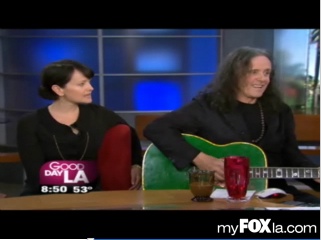
Donovan and daughter Astrella visit by “Good Day LA” to talk about a benefit concert for the David Lynch Foundation.

Donovan will be joined by his daughter Astrella Celeste to headline a benefit concert for the David Lynch Foundation on Friday, March 19 at the El Rey Theater in Los Angeles.

For more info on the concert log onto:  www.donovan.ie/en/


Off-Ramp Special Podcast – Donovan in Concert

Monday, March 8, 2010.

They gave us the keys to the podcast, so now we can send out special editions when we’ve got great stuff to share … like 60s icon Donovan and his guitar in studio. This is the full version of the piece we’ll run this weekend on the broadcast edition of Off-Ramp.              Download

Donovan Live at the Mohn Broadcast Center

Donovan is headlining a concert at the El Rey Theatre March 19th to benefit the David Lynch Foundation, which works to teach at-risk schoolkids to meditate. Donovan learned how to meditate with the Beatles and the Maharishi back in the 1960s. In our Off-Ramp interview, Donovan talks about the old days, reducing students’ stress and reliance on ADHD drugs, and the benefits and drawbacks of fame. He also sings three of his favorites. (COME INSIDE for info on the concert, a link to Lynch’s foundation, and to see who is taller — Donovan or Off-Ramp host John Rabe.)

1 comment

Gary Kaplan
5 days, 19 hours ago

Sublime! Donovan is our hero. What a great service he is doing for mankind.

Donovan & Friends Perform Benefit Concert for David Lynch Foundation

March 15, 2010

Donovan headlines benefit concert on March 19

Proceeds to benefit Transcendental Meditation program

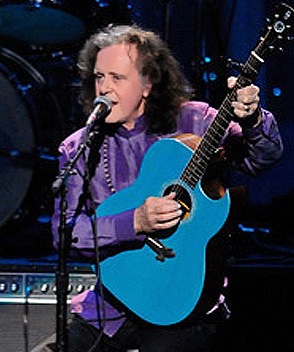
Legendary folk-rock-pop troubadour Donovan, known for hits such as “Mellow Yellow,” “Sunshine Superman,” “Hurdy Gurdy Man” and more, will headline a benefit concert for the David Lynch Foundation on Friday, March 19 at the El Rey Theater.

Doors will open at 7:30 p.m. Tickets are $25 for general admission and $110 for VIP seating and a meet and greet with Donovan after the show, and can be purchased through Ticketmaster.

“The Beatles and I brought back from India the lost art of meditation,” Donovan said. “Now, with David Lynch, we pass it on to thousands of students worldwide. Join us to help save the world.”

He will be joined by his daughter Astrella Celeste and backing band Jerry Vivino, Scott Healy and Mike Merritt from the Conan O’Brien late night band, Danny Saber on guitar with special guests Jack Maness from Sublime, The Global Sound Lodge featuring Lanny Cordola and Matt Sorum of Guns N’ Roses, Velvet Revolver and The Cult, Amrita Sen and more.

Matthew St. Patrick, from Six Feet Under, will host the evening performances.

The El Rey Theater is located at 5515 Wilshire Blvd., Los Angeles 90036.

About Donovan
Donovan was one of the few artists to collaborate on songs with Beatles Paul McCartney, John Lennon and George Harrison. Donovan has played with folk greats Pete Seeger, Joan Baez and Bob Dylan, as well as rock musicians Jimmy Page, Jon Bonham and John Paul Jones of Led Zeppelin, Jeff Beck, and Brian Jones of The Rolling Stones.

Recently Donovan completed the successful album “Beat Cafe” as well as a new box set, “Try For The Sun: The Journey of Donovan,” and a book, “The Autobiography of Donovan: The Hurdy Gurdy Man” (Arrow Books).

Donovan is now heading up the musical wing of the David Lynch Foundation, fulfilling his 40-year interest in Transcendental Meditation. Donovan, his wife Linda, Paul McCartney and Ringo Starr are currently promoting Transcendental Meditation in schools.

About The David Lynch Foundation
The David Lynch Foundation for Consciousness-Based Education and World Peace was founded in July 2005 by award-winning filmmaker David Lynch with the immediate goal of teaching one million at-risk youth to meditate. The foundation has already provided more than 100,000 scholarships for students to learn the Transcendental Meditation technique, as well as inmates and guards in prisons, formerly homeless men in re-entry programs, soldiers with PTSD returning from Iraq and Afghanistan, and American Indians suffering from diabetes.

Sources: The David Lynch Foundation & David Lynch Foundation Television

Girls with ADHD more prone to depression, anxiety than boys; meditation helps

February 23, 2010

DAVID LYNCH FOUNDATION
Office of ADHD and Learning Differences
70 Broad Street, New York, NY 10004
Tel: (703) 823-6933 • sgrosswald@tm.org

Girls suffer from delayed ADHD diagnosis, more prone to depression than boys
Meditation helps alleviate stress, reduce symptoms

A growing number of experts say the number of children with ADHD is greater than estimated because girls are often under-diagnosed. There are also differences in symptoms between the genders. “Girls are more likely to have the attentional type of ADHD, which can lead to difficulty in paying attention and focusing, rather than to disruptive behavior, which is more indicative of the behavior of boys with ADHD,” says Sarina J. Grosswald, Ed.D., a George Washington University-trained cognitive learning specialist who heads up the David Lynch Foundation’s education and health outreach to girls. “As a result, the ADHD diagnosis may be missed in as many as 50% to 75% of girls. On average, girls are diagnosed 5 years later than boys. As girls move into adolescence, those with ADHD are more likely to have clinical depression or anxiety disorders.”

A study published in the American Journal of Psychiatry’s online edition of January 15, 2010 followed 187 6- to 18-year-old girls with and without ADHD over an 11-year period. Reporting on this long-term study, Reuters Health pointed out that girls with the disorder were more likely than their peers to develop depression, anxiety, eating disorders, or other psychiatric problems by the time they reached adulthood.

Concerns about ADHD medications

While in some cases a child cannot function without medication, there is growing concern about the health risks and side-effects associated with the common ADHD medications, including mood swings, insomnia, tics, slowed growth, and heart problems.

A new study, the first of its kind, released February 17, 2010 by the Government of Western Australia’s Department of Health, found that “long-term use of drugs such as Ritalin and dexamphetamine may not improve a child’s social and emotional well-being or academic performance.” The chair of the Ministerial Implementation Committee for Attention Deficit Hyperactivity Disorder in Western Australia said in the Department’s press release, “We found that stimulant medication did not significantly improve a child’s level of depression, self perception or social functioning and they were more likely to be performing below their age level at school by a factor of 10.5 times.”

“Medication for ADHD is very effective for some children, but it is marginally or not effective for others. Even for those children who show reduced symptoms with the medication, the improvement is often insufficient or accompanied by troubling side-effects,” said William Stixrud, Ph.D., a Silver Spring, Maryland, clinical neuropsychologist.

Stress interferes with ability to learn

“Virtually everyone finds it difficult to pay attention, organize themselves and get things done when they’re under stress,” explained Stixrud. “Stress interferes with the ability to learn—it shuts down the brain. Prior research shows ADHD children have slower brain development and a reduced ability to cope with stress.” added Stixrud.

The Transcendental Meditation (TM) technique may be an effective and safe non-pharmaceutical aid for treating ADHD, according to a recent study published in the online peer-reviewed journal Current Issues in Education.

The pilot study was conducted in a private K-12 school for children with language-based learning disabilities. Participation was restricted to 10 students, ages 11-14, who had pre-existing diagnoses of ADHD. About half of the students were on medication. The students meditated at school in a group for 10 minutes, morning and afternoon. After three months, researchers found over 50% reduction in stress and anxiety, and reduced ADHD symptoms in the entire group.

Stixrud, co-author on the TM-ADHD study, said, “It stands to reason that the TM technique, which reduces stress and organizes brain function, would reduce ADHD symptoms.”

Meditation improves classroom experience

“The effect was much greater than we expected,” said Sarina Grosswald, lead researcher on the study. “A 50 % reduction in anxiety and depression symptoms is dramatic,” she explained. “This can be especially valuable for girls who are more prone to these types of symptoms. The children also showed improvements in attention, working memory, organization, and behavior regulation. After the in-school meditation routine began, teachers reported they were able to teach more, and students were able to learn more because they were less stressed and anxious.”

Grosswald added, “There is substantial research showing the effectiveness of the TM technique for reducing stress and anxiety, and improving cognitive functioning among the general population. What’s significant about these new findings is that among children who have difficulty with focus and attention, we see the same results. TM doesn’t require concentration, controlling the mind or disciplined focus. The fact that these children are able to do TM, and do it easily, shows us that this technique may be particularly well suited for children with ADHD.”

Parents pleased with results

Andy and Daryl Schoenbach’s daughter was diagnosed with ADHD in second grade. Like most ADHD children she was taking medication. “The medication helped but had mixed results—she still lost focus, had meltdowns, and the medications affected her sleep and appetite,” said Andy, who lives with Daryl in Washington D.C. “She was not performing close to her potential and we didn’t see the situation improving. So at the end of seventh grade when her doctor recommended increasing the medication, we decided it was time to take a different course—stopping the medication and using Transcendental Meditation.”

“The results were quite remarkable,” Daryl said. “The twice daily meditations smoothed things out, gave her perspective, and enabled her to be in greater control of her own life when things started falling apart. It took some time, but it gradually changed the way she handled crises and enabled her to feel confident that she could take on greater challenges—in her own words, ‘climb a mountain.’”

“Everyone noticed the change,” Andy added.

Ongoing research

A soon-to-be-published second study on TM and ADHD shows that after 3 months of practice the TM group demonstrated more efficient brain functioning (as measured by EEG) compared to the control group during a difficult visual-motor task. The TM group also showed improvements in language skills on a cognitive performance test.

Students reported that they felt calmer, less stressed, and better able to concentrate on their schoolwork. They also said they were happier since they started TM.

###

For interviews, contact Dr. Grosswald
Bio available upon request

Sarina J. Grosswald, Ed.D.
Executive Director
Office of ADHD and Learning Differences
David Lynch Foundation
(703) 823-6933
sgrosswald@tm.org
sfschools@tm.org

FACT SHEET

Attention Deficit Hyperactivity Disorder (ADHD)

· The Center for Disease Control reports that nearly 50% of the 4.5 million children (ages 4-17) in the United States diagnosed with ADHD are on ADHD medication—and the majority of those on medication stay on it in adulthood.

· The rate of prescriptions for Attention Deficit Hyperactivity Disorder in the U.S. has increased by a factor of five since 1991—with production of ADHD medicines up 2,000 percent in 9 years.

· The commonly used drugs for ADHD are stimulants (amphetamines). These drugs can cause persistent and negative side-effects, including sleep disturbances, reduced appetite, weight loss, suppressed growth, and mood disorders. The side-effects are frequently treated with additional medications to manage insomnia or mood swings. Almost none of the medications prescribed for insomnia or mood disturbances are approved by the Food and Drug Administration (FDA) for use with children.

· The long-term health effects of ADHD medications are not fully known, but evidence suggests risks of cardiac disorders and sudden death, liver damage and psychiatric events. It has also been found that children on long-term medication have significantly higher rates of delinquency, substance use, and stunted physical growth.

The Transcendental Meditation Technique

· The Transcendental Meditation technique is an effortless technique practiced 10-20 minutes twice a day sitting comfortably with the eyes closed.

· TM is not a religion or philosophy and involves no new beliefs or change in lifestyle.

· Over 350 peer-reviewed research studies on the TM technique confirm a wide range of benefits for mind, body and behavior.
· Several studies have compared the effects of different meditation practices and found that Transcendental Meditation provides deeper relaxation and is more effective at reducing anxiety, depression and hypertension than other forms of meditation and relaxation. In addition, no other meditation practice shows the widespread coherence throughout all areas of the brain that is seen with Transcendental Meditation.

· The Transcendental Meditation technique is taught in the United States by a non-profit, educational organization.

· More information can be obtained by calling 888-LEARN-TM or visiting www.ADHD-TM.org, www.AskTheDoctors.com, or www.TMEducation.org.

###

NB: After posting this article, a new study came out on July 26, 2011: New study shows Transcendental Meditation improves brain functioning in ADHD students: A non-drug approach to enhance students’ ability to learn.

A random-assignment controlled study published today in Mind & Brain, The Journal of Psychiatry (Vol 2, No 1) found improved brain functioning and decreased symptoms of attention-deficit/hyperactivity disorder, ADHD, in students practicing the Transcendental Meditation® (TM) technique. The paper, ADHD, Brain Functioning, and Transcendental Meditation Practice, is the second published study demonstrating TM’s ability to help students with attention-related difficulties.

See TM improves brain function in ADHD students, also reported in the TM Blog: New study finds TM boosts brain functioning and helps students with ADHD.

And this new important related article posted in The Huffington Post on meditation helping kids get off ADHD drugs came out in Jan 6, 2012: ADHD Drug Shortage: Can Meditation Fill the Gap? 

Mashable: David Lynch Goes Mobile

February 10, 2010

Mashable | The Social Media Guide
About 15 hours ago Christina Warren 7

From “Eraserhead” to MMS: David Lynch Goes Mobile

Award-winning director (and three-time Oscar nominee) David Lynch (of Blue Velvet and Twin Peaks fame) and the David Lynch Foundation Television have teamed up with mobile video marketer Mogreet to bring video MMS messages to Lynch fans.

We spoke with Mogreet and the David Lynch Foundation about the technology, the purpose of the campaign and how the DLF is using social media and technology to further its message.

Spreading a Message With Mobile Video

The ever-increasing pace of smartphone adoption only underscores the growing importance of mobility. As we’ve seen with everything from mobile app stores to the Red Cross’s text message for Haiti campaign, mobile is an extremely valuable platform for brands and nonprofits to get their messages across.

Videovideo is an important communication driver, too, and when you combine the two technologies together, you end up with something potentially amazing.

Last month, we wrote about Thwapr, a company that specializes in doing mobile-to-mobile video. We see mobile video messaging as something that’s only going to continue to grow, especially as more and more companies realize just how many users are able to actually view video on their phones.

One of the companies that is really focused on mobile video marketing is Mogreet. Mogreet works with companies so that they can send video MMS messages to users that request their information. Because virtually every mobile phone sold since 2005 or so can support MMS messages that include video playback, the potential audience for these sorts of messages is huge.

I spoke with James Citron, the CEO of Mogreet, and he told me that the company has more than 2,700 device profiles in its database, meaning that if you have a cell phone, chances are, it can play one of Mogreet’s video MMS messages. Each video is encoded in a variety of different formats and it is sent to phones in the best format for that phone, so that users of an iPhone get a different experience than someone using a Motorola Razr, but each user gets the best possible experience for his or her device.

While this has primarily been used for commercial advertisers, Mogreet is interested in getting into the non-profit space too, because that’s perhaps an even better market for this sort of service. Think about it, what if you could donate and then get a video message back showing someone who is helped by your donation saying thanks? Or what if you could see what is going on in Haiti or some other place that needs aid? The non-profit organization’s message might be that much more powerful. After all, images often speak louder than words.

To that end, Mogreet decided to work with the David Lynch Foundation and bring some of Lynch’s talents — and messages — to his fans.

David Lynch Goes Mobile

The David Lynch Foundation Television is dedicated to documenting programs that awaken creativity and transform lives. To that end, the foundation has a website, DLF.TV, that has lots of video content of David Lynch and of people the Foundation has helped, as well as of other artists and friends who have support the Foundation’s vision.

The first mobile video message that the DLF will be sending to fans is of a short film that Lynch directed featuring the musician and artist Ariana Delawari. Delawari’s debut album, Lion of Panjshir was recorded in Kabul and Los Angeles, and reflects the cultures of both places. Delawari’s decision to return to Afghanistan in 2007 to record the album influenced her work and its overall sound. Like Lynch, Delawari is a student of transcendental mediation and like Lynch, it has also influenced her life and her work.

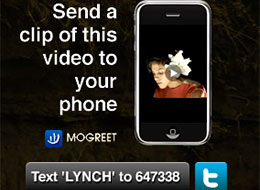
Lynch directed a six-minute short showing off Delawari’s style and voice. The style is unmistakable Lynch, from the background to the sound mix to the camera angles. It’s also a piece that works well when viewing on the web or on a mobile phone. To spread the word about Delawari — and to kick off a mobile-type of initiative — fans can text ‘LYNCH’ to 647338.

It’s an interesting approach to spread a message from an always-interesting director. It’s also something we expect to be a growing trend, especially as nonprofits start to embrace the power of mobile.

What do you think about mobile video? Are you a fan of David Lynch? What do you think of this initiative? Let us know!

Tags: , , , , ,

User reviews: video

DONOVAN to Perform Free Online Benefit Concert

January 22, 2010

DONOVAN IN CONCERT LIVE ON THE WEB SUNDAY

Donovan will be giving a concert at Munich’s Cuvilliés Theater as the start of his activities on the Social Web; the performance will be streamed live on Donovan.ie

Donovan is inviting fans and the online community to watch his sold-out concert live on the Internet this Sunday. He will perform his hit songs and cult classics as well as showcasing songs from his new work RITUAL GROOVE as a run up to his forthcoming world tour 2010/2011. Special guest will be talented musician Claudia Koreck, one of the hottest newcomers in Germany.

The show will be streamed live Sunday, January 24, at 8:30 p.m. CET worldwide thanks to the professional live streaming technology and video production of TV1.EU, and a true broadband connection by BT, British Telecom. This World Wide Charity Concert is to benefit ‘Schools Without Stress’ (Germany). Also see DLF.TV, and the David Lynch Foundation. http://twitter.com/DAVID_LYNCH

The Link to the Live Stream will be on Donovan’s new Website http://www.donovan.ie/live. News of the free live webcast concert is also on Donovan’s Facebook and Twitter pages. His fans just love the idea of streaming the concert! http://www.facebook.com/DonovanOfficial & http://twitter.com/donovanofficial.

“Donovan fans worldwide now have the opportunity to take part in an extraordinary concert experience directly from their computers at home. While watching the concert Donovan’s Online Friends can share their experience on facebook or twitter”, says Monty C. M. Metzger, CEO of the Social Media Marketing Agency, Ahead of Time. http://twitter.com/montymetzger

This “Social Media for Social Activism” musical event will support the charity project “Schule ohne Stress” (Schools without Stress) and will increase awareness about the positive effects of the Transcendental Meditation (TM) technique on creativity, intelligence, brain functioning and academic performance.

The legendary folk-rock pop troubadour Donovan began his career as an itinerant folk musician and created acoustic hits like Catch The Wind, Colours, Mellow Yellow, and Buffy Saint Marie’s Universal Soldier.  Other megahits include Jennifer Juniper, Sunshine Superman, Hurdy Gurdy Man, Season of the Witch, There is a Mountain, Atlantis, and other beautiful songs, which appeared on later albums, like Sutras, produced by Rick Rubin.

Dr. Donovan Leitch is a Green-Activist and received a Doctor of Letters from the University of Hertfordshire, an honorary medal as “Officer of Arts & Letters” by the French government, and was named BMI Icon in 2009.

Donovan was one of the few artists to collaborate on songs with the Beatles, contributing lyrics and vocals to the song Yellow Submarine. Donovan influenced Paul McCartney, John Lennon, and George Harrison in their guitar styles, and during his career played with folk music greats Pete Seeger, Joan Baez, and Bob Dylan, as well as rock musicians Jimmy Page of Led Zeppelin and Brian Jones of the Rolling Stones.

This is Donovan’s first global World Wide Web performance—a musical historic event. The concert is sold out! Viewers wishing to join Team DONOVAN and make a donation are invited to visit betterplace.org. Donations start from 1 Euro! http://www.betterplace.org/groups/donovan

ABC Nightline News Report on TM, M.U.M., Maharishi Vedic City, and David Lynch in Iowa

January 8, 2010

A positive Iowa news report for your enjoyment and edification. (Postponed again, sorry.) Just aired last night, July 5, 2010. http://bit.ly/cDxWqj


http://abcnews.go.com/Nightline/transcendental-meditation-vedic-city-iowa/story?id=9218475

Transcendental Meditation Thrives in Iowa
Adherents of Transcendental Meditation Have Called Hawkeye State Home Since ’70s
By John Berman and Maggie Burbank
Jan. 8, 2010

When you think of Iowa, you think of cornfields, you think of caucuses, you think of old-fashioned country-living.

Chances are, you don’t think of meditation <http://abcnews.go.com/Entertainment/popup?id=7249295>  and communal living.

Welcome to Maharishi Vedic City, Iowa — the only city in the country built on the tenets of transcendental meditation <http://abcnews.go.com/Health/MindMoodNews/story?id=7263240> , for meditators, by meditators.

Meg and Erik Vigmostad moved here from St. Louis in 1982.

“We wanted to come to a meditating community,” said Meg Vigmostad. “We had two children at the time, one of them was an infant, and we felt like it was the best place to bring up our children <http://abcnews.go.com/Health/MindMoodNews/story?id=7263240> .”

Watch the full story tonight, Jan 8, 2009 on “Nightline” <http://abcnews.go.com/nightline>  at 11:35 p.m. ET

Vigmostad acknowledged that the couple’s families thought they were “crazy” for making the move. Crazy, because those words, “transcendental meditation,” sound, well, different. Many people first heard of transcendental meditation, or TM, in the 1960s, when the Beatles started following Maharishi Mahesh Yogi, the official founder of TM.

“Transcendental meditation is a simple technique practiced for about 15-20 minutes sitting comfortably in a chair with the eyes closed,” said Bob Roth, a national director of the TM program. “It allows the body to get a profound state of rest while the mind just settles down and experiences a state of inner wakefulness, inner calm, inner coherence.”

The followers of Mahesh Yogi — mostly from East and West Coast universities — moved to Iowa en masse in 1974 to set up their own college, the Maharishi University of Management. The group chose Iowa because that is where they could find the land.

Now the settlement features two huge domes, one for men and one for women, with residents streaming in to meditate together twice a day.

But at the university and in the city, the commitment to Vedic principles of natural law and balance, derived from ancient Sanskrit texts, goes far beyond meditation. The community has banned the sale of nonorganic food within its boundaries. And that’s not all.

“The primary characteristics of Vedic architecture, the most obvious one, is that ideally, buildings face east, the direction of the rising sun,” said Jon Lipman, the country’s leading Vedic architect.

‘Greater Happiness’
Lipman says the buildings at the university and most new houses in town are constructed in line with ancient precepts.

“Just like the organs in the human body, there is a right place for different kinds of functions within a building,” Lipman said.

“And so, a kitchen is typically in one location. A living room in a house is typically in another location.”

Every Vedic building has a silent core known as a Bramastan, which is lit by a skylight and is never walked on. Lipman claims miraculous effects.

“The results are that, families find that their lives are improved, that there’s greater family harmony, that there is greater financial success, there’s greater happiness,” said Lipman. “There are many many cases where members of a family had disharmony between them, and it dissolved when they moved into a Vedic home. There are many cases where even such things as chronic diseases were abated by moving into a Vedic home.”

Lipman said “it’s a real challenge” to be poor, unhappy or unhealthy if you live in a Vedic building.

The Vigmostads live in a Vedic house, and seem like happy customers.

“It feels harmonious, it feels orderly, there’s a lot of silence here that was definitely not in our other house that we owned,” said Meg Vigmostad.

The talk of order and inner peace might sound unbelievable. But it is also the work of Vedic City to make it all … believable. Fred Travis, director of a university facility called the Center for Brain Consciousness and Cognition, demonstrated an EEG monitor of neurological electrical activity that he said shows that TM makes the brain more organized.

“What this is measuring is the electrical activity of the brain,” Travis explained as a member of the community hooked up to the machine sat and meditated.

“You see this one going up and down?” Travis said, pointed to a gauge. “Look at the one next to it. It goes up and down in a similar way. This is called coherence. When the similarity of two signatures are very close, it suggests those two parts of the brain are working together.

Neurologist Gary Kaplan, a proponent of TM, said such “coherence” will bring happiness, success — even world peace.

“What we notice is that this electrical activity becomes more harmonious or coherent between left and right hemispheres,” Kaplan said. “There have been studies that have documented that the TM technique, when practiced in large groups, seems to have some effect on society in general, whether it’s in war-torn areas where people are sitting to meditate together, or in high-crime areas that the trends reverse when you have larger groups meditating together.”

David Lynch and TM
It is a lot to digest — but then you don’t really have to. The TM followers insist they are not a cult. They all have normal jobs, for the middle of Iowa, and they are not out to recruit you. They just want you to know the option is there.

Famed filmmaker David Lynch spends a lot of time in Vedic City. He started the David Lynch Foundation, which, in the last four years, has provided scholarships for over 100,000 kids to learn to meditate for free in schools across the country.

“It’s not a religion. It’s not against any religion, it’s not mumbo-jumbo. It truly does transform life,” Lynch told ABC News. “Kids come to school and they meditate together for 15 minutes in the morning. And before they go home they meditate for 15 minutes. A lot of them come from, you know, bad situations, and so this gives them this thing you know, at the beginning and the end of the day, the rest of the time you just watch the violence stop. Watch relationships improve. Watch happiness in the hallways, in the classroom, watch creativity flow more and more, watch that heavy weight that we are living under gently lift away.”

“Nightline” was told there wasn’t enough time to properly learn transcendental meditation on a short trip to Vedic City. But to get a feeling of the Vedic way of life, we did visit the Ayurveda Health Spa in Vedic City — the leading spa of its kind in the country. Ayurveda is a system of health and healing involving food and behavior that originated in India thousands of years ago.

“We take your pulse, we put three fingers on the right hand,” explained Mark Toomey, an Ayurvedic health expert at the spa. “And it’s what I would say is like plugging into the inner intelligence of the body.”

Toomey said he can learn a lot from feeling a person’s pulse. He demonstrated on our correspondent.

“It’s a strong pulse,” Toomey said. “That means that, good expression of intelligence. It’s clear. Your pulse has a little bit of tension there, so maybe you’re working a little too hard, too many deadlines.”

Next up was the Shirodhara treatment.

“So what we’re going to be doing is pouring this oil for about 20 minutes on your forehead, in a continuous stream,” said Toomey. “Your job is just to relax and enjoy.”

And what’s so wrong with that? In Vedic City, they have made that their way of life … in the middle of Iowa.

“We really have all we need here,” said Meg Vigmostad. “You can go to a city anytime. But this is sort of a haven, you know? And it’s a place of comfort, and community.”

Copyright © 2010 ABC News Internet Ventures
——————————————————–

Here are two of my favorite famous relevant quotes on understanding truth and accepting the changes they bring for the better—a paradigm shift.

All truths are easy to understand once they are discovered;
the point is to discover them.
— Galileo Galilei (1564–1642)

All truth passes through three stages.
First, it is ridiculed. Second, it is violently opposed.
Third, it is accepted as being self-evident.
— Arthur Schopenhauer (1788-1860)