Archive for the ‘Articles’ Category

Follow-up study suggests large advanced TM groups reduced murder rates in large US cities

March 30, 2017

Large groups practicing the advanced Transcendental Meditation program were associated with significant reductions in murder rates in US urban areas during the period 2007–2010

A follow-up study in the Journal of Health and Environmental Research examines a novel proposed approach to help reduce murder rates in large US urban areas. In a prospective social experiment from 2007 to 2010, practice of the Transcendental Meditation® and TM-Sidhi® program by a large group at Maharishi University of Management in Iowa was associated with a 28.4% reduction in murder rates in 206 US urban areas, preventing an estimated 4,136 deaths.
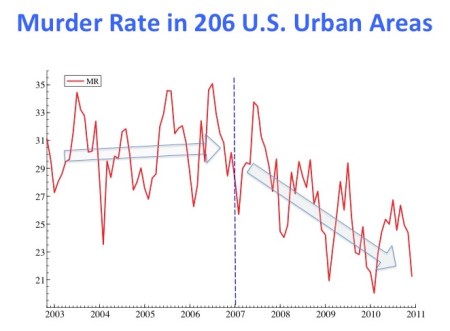
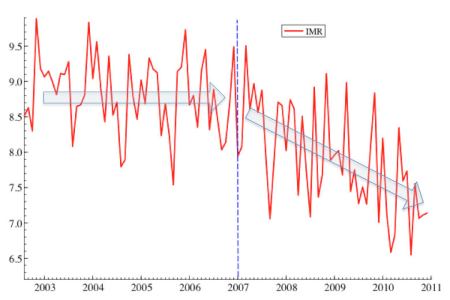
JHER 2017 Fig 1. Reduced Murder Rate in 206 Urban Areas

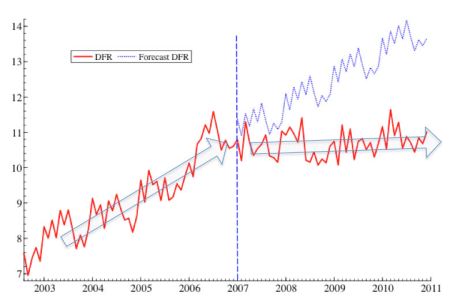
A slightly rising trend in the urban murder rate during the baseline was reversed significantly when the Transcendental Meditation and TM-Sidhi group exceeded 1,725 participants in January 2007 (vertical dashed line).

Follow-up study suggests group meditation reduced murder rates in large US cities

Following up on a 2016 study on group meditation that found a 21.2% reduction in the national homicide rate during the period 2007–2010, a new study focusing on 206 large US urban areas found an even greater decrease of 28.4% in the murder rate. In both studies, the reductions during the period 2007–2010 were in comparison to the baseline period 2002–2006.

In their study, published in the Journal of Health and Environmental Research, the authors suggest that these results are consistent with the hypothesis that a sufficiently large group practicing the Transcendental Meditation® technique and its advanced program, the TM-Sidhi® program would lead to reduced societal stress, as reflected in reduced rates of murder and violence. This group practice is said to create a positive effect in the environment due to a hypothesized “field effect of consciousness.”

During 2007–2010, the size of the TM-Sidhi group located at Maharishi University of Management in Fairfield, Iowa, was above or near 1,725 participants, the size predicted to have a positive influence on the US quality of life. This predicted threshold represents the square root of 1% of the US population at that time.

“In view of the recent increases in murder rates in large US cities, the results of this prospective social experiment should be of particular interest to government policy makers seeking an effective method of reducing urban violence,” said lead author Dr. Kenneth Cavanaugh.

“This study and 17 other peer-reviewed studies suggest that one’s individual consciousness is directly connected to an underlying, universal field of consciousness, and that by collectively enlivening that universal field through the Transcendental Meditation technique, such a group can have a positive effect on the quality of life in society,” added coauthor Dr. Michael Dillbeck.

28.4% reduction compared to previous four-year period

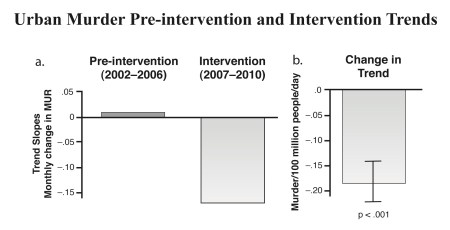
The study found that a slightly increasing trend in murder rate during the baseline period 2002 to 2006 shifted significantly to a declining trend during the four-year period 2007 through 2010. As a result, the urban murder rate was reduced 28.4% relative to the 2002–2006 average. The researchers estimated 4,136 murders in the 206 cities were averted by the significantly reduced trend in murder rates.

They calculated that the probability that the reduced trend in murder rates could simply be due to chance was 1 in 10 million million.

Rising murder rates cause concern

Despite long-term declines in US murder and other violent crime rates from their peak in the early 1990s, recent increases in these rates have led to heightened concern among policy makers and the general public.

Beginning at historically low levels not experienced since the early 1960s, the national murder rate (murder and non-negligent manslaughter) increased 10.8% in 2015, the largest increase in 25 years. Ten large cities with an average population of about one million experienced a disproportionately large surge in homicides during 2015. Preliminary data indicate that continued increases in national murder rates in 2016 were also being driven by a handful of large US cities.

“The 2015–2016 increase in US murder and violent crime rates, especially in urban areas, highlights the need to consider new, alternative approaches to reducing violence that might help address this important national issue,” said Dr. Dillbeck.

Using time series analysis to compare trends

The researchers first calculated a baseline trend for monthly murder rates during 2002–2006 for all 206 urban areas over 100,000 population for which uninterrupted FBI data were available. They then used time series intervention analysis to compare that baseline with the corresponding trend for the intervention period 2007–2010.

A slightly rising trend in the urban murder rate (see Figures 1 and 2) during the baseline was reversed significantly when the Transcendental Meditation and TM-Sidhi group exceeded 1,725 participants beginning in January 2007 (vertical dashed line in Figure 1). This declining trend continued through 2010. (The irregular ups and downs of the murder rate shown in Figure 1 are largely due to seasonal fluctuations around the trend.)
G25. Urban murder bw

This chart shows the slightly rising trend in the urban murder rate 2002-2006 (left bar), the declining trend 2007-2010 (middle bar), and the highly significant change in trend (right bar).

A hypothesized “field effect of consciousness”

The Transcendental Meditation technique is said to allow the mind to settle down to quieter states and ultimately experience “pure consciousness” or “pure awareness,” in which the mind is aware but without an object of thought. EEG research and subjective reports suggest the existence of this unique state. Research has found that experience of this state results in benefits such as reduced stress and increased brain integration.

According to Dr. Cavanaugh, “The basis for the hypothesized effect on society is that consciousness in its pure form, pure consciousness, has a field-like character and is a universal field at the basis of everyone’s thought and behavior. When the participants in a group equal to or exceeding the square root of one percent of the entire population are experiencing pure consciousness during group practice of the Transcendental Meditation and TM-Sidhi program, the field of pure consciousness is enlivened in the entire population. This will positively influence all others in society, leading to development in the same holistic direction as experienced by individuals practicing the Transcendental Meditation technique.”

Reduction not explainable by factors such as policing

The authors noted that reductions in the trends of murder rates occurred at the predicted time and in the predicted direction, and this reduction could not be predicted from baseline trends or seasonal cycles.

The researchers also were able to rule out other alternative explanations. The reduction in murder rates could not be explained by such factors as unemployment and national economic conditions, changes in incarceration rates, police strategy and police technology, urban demographics, police reporting standards, or temperature changes. And for the first time in a major economic downturn since 1945, the murder and violent crime rates failed to rise during the severe recession of December 2007 to June 2009.

The authors point out that the study’s findings are especially noteworthy because these 206 large urban areas pose a particularly difficult challenge to any proposed initiative to help reduce urban rates of murder and violence. These cities experience higher poverty rates, lower educational levels, higher unemployment, greater social instability, and other predictors of higher rates of violent crime than the rest of the US.

A total of eighteen peer-reviewed articles have now been published validating the prediction by Maharishi Mahesh Yogi, the founder of the Transcendental Meditation program, that a TM-Sidhi group of this size would lead to reduced societal stress, as reflected in reduced crime, violence, accidents, illness, and increased positive trends in society.

Fourth study in a series

The study, titled “Field Effects of Consciousness and Reduction in US Urban Murder Rates: Evaluation of a Prospective, Quasi-Experiment,” was published in the Journal of Health and Environmental Research, March 2017.

This article is the fourth in a series that comprehensively evaluates the impact of the Transcendental Meditation and TM-Sidhi group on the US quality of life and public health.

The first in the series, published in 2016 in SAGE Open journal, reported a highly significant 21.2% reduction in the US national homicide rate during the same 2007–2010 period, resulting in the prevention of an estimated 8,157 homicides. A reduction of 18.5% in violent crime rates in 206 urban areas was also found, thus averting an estimated 186,774 violent crimes.

The second article in the series, published in the January/February 2017 issue of the Journal of Consciousness Studies, found a highly significant reduction of 20.6% in the rate of US motor vehicle fatalities and 13.5% in the rate of all other accidental fatalities during the same experimental period. The study estimates that 19,435 motor vehicle fatalities and 16,759 other accidental deaths were averted by the significantly reduced trends in fatality rates.

The third in the series, published in the March 2017 issue of SAGE Open, found a highly significant reduction of 30.4% in the US drug-related death rate and 12.5% in the rate of infant mortality. The researchers estimate that 26,425 drug-related fatalities and 992 infant deaths were averted by the significantly reduced trends in fatality rates.

In view of these findings, the authors invite governments to implement and evaluate this scientifically validated approach to reducing violence and other negative trends in society.

###

Field Effects of Consciousness and Reduction in US Urban Murder Rates: Evaluation of a Prospective, Quasi-Experiment. Kenneth L. Cavanaugh and Michael C. Dillbeck, Institute of Science, Technology, and Public Policy, Maharishi University of Management, Fairfield, Iowa. DOI: 10.11648/j.jher.s.2017030301.13 (PDF)

Source: EurekAlert/AAAS
Four-year study finds large advanced Transcendental Meditation group reduces drug-related deaths nationally

March 14, 2017

Large groups practicing the advanced Transcendental Meditation program were associated with significant reductions in rates of drug-related death and infant mortality during the period 2007–2010

A new study in SAGE Open reports a novel solution to US fatality rates from the misuse of prescribed and illegal drugs. In a prospective social experiment from 2007 to 2010, practice of the Transcendental Meditation® and TM-Sidhi® program by a large group at Maharishi University of Management in Iowa was associated with a 30.4% reduction in the rate of growth of US drug-related fatalities, preventing an estimated 26,425 deaths.

drug-deaths

A rapidly rising trend in the drug-related fatality rate during the baseline period leveled out significantly when the Transcendental Meditation and TM-Sidhi group exceeded 1,725 participants beginning in January 2007 (vertical line).

Four-year study finds group meditation reduces drug-related deaths in general population

The rate of US drug-related fatalities fell 30.4% nationwide from 2007 to 2010 due to the reductions in societal stress and increased alertness in the individuals in society created by a large group practicing the Transcendental Meditation® technique and its advanced program, the TM-Sidhi® program, a new study shows.

The hypothesis: the reduction comes not from drug abusers using meditation to get off drugs, but from a TM-Sidhi group large enough to create an effect in the environment due to a hypothesized “field effect of consciousness.”

“It’s a bold claim,” said lead author Michael Dillbeck, “but there are now 14 peer-reviewed published studies that suggest that one’s individual consciousness is directly connected to an underlying, universal field of consciousness, and that by collectively tapping into that universal field through Transcendental Meditation, we can have a positive effect on the environment.”

26,425 drug-related fatalities averted

The surge in drug-related deaths began in 1990, fueled by skyrocketing rates of drug overdose, largely from prescription painkillers and anxiety drugs. Drug deaths exceeded motor vehicle accidents as a cause of death in 2009, killing more than 37,000 people a year nationwide.

The study found that during the four-year period 2007 through 2010 this upward trend in the rate of drug-related deaths was interrupted by a highly significant shift to a greatly reduced, flatter trend. As a result, the drug-related fatality rate was reduced 30.4% relative to the 2002-2006 baseline average. The researchers estimated that 26,425 drug-related fatalities were averted by the significantly reduced trend in fatality rates.

The probability that the reduced trend in rates of drug-related fatalities could simply be due to chance was reported to be 3.1 in 10 billion.

During 2007–2010, the size of the TM-Sidhi group located at Maharishi University of Management in Fairfield, Iowa, was above or near 1,725 participants, the size predicted to have a positive influence on the US quality of life. This predicted threshold represents the square root of 1% of the US population.

Time series analysis shows a reduction

The researchers first calculated a baseline trend for monthly fatality rates during 2002–2006, and then used time series intervention analysis to compare that baseline with the corresponding trend for the intervention period 2007–2010. A rapidly rising trend in the drug-related fatality rate (see Figure 1) during the baseline period leveled out and slowed significantly when the Transcendental Meditation and TM-Sidhi group exceeded 1,725 participants beginning in January 2007 (vertical dashed line). This flatter trend continued through 2010. (The irregular ups and downs of the fatality rate shown in the graph are largely due to seasonal fluctuations around the trend.)

Change produced by enlivening “field of pure consciousness”

How could this change in society be produced by the meditation practice of participants in the Transcendental Meditation and TM-Sidhi group? Published research has shown that Transcendental Meditation creates a state of restful alertness, increases brain integration, reduces individual stress, and enables greater use of one’s inner potential.

“These benefits are the natural by-product of the experience during Transcendental Meditation practice of a silent, wakeful state of the mind known as ‘pure consciousness’,” Dr. Dillbeck said.

According to coauthor Kenneth Cavanaugh, the basis for the effect on society is that pure consciousness has a field-like character and is a universal field at the basis of everyone’s thought and behavior. When the participants in a group equal to or exceeding the square root of one percent of the entire population are experiencing pure consciousness during group practice of the Transcendental Meditation and TM-Sidhi program, the field of pure consciousness is enlivened in the entire population.

“This field effect positively influences the quality of consciousness in the individuals in society in much the same direction as that experienced by those practicing the Transcendental Meditation technique,” Dr. Cavanaugh said. “It’s as if the non-meditating populace experienced the same benefits of those meditating.”

Reduces social stress

This research tests the hypothesis that practice of the Transcendental Meditation and TM-Sidhi program by a group of sufficient size will result in reduced stress and increased alertness in the individuals in society, thus contributing to reduced trends of these two stress-related public health indicators.

“Chronic stress contributes to increased likelihood of illness as well as to the use and abuse of illicit and prescribed drugs,” Dr. Dillbeck said. “Stress can reduce the degree of conscious alertness and vigilance necessary to avoid drug misuse, especially highly potent and potentially addictive narcotic painkillers.”

Alternative explanations ruled out

The authors noted that reductions in the trends of both fatality rates occurred at the predicted time and in the predicted direction, and neither reduction could be predicted from baseline trends or seasonal cycles. The researchers also were able to rule out other alternative explanations. For example, the reduction in drug-related death rates could not be explained by such factors as unemployment and national economic conditions, increased public and professional medical awareness of the hazards of opioid painkillers, and sales of such painkillers.

Reduction in infant mortality

infant-deaths

With the onset of the intervention period in January 2007 (vertical line), the infant mortality rate significantly shifted from a flat to a declining trend.

This study of stress-related public health indicators also found that during the same period the rate of infant mortality was reduced by 12.5%. The researchers found a highly significant shift from a flat or slightly declining trend in 2002–2006 to a substantially faster declining trend in 2007–2010. An estimated 992 infant deaths were averted. The probability that the reduced trend in rates of drug-related fatalities could simply be due to chance was reported to be less than 2.1 in 100,000.

Third study in a series

The study, titled “Group practice of the Transcendental Meditation and TM-Sidhi program and reductions in infant mortality and drug-related death: A quasi-experimental analysis” was published in the social science journal SAGE Open, Mar 2017, 7(1).

This article is the third in a series that comprehensively evaluates the impact of the Transcendental Meditation and TM-Sidhi group on US quality of life and public health. The first in the series, published in 2016 in SAGE Open journal, reported a highly significant 21.2% reduction in US homicide rates during the same 2007-2010 period, resulting in the prevention of an estimated 8,157 homicides. A reduction of 18.5% in violent crime rates in 206 urban areas was also found, thus averting an estimated 186,774 violent crimes.

The second article in the series, published in the January/February 2017 issue of the Journal of Consciousness Studies, found a highly significant reduction of 20.6% in the rate of US motor vehicle fatalities and 13.5% in the rate of all other accidental fatalities during the same experimental period. The study estimates that 19,435 motor vehicle fatalities and 16,759 other accidental deaths were averted by the significantly reduced trends in fatality rates.

A total of fourteen peer-reviewed articles have now been published validating the prediction by Maharishi Mahesh Yogi, the Founder of the Transcendental Meditation program, that a TM-Sidhi group of this size would lead to reduced societal stress, as reflected in reduced crime, violence, accidents, illness, and increased positive trends in society.

The authors call for governments to implement and evaluate this approach as the natural next action step.

###

Group practice of the Transcendental Meditation and TM-Sidhi program and reductions in infant mortality and drug-related death: A quasi-experimental analysis. Michael C. Dillbeck and Kenneth L. Cavanaugh, Institute of Science, Technology, and Public Policy, Maharishi University of Management. DOI: 10.1177/2158244017697164 (PDF)

Source: EurekAlert/AAAS

See the first study in this series: Can group meditation prevent violent crime? Surprisingly, the data suggests yes: New study.

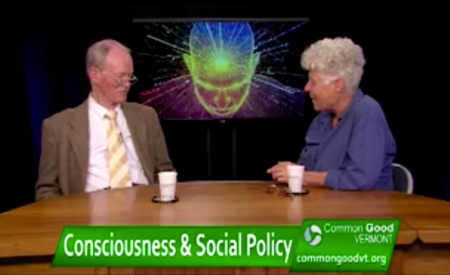
Dr. Edwards Smith on #TranscendentalMeditation Health and Social Policy @CommonGoodVT #video

February 26, 2017

Lauren-Glenn Davitian, host of Common Good Vermont, interviews Edwards Smith M.D. about the impact of Transcendental Meditation on individual and social health. Lauren prefaces the interview by saying, “We’re going to talk about Transcendental Meditation and consciousness as a way of improving the well-being of our community and as a social policy tool.”

edwards-smith-m-d-on-common-good-vt

Edwards Smith M.D. is a western and AyurVedic doctor and leading practitioner of Transcendental Meditation as a practice for personal resilience and community well-being. Dr. Smith served in active duty with the US Army Medical Corps, taught at Maharishi University of Management, ran the Maharishi College of Vedic Medicine in Albuquerque, and is widely published on subjects ranging from pharmacology and rheumatology to Transcendental Meditation. Based on his experience with war veterans and community indicators of well-being, he believes that TM and TM-Sidhi programs are human resource-based technologies that offer immense potential for the health care system of any country.

This excellent interview, titled Consciousness and Public Policy, was filmed on February 23, 2017 for Channel 17/Town Meeting TV in Burlington, Vermont. Dr. Smith is very thorough in his explanations of TM research and how it has impacted the health of individual lives and societies as a whole. Click here to watch (25:53).

Maharishi University #MaharishiU MBA students finish in top 1% in worldwide business simulation

February 22, 2017

This is the 4th time MUM MBA students finished in the top percentile at Capsim Management Simulations since they began competing in 2011.

Fairfield, IA – A team of MBA accounting students at Maharishi University of Management in Fairfield recently finished in the 99th percentile in an online business simulation that involved 1,136 master’s-degree-level teams worldwide, competing against teams from schools such as Indiana University, Kansas State, Temple, University of Georgia, University of Northern Iowa, Ohio University, and California State.

This is the fourth time MBA students from MUM have finished in the top percentile since they began participating in the simulation in 2011.

Indicates readiness for job markets

Andy Bargerstock

Andrew Bargerstock, PhD, CPA, Director of MBA Programs at Maharishi University of Management

“We had five teams that participated in the simulation for three weeks in January, and as a group they performed better than two-thirds of participating MBA schools,” said Professor Andy Bargerstock, who taught the capstone course that involved participating in the simulation. “As faculty in the business college, we feel that the simulation results demonstrate the readiness of our students for job markets now and ultimately for executive leadership positions.”

The team’s results in this ongoing simulation were confirmed by Brianne Haustein, client relations consultant with Capsim Management Simulations in Chicago, Illinois.

How the simulation works

In the online Capsim simulation, points are earned through well-defined metrics based on the Balanced Scorecard, a concept developed by Robert Kaplan at Harvard University. It recognizes four perspectives for measuring performance: customer, financial, internal business processes, and learning/growth.

The students must manage both short-term and long-term metrics across eight rounds of decision-making, with each round representing one year. This entails using their knowledge of marketing, finance, operations, human resources, accounting, problem-solving, and data analysis.

The teams act as executives who plan strategies and implement tactics across eight years of business activities.

The basis for comparison

While not a real-time competition per se, the ongoing simulation allows MBA teams to compare their performance with all the other teams who have participated in the previous six-month period from the end date of the last round of decisions.

By the time Dr. Bargerstock’s students participate in the simulation, they have taken a variety of courses such as marketing, finance, human resource management, operations management, business law, and lean management. Then they apply everything they’ve learned by participating in the simulation.

“We began participating in the simulation for a couple reasons,” Dr. Bargerstock said. “It’s an excellent exercise for applying everything they’ve learned. But I was also really curious how our students matched up with other MBA students around the world. It’s gratifying to know that they compare favorably and are clearly ready to be high-level professionals.”

Success in the job world

As students leave campus to fill paid practicum positions, and as they have completed their degree and taken positions as alumni, they have shown remarkable success.

  • Ganesh Baniya, CPA, is the manager of financial accounting and reporting for The Washington Post in Washington, DC. He was on a student MBA team that finished in the top 1% in Capsim.
  • Charles Njoya, CPA, is the director of audit and assurance for Community CPA & Associates, Des Moines, IA. He was on a student MBA team that finished in the top 5% in Capsim.

Many of the students take online distance education courses toward becoming Certified Public Accountants or Certified Management Accountants while in the practicum phase of the program, thereby entering the job world as a CPA or CMA.

200 MBA students enrolled at MUM

rahul-kedia-india-sushil-aryal-nepal-and-ankhbayar-sukhmaa-mongoliaThe top team this year included Rahul Kedia (India), Sushil Aryal (Nepal), and Ankhbayar Sukhmaa (Mongolia).

MBA students at Maharishi University of Management come from around the world. Those participating in the simulation are students in the Accounting Professionals Program. They spend eight months on campus taking specialized courses, and then begin their practicum, in which they work as an accountant for up to two years at a U.S. corporation and complete their MBA via distance education.

Approximately 200 students are currently enrolled in various specializations in the MBA program, including those on campus, those in their practicum phase, and those in special-purpose corporate MBA programs.

Accreditations

In addition to being accredited by the Higher Learning Commission, which accredits universities in the Midwestern region of the U.S., the business program at the bachelor’s, master’s and PhD levels at Maharishi University of Management has met the stringent requirements to be accredited by the International Assembly for Collegiate Business Education.

Contributing writer: Jim Karpen

The Fairfield Ledger: MUM finishes business simulation in top percentile

Related

The Role of Business Simulation Competitions in Higher Education

See more news of previous MUM MBA Capsim wins posted here.

Latest (July 2017)

These MBA in Accounting students also won, a 5th time for MUM! Maharishi University MBAs Receive Top Scores in Global Simulation.

Save

This One by Mary Oliver shows us the beauty and fragility of the world and our place in it together

February 17, 2017

This poem, One, by Mary Oliver, published in Why I Wake Early, shows us the beauty and fragility of the world and our place in it together. See more beautiful poems by this poet posted here.

One

The mosquito is so small
it takes almost nothing to ruin it.
Each leaf, the same.
And the black ant, hurrying.
So many lives, so many fortunes!
Every morning, I walk softly and with forward glances
down to the ponds and through the pinewoods.
Mushrooms, even, have but a brief hour
before the slug creeps to the feast,
before the pine needles hustle down
under the bundles of harsh, beneficent rain.

How many, how many, how many
make up a world!
And then I think of that old idea: the singular
and the eternal.
One cup, in which everything is swirled
back to the color of the sea and sky.
Imagine it!

A shining cup, surely!
In the moment in which there is no wind
over your shoulder,
you stare down into it,
and there you are,
your own darling face, your own eyes.
And then the wind, not thinking of you, just passes by,
touching the ant, the mosquito, the leaf,
and you know what else!
How blue is the sea, how blue is the sky,
how blue and tiny and redeemable everything is, even you,
even your eyes, even your imagination.

— Written and compiled (citing sources) by Ken Chawkin for The Uncarved Blog.

We have reasons to be sad, but happiness cannot be pinned down, explains poet Naomi Shihab Nye

February 6, 2017

So Much Happiness is a beautiful poem by Naomi Shihab Nye (1952) from the same collection of selected poems, Words Under the Words, mentioned in the previous entry on her poem, Kindness.

naomi-shihab-nyeIn this video, Naomi explains how some poems are given to her, when she listens. The first poem, on happiness, came after she and her husband were married. The second poem, on kindness, came after an unsettling event took place on their honeymoon. They had been robbed while traveling on a bus in South America and lost everything. After she wrote the poem, help came in unexpected ways.*

Having both poems read by the poet in this grouping is special! Thanks to Pamela Robertson-Pearce who filmed Naomi Shihab Nye during her visit to the Aldeburgh Poetry Festival in 2006, and to Neil Astley who posted the video for Bloodaxe Books.

One of Naomi’s favorite poets, and mine too, is William Stafford. He said this about her poetry: “In the current literary scene one of the most heartening influences is the work of Naomi Shihab Nye. Her poems combine transcendent liveliness and sparkle along with warmth and human insights. She is a champion of the literature of encouragement and heart. Reading her work enhances life.”

So Much Happiness

It is difficult to know what to do with so much happiness.
With sadness there is something to rub against,
a wound to tend with lotion and cloth.
When the world falls in around you, you have pieces to pick up,
something to hold in your hands, like ticket stubs or change.

But happiness floats.
It doesn’t need you to hold it down.
It doesn’t need anything.
Happiness lands on the roof of the next house, singing,
and disappears when it wants to.
You are happy either way.
Even the fact that you once lived in a peaceful tree house
and now live over a quarry of noise and dust
cannot make you unhappy.
Everything has a life of its own,
it too could wake up filled with possibilities
of coffee cake and ripe peaches,
and love even the floor which needs to be swept,
the soiled linens and scratched records . . .

Since there is no place large enough
to contain so much happiness,
you shrug, you raise your hands, and it flows out of you
into everything you touch. You are not responsible.
You take no credit, as the night sky takes no credit
for the moon, but continues to hold it, and share it,
and in that way, be known.

Copyright © 1995 by Naomi Shihab Nye

*Read more about that incident in the Spirituality & Health interview with Kim Rosen: The Incomparable Naomi Shihab Nye on Kindness. [PDF]

— Written and compiled (citing sources) by Ken Chawkin for The Uncarved Blog.

Poet Naomi Shihab Nye shares how sorrow, and then its opposite, kindness, can transform us

February 6, 2017

In this video, recorded at the Wisdom Ways Center for Spirituality, Palestinian American poet, writer, teacher Naomi Shihab Nye (1952) shares how she wrote one of her favorite poems, Kindness, and then reads it. It came to her, mysteriously, after a dramatic situation, in which she and her husband were robbed during their honeymoon while traveling by bus in South America. When she sat down to write, she said it just came to her. “I actually was the secretary for Kindness.”

Kindness

Before you know what kindness really is
you must lose things,
feel the future dissolve in a moment
like salt in a weakened broth.
What you held in your hand,
what you counted and carefully saved,
all this must go so you know
how desolate the landscape can be
between the regions of kindness.
How you ride and ride
thinking the bus will never stop,
the passengers eating maize and chicken
will stare out the window forever.

Before you learn the tender gravity of kindness
you must travel where the Indian in a white poncho
lies dead by the side of the road.
You must see how this could be you,
how he too was someone
who journeyed through the night with plans
and the simple breath that kept him alive.

Before you know kindness as the deepest thing inside,
you must know sorrow as the other deepest thing.
You must wake up with sorrow.
You must speak to it till your voice
catches the thread of all sorrows
and you see the size of the cloth.
Then it is only kindness that makes sense anymore,
only kindness that ties your shoes
and sends you out into the day to mail letters and purchase bread,
only kindness that raises its head
from the crowd of the world to say
It is I you have been looking for,
and then goes with you everywhere
like a shadow or a friend.

From Words Under the Words: Selected Poems.
Copyright © 1995 by Naomi Shihab Nye.

Kim Rosen (kimrosen.net) interviewed Naomi Shihab Nye, and other poets, for Spirituality & Health. In The Incomparable Naomi Shihab Nye on Kindness, Nye shared more details about that incident, which took place in Columbia in 1978. She also spoke about the power of poetry to transform lives. We want another kind of story, she said, one that helps us feel connected with one another. She feels good poems can harmonize and refocus us, create empathy, more understanding, and lead to more peace in the world.

Also see So Much Happiness, from the same volume of poetry. In the accompanying video, Naomi Shihab Nye reads both poems.

The ending to “Kindness” reminds me in a way of the theme of Derek Walcott’s poem, Love after Love, when you recognize your essential nature, as if for the first time. Love and Kindness are interchangeable, where being kind to yourself is loving yourself, the basis for loving others.

Here is that video of Naomi Shihab Nye reading “Kindness” and telling the story of how it came to her. For some unknown reason I could only embed it at the end of this post. 

— Written and compiled (citing sources) by Ken Chawkin for The Uncarved Blog.

Physician recommends wider use of evidence-based mind-body interventions for prisoners

February 1, 2017

Medical doctor calls for mind-body approaches to help prisoners reduce stress, trauma, and recidivism

image

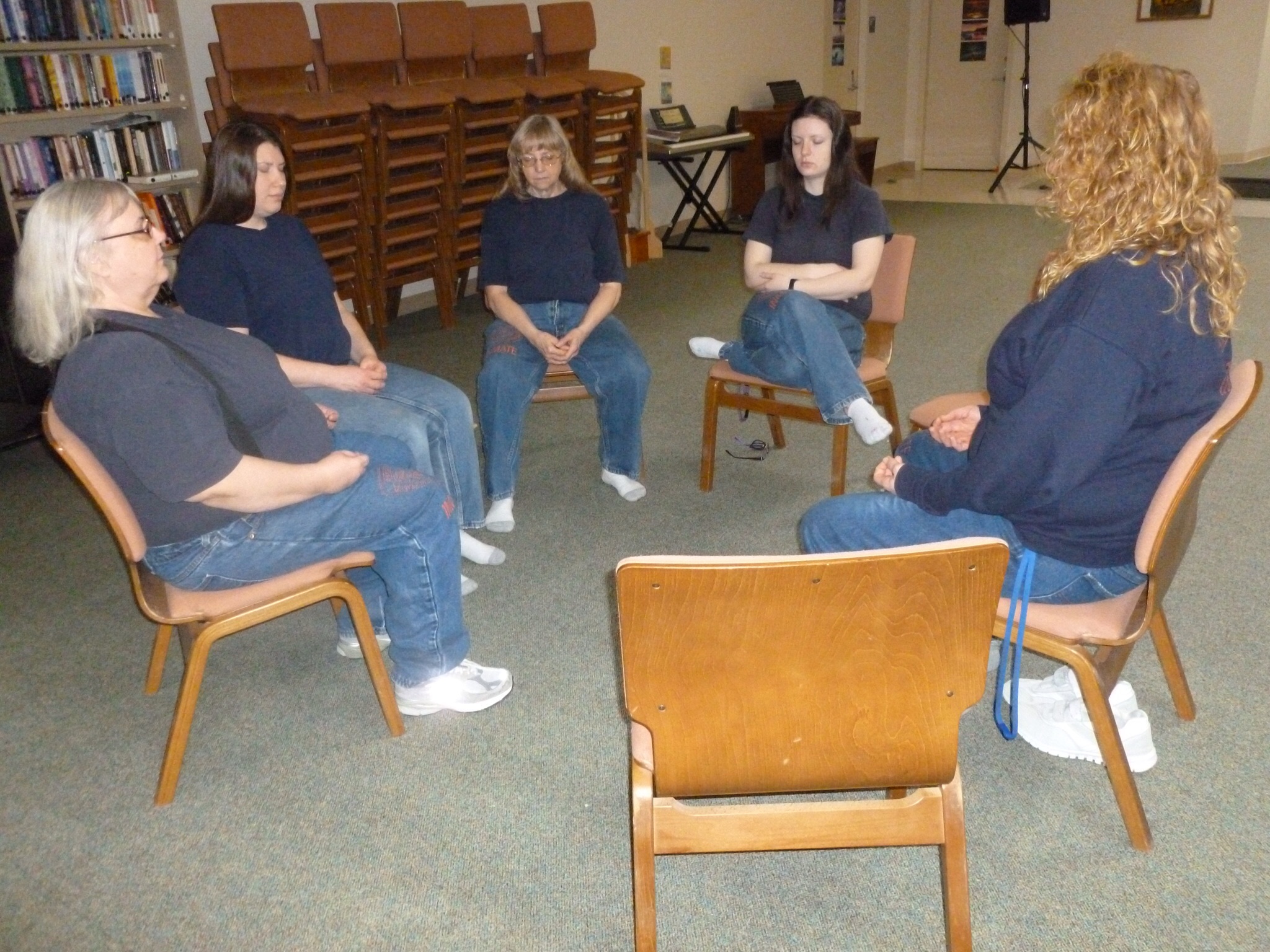
A group of female inmates practicing Transcendental Meditation experienced significant reductions in trauma symptoms compared to a control group. Photo credit: The Oregon Department of Corrections*

A randomized study published online January 17, 2017 in The Permanente Journal on 22 female prisoners found that those practicing Transcendental Meditation for four months had significant reductions in total trauma symptoms compared with a control group. And a similar study in the same journal published October 7, 2016, involving 181 male prisoners found a 47% reduction in total trauma symptoms compared to a non-meditating control group.

In an editorial, published February 1, 2017 to accompany the two studies on Transcendental Meditation in their Winter 2017 print edition, Charles Elder, MD, MPH, FACP, a clinician and researcher with Kaiser Permanente, called for wider use of evidence-based mind-body interventions for prisoners.

Advantages of mind-body interventions for prisoners

Dr. Elder cited many of the advantages of these interventions.

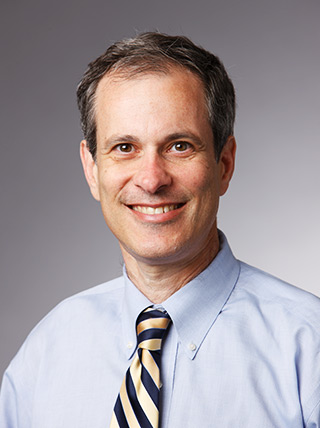
Charles Elder, MD, MPH, FACP

Charles Elder, MD, MPH, FACP

“Mind-body interventions can provide the patient with a simple self-help tool that can effectively reduce anxiety, help treat substance abuse, reduce inmate recidivism, and help address a range of medical conditions,” he wrote, citing research on Transcendental Meditation that supports these benefits.

In addition to these benefits, he points out that a mind-body intervention can be cost-effective. Since Transcendental Meditation has been shown to reduce recidivism — the percentage of inmates returning to prison after their release — it can save money that would otherwise be spent on incarceration. And, he points out, a prisoner who becomes a productive member of society provides an economic benefit, instead of a deficit.

Rebecca Pak of The Women’s Prison Association agrees with Dr. Elder, “The results inside correctional facilities and schools with Transcendental Meditation have been simply astounding. If we shifted our focus from punitive responses to interventions designed to improve mental and physical health, we would have much greater impact.”

Convenience of mind-body interventions

Dr. Elder also describes the convenience of mind-body approaches.

“Once taught the technique, an individual can use the skill for the duration of his or her life, as a stress management tool, providing ongoing benefits across a range of domains…. In addition to helping the inmate cope with the stress of incarceration, there is a range of additional ‘side benefits,’ ranging from reduced recidivism to improved cardiovascular health.”

He says a trained instructor can take Transcendental Meditation directly to the prisoners, rather than their going to a clinic or meditation center. And direct personal instruction is better than trying to learn a mind-body intervention online, since many may be unable or unwilling to engage an online format.

Effectiveness of Transcendental Meditation

image

Sanford Nidich, EdD, lead author

Led by Sanford Nidich, EdD, Director of the Maharishi University of Management Center for Social and Emotional Health, the two recent studies published by The Permanente Journal were conducted at three prisons in Oregon. The hypothesis was that Transcendental Meditation would help prisoners deal with serious trauma and stress. Surveys have shown that prisoners have one of the highest rates of lifetime trauma of any segment of society, with 85% having been a victim of a crime-related event, such as robbery or home invasion, or physical or sexual abuse.

This trauma leads to stress and poor lifestyle choices, including crime and substance abuse. In addition to these recent studies, earlier ones have found that Transcendental Meditation helps inmates deal with trauma and stress and reduces recidivism. Here is a sampling, with some listed in the editorial:

• 2017 — the study described above that found reduced trauma in female prisoners in Oregon

• 2016 — the study mentioned above that found a 47% reduction in total trauma symptoms in male prisoners in Oregon over the course of the four-month study, including a reduction in anxiety, depression, dissociation, and sleep disturbance, as well as a significant decrease in perceived stress

• 2003 — A study of 17 subjects at La Tuna federal penitentiary in Texas showed a reduction on the MMPI psychasthenia scale, suggesting a reduction in obsessive–compulsive behavior, and a decrease in social introversion.

• 2003 — A retrospective followup on 152 inmates who had learned Transcendental Meditation at Walpole prison in Massachusetts found that these inmates were 33% less likely to have returned to prison after 30 days compared to a control group that participated in counseling, drug rehabilitation and religious activities, and 47% less likely compared to all non-meditating control subjects.

• 2003 — A retrospective analysis of 248 inmates at Folsom State Prison used Cox regression analysis to calculate that prisoners who learn Transcendental Meditation are 43.5% less likely to return to prison.

• 1987 — A study of 259 inmates who had learned Transcendental Meditation at several different prisons in California found that they were 40% less likely to have returned to prison one year after release compared to matched controls, and 30% less likely after six years.

• 1978 — A study of 115 inmates at Folsom Prison in California found a reduction in anxiety, negativism, and suspicions, as well as improved sleep.

“The overall body of research suggests that Transcendental Meditation could be used more widely to help prisoners deal with trauma and stress,” said Dr. Nidich, lead author of the recent studies conducted at Oregon prisons.

Source: Mind-Body Training for At-Risk Populations: Preventive Medicine at its Best. [PDF]

About the Transcendental Meditation Technique

Transcendental Meditation® (TM®) is a simple, natural technique practiced 20 minutes twice each day while sitting comfortably with the eyes closed. The TM technique is easy to learn and enjoyable to practice, and is not a religion, philosophy, or lifestyle. Unlike other forms of meditation, TM practice involves no concentration, no control of the mind, no contemplation, no monitoring of thoughts. It automatically and effortlessly allows the active thinking mind to settle down to a state of deep inner calm. For more information visit www.tm.org.

*Photo: The Coffee Creek Correctional Facility in Wilsonville, Oregon.

MarketWired: Medical doctor calls for mind-body approaches to help prisoners reduce stress, trauma, and recidivism

Related posts: New study shows Transcendental Meditation reduces trauma symptoms in female prisoners and Transcendental Meditation reduced stress and trauma symptoms in male prisoners in 4 months

Celebrating the Glorious Life of Sally M Peden

January 17, 2017

Sally Peden - 1992

Sally Peden, May 26, 1947 – October 1, 2016

A repost celebrating the glorious life of Sally M Peden, which includes descriptions of her peaceful and graceful transition, memorial service, and Vedic cremation ceremony. Many beautiful tributes were added that give a glimpse of how special she was. Included is a poem I wrote about Sali’s passing, and descriptions of the auspicious times of her death, and spreading of her ashes in India’s holy Narmada River. May she reside in the highest heaven.

Source: An early attempt at some kind of closure with a poem on Sali’s passing and auspicious times 

Recently added: Final entries leading up to and after Sali’s passing

Most recently added, June 30, 2017, 9 months after Sali’s passing: For Us—a tanka honoring Sali and what we shared.

And ‘In Our Loving Eyes’ a poem by @kenchawkin remembering a special love with Sally Peden added August 31, 2017.

Added October 1, 2017, A tanka remembering Sali and her gift to me on the one-year anniversary of her passing.

Added November 12, 2017: 1st anniversary of my India trip to spread Sali’s ashes on the Narmada River, visit Bijouri campus and Maharishi Vedic Pandits at the Brahmasthan.

Added June 28, 2019: Poem for Sali—An Undying Love—heals the heart.

I would later record these love poems for Sali (COMMITTED, This Quiet Love, In Our Loving Eyes) for a 2019 Valentine’s Day program on KHOE, MUM’s campus radio station. Click here to read and listen to them.

— Written and compiled (citing sources) by Ken Chawkin for The Uncarved Blog.

New study shows Transcendental Meditation reduces trauma symptoms in female prisoners

January 17, 2017

image

The first study to specifically focus on reducing stress in female prisoners has found that Transcendental Meditation significantly reduces trauma symptoms. Women have become the fastest growing prison population in the U.S., and research shows they suffer from higher rates of mental and emotional trauma, and higher rates of sexual abuse than men. This randomized controlled trial, published in The Permanente Journal, follows a recent study on reduced trauma in male inmates through Transcendental Meditation.

Significant reduction in trauma

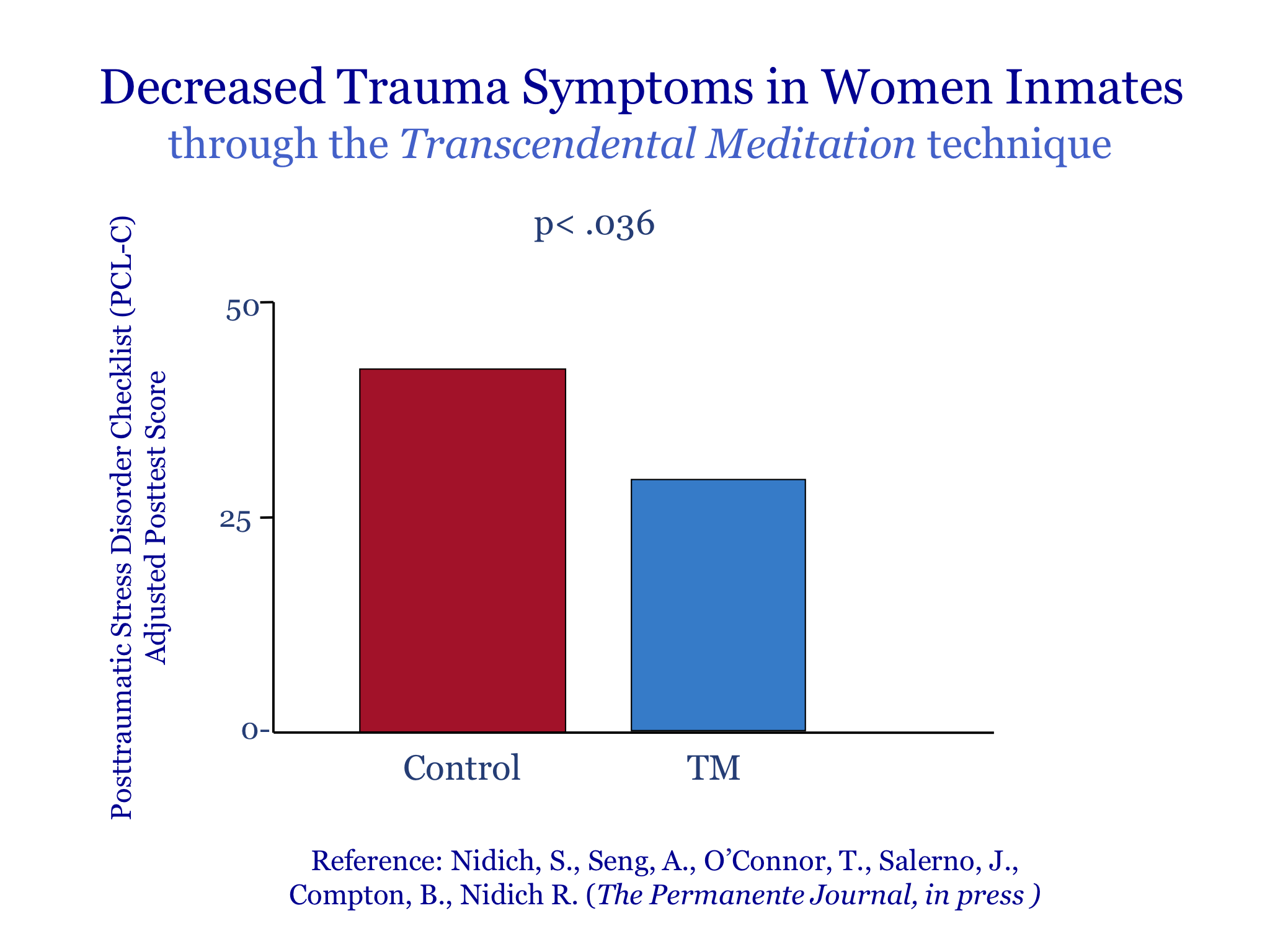
The results showed that after four months of practicing the Transcendental Meditation technique, the women inmates in the meditation group had significant reductions in total trauma symptoms, including intrusive thoughts and hyperarousal compared with controls. Trauma symptoms were measured using the Posttraumatic Stress Disorder Checklist-Civilian (PCL-C).

‘This study is a valuable addition to the research literature in women’s mental health, showing a natural and effortless alternative approach to reducing trauma symptoms,” said lead author Dr. Sanford Nidich, director of the Center for Social and Emotional Health at Maharishi University of Management. “It further replicates an earlier randomized controlled trial with Transcendental Meditation (TM) in male prison inmates suffering from high levels of trauma symptoms. Previous studies have shown reduced trauma in other populations, including veterans and African refugees with the TM program.”

Comments from the subjects

Those practicing Transcendental Meditation in their prison cells said they felt a lot better—less stressed, with a greater sense of inner freedom and resilience. Read some of the dramatic changes in their own words, and more details about this study in the press release.

The study was funded by the David Lynch Foundation.

Expanding preventive medicine to include mind-body approaches

In addition to the study on TM, the January 2017 issue of The Permanente Journal includes a companion editorial by Charles Elder, MD, MPH, FACP, titled, “Mind-Body Training for At-Risk Populations: Preventative Medicine at its Best.”

According to Charles Elder, MD, Kaiser Permanente, Northwest, “A principle advantage of the TM technique is a time-tested, standardized intervention protocol…. Once taught the Transcendental Meditation technique, an individual can use the skill for the duration of his or her life, as a stress management tool, providing ongoing benefits across a range of domains. In addition to helping the inmate cope with the stress of incarceration, there is a range of additional ‘side benefits,’ ranging from reduced recidivism to improved cardiovascular health.”

Related: See this recent study explaining how and why Transcendental Meditation is effortless, distinguishing it from other practices.