Archive for the ‘Literature’ Category

Hafiz said to leave something in the marketplace, and Jesse Winchester sure did before he left us.

April 23, 2014

Hafiz’s poem, translated by Daniel Ladinsky, of leaving something behind in the world to inspire others, is exemplified in the singer-songwriting musical skills of the late Jesse Winchester. Read Hafiz’s poem, Leave something in the marketplace, then listen and be moved when Jesse sings this love song, Sham-A-Ling-Dong-Ding.

Leave something in the marketplace

Sometimes it can happen to these cheeks
when a poem visits my mind for the first time
and begins to look around.

They can wonder why rain is falling on them,
and causing my nose to run too.

O boy, what a mess love makes of me. But
there is nothing else right now I would rather

be doing . . . than reaping something from a
field in another dimension

and leaving it in the marketplace for any who
might happen by.

Leave something in the marketplace for us
before you leave this world.

A Year With Hafiz: Daily Contemplations
Daniel Ladinsky, March 20, page 88.
See more profound poems by Hafiz posted on this blog.

Jesse Winchester

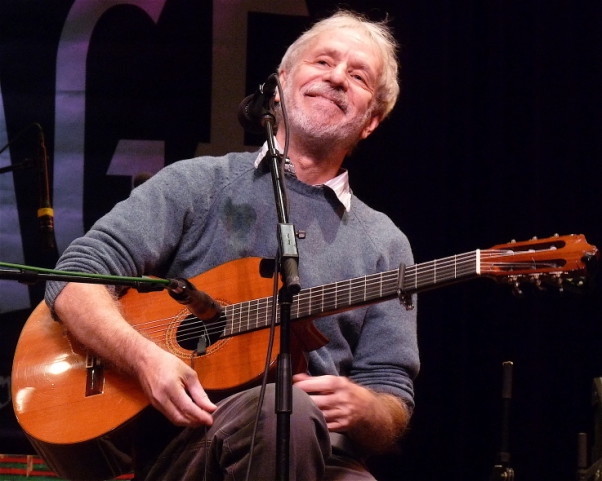
Singer-songwriter Jesse Winchester (May 17, 1944 – April 11, 2014) left many beautiful songs for us in the marketplace (IMDb). Jesse appeared on Week 2 of Elvis Costello’s TV show, Spectacle. Elvis Costello, Ron Sexsmith, Sheryl Crow, and Neko Case joined Jesse Winchester to perform “Payday“. Jesse also a sang about the sweet shyness of young love. Listen to the poetic melodic musings of Sham-A-Ling-Dong-Ding as it wets your cheeks and lifts your mouth into a wistful smile.

April 26, 2009: Music Fog recorded Jesse Winchester singing this tender song at the opulent “Mansion on O” in Washington. MusicFog.com’s Jessie Scott spoke with Jesse about his new album “Love Filling Station,” growing up in Memphis, and the songwriting process.

Meeting Jesse Winchester

I first met Jesse in Montreal at a friend’s place during the summer of ’67. He had been drafted to fight in the Vietnam War, which he did not support, and came to Canada instead. He stayed and made a name for himself as a fine singer-songwriter.

Robbie Robertson of The Band produced Jesse’s first album. But he couldn’t return to the states to tour until after all “draft dodgers” were pardoned by President Carter. I remember him singing The Brand New Tennesse Waltz and Yankee Lady, which ended up on his self-titled debut album. I also liked Say What (Talk Memphis), which became a hit. Mississippi You’re On My Mind (Learn to Love It) is another beautiful, vividly-written song.

Many top recording artists would go on to perform Jesse’s songs, and he became known as a first-rate songwriter. Even Bob Dylan was famously quoted as saying of Mr. Winchester: “You can’t talk about the best songwriters and not include him. If you know me well, you know I think Jesse IS the very best.” Lyle Lovett also spoke highly of him. In 2007, a special musical tribute was given to singer-songwriter Jesse Winchester, when he was honored with The ASCAP Foundation Life in Music Award.

You can’t talk about the best songwriters and not include him. If you know me well, you know I think Jesse IS the very best. — Bob Dylan

Listen to Jesse sing I Can’t Stand Up Alone a cappella with Bonnie Raitt and Emmylou Harris in his 1977 special. Falconer Pictures created a Jesse Winchester Tribute with photos of him throughout his career and added his song, Ghosts. You can hear more videos on YouTube.

Decades later, I went to one of Jesse’s concerts on his tour through Iowa. He was surprised to find me here. It was sweet to see him again, now free to play in the states and accept the recognition for his great talent.

Remembering Jesse Winchester
jesse-winchester-memphis1-602x481

Here is some news coverage of Jesse’s recent passing, reviewing his life and career, in The Commercial Appeal, USA Today, Rolling Stone, The New York Times, and C-Ville Weekly. From all his fans, and friends who knew him, I’m sure they would agree with Hafiz that Jesse Winchester did leave a lot of good music in the marketplace, and love in their hearts. You did well, Jesse. We thank you!

Jesse Winchester Radio Special: Listen to a special 2007 radio interview and music special with Jesse Winchester recorded by Donna Green-Townsend for WUFT-FM before Jesse’s scheduled performance at the Butterfly Festival in Gainesville, FL. In this program Jesse talked about his early years in Mississippi and Memphis, the inspiration for many of his songs and what he thinks about the music industry today. He also talks about the number of artists who have recorded many of his songs including The Everly Brothers, Waylon Jennings, Wynonna Judd, Bonnie Raitt, Emmylou Harris, Reba McEntire, and Elvis Costello to name a few. RIP Jesse.

Roots Music Canada uploaded a Jesse Winchester interview on April 13, 2010 with RMC’s editor-in-chief David Newland, from Hugh’s Room, Toronto, a venue Jesse launched about a decade ago, and one for which he has the highest regard.

Roots Music Canada produced a show on April 16, 2014: Remembering Jesse Winchester, him and other artists singing his songs. To see the song list click on Playlist: Folk Roots/Folk Branches – Remembering Jesse Winchester. Jesse Winchester sings a slower version of Sham-A-Ling-Dong-Ding on his album Love Filling Station (Appleseed) with a backup group. I prefer the solo performance.

September 2, 2014: Rolling Stone: Hear the Late Jesse Winchester’s Chilling Dissertation on Dying — Song Premiere. “Every Day I Get the Blues” appears on the final album by Winchester, who died April 11th. A Reasonable Amount of Trouble, is a gentle collection of playful songs about love, memory and gratitude that amounts to one of the most moving, triumphant albums of Winchester’s 45-year career.

In November 2014 Jesse Winchester was posthumously inducted into the Memphis Music Hall of Fame.  Jesse and rockabilly legend Carl Perkins were among nine inductees with Memphis roots in the Hall’s third induction class.

Previous inductees include: Elvis Presley, Jerry Lee Lewis, Johnny Cash, Otis Redding, B.B. King, Isaac Hayes, Al Green, Howlin’ Wolf, Sam Phillips, Bobby ‘Blue’ Bland, Albert King, Rufus Thomas, Willie Mitchell, Carla Thomas, Booker T & The MGs, The Staple Singers, and the ‘Father of The Blues’ W.C. Handy.

Visit Jesse’s wonderful comprehensive website www.jessewinchester.com for his Albums / Lyrics, Interviews / Articles / Liner Notes / Obituaries & Remembrances / Covers of Jesse Winchester Songs / Videos / Photos / and more.

To see other inspiring artists featured on The Uncarved Blog, scroll through the Archive of the ‘Music’ Category.

— Written and compiled (citing sources) by Ken Chawkin for The Uncarved Blog.
Two kinds of knowledge about living and learning

April 8, 2014

I’m not young enough to know everything. ― Oscar Wilde (1854–1900)

By the time you’re eighty years old you’ve learned everything.
You only have to remember it. ― George Burns (1896–1996)

Two kinds of knowledge

There are two kinds of knowledge:
Youth knows it all, without having lived;
And having lived and learned, Old Age
Soon forgets what it’s come to know.

Then there’s the wisdom
Of knowing you know nothing;
But knowing your Self.

― Ken Chawkin (1944–still learning)

The Coming Of Wisdom With Time

Though leaves are many, the root is one;
Through all the lying days of my youth
I swayed my leaves and flowers in the sun;
Now I may wither into the truth.

― William Butler Yeats (1865–1939)

The only true wisdom is in knowing you know nothing.

Socrates (469–399 B.C.E.)

Know thyself.

Ancient Greek aphorism on the Temple of Apollo at Delphi

Those who know others are wise; those who know themselves are enlightened.

Laozi (5th or 4th century BC. Tao Te Ching #33)

Yesterday I was clever, so I wanted to change the world. Today I am wise, so I am changing myself.

Rumi (13th century Persian poet and Sufi mystic.)

The older I get, the surer I am that I’m not running the show. 
—Leonard Cohen

Also see: Searching For The Meaning Of Your Life.

And this related poem: Seeing Is Being.

Newly added: Quotes from famous thinkers on the nature of truth, its rejection, and acceptance over time. One of the quotes is by Søren Kierkegaard (1813-1855) who said: Life can only be understood backwards; but it must be lived forwards. Life is not a problem to be solved, but a reality to be experienced.

Later added: These two famous quotes from an older more mature place in one’s life hold much wisdom.

When I was young, I admired clever people. Now that I am old, I admire kind people. — Abraham Joshua Heschel

I’ve learned that people will forget what you said, people will forget what you did, but people will never forget how you made them feel. ― Maya Angelou

Craig Pearson on KRUU FM show, Writers’ Voices, discusses his new book, The Supreme Awakening

February 26, 2014
Craig_Pearson

Craig Pearson, PhD

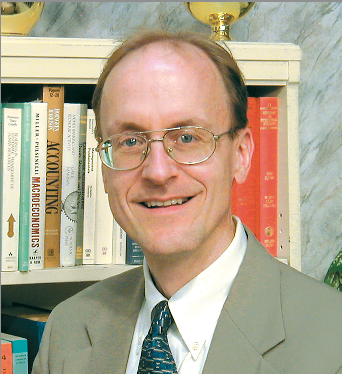
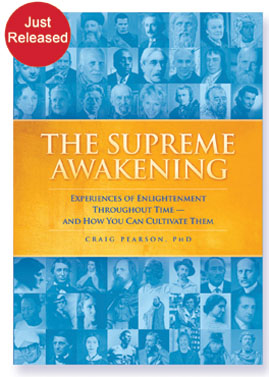
Enjoy this interview with author Craig Pearson, PhD and his latest book, The Supreme Awakening: Experiences of Enlightenment Throughout Time  – and How We Can Cultivate Them. If you click on the links you’ll read more about the concept and structure of the book. See the website for The Supreme Awakening book here, where you can read comments by David Lynch, Norman Rosenthal, and others, chapter headings, and the first chapter, Moments of Awakening. See a mailer for the book.

Here is an interview that took place last Friday on a popular KRUU FM radio show in Fairfield, Iowa called Writers’ Voices. Monica Hadley and her mother Caroline invited Dr. Pearson to discuss his book The Supreme Awakening. Craig is truly an inspiring speaker! Click here to listen: Writers’ Voices – 20140221 – Craig Pearson. Monica writes on her blog:

The_Supreme_Awak_52d4535363d15This week on Writers’ Voices, Monica and Caroline welcome MUM Executive Vice President Craig Pearson to discuss his recently released book, “The Supreme Awakening: Experiences of Enlightenment Throughout Time  – and How We Can Cultivate Them.” The product of research Dr. Pearson did for his doctoral dissertation, this book allows the reader to share the enlightened experiences of people throughout history. By gathering these many stories from across history, from saints and mystics, writers, world leaders, even athletes, Dr. Pearson provides a unique perspective on what is obviously a universal experience.

Many of the people profiled within are expected, people who are well-known for their spiritual experiences – Buddha, St. Teresa of Avila, Thoreau, Rumi. But there are many surprises here as well – Anwar Sadat, Einstein, Plato and many more.  I was most fascinated by these stories.  It made me realize that the accomplishments of many great persons may have been a direct result of their experiences with other states of consciousness.

Dr. Pearson is also the author of The Complete Book of Yogic Flying.

Craig Pearson was also interviewed on The Alan Colmes Show on FOX News following Writers’ Voices on Friday. Another interview aired on KHOE’s A Chat With The Dean by Dr. Cathy Gorini on the new book. You can also listen to a presentation Dr. Pearson gave in Dalby Hall on the book, which was recorded for broadcast by KHOE.

I posted an interview and series of articles you can link to by Dr. Pearson on my blog: Craig Pearson interview and articles on awakened consciousness, transcendence and enlightenment.

Here is a video of Dr. Pearson’s recent presentation on his book, The Supreme Awakening, in Dalby Hall on the MUM campus seen on the MaharishiUniversity channel.

Guest blogger and author William T. Hathaway reviews Craig Pearson’s book, The Supreme Awakening.

Other talks on this topic by Craig Pearson are available in this MIU Webinar at Dalby Hall published in Enjoy TM News and this interview on TM Talks.

New York poet laureate Marie Howe reads “Annunciation” to Krista Tippett On Being

September 22, 2013

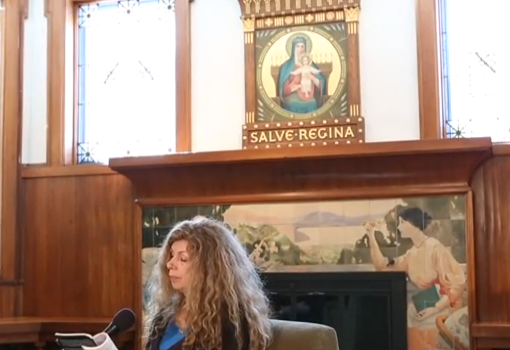
New York poet laureate Marie Howe speaks with Krista Tippett about her poetry on the NPR show, On Being. Closing the interview, The Poetry of Ordinary Time, recorded In The Room, April 2013, Howe reads a poem in the voice of Mary, mother of Jesus, describing the Annunciation, which, her friend and mentor, Stanley Kunitz, said no one had ever gotten right. She wrote several versions, tore them up, and then this final one came through her.

Marie Howe said it had nothing to do with her. It just came through her, a reminder that the best poetry comes through us when we get out of the way. When we are emptied of our small self, “by being no one,” transcend our senses and turn within and are open to the higher Self, then that great creative force of Love within us creates, and the miracle of life, of poetry, happens. You can hear “Annunciation” by Marie Howe on SoundCloud. 

Thought this screen save from the video is most appropriate with the poster of Mother Mary holding the infant Jesus!

Marie Howe reads her poem Annunciation to Krista Tippett for On Being

Marie Howe reads her poem “Annunciation” to Krista Tippett for On Being

Annunciation

Even if I don’t see it again—nor ever feel it
I know it is—and that if once it hailed me
it ever does—

And so it is myself I want to turn in that direction
not as towards a place, but it was a tilting
within myself,

as one turns a mirror to flash the light to where
it isn’t—I was blinded like that—and swam
in what shone at me

only able to endure it by being no one and so
specifically myself I thought I’d die
from being loved like that.

This amazingly beautiful and profound poem can be found at 1:36:02 at the end of the interview, but she starts talking about it at 1:34:45. There are six audio clips of Howe reading her poems posted on SoundCloud recorded on March 16, 2003, at the College of Saint Benedict in Saint Joseph Minnesota.

On Being later recorded: Marie Howe — The Power of Words to Save Us.

Also see An Evening with New York State Poet Laureate Marie Howe.

This relates: David Whyte describes the mysterious way a poem starts inside you with the lightest touch. Whyte also uses a biblical reference, comparing poetic revelation to Lazarus walking to the light.

Enjoy reading: The Millions Interviews Marie Howe—Words Can Sustain and Save Us, published January 11, 2018, where Marie describes what the writing and reading of poetry has done for her, and what it can do for the rest of us. This Q&A particularly reinforces the point Marie Howe made to Krista Tippett when writing “Annunciation.”

TM: Do you think of writing as a spiritual act at its core?

MH: I do, because it involves a wonderful contradiction, which is, in order for it to happen, you have to be there, and you have to disappear. Both. You know, nothing feels as good as that. Being there and disappearing—being possessed by something else. Something happening through you, but you’re attending it. There are few other things in the world like that, but writing is pretty much a relief from the self—and yet the self has to be utterly there.

I know exactly what she means. I had a similar experience when “I wrote” ODE TO THE ARTIST: Sketching Lotus Pads at Round Prairie Park.

William Stafford in his poem, Rx Creative Writing: Identity, also writes about being open to “that bone light,” which “belongs inside of things.” And “You know so sure there burns a central vividness.” He reiterates this idea of being a recipient, a receptacle, and an attendant, a reporter: “It tells you; all you do is tell about it.”

In her poem, Mindful, Mary Oliver delights in the world around her, which leaves her “like a needle in the haystack of light. It was what I was born for — to look, to listen, to lose myself inside this soft world — to instruct myself over and over in joy, and acclamation.”

Oliver codifies this message in 3 short, powerful sentences in the 4th stanza of Sometimes, where she gives us “Instructions for living a life: Pay attention. Be astonished. Tell about it.”

Both poems are included in this post: Attentive to and delighting in her surroundings, Mary Oliver lived a life writing astonishing poetry.

Later added this article/interview by Kim Rosen for Spirituality&Health, Feb 16, 2014: Marie Howe: Holding the Silence. The acclaimed poet reflects on prayer, desperation, and letting go of what can’t be said. (PDF)

Newly added, Nov 2, 2022: What the Living Do—Marie Howe’s ‘letter’ to her brother—an elegy to loss and how she lives with it.

— Written and compiled (citing sources) by Ken Chawkin for The Uncarved Blog.
Varanasi by Mary Oliver in A Thousand Mornings

March 16, 2013

I previously posted Mary Oliver’s poem, Praying, and Philip Goldberg emailed me to say that someone recently showed him the last poem in her new collection (A Thousand Mornings). He said, “It’s called ‘Varanasi,’ and it’s exquisite.” I started looking for it and found the poem posted by another poet, Bob Arnold, on his website. After reading it I agreed – it’s stunning! That’s why I’m posting it here for you to enjoy. I also came across a musical video of the poem with images from the Ganges. After you’ve read the poem, see Diane Walker’s poetic reaction to it below. But take a break from this busy introduction, and then enjoy the enlightened peaceful simplicity of Mary Oliver’s visit to Varanasi.

VARANASI

Early in the morning we crossed the ghat,

where fires were still smoldering,

and gazed, with our Western minds, into the Ganges.

A woman was standing in the river up to her waist;

she was lifting handfuls of water and spilling it

over her body, slowly and many times,

as if until there came some moment

of inner satisfaction between her own life and the river’s.

Then she dipped a vessel she had brought with her

and carried it filled with water back across the ghat,

no doubt to refresh some shrine near where she lives,

for this is the holy city of Shiva, maker

of the world, and this is his river.

I can’t say much more, except that it all happened

in silence and peaceful simplicity, and something that felt

like that bliss of a certainty and a life lived

in accordance with that certainty.

I must remember this, I thought, as we fly back

to America.

Pray God I remember this.

_______________________

Mary Oliver
A Thousand Mornings
(Penguin, 2012)

Now read this beautiful poetic reaction to the poem, Mary Oliver’s Varanasi, that Diane Walker, a contemplative photographer, posted on her website.

Among the NPR Poetry series is this interview ‘A Thousand Mornings’ With Poet Mary Oliver. You can also read the transcript here. I especially love this remark she makes about poetry:

“One thing I do know is that poetry, to be understood, must be clear. It mustn’t be fancy. I have the feeling that a lot of poets writing now are – they sort of tap dance through it. I always feel that whatever isn’t necessary shouldn’t be in a poem.”

Enjoy this wonderful Maria Shriver Interview With Mary Oliver.

See this remembrance of Mary Oliver with links to more of her poems.

Speaking of another famous American visiting the Ganges, see Prudence Farrow — subject of the Beatles song Dear Prudence — visits India’s Kumbh Mela.

Mary Oliver’s poem, Praying, is a lesson on attention, receptivity, listening and writing

March 14, 2013

Praying

It doesn’t have to be
the blue iris, it could be
weeds in a vacant lot, or a few
small stones; just
pay attention, then patch

a few words together and don’t try
to make them elaborate, this isn’t
a contest but the doorway

into thanks, and a silence in which
another voice may speak.

~ Mary Oliver ~

(Thirst)

Another example of this theme is her poem, Mindful, in this later post: Attentive to and delighting in her surroundings, Mary Oliver lived a life writing astonishing poetry.

An inspiration for a poem came to me from such receptivity to a tree. The first words entered my mind while admiring it. I wrote them down, and the next morning, I rewrote them as a stanza, and then the sequential stanzas naturally followed, reiterating what Mary Oliver describes. It was as if I was given a creative seed and it sprouted. This gift from the tree was much appreciated. I later called it Being in Nature. Its sequel, trees, was about the nature of trees, and what we can learn from them. Another poem once came to me from a rock with a sense of humor. You can read RIVER ROCK SPEAKS in my Vancouver Park Poems.

An early encounter with nature inspired my creativity. It turned into my first published poem, which won an award: ODE TO THE ARTIST, Sketching Lotus Pads at Round Prairie Park.

Her poem also reminds me of The nurturing effect of rainwater in Mary Oliver’s poems Lingering In Happiness At Blackwater Pond and William Stafford’s poem, B.C., which I later added.

Read about Mary Oliver (1935-2019) and her astonishing poetry in this memorial acknowledgment to her poetic legacy. It contains links to articles, interviews, and poetry readings, as well as many of her favorite poems I’ve loved and posted over the years.

— Written and compiled (citing sources) by Ken Chawkin for The Uncarved Blog.
Wild Geese by Mary Oliver, photo by Ken West

November 14, 2011

Wild Geese

You do not have to be good.
You do not have to walk on your knees
for a hundred miles through the desert repenting.
You only have to let the soft animal of your body
love what it loves.
Tell me about despair, yours, and I will tell you mine.
Meanwhile the world goes on.
Meanwhile the sun and the clear pebbles of the rain
are moving across the landscapes,
over the prairies and the deep trees,
the mountains and the rivers.
Meanwhile the wild geese, high in the clean blue air,
are heading home again.
Whoever you are, no matter how lonely,
the world offers itself to your imagination,
calls to you like the wild geese, harsh and exciting
over and over announcing your place
in the family of things.

—Mary Oliver

From Dream Work published by Atlantic Monthly Press
 

This photo of a family of Canadian Geese was taken by Ken West Iowa Landscape and Nature Photography. Ken West and his unique landscape photographs are featured on IPTV show Iowa Outdoors.

For more on Mary Oliver see The Journey by Mary Oliver, with links to other poems and an interview with Maria Shriver.

Listen to Mary Oliver read “Wild Geese” for The On Being Project. This poem is featured in Mary Oliver’s extraordinary conversation with Krista Tippett—one of the few in-depth interviews she gave in her lifetime: “I got saved by the beauty of the world.” She describes her creative process On Being: Listening to the World. 

Mary Oliver Reads Wild Geese (14:36) from A Thousand Mornings (1986) at the 92nd St Y, New York in 2012. 

A beautiful soundtrack was later added to her reciting this poem and posted on Instagram by coffee_with_keats.

Mary Oliver’s poem, Swan, asks us if we see, hear, and feel what she does, drawing rich references to the beautiful aspects of a swan, culminating in two powerful questions.

Mary Oliver’s poem, Mockingbirds, teaches us how to listen, and experience the wonders around us.

See this remembrance of Mary Oliver with links to more of her poems.

Indonesian Mystery Poem honoring Nyi Roro Kidul

April 12, 2011

Indonesian Mystery Poem
Honoring Nyi Roro Kidul
Queen of the Southern Seas

He hides within the rock
of three dimensions
and cannot be found
in this world

When night comes
she rises like a moon
to shine her light
upon the mountain

The sea dances
rising and falling
like a lover
in her arms

What pull does she have
on his life
as she looks for a partner
to dance with

The moon bows
before the rising sun
and he is left
breathless

© Ken Chawkin
June 2000
Jakarta, Indonesia

(more…)

The Journey by Mary Oliver

April 3, 2011

THE JOURNEY

One day you finally knew
what you had to do, and began,
though the voices around you
kept shouting
their bad advice —
though the whole house
began to tremble
and you felt the old tug
at your ankles.
“Mend my life!”
each voice cried.
But you didn’t stop.
You knew what you had to do,
though the wind pried
with its stiff fingers
at the very foundations,
though their melancholy
was terrible.
It was already late
enough, and a wild night,
and the road full of fallen
branches and stones.
But little by little,
as you left their voices behind,
the stars began to burn
through the sheets of clouds,
and there was a new voice
which you slowly
recognized as your own,
that kept you company
as you strode deeper and deeper
into the world,
determined to do
the only thing you could do —
determined to save
the only life you could save.

Mary Oliver (Dream Work)

During a poetry reading at the 92nd Street Y for her new poetry book, A Thousand Mornings, Mary OIiver read The Journey (18:10), as well as some of her other well-known poems.

Read: Maria Shriver Interviews the Famously Private Poet Mary Oliver.

Others: Five A.M. in the Pinewoods (House of Light) Mindful (Why I Wake Early)

Wild Geese by Mary Oliver, photo by Ken West

See It Is I Who Must Begin by Václav Havel. It shares a similar sentiment.

See this remembrance of Mary Oliver with links to more of her poems.

My Son’s Sensei: A Tanka about my son’s Aikido teacher

April 21, 2010

My Son’s Sensei
A tanka about my son’s Aikido teacher

Rooted to the ground
She repels her attackers
Flowing, not moving.

In storms, trees bear great burdens
Bending, not breaking.

—Ken Chawkin

(more…)