Archive for the ‘Literature’ Category

Mary Oliver’s transcendent experience At the Lake, put into words, might leave you breathless

May 27, 2015

At the Lake

A fish leaps like a black pin — then — when the starlight strikes its side —

like a silver pin. In an instant the fish’s spine alters the fierce line of rising

and it curls a little — the head, like scalloped tin, plunges back, and it’s gone.

This is, I think, what holiness is: the natural world, where every moment is full

of the passion to keep moving. Inside every mind there’s a hermit’s cave full of light,

full of snow, full of concentration. I’ve knelt there, and so have you,

hanging on to what you love, to what is lovely. The lake’s

shining sheets don’t make a ripple now, and the stars are going off to their blue sleep,

but the words are in place — and the fish leaps, and leaps again from the black plush of the poem, that breathless space.

~ Mary Oliver ~

(White Pine)

Rolf Erickson’s Mirror Lake creates a cosmic connection for the reader.

Enjoy these other lovely poems by Mary Oliver: Summer Day, Varanasi, Praying, Wild Geese, Sunrise, White Owl Flies Into And Out Of The Field, The Journey, One, The Loon, and When Death Comes, which was included in her obituary Jan 17, 2019.

See this remembrance of Mary Oliver (1935-2019) and her astonishing poetry, with links to articles, interviews, and readings, as well as more of her favorite poems I’ve loved and posted over the years.

— Written and compiled (citing sources) by Ken Chawkin for The Uncarved Blog.

Enjoy the poetic genius and humor of Billy Collins reading his poem “January in Paris”

April 26, 2015

Enjoy the poetic genius and humor of Billy Collins reading his poem “January in Paris” on Page Meets Stage, November 12, 2005. The video was posted by Taylor Mali who shared the stage with Collins. A poet and teacher, Mali curates the Page Meets Stage series, which takes place at The DL Lounge in New York City. A version of this poem was published in “Ballistics” (Random House, 2010). I read it in my copy of Aimless Love: New and Selected Poems, pages 89–91 (Random House, 2013).

January in Paris

Poems are never completed—they are only abandoned.
— Paul Valéry

That winter I had nothing to do
but tend the kettle in my shuttered room
on the top floor of a pensione near a cemetery,

but I would sometimes descend the stairs,
unlock my bicycle, and pedal along the cold city streets
often turning from a wide boulevard
down a narrow side street
bearing the name of an obscure patriot.

I followed a few private rules,
never crossing a bridge without stopping
mid-point to lean my bike on the railing
and observe the flow of the river below
as I tried to better understand the French.

In my pale coat and my Basque cap
I pedaled past the windows of a patisserie
or sat up tall in the seat, arms folded,
and clicked downhill filling my nose with winter air.

I would see beggars and street cleaners
in their bright uniforms, and sometimes
I would see the poems of Valéry,
the ones he never finished but abandoned,
wandering the streets of the city half-clothed.

Most of them needed only a final line
or two, a little verbal flourish at the end,
but whenever I approached,
they would retreat from their ashcan fires
into the shadows—thin specters of incompletion,

forsaken for so many long decades
how could they ever trust another man with a pen?

I came across the one I wanted to tell you about
sitting with a glass of rosé at a café table—
beautiful, emaciated, unfinished,
cruelly abandoned with a flick of panache

by Monsieur Paul Valéry himself,
big fish in the school of Symbolism
and for a time, president of the Committee of Arts and Letters
of the League of Nations if you please.

Never mind how I got her out of the café,
past the concierge and up the flights of stairs—
remember that Paris is the capital of public kissing.

And never mind the holding and the pressing.
It is enough to know that I moved my pen
in such a way as to bring her to completion,

a simple final stanza, which ended,
as this poem will, with the image
of a gorgeous orphan lying on a rumpled bed,
her large eyes closed,
a painting of cows in a valley over her head,

and off to the side, me in a window seat
blowing smoke from a cigarette at dawn.

© Billy Collins

I love his clever association of completing a poem to an act of lovemaking with his pen as a sexual organ. Very funny! Reminds me of a poem I wrote about The Power of The Pen.

Enjoy other poems and videos: Billy Collins humorously disagrees with Heraclitus showing how to go into the same water twice | Billy Collins suggests more creative ways to respond to poetry than analyzing it to death | Billy Collins discusses the value of getting to the end of a poem and what can happen afterwards.

The Library of Congress Web Guides: Billy Collins: Online Resources.

— Written and compiled (citing sources) by Ken Chawkin for The Uncarved Blog.

Billy Collins humorously disagrees with Heraclitus showing how to go into the same water twice

April 11, 2015

Heraclitus (535–476 BC) was a pre-Socratic Greek philosopher best known for saying, No man ever steps in the same river twice. In addition to the idea that all things are constantly changing, he also believed in the unity of opposites, and an underlying non-changing principle, or law, called Logos. Read more at Stanford Encyclopedia of Philosophy, and see some of his famous sayings.

Billy Collins, in his New York Times Bestseller, Aimless Love: New and Selected Poems, humorously disagrees with Heraclitus. It’s on page 222, and never fails to crack me up!

Heraclitus on Vacation

It is possible to stick your foot
into the same swimming pool twice,

dive, or even cannonball
into the deep or shallow end

as many times as you like
depending on how much you had to drink.

© by Billy Collins, 2013, Random House

For more about Billy Collins on this blog, see this two-part post: Billy Collins suggests more creative ways to respond to poetry than analyzing it to death, followed by: Billy Collins discusses the value of getting to the end of a poem and what can happen afterwards. Enjoy the poetic genius and humor of Billy Collins reading his poem “January in Paris”.

Billy Collins discusses the value of getting to the end of a poem and what can happen afterwards

April 2, 2015

As we’ve seen in a recent post about the writing and teaching of poetry, Billy Collins wants the poem he’s writing to complete itself, to come to an end. When he writes a poem, he says meaning is the furthest thing on his mind. He’s just trying to get to the next line, to arrive at the ending. “It’s not a search for insight, particularly. It’s a search to be over with.”

In this interview with Ginger Murchison at the 9th Annual Palm Beach Poetry Festival, Billy Collins reveals more about the ending of a poem, how what happens is even more important than the last line of the poem.

During the interview, Ginger Murchison mentions something Billy Collins had alluded to about the end of a poem, and asks him:

What happens at the end of the poem? I want to know about that white space after the last period, for the poet and the reader. You said your poem goes towards somewhere. How do you see that as being more important than even the last line of the poem, that space at the end?

He answers her by describing the significance of the white space:

Well, the white space at the end is just like the white space around the rest of the poem. It stands for silence. And maybe the white space after the end of the poem is a little more silent than the other silences. I think of a poem as an interruption of silence.

He also talks about how satisfying it can be to find the ending to a poem. The implication being, the silence that follows the ending as something new that is created within the writer and the reader.

Once you find it, it’s incredibly satisfying. You found something that didn’t exist before. That the poem brings, calls into existence, through a series of steps, it gains some kind of ground, and out of that ground, there occurs something that had never existed before. It comes as a sort of gain, surprise.

I certainly can relate to that, and described in the previous post how certain poems completed themselves in ways I hadn’t imagined. When that happens, and when a poem enlivens a silence, within and between both the poet and the reader, or listener, it creates a deep feeling of fulfillment.

After hearing a discussion with Bill Moyers and 3 well-known poets on the Diane Rehm show discussing the creation of a poem and the effect it had on an audience when recited, I was inspired to write a poem about this mysterious creative process as something elemental, transcendental.

Poetry—The Art of The Voice, describes the source, course, and goal of poetry springing from and returning to silence, through a poet’s inner voice or consciousness, to a listener’s heart and mind. It also relates to the notion of a writer finding and expressing his or her own voice as a poet.

Another poem I wrote shows how Silence ultimately speaks for itself. See Telling the Story of Silence by Ken Chawkin.

Creation comes about through sounds and silences, expressions and gaps, within which the dynamics of transformation occur. See Coalescing Poetry: Creating a Uni-verse.

For a more detailed explanation of these dynamics in language and creation, see Singing Image of Fire, a poem by Kukai, with thoughts on language, translation, and creation, and Yunus Emre says Wisdom comes from Knowing Oneself — a Singularity that contains the Whole.

George Plimpton interviewed Billy Collins for The Paris Review

As referenced by Ginger Murchison, George Plimpton had interviewed Billy Collins for The Paris Review in 2001 after news of his appointment as the new poet laureate by the Library of Congress. He would go on to serve two terms, 2001-2003. Although published 14 years ago, this interview is definitely worth reading:  Billy Collins, The Art of Poetry No. 83.

The interview opens with Plimpton asking Collins how he starts to write a poem. He says he doesn’t write that regularly, much of his time is waiting and watching; he’s vigilant. But when he’s engaged he usually writes a poem quickly, in one sitting.

I think what gets a poem going is an initiating line. Sometimes a first line will occur, and it goes nowhere; but other times—and this, I think, is a sense you develop—I can tell that the line wants to continue. If it does, I can feel a sense of momentum—the poem finds a reason for continuing. The first line is the DNA of the poem; the rest of the poem is constructed out of that first line. The first few lines keep giving birth to more and more lines.

That makes perfect sense. He doesn’t know where he’s going and hopes the poem is one step ahead of him, holding his interest, leading him down the trail to that elusive mysterious ending. I love the different metaphors he uses to describe the pen as a tool to help him discover that something he’s not yet aware of.

Like most poets, I don’t know where I’m going. The pen is an instrument of discovery rather than just a recording implement. If you write a letter of resignation or something with an agenda, you’re simply using a pen to record what you have thought out. In a poem, the pen is more like a flashlight, a Geiger counter, or one of those metal detectors that people walk around beaches with. You’re trying to discover something that you don’t know exists, maybe something of value.

He explains how he likes to invite the reader into a poem with something ordinary, then take him or her, and himself to a place he hasn’t been to yet.

I want to start in a very familiar place and end up in a strange place. The familiar place is often a comic place, and the strange place is indescribable except by reading the poem again.

There’s a lot more to the interview, but he concludes humbly by saying that he’s just trying to be a good writer.

No matter what I’m thinking about when I’m writing a poem, no matter what is captivating my attention, all I’m really trying to do is write good lines and good stanzas.

There’s a reason he’s called America’s most popular poet. He has made poetry accessible to millions of Americans. He continues to write, publish, sell books, teach, and is in constant demand to give poetry readings.

It is a delight to read his poetry. His subtle sense of humor puts a smile on my face. It’s also enjoyable to hear him recite his poems. Seemingly ordinary, they give you a unique perspective on things that were previously unimaginable, and that’s refreshing!

See the previous post: Billy Collins suggests more creative ways to respond to poetry than analyzing it to death. Enjoy the poetic genius and humor of Billy Collins reading his poem “January in Paris” and Billy Collins humorously disagrees with Heraclitus showing how to go into the same water twice.

The Library of Congress Web Guides: Billy Collins: Online Resources.

— Written and compiled (citing sources) by Ken Chawkin for The Uncarved Blog.

Billy Collins suggests more creative ways to respond to poetry than analyzing it to death

March 18, 2015

The New York Times calls Billy Collins “the most popular poet in America.” In his poem, Introduction to Poetry, the former two-term U.S. Poet Laureate (2001-2003) suggests more creative ways to respond to poetry than analyzing it to death. This blog post also reveals how Collins writes and teaches poetry. It may surprise you.

Introduction to Poetry

I ask them to take a poem
and hold it up to the light
like a color slide

or press an ear against its hive.

I say drop a mouse into a poem
and watch him probe his way out,

or walk inside the poem’s room
and feel the walls for a light switch.

I want them to waterski
across the surface of a poem
waving at the author’s name on the shore.

But all they want to do
is tie the poem to a chair with rope
and torture a confession out of it.

They begin beating it with a hose
to find out what it really means.

The Apple that Astonished Paris © 1988, 1996

Listen to Billy Collins read his poem, Introduction to Poetry.

Billy Collins speaks to English teachers in this poem who look at poetry as something to be analyzed and dissected. They teach their students to try to find out what a poem means instead of emotionally responding to it. To make his point, Collins amusingly suggests ways students might approach and experience a poem, instead of “beating it with a hose to find out what it really means.”

Writing and Teaching Poetry

Collins reveals more about his writing process and how he teaches poetry when answering a question from a middle school English teacher. He acknowledges the search for meaning in a poem, but when he writes a poem, meaning is the furthest thing on his mind. He’s just trying to get to the next line, and the next, to finally arrive at the ending.

Basically when you’re teaching poetry, despite that poem (Introduction to Poetry), you’re talking about meaning. We’re basically extracting meaning from the poem. And I realized at some point, that when I wrote a poem, meaning was the last thing on my mind. I never gave it a thought.

Basically, in a poem, I’m just trying to find the next line. I’m trying to find a way for the poem to go. And I’m trying to get to some destination. I’m not thinking about, ‘What’s the poem about, or meaning?’ Or, I’m not thinking of, ‘How will people write study questions about this poem and make any sense out of it?’

So I try to bring some of that into my teaching. I try to substitute for the question, ‘What does a poem mean?’ the question, ‘How does a poem go?’ ‘How does a poem get where its going?’ (It goes from the beginning to the end, maneuvering through shift points along the way, in search of a destination.) A poem is always searching for its own ending. And that’s what poets are thinking about. It’s not a search for insight, particularly. It’s a search to be over with.

PBS NewsHour’s Jeffrey Brown interviewed Billy Collins on their Poetry Series about his new collection, Aimless Love: New and Selected Poems. “I knew that poets seemed to be miserable,” said Collins about his younger self, yearning to fit in. While he admits he “faked a miserable character” at the start of his career, he’s since embraced his sense of humor. Poet Billy Collins on humor, authenticity and ‘Aimless Love’

William Stafford on Writing Poetry

William Stafford was Poetry consultant for the Library of Congress in 1970, what a Poet Laureate was called before they created the office. He was named Poet Laureate of Oregon from 1975-93. Stafford’s style of writing and teaching was process-oriented. He gave no praise or blame to his students’ writing. He encouraged English teachers and writing students to be innocent when writing poetry, without any preconceived notions of how it should go, and to be open to discovering the unexpected turns a poem could take on the way to its own completion.

Stafford was very open to spontaneity and receptivity when writing poetry. He said most teachers would spell out what a piece of writing should look like, and expected their students to reproduce the same. This product-oriented approach left no room for the imagination. “They want a wilderness with a map.” But, he asks, “how about errors that give a new start?” Errors, he said, “make a music that nobody hears. Your straying feet find the great dance,” and “stumbling always leads home.” That’s how he wrote poems, early every morning. Enjoy reading these William Stafford poems, A Course in Creative Writing, and You and Art.

My Own Experience as a Writer

I agree with Collins and Stafford that the creative process is a mystery, and coming to the end of a poem is a wonderful relief, especially when I see it finishing itself. It also surprises me with what it’s about, sometimes revealing a deeper meaning at the end than imagined. This meaningful sense of completion is why writing poetry can be so fulfilling.

Two early meta-poems describe this process: Writing—a poem on the writing process, and Sometimes Poetry Happens: a poem about the mystery of creativity. Two early poems I’d written that surprised me with their endings are, As Above So Below, and later, Pine Cone Trees.

My son Nathanael Chawkin wrote a poem called INSPIRATION, an outcome from the first homework assignment in his Grade Six Literature class. He felt strongly that you couldn’t force a student to write a poem; it had to come on its own accord. The poem innocently and profoundly expresses the spontaneity of the poetic process. I also added information with links after his poem about the writing process you may find interesting.

Update

Just added a part two: Billy Collins discusses the value of getting to the end of a poem and what can happen afterwards. Enjoy the poetic genius and humor of Billy Collins reading his poem “January in Paris” and Billy Collins humorously disagrees with Heraclitus showing how to go into the same water twice.

The Library of Congress Web Guides: Billy Collins: Online Resources.

— Written and compiled (citing sources) by Ken Chawkin for The Uncarved Blog.

Selected Wise Words From Rumi

February 28, 2015

There are many wise sayings from Rumi. Some were posted on the blog: something to tell. I copied a few thoughtful and instructive ones:

Raise your words, not voice. It is rain that grows flowers, not thunder.

When someone is counting out gold for you, don’t look at your hands, or the gold. Look at the giver.

Let yourself be silently drawn by the strange pull of what you really love. It will not lead you astray.

You are not just the drop in the ocean. You are the mighty ocean in the drop.

Yesterday I was clever, so I wanted to change the world. Today I am wise, so I am changing myself.

See more quotes and images from this blogger at rumi’s wise words.

You may also enjoy Two kinds of knowledge about living and learning.

Here’s another one: Poems by Rumi and Octavio Paz open our minds to a more cosmic perspective. Also see several inspiring poems by Hafiz.


Time for some humor and love — WELCOME BACK

February 19, 2015

Saw this on a friend’s Twitter feed. Too funny to not share. Made my day! I later found out it’s by Dave Coverly @speedbumpcartoon.

Words are not needed here; it says it all, but I couldn’t resist. Welcome back to the school of life. Seem familiar? Did we learn our lessons well? No? Having to repeat a class? Time for a fresher course, and then some! Maybe we’ll get it right this time around. You think? If not, there’s always the next class, the next life, with more lessons to be learned. 🙂

COMING BACK FOR LOVE IN FIVE ROMANTIC FILMS
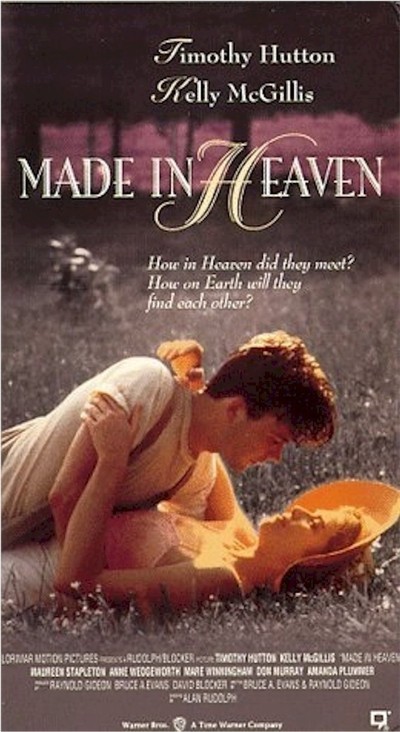
Made in Heaven posterWhen it comes to getting it right for love, I recommend my all-time favorite romantic movie: Made in Heaven (1987), about two souls, played by Timothy Hutton and Kelly McGillis, who meet and fall in love in Heaven. Annie (McGillis) is sent to Earth and Mike (Hutton) makes a deal to be reborn (Elmo) to find her (Ally). But he’s given a time-frame of 30 years in which to do so or he’ll lose her forever. It’s a magical movie filled with surprises. See more on Wikipedia. Rent or buy it on Prime Video. It’s also free with ads on YouTube Movies & TV.

That year, Wim Wenders came out with his amazing film, Wings of Desire, about an angel who tires of overseeing human beings and wishes to become one himself when he falls in love with a mortal.
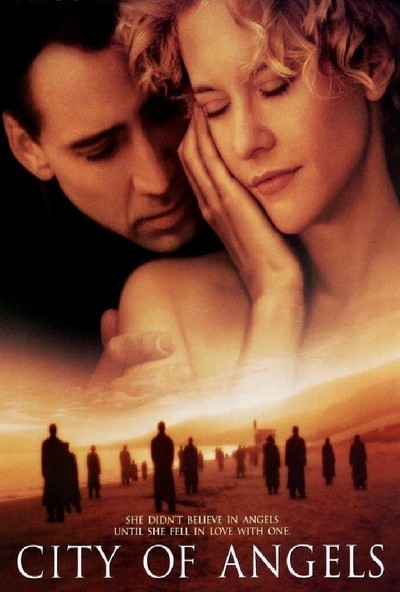
City of Angels posterTen years later it was adapted for English audiences as City of Angels (1998). Wenders co-wrote the screenplay. Nicholas Cage plays the angel who falls in love with a doctor, Meg Ryan, because of her beauty and concern for her patients. She doesn’t believe in angels, but when he reveals himself to her she falls in love with him, and has to decide between him or her fiance. One patient, a former angel, tells him how he became human for a woman. He does the same and experiences the joys and sorrows of love and loss.
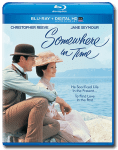
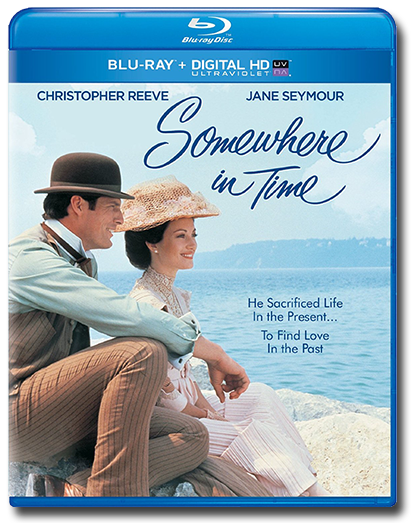
sit-bdAnother great movie is Somewhere in Time (1980adapted from the 1975 novel Bid Time Return by Richard Matheson who also wrote the screenplay. On a getaway to Mackinac Island, Richard Collier (Christopher Reeve), a playwright, falls in love with a picture of Elise McKenna (Jane Seymour), an actress who had performed there a long time ago at the Grand Hotel where he is staying. He discovers he was also there then and finds a way to travel back in time to win her heart. It works, but something unexpected happens that changes everything.

The SAG strike and lack of funds prevented the film from being effectively launched that year. When it was finally shown in New York, critics panned it, squashing plans for a national release. But, with the advent of cable television and late night movies, it soon became a cult classic and went on to win numerous awards.

John Barry composed the beautiful soundtrack including the haunting 18th variation of Sergei Rachmaninoff’s Rhapsody on a Theme of Paganini. Barry had been mourning the death of his parents and was not making himself available for work, but Seymour, a close friend, and the script, persuaded him to get involved. He channeled his emotions into the music, which contributed to the film’s success.

You can now watch the film for free with ads on Prime Video, and other options listed on IMDb. If not, here’s a 12-minute synoptic video of key scenes from the film, and this 11½-minute Somewhere in Time Movie Montage. Explore the movie’s official fan website for news updates at http://www.somewhereintime.tv.

After you’ve seen the movie, watch these behind-the-scenes videos that reveal what was going on between co-stars Reeve and Seymour, where life imitated art. They give us a deeper dimension blending reality with fiction enhancing repeat viewing experiences. She Wasn’t Acting: The Untold Truth Behind Jane Seymour’s Heartbreaking Monologue and The Heartbreaking True Love Story Behind “Somewhere in Time” Revealed! This short video clears up a paradox: Origin of the Somewhere in Time pocket watch finally solved! 

Another beautiful time-travel love story is The Two Worlds of Jennie Logan, a 1979 made-for-television movie based on the much-loved classic novel Second Sight by David Williams.
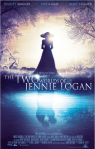
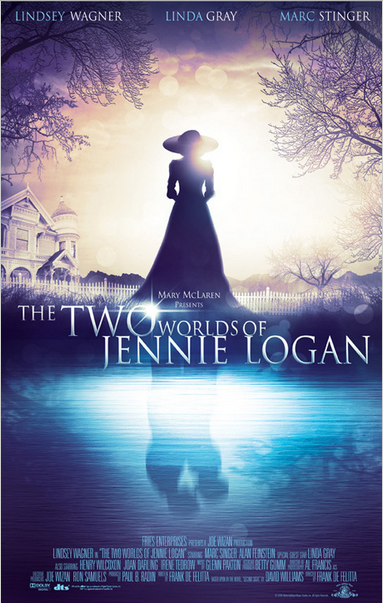
The Two Worlds of Jennie LoganAfter trying on a dress found in the attic of an old Victorian house her husband purchased to try to save their marriage, Jennie Logan accidentally travels into the past. After several visits there she discovers true love. Returning to the present she investigates who he was and how he may have been killed. She travels between both worlds in an attempt to save her lover’s life and alter history. Find out more at IMDb and the Amazon book description and comments. Watch it on YouTube, if it’s still there. Also found a slightly shorter video of it. The picture quality is better.
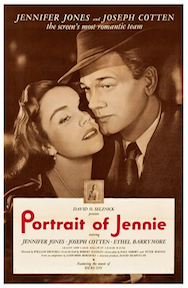
Portrait of Jennie

Portrait of Jennie (1948) is also a magical little film worth watching. A mysterious girl inspires a struggling artist. Eben Adams is a talented but struggling artist in Depression era New York who has never been able to find inspiration for a painting. One day, after he finally finds someone to buy a painting from him, a pretty but odd young girl named Jennie Appleton appears and strikes up an unusual friendship with Eben. See it on YouTube.
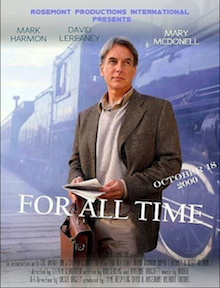
For All Time

For All Time (2000) is another recommended time travel film. A man facing middle-age and a failing marriage finds a time slip that can take him back to the end of the 18th Century. The film was based on The Twilight Zone episode, “A Stop at Willoughby” written by Rod Serling. It’s also available on YouTube.

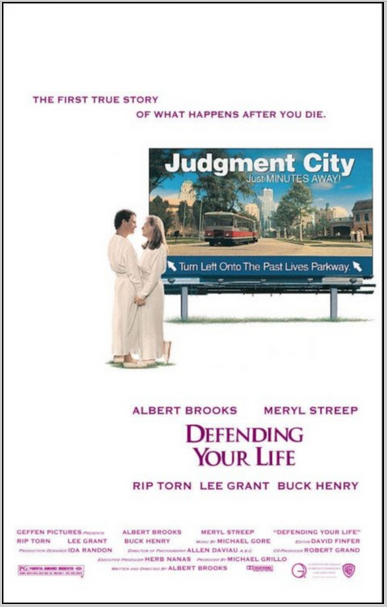
Defending Your LifeOn a lighter note, Albert Brooks wrote, directed and starred, with Meryl Streep, in Defending Your Life (1991), “the first true story of what happens after you die.” The dead are sent to Judgement City, a vacation-style place for the afterlife where representatives using large amounts of their brain potential help you defend your life in front of a court. The opposition also reviews aspects of your life where you showed fear instead of courage, the intent being to learn from past experiences.

Shirley MacLaine has a cameo role inviting people to the Pavilion of Past Lives, which is quite funny. There is also a love interest between the main characters who meet while their lives are undergoing review before they will be sent onto their different destinations. The question is, will he overcome his fears and sacrifice everything to be with this wonderful woman? Rent or buy the film on Prime Video to find out. I later found it on YouTube to make it easier for you. 

Blending heaven and earth, the divine and the mortal, the idyllic past with the unfulfilled present, or unresolved issues exposed in the afterlife, each film provides a different perspective on the sacrifice the main character makes for love, giving up one to gain the other. The ways of karma are unfathomable, but true love is eternal, and transformational!

LEAVING ROMANCE BEHIND TO FIND ONESELF

There was one movie that made a big impression on me when I saw it on television as a teenager. It’s about love, but more the story of one man’s quest for self-realization in a confused and materialistic world.
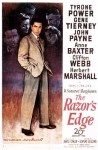
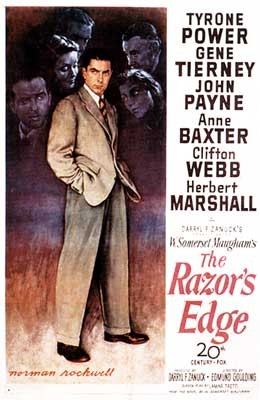
Razors_Edge (1946)The Razor’s Edge tells Larry Darrell’s story and his search for meaning after a comrade dies saving his life on the last day of World War One. Larry leaves love behind to find himself. He rejects the conventional life in search of a more transcendent experience, which takes him to India where he meets a guru. His search for enlightenment fulfilled, he may not have to reincarnate if he can walk the razor’s edge, live in the world and not be overtaken by it, anchored to his Self.

Larry returns to find his friends who are suffering due to a reversal of fortune brought about by the Great Depression. He shares what he’s learned to help them. Read more of the story on Wikipedia. I saw the original 1946 version starring Tyrone Power, based on the book by W. Somerset Maugham, which I later read. I found an audio version of the book (BBC Saturday Night Theatre), and the film on YouTube.
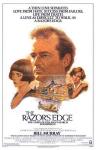
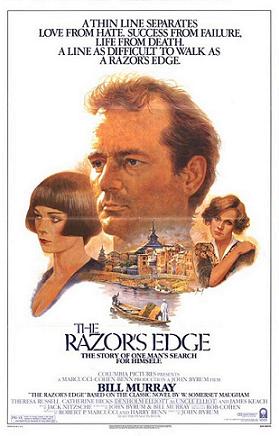
Razors_Edge (1984)It was remade in 1984 with Bill Murray in his first dramatic role. Murray also co-wrote the screenplay with director John Byrum. Visit Wikipedia for a full summary. Byrum couldn’t find a studio to finance it. Dan Aykroyd suggested Murray could appear in Ghostbusters for Columbia Pictures in exchange for the studio funding The Razor’s Edge. Murray agreed and a deal was made. Though the film lost money, Ghostbusters went on to make millions. 

It’s on YouTube with ads. The 1946 and 1984 versions of The Razor’s Edge are available for rent or purchase on Amazon Prime. Both are worth watching for their own values, but I prefer the earlier one. You can see the essence of the original film in Darrell’s search and achievement of his peak experience high in the Himalayas. 

This poem by William Stafford—The Way It Is—perfectly describes the kind of perspective Larry Darrell developed and how he lived his life.

I was asked to read and write a review for this book: Alan J. Steinberg’s debut novel reminds me of the age-old quest ‘To Be Enlightened’ I first read about in Somerset Maugham’s ‘The Razor’s Edge’.

PERSONAL NOTE

Larry Darrell’s quest spoke to me as a young person and unknowingly foreshadowed the direction my life would take during my college years and beyond when I would discover Maharishi Mahesh Yogi and his Transcendental Meditation technique. Our generation was so fortunate to have received the many gifts Maharishi brought out from the Himalayas. He inspired us to develop our full potential as human beings with TM and its advanced techniques, and to work with him to help make this world a better place to live in by applying his life-transforming Vedic knowledge and technologies in health, education, rehabilitation, virtually all areas of life. We are forever grateful. JGD

To find out more about Maharishi, see this HuffPost article by Philip Goldberg on Maharishi. Also watch the 1968 film of Maharishi at Lake Louise and the 2007 A&E biopic on the International History Channel.

UPDATE

I just discovered The Love Letter (1998), a Hallmark  Hall of Fame movie, starring Campbell Scott and Jennifer Jason Leigh. It’s based on a short story of the same name by Jack Finney that was first published in “The Saturday Evening Post” on August 1, 1959 and reprinted in the same magazine on January/February 1988. James S. Henerson wrote the made-for-TV screenplay and produced it.
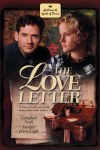
imageThis love story touches two lives that live a century apart. A letter from the past will change their future forever as these souls cross lifetimes for love! Scott, a 20th century computer games designer, exchanges love letters with Elizabeth Whitcomb, a 19th century poet, through an antique desk that can make letters travel through time. We witness parallel lives interact as they fall deeply in love with each other, weaving past, present, and future in a moving, magical way.

There are differences between the movie and the short story. For one thing, Elizabeth Whitcomb’s poetry, somewhat important in the movie, is entirely absent in the short story. It adds so much more to the film. You could read more about it on Wikipedia, but first watch this excellent made-for-television movie (1:39) on YouTube.

Interestingly, Ms. Whitcomb also lives in a town called Willoughby, the same name for Rod Sterling’s Twilight Zone story, which became the basis for the film, For All Time, mentioned above.

Inspired by a question, I saw the film again and transcribed the beautiful poem voiced over by Elizabeth Whitcomb towards the end of the film and posted it in a comment below. It succinctly sums up the essence of the film in 8 short lines.

Of course, when it comes to love being tested by time, The Time Traveler’s Wife (2009) is one worth watching. Rachel McAdams stars as the wife, whose husband keeps disappearing on her at different stages of her life. About Time (2013), is another film about time travel, and how a father teaches his son, who has the same ability, how to improve situations with time travel when he messes up trying to win the heart of a pretty woman, also played by Rachel McAdams. She also stars in The Vow (2012), as a woman who wakes up after a car accident with severe memory loss and forgets that she’s married to her husband. He has to work hard to woo and marry her all over again.

It reminds me of the 1993 blockbuster Groundhog Day starring Bill Murray. Here’s a sort of related cartoon in The New Yorker by Roz Chast.
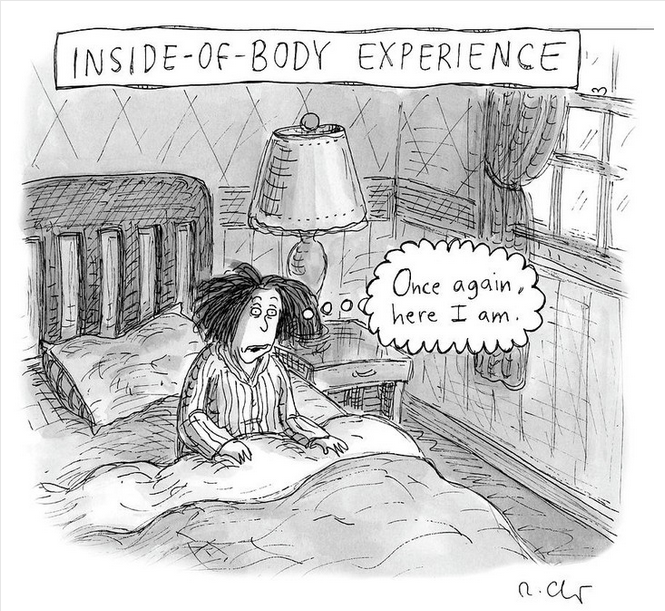
Inside-Of-Body-Experience by Roz Chast TNYcartoons

The film Arrival asks: If you could see your whole life from start to finish, would you change things?

When it comes to a war between words and pictures here’s a poem in a movie inviting you to be who you are.

Newer Updates

‘How Long Will I Love You’ sung by Ellie Goulding highlights 4 Romantic Comedies by Richard Curtis, which includes About Time, starring Rachel McAdams.

Speaking of time travel, romance, and Rachel McAdams, she starred in the 2009 film, The Time Traveler’s Wife, directed by Robert Schwentke, where a Chicago librarian has a gene that causes him to involuntarily time travel, creating complications in his marriage.

The Time Traveler’s Wife was made into a 6-part HBO series in 2022, based on the 2003 novel by Audrey Niffenegger, and starred Rose Leslie as Clare. Developed and written by Steven Moffat, the TV series was cancelled after one season.

The spring rains renew life and the promise of love in this film, A Good Rain Knows, inspired by the poetry of Du Fu.

Writing, literature, life and love intersect in The Guernsey Literary and Potato Peel Pie Society.

Sage advice from William Shakespeare in the film “All Is True” on how to become a truthful writer.

Christopher sings ‘A Beautiful Life’ for this Netflix film—a song about life, loss, becoming, and love.

— Written and compiled (citing sources) by Ken Chawkin for The Uncarved Blog.
A poem in a movie inviting you to be who you are

January 2, 2015

I recently enjoyed watching Words and Pictures, a 2013 film about a male English teacher and a female art instructor who form a rivalry that ends up galvanizing students in a competition to decide the most effective way to communicate, using words or pictures. This battle between mind and heart, ideas and feelings, is also about self-discovery, expressing one’s creativity, and the blocks that get in the way. Cleverly written by Gerald Di Pego, a one-time English teacher, and faithfully directed by Fred Schepisi, it stars Clive Owen, Juliette Binoche, and Bruce Davison. Visit their website for more info: http://wordsandpicturesthemovie.com.

I especially liked the quotes about writing and art, the word vs. the image. A poem by Mary Oliver was supposed to be featured in the film. They never said which one but kept waiting for permission to use it. By the time the answer came in, no, it was too late, and they had to come up with a replacement. The pressure was on screenwriter Gerald Di Pego. Being a poet himself, and seeing how this was his screenplay, the muse inspired him, and he wrote this very vivid and appropriate poem, just in time. Juliette Binoche liked it, which came as a relief to him and the director. I found it online and wanted to share it with you. The poem plays a central role, but you’ll have to see the film to find out who wrote it and how it’s used.

WHO ARE YOU?

I am a small poem
On a page with room
For another.

Share with me
This white field,
Wide as an acre
Of snow, clear
But for these tiny
Markings like the
Steps of a bird.
Come. Now.

This is the trough
Of the wave, the
Seconds after
Lightning, thin
Slice of silence
As music ends,
The freeze before
The melting. Hurry.

Lie down beside me.
Make angels. Make devils.
Make who you are.

As you can see, the poem invites you to create and become who you are, from that gap, the transitional point of possibility, and to share in the experience with another. Here’s a poem I wrote after a special painting class that seems relevant: ArtWords—poem about a creative awakening.

Interestingly, the Special Features part of the DVD revealed that Juliette Binoche, an artist in her own right, offered to do all of the paintings herself, which thrilled both writer and director. Because her character is dealing with physical challenges due to her medical condition, she had to paint in different styles, from portraiture to more abstract. Binoche enjoyed the added challenge and it possibly influenced her own future work.

Here is the official Words and Pictures – International Trailer (2014) HD.

When it comes to romantic movies, here are some of my favorite films where love transcends time.

Canadian Connection: These shoes are made for walking

The featurette also confirmed for me where they had made the film. The story is set in a New England prep school, but was actually shot at St. George’s School, an independent boarding and day university-preparatory school for boys in Vancouver, British Columbia, Canada, a.k.a., Hollywood North.

I recognized the location, and it reminded me of a story I had heard on a local CBC radio talk show during my stay there. The guest was an English teacher who taught at St. George’s School. One of the topics being discussed was meeting famous people. Listeners called in to share their stories and the teacher related an unusual event that had recently happened to him.

He had gone shopping at a well-known store for comfortable walking shoes. He settled on a particular pair and the sales clerk told him it was a popular item. She said someone famous had been in that morning and purchased a similar pair. She left to find out the name of the celebrity, but got sidetracked with another customer, so he left.

He put on his new shoes and, as was his routine every day after lunch, he went for a walk in the woods next to the school property. While walking along the path, eyes downcast, he saw a pair of shoes just like his, coming his way. Looking up he saw someone he never would have expected to see, especially in the forest. He pointed at him in surprise trying to say his name, but it came out as gibberish. The person mimicked him sputtering his name. It was Robin Williams! I think he was in town at that time filming Jumanji.

They had a wonderful walk and talk together. Robin had asked him what he did for a living and where he worked, which was something he could identify with having played an English teacher at an elite boys prep school in Dead Poets Society. When they reached the edge of the forest, there was Robin’s stretch limousine parked on the street waiting for him. He invited the teacher into the car saying they would drop him off at the school.

Now this man was not the most popular teacher at the school. When they pulled up, he got out of the limo, and all heads turned to look at him. Then Robin lowered the darkly tinted window, stuck his head out, and thanked the teacher for a wonderful time. All the kids’ jaws dropped! And from that day on he was the coolest person at school. Thank you, Robin! God Bless you, wherever you are.

I later found this August 5, 2024 Vanity Fair article b: “He’s Absolutely Extraordinary”: Remembering Robin Williams On the 10-year anniversary of Robin Williams’s untimely passing, we asked more than 20 of his costars, collaborators, and friends—including Billy Crystal, Matt Damon, Ben Stiller, Al Pacino, Sally Field, Jeff Bridges, and Julianne Moore—for their favorite memories of this kind, playful, and uniquely intelligent artist.

— Written and compiled by Ken Chawkin for The Uncarved Blog.
Winding up the year with inspiration from Hafiz

December 29, 2014

We are coming to the end of the year 2014. It seemed like a rough one for many, personally, and collectively for the world. I’ve finished reading A Year With Hafiz: Daily Contemplations, translated by Daniel Ladinsky. There is usually one poem a day per page. It was a gift from friend and author Steven Verney. Here are 3 poems towards the end of the book, end of the year, that talk about endings, and, in a way, new beginnings. May they inspire you as we transition into the new year, and for some, into a new life in 2015.

A Prayer I Sometimes Say

It is the Beloved who is revealed in every
face, sought in every sign,

gazed upon by every eye, worshipped in
every object that is adored, pursued in the
visible and in the unseen.

Not a single one of His creatures, not a
single one, my dears, will

fail to someday find the divine Source
in all of its primordial and glorious nature.

And be forever united with the Infinite,
because that—God—is really you.

Muhyiddin Ibn ‘Arabi, look what your
words have become—the restoration of
Truth, the regeneration of Life itself.

December 23, page 391

* * * * *

The Tender Mouth Of The Earth

What will the burial of my body be? The
pouring of a sacred cup of wine into the earth’s

tender mouth and making my dear sweet lover
laugh one more time.

What is the passing of a body? The glorious
lifting of the spirit into the sacred arms of the

Sky, and making existence smile, one more, one
more time.

December 28, page 396

* * * * *

A River Understands

I used to know my name. Now I don’t. I
think a river understands me.

For what does it call itself in that blessed
moment when it starts emptying into the
Infinite Luminous Sea,

and opening every aspect of self wider than
it ever thought possible?

Each drop of itself now running to embrace
and unite with a million new friends.

And you were there, in my union with All,
everyone who will ever see this page.

December 29, page 397

* * * * *

One poem about a river is beautifully told by William Stafford in his poem, Ask Me, where he looks to the stillness in the river to inform him, and the person asking him about his life, and, in a way, the creative process in the moment. Another poem of his, Something That Happens Right Now, also leaves you with a similar unbounded feeling as this last Hafiz poem does.

See other inspiring poems by Hafiz, translated by Ladinsky, posted here.

Hafiz, via Ladinsky, reminds us when we love those in our care we are brought closer to God

December 21, 2014

Another small but profound poem by Hafiz is titled Riches Everywhere. Published in A Year With Hafiz: Daily Contemplations, and translated by Daniel Ladinsky, each poem is read for a specific day of the year. This poem, found on page 389, is dated for today, December 21.

Riches Everywhere

Don’t envy my talents, or seek them.
For few could bear the suffering it took
to mine the jewels I have brought to town.

There are divine riches everywhere. The
most natural way for most to find them
is by caring for those who are close to
you as if they were our Beloved.

This poem reminds us to not covet other people’s wealth, but to find riches everywhere, most naturally within our own hearts.  By loving those close to us as we would love God, our hearts come to know the divine within them, and ourselves, the only true and lasting riches. In loving, we come to be loved; we come to the Beloved.

Other beautiful poems by Hafiz selected for posting on The Uncarved Blog are: Hafiz’s poem, God Pours Light, awakens the soul and frees the mind from debating words about it | Winding up the year with inspiration from Hafiz | 3 beautiful and profound short poems by Hafiz about the nature of God within us | Hafiz via Ladinsky describes the spiritual transformation of loving deeply within himself | For Hafiz the role of an enlightened poet is to connect humanity with the joy of the divine | Hafiz said to leave something in the marketplace, and Jesse Winchester sure did before he left us.