Posts Tagged ‘Transcendental Meditation’

Craig Pearson’s TM article is a cover story in India’s The Week: A Better Brain in 20 Minutes. Meditation research findings at a US university.

July 9, 2023

Craig Pearson wrote a cover story on TM research at MIU for The Week’s Yoga Mid-Year Special (July 9, 2023): A BETTER BRAIN IN 20 MINUTES. Meditation research findings at a US university.

The print version is a 6-page spread: A BETTER BRAIN IN 20 MINUTES. A centre for research in America records increased intelligence and improved health in people who practice Transcendental Meditation. (Pages 86-91) Below is the online article with its own title and subtitle.

How about a better brain in 20 minutes?

Transcendental Meditation can increase intelligence and improve health

By Craig Pearson | Issue Date: July 09, 2023 | Updated: July 02, 2023 07:29 IST
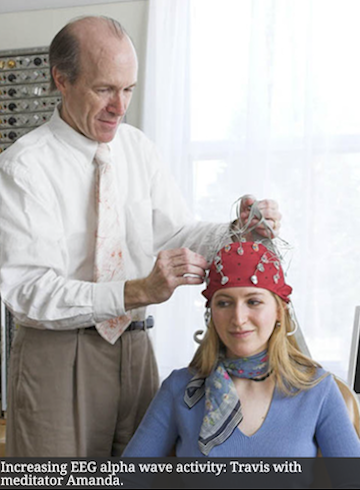
A fourth-year college student named Amanda walks into the laboratory and drops her backpack on a nearby chair. She has just finished her afternoon class on human resource management. The lab director, Dr Fred Travis, greets her and motions her to take a seat in front of the window. As they exchange small talk, Travis places a red cloth cap over the top of her head. It looks something like a ski cap, except for one thing―it has 32 sensors attached to it, connected to an electroencephalograph (EEG) machine that will measure the electrical activity of Amanda’s brain at 32 different points.

He monitors Amanda’s brainwave activity for the next few minutes to establish baseline readings. Then he asks Amanda to close her eyes and continue to sit quietly for a few more minutes. All the while wavy lines are moving across the computer screen, left to right.

Then he quietly instructs her to begin her practice of Transcendental Meditation―and in less than a minute, the waves change dramatically.

It’s clear to the naked eye, without analyzing the signals, that Amanda’s brain has shifted to a significantly more integrated, coherent style of functioning. That is, the different parts of her brain are communicating much more efficiently and effectively with each other.
Outwardly, Amanda appears simply to be sitting comfortably with her eyes closed. But inside, she is experiencing a fourth major state of consciousness.

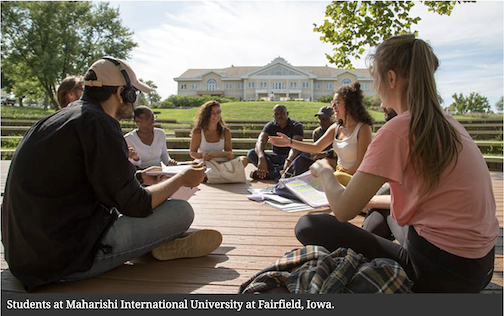
Travis directs the Center for Brain, Consciousness, and Cognition at Maharishi International University (MIU) in Fairfield, Iowa, in the United States. He is one of the world’s leading scientists in the area of brain functioning and higher human development, with special focus on how the technique of Transcendental Meditation affects brain functioning and promotes personal growth.

Founded in 1971 by Maharishi Mahesh Yogi, the noted Vedic scholar and scientist of consciousness, MIU is accredited by the Higher Learning Commission. It offers bachelor’s, master’s and doctoral degrees in a wide range of subjects, from art to computer science, from creative writing to sustainable living, from regenerative organic agriculture to Ayurveda. Three quarters of its students come from outside the US, and the student body represents more than 80 countries.

All faculty, staff and students, as well as hundreds of members of the surrounding small-town community, practise the Transcendental Meditation technique. The technique, learned from a certified TM instructor, is a simple, natural, effortless procedure practised for 20 minutes twice each day while sitting comfortably with the eyes closed. It allows the mind to settle inward into a state of quiet―to “transcend,” or go beyond, the constant stream of thoughts and perceptions that fill the mind.

MIU has been a centre for research on Transcendental Meditation since its founding. Its first president, Robert Keith Wallace, conducted the first research on the technique while a PhD student at UCLA. Within two years, he had published his research in Science, Scientific American and the American Journal of Physiology.

His findings were striking. He found that during TM practice, as the mind settles inward, the body settles down into a uniquely deep state of rest, reflected in decreased heart rate, decreased respiration rate, and increased skin resistance. Yet the mind remains entirely awake―more awake than ever, in some respects―reflected in increased EEG alpha activity in the brain.

This combination of deep rest and heightened wakefulness had never been seen before in a laboratory. Wallace described it as a “wakeful hypometabolic state”―“restful alertness,” in simpler English―and he declared it to be a fourth state of consciousness beyond the three familiar states of waking, dreaming, and sleeping.

Wallace was studying the classic state of samadhi, known in the Upanishads as turiya, “the fourth,” and termed Transcendental Consciousness by Maharishi.

This exalted state had been known and celebrated for millennia, in India and in traditions around the world. But Wallace was uncovering the constellation of changes that occur in body during this restfully alert experience―its “neurophysiological correlates.”

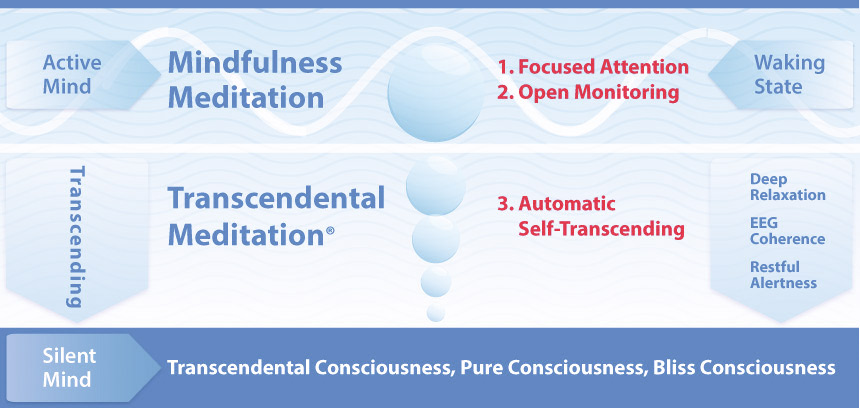
The TM technique does not involve focusing or concentrating the mind or attending to one’s thoughts or one’s breathing. It is not “mindfulness.” One does not try to control one’s body’s functions, as in biofeedback. The technique is effortless.

One student describes her experience during TM practice in this way: “I have the experience of transcending all activity and experiencing awareness as an unbounded unity. There is no longer any sense of ‘me’ and ‘not me,’ no longer any thought or feelings or even a body, just the Self, and that is all there is, and that is all I am.”

Yet this simple and natural experience of transcending leads to a host of physiological changes, all in the direction of rest, repair, and balance.

Wallace’s publications sparked a wave of research on the TM technique that has continued to this day. To date, research has been conducted at more than 250 universities and research institutes around the world, and studies have been published in more than 170 journals in a range of fields.

These studies have further detailed the striking physiological changes that take place during the technique. They have also looked at the long-term effects, where the findings have been equally remarkable. These include improved health, increased intelligence (IQ) and creativity, increased self-esteem and self-actualisation, and improved interpersonal relationships.

Many of these findings are notable because they had also never been seen before in modern science. For example, intelligence and creativity grow through childhood but level off in adolescence. Yet with TM practice, these values resume growing regardless of age. TM practice “unfreezes” their growth.

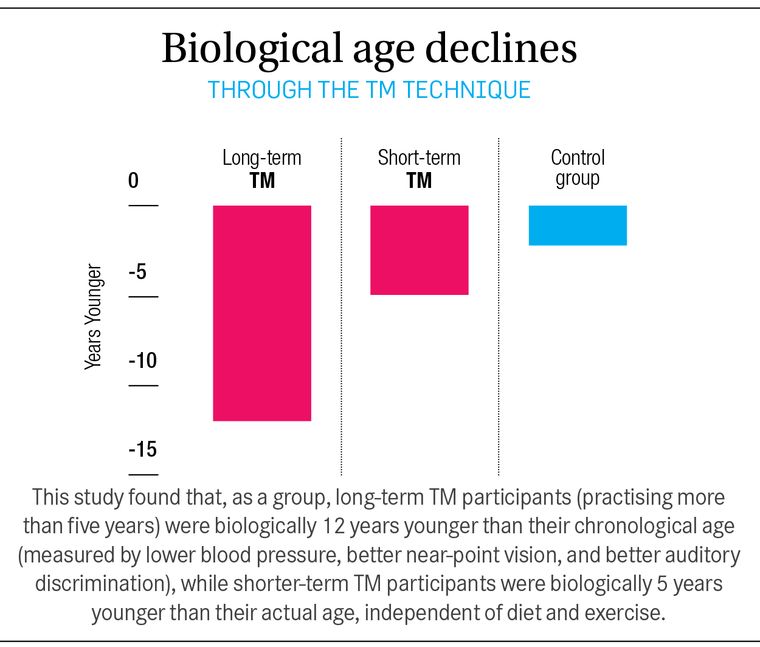
Wallace predicted that, given the TM technique’s ability to dissolve stress, it may affect the rate at which the body ages. Physiologists distinguish between our chronological age (our age in years) and our “biological age”―the age of the body as determined by a cluster of measures.

Wallace found that people who had been meditating more than five years were biologically 12 years younger than their chronological age. Several other studies found that TM practice can extend lifespan by 23%.

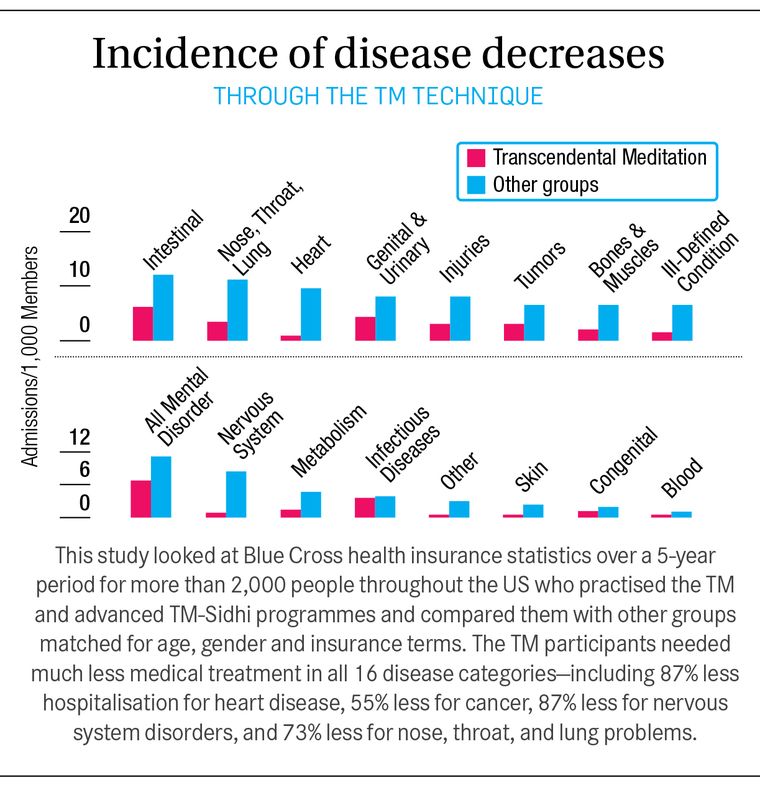
One of the most dramatic findings emerged from health insurance statistics. David Orme-Johnson, then chair of MIU’s psychology department, tracked 2,000 people over a five-year period across the US who practised the TM technique.

The data was collected by Blue Cross, the health insurer. The statistics for the meditation group were compared with those of a control group selected by the insurance company to match the TM group for age, gender, education, profession and insurance terms.

The result: The TM group went to hospital 56% less often for illness or surgery. The differences between the TM group and the control group were significant in all age groups but most conspicuous in older groups. The TM group also required 50% fewer doctors’ visits. The TM meditators had not become disenchanted with doctors―for maternity, they used health care just as much as the control group.
Starting in 1990, research on cardiovascular health became a major focus at MIU. Over the following years, the US government’s National Institutes of Health (NIH) invested more than $25 million dollars in MIU’s research on TM and cardiovascular health. With this support, MIU professor Robert Schneider and his colleagues, in partnership with universities around the US, conducted a series of studies that made headlines worldwide.

Cardiovascular diseases are the leading cause of death globally, according to the World Health Organization, accounting for 32% of all global deaths. Yet modern medicine has failed to cure or even curb this disease or even pinpoint the cause. It has only identified the risk factors.

This is why Schneider’s studies were so newsworthy. He and his teams found that TM practice shows great promise for preventing and even curing cardiovascular disease.
They focused first on hypertension, a leading risk factor for heart disease. They tested the TM programme on elderly African Americans, who have 50% more hypertension than white Americans, twice the level of cardiovascular disease, and a far higher rate of deaths from it. This is because they’re subject to higher chronic socio-environmental stress.

But when they learned the TM technique, their blood pressure dropped significantly, as much as with standard drug treatments―but with no side effects, with higher patient compliance, and at far lower cost. The meditating group also lived longer. Compared with the control group, those in the TM group were 23% less likely to die from any cause, 30% less likely to die from heart disease, and 49% less likely to die from cancer.

In these studies, the subjects made no changes in their diets or exercise habits. The effects were solely due to the regular experience of transcending using the TM technique.
Studies found that TM practice reduces other leading risk factors for heart disease, including cholesterol and free radicals, smoking and alcohol abuse, and psychological and socio-environmental stress.

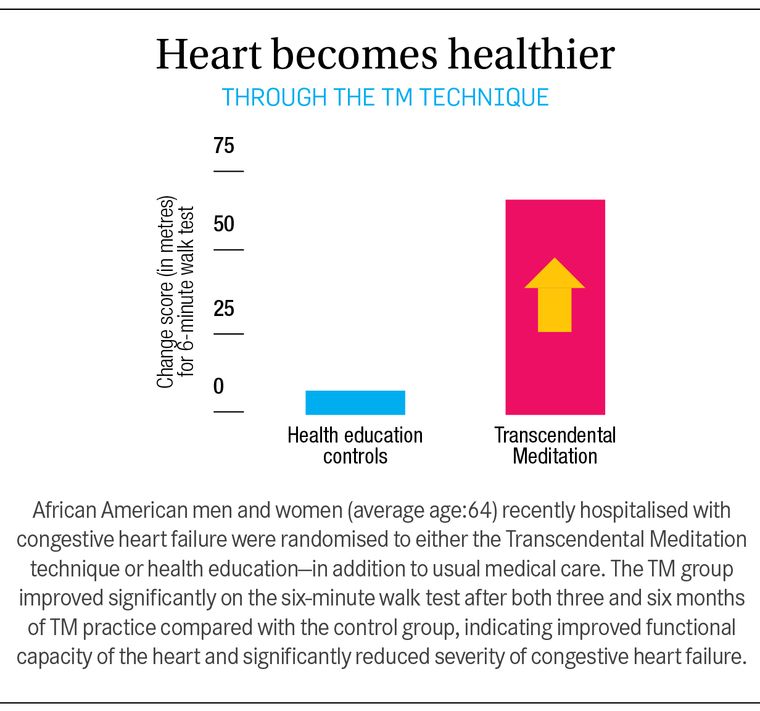
Prevention is the best medicine, but for those who already have heart disease, Schneider and company also found that TM practice can actually reverse its damaging effects. TM practice unclogs arteries and reverses atherosclerosis. It reverses enlargement of the heart (left-ventricular hypertrophy). The practice even reduces the severity of congestive heart failure―and heart failure is the end result of all heart diseases. Again, subjects in these studies made no other changes in their lifestyle beyond their TM practice.

Turning their attention to another global epidemic, Schneider and company found that TM practice significantly reduces the risk of diabetes. One study found that after just 16 weeks of TM practice, patients with both heart disease and type 2 diabetes not only had lower blood pressure, but had also significantly better blood glucose and insulin levels―signifying reduced insulin resistance and more stable functioning of the autonomic nervous system.
“This research shows that the Transcendental Meditation technique helps the body tap into its inner intelligence and normalise function,” Schneider said. “These subjects simply transcended regularly, and their cardiovascular and endocrine systems regained more perfect balance.”

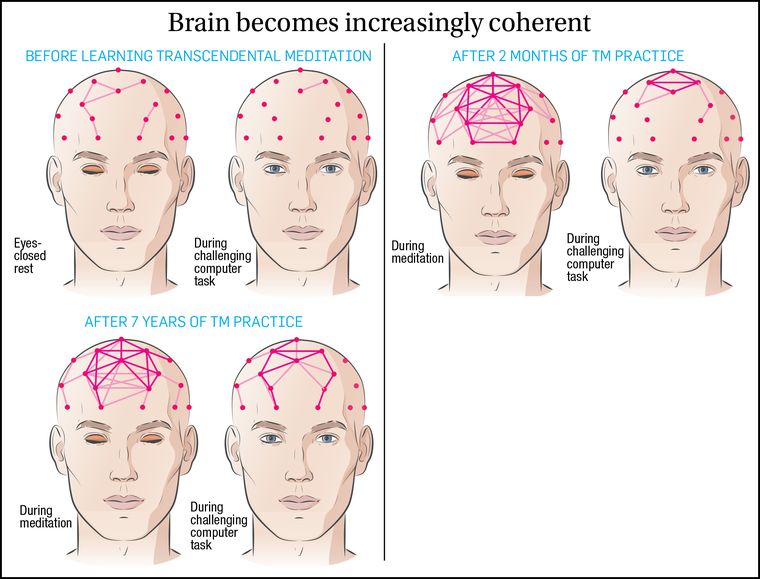
Travis has most recently been looking at how the integrated brain functioning characteristic of TM practice increasingly persists even outside of meditation―over time it becomes the brain’s normal style of functioning.

The computer-generated drawings (above) illustrate alpha-range EEG coherence and how it increases during TM practice―and then increasingly becomes the brain’s normal style of functioning even outside of meditation.

The lighter lines show coherence (communication) between the two linked brain areas of about 70%, the heavier lines coherence of 80% or higher (100% is perfect coherence). The more effectively the various brain areas communicate, the better the brain performs.

“These are really remarkable findings,” Travis said. “Before we started researching the Transcendental Meditation technique, we had no idea that the brain could function with this exceptional level of integration. And now we’ve learned that we can cultivate the brain to function in this way all the time.”

This is also remarkable, because the higher one’s level of brainwave coherence, the greater one’s intelligence, creativity, moral maturity, learning ability, and many other positive values, according to research studies at MIU and elsewhere.

MIU students have the option of receiving a Brain Integration Progress Report. Students have their brainwave coherence measured shortly after they enroll and then again shortly before they graduate, to see how much their brain integration has increased during their years at MIU.

“This is a remarkable contribution to education,” Travis says. “And any school, college or university can implement this same approach and give their students these same benefits, without any changes to their curriculum apart from setting aside two short periods for Transcendental Meditation practice.”

Travis is often asked whether other meditation techniques produce these same results.

“Different meditation techniques involve different mental procedures,” Travis explains, “and therefore they produce different modes of brain functioning.

For example, meditation techniques that involve focusing or concentrating the mind―known as focused attention techniques―produce beta/gamma activity in the brain, typical of any active mental processing.

A second category of techniques, called open monitoring, includes mindfulness procedures, which involve monitoring aspects of one’s experience―one’s thoughts, breathing, sensory perceptions, physical sensations―without evaluating them. These procedures induce theta activity in the brain, seen when people reflect on mental concepts.

The third category, which includes the Transcendental Meditation technique, is called automatic self-transcending. It involves procedures that transcend their own activity, enabling the mind to go beyond (transcend) the meditation process and into the experience of pure consciousness. These techniques elicit frontal alpha-1 coherence, indicating the brain’s executive control centre is functioning in an integrated manner.

“All meditation techniques are not the same,” Travis says. “Other procedures have their value. But so far only the TM technique has been shown to produce this integrated and coherent style of brain functioning along with the wide-ranging constellation of benefits that studies have found.”

Over the past 40 years the technique has been applied in a variety of practical fields, where it has been studied by MIU scientists and others.

In schools, when students and faculty learn the practice, IQ and creativity increase, students’ grades increase, graduation rates increase, and overall school climate improves.

In companies, when managers and employees learn the TM technique, stress declines, illness and absenteeism decline, cooperation increases, productivity increases, and the companies become more profitable.

In prisons, when inmates learn the technique, they sleep better, their health improves, they commit fewer infractions, and most important, they return to prison at a far lower rate than non-meditating prisoners.

Among veterans suffering from PTSD (post-traumatic stress disorder), when they start TM practice, their symptoms decrease markedly, and they reintegrate into their families and the workplace more quickly and easily.

How can such a simple technique produce such a wide constellation of benefits―for cognitive development, for health, for personality growth and interpersonal relationships?

“It’s all about the experience of transcending,” Travis said. “The experience is simple, natural, and incredibly profound. It dissolves stress and resets and rebalances the whole mind-body system. Maharishi likens it to watering the root of a tree, where a single act nourishes the tree’s countless leaves and branches. ‘Water the root to enjoy the fruit,’ he said. Consciousness is the most fundamental value of life, and now we know we can cultivate and improve our lives from that deepest level.”

Craig Pearson, PhD, has served as executive vice president and vice president of academic affairs at Maharishi International University and is currently special assistant to the president. He is the author of The Supreme Awakening: Experiences of Enlightenment Throughout Time ― And How You Can Cultivate Them. He would like to thank David and Arlene Leffler and Fred Travis. (Hyperlinks added.)

— Posted with permission from the author for The Uncarved Blog.

See this interesting related post: Bob Roth explains why and how TM is different from other types of meditation. See these previously published related studies: New study highlights unique state of “restful alertness” during Transcendental Meditation (fMRI shows increased blood flow to frontal areas of brain and decreased blood flow in pons and cerebellum), and Research validates the defining hallmark of Transcendental Meditation — effortlessness (The high activation in the default mode network, as well as the fact that the frequency of transcending is the same regardless of how long one has been practicing, together contrast Transcendental Meditation with other meditation practices). See this earlier study: Transcendental Meditation activates default mode network, the brain’s natural ground state. Feb 9, 2024: MIU News: Striking public demonstration of link between brain functioning and the Maharishi Effect (video) by Craig Pearson.

VAC awarded CWWI grants to teach TM to military veterans with PTS. Now DND awards a grant to teach TM to survivors of Military Sexual Trauma.

May 25, 2023

New Federal Grant from Department of National Defence Awarded to the Canadian Women’s Wellness Initiative

Over the last three consecutive years, the Canadian Women’s Wellness Initiative (CWWI), has been awarded a grant from Veterans Affairs Canada (VAC) to teach the Transcendental Meditation® (TM®) program to military veterans suffering from Post-Traumatic Stress (PTS) and related comorbidities while serving in the Canadian Armed Forces. The Canadian Women’s Wellness Initiative is a charitable organization mandated to bring the TM program to individuals whose lives are impacted by toxic levels of stress.  

In February 2023, the Minister of Veterans Affairs, the Honourable Lawrence MacCaulay, and his team met with the National Director of the Canadian Women’s Wellness Initiative, Helen Creighton, to review the work of CWWI in bringing the TM program to Veterans and their family members.

VAC posted articles on TM helping veterans.

(Click on photo to enlarge it.)

Department of National Defence Grant Awarded in April 2023

Based on the success of the VAC-funded grants, the Department of National Defence (DND) has now fully funded a new grant for CWWI to teach TM to survivors of Military Sexual Trauma (MST) who are currently serving, or who have served in the Canadian Armed Forces (CAF) or the Department of National Defence: Community Support for Sexual Misconduct Survivors Grant Program. [At this link, Canadian Women’s Wellness Initiative (CWWI) is listed under Nova Scotia, where their National Office is located.]

The project can also include family members or support workers and will be taught in 8 major Canadian cities where TM teachers have taken additional training to work with this population.

This initiative aims to bring an effective evidence-based stress-reduction technique to those who have experienced sexual misconduct within the Defence community. Due to the trauma and negative emotions linked to sexual misconduct, this population is at risk for prolonged mental health conditions such as depression, anxiety, PTS, low self-esteem, addiction and more. 

Research has demonstrated that the TM program is one of the most effective methodologies for reducing the above issues, which are often present in those who have experienced sexual misconduct. Overcoming the negative effect that sexual misconduct has on one’s mental health is a critical first step in moving forward with one’s life.

Confidential quantitative surveys will be administered pre- and -post TM training for self-compassion (Neff, 2011) and trait anxiety survey (Cohen, 1983).

Self-compassion is the self responding positively in times of personal struggle. In addition to decreases in stress and improved levels of self-compassion, CWWI expects results to be similar to past research with veterans, such as:

• Reduced flashbacks and bad memories: Military Medicine 176 (6): 626-630, 2011

• Improved quality of life: Military Medicine 176 (6): 626-630, 2011

• Decrease in insomnia: Journal of Counseling and Development 64: 212-215, 1985

• Twice as effective as other relaxation techniques for decreasing trait anxiety: Journal of Clinical Psychology 45(6): 957–974, 1989

The CWWI project is overseen by several Advisory Boards, including healthcare professionals and military members and employs a researcher with expertise in qualitative and quantitative data. 

CWWI is working with support groups mandated to help those affected by sexual misconduct, networking with doctors, psychologists and psychiatrists who work with this population, and reaching out to support groups. 

CWWI is grateful to researchers Ann Royer, PhD, and Tanis Farish, PhD, as well as to Advisory Review Board members Dr. Raju Hajela [Major, retired], Dr. Brian Rees [Colonel, retired], and Ami Stadnick, MSc, R. Psych. 

Article submitted by Helen Foster-Grimmett, Lead Instructor—Canadian Armed Forces, Veteran, Police and First Responder Outreach—Canadian Women’s Wellness Initiative.

# # #

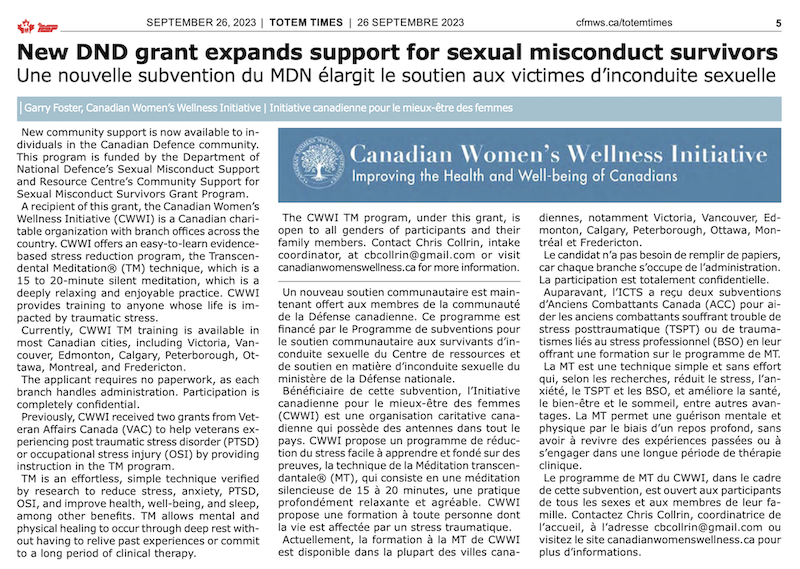
An article by Garry Foster on both TM grant programs and research was published in a BC Navy newsletter. It was picked up in a few provinces across Canada. It appears in print and online and is read by active duty personnel, veterans, their families and the public. Click on Volume 68, Issue 25, June 26, 2023, select English or French, and go to page 12 (page 11 in the downloadable PDF) to read: New DND grant expands support for sexual misconduct survivors, including family members.

A similar article by Garry Foster written for the Canadian Women’s Wellness Initiative was published in the September 26, 2023 issue of the Totem Times in English and French on page 5, New DND grant expands support for sexual misconduct survivors. (Click to enlarge and read.)

See this October 29, 2017 post about Helen bringing the TM program to her local area police department: Central Saanich Police Service and Area Police Officers Learn and Benefit from Transcendental Meditation.

Also see Canada’s TM TV News Spot: The Antidote to Stress.

— Written and compiled (citing sources) by Ken Chawkin for The Uncarved Blog.

Canada’s TM TV News Spot: The Antidote to Stress

May 21, 2023

Here is a 30-second TV news spot some Canadian friends are testing out on CHEK TV in BC. The ad airs 44 times over 3 months during the 5pm, 6pm and 11pm News. The voiceover is by a longtime TM teacher, Bob Chelmick, who was the CBC news anchor in Alberta for decades. It broadcasts throughout Vancouver Island and also in the Lower Mainland including Vancouver, and spills over into Washington State. It was first posted on Garry Foster’s Facebook page and is now on their Transcendental Meditation Canada website as The Antidote to Stress.

Six seconds into the video we see a photo of a helicopter carrying a large specialized water bucket to help put out forest fires. Don Arney, inventor of the Bambi Bucket® for Aerial Firefighting, was inducted into the 2017 National Inventors Hall of Fame for his invention. It is manufactured in Vancouver, Canada and shipped to clients in more than 110 countries.

From 8-10 seconds are photos of burned-out healthcare workers and first responders. A recently published study conducted at Miami hospitals showed Transcendental Meditation was highly effective in rapidly reducing healthcare worker burnout symptoms during the height of the Covid crisis. The study was supported, in part, by the David Lynch Foundation as well as Miami-area donors.

Enjoy this excellent article in the Alberta Prime Times on how Transcendental Meditation benefits those with medical issues, ongoing anxieties, even PTSD.

VAC awarded CWWI grants to teach TM to military veterans with PTS. Now DND awards a grant to teach TM to survivors of Military Sexual Trauma.

Related interview: Listen to David Lynch Foundation CEO Bob Roth with Katy Perry And The “Cure For The Common Stress”.

Find a TM Center near you at https://www.tm.org/choose-your-country.

— Written and compiled (citing sources) by Ken Chawkin for The Uncarved Blog.

Tony Anthony’s amazing eight-year spiritual journey with TM founder Maharishi Mahesh Yogi

April 1, 2023

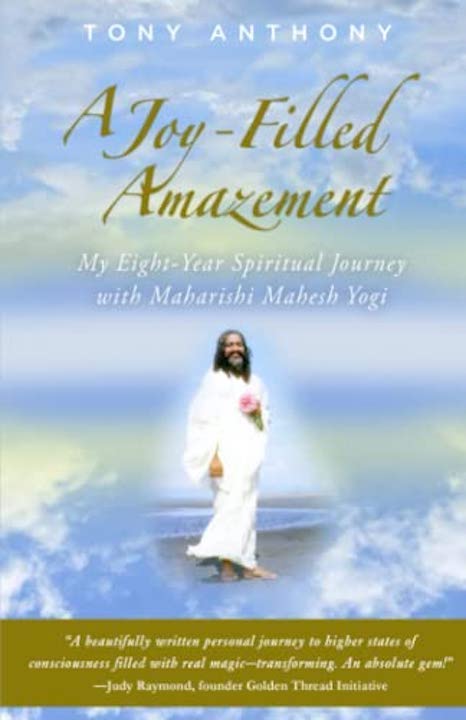
Some people I know highly recommended Tony Anthony‘s recent book, A Joy-Filled Amazement: My Eight-Year Spiritual Journey with Maharishi Mahesh Yogi. I read it and found theirs and other familiar names mentioned in the story. I checked the many positive Customer Reviews, recognized some of the reviewers, and decided to add my own.

This personal story is told with sincerity, vulnerability, and transparency. Some fascinating moments give us a glimpse into Tony’s relationship with TM founder Maharishi Mahesh Yogi, and his evolving experiences, in and out of meditation.

This personal story is told with sincerity, vulnerability, and transparency. Some fascinating moments give us a glimpse into Tony’s relationship with TM founder Maharishi Mahesh Yogi, and his evolving experiences, in and out of meditation.

Here is a look into the author’s background, what he’s accomplished during his lifetime, and a description of the book.

About Tony Anthony

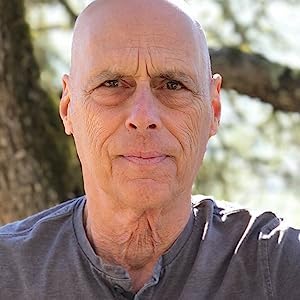
Tony Anthony was born in New York and educated at Syracuse University. He served as a combat correspondent for the 198th Infantry Brigade in Vietnam in 1968 and 1969. His stories and photographs appeared in Stars & Stripes and in newspapers around the world.

He has had a career in the creative arts: as an author, a painter, a photojournalist, and a creative director. As a photojournalist, Anthony photographed the attack on the World Trade Center from a Blackhawk helicopter on September 11, 2001 for the NGO Americares. Days after the US bombed Baghdad in 2005, he photographed the first humanitarian relief mission to Iraq. He has photographed on all eight continents, including the melting ice in Antarctica.

He has written three previous books: Life is War But You Can Win, an inspirational book for Veterans; Beneath Buddha’s Eyes, a novel; Before the Next War, a novel set in Vietnam based on actual events. He has directed a documentary film, Fearless Mountain, about a Buddhist forest monastery. The author is the recipient of an Atlantic Monthly writing award. He resides in Northern California and has two grown sons.

A Joy-Filled Amazement

A Joy-Filled Amazement is the wild and enthralling tale of a spiritual seeker that proves that anything is possible. The book begins at the lowest moments of the author’s life—penniless and mind-ravaged, just back from Vietnam, living in the hold of an anchovy boat. In an inexplicable encounter, he meets Maharishi Mahesh Yogi, the spiritual leader who brought Transcendental Meditation to the West made famous by the Beatles. The great Indian guru enthralls him with a vision of the life he longs for and the way to get there. The story is an eight-year odyssey, to Maharishi’s ashram in Switzerland, to India, and finally to enlightenment. The journey is complex, deeply spiritual, and genuinely captivating.

A generation of seekers

Ours was a generation of seekers. If you’re on the spiritual path or curious about it, this book will satisfy. You will spend time in the heart and mind of a seeker turned finder.

Ours was a generation of seekers. If you’re on the spiritual path or curious about it, this book will satisfy. You will spend time in the heart and mind of a seeker turned finder. Tony also describes some pretty cosmic experiences that will inspire. Glad I read it!

On page 258, Tony shares something that surprised and pleased me. A friend who cleaned Maharishi’s apartment had invited him along, which was unexpected. While his friend “went about about replacing flowers in vases and otherwise straightening up in the sitting room, I took a seat and thumbed through a book of photographs taken by Linda McCartney, Paul McCartney’s wife. On the front piece was a hand-written note to Maharishi saying how much she and Paul loved and appreciated him.”

Book Cover

Tony chose Spanish graphic designer Jonas Perez to design the book cover. He selected the typeface and gold color and left the rest to him. Jonas surprised Tony “with the sensitivity and subtlety of the design.”

You may recognize the famous photo of Maharishi on Sands of Parkville, the beach at the former Island Hall resort in Parksville, Vancouver Island, BC, Canada. It was taken by Victoria artist, photojournalist, and filmmaker Karl Spreitz. Eileen Learoyd, a columnist for The Daily Colonist at that time, asked Karl to take the photo for her article on Maharishi (September 20, 1963). An early meditator, Eileen later became a TM teacher. Maharishi appointed her National Leader of Canada. Her daughter, Grania Litwin, also a journalist, sent me the article and the photo, which was also used on a billboard with the words, learn to meditate, and a mailing address.

Book Title

In case you’re wondering, as I was, about the book title, Tony explains that in the 3rd paragraph on page 309 under Acknowledgements.

The title of the book is taken from The Shiva Sutras, revealed by Swami Laksmanjoo, a close friend of Maharishi’s. In Verse 12, he explains the signs by which we can determine that a yogi is established in that supreme state of Lord Siva: “The predominant sign of such a yogi is joy-filled amazement.”

Related reading

Here are two novels I’ve read and reviewed about meditating philosophy professors that you might enjoy: “To Be Enlightened” by Alan J. Steinberg and “The Best Of All Possible Worlds” by B. Steven Verney.

Many articles have been written about Maharishi. Here is a blogpost on the centennial of his birth with links to other articles and interviews.

— Written and compiled (citing sources) by Ken Chawkin for The Uncarved Blog.

June 16, 2024: I wrote Tony to tell him about Billy Schulz’s book, The Field of Glow: My Life with Angels and Celestial Beings. He said he had read it and mentioned his new book, A Joy-Filled Awareness, the follow-up to the book about his time with Maharishi, A Joy-Filled Amazement, which now fleshes out the “time before and after” as described by a mutual friend from the United Kingdom in his 5-star Amazon review.

Transcendental Meditation reduced healthcare workers’ burnout symptoms during Covid crisis

March 5, 2023

NEWS RELEASE 3-MAR-2023

Transcendental Meditation highly effective in rapidly reducing healthcare worker burnout symptoms during the height of the Covid crisis

Healthcare providers (HCP) at three Miami hospitals during the height of the Covid crisis, who practiced the Transcendental Meditation technique (TM), showed a rapid and highly significant reduction in stress-related burnout symptoms such as somatization, depression, anxiety, sleep disturbances, and emotional exhaustion, as well as significant improvement in mental well-being, compared to a parallel matched lifestyle-as-usual group (LAU), according to a new study published today in PLOS ONE.

A total of 65 healthcare providers at the three Miami hospitals (Baptist, Mercy, and Encompass Hospitals), were enrolled in the TM group, as well as 65 parallel match controls. Validated surveys were used to assess burnout and stress-related symptoms including the Brief Symptom Inventory-18 scale (BSI), the Insomnia Severity Index (ISI), the Maslach Burnout Inventory-Human Services Survey (MBI), and the Warwick Edinburgh Mental Well Being Scale (WEMWBS).

After two weeks symptoms of somatization, depression, and anxiety in the TM group showed a near 45% reduction and insomnia, emotional exhaustion and well-being had improved by 33%, 16% and 11% respectively. At three months, the TM group showed mean reductions in anxiety of 62%, somatization 58%, depression 50%, insomnia 44%, emotional exhaustion 40%, and improvement in mental well-being of 18% (Examples Figures 1 – 3). TM appeared easy to learn and was maintained by the subjects within an average weekly TM session completion rate of 83%. (Click on Figures 1-3 to enhance details.)

“The results of this study—one of the largest on the effects of TM in a healthcare setting conducted during the height of the Covid crisis—are dramatic, not just because of the size and significance of the improvements in a variety of burnout indices, but notably in how rapidly the results were seen,” said Mark S. Nestor, M.D. Ph.D., the principal investigator, and lead author of the study. Dr. Nestor is Director of the Center for Clinical and Cosmetic Research in Aventura Florida, and Voluntary Professor at the University of Miami Miller School of Medicine. “This rapid and dramatic improvement in stress-related symptoms is not often seen with the use of medications much less with other easy to learn mental techniques.”

The authors point out that “the study confirms and expands on the previously reported benefits of the practice of TM and its positive psychological impact on healthcare providers in high stress settings and should be considered as a rapid intervention for healthcare worker burnout but certainly may have application to other at-risk populations.”

The study was supported, in part, by the David Lynch Foundation as well as Miami-area donors. The article is titled “Improving the mental health and well-being of healthcare providers using the Transcendental Meditation technique during the COVID-19 pandemic: a parallel population study.”

# # #

Source: EurekAlert!

Peer-Reviewed Publication | Randomized controlled/clinical trial

See the full PowerPoint Presentation PDF with all 6 Figures.

DOI: 10.1371/journal.pone.0265046

News Coverage: The first to report on this study was Australia’s Mirage: Healthcare Workers’ Burnout Reduced with TM During Covid Peak. News Medical, one of the world’s leading open-access medical and life science hubs, also reported: Transcendental Meditation reduces stress-related burnout symptoms among healthcare providers.

A month later, Psych News Daily reported: Transcendental Meditation reduces burnout, new study finds. A new study has found that Transcendental Meditation reduced symptoms of burnout and insomnia, while improving overall well-being.

— Written and compiled (citing sources) by Ken Chawkin for The Uncarved Blog.

Transcendental Meditation effective in reducing burnout and depression symptoms in physicians

February 21, 2023
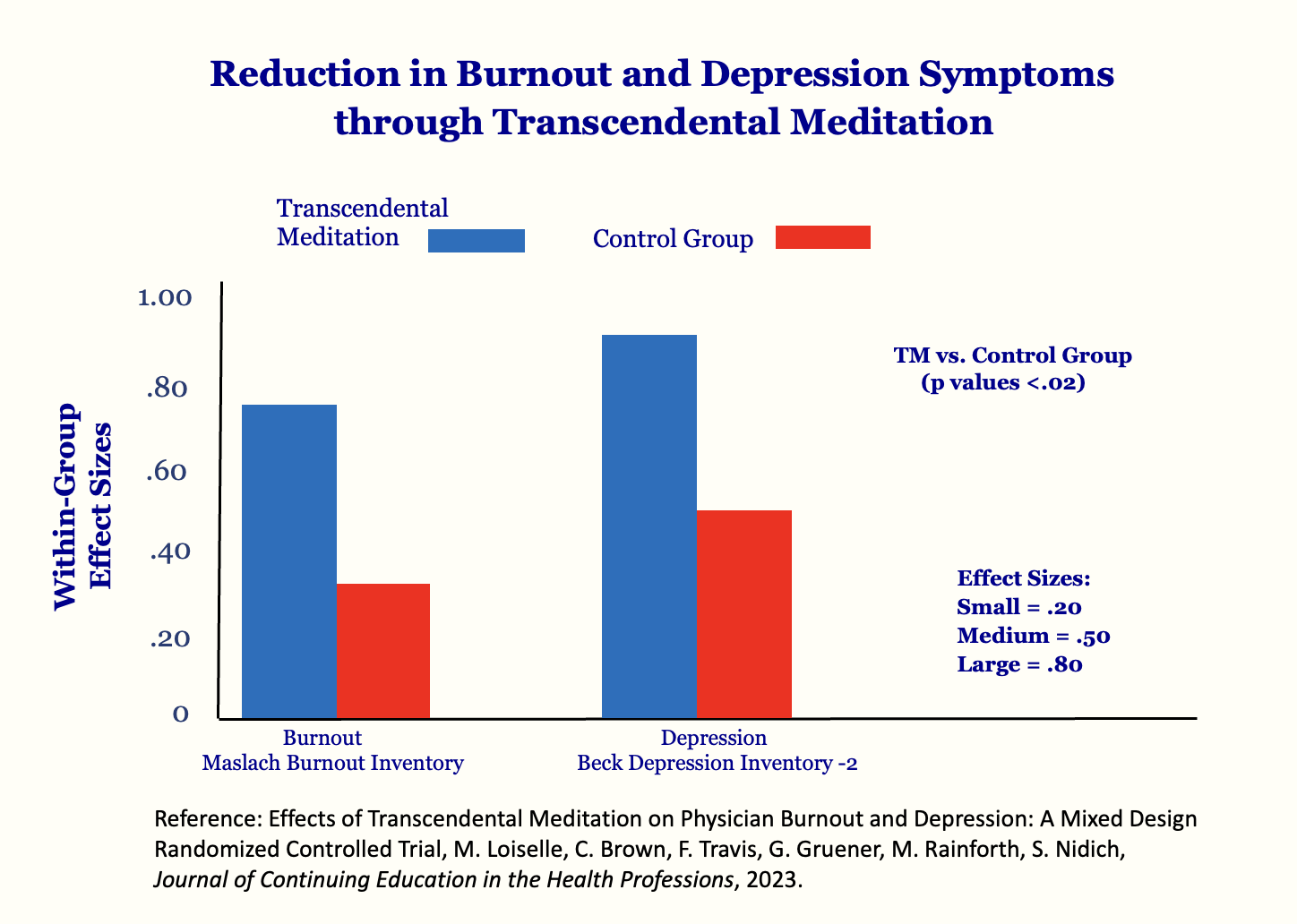
This figure shows the within-group effect sizes (mean change divided by pooled standard deviation) for the Transcendental Meditation group and the treatment-as-usual control group on burnout, as measured by the Maslach Burnout Inventory, and depression symptoms, as measured by the Beck Depression Inventory-2. Between-group statistics comparing TM to the control group yielded significant differences between groups on both burnout and depression symptoms (p values <.02). CREDIT: Maharishi International University Research Institute. (Image posted on EurekAlert!)

According to a randomized controlled study, published in Journal of Continuing Education in the Health Professions, physicians who practiced the Transcendental Meditation (TM) technique showed significant reductions in both burnout and depression symptoms. Research conducted at Stritch School of Medicine, Loyola University Chicago found that practice of Transcendental Meditation produced large effect sizes in decreasing burnout and depression symptoms in academic physicians; controls exhibited smaller effect sizes. The research was done pre-covid.

Marie Loiselle, PhD, lead author and senior researcher at the Center for Social-Emotional Health at Maharishi International University, stated: “Prior to treatment, the physicians were discouraged by the impact that burnout was having on their work and personal lives. To see both burnout and depression reduced significantly across 1- and 4-month posttests for the Transcendental Meditation group indicates a real possibility for alleviating these symptoms throughout the health profession.”

Sanford Nidich, EdD, co-author and director of the Center for Social-Emotional Health, explained that “these findings are consistent with research on Transcendental Meditation recently published in JAMA Network Open and the Journal of the American College of Emergency Physicians showing large within-group effect sizes due to TM on burnout and depression symptoms in healthcare provider groups. The findings are also consistent with research on other populations.”

Forty academic physicians were enrolled in the four-month study, comparing the TM technique to treatment-as-usual controls. TM is described as a simple, effortless technique, practiced for 20 minutes twice a day, sitting with eyes closed. TM allows ordinary thinking processes to become more quiescent, resulting in a unique state of restful alertness. Controls continued with their usual care throughout the duration of the study. The primary outcome was total burnout, using the Maslach Burnout Inventory (MBI). The Beck Depression Inventory (BDI-2) was also used to determine effectiveness of TM on depression symptoms over the same time-period.  

Repeated measures analysis of covariance was used to assess adjusted mean change scores. Significant improvements were found for the TM group compared to controls in total burnout (P=.020) including the MBI dimensions of emotional exhaustion (P=.042) and personal accomplishment (P=.018), and depression (P=.016).  

The following is a sample of responses from semi-structured interviews with TM participants about their experiences:

“I’m more relaxed about things overall, more accepting, calmer, not as revved up by things. I think that is the biggest change.”

“If I am feeling really bothered by the day, I’m able to get over it easier and shift over to focusing on home.”

According to Gregory Gruener, MD, study co-author and Vice Dean for Education, Stritch School of Medicine, Loyola University Chicago: “Longevity in a career that will last 40 to 50 years requires a physician to embrace the ‘long-view’.  While knowledge, skills and attitude are fundamental, Transcendental Meditation provides the clarity of mind and calmness that makes this journey as enjoyable and fulfilling as the destination.”

*

Funding support: This study was supported by grants from Loyola University and other private foundations and individual donors.

Article title: Effects of Transcendental Meditation on Academic Physician Burnout and Depression: A Mixed Methods Randomized Controlled Trial.

Authors: Loiselle, Marie PhD; Brown, Carla EdD; Travis, Frederick PhD; Gruener, Gregory MD, MBA, MHPE; Rainforth, Maxwell PhD; Nidich, Sanford EdD.

JOURNAL: Journal of Continuing Education in the Health Professions, 43(3):p 164-171, Summer 2023.

DOI: 10.1097/CEH.0000000000000472

*

News Coverage: This study was published Jan 26, 2023 and publicized with an embargoed press release via EurekAlert! It was reported in the medical press. Helio requested a copy of the study and published their review Feb 3, 2023. But you have to register to read it.

HealthDay, the world’s largest syndicator of health news, also requested a copy of the study and posted their report Feb 16, 2023, which can be read here: Transcendental Meditation Helps to Alleviate Burnout in Academic Physicians. Benefits seen for total burnout, emotional exhaustion, and depression at four months. It was picked up by many health and medical news sites, like Physician’s Weekly, which created another wave of publicity. Article Metrics published by Wolters Kluwer.

When lead author Marie Loiselle read this news she shared her wish that this will motivate more health professionals to start TM and more programs like the one Carla and Duncan Brown teach at Stritch School of Medicine to be implemented. 

The evidence continues to mount, which makes it a wise, health-conscious decision, and, since the pandemic, an almost necessary one. Some physicians have also been prescribing TM for their patients. It is a viable alternative and should be covered by health insurance.

It seems to be a matter of time, which reminds me of this famous quote attributed to German philosopher Arthur Schopenhauer: “All truth passes through three stages. First, it is ridiculed. Second, it is violently opposed. Third, it is accepted as being self-evident.”

See more Quotes from famous thinkers on the nature of truth, its rejection, and acceptance over time.

Update: The JCEHP Summer 2023 – Volume 43 – Issue 3 published an Editorial by Editor-in-Chief, Dr. Simon Kitto Ph.D.: Some Musings About Theorizing Context in a (Post)Pandemic: The Case of Physician Burnout. The opening paragraph draws attention to this original research article by Loiselle and colleagues!

Oct 17, 2023: An Apple Podcast (39 min) was posted with Marie Loiselle and two of her co-authors, Dr. Gruener and Carla Brown, Ph.D.: JCEHP Emerging Best Practices in CPD: Effects of Transcendental Meditation on Academic Physician Burnout and Depression.

Burnout is pervasive among physicians and has widespread implications for individuals and institutions. This research study examines, for the first time, the effects of the Transcendental Meditation (TM) technique on academic physician burnout and depression. Mixed methods findings suggest the TM technique is a viable and effective intervention to decrease burnout and depression for academic physicians.

This JCEHP study is also published on the PubMed, NIH, National Library of Medicine website.

2024 Update: A second Editorial, this one in the Spring 2024 – Volume 44 – Issue 2 of the Journal of Continuing Education in the Health Professions, announced The 2023 Paul Mazmanian JCEHP Award for Excellence in Research was given to Marie Loiselle and her research team for their original study! Their TM and physician burnout paper was selected from 231 original research papers submitted to JCEHP.

— Written and compiled (citing sources) by Ken Chawkin for The Uncarved Blog.

A 17-year landmark study @maharishiuni found group meditation decreased US national stress

December 25, 2022

World Journal of Social Science publishes study showing that group practice of the TM and TM-Sidhi techniques by √1% of a population decreased multiple stress indicators in the U.S.. Scientists call for a group to create world peace.

During a five-year demonstration period, a group of 1725 meditators practiced the Transcendental Meditation and TM-Sidhi techniques twice daily to create coherence in US collective consciousness. Murders, rapes, aggravated assaults, robberies, infant mortality, drug-related deaths, vehicle fatalities, and child deaths by injuries all decreased, by 6% to 21% compared to the seven previous years. When the size of the group decreased over the next five years, stress began to increase again on all indicators. (Summary for EurekAlert! Press Release.)

Every year during 2000 to 2006 there were tens of thousands of stress-related tragedies in the U.S.. Official statistics from the FBI and Centers for Disease Control indicate that there were 15,440 murders, 93,438 rapes, and 86,348 child and adolescent deaths from accidents each year to give a few examples. This current study, published in the World Journal of Social Science, is the longest and most comprehensive of 50 studies to demonstrate what has been named the Maharishi Effect, in honor of Transcendental Meditation (TM) and Maharishi International University (MIU) founder Maharishi Mahesh Yogi.

The results can be seen in the chart below. The blue line indicates that during the Baseline period of 2000 to 2006 the size of the TM and TM-Sidhi group located at Maharishi International University in Fairfield, Iowa increased to reach the √1% of the U.S. population (1725 people) and stayed there for five years during the Demonstration period from 2007 to 2011. All stress indicators immediately started decreasing. In the Post period when the size of the group size began to decline the rate of decrease in stress slowed and then it reversed and began to increase.

Indicators of Stress in the United States

The size of the MIU TM and TM-Sidhi Group is indicated by the blue line, the eight indices of stress in the United States are represented by the lines in different colors, and the US stress index—the mean of all eight variables—is indicated by the red line. The figure shows a phase transition to a global reduction of negativity in the U.S. when the critical threshold of the √1% of the U.S. population was practicing the TM and TM-Sidhi program together in a group. When the Group size dropped significantly, the trend was reversed.

Lead author Dr. David Orme-Johnson said: “What is unique about this study is that the results are so visually striking and on such a large scale. We see reduced stress on multiple indicators at the predicted time for the entire United States over a five-year period. And when the size of the group declined, national stress began increasing again. Clearly, the group was causing the effect.”

“What is unique about this study is that the results are so visually striking and on such a large scale. We see reduced stress on multiple indicators at the predicted time for the entire United States over a five-year period. And when the size of the group declined, national stress began increasing again. Clearly, the group was causing the effect.”

Lead author Dr. David Orme-Johnson

Co-author Dr. Kenneth Cavanaugh commented: “This study used state-of-the-art methods of time series regression analysis for eliminating potential alternative explanations due to intrinsic pre-existing trends and fluctuations in the data. We carefully studied potential alternative explanations in terms of changes in economic conditions, political leadership, population demographics, and policing strategies. None of these factors could account for the results.”

The fact that all variables started decreasing only after the square root of one percent of the U.S. was reached indicates a phase transition. Like when water does not turn to ice until 32◦ F is reached, national stress did not start decreasing until the U.S. √1% transition threshold was achieved.

The fact that all variables started decreasing only after the square root of one percent of the U.S. was reached indicates a phase transition. Like when water does not turn to ice until 32◦ F is reached, national stress did not start decreasing until the U.S. √1% transition threshold was achieved.

The chart shows that in 2013 when the size of the TM and TM-Sidhi group quickly dropped all stress indicators abruptly increased. Apparently, the rapid drop in national coherence shook the nation.

The scientists used regression analysis to estimate how many deaths and events were reduced by the meditator group. For example, image 2 shows the red dotted line representing the Baseline trend projected into the Demonstration and Post periods. During the Demonstration period drug-related deaths (the black line) fell to 14% below their Baseline trend and were another 15 % lower during the Post period, for a total of 79,941 fewer drug deaths. The chart also shows that in the absence of the coherence creating group drug deaths eventually returned to their Baseline level.

Drug-Induced Deaths in the U.S.

IMAGE 2: The red dotted line is the number of Drug Deaths forecasted from the Baseline trend. The black line is the actual number of Drug Deaths. Similar analyses were conducted for all variables and the results are displayed in the Table.

TABLE: RESULTS OF REGRESSION ANALYSESThe first column shows the number of events per year during the Baseline period (Intercept). The second column shows the change per year during the Baseline (Slope). The third, fourth, fifth, and sixth columns show the thousands of events averted during the Demonstration, during the Post periods, the total events averted, and percent change, respectively. The last column shows the estimated total events averted by each individual participant in the MIU TM and TM-Sidhi group.

The unified field level of natural law

The finding that the effect was holistic, causing all variables to move up and down together, supports the theory expressed by both Maharishi from the Vedic perspective and by quantum physicist and MIU president Dr. John Hagelin from quantum field theory that the TM and TM-Sidhi groups are creating coherence in collective consciousness from the unified field level of natural law. This is big. It is evidence of the existence of the unified field from a completely different approach than using particle accelerators and detecting gravity waves.

This discovery of the unified field is more than just an intellectual knowledge. It is arguably the most immediately highly practical technological discovery in the history of science. The invention of the wheel mobilized humanity. The printing press, radio, the telephone, the internet, and satellites increased our ability to communicate with each other across vast distances and time. The discovery of DNA opened our minds to the subtle mechanics of natural law underlying the evolution and growth of all life forms. These are among the greatest scientific discoveries of all time. But what discovery can reduce human suffering as comprehensively as group meditation?

Relationship between individual and collective consciousness

The paper reviews the many concepts of collective consciousness as they have occurred throughout history in the sciences and humanities. None have practical applications as Maharishi’s does and none have been so empirically verified.

The paper discusses Maharishi’s theory, which holds that every individual automatically contributes to collective consciousness and reciprocally, collective consciousness influences every individual. This is universally true whatever the form of government—democracy, republic, monarchy, communism, or dictatorship.

It is essential for every individual to use evidence-based technologies to reduce their own stress and at the same time, the responsibility of every government to provide these technologies to everyone.

The paper summarizes the hundreds of studies showing that practice of TM increases coherence in the individual, as indicated by such measures as increased brain coherence, decreased anxiety, depression, and anger, increased creativity, increased IQ and emotional and social intelligence, and decreased PTSD symptoms, prison recidivism, drug and alcohol addictions, and sickness rates in all categories of disease. More coherent individuals form a more coherent society.

The Howard and Alice Settle Foundation

A grant for 75 million dollars from the Howard and Alice Settle Foundation provided stipends for participants to be in the group and provided funding to bring several hundred visiting TM-Sidhi experts from India to further augment the MIU group. Dr. Orme-Johnson commented: “This is a lot of money, but the savings from the 10% reduction in crimes would save over 200 billion dollars, not to mention all the other savings from reducing other sources of stress in the country.”

Scientists call for a group to create world peace

The paper concludes with a call to create a permanent √1% group for the whole world, 8,000 participants practicing the TM and TM-Sidhi program together in one place. And as an engineering safety factor, a √1% group on every continent is needed. The world is so interconnected, no one is safe until everyone is safe, all living in harmony. This is easily within reach of any government or the world’s wealthiest citizens. The person who does it will be remembered as the greatest leader in history.

IMAGE 3: GROUP MEDITATION AT MAHARISHI INTERNATIONAL UNIVERSITY. Since 1979 twice daily group meditations have been held at MIU in Fairfield, Iowa for the purpose of creating coherence in the U.S. and world collective consciousness.

. . . . .

JOURNAL: World Journal of Social Science. ARTICLE TITLE: Field-Effects of Consciousness: A Seventeen-Year Study of the Effects of Group Practice of the Transcendental Meditation and TM-Sidhi Programs on Reducing National Stress in the United States. PUBLISHED: Dec 14, 2022. DOI:10.5430/wjss.v9n2p1 METHOD OF RESEARCH: Data/statistical analysis. SUBJECT OF RESEARCH: People. ADDITIONAL INFORMATION: The published article contains 5 Tables and 10 Figures (Graphs).

News coverage

Besides the regular science news coverage so far, one mainstream article stands out—an excellent report by Brooke Kato in the New York Post: Group meditation curbs stress, whether you do it or not: study.

Thrive Global invited Dr. Orme-Johnson to submit an article on his study. They published it Wed Jan 25, 2023: A Seventeen-Year Landmark Study Finds that Group Meditation Decreases U.S. National Stress.

It was later reproduced in other news sites around the world including OpEdNews: Evidence-Based Technique to End War.

— Written and compiled (citing sources) by Ken Chawkin for The Uncarved Blog.

Steven Spielberg tells Martin Scorsese that he learned TM 3 years ago, and how he got David Lynch to be in his new film, The Fabelmans

December 15, 2022

Martin Scorsese recently interviewed Steven Spielberg following an NYC screening of The Fabelmans at the Directors Guild of America Theater.

Photo by Waldemar Dalenogare

Deadline posted this article about it: Steven Spielberg Tells Martin Scorsese Why A Very Private Director Made ‘The Fabelmans’ & How Laura Dern Convinced David Lynch To Play John Ford.

In it, Spielberg mentions how he and his wife had learned TM, Transcendental Meditation, 3 years ago through the David Lynch Foundation. He also revealed how the idea came up to ask David Lynch to play the role of John Ford in the film, how he pulled it off, and how David Lynch prepared for his cameo role. Apparently, David was unrecognizable as he took on the persona of the late, great filmmaker.

Entertainment writer Tomris Laffly was at the Q&A and posted several video clips of that conversation on Twitter, for which we are grateful.

And here is a part of that movie clip they talked about, especially the cigar-lighting scene, which Amanda Dugan just tweeted of David Lynch as John Ford in The Fabelmans. She later sent me the full YouTube clip of David Lynch as John Ford, which I’ve embedded here.

David Lynch playing John Ford being directed by Steven Spielberg in a semi-autobiographical film about his life.

Later added: On Jan 5, 2023, Jimmy Kimmel asked Laura Dern to share the story of how Steven Spielberg asked her to get David Lynch to play the role of John Ford in his film. She was the catalyst in bringing both of these master film directors together to “pay homage” to the master filmmaker they both admired. It’s from 4:36-6:40 and is cued up below.

These articles are worth reading: ScreenRant: David Lynch’s Cameo In Spielberg’s The Fabelmans Explained, Vulture: The Fabelmans’ Brilliant David Lynch Cameo Is All About Perspective, and The Film Stage: Watch Steven Spielberg Talk to Martin Scorsese About How David Lynch Became John Ford.

At the bottom of The Film Stage article, they embed a video from 11 years ago — Spielberg/Grazer/Howard – “John Ford” — of Spielberg recounting in detail the real-life story, when he was 15, of meeting John Ford, which, decades later, would became the ending for The Fabelmans.

In this later video by The Back Focus: David Lynch’s Strange & Surprising Acting Career, Brandon Hardesty quotes Spielberg at 21:23 saying: “I got to know David when he played John Ford in The Fabelmans. Here was one of my heroes — David Lynch — playing one of my heroes. It was surreal and seemed like a scene out of one of David’s own movies.”

Interestingly, Bob Roth @meditationbob had taught TM to both the Scorseses and the Spielbergs. CEO of the David Lynch Foundation, Bob is one of the most sought-after TM teachers around. He has taught thousands of people from all walks of life, including many of today’s top celebrities, like Lady Gaga and Oprah, Ellen, Katy Perry, Sheryl Crowe, Hugh Jackman, Liv Tyler, among others.

— Written and compiled (citing sources) by Ken Chawkin for The Uncarved Blog.

Improvement in U.S. homicide trends linked to group practice of the Transcendental Meditation and TM-Sidhi programs, new study shows

October 4, 2022

This summer, co-author David W. Orme-Johnson sent out an introduction to the latest Maharishi Effect research study. The previous TM study published on this M.E. research was the fourth in a series at the time. That post also listed the previous three studies: Follow-up study suggests large advanced TM groups reduced murder rates in large US cities. This latest and fifth large-scale study looks at the total national homicide rates before, during, and after the experimental period. This is a new development, which further confirms the efficacy of this approach. What follows is Dr. Orme-Johnson’s synopsis.

The study found that during the years when the size of the coherence creating group at MIU practicing the Transcendental Meditation and TM Sidhi techniques reached the predicted national threshold of the square root of 1% of the US population (1725 people) that the rate of national homicides fell dramatically and that when the size of the group decreased once again to below threshold, that homicides turned around and started increasing again.

As there were no known alternative explanations for this phenomenon, because it was predicted in advance, and because it replicates dozens of previous studies, this study provides a powerful new layer of evidence that the group practice of this technology creates coherence in an underlying field of collective consciousness in which we all live and are connected.

Co-author Kenneth Cavanaugh offered some points about the paper.

Sections 1 and 2 of the paper contain a very readable and full discussion of Maharishi’s knowledge of collective consciousness. The final section (Section 6, Discussion) of the paper is also a very readable and nontechnical discussion of possible alternative explanations for the findings and the search for an explanation of the Maharishi Effect from the point of view of modern science.

The article was published in an open access journal with an Asian focus with the hope that its publication will help to increase support in India, Thailand, Nepal and other countries in that region for creation and expansion of large peace-creating groups there, as well as globally. So anyone can download a copy (or read it online) without charge and circulate it freely to others. The URL for this paper is https://doi.org/10.5430/sass.v8n1p1.

New Study Shows Improvement in U.S. Homicide Trends Linked to Group Practice of the Transcendental Meditation® and TM-Sidhi® Programs

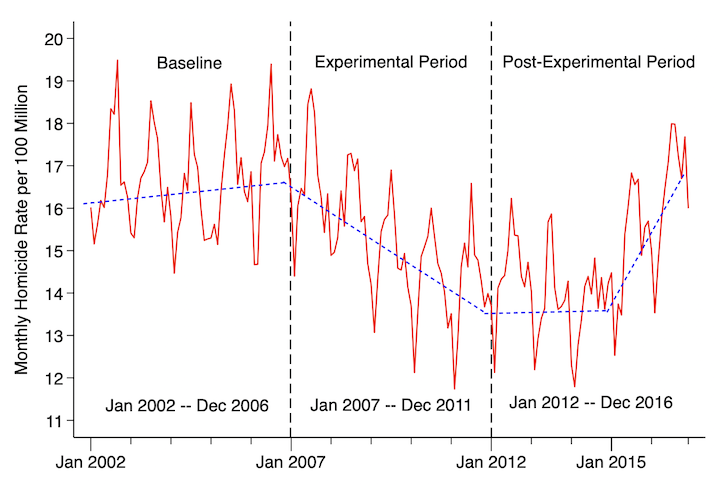
A newly published, peer-reviewed study of a 15-year social experiment reports a highly significant 19.3% reduction in U.S. monthly homicide trend 2007-2011 when the average size of a large U.S. group practicing the Transcendental Meditation and TM-Sidhi programs exceeded a theoretically predicted critical threshold. This improved trend was significantly reversed during 2012-2016 after the size of the group declined substantially below the predicted size required to create a measurable reduction in national trends of violent crime: the square root of 1% of the U.S. population (1,725 participants).

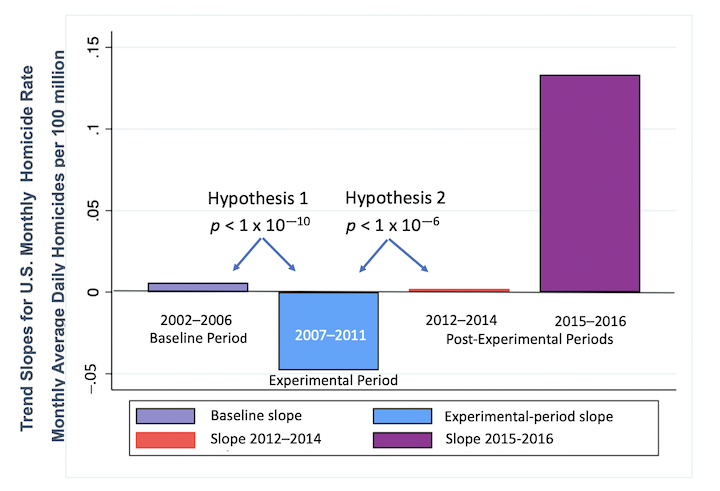
When the average size of the group at Maharishi International University (MIU) in Fairfield, Iowa USA was above the predicted threshold during the 2007-2011 “experimental period,” an estimated 10,594 homicide fatalities were averted as a result of the decline in homicide trend relative to the baseline trend for 2002-2006. The probability that the reduced homicide trend could be attributed to chance variation was reported to be less than 1 in 10 billion (p < 1 x 10⁻¹⁰).

As predicted, this declining trend in homicide rates was then significantly reversed in the “post-experimental” period 2012–2016 when, due to reduced funding, the size of the MIU group fell below the critical threshold. During the first post-experimental subperiod 2012-2014, the steeply declining homicide trend leveled out, shifting to a flat trend. (See Figure 1 and Figure 2 below.) The probability that this predicted increase in trend (relative to the experimental-period) could be explained by chance was less than 1 part in a million (p < 1 x 10⁻⁶ ).

During the second post-experimental subperiod 2015-2016, homicide rates soared when the group size declined more steeply. The probability of observing this increase in trend relative to the experimental period trend was less than 1 in 100 billion billion (p < 1 x 10–20).

The authors conclude that the theoretically predicted decline and subsequent increase in homicide trend could not be plausibly explained by other factors such as changes in police staffing, policing strategies, incarceration rates, the proportion of U.S. youth age 18-25, seasonal factors including temperature, or economic factors such as unemployment rates and rates of inflation; nor were the results attributable to pre-existing trends or violation of statistical assumptions for the time series regression analysis.

The study was authored by MIU research professors Kenneth L. Cavanaugh, Michael C. Dillbeck, and David W. Orme-Johnson. The article entitled “Evaluation of a Field Theory of Consciousness and Social Change: Group Practice of Transcendental Meditation and Homicide Trends” was published in the July 2022 issue (Vol. 8(1), pp. 1-32) of the international journal Studies in Asian Social Science. A free PDF of the article can be viewed or downloaded at the journal website. The URL for the paper is https://doi.org/10.5430/sass.v8n1p1.

Dr. Cavanaugh remarked: “There are now 32 research articles published in independent, peer-reviewed scientific journals or in proceedings of scientific conferences that validate the effectiveness of this consciousness-based approach to reducing the stress and tensions in national consciousness that fuel the growth of violence, crime, and conflict in society. This evidence-based, cost-effective approach offers an urgently needed solution for reducing the upsurge of social violence and conflict afflicting the U.S. and many other countries globally.”

Figure 1. Monthly U.S. homicide rate per 100 million people (mean daily rate per month) 2002-2016 with seasonally adjusted, fitted trend segments from time series regression analysis.

Figure 2. Monthly rates of change for the U.S. homicide rate (trend slopes) for the four trend segments of the segmented-trend regression model: baseline period, experimental period, and two post-experimental subperiods. The p-values indicate a statistically significant decrease in slope from baseline trend to experimental-period trend (supporting Hypothesis 1) and significant increase in slope from experimental period to the slope for post-experimental trends 2012-2014 and 2015-2016 (supporting Hypothesis 2). The p-value for the difference between the experimental trend slope and that for the 2015-2016 trend is p < 1 x 10–20 (not shown in Figure 2).

# # #

For further references, see Examples of Maharishi Effect Research.

Related: New book suggests how governments can use meditation to help defeat the virus of violence

Bob Roth @meditationbob explains why and how #TranscendentalMeditation @TMmeditation is different from other types of meditation

June 11, 2022

Over the past two years I’ve been joining the daily morning and evening group meditations on Zoom facilitated by Bob Roth, a longtime Transcendental Meditation (TM) teacher, CEO of the David Lynch Foundation (DLF), and author. Before each group meditation, Bob likes to share interesting scientific information about how the body works, or something in nature, and ends the call with an inspirational poem, quotation, or word.

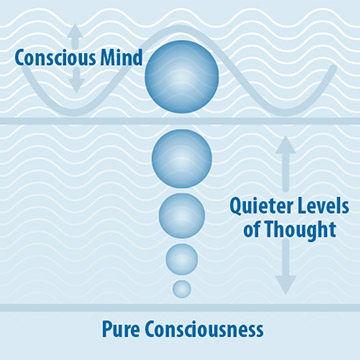
Bob also answers questions that have been sent in. One that comes up often is how is TM different from other types of meditation, in particular mindfulness. Bob’s answer was so clear, I wanted to share it with you. It was transcribed and approved for posting. I found two relevant images in an article on TM Basics in Enjoy TM News that will help highlight Bob’s explanation. He also addresses the notion of the active “monkey mind” and how it can be calmed without effort, a key point.

Bob Roth: I want to address a pretty basic question that many of you know the answer to, but many of you don’t. And since this is a community experience (these group meditations), I want to be sure that everybody feels comfortable and is up to speed. And one of the questions that frequently comes up, even among people who practice TM, is, “How is this different from other types of meditation, or mindfulness meditation?” Because we hear that term: mindfulness meditation.

And I like to use a very simple analogy; that you have a cross section of an ocean. (You ever hear me use that analogy in the past?) And you have choppy waves on the surface. And that can be analogous to the thinking mind. And people who are familiar with different types of meditation often talk about the nature of the mind being like a monkey mind. It bounces all over the place and, just in search of, just bouncing, bouncing, bouncing. It’s an active mind.

And if you want to control the mind, if you want to have a calm mind, then you have to stop the monkey mind from bouncing all over the place. And so, many types of either mindfulness meditation or other types of meditation involve some type of control of the mind.

So, in that cross-section of the ocean, it would be attempting to stop the waves on the surface of the ocean. That if you want to have a calm ocean, what disrupts a calm ocean? Waves. So, if you could stop the waves, then you’d have a calm ocean.

By analogy, if you want to have a calm mind, what disrupts a calm mind? Thoughts. So, if you want to have a calm mind, stop thoughts. You’ll have a calm mind.

That approach to meditation is called a cognitive approach. Cognitive means attending to your thoughts, your moods, your feelings, your actions. So, in that type of meditation, there’s some degree of control of the mind.

In Transcendental Meditation, we know there’s no control of the mind.

In Transcendental Meditation, we know there’s no control of the mind. We appreciate that the surface of the ocean may be turbulent, but we also recognize that there’s a vertical dimension to the ocean, and that there’s a depth to the ocean. And the depth to the deeper levels of the ocean? More silence.

In the same way, we appreciate that the mind is an active mind. All of the thoughts that we have during the day—we’re busy people. And we’re upset about things, and we’re happy about things, and we’re depressed about things, and we’re anxious about things, and we’re in love, and then we’re hurt.

All this stuff that’s going on are like waves on the surface, thoughts on the surface of the mind. And we call that the “gotta-gotta-gotta” mind.

Transcendental Meditation recognizes that there’s a vertical dimension to the mind. Just as there’s a vertical dimension to the ocean, there’s a vertical dimension to the mind. And the deeper levels of the mind are increasingly quiet, more settled.

Just as there’s a vertical dimension to the ocean, there’s a vertical dimension to the mind. And the deeper levels of the mind are increasingly quiet, more settled.

We know that when we want to talk to a dear friend about something important to us, we don’t say, Let’s go to a noisy sports bar. We say, Let’s go someplace quiet. Because when it’s quiet, we can think more clearly. We feel more settled within ourselves.

So, deeper levels of the mind—quieter. In Transcendental Meditation, we don’t try to stop thoughts on their surface. We effortlessly access what’s called (go in the direction of what’s called) the source of thought, from where thoughts arise deep within the mind of everyone—from where thoughts arise.

And that level of the mind is naturally quiet, like the ocean depth is naturally quiet. It’s there. That’s the hypothesis. You don’t have to believe in that. That’s the hypothesis. Deep within every human being is a level where the mind is already quiet. All we do in Transcendental Meditation is set up the conditions for our mind to effortlessly access that.

Deep within every human being is a level where the mind is already quiet. All we do in Transcendental Meditation is set up the conditions for our mind to effortlessly access that.

We don’t try to stop thoughts. It’s a waste of time. It’s impossible. It doesn’t accomplish what we hope to accomplish. And what do we hope to accomplish? Just set up the conditions for the mind to settle down within. And why will the mind settle down within? Because your mind doesn’t wander aimlessly. The mind is in search of something more satisfying. When it goes out through the senses, we look for something—something more beautiful, something more delicious, something more fragrant, something more pleasurable.

When we close our eyes, wait a half a minute, and then begin to think the mantra in an effortless way, then the mind is drawn inward to these quieter levels. And as that happens, our body gains deep rest.

And then as we get deep rest, the body throws off stress, and that increases the activity in the body. And then we come up a little bit. And then we settle back down. And we come up and we settle back down. This is Transcendental Meditation.

So, it’s that vertical dimension—accessing a level of the mind that is already quiet. So, no control in this. Concentration and control, just is trying to manipulate the surface. And that is just difficult and uncomfortable and not Transcendental Meditation.

Easy, comfortable, let the attention turn within, and we settle down, we come up. And that is TM—transcendence. Going beyond ordinary human limitations.

More on that in times to come, but let’s do our meditation now.

* * *

This infographic on the TM website compares forms of meditation techniques and their impact on the brain by looking at amount of mental effort required, images of different EEG signatures, types of brainwave activity, and their descriptions identified by the Mayo Clinic.

In this related article, Parade Magazine asked Bob Roth to explain Transcendental Meditation and what makes it so special.

NEW: Nigel Barlow, host of the Change Begins Within podcast in the UK, spoke with Bob Roth on The Work of The David Lynch Foundation. It was a lively informative discussion. Available on platforms, like Spotify, I listened in their SoundCloud album with other related Talking TM tracks.

See this dynamic talk by Nigel Barlow about TM at Biohacking Congress.

See this video on the David Lynch Foundation: Change Begins Within.

You can follow Bob Roth on Twitter @meditationbob and Instagram @meditationbob. To learn Transcendental Meditation, visit tm.org.

Related posts: Meditation Basics by Doug Rexford is the best short video intro to Transcendental Meditation | New study highlights unique state of “restful alertness” during Transcendental Meditation | Research validates the defining hallmark of Transcendental Meditation—effortlessness