Posts Tagged ‘Science’

Hard evidence grows for including meditation in government-sponsored health programs

October 17, 2012

Hard evidence grows for including meditation in government-sponsored health programs was released on EurekAlert! October 17, 2012.

More people still die from cardiovascular disease than any other illness. Dubbed the number one killer and the silent killer, modern medicine has been researching and incorporating complementary and alternative approaches to help treat and in some cases reverse and hopefully prevent this health problem at an earlier stage of the disease. One of those modalities is meditation.

A new research review paper on the effects of the stress-reducing Transcendental Meditation (TM) technique on the prevention and treatment of heart disease among youth and adults provides the hard evidence needed to include such evidence-based alternative approaches into private- and government-sponsored wellness programs aimed at preventing and treating cardiovascular disease.

The paper, “Prevention and Treatment of Cardiovascular Disease in Adolescents and Adults through the Transcendental Meditation® Program: A Research Review Update” is published in Current Hypertension Reviews, 2012, Vol. 8, No. 3.

• In teens, the TM technique has been found to reduce blood pressure, improve heart structure and improve school behavior. According to the paper, the technique has been shown to be a safe alternative. The NIH-sponsored clinical trials conducted with TM mentioned in this review did not observe any adverse effects from TM practice.

• In adults the technique reduced stress hormones and other physiological measures of stress and produced more rapid recovery from stress, decreased blood pressure and use of blood pressure medication, decreased heart pain in angina patients, cleared the arteries, reducing the risk of stroke, improved distance walked in patients with congestive heart failure, and decreased alcohol and tobacco use, anxiety, depression, and medical care usage and expenditures. The technique also decreased risk of death from heart disease, cancer, and all causes.

“These findings have important implications for inclusion of the Transcendental Meditation program in medical efforts to prevent and treat cardiovascular disease,” says Dr. Vernon Barnes, lead author and research scientist at Georgia Health Sciences University, in Augusta, Georgia.

“This review is potentially more important than individual research papers because it shows that TM has an integrated, holistic effect on all levels of cardiovascular disease,” says co-author, Dr. David Orme-Johnson.

Orme-Johnson says that no other meditation technique has been shown to produce this constellation of changes, especially when it comes to hard measures of cardiovascular disease.

Dr. Barnes said it was important to start preventing heart disease with adolescents before the disease sets. “Adding Transcendental Meditation at a young age could prevent future cardiovascular disease and save many lives, not to mention reduce the national medical bill by billions of dollars.”

This model shows how regular practice of the Transcendental Meditation Program may reduce chronic stress, which in turn reduces CVD risk factors and improves stress reactivity, thereby decreasing cardiovascular disease, and consequential morbidity and mortality.

Uniqueness of the Transcendental Meditation technique

The uniqueness of the outcomes of the TM technique may have something to do with the mechanics of the practice of the technique itself says Dr. Barnes. “Meditation practices are different from each other and therefore produce different results. And this is a very important consideration when evaluating the application of meditation as an alternative and complementary medical approach.”

A paper in Consciousness and Cognition discusses three categories to organize and better understand meditation. See Are all meditation techniques the same?

The two common categories are focused attention, concentrating on an object or an emotion, like compassion; and open monitoring, being mindful of one’s breath or thoughts, either contemplating the meaning of them, or just observing them.

Transcendental Meditation uses a different approach and comes under the third category of automatic self-transcending, meditations that transcend their own activity.

The TM technique does not employ any active form of concentration or contemplation, but allows the mind to effortlessly experience the thought process at more refined levels until thinking comes to a quiet settled state without any mental activity. The mind is awake inside and the body is resting deeply, a level of rest much deeper than deep sleep. It is this state of restful alertness that allows the body to make the necessary repairs to rebalance its normal functioning. This cumulative process resets the physiology and shows up as reduced symptoms of cardiovascular disease and improved health.

###

The EurekAlert! press release was publicized by other medical and science websites like Science Codex, PhysOrg, and PsychCentral: Meditation Technique Lowers Stress, Improves Cardiovascular Health. Medical News Today reported: Evidence Suggests That Meditation Should Be Included In Government-Sponsored Health Programs and embedded the video of Dr. Oz talking about TM. Holistic Future: Evidence shows Transcendental Meditation prevents heart disease

For a clear comprehensive understanding see Transcendental Meditation Visualized [Infographic].

Research breakthrough: High brain integration underlies winning performances

June 18, 2012

Research breakthrough: High brain integration underlies winning performances

World-class performers in management, sports and music often have uniquely high mind-brain development

Scientists trying to understand why some people excel—whether as world-class athletes, virtuoso musicians, or top CEOs—have discovered that these outstanding performers have unique brain characteristics that make them different from other people.

A study published in May in the journal Cognitive Processing found that 20 top-level managers scored higher on three measures—the Brain Integration Scale, Gibbs’s Socio-moral Reasoning questionnaire, and an inventory of peak experiences—compared to 20 low-level managers that served as matched controls. This is the fourth study in which researchers have been able to correlate the brain’s activity with top performance and peak experiences, having previously studied world-class athletes and professional classical musicians.

“What we have found,” says Fred Travis, director of the Center for Brain, Consciousness, and Cognition at Maharishi University of Management in Fairfield, Iowa, “is an astonishing integration of brain functioning in high performers compared to average-performing controls. We are the first in the world to show that there is a brain measure of effective leadership.”

“Everyone wants excellence,” says Harald Harung of the Oslo and Akershus University College of Applied Sciences in Norway. “Yet, current understanding of high performance is fragmented. What we have done in our research, is to use quantitative and neurophysiological research methods on topics that so far have been dominated by psychology.”

Dr. Travis, Dr. Harung, and colleagues have carried out a total of four empirical studies comparing world-class performers to average performers. This recent study and two others have examined top performers in management, sports, and classical music. In addition, a number of years ago Dr. Harung and colleagues published a fourth study on a variety of professions, such as public administration, management, sports, arts and education.

Measured Brain Activity

The studies carried out by the researchers include measurements of the performers’ brains by using electroencephalography, EEG. Hospitals use this equipment and method to determine possible brain injuries after traffic accidents. EEG, however, can also be used to look at the extent of integration and development of several brain processes.

The researchers looked at three different measurements that all reflect how well the brain works as a whole: 1) Coherence, which shows how well the various parts of the brain cooperate, 2) Amount of alpha waves, which reflect restful alertness, and 3) How economically or effectively the brain works.

The three measurements are then put together in an expression of brain refinement, the Brain Integration Scale.

World-class performance has so far been mostly regarded from a psychological point of view, especially speaking of management. Researchers often explain management skills as a result of special personal or psychological characteristics that some have, and others don’t.

“Our research in brain activity and brain integration is done from more of a natural science angle. By such means, we hope we are closer to an effective and comprehensive understanding of why some succeed better than others,” says Harung.

In all the groups of top performers, measurements were checked by using control groups. The controls were average performers, such as low-level managers or amateur musicians. The data gave one surprising result: Among the musicians, both the professionals and the amateurs turned out to have a high level of brain integration. In the two other studies, this measurement showed major differences between the persons with top-level performance and the control groups.

“We believe that for musicians, the explanation might be that classical music in itself contributes to such integration, regardless of your performance level,” says Dr. Harung.

Peak Experience

The researchers found it’s not just that their brains function differently; the world-class performers also had particular subjective experiences that were associated with their top performances.

Called peak experiences, these experiences are characterized by happiness, inner calm, maximum wakefulness, effortlessness and ease of functioning, absence of fear, transcendence of ordinary time and space, and a sense of perfection and even invincibility.

The first study was done on world-class athletes selected by the National Olympic Training Center in Norway and the Norwegian School of Sport Sciences. Besides screening athletes’ brains using EEG, each athlete was interviewed about their experiences while performing at their very best. The result was a wide range of peak experiences.

Former cross-country skier Thomas Alsgaard, who won 11 gold medals in Olympic Games and World Championships, said:

“The senses are so open that you have the ability to receive signals that are almost scary: In a way it is a ‘high.’ I receive an unbelievable amount of information. Much, much more—10-20 times more information—than what I manage to take in if I sit down and concentrate and try to perceive things. But I am so relaxed. And the more relaxed I am, the more information I register.”

Another athlete who participated in the research is the Norwegian handball keeper, Heidi Tjugum, who was part of the Norwegian national team that won one World Championship, one European Championship, two European Cups and a number of silver and bronze medals. She says:

“Sometimes I have felt that I am an observer—I just watch what happens. This is a good feeling. It is a very beautiful feeling; it is not that I feel I don’t have control. But it goes by itself—in reality I do not have to initiate anything at all. Extremely here and now—nothing else matters.”

These statements are similar to those the researchers gathered from other top-class performers, both among the musicians and the business leaders. As seen, they found a significant difference amongst the top performers and controls on several quantitative measures.

“Therefore, there must be some common inner attributes and processes that make top performers able to deliver at top level, regardless of profession or activity,” says Travis. “We found this common inner dimension to be what we called higher mind-brain development.”

Higher mind-brain development includes that various aspects and parts of the brain work together in an integrated way. Among world-class performers this integration is especially well developed.

Presenting a New Theory

The researchers have developed a new theory, a Unified Theory of Performance, which suggests that higher levels of mind-brain development form a platform for higher performance, regardless of profession or activity.

“It seems like these mind-brain variables represent a fundamental potential for being good, really good, in the particular activity one has decided to carry out,” says Harung.

For all three recent studies the researchers also found that top-level performers outscored the control groups in a test of moral development. Higher moral development implies an expanded awareness where one is able to satisfy the interests of other people and not just their own needs. Harung finds it remarkable that high levels of performance, in a wide spectrum of activities, are connected to high moral standards.

“This should give an extra push to act morally, in addition to a better self-image, fewer sleepless nights and a good reputation,” Dr. Harung says. “The key to top-level performance, therefore, seems to be that we make more use of our inherent capabilities.”

Implications of the Research

The discovery that the brains of world-class performers have similar characteristics raises some important questions, such as: 1) Is there a way one can develop one’s brain to have more of these characteristics and thereby perform at a higher level? And 2) Can measuring a person’s brain predict the potential for someone to be a world-class performer?

These and other researchers have actively explored whether meditation techniques, for example, can help to actively cultivate one’s brain. Research by Dr. Travis and others has found that Transcendental Meditation practitioners do have greater EEG coherence, greater presence of alpha waves, and, in some advanced practitioners, a very efficiently functioning brain. A coherent brain is a high-performing brain.

In addition, researchers have been exploring possible applications to predict performance ability in general and leadership ability in particular. For example, if a corporation has preliminarily selected five candidates for its CEO position, the above measures could be administered to aid in the final decision. Or these measures can be used to assess the effectiveness of training or education in increasing an individual’s performance capacity.

###

Scientific Literature

1. Harung, H. S., Travis, F., (2012) Higher mind-brain development in successful leaders: testing a unified theory of performance. Cognitive Processing Vol 13, Number 2, 171-181, DOI: 10.1007/s10339-011-0432-x

2. Harung, H. S. (2012). Illustrations of Peak Experiences during Optimal Performance in World-class Performers: Integration Eastern and Western Insights. Journal of Human Values, 18(1), 33-52, doi:10.1177/097168581101800104

3. Travis, F., Harung, H. S., & Lagrosen, Y. (2011). Moral Development, Executive Functioning, Peak Experiences and Brain Patterns in Professional and Amateur Classical Musicians: Interpreted in Light of a Unified Theory of Performance. Consciousness and Cognition, 20(4), 1256-1264

4. Harung, H.S., Travis, F., Pensgaard, A. M., Boes, R., Cook-Greuter, S., Daley, K. (2011). Higher psycho-physiological refinement in world-class Norwegian athletes: brain measures of performance capacity. Scandinavian Journal of Medicine & Science in Sports, Vol 21, Issue 1, pages 32, February 2011, doi: 10.1111/j.1600-0838.2009.01007.x

5. Harung, H. S., Heaton, D. P., Graff, W. W., & Alexander, C. N. (1996). Peak performance and higher states of consciousness: A study of world-class performers. Journal of Managerial Psychology, Vol. 11, No. 4, pp. 3-23

Related Articles

New study sheds light on “peak experiences” in world-class performers | New research looks at brain integration in top athletes and in long-time meditators | ‘Brilliant minds’—New Research on the Brain State of Virtuoso Musicians and How it Relates to TM | ScienceDaily: Musicians’ Brains Highly Developed | Freakonomics: Do Musicians Have Better Brains?

Source: EurekAlert!

Latest Study

Does Practice Make Perfect Or Are Some People More Creative Than Others? Study finds brain integration correlates with greater creativity in product-development engineers. The study was discussed on TMHome: Brain integration, the key to creativity, citing Medical News Today’s report on the study. Science writer Fiona Macrae had some questions for researchers Fred Travis and Yvonne Lagrosen before she completed her article for The Daily Mail: Forget ‘practice makes perfect’ – meditation is the key to success, study claims.

South Asian Heart Center uses Transcendental Meditation to prevent and manage heart disease

May 12, 2012

South Asians are becoming painfully aware of the high incidence of heart attacks, often fatal, frequently among seemingly healthy, trim, and physically active close family & friends.

The South Asian Heart Center (SAHC) at El Camino Hospital in Mountain View, California has developed a four-pronged approach to prevent and successfully manage heart disease among men and women of South Asian descent living and working in America. Here is an introduction to their work presented by Executive Director Ashish Mathur, and SAHC Medical Director Cesar Molina, MD, FACC: South Asian Heart Center Helps South Asians Fight Heart Disease.

In this fourth of a four-part series on Therapeutic Lifestyle Changes Dr. Molina focuses on the importance of deep rest and its effect on heart-health and diabetes. He specifically covers the importance of meditation (or restful alertness) on longevity and health, and the science behind the effective technique of Transcendental Meditation (TM), which produces a “hypo-metabolic state of restful alertness.” Learn the evidence on the profound impact of this unique form of meditation on a whole class of chronic ailments. This is a very clear and comprehensive presentation!

South Asian Heart Center Webinar: TLC – Restful Sleep & Restful Alertness April 25, 2012, published on Apr 26, 2012 by sahcsathi.

At 26:26 of Part 4, Dr. César Molina begins talking about resting while awake with Transcendental Meditation and how it impacts our health, especially for South Asians and their propensity toward heart disease. One of the therapeutic modalities from the South Asian Heart Center is Transcendental Meditation as a stress-reduction technique. Dr. Molina reviews his talk starting at 56:18. He summarizes the lifestyle methodology to prevent heart disease and enhance longevity at the South Asian Heart Center: nutrition, physical activity, the importance of restful sleep, and the importance and benefit for stress reduction through Transcendental Meditation decreasing cardiovascular risk factors, decreasing hospital expenditures and admissions, and enhancing longevity.

Dr. César Molina presents Wednesday Lunch-hour Webinar Series TLC: Therapeutic Lifestyle Changes. Here are the 4 topics where you can download the video and a PDF of the main points and graphs for each talk. The recommendations can be applied to all Americans regardless of ethnicity or geographical location.

1. TLC: Therapeutic Lifestyle Changes Overview: May 2, noon
2. TLC: Exercise as Medicine: May 9, noon
3. TLC: The Dinner vs. the Diner: May 30, noon
4. TLC: Restful Sleep and Restful Alertness: June 20, noon

For more information: www.southasianheartcenter.org and www.tm.org.

New Video: Dr. Tony Nader speaks about the Ramayana in Human Physiology

May 1, 2012

Dr. Tony Nader speaks about the Ramayana in Human Physiology

This new video beautifully encapsulates Dr. Tony Nader’s paradigm-changing discovery. He shared these profound details with an audience during one of the first New Paradigm Tour events. He explained how, under the guidance and blessings of Maharishi Mahesh Yogi, he discovered that the sounds of the Veda and Vedic Literature, and their architectural design, are actually structured in the human physiology. He described it as “a tremendous enlightening discovery.”

After that work was done and published in his first book, Human Physiology – Expression of Veda and Vedic Literature, with further direction from Maharishi, Dr. Nader went on to find their dynamic interactions displayed in the Ramayana, revealed as the growth and evolution of the human physiology towards enlightenment. The result was the recently published as Ramayan in Human Physiology. See the 12-page book preview: http://www.mumpress.com/ramayan. Now available as an ebook on iTunes.

As a scientist, Dr. Nader said the Ramayana was a scientific treatise on the human physiology, “a precise scientific description of how our body works, how our body evolves” towards enlightenment. Dr. Nader shows events that take place in the story of the Ramayana and what they mean in terms of the growing and evolving human physiology. “Now we know we truly are wholeness.”

This video was published today, May 1, 2012, on the Tony Nader M.D. YouTube channel. You’ll also notice other videos listed there of Dr. Nader answering questions on this topic. But this clip was taken from an actual presentation in the early part of the tour, which began in California. More videos from the tour will be added as time allows.

See photos in A report halfway into the New Paradigm Tour: Veda, Consciousness, the Ramayana and the Self.

See the general press release with links to some of the news coverage added at the bottom of Veda, Consciousness, the Ramayana, and the Self — A New Paradigm Tour Will Visit Ten Cities.

Details of the tour can be found at: www.NewParadigmTour.org. Check out the Facebook page: http://www.facebook.com/VedaConsciousness. And more videos: http://www.youtube.com/user/DrTonyNader/videos.

Some relevant quotes by famous scientists on changing paradigms

All truths are easy to understand once they are discovered; the point is to discover them. — Galileo Galilei (1564–1642)

All truth passes through three stages. First, it is ridiculed. Second, it is violently opposed. Third, it is accepted as being self-evident. — Arthur Schopenhauer (1788-1860)

A scientific truth does not triumph by convincing its opponents and making them see the light, but rather because its opponents eventually die and a new generation grows up that is familiar with it. — Max Planck (1858-1947)

Also see how one poet describes a remarkably similar understanding: What Turkish Sufi poet Yunus Emre realized — everything was found within his cosmic body and Yunus Emre says Wisdom comes from Knowing Oneself — a Singularity that contains the Whole.

A lecture by Dr. Tony Nader, International Head of the Transcendental Meditation Organization, was recorded in Silicon Valley at the Indian Cultural Center, April 10, 2014, later posted Oct 4, 2019: Unfolding the Mysteries of Veda: How Ancient Knowledge Influences Your Life.

Here is the same talk, but with the formal introductions and final credits posted 3 1/2 years earlier, April 5, 2016, by the Silicon Valley TM Center. Actual title: VEDA Discovering the Structural Relationship Between Consciousness, Natural Law, Physiology, and the Universe.

David Lynch in Reykjavik, Iceland

March 5, 2010

David Lynch Answers Grapevine Questions On TM

He also thinks Icelanders are, in fact, very hip.

11.5.2009
Words by Haukur S. Magnússon

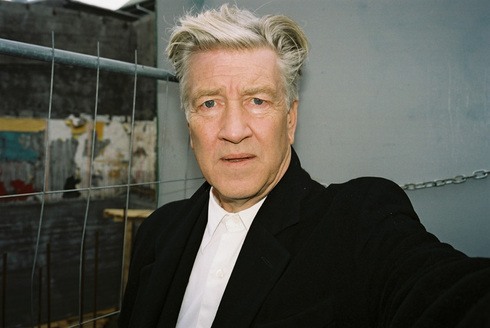
As you probably know by now, Grapevine cover-star (and awesome director) David Lynch ventured to Iceland this month to preach the gospel of Transcendental Meditation and announce a nationwide project to bring “enlightenment, prosperity and peace to the people of Iceland.” We were of course intrigued by all this, and set up an interview with the man who’s self-portrait graces the cover of our latest issue. However, his answers didn’t make it back to us in time to run it in the print-edition of Grapevine, so we just did a little article about our experiences at his lecture (as well as a side-bar explaining TM) but they’re here now, ripe for your reading.

Grapevine: Can you explain shortly what Transcendental Meditation means to you personally?

Personally, Transcendental Meditation is a way to bring great bliss from within.

Does the practice affect all areas of your life – or does it inhabit its own special corner? Is it, for instance, reflected in your art in some way (for instance thematically or in the process of creation)?

Transcending, they say, is a holistic experience so it does affect all areas of life in the most positive way. With brain research, they see on the EEG machine a most wondrous phenomenon. When a person truly transcends (i.e., experiences the deepest level of life – the ocean of pure totality of consciousness within) the entire brain is engaged.

Transcending is the only experience in life that engages the full brain – total brain coherence it’s called. For me, it serves the work in the following ways: I have found that i have much more happiness in the doing. I have found that ideas flow more freely. I have found intuition (the #1 tool of the artist) growing more and more and i feel the heavy weight of negativity (anxieties, nervousness, worries, fatigue, depressions, angers, fears) lifting and therefore much more freedom in life and work.

Are there times where you are more involved in the practice, where you lean on it more heavily?

I have meditated twice a day for 36 years.

How did your brief visit to Iceland come about? Is this something that has been in the works for a while, or was it a spontaneous idea? Have you made such visits to other nations or regions over the years?

The visit to Iceland came about seemingly spontaneously. My Icelandic friend, Joni Sighvatsson [producer Sigurjón Sighvatsson], and I were talking on the telephone a month before my visit. We were both speaking of Iceland’s bankruptcy and thought Iceland could really use Transcendental Meditation and a peace creating group to bring peace, security, affluence and prosperity.

A whole bunch of things came together and it was really great to feel the receptivity and the growing determination of many to get these programs going in Iceland. Iceland is the 20th country i have visited talking about meditation and peace.

If I understand you correctly, you are presenting TM as a failsafe way to bring ones life to harmony. Does TM, then, offer “complete freedom from the world’s strife and confusion” or is it rather a “useful tool” for maintaining a well-balanced life?

Enlightenment does bring complete freedom from the world’s strife and confusion. But balance is the thing. Balance doesn’t mean a compromise. I think true balance brings totality – the full potential of the human being. Full potential of the human being is called enlightenment. Enlightenment answers all questions, ends all suffering and all negativity. Maharishi calls supreme enlightenment having 200% of life – 100% of all that which is unmanifest and 100% of all manifestation – totality, unity.

At your Háskólabíó event, as well as in press releases sent out prior to it, the word “science” got thrown around a lot. For instance, you emphasized that the project was “not an experiment, but rather a scientific demonstration of 50 years of research verifying the benefits of the Transcendental Meditation program for the individual and entire society.”

Furthermore, the TM program’s official web-site enshrouds itself very much in an “air of science,” if you will, taking on the appearance of a major pharmaceutical company rather than a foundation that’s presenting the ancient, spiritual act of inward meditation with possible religious connotations.

Appearances aside, i think many of our readers are interested in knowing whether you consider TM to be:

A) A plain, scientific method (something purely physical

B) An exercise program for the mind)

C) A religion

D) A form of spiritualism without any religious affiliations.

This is a very interesting and good question you have asked. For me, i started Transcendental Meditation for this thing called enlightenment and this thing called bliss. And i saw it as a spiritual path. We live in what they call a “scientific age” and many people think meditation is some kind of mysticism, some kind of Eastern religion, or some kind of path that requires renunciation or giving up of worldly pleasures.

Maharishi’s Transcendental Meditation is for what they call the “householder.” that means men and women in activity. Nothing needs to be given up when practicing Transcendental Meditation. One just adds 20 minutes of meditation in the morning and evening and that does everything.

Maharishi wanted Transcendental Meditation to be researched from a scientific point of view and that’s why there have been the 600 or 700 research studies over the years. Many people find a comfort knowing that TM and its benefits have been objectively verified by science.

It is such an interesting time because quantum physics for instance has now discovered and verified the existence of the unified field at the base of all matter and mind – at the base of anything that is a thing. This unified field is the same field that one experiences when transcending. Quantum physicists says that everything that is a thing has emerged from this field of unity in a process they call “spontaneous sequential symmetry breaking.” ancient Vedic science – the science of consciousness – has always known about this unified field. And Vedic science knows precisely the numerous steps consciousness goes through from the unmanifest level of unity to all levels of manifestation. It is so great to see that with each step forward modern science takes, it verifies the ancient Vedic science.

The unified field is for quantum physics – and Vedic science – the home of all the laws of nature. These laws hold everything and we’re coming to a point where the spiritual aspects of life can be written in a physicist’s equation.

Transcendental Meditation is not a religion, it’s a mental technique that opens the door for any human being to the unified field – the deepest level of life. It is an ancient form of meditation and a real gift because it gives “effortless transcending” because the mantra Maharishi gives turns the awareness 180 degrees within. And once pointed within, one naturally and effortlessly dives deeper because each deeper level of mind and intellect has more happiness. The human mind always wants to go to fields of greater happiness, so it effortlessly dives, and at the border of intellect, effortlessly transcends and experiences the ocean of totality of consciousness, infinite happiness, bliss, unified filed, transcendent, home of all the laws of nature, constitution of the universe, etc, etc.

It is the experiencing of the unified field that does everything for the human being. Intellectual knowledge is great, but it will never bring total fulfillment. It is this profound experience of unity – of bliss – of pure consciousness that is missing from our lives. Once a person gets this experience on a daily basis – reestablishes his or her connection with this oneness, then things really begin to change for the better. Every time we experience this deepest level of life, we infuse some of it and we begin to rapidly unfold our full potential

This ocean of consciousness within has qualities; it is an ocean of infinite intelligence, creativity, happiness, love, energy, peace. All these qualities begin to expand. The side effect of the expansion of consciousness is negativity begins to recede. Things like tension, anxieties, stress, sorrow, depression, hate, anger and fear begin to lift away. This brings freedom, and those all-positive qualities expanding bring great benefits to all aspects of life. So it is a scientific and spiritual path. People from all religions practice Transcendental Meditation as well as agnostics and atheists.

Experience this field of unity and watch things get better.

Is there a system of ethics connected to the practice of TM?

No.

Aside from the above, are you yourself a man of religion? If so, does TM in any way affect your religious practices, or are the two completely separate?

Religious people who practice TM say that because understanding grows, they understand their religion more. And because appreciation for all things grow, they appreciate their religion more.

What about the Maharishi Mahesh Yogi? How closely did you follow his teachings, especially those unconnected to TM? I am referring, for instance, to the Maharishi Vedic sciences, in terms of their approach to health, architecture, agriculture and music.

Maharishi, among other amazing contributions revived the ancient Vedic knowledge and put all the Vedic texts back together into a systematic science of consciousness. Veda means pertaining to total knowledge. It is a huge science – so beautiful – telling us so many things for a life to flow with mother nature. But again if Maharishi had only brought Transcendental Meditation, that effortless technique that allows us to experience pure consciousness, that would have been amazing in and of itself. Get that experience and all the rest will follow.

Did you consider any of the cult allegations that were widespread in the seventies and eighties?

Of course I experienced the discomfort of this false accusation. I always wondered why people called TM a cult. I never felt I belonged to some group. I took this technique as a personal thing. I never wanted to be in any club or group. I wanted to go my own way, make my own decisions.

Expanding consciousness actually glorifies differences. All diversity is appreciated fully in the light of total unity. Meditators do not all become the same, on the contrary they each become more and more themselves. However i have found a common link between meditators – I like being with them as they all reflect a great deal of happiness.

These days, all of these misconceptions about TM are disappearing and only a few strange voices rail against this meditation for reasons unknown to me. So many varied human beings have benefited from this technique that anyone with even an ounce of intelligence can see that it is the most positive of practices.

Finally, can you share your favorite memory of your brief visit? What stood out, if anything?

I was very impressed by the numerous paintings I saw in almost every building I entered. It seems that everyone in Iceland is an art collector and appreciates art. This was very impressive to me and the rapidly changing weather was astonishing also. I was also impressed by the camaraderie among Icelandic people – and their hipness.

Source: The Reykjavik Grapevine – Life