Posts Tagged ‘Poetry’

A poem in a movie inviting you to be who you are

January 2, 2015

I recently enjoyed watching Words and Pictures, a 2013 film about a male English teacher and a female art instructor who form a rivalry that ends up galvanizing students in a competition to decide the most effective way to communicate, using words or pictures. This battle between mind and heart, ideas and feelings, is also about self-discovery, expressing one’s creativity, and the blocks that get in the way. Cleverly written by Gerald Di Pego, a one-time English teacher, and faithfully directed by Fred Schepisi, it stars Clive Owen, Juliette Binoche, and Bruce Davison. Visit their website for more info: http://wordsandpicturesthemovie.com.

I especially liked the quotes about writing and art, the word vs. the image. A poem by Mary Oliver was supposed to be featured in the film. They never said which one but kept waiting for permission to use it. By the time the answer came in, no, it was too late, and they had to come up with a replacement. The pressure was on screenwriter Gerald Di Pego. Being a poet himself, and seeing how this was his screenplay, the muse inspired him, and he wrote this very vivid and appropriate poem, just in time. Juliette Binoche liked it, which came as a relief to him and the director. I found it online and wanted to share it with you. The poem plays a central role, but you’ll have to see the film to find out who wrote it and how it’s used.

WHO ARE YOU?

I am a small poem
On a page with room
For another.

Share with me
This white field,
Wide as an acre
Of snow, clear
But for these tiny
Markings like the
Steps of a bird.
Come. Now.

This is the trough
Of the wave, the
Seconds after
Lightning, thin
Slice of silence
As music ends,
The freeze before
The melting. Hurry.

Lie down beside me.
Make angels. Make devils.
Make who you are.

As you can see, the poem invites you to create and become who you are, from that gap, the transitional point of possibility, and to share in the experience with another. Here’s a poem I wrote after a special painting class that seems relevant: ArtWords—poem about a creative awakening.

Interestingly, the Special Features part of the DVD revealed that Juliette Binoche, an artist in her own right, offered to do all of the paintings herself, which thrilled both writer and director. Because her character is dealing with physical challenges due to her medical condition, she had to paint in different styles, from portraiture to more abstract. Binoche enjoyed the added challenge and it possibly influenced her own future work.

Here is the official Words and Pictures – International Trailer (2014) HD.

When it comes to romantic movies, here are some of my favorite films where love transcends time.

Canadian Connection: These shoes are made for walking

The featurette also confirmed for me where they had made the film. The story is set in a New England prep school, but was actually shot at St. George’s School, an independent boarding and day university-preparatory school for boys in Vancouver, British Columbia, Canada, a.k.a., Hollywood North.

I recognized the location, and it reminded me of a story I had heard on a local CBC radio talk show during my stay there. The guest was an English teacher who taught at St. George’s School. One of the topics being discussed was meeting famous people. Listeners called in to share their stories and the teacher related an unusual event that had recently happened to him.

He had gone shopping at a well-known store for comfortable walking shoes. He settled on a particular pair and the sales clerk told him it was a popular item. She said someone famous had been in that morning and purchased a similar pair. She left to find out the name of the celebrity, but got sidetracked with another customer, so he left.

He put on his new shoes and, as was his routine every day after lunch, he went for a walk in the woods next to the school property. While walking along the path, eyes downcast, he saw a pair of shoes just like his, coming his way. Looking up he saw someone he never would have expected to see, especially in the forest. He pointed at him in surprise trying to say his name, but it came out as gibberish. The person mimicked him sputtering his name. It was Robin Williams! I think he was in town at that time filming Jumanji.

They had a wonderful walk and talk together. Robin had asked him what he did for a living and where he worked, which was something he could identify with having played an English teacher at an elite boys prep school in Dead Poets Society. When they reached the edge of the forest, there was Robin’s stretch limousine parked on the street waiting for him. He invited the teacher into the car saying they would drop him off at the school.

Now this man was not the most popular teacher at the school. When they pulled up, he got out of the limo, and all heads turned to look at him. Then Robin lowered the darkly tinted window, stuck his head out, and thanked the teacher for a wonderful time. All the kids’ jaws dropped! And from that day on he was the coolest person at school. Thank you, Robin! God Bless you, wherever you are.

I later found this August 5, 2024 Vanity Fair article b: “He’s Absolutely Extraordinary”: Remembering Robin Williams On the 10-year anniversary of Robin Williams’s untimely passing, we asked more than 20 of his costars, collaborators, and friends—including Billy Crystal, Matt Damon, Ben Stiller, Al Pacino, Sally Field, Jeff Bridges, and Julianne Moore—for their favorite memories of this kind, playful, and uniquely intelligent artist.

— Written and compiled by Ken Chawkin for The Uncarved Blog.

Hafiz, via Ladinsky, reminds us when we love those in our care we are brought closer to God

December 21, 2014

Another small but profound poem by Hafiz is titled Riches Everywhere. Published in A Year With Hafiz: Daily Contemplations, and translated by Daniel Ladinsky, each poem is read for a specific day of the year. This poem, found on page 389, is dated for today, December 21.

Riches Everywhere

Don’t envy my talents, or seek them.
For few could bear the suffering it took
to mine the jewels I have brought to town.

There are divine riches everywhere. The
most natural way for most to find them
is by caring for those who are close to
you as if they were our Beloved.

This poem reminds us to not covet other people’s wealth, but to find riches everywhere, most naturally within our own hearts.  By loving those close to us as we would love God, our hearts come to know the divine within them, and ourselves, the only true and lasting riches. In loving, we come to be loved; we come to the Beloved.

Other beautiful poems by Hafiz selected for posting on The Uncarved Blog are: Hafiz’s poem, God Pours Light, awakens the soul and frees the mind from debating words about it | Winding up the year with inspiration from Hafiz | 3 beautiful and profound short poems by Hafiz about the nature of God within us | Hafiz via Ladinsky describes the spiritual transformation of loving deeply within himself | For Hafiz the role of an enlightened poet is to connect humanity with the joy of the divine | Hafiz said to leave something in the marketplace, and Jesse Winchester sure did before he left us.

Poetry helps us imagine what it’s like to be human. ~ Mark Strand (1934–2014)

December 5, 2014

Mark Strand, former U.S. poet laureate (1990-1991) and winner of the Pulitzer Prize for Poetry (1999), felt strongly that writing and reading poetry could make us better human beings. “Poetry helps us imagine what it’s like to be human,” he said in an Inscape interview last year.

Percy Bysshe Shelley had famously said, “Poets are the unacknowledged legislators of the world.” When Mark Strand was asked what he thought the function of poetry was in today’s society, he replied: “It’s not going to change the world, but I believe if every head of state and every government official spent an hour a day reading poetry we’d live in a much more humane and decent world. Poetry has a humanizing influence. Poetry delivers an inner life that is articulated to the reader.”

Indeed, especially if they were as transformed by poetry as Mark Strand, who wanted to feel himself “suddenly larger . . . in touch with—or at least close to—what I deem magical, astonishing. I want to experience a kind of wonderment.”

Last week, one of my poet friends, Roger Pelizzari, emailed me about the passing of Mark Strand, and included a favorite poem of his, My Name. Roger included a link to an earlier Paris Review interview: Mark Strand, The Art of Poetry No. 77, with his friend Wallace Shawn, from which I’ve included interesting excerpts.

I was surprised and sorry to hear the news of Strand’s passing and checked the Paris Review for an update. I found Memoriam Mark Strand, 1934–2014, under The Daily by Dan Piepenbring, and sent it to Roger.

Media from around the world published Obituaries reviewing the Canadian-born, American poet’s accomplished literary career. The LA Times described Mark Strand as “a revelatory poet who addressed love and death in his poems, but in radically lyrical, revelatory ways.”

This poem is filled with the wonderment he sought, and seems a fitting memorial, prophetically written in the poet’s own magical words.

My Name

Once when the lawn was a golden green
and the marbled moonlit trees rose like fresh memorials
in the scented air, and the whole countryside pulsed
with the chirr and murmur of insects, I lay in the grass,
feeling the great distances open above me, and wondered
what I would become and where I would find myself,
and though I barely existed, I felt for an instant
that the vast star-clustered sky was mine, and I heard
my name as if for the first time, heard it the way
one hears the wind or the rain, but faint and far off
as though it belonged not to me but to the silence
from which it had come and to which it would go.

(more…)

3 beautiful and profound short poems by Hafiz about the nature of God within us

October 23, 2014

Hafiz reveals the brilliant, compassionate nature of God within us

Here are 3 beautiful and profound short poems by Hafiz that reveal the hidden compassionate nature of God within us, and in a God-realized person. Published in “A Year With Hafiz: Daily Contemplations,” and translated by Daniel Ladinsky, each poem is for a specific day of the year.

Hidden

Even the shadow of God is brilliant, so brilliant,
so much so even God has trouble looking at
Himself as that . . . unless He is more disguised,
hidden in illusion, hidden as He can be, in us.

May 19, page 155

* * * * *

It Is My Nature

It is the nature of this world to share
its burden with you.

And it is my nature to remove it from
your back.

August 19, page 255

* * * * *

Once A Young Woman Said To Me

Once a young woman said to me, “Hafiz, what
is the sign of someone who knows God?”

I became very quiet, and looked deep into her
eyes, then replied,

“My dear, they have dropped the knife. Someone
who knows God has dropped the cruel knife

that most so often use upon their tender self
and others.”

January 31, page 33

Other beautiful poems by Hafiz are also posted here: Hafiz’s poem, God Pours Light, awakens the soul and frees the mind from debating words about it | Winding up the year with inspiration from Hafiz | Hafiz via Ladinsky describes the spiritual transformation of loving deeply within himself | For Hafiz the role of an enlightened poet is to connect humanity with the joy of the divine | Hafiz said to leave something in the marketplace, and Jesse Winchester sure did before he left us | Hafiz, via Ladinsky, reminds us when we love those in our care we are brought closer to God

Emily Dickinson succinctly describes the eternal nature of Love in this short but powerful poem

August 26, 2014

Love—is anterior to Life—
Posterior—to Death—
Initial of Creation, and
The Exponent of Breath—

This description of Love reminds me of the nature of the Self described in chapter two of the Gita: It is eternal. It was never born, nor will it ever die. It cannot be destroyed when the body is destroyed.

When it comes to mystical conception and creative inspiration, Love is expressed in a beautiful poem by New York poet laureate Marie Howe. Listen to her read Annunciation to Krista Tippett On Being.

For another Vedic perspective from America’s greatest poet, see Emily Dickinson’s Solitude, where she describes the self-referral process of the self integrating with the Self, finite infinity.

Read how Emily Dickinson wanted her poems to look on the page, described in Rebecca Mead’s Back of the Envelope in The New Yorker: Poesy Dept. | January 27, 2014 Issue. See Emily D.-envelope poems.

Here is another cosmic love poem by another one of America’s greatest poets: i carry your heart with me by e.e. cummings.

See A Blessing of Solitude by John O’Donohue, from Anam Cara: A Book of Celtic Wisdom, which profoundly complements Derek Walcott’s poem Love After Love.

Famous Poets and Poems lists 1779 of Emily Dickinson’s poems!

Charles Bukowski sang the life victorious, thanks to his having learned Transcendental Meditation

August 17, 2014

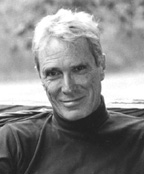
I first posted this wonderful poem by Charles Bukowski in the summer of 2014 and later found out that he had learned Transcendental Meditation towards the end of his life. So I’ve updated it in early 2021 with three different sources behind this story.

a song with no end

when Whitman wrote, “I sing the body electric”

I know what he
meant
I know what he
wanted:

to be completely alive every moment
in spite of the inevitable.

we can’t cheat death but we can make it
work so hard
that when it does take
us

it will have known a victory just as
perfect as
ours.

“a song with no end” by Charles Bukowski (1920-1994), from The Night Torn with Mad Footsteps. © Black Sparrow Press, 2001. (On Amazon)

he apparently loved meditation

Towards the end of a Dec 31, 2006 New York Times article, David Lynch’s Shockingly Peaceful Inner Life, Alex Williams writes: The filmmaker sees no contradiction between inner harmony and external edginess. “I heard Charles Bukowski started meditation late in his life,” Mr. Lynch said, referring to the poet laureate of Skid Row, who died in 1994. “He was an angry, angry guy, but he apparently loved meditation.”

meditation allowed him to be creative in his later months

In this 89.3 KPCC interview Bukowski’s wife said that he lost some ground after being diagnosed with leukemia at age 73. He got it back with transcendental meditation. “It allowed him to open up a space within himself to say these words about himself dying,” said Linda Bukowski. “These later poems, death poems, are so acute and so awake and aware and I think that had a lot to do with how meditation allowed him to be creative in his later months and write these poems, that I still cannot read.”

I checked with a friend who has taught TM to many celebrities and she replied: “I instructed Charles (or Hank as he liked to be called) and his wife, Linda, a few years before he passed away. He was a lovely man at that time of his life. I wonder if he was meditating when he wrote this beautiful piece.”

That’s probably how David Lynch would have known since they’re longtime TM friends. She later emailed to say that she had taught Bukowski around 1992. So based on this information and what Linda had said, chances are this poem could have been written during those final years of his life while he was meditating regularly.

a related post

Cartoon wisdom from Karl Stevens appears in this week’s print edition of The New Yorker. Time Out Boston wrote on the back of his book, Failure, “Karl Stevens may be the closet thing to a Charles Bukowski equivalent working in comic art. Except Stevens is way classier….” When Stevens was working on Failure, “I was struggling with alcoholism which I think was where the comparison lies. I stopped drinking a couple months before beginning to learn TM. Obviously the practice was crucial to helping me focus on living a cleaner life. ”Peace of mind and heart arrives when we accept what is.”

accepting what is

William Butler Yeats wrote about The Coming Of Wisdom With Time. It seems to have come to Bukowski toward the end of his life. See his full quote posted on NITCH’s Instagram. Only now did I realize who Karl Stevens was quoting!

“I have been alone but seldom lonely. I have satisfied my thirst at the well of my self and that wine was good, the best I ever had, and tonight sitting staring into the dark I now finally understand the dark and the light and everything in between. Peace of mind and heart arrives when we accept what is: having been born into this strange life we must accept the wasted gamble of our days and take some satisfaction in the pleasure of leaving it all behind. Cry not for me. Grieve not for me. Read what I’ve written then forget it all. Drink from the well of your self and begin again.”

— Written and compiled (citing sources) by Ken Chawkin for The Uncarved Blog.
Another “death poem” was found and posted: Charles Bukowski’s poem The Laughing Heart instructs us to find the light and improve our life. I added more content about his learning TM towards the end of his life.

Wendell Berry’s “No going back” is about the generosity of the evolving self through time

July 29, 2014

No Going Back
(Wendell Berry)

No, no, there is no going back.
Less and less you are
that possibility you were.
More and more you have become
those lives and deaths
that have belonged to you.
You have become a sort of grave
containing much that was
and is no more in time, beloved
then, now, and always.
And so you have become a sort of tree
standing over a grave.
Now more than ever you can be
generous toward each day
that comes, young, to disappear
forever, and yet remain
unaging in the mind.
Every day you have less reason
not to give yourself away.

(The Sabbath Poems, 1993, I)

Just added: Wendell Berry’s stepping over stones in a stream shows us how he writes a poem and takes a stand, which contains a link to a Bill Moyers PBS profile on the poet.

Here is a National Endowment For The Humanities interview with Wendell E. Berry, Awards & Honors: 2012 Jefferson Lecturer. These poems by Walcott, O’Donohue, Hafiz, and Oliver complement Berry’s theme: Love after Love, by Derek Walcott, A Blessing of Solitude by John O’Donohue, The Root of The Rose by Hafiz, translated by Daniel Ladinsky, and The Journey by Mary Oliver.

Just added another poem: The Peace of Wild Things by Wendell Berry, with a link to On Being of him reading this poem and 5 others.

For Hafiz the role of an enlightened poet is to connect humanity with the joy of the divine

July 16, 2014

A CRYSTAL RIM
by Hafiz

The
Earth
Lifts its glass to the sun
And light — light
Is poured.

A bird
Comes and sits on a crystal rim
And from my forest cave I
Hear singing.

So I run to the edge of existence
And join my soul in love.

I lift my heart to Beloved
And grace is poured.

An emerald bird rises from inside me
And now sits
Upon the Beloved’s
Glass.

I have left that dark cave forever.
My body has blended with His.

I lay my wing
As a bridge to you

So that you can join us
Singing.

(“The Gift” – versions of Hafiz by Daniel Ladinsky)

Canadian poet P.K. Page describes a phantom bird in This Heavy Craft.

A mysterious bird in this Wallace Stevens poem teaches us the wonder of just being our self.

Love after Love, by Derek Walcott, resonates deeply when you first acknowledge yourself.

Another poem by Hafiz via Ladinsky describes the spiritual transformation of loving deeply within himself.

See 3 beautiful and profound short poems by Hafiz about the nature of God within us.

Hafiz, via Ladinsky, reminds us when we love those in our care we are brought closer to God

Winding up the year with inspiration from Hafiz

Hafiz’s poem, God Pours Light, awakens the soul and frees the mind from debating words about it

Here is an enlightening article on Hafiz and Maharishi’s Science of Consciousness by Rebecca Busch.

Found this lovely YouTube channel by Enea B, which combines poetry with visuals and music.

A mysterious bird in this Wallace Stevens poem teaches us the wonder of just being our self

July 16, 2014

Of Mere Being

The palm at the end of the mind,
Beyond the last thought, rises
In the bronze distance.

A gold-feathered bird
Sings in the palm, without human meaning,
Without human feeling, a foreign song.

You know then that it is not the reason
That makes us happy or unhappy.
The bird sings. Its feathers shine.

The palm stands on the edge of space.
The wind moves slowly in the branches.
The bird’s fire-fangled feathers dangle down.

Wallace Stevens

The Palm at the End of the Mind: Selected Poems and a Play

William Stafford in his poem, Just Thinking, also appreciates the value “of just being there.”

Canadian poet P.K. Page describes a phantom bird in This Heavy Craft.

Hafiz said to leave something in the marketplace, and Jesse Winchester sure did before he left us.

April 23, 2014

Hafiz’s poem, translated by Daniel Ladinsky, of leaving something behind in the world to inspire others, is exemplified in the singer-songwriting musical skills of the late Jesse Winchester. Read Hafiz’s poem, Leave something in the marketplace, then listen and be moved when Jesse sings this love song, Sham-A-Ling-Dong-Ding.

Leave something in the marketplace

Sometimes it can happen to these cheeks
when a poem visits my mind for the first time
and begins to look around.

They can wonder why rain is falling on them,
and causing my nose to run too.

O boy, what a mess love makes of me. But
there is nothing else right now I would rather

be doing . . . than reaping something from a
field in another dimension

and leaving it in the marketplace for any who
might happen by.

Leave something in the marketplace for us
before you leave this world.

A Year With Hafiz: Daily Contemplations
Daniel Ladinsky, March 20, page 88.
See more profound poems by Hafiz posted on this blog.

Jesse Winchester

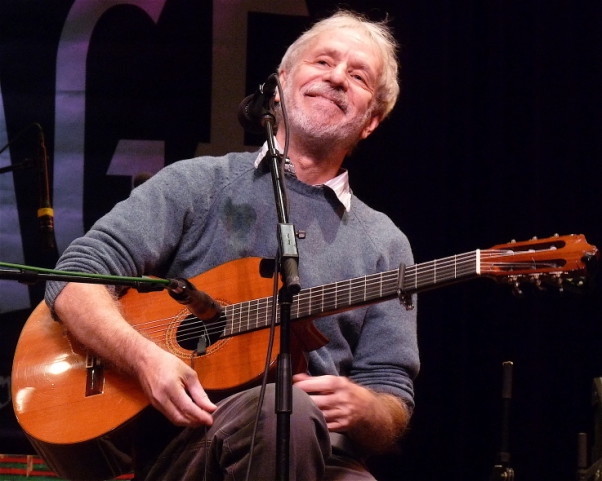
Singer-songwriter Jesse Winchester (May 17, 1944 – April 11, 2014) left many beautiful songs for us in the marketplace (IMDb). Jesse appeared on Week 2 of Elvis Costello’s TV show, Spectacle. Elvis Costello, Ron Sexsmith, Sheryl Crow, and Neko Case joined Jesse Winchester to perform “Payday“. Jesse also a sang about the sweet shyness of young love. Listen to the poetic melodic musings of Sham-A-Ling-Dong-Ding as it wets your cheeks and lifts your mouth into a wistful smile.

April 26, 2009: Music Fog recorded Jesse Winchester singing this tender song at the opulent “Mansion on O” in Washington. MusicFog.com’s Jessie Scott spoke with Jesse about his new album “Love Filling Station,” growing up in Memphis, and the songwriting process.

Meeting Jesse Winchester

I first met Jesse in Montreal at a friend’s place during the summer of ’67. He had been drafted to fight in the Vietnam War, which he did not support, and came to Canada instead. He stayed and made a name for himself as a fine singer-songwriter.

Robbie Robertson of The Band produced Jesse’s first album. But he couldn’t return to the states to tour until after all “draft dodgers” were pardoned by President Carter. I remember him singing The Brand New Tennesse Waltz and Yankee Lady, which ended up on his self-titled debut album. I also liked Say What (Talk Memphis), which became a hit. Mississippi You’re On My Mind (Learn to Love It) is another beautiful, vividly-written song.

Many top recording artists would go on to perform Jesse’s songs, and he became known as a first-rate songwriter. Even Bob Dylan was famously quoted as saying of Mr. Winchester: “You can’t talk about the best songwriters and not include him. If you know me well, you know I think Jesse IS the very best.” Lyle Lovett also spoke highly of him. In 2007, a special musical tribute was given to singer-songwriter Jesse Winchester, when he was honored with The ASCAP Foundation Life in Music Award.

You can’t talk about the best songwriters and not include him. If you know me well, you know I think Jesse IS the very best. — Bob Dylan

Listen to Jesse sing I Can’t Stand Up Alone a cappella with Bonnie Raitt and Emmylou Harris in his 1977 special. Falconer Pictures created a Jesse Winchester Tribute with photos of him throughout his career and added his song, Ghosts. You can hear more videos on YouTube.

Decades later, I went to one of Jesse’s concerts on his tour through Iowa. He was surprised to find me here. It was sweet to see him again, now free to play in the states and accept the recognition for his great talent.

Remembering Jesse Winchester

jesse-winchester-memphis1-602x481

Here is some news coverage of Jesse’s recent passing, reviewing his life and career, in The Commercial Appeal, USA Today, Rolling Stone, The New York Times, and C-Ville Weekly. From all his fans, and friends who knew him, I’m sure they would agree with Hafiz that Jesse Winchester did leave a lot of good music in the marketplace, and love in their hearts. You did well, Jesse. We thank you!

Jesse Winchester Radio Special: Listen to a special 2007 radio interview and music special with Jesse Winchester recorded by Donna Green-Townsend for WUFT-FM before Jesse’s scheduled performance at the Butterfly Festival in Gainesville, FL. In this program Jesse talked about his early years in Mississippi and Memphis, the inspiration for many of his songs and what he thinks about the music industry today. He also talks about the number of artists who have recorded many of his songs including The Everly Brothers, Waylon Jennings, Wynonna Judd, Bonnie Raitt, Emmylou Harris, Reba McEntire, and Elvis Costello to name a few. RIP Jesse.

Roots Music Canada uploaded a Jesse Winchester interview on April 13, 2010 with RMC’s editor-in-chief David Newland, from Hugh’s Room, Toronto, a venue Jesse launched about a decade ago, and one for which he has the highest regard.

Roots Music Canada produced a show on April 16, 2014: Remembering Jesse Winchester, him and other artists singing his songs. To see the song list click on Playlist: Folk Roots/Folk Branches – Remembering Jesse Winchester. Jesse Winchester sings a slower version of Sham-A-Ling-Dong-Ding on his album Love Filling Station (Appleseed) with a backup group. I prefer the solo performance.

September 2, 2014: Rolling Stone: Hear the Late Jesse Winchester’s Chilling Dissertation on Dying — Song Premiere. “Every Day I Get the Blues” appears on the final album by Winchester, who died April 11th. A Reasonable Amount of Trouble, is a gentle collection of playful songs about love, memory and gratitude that amounts to one of the most moving, triumphant albums of Winchester’s 45-year career.

In November 2014 Jesse Winchester was posthumously inducted into the Memphis Music Hall of Fame.  Jesse and rockabilly legend Carl Perkins were among nine inductees with Memphis roots in the Hall’s third induction class.

Previous inductees include: Elvis Presley, Jerry Lee Lewis, Johnny Cash, Otis Redding, B.B. King, Isaac Hayes, Al Green, Howlin’ Wolf, Sam Phillips, Bobby ‘Blue’ Bland, Albert King, Rufus Thomas, Willie Mitchell, Carla Thomas, Booker T & The MGs, The Staple Singers, and the ‘Father of The Blues’ W.C. Handy.

Visit Jesse’s wonderful comprehensive website www.jessewinchester.com for his Albums / Lyrics, Interviews / Articles / Liner Notes / Obituaries & Remembrances / Covers of Jesse Winchester Songs / Videos / Photos / and more.

To see other inspiring artists featured on The Uncarved Blog, scroll through the Archive of the ‘Music’ Category.

— Written and compiled (citing sources) by Ken Chawkin for The Uncarved Blog.