Posts Tagged ‘meditation’

50% reduction in PTSD symptoms within 4 weeks of Veterans practicing Transcendental Meditation

January 18, 2011

Reduction of PTSD Symptoms in Veterans with Transcendental Meditation

DavidLynchFoundation http://www.davidlynchfoundation.org/

Norman Rosenthal, M.D. (Clinical Professor of Psychiatry, Georgetown University Medical School): Over half a million of our veterans from Iraq and Afghanistan are suffering from Post Traumatic Stress Disorder. These are people who have been exposed to violence on the battlefield serving for our country. And, as one of my patients said, it can happen once in your life but a hundred times in your mind. The echos linger on.

Sarina Grosswald, Ed.D. (Cognitive Learning Specialist): With traumatic stress it’s really some enormous stress that’s more than the body can process, and it leaves a big impression on your brain. The estimates are that at least 30% of returning veterans are experiencing PTSD and really the estimates are that it’s probably much greater than that. I think that maybe as many as 50% who are experiencing these symptoms aren’t actually even seeking help.

Dr. Rosenthal: They get bombarded on a daily basis by memories and flashbacks and it’s a shocking statistic that 18 veterans every day commit suicide.

Dr. Grosswald: We’ve lost more to suicide than actually have been lost in combat. That’s the first time ever.

Dr. Rosenthal: One thing that we who are interested in Transcendental Meditation are seeking is could TM be one of the answers or one of the ways in which we can treat PTSD?

Dr. Grosswald: We put together a pilot study with returning veterans from the OEF-OIF war, which is the Iraq/Afghanistan war, and what we saw was for these young men there was, within 4 weeks, a 50% reduction in the PTSD symptoms. That’s pretty dramatic, I don’t think there’s anything that shows that level of response that quickly.

Dr. Rosenthal: Because of TM’s ability to settle down the nervous system, to quiet it down, to slow down the fight-or-flight response, I believe it is a very promising direction for us to explore. I think it’s definitely something we should be trying and testing and studying.

See AFP: Meditation soothes war veterans

THP: Keeping Your Prefrontal Cortex Online: Neuroplasticity, Stress and Meditation

August 12, 2010

Keeping Your Prefrontal Cortex Online: Neuroplasticity, Stress and Meditation

As we go through life, our brain is always changing and adapting, say neuroscientists. During the first 18-20 years of life the brain is developing circuits that will form the basis of decision-making for a lifetime. Brain researchers have found that unhealthy lifestyles can inhibit normal brain development in adolescents and lead to impaired judgment and destructive behavior that carries over into adulthood. Traumatic experiences, alcohol and drug abuse, growing up neglected in a broken home, living in fear of violence and crime, or even a bad diet can interfere with development of the frontal lobes, the brain’s executive system. This can cause behavioral problems. Brain researcher Dr. Fred Travis explains: “When a person’s frontal lobes don’t develop properly, he lives a primitive life. He doesn’t — and can’t — plan ahead. His world is simplistic, and he can only deal with what’s happening to him right now. Thinking becomes rigid: ‘You’re either with me or against me,’ or ‘Me and my gang are good, and everyone else is bad.'”

The good news: meditation improves brain function

Brain researchers have also found that the brain can be changed in a positive direction through healthy lifestyle choices. This ability of the brain to reorganize its network of neurons is called “neuroplasticity.” Studies recently published in Cognitive Processing show that brain development can be enhanced — not only during adolescence but at any age — through the practice of meditation, and that different meditation techniques have different effects on the brain. For example, during the Transcendental Meditation (“TM”) technique there is increased alpha coherence in the brain’s frontal areas. “Within a few months of practice of the TM technique,” says Travis, “we see high levels of integration of frontal brain connectivity. And interestingly, that integration does not disappear after meditation. Increasingly and over time, this orderly brain functioning is found in daily activity.”

When the different parts of the brain are better integrated they work together more harmoniously — our brain is healthier. Higher levels of brain integration are associated with higher moral reasoning, emotional stability and decreased anxiety, according to a 1981 study in the International Journal of Neuroscience. Research shows that world-class athletes have higher brain integration than controls. Brain integration is important because one’s environment and circumstances are constantly shifting, and you need a flexible, integrated brain to successfully evaluate where you are, where you want to be and the necessary steps to get there.

Keeping your prefrontal cortex “online”

The prefrontal cortex — said to be the brain’s executive center or “CEO” — plays a crucial role in higher judgment, discrimination and decision-making. When we are overly tired or under intense mental, emotional or physical stress, our brain tends to bypass its higher, more evolved rational executive circuits, defaulting to more primitive stimulus/response pathways. We respond to challenges without thinking, making impulsive, shortsighted decisions. When the brain’s CEO goes “offline,” strong emotions such as fear and anger can adversely color or distort our perception of the world. Interestingly, the brain’s crucial frontal area is where the highest levels of EEG coherence are typically recorded during TM practice, indicating improved communication between the prefrontal cortex and other parts of the brain.

When a person transcends during meditation (goes beyond the active levels of the mind), the experience is commonly reported as a state of deep silence and inner wakefulness, without particular qualities or attributes — just pure consciousness. According to research studies, such as the previously mentioned study in Cognitive Processing, it is this ‘transcendental’ experience that creates the more efficient, integrated brain functioning seen during TM practice. While focused attention and other mental processes activate local brain areas, the experience of transcending activates the whole brain, enabling different parts of the brain to function together better as a whole.

Helping kids grow healthier brains

Fortunately, transcending is easy — we’re hardwired for it. With proper instruction and right practice, anyone can do it, including students with ADHD. Experiencing the quiet, transcendental field of orderliness deep within the mind doesn’t mean conjuring up a new outlook on life or accepting new beliefs, nor does it require an attitude change. It’s a natural, universal experience that produces a healthy response in the brain.

With help from the David Lynch Foundation and other private benefactors, thousands of at-risk students are now learning meditation during structured, in-school programs around the world. Researchers monitoring the results are finding that meditation improves learning ability, memory, creativity and IQ. Findings such as these may be opening a new frontier of research — establishing an expanded, more enlightened view about what is possible for the human brain.

VIDEO of Dr. Fred Travis, Director, Center for Brain, Consciousness, and Cognition in Fairfield, Iowa: Brain Plasticity and Transcendental Meditation with Dr Fred Travis.


Read More: Meditation, Neuroplasticity, Transcendental Meditation, Living News

Also see: THP: How Meditation Techniques Compare

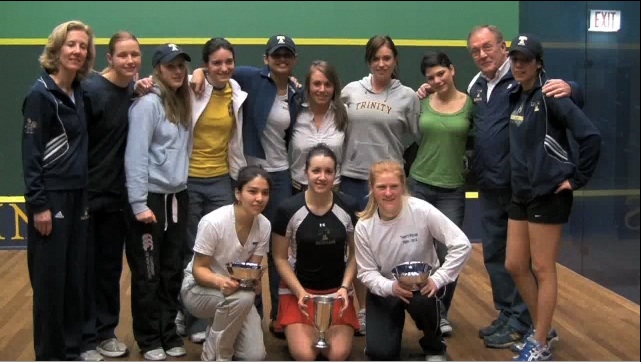
To become more competitive, Trinity College Women’s Squash Team tries out a new technique — the Transcendental Meditation Program

July 14, 2010

This video reports on the use of the TM Program by the 2009–2010 Women’s Squash team at Trinity College in Hartford, Connecticut.

The whole team including the coaches learned the TM technique. They finished the season as the #3 Women’s Squash team in the country.

Trinity College Psychology major Emily Lindon did her thesis on the Effects of Transcendental Meditation on Perceived Self-Efficacy of College Students. One of the groups she researched was the Women’s Squash Team. Emily found significant increases in self-efficacy among the pre- and post-tests.

The Trinity Women’s Squash Team was trained in the Transcendental Meditation technique through a grant from the David Lynch Foundation. TM is a technique for focus and stress reduction. It is not connected to any religion or belief system but rather it is a simple, effortless, natural meditative technique with scientifically proven effectiveness. The team placed third nationally for the 2009/2010 college squash season. For more information, contact Dr. Randy Lee at randolph.lee@trincoll.edu

Dr. Lee posted this 8 minute video of the winning Trinity College Women’s Squash team on You Tube. The  video was produced and directed by Lynn Kaplan. Peter Trivelas was the cameraman and editor. Executive producer was the David Lynch Foundation. It’s also posted on David Lynch Foundation Television http://dlf.tv/2010/trinity-squash.

Global Good News‘s Excellence In Action posted an article on this story: Peak Performance: Exploring a transcendental technique for success.

See a new article on this subject written by Linda Egenes: Transcendental Meditation and The Mind of an Athlete (December 17, 2014).

Radical Peace: People Refusing War, by William T. Hathaway

June 10, 2010

Radical Peace: People Refusing War

World peace depends on our collective consciousness. – William T. Hathaway

William T. Hathaway’s latest literary work, is a return to journalism. Radical Peace: People Refusing War, presents the first-person experiences of war resisters, deserters, and peace activists in the USA, Europe, Iraq, and Afghanistan. Just released by Trine Day, it’s a journey along diverse paths of nonviolence, the true stories of people working for peace in unconventional ways. The first, Chapter 1: The Real War Heroes, and last, Chapter 15: Conscious Peace, are both posted on OpEdNews.com.

William T. Hathaway is a political journalist and a former Special Forces soldier turned peace activist whose articles have appeared in more than 40 publications, including Humanist, the Los Angeles Times, Midstream Magazine, and Synthesis/Regeneration. He won a Fullbright grant to teach at universities in Germany, where he continues to reside. He is an adjunct professor of American studies at the University of Oldenburg. William and his wife also run a small TM center there.

Hathaway is the author of A World of Hurt (Rinehart Foundation Award), CD-Ring, and Summer Snow. He is currently working on WELLSPRINGS: A Fable of Consciousness, which focuses on applying Vedic knowledge to ecology. A selection of his writing is available at www.peacewriter.org.

William also spent 7 years, from 1987-1993, as an assistant professor in the Master’s in Professional Writing at MIU, now MUM. The last chapter of Radical Peace, Conscious Peace, discusses his TM practice, and the vision of possibilities it holds for world peace. You can click on the Chapter 15 link above or read it here:

I was sitting in full lotus, body wrapped in a blanket, mind rapt in deep stillness, breathing lightly, wisps of air curling into the infinite space behind my closed eyes. My mantra had gone beyond sound to become a pulse of light in an emptiness that contained everything.

An electric shock flashed down my spine and through my body. My head snapped back, limbs jerked, a cry burst from my throat. Every muscle in my body contracted — neck rigid, jaws clenched, forehead tight. Bolts of pain shot through me in all directions, then drew together in my chest. Heart attack! I thought. I managed to lie down, then noticed I wasn’t breathing — maybe I was already dead. I groaned and gulped a huge breath, which stirred a whirl of thoughts and images.

Vietnam again: Rotor wind from a hovering helicopter flails the water of a rice paddy while farmers run frantically for cover. Points of fire spark out from a bamboo grove to become dopplered whines past my ears. A plane dives on the grove to release a bomb which tumbles end over end and bursts into an orange globe of napalm. A man in my arms shakes in spasms as his chest gushes blood.

I held my head and tried to force the images out, but the montage of scenes flowed on, needing release. I could only lie there under a torrent of grief, regret, terror, and guilt. My chest felt like it was caving in under the pressure. I clung to my mantra like a lifeline to sanity. I was breathing in short, shallow gasps, but gradually my breath slowed and deepened, the feelings became less gripping, and I reoriented back into the here and now: my small room in Spain on a Transcendental Meditation teacher training course.

I lay on my narrow bed stunned by this flashback from four years ago when I’d been a Green Beret in Vietnam. I had thought I’d left all that behind, but here it was again.

I sat up and was able to do some yoga exercises but couldn’t meditate. Instead I took a walk on the beach. For the rest of that day and the next I was confused and irritable and could hardly meditate or sleep. But the following day I felt lightened and relieved, purged of a load of trauma, and my meditations were clear. My anxiety about the war was much less; the violence was in the past, not raging right now in my head.

Gradually I became aware of a delicate joy permeating not just me but also my surroundings. I knew somehow it had always been there, inhering deep in everything, but my stress had been blocking my perception of it. I felt closer to the other people on the course, connected by a shared consciousness. Then I started feeling closer to everything around me; birds and grass, even rocks and water were basically the same as me. Our surface separations were an illusion; essentially we were all one consciousness expressing itself in different forms. Rather than being just an isolated individual, I knew I was united with the universe, joined in a field of felicity. This perception faded after a few days, but it gave me a glimpse of what enlightenment must be like.

The whole experience was a dramatic example of what Maharishi Mahesh Yogi called “unstressing,” the nervous system’s purging itself of blockages caused by our past actions. Since my past actions had been extreme, the healing process was also extreme.

I had begun meditating in 1968, several months after returning from the war. I’d come back laden with fear and anger, but I had denied those emotions, burying them under an “I’m all right, Jack,” attitude. I was tough, I could take it, I was a survivor. Within certain parameters I could function well, but when my superficial control broke down, I would fall into self-destructive depressions. I finally had to admit I was carrying a huge burden of stress, and I knew I had to get rid of that before I could live at peace with myself or anyone else.

(more…)

Samadhi is the beginning, not the end of Yoga

May 24, 2010


JUNE 2010 Issue

Samadhi is the beginning, not the end of Yoga

By Neil Dickie

Yoga or union of the mind with divine intelligence, begins when the mind gains Transcendental Consciousness. The process of diving within is the way to become established in yoga. —Maharishi Mahesh Yogi

This article is for the many people who suspect they could take their yoga practice to a higher level by practicing meditation, but who delay starting, thinking meditation to be either too difficult or too advanced for them.

One reason many assume meditation to be difficult is a common misunderstanding of the eight-limbed or Ashtanga system of yoga laid out in the revered Yoga Sutras of Patanjali. In the text of the Yoga Sutras, the eight limbs of yoga are laid out in the following order: the five yamas or personal virtues, such as ahimsa or non-violence, and satya, truthfulness. Then the five niyamas or rules of life, including shaucha, purification, and swadhyaya, study. Then pranayama, the breathing practices; then asanas, the poses of yoga; then three stages of mental practice. And finally, comes the eighth limb, samadhi, the union of the busy thinking mind with its deepest most silent level, the unified field of consciousness. Think of an individual wave settling down and experiencing the unbounded ocean.

However, despite the fact that Ashtanga translates as eight LIMBS, and not eight STEPS or stages, many have thought Patanjali meant that his eight-fold approach should be practiced only in step-by-step, sequential order, starting with the personal virtues and observances, and that only advanced practitioners should attempt samadhi.

Maharishi Mahesh Yogi created a stir in the world yoga community some 40 years ago when he travelled the world teaching Transcendental Meditation, a simple, easily-learned technique to bring the direct experience of samadhi. Maharishi was teaching anyone interested, irrespective of their knowledge of the other limbs of yoga. As the popularity of TM spread, so did concern in the yoga community. In Germany, an upset delegation of yogis came to him and demanded an explanation. They knew that Maharishi had been for many years the closest disciple of the Shankaracharya of Jyotir Math, Swami Brahmananda Saraswati, a highly respected spiritual leader and the elected custodian of the Vedic tradition in Northern India. But in spite of this traditional background, Maharishi was now teaching meditation to the masses. What could be the reason, they asked?

Maharishi welcomed the delegation and began by establishing common ground with them—his respect for the authority of Patanjali. He then, however, explained his view that Patanjali had, due to the long lapse of time, become badly misinterpreted. The order of Patanjali’s famous eightfold yoga had, he said, become the reverse of what Patanjali intended. “The practice of Yoga was understood to start with yama, niyama (the secular virtues), and so on,” Maharishi said, “whereas in reality it should begin with samadhi. Samadhi cannot be gained by the practice of yama, niyama, and so on. Proficiency in the virtues can only be gained by repeated experience of samadhi.”

For example, Maharishi said, one can only truly progress in ahimsa or non-violence as one grows in the realization that there is a common unity of all things. This unified reality of life is directly experienced in samadhi. Similarly, he said, asteya or non-covetousness can only be realized when one feels fully contented, and the only way to be truly happy inside is to realize the field of bliss-consciousness—again only possible through repeated experience of samadhi.

But there’s a second, perhaps even more common reason for the widespread belief that meditation is difficult—as it is generally taught, it is. Patanjali defines yoga as “the complete settling of the mind” (Yoga Sutras, 1:2). Our experience of teaching meditation during the past 20 years is that most other types of meditation today involve concentration, effort, and control. As such, they effectively prevent the mind from completely settling down. Maharishi’s Transcendental Meditation, in contrast, involves no concentration, effort or trying of any kind, and allows the mind to quickly and easily dive within to its silent core.

But can an easy, effortless meditation be “real” meditation, leading to enlightenment? Yes. Some have misunderstood that the simplicity of Maharishi’s TM means that it is watered down, or “westernized.” But TM is actually the revival of meditation in its pure and original form. It is simple and easy not because it is watered down, but because it is natural, in full accord with the nature of mind and body. That is also why it is so efficient. Nature has tremendous efficiency. Activity in nature always follows the path of least action. In the same way, the TM practitioner effortlessly dives within the mind, gains samadhi, and enjoys, even outside of meditation, steadily increasing access to that field of pure intelligence and infinite joy.

See www.tm.org or www.doctorsontm.com for information on the many published scientific studies on the benefits for mind, body and behaviour resulting from this practice.

Neil Dickie is a certified Transcendental Meditation instructor who treasures his daily yoga asana practice (neil.c.dickie108@gmail.com). For more information, or to find out the dates of upcoming free introductory talks, call 613-565-2030. Email: Ottawa@maharishi.ca

Give TM a chance to prevent more wars

March 28, 2010

News from southeastern Connecticut | Click here for photos of Maharishi, and with The Beatles, in Bangor, Wales, August 24+26, 1967.


Article published Mar 28, 2010

All these ex-military dudes are saying is give TM a chance

By RAYMOND E. SEEBALD and DAVID R. LEFFLER

Wars start in the minds of men, and cycles of conflict ensue. So, too, can wars be prevented in the minds of men, but not always in the conventional way one might think. A new technology of defense has now emerged from a most unexpected quarter and has scientifically shown itself to have intriguing potential to prevent war and create peace.

Here’s the background: The underlying cause of war is accumulated social stress. Stress builds up. Differences arise. Groups take sides. Mediation fails to resolve the differences. Enemies form and arm.

Military organizations theoretically provide a deterrent to conflict, but when social division and enemies directly challenge the execution of national policy, military force can be activated and deployed to protect the nation. Armed conflict follows, with unpredictable outcomes. Even if conflict temporarily solves the problem for the winner, the underlying social stress is increased, fueling more violence and more terrorists.

No stress, no tension

In contrast, the absence of collective stress translates into the absence of tension between competing sides, thereby reducing the probability of hostilities.

Today, an opportunity exists to overcome this cycle of conflict by deploying a scientifically verified technology of defense that neutralizes social stress.

This technology operates on the most fundamental and powerful level of human consciousness, and is accessed and harnessed through a surprising and most unconventional channel-meditation.

In more than 50 studies published in scientific journals, Transcendental Meditation (TM) has been documented to powerfully reduce violence and criminal activity and even to calm open warfare.

Here’s how we believe it works: Just as radio or TV transmitters beam signals through an unseen electromagnetic field, groups of meditating people can generate a strong wave of coherence and positivity through an underlying field of collective consciousness. Stress and tension diminish. The larger the group, the greater the effect.

Specifically, the studies demonstrate that when the required threshold of meditators is crossed – approximately the square root of 1 percent of a given population – crime goes down, quality of life indices go up, and war and terrorism abate. Scientists have named this phenomenon the Maharishi Effect, after the founder of Transcendental Meditation, the late Maharishi Mahesh Yogi, who envisioned this possibility for creating global harmony.

In 1993, a two-month Maharishi Effect experiment was implemented in Washington, D.C. The findings published in Social Indicators Research showed that crime fell 24 percent when the peace-creating group reached its maximum size.

A decade before, during fighting in the Middle East, large assemblies of meditators repeatedly caused battlefield casualties to drop dramatically. A global-scale study published in the Journal of Offender Rehabilitation documented a 72 percent drop in international terrorism.

Our armed forces are responsible for defending the country. We suggest they consider adding an unconventional force – a consciousness corps, so to speak – to enhance their mission. Create a coherence-creating group of meditating soldiers exceeding the square root of 1 percent of the population of the United States. It would only take approximately 1,750 personnel.

Really not far-fetched

Admittedly, the idea of fighting terrorism with meditation sounds far-fetched. But the idea of an Internet would have seemed crazy, too, just a generation ago. Now, we communicate across oceans and access a universe of information simply by typing into some invisible field.

At one time, meditation was considered “mystical.” Now, doctors prescribe it and even the government funds research on the health effects of meditation. That’s because hundreds of studies show it effectively reduces individual stress and improves health. Why not put it to the test to improve global health?

As part of its responsibility to protect the nation, the U.S. military is obligated to thoroughly examine scientifically proven methods for preventing war and terrorism. All that is necessary is to provide the proper training for a group of military personnel or indeed, any large group within the country.

With all the conventional methods we utilize to protect life, liberty, and freedom, we should also be open to trying new, creative ideas, no matter how unconventional they seem.

Retired Coast Guard Capt. Raymond E. Seebald was a military aide to presidents Ronald W. Reagan and George H.W. Bush from 1986-1990. As captain of the Port in Chicago he developed post 9/11 security standards for U.S. ports. He graduated from the U.S. Coast Guard Academy in 1977. David R. Leffler is an Air Force veteran and executive director of the Center for Advanced Military Science (CAMS). He served eight years in the U.S. Air Force.

The authors served as associates of the Proteus Management Group at the Center for Strategic Leadership, U.S. Army War College.

Girls with ADHD more prone to depression, anxiety than boys; meditation helps

February 23, 2010

DAVID LYNCH FOUNDATION
Office of ADHD and Learning Differences
70 Broad Street, New York, NY 10004
Tel: (703) 823-6933 • sgrosswald@tm.org

Girls suffer from delayed ADHD diagnosis, more prone to depression than boys
Meditation helps alleviate stress, reduce symptoms

A growing number of experts say the number of children with ADHD is greater than estimated because girls are often under-diagnosed. There are also differences in symptoms between the genders. “Girls are more likely to have the attentional type of ADHD, which can lead to difficulty in paying attention and focusing, rather than to disruptive behavior, which is more indicative of the behavior of boys with ADHD,” says Sarina J. Grosswald, Ed.D., a George Washington University-trained cognitive learning specialist who heads up the David Lynch Foundation’s education and health outreach to girls. “As a result, the ADHD diagnosis may be missed in as many as 50% to 75% of girls. On average, girls are diagnosed 5 years later than boys. As girls move into adolescence, those with ADHD are more likely to have clinical depression or anxiety disorders.”

A study published in the American Journal of Psychiatry’s online edition of January 15, 2010 followed 187 6- to 18-year-old girls with and without ADHD over an 11-year period. Reporting on this long-term study, Reuters Health pointed out that girls with the disorder were more likely than their peers to develop depression, anxiety, eating disorders, or other psychiatric problems by the time they reached adulthood.

Concerns about ADHD medications

While in some cases a child cannot function without medication, there is growing concern about the health risks and side-effects associated with the common ADHD medications, including mood swings, insomnia, tics, slowed growth, and heart problems.

A new study, the first of its kind, released February 17, 2010 by the Government of Western Australia’s Department of Health, found that “long-term use of drugs such as Ritalin and dexamphetamine may not improve a child’s social and emotional well-being or academic performance.” The chair of the Ministerial Implementation Committee for Attention Deficit Hyperactivity Disorder in Western Australia said in the Department’s press release, “We found that stimulant medication did not significantly improve a child’s level of depression, self perception or social functioning and they were more likely to be performing below their age level at school by a factor of 10.5 times.”

“Medication for ADHD is very effective for some children, but it is marginally or not effective for others. Even for those children who show reduced symptoms with the medication, the improvement is often insufficient or accompanied by troubling side-effects,” said William Stixrud, Ph.D., a Silver Spring, Maryland, clinical neuropsychologist.

Stress interferes with ability to learn

“Virtually everyone finds it difficult to pay attention, organize themselves and get things done when they’re under stress,” explained Stixrud. “Stress interferes with the ability to learn—it shuts down the brain. Prior research shows ADHD children have slower brain development and a reduced ability to cope with stress.” added Stixrud.

The Transcendental Meditation (TM) technique may be an effective and safe non-pharmaceutical aid for treating ADHD, according to a recent study published in the online peer-reviewed journal Current Issues in Education.

The pilot study was conducted in a private K-12 school for children with language-based learning disabilities. Participation was restricted to 10 students, ages 11-14, who had pre-existing diagnoses of ADHD. About half of the students were on medication. The students meditated at school in a group for 10 minutes, morning and afternoon. After three months, researchers found over 50% reduction in stress and anxiety, and reduced ADHD symptoms in the entire group.

Stixrud, co-author on the TM-ADHD study, said, “It stands to reason that the TM technique, which reduces stress and organizes brain function, would reduce ADHD symptoms.”

Meditation improves classroom experience

“The effect was much greater than we expected,” said Sarina Grosswald, lead researcher on the study. “A 50 % reduction in anxiety and depression symptoms is dramatic,” she explained. “This can be especially valuable for girls who are more prone to these types of symptoms. The children also showed improvements in attention, working memory, organization, and behavior regulation. After the in-school meditation routine began, teachers reported they were able to teach more, and students were able to learn more because they were less stressed and anxious.”

Grosswald added, “There is substantial research showing the effectiveness of the TM technique for reducing stress and anxiety, and improving cognitive functioning among the general population. What’s significant about these new findings is that among children who have difficulty with focus and attention, we see the same results. TM doesn’t require concentration, controlling the mind or disciplined focus. The fact that these children are able to do TM, and do it easily, shows us that this technique may be particularly well suited for children with ADHD.”

Parents pleased with results

Andy and Daryl Schoenbach’s daughter was diagnosed with ADHD in second grade. Like most ADHD children she was taking medication. “The medication helped but had mixed results—she still lost focus, had meltdowns, and the medications affected her sleep and appetite,” said Andy, who lives with Daryl in Washington D.C. “She was not performing close to her potential and we didn’t see the situation improving. So at the end of seventh grade when her doctor recommended increasing the medication, we decided it was time to take a different course—stopping the medication and using Transcendental Meditation.”

“The results were quite remarkable,” Daryl said. “The twice daily meditations smoothed things out, gave her perspective, and enabled her to be in greater control of her own life when things started falling apart. It took some time, but it gradually changed the way she handled crises and enabled her to feel confident that she could take on greater challenges—in her own words, ‘climb a mountain.’”

“Everyone noticed the change,” Andy added.

Ongoing research

A soon-to-be-published second study on TM and ADHD shows that after 3 months of practice the TM group demonstrated more efficient brain functioning (as measured by EEG) compared to the control group during a difficult visual-motor task. The TM group also showed improvements in language skills on a cognitive performance test.

Students reported that they felt calmer, less stressed, and better able to concentrate on their schoolwork. They also said they were happier since they started TM.

###

For interviews, contact Dr. Grosswald
Bio available upon request

Sarina J. Grosswald, Ed.D.
Executive Director
Office of ADHD and Learning Differences
David Lynch Foundation
(703) 823-6933
sgrosswald@tm.org
sfschools@tm.org

FACT SHEET

Attention Deficit Hyperactivity Disorder (ADHD)

· The Center for Disease Control reports that nearly 50% of the 4.5 million children (ages 4-17) in the United States diagnosed with ADHD are on ADHD medication—and the majority of those on medication stay on it in adulthood.

· The rate of prescriptions for Attention Deficit Hyperactivity Disorder in the U.S. has increased by a factor of five since 1991—with production of ADHD medicines up 2,000 percent in 9 years.

· The commonly used drugs for ADHD are stimulants (amphetamines). These drugs can cause persistent and negative side-effects, including sleep disturbances, reduced appetite, weight loss, suppressed growth, and mood disorders. The side-effects are frequently treated with additional medications to manage insomnia or mood swings. Almost none of the medications prescribed for insomnia or mood disturbances are approved by the Food and Drug Administration (FDA) for use with children.

· The long-term health effects of ADHD medications are not fully known, but evidence suggests risks of cardiac disorders and sudden death, liver damage and psychiatric events. It has also been found that children on long-term medication have significantly higher rates of delinquency, substance use, and stunted physical growth.

The Transcendental Meditation Technique

· The Transcendental Meditation technique is an effortless technique practiced 10-20 minutes twice a day sitting comfortably with the eyes closed.

· TM is not a religion or philosophy and involves no new beliefs or change in lifestyle.

· Over 350 peer-reviewed research studies on the TM technique confirm a wide range of benefits for mind, body and behavior.
· Several studies have compared the effects of different meditation practices and found that Transcendental Meditation provides deeper relaxation and is more effective at reducing anxiety, depression and hypertension than other forms of meditation and relaxation. In addition, no other meditation practice shows the widespread coherence throughout all areas of the brain that is seen with Transcendental Meditation.

· The Transcendental Meditation technique is taught in the United States by a non-profit, educational organization.

· More information can be obtained by calling 888-LEARN-TM or visiting www.ADHD-TM.org, www.AskTheDoctors.com, or www.TMEducation.org.

###

NB: After posting this article, a new study came out on July 26, 2011: New study shows Transcendental Meditation improves brain functioning in ADHD students: A non-drug approach to enhance students’ ability to learn.

A random-assignment controlled study published today in Mind & Brain, The Journal of Psychiatry (Vol 2, No 1) found improved brain functioning and decreased symptoms of attention-deficit/hyperactivity disorder, ADHD, in students practicing the Transcendental Meditation® (TM) technique. The paper, ADHD, Brain Functioning, and Transcendental Meditation Practice, is the second published study demonstrating TM’s ability to help students with attention-related difficulties.

See TM improves brain function in ADHD students, also reported in the TM Blog: New study finds TM boosts brain functioning and helps students with ADHD.

And this new important related article posted in The Huffington Post on meditation helping kids get off ADHD drugs came out in Jan 6, 2012: ADHD Drug Shortage: Can Meditation Fill the Gap? 

Meditation may be the Future of Anti-Aging, Part I

February 16, 2010

Meditation may be the Future of Anti-Aging, Part I

by Angela Eksteins, citizen journalist
See all articles by this author
Email this author

(NaturalNews) According to the American Academy of Anti-Aging Medicine, 90% of all adult illness is due to the degenerative processes of aging. Anti-aging medicine, aiming for longevity and optimal health, is most certainly the ‘specialty’ of the future and is based on the early detection, prevention and reversal of age-related disease. While science continues to search for answers, research has already revealed that meditation is a potent anti-aging practice that can take years off your physiological age.

STRESS = AGING

Aging is most certainly a complex issue with many factors coming into play, but one thing that researchers do agree on is that stress (mental, emotional, and physical) causes us to age.

Eva Selhub, MD, Medical Director of the Mind/Body Medical Institute says, “If we can affect the stress response, we can affect the aging process.” She says “There`s a reason why experienced meditators live so long and look so young.” (The Anti-Aging Effects of Meditation; http://www.more.com/2025/2674-the-a…)

In a recent interview with CNN, Dan Buettner, author of “The Blue Zones” and researcher into longevity hotspots around the world, suggests small lifestyle changes can add up to 10 years to most people`s lives. He says aging is 10% genetic and 90% lifestyle. Buettner stated that having mechanisms to shed stress, like prayer and meditation, was of high importance in the longevity hotspots he studied and a major factor in long-term health and aging.

Dr. Robert Keith Wallace was one of the first scientists to study the effects of meditation on aging and he published his findings in the International Journal of Neuroscience (16: 53 58, 1982). His research was based on the practice of Transcendental Meditation.

Dr. Wallace found that subjects with an average chronological age of 50 years, who had been practicing Transcendental Meditation for over 5 years, had a biological age 12 years younger than their chronological age. That means a 55-year-old meditator had the physiology of a 43-year-old.

Several of the subjects in the study were found to have a biological age 27 years younger than their chronological age. This study has since been replicated several times. Other studies have also shown the beneficial effects of Transcendental Meditation on the aging process. (The Transcendental Meditation Program; http://www.tmprogram.com.au/book/ch… )

History reveals many examples of seemingly `ageless` saints, dedicated to the practice of meditation, whose lives have demonstrated the enormous capacity of the human body to live much longer than today`s average life span.

Yes, these `ageless` saints and yogis practically dedicated their whole lives to meditation but even we, as average householders, can potentially live much longer, healthier lives. Meditation has revealed itself to be one of the most beneficial practices to relieve some of the stress related to aging.

Bernard Siegel, M.D., Professor, Yale University School of Medicine, wrote in Love, Medicine and Miracles (New York: Harper and Row, 1986): “Other doctors` scientific research and my own day-to-day clinical experience have convinced me that the state of the mind changes the state of the body by working through the central nervous system, the endocrine system, and the immune system. Peace of mind sends the body a `live` message, while depression, fear and unresolved conflict give it a `die` message.”

“The physical benefits of meditation have recently been well documented by Western medical researchers,” says Dr. Siegel. “Meditation also raises the pain threshold and reduces one`s biological age… In short, it reduces wear and tear on both body and mind, helping people live longer and better.” (Paramahansa Yogananda. 1995. The Bhagavad Gita, p 379-380)

Bibliography:
http://www.tmprogram.com.au/book/ch…
http://www.worldhealth.net/about-an…
http://www.more.com/2025/2674-the-a…
http://www.cnn.com/2009/HEALTH/11/3…
Paramanhansa Yogananda. 1995. The Bhagavad Gita, p. 379-380. Los Angeles: Self-Realization Fellowship

Share Buzz up!vote now

About the author

A passionate advocate for organic living and personal empowerment, Angela hopes to inspire others to live a healthy, wealthy life of purpose through her website www.thesoulroom.com
Angela’s expertise is organics, meditation & alternative healing techniques and philosophies. She holds qualifications in Natural Skin Care Product Development, Reiki, Thought Field Therapy, Organic Facials & Massage.
www.thesoulroom.com – PURE, CERTIFIED ORGANIC Skin Products, Health Products & Essential oils, Inspiration for the soul…
She is currently giving away a FREE EBOOK! Think & Grow Rich by Napoleon Hill – go to www.thesoulroom.com
Contact: thesoulroom@gmail.com

Teaching Wall Street to transcend woes and meditate

October 28, 2009

amNY

New York City news, culture and more from amNewYork

Urbanite

Teaching Wall Street to transcend woes and meditate

1:12 PM By Danielle Sonnenberg

Is Wall Street ready to embrace spirituality?

Its new neighbor thinks so. The Center for Leadership Performance moved into the historic American Bank Note Building, one block from the New York Stock Exchange, to teach the Masters of the Universe the power of transcendental meditation techniques.

“People working under enormous stress don’t want to self-medicate through drugs and alcohol,” said Robert Roth, executive director of the center.

About 100 people attended two seminars there on Friday — a sort of meet-the-neighbors open house.

The center promotes the benefits of meditating for 20 minutes, twice a day, including increased creativity, lessened stress, enhanced ability to focus and reduced blood pressure.

The meditation is also said to help a person achieve their professional potential.

“It’s not just a relaxation technique,” said Roth.

Ray Dalio, who heads Bridgewater Associates, is among the financial firm bigwigs who have embraced transcendental meditation. He spoke about how it increased his employees’ clear thinking.

He believes in it so much he pays half of the costs for his employees, and then pays the other half if they stick with it longer than six months. Training costs begin at $750.

“The proof is in the pudding,” Dalio said of the performance-enhancing techniques.
Attendees at the seminar seemed ready for a spiritual awakening.

“I really want to learn meditation, but I don’t know how,” said Desiré Carroll, a manager at Deloitte who plans to take lessons.

Cory Miller, a trader, came to the seminar after a client recommended it as a stress reliever.

“Everyone doing it, they have a glow and they seem happy,” said Miller, 22.

Copyright © 2009 amNewYork. All rights reserved.

http://bit.ly/Etv1F

Alternative to ADHD Drugs

October 16, 2009

care2

Alternative to ADHD Drugs


posted by Mel, selected from Natural Solutions magazine Oct 15, 2009

care2photo

By Diana Reynolds Roome, Natural Solutions

Josh Goulding was diagnosed with attention deficit-hyperactivity disorder (ADHD) in second grade, after his impulsive and disruptive behavior frequently landed him in the school principal’s office. “Over several years, I was put on a whole gamut of drugs, and nothing worked well,” says Goulding, now 24. By his second year at Georgetown University in Washington, DC, Goulding was still struggling to concentrate in classes and complete his work, and his medications were causing mood swings and irritability.

The Conventional Rx: Stimulant drugs, such as Ritalin and Adderall. Almost 4.5 million children between ages 4 and 17 are diagnosed with ADHD, and nearly half of them take prescription medications, often for years. Long term, these drugs may be physically and psychologically harmful, and side effects such as sleep disturbances, poor appetite, weight loss, and mood disorders can require further medication.

The Alternative Rx: Transcendental Meditation (TM). In the first study on ADHD and TM, middle-school-age children who did twice daily nonreligious meditations for 10 minutes reduced their stress levels by over 50 percent–resulting in fewer ADHD symptoms. “TM helps children focus on a special mantra or sound, which helps the child transcend mental busyness and stress,” says Sarina Grosswald, EdD, coauthor of the study. “This allows the child’s body to completely relax and his mind to stay fully awake without effort. The results are improved behavior, grades, creativity, and inner stability.”

The Outcome: Just before turning 21, Goulding attended a talk on TM and signed up to learn the technique. First, he started sleeping better. Then, finding it easier to focus and relate to others, his grades improved. When Goulding returned to his doctor, his blood pressure was lower (it had been borderline hypertensive before he started TM) and, even after he stopped taking ADHD medications, his grade-point average continued to rise.

http://www.care2.com/greenliving/alternative-to-adhd-drugs.html

For more details on TM & ADHD visit: http://www.adhd-tm.org/