Posts Tagged ‘Maharishi University of Management’

@MaharishiU Dean of Faculty, Dr. Cathy Gorini, interviews author Steven Verney on MUM’s KHOE

January 2, 2014
Steve Verney Cathy Gorini

Steve Verney  Cathy Gorini

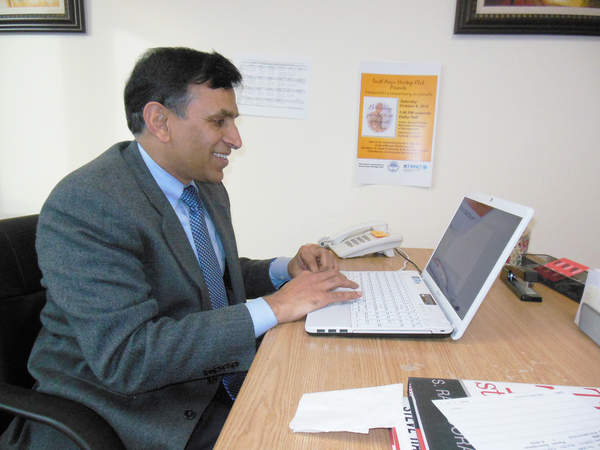
Author Steven Verney is interviewed by Dr. Cathy Gorini, Dean of Faculty at M.U.M. on the KHOE radio program “A Chat with the Dean.” Titled “The Best of all Possible Worlds” Steven Verney’s novel is based on his experiences as a teacher of Maharishi Mahesh Yogi‘s Transcendental Meditation.

Steven sprinkles gems of Maharishi’s knowledge before the reader along with threads of life-changing experiences many teachers of TM will relate to while going about the business of bringing enlightenment to the individual and the world and balancing life in the “real world.” Readers have found it difficult to put down this well-written book.

Click to listen: Steven Verney and Cathy Gorini – mp3 58 min, 16.8MB

A generous percentage of book sales will benefit the David Lynch Foundation teaching Transcendental Meditation to at-risk populations.

To find out more about Steven and his book, read this post and listen to an earlier interview on KRUU FM: Writers’ Voices interviews B. Steven Verney, author of “The Best of All Possible Worlds”.

Visit Steve’s new website one of his son’s designed for him http://steveverney.com and blog. Read the overview of the book and see the Xlibris Book Trailer: The Best of All Possible Worlds.

Steven is at work on his second book, about a lama that got away. The main protagonist is also a philosophy professor. I’ve read an excerpt and can’t wait to see the book when it comes out. If it’s anything like his first one, which I thoroughly enjoyed, then we’re in for another treat!

@MaharishiU Sustainable Living students build adobe house from scratch in Texas desert

December 19, 2013

MUM Students Build Adobe House From Natural Desert Materials

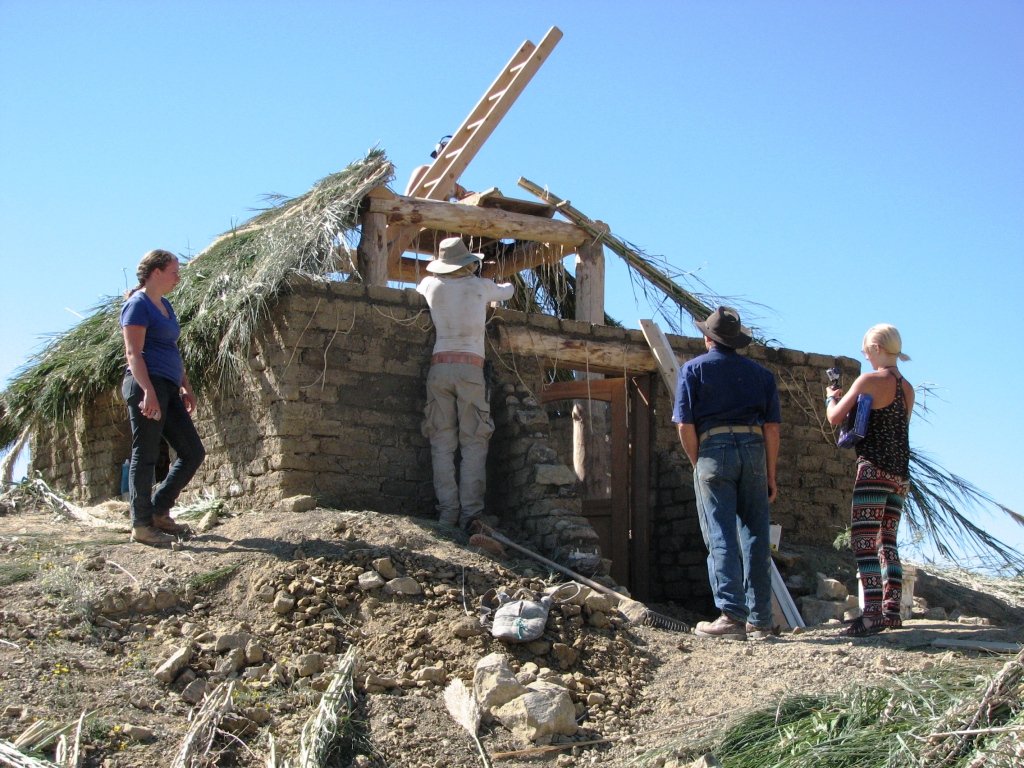
Maharishi University’s Sustainable Living students study natural building and travel to the Texas desert to put up a 14′ x 14′ adobe bunkhouse made primarily from indigenous materials mum.edu/AdobeHousePR

MUM students build adobe house from scratch in Texas desert

MUM students build adobe house from scratch in Texas desert

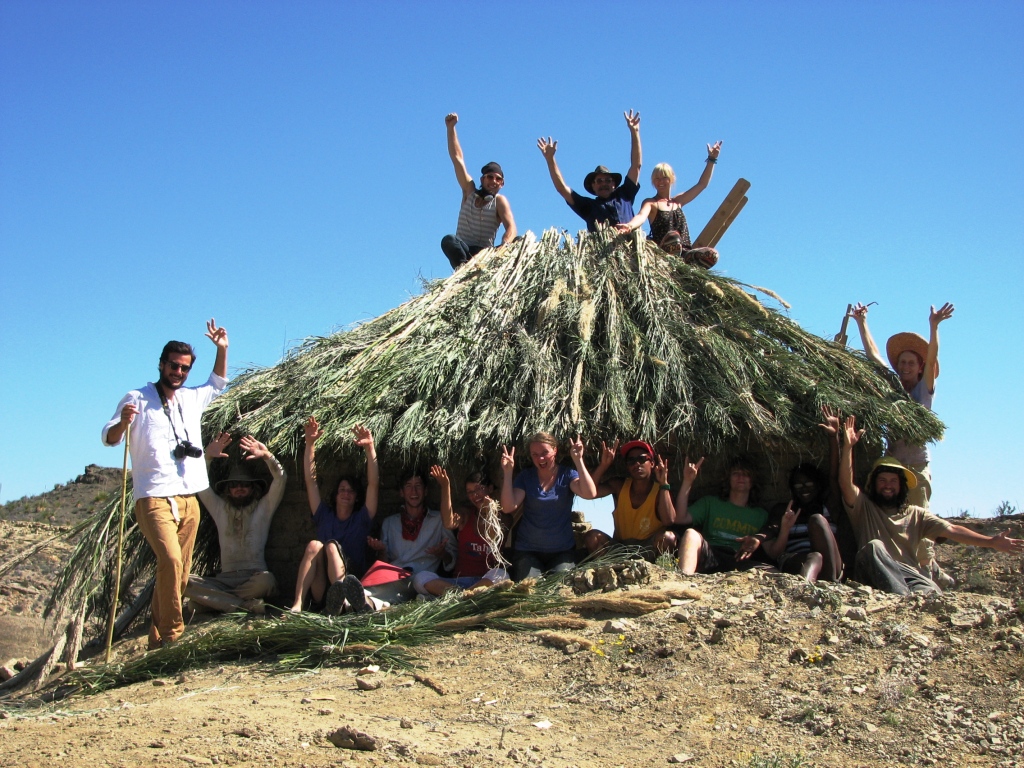
As a continuation of the Sustainable Living Program at Maharishi University of Management where students learn how to build a tiny house, a group of 12 students traveled to the Texas desert during their October Natural Building class and spent 11 days putting up a 14 x 14 adobe house made primarily from local materials.

They first made 850 adobe bricks from soil near the construction site, created a frame of posts and beams from dead spruce trees harvested beforehand on campus, and then topped the structure with a waterproof thatched roof made of river cane.

“It really has an amazing feel,” said course instructor Mark Stimson. “It’s rectilinear and oriented toward the cardinal directions, and adobe walls give it an ancient, grounded feeling.”

Intended to serve as a bunkhouse for future visitors, it sits on land owned by Mr. Stimson and his wife that’s adjacent to Big Bend National Park. Also on site is a tiny house students built last year.

In addition to learning practical construction skills, the students had the opportunity to experience an extraordinary landscape that includes deep vertical canyons, distant mountains, and rock-outcroppings dating back 500 million years, fossils, petrified wood, and a hot spring on the Rio Grande River. Plus the occasional tarantula and scorpion.

“The students had a transformative experience,” Mr. Stimson said. “They’ve never seen anything like this desert, with its vast scale. The heights and distances reset your perspective on things.”

Mr. Stimson’s desert site is 80 miles from the nearest town on a road too rugged for ordinary cars. The students prepared and canned all their food in advance. That alone was a learning exercise in planning and execution.

They traveled to the site via the Sustainable Living Department bus powered by biodiesel fuel that was made by the students and staff member Steve Fugate.

Every aspect of the construction required learning new skills. The students began their work on campus, creating a plan and estimating the amount of materials they would need.

Once on site, the students learned to sift the soil used for the bricks, moisten it with water, and then use forms to create the bricks. Once skilled, they were able to make a brick in less than a minute.

But then the bricks, all 17,000 lbs. of them, had to be carried up a long hill. The students formed a chain, and accomplished the task with aplomb.

“The students were confronted with many challenges in this remote desert region,” said Stimson, “but in the process they learned a lot about teamwork, leadership, self-sufficiency, and how to be flexible in the changing conditions they encountered.”

He related an incident of the students trying to prepare and dry adobe bricks, when an early morning desert fog prevented the sun from drying them out. It happened three or four days in a row. Of the many things they planned for, he said, the desert wasn’t one of them! But the sun burned it off by noon each day, and the adobe blocks dried enough to be used.

In order to comply with Maharishi Vedic℠ architecture, they learned how to perfectly align the building by using the North Star and the meridian transit off the sun.

“It’s within a quarter or even one-eighth of a degree of being perfectly aligned,” Mr. Stimson said.

He said his desert site is intended to serve as a retreat for campus groups and students in other departments, as well as the Sustainable Living students.

MUM students complete adobe house from scratch in Texas desert

MUM students complete adobe house from scratch in Texas desert

Commenting on the success of this course and the happiness of the students who participated in it, Professor Lonnie Gamble, Co-Director of the Sustainable Living Department said, “They’re happy because they’re taking their part in creating the world that they want to live in. I think it brings out a great joy, a great satisfaction, something that many of them have been looking for at other institutions before they’ve come here.” http://link.mum.edu/AdobeHouse

Part of this report was taken from The Review, Vol. 29, #6, November 27, 2013. For more information visit http://link.mum.edu/AdobeHousePR.

Read the description under this video posted on the MaharishiUniversity YouTube channel with more details describing how the students prepared for their trip, built their tools when they got there, gathered and processed the local materials to construct the adobe house.

Founded in 1971, Maharishi University of Management (MUM) offers Consciousness-Based℠ Education, a traditional academic curriculum enhanced with self-development programs like the Transcendental Meditation® technique. Students are encouraged to follow a more sustainable routine of study, socializing and rest without the typical college burnout. All aspects of campus life nourish the body and mind, including organic vegetarian meals served fresh daily. Located in Fairfield, Iowa, MUM is accredited by The Higher Learning Commission and offers bachelor’s, master’s, and doctoral degrees in the arts, sciences, humanities, and business. Visitors Weekends are held throughout the year. For more information, call the Admissions Office at 800-369-6480 or visit http://www.mum.edu.

Source: PRWeb: http://www.prweb.com/releases/MUM-SL/AdobeHouse/prweb11363060.htm

@DMRegister’s Rox Laird Features Fairfield, Iowa’s Civic Collaboration and @MaharishiU’s Sustainable Living Center

December 18, 2013

On the first Sunday in November 2013, the Des Moines Sunday Register published an Opinion piece about Fairfield, a city of around 10,000 in southeast Iowa. Written by editorial columnist Rox Laird, it praises Fairfield’s ability to work together as a community to manufacture dreams. Laird tours the town with Mayor Ed Malloy, who points out many cultural assets, creative entrepreneurial businesses, and green features for energy self-sufficiency, part of an overall plan for the city. They visit a new and unique net-zero classroom building housing the Sustainable Living Center on the campus of Maharishi University of Management in the north part of town.

MUM obtained permission to make this wonderful article available as a reprint. Here is a PDF of the article: Fairfield defines community action, also available on the MUM website link.mum.edu/GreenFF.  A photo of the Fairfield Arts and Convention Center replaces the Register file photo in the article. The same photos of the Sustainable Living Center and Mayor Malloy appear in the reprint along with FACC and MUM logos and contact information at the end. For additional information, I’ve listed some articles at the bottom related to some of the topics mentioned in the Op-Ed piece.

Laird: Fairfield defines community action
Jefferson County town shows how to ‘manufacture dreams’ through civic collaboration

Nov. 3, 2013 3:45 PM
Shops on the square in downtown Fairfield, a mixture of classic Main Street Iowa and international fare. / Register file photo

Shops on the square in downtown Fairfield, a mixture of classic Main Street Iowa and international fare. / Register file photo

Written by ROX LAIRD

Fairfield, Ia. – Drive around this Jefferson County seat with Mayor Ed Malloy and you begin to understand why this town is considered unique in Iowa.

The obvious reason is the presence of Maharishi University of Management that is a magnet for Transcendental Meditation devotees from around the world, which is evident as Malloy wheels around the downtown square. It is lined with unusual shops, art galleries, bookstores, restaurants offering international fare, imported chocolates and teas. A monthly First Friday Art Walk draws a cross-section of the community and people from around the state.

Just off the square, across from the Jefferson County Courthouse, sits the community center and the Stephen Sondheim Center for the Performing Arts. It is home to what is described as the only professional live musical theater company in the state and attracts a variety of performing arts events.

A couple of blocks on is Malloy’s oil trading company, housed in an office building built according to the ancient Indian principles of Maharishi Vedic architecture that seeks harmony with the energy of the sun and nature for the well-being of occupants. Many examples of Vedic design can be seen in Fairfield and in Maharishi Vedic City, incorporated in recent years.

Fairfield is a town of contrasts, where you can see a BMW parked on the street next to a pickup truck. The native population has increasingly accepted immigrants who brought a different culture and an entrepreneurial spirit that invigorates the city’s economy. Fairfield has earned a long list of plaudits in numerous “best of” categories, including the April Smithsonian magazine’s list of “The 20 Best Small Towns in America.”

Fairfield lives green

Among the striking things about Fairfield is its ethic of self-sufficient sustainability. This manifests itself in many ways, such as a cooperative organic food market and a solar-powered radio station run by volunteers. Solar panels sprout from roofs and from freestanding structures. The city of Fairfield has an energy efficiency coordinator, whose salary is shared by the city and by Iowa State University’s extension service.

In the city’s industrial park, Sky Factory uses backlit photography to create outdoor scenes for ceilings of hospitals and medical clinics. The plant has set aside space next to its parking lot for an array of solar panels and a garden tended by employees.

On the opposite side of town, a mostly off-the-grid subdivision called Abundance EcoVillage captures energy from the wind and the sun, and draws air for heating and cooling from the Earth.

This conservation ethic runs deeper in the community than these outward symbols of alternative and renewable energy sources. As a participant in Alliant Energy’s Hometown Rewards program, Fairfield took on a challenge beginning on Earth Day in 2012 to reduce its overall energy consumption by 4 percent. It hit that and exceeded it: Fairfield residents shaved electric and natural gas consumption by 8.5 percent and businesses cut theirs by 8 percent.

Working with Alliant, which provided marketing and technical support, the city held workshops for residents and business owners, some 4,500 participants pledged to meet energy savings goals by doing laundry in cold water and installing compact fluorescent light bulbs. A fund was created to make loans for new windows and insulation.

The total savings of 10.2 million kilowatt hours of gas and electricity is enough energy to power 1,077 homes for one year, according to Alliant, which independently verified the energy savings. Besides the savings on power bills, Alliant dangled a carrot in the form of a grant of nearly $19,000, which the city put toward installation of solar panels on the roof of the Fairfield Library this summer.

Alliant Energy spokesman Justin Foss attributed the success of this impressive energy savings to the level of community engagement, working at a neighbor-to-neighbor level creating peer pressure that came from an active group that led the charge.

“This is a program that works really well for Fairfield,” Foss said. “You can’t do that in every community.”

A foot in both worlds

Ed Malloy is perhaps the best example of how Fairfield has melded small town Iowa values with the exotic culture inspired by Maharishi Mahesh Yogi. Malloy is an immigrant from New York, practices TM and lives in a spacious and handsome home built to the exacting Vedic principles. He moves comfortably among traditional and nontraditional Fairfield, which is evident from his support by voters for more than a decade.

Malloy says Fairfield’s can-do culture begins with setting ambitious goals, but achievements are celebrated by the entire community, not just the strong core of Transcendental Meditation followers fed by Maharishi University.

In Fairfield, Malloy said, “people go out and manufacture their dreams. When we all share the pride, that’s when everything changes.”

Classroom building is a lesson in sustainability

Fairfield, Ia. – Maharishi University of Management here set out three years ago to build a new classroom building for its sustainable living program that lived up to the department’s mission. The finished product may be the greenest building in Iowa.

The building is constructed of compressed-earthen blocks manufactured by students on site and load-bearing timbers consisting of full-size aspen tree trunks. It generates more energy than it consumes. It collects and treats rain­water from the roof for drinking and flushing. Daylight supplies two-thirds of light in classrooms and offices during the day. Passive and active solar energy is stored in 600 tons of earthen blocks and a 5,000-gallon water tank, which is supplemented with wind-generated electricity. It has a greenhouse for growing plants indoors and edible landscaping outdoors.

The Schwartz-Guich Sustainable Living Center is performing exactly as intended. In fact, it is “exceeding our expectations in energy efficiency in cooling and heating seasons,” said Lawrence Gamble, professor of sustainable living at MUM and an irrepressible evangelist on the subject of renewable energy and natural resource conservation.

Standing beside the center’s electric meter outside the building recently, Gamble pointed to the spinning wheel that measures electric consumption. The wheel was going backward, however, meaning the building was returning power to the electric grid. In fact, according to Gamble, the center produces about a third more energy than it consumes. And it consumes less than a quarter of what an ordinary building of the same size would consume.

Besides employing nearly every imaginable green building technique, the Sustainable Living Center design follows the principles of Maharishi Vedic architecture, an ancient design philosophy from India that puts buildings in harmony with nature. It is hard to imagine a building that does a better job of meeting that goal.

The Smithsonian’s 20 Best Small Towns to Visit in 2013. Fairfield, Iowa is in the Top 10 (No. 7)
Iowa Outdoors: Fairfield’s Abundance EcoVillage: Harmonious Living With Nature — Off The Grid
Video segments of Oprah’s Next Chapter on OWN: Oprah Visits Fairfield, Iowa—”TM Town”—America’s Most Unusual Town

A few selected Comments:

Chuck Offenburger · Top Commenter · Cooper, Iowa

Terrific look around Fairfield by Rox Laird. It’s been fun over the last two decades or so watching Ed Malloy develop as one of the most effective and most congenial leaders in Iowa. The whole extended Fairfield community has been very well-served by him — and he has frequently contributed his talent and insight to state-level initiatives, too.

Dan Piller · Sales Executive at TLC Vintage Collection

Remember the fuss four decades ago when the Maharishis took over the old Parsons College? You’d thought the Soviets were coming in. I am disappointed that the Beach Boys never set up their planned recording studio there.

Ed Malloy · Mayor, City of Fairfield at Fairfield, Iowa

Rox Laird did an outstanding job with the article and to have it recommended by my good friend Chuck Offenburger is icing on the cake. Thanks Chuck!

Gary Greenfield · Top Commenter · Works at Certified Teacher of the Transcendental Meditation technique

Well-deserved praise. Fairfield continually strives to be a dynamic and creative community that embraces sustainable living.

June 2016, Des Moines Register business writer Kevin Hardy wrote an article on Fairfield: Why this Midwest town is thriving when so many aren’t, which was also posted in USA TODAY.

Finding the needle in a haystack: MUM teaches data-mining class – Andy Hallman/Fairfield Ledger

December 14, 2013

Finding the needle in a haystack MUM class teaches students how to find useful information in a sea of data

Article & photo by ANDY HALLMAN, news editor for The Fairfield Ledger Dec 13, 2013

Maharishi University of Management professor Anil Maheshwari teaches a class on data mining at the school. The students learn how to glean insights from enormous data sets to help businesses serve their customers, among many other things.

Maharishi University of Management is becoming a key player on the national stage for its research into data mining.

Data mining refers to techniques for finding useful knowledge in a vast sea of information. Due to a recent partnership between IBM and MUM, university students have free access to IBM software to help them crunch huge data sets. They’re using those tools from IBM in a course titled “Business Intelligence and Data Mining,” taught by MUM professor Anil Maheshwari.

The IBM Academic Initiative offers participating schools course materials, training and curriculum development to 6,000 universities and 30,000 faculty around the world.

Maheshwari said modern computers have taken number crunching to new heights. They allow programmers to find correlations between sometimes seemingly unrelated variables. This kind of computing power is valuable for businesses because it allows them to fine-tune their advertisements.

Businesses collect reams of information about the demographics of their customers. Data mining allows them to sort through this information to find out who buys the product, such as whether the customers are mostly male or female, young or old, single or married, etc. Learning which variables are important and which are not is key to a successful marketing campaign.

“Data mining is just like mining into diamond,” he said. “You need a lot of skill and tools but also an artistic edge of identifying the diamond.”

Maheshwari said data mining holds the promise of being able to answer questions the way contestants do on a game show such as Jeopardy! He even mentioned a computer called “Watson” that has competed on the show. The computer is fed the question and then generates an answer based partly on how the words in the question correspond to encyclopedia articles in its database. Data mining power has reached a point where Watson’s sophisticated algorithms can arrive at the correct answer even when the question employs puns.

A computer that can answer questions after searching through a database would be useful to doctors who are trying to predict whether a symptom in a patient is likely to lead to a malignant or benign tumor. Data mining computers could search through thousands of cases to find which variables, symptoms in this case, predicted malignant tumors and which predicted benign tumors.

Such technology could be applied in other realms, too, such as finding out which students were likely to drop out of school based on data about previous drop outs.

Maheshwari said collecting large amounts of data is easier than most people think considering so much of it is publically available on the Internet. He said the government gathers massive amounts of data for everything under the sun. Accessing the data is not the tricky part – knowing how to separate the wheat from the chaff is. Actually, Maheshwari said the analogy he prefers is finding a needle in a haystack, because the vast majority of data in a database is useless in answering the researcher’s question.

In response to the growing need for experts in information technology such as data mining, MUM has introduced an online graduate certificate program in Management Information Systems. The program can be completed entirely online in one to two years.

This front-page news story is reprinted with permission from the Fairfield Ledger. Click on this link to see how it appears in that issue: FFLedger12-13-13_1A.

For more on the story, including a video interview with Anil Maheshwari, see http://link.mum.edu/DataMining.

Maharishi University’s Fred Travis talks about the brain and meditation on What Women Must Know

November 21, 2013
Sherrill Sellman

Sherrill Sellman

Sherrill Sellman, host of What Women Must Know, interviewed Fred Travis of Maharishi University of Management on the Progressive Radio Network, PRN.fm, “The #1 Internet Radio Station for Progressive Minds,” on November 21, 2013. Listen to this interesting interview as they discuss different stages of the brain’s development and how it is affected by PTSD, ADHD, and different meditations. Today’s show is titled Your Brain, Rejuvenation and Meditation with Dr. Fred Travis.

Dr. Fred Travis

Dr. Fred Travis

Dr. Fred Travis is Professor of Maharishi Vedic Science, Chair of the Department of Maharishi Vedic Science, Dean of the Graduate School, and Director of the Center for Brain, Consciousness, and Cognition, at Maharishi University of Management. He earned an M.S. and Ph.D. in Psychology from Maharishi University of Management, and a B.S. in Design and Environmental Analysis from Cornell University. He is also the author of Your Brain is a River, Not a Rock. Visit his website for video presentations, publications and more: drfredtravis.com.

Listen to a Podcast of the show or search for it in the Archives.

Andy Bargerstock reveals a costly disconnect in Lean companies not completely walking their talk

November 12, 2013

Standard Costing Very Costly, New Research Shows

Lean Accounting expert, Andrew Bargerstock, PhD, CPA, Director of Maharishi University’s MBA Programs, will present new research findings that show for the first time, empirical evidence of the waste inherent in Lean manufacturing companies that still use a standard costing accounting model. His talk, “The failure of standard accounting systems in Lean companies,” will be presented this week at the local chapter of the Institute for Management Accounting (IMA) during their Fall Conference in Cedar Rapids, Iowa.

Fairfield, Iowa (PRWEB) November 12, 2013

Andrew Bargerstock, PhD, CPA, Director of MBA Programs at Maharishi University of Management

Andrew Bargerstock, PhD, CPA, Director of MBA Programs at Maharishi University of Management

Lean Accounting expert, Andrew Bargerstock, PhD, CPA, Director of Maharishi University’s MBA Programs, will present new research findings that show for the first time, empirical evidence of the waste inherent in Lean manufacturing companies that still use a standard costing accounting model. Lean management principles are based on the generic elements of organizational development from companies like the Toyota Motor Corporation who build long-term customer loyalty while streamlining operational processes.

Dr. Bargerstock says, “Many mature lean manufacturers continue to use standard costing when it is no longer useful. This wasteful practice costs companies millions of dollars.” Professor Bargerstock will present his findings this Thursday, November 14 at 1pm, at the regional chapter of the Institute for Management Accounting (IMA) during their Fall Conference in the Double Tree Hotel in Cedar Rapids, IA. His presentation will include a summary of the research study and a model of a three-tiered system of organizational performance metrics that drive lean innovations.

“Companies are still attached to standard costing because it is the staple of business schools emulating General Motors operational controls from the 1950s. Lean offers a new model for operational controls. Our research is the first to show that mature Lean companies who still use standard costing accounting systems are leaving money on the table.” Professor Bargerstock says.

Lean manufacturing is a sustainable, cost-saving, adaptive and highly efficient manufacturing management process originated by Toyota Motor Company in the 1980’s, and since adopted worldwide by hundreds, even thousands of manufacturers. The Lean strategy can be applied to any type of organization profit or non-profit.

Wasted money, lost profits, weaker earnings

The new research, done at Maharishi University of Management, a 4-year Iowa college of arts and sciences that integrates practice of the Transcendental Meditation® technique into its curriculum, shows that many companies using Lean manufacturing processes are not discarding standard costing, and as a result, are missing significant additional savings, losing profits and weakening the bottom line. “Companies using Lean manufacturing, but not using Lean Accounting are losing money by clinging to an antiquated costing model.” Dr Bargerstock says.

This is the first empirical study to test a prediction made by many Lean Accounting theorists, that mature lean manufacturing enterprises will discard standard costing systems. Anecdotal evidence suggested that companies may be holding onto standard costing, but no empirical study has verified the observed behavior.

Manjunath Rao, PhD and Andrew Bargerstock, PhD

Rao and Bargerstock

In 2011 and 2013, Bargerstock and one of his PhD students, Manjunath Rao, published articles in the Management Accounting Quarterly on the research conducted at MUM. The article published in Summer 2013 MAQ is entitled, “Do Lean Implementation Initiatives Have Adequate Accounting Support?”

Dr. Bargerstock was the chair of Rao’s dissertation committee. Lean accounting experts and academics at the Institute for Management Accounting collaborated on the research. The article describes the analysis of some of the data gathered during Rao’s dissertation research. The study found that in a sample of mature lean manufacturing companies, lean accounting implementation lags behind lean operations implementation, which may give rise to inadequate accounting support in lean initiatives.

A former Fortune 500 executive and national consultant for federal and state governmental agencies and private corporations, Dr. Bargerstock was selected as the 2009 Excellence in Lean Accounting Professor by the Lean Enterprise Institute (LEI), one of the leading non-profit associations dedicated to the education and promotion of Lean Management in the country. LEI, along with the co-sponsorship of the IMA, have also recognized two of Prof. Bargerstock’s PhD students during the last three years as Lean Accounting Student of the Year.

See a short video of Dr. Bargerstock outlining the main points for his talk to the IMA, and an additional segment on the success of MUM students in the MBA Lean Accounting Program.

Founded in 1971, Maharishi University of Management (MUM) offers Consciousness-Based℠ Education, a traditional academic curriculum enhanced with self-development programs like the Transcendental Meditation® technique. Students are encouraged to follow a more sustainable routine of study, socializing and rest without the typical college burnout. All aspects of campus life nourish the body and mind, including organic vegetarian meals served fresh daily. Located in Fairfield, Iowa, MUM is accredited by The Higher Learning Commission and offers bachelor’s, master’s, and doctoral degrees in the arts, sciences, humanities, and business. Visitors Weekends are held throughout the year. For more information, call the Admissions Office at 800-369-6480 or visit http://www.mum.edu.

PRWeb: http://www.prweb.com/releases/Lean/IMA/prweb11309348.htm or bit.ly/19Z629I

Posted on: Virtual-Strategy Magazine and other top news outlets.

In an effort to encourage more faculty to attend the The Lean Accounting Summit, organizers interviewed Andy Bargerstock on Friday, October 18, 2013 in Orlando, FL. He was asked to share what he had learned from previous summits. Of all the interviewees, they selected Andy to go in their LEAF (Lean Education Advancement Foundation) newsletter. You can see both here: A Special Letter to Lean Accounting Summit Participants from the LEAF Board of Directors.

Maharishi University of Management’s Ye Shi Named Lean Accounting Student of the Year

October 26, 2013

Maharishi University of Management PhD candidate, Ye Shi (Linlin), was awarded the 2013 Lean Enterprise Institute’s annual Excellence in Lean Accounting Student Award during their Lean Accounting Summit this month in Orlando, Florida. This award continues a pattern of recognition for MUM from LEI: Dr. Andrew Bargerstock was named Lean Accounting Professor of the Year in 2009, and Manjunath Rao was selected as Lean Accounting Student of the Year in 2011 for his PhD dissertation.

Tabitha Dubois (right), LEI's Director of Finance and Administration, gave the Lean Accounting Student Award to MUM’s Ye Shi, and the Lean Accounting Professor Award to WWU's Dr. Audrey Taylor.

Tabitha Dubois (right), LEI’s Director of Finance and Administration, gave the Lean Accounting Student Award to MUM’s Ye Shi, and the Lean Accounting Professor Award to WWU’s Dr. Audrey Taylor.

Fairfield, Iowa (PRWEB) October 25, 2013

By Ken Chawkin

Maharishi University of Management PhD candidate, Ye Shi (Linlin), was awarded the 2013 Lean Enterprise Institute’s annual Excellence in Lean Accounting Student Award during their Lean Accounting Summit this month in Orlando, Florida. The Lean Enterprise Institute (LEI) is a non-profit educational association, which recognizes students who have been actively engaged in research, education, and the development of Lean Accounting and accounting for Lean.

Andrew Bargerstock, PhD, CPA, director of MUM’s MBA programs, had nominated Linlin for this award based on her accomplishments in lean accounting. “We are very happy that Lin Lin’s accomplishments are recognized by one of the biggest names in Lean Accounting, James Huntzinger, in his role as the chair of the Student of the Year selection committee for Lean Enterprise Institute (LEI) and the Lean Accounting Summit.”

Jim Huntzinger

Jim Huntzinger, president and founder of Lean Frontiers

On September 23rd Jim Huntzinger, president and founder of Lean Frontiers, and author of Lean Cost Management: Accounting for Lean by Establishing Flow, notified Linlin of her selection as Lean Accounting Student of the Year. Huntzinger founded the Lean Accounting Summit in 2005, as well as produced many other Lean summits.

As to why she was selected, Jim Huntzinger said, “Linlin was recognized as LEI Lean Accounting Student for 2013 due to her commitment to help others understand and develop a deep understanding of the new paradigm in Lean Accounting. We hope that she will continue to deepen her knowledge of this area and encourage more students and faculty to join the Lean Accounting adventure, and utilize her PhD research to both deepen and further her understanding of lean accounting.”

This award continues a pattern of recognition for MUM from LEI. Dr. Andrew Bargerstock was named Lean Accounting Professor of the Year in 2009, and Manjunath Rao was selected as Lean Accounting Student of the Year in 2011 for his PhD dissertation.

Linlin completed both the MBA in Accounting (2011) and the Post-graduate Certificate in Lean Accounting (2012) at MUM. In September 2013 she began her second year of teaching three of the two-credit courses in the Lean Accounting Certificate program.

In collaboration with Dr. Bargerstock, Linlin has developed case studies to illustrate how to implement kaizen methodologies to improve accounts payable processing. Linlin is currently taking coursework in the PhD program at MUM and expects to begin her dissertation next year.

Linlin is passionate about Lean, which she says is “the great strategic thinking that leads to true sustainable development. Lean accounting is an advanced way of articulating business through present and real financial numbers compared to the historical and sometimes misleading numbers provided by traditional accounting.”

Linlin says Lean enables better communication and employee engagement, and greatly enhances leadership. She adds, “It’s also a great illustration of how to do less and accomplish more, which is a fundamental principle of our university’s educational approach, Consciousness-Based Education.”

Ye Shi (Linlin) with MUM Professor Andrew Bargerstock at the 2013 Lean Accounting Summit

Ye Shi (Linlin) with MUM Professor Andrew Bargerstock at 2013 Lean Accounting Summit

Linlin says she is thrilled and honored to be recognized as the Lean Accounting Student of the year. “I am grateful for the support from MUM, Lean Frontiers, LEI and IMA. I appreciate the guidance and support from Dr. Andrew Bargerstock and other mentors and friends. Without them, any personal development for me would not have been possible.”

The summit offered Linlin, and other participants, the opportunity to meet with elite academic lean professionals and business lean practitioners. “It’s thought provoking to hear the speakers from different fields articulating the Whys and Hows of lean accounting based on their empirical research and practical experience. To be able to talk to them face to face and exchange opinions during the open discussions was fantastic. Also, the Q&A session with the executive team from the renowned Institute and the rest of the speakers provided the practical solutions for any problems people may encounter during lean transformation. It was really exciting to learn the live examples and have the inspiring conversations.”

Included in Linlin’s award was a complimentary registration at the Summit and $500 towards her travel expenses.

Photos of LEI Award Winners are available at garrethoover.com/LEI. Tabitha Dubois (red dress), Director of Finance and Administration for LEI, gave the Excellence in Lean Accounting Student Award to MUM’s Ye Shi, and the Excellence in Lean Accounting Professor Award to Dr. Audrey Taylor, Professor of Accounting at Western Washington University.

Founded in 1971, Maharishi University of Management (MUM) offers Consciousness-Based℠ Education, a traditional academic curriculum enhanced with self-development programs like the Transcendental Meditation® technique. Students are encouraged to follow a more sustainable routine of study, socializing and rest without the typical college burnout. All aspects of campus life nourish the body and mind, including organic vegetarian meals served fresh daily. Located in Fairfield, Iowa, MUM is accredited by The Higher Learning Commission and offers bachelor’s, master’s, and doctoral degrees in the arts, sciences, humanities, and business. Visitors Weekends are held throughout the year. For more information, call the Admissions Office at 800-369-6480 or visit http://www.mum.edu.

Source: PRWeb: MUM’s Ye Shi Named LEI’s 2013 Lean Accounting Student of the Year

In an effort to encourage more faculty to attend the The Lean Accounting Summit, organizers interviewed Andy Bargerstock on Friday, October 18, 2013 in Orlando, FL. He was asked to share what he had learned from previous summits. Of all the interviewees, they selected Andy to go in their LEAF (Lean Education Advancement Foundation) newsletter. You can see both here: A Special Letter to Lean Accounting Summit Participants from the LEAF Board of Directors.

Also posted on AndyB’s Blog: MUM’s Ye Shi Named LEI’s 2013 Lean Accounting Student of the Year

See MUM MBA Students Win at CAPSIM: The Role of Business Simulation Competitions in Higher Education.

See: Maharishi University’s Rao and Bargerstock published in Management Accounting Quarterly.

See Maharishi University MBA Students Win National Business Simulation Competition.

Effects of TM Practice on Trait Anxiety: A Meta-Analysis of Randomized Controlled Trials

October 10, 2013

A new meta-analysis published today (Oct 9, 2013) in the Journal of Alternative and Complementary Medicine (2013;19(10):1-12)1 found the Transcendental Meditation® technique (TM) has a large effect on reducing trait anxiety for people with high anxiety. Trait anxiety is a measure of how anxious a person usually is, as opposed to state anxiety, which refers to how anxious we are at the moment. A meta-analysis is an objective means to draw conclusions from all the research in a field.

This meta-analysis covered 16 randomized controlled trials, the gold standard in medical research, and included 1295 subjects from various walks of life, age groups, and life situations. TM was compared with various control groups, including treatment-as-usual, individual and group psychotherapy, and various relaxation techniques. Studies on high stress groups, such as veterans suffering from PTSD and prison inmates, showed dramatic reductions in anxiety from TM practice, whereas studies of groups with only moderately elevated anxiety levels, such as normal adults and college students, showed more modest changes.

A chart shows that studies of individuals with anxiety levels in the 90th percentile (higher than 90% of the rest of the adult population) showed dramatic reductions in anxiety down to the 57th percentile from TM practice. This is just a little higher than the average anxiety level, which is the 50th percentile. Study groups that started in the 60th percentile, a little above average, showed more modest reductions, to the 48th percentile, a little below average.

Lead author on the meta-analysis, Dr. David Orme-Johnson, an independent research consultant, commented: “It makes sense that if you are not anxious to begin with, that TM practice is not going to reduce your anxiety that much. Groups with elevated anxiety received significant relief from TM, and that reduction occurred rapidly in the first few weeks of practice.”

TM was also found to produce significant improvements in other areas worsened by anxiety, such as blood pressure, insomnia, emotional numbness, family problems, employment status, and drug and alcohol abuse.

This chart shows that studies of individuals with anxiety levels in the 90th percentile (higher than 90 percent of the rest of the adult population) showed dramatic reductions in anxiety down to the 57th percentile from TM practice. This is just a little higher than the average anxiety level, which is the 50th percentile. Study groups that started in the 60th percentile, a little above average, showed more modest reductions, to the 48th percentile, a little below average. (Photo Credit: Dr. David Orme-Johnson)

Co-author Dr. Vernon Barnes of the Georgia Prevention Center, Georgia Regents University, Augusta, Georgia explains what happens with control groups in these studies. “Control groups who received usual treatment did not show dramatic reductions in anxiety. In fact, control groups that were highly anxious to begin with, if anything, tended to become more anxious over time.”

When asked about the effect of other approaches to reduce anxiety, he added, “However, progressive muscle relaxation was also effective in reducing anxiety. But, it did not have the other side benefits of TM, such as increasing overall mental health, and increasing the rate of recovery of the physiology from stressors.”

Dr. Orme-Johnson answered a commonly asked question about placebo effects. He said: “Since anxiety is a self-reported measure, one might wonder whether the effects of TM practice or any other treatment program were a placebo effect. Placebos are great. If you give a person a sugar pill and tell them that it will reduce anxiety, it probably will, but only for a little while before the effect wears off. But the effects of TM were shown to be lasting and include objective benefits. For example a recent study showed that TM reduces heart attacks, strokes, and death over a ten-year period. So we know its effects are real and are not just due to a placebo.”

The meta-analysis also examined the issue of bias with TM studies on anxiety. There was no evidence of missing studies and studies conducted by scientists who were in any way associated with Maharishi University of Management or any of its sister universities did not have stronger effects than research conducted at independent universities.

Two previous meta-analyses on TM have found that it is highly effective in reducing trait anxiety, and is more effective than other meditation and relaxation techniques, including mindfulness meditation.2,3

###

Background Information on Transcendental Meditation

The Transcendental Meditation (TM) technique is a simple, natural, effortless procedure practiced 20 minutes twice each day while sitting comfortably with the eyes closed. It is not a religion, philosophy, or lifestyle. It is the most widely practiced, most researched, and most effective method of self-development. For more information visit: http://www.tm.org.

Background information on anxiety

Anxiety disorders are the most common mental health problem in the United States, affecting 40 million adults (about 18% of the population) and costing more than $42 billion a year.4,5 Anxiety is considered a negative mood disturbance that results from failure to predict, control, and obtain desired goals6 and is associated with dysfunctional cognition, behavior, and physiologic over-activity.7 Anxiety further impairs health by motivating increased use of tobacco and alcohol8 and predisposes the individual to chronic diseases such as coronary heart disease.7,8

  1. Orme-Johnson DW, Barnes VA. Effects of the Transcendental Meditation technique on Trait Anxiety: A Meta-Analysis of Randomized Controlled Trials. J Altern Complement Med 2013;19(10):1-12. http://online.liebertpub.com/doi/abs/10.1089/acm.2013.0204
  2. Eppley K, Abrams AI, Shear J. Differential effects of relaxation techniques on trait anxiety: A meta-analysis. J Clin Psychol 1989;45(6):957-974.
  3. Sedlmeier P, Eberth J, Schwarz M, et al. The psychological effects of meditation: A meta-analysis. Psychol Bull 2012;138(6):1139-1171.
  4. ADAA. The Anxiety and Depression Association of America. 2013; http://www.adaa.org/about-adaa. Accessed January 10, 2013.
  5. Greenberg PE, Sisitsky T, Kessler RC, et al. The economic burden of anxiety disorders in the 1990′s. J Clin Psychiatry 1999;60(7):472-435.
  6. Barlow DH. Unraveling the mysteries of anxiety and its disorders from the prespective of emotion theory. Am Psychol 2000;55:1247-1263.
  7. Kolzet JA, Inra M. Anxiety. In: Allan R, Fisher J, eds. Heart and Mind: The Practice of Cardiac Psychology. 2nd ed. Washington, DC: American Psychological Association; 2012.
  8. Sawchuk CN, Olatunji BO. Anxiety, health risk factors, and chronic disease. Am J Lifestyle Med 2011;5(6):531-541.
Source: EurekAlert! and Maharishi University of Management.
Posted on Science Codex, Medical News Today, Helio: Psychiatric Annals, PubMed, and many other science and medical news sites. Also on the TM Blog: New Research on TM and Anxiety. Here is a PDF of the paper made available by Renncap.

Diane Vance reports on M.U.M.’s new David Lynch MA in Film for The Fairfield Ledger

August 14, 2013

M.U.M. adds master’s in film

By DIANE VANCE | Aug 14, 2013

The Maharishi University of Management debuts a new master’s degree this semester, The David Lynch MA in film.

The university has offered undergraduate filmmaking since 2007 in its Media and Communications Department and animation courses available in the Art Department for many years. It is now adding the next layer of learning.

“The graduate program is designed to take an idea to completion in a major project, with the possibility of publication,” said Gurdy Leete, co-chairman and associate professor of M.U.M.’s Media and Communications.

The course and fall semester begin Monday, and as with all M.U.M. courses, are taught in the block schedule of one course at a time.

“We’re expecting 20 to 25 students,” said Leete. “This program is about creating a supportive environment where artists connect with the audience. Students will have the opportunity to make deep connections in the film-making industry and gain recognition.”

The one-year, August to May course, includes curriculum in Advanced Narrative, Advanced Screenwriting, Acting for Film, The Frame, The Field, and from February to April an Advanced Video Media Project and then, The Media Market. Students who have not yet learned Transcendental Meditation will be taught the technique during the first few weeks of class.

About half the expected students have attended M.U.M. before.

“I’m excited about the group of students enrolled and how they will be producing great work,” said Stuart Tanner, co-chairman and assistant professor of M.U.M.’s Media and Communications. “The students will get a great deal out of working with one another and following the structure of the program. The goal is to produce a major piece of work.”

Tanner has had a glimpse of some of that work. The department offered a full scholarship for the master’s in film program based on applicants submitting a short film to compete for the scholarship.

Leete said the department received several dozens film submissions, which were all screened by the department faculty and program sponsors. The top six short films were then submitted to David Lynch, filmmaker, writer, artist, for viewing.

Tanner talked with Lynch by phone Tuesday for about 20 minutes.

“He really liked viewing the six shorts,” said Tanner. “Some of them were very accomplished pieces. He said when watching a film he watches for what stays with the viewer, what leaves a strong feeling. A short film doesn’t have a long time to develop that. He selected the film by Kinga Kulcsar as the scholarship winner because hers had that quality of making an impression, leaving the viewer with a feeling.

“I got to tell her last night that she won the scholarship.”

Tanner said the film will have a link at M.U.M.’s David Lynch MA in Film website filmschool.mum.edu in the near future.

Students in the master’s program also will visit with Lynch about filmmaking.

“We’re still working with David about his schedule,” said Leete. “Students will connect with him by Skype and at some point in the year the class will travel to Los Angeles for a couple of days and students will have a few question and answer sessions directly with him.”

Tanner said naming the program for David Lynch is a perfect fit for the program.

“He is the filmmaker’s film maker,” said Tanner. “He’s a fantastic person to be around. He is a role model and visionary with great integrity to his own vision. Putting his name on the program is perfect. It’s an idea that’s been bubbling away for a while and now it’s happening.”

Tanner said Lynch will be calling the classes throughout the year.

“And we will bring other insiders from the industry, we’ll bring other experts to the classes,” said Tanner.

Leete said the department is in contact with other industry people to connect with the program.

“Other luminaries in the field will connect by Skype, visit Fairfield and lead workshops or be available when we are in L.A.,” said Leete. “Schedules are always changing for people in film, but we expect quite an array of industry insiders from various fields to work with us.”

Not all students in the program will need to produce a major film. Many aspects of film will be studied and students may collaborate with one another to create a project. Students may screen write, direct, cast, design costumes and sets, or be special effects supervisor. Film also has an important business side and students may focus on setting up a media company.

“Students can create different products, it could be a film or a website of music videos,” said Leete. “The idea is to make a giant step forward and make it easier at the end of the program to work in the industry.”

“All we require is that film plays a significant part in the final project. The program is about having a year to go deeply into a creative experience that will transform both you and your career,” according to information on the program’s website.

Admission requirements include a bachelor’s degree in any subject, a resume, a portfolio of best work, including at least one film of any length created by the applicant, other creative work and special achievements. Applicants also have an interview with department faculty.

Published with permission from The Fairfield Ledger

Also reported in Indiewire: There’s a David Lynch MA in Film. Why is it in Iowa? Must students meditate? Burning questions, we’ve got answers: Besides Transcendental Meditation, What Does One Learn with the David Lynch MA in Film?

Celeb Spiritual Report: One significant day in my life by David Lynch for Jane Magazine (May 2004)

August 3, 2013

Here is an article I helped facilitate for David Lynch when we first started working with him, a year before the idea for the David Lynch Foundation was created under the dynamic leadership of Bob Roth, executive director for the Foundation. Up to this point David had kept his Transcendental Meditation practice private. When he made the decision to go public and help the TM movement he turned out to be a most unique and brilliant spokesman.

One event was a project to create world peace. We sent out our press release to the media and set up a NY press conference David would attend. Jauretsi Saizarbitoria, the entertainment editor for Jane magazine at the time, emailed back saying she was interested in David’s meditating and suggested he write an article for their special celeb issue on the topic: One significant day in my life. We mentioned it to him and he sent us an article of the day he learned that our human physiology, our body, was made of consciousness, which we forwarded to them. Knowing he was a painter, they also wanted to know what consciousness looked like to David. He sent a jpeg of an image he had created and they included it, giving him a whole page and titling it a Celeb Spiritual Report, with that announcement on the bottom right side of the magazine cover. It was published in their May, 2004 celeb issue. Jane was a popular woman’s magazine, published from 1997-2007. David posted the report on his website with other earlier David Lynch articles and interviews.

Here is David’s love of Maharishi’s Vedic knowledge explained in such a simple conversational tone that’s truly David Lynch. He’s actually a brilliant writer and speaker! They put the text on the bottom right of this photo. Here it is with the text underneath.

Jane – May, 2004
One significant day in my life

By David Lynch

This is a picture that director David Lynch (above) painted to show what consciousness looks like.

This is a picture that director David Lynch (above) painted to show what consciousness looks like.

A significant event occurred in my life the day I learned that our human physiology, our body, is made of consciousness.

Consciousness???

“What???” I asked out loud in wonder.

I learned that our human physiology is so magnificent and complex, and so exquisite in its design and makeup, as to be wondrous beyond imagination. We are spun out of unbounded, infinite, eternal consciousness.

I learned that underlying all matter is a vast, unbounded, infinite and eternal field of consciousness called the Unified Field. I found out that modern science started taking this field seriously about 25 years ago and that all matter is unified at this level in a state of perfect symmetry, or balance. The entire universe emerges from this field in a process called “spontaneous sequential symmetry breaking.”

Are you still with me?

I also learned that there is another science called Vedic Science. This Vedic Science is ancient, and it has always talked of the Unified Field.

Interesting!

Veda, I learned, means “total knowledge.” The home of total knowledge is the Unified Field. It is also the home of all the laws of nature. The branches of Veda, 40 in total, make up the language of the Unified Field, the impulses of this eternal field.

I realized this Unified Field is quite an interesting place. It is not manifest and is full, meaning it is no thing, yet all things in potential. It manifests and permeates all things: the whole universe, everything, while still remaining full and not manifest.

Amazing!

Is this mind-boggling or what?

Now comes the hippest part. I have learned that any human being can “experience” the Unified Field.

Really?

Or: So what?

Why in the world would we care to experience the Unified Field?

First, another question.

Have you ever heard that most of us human beings use only 5 percent of our brain, our mind? Have you ever wondered what in the heck the other 95 percent is all about?

This is the beautiful part coming up.

The “experience” of the Unified Field actually unfolds “enlightenment”—higher states of consciousness culminating in Unity Consciousness, the highest state of consciousness. These higher states use that 95 percent of the brain. That is what the 95 percent is there for—to give us permanent, all-time enlightenment.

Now, what is enlightenment? If you were a lightbulb, let’s say, your “glow” might light up your whole house and surrounding yard. In enlightenment, your “glow” would be unbounded, infinite and eternal. That would be some glow!

Enlightenment is fulfillment. Supreme fulfillment. Unbounded, infinite, eternal bliss, consciousness, intelligence, creativity, harmony, dynamic peace.

Enlightenment, I have learned, is our “full potential.” It is the birthright of every human being to enjoy enlightenment.

Is this good news? I think it is such good news.

In Vedic Science, the Unified Field is called “Atma.” Translated, that is “Self”—the Self of us all.

The Unified Field is not something foreign, or even something far away. It is right within each of us at the base of our mind, the source of thought. A great sage from the Himalayas, Maharishi Mahesh Yogi, brought a beautiful gift to our world in the form of Transcendental Meditation. Transcendental Meditation is an easy and effortless, yet supremely profound, technique that allows any human to dive within and experience that unbounded ocean of pure bliss, pure consciousness. the Unified Field, our Self.

It may be interesting for you to know that millions of people are practicing Transcendental Meditation all around the world. People from all religions, and all walks of life. Over 600 studies have been done in universities and research institutes validating the profound benefits of Maharishi’s Transcendental Meditation Program.

Having this kind of knowledge and technologies of consciousness available to us in this age is, in my mind, a significant event. Yet the “experience” of that Unified Field is the most significant event, because it unfolds what we truly are—totality.

David’s movies include Eraserhead, Dune, Blue Velvet and Mulholland Drive. He is looking forward to Creating World Peace Day, to be held mid-September at the Maharishi University of Management in Fairfield, Iowa (www.mum.edu).

Copyright 2004 Fairchild Publications, Inc.

(more…)