New studies presented at Society of Behavioral Medicine 31st Annual Meeting show reduced depression with Transcendental Meditation

April 7, 2010

New studies show reduced depression with Transcendental Meditation

The Transcendental Meditation technique was effective at reducing symptoms of depression, according to studies conducted at Charles Drew University in Los Angeles and University of Hawaii in Kohala. Both results will be presented April 9th at the 31st Annual Meeting of the Society of Behavioral Medicine in Seattle, Washington. Participants included African Americans and Native Hawaiians, 55 years and older, at risk for cardiovascular disease. Those with clinically significant depression reduced depressive symptoms by 48%. Click here to see EurekAlert! press release with graphs, facts on study design, and facts on depression.

Ireland’s Edwin McGreal interviews Mike Love for The Mayo News

April 6, 2010

INTERVIEW Mike Love of The Beach Boys

The legendary Beach Boys singer on Pet Sounds, Paul McCartney, clean living, Brian Wilson, modern music and more.

Monday, 05 April 2010 14:28

The beach boys

Mike Love, not war

The Beach Boys will bring some welcome Californian sunshine to Castlebar this June. Edwin McGreal spoke to founding band member, music legend Mike Love last week.
Mike Love is not your typical rock’n’roll  star. No sordid tales of debauchery, very little evidence of skeletons in his closet and, nearly 50 years after The Beach Boys were formed, he’s still going strong, playing around 150 shows a year.
Love, now aged 69, is a very relaxed and positive person, which is not surprising when you listen to such upbeat songs as ‘Good Vibrations’ and ‘I Get Around’, summer anthems that have put a pep in the step of millions for over 40 years.
And he and The Beach Boys will bring their sounds of summer to the TF Royal Theatre on June 26 (albeit minus Brian Wilson and Al Jardine).
So, still going strong all these years later, where does he get his energy?
“We don’t burn the candle at both ends like we might have done in the early 60s,” Love explained, speaking from his southern California base last week. “The Beach Boys are primarily a vocal group, we always emphasise our harmonies, and you can’t sing those kind of harmonies if you’re going to destroy yourself. I personally learned transcendental meditation [from renowned Indian guru Maharishi Mahesh Yogi, who taught many celebrities, including the Beatles]. I keep doing that every day and it is profoundly relaxing and repairs a lot of wear and tear mentally, emotionally and physically. It gives you a really nice outlet for stress rather than taking to the bottle or smoking a lot of pot or other drugs.
“People in my own family like my cousin Dennis [Wilson, founding member] became addicted to alcohol and various types of drugs and he ended up drowning in 1983, long before he should have passed away. Then my cousin Carl [Wilson, founding member] passed away of lung cancer 12 years ago. But then he started smoking when he was 13 so these lifestyle choices we make can have a tremendous impact on your health and well-being.”
Musically, the ’60s was a roller-coaster journey for The Beach Boys. There was the outstanding success of their totemic album ‘Pet Sounds’ in 1966, but the release of ‘Good Vibrations’ the same year is one Love looks back on with particular fondness.
“I think, artistically, ‘Good Vibrations’ has to be right up there. It stands on its own. It is so unique. Also I wrote the words and I came up with the chorus – ‘I’m pickin up good vibrations/she’s giving me excitations’. It stands the test of time and is still an amazing song today, that is the song I was happiest to be involved with.”
Subsequent decades didn’t prove as successful, with the exception of ‘Kokomo’ reaching Number 1 in 1988. Love admits that Brian Wilson’s well-publicised problems did play a part, but it wasn’t all bad for the band to be minus their front man.
“Brian pretty much became a recluse for several years and he didn’t take as dynamic a part in the production of our recordings. My cousin Carl played a bigger part, Bruce Johnston played a bigger part. Instead of Brian being ‘the Stalin of the studio’ as I used to call him, it became a bit more democratic. I don’t think it was reasonable that the [early success] would keep up forever, but the ’60s did provide the foundation of our continued success to this day.”
Moving to modern day musicians, Love has no particular favourites, but he’s exposed to the full gamut by his children. Some good, some not so good.
“I unfortunately get exposed to some rap music from my 14-year-old daughter but I also get exposed to Leona Lewis, Beyonce and Alicia Keys, those are pleasant exposures. I don’t think I’m obsessed with any new artist but I’m not against them either. I’m just as likely if I’m driving around to throw on the oldies channel just out of morbid curiosity to see if they’re going to play a Beach Boys song,” admitted Love, laughing at the thought.
Love hints that talks have taken place of a touring reunion with Brian Wilson and Al Jardine to mark the 50th anniversary of the band. For now, it is Love, together with long-time member Bruce Johnston and others who tour under the Beach Boys name – but the dynamic is the same, according to Love.
“What we like to do every night is prove we can recreate those songs like they’re meant to be sung. We have got nothing but compliments recently on how fantastic the show sounds …The special part [of touring] is recreating those songs and doing the absolute best job we can and seeing the audience join in and have a great time with us.”
Still sending those good vibrations.

Elsewhere on mayonews.ie
INTERVIEW Click here for the full interview
AUDIO Click here for Audio interview
COMPETITION Click here win tickets

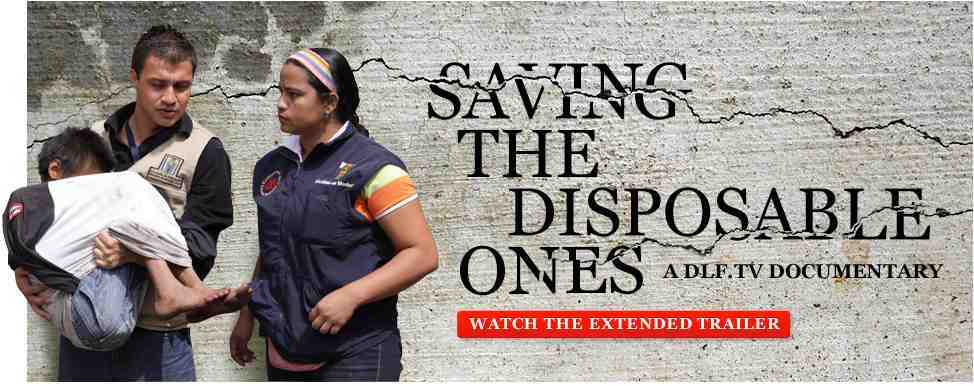
Saving the Disposable Ones: World Premiere Poster for David Lynch Foundation Documentary

April 3, 2010

URL to download and view full size poster of Saving the Disposable Ones

Watch the extended trailer now

DLF.TV Documentary: Saving the Disposable Ones

We can now watch “Saving the Disposable Ones” at this site.

See the Saving the Disposable Ones article by Linda Egenes in Issue 11 of Enlightenment: The Transcendental Meditation Magazine.

DLF.TV Documentary: Saving the Disposable Ones

April 2, 2010
Saving the Disposable Ones

THE PROJECT

“The street children in Colombia are called ‘the disposable ones’ and they live and sometimes die on the streets. These children are unloved, unwanted, and endure abuse on many levels. Colombians are a kind and generous people but crime related to cocaine trafficking has made cities such as Medellin among the most violent in the world. Surviving on the streets is a harsh business. Children as young as six fall into prostitution and many escape the torments of their existence by sniffing glue.” — Stuart Tanner, Director

IT DOESN’T HAVE TO BE THIS WAY

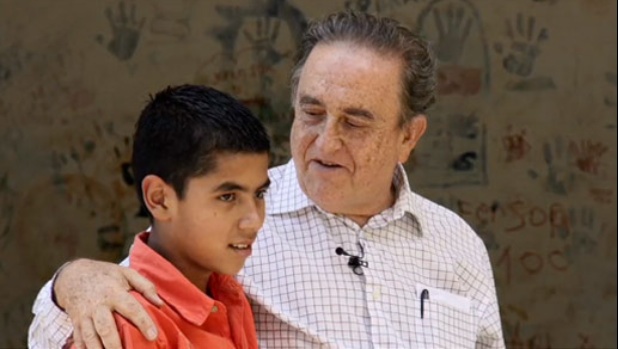
As Stuart reveals in his deeply moving new film, there is a Catholic priest in Colombia, Father Gabriel Mejia, who has worked quietly to provide street children relief from their struggle for survival and support to create a better life for themselves.

Starting in Medellin in the mid-1980’s, Father Gabriel opened the first Center de Hogares Claret: a place where children could come for a good meal and a safe place to sleep. In the late 1980’s, he traveled to the United States where he learned Transcendental Meditation. He knew immediately that he had found the answer to the overwhelming stress the children suffered from living on the streets. As the power of the drug cartels waned, the number of Father Gabriel’s orphan shelters increased. Now, in 2010, there are 47 shelters under Father Gabriel’s direction, which are spread across all of Colombia. His center of operations in Medellin is the former home of Pablo Escobar, the now deceased drug lord.

“In the rough part of Medillin there is an orphan center where children as young as six years old can come to seek solace,” Stuart recalls. “At the center the children can shower and get a good meal. The children are free to come and go as they wish. There is no pressure on them to stay; it is an open house. Father Gabriel has learned through his work with the street children that the desire to move away from their life on the streets must come from within the children themselves. Many of the children are addicted to sniffing glue or gasoline so the process of becoming free of this dependency is a difficult and gradual one. As part of their rehabilitation the children learn to meditate. This is combined with gentle guidance from Father Gabriel and other members of the Foundation.”

As Stuart’s film documents, over time an extraordinary transformation in the lives of the children takes place. They are freed from the torments they endured living on the streets, recover from their drug addictions and begin to gain an education. “The Foundation established by Father Gabriel embodies the wisdom, patience and knowledge that is required to rescue the ‘disposable’ children, restore their rights, their dignity and offer them a much brighter future,” Stuart says.

“The basic therapy is love. Love is the imperial medicine for any illness or disorder. When a child feels they are welcome, when a child feels an educator is concerned about them, the child who came from violence and hostility of the streets, from being mistreated and who became aggressive, they change. The child changes.”

“When a child starts to practice Yoga every day, morning and afternoon. When a child closes the eyes and begins to meditate, when a child practices the Sidhis, they open themselves up to a field of infinite possibilities, as Maharishi says. The world opens for the child. And then the child discovers their essential nature, which is love.

“I think that we’re all committed to transforming the world we’re all living in. We have to leave a better world than the one we found. I believe in solidarity. I believe the solution is within every person. Within each one of us there is a sanctuary, and the moment we take refuge there, we can enter it. Solutions come from every person. When we put them together, there are many solutions. We must globalize love.” Father Gabriel Mejia

The David Lynch Foundation

The David Lynch Foundation has currently provided over 120,000 scholarships around the world including tens of thousands in Latin America. The proceeds from this premiere will go towards the David Lynch Foundation programs in Latin America, including Father Mejia’s Foundation, providing meditation instruction to at-risk populations. The program is offered on a voluntary basis, at no cost to the school or organization. Visit davidlynchfoundation.org for more information on programs and initiatives.

SUPPORT AT-RISK YOUTH

The David Lynch Foundation has currently provided tens of thousands of scholarships in Latin America. The proceeds from this film will go towards DLF programs in Latin America, including Father Mejia’s Foundation.

online
WORLD PREMIERE
April 8, 2010, 7:45pm
Fairfield, IA
Watch the extended #trailer
See Saving the Disposable Ones: World Premiere Poster for David Lynch Foundation Documentary along with longer clips from the film.

See the Saving the Disposable Ones article by Linda Egenes in Issue 11 of Enlightenment: The Transcendental Meditation Magazine.

We can now watch “Saving the Disposable Ones” at this site.

Results of growing vegetables in low heat or unheated greenhouses in Iowa during the winter

March 31, 2010

Iowa State University Extension and Maharishi University of Management Presentations

April 10th High Tunnel/Low Heat Greenhouse Workshop planned for Fairfield

On Saturday, April 10, from 1 to 3 pm, there will be a free high tunnel/low heat greenhouse workshop at the Maharishi University of Management (MUM) Organic Farms greenhouse, 2075 140th St. in Jefferson County, Iowa, about 6 miles north of Fairfield. The main presenters will be Linda Naeve, Iowa State University (ISU) and Steve McLaskey, Maharishi University of Management. The workshop is sponsored by MUM, ISU, and the Leopold Center.

Linda will talk about her experience with high tunnel site selection, types, and construction.

Steve will talk about his research project funded by a Leopold Center grant to test the feasibility of growing vegetables in a large unheated greenhouse in the winter in Iowa. He is comparing growth and yield of several vegetables in the unheated one acre greenhouse with an unheated 30 foot by 96 foot unheated hoop house greenhouse, and a 30 by 96 foot greenhouse heated just enough to keep it from freezing. In each of the unheated greenhouses he is comparing the following row cover treatments:

1. Beds continuously covered with poly.
2. Beds covered with poly at night and uncovered during the day.
3. Beds continuously covered with row cover fabric.
4. Beds covered with row cover at night and uncovered during the day.
5 Uncovered beds.
6. In the one acre greenhouse he also has beds covered with a heavier fabric at night and uncovered during the day.

At the field day Steve will present the results from this winter. This will include minimum and maximum air and soil temperatures in all treatments, yield of 3 crops in each treatment, and observations on crop growth, crop damage from cold, and performance of different varieties of vegetables in an unheated greenhouse. He will also share what he has learned about labor requirements and techniques for removing and replacing row covers in a one acre greenhouse.

To get to the workshop from Fairfield, drive north on Highway 1 about 6 miles, turn left on 140th St. It is the first driveway on the right. From the north, drive south on Highway 1 five miles south of the intersection with Highway 78. Turn right on 140th St, and right at the first driveway.

Any questions can be directed to Steve McLaskey, Director, M.U.M. Organic Farm Greenhouse: 641-472-3233 or Office: 641-472-7000 x3307.

The friendliness of Canadians, Canadian Patriotism, Vancouver as a destination, and the quality of the Olympic Games

March 28, 2010

THE FRIENDLINESS OF CANADIANS

“Thank you, Canada. For being such good hosts. For your unfailing courtesy. For reminding some of us we used to be a more civilized society. Mostly, for welcoming the world with such ease and making lasting friends with all of us.” – Brian Williams, NBC News

“Along the way, there was plenty to like in Vancouver, if not always the weather. The people were generous and spirited, the volunteers cheery. Once, I saw a guy fail to smile; I think he was sentenced to 10 years of hard labor.” – Boston.com

“Before the closing ceremony begins, let me just take the time to thank the people of Vancouver for a wonderful 19 days. The people here couldn’t be nicer, from the volunteers who make sure the buses run on time, to the citizens walking the streets, to the athletes and people from around the world who were here.” – The LA Times

“The Olympics went into overtime Sunday. It was perfect. No one wanted the Warmest Games to end. Warmest weather. Warmest hosts.” – The Miami Herald

“Make no mistake, Canada’s people were the stars of these Games. They jammed the streets of Vancouver, cheered the most obscure sports as long as a Canadian was competing and all but drowned themselves in a sea of red. These are not folks normally given to outbursts of patriotism, but they found their voice here.” – Chicago Sun Times

“Why can’t we be more like Canada? They host the Olympics like they mean it. They smile . and they have the Canadian Mounties. But most of all what they have is a kick-ass national anthem, a tune that says everything about who they are – and about what we, as Americans, are not.” – The Huffington Post

“Graciousness is their default mode here. For the last two weeks, beaming has been a way of life. In a nod to the local vernacular, let me just say this is the nicest city I’ve ever been in.” – The Los Angeles Times

“No question the biggest winners of the 2010 Winter Olympics were the Canadian people, who were unfailingly polite, passionately patriotic, and self-deprecating enough to poke fun at themselves in the Closing Ceremonies.” – The Miami Herald.com

CANADIAN PATRIOTISM

“For Canada, I’d call it a ‘coming of age’ moment. The country, all 35 million of us, were able to bare our patriotic souls in an outburst of unbridled patriotism not seen before.” – The Toronto Star

“…the Games are a remarkable success. Millions of us are watching, and Vancouver is a giant block party. We know Canada is a small country in a big world, and most of us seem thrilled with what our athletes have achieved. Per capita, our medal count is second only to Norway’s.” – The Globe & Mail

“Canadians used to think of themselves as being quiet, modest and unassertive. No longer. After their athletes topped the medals table with 14 golds at the winter Olympic games, some 100,000 flag-waving locals took to the streets of Vancouver and the nearby ski resort of Whistler, deliriously singing the national anthem.” – The Economist

“This quiet city with such beautiful scenery made all of Canada proud. In a nightly transformation, as many as 150,000 people flooded the closed-off downtown streets to savor the Olympic experience. Mostly mild instead of wild, the crowds whooped, hollered, danced and shouted ‘Go Canada Go!’ well into the morning.” – The Houston Chronicle

“The bright-eyed exuberance can be a little overwhelming to someone who has spent many years absorbing cynicism in the Middle East, but the sheer earnestness helps temper what could elsewhere be an aggressive nationalism. Instead, it seems a pure expression of civic boosterism, no more, no less.” – The Jerusalem Post

VANCOUVER AS A DESTINATION

“You’re gorgeous, baby, you’re sophisticated, you live well.Vancouver is Manhattan with mountains. It’s a liquid city, a tomorrow city, equal parts India, China, England, France and the Pacific Northwest. It’s the cool North American sibling.” – The New York Times

“You may have heard that Vancouver is a great city, but it’s better than that. On a good weather day – and we had a spectacular five-day run in the middle of the Games – it is stunningly beautiful, and it is an excellent eating, drinking and shopping city.” – The Boston Globe

“Vancouver looked gorgeous on TV . NBC’s shots of Vancouver’s downtown and waterfront, and aerial views of Whistler ski areas, provided a media boost no marketing campaign could have delivered.” – The Seattle Times

“Vancouver is a city unlike any other. Wherever I look, I see water or mountains — or both. And everyone looks so healthy.” – The Daily Telegraph (UK)

“A remarkable environment. The license plates read ‘Beautiful British Columbia’ for a reason. The Sea-to-Sky Highway carries travelers on a jaw-dropping journey from the serenity of Vancouver’s waterfront to the majesty of Whistler and Blackcomb mountains.” – The Buffalo News

“In winter, the heart of downtown [Vancouver] is 30 minutes from the ski slopes. In summer, sun seekers crowd its beaches and seaside promenades. And despite a rain-prone climate, it displays a perpetually sunny disposition. Consider it the supermodel of North American cities.” – USA Today

“Vancouver is one of North America’s most under-rated tourist destinations. It is a modern, travel-friendly city with a unique mix of cultures. The relatively mild Pacific Northwest climate and an energetic restaurant and nightlife scene are other features that make this such an attractive city.” – LowFares.com

“[Visitors] will find the streets of Vancouver, a city of 2 million, so spotless they’ll think Mr. Clean is the mayor.” – The Miami Herald

“By the end of the 17 days that featured unseasonably warm temperatures and more than a week of brilliant sunshine, the cherry blossoms were blooming and a few fans had been spotted wearing shorts in the street while raucously celebrating Team Canada’s dramatic overtime victory over the Americans in the hockey final.” – The Salt Lake Tribune

“Olympics visitors have become a travel marketer’s dream as they bask in the Vancouver sun, flock to competitions and pour into downtown venues. The throngs of Games guests are magnets that should pull even more tourists to B.C. in the coming months and years.” – The Montreal Gazette

“The city of Vancouver and the ski village of Whistler are terrific hosts for these Olympic Games. The air is clean, the public transit is scarily efficient, and the harbors, with snowcapped mountains for a backdrop, are picturesque. Whistler, two hours to the north and home to the skiing, sliding and Nordic events, is a winter wonderland.” – Time

QUALITY OF THE GAMES EXPERIENCE

“These were the best Winter Games ever.” – Salon.com

“The venues here and the streets of Vancouver and Whistler are joyful places to be.” – The Times London (UK)

“So there was no shortage of Olympic spirit in BC and Vancouver became an amazing party town day and night.” – Inside the Games

“.you can’t stage a better Olympics. The city is beautiful. The venues are modern. The transportation is efficient. But this wasn’t about logistics. In the end, it’s the people that power the movement. The Canadian people pushed these games back from the brink of disaster and right off into history.” – Yahoo.com

“The stadiums are full, the seats are full of passionate fans, the streets are busy and there’s a lot going on . Whether it is ice hockey, curling or speedskating, I haven’t seen an empty seat in the house.” – The Guardian

“The sporting venues were built on time and on budget. A new subway line links the airport to the city centre. The athlete’s village, with a view over one of Vancouver’s many picturesque waterways, sets high standards in energy-efficient construction.” – The Financial Times

“Top that if you can. Amid the tragedy, the medals race and the hockey frenzy, the Vancouver Olympics will be remembered above all for the fervor and ebullience of its Canadian hosts.” – The Associated Press

“What Vancouver did show London was how to stage a Games to be enjoyed by everyone, from athletes to spectators to the general public, who embraced the Olympics with hands uniformly clad in red Olympic mittens.” – Reuters

“There comes a time to tip your toque, and our good friends in Canada deserve our respect for hosting, and excelling in, a memorable Winter Olympics.” – Philly.com

“Known better for their hospitality than their military, Canada mustered a small army of volunteers to pull off these Olympic Games with unfailing patience and cheerfulness.” – The Christian Science Monitor

“In the end, these games became a testament to the resilience of both the Canadian and the Olympic spirit.” – The Australian

“The people of Vancouver embraced their Games as no other citizenry has in recent memory, not even Sydney. They packed the stadiums, thronged in the streets, made the cauldron their mecca.” – The Sydney Morning Herald

“But the Games recovered in a spirited, determined and optimistic fashion, and most of the operation visible to me has been difficult to fault. London faces a big challenge to generate the same level of enthusiasm for the Games.” – BBC

“Seoul’s citizens were wonderfully fanatical in 1988 and Sydneysiders were pretty hyped up in 2000 but the Vancouverites who teemed downtown in their maple leafed garb have surely now set the standard for Londoners for 2012.” – The Daily London Telegraph

“And overall, for athletes, fans, the media and the host nation especially, the Games were a triumph.” – The Independent

“Bottle that Vancouver enthusiasm and London 2012 will really hit the spot. The London Olympics can take their cue from Vancouver, its organizers and its volunteers.” – The Guardian

“I think it’s always obvious at the end of any of these global spectacles whether a particular event was a success, or fell short of the mark. I have no doubt that history will recall these Olympic Winter Games falling into the former category.” – The Daily Mail

VIEW FROM THE TOP

“The Games, suggested Prime Minister Stephen Harper on Monday, have elevated Canada on the world stage. ‘Mark my words, some day historians will look back at Canada’s growing strength in the 21st century and they will say that it all began right here, on the West Coast, with the best Winter Olympic Games the world has ever seen.” – Prime Minister Stephen Harper, CBC.ca

“Most importantly, the Olympics have provided a chance for international investors to get to know us and explore business opportunities.” – BC Premier Gordon Campbell, Forbes

“We hosted the biggest event in our country’s history and it was a huge success.’ The mayor also took time to praise everyone involved in the Games, from the athletes to visitors, the police and finally, residents, for their consideration, co-operation and kindness. ‘The people of Vancouver made the whole country proud.” – Vancouver Mayor Gregor Robertson, The Province

“Furlong, in Sunday’s touching farewell speech, may have said it best: ‘I believe we Canadians tonight are stronger, more united, more in love with our country and more connected with each other than ever before. These Olympic Games have lifted us up. If the Canada that came together on opening night was a little mysterious to some, it no longer is. Now you know us, eh.” – VANOC Chief John Furlong, The Vancouver Sun

“Expo 67 was a moment of coming of age for Canada,” said Michele McKenzie, president of the [Canadian Tourism] commission. “One of the things it did in young people was inspire interest in our country. What this Olympics has done is expose younger generations to what Canada is as a country. . . . I think the world has a much deeper understanding of the country after this. It’s magic.” – CTC President Michele McKenzie, The Vancouver Sun

“US Vice-President Joe Biden complimented Canadians Saturday on what he called an ‘incredible’ Olympic opening ceremony. ‘You guys put on one heck of a show,’ Biden said Saturday afternoon, speaking briefly with reporters. ‘Last night was incredible, absolutely incredible,’ he added.” – US Vice-President Joe Biden, Canada.com

Give TM a chance to prevent more wars

March 28, 2010

News from southeastern Connecticut | Click here for photos of Maharishi, and with The Beatles, in Bangor, Wales, August 24+26, 1967.


Article published Mar 28, 2010

All these ex-military dudes are saying is give TM a chance

By RAYMOND E. SEEBALD and DAVID R. LEFFLER

Wars start in the minds of men, and cycles of conflict ensue. So, too, can wars be prevented in the minds of men, but not always in the conventional way one might think. A new technology of defense has now emerged from a most unexpected quarter and has scientifically shown itself to have intriguing potential to prevent war and create peace.

Here’s the background: The underlying cause of war is accumulated social stress. Stress builds up. Differences arise. Groups take sides. Mediation fails to resolve the differences. Enemies form and arm.

Military organizations theoretically provide a deterrent to conflict, but when social division and enemies directly challenge the execution of national policy, military force can be activated and deployed to protect the nation. Armed conflict follows, with unpredictable outcomes. Even if conflict temporarily solves the problem for the winner, the underlying social stress is increased, fueling more violence and more terrorists.

No stress, no tension

In contrast, the absence of collective stress translates into the absence of tension between competing sides, thereby reducing the probability of hostilities.

Today, an opportunity exists to overcome this cycle of conflict by deploying a scientifically verified technology of defense that neutralizes social stress.

This technology operates on the most fundamental and powerful level of human consciousness, and is accessed and harnessed through a surprising and most unconventional channel-meditation.

In more than 50 studies published in scientific journals, Transcendental Meditation (TM) has been documented to powerfully reduce violence and criminal activity and even to calm open warfare.

Here’s how we believe it works: Just as radio or TV transmitters beam signals through an unseen electromagnetic field, groups of meditating people can generate a strong wave of coherence and positivity through an underlying field of collective consciousness. Stress and tension diminish. The larger the group, the greater the effect.

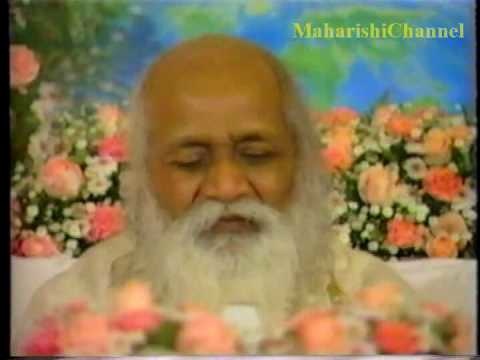
Specifically, the studies demonstrate that when the required threshold of meditators is crossed – approximately the square root of 1 percent of a given population – crime goes down, quality of life indices go up, and war and terrorism abate. Scientists have named this phenomenon the Maharishi Effect, after the founder of Transcendental Meditation, the late Maharishi Mahesh Yogi, who envisioned this possibility for creating global harmony.

In 1993, a two-month Maharishi Effect experiment was implemented in Washington, D.C. The findings published in Social Indicators Research showed that crime fell 24 percent when the peace-creating group reached its maximum size.

A decade before, during fighting in the Middle East, large assemblies of meditators repeatedly caused battlefield casualties to drop dramatically. A global-scale study published in the Journal of Offender Rehabilitation documented a 72 percent drop in international terrorism.

Our armed forces are responsible for defending the country. We suggest they consider adding an unconventional force – a consciousness corps, so to speak – to enhance their mission. Create a coherence-creating group of meditating soldiers exceeding the square root of 1 percent of the population of the United States. It would only take approximately 1,750 personnel.

Really not far-fetched

Admittedly, the idea of fighting terrorism with meditation sounds far-fetched. But the idea of an Internet would have seemed crazy, too, just a generation ago. Now, we communicate across oceans and access a universe of information simply by typing into some invisible field.

At one time, meditation was considered “mystical.” Now, doctors prescribe it and even the government funds research on the health effects of meditation. That’s because hundreds of studies show it effectively reduces individual stress and improves health. Why not put it to the test to improve global health?

As part of its responsibility to protect the nation, the U.S. military is obligated to thoroughly examine scientifically proven methods for preventing war and terrorism. All that is necessary is to provide the proper training for a group of military personnel or indeed, any large group within the country.

With all the conventional methods we utilize to protect life, liberty, and freedom, we should also be open to trying new, creative ideas, no matter how unconventional they seem.

Retired Coast Guard Capt. Raymond E. Seebald was a military aide to presidents Ronald W. Reagan and George H.W. Bush from 1986-1990. As captain of the Port in Chicago he developed post 9/11 security standards for U.S. ports. He graduated from the U.S. Coast Guard Academy in 1977. David R. Leffler is an Air Force veteran and executive director of the Center for Advanced Military Science (CAMS). He served eight years in the U.S. Air Force.

The authors served as associates of the Proteus Management Group at the Center for Strategic Leadership, U.S. Army War College.

“Heyam Dukham Anagatam” — Avert the danger that has not yet come

March 20, 2010
Click here for India News from Daily India

How transcendental meditation can prevent war and terrorism

From ANI

Washington, March 20: A new research paper has pointed how militaries worldwide could use the Transcendental Meditation and TM-Sidhi program, founded by Indian spiritual guru Maharishi Mahesh Yogi, as a non-religious and scientifically verified way to prevent war and terrorism.

When used in a military context, these meditation practices are known as Invincible Defense Technology (IDT).

The research paper describes the concept of a “Prevention Wing of the Military,” a group of military personnel that practices the advanced TM-Sidhi program twice daily as a group.

A group that reaches a critical threshold in size has been scientifically shown to reduce collective societal stress.

The paper hypothesizes that war, terrorism, and crime are caused by collective societal stress.

The absence of collective stress translates into the absence of tension between countries, between religious groups, or even within individual terrorists.

The paper proposes that, by applying this non-lethal and non-destructive technology, any military can reduce societal stress and prevent enemies from arising.

If IDT prevents the emergence of enemies, the military has no one to fight, so the nation becomes invincible.

Over 50 scientific studies have found that when 1percent of a given population practices Transcendental Meditation, or when sufficiently large groups practice the TM-Sidhi program together twice daily, measurable positive changes take place throughout society as a whole.

The studies show decreased violence, crime, car accidents, and suicides, and improved quality of life in society.

The paper reviews IDT research, such as a study published in the Yale University-edited Journal of Conflict Resolution showing that an intervention by a civilian group in Israel resulted in a 76 percent reduction in war deaths in neighboring Lebanon.

Seven subsequent, consecutive experiments over a two-year period during the peak of the Lebanon war found that war-related fatalities decreased by 71 percent, war-related injuries fell by 68 percent, the level of conflict dropped by 48 percent, and cooperation among antagonists increased by 66 percent.

A follow-up study published in the Journal of Social Behavior and Personality found that the likelihood that these combined results were due to chance is less than one in a quintillion.

A global-scale study published in the Journal of Offender Rehabilitation documented a 72 percent drop in international terrorism when IDT groups were large enough to affect the global population.

According to David R. Leffler, the research paper’s author, “This new approach, derived from the ancient Vedic tradition of India, is supported by over 50 scientific studies. IDT can create victory before war, and can assist in peacemaking, peacekeeping, and peacebuilding.”

Copyright Asian News International/DailyIndia.com

I used the photo of Maharishi from a similar article on IndiaTalkies website posted by Nitesh on Mar 20th, 2010 and filed under Science / Technology.

TM brings relief to veterans suffering from post-traumatic stress disorder (PTSD)

March 19, 2010

Medill on the Hill reporters are undergraduate students in Northwestern University’s Medill School of Journalism. They serve as mobile journalists, filing quick updates on news events around Washington, especially from Capitol Hill; as enterprise reporters finding original stories; and as Web producers and reporters. They are covering Washington and posting stories to Medill on the Hill aimed at a young audience to report on how and why what happens in Washington matters to 18- to 24-year-olds. The students’ work is supervised by Medill Associate Professors Mary Coffman and Matt Mansfield, who are based in the school’s Washington program.

The war within: Overcoming trauma, veterans find strength in meditation and yoga

by Samantha Michaels

Mar 05, 2010

WASHINGTON — When David George finished his military tour in Iraq a few years ago, he departed a war zone and returned home to Brookeville, Md.

Physically removed from the battlegrounds, however, his body hadn’t yet shaken the battle.

“One day I was standing in line at a [store] and I smelled burning rubber,” he said. “All of a sudden my brain turned on a switch: I started sweating, my heart started pounding, hyper vigilance kicked in. Everything went into war mode, just standing in line trying to buy chips and soda.”

Like a growing number of veterans, this 26-year-old infantryman was diagnosed with post-traumatic stress disorder (PTSD), a severe anxiety condition which results from trauma. Estimated to afflict more than 300,000 Iraq and Afghanistan veterans, PTSD is often treated with counseling and medication.

But in George’s case, salvation came with meditation, not medication.

“With meditation, I had a break from the anxiety attack that had become my life,” he said.

In January, the Department of Defense announced it would allocate $1 billion of its 2011 budget to research and care for traumatic brain injuries like PTSD. As the number of PTSD cases skyrockets and the military devotes more funds to treating them, George’s story provides a glimpse into the promise of alternative therapies like meditation and yoga.

“Even if we’re army strong, we’re still human,” said Sue Lynch, executive director of There and Back Again, a non-profit organization that uses yoga, meditation and a number of other therapies to promote wellness among servicemen. “We have emotions which are going to come out somehow, so why not learn tools to shift recovery into a positive experience of self-care?”

Invisible Wounds: Military Veterans and Mental Health

Since the beginning of the Iraq and Afghanistan wars, mental health has been a growing concern for the military. Between 2001 and 2007, one in seven combat veterans sought help for mental illness, and according to VA records, about half of these cases involved PTSD. One in five patients seen last year in VA’s health care facilities had a mental health diagnosis.

Experts believe the prevalence of PTSD may be even greater, because VA records exclude a number of patients, including veterans treated at storefront VA Centers, active-duty soldiers, and veterans who have not sought treatment.

PTSD can manifest as nightmares, flashbacks, insomnia, anger, depression or hyper vigilance. Attempting to deal with these symptoms, many veterans withdraw from friends and family.

“In order to do the things we did over there, and to live with the things we saw, you’ve got to be angry,” said George, one of 47 soldiers injured during a car bombing in Iraq. “It’s a disgusting feeling that’s part of war culture, and only war culture. When you come home you’re told to forget about it, because you can’t act or feel that way. You try to detach that anger from yourself, though it’s a part of you and your brain.”

Soldiers undergo physical training before deployment, but they often lack emotional tools to cope with trauma.

“When things break down it’s along other axis as well—emotional and spiritual dimensions,” said Colonel Brian M. Rees, a medical corps command surgeon who served in Afghanistan and Iraq.

Yoga: Reintegrating mind with body

To overcome the breakdown, some veterans use yoga.

“In combat there’s trauma and you feel helpless, and then you go to the VA and you’re on medication and you feel helpless,” said Lynch, a veteran of Operation Iraqi Freedom. “Yoga gives control to the vets, allowing them to take charge.”

During war, a soldier’s mind may go blank to avoid stress—a survival mechanism which often lingers with negative consequences after conflict.

“Victims of trauma carry a brokenness, a division of mind and body that needs to be reintegrated,” said David Alan Harris, an award-winning therapist who worked with former child soldiers in Sierra Leone.

The term “yoga” is derived from the Sanskrit word “yuj,” which means “to unite” or “to integrate.” Often incorporating exercise, breathing and meditation, it promotes balance.

“Body-based techniques help PTSD patients self-sooth,” said Rebecca Milliken, a licensed counselor and dance movement therapist who has worked with prison inmates. “They identify parts of their bodies that feel safe and relaxed, so when a flashback comes, they can go to a safe place in their minds.”

For Eric Fretz, a Navy veteran who served three deployments off the Persian Gulf, yoga helped relieve severe stress and depression.

“I’d be out running and thinking about stuff, and I’d start crying, and I couldn’t stop,” he said. “That’s off-putting for somebody who’s never had an issue of emotional control…Yoga became a life vest, and I was clinging to it.”

At some VA medical centers, veterans take classes in Yoga Nidra, an ancient practice that resembles guided meditation. The technique uses relaxation and breathing exercises to deconstruct the thoughts and emotions which trigger PTSD.

Yoga classes provide group support for veterans who have withdrawn from family and friends.

“The kind of camaraderie that exists in a VA hospital among veterans would be a great resource to draw on in building the trust that’s necessary for exploration through movement,” said Harris.

Still, yoga instructors face a challenge: some soldiers are skeptical of the practice.

“There’s a soldier culture of manliness that isn’t a perfect fit for yoga,” said Fretz, who added that the poses can ultimately leave “even the toughest guys whimpering.”

Transcendental Meditation: Targeting the Mind

A number of military physicians also believe meditation can help veterans recover from PTSD. Some experts say Transcendental Meditation (TM) is particularly beneficial.

Practiced twice daily for 15 minutes, TM is a self-awareness technique of Indian origin. Sitting with eyes closed, participants enter a state of restful awareness. The physical effects are helpful for PTSD patients who operate under heightened stress levels.

“Severe stress can shut down the prefrontal cortex, which is like the commander-in-chief of the brain,” said Dr. Sarina Grosswald, the executive director of PTSD and stress-related disorders for the David Lynch Foundation. “TM rebalances the brain chemistry.”

During TM, the body reaches a level of rest equivalent to deep sleep—undergoing a reduction in heart rate, breath rate and blood flow to the limbs. At the same time, blood flow to the brain increases, reactivating the prefrontal cortex and improving communication with other areas of the brain.

“TM creates the brain waves associated with settled-ness,” said Grosswald. “As you experience it over and over, these brain connections get stronger, and the connections related to trauma begin to fade away.”

Dissatisfied with his medication, George relieved pain with drugs and alcohol before discovering TM. With meditation, he reconnected with himself.

“Practicing TM was like being in the zone—like when you’re ready to kiss somebody, you both know it’s right and a spark flies in your chest,” he said. “Except it was something I triggered within myself, something I did to myself. Within the first month I realized I was an individual that I’d been ignoring.”

Despite success stories, experts face obstacles as they promote TM on a greater scale. Rees has led scientific studies to gain support, but he said people don’t always recognize TM’s distinctive benefits.

“There is a lack of differentiation between TM and other meditative techniques,” he said.

Still, he continues to recommend TM to military patients.

“We should be exploring TM,” he said. “It’s a stone that has remained unturned.”

Investing in mental armor

Secretary of Veterans’ Affairs Eric Shinseki called PTSD treatment “central to the VA’s mission” when the White House announced a proposed $125 billion budget for the Department of Veterans’ Affairs in February. Spending requests allocate $5.2 billion for mental health, an 8.5 percent increase in current spending.

The military is examining alternative PTSD therapies, but meditation and yoga advocates say they should do more.

“It’d be great if yoga could be part of our out-briefing,” said Fretz. “In general, the resources for returning veterans could be allocated better.”

A combination of medicines, psychotherapy and mind-body approaches may be most effective.

“We have suffered from an either-or approach that’s very western,” said Rosa E. Garcia-Peltoniemi, a clinical psychologist at The Center for Victims of Torture. “We say it’s either the body or the mind, but in actuality, it’s both.”

Therapists suggest that yoga and meditation can be preventative measures, not simply therapies.

According to Grosswald, the military takes an academic approach to stress reduction, requiring soldiers to complete stress management courses before deployment. If soldiers were equipped with meditation and yoga, they might be less likely to develop PTSD during combat.

“You can teach somebody something from a book, but a lot of that goes out the window when trauma happens,” she said. “With TM, you’re training the brain so the threshold for stress is different… Soldiers could come back to a baseline quicker, responding in a clearer way.”

However, meditation and yoga classes require trained instructors, which may be in short supply. Fretz said he had access to two yoga instructors in Iraq, but most soldiers are not so lucky.

“If the instructors leave, then the yoga stops,” he said.

Although the Department of Veterans’ Affairs has hired 6,000 new mental health professionals since 2005, raising the number to 19,000, experts say more therapists are needed. A person learns TM through one-on-one instruction with a trained practitioner, which can be expensive.

Still, advocates say it is ultimately cost-effective.

“Health care costs and professional resources can be saved because people wouldn’t spend years going through health counseling in VA medical centers,” said Grosswald.

For George, the investment in meditation has been worth it. TM relieved his PTSD symptoms, but it also led to less expected improvements. After learning the technique, he became a faster typist and a better drummer. Dyslexic since childhood, he noticed that reading was more pleasurable. He stopped drinking and began to prioritize himself.

“I really do treat myself like my best friend now,” he said. “Medications took away the symptoms, but they didn’t leave me the same. TM has left me better.

Great Donovan interview on The Huffington Post

March 19, 2010

Mike Ragogna: From Atlantis to Los Angeles’ El Rey: A Conversation with Donovan