Denise Levertov, in her poem, Of Being, describes the mysterious experience of inner happiness, of just being. Though provisional in time, it is removed from great suffering and fear, and hails from an eternal inner source. Her description sounds like a taste of bliss consciousness, which is self-sufficient, not dependent on anything outside itself, and out of time — transcendental pure Being.
Of Being
By Denise Levertov
I know this happiness
is provisional:
the looming presences—
great suffering, great fear—
withdraw only
into peripheral vision:
but ineluctable this shimmering
of wind in the blue leaves:
this flood of stillness
widening the lake of sky:
this need to dance,
this need to kneel:
this mystery:
# # #
Denise Levertov must have also written Primary Wonder after becoming present to the “quiet mystery” that sustains everything.
Naomi Shihab Nye says something similar in her poem, So Much Happiness, where “there is no place large enough / to contain so much happiness, / you shrug, you raise your hands, and it flows out of you / into everything you touch.”
William Stafford also describes something similar in his poem, Just Thinking, where he appreciates the value “of just being there.”
Here is a poem I wrote on this subject in the early 90’s: Seeing Is Being.
Speaking Of Being, a mysterious bird in this Wallace Stevens poem, Of Mere Being, also uses the image of wind moving slowly in the branches, and teaches us the wonder of just being our self.
Derek Walcott, when he wrote his poem Love After Love, described it as withdrawing into a world of silence, and creating from there, as if in a trance, being blessed by “a kind of fleeting grace” if something happens.
Besides the magical experience of writing such a poem, I also see it as an experience of inner transformation, a time when you first acknowledge the value of just your self. Walcott instructs the reader to “Give back your heart / to itself, to the stranger who has loved you / all your life, whom you ignored / for another, who knows you by heart.”
The New Yorker cartoonist Alex Gregory uses humor to show how social media changes the ways we communicate, and what that’s doing to us.
Wanted to share this funny cartoon by Alex Gregory in The New Yorker Magazine on Instagram. It’s how social media is changing the way we communicate, and what that’s doing to us. It’s funny because it rings true, to the extreme. Check out the facial expression on the guy next to the one complaining. Gregory conveys a lot with a few lines and dots. Brilliant!
Read about Alex Gregory in A Case For Pencils posted 2016-09-27.
Someone explained once how the pieces of what we are
fall downwards at the same rate
as the Universe.
The atoms of us, falling towards the centre
of whatever everything is. And we don’t see it.
We only sense their slight drag in the lifting hand.
That’s what weight is, that communal process of falling.
Furthermore, these atoms carry hooks, like burrs,
hooks catching like hooks, like clinging to like,
that’s what keeps us from becoming something else,
and why in early love, we sometimes
feel the tug of the heart snagging on another’s heart.
Only the atoms of the soul are perfect spheres
with no means of holding on to the world
or perhaps no need for holding on,
and so they fall through our lives catching
against nothing, like perfect rain,
and in the end, he wrote, mix in that common well of light
at the centre of whatever the suspected
centre is, or might have been.
Michaela‘s website, The Living Room, posted this entry on the German poet Rainer Maria Rilke. She says, “Rilke wrote the poem Buddha in Glory at the time he worked as a secretary for the sculptor Auguste Rodin, who he admired very much. He lived in Rodin’s house and was fascinated with a statue of the Buddha in front of his guest quarters. Buddha in glory is one of three poems and it said that Rilke perceived them, sitting in quiet meditation in front of the Buddha statue in Rodin’s garden.”
Buddha in Glory
by Rainer M Rilke
Center of all centers, core of cores,
almond self-enclosed, and growing sweet–
all this universe, to the furthest stars
all beyond them, is your flesh, your fruit.
Now you feel how nothing clings to you;
your vast shell reaches into endless space,
and there the rich, thick fluids rise and flow.
Illuminated in your infinite peace,
a billion stars go spinning through the night,
blazing high above your head.
But in you is the presence that
will be, when all the stars are dead.
ET: Why Celebs Are Obsessed With Transcendental Meditation Entertainment Tonight http://et.tv/2CFjfWU
Publishedthis high-powered 2-minute news clip shows why so many stars are using this silent practice to really unplug. Featured in the report are Katy Perry, Hugh Jackman and Deborra-Lee Furness, Cameron Diaz, Fergie, Chrissy Metz, Jerry Seinfeld, Oprah and Tom Hanks. It’s a veritable free celeb-filled TM promo! Watch it on ET, MSN, AOL, Yahoo, or here: https://goo.gl/CzKDaf.
KYOU FOX 15.1 News Story, Wednesday, 2/14/2018, MUM Film Class
Maharishi University of Management offers a program called the David Lynch MFA in Screenwriting…and for 10 days… 16 students from Maine to California …are staying in Fairfield with dreams of one day being able to share their writing with the world…
What do you do to unwind after a long, hard day at work? Some of us like to veg out on the couch, drink a glass of wine, or — in the case of some of the world’s top business leaders — practice meditation. Specifically, Transcendental Meditation.
Transcendental Meditation is a technique that involves closing your eyes, 20 minutes twice a day, so that you can “experience a field of calm deep within.”
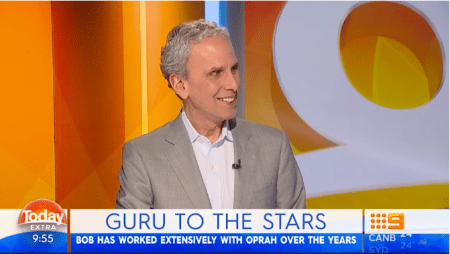
Bob Roth, a teacher of the technique and author of the book “Strength in Stillness: The Power of Transcendental Meditation,” joined us to discuss its popularity in the finance industry and some of the health benefits that you can receive from it.
David Brancaccio: So the guy who founded the biggest hedge fund in the world, Ray Dalio at Bridgewater Associates, does Transcendental Meditation. He’s proud of it. He is not alone here in the financial services capital of the world?
Bob Roth: No, and actually, Ray’s been doing it for almost 50 years, and he says it gives him energy, it gives him focus, it gives him clarity, it gives him creativity. It wakes up the creative centers in the brain. And he also says it allows him to be like a ninja — great term — where everything is coming at him very fast. But inside, it’s coming at him slow motion, and he can really discern, he can really make the correct decisions. It’s really important to him. As a matter of fact, he’s made it available to 700 of his employees at Bridgewater.
Brancaccio: And he’s not alone on Wall Street?
Roth: No, hedge funds, banks, financial services, institutions, as well as media companies and everyone else. Anywhere stress is a problem and the need to be focused and creative and innovative and a good problem solver — why not? It’s a simple tool and it’s accessible to anyone.
Brancaccio: So not just the finance and private equity crowd, I see you were doing something with Jerry Seinfeld — the comedian — the other day?
Roth: Again, we live in an epidemic of stress, we live in an epidemic where things are going faster and faster and faster. It requires creativity. Again, focus. Clarity of mind. And stress can overcome that. Stress can cloud thinking. And Jerry Seinfeld is a comedian — has to be on his toes and is alert every moment of the day. So he’s also been meditating for over 40 years, and he says it’s hard enough to get to the top. And people in business will know that it’s much tougher to stay at the top, so he says his 20-minute practice twice a day of TM is a game changer for him.
Brancaccio: Bob, the book emphasizes that the approach here isn’t hard. How can it not be difficult? All you have to do to make me think of something is to tell me not to think of something.
Roth: There are types of meditation that we hear about. You have to clear your mind of thoughts. You have to believe in stuff. You have to focus and concentrate. Fortunately, that’s not Transcendental Meditation. I like to use the example of an ocean. Waves on the surface, turbulent waves on the surface, the depth of the ocean naturally silent. Our mind is the same, and we’d all like to have some inner calm or inner equilibrium. But where do you find it? Well, there’s the level of the mind deep within; it is already calm. That’s the hypothesis. And in Transcendental Meditation you learn a technique. You get what’s called a mantra, which is a word or a sound from a teacher. Nothing mystical here, just a tool. And then you learn how to use it to access that calm, that settledness, that equilibrium. The results are immediate. The research shows — and there is a lot of published research to show this —they’re long term, they’re cumulative.
Brancaccio: Published research — you mean scientific, peer-reviewed?
Roth: Peer reviewed in the American Medical Association Journal, American Heart Association Journal. For example, the National Institutes of Health have given tens of millions of dollars to show that Transcendental Meditation is as effective, if not more effective, for reducing high blood pressure and other ailment sides of heart disease than even anti -hypertensive medication — with no side effects.
Brancaccio: I know,but you must run into people who are suspicious of this. I remember in the book, when you first started out, you didn’t even want to tell your family members what you were up to outside.
Roth: That was back in 1969. Yeah, times, have changed and I think times have changed with the regard meditation has. No. 1, the problem with stress is greater than it’s ever been before. And we also know from medical science it’s more damaging than we ever thought. Second, we go to the medicine chest. “Oh, I’m stressed. What am I going to take?” “Well, fine, you can take Ambien if you can’t sleep, and your child can’t study so you give him Ritalin. All these medications, they have side effects. Or else we self-medicate. Alcohol. Too much coffee. The problem of stress is getting worse. We know we’re on a trajectory that’s not getting better. And why not take a few minutes out of the day and just access that calm, that equilibrium that lies within.
I’ll tell you one quick story. So a Wall Street guy came into the office sent by his meditating wife, I’m sure, and he came with his 14-year-old kid. And the guy said, “I really want to learn, it’s done great stuff for my wife. I’m under a lot of pressure. I’m not sleeping well, but 20 minutes twice a day — who’s got the time? I don’t got the time.” And I think the son was set up by the wife, because the son said, “Dad, there’s 1,440 minutes in a day. You don’t have 40 minutes for self care?” When he said self care, I knew it was the wife. “You don’t have 40 minutes to take care of yourself?”
So this is done first thing in the morning. You get up 20 minutes earlier, it’s better than sleep. It’s a deeper rest than sleep. And you do it sometime at the end of the day to get rid of stress and you sleep better at night and you enjoy your family more during the day.
Brancaccio: Let me just ask one last quick business model question. If you pay to learn how to do Transcendental Meditation, are you signing up like a gym membership and you’re stuck for life?
Roth: Transcendental Meditation is actually taught through the Center for Leadership Performance and/or TM.org. It’s a nonprofit organization. You do pay an initial course fee, like you would to do any educational program, and then that’s it for life. And part of the course fee when you pay to learn goes to teach veterans to learn for free. So you’re really contributing to people who really need the meditation and may not have access to it.
16 students met with producer Michael Rauch Sunday afternoon at the Maharishi University of Management./KTVO
FAIRFIELD, IOWA — Meditate and create. That’s the main focus of the Maharishi University of Management’s David Lynch Screenwriting Program.
Sixteen students are currently enrolled in this two-year masters in fine arts program. Over the course of 10 days, they’ll go through intensive training and meet with well-known producers and executives in the business.
Dorothy Rompalske is the program’s director. She says teaching Transcendental Meditation is what makes this course so special.
“We use Transcendental Meditation in order for the students to sort of dive within and find material that they feel really passionate about, writing about,” said Rompalske.
And the meditation seems to really be working for the students.
“One of the scripts I wrote pretty much all came through meditation. And it’s such a different way of thinking that I wasn’t used to, so it’s just opened a lot more creativity,” said student Josh Lee.
Saturday, students had the chance to meet with Michael Rauch, who’s produced various TV shows such as ‘Royal Pains’ and ‘Beautiful People.’
Rauch answered questions and talked about what it’s really like to be a writer and work in this industry.
“To sit down and get the actual information on how to do it, how they pitch, how the process is, it’s really a unique and valuable experience,” said student Tracy Flannigan.
While the David Lynch screenwriting program is only a year old, Rompalske says she hopes to see it grow over the next few years.
“I think we’re such a different model than what people are used to, so we’ll have hopefully even more students next time around,” said Rompalske.
MUM is currently accepting applications for the program.
Bob Roth sat down with Robin Roberts and George Stephanopoulos to discuss the benefits of Transcendental Meditation on Good Morning America Live in Times Square. His new book, Strength in Stillness: The Power of Transcendental Meditation, came out today, Feb 6, 2018.
Along with many A-list celebrities who have learned TM from Bob Roth—Oprah Winfrey, David Letterman, Ellen Degeneres, Hugh Jackman, Russell Brand, Katy Perry, Michael J. Fox, Tom Hanks, Martin Scorsese, Stella McCartney, and many more—Robin and George are also students of his.
Bob says, “We’re talking in Transcendental Meditation a medical tool that can just give anyone access whether they believe in it or not. You can be a 100% skeptical. And anyone can learn it—how to allow the active thinking mind to just access calm. And when that happens, your body, according to research, gains a profound state of rest.”
Bob Roth describes how TM works to George Stephanopolous & Robin Roberts
Bob explains, “In Transcendental Meditation we just effortlessly access these deeper, quieter, calmer levels that are already there. And it happens effortlessly because the nature of the mind is to be drawn to something more satisfying, and inside, most satisfying.”
Robin adds the notion of having no expectations, then brings up the issue of time, the amount of time needed to meditate for 20 minutes twice a day. Bobby then relates a true, funny story about that.
George says, “I think it creates time. If you do 40 minutes a day, you go through the rest of the 22, 23 hours, feeling more calm, more focused, more connected to everyone around you, and that’s invaluable.”
Robin says, “It calms you and energizes you at the same time. It’s the oddest thing.” George, who was very skeptical when he learned, reiterates, “Exactly!”
I really appreciate how Bob keeps coming back to TM basics in this interview when he describes the nature of our minds at the surface and at the depth. “Transcendental Meditation is a very natural technique that gives effortless access to the stillness that lies within.”
They actually started 15 minutes later, so fast forward to watch it below. Hugh Jackman and Deborra-Lee Furness open the evening, then invite Bob Roth up to the stage. Bobby later invites Jerry Seinfeld to join him on stage around 40 minutes in.
Jerry is on for 15 minutes. In the first 7 minutes he shares where he first learned TM as a college student and says it gave him “the greatest rest that there is in the world.” Joking about how busy and tiring it is to live and work in New York City, he tells everyone they need to learn how to recharge naturally. Jerry loves life and says, “TM is the greatest tool for work.”
In the next half of the discussion Jerry talks about his work for the David Lynch Foundation. Bob starts to tell the story of how they asked Jerry to perform for a fundraiser. Jerry takes over and tells it like it was in his own hilarious way, when he found out he was going to be on the same stage that night with Beatles Paul and Ringo who were headlining the first Change Begins Within benefit concert at Radio City Music Hall. He also takes questions from the audience. Definitely one of the highlights of the evening!
Proceeds from today’s event and sales of the book will go towards teaching women and children who are survivors of domestic violence and sexual assault to meditate through the Manhattan Family Justice Center.
Visit the book’s website www.stillnessbook.com and scroll down to see Events & Tour Dates for book signings at locations around the country, some with other celebrities joining Bob Roth. Below that you will also find featured print and online news and stories, as well as a video library with event, television, radio, and podcast appearances.
More News Coverage on Bob Roth and his Book Launch
On Wed, Feb 7, Bob was interviewed by Rosanna Scotto and Lori Stokes on Good Day NY FOX 5 | WNYW. Rosanna posted a photo on Instagram of the 3 of them. The next book event followed that evening at the 92Y On Demand. It was moderated by Tony, Emmy and Golden Globe-winning actress and writer Mary-Louise Parker. Watch their wonderful conversation here.
More news coverage continues to come out. Feb 10, 2018, The Guardian published this excellent article: Top US meditation teacher brings his message to stressed-out Britons. Guru Bob Roth, who numbers Katy Perry and Hugh Jackman among his fans, is to set up a TM project in London schools.
Bob Roth @Alexander Berg
Bob Roth is the most experienced and sought-after meditation teacher in America. Over the past forty-five years, Bob has taught Transcendental Meditation to thousands of people, from billionaire CEOs to combat-scarred veterans, to at-risk students in violence-filled schools, to leading figures in government, business, medicine, media, the arts, and more. In addition to serving as the CEO of the David Lynch Foundation he also directs the Center for Leadership Performance.
In Strength in Stillness, Roth breaks down the science behind meditation in a new, accessible way. He highlights the three distinct types of meditation—focused attention, open monitoring, and self-transcending—and showcases the evidence that the third, Transcendental Meditation, is the most effective and efficient way to reduce stress, access inner power, and build resilience. Free of gimmicks, mystical verbiage, and over-inflated research studies, the book is a simple and straightforward guide to calming mind, body, and spirit.
I just love this funny video clip of Russell Brand and Bob Roth promoting the British and American cover versions of Strength In Stillness. Bob says it’s available in 9 different languages. Watch what Russell has to say about it all.
• Watch a replay of Bob Roth and David Lynch talk about Transcendental Meditation and the work of the David Lynch Foundation. The evening, hosted by Writers Bloc Presents, took place at the Wilshire Ebell Theatre in Los Angeles on Feb 12, 2018.
Have you ever heard of Eva Cassidy, or heard her sing? Eva Marie Cassidy (February 2, 1963 – November 2, 1996) was an unpretentious humble girl from small town Bowie, Maryland. She worked hard with her mother in their nursery growing flowers and plants. But Eva also sang. She had the voice of an angel, and delivered songs with purity, passion, and power. She accompanied herself on guitar, and also sang with a band. She would immerse herself in the words, she “connected to the lyric” and lived the songs. Her voice communicated directly to the hearts of her listeners. Rarely was there a dry eye in the place.
In the film Eva Cassidy: Timeless Voice, Carrie Grant, a British vocal coach who worked with top recording artists in the UK and US, was amazed when she heard Eva’s voice. After listening to Over The Rainbow, she said, “I cannot imagine what Eva Cassidy was thinking of when she chose to make it sound the way it does. But it’s just genius!” She describes how she redefines the song in unexpected ways, “yet for some reason it just works.”
She also explained the effect that Eva’s voice had on listeners. “She sounds like she’s singing just to you. And that is what makes it so intimate. And that becomes even more profound once you know she’s no longer alive. Because it’s haunting. And it’s personal.”
Eva sang the songs that she liked, regardless of genres, which is why record companies would not sign her during the days of manufactured music. They couldn’t slot her into a specific category. She sang blues, jazz, gospel, folk, old standards, and more. At first she was extremely shy, didn’t care for stage presence or how she dressed. With the help of local musicians she performed at Blues Alley, a local jazz spot in Georgetown, Maryland. One of her shows was later recorded. She sold two locally produced CDs out of the trunk of her car. You can listen to Live At Blues Alley on Spotify.
We might wonder how her singing was recorded in the first place when no company would sign her. One comment on Ain’t No Sunshine explained that the world owes Chris Biondo a debt of gratitude. Chris worked as a bassist, guitarist, keyboardist, recording engineer, and producer. He owned a studio in the 80s and 90s, and Eva would come in for session work. He recognized her ability, and said he “would just roll tape and stay out of her way.” At one point they were romantically involved. Chris “was the one who recognized her transcendent, ageless genius.”
In 1986 Chris began recording the then-unknown singer Eva Cassidy. For the next ten years he worked with Eva to develop her as a recording artist, producing most of her recordings available today. In the years since Eva’s death in 1996, her recordings have sold more than 10 million copies and achieved international renown, including three albums that reached number one in the UK charts. Chris has received numerous Gold and Platinum records in the U.S. and internationally for his work with Eva.
Bill Straw of Blix Street Records signed her up and continues to release and reissue her music, like the 20th anniversary of the new 32 track/2CD Nightbird album, The Best Of Eva Cassidy, Simply Eva, and eight other collections listed there that you can sample.
Sting himself was blown away when he heard her rendition of his song. He put a copy of her Songbird CD into record producer David Foster’s hands who quoted him saying, “‘If you want to hear the greatest version of my song ever’—he didn’t say it in an egotistical way—he said, ‘listen to Fields Of Gold with this girl, it’ll change your life.’ And her voice is life-changing, she’s that spiritual.” I love that song and remember hearing it on an airplane’s music channel during a flight. It was astounding! I had to find out who this singer was.
Another singer-songwriter who was overwhelmed by Eva Cassidy singing one of his songs was award-winning acoustic bluesman Doug MacLeod. During an interview he was asked: “Your songs have been recorded by many artists, so which are your favorite interpretations?” He said he had a couple of favorites, and that Eva Cassidy’s version of Nightbird was one of them. He told the story of how he first heard Eva sing when his wife put on her CD in the car. He said it moved him so much, “I pulled over to the side of the road and I was weeping.” When people ask him to play Nightbird, he tells them that “if they want to hear THE version, she is the one to listen to.” Read the whole interesting story in the highlighted comment Harvey Bobb posted to Eva Cassidy – Nightbird.
A relatively unknown singer in America at the time, somehow her music made its way across the Atlantic. From the first time Sir Terry Wogan, a BBC radio broadcaster, listened to Eva sing, he knew “she was an outstanding talent.” He said, “It was pure sound. A bell-like voice. She had this perfect pitch.” He couldn’t wait to play it on the radio. His was the most listened to program in the country at the time. It created a huge response from many of their seven million listeners wanting to know who she was. Unfortunately they found out that she had died two years earlier of cancer at the young age of 33.
When Mark Hagon, a Top of the Pops BBC (TOTP2) producer at the time, agreed to play that homemade video of Eva Cassidy singing Over The Rainbow, people kept calling in for weeks wanting to know her name. The listening public created a demand for her music. It was a groundswell! Sales of her CDs went from a hundred thousand to over a million in the UK. “Radio broke it. Television exploded it.”
Cropped screensaver taken from the video of Eva Cassidy singing Over The Rainbow at Blues Alley, Georgetown, DC, January 3, 1996.
At one point five of her CDs became top sellers at the same time, a feat usually held by the Beatles and Rolling Stones. She was then discovered back home in the USA. ABC Nightline in Washington, DC researched and produced The Eva Cassidy Story (18:40). It was shown in many countries around the world and within a week of it airing her CDs went to the top of the local charts.
In Timeless Voice, Terry Wogan concluded, “You’d have to say about Eva Cassidy that her talent was pretty timeless. The voice has a quality of timelessness about it. Anytime you would hear it, whether it was thirty years ago, or thirty years from now, it’ll still be worth listening to, and still strike a responsive chord in most people’s hearts.”
Mick Fleetwood of Fleetwood Mac who knew Eva said, “She was brilliant. She had the magic. And I call it, It. She had It!”
Eva Cassidy: 25 years ago, a little known singer, Eva Cassidy, and her producer scraped together enough money to record a gig and self-produce an album. This is the story of one night – 3rd January 1996 – at a jazz club in Georgetown, Washington D.C., a set of recordings that almost never happened, and the extraordinary success that followed told by her band members who played with her that night. No one could have imagined that the audio and video recordings from that night would prove to be the foundation of her unparalleled posthumous worldwide success.