Here’s a little backgrounder on this poem, which I wrote around 20 years ago while on a course at Heavenly Mountain in Boone, North Carolina. The first part was originally just a haiku. It was a fun way to point out the need to increase awareness as a preparation to write. Years later, an idea presented itself extending the metaphor to its logical conclusion. The phrase, taken literally, was an unexpected surprise, along with the irresistible pun. I added them as a hoku, completing the poem, transforming it into a tanka on writing. Enjoy reading “Preparing to Write.”
We often hear about the the benefits of being in nature. I remembered an experience I had with a tree when I went for a winter walk with a friend on the University Endowment Lands in Vancouver during the mid-1990s. I’ve now updated that blog post with what had happened and how a poem came to be written around 25 years ago. The post contains links to other poems written about trees, and advice from Mary Oliver.
We often hear about the the benefits of being in nature. I remembered an experience I had with a tree when I went for a winter walk with a friend on the University Endowment Lands in Vancouver during the mid-1990s.
I stopped in front of a particular tree to admire its intricate bark structure up close. I felt a ray of loving attention come from the tree into my heart-mind with these words: “the realness of natural things, the nearness of you.” It was an unexpected intimate experience and I quickly wrote the words down for further exploration. The next morning, I rewrote them as a two-line stanza, and then sequential stanzas naturally unfolded sharing its wisdom. It was as if I had been given a creative seed and it sprouted into a poem.
This gift from the tree was much appreciated. The experience reiterated what Mary Oliver described in…
One of the first books of poetry I ever bought for myself was You Must Revise Your Life by William Stafford. It was part of The University of Michigan Press series of Poets on Poetry. His poems, essays and interviews on writing, teaching, and performing were a revelation!
I was discovering the writing process at the time and how to facilitate it, and found Stafford’s poems and his thoughts on the teaching of writing poetry to be very relevant. Here are a few that caught my attention: When I Met My Muse, You and Art, Ask Me, and A Course in Creative Writing.
I reread his poem, Rx Creative Writing: Identity, and decided to include it.
Rx Creative Writing: Identity By William Stafford
You take this pill, a new world springs out of whatever sea most drowned the old one, arrives like light.
Then that bone light belongs inside of things. You touch or hear so much yourself there is no dark.
Nothing left but what Aquinas counted: he—touched, luminous— bowed over sacred worlds, each one conceived, then really there—
Not just hard things: down on a duck as real as steel. You know so sure there burns a central vividness.
A writer is not so much someone who has something to say as he is someone who has found a process that will bring about new things he would not have thought of if he had not started to say them.
William Stafford & Mary Oliver on an inner light and telling about it
William Stafford describes “then that bone light belongs inside of things. You touch or hear so much yourself there is no dark. You know so sure there burns a central vividness.”
Mary Oliver’s uses similar imagery in her poem, White Owl Flies Into And Out Of The Field: “maybe death isn’t darkness, after all, but so much light wrapping itself around us—that is without the least dapple or shadow, that is nothing but light–scalding, aortal light—in which we are washed and washed out of our bones.”
Stafford concludes his poem with the role of the poet: “It tells you; all you do is tell about it.”
Mary Oliver, in her poem, Sometimes (4th stanza of 7), teaches us how to live a life — especially as a poet — in 3 short, powerful sentences. “Instructions for living a life: Pay attention. Be astonished. Tell about it.”
She exemplified this essential message in her poem, Mindful, where she delights in the world around her, which leaves her “like a needle in the haystack of light. It was what I was born for — to look, to listen, to lose myself inside this soft world — to instruct myself over and over in joy, and acclamation.”
New York poet laureate Marie Howe’s experience captured in her poem, Annunciation, and her conversations with On Being’s Krista Tippett and The Millions’ Alex Dueben, reveal a profound understanding of how poetry vividly comes to and through us.
These great poets remind us that, at our core, we are essentially pure light. All they do is listen and tell us about it.
— Written and compiled (citing sources) by Ken Chawkin for The Uncarved Blog.
It’s sometimes serendipitous how one thing can lead to another while surfing the internet. I came across this tweet by Alicia Keys about her recent conversation with Sue Monk Kidd. They were discussing each other’s books. Alicia had just published, More Myself, and Sue, The Book of Longings. A previous book, The Secret Life of Bees, was made into a movie (2008). Alicia posted the podcast on her YouTube channel AliciaKeys.lnk.to/AKSMK.
Sue Monk Kidd is a novelist, essayist, and best-selling author. She has received wide acclaim for her books on feminine spirituality and theology. Her inspiring lectures explore the intersection of writing, creativity, and soul. I wanted to know more about this author and found an intriguing title to a talk she gave in Saint Paul at a Westminster Town Hall Forum. The live talk, Sue Monk Kidd: Life is a Story, was sponsored by SPNN on February 11, 2014.
Sue Monk Kidd (SMK) gave a profound talk about how she became a writer later in life, what the act of writing means to her, and how it can be used to shine a light on injustices, particularly with issues of women and race, giving readers a window into the lives of her female characters. Her spirituality is connected to justice and compassion. For her, one of the important purposes of literature is to enhance empathy, allowing readers to enter what Emerson called “the common heart.”
She mentions her favorite authors and books, and had stenciled some of their quotes on her walls, which informed her life and work as a writer. I transcribed some of her many inspiring comments from the talk. The hyperlinked phrases will take you to those segments in the video.
creativity and the writing life
Introducing the idea of creativity and the role of writing in her life, SMK says, “Well, creativity, I think, is essentially a spiritual experience, at least it is for me. I think it is a conversation that one has between one’s self and one’s soul. It’s not always a good conversation, but it is some kind of conversation.”
She then references the poet Rilke from Letters to a Young Poet, where he tells a young man who’s written him for advice: “So, dear Sir, I can’t give you any advice but this: to go into yourself and see how deep the place is from which your life flows; at its source you will find the answer to, the question of whether you must create. Accept that answer, just as it is given to you, without trying to interpret it.”
moments of being…a silence beneath my words
She reiterates this notion. “I think there’s a realm inside us. We could call it the inner life, or the interior life, or the life of the soul or something else. Merton often referred to it as the true self. And I think my 30-year old self was trying to start up a conversation with this place. What I suppose I have in mind here is a kind of contemplative experience. It’s very easy to lose touch with this part of ourselves, especially in our contemporary culture. I think we often feel, at least I do, besieged by life.
I think the world seduces us with an artificial sense of urgency sometimes. But the soul doesn’t move at the same pace as the world. The creative life doesn’t, at least mine doesn’t. I think it has a completely different slower pace about it.
So contemplative moments, I think, moments of being, help us, help me cultivate this life I’m talking about. I often say to myself that there must be a silence beneath my words. If there is not a deep silence beneath my words, then my words are probably empty.
the real power of literature
When asked what does she hope readers would take away from her work, she references what the female protagonists go through in her books. “My hope I suppose, if I had to articulate that, would be that readers would have a felt experience of what it’s like to be an enslaved person in the 19th century; or a white woman without any rights, with shockingly few rights; or what it’s like to be a 14-year old girl looking for home and belonging; or a woman adrift in the middle of her marriage; or a 50-year old woman trying to find the 3rd act. What does it feel like?”
“And I’m talking of course about empathy, which is taking an other’s experience and making it one’s own. I think that is perhaps the most mysterious transaction in the human soul. And I think it’s the real power of literature.”
empathy…the common heart…an intrinsic unity with all of humanity
While in college SMK studied Ralph Waldo Emerson, which is where she learned about his concept of “the common heart.”
“So I began by saying that, for me, creativity is a conversation with one’s soul. And I think in that sense maybe writing has been my longest prayer. But I also think, that in this sense that readers go to the common heart, that they can find their way into the common heart, a portal through a book, that reading becomes their prayer too.”
The most difficult part of writing for her is the solitude—the paradoxical need for it and the isolation that it brings. She describes her process. “I find that, I have to find, particularly when I’m writing, ‘a contemplative rhythm’. I like to refer to it as ‘conscious loitering’. Because loitering is really a good thing in a lot of ways. It’s just to, to be, without any purpose other than being within oneself. And this centers me; it grounds me. It allows me most of all, the time and place to have this conversation that I need to have with this deeper part of myself, or to go to that deeper part of myself and to listen.”
She tries to avoid social media. “I think listening is so important. I don’t know how to do that with all of this, you know, Twitter and Facebook, and all of this that is going on. It’s kind of a whirlwind, and I think our attention span is shrinking dramatically with it. And I’m about the long form. So it’s attention, actually, I think for many writers, and it is for me. And I kinda go back and forth in these worlds and try to navigate both of them and sometimes do both of them poorly.”
In a previous post, famous songwriters have said a similar thing about the need to be alone undisturbed where the mind can idle (loiter). Ideas come along, get fiddled with, and inspire lyrics turning them into songs.
fundamental to writing is the courage to find and believe in your self
“You know writing, as I said, is an act of courage. It’s about having something to say and the ability to say it. But the real thing is about the courage to say it at all. And it has to do with some sense of truth in one’s self, and finding that truth, and being willing to have an authentic conversation with it.”
“So I think I would say that, believe in yourself, but first of all find the self you want to stand by, and then believe in that self, because that’s fundamental to writing.”
I enjoy listening to songwriters talk about their creative process—how they approach the task of writing a song, the kind of strategies they use.
How Don Henley writes his songs
I recently watched a 92nd Street Y interview posted on YouTube in 2015. American Rock royalty Billy Joel and Eagles drummer and singer-songwriter Don Henley covered a lot of ground in 85 minutes. One of the things Joel asked Henley about was what does he do to get himself into the space where he can write songs.
Don tells Billy how he may hole up in a cabin, or somewhere where he won’t be disturbed, and shuts out all electronic distractions. He also says he doesn’t just sit there and write; he can’t force the words to come. He says he follows the zen-like advice to do a simple task first.
He tells the audience, “I’m dead serious. I’ve written some of my best stuff loading and unloading the dishwasher! Because you’re distracted and yet you’re not. I don’t know how to explain this. But, and I’ve read, you know, zen masters talking about the same sort of thing—if you can just do a menial task instead of sitting there with a pen and paper, in front of you going, (he clenches his fists and grunts).” That part of this fascinating discussion starts at 57:14 in the embedded video below.
How Lissie writes her songs
That reminds me of the exact same thing Lissie said in The A-Sides Interview. She discusses how she is learning to balance art with commerce, and spontaneity with structure. Describing her creative process she usually comes up with a melody, sometimes working with other musicians, then later writes the lyrics alone.
When writing lyrics, she’s “careful to not force it” and is always surprised when rhyming phrases pop into her head “if I’m doing the dishes, or if I’m walking.” That’s when she’s presented with newer better word choices she hadn’t thought of.
Lissie emphasizes finding a balance “being spontaneous, yet structured.” That part, and more, of this interesting interview starts at 4:58 in the embedded video below.
How Colin Hay writes his songs
Another singer-songwriter I had discovered and recently wrote about is Colin Hay. When it comes to writing songs he says he likes to have as empty a mind as possible and puts himself in a space where he won’t be interrupted. He emphasizes that time is important, to give himself enough time to fail. He describes a scene where he’s all alone for 3 or 4 hours without any distractions, just sitting with his acoustic guitar doing nothing, just idling, coming up with musical ideas.
At other times, a friend may drop by and mention something in passing that will act as a catalyst to what he’s been thinking about. It triggers the melody, and then the words spontaneously come out in one take. In those cases he’ll quickly finish a song in under an hour. That’s how he wrote Waiting for my Real Life to Begin.
Colin explains this to Brooke Baldwin in a 2011 CNN interview when she asks him where he was when he wrote that song, then quotes some of the lyrics to him. That part starts at 3:52 in the embedded video below.
TM, creativity, and the default mode network
Our minds are usually working on a particular problem, consciously and unconsciously. I’ve had the same thing happen to me when I’m writing a poem or a blog post and reach an impasse. I give up, let it go, and, surprisingly, the right solution later presents itself when I least expect it.
Science calls that place in our brains the default mode network (DMN), a.k.a. the imagination network or genius lounge. It’s activated when the mind is daydreaming, not engaged or concentrating on anything, just “idling” as Colin Hay put it. The key is to be easy. Focusing or “forcing it” turns it off.
Interestingly, the DMN is also activated during the effortless practice of the Transcendental Meditation technique as practitioners experience a state of “restful alertness.” Sometimes great ideas may show up during, but more likely after TM, what David Lynch calls, “Catching the Big Fish.” He often tells students, “TM is a boon for the filmmaker.” It facilitates access to one’s inner resources to create and think out of the box.
Jon Bon Jovi says washing dishes brings on hit songs
Addendum: Jon Bon Jovi, who loves doing TM, shared the same experience as Don Henley and Lissie on Monday night’s A Late Show with Stephen Colbert when they discussed the events that influenced his new album, Bon Jovi 2020. He told Colbert how the song Do What You Can came about when he was washing dishes in one of their JBJ Soul Kitchens during the COVID-19 pandemic. Bon Jovi concluded, “Washing dishes brings on hit songs, Stephen.”
For anyone who’s gone through a breakup, or the traumatic loss of a loved one during these tough times of COVID-19, forest fires, and other natural catastrophes, this nostalgic song by Colin Hay may move you to tears. That kind of cathartic experience, acknowledging and feeling the loss, may help in the healing of it, relieving some of the grief over time.
I first heard I Just Don’t Think I’ll Ever Get Over You in the Garden State soundtrack. A while back a friend posted it on her Instagram. I listened to several YouTube videos of him singing it, along with other great songs, and funny stories he shares with audiences during his shows.
You can see the lyrics and history of the song here. It was re-released on Transcendental Highway and posted on his YouTube channel. It has a softer, quieter feel to it, especially the ending, compared to these more powerful live performances on Paste, and more recently on eTown. I’ll embed it here, but I recommend hearing all 3 selections.
I discovered that Colin Hay had been part of the world-famous Australian musical phenomenon, Men At Work in the early 80’s. Their first massive hit, Down Under, was heard everywhere for months. Hay was their lead singer, guitarist, and main songwriter. After the band broke up, a few members at a time, and their label dropped him, a downward spiral into addiction followed. His wife left him. He would eventually seek help and attempt to launch his musical career as a solo artist with not much luck.
He moved to LA and became the first musician to play at Largo, a new club frequented by people in the entertainment business. He soon gained a following, was discovered and produced. What helped relaunch his career was when Scrubs star Zach Braff encouraged producer Bill Lawrence to see him perform at the club. Bill’s wife, Christa Miller, had already become a fan earlier on and was always raving about him.
Zach asked Colin if he could use one of his songs for a movie he was making. The Garden State film and soundtrack would become a huge hit, which included, “I Just Don’t Think I’ll Ever Get Over You”. The CD went platinum, which also put Hay’s music out there in a very big way. The TV show, movie and CD introduced him to a much larger, younger audience. It changed everything for him. He had paid his dues and humbly moved into one of the most stable and rewarding phases of his career. He also married singer Cecilia Noël, who often provides backup vocals at his shows. Noël has also helped with production on Hay’s solo albums.
Colin Hay: Waiting For My Real Life
In 2015, an independent documentary film was made about him, appropriately titled: Colin Hay – Waiting For My Real Life. See a comprehensive Summary posted on IMDb. Updated notes below contain links to watch the film on Amazon Prime (2016) and on YouTube (2023).
‘Colin Hay – Waiting For My Real Life’ is the story of singer-songwriter Colin Hay, former front-man of Men At Work. We follow Hay from his earliest days in Scotland, through his family’s emigration to Australia, to the massive, worldwide success of his band, to the depths of addiction and failure, to a slow climb back up the ladder seeking relevance, artistic freedom and ultimately, transcendence. Featuring interviews with Hugh Jackman, Mick Fleetwood, Sia Furler, Guy Pearce and many others, ‘Colin Hay – Waiting For My Real Life’ is the inspiring story of a true artist.
In the film Hay says, “Creativity is my salvation, and going out on the road.” Performing his music in front of appreciative live audiences feeds his soul. “It’s clean, it’s pure,” he says. “It has to do with connecting with people, you know.” He says he keeps touring because, “It makes me feel useful.” It also gives him a natural high, a healthier kind of addiction.
His artistry has staying power. One musician in the film says his music is intergenerational: his millennial fans don’t remember him from Men At Work, and the boomers don’t know him from Scrubs. American actress Wendie Malick says he’s the best living troubadour today. I agree. Plus, he looks like a man at peace with himself. Colin concludes, “Everybody has to find their place in this expanding universe. This is my place.”
Playing with Ringo Starr
Colin Hay met two Beatles and played with one of them. In 2008 he toured with Ringo Starr & His All Starr Band. Hay performed his classic hit Down Under with the band during a show at the Greek Theatre in LA. Be sure to watch the final 15 seconds where after the show Ringo says to Colin, “I really laid it on you on that song ‘cuz you thought you were doing it all. There’s a solo coming!” He imitates Colin, ‘Okay.'” Colin smiles and says, “I was good though.” Ringo exclaims, “You were great!” He laughs and repeats ‘I was good though’ to one of the musicians next to him. Colin laughs with Ringo who loudly claps his hands twice.
Colin performed on several tours with Ringo and his All Starr Band. Click to see another great performance of Colin Hay singing Down Under with Ringo and a different combination of his All Starr Band, including a flutist, and Sheila E as the other drummer!
Hanging out with Paul McCartney
In addition to being a great guitarist-singer-songwriter, Colin Hay is a very funny storyteller. The most fascinating and hilarious story is meeting his childhood idol, Sir Paul McCartney. He relates occasions when Paul and his then wife Heather came to hear him perform, once just himself, another time with his band. After the concert Paul was backstage at the bar and invited the whole band to join him. He holds court for an hour. Then it’s just Paul and Colin. After an awkward silence, Colin asks him what he’s in LA for, and Paul tells him he’s finishing a record. Colin remarks, “Oh, a bit different from the old days, eh, making a record?” And Paul proceeded to tell him what it was like in the old days. Colin tells the audience: “And I could have stood there all night.”
Paul would pick up John and together they’d finish the new song he played for him as they sat in the upper deck of the bus on the way to the studio. When they arrived, George and Ringo were already there. Paul would show it to them, George would figure out the chords, and Ringo would tap out the rhythm. Then a man in a white lab coat would come in and say, “Right, you’re up lads.” They’d record two songs, break for lunch and a smoke, then record two more, with few takes.
Paul then tells Colin he and Heather would like to come over to Colin’s house for dinner. That part of the story is priceless! The audience loved it, as did I. You will too. It’s the preamble to him singing the title song of his reissued 2001 album, Going Somewhere, which Paul and Heather loved, and added to their rotation of favorite songs. It also contains the bonus track, I Just Don’t Think I’ll Ever Get Over You, which prompted this now ongoing blog post. Enjoy!
Update: The original video was taken down, so I found two others. Part 1 below starts the story when Paul had begun dating Heather, and Part 2 continues it, which starts at 5:50, years later just before he divorced her.
How Colin Hay writes his songs
CNN’s Brooke Baldwin interviewed Colin Hay on the occasion of his 11th solo album, Gathering Mercury, which was partly influenced by the death of his father in 2010. The discussion came around to how Colin writes his songs. I found this part of the interview fascinating.
When writing songs he says he likes to have as empty a mind as possible. Time is important to give himself enough time to fail. He describes a scene where he’s all alone for 3 or 4 hours without any distractions just sitting around with his acoustic guitar doing nothing, just idling, coming up with musical ideas.
He uses the image of a revolving door in a hotel lobby. If a bunch of bags are stacked up and it’s chaotic, there’s all this noise and bustle, any idea that comes in would turn around and go out the door. But if it’s quiet, and there’s a nice fountain, it may stick around for him to discover and turn it into a song.
Brooke asks him where he was when he wrote, Waiting for my Real Life to Begin. She quotes a section of the song: “And you say, just be here now. Forget about the past, your mask is wearing thin. Let me throw one more dice, I know that I can win. I’m waiting for my real life to begin.”
He describes how his song-writing buddy and drummer, Tom Mooney, had come over to his house. He asked him how he was doing, and he mumbled that he was waiting for his real life to begin. Tom left to do something else and Colin said it sparked what he had been thinking about. “It opened up a door.” It was the catalyst. The melody came, then the words. He wrote the song in 30-45 minutes.
Colin had moved to California to leave his old life behind in Melbourne, where he drank a lot, hung out with crazy people, thought about the past, and worried about the future. “Very rarely do we be where we are.” Brooke asks him if he does now and he answers that he’s learning. But when he does, “it can be quite profound; it can be life-changing.”
Coming full circle
I’ll leave you with this beautiful song, A Thousand Million Reasons, from Colin Hay’s 2017 solo release Fierce Mercy, his 13th. On the Track-By-Track Colin explains the song is about not letting fear rule your life and how to find meaning in the fact that although we may be alone, we are all alone together.
Having seen the Canadian movie Indian Horse based on his book, and enjoyed his journal entries compiled in Embers: One Ojibway’s Meditations, I decided to actually read one of Richard Wagamese’s novels. I started with Medicine Walk and ended with Starlight, the latter an extension of the former to become a two-part story, albeit an unfinished one. His flawed wounded characters seek healing and reconciliation, as he did throughout his life. The image below and his description of a mended broken heart reveal how his courageous talent honored and celebrated these lives, ultimately his own, and why he was beloved as one of Canada’s greatest Indigenous storytellers.
Medicine Walk
Richard Wagamese’s skills as a soulful storyteller and consummate wordsmith grew with each successive novel. I enjoyed reading Medicine Walk. It’s the story of young Frank who reluctantly agrees to help his extremely ill biological father, Eldon, a stranger to him, complete a journey into the wilderness to a special location where he wants to die in the traditional Indian way.
This emotionally charged story is an attempt at a reconciliation between a seemingly irresponsible absent father and his disappointed hurt son. This was something Wagamese had been grappling with throughout his own life, from both perspectives—as a young boy and later as a father to his own sons. It’s why he wrote the book.
Starlight
I also read Starlight, his final, and unfortunately unfinished novel. Only 61 years of age, he died in his sleep before he could complete it. Beautifully written, this profoundly moving story is about the redemptive power of love, mercy, compassion, and the land’s ability to heal.
This is ultimately a tale of recovery from trauma by the power of human connection to the natural world and each other. It’s something Richard wanted to explore through the main character. This last book continues the story of a now older Frank Starlight. The old white man who raised him and taught him everything he knows has died and left him the farm and accompanying wilderness.
The story is filled with beautiful descriptions of Frank’s transcendent experiences in nature. He had also taken up photography as a hobby. During his time alone in nature he was able to come into contact with a pack of wolves. He runs with them from a safe distance. When he fearlessly taps into nature’s silence within, the alpha wolf seems to trust him and doesn’t bolt. They howl at the moon, and Frank captures this intimate scene through the lens of his camera resulting in rare photographs.
But the main part of the novel is about a potential relationship between Frank and a young woman and her daughter who come into his life. Unbeknownst to him they had violently escaped an abusive situation. The injured men involved are tracking her down to seek revenge.
A man of few words, Frank teaches Emmy and Winnie how to connect with the land, its creatures, and ultimately their own inner nature. It strengthens and heals them, enhancing their self-esteem. These scenes are profound, well-written, worth reading and rereading. I scanned those pages and may reproduce some of the content in a future post.
A tension is created between these contrasting situations. But the book stops just before they are about to intersect. A Note on the Ending, indicates how Wagamese was intending to complete the novel. It includes an outline and examples from previously published short stories.
Finding gold in the flaws of his imperfect life
A Publisher’s Note at the end explains how they came by the manuscript. Throughout the process of readying Starlight for publication they were guided by something that Wagamese wrote. It became the reason for this post. I found this image online as an example of what he describes.
I once saw a ceramic heart, fractured but made beautiful again by an artist filling its cracks with gold. The artist offering a celebration of imperfection, of the flawed rendered magnificent by its reclamation. I loved that symbol until I came to understand that it’s not about the filling so much as it’s about being brave enough to enter the cracks in my life so that my gold becomes revealed. I am my celebration then. See, it’s not in our imagined wholeness that we become art; it’s in the celebration of our cracks . . .
This reminds me of two previous posts related to this notion. One was when I discovered this Japanese ceramic technique Richard is referring to known as kintsugi. I included a definition, an image, and a poem, a tanka I wrote about this process as a metaphor for human growth.
The other was about Leonard Cohen and his song, Anthem, where he tells us to: “Ring the bells that still can ring/ Forget your perfect offering/ There is a crack in everything/ That’s how the light gets in.”
These great Canadian writers had the courage to try to come to terms with their own struggles and the skill to creatively express them in their own unique ways. Experienced aesthetically in the lives of their fans who may have been going through similar life challenges, these hard-earned truths became a validation, bringing beauty and meaning into their lives.
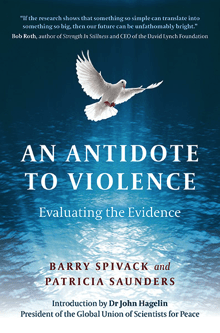
Summary: While it is now accepted that Transcendental Meditation (TM) can create peace for the individual, can it do the same for society, and if so, what is the mechanism? In An Antidote to Violence: Evaluating the Evidence Barry Spivack and Patricia Saunders examine peer-reviewed research suggesting that Transcendental Meditation can influence the collective consciousness of society, leading to decreases in violent crime and war fatalities, and increases in quality of life and cooperation between nations. (Source: EurekAlert!)
An Antidote to Violence
The COVID-19 pandemic has put societies everywhere under extreme stress, and collective stress is often a precursor to outbreaks of violence. Striking features of this global health crisis have been the collective anxiety of the population, the wide variations in the way governments have responded, and the varying degree of their success.
While there is significant scientific research showing that meditation has a positive influence on the health and well being of individuals, is there any evidence that large-scale meditation can can also reduce stress and levels of violence in society?
“Yes” is the surprising inference from the authors of a new book. Published June 26, An Antidote to Violence provides evidence that the level of collective anxiety and tension in society, or incoherence in collective consciousness, is the key element, which determines the success or failure of a government in tackling crime, violence, social unrest and ill-health.
Written for the social scientist and the lay reader alike, An Antidote to Violence offers answers to key questions, including: does group meditation actually influence society? If so, how does it work? What is the evidence? What do skeptics say?
Weaving together psychology, sociology, philosophy, statistics, politics, physics and meditation, the book provides evidence that we have the knowledge to reduce all kinds of violence in society by creating coherence in collective consciousness and thereby neutralizing collective stress.
Barry Spivack and Patricia Saunders describe how a rise in collective tensions spills over into increased social unrest, crime, violence, accidental deaths and hospital emergencies. They examine 20 peer-reviewed studies from over four decades, indicating that it is possible to neutralize or reduce stress in collective consciousness through the practice of Transcendental Meditation (TM) and its advanced programs by a sufficient number of individuals, which is amplified in groups.
Evaluating the Evidence
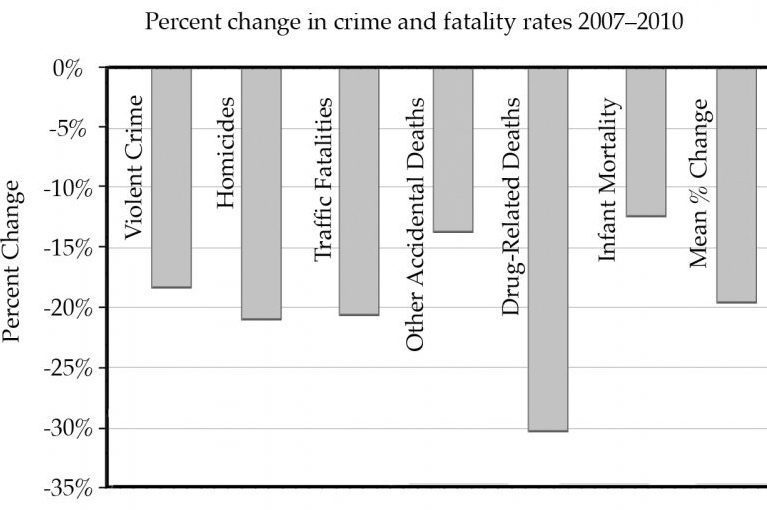
During the experimental period, U.S. rates of homicides, motor vehicle fatalities, drug-related deaths, violent crime (homicides, aggravated assault, robbery and rape), fatalities due to other accidents and infant mortality, all decreased compared to the baseline period.
These findings are more relevant now than ever before at a time of pandemic, protest, and social unrest. — Barry Spivack
“These findings are more relevant now than ever before at a time of pandemic, protest, and social unrest,” says Spivack, and offers three examples from the studies cited in the book. Each of these experiments consisted of sufficient numbers either meditating on their own or together for a period of weeks or months, and in some cases, years, in societies wracked by violence: on 93 experimental days in Lebanon between 1983 and 1985, Cambodia between 1990 and 2008, and USA between 2007 and 2010 compared with the previous four years. In each case measured statistically, significant drops in violence occurred during the periods when the numbers meditating were above the predicted threshold.
Foreword by Bob Roth | Introduction by John Hagelin
In the Foreword to the book, Bob Roth, CEO of the David Lynch Foundation, and author of the NY Times bestseller, Strength in Stillness: The Power of Transcendental Meditation, writes: “Barry Spivack and Patricia Saunders have opened our eyes to an entirely new vision of possibilities about human potential that is both sweepingly grand but also immediate and practical.”
In the book’s Introduction, Dr. John Hagelin, quantum physicist and International Director of the Global Union of Scientists for Peace, suggests “the existing research, while compelling and rigorous, presents a direct challenge to established mainstream sociological paradigms and may be difficult for some to accept. Even more rigorous and repeated testing of the theories presented here is therefore essential to ensure widespread acceptance of this demonstrated sociological phenomenon.”
Just as we must explore every scientific means for beating COVID-19, so we must follow every lead for defeating the virus of violence. — Tim Ward, publisher Changemakers Books
Changemakers Books publisher Tim Ward was struck by the book’s thought-provoking premise and explained his reasons for publishing it. “While the evidence gathered in this book is striking, more research needs to be done to prove it true. And that’s why I chose to publish An Antidote to Violence. Too much is at stake to let this possibility slip through our fingers. Just as we must explore every scientific means for beating COVID-19, so we must follow every lead for defeating the virus of violence.”
Barry Spivack was invited to speak about his new book to the All Party Parliamentary Group on Indian Traditional Sciences in the UK, Sunday, June 21, the International Day of Yoga 2020. Speakers will include High Commissioners and Members from both Houses of Parliament. Conference proceedings will be streamed via Zoom, 12 noon to 5 pm, London time (6 am to 11 am CST). Dr. Tony Nader will speak at 12:55 pm (6:55 am CST) and Barry Spivack at 2:45 pm UK time (8:45 am CST). It will also live stream on Facebook under Indian Traditional Sciences.
Research provides evidence consistent with a causal interpretation
The authors emphasize this is the first book that draws on all the peer-reviewed research and looks at the implications of the research as a whole rather than just individual papers. “Compiling so many consistent experimental results may indicate more than a statistical correlation; it justifies further research into a causal hypothesis.”
Establishing causality in the social sciences is difficult. “Nevertheless,” says Spivack, “there are at least 6 reasons why the research provides evidence for the hypothesis that Transcendental Meditation reduces conflict and divisions in society, and improves economic performance, which is consistent with a causal interpretation.”
1) Repetition: There are 20 peer-reviewed studies, which show statistically significant results.
2) There is a dosage effect—the bigger the group the larger the impact.
3) The independent variable—the numbers practicing Transcendental Meditation—often varies at random in these experiments so you get a repeat effect within the same experiment whenever the relevant threshold of numbers is passed within the same study.
4) Studies have controlled for other possible causes in social changes, such as population density, median years of education, per capita income, the ratio of police per population, weather, holidays, seasons, political events, percentages of people in the age range 15-29, of the unemployed, of those below the poverty line, and of people over 65.
5) Normally unconnected variables, such as crime, accidental deaths, infant mortality, deaths from opioids, all move in the same direction at the same time when the relevant threshold of people practicing Transcendental Meditation is surpassed.
6) The independent variable—the numbers practicing Transcendental Meditation and its advanced programs—changes before the dependent variables change, such as crime or war fatalities or the misery index.
What people are saying about An Antidote to Violence
I was initially skeptical that such a simple solution could be effective. However, after examining the evidence, I changed my mind. An Antidote to Violence is a serious and well-researched book that offers an unconventional but effective peaceful solution to violence and terrorism.Lieutenant General Clarence E. McKnight, Jr, Former Director of Command, Control and Communications Systems for the Joint Chiefs of Staff, Washington DC
This book is especially good at discussing the evidence and the alternative explanations that have been advanced for the results. I can recommend the book to all readers with an open mind.Huw Dixon, Professor of Economics, Cardiff University
Barry Spivack and Patricia Saunders address the problems of preventing violence and war with a high level of professionalism, and, by examining a means to achieve sustainable peace supported by long-term research, have created a book that is hugely relevant. Most importantly, they highlight the interdependence of power, violence, security, and individual and collective consciousness. This book will be extremely useful for people of all nationalities, regardless of their status, different religious beliefs, personal preferences and life strategies. The theoretical and methodological principles outlined here deserve to be studied carefully and disseminated in the world.Lieutenant General Vasyl Krutov, former First Deputy Head of the Security Service of Ukraine and First Deputy Secretary of the National Security and Defence Council of Ukraine
My most sincere congratulations to the authors for their research and presentation of this book. I hope it will be read and applied by leaders of government and by all in general for the good of society and each person in particular.Lieutenant General José Martí Villamil de la Cadena, former Chief of Staff of the Army and Commander of Ground Theatre Operations, Chief of Staff of the Joint Command, Vice-Minister of Defence, and General Secretary of the National Security Council in Ecuador
Based on hard evidence corroborated by rigorous scientific studies, …the book compiles an array of incredible success stories from all over the world in an easily readable style for all those interested in addressing the monumental challenge of eradicating violence and conflict.Ved P. Nanda, Professor of Law, University of Denver
###
RELEASE DATE: June 26 in the UK and July 1 in the US 2020ISBN: 978-1-78904-258-0 | $24.95 | £15.99 EISBN: 978-1-78904-259-7 | $12.99 | £5.79
Yesterday, June 20, co-author and Fairfield resident Patricia Saunders received her doctorate in Maharishi Vedic Science from Maharishi International University. In addition she was honored as the Outstanding Doctoral Student in Maharishi Vedic Science.
This section powerfully nutshells an underlying issue, which involves a paradigm shift in the understanding of reality.
The Maharishi Effect is not everyone’s cup of tea, and this is how it should be. Science advances through a dialectic between conservative forces that try to hold on to the prevailing worldview, and evolutionary forces that try to expand knowledge to a more comprehensive framework that encompasses more of reality into a consistent picture, in this case integrating our understanding of the physical universe with consciousness.
Also contained in that issue on pages 6-7 is a review of Dr. Tony Nader’s keynote address at the Westminster parliamentary celebration of the International Day of Yoga. And on pages 12-13 under The Maharishi Interviews is a transcript of part 1 of the Les Crane interview with Maharishi in Los Angeles, Autumn 1967. Part 2 will continue in their next issue. You can see the whole interview on this blog: Les Crane interviews Maharishi Mahesh Yogi.
The Nov/Dec 2020 issue of Kindred Spirit in the UK (kindredspirit.co.uk) published this article in their meditation section: Transcendental Meditation: An Antidote to Violence. Can a meditation practice lead to the expansion of peace and tolerance in the collective consciousness? Barry Spivack looks at the evidence.
Dec 1, 2020, the National Office for TM in the UK sent out an announcement about the Kindred Spirit article, linking to a PDF of it.
A collection of early morning writings he had posted on his Facebook page, they were later put into an award-winning book by his publisher. I ordered a copy and found similar entries about the silences he experienced outside in nature, and those within—the gaps between thoughts, words, and moments.
To write, he would separate himself from the noises and distractions of everyday life and retreat into “the sound of silence,” then bring it out with him into the world, “the sound of self emerging.” For him, “silence is the stuff of life.” He wrote, “I want to dive into those small bits of silence. They contain the ocean of my being and our togetherness.”
This impressive insight concludes Chapter I: STILLNESS.
I DON’T KNOW the word for it, that space between seconds, but I’ve come to understand for myself that it’s the punctuation of my life. Between each word, each thought, each moment is where the truth of things lies. The more intent I am on hearing it, seeing it, feeling it, incorporating it, the more precise the degree to which I’m focused on my life and the act of living. I want to dive into those bits of silence. They contain the ocean of my being and our togetherness. So if I don’t respond quickly, excuse me. I’m busy allowing the surf of consciousness to break over me so that I can stand on the coast of our unity and be more.
This reminds me of Maharishi’s Vedic Science. He described this silent space or gap as the transcendent, our own inner transcendental consciousness that we tap into during Transcendental Meditation. He said it was also an unbounded reservoir of pure knowledge, the Sounds and Gaps in Veda and Vedic Literature that structure creation in a sequential, self-referral flow. I mention this process in a previous post. He also spoke of ritam bhara pragya, a refined state of consciousness, ‘that intelligence which knows only the truth.’
Those Embers entries indicate an experiential understanding of a deeper inner reality. In a Q&A session that followed a talk Richard Wagemese gave at MacEwan University, he answered a question about how his recent practice of yoga and meditation had impacted his writing. His answer and the video are both included in that blog post referenced in the opening paragraph above.
Here is another significant insight from the book, in Chapter III: TRUST.
MY MOTHER’S PHYSICAL death taught me that I didn’t come here to master devastating situations, circumstances, changes, losses or even my own feelings. I came here to experience them. I came here for soul lessons and spirit teachings so that I could carry on in this wonderful spiritual journey we are all on, this teaching way, this blessing way. So that, in the end, I can, like my mother has done, return to the beauty that I was when I first arrived here.
A similar theme is expressed in Chapter IV: Reverence.
I CAME HERE to inhabit a body that would allow my soul to experience. So I am not my body. I came here to experience the grandest thought. So I am not my mind. I came here to experience the deepest feeling. So I am not my feelings. I am all of it: thought, feeling and experience. That translates to awe, joy and reverence. For all life, for all beings, for all Creation. Knowing this, understanding this, make living the hardest thing of all—but the joy is in the challenge, the gradual day-by-day becoming.
In Chapter V: Persistence, he learns the miraculous power of forgiveness.
I LIVE FOR miracles in my life these days. Not the earth-changing, light-bringing, soul-powering kind. But the ones that carve out a small space of peace where before there was only the jumble of resentment, fear and doubt. The ones that happen from choosing to live the right way. Like coming to understand that forgiveness isn’t about gaining a release from others—it’s about gaining release from me. If I release my hold on what binds me, I can walk free and unencumbered. But I have to embrace the resentment, fear and doubt to gain that. I have to own them, hold them again, so that I can learn to let them go. In that letting go is the miracle.
There are more entries worth sharing, including short dialogues with a wise elder, Old Woman. His questions elicit unexpected pithy replies as she offers wise advice about life. Here’s an example from Chapter V.
ME: You always repeat things three times.
OLD WOMAN: Just the important things.
ME: Why? I hear you the first time.
OLD WOMAN: No. You listen the first time. You hear the second time. And you feel the third time.
ME: I don’t get it.
OLD WOMAN: When you listen, you become aware. That’s for your head. When you hear, you awaken. That’s for your heart. When you feel, it becomes a part of you. That’s for your spirit. Three times. It’s so you learn to listen with your whole being. That’s how you learn.
Advice on Writing
My earlier post shared Richard Wagamese’s reflections on the writing life. In Embers, Chapter III: TRUST, he describes the process of timed free writing and what it can do for us both personally and professionally.
WRITE SPONTANEOUSLY EVERY day for fifteen minutes.
First, get settled. Breathe. Big, deep, full breaths, taken slowly. Clear your mind of words. Be wordless. Then, open your eyes and write whatever comes out of you, and keep writing without taking your hands from the paper or the keyboard for fifteen minutes. Don’t worry about punctuation or spelling. Just write. Every day. Fifteen minutes. Regardless. Watch what happens to your level of craft when you work on a project. Why? Because stories live in our bodies and we need to feel our fingers moving in the process of creation every day. Your hands are your interpretive tools. They bring your spirit out in words and language.
In Chapter IV: Reverence, he shares his personal approach to writing.
YOU STOKE THE FIRES of creativity with humility, gratitude and awareness. You need to ask for the gift to be directed. Writing is a spiritual process. To be a creator you need to connect with Creator.
In Chapter VII: JOY, he tells us that writing is a process of self-discovery.
DON’T JUST WRITE what you know. Write what you wish to know. What you reveal to yourself, you reveal to the reader. Storytelling is about discovery.
It was how he wrote Medicine Walk. I included his quote and video link in that earlier blog post about him. He had described this process in that same talk he gave at MacEwan University for their Book of the Year selection—Indian Horse. That book was turned into a film by the same title, which I had recently seen on Netflix but didn’t know it was written by him until I made the coincidental connection.
With reference to spontaneous writing and storytelling, I know what he means. When I first discovered writing and what writers said about it, one of my first poems came out as a result of free-writing practice: Writing—a poem on the writing process.
Around that time I had made up a bedtime story for my kids. It was so magical we did it again the next night and recorded it. After it was done I spontaneously spoke out what that process was like, then wrote those two sentences down as Storytelling—a poem on the storytelling process.
Wagemese concludes by encouraging us to share in the transporting and transforming power of storytelling, advising us to not be didactic, but to inspire others instead to discover the questions for themselves.
TO TELL. TO use the act of breathing to shape air into sounds that take on the context of language that lifts and transports those who hear it, takes them beyond what they think and know and feel and empowers them to think and feel and know even more. We’re all storytellers, really. That’s what we do. That is our power as human beings. Not to tell people how to think and feel and therefore know—but through our stories allow them to discover questions within themselves. Turn off your TV and your devices and talk to each other. Share stories. Be joined, transported and transformed.
Be patient toward all that is unsolved in your heart and try to love the questions themselves, like locked rooms and like books that are now written in a very foreign tongue. Do not now seek the answers, which cannot be given you because you would not be able to live them. And the point is, to live everything. Live the questions now. Perhaps you will then gradually, without noticing it, live along some distant day into the answer.
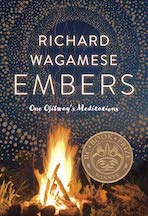
Embers: One Ojibway’s Meditations became a 2017 BC Book Prize Winner. I can see why, now that I own a copy. In addition to Richard Wagamese’s words of wisdom, humility and gratitude, the book cover and content are colorfully laid out with creative photographs, all printed on quality paper. Douglas & McIntyre produced a beautiful work of art.
The perception of time is strange. Memories of certain events remain with us long after they’ve gone. They become part of our story. I still remember a unique experience I had over 20 years ago. I found the poem I had written about it trying to understand what was happening at that time. But first, a backgrounder on what led up to it.
Saturn (Shani) was exerting its influence during an Antardasha, or sub-period. I was also in the last third of a 7.5 years-long period of Shani influencing my Moon (Chandra), which governs the mind and emotions. It is a challenging time known as Sade-Sati in eastern astrology. We go through this transit at least once or twice during our lifetime. The texts say that “persons under this influence are betrayed in their financial, personal, social and marital matters.” I often recalled what Nietzsche said about life’s suffering: “That which does not kill us, makes us stronger.”
My life wasn’t that bad, yet I had been under a lot of different pressures going nowhere. I was given the opportunity to join the Maharishi Purusha Program. It was something I had thought about, but life’s decisions had taken me in other directions. I reconsidered my current situation and decided to give it a try.
At one point the Maharishi Jyotish office offered astrology readings and recommended remedies for what might be coming down the proverbial karmic pipeline. This was something I had always wanted to do but could never afford to. Since I was on this special program for single men, the cost for the reading and remedy was more within reach. The main recommendation was to have a double level Maharishi Yagya done for both Shani influences. I decided to go for it, not knowing what to expect.
While an ancient Vedic performance was being conducted in India, I was feeling something in North Carolina! The experience was abstract, yet so real! The only way I could make any sense of it was to put it into words. This poem came out and surprisingly defined the moment for me.
Awake Before The Dawn
Another sun has risen this morning not one of light but of wakefulness
I find myself strangely silent inside not feeling anything but lightness
So this is what it’s like to be alive awake at last to the Dawning of Eternity
Written on Saturday, July 10, 1999 In honor of my Shani Yagya Ken Chawkin, SCA, Boone, NC
Aside from what Nietzsche said, having that Yagya and being on Purusha helped lighten the karmic load considerably!! Eleven months later I volunteered for a project and found myself in the exotic land of Indonesia. An unusual experience greeted me there early one morning. I woke myself up to write down this Indonesian Mystery Poem.
Interestingly, during that year abroad, I would spend time in 5 different countries: Indonesia, Singapore, Malaysia, India, and Australia. I later discovered that when I left Boone to travel to Jakarta, Jupiter (Guru) had started a 13-month transit across my 12th house, which indicated a loss of homeland. Amazing how this all works!
I’m currently undergoing a Maharishi Yagya for an upcoming major Mars period, Mangal Mahadasha. It brought up memories from that time at the Spiritual Center of America where I wrote this poem and the journey that would later unfold. Another incredible story that would take volumes!



 The Uncarved Blog