Archive for the ‘Poetry’ Category

Being written—how some poems come through us

October 20, 2022

In the previous post, I was impressed by what Brendan Graham said about being chosen for a song to go out into the world. “I had learned to keep out of the way, let the song write itself. … The truly special songs write us; we don’t write them. We don’t find them; they find us.”

The video clip concludes with him saying: “I am grateful to be merely the conduit, an accident of time and place through which something I don’t fully understand is given voice and is heard.”

This reminded me of some of my own experiences in the past writing certain poems. As he said, it was more like they wrote me. I just put them down on paper as they were being given to me. I was the conduit—the intrinsic reward. Here are 4 poems and how they came to be written.

ODE TO THE ARTIST Sketching Lotus Pads at Round Prairie Park

The first magical interaction I remember was with an artist friend. While driving around the Fairfield, Iowa countryside we noticed signs to Round Prairie Park. It turned out to be the first park the Jefferson County Conservation Board had developed. We drove on and found the entrance. A small historic schoolhouse on the left and a pond on the right were the first things we noticed. We continued on around the bend past the campsites and picnic tables to the end of the road and parked the car.

After a short walk, we discovered a bigger pond. It was filled with large lotus pads and pods. A drought that summer of 1988 had lowered water levels everywhere, including the pond. As a result, some of the lotus pads stood even taller. My friend pulled out her notepad and began sketching them. I asked her for a page and a pen. I made a few attempts at writing a poem about them, then gave up.

We spoke about The Secret Life of Plants and how they can sense what you’re thinking. She went back to sketching. I decided to switch perspectives—what I later learned is ‘reverse seeing’—and tried again. This time I felt a heightened awareness and quickly wrote down the words as they came to me. When it was over, I looked down and saw a poem on the page, but it was written in a voice other than my own. At that moment, a bird in the tree above me dropped a turd. It landed on my writing hand! A blessing from nature?

ODE TO THE ARTIST
Sketching Lotus Pads at Round Prairie Park
Black lines briefly sketched on paper
capture our appearance but not our essence.

Your attention interests us,
although others have never before.
Your watchful eyes tell us
we are apart of you.

Can you feel our thoughts?
Can you think our feelings?
We do yours
and we thank you for committing us to memory.

For long after we’ve gone
and transmuted ourselves back into nature
our likeness will remind you that we were.
And your response will touch our hearts.

I had entered the poem in a Sparrowgrass Poetry Forum competition that was announced in the local Fairfield Ledger and forgot about it. Eventually, the editor acknowledged receipt of the poem, which he appreciated, said it was in the competition, and had a question about the way I spelled ‘apart of’ in the last line of the second stanza.

I explained that I wanted to express both ideas of togetherness and separateness at the same time in the same sounding word—’a part of’ and ‘apart from’. A language professor friend suggested I italicize ‘a‘ and ‘of‘ to give it that appearance and meaning in ‘apart of you’. It felt right.

The following summer, a postcard in the mail told me to go to the Post Office to pick up a registered letter. I had no idea what it was about. When I opened it, the letter announced that I had won Sparrowgrass Poetry Forum’s Distinguished Poet Award, which included a $100 check. The plaque would be mailed in a few days. What an unexpected surprise! It also happened to be Guru Purnima Day 1989, making it extra special to me! I was so grateful for this honor and recognition, especially since I had been going through a challenging phase of my life.

I told the writer at The Ledger about it and she said to come in with the plaque. She interviewed me and they took a picture of me holding the award. She thought The Ledger would need permission to publish the poem and asked me to check with the publisher. He said I owned the rights to my poem and could approve them printing it in the paper. The article had already come out, so they published the poem the next day. These unexpected events were signs encouraging me to keep writing.

Sometimes Poetry Happens

The editor wanted a follow-up poem, which made me nervous since I felt I hadn’t really written that first poem. So, I thought about the dynamic between us and the lotus pads, wondering what had really happened between the two—the observer and the observed—from both sides.

When I put pen to paper, surprisingly, it flowed effortlessly, even blissfully. The middle part of the poem reiterated what Brendan Graham had said about the truly special songs—in my case, poems—finding us and writing us, not the other way around.

But, when I tried to make a statement, nothing worked. I gave up, let go, and lay down on the couch to take a break. In a few moments the conclusion to the poem composed itself in my mind. I quickly got up, went back to the kitchen table, and wrote it down.

It was written in such a comprehensive poetic manner. I never would have imagined such a perfect answer to the posed question of what had happened between the two. I explained that in a reply to an appreciative comment on the poem.

The editor was pleased to have received the poem and published it. Besides being a memory of what had been heard, the poem became a kind of commentary on the creative process, that, if we’re lucky enough, sometimes poetry happens.

Sometimes Poetry Happens
(Sequel to ODE TO THE ARTIST)

Some poets can write
from reflected experience
referring back to what was written.

Others need to be there,
in full view of their subject,
opening up to what’s being given.

Sometimes poetry happens between the two.

It’s then you don’t really write the poem.
It writes you!
You just put it down on paper.

When you see it there,
You’ve captured it.
Or, rather, it’s captured you.

What really happened between the two?

To explore that space
between you and me
is to discover who we are.

For deep within,
at the source of the gap
lie the togetherness of the three—

the seer, the seen, and the poetry … in between.

Being in Nature—a gift from a tree

Other poems would start with a seed idea, then grow and unfold while writing them down. One short poem resulted from a surprising interaction with a tree on the UBC Endowment Lands in Vancouver. I had moved back to Canada during the 1990s.

I was standing with an artist friend closely admiring the bark of a tree in front of us. The tree reciprocated the attention with a ray of words entering my heart-mind: “the realness of natural things, the nearness of you.” I immediately wrote them down.

The next morning, I looked at the two-line stanza wondering where it would go next. The poem answered my hunches and completed itself as I wrote it down in my journal. It felt like a collaborative process.

The repetitive end rhymes and number of syllables per line created their own matching patterns, like a little gem. The title would come much later, while thinking of the word ‘being’ as both a subject and a gerund.

Being in Nature 
a gift from a tree 

The Realness of Natural Things 
The nearness of you 

The Beauty that Nature Brings 
When seeing is true 

The Silence that Inward Sings 
When hearing is clear 

The Harmony Between all Beings 
It exists right here!

Indonesian Mystery Poem

This reminds me of the start of another poem that was given to me a few days after having arrived in Jakarta, Indonesia in early June 2000. I had joined our group there on a project. They told me to just rest (meditate and sleep) in my room for a few days to get over the 17-hour jet lag.

It was very early in the third morning, while I was still asleep, when I heard these words softly spoken in my mind: “He hides within the rock of three dimensions and cannot be found in this world.” I woke myself up and wrote them down. The rest was like taking dictation. I had no idea who or what the poem was about, so I titled it Indonesian Mystery Poem.

When I shared it with an older Indonesian gentleman on our team, he recognized the mythic Queen of the Southern Seas in the poem and told me about her. So did two expats, after I taught them to meditate. In a book on Indonesia I later bought for my son, I discovered the story about Nyi Roro Kidul and the annual celebration taking place at that time.

The leaders of our group—a Canadian and a Dutchman—had been invited by our sponsors to West Java for the holiday weekend. In the Samudra Beach Hotel where they were staying was a room with a shrine dedicated to the mythic queen featuring a portrait of her painted by a well-known Indonesian artist.

When I read the poem to the Dutchman, he shared a few unusual experiences that had happened to him while they were there—before and after meditating in that hotel room, later when swimming in the ocean, and before they left. It’s all in the post of the poem, with various paintings of the queen.

Indonesian Mystery Poem 
Honoring Nyi Roro Kidul 
Queen of the Southern Seas 

He hides within the rock
of three dimensions
and cannot be found
in this world

When night comes
she rises like a moon
to shine her light
upon the mountain

The sea dances
rising and falling
like a lover
in her arms

What pull does she have
on his life
as she looks for a partner
to dance with

The moon bows
before the rising sun
and he is left
breathless

All these confirmations made me feel grateful, as if I had been chosen as a conduit, but for what purpose I did not know. Maybe, as Brendan Graham said, “through which something I don’t fully understand is given voice and is heard.”

The Indonesian poem was mentioned in an interview I did with TM Home. They included the first two poems and how they were written in their profile: PR to poetry – how things sometimes happen to Ken Chawkin.

Postscript

Talk about being a conduit in a poetic way, B. Nina Holzer’s final entry in her journal shows us how she is an innocent instrument for writing.

EVENING

One day
I walked on the mountain
and the flute song
went through me.
That’s all.
I became the reed
and the wind went through
and I wrote it down
in my journal.

I recommend her book—A Walk Between Heaven and Earth: A Personal Journal on Writing and the Creative Process—to anyone interested in wanting to express themselves in writing. I found it very inspirational.

In a post following this one, newly appointed U.S. Poet Laureate Ada Limón describes what Ranier Maria Rilke reveals can happen if you give yourself fully over to a Thing, how it can respond if your attention is completely devoted to it. 

An earlier post discusses negative capability, reverse seeing, beauty & the desire for transcendence & unity in life & poetry.

Added Nov 2, 2022: What the Living Do—Marie Howe’s ‘letter’ to her brother—an elegy to loss and how she lives with it.

— Written and compiled (citing sources) by Ken Chawkin for The Uncarved Blog.

Coming Home by Mary Oliver

July 15, 2022

This evocative poem by Mary Oliver took me on a journey. Its conclusion nostalgically, surprisingly, stirred me.

Coming Home

When we are driving in the dark,
on the long road
to Provincetown, which lies empty
for miles, when we’re weary,
when the buildings
and the scrub pines lose
their familiar look,
I imagine us rising
from the speeding car.
I imagine us seeing
everything from another place — the top
of one of the pale dunes,
or the deep and nameless
fields of the sea —
and what we see is a world
that cannot cherish us,
but which we cherish,
and what we see is our life
moving like that,
along the dark edges
of everything — the headlights
like lanterns
sweeping the blackness —
believing in a thousand
fragile and unprovable things,
looking out for sorrow,
slowing down for happiness,
making all the right turns
right down to the thumping
barriers to the sea,
the swirling waves,
the narrow streets, the houses,
the past, the future,
the doorway that belongs
to you and me.

Published in Dreamwork (1986) and Devotions (2017)

Read this related love poem, Everything That Was Broken by Mary Oliver.

Read about Mary Oliver (1935-2019) and her astonishing poetry in this memorial acknowledgment to her poetic legacy. It contains links to articles, interviews, and poetry readings, as well as many of her favorite poems I’ve loved and posted over the years.

This simple poem—Once in the 40’s by William Stafford—might quietly surprise you at the end with its own form of nostalgia.

— Written and compiled (citing sources) by Ken Chawkin for The Uncarved Blog.

Two thoughtful poems by Rhoda Orme-Johnson: When We Are Insubstantial & When You Are Young

February 11, 2022

What happens to us when we reach the latter part of our life and reflect on it from a different perspective? I came across two thoughtful poems written by Rhoda Orme-Johnson published in Conestoga Zen, an anthology edited by Rustin Larson. These poems resonated deeply with me and I was given permission to share them with you: When We Are Insubstantial & When You Are Young.

When We Are Insubstantial

When we are insubstantial 
Between this life and the next, 
I may regret the times we lay together 
And I did not reach for your arm, 
Warm and solid beneath the flannel, 
And draw you to my breast. 

I may regret getting up 
To do whatever 
I thought I had to do, 
And not lay there, 
Drawing in the night air and the scent 
Of Carolina Jasmine. 

I may regret that I hurried 
Though my days 
And did not linger on the porch, 
Soaking up the sunshine 
And the birdsong 
And the aroma 
Of sun-warmed pines. 

It is easy to forget, 
In the pressure of daily life, 
That our precious time 
On this green planet Is limited, 
That our contract here Is fixed. 

We came together 
To grow, to give, 
To pay some old debts, 
To leave the world a better place 
Before we go. 

It is easy to forget 
We came here to live.  

When You Are Young 

When you are young, 
Everyone you know 
Is alive 
When you are older, 
Many you really know 
And care for 
Have died. 

When you are young, 
Everyone you know 
Is alive and present, 
In and out of the house, 
On the phone, 
In your thoughts, 
In your heart.  

The first death comes hard. 
The lifeless corpse 
Under the makeup. 
Life breath gone, 
Spirit hastily fled, 
As from a burning building, 
Leaving nothing behind. 

Except an eternal presence 
In your thoughts, 
In your heart, 
In your dreams. 

After his sudden death 
My father met me in a dream. 
He sat on a park bench and I loved him.  
He didn't speak.  
I tried to tell him something important,  
But I couldn't remember  
What it was.  

I want to call my mother 
And tell her my news, 
Share the worries and the joys,  
But there's no phone 
That can connect with her now. 

In albums the photographs 
Of dear friends look out, 
Full of life and ambition, 
Unaware their time will soon be 
Cut short. 
Faces of grandchildren 
Growing up far away 
Tease and stir the heart.  

When you are young,  
Everyone you know 
Is alive and present. 
When you are older, 
Everyone you know  
Is present 
Somewhere. 

Rhoda read both poems concluding a presentation she gave at MIU a while ago. I remember having been there. It was a wonderful evening. She also read Sweet Mystery, mentioned below.

Anna: An Immigrant Story

Rhoda recently published Anna: An Immigrant Story. It’s a book about her grandmother, who immigrated to America a century ago with her five children. The story unfolds during one day of her life in 1951. Readers are introduced to family members coming and going through the house in Cleveland, Ohio, and accompany Anna’s memories back to the Old World, to the “shtetl” or Jewish settlement where Anna grew up. Find out more in this article: Fairfield woman publishes book on her immigrant ancestors.

The Flow of Consciousness in Literature

In a September 9, 2020 interview with Mario Orsatti on TM Talks, Dr. Rhoda Orme-Johnson explains how the study and experience of poetry and literature create transcending and a deeper appreciation of consciousness, language, and the world around us. She reads several poems, one of which is When You Are Young, at 42:02. The 50:41 talk is available at Enjoy TM News: The Flow of Consciousness in Literature.

Sweet Mystery

Earlier on in their discussion, at 19:58, Rhoda tells Mario a story of how her mother had showed up at Maharishi’s Swiss HQ to see her daughter and grandchildren. Everyone was busy working on projects. At David’s suggestion, Rhoda organized a luncheon for her mother with friends.

In answer to a question about love and marriage, her mother shared a childhood story with everyone. Recalling it later on, Rhoda had turned it into a poem, which she reads at 20:36. It’s about that experience her mother had had as a young girl in Ukraine. She had accompanied an older girl, who, as it turned out, was secretly meeting up with a boyfriend. She saw them embrace from a distance. That encounter and a young girl’s reaction to it, blended with descriptions of the nature around them, form the concluding chapter to Rhoda’s immigrant story about her grandmother. It’s a beautiful narrative poem about love titled, Sweet Mystery.

For writer May Sarton, solitude was necessary to create and bring forth the richness within herself

January 9, 2022

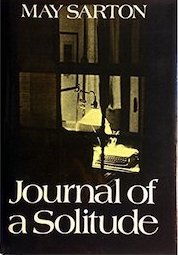
May Sarton (Belgian-American, 1912-1995) was a highly respected American poet, novelist, and memoirist. Her literature encompasses themes of aging, solitude, family and romantic relationships. Self-identified as a lesbian and regarded as a feminist, she preferred that her work found a place in a broad humanitarian connection rather than within the identities she embodied.

Her memoir, Journal of a Solitude (1973) was her most popular work, and “Now I Become Myself” (Collected Poems 1930 – 1993) is one of her most beloved poems. She was also the author of numerous novels.

Literary Ladies Guide compiled a selection of Introspective quotes by May Sarton, a most thoughtful writer. They also published a review of Journal of a Solitude. The Famous People website published 64 Inspiring Quotes By May Sarton That Will Give You Lessons For Life—her reflections on life, authenticity, solitude, contentment, nature, strength, survival, education, school, life, loneliness, optimism, experience and relationships.

I remember reading these wise quotes from Journal of a Solitude:

Loneliness is the poverty of self; solitude is richness of self.

Without darkness, nothing comes to birth, As without light, nothing flowers.

I have written every poem, every novel, for the same purpose—to find out what I think, to know where I stand.

That last quote reminds me of Donald Hall’s description of a good writer, included in an earlier post: Writers on Writing—What Writing Means To Writers.

A good writer uses words to discover, and to bring that discovery to other people. He rewrites so that his prose is a pleasure that carries knowledge with it. That pleasure-carrying knowledge comes from self-understanding, and creates understanding in the minds of other people.

I must have time alone

The implication from these quotes is that we need a time and place to be alone to create in the dark of the unknown, shut off from distractions that divide the mind, to experience the richness of our inner world, and blossom with the light of our newly discovered self-knowledge. We write to know—to discover and understand.

Yet, like every true artist it is always a challenge to balance the personal with the social, our own needs with those of another in a relationship. In her Journal of Solitude May Sarton wrote:

There is no doubt that solitude is a challenge and to maintain balance within it a precarious business. But I must not forget that, for me, being with people or even with one beloved person for any length of time without solitude is even worse. I lose my center. I feel dispersed, scattered, in pieces. I must have time alone in which to mull over my encounter, and to extract its juice, its essence, to understand what has really happened to me as a consequence of it.

This is so true. And if we don’t express our need for solitude in a healthy manner, resentment builds up, and we find ourselves passively-aggressively taking our frustration out on those closest to us, causing pain for both parties involved. We blame others for our inability to properly balance our priorities. We lash out or fall into inertia and suffer.

However, when free to fully engage in the creative process, writing can become an ecstatic experience. This quote stood out for me, showing May Sarton’s passion for writing and how significant it was for her.

…I feel more alive when I’m writing than I do at any other time—except when I’m making love. Two things when you forget time, when nothing exists except the moment—the moment of writing, the moment of love. That perfect concentration is bliss.

AZ Quotes: May Sarton Quotes About Writing

a way of life

I’ll leave you with this final quote from May Sarton that reminds me of the bus-driving poet in Jim Jarmusch’s wonderful little film, Paterson: “poetry is first of all a way of life and only secondarily a way of writing.”

Leonard Cohen said a similar thing: “Poetry is just the evidence of life. If your life is burning well, poetry is just the ash.

We write to better understand our experiences, and in the process metabolize them into poems. Poetry, then, is the epiphenomenon, the ash from that creative fire burning within. See this related inspiring post: What is Poetry, where does it come from, and how does it enter into us?

a final note

And finally, enjoy this post: Burghild Nina Holzer inspires us to write and discover who we are and what we have to say, with links to more entires on writing. There is a beautiful excerpt on the back cover of her book, A Walk Between Heaven and Earth: A Personal Journal on Writing and the Creative Process, edited down from the original, which I also include.

Talking to paper is talking to the divine. Paper is infinitely patient. Each time you scratch on it, you trace part of yourself, and thus part of the world, and thus part of the grammar of the universe. It is a huge language, but each of us tracks his or her particular understanding of it.

Mary Oliver reads a lovely poem about her dog

September 14, 2021

Renowned poet Mary Oliver recites “Little Dog’s Rhapsody in the Night” from her collection of new and favorite poems, Dog Songs, celebrating the dogs that have enriched her world.

Little Dog’s Rhapsody in the Night

He puts his cheek against mine
and makes small, expressive sounds.
And when I’m awake, or awake enough

he turns upside down, his four paws
in the air
and his eyes dark and fervent.

“Tell me you love me,” he says.

“Tell me again.”

Could there be a sweeter arrangement? Over and over
he gets to ask.
I get to tell.

Here are two other dog poems by Mary Oliver posted on Words for the Year: The Sweetness of Dogs and I Ask Percy How I Should Live My Life.

Read about Mary Oliver (1935-2019) and her astonishing poetry in this memorial acknowledgment to her poetic legacy. It contains links to articles, interviews, and poetry readings, as well as many of her favorite poems I’ve loved and posted over the years.

— Written and compiled (citing sources) by Ken Chawkin for The Uncarved Blog.
#PoetryRx virtual book signing @DoctorNorman Rosenthal @Prairie_Lights, Iowa City Bookstore

May 13, 2021

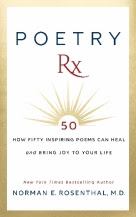
Best-selling author, world-renowned researcher, psychiatrist Norman E. Rosenthal, MD prescribes poems to his patients, publishes Poetry Rx, donates book sale proceeds to benefit veterans. Virtual book-signing at Prairie Lights in Iowa City, Iowa, a UNESCO-designated City of Literature. Read the book description and connect to this upcoming event

Poems, I now realize, thanks to Dr. Rosenthal, can be a literary panacea for the pandemic.
Jane Brody, Personal Health Columnist, New York Times

Image

VIRTUAL BOOK SIGNING: The David Lynch Foundation and Prairie Lights Bookstore cordially invite you to “POETRY RX: How Poetry Can Heal and Bring Joy to Your Life” featuring world-renowned psychiatrist, Norman E. Rosenthal, M.D., Prairie Lights Bookstore owner and published poet Jan Weissmiller, along with moderator Bob Roth, CEO of the David Lynch Foundation.

WHEN: Tuesday, May 25 • 7-8 pm (CENTRAL)

ZOOM REGISTRATION: Register in advance for this webinar. After registering, you will receive a confirmation email containing information how to join the event. Click this link to register: https://davidlynchfoundation.zoom.us/webinar/register/WN_gxa6il2ITH-wl1pcFjnZfA.

SPECIAL OFFER: 100% of the author’s book sale proceeds will go to the David Lynch Foundation’s Resilient Warrior Program to help reduce the epidemic of suicides among U.S. military veterans.

OVERVIEW: Imagine your therapist writing a prescription for “Hope is the thing with feathers” by Emily Dickinson or a Shakespeare sonnet or “Do Not Go Gentle into That Good Night” by Dylan Thomas—before prescribing an anxiety medication…

Dr. Norman Rosenthal is that therapist! World-renowned for his pioneering NIH research on seasonal affective disorder (SAD) and for developing the light therapy intervention to treat it, Dr. Rosenthal’s new book, Poetry Rx: How 50 Inspiring Poems Can Heal and Bring Joy to Your Life (G&D Media, May 4, 2021), delivers potent medicine—without side effects. 

“As a result of the COVID-19 pandemic, the world has closed down in many ways, depriving us of joy, companionship, love and adventure,” says Dr. Rosenthal. “Against this backdrop of loss and hardship, we are seeking novel remedies, and poetry is a surprisingly powerful remedy, not just for the moment but for our entire life. Poetry can serve both as a balm and a vaccine for the soul.”

Poetry Rx published on May 4 during Mental Health Awareness Month, and on the cusp of National Poetry Month, which marked its 25th annual celebration in April. 

NEWS COVERAGE: The book was recently reviewed by the NY Times, Kirkus, the Philadelphia Inquirer, Dr. Rosenthal’s OpEd (and video) ran on USA Today online, and his in-depth Q&A was featured in Medium/Authority magazine and Thrive Global. Visit Norman Rosenthal’s website for more press coverage on Poetry Rx posted there.

Newsmax: When the Doctor Prescribes Poetry. May is National Mental Health Awareness Month and a leading psychiatrist has just published a groundbreaking book filled with powerful poetic prescriptions to help strengthen mental, emotional, and spiritual well-being.

ADVANCE PRAISE
Dr. Rosenthal, a renowned psychiatric researcher and clinician, has given us a gift with Poetry Rx. He takes us on a journey through the varieties of human experience and shows us specifically how poetry has the power to help us understand ourselves and to heal. The wonderful effect of Rosenthal’s humanity and lucid analysis is to make us feel that our own experiences are universal and that we are not alone.
—Richard A. Friedman, M.D., Professor of Clinical Psychiatry, Director of Psychopharmacology Clinic, Weill Cornell Medical College

Poetry Rx is a great read, entertaining as it teaches. These are, after all, poems the doctor ordered. But what a doctor! And what poems!
—Peter Sacks, Professor of English, Harvard

Norman E. Rosenthal, M.D., is a clinical professor of psychiatry at Georgetown Medical School and was the psychiatrist who first described seasonal affective disorder and pioneered the use of light in its treatment during his 20 years at the National Institute of Mental Health. He has researched other innovative psychiatric treatments and is the author of several books including the New York Times bestseller Transcendence: Healing and Transformation through Transcendental Meditation and the national bestseller Super Mind.  He currently maintains a private clinical and coaching practice in the Maryland suburbs of Washington, D.C. His work has earned him national and international attention in the world of psychiatry and psychology, as well as in the media.

For more background, please visit www.normanrosenthal.com.

NEWER RELATED ARTICLES AND VIDEOS

Taste For Life: Poetry as a Healing Modality. A new book explores the potential. By Lynn Tryba, Norman E. Rosenthal, M.D.

Psychiatric Times: (June 15, 2021) Poetry for PTSD and Preventing Suicide. Leah Kuntz writes: June is Posttraumatic Stress Disorder (PTSD) Awareness Month. One psychiatrist is dedicating a portion of the proceeds from his new book, Poetry Rx, to the David Lynch Foundation (DLF)—specifically the Resilient Warrior program—in the hopes of curbing US military veteran suicides.

The Poet’s List: (June 22, 2021) excerpted and referenced the above interview: POETRY FOR PTSD AND PREVENTING SUICIDE (VIA PSYCHIATRIC TIMES). The Poet’s List (December 30, 2021) also included Dr. Norman Rosenthal’s book in their year-end list: 2021 POETRY WRAP: YEAR IN REVIEW.

iHeartRadio: Healing Quest: Dr. Norman Rosenthal New Help for Veterans with PTSD on SoundCloud for Memorial Day Weekend. Also posted is an earlier interview: Poetry RX and Psychotherapy.

NBC TODAY: (May 25, 2021) A prescription for … poetry? This doctor recommends it. Are there health benefits to reading or writing poetry? These doctors think so. This article by Brittany Loggins concludes with different examples of what poems can do for us citing some poets and their poems from Dr. Rosenthal’s book.

There is also an embedded (May 4, 2021) NBC News report of a nurse sharing a poem she wrote about caring for her patients. It is extremely moving, and powerfully highlights the theme of the article. How a Covid nurse captured her patients’ ‘love and energy’ through poetry.

Iowa City Press-Citizen: World-renowned psychiatrist shares the healing power of poetry in Prairie Lights event by Isaac Hamlet. Some of the media that posted this article are: MSN, Daily Advent’s Opera News, and South Africa’s Free-Mail.

The Iowa Source: Norm Rosenthal on Poetry: Comfort and Connection in Rhythmic Form.

UI’s Iowa Writers’ Workshop: Virtual Reading: Dr. Norman E. Rosenthal Poetry Rx: How 50 Inspiring Poems Can Heal and Bring Joy To Your Life. Also on The University of Iowa’s Events Calendar.

The Prairie Lights virtual book signing for Norman Rosenthal’s PoetryRx has now been archived. You can also see it on his YouTube channel.

CBSN New York: Some Doctors Encourage Those Suffering From Anxiety, Stress To Embrace The Power Of Poetry by Hazel Sanchez. Also on their YouTube Channel: Doctors Say Poetry Can Provide Comfort, Therapy.

AARP: How Poetry Can Heal: A distinguished doctor discusses the power of the written word.

EnjoyTMNews: Poetry Rx: Iconic Poems to Heal, Inspire, and Bring Joy. Dr. Norman Rosenthal’s new book offers medicine for the soul, by Harbour Fraser Hodder.

TMTalks: The Healing Power of Poetry. A conversation with Norman Rosenthal, M.D. (51:18).

Politics and Prose Virtual Book-Signing Event: This archived Zoomcast includes a special video that two-time Tony-award winning actress Katie Finneran made for Dr. Rosenthal, where she shares what the book meant for her, and reads two poems: One Art by Elizabeth Bishop and “Hope” is the thing with feathers by Emily Dickinson.

Choice Magazine: Britain’s leading independent magazine for women and men over 50. The October 2021 issue published an article for their print edition, filed under Health. It will probably be archived online the following month. For now, click the title, which will take you to a PDF of the article: The healing power of poetry. Can poems act as a form of medicine? David Hughes seeks the answers…

Spirituality & Health: The Healing Power of Poetry by Mary Bemis. Regard a poem as a talisman, a locket that contains a secret.

MY REVIEW OF POETRY RX

I gave the book a 5-star rating on Amazon and goodreads. In my review I share Norman’s introductory story of how he discovered the healing power of a poem (One Art by Elizabeth Bishop), how it led him to develop the practice of prescribing poems for his patients, and how he came to write this book. Here is the conclusion to my review of Poetry Rx.

Dr. Norman Rosenthal shows us how poetry can serve both as a balm and a vaccine for the soul.

Anyone can benefit from and enjoy reading this book. Dr. Rosenthal guides the reader, showing us how to get the most out of a poem. He explains each poem, points out takeaways, and gives us a backgrounder on the poem and the poet who wrote it. It’s like having a friend of the family over for dinner that shares his enthusiasm for poetry, and in the process, entertains and enlightens us. I highly recommend this book.

In that review, I also mention the poem, ‘Love After Love’ by Derek Walcott, which Rosenthal includes in his collection on page 48. He reads and comments on it in his blog. I had posted the poem around 7 years ago after a friend had sent it to me. It reminded me of an experience I had had about 20 years earlier, about getting over a breakup and reclaiming yourself. But it was more than that.

I had done some research on Derek Walcott and discovered a new documentary film about him called, ‘Poetry Is An Island’. In the trailer we hear his voice reciting that poem as he is seen walking on his property. You can view it here: Love after Love, by Derek Walcott, resonates deeply when you first acknowledge yourself.

B. Nina Holzer’s final entry in her journal shows us how she is an innocent instrument for writing

March 30, 2021

One of the most enjoyable books I’ve ever read on the creative writing process is A Walk Between Heaven and Earth: A Personal Journal on Writing and the Creative Process by Burghild Nina Holzer. I recommend it to anyone who is interested in wanting to express themselves in writing. The book ends with this final journal entry found on page 124.

EVENING

One day
I walked on the mountain
and the flute song
went through me.
That’s all.
I became the reed
and the wind went through
and I wrote it down
in my journal.

Read my first blog post about this wonderful book: Burghild Nina Holzer inspires us to write and discover who we are and what we have to say.

I include an excerpt from one of her entries that the publisher edited down to put on the back cover. The four-sentence paragraph starts: “Talking to paper is talking to the divine.” I include that paragraph and the full eight-sentence journal entry from which it was taken. Together they represent the essential message of this inspirational little book.

A 4-line poem by John O’Donohue says a similar thing—how he was amazed by each revelatory moment and turned them into poems.

A recent post on the writing experience is intimately expressed in this lovely poem, “Morning Prayer,” by Deborah J. Brasket.

Last year I discovered inspiring quotes about writing and the writing life by this Canadian aboriginal author that I shared in these blog posts: Coincidences happened that introduced me to the great Ojibway storyteller Richard Wagamese | Insights from Richard Wagamese’s Meditations | Richard Wagamese bravely entered the cracks in his life to reveal the hidden gold buried within.

Another writer worth listening to what she says about her writing life is Sue Monk Kidd on empathy and the purpose and power of literature to enter the common heart.

I’ve posted earlier entries on writing you may also find worthwhile: Writing—a poem on the writing process; INSPIRATION, a poem by Nathanael Chawkin; Elizabeth Gilbert—Some Thoughts On Writing; Writers on Writing–What Writing Means To Writers; Words of Wisdom on Writing from Literary Lights; and A poem in a movie inviting you to be who you are.

This little poem, “Morning Prayer,” by Deborah J. Brasket, just might leave you feeling sanctified

March 21, 2021

Enjoy this profound blog post by Deborah J. Brasket: Like Flowers Falling Everywhere: A Poem. Click on the title to see an accompanying painting by Odilon Redon. This beautiful little poem, aptly titled “Morning Prayer,” is soft and mysterious, filled with an intimate silence that just might leave you feeling sanctified.

“Morning Prayer”
Deborah J. Brasket

Everywhere I look I see you,
I see us. This fragile hand,
this blue pen, this yellow pad.

These fingers gently folded,
Embracing the eagerness of
your movements across the page.

This tender paper accepting
All we write. These words that
rise up and lay down, so simple.

You are what I feel. This beating heart,
this circling breath, this wide sphere of
silence that enfolds us. Your soft sigh.

The day waits. It pours out of us whole
and clear, unending. How kind you are.
Kindness like flowers falling everywhere.

* * * * *

I asked a writer-artist friend who she thought is speaking in the poem, and to whom. She nailed it with this reply: “It sounds like the poet is speaking to herself about her writing life, and the love she feels for it.”

This reminds me of what B. Nina Holzer wrote in her lovely book, “A Walk Between Heaven and Earth,” A Personal Journal on Writing and the Creative Process. This edited journal entry is on the back cover:

Talking to paper is talking to the divine. Paper is infinitely patient. Each time you scratch on it, you trace part of yourself, and thus part of the world, and thus part of the grammar of the universe. It is a huge language, but each of us tracks his or her particular understanding of it.

You can see the complete journal entry here: Burghild Nina Holzer inspires us to write and discover who we are and what we have to say.

Speaking of kindness and writing about morning rituals, here are two related poems: “Kindness” by Naomi Shihab Nye, and one I wrote, “Sanctifying Morning.” It was published in Carrying the Branch: Poets in Search of Peace.

 — Written and compiled (citing sources) by Ken Chawkin for The Uncarved Blog.
The heart of The Red Poppy in Louise Glück’s poem speaks to us from a different perspective

March 16, 2021

Louise Glück was awarded The Nobel Prize in Literature 2020 “for her unmistakable poetic voice that with austere beauty makes individual existence universal.” She served as Chancellor for the Academy of American Poets and was the Library of Congress’s twelfth poet laureate consultant in poetry. Click on her name to read her biography filled with many publications and awards.

In The Red Poppy, Glück shows us the glory of the heart, but from a different perspective. She does not use the word, love, but the opening and closing to it is powerfully implied.

red poppy bloom in post-sunset light
The Red Poppy
Louise Glück

The great thing
is not having
a mind. Feelings:
oh, I have those; they
govern me. I have
a lord in heaven
called the sun, and open
for him, showing him
the fire of my own heart, fire
like his presence.
What could such glory be
if not a heart? Oh my brothers and sisters,
were you like me once, long ago,
before you were human? Did you
permit yourselves
to open once, who would never
open again? Because in truth
I am speaking now
the way you do. I speak
because I am shattered.

Glück’s conclusion to this beautiful poem, “I speak because I am shattered,” may be due to a deep loss of connection with the Divine, her “lord in heaven called the sun,” where she permitted herself “to open once, who would never open again,” brokenhearted, “speaking now the way you do.” From the flower’s perspective, it is like a death. In another flower poem, The Wild Iris, death is not the end: “whatever returns from oblivion returns to find a voice.” See her read that poem on YouTube. Both poems were from a May 11, 2016 Lannan Foundation Literary Event.

This loss is reiterated in her quote from a human perspective: We look at the world once, in childhood. The rest is memory. As humans, there may yet be a chance for illumination and grace. Rumi wrote: “The wound is the place where the Light enters you.” Leonard Cohen sang in his song, Anthem: “There is a crack in everything/ That’s how the light gets in.”

After looking through a Telescope Louise Glück identified with the silent enormity of the stars. In this earlier post, I later included news of her being awarded the 2020 Nobel Prize in Literature, followed by the actual presentation over 2 months later, still during the time of the coronavirus, so she and her presenter were wearing masks.

I don’t know if the poet had this in mind, but the red poppy has traditionally been the symbol of death, renewal, and life. See The History of the Red Poppy as a Symbol of Remembrance.

Thomas Merton’s golden poem, Song for Nobody, is about a yellow flower with a different enigmatic message.

Related posts: Selected Wise Words From Rumi and Leonard Cohen said there’s a crack in everything–how the light gets in. It came thru him & lit up a broken humanity. And Richard Wagamese bravely entered the cracks in his life to reveal the hidden gold buried within.

Oct 13, 2023: Reuters: US Nobel-winning poet Louise Gluck dies at 80

The Peace of Wild Things by Wendell Berry

February 27, 2021

Wendell Erdman Berry (born August 5, 1934) is an American novelist, poet, essayist, environmental activist, cultural critic, and farmer. He has published more than 50 books. Berry is an elected member of the Fellowship of Southern Writers, a recipient of The National Humanities Medal, and the Jefferson Lecturer for 2012. He lives in Port Royal, Kentucky. Listen to him read this poem at the On Being website.

The Peace of Wild Things

When despair for the world grows in me
and I wake in the night at the least sound
in fear of what my life and my children’s lives may be,
I go and lie down where the wood drake
rests in his beauty on the water, and the great heron feeds.
I come into the peace of wild things
who do not tax their lives with forethought
of grief. I come into the presence of still water.
And I feel above me the day-blind stars
waiting with their light. For a time
I rest in the grace of the world, and am free.

(The Selected Poems of Wendell Berry, Counterpoint, March 1, 2009)

After considerable persuasion in 2013, Bill Moyers, with The Schumann Media Center, which he heads, produced a portrait of Wendell Berry: Poet & Prophet. During the interview (20:30), Moyers asked Berry to read his famous poem, The Peace of Wild Things.

Moyers then asks Berry to elaborate on what he means by the grace of the world. He says he meant it in a religious sense, that “the world is maintained every day by the force that created it.” To him the whole thing is holy. At 22:16 he says: “There are no sacred and unsacred places. They’re only sacred and desecrated places.” He mentions that the corporate blowing up of a mountain and the strip mining for coal that’s taking place is a desecration of the land. He alluded to and expressed that same sentiment in How to Be a Poet when he wrote: There are no unsacred places; / there are only sacred places / and desecrated places.  

Two other poems of his were posted on this blog: Wendell Berry’s stepping over stones in a stream shows us how he writes a poem and takes a stand and Wendell Berry’s “No going back” is about the generosity of the evolving self through time.

When I found out he died (August 31, 2026), I added two poems, on September 1, 2026: Wendell Berry is now one of The Loved Ones, and September 2, 2026: Advice from Wendell Berry on How to Be a Poet.

Another great American nature poet is Mary Oliver. I created a memorial post after I discovered she had passed. It contains links to some of her beautiful poems that I liked and posted over the years, as well as articles, interviews, and readings: RIP: Mary Oliver. Thank you for sharing your poetic gifts with us. They are a national treasure!

— Written and compiled (citing sources) by Ken Chawkin for The Uncarved Blog.