Archive for the ‘Maharishi University’ Category

Maharishi University of Management’s Ye Shi Named Lean Accounting Student of the Year

October 26, 2013

Maharishi University of Management PhD candidate, Ye Shi (Linlin), was awarded the 2013 Lean Enterprise Institute’s annual Excellence in Lean Accounting Student Award during their Lean Accounting Summit this month in Orlando, Florida. This award continues a pattern of recognition for MUM from LEI: Dr. Andrew Bargerstock was named Lean Accounting Professor of the Year in 2009, and Manjunath Rao was selected as Lean Accounting Student of the Year in 2011 for his PhD dissertation.

Tabitha Dubois (right), LEI's Director of Finance and Administration, gave the Lean Accounting Student Award to MUM’s Ye Shi, and the Lean Accounting Professor Award to WWU's Dr. Audrey Taylor.

Tabitha Dubois (right), LEI’s Director of Finance and Administration, gave the Lean Accounting Student Award to MUM’s Ye Shi, and the Lean Accounting Professor Award to WWU’s Dr. Audrey Taylor.

Fairfield, Iowa (PRWEB) October 25, 2013

By Ken Chawkin

Maharishi University of Management PhD candidate, Ye Shi (Linlin), was awarded the 2013 Lean Enterprise Institute’s annual Excellence in Lean Accounting Student Award during their Lean Accounting Summit this month in Orlando, Florida. The Lean Enterprise Institute (LEI) is a non-profit educational association, which recognizes students who have been actively engaged in research, education, and the development of Lean Accounting and accounting for Lean.

Andrew Bargerstock, PhD, CPA, director of MUM’s MBA programs, had nominated Linlin for this award based on her accomplishments in lean accounting. “We are very happy that Lin Lin’s accomplishments are recognized by one of the biggest names in Lean Accounting, James Huntzinger, in his role as the chair of the Student of the Year selection committee for Lean Enterprise Institute (LEI) and the Lean Accounting Summit.”

Jim Huntzinger

Jim Huntzinger, president and founder of Lean Frontiers

On September 23rd Jim Huntzinger, president and founder of Lean Frontiers, and author of Lean Cost Management: Accounting for Lean by Establishing Flow, notified Linlin of her selection as Lean Accounting Student of the Year. Huntzinger founded the Lean Accounting Summit in 2005, as well as produced many other Lean summits.

As to why she was selected, Jim Huntzinger said, “Linlin was recognized as LEI Lean Accounting Student for 2013 due to her commitment to help others understand and develop a deep understanding of the new paradigm in Lean Accounting. We hope that she will continue to deepen her knowledge of this area and encourage more students and faculty to join the Lean Accounting adventure, and utilize her PhD research to both deepen and further her understanding of lean accounting.”

This award continues a pattern of recognition for MUM from LEI. Dr. Andrew Bargerstock was named Lean Accounting Professor of the Year in 2009, and Manjunath Rao was selected as Lean Accounting Student of the Year in 2011 for his PhD dissertation.

Linlin completed both the MBA in Accounting (2011) and the Post-graduate Certificate in Lean Accounting (2012) at MUM. In September 2013 she began her second year of teaching three of the two-credit courses in the Lean Accounting Certificate program.

In collaboration with Dr. Bargerstock, Linlin has developed case studies to illustrate how to implement kaizen methodologies to improve accounts payable processing. Linlin is currently taking coursework in the PhD program at MUM and expects to begin her dissertation next year.

Linlin is passionate about Lean, which she says is “the great strategic thinking that leads to true sustainable development. Lean accounting is an advanced way of articulating business through present and real financial numbers compared to the historical and sometimes misleading numbers provided by traditional accounting.”

Linlin says Lean enables better communication and employee engagement, and greatly enhances leadership. She adds, “It’s also a great illustration of how to do less and accomplish more, which is a fundamental principle of our university’s educational approach, Consciousness-Based Education.”

Ye Shi (Linlin) with MUM Professor Andrew Bargerstock at the 2013 Lean Accounting Summit

Ye Shi (Linlin) with MUM Professor Andrew Bargerstock at 2013 Lean Accounting Summit

Linlin says she is thrilled and honored to be recognized as the Lean Accounting Student of the year. “I am grateful for the support from MUM, Lean Frontiers, LEI and IMA. I appreciate the guidance and support from Dr. Andrew Bargerstock and other mentors and friends. Without them, any personal development for me would not have been possible.”

The summit offered Linlin, and other participants, the opportunity to meet with elite academic lean professionals and business lean practitioners. “It’s thought provoking to hear the speakers from different fields articulating the Whys and Hows of lean accounting based on their empirical research and practical experience. To be able to talk to them face to face and exchange opinions during the open discussions was fantastic. Also, the Q&A session with the executive team from the renowned Institute and the rest of the speakers provided the practical solutions for any problems people may encounter during lean transformation. It was really exciting to learn the live examples and have the inspiring conversations.”

Included in Linlin’s award was a complimentary registration at the Summit and $500 towards her travel expenses.

Photos of LEI Award Winners are available at garrethoover.com/LEI. Tabitha Dubois (red dress), Director of Finance and Administration for LEI, gave the Excellence in Lean Accounting Student Award to MUM’s Ye Shi, and the Excellence in Lean Accounting Professor Award to Dr. Audrey Taylor, Professor of Accounting at Western Washington University.

Founded in 1971, Maharishi University of Management (MUM) offers Consciousness-Based℠ Education, a traditional academic curriculum enhanced with self-development programs like the Transcendental Meditation® technique. Students are encouraged to follow a more sustainable routine of study, socializing and rest without the typical college burnout. All aspects of campus life nourish the body and mind, including organic vegetarian meals served fresh daily. Located in Fairfield, Iowa, MUM is accredited by The Higher Learning Commission and offers bachelor’s, master’s, and doctoral degrees in the arts, sciences, humanities, and business. Visitors Weekends are held throughout the year. For more information, call the Admissions Office at 800-369-6480 or visit http://www.mum.edu.

Source: PRWeb: MUM’s Ye Shi Named LEI’s 2013 Lean Accounting Student of the Year

In an effort to encourage more faculty to attend the The Lean Accounting Summit, organizers interviewed Andy Bargerstock on Friday, October 18, 2013 in Orlando, FL. He was asked to share what he had learned from previous summits. Of all the interviewees, they selected Andy to go in their LEAF (Lean Education Advancement Foundation) newsletter. You can see both here: A Special Letter to Lean Accounting Summit Participants from the LEAF Board of Directors.

Also posted on AndyB’s Blog: MUM’s Ye Shi Named LEI’s 2013 Lean Accounting Student of the Year

See MUM MBA Students Win at CAPSIM: The Role of Business Simulation Competitions in Higher Education.

See: Maharishi University’s Rao and Bargerstock published in Management Accounting Quarterly.

See Maharishi University MBA Students Win National Business Simulation Competition.

Effects of TM Practice on Trait Anxiety: A Meta-Analysis of Randomized Controlled Trials

October 10, 2013

A new meta-analysis published today (Oct 9, 2013) in the Journal of Alternative and Complementary Medicine (2013;19(10):1-12)1 found the Transcendental Meditation® technique (TM) has a large effect on reducing trait anxiety for people with high anxiety. Trait anxiety is a measure of how anxious a person usually is, as opposed to state anxiety, which refers to how anxious we are at the moment. A meta-analysis is an objective means to draw conclusions from all the research in a field.

This meta-analysis covered 16 randomized controlled trials, the gold standard in medical research, and included 1295 subjects from various walks of life, age groups, and life situations. TM was compared with various control groups, including treatment-as-usual, individual and group psychotherapy, and various relaxation techniques. Studies on high stress groups, such as veterans suffering from PTSD and prison inmates, showed dramatic reductions in anxiety from TM practice, whereas studies of groups with only moderately elevated anxiety levels, such as normal adults and college students, showed more modest changes.

A chart shows that studies of individuals with anxiety levels in the 90th percentile (higher than 90% of the rest of the adult population) showed dramatic reductions in anxiety down to the 57th percentile from TM practice. This is just a little higher than the average anxiety level, which is the 50th percentile. Study groups that started in the 60th percentile, a little above average, showed more modest reductions, to the 48th percentile, a little below average.

Lead author on the meta-analysis, Dr. David Orme-Johnson, an independent research consultant, commented: “It makes sense that if you are not anxious to begin with, that TM practice is not going to reduce your anxiety that much. Groups with elevated anxiety received significant relief from TM, and that reduction occurred rapidly in the first few weeks of practice.”

TM was also found to produce significant improvements in other areas worsened by anxiety, such as blood pressure, insomnia, emotional numbness, family problems, employment status, and drug and alcohol abuse.

This chart shows that studies of individuals with anxiety levels in the 90th percentile (higher than 90 percent of the rest of the adult population) showed dramatic reductions in anxiety down to the 57th percentile from TM practice. This is just a little higher than the average anxiety level, which is the 50th percentile. Study groups that started in the 60th percentile, a little above average, showed more modest reductions, to the 48th percentile, a little below average. (Photo Credit: Dr. David Orme-Johnson)

Co-author Dr. Vernon Barnes of the Georgia Prevention Center, Georgia Regents University, Augusta, Georgia explains what happens with control groups in these studies. “Control groups who received usual treatment did not show dramatic reductions in anxiety. In fact, control groups that were highly anxious to begin with, if anything, tended to become more anxious over time.”

When asked about the effect of other approaches to reduce anxiety, he added, “However, progressive muscle relaxation was also effective in reducing anxiety. But, it did not have the other side benefits of TM, such as increasing overall mental health, and increasing the rate of recovery of the physiology from stressors.”

Dr. Orme-Johnson answered a commonly asked question about placebo effects. He said: “Since anxiety is a self-reported measure, one might wonder whether the effects of TM practice or any other treatment program were a placebo effect. Placebos are great. If you give a person a sugar pill and tell them that it will reduce anxiety, it probably will, but only for a little while before the effect wears off. But the effects of TM were shown to be lasting and include objective benefits. For example a recent study showed that TM reduces heart attacks, strokes, and death over a ten-year period. So we know its effects are real and are not just due to a placebo.”

The meta-analysis also examined the issue of bias with TM studies on anxiety. There was no evidence of missing studies and studies conducted by scientists who were in any way associated with Maharishi University of Management or any of its sister universities did not have stronger effects than research conducted at independent universities.

Two previous meta-analyses on TM have found that it is highly effective in reducing trait anxiety, and is more effective than other meditation and relaxation techniques, including mindfulness meditation.2,3

###

Background Information on Transcendental Meditation

The Transcendental Meditation (TM) technique is a simple, natural, effortless procedure practiced 20 minutes twice each day while sitting comfortably with the eyes closed. It is not a religion, philosophy, or lifestyle. It is the most widely practiced, most researched, and most effective method of self-development. For more information visit: http://www.tm.org.

Background information on anxiety

Anxiety disorders are the most common mental health problem in the United States, affecting 40 million adults (about 18% of the population) and costing more than $42 billion a year.4,5 Anxiety is considered a negative mood disturbance that results from failure to predict, control, and obtain desired goals6 and is associated with dysfunctional cognition, behavior, and physiologic over-activity.7 Anxiety further impairs health by motivating increased use of tobacco and alcohol8 and predisposes the individual to chronic diseases such as coronary heart disease.7,8

  1. Orme-Johnson DW, Barnes VA. Effects of the Transcendental Meditation technique on Trait Anxiety: A Meta-Analysis of Randomized Controlled Trials. J Altern Complement Med 2013;19(10):1-12. http://online.liebertpub.com/doi/abs/10.1089/acm.2013.0204
  2. Eppley K, Abrams AI, Shear J. Differential effects of relaxation techniques on trait anxiety: A meta-analysis. J Clin Psychol 1989;45(6):957-974.
  3. Sedlmeier P, Eberth J, Schwarz M, et al. The psychological effects of meditation: A meta-analysis. Psychol Bull 2012;138(6):1139-1171.
  4. ADAA. The Anxiety and Depression Association of America. 2013; http://www.adaa.org/about-adaa. Accessed January 10, 2013.
  5. Greenberg PE, Sisitsky T, Kessler RC, et al. The economic burden of anxiety disorders in the 1990′s. J Clin Psychiatry 1999;60(7):472-435.
  6. Barlow DH. Unraveling the mysteries of anxiety and its disorders from the prespective of emotion theory. Am Psychol 2000;55:1247-1263.
  7. Kolzet JA, Inra M. Anxiety. In: Allan R, Fisher J, eds. Heart and Mind: The Practice of Cardiac Psychology. 2nd ed. Washington, DC: American Psychological Association; 2012.
  8. Sawchuk CN, Olatunji BO. Anxiety, health risk factors, and chronic disease. Am J Lifestyle Med 2011;5(6):531-541.
Source: EurekAlert! and Maharishi University of Management.
Posted on Science Codex, Medical News Today, Helio: Psychiatric Annals, PubMed, and many other science and medical news sites. Also on the TM Blog: New Research on TM and Anxiety. Here is a PDF of the paper made available by Renncap.

Diane Vance reports on M.U.M.’s new David Lynch MA in Film for The Fairfield Ledger

August 14, 2013

M.U.M. adds master’s in film

By DIANE VANCE | Aug 14, 2013

The Maharishi University of Management debuts a new master’s degree this semester, The David Lynch MA in film.

The university has offered undergraduate filmmaking since 2007 in its Media and Communications Department and animation courses available in the Art Department for many years. It is now adding the next layer of learning.

“The graduate program is designed to take an idea to completion in a major project, with the possibility of publication,” said Gurdy Leete, co-chairman and associate professor of M.U.M.’s Media and Communications.

The course and fall semester begin Monday, and as with all M.U.M. courses, are taught in the block schedule of one course at a time.

“We’re expecting 20 to 25 students,” said Leete. “This program is about creating a supportive environment where artists connect with the audience. Students will have the opportunity to make deep connections in the film-making industry and gain recognition.”

The one-year, August to May course, includes curriculum in Advanced Narrative, Advanced Screenwriting, Acting for Film, The Frame, The Field, and from February to April an Advanced Video Media Project and then, The Media Market. Students who have not yet learned Transcendental Meditation will be taught the technique during the first few weeks of class.

About half the expected students have attended M.U.M. before.

“I’m excited about the group of students enrolled and how they will be producing great work,” said Stuart Tanner, co-chairman and assistant professor of M.U.M.’s Media and Communications. “The students will get a great deal out of working with one another and following the structure of the program. The goal is to produce a major piece of work.”

Tanner has had a glimpse of some of that work. The department offered a full scholarship for the master’s in film program based on applicants submitting a short film to compete for the scholarship.

Leete said the department received several dozens film submissions, which were all screened by the department faculty and program sponsors. The top six short films were then submitted to David Lynch, filmmaker, writer, artist, for viewing.

Tanner talked with Lynch by phone Tuesday for about 20 minutes.

“He really liked viewing the six shorts,” said Tanner. “Some of them were very accomplished pieces. He said when watching a film he watches for what stays with the viewer, what leaves a strong feeling. A short film doesn’t have a long time to develop that. He selected the film by Kinga Kulcsar as the scholarship winner because hers had that quality of making an impression, leaving the viewer with a feeling.

“I got to tell her last night that she won the scholarship.”

Tanner said the film will have a link at M.U.M.’s David Lynch MA in Film website filmschool.mum.edu in the near future.

Students in the master’s program also will visit with Lynch about filmmaking.

“We’re still working with David about his schedule,” said Leete. “Students will connect with him by Skype and at some point in the year the class will travel to Los Angeles for a couple of days and students will have a few question and answer sessions directly with him.”

Tanner said naming the program for David Lynch is a perfect fit for the program.

“He is the filmmaker’s film maker,” said Tanner. “He’s a fantastic person to be around. He is a role model and visionary with great integrity to his own vision. Putting his name on the program is perfect. It’s an idea that’s been bubbling away for a while and now it’s happening.”

Tanner said Lynch will be calling the classes throughout the year.

“And we will bring other insiders from the industry, we’ll bring other experts to the classes,” said Tanner.

Leete said the department is in contact with other industry people to connect with the program.

“Other luminaries in the field will connect by Skype, visit Fairfield and lead workshops or be available when we are in L.A.,” said Leete. “Schedules are always changing for people in film, but we expect quite an array of industry insiders from various fields to work with us.”

Not all students in the program will need to produce a major film. Many aspects of film will be studied and students may collaborate with one another to create a project. Students may screen write, direct, cast, design costumes and sets, or be special effects supervisor. Film also has an important business side and students may focus on setting up a media company.

“Students can create different products, it could be a film or a website of music videos,” said Leete. “The idea is to make a giant step forward and make it easier at the end of the program to work in the industry.”

“All we require is that film plays a significant part in the final project. The program is about having a year to go deeply into a creative experience that will transform both you and your career,” according to information on the program’s website.

Admission requirements include a bachelor’s degree in any subject, a resume, a portfolio of best work, including at least one film of any length created by the applicant, other creative work and special achievements. Applicants also have an interview with department faculty.

Published with permission from The Fairfield Ledger

Also reported in Indiewire: There’s a David Lynch MA in Film. Why is it in Iowa? Must students meditate? Burning questions, we’ve got answers: Besides Transcendental Meditation, What Does One Learn with the David Lynch MA in Film?

Great article on TM helping students boost grades shows the Beatles were way ahead of their time

June 22, 2013

Here is that great article written by , Science Correspondent for The Telegraph, published June 11, 2013, 9:00PM BST: Transcendental Meditation may boost student grades. He says, It may have seemed simply a phase in pop history, but it seems the Beatles may have been on to something after all during their fabled journey to India.

BEATLES_2587635kIt seems the Beatles may have been on to something after all during their fabled journey to India.  Photo: GETTY IMAGES

A form of meditation made popular by John Lennon and his band mates during the “flower power” era has been found to improve students’ grades.

A study of school pupils found that performing two 20-minute sessions of Transcendental Meditation each day improves academic achievement.

The practice involves sitting still with eyes closed while chanting a mantra – also sometimes derided as “oming”.

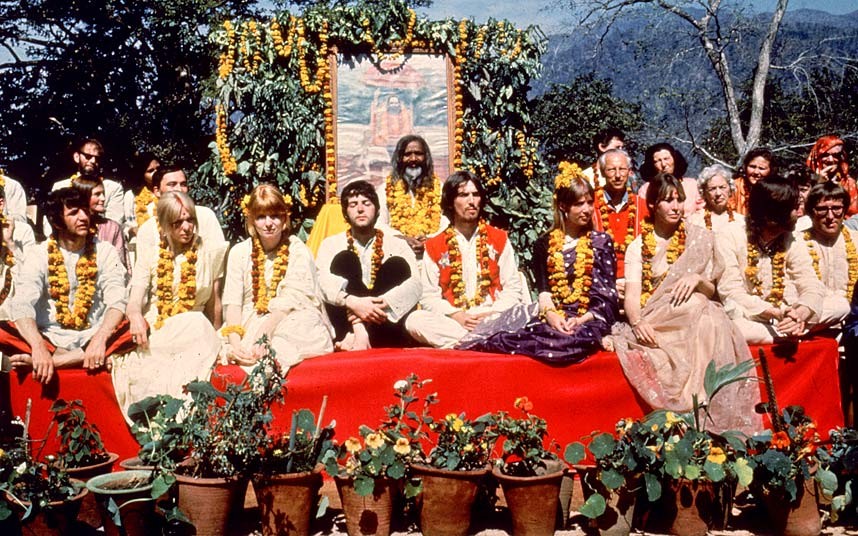
It became synonymous with hippy culture in the 1960s after The Beatles embraced it following a visit to India where they were taught the technique by the late Maharishi Mahesh Yogi.

Now a growing body of research is suggesting it can have a positive effect on people’s lives.

Recent studies have shown that it can be used to treat high blood pressure and help people overcome psychological problems.

The latest research found that US school pupils who performed the meditation technique had higher graduation rates than those who did not.

The effect was even greater among those who had the lowest academic grades, the research conducted by the University of Connecticut and Maharishi University of Management, Iowa, found.

Researchers found that Transcendental Meditation increased the number of students graduating by 15 per cent while among those with the lowest academic grades, a further 25 per cent graduated compared to those not meditating.

Professor Robert Colbert, from the Neag School of Education at the University of Connecticut, said: “Transcendental Meditation appears to hold tremendous promise for enriching the lives of students.”

He added that the meditation technique was a viable method for turning around “poor student academic performance and low graduation rates”.

Sanford Nidich, a professor of education at Maharishi University of Management who conducted the research, added: “These results are the first to show that the Transcendental Meditation program can have a positive impact on student graduation rates.

“The largest effect was found in the most academically challenged students.

“Recently published research on increased academic achievement and reduced psychological stress in urban school students may provide possible mechanisms for the higher graduation rates found in this study.”

It is estimated that around 6 million people now practice Transcendental Meditation around the world.

The technique aims to concentrate the mind inwards by uttering the mantra and is intended to empty the mind of thoughts and feelings.

Proponents of the technique claim it can aid concentration and help to rid them of negative emotions.

The Beatles’ time with Maharishi Mahesh Yogi, at his teaching centre in the foothills of the Himalayas in 1968, produced some of the most famous images of the Fab Four, dressed in white and draped in flower garlands.

It was also one of their most productive periods musically, with Lennon declaring that between them they wrote around 30 new songs during their visit to Rishikesh.

The tracks, which ended up on The Beatles, also known as the White Album, and Abbey Road, include Back in the USSR, Blackbird, Revolution and Mean Mr Mustard.

In an interview conducted in 2009, Paul McCartney and drummer Ringo Starr spoke candidly about how the meditation technique helped them.

Starr said: “Since then, sometimes a lot, sometimes a little, I have meditated. It is a gift he [the Maharishi] gave me.”

McCartney added: “It wasn’t all about meditation, it’s just you were focused – but yeah, there were very blissful moments.

“It is one of the few things anyone has ever given to me that means so much to me. For us, it came at a time when we were looking for something to stabilise us at the end of the crazy sixties.”

McCartney has also in the past called for Transcendental Meditation to be used in schools.

He said: “I believe that in the future meditation could be as commonplace in schools and society as eco-awareness is now. It interests me that an ancient cure may be the solution to a modern problem.”

The new research, which involved 235 students in their senior year at an urban school on the US east coast, was funded by the David Lynch Foundation, which has been campaigning to have meditation incorporated into the school day.

They claim that where meditation has been used in schools, it has helped to reduce stress and anxiety in pupils while also lowering suspension rates.

The foundation was set up two years ago by film director David Lynch after he used meditation to overcome his own anger issues.

Describing the difference it has made to his life, he said: “When I started meditating I had a real anger in me, and I would take this out on my first wife.

“Two weeks after I started meditating, this anger lifted.”

See EurekAlert! press release for the study: Transcendental Meditation positively impacts student graduation rates, new research shows.

See this related post on some of the news coverage: New study shows TM significantly improved school graduation rates, world press reports.

This article was later highlighted on the University of Connecticut Neag School of Education website on their Spotlight page reporting the latest news: Transcendental Meditation May Boost Student Grades.

See The former Beatles Paul McCartney and Ringo Starr reunion for David Lynch’s benefit concert airs on New York’s THIRTEEN, Sunday, April 29.

New study shows TM significantly improved school graduation rates, world press reports

June 14, 2013

New Transcendental Meditation Study Published in Education

This week the world press have been reporting on a collaborative study conducted by researchers Robert Colbert of the University of Connecticut and Sanford Nidich of Maharishi University of Management on meditation and graduation rates. The study, Effect of the Transcendental Meditation Program on Graduation, College Acceptance and Dropout Rates for Students Attending an Urban Public High School, was funded by the David Lynch Foundation, and published in the journal Education, Vol. 133, No. 4, Summer 2013.

The new study is the first to look at the effect of Transcendental Meditation practice on graduation, college acceptance and dropout rates, and follows previously published research by Nidich et al on increased academic achievement and reduced psychological stress in urban school students. The press release, Transcendental Meditation positively impacts student graduation rates, new research shows, included two graphs, and was sent out worldwide to over 5000 science writers by EurekAlert!/AAAS. Here is the Summary and citation for this latest study:

High school graduation rates remain low with racial and ethnic gaps adding to the decline. Graduating versus dropping out translates into higher earning potential, less crime and incarceration, and less dependence on government assistance. A new study published in the journal Education shows practice of the Transcendental Meditation technique resulted in a 15 percent higher graduation rate compared to controls. In low academically performing students a 25 percent difference in graduation rates was observed.

Colbert, R.D. and Nidich, S. (2013). Effect of the Transcendental Meditation Program on Graduation, College Acceptance and Dropout Rates for Students Attending an Urban Public High School. Education, 133 (4), 495-501.

World Press Reports

Many science and medical news websites have reported the news, including PhysOrg; ScienceBlog; Science Codex; RedOrbit; Medical Daily with the headline Transcendental Meditation Boosts High School Graduation Rates, As Policymakers Look To AlternativesMedical News Today; PsychCentral, with their succinct headline, Transcendental Meditation Linked to Higher Graduation Rates; The British Psychological Society, Meditation improves behaviour in school; Counsel & Heal; and examiner.com, How transcendental meditation impacts public high school graduation rates.

The mainstream press then reported the news, led by UK’s Richard Gray, respected science correspondent for The Telegraph, and his wonderfully topical and comprehensive piece, Transcendental Meditation may boost student grades. Underneath the top headline was one of the iconic photos of the Beatles with Maharishi in India and this subheading: It may have seemed simply a phase in pop history, but it seems the Beatles may have been on to something after all during their fabled journey to India.

This prompted Anna Hodgekiss of The Daily Mail to follow up with: The best way to boost brain power and improve exam grades? Chant ‘Om’ like the Beatles did, using an earlier picture of the Beatles with Maharishi taken at the London Hilton when they first met. BTW, there is no chanting in TM, and “Om” is never used.

These articles must have influenced The Times journalist William Chester to write, Exams go better with a Sixties mantra in mind, which was posted on the NW London TM Blog: Exams go better with a Sixties mantra in mind – The Times June 12th 2013.

Other international press also reported on the study. ANI sent out their version of the release and it was picked up by The Times of India, Transcendental meditation boosts grades, Newstrack India, OnePakistan, newKerala.com, and Medindia. India.NYDailyNews.com reproduced the Telegraph article but used a different photo of the Beatles, Donovan, Mia and Prudence Farrow with Maharishi in Rishikesh.

In Chile, the science journalist from El Mecurio, Sebastián Urbina, emailed questions about the study, which were answered by Sandy Nidich. I also suggested he interview Rafael de la Puenta, the TM national leader, and he did. The article appeared as the top story in their Life, Science and Technology section, A15, with a photo of a member of the Trinity College Women’s Squash Team meditating on the court. See a PDF of the article: www.meditacion.cl/prensa/MT_MERCURIO-Santiago-06-11-2013.pdf.

Other countries reporting on the study that we know of include France’s HuffPost C’est La Vie; Italy’s AGI; Spain’s Tendencias21 and La Razon; Holland’s Volkskrant; and Brazil’s Veja.

Some of the previous articles were reproduced on many blogs and websites. Will add any other newer articles as they are found. A few are slated to come out from reporters who asked for the paper, but this report should give you an idea of the kind of news coverage that came out on this promising study. For example, The TM Blog later reported New Study Finds Transcendental Meditation Boosts Student Grades, Graduation Rates.

See the Great article on TM helping students boost grades shows the Beatles were way ahead of their time. That article was later highlighted on the University of Connecticut Neag School of Education on their Spotlight page reporting the latest news: Transcendental Meditation May Boost Student Grades.

Iowa Senator Tom Harkin inspires M.U.M.’s Class of 2013 with his Top Ten Rules to Live By

June 2, 2013

Iowa Senator Tom Harkin Inspired M.U.M.’s Class of 2013 with his Top Ten Rules To Live By at the University’s largest graduating class.

In true David Letterman-style, Iowa Senator Tom Harkin presented the M.U.M. Class of 2013 with his top-10 list—Harkin’s Top Ten Rules To Live By. Senator Harkin gave the Commencement Address after receiving an honorary doctorate from the University and inspired everyone with his humorous wit and down-to-earth wisdom.

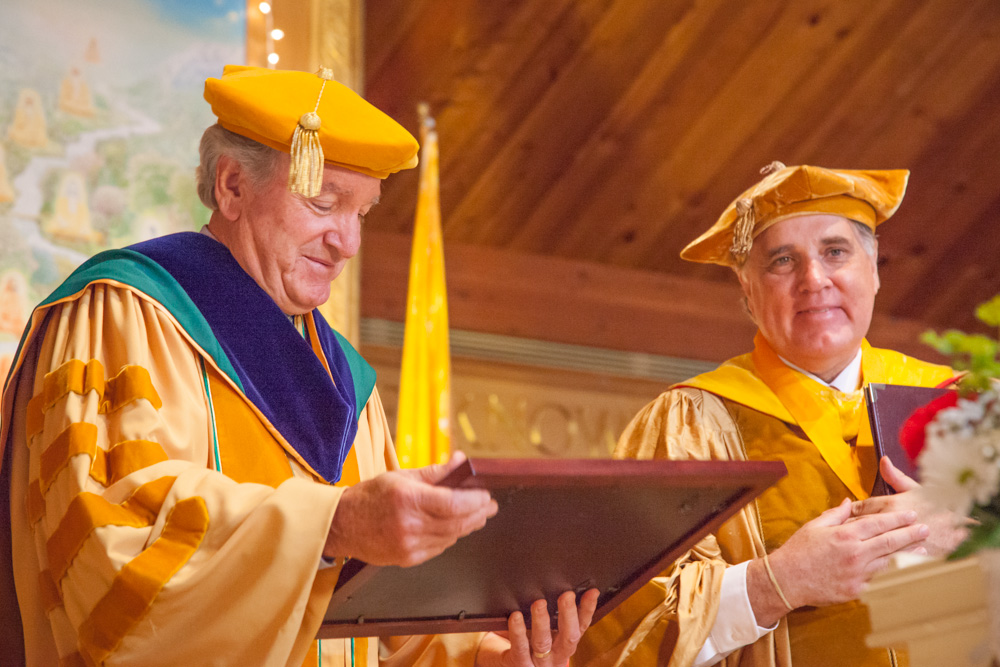
Senator Tom Harkin receives an honorary doctoral degree from M.U.M. President Dr. Bevan Morris.

Senator Tom Harkin receives an honorary doctoral degree from M.U.M. President Dr. Bevan Morris. / Ken West Photography

Iowa Senator Tom Harkin received an honorary Ph.D. from Maharishi University of Management before delivering the Commencement Address at the start of M.U.M.’s Graduation exercises, which took place last Saturday, May 25, 2013, in the Maharishi Patanjali Golden Dome of Pure Knowledge.

The University’s 38th Commencement graduated its largest class ever of 334 students from 54 countries, out of the 88 represented on campus. The Class of 2013 included 251 graduates and 83 undergraduates. Check this link to see a menu of videos from M.U.M.’s Commencement 2013 http://www.mum.edu/commencement-2013. See the full PRWeb press release here bit.ly/17bxT6k for more details.

Senator Harkin was awarded a Doctor of Laws Honoris Causa degree for his extraordinary lifelong service and compassionate and progressive leadership for the state of Iowa and the United States of America. He has served in the Senate since 1985 and also served in the House of Representatives from 1975–1985. He is chairman of the Senate Committee on Health, Education, Labor and Pensions and is the seventh most senior Senator overall.

In his introduction, M.U.M. president Dr. Bevan Morris said, “We honor you for a lifetime of service to the State of Iowa and the United States of America, and your compassionate and progressive leadership. You have recognized that the quality of American life is shaped by the quality of American education.”

He said that Senator Harkin has been a very good friend of the University and greatly enjoyed all his visits here. “He has given us advice and encouragement for all the University’s programs—for natural methods of prevention of disease, organic agriculture, sustainable living, our Sustainable Living Center, as well as to our town, which is rising to being one of the greenest in the nation, under the leadership of Mayor Ed Malloy.”

Senator Harkin began his commencement address on a humorous note. He thanked the University for this distinguished award and said, “I come before you with a measure of humility. I realize I was probably selected to be your speaker today because Oprah wasn’t available.” This elicited a lot of laughter as he was referring to Oprah’s visit to Fairfield last year, which she aired, including a profile of the Maharishi School on the M.U.M. campus.

He then went on to say, “But I do want you to know of my highest respect and admiration that I have for this university, for what you have done, what you have become here, in Iowa, the nation, and the world, and especially for what I consider to be the best holistic approach to education and wellness in life at any university anywhere on the globe.”

He was referring to Maharishi University’s unique system of Consciousness-Based education and leadership role in wellness research and sustainability. M.U.M. was designated as a Center for Natural Medicine and Prevention and has received over $25 million from the NCCAM and NHLBI over the past 20 years to conduct collaborative medical research on the use of Transcendental Meditation as a complementary alternative approach to treat hypertension and cardiovascular disease in underserved minority populations, the results of which have been published in top peer-reviewed scientific journals.

The most recent study was published and publicized by the American Heart Association. Last year the AHA Journal Circulation published a long-term study showing a 48% lower risk of heart attack, stroke and death in a group already afflicted by heart disease that learned the practice of Transcendental Meditation. And this year the AHA published a paper recommending Transcendental Meditation as the only meditation practice that has been shown to lower blood pressure.

“Graduation,” Harkin said, “is one of the five great milestones in life; the others being birth, marriage, death, and the day you finally pay off your student loans.”

“I know exactly what you’re thinking. You’re wondering, ‘How long is that guy gonna talk?’ The answer is not long.”

To answer he quoted advice from Father John Ryan, the Irish priest in his hometown when he was first asked to give a commencement address. The role of a commencement speaker is like the body at an old-fashioned Irish wake: “They need you in order to have the party but they don’t expect you to say very much.”

Senator Harkin said he chose a method for the day’s occasion that has imparted wisdom to millions of people throughout the years—“I speak of course, not of the Ten Commandments, but of David Letterman’s top ten list.” But his were more like suggestions for students to choose, depending on which ones they liked.

Harkin’s Top Ten Rules To Live By

10. Don’t panic. You will find a job. Don’t worry. “My confidence is based on one thing — because you came to the right school. I have nothing, as I said, but admiration for what this university has accomplished in such a short period of time. In a unique way you have put the ‘higher’ in higher education.”

“You folks would agree with William Butler Yeats who said that education is not about filling up a bucket but lighting a fire. And you carry that one step further. At this university education is also about training, focusing, freeing the mind. It’s about raising consciousness. Here you have been beautifully prepared intellectually and spiritually for all the challenges you will face in the world out there, so you should go forth with confidence.” He encouraged students to move to smaller Iowa towns to make a contribution.

(more…)

Senator Tom Harkin gives Commencement Address during Graduation day at M.U.M.

May 31, 2013

The Fairfield Ledger

Graduation day at MUM

By ANDY HALLMAN | May 28, 2013

Iowa Sen. Tom Harkin, right, gives the sign language symbol for “I love you” during his commencement address Saturday afternoon inside the Maharishi Patanjali Golden Dome of Pure Knowledge at Maharishi University of Management. Also pictured is M.U.M. vice president Craig Pearson.

Iowa Sen. Tom Harkin, right, gives the sign language symbol for “I love you” during his commencement address Saturday afternoon inside the Maharishi Patanjali Golden Dome of Pure Knowledge at Maharishi University of Management. Also pictured is M.U.M. vice president Craig Pearson.

Reprinted with permission from The Fairfield Ledger

More coverage: Iowa Senator Tom Harkin delivers M.U.M.’s commencement address—report by KTVO’s Laura Simon.

See Iowa Senator Tom Harkin inspires M.U.M.’s Class of 2013 with his Top Ten Rules to Live By.

Iowa Senator Tom Harkin delivers M.U.M.’s commencement address—report by KTVO’s Laura Simon

May 26, 2013

An Iowa Senator delivers MUM’s commencement address
by Laura Simon for KTVO News | Saturday, May 25, 2013

Iowa Senator Tom Harkin speaking at the M.U.M commencement ceremony.  / Laura Simon

Iowa Senator Tom Harkin speaking at the M.U.M commencement ceremony. / Laura Simon

FAIRFIELD, IOWA — The Morales-Rivera family moved from Chile to Iowa in 1984 in pursuit of the American Dream.

“We wanted a consciousness-based education for our daughters,” Tina Morales-Rivera said.

That place for a Consciousness-Based℠ education was at Maharishi University. Tina is graduating with a master’s degree and her 26-year-old twin daughters are receiving their bachelor’s degrees.

“It’s a beautiful thing,” Tina said. “It’s a great privilege. It’s really an honor to be with my daughters today.”

The Class of 2013 is made up of 334 students who represent 54 countries. This includes 251 graduates and 83 undergraduate degrees.

“They graduated their largest class in history which really underscores the trend the university’s going through right now,” Mayor of Fairfield Ed Malloy said. “They really are on a growth path.”

“I’ve been to a lot of commencements and I don’t think I’ve ever been on a platform where I’ve had as many different nations represented as there are here,” Iowa Senator Tom Harkin said.

Senator Harkin delivered a humorous, yet moving commencement speech. He says the most important thing to remember in life is to be apart of something bigger than yourself.

“Get involved in something,” Harkin said. “Think about the pebble you throw in the pond that makes waves that get bigger and bigger and bigger. Even if you’re a pebble, even if you’re not a senator or a governor, that doesn’t make any difference, you can start something in a community.”

The Morales-Rivera twins plan on taking Senator Harkin’s words to heart, furthering their media and communications education in the fall to obtain their master’s degrees.

“We’ve always loved movies and simply the world of media,” Coral Morales-Rivera said. “We want to change it and bring it to be more self-conscious of the beauty of life.”

For more information see the MUM press release announcing the MUM 2013 Awards Ceremony the night before and today’s graduation. An archive of it can be seen on Livestream. An archive of the graduation will be posted at a later time on the MaharishiUniversity YouTube Channel.

More coverage: Senator Tom Harkin gives Commencement Address during Graduation day at M.U.M.

See Iowa Senator Tom Harkin inspires M.U.M.’s Class of 2013 with his Top Ten Rules to Live By.

Students build tiny house in M.U.M.’s Sustainable Living Program — Andy Hallman, Fairfield Ledger

May 16, 2013

Students build tiny house

Article and Photos by ANDY HALLMAN | May 16, 2013

This slideshow requires JavaScript.

A class at Maharishi University of Management is building a “tiny house,” just 12-feet-by-20-feet, for one of its teaching assistants to live in.

The class is appropriately called “Tiny Houses” and is taught out of the Sustainable Living Department. The teaching assistant and M.U.M. student who will live in the house is Heather Caldwell, who will share the tiny home with her daughter, Ellie, and son, Henry.

Ellie said the house “looks awesome.”

“There’s not excess space, so it’s going to encourage us to go outside more,” she said.

Henry said he thought the house would be bigger than it seemed Wednesday.

“I’m thinking of having a hatch in my room so I can go out onto the roof,” he said. “I think I’ll get used to the size of it.”

Caldwell and her family plan to move into the house in June.

The eight-member class is a little more than two weeks old. Caldwell designed a floor plan for the home. The entire class built walls and a floor according to Caldwell’s specifications. Wednesday afternoon, the class wanted to see the fruits of its labor so it assembled the floor and walls outside the library on the M.U.M. campus.

No heavy machinery was used to install the walls. About 12 people, including the class members and a few stray volunteers, hoisted the walls into place by hand.

Wednesday’s construction project was simply a demonstration to show Caldwell and the class what the tiny house would look like once it’s done. The class will disassemble the house and move it to its more permanent location near Abundance EcoVillage.

Mark Stimson, head of the building track in the M.U.M. Sustainable Living Program, is the professor for the class. He said his class’s project is part of a growing movement of people building small homes. One of the reasons people are turning to such tiny houses is financial.

“You can build your own home for just a few thousand dollars,” he said. “You can live without a mortgage. It’s a lifestyle and priority choice. If your priority is not to be a slave to your house but to live in a nice, tight, comfortable little house, and spend your money on other things, then you might consider building a tiny house.”

Stimson said Caldwell spent about $4,000 on building materials for the home.

Another major reason people choose to build small dwellings is to conserve energy. The small homes are easy to heat and cool. Stimson said many rely on renewable sources of energy such as solar power to heat them in the winter.

“A lot of them have no utility bills,” he said. “They produce all of their own energy.”

Caldwell’s home will feature large glass windows on the south side to take advantage of the sun’s rays in the winter.

Stimson said most of his students had no experience in construction prior to his class.

“We’re only two weeks into the class and they are already working at a clean, professional level,” he said. “It’s gratifying to me to see the change from three Mondays ago when we started the course till today. They’ve really come a long way. I tell my students that when they’re done with this course, they should be able to go anywhere in the country and be under a roof in two weeks.”

The class spends several hours per day in hands-on construction projects and also studies architecture in a traditional classroom setting. All the students in the class create a floor plan for a home they would like to build.

In order for the class to build a tiny house, someone has to pay for the materials. Stimson said that does not present a problem because people in Fairfield are lining up for tiny homes, especially now that students are donating their labor to build them.

Fairfield’s city ordinances do not allow a house of such small size to be built within the city limits, which is part of the reason Caldwell will build hers outside the city limits near Eco Village. Another reason she is building it there is because she wants to start a community of tiny homes.

Caldwell said she got the idea to move into a tiny house in December. She liked the idea of building an inexpensive home, and she was looking for a senior project to complete in order to graduate.

“In the Sustainable Living Program, we’re all about reduce, reuse and recycle,” she said. “We’re all very close here at the university. It’s cool to have classmates, who are people I care about, help build your house.”

Stimson said the course teaches students how to use space efficiently and creatively, which is especially necessary in a tiny house where there is so little of it.

“One thing in the house serves two or more functions,” he said. “[Caldwell’s] reading nook is going to turn into a guest bed. Some people put their dish drainers right above the sink, which is also where they store their dishes, so you don’t have to dry your dishes and put them in a cupboard. You just let them drain down into the sink.”

Caldwell said solar panels will supply electricity to her home. Her septic system will employ a composting toilet. Heat will be supplied by the solar panels and a wood stove. The house will be 12 feet high on one side and 11 feet high on the other. Rain will be collected from the roof for use in the house.

The course on tiny houses premiered earlier this year. Stimson said the class is so popular he has agreed to teach it next year and most likely will for many years.

Published with permission from The Fairfield Ledger, this article covered almost the entire front page, including three large photos down the right side, and another one on the back inside page with the rest of the article.

More news coverage: Tiny House’ offers big benefits to save energy and money — KTVO’s Kate Allt reports from MUM.

‘Tiny House’ offers big benefits to save energy and money — KTVO’s Kate Allt reports from MUM

May 15, 2013

Tiny House’ offers big benefits to save energy and money

by Kate Allt | Posted: 05.15.2013 at 4:48 PM
Students and volunteers raise the walls on Heather Caldwell's tiny house. / KTVO's Kate Allt

Students and volunteers raise the walls on Heather Caldwell’s tiny house. / KTVO’s Kate Allt

FAIRFIELD, IOWA — We often say that bigger is better, but a tiny house movement sweeping the country is proving otherwise.

Fairfield has several tiny houses, most of them about the size of a typical college dorm room. Wednesday, students in the Sustainable Living program at Maharishi University started construction on the newest one — a 12-foot-by-20-foot home designed by student Heather Caldwell.

“A lot of people believe that – in the tiny house movement – that we just consume too much, we’re living in spaces that are way too big, we don’t need that much space,” Caldwell said. “And so these people are building tiny houses to live in them. The thing that I’m interested in once I graduate is not only building tiny houses, but building a community, tiny house communities. So there’s a tiny house movement right now where a lot of people individually are building tiny houses and pretty soon we’ll see more tiny communities popping up and that’s what I’m majoring in.”

The building course is new at Maharishi University, but they plan to teach it for a long time.

“It’s a global movement, people are doing it everywhere and the idea is to downsize and simplify and to lower your energy demands and to be able to live off of renewable energy,” said Professor Mark Stimson, of Maharishi’s Sustainable Living Program. “One of the greatest things is — well, two things — to become self-reliant. It used to be in the old days in this country everybody knew how to build their own house, but since then we’ve gotten kind of specialized in all that. So this is sort of going back to that era of self reliance. And then the greatest part also is just the idea of living mortgage-free. If you can save a few thousand dollars or just salvage materials from places, you can build a very comfortable, snug home for very little money and not have to pay a mortgage for 20 or 30 years.”

Heather designed every element of her tiny house and will be moving on with two kids, four cats and a dog.

“I didn’t believe it at first,” said Heather’s daughter, Ellie. “It’s one of those projects our parents say they’re going to do and then they don’t do. But it’s happening, so it’s fun.”

Caldwell said one of the most challenging aspects is utilizing the small space available to make a fully functioning home.

“One of the big keys to tiny houses is finding multiple uses for the same spot,” she said. “Like the reading nook in the tiny house is also a guest bed and it also houses the dining room table which slips out from underneath and that’s our dining room table.”

Heather’s family hopes to move in in late June and will live in the tiny house for a year. On top of being smaller and more energy-efficient, Heather’s house is also being designed to be entirely off the grid, with solar-powered windows, composting and mud plaster.

To learn more on Heather’s house and to see progress over the next few weeks, visit her blog by clicking here.

To learn more about the Sustainable Living program at MUM, click here.