Having seen the Canadian movie Indian Horse based on his book, and enjoyed his journal entries compiled in Embers: One Ojibway’s Meditations, I decided to actually read one of Richard Wagamese’s novels. I started with Medicine Walk and ended with Starlight, the latter an extension of the former to become a two-part story, albeit an unfinished one. His flawed wounded characters seek healing and reconciliation, as he did throughout his life. The image below and his description of a mended broken heart reveal how his courageous talent honored and celebrated these lives, ultimately his own, and why he was beloved as one of Canada’s greatest Indigenous storytellers.
Medicine Walk
Richard Wagamese’s skills as a soulful storyteller and consummate wordsmith grew with each successive novel. I enjoyed reading Medicine Walk. It’s the story of young Frank who reluctantly agrees to help his extremely ill biological father, Eldon, a stranger to him, complete a journey into the wilderness to a special location where he wants to die in the traditional Indian way.
This emotionally charged story is an attempt at a reconciliation between a seemingly irresponsible absent father and his disappointed hurt son. This was something Wagamese had been grappling with throughout his own life, from both perspectives—as a young boy and later as a father to his own sons. It’s why he wrote the book.
Starlight
I also read Starlight, his final, and unfortunately unfinished novel. Only 61 years of age, he died in his sleep before he could complete it. Beautifully written, this profoundly moving story is about the redemptive power of love, mercy, compassion, and the land’s ability to heal.
This is ultimately a tale of recovery from trauma by the power of human connection to the natural world and each other. It’s something Richard wanted to explore through the main character. This last book continues the story of a now older Frank Starlight. The old white man who raised him and taught him everything he knows has died and left him the farm and accompanying wilderness.
The story is filled with beautiful descriptions of Frank’s transcendent experiences in nature. He had also taken up photography as a hobby. During his time alone in nature he was able to come into contact with a pack of wolves. He runs with them from a safe distance. When he fearlessly taps into nature’s silence within, the alpha wolf seems to trust him and doesn’t bolt. They howl at the moon, and Frank captures this intimate scene through the lens of his camera resulting in rare photographs.
But the main part of the novel is about a potential relationship between Frank and a young woman and her daughter who come into his life. Unbeknownst to him they had violently escaped an abusive situation. The injured men involved are tracking her down to seek revenge.
A man of few words, Frank teaches Emmy and Winnie how to connect with the land, its creatures, and ultimately their own inner nature. It strengthens and heals them, enhancing their self-esteem. These scenes are profound, well-written, worth reading and rereading. I scanned those pages and may reproduce some of the content in a future post.
A tension is created between these contrasting situations. But the book stops just before they are about to intersect. A Note on the Ending, indicates how Wagamese was intending to complete the novel. It includes an outline and examples from previously published short stories.
Finding gold in the flaws of his imperfect life
A Publisher’s Note at the end explains how they came by the manuscript. Throughout the process of readying Starlight for publication they were guided by something that Wagamese wrote. It became the reason for this post. I found this image online as an example of what he describes.
I once saw a ceramic heart, fractured but made beautiful again by an artist filling its cracks with gold. The artist offering a celebration of imperfection, of the flawed rendered magnificent by its reclamation. I loved that symbol until I came to understand that it’s not about the filling so much as it’s about being brave enough to enter the cracks in my life so that my gold becomes revealed. I am my celebration then. See, it’s not in our imagined wholeness that we become art; it’s in the celebration of our cracks . . .
This reminds me of two previous posts related to this notion. One was when I discovered this Japanese ceramic technique Richard is referring to known as kintsugi. I included a definition, an image, and a poem, a tanka I wrote about this process as a metaphor for human growth.
The other was about Leonard Cohen and his song, Anthem, where he tells us to: “Ring the bells that still can ring/ Forget your perfect offering/ There is a crack in everything/ That’s how the light gets in.”
These great Canadian writers had the courage to try to come to terms with their own struggles and the skill to creatively express them in their own unique ways. Experienced aesthetically in the lives of their fans who may have been going through similar life challenges, these hard-earned truths became a validation, bringing beauty and meaning into their lives.
Do you remember The Continuing Story Of Bungalow Bill that John Lennon wrote and sang on the Beatles White Album? It was based on a real person who was on the same Transcendental Meditation Course the Beatles had attended in Rishikesh, India with Maharishi.
Richard Cooke III was there with his mother, Nancy Cooke de Herrera, who was a publicist for Maharishi at the time. Maharishi had assigned Nancy to look after the Beatles during the course.
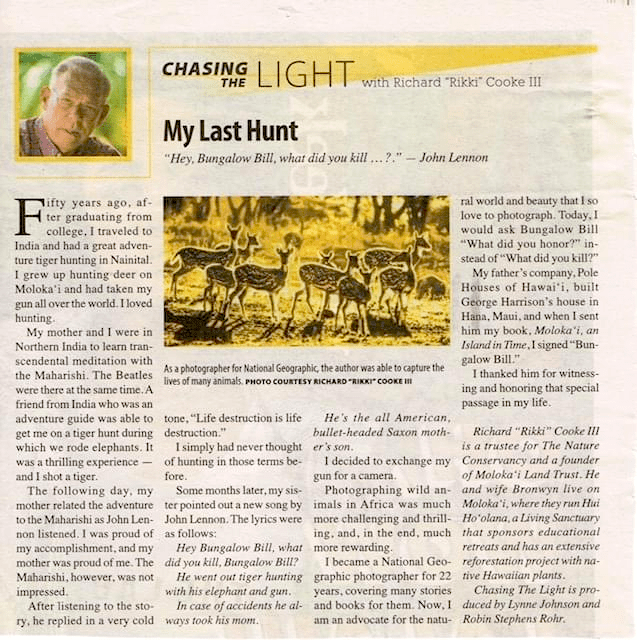
I don’t know if Richard stayed for the whole TM training course, but he took time off to go on an elephant-riding tiger-hunting trip while he was in India. He killed a tiger and was proud of his accomplishment, as was his mother, who related the story to Maharishi. John happened to be in that meeting. Richard and his mother are referenced in the song’s lyrics.
A friend sent me this new article, which brings us up to date. Here is the continuing story of Richard “Rikki” Cooke III in his own words: My Last Hunt, published in Chasing the Light.
It’s interesting how Maharishi’s response and John’s song profoundly altered the trajectory of Richard’s life. He decided to trade in his gun for a camera and did a different kind of shooting from then on. Learn more about Richard A. Cooke III at rikkicooke.com and National Geographic.
This photo shows Nancy with the Beatles and other celebrities attending the course at the ashram in Rishikesh. She’s the tall blond woman behind John Lennon and next to Paul McCartney. Others in this photo are: Maharishi Mahesh Yogi, George Harrison, Mia Farrow, John Farrow, (Mia and Prudence Farrow‘s brother) andDonovan Leitch. A larger photo shows Pattie Boyd in front of Nancy, and Jane Asher and Cynthia Lennon next to Donovan.
Meeting the Beatles in India film by Paul Saltzman
Update: Sept 9, 2020: Speaking of that time, a new film, Meeting The Beatles In India, about Paul Saltzman’s brief stay there, premieres tonight, 7pm, online at Gathr.com. Here’s an announcement about the film from the national TM Office of Communications with a message from the director. Here are a few film reviews: Cryptic Rock, NYS Music, and Variety. Paul’s website: https://thebeatlesinindia.com, and trailer.
I saw the film tonight. It was well done, personable, and revealing, as was the post‑screening discussion and Q&A with Emmy Award-winning director Paul Saltzman, and surprise guest Rikki Cooke III, aka “Bungalow Bill.” In the Q&A that followed, Rikki explained why he thought the remaining Beatles left the ashram abruptly. It made a lot more sense than the usual rumor mentioned in the article. I posted a comment (below) on the Variety article of what he said including related material.
International music journalist Jeff Slate wrote an article for The Daily Beast about the film: My Transformative Time With the Beatles in India. He contributed the usual rock history and interviewed Paul Saltzman, Jenny Boyd, Pattie’s sister, and Deepak Chopra, a close friend of George Harrison. In the Q&A that followed the premiere, Jeff heard Rikki Cooke’s explanation of why he thought the Beatles had left the ashram. Jeff appreciated this different perspective saying it was “one for the record.”
The documentary film, plus exclusively filmed Q&As moderated by Jeff Slate with Paul Saltzman, Jenny Boyd Levitt, Rikki Cooke, and Stephen Maycock from events in India, Germany and London are available on Gathr starting Friday, Sept 11, 2020. Total run time is 2hrs 20mins: movie, 1hr 20mins; Q&A Highlights, 1 hour.
CTV News anchor Angie Seth interviewed Paul Saltzman at his home in Oakville, Ontario about his film and what it was like Meeting the Beatles in India. You can see it here.
June 8, 2021, The Irish Times: Saltzman has been left with more than some priceless holiday photos. What memory does he still hold on to from that week? He replies, instantly: “Doing my first 30-minute meditation. It was fun meeting The Beatles, but that was secondary to the transformation of my inner life.” – Guardian
June 12, 2021, Paul Saltzman spoke to Mayank Chhaya about his story of meeting The Beatles in India. You can see this wonderful interview on Mayank Chhaya Reports YouTube channel.
In one incident, when Paul was in London, he describes how he was invited by a filmmaker friend to join him in a private first screening of a film they were working on. It turned out to be Yellow Submarine!
A surprised Mayank comments on this as another example of serendipity, things as if magically happening in Paul’s life. Paul then talks about the importance of listening to his soul, his intuition. That’s when unexpected things occurred.
Paul tells Mayank: “I do know that when we truly listen to our hearts, that’s the best guidance system on the planet. When we truly open ourselves to hear our own soul’s guidance, it never leads us wrong. It’s when we don’t listen to our inner guidance that we get …. (Mayank interrupts saying: “That’s when things go wrong.”) Maybe Paul was going to say that we get into trouble, i.e., we suffer.
It reminds me of what Maharishi said about being self-referral and enjoying the support of nature as a result of regular practice of Transcendental Meditation.
I saw the film tonight and enjoyed it. I stayed online for the Q&A that followed with director Paul Saltzman and surprise guest Richard “Rikki” Cooke III, aka, Bungalow Bill. One of the questions asked was why the Beatles had left the ashram, and did it have something to do with Maharishi supposedly making a pass at one of the female course participants. That story was a fabrication created by a jealous Magic Alex to draw John Lennon out of there. But Cooke had another explanation, and it had nothing to do with Alex, although he said he stirred up a lot of trouble while he was there. I had also read about this explanation in a book years ago. The Beatles had told Maharishi of their desire to make a documentary film about him and his message of TM to help create world peace. Maharishi was amenable and they were excited to do it. Unfortunately, Charlie Lutes, the leader of the TM movement at that time, had already signed a deal with Four Star Productions, and they had dispatched a film crew to Rishikesh, India. Cooke said when the Beatles found out, they were disappointed, upset, and decided to leave. Rikki said he saw them walk out the north gate at the same time the film crew were coming in through the south gate. He said it was an unfortunate misunderstanding. I had also heard that when John and George had gone to speak with Maharishi beforehand, most thought it was to ask about his making a pass at a girl. But the real reason may have been to verify the rumor of a Four Star film crew coming to make a documentary. If so, they would not want to be involved with it in any way, and would be leaving. With both John and George gone we may never know for sure, although it seems more plausible. Of course, John would write Sexy Sadie in retaliation. He had originally used Maharishi’s name, but George convinced him to change it to Sexy Sadie. Years later, George would visit Maharishi, with the help of Deepak Chopra, to apologize for John’s behavior at that time. Maharishi said he was not upset with John, regardless of what he had said, that he loved them. Deepak had told Maharishi that when The Beatles had played on the Ed Sullivan Show, there were no crimes committed in America. When Maharishi heard that, he called them angels, and said he could never be mad at them. Chopra said that George broke down, and was emotionally relieved with that karmic burden now off his heart. In separate interviews, both Paul and George said there was no truth to those accusations about Maharishi, which they felt were unfortunate.
(PS: I later noticed that all comments were removed in the archive of the Variety article. Thinking that might happen I saved and included it here.)
Paul Saltzman is a two-time Emmy Award winning Toronto-based film and television producer-director known for over 300 productions. In March 26, 2010, he spoke at TEDxWaterloo on My life in Art. His talk opens with his story of how he went to India to work on a film and received a letter from his girlfriend that she had left him for another. Brokenhearted he traveled to Rishikesh to find Maharishi’s ashram to learn Transcendental Meditation. He describes meeting the Beatles and them welcoming him into their fold. The latter part of his talk is about a film he made with Morgan Freeman, Prom Night in Mississippi, and his work with Moving Beyond Prejudice.
Paul concludes his talk sharing wise advice from his own life’s journey up to that point, to be open to receive what the universe is waiting to give us, and to be willing to look at ourselves, our prejudices, to talk about them openly, and to change. This reminds me of a poem by Kukai, Singing Image of Fire, “all things change when we do,” and this poem by Vaclav Havel, It Is I Who Must Begin. Change begins within, and it starts with me.
I emailed Paul about the documentary and he said that he’s still working on the DVD/BluRay and hopes to have it out for Christmas if lucky. Let’s hope he can. There may be extras. It would make for a great holiday gift!
January 25, 2024: Much to my surprise I discovered that YouTube Movies & TV had posted Meeting The Beatles in India. It’s Free with ads, and was apparently released by Shout Factory in 2022.
From December 14, 2018: Best Classic Bands posted Beatles in India: Photos From Pattie Boyd. A rare group of photographs documenting the Beatles’ historic visit to Rishikesh, India, in 1968 surfaced in a 2018 portfolio compiled by Pattie Boyd, the former wife of George Harrison and the celebrated model of “Swinging Sixties” London. 12 of the 16 black-and-white photographs in Pattie Boyd and The Beatles in Rishikesh have never been exhibited. The photos were revealed 50 years later in December 2018.
Someone had commented on Amazon that the extras were worth watching. I wondered if there were any since they’re not mentioned in the product description. So I checked Paul’s website for the Blu-Ray DVD and noticed that there are 57 minutes of extra scenes. Paul wrote: “It gives me great pleasure to include these extra scenes that just didn’t fit in the finished film, but are among my most cherished scenes, the ones that deal with our human spirituality. I know each of these individuals very well, and their personal experiences are true and real, and remarkable.”
I had never seen anything quite like it. There were no digital effects; the technologies had not been developed yet. Expand it to full screen and enjoy a spellbinding aesthetic experience.
How it was made and received
Considered by many to be Norman McLaren‘s masterpiece, ‘Pas de deux‘ is a stunning meditation on form and movement. He photographed backlit dancers dressed in white against a black backdrop, then used an optical printer to expose individual frames up to 11 times.
The film is choreographed to the music of Romanian panpipes. Ludmilla Chiriaeff is the choreographer; Margaret Mercier and Vincent Warren are the dancers. Dobre Constantin plays the pan flute accompanied by the United Folk Orchestra of Romania.
The film won 20 awards, nationally and internationally, at festivals in Melbourne, Locarno, Buenos Aires, Chicago, New York and London, including a special Canadian Film Award for exceptional quality.
‘Pas de deux’ was nominated as ‘Duo’ for Best Live Action Short Subject at the 41st Academy Awards (April 14, 1969) to honor the films of 1968. It was the NFB’s 24th Oscar®-nominated film at the time.
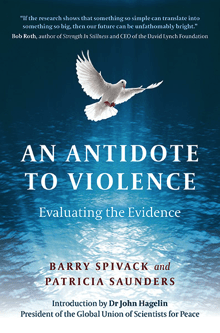
Summary: While it is now accepted that Transcendental Meditation (TM) can create peace for the individual, can it do the same for society, and if so, what is the mechanism? In An Antidote to Violence: Evaluating the Evidence Barry Spivack and Patricia Saunders examine peer-reviewed research suggesting that Transcendental Meditation can influence the collective consciousness of society, leading to decreases in violent crime and war fatalities, and increases in quality of life and cooperation between nations. (Source: EurekAlert!)
An Antidote to Violence
The COVID-19 pandemic has put societies everywhere under extreme stress, and collective stress is often a precursor to outbreaks of violence. Striking features of this global health crisis have been the collective anxiety of the population, the wide variations in the way governments have responded, and the varying degree of their success.
While there is significant scientific research showing that meditation has a positive influence on the health and well being of individuals, is there any evidence that large-scale meditation can can also reduce stress and levels of violence in society?
“Yes” is the surprising inference from the authors of a new book. Published June 26, An Antidote to Violence provides evidence that the level of collective anxiety and tension in society, or incoherence in collective consciousness, is the key element, which determines the success or failure of a government in tackling crime, violence, social unrest and ill-health.
Written for the social scientist and the lay reader alike, An Antidote to Violence offers answers to key questions, including: does group meditation actually influence society? If so, how does it work? What is the evidence? What do skeptics say?
Weaving together psychology, sociology, philosophy, statistics, politics, physics and meditation, the book provides evidence that we have the knowledge to reduce all kinds of violence in society by creating coherence in collective consciousness and thereby neutralizing collective stress.
Barry Spivack and Patricia Saunders describe how a rise in collective tensions spills over into increased social unrest, crime, violence, accidental deaths and hospital emergencies. They examine 20 peer-reviewed studies from over four decades, indicating that it is possible to neutralize or reduce stress in collective consciousness through the practice of Transcendental Meditation (TM) and its advanced programs by a sufficient number of individuals, which is amplified in groups.
Evaluating the Evidence
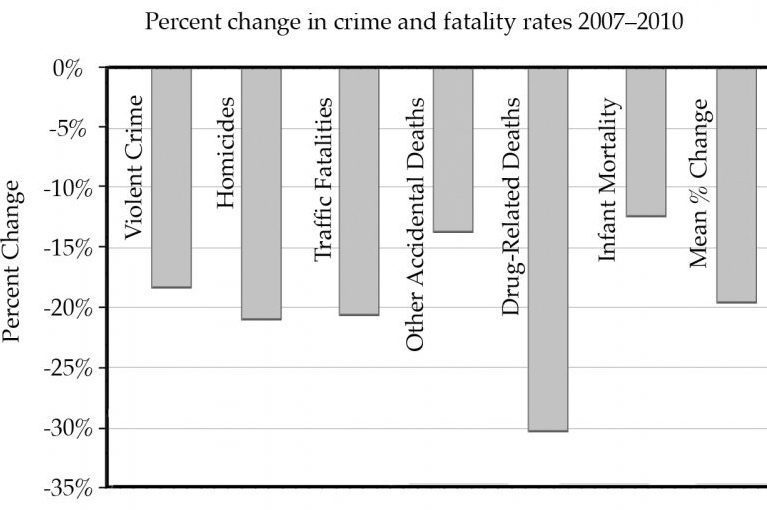
During the experimental period, U.S. rates of homicides, motor vehicle fatalities, drug-related deaths, violent crime (homicides, aggravated assault, robbery and rape), fatalities due to other accidents and infant mortality, all decreased compared to the baseline period.
These findings are more relevant now than ever before at a time of pandemic, protest, and social unrest. — Barry Spivack
“These findings are more relevant now than ever before at a time of pandemic, protest, and social unrest,” says Spivack, and offers three examples from the studies cited in the book. Each of these experiments consisted of sufficient numbers either meditating on their own or together for a period of weeks or months, and in some cases, years, in societies wracked by violence: on 93 experimental days in Lebanon between 1983 and 1985, Cambodia between 1990 and 2008, and USA between 2007 and 2010 compared with the previous four years. In each case measured statistically, significant drops in violence occurred during the periods when the numbers meditating were above the predicted threshold.
Foreword by Bob Roth | Introduction by John Hagelin
In the Foreword to the book, Bob Roth, CEO of the David Lynch Foundation, and author of the NY Times bestseller, Strength in Stillness: The Power of Transcendental Meditation, writes: “Barry Spivack and Patricia Saunders have opened our eyes to an entirely new vision of possibilities about human potential that is both sweepingly grand but also immediate and practical.”
In the book’s Introduction, Dr. John Hagelin, quantum physicist and International Director of the Global Union of Scientists for Peace, suggests “the existing research, while compelling and rigorous, presents a direct challenge to established mainstream sociological paradigms and may be difficult for some to accept. Even more rigorous and repeated testing of the theories presented here is therefore essential to ensure widespread acceptance of this demonstrated sociological phenomenon.”
Just as we must explore every scientific means for beating COVID-19, so we must follow every lead for defeating the virus of violence. — Tim Ward, publisher Changemakers Books
Changemakers Books publisher Tim Ward was struck by the book’s thought-provoking premise and explained his reasons for publishing it. “While the evidence gathered in this book is striking, more research needs to be done to prove it true. And that’s why I chose to publish An Antidote to Violence. Too much is at stake to let this possibility slip through our fingers. Just as we must explore every scientific means for beating COVID-19, so we must follow every lead for defeating the virus of violence.”
Barry Spivack was invited to speak about his new book to the All Party Parliamentary Group on Indian Traditional Sciences in the UK, Sunday, June 21, the International Day of Yoga 2020. Speakers will include High Commissioners and Members from both Houses of Parliament. Conference proceedings will be streamed via Zoom, 12 noon to 5 pm, London time (6 am to 11 am CST). Dr. Tony Nader will speak at 12:55 pm (6:55 am CST) and Barry Spivack at 2:45 pm UK time (8:45 am CST). It will also live stream on Facebook under Indian Traditional Sciences.
Research provides evidence consistent with a causal interpretation
The authors emphasize this is the first book that draws on all the peer-reviewed research and looks at the implications of the research as a whole rather than just individual papers. “Compiling so many consistent experimental results may indicate more than a statistical correlation; it justifies further research into a causal hypothesis.”
Establishing causality in the social sciences is difficult. “Nevertheless,” says Spivack, “there are at least 6 reasons why the research provides evidence for the hypothesis that Transcendental Meditation reduces conflict and divisions in society, and improves economic performance, which is consistent with a causal interpretation.”
1) Repetition: There are 20 peer-reviewed studies, which show statistically significant results.
2) There is a dosage effect—the bigger the group the larger the impact.
3) The independent variable—the numbers practicing Transcendental Meditation—often varies at random in these experiments so you get a repeat effect within the same experiment whenever the relevant threshold of numbers is passed within the same study.
4) Studies have controlled for other possible causes in social changes, such as population density, median years of education, per capita income, the ratio of police per population, weather, holidays, seasons, political events, percentages of people in the age range 15-29, of the unemployed, of those below the poverty line, and of people over 65.
5) Normally unconnected variables, such as crime, accidental deaths, infant mortality, deaths from opioids, all move in the same direction at the same time when the relevant threshold of people practicing Transcendental Meditation is surpassed.
6) The independent variable—the numbers practicing Transcendental Meditation and its advanced programs—changes before the dependent variables change, such as crime or war fatalities or the misery index.
What people are saying about An Antidote to Violence
I was initially skeptical that such a simple solution could be effective. However, after examining the evidence, I changed my mind. An Antidote to Violence is a serious and well-researched book that offers an unconventional but effective peaceful solution to violence and terrorism.Lieutenant General Clarence E. McKnight, Jr, Former Director of Command, Control and Communications Systems for the Joint Chiefs of Staff, Washington DC
This book is especially good at discussing the evidence and the alternative explanations that have been advanced for the results. I can recommend the book to all readers with an open mind.Huw Dixon, Professor of Economics, Cardiff University
Barry Spivack and Patricia Saunders address the problems of preventing violence and war with a high level of professionalism, and, by examining a means to achieve sustainable peace supported by long-term research, have created a book that is hugely relevant. Most importantly, they highlight the interdependence of power, violence, security, and individual and collective consciousness. This book will be extremely useful for people of all nationalities, regardless of their status, different religious beliefs, personal preferences and life strategies. The theoretical and methodological principles outlined here deserve to be studied carefully and disseminated in the world.Lieutenant General Vasyl Krutov, former First Deputy Head of the Security Service of Ukraine and First Deputy Secretary of the National Security and Defence Council of Ukraine
My most sincere congratulations to the authors for their research and presentation of this book. I hope it will be read and applied by leaders of government and by all in general for the good of society and each person in particular.Lieutenant General José Martí Villamil de la Cadena, former Chief of Staff of the Army and Commander of Ground Theatre Operations, Chief of Staff of the Joint Command, Vice-Minister of Defence, and General Secretary of the National Security Council in Ecuador
Based on hard evidence corroborated by rigorous scientific studies, …the book compiles an array of incredible success stories from all over the world in an easily readable style for all those interested in addressing the monumental challenge of eradicating violence and conflict.Ved P. Nanda, Professor of Law, University of Denver
###
RELEASE DATE: June 26 in the UK and July 1 in the US 2020ISBN: 978-1-78904-258-0 | $24.95 | £15.99 EISBN: 978-1-78904-259-7 | $12.99 | £5.79
Yesterday, June 20, co-author and Fairfield resident Patricia Saunders received her doctorate in Maharishi Vedic Science from Maharishi International University. In addition she was honored as the Outstanding Doctoral Student in Maharishi Vedic Science.
This section powerfully nutshells an underlying issue, which involves a paradigm shift in the understanding of reality.
The Maharishi Effect is not everyone’s cup of tea, and this is how it should be. Science advances through a dialectic between conservative forces that try to hold on to the prevailing worldview, and evolutionary forces that try to expand knowledge to a more comprehensive framework that encompasses more of reality into a consistent picture, in this case integrating our understanding of the physical universe with consciousness.
Also contained in that issue on pages 6-7 is a review of Dr. Tony Nader’s keynote address at the Westminster parliamentary celebration of the International Day of Yoga. And on pages 12-13 under The Maharishi Interviews is a transcript of part 1 of the Les Crane interview with Maharishi in Los Angeles, Autumn 1967. Part 2 will continue in their next issue. You can see the whole interview on this blog: Les Crane interviews Maharishi Mahesh Yogi.
The Nov/Dec 2020 issue of Kindred Spirit in the UK (kindredspirit.co.uk) published this article in their meditation section: Transcendental Meditation: An Antidote to Violence. Can a meditation practice lead to the expansion of peace and tolerance in the collective consciousness? Barry Spivack looks at the evidence.
Dec 1, 2020, the National Office for TM in the UK sent out an announcement about the Kindred Spirit article, linking to a PDF of it.
Meditation has gone mainstream. Many celebrities, business executives, and health experts practice and recommend it. In his short (5-minute) comprehensive video, Meditation Basics, Douglas Rexford explains the essentials and benefits of meditation practice. He covers the main types of meditation, their differences, and impact on the brain.
This well-paced presentation includes a wide range of visuals with highlights from some of the hundreds of scientific research findings on Transcendental Meditation (TM), and its use in health, education, business, and rehabilitation settings, including veterans with PTSD. Rexford emphasizes the effortlessness and effectiveness of TM practice, which can be learned by people of all ages. Enjoy the video and share it.
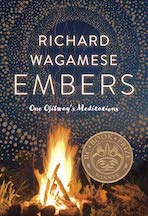
A collection of early morning writings he had posted on his Facebook page, they were later put into an award-winning book by his publisher. I ordered a copy and found similar entries about the silences he experienced outside in nature, and those within—the gaps between thoughts, words, and moments.
To write, he would separate himself from the noises and distractions of everyday life and retreat into “the sound of silence,” then bring it out with him into the world, “the sound of self emerging.” For him, “silence is the stuff of life.” He wrote, “I want to dive into those small bits of silence. They contain the ocean of my being and our togetherness.”
This impressive insight concludes Chapter I: STILLNESS.
I DON’T KNOW the word for it, that space between seconds, but I’ve come to understand for myself that it’s the punctuation of my life. Between each word, each thought, each moment is where the truth of things lies. The more intent I am on hearing it, seeing it, feeling it, incorporating it, the more precise the degree to which I’m focused on my life and the act of living. I want to dive into those bits of silence. They contain the ocean of my being and our togetherness. So if I don’t respond quickly, excuse me. I’m busy allowing the surf of consciousness to break over me so that I can stand on the coast of our unity and be more.
This reminds me of Maharishi’s Vedic Science. He described this silent space or gap as the transcendent, our own inner transcendental consciousness that we tap into during Transcendental Meditation. He said it was also an unbounded reservoir of pure knowledge, the Sounds and Gaps in Veda and Vedic Literature that structure creation in a sequential, self-referral flow. I mention this process in a previous post. He also spoke of ritam bhara pragya, a refined state of consciousness, ‘that intelligence which knows only the truth.’
Those Embers entries indicate an experiential understanding of a deeper inner reality. In a Q&A session that followed a talk Richard Wagemese gave at MacEwan University, he answered a question about how his recent practice of yoga and meditation had impacted his writing. His answer and the video are both included in that blog post referenced in the opening paragraph above.
Here is another significant insight from the book, in Chapter III: TRUST.
MY MOTHER’S PHYSICAL death taught me that I didn’t come here to master devastating situations, circumstances, changes, losses or even my own feelings. I came here to experience them. I came here for soul lessons and spirit teachings so that I could carry on in this wonderful spiritual journey we are all on, this teaching way, this blessing way. So that, in the end, I can, like my mother has done, return to the beauty that I was when I first arrived here.
A similar theme is expressed in Chapter IV: Reverence.
I CAME HERE to inhabit a body that would allow my soul to experience. So I am not my body. I came here to experience the grandest thought. So I am not my mind. I came here to experience the deepest feeling. So I am not my feelings. I am all of it: thought, feeling and experience. That translates to awe, joy and reverence. For all life, for all beings, for all Creation. Knowing this, understanding this, make living the hardest thing of all—but the joy is in the challenge, the gradual day-by-day becoming.
In Chapter V: Persistence, he learns the miraculous power of forgiveness.
I LIVE FOR miracles in my life these days. Not the earth-changing, light-bringing, soul-powering kind. But the ones that carve out a small space of peace where before there was only the jumble of resentment, fear and doubt. The ones that happen from choosing to live the right way. Like coming to understand that forgiveness isn’t about gaining a release from others—it’s about gaining release from me. If I release my hold on what binds me, I can walk free and unencumbered. But I have to embrace the resentment, fear and doubt to gain that. I have to own them, hold them again, so that I can learn to let them go. In that letting go is the miracle.
There are more entries worth sharing, including short dialogues with a wise elder, Old Woman. His questions elicit unexpected pithy replies as she offers wise advice about life. Here’s an example from Chapter V.
ME: You always repeat things three times.
OLD WOMAN: Just the important things.
ME: Why? I hear you the first time.
OLD WOMAN: No. You listen the first time. You hear the second time. And you feel the third time.
ME: I don’t get it.
OLD WOMAN: When you listen, you become aware. That’s for your head. When you hear, you awaken. That’s for your heart. When you feel, it becomes a part of you. That’s for your spirit. Three times. It’s so you learn to listen with your whole being. That’s how you learn.
Advice on Writing
My earlier post shared Richard Wagamese’s reflections on the writing life. In Embers, Chapter III: TRUST, he describes the process of timed free writing and what it can do for us both personally and professionally.
WRITE SPONTANEOUSLY EVERY day for fifteen minutes.
First, get settled. Breathe. Big, deep, full breaths, taken slowly. Clear your mind of words. Be wordless. Then, open your eyes and write whatever comes out of you, and keep writing without taking your hands from the paper or the keyboard for fifteen minutes. Don’t worry about punctuation or spelling. Just write. Every day. Fifteen minutes. Regardless. Watch what happens to your level of craft when you work on a project. Why? Because stories live in our bodies and we need to feel our fingers moving in the process of creation every day. Your hands are your interpretive tools. They bring your spirit out in words and language.
In Chapter IV: Reverence, he shares his personal approach to writing.
YOU STOKE THE FIRES of creativity with humility, gratitude and awareness. You need to ask for the gift to be directed. Writing is a spiritual process. To be a creator you need to connect with Creator.
In Chapter VII: JOY, he tells us that writing is a process of self-discovery.
DON’T JUST WRITE what you know. Write what you wish to know. What you reveal to yourself, you reveal to the reader. Storytelling is about discovery.
It was how he wrote Medicine Walk. I included his quote and video link in that earlier blog post about him. He had described this process in that same talk he gave at MacEwan University for their Book of the Year selection—Indian Horse. That book was turned into a film by the same title, which I had recently seen on Netflix but didn’t know it was written by him until I made the coincidental connection.
With reference to spontaneous writing and storytelling, I know what he means. When I first discovered writing and what writers said about it, one of my first poems came out as a result of free-writing practice: Writing—a poem on the writing process.
Around that time I had made up a bedtime story for my kids. It was so magical we did it again the next night and recorded it. After it was done I spontaneously spoke out what that process was like, then wrote those two sentences down as Storytelling—a poem on the storytelling process.
Wagemese concludes by encouraging us to share in the transporting and transforming power of storytelling, advising us to not be didactic, but to inspire others instead to discover the questions for themselves.
TO TELL. TO use the act of breathing to shape air into sounds that take on the context of language that lifts and transports those who hear it, takes them beyond what they think and know and feel and empowers them to think and feel and know even more. We’re all storytellers, really. That’s what we do. That is our power as human beings. Not to tell people how to think and feel and therefore know—but through our stories allow them to discover questions within themselves. Turn off your TV and your devices and talk to each other. Share stories. Be joined, transported and transformed.
Be patient toward all that is unsolved in your heart and try to love the questions themselves, like locked rooms and like books that are now written in a very foreign tongue. Do not now seek the answers, which cannot be given you because you would not be able to live them. And the point is, to live everything. Live the questions now. Perhaps you will then gradually, without noticing it, live along some distant day into the answer.
Embers: One Ojibway’s Meditations became a 2017 BC Book Prize Winner. I can see why, now that I own a copy. In addition to Richard Wagamese’s words of wisdom, humility and gratitude, the book cover and content are colorfully laid out with creative photographs, all printed on quality paper. Douglas & McIntyre produced a beautiful work of art.
The perception of time is strange. Memories of certain events remain with us long after they’ve gone. They become part of our story. I still remember a unique experience I had over 20 years ago. I found the poem I had written about it trying to understand what was happening at that time. But first, a backgrounder on what led up to it.
Saturn (Shani) was exerting its influence during an Antardasha, or sub-period. I was also in the last third of a 7.5 years-long period of Shani influencing my Moon (Chandra), which governs the mind and emotions. It is a challenging time known as Sade-Sati in eastern astrology. We go through this transit at least once or twice during our lifetime. The texts say that “persons under this influence are betrayed in their financial, personal, social and marital matters.” I often recalled what Nietzsche said about life’s suffering: “That which does not kill us, makes us stronger.”
My life wasn’t that bad, yet I had been under a lot of different pressures going nowhere. I was given the opportunity to join the Maharishi Purusha Program. It was something I had thought about, but life’s decisions had taken me in other directions. I reconsidered my current situation and decided to give it a try.
At one point the Maharishi Jyotish office offered astrology readings and recommended remedies for what might be coming down the proverbial karmic pipeline. This was something I had always wanted to do but could never afford to. Since I was on this special program for single men, the cost for the reading and remedy was more within reach. The main recommendation was to have a double level Maharishi Yagya done for both Shani influences. I decided to go for it, not knowing what to expect.
While an ancient Vedic performance was being conducted in India, I was feeling something in North Carolina! The experience was abstract, yet so real! The only way I could make any sense of it was to put it into words. This poem came out and surprisingly defined the moment for me.
Awake Before The Dawn
Another sun has risen this morning not one of light but of wakefulness
I find myself strangely silent inside not feeling anything but lightness
So this is what it’s like to be alive awake at last to the Dawning of Eternity
Written on Saturday, July 10, 1999 In honor of my Shani Yagya Ken Chawkin, SCA, Boone, NC
Aside from what Nietzsche said, having that Yagya and being on Purusha helped lighten the karmic load considerably!! Eleven months later I volunteered for a project and found myself in the exotic land of Indonesia. An unusual experience greeted me there early one morning. I woke myself up to write down this Indonesian Mystery Poem.
Interestingly, during that year abroad, I would spend time in 5 different countries: Indonesia, Singapore, Malaysia, India, and Australia. I later discovered that when I left Boone to travel to Jakarta, Jupiter (Guru) had started a 13-month transit across my 12th house, which indicated a loss of homeland. Amazing how this all works!
I’m currently undergoing a Maharishi Yagya for an upcoming major Mars period, Mangal Mahadasha. It brought up memories from that time at the Spiritual Center of America where I wrote this poem and the journey that would later unfold. Another incredible story that would take volumes!
I first discovered this great Canadian aboriginal writer on a blog I follow. I looked into the book she quoted from, Embers: One Ojibway’s Meditations by Richard Wagamese, and bought it based on this first entry I read in Chapter I: STILLNESS.
I AM MY silence. I am not the busyness of my thoughts or the daily rhythm of my actions. I am not the stuff that constitutes my world. I am not my talk. I am not my actions. I am my silence. I am the consciousness that perceives all these things. When I go to my consciousness, to that great pool of silence that observes the intricacies of my life, I am aware that I am me. I take a little time each day to sit in silence so that I can move outward in balance into the great clamour of living.
These two entries in Chapter II: HARMONY are equally profound. This first one, about the relationship between the soul and the body, reminds me of what the Sufi mystics said about the body and the universe, the microcosm and the macrocosm.
I USED TO believe my body contained my soul. That was fine for a while. But when I started thinking about oneness with Creator, I came to believe that it’s the other way around. My soul contains my body. It is everything that I am. I am never separate from Creator except within my mind. That’s the ultimate truth, and I need to be reminded, to learn again, to learn anew in order to get it. When I do, I know the truth of what my people say: that we are all spirit, we are all energy, joined to everything that is everywhere, all things coming true together.
Interestingly, when the mind forgets this oneness, loses its connection to inner wholeness, the result is what Maharishi calls Pragyāparādha, the mistake of the intellect, which identifies with a changing limited reality instead of our unbounded inner Self. This identification with the world and loss of memory of the Self is the root cause of all of our suffering, the difference between bondage and liberation.
The other entry, about coming under the influence of the muse, reminds me of William Stafford, another poet who would also get up early every morning to write before sunrise. Although similar in theme, but not as profound, his poem, When I Met My Muse, is more lighthearted.
WHEN THE MUSE is full upon you, you move to the chair at your desk as if entranced, and in that ghostly glow against the full dark before sunrise, story becomes a shape-shifter, a presence that cajoles you, tempts you, coaxes words to eke out onto the page, creating worlds and people from the fire deep within you so that this alchemy of creation becomes transcendent, making time lose all its properties. There is just you and the universe and this creative fire moving through your fingers in bold palettes of colour chasing the dark away until you emerge in the sure, calm light of morning and feel like a writer again.
I discovered a similar transcendent experience described by Canadian Realist Painter Sarah McKendry as she paints through the night until sunrise. See my comment and her quote below in the Responses section.
Discovering Richard Wagamese the Storyteller
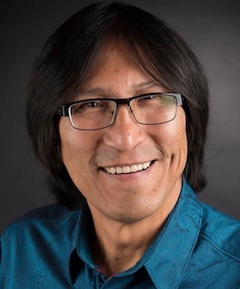
Richard Wagamese (October 14, 1955 – March 10, 2017) was an internationally renowned, award-winning author, newspaper columnist and reporter who had also worked in radio and television. In this CBC interview, Candy Palmater asks Richard how a library helped him become a writer. As a destitute, homeless teenager, he walked into a building for warmth and noticed it was filled with silence and many books. He didn’t know where he was. A kind librarian brought him some food and showed him how to find what he was interested in. Richard had only a grade 9 education and devoured books on a wide range of topics. He taught himself how to become a writer and would copy sentences by hand of the great authors who moved him just to see what it felt like. He tells Candy the role he played in the making of the film based on his book.
Indian Horse, the novel and the film
I had just watched an emotionally-charged film on Netflix called Indian Horse. I checked and found out that the film was based on the award-winning novel Indian Horse written by this same Ojibway author! Clint Eastwood was the executive producer. It tells the tragic, yet hopeful and redemptive story of the main character, Saul Indian Horse. Events unfold during a dark era in Canadian history, when young native Indians were separated from their families (including Wagamese’s parents), and sent to notorious Catholic Residential Schools where they were forced to not speak their language or practice their culture. The nuns and priests tried to “scrape the Indian out of them” violently molding them into Christians, traumatizing them for life.
Despite this, Saul finds salvation in the unlikeliest of places and the most favorite of Canadian pastimes — hockey. Fascinated by the game, he secretly teaches himself how to play, and develops a unique and rare skill. Saul’s talent leads him away from the misery of the Residential School to a Northern Ontario Indigenous league and eventually to the pros – but the terrors of Saul’s past seem to follow him.
Wagamese suffered from second-generational trauma, abused drugs and alcohol, was homeless and landed in prison many times. He would eventually be diagnosed with PTSD, which gave him a better understanding of his helpless situation, and finally sought treatment.
A wise tribal Elder told him his role in life was to become a storyteller. Writing would become a healing redemptive practice for him. Surprisingly, many of his readers felt seen, understood. His stories helped them too in their healing journey, fulfilling his destiny.
People who knew Wagamese said he was the creator, parent and protector of stories. Host of CBC Radio’s The Next Chapter and chancellor of the University of Victoria, Shelagh Rogers said of her longtime friend, “Richard really believed everybody had a story.” Listen to Shelagh Rogers’ tribute to Richard Wagamese, a great man who passed away unexpectedly and too soon at the age of 61.
The nature of a writer‘s life
As a writer, Richard Wagamese would win many prestigious awards. On November 3, 2015 in Toronto, the Writers Trust of Canada honored him with the 2015 Matt Cohen Award: In Celebration of a Writing Life. In his humble, at times emotional acceptance speech, he beautifully described his early morning rituals followed by sitting for a while in the candle-lit darkness, thinking about what it is that he is about to do, “and you ask for as much guidance and strength from The Creator as possible.” He heads down the hall to a place where he will sit for hours at his computer. “And you sit there and you breathe and you hope and you dream and you close your eyes, and you feel the essence of that gift radiating inside you. And you put your fingers on that keyboard and watch while they emerge out upon the screen.”
I love this part of his speech: “And you wait for that time when you know that that perfect sentence has just occurred. And there‘s a gladdening in your spirit when that happens, and you seek to write another one, just like it, to follow it across the page. And in my experience, that‘s the nature of a writer‘s life. That immaculate sense of solitude, when there‘s just you and the language and the air and the universe and that gift that The Creator downloaded you with free-of-charge…. “
Richard Wagamese 2015 Matt Cohen Award speech
And in my experience, that‘s the nature of a writer‘s life. That immaculate sense of solitude, when there‘s just you and the language and the air and the universe and that gift that The Creator downloaded you with free-of-charge.
Writing for the story’s sake and not your own
In this talk at the University of British Columbia (Nov 27, 2013) on his book tour for Indian Horse, author Wagamese gives some valuable advice for young writers. His years of experience honing his craft as a journalist and a writer for radio and television prepared him to become a successful novelist and poet. “In that way of writing you learn how to be sharp, simple and concise, and learn how to trim the fat from every sentence, and you learn how to say exactly what you mean and to mean what you say.” He emphasized “that conciseness and that brevity that results in perfect clarity really served this novel well.”
He goes on to explain that it wasn’t necessary to be overly dramatic or poetic in his prose. “You harness that, you reign that back in and you learn to work for the story itself. And if there’s any aspiring or perspiring writers in the room, that’s the biggest advice I can give you, that if you work for the story’s sake all the time it will spare you the anxiety and the inner debate about how much you should write or in what way you should write it because you’re writing for the story’s sake and not your own. And again that particular rule served me well in the writing of Indian Horse.”
In a July 4, 2014 Globe and Mail article, we learn where he got that advice from: Q: What’s the best advice you’ve ever received? A:Norval Morrisseau once told me to “work for the story’s sake” and that is the best advice I’ve ever received. When I work for the story’s sake I leave my ego at the door and the energy of the story emerges without my interference. It’s why Indian Horse and Medicine Walk ring so resonant with people – because me and my ego are not in the way of the story pouring outward.
Embrace everything and write what you don’t know
A year later (Nov 18, 2014), Richard Wagamese was invited to read from the MacEwan Book of the Year 2013/14, Indian Horse. It included an on-stage interview with author Richard Van Camp. He read from Indian Horse, answered good questions from the audience, and concluded with a reading from his new book Medicine Walk, a story about a reconciliation between an absent father and his son, something Wagamese had been grappling with in his own life. MacEwan University posted this inspiring event on YouTube.
He offered good advice to hopeful writers and shared his process, how when he goes on long walks, he connects with the land, and thinks about ideas that get triggered. He says them out loud to himself as he develops a story until it’s clearer to him, then returns home to type it up on his computer, offline to avoid distractions. He told them to be open to anything as it could trigger a story. They should open themselves up to and embrace everything as it would impact their writing and keep their readers engaged.
He also touched on the notion that “some courses and programs tell you to write what you know.” I found his take on that advice revealing: “But it’s come to me over the course of the last few books, that if I write what I don’t know, then the process of me discovering the answers to what I don’t know makes the journey of following the story in the book stronger for the reader, because we both get to find the answer together.” (These great writers said the exact same thing.)
But it’s come to me over the course of the last few books, that if I write what I don’t know, then the process of me discovering the answers to what I don’t know makes the journey of following the story in the book stronger for the reader, because we both get to find the answer together.
This final question was very interesting, one that he “was not often asked.” He gave a surprising and impressive answer. He shared how his 16 months of yoga and meditation practice, along with a change in diet had improved his life physically, emotionally, and spiritually. On all these levels, yoga was “informing my sense of myself.” It brought a peace and a quietness within the process “that I’ve been waiting for all my life.” Answering her question specifically he explained, “and so when I turn to the act of writing, I bring that same sense of holism into the process of writing.” He then described the kind of improvements he experienced in his skill as a writer, attributing them to that influence, which, he concluded, created “a big leap forward” that showed up in his new book, Medicine Walk. (A good question that elicited a great answer!)
Learning to become a better person
In her informative and heartfelt obituary (March 24, 2017, updated May 16, 2018): Ojibway author Richard Wagamese found salvation in stories, Globe and Mail journalist Marsha Lederman wrote that “his last book, Embers: One Ojibway’s Meditations, came out of Mr. Wagamese’s daily Facebook posts. They had a devoted following and Douglas and McIntyre head Howard White proposed publishing them as a collection. On March 7, Embers was nominated for a BC Book Award. Two nights later, Mr. Wagamese went to sleep and didn’t wake up.”
The book actually did win the 2017 Bill Duthie Booksellers’ Choice Award. This is the conclusion to her article: In one of Mr. Wagamese’s final Facebook meditations, posted in November, he wrote about starting his day with candlelight, tea and meditation, and what the years had taught him. “Actions born of contemplation are wiser than those made in quiet desperation. If all that’s true, and I feel it is, then I have grown some in these 61 years. I have learned and become a better person. And from that maybe it’s the years ahead that will be the richest of my life. A quiet man moving forward, gladly beyond all expectation.”
Two new posthumously published books by Richard Wagamese
CBC Books posted news of two new posthumously published books by Richard Wagamese: the unfinished novel Starlight (Mar 01, 2018) and One Drum (Nov 06, 2019). This latest book review also includes 3 earlier CBC Radio interviews, 2 of which are referenced in this blog post. You can Read an excerpt from Richard Wagamese’s final book, One Drum.
Related posts: I later found this excellent book review by Eldon Yellowhorn in The Ormsby Review posted on BC Booklook: Richard Wagamese’s third solitude. He concludes Indian Horse “is the composition that will forever evoke the name Richard Wagamese.”
Integrating deep reflection with artistic creation
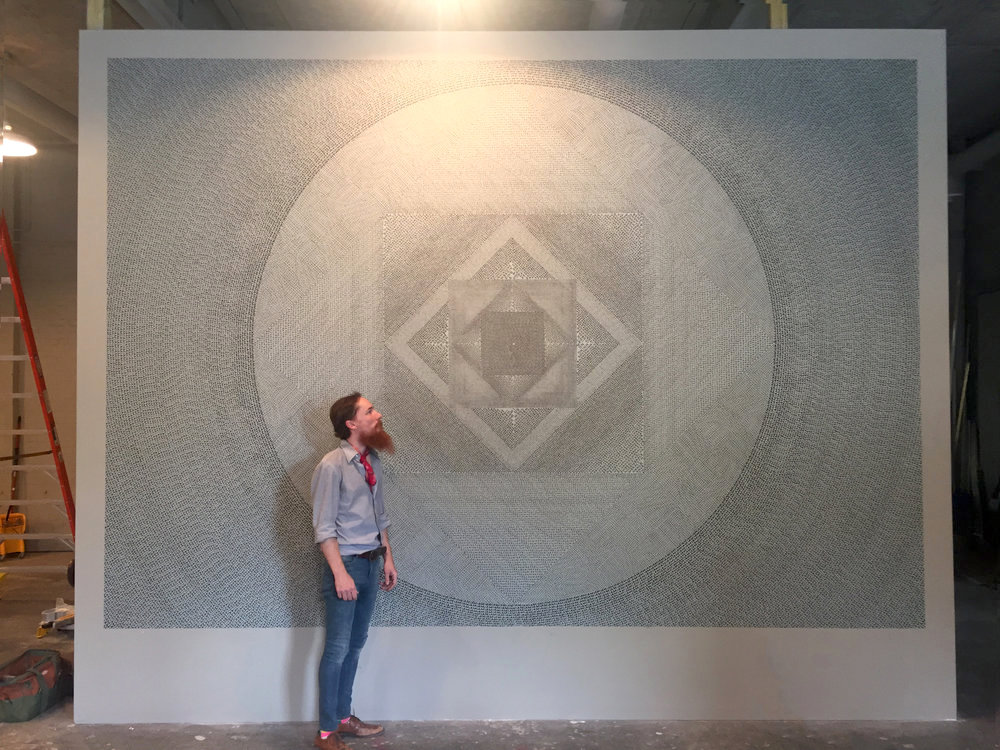
Chad Starling is a Fairfield artist who combines the written word with a visual labyrinthine language into a body of work called Word and Form. He integrates deep reflection with artistic creation. His process of art-making is a meditative practice engaging eye, hand, heart and mind as he repeatedly writes a certain phrase over and over again in a specific pattern while experiencing a steady stillness in action.
I first saw his work featured a few summers ago at Art Fifty Two. I couldn’t believe what I was looking at—a series of repeated hand-written words or phrases from large to extremely small print made into shapes and patterns, some appearing as mandalas. A detailed large work can take up to two years to complete with writing sometimes as small as over 400 letters per square inch. Chad recently told me that he can usually create three pieces per year. The fact that he is dyslexic and can produce such accurate repetitive word drawings belies the imagination!
Chad Starling next to his I AM print expanded to mural size at Art Fifty Two
Here is an example of his work, I AM, which was blown up to a wall size mural for the show. The actual size of the piece is 18 x 24 inches. Dale Stephens created this large size for Chad’s show at his Art Fifty Two. You get a perspective for the size of the mural with Chad standing next to it. Click on the title to see details of the work and closeups on his website.
I marveled at the JAI GURU DEV Mural. It’s amazing! Click on the title, then on the first image to expand it, and the arrow on the right twice to see increasing closeups of it. You will clearly see the words in the 3rd image at the center. Mind-boggling!
Words of Art Documentary
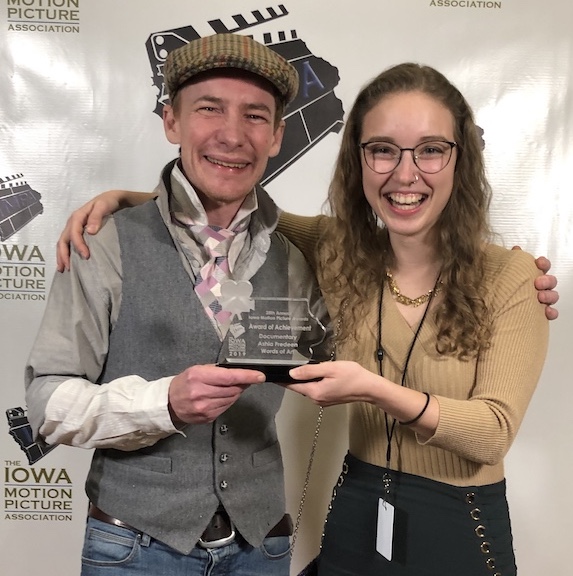
Chad Starling and Ashia Fredeen with their 2019 IMPA Achievement Award
Ashia Fredeen, the daughter of a Canadian couple I know, came to Fairfield to study film making in the Cinematic Arts and New Media Department at MIU. She has a background in stage theater, creative writing, visual arts and music. Ashia helped Dick DeAngelison his 2nd film of theFairfield History Series serving as 1st assistant director for the entire length of the 9-month production.
During her 2nd year, inspired by his work, Ashia reached out to Chad Starling to see if he would be open to her making a short documentary on him. The result is this 7-minute film, Words of Art, which captures Chad’s unique process and work. The film won an Award of Achievement at the 2019 Iowa Motion Picture Association Awards. Chad posted it on his Word and Form YouTube channel.
Here are Chad’s artistic statement, artist bio and artwork description. Visit his website for more information and images: chadstarlingart.com.
ARTISTIC STATEMENT
Formed by the word, we are the word, creating through the word. There is a story that is being created every moment everywhere, which has neither beginning nor end. If we desire, we can be co-authors of this story on a much larger scale. For this reason I draw my purpose for living. Expressing my heart through abstract form, interpreted through literal meaning. In a steady stillness I repeat a phrase, experiencing it over and over again.
ARTIST BIO / ARTWORK DESCRIPTION
Starling is a contemporary artist using micrographic techniques with an added mental and spiritual dimension. Beyond the beauty of the forms he creates, Starling uses his once perceived handicap, dyslexia, as a tool to make a series of repeated hand-written words into visual mnemonic devices. With degrees in photography, graphic design, and theology, Starling pursues the integration of deep reflection with artistic creation.
Wikipedia: The album was recorded September 15, 2011, during a concert at Central Park’s Great Lawn in New York City. Bocelli was accompanied by the New York Philharmonic, conducted by its music director Alan Gilbert, and the Westminster Symphonic Choir. He was joined on stage by singers Celine Dion, Tony Bennett, Bryn Terfel, Ana María Martínez and Pretty Yende, instrumentalists Chris Botti, Andrea Griminelli and Nicola Benedetti, and producer David Foster.
Global Citizen is a social action platform for a global generation that aims to solve the world’s biggest challenges. On their platform, you can learn about issues, take action on what matters most, and join a community committed to social change. They believe they can end extreme poverty because of the collective actions of Global Citizens across the world. To find out more visit https://www.globalcitizen.org.



 The Uncarved Blog