Archive for the ‘Health’ Category

Maharishi School Students Win State Science Fairs Researching Jefferson County Farming Effects on Area Waterways

April 30, 2010

Maharishi School Students Research Jefferson County Farming Effects on Area Waterways, Win State Science Fairs

Maharishi School Students, Minna Mohammadi (l) and Pearl Sawhney (r), win at State Science Fair. Their research investigated Jefferson County Farming Effects on Area Waterways. – Photo clickphotographyonline.com

Pearl Sawhney and Minna Mohammadi, Maharishi School sophomores, swept the top prizes at the Eastern Iowa State Science Fair (EISEF) on March 21, as well as the State Science and Technology Fair of Iowa (SSTFI) on March 26th and 27th with their project entitled, “Farm Feeding Practices: Exploring Solutions for Environmental Sustainability.” They also won the most coveted prize – a free trip to participate at the INTEL International Science Fair in San Jose with their teacher and mentor, Dr. Mousumi Dey, on May 8th – May 14th.

They won the following categories: first place and $100 at the EISEF, special prize: Iowa Environment and Water Pollution Board, first place and $100 in the Seminar Team Project category, the Power Point Hope Award, first place and $75 in the Environmental Science Senior High category, first place and $1000 for Senior High team, grand prize overall and $1000 in the Senior High category, Iowa Angus Auxiliary Award.

Mohammadi and Sawhney were sponsored in part by Jefferson County Farmers and Neighbors Association. They received mentorship and testing materials from the USDA. Dr. Dennis Dey and Dr. Rajeev Sawhney provided additional mentorship.  The research team examined the relationship between animal feed and pollution in streams. The project impressed and intrigued judges, as it is an area not previously researched. They tested three different types of farms: confined animal feeding operations, conventional farms, and organic farms.

“Animal feed was tested for unbound phosphorous, important for bone growth, and phosphorous bound to phytates, which is indigestible and excreted by the animals,” explained Sawhney. “Manure is applied to fields as fertilizer. Pollution occurs when bound phosphorous enters local streams with run-off. We tested nearby streams, upstream and down, for bound phosphorous levels and biological oxygen demand. Biological oxygen demand is the level of oxygen needed to decompose dead organic matter. High levels of bound phosphorous increases the algae and phytoplankton populations. When the phytoplankton and algae die naturally, they use more oxygen to decompose than they did when living. This significantly lowers oxygen levels, creating an uninhabitable environment. The effects of the bound phosphorous are compounded when the streams enter the Mississippi River. This type of pollution has created a dead zone in the Gulf of Mexico that is the size of New Jersey.”

“We found that water running downstream organic farms had the lowest phosphorus content, and biological oxygen demand, and that water running downstream CAFOs had the highest phosphorus and biological oxygen demand. This indicates that organic farms, of the farms we tested, have the least negative effect on nearby water bodies,” explains Mohammadi. “We plan to continue our research and extend it to other counties.”

“The students performed multiple tests,” said Dr. Dey. “All the results were highly statistically significant. The girls collected water under extremely difficult conditions to minimize errors. Also, they took great care and every precaution to get the most accurate results. Such dedication and focus at such a young age is rare. They are continuing to collect more samples. If the area farmers could allow these two young researchers to collect water and soil samples from their land on a regular basis and organizations could help them with some more monetary support, we can have even more thorough results.”

When asked how the students chose their topic, Sawnhey said, “We wanted to find a local solution to a global problem.”

“We didn’t realize what we were getting into,” added Mohammadi. “It was difficult, cold, muddy work collecting samples!”

“We are extremely proud of the high level of scientific research that Minna and Pearl produced,” said Maharishi School Head, Dr. Richard Beall. “As much as their accomplishments, we’re also proud of the social significance of their topic. This research bears real consequence on public health.”

David Lynch on Transcendental Meditation: an interview with David Servan-Schreiber in Paris

April 26, 2010

What is Transcendental Meditation?

David Lynch Interview with Dr. David Servan-Schreiber

Paris, April 17, 2010

David Lynch, director, tells David Servan-Schreiber, MD, PhD, about the benefits of a daily use of Transcendental Meditation. Mr. Lynch is working on a film about the life of Maharishi Mahesh Yogi, who brought back Transcendental Meditation in Occidental countries in the 60s. Interviewed in Paris, April 17, 2010. Here is a link to the full interview posted on DailyMotion: http://dai.ly/a9wgDS.

Visit the David Lynch Foundation to see the amazing work that is being done for at-risk populations: www.davidlynchfoundation.org

This interview was later uploaded onto YouTube in 4 parts by on Jun 22, 2010, in English and French versions. It includes this bio on the interviewer, Dr. David Servan-Schreiber.

Paris, 17 April 2010. Dr. David Servan-Schreiber, MD, PhD, is a French physician and neuroscientist. Clinical professor of psychiatry at the University of Pittsburgh School of Medicine, he is also co-founder of the Center for Integrative Medicine at the University of Pittsburgh Medical Center. Following his volunteer activity as physician in Iraq in 1991, he was one of the founders of the US branch of Médecins Sans Frontières (Doctors Without Borders), the international organization that was awarded the Nobel Peace Prize in 1999. He also served as volunteer in Guatemala, Kurdistan, Tajikistan, India and Kosovo. In 2002 he was awarded the Pennsylvania Psychiatric Society Presidential Award for Outstanding Career in Psychiatry.

Author of “Healing Without Freud or Prozac” (translated in 29 languages, 1.3 million copies sold), and “Anticancer, a New Way of Life” (translated in 35 languages, New York Times and international best-seller, 1 million copies in print) in which he discloses his own diagnosis with a malignant brain tumor at the age of 31 and the treatment program that he put together to help himself beyond his surgery, chemotherapy and radiotherapy.

Dr. David Servan-Schreiber is also a regular columnist for Ode Magazine and other publications, and the founder of the French anti-cancer site Guerir.org (“Healing”). See also www.anticancerbook.com.

I just checked his website and discovered that after a 20-year battle with cancer, David Servan-Schreiber passed away on July 24, 2011.

LA Times: Depression symptoms may lift with Transcendental Meditation

April 8, 2010

Click here to find out more!Booster Shots Oddities, musings and news from the health world

Depression symptoms may lift with Transcendental Meditation

April 7, 2010 |  4:58 pm

Medication isn’t the only way people successfully battle depression — exercise and acupuncture are two alternative methods. A new study suggests that Transcendental Meditation may also be an effective way to lessen depression symptoms.

Two studies* compared months of Transcendental Meditation practice with health education (which served as a control) on depression. The TM technique uses a mantra to help people achieve a relaxed state, and the practice is typically done for about 15 to 20 minutes twice a day. The methodology of both studies was the same: Participants were asked to do TM or follow a health education program twice a day for 20 minutes.

Researchers measured depression symptoms at the beginning of the studies and three, nine and 12 months later. Since there is a link between depression and a risk for cardiac events in people who have coronary heart disease, participants in both studies also had cardiovascular risk factors such as carotid artery wall thickness.

In one study, participants included 59 African American men and women ages 55 and older, and in the other, participants included 53 native Hawaiian men and women ages 55 and older. In both studies, the meditation groups had a far greater reduction in depression symptoms than the control groups. There were no substantial differences between genders.

Researchers speculate that meditation may trigger changes in the body’s chemistry, affecting serotonin (a neurotransmitter that may be linked to depression) and fostering better reactions to environmental stress.

“These results are encouraging and provide support for testing the efficacy of Transcendental Meditation as a therapeutic adjunct in the treatment of clinical depression,” said Hector Myers, a co-author of one of the studies, in a news release. Myers is director of clinical training in the Department of Psychology at UCLA.

The studies will be presented April 9 at the annual meeting of the Society of Behavioral Medicine in Seattle.

— Jeannine Stein

*New studies show reduced depression with Transcendental Meditation

New studies presented at Society of Behavioral Medicine 31st Annual Meeting show reduced depression with Transcendental Meditation

April 7, 2010

New studies show reduced depression with Transcendental Meditation

The Transcendental Meditation technique was effective at reducing symptoms of depression, according to studies conducted at Charles Drew University in Los Angeles and University of Hawaii in Kohala. Both results will be presented April 9th at the 31st Annual Meeting of the Society of Behavioral Medicine in Seattle, Washington. Participants included African Americans and Native Hawaiians, 55 years and older, at risk for cardiovascular disease. Those with clinically significant depression reduced depressive symptoms by 48%. Click here to see EurekAlert! press release with graphs, facts on study design, and facts on depression.

TM activates DMN, the brain’s “ground state”

March 4, 2010

A new EEG study conducted on college students at American University found they could more highly activate the default mode network, a suggested natural “ground state” of the brain, during their practice of the Transcendental Meditation technique. This three-month randomized control study is published in a special issue of Cognitive Processing dedicated to the Neuroscience of Meditation and Consciousness, Volume 11, Number 1, February, 2010.

Specifically, the study found the TM technique:

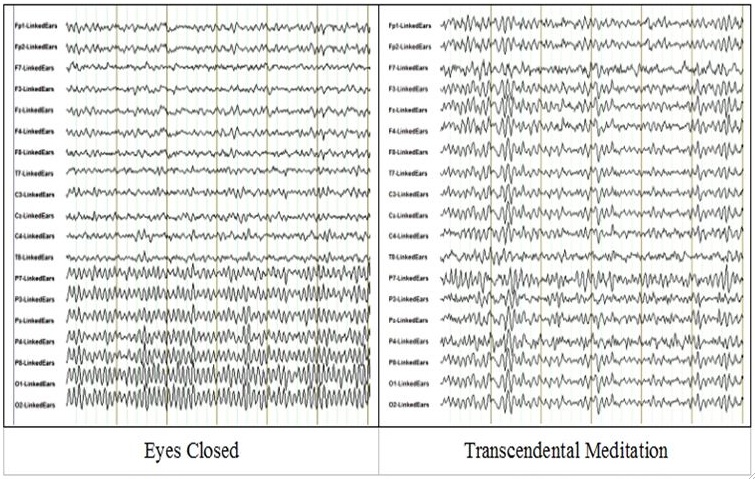
  • Produces a unique state of “restful alertness,” as seen in the markedly higher alpha power in the frontal cortex and lower beta and gamma waves in the same frontal areas during TM practice.
  • Creates greater alpha coherence between the left and right hemispheres of the brain suggesting the brain is working as a whole.
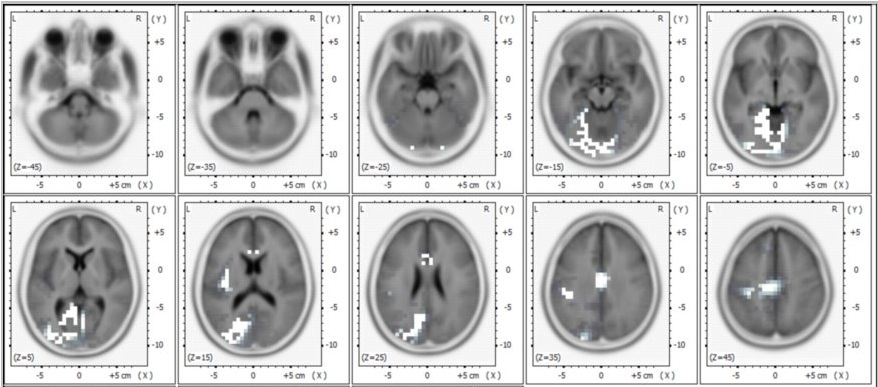
  • Enhances an individual’s sense of “self” by activating what neuroscientists call the “default mode network” in the brain. (This is considered the natural ground state of the brain, glimpsed by neuroscientists during eyes-closed rest but more fully activated during Transcendental Meditation practice.)

“The finding of significant brain wave differences between students practicing the Transcendental Meditation technique and those simply resting with their eyes closed is especially convincing because subjects were randomly assigned to conditions, and testing was conducted by a researcher unaware of the experimental condition to which the subject had been assigned,” said David Haaga, Ph.D., coauthor and professor of psychology at American University.

“Research has already shown that simply closing one’s eyes and relaxing increases the default mode. A significant additional finding of this new study is that activity in the default mode increases during TM compared to simple eyes-closed rest,” said Fred Travis, Ph.D., lead author and director of the Center for Brain, Consciousness, and Cognition at Maharishi University of Management. “Different meditation techniques entail various degrees of cognitive control. Thus, activation patterns of the default mode network could give insight into the nature of meditation practices.”

Previous published research, funded by the NIH, shows TM practice decreases high blood pressure, atherosclerosis, cholesterol, stroke, and heart failure.

Comparative EEG Tracings

These raw EEG tracings during eyes-closed rest (left) and Transcendental Meditation (right) represent 18 tracings over 6 seconds. The top tracings are from frontal sensors; the middle tracings are from central sensors; the bottom tracings are from parietal and occipital sensors [back]. Note the high-density alpha activity in posterior leads during eyes-closed rest, and the global alpha bursts across all brain areas during Transcendental Meditation practice.

eLORETA Images of Significance Differences

These are eLORETA images of sources of alpha EEG during TM compared to eyes-closed rest in the default mode network (the white areas).

Images credit: Cognitive Processing, Volume 11 (2010), Issue 1

Article title: A self-referential default brain state: patterns of coherence, power, and eLORETA sources during eyes-closed rest and Transcendental Meditation practice, DOI: 10.1007/s10339-009-0343-2. Also on PubMed.

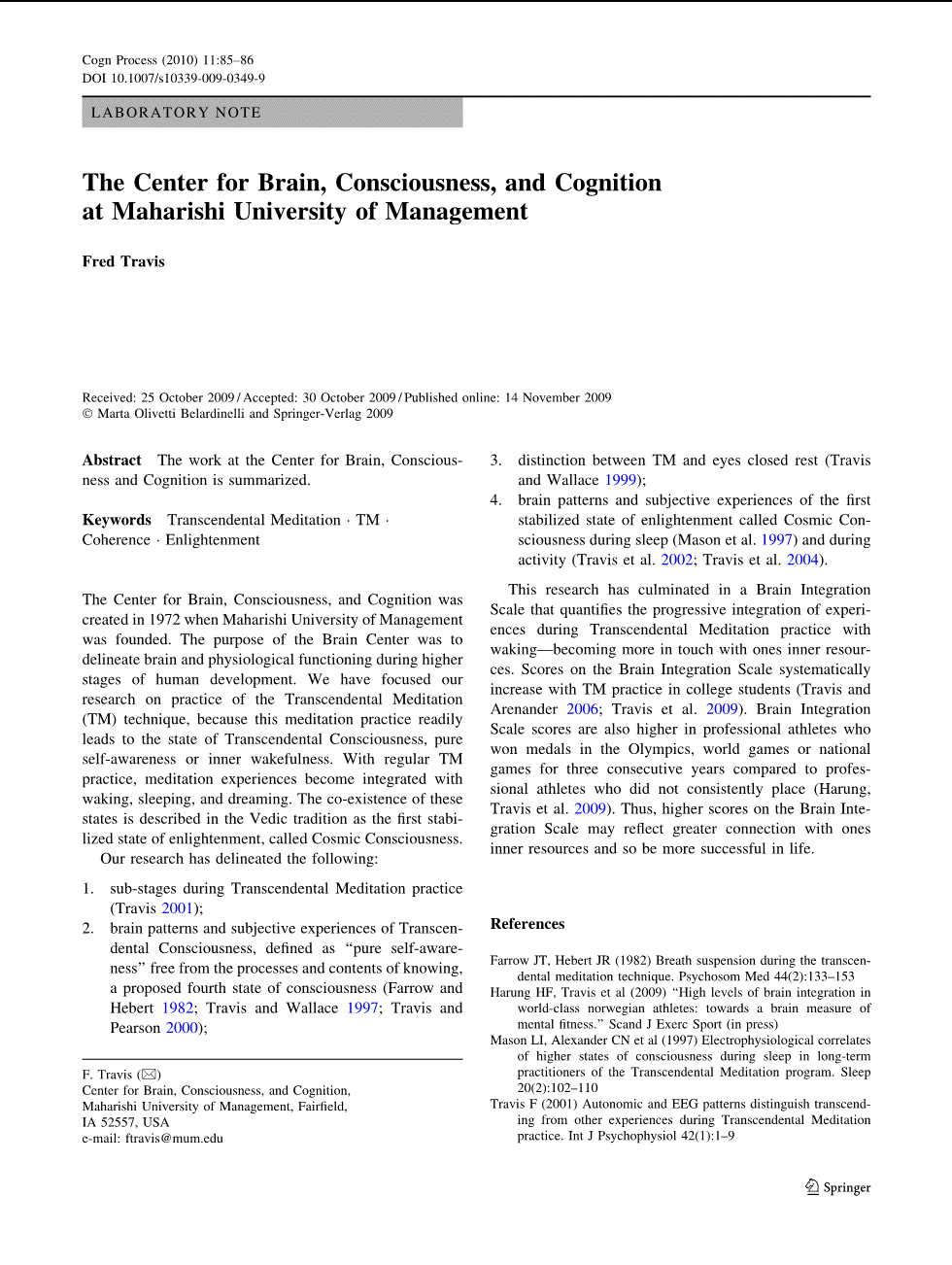
Laboratory Note: The work of the Center for Brain, Consciousness, and Cognition at Maharishi University of Management is summarized and featured in this same issue:

Girls with ADHD more prone to depression, anxiety than boys; meditation helps

February 23, 2010

DAVID LYNCH FOUNDATION
Office of ADHD and Learning Differences
70 Broad Street, New York, NY 10004
Tel: (703) 823-6933 • sgrosswald@tm.org

Girls suffer from delayed ADHD diagnosis, more prone to depression than boys
Meditation helps alleviate stress, reduce symptoms

A growing number of experts say the number of children with ADHD is greater than estimated because girls are often under-diagnosed. There are also differences in symptoms between the genders. “Girls are more likely to have the attentional type of ADHD, which can lead to difficulty in paying attention and focusing, rather than to disruptive behavior, which is more indicative of the behavior of boys with ADHD,” says Sarina J. Grosswald, Ed.D., a George Washington University-trained cognitive learning specialist who heads up the David Lynch Foundation’s education and health outreach to girls. “As a result, the ADHD diagnosis may be missed in as many as 50% to 75% of girls. On average, girls are diagnosed 5 years later than boys. As girls move into adolescence, those with ADHD are more likely to have clinical depression or anxiety disorders.”

A study published in the American Journal of Psychiatry’s online edition of January 15, 2010 followed 187 6- to 18-year-old girls with and without ADHD over an 11-year period. Reporting on this long-term study, Reuters Health pointed out that girls with the disorder were more likely than their peers to develop depression, anxiety, eating disorders, or other psychiatric problems by the time they reached adulthood.

Concerns about ADHD medications

While in some cases a child cannot function without medication, there is growing concern about the health risks and side-effects associated with the common ADHD medications, including mood swings, insomnia, tics, slowed growth, and heart problems.

A new study, the first of its kind, released February 17, 2010 by the Government of Western Australia’s Department of Health, found that “long-term use of drugs such as Ritalin and dexamphetamine may not improve a child’s social and emotional well-being or academic performance.” The chair of the Ministerial Implementation Committee for Attention Deficit Hyperactivity Disorder in Western Australia said in the Department’s press release, “We found that stimulant medication did not significantly improve a child’s level of depression, self perception or social functioning and they were more likely to be performing below their age level at school by a factor of 10.5 times.”

“Medication for ADHD is very effective for some children, but it is marginally or not effective for others. Even for those children who show reduced symptoms with the medication, the improvement is often insufficient or accompanied by troubling side-effects,” said William Stixrud, Ph.D., a Silver Spring, Maryland, clinical neuropsychologist.

Stress interferes with ability to learn

“Virtually everyone finds it difficult to pay attention, organize themselves and get things done when they’re under stress,” explained Stixrud. “Stress interferes with the ability to learn—it shuts down the brain. Prior research shows ADHD children have slower brain development and a reduced ability to cope with stress.” added Stixrud.

The Transcendental Meditation (TM) technique may be an effective and safe non-pharmaceutical aid for treating ADHD, according to a recent study published in the online peer-reviewed journal Current Issues in Education.

The pilot study was conducted in a private K-12 school for children with language-based learning disabilities. Participation was restricted to 10 students, ages 11-14, who had pre-existing diagnoses of ADHD. About half of the students were on medication. The students meditated at school in a group for 10 minutes, morning and afternoon. After three months, researchers found over 50% reduction in stress and anxiety, and reduced ADHD symptoms in the entire group.

Stixrud, co-author on the TM-ADHD study, said, “It stands to reason that the TM technique, which reduces stress and organizes brain function, would reduce ADHD symptoms.”

Meditation improves classroom experience

“The effect was much greater than we expected,” said Sarina Grosswald, lead researcher on the study. “A 50 % reduction in anxiety and depression symptoms is dramatic,” she explained. “This can be especially valuable for girls who are more prone to these types of symptoms. The children also showed improvements in attention, working memory, organization, and behavior regulation. After the in-school meditation routine began, teachers reported they were able to teach more, and students were able to learn more because they were less stressed and anxious.”

Grosswald added, “There is substantial research showing the effectiveness of the TM technique for reducing stress and anxiety, and improving cognitive functioning among the general population. What’s significant about these new findings is that among children who have difficulty with focus and attention, we see the same results. TM doesn’t require concentration, controlling the mind or disciplined focus. The fact that these children are able to do TM, and do it easily, shows us that this technique may be particularly well suited for children with ADHD.”

Parents pleased with results

Andy and Daryl Schoenbach’s daughter was diagnosed with ADHD in second grade. Like most ADHD children she was taking medication. “The medication helped but had mixed results—she still lost focus, had meltdowns, and the medications affected her sleep and appetite,” said Andy, who lives with Daryl in Washington D.C. “She was not performing close to her potential and we didn’t see the situation improving. So at the end of seventh grade when her doctor recommended increasing the medication, we decided it was time to take a different course—stopping the medication and using Transcendental Meditation.”

“The results were quite remarkable,” Daryl said. “The twice daily meditations smoothed things out, gave her perspective, and enabled her to be in greater control of her own life when things started falling apart. It took some time, but it gradually changed the way she handled crises and enabled her to feel confident that she could take on greater challenges—in her own words, ‘climb a mountain.’”

“Everyone noticed the change,” Andy added.

Ongoing research

A soon-to-be-published second study on TM and ADHD shows that after 3 months of practice the TM group demonstrated more efficient brain functioning (as measured by EEG) compared to the control group during a difficult visual-motor task. The TM group also showed improvements in language skills on a cognitive performance test.

Students reported that they felt calmer, less stressed, and better able to concentrate on their schoolwork. They also said they were happier since they started TM.

###

For interviews, contact Dr. Grosswald
Bio available upon request

Sarina J. Grosswald, Ed.D.
Executive Director
Office of ADHD and Learning Differences
David Lynch Foundation
(703) 823-6933
sgrosswald@tm.org
sfschools@tm.org

FACT SHEET

Attention Deficit Hyperactivity Disorder (ADHD)

· The Center for Disease Control reports that nearly 50% of the 4.5 million children (ages 4-17) in the United States diagnosed with ADHD are on ADHD medication—and the majority of those on medication stay on it in adulthood.

· The rate of prescriptions for Attention Deficit Hyperactivity Disorder in the U.S. has increased by a factor of five since 1991—with production of ADHD medicines up 2,000 percent in 9 years.

· The commonly used drugs for ADHD are stimulants (amphetamines). These drugs can cause persistent and negative side-effects, including sleep disturbances, reduced appetite, weight loss, suppressed growth, and mood disorders. The side-effects are frequently treated with additional medications to manage insomnia or mood swings. Almost none of the medications prescribed for insomnia or mood disturbances are approved by the Food and Drug Administration (FDA) for use with children.

· The long-term health effects of ADHD medications are not fully known, but evidence suggests risks of cardiac disorders and sudden death, liver damage and psychiatric events. It has also been found that children on long-term medication have significantly higher rates of delinquency, substance use, and stunted physical growth.

The Transcendental Meditation Technique

· The Transcendental Meditation technique is an effortless technique practiced 10-20 minutes twice a day sitting comfortably with the eyes closed.

· TM is not a religion or philosophy and involves no new beliefs or change in lifestyle.

· Over 350 peer-reviewed research studies on the TM technique confirm a wide range of benefits for mind, body and behavior.
· Several studies have compared the effects of different meditation practices and found that Transcendental Meditation provides deeper relaxation and is more effective at reducing anxiety, depression and hypertension than other forms of meditation and relaxation. In addition, no other meditation practice shows the widespread coherence throughout all areas of the brain that is seen with Transcendental Meditation.

· The Transcendental Meditation technique is taught in the United States by a non-profit, educational organization.

· More information can be obtained by calling 888-LEARN-TM or visiting www.ADHD-TM.org, www.AskTheDoctors.com, or www.TMEducation.org.

###

NB: After posting this article, a new study came out on July 26, 2011: New study shows Transcendental Meditation improves brain functioning in ADHD students: A non-drug approach to enhance students’ ability to learn.

A random-assignment controlled study published today in Mind & Brain, The Journal of Psychiatry (Vol 2, No 1) found improved brain functioning and decreased symptoms of attention-deficit/hyperactivity disorder, ADHD, in students practicing the Transcendental Meditation® (TM) technique. The paper, ADHD, Brain Functioning, and Transcendental Meditation Practice, is the second published study demonstrating TM’s ability to help students with attention-related difficulties.

See TM improves brain function in ADHD students, also reported in the TM Blog: New study finds TM boosts brain functioning and helps students with ADHD.

And this new important related article posted in The Huffington Post on meditation helping kids get off ADHD drugs came out in Jan 6, 2012: ADHD Drug Shortage: Can Meditation Fill the Gap? 

Meditation may be the Future of Anti-Aging, Part I

February 16, 2010

Meditation may be the Future of Anti-Aging, Part I

by Angela Eksteins, citizen journalist
See all articles by this author
Email this author

(NaturalNews) According to the American Academy of Anti-Aging Medicine, 90% of all adult illness is due to the degenerative processes of aging. Anti-aging medicine, aiming for longevity and optimal health, is most certainly the ‘specialty’ of the future and is based on the early detection, prevention and reversal of age-related disease. While science continues to search for answers, research has already revealed that meditation is a potent anti-aging practice that can take years off your physiological age.

STRESS = AGING

Aging is most certainly a complex issue with many factors coming into play, but one thing that researchers do agree on is that stress (mental, emotional, and physical) causes us to age.

Eva Selhub, MD, Medical Director of the Mind/Body Medical Institute says, “If we can affect the stress response, we can affect the aging process.” She says “There`s a reason why experienced meditators live so long and look so young.” (The Anti-Aging Effects of Meditation; http://www.more.com/2025/2674-the-a…)

In a recent interview with CNN, Dan Buettner, author of “The Blue Zones” and researcher into longevity hotspots around the world, suggests small lifestyle changes can add up to 10 years to most people`s lives. He says aging is 10% genetic and 90% lifestyle. Buettner stated that having mechanisms to shed stress, like prayer and meditation, was of high importance in the longevity hotspots he studied and a major factor in long-term health and aging.

Dr. Robert Keith Wallace was one of the first scientists to study the effects of meditation on aging and he published his findings in the International Journal of Neuroscience (16: 53 58, 1982). His research was based on the practice of Transcendental Meditation.

Dr. Wallace found that subjects with an average chronological age of 50 years, who had been practicing Transcendental Meditation for over 5 years, had a biological age 12 years younger than their chronological age. That means a 55-year-old meditator had the physiology of a 43-year-old.

Several of the subjects in the study were found to have a biological age 27 years younger than their chronological age. This study has since been replicated several times. Other studies have also shown the beneficial effects of Transcendental Meditation on the aging process. (The Transcendental Meditation Program; http://www.tmprogram.com.au/book/ch… )

History reveals many examples of seemingly `ageless` saints, dedicated to the practice of meditation, whose lives have demonstrated the enormous capacity of the human body to live much longer than today`s average life span.

Yes, these `ageless` saints and yogis practically dedicated their whole lives to meditation but even we, as average householders, can potentially live much longer, healthier lives. Meditation has revealed itself to be one of the most beneficial practices to relieve some of the stress related to aging.

Bernard Siegel, M.D., Professor, Yale University School of Medicine, wrote in Love, Medicine and Miracles (New York: Harper and Row, 1986): “Other doctors` scientific research and my own day-to-day clinical experience have convinced me that the state of the mind changes the state of the body by working through the central nervous system, the endocrine system, and the immune system. Peace of mind sends the body a `live` message, while depression, fear and unresolved conflict give it a `die` message.”

“The physical benefits of meditation have recently been well documented by Western medical researchers,” says Dr. Siegel. “Meditation also raises the pain threshold and reduces one`s biological age… In short, it reduces wear and tear on both body and mind, helping people live longer and better.” (Paramahansa Yogananda. 1995. The Bhagavad Gita, p 379-380)

Bibliography:
http://www.tmprogram.com.au/book/ch…
http://www.worldhealth.net/about-an…
http://www.more.com/2025/2674-the-a…
http://www.cnn.com/2009/HEALTH/11/3…
Paramanhansa Yogananda. 1995. The Bhagavad Gita, p. 379-380. Los Angeles: Self-Realization Fellowship

Share Buzz up!vote now

About the author

A passionate advocate for organic living and personal empowerment, Angela hopes to inspire others to live a healthy, wealthy life of purpose through her website www.thesoulroom.com
Angela’s expertise is organics, meditation & alternative healing techniques and philosophies. She holds qualifications in Natural Skin Care Product Development, Reiki, Thought Field Therapy, Organic Facials & Massage.
www.thesoulroom.com – PURE, CERTIFIED ORGANIC Skin Products, Health Products & Essential oils, Inspiration for the soul…
She is currently giving away a FREE EBOOK! Think & Grow Rich by Napoleon Hill – go to www.thesoulroom.com
Contact: thesoulroom@gmail.com

Studies Show Meditation Can Benefit Your Heart

January 31, 2010


Studies Show Meditation Can Benefit Your Heart

Date: 28/01/10
Keywords: Alternative medicine , High Blood Pressure , Heart Disease , Transcendental Meditation

Meditation simply involves clearing your mind and relaxing your body to find a harmonious, serene, boundless, inner milieu. Basically, you train your mind to take a break… and now it turns out that if you have coronary heart disease and you practice meditation, you can lower your risk of heart attack, stroke, and death by as much as 50 per cent.

Forget what you’ve heard about meditation. If the word “meditation” conjures up images of incense, finger cymbals and crystals – don’t be put off if those things are not your style, because none of them are necessary to meditate properly.

Meditation simply involves clearing your mind and relaxing your body to find a harmonious, serene, boundless, inner milieu. Basically, you train your mind to take a break… and now it turns out that if you have coronary heart disease and you practice meditation, you can lower your risk of heart attack, stroke, and death by as much as 50 per cent.

Breath in… Breath out…

Two recent studies show significant heart health benefits for people who meditate daily and this doesn’t come from some hogwash-source. Both studies are mainstream. One was recently presented at the annual meeting of the American Heart Association (AHA) and one was published in the Archives of Internal Medicine. And the incredible thing is that in both studies all the subjects had coronary heart disease (CHD).

Previous studies have shown that a popular form of meditation known as transcendental meditation (TM) may actually help patients control blood pressure.

A class of ‘heart medication’

In the most recent study of the two, US researchers from The Medical College of Wisconsin collaborated with a natural medicine school in Iowa. The 200 CHD participants (average age 59 years, with narrowing of arteries in their hearts), were divided into two groups. Half received TM instruction and half did not.

Results: Over nine years, rates of heart attack, stroke, and death were all significantly lower in the TM group.

Lead researcher Dr. Robert Schneider, suggested TM should be thought of as a new class of heart disease medication. “In this case, the new medications are derived from the body’s own internal pharmacy stimulated by the Transcendental Meditation practice… But this is the first controlled clinical trial to show that long-term practice of this particular stress reduction program reduces the incidence of clinical cardiovascular events – that is, heart attacks, strokes and mortality.”

Dr. Theodore Kotchen, co-researcher of the study, professor of medicine, and associate dean for clinical research at the Medical College, was quoted as saying: “This study is an example of the contribution of a lifestyle intervention — stress management — to the prevention of cardiovascular disease in high-risk patients.”

The second smaller study, evaluated the efficacy of TM on components of metabolic syndrome and CHD. Metabolic syndrome is thought to be a contributor to CHD.

US researchers at the University of Southern California divided 103 CHD patients into two groups. Subjects in one group received 16 weeks of TM instruction. Compared to the placebo group, TM subjects experienced significantly better blood pressure control, reduction of insulin resistance components of the metabolic syndrome and improved heart rate variability. In addition, TM helped subjects control their response to stress.

You can find information about the TM technique used in the CHD study on the Transcendental Meditation Programme website at http://www.t-m.org.uk.

Just a moment away from peace of mind

If you are considering TM as a healthy habit but you are still unsure, here are a few things to help you make up your mind:

* Simple: The TM technique is a simple, effortless mental process practiced for 15–20 minutes twice a day, sitting quietly and comfortably in a chair with your eyes closed.

* Easily learned: The TM technique can be easily learned by anyone and is enjoyable to practice.

* Immediate benefits: The benefits of the TM technique are immediate and increase over time. The technique’s positive effects — for mind, body and relationships — have been verified by hundreds of research studies conducted at top medical schools and published in over 350 peer-reviewed scientific journals.

* No belief required: The TM technique does not involve belief or religion. In fact, you can be thoroughly sceptical and the technique will still be fully effective.

* Develops the total brain: Brain research shows that the TM technique develops the total brain, increasing creativity and intelligence and improving decision- making and problem-solving abilities.

* Reduces stress and high blood pressure: Medical school research funded by the National Institutes of Health shows that the TM technique is the most effective mind-body practice for reducing stress and stress-related disorders, including hypertension, high cholesterol, stroke and atherosclerosis.

Related Reading:

Meditation As A Tool For Good Health And Longevity

Heart Diet: Three Drug-Free Steps To A Healthy Heart


Sources:

“Effects of a Randomized Controlled Trial of Transcendental Meditation on Components of the Metabolic Syndrome in Subjects With Coronary Heart Disease” Archives of Internal Medicine, Vol. 166, No. 11, 6/12/06, archinte.ama-assn.org

“Study: Meditation Lowered Cardiac Risk by 50 Percent” Ivanhoe Newswire, 11/23/09, ivanhoe.com

Registered Office – Sea Containers House,
7th Floor, 20 Upper Ground, London SE1 9JD.

Agora Lifestyles Limited is registered in England and Wales
with company number 3303666 and VAT number GB 629 7287 94.

Copyright 2009 © Agora Lifestyles

Common Relaxation Technique Can Help Lower Your Blood Pressure and Protect Your Heart

January 11, 2010

Mercola.com bills its free, twice-weekly newsletter as “The World’s Most Popular Natural Health Newsletter.”  Each e-mail has 4-5 timely health tips, most of which seem to be based on recently published research.


Common Relaxation Technique Can Help Lower Your Blood Pressure and Protect Your Heart

Posted by: Dr. Mercola
January 09 2010 | 4,653 views

A just-published study suggests the practice of meditation may bring cardiovascular and mental-health benefits.

The research, followed close to 300 students, half of whom practiced transcendental meditation for 20 minutes once or twice daily over three months. A subgroup of subjects in the meditation group who were at increased risk for hypertension significantly lowered their blood pressure and psychological distress, and also bolstered their coping ability.

The average reduction in blood pressure in this group — a 6.3-mm Hg decrease in the top (systolic) number of a blood pressure reading and a 4-mm Hg decrease in the lower (diastolic) number — was associated with a 52 percent reduction in the risk of developing hypertension in the future.

Meditators who were not at increased risk for hypertension saw a reduction in psychological distress, depression, and anxiety as well as increased coping ability.

Sources:

U.S. News & World Report

American Journal of Hypertension, December 2009

Dr. Mercola’s Comments:

As the new year begins and you resolve to make healthier lifestyle choices, I strongly encourage you to add a few minutes of meditation to your daily routine.

Just 20 minutes a day can begin to make a big difference in how you feel mentally, physically and emotionally.

When your mind is calm and your emotions are within your control, you’re in a much better position to tackle all your normal responsibilities plus the goals you’ve set for yourself.

Feelings of stress and overwhelm that keep you stuck in unhealthy behaviors can be greatly relieved by a regular practice of meditation. As the clouds in your head clear and anxiety is minimized, you’ll be amazed at how energized and capable you feel.


Community Comments

Falk
Posted On Dec 19, 2009

I suppose for the same reason that history repeats itself we find that a study now shows that meditation can elicit positive changes in our physiology and mental state.  This is NOT new news.  I learned TM back in the early 90’s and was made aware of studies at that time showing that TM could have a positive effect on hypertension among other things.  We seem to forget what we already know, over and over again.

BLockton
Posted On Jan 09, 2010

Dr. Mercola, I’m curious why when reporting a study citing transcendental meditation as the specific modality used you would then turn around and attribute the results to other meditation techniques that weren’t studied. There was no basis from the study reported to leap to that conclusion. It strikes me as being somewhat akin to quoting research that perhaps found that Lexus has a high safety rating in front-end impacts, and then turning around and recommending that your readers buy Yugos, Fords, and any other car of their choice if they want to stay safe in a front-end collision because the study showed that if you were in a car during a front-end collision, you would be safe. Whatever the merits of the other car manufacturers, even if they are equally safe or safer, the quoted study would only have talked about Lexus, and the results couldn’t be extrapolated to other cars.

In the case of this meditation study, the results were specifically attributed to transcendental meditation and not to all meditation techniques, so the results cannot be legitimately extrapolated to other meditation techniques.  Faulty analysis, I’m afraid, but you may not have been aware that there are differences between techniques of meditation, and differences in the physiological response to those techniques.  In fact there are myriad studies that show other forms of meditation have not demonstrated the same benefits as TM. – (Oh, and as at least 3 of the researchers are known to me as being instructors of the transcendental meditation program as taught by Maharishi Mahesh Yogi, there is no doubt they were referring to the particular form of meditation and not using “transcendental meditation” as a generic term.)

Hope this was helpful.

kennyji
Posted On Jan 09, 2010

With reference to citing TM studies and comparing them to other forms of meditation, there have been several published meta-analyses comparing the Transcendental Meditation technique to many other relaxation and meditation methods. It was statistically found that the effect size on certain variables like anxiety, and other risk factors, was twice as large with TM than with the other practices, which were no more effective than placebo. A paper, including a visual summary of the meta-analyses, Five Meta-Analyses Comparing the Transcendental Meditation Program with Other Meditation and Relaxation Techniques, can be found at TruthAboutTM.org. http://bit.ly/4TWDIA

Neural imaging and EEG studies indicate that TM practice creates a unique brain pattern: it is the only meditation technique known to create widespread brainwave coherence. The TM technique also produces deeper rest than other practices, and studies show the technique to be more effective at reducing anxiety and depression and increasing self-actualization. A website, Ask The Doctors, discusses results from other forms of meditation and TM at http://bit.ly/5z087e.

Also, take a look at some of the peer-reviewed published studies on the Transcendental Meditation technique at this site: http://bit.ly/RHgA5.

Over 40 years, and 700 scientific research studies later, the TM technique continues to demonstrate the health benefits to mind, body, and behavior, for the individual and society as a whole. Further studies continue to add to this impressive body of research on the most widely studied and practiced technique for health and human development.

Thank you for this opportunity to share this information with you and your readers.

ABC Nightline News Report on TM, M.U.M., Maharishi Vedic City, and David Lynch in Iowa

January 8, 2010

A positive Iowa news report for your enjoyment and edification. (Postponed again, sorry.) Just aired last night, July 5, 2010. http://bit.ly/cDxWqj


http://abcnews.go.com/Nightline/transcendental-meditation-vedic-city-iowa/story?id=9218475

Transcendental Meditation Thrives in Iowa
Adherents of Transcendental Meditation Have Called Hawkeye State Home Since ’70s
By John Berman and Maggie Burbank
Jan. 8, 2010

When you think of Iowa, you think of cornfields, you think of caucuses, you think of old-fashioned country-living.

Chances are, you don’t think of meditation <http://abcnews.go.com/Entertainment/popup?id=7249295>  and communal living.

Welcome to Maharishi Vedic City, Iowa — the only city in the country built on the tenets of transcendental meditation <http://abcnews.go.com/Health/MindMoodNews/story?id=7263240> , for meditators, by meditators.

Meg and Erik Vigmostad moved here from St. Louis in 1982.

“We wanted to come to a meditating community,” said Meg Vigmostad. “We had two children at the time, one of them was an infant, and we felt like it was the best place to bring up our children <http://abcnews.go.com/Health/MindMoodNews/story?id=7263240> .”

Watch the full story tonight, Jan 8, 2009 on “Nightline” <http://abcnews.go.com/nightline>  at 11:35 p.m. ET

Vigmostad acknowledged that the couple’s families thought they were “crazy” for making the move. Crazy, because those words, “transcendental meditation,” sound, well, different. Many people first heard of transcendental meditation, or TM, in the 1960s, when the Beatles started following Maharishi Mahesh Yogi, the official founder of TM.

“Transcendental meditation is a simple technique practiced for about 15-20 minutes sitting comfortably in a chair with the eyes closed,” said Bob Roth, a national director of the TM program. “It allows the body to get a profound state of rest while the mind just settles down and experiences a state of inner wakefulness, inner calm, inner coherence.”

The followers of Mahesh Yogi — mostly from East and West Coast universities — moved to Iowa en masse in 1974 to set up their own college, the Maharishi University of Management. The group chose Iowa because that is where they could find the land.

Now the settlement features two huge domes, one for men and one for women, with residents streaming in to meditate together twice a day.

But at the university and in the city, the commitment to Vedic principles of natural law and balance, derived from ancient Sanskrit texts, goes far beyond meditation. The community has banned the sale of nonorganic food within its boundaries. And that’s not all.

“The primary characteristics of Vedic architecture, the most obvious one, is that ideally, buildings face east, the direction of the rising sun,” said Jon Lipman, the country’s leading Vedic architect.

‘Greater Happiness’
Lipman says the buildings at the university and most new houses in town are constructed in line with ancient precepts.

“Just like the organs in the human body, there is a right place for different kinds of functions within a building,” Lipman said.

“And so, a kitchen is typically in one location. A living room in a house is typically in another location.”

Every Vedic building has a silent core known as a Bramastan, which is lit by a skylight and is never walked on. Lipman claims miraculous effects.

“The results are that, families find that their lives are improved, that there’s greater family harmony, that there is greater financial success, there’s greater happiness,” said Lipman. “There are many many cases where members of a family had disharmony between them, and it dissolved when they moved into a Vedic home. There are many cases where even such things as chronic diseases were abated by moving into a Vedic home.”

Lipman said “it’s a real challenge” to be poor, unhappy or unhealthy if you live in a Vedic building.

The Vigmostads live in a Vedic house, and seem like happy customers.

“It feels harmonious, it feels orderly, there’s a lot of silence here that was definitely not in our other house that we owned,” said Meg Vigmostad.

The talk of order and inner peace might sound unbelievable. But it is also the work of Vedic City to make it all … believable. Fred Travis, director of a university facility called the Center for Brain Consciousness and Cognition, demonstrated an EEG monitor of neurological electrical activity that he said shows that TM makes the brain more organized.

“What this is measuring is the electrical activity of the brain,” Travis explained as a member of the community hooked up to the machine sat and meditated.

“You see this one going up and down?” Travis said, pointed to a gauge. “Look at the one next to it. It goes up and down in a similar way. This is called coherence. When the similarity of two signatures are very close, it suggests those two parts of the brain are working together.

Neurologist Gary Kaplan, a proponent of TM, said such “coherence” will bring happiness, success — even world peace.

“What we notice is that this electrical activity becomes more harmonious or coherent between left and right hemispheres,” Kaplan said. “There have been studies that have documented that the TM technique, when practiced in large groups, seems to have some effect on society in general, whether it’s in war-torn areas where people are sitting to meditate together, or in high-crime areas that the trends reverse when you have larger groups meditating together.”

David Lynch and TM
It is a lot to digest — but then you don’t really have to. The TM followers insist they are not a cult. They all have normal jobs, for the middle of Iowa, and they are not out to recruit you. They just want you to know the option is there.

Famed filmmaker David Lynch spends a lot of time in Vedic City. He started the David Lynch Foundation, which, in the last four years, has provided scholarships for over 100,000 kids to learn to meditate for free in schools across the country.

“It’s not a religion. It’s not against any religion, it’s not mumbo-jumbo. It truly does transform life,” Lynch told ABC News. “Kids come to school and they meditate together for 15 minutes in the morning. And before they go home they meditate for 15 minutes. A lot of them come from, you know, bad situations, and so this gives them this thing you know, at the beginning and the end of the day, the rest of the time you just watch the violence stop. Watch relationships improve. Watch happiness in the hallways, in the classroom, watch creativity flow more and more, watch that heavy weight that we are living under gently lift away.”

“Nightline” was told there wasn’t enough time to properly learn transcendental meditation on a short trip to Vedic City. But to get a feeling of the Vedic way of life, we did visit the Ayurveda Health Spa in Vedic City — the leading spa of its kind in the country. Ayurveda is a system of health and healing involving food and behavior that originated in India thousands of years ago.

“We take your pulse, we put three fingers on the right hand,” explained Mark Toomey, an Ayurvedic health expert at the spa. “And it’s what I would say is like plugging into the inner intelligence of the body.”

Toomey said he can learn a lot from feeling a person’s pulse. He demonstrated on our correspondent.

“It’s a strong pulse,” Toomey said. “That means that, good expression of intelligence. It’s clear. Your pulse has a little bit of tension there, so maybe you’re working a little too hard, too many deadlines.”

Next up was the Shirodhara treatment.

“So what we’re going to be doing is pouring this oil for about 20 minutes on your forehead, in a continuous stream,” said Toomey. “Your job is just to relax and enjoy.”

And what’s so wrong with that? In Vedic City, they have made that their way of life … in the middle of Iowa.

“We really have all we need here,” said Meg Vigmostad. “You can go to a city anytime. But this is sort of a haven, you know? And it’s a place of comfort, and community.”

Copyright © 2010 ABC News Internet Ventures
——————————————————–

Here are two of my favorite famous relevant quotes on understanding truth and accepting the changes they bring for the better—a paradigm shift.

All truths are easy to understand once they are discovered;
the point is to discover them.
— Galileo Galilei (1564–1642)

All truth passes through three stages.
First, it is ridiculed. Second, it is violently opposed.
Third, it is accepted as being self-evident.
— Arthur Schopenhauer (1788-1860)