Archive for the ‘Health’ Category

Greg Giesen interviews Norman Rosenthal, M.D., and TM Teachers, Bolton Carroll, Laurina Carroll and Olivia Lopez on Castle Rock Radio

September 27, 2011

            
Click HERE to listen to Mondays At 3

featuring bestselling author Norman Rosenthal, M.D. as he discusses his book, TRANSCENDENCE: Healing And Transformation Through Transcendental Meditation.

Also joining Geese in studio were TM Teachers, Bolton Carroll, Laurina Carroll and Olivia Lopez…all on 9-19-11.

Click on Show Archive Listing, scroll down to Mondays At 3! and click on Show Details. Then scroll down to 9.19.11 and either click on Listen Now or on MP3 to download the file of the show.

PsychCentral reviews Norman Rosenthal’s book Transcendence: Transcendental Meditation: What Is It and How Does It Work?

September 16, 2011

Transcendental Meditation: What Is It and How Does It Work?

By Therese Borchard

Transcendental Meditation: What Is It and How Does It Work?Being that my job is to feature and review books on psychology, spirituality, and especially the intersection between the two, I receive my share of books on meditation. And as a person who has been trying to meditate for two years, but who just can’t seem to get the hang of it, I always open the cover a tad sinister, looking for a magic bullet.

The book Transcendence: Healing and Transformation Through Transcendental Meditation was on my decline stack until I read the short bio on Norman Rosenthal, M.D. and became intrigued. He’s a clinical professor of psychiatry at Georgetown Medical School. He conducted research at the National Institute of Mental Health. And he was the one who first described and diagnosed seasonal affective disorder (SAD). Ironically, I knew of him through my good friend Michelle, who had been one of the case studies for him on SAD.

So, with those credentials I opened the book and began to read stories that inspired me and gave me hope that one day I might be a meditator too.

Rosenthal won my trust in that he clearly states in the introduction that Transcendental Meditation is not a stand-alone treatment for emotional disorders, especially when effective treatments are available and work (if not full proof). He writes, “The fact is that no single treatment works every time for any given set of symptoms. We often have to try several different medications or treatment approaches before we find the right mix. I am suggesting that TM should be part of that mix, especially when conventional approaches prove unsatisfactory.” Rosenthal would in no way advise a person to go off his meds and try this type of meditation. However, he believes that practicing it can be the difference between a life of coping and a life of living.

Before reading Rosenthal’s book, I was unaware of the ways different kinds of meditations activate neurons in distinct regions of the brain. For example, Mindful Meditation increases the activity of neurons not only in certain emotional areas of the brain, but also in frontal regions, which are responsible for decision making and other functions. In Transcendental Meditation, there is a more global effect. Characteristic brain wave patterns are seen in many different parts of the brain, so the meditator has a better chance of experiencing the effects of meditation long past the meditation session.

What, exactly, is this Transcendental Meditation? Rosenthal writes:

Transcendental Meditation is always taught one-on-one, at least initially, by a teacher who is a longtime meditator trained not only to instruct new students and provide follow-up, but also to customize the approach for each student. Initial instruction has seven steps: two lectures and a personal interview with a certified teacher, then four teaching sessions on four consecutive days. Each session lasts about ninety minutes. Ideally, the fledgling meditator then follows up with the teacher, perhaps weekly for the first month and monthly thereafter. These thirty-minute “checking” sessions give students a chance to ask questions and make sure their technique is still on track, so they will derive the maximum benefit.

Basically, TM is a nonreligious practice that involves sitting comfortably for twenty minutes twice a day, while using a silent mantra, or nonverbal sound, to attain a profound state of aware relaxation. And just like yoga or martial arts, says Rosenthal, in order to learn it correctly, you need ongoing guidance with a teacher.

A profound gift of TM is that regular practice increases brain wave coherence, meaning that the frequencies of brain waves in different parts of the brain work together as a result of TM. In seasoned meditators, brain wave coherence can be found throughout the day, not only during meditation. Electroencephalograms (EEG) indicate that TM calms the brain while organizing the prefrontal brain regions so that meditators can improve their focus, decision-making, and job performance.

Especially enlightening to me were Rosenthal’s chapters on how TM can help treat acute anxiety, major depression, and bipolar disorder. This psychiatrist and some of his colleagues obtained a grant to study TM in a group of bipolar patients. In the study, eleven people received immediate TM training, while fourteen people were placed on a wait list. Both groups continued with their previous medical treatments. A few from the TM group reported a drop in manic symptoms, however, depressive symptoms were especially relieved, as stated in the patient reports but also upon inspecting the results of TM by Rosenthal and his team. Explains Rosenthal:

Several patients reported increased calmness, improved focus, and improved ability to stay organized and set priorities–no surprise, given TM’s known effects on the prefrontal cortex. TM helped bipolar patients improve their executive function, just as it did for people with anxiety disorders and ADHD… All in all … our study study suggests that TM might be very helpful for bipolar patients. In fact, all the clinicians who worked on the study are now referring certain of their bipolar patients, particularly those with residual depression, for TM training–along with their other treatments.

Check out Rosenthal’s book, Transcendence, for more information on the science and benefits of Transcendental Meditation.

Therese J. Borchard is Associate Editor at Psych Central, where she regularly contributes to World of Psychology. She also writes the daily blog, Beyond Blue, on

Beliefnet.com. Therese is the author of Beyond Blue: Surviving Depression & Anxiety and Making the Most of Bad Genes and The Pocket Therapist. Subscribe to her RSS feed on Psych Central or Beliefnet. Visit her website or follow her on Twitter @thereseborchard.

APA Reference
Borchard, T. (2011). Transcendental Meditation: What Is It and How Does It Work?. Psych Central. Retrieved on September 14, 2011, from http://psychcentral.com/lib/2011/transcendental-meditation-what-is-it-and-how-does-it-work/

Scientifically Reviewed
Last reviewed: By John M. Grohol, Psy.D. on 13 Jul 2011
Published on PsychCentral.com. All rights reserved.

————–
Also listen to an excellent interview with Norman Rosenthal and Jenny Crwys-Williams on South Africa’s 702 Talk Radio. Click to download Podcast. It’s mentioned in this post: Meditation for Health, Happiness and Spirituality.

TM Can Reduce Health Care Costs

September 13, 2011

Meditation Can Reduce Health Care Costs

By Rick Nauert PhD Senior News Editor
Reviewed by John M. Grohol, Psy.D. on September 13, 2011

Meditation Can Reduce Health Care CostsStress can contribute to a wide array of health problems, and finding ways to reduce stress could presumably impact overall health care costs as well. A new study suggests that meditation can do just that.

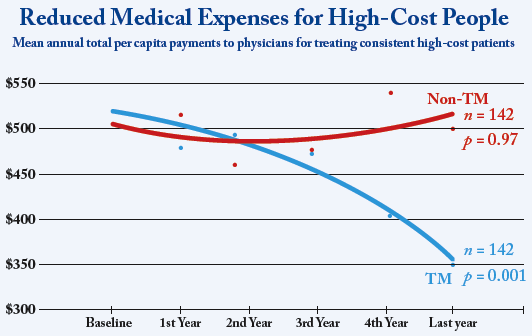
According to the research, people with consistently high health care costs experienced a 28 percent cumulative decrease in physician fees after an average of five years practicing the stress-reducing Transcendental Meditation technique compared with their baseline.

The study is published in the September/October 2011 issue of the American Journal of Health Promotion.

Experts have recognized that in most populations, a small fraction of people account for the majority of health care costs.

In the U.S., the highest spending 10 percent in the general population incurred 60 percent to 70 percent of total medical expenditures annually.

In the Medicare population, the highest spending 5 percent incurred 43 percent of total Medicare costs, and the highest spending 25 percent of seniors accounted for 85 percent of total expenses.

Individuals in these groups have consistently high medical bills year after year.

For many, chronic stress is the number one factor contributing to high medical expenses. Stress reduction may help reduce these costs.

This new study compared the changes in physician costs for 284 consistent high-cost participants—142 Transcendental Meditation practitioners with 142 non-practitioners, over five years in Quebec, Canada.

The non-TM subjects were randomly selected from Quebec health insurance enrollees with the same age, sex, and region to match the TM participant profiles.

The TM participants decided to begin the technique prior to choosing to enter the study. In the year before the intervention began, there were no significant differences between the groups in payments to physicians.

During the five-year assessment period, the TM group’s annual health care costs declined significantly (p = 0.004), while the comparison group’s utilization showed no significant changes.

After the first year, the TM group decreased 11 percent, and after 5 years, their cumulative reduction was 28 percent (p = 0.001).

The primary measure for assessing the effectiveness of TM practice in decreasing medical costs was the fees paid by the Quebec health insurance agency to private physicians in all settings for treating study participants.

In Canada and U.S., physician payments have been 20 percent of national health expenditures.

This study’s findings were similar to earlier ones. In a previous Canadian study, the TM group exhibited reduced medical expenses between 5 percent and 13 percent relative to comparison subjects each year for 6 consecutive years.

In a subsequent Canadian study of senior citizens, the TM group’s five-year cumulative reduction for people aged 65 years and older relative to comparison subjects was 70 percent. In a sample of American health insurance enrollees, the TM participants had reduced rates of illness in all disease categories.

An 11-year, cross-sectional study in Iowa found that subjects age 45 and over who practiced the TM technique had 88 percent fewer hospital days compared with controls. Their medical expenditures were 60 percent below the norm.

Other studies, including randomized clinical trials, indicate the TM technique can improve physical and mental health, decrease tobacco use, reduce substance abuse, and decrease other unhealthy habits and risk factors that lead to chronic disease and costly treatments.

“This article has major policy significance for saving Medicare and Medicaid without cutting benefits or raising taxes,” said the paper’s author, Robert E. Herron, Ph.D.

“Almost no intervention for cost containment has decreased medical expenditures by 28 percent over five years from a baseline. Now, it may be possible to rescue Medicare and Medicaid by adding coverage for learning the Transcendental Meditation technique.”

Source: Roth Media

APA Reference
Nauert PhD, R. (2011). Meditation Can Reduce Health Care Costs. Psych Central. Retrieved on September 13, 2011, from http://psychcentral.com/news/2011/09/13/meditation-can-reduce-health-care-costs/29373.html

Also see: High Medical Costs Decrease 28% after 5 Years of Transcendental Meditation Practice | New study: TM Reduces Health Care Costs by 28%

High Medical Costs Decrease 28% after 5 Years of Transcendental Meditation Practice

September 12, 2011

High Medical Costs Decrease 28 Percent after 5 Years of Transcendental Meditation Practice

According to a study published this week in the September/October 2011 issue of the American Journal of Health Promotion (Vol. 26, No. 1, pp. 56-60), people with consistently high health care costs experienced a 28 percent cumulative decrease in physician fees after an average of five years practicing the stress-reducing Transcendental Meditation technique compared with their baseline. Both between and within group comparisons were statistically significant. This study has major policy implications.

In most populations, a small fraction of people account for the majority of health care costs. In the U.S., the highest spending 10% in the general population incurred 60% to 70% of total medical expenditures annually. In the Medicare population, the highest spending 5% incurred 43% of total Medicare costs, and the highest spending 25% of seniors accounted for 85% of total expenses. A large number of these people have consistently high medical bills over many years. (References in article, available upon request.)

Chronic stress is the number one factor contributing to high medical expenses. Stress reduction may help reduce these costs.

This new study compared the changes in physician costs for 284 consistent high-cost participants—142 Transcendental Meditation practitioners with 142 non-practitioners, over five years in Quebec, Canada. The non-TM subjects were randomly selected from Quebec health insurance enrollees with the same age, sex, and region to match the TM participant profiles. The TM participants decided to begin the technique prior to choosing to enter the study. In the year before the intervention began, there were no significant differences between the groups in payments to physicians.

During the five-year assessment period, the TM group’s annual rate of change in payments declined significantly (p = 0.004), while the comparison group’s payments showed no significant changes. After the first year, the TM group decreased 11%, and after 5 years, their cumulative reduction was 28% (p = 0.001).

The primary measure for assessing the effectiveness of TM practice in decreasing medical costs was the fees paid by the Quebec health insurance agency to private physicians in all settings for treating study participants. In Canada and U.S., physician payments have been 20% of national health expenditures. This study’s results are important because doctors’ decisions determine most medical expenses: tests, prescription drugs, hospitalization, surgery, and other treatments.

The paper’s sole author, Robert E. Herron, Ph.D., is an independent researcher, and director of the Center for Health Systems Analysis. Dr. Herron was the first to describe the impact of the Transcendental Meditation technique on health care costs.

This chart shows the mean annual total per capita payments to physicians for treating consistent high-cost patients. The TM group’s physician expenses decreased by 28% over five years. The above trend lines show the general behavior of the physician fees for the two groups from the pre-intervention Baseline year through the 5 years of the study. All dollar values were adjusted for inflation and were expressed in constant 1992 Canadian dollars. P-values show the significance of the comparison of Baseline and Last Year for each group.

This study’s findings were similar to earlier ones. In a previous Canadian study, the TM group exhibited reduced medical expenses between 5% and 13% relative to comparison subjects each year for 6 consecutive years.

In a subsequent Canadian study of senior citizens, the TM group’s five-year cumulative reduction for people aged 65 years and older relative to comparison subjects was 70%. (See Meditation for Seniors May Lower Health Costs.)

In a sample of American health insurance enrollees, the TM participants had reduced rates of illness in all disease categories. An eleven-year, cross-sectional study in Iowa found that subjects age 45 and over who practiced the TM technique had 88% fewer hospital days compared with controls. Their medical expenditures were 60% below the norm.

Other studies, including randomized clinical trials, indicate the TM technique can improve physical and mental health, decrease tobacco use, reduce substance abuse, and decrease other unhealthy habits and risk factors that lead to chronic disease and costly treatments.

“This article has major policy significance for saving Medicare and Medicaid without cutting benefits or raising taxes,” said Herron. “Almost no intervention for cost containment has decreased medical expenditures by 28% over 5 years from a baseline. Now, it may be possible to rescue Medicare and Medicaid by adding coverage for learning the Transcendental Meditation technique.”

ADDENDUM

Americans are suffering from soaring levels of chronic stress due to economic problems, home foreclosures, high unemployment and underemployment, and lack of health insurance, which contributes to numerous health problems they cannot afford to treat.

The Huffington Post reported in May that U.S. health care costs per family more than doubled in nine years. Milliman, Inc., a premier global consulting and actuarial firm, released the results of their 2011 Milliman Medical Index, which measures the total cost of health care for a typical family of four covered by a preferred provider organization (PPO). The 2011 MMI cost is $19,393, an increase of 7.3% over 2010, which is the lowest annual rate of increase in more than a decade. Yet even though the rate of increase is the lowest in recent memory, the increase in total dollars—$1,319 in 2011—is the highest in the history of this study. Even with a historically low annual rate of increase, health care costs for American families reached $19,393 in 2011. In 2010, the average employee paid $8,008 for his family’s health care, up from $3,634 in 2002. To view the complete 2011 Milliman Medical Index, download the report.

At a time when health care costs are continuing to rise, the studies of Herron and his colleagues demonstrate that a natural preventative approach could help curb rising health care costs. Benjamin Franklin once said: “An ounce of prevention is worth a pound of cure.” Another way of saying it today would be, “An ounce of prevention costs considerably less than a pound of cure!”

The Transcendental Meditation Program

The Transcendental Meditation technique is an effortless procedure practiced 10-20 minutes twice a day sitting comfortably with the eyes closed.

TM is a simple natural mind-body practice that does not involve changes in personal beliefs, philosophy or lifestyle.

Over 350 peer-reviewed research studies on the TM technique confirm a wide range of benefits for mind, body and behavior.

Several studies have compared the effects of different meditation practices and found that Transcendental Meditation provides deeper rest and relaxation, and is more effective at reducing anxiety, depression and hypertension than other forms of meditation and relaxation. In addition, no other meditation practice shows the widespread coherence throughout all areas of the brain that is seen with Transcendental Meditation.

The Transcendental Meditation technique is taught in the United States by a non-profit, educational organization.

More information can be obtained by calling 888-LEARN-TM or visiting www.tm.org or www.AskTheDoctors.com.

Source: EurekAlert!

Also see: PsychCentral: TM Can Reduce Health Care Costs | TM Blog: New study: TM Reduces Health Care Costs by 28%

Dr. Catherine Ulbricht interviews psychiatrist and author Dr. Norman Rosenthal for Natural Standard

August 9, 2011

Q & A with Dr. Norman Rosenthal

Dr. Catherine Ulbricht, Founder and CEO of Natural Standard, interviews world-renowned psychiatrist and author Dr. Norman Rosenthal. Dr. Rosenthal’s research has pioneered the use of light therapy for seasonal affected disorder (SAD). His latest book Transcendence: Healing and Transformation Through Transcendental Meditation discusses the value of this technique for healing and transformation.

Complimentary access to the webinar is available August 1-31, 2011 (Requires Windows Media Player). The interview is 49:20 minutes long. The transcript is also available as a PDF file.

Norman Rosenthal, MD, mentions this on his blog: Interview with Dr. Catherine Ulbricht on Transcendental Meditation (TM) and Addiction.

TM improves brain function in ADHD students

July 26, 2011

New study shows Transcendental Meditation improves brain functioning in ADHD students

A non-drug approach to enhance students’ ability to learn

A random-assignment controlled study published today in Mind & Brain, The Journal of Psychiatry (Vol 2, No 1, pp. 73–81) found improved brain functioning and decreased symptoms of attention-deficit/hyperactivity disorder, ADHD, in students practicing the Transcendental Meditation® (TM) technique. The paper, ADHD, Brain Functioning, and Transcendental Meditation Practice, is the second published study demonstrating TM’s ability to help students with attention-related difficulties.

The first exploratory study, published in Current Issues in Education, followed a group of middle school students diagnosed with ADHD who meditated twice a day in school. After 3 months, researchers found over 50% reductions in stress, anxiety, and ADHD symptoms. During the study, a video was made of some students discussing what it felt like to have ADHD, and how those experiences changed after 3 months of regular TM practice.

In this second study, lead author, neuroscientist Fred Travis, PhD, director of the Center for Brain, Consciousness and Cognition, joined principal investigator Sarina J. Grosswald, EdD, a George Washington University-trained cognitive learning specialist, and co-researcher William Stixrud, PhD, a prominent Silver Spring, Maryland, clinical neuropsychologist, to investigate the effects of Transcendental Meditation practice on task performance and brain functioning in 18 ADHD students, ages 11-14 years.

The study was conducted over a period of 6 months in an independent school for children with language-based learning disabilities in Washington, DC. The study showed improved brain functioning, increased brain processing, and improved language-based skills among ADHD students practicing the Transcendental Meditation technique.

A local TV news station reported on the study in-progress during the first 3 months.

What was Measured

Students were pretested, randomly assigned to TM or delayed-start comparison groups, and post-tested at 3- and 6-months. Delayed-start students learned TM after the 3-month post-test.

EEG measurements of brain functioning were taken while students were performing a demanding computer-based visual-motor task. Successful performance on the task requires attention, focus, memory, and impulse control.

In addition, students were administered a verbal fluency test. This test measured higher-order executive functions, including initiation, simultaneous processing, and systematic retrieval of knowledge. Performance on this task depends on several fundamental cognitive components, including vocabulary knowledge, spelling, and attention.

Theta/Beta Power Ratios and ADHD
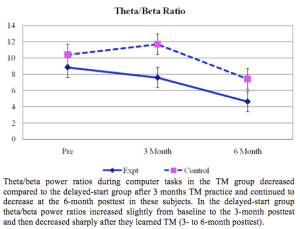
Using EEG measurements, the relationship of theta brain waves to beta brain waves can be diagnostic of ADHD. Dr. Joel Lubar of the University of Tennessee has demonstrated that the theta/beta ratio can very accurately identify students with ADHD from those without it.

While theta EEG around 4-5 Hz is commonly associated with daydreaming, drowsiness, and unfocused mental states, theta EEG around 6-8 Hz is seen when one focuses on inner mental tasks, such as memory processing, identifying, and associating.

“In normal individuals, theta activity in the brain during tasks suggests that the brain is blocking out irrelevant information so the person can focus on the task,” said Dr. Travis. “But, in individuals with ADHD, the theta activity is even higher, suggesting that the brain is also blocking out relevant information.”

“And when beta activity, which is associated with focus, is lower than normal,” Travis added, “it affects the ability to concentrate on task for extended periods of time.”

“Prior research shows ADHD children have slower brain development and a reduced ability to cope with stress,” said Dr. Stixrud. “Virtually everyone finds it difficult to pay attention, organize themselves and get things done when they’re under stress,” he explained. “Stress interferes with the ability to learn—it shuts down the brain. Functions such as attention, memory, organization, and integration are compromised.”

Why the TM Technique

“We chose the TM technique for this study because studies show that it increases brain function. We wanted to know if it would have a similar effect in the case of ADHD, and if it did, would that also improve the symptoms of ADHD,” said Dr. Grosswald.

Dr. Stixrud added, “Because stress significantly compromises attention and all of the key executive functions such as inhibition, working memory, organization, and mental flexibility, it made sense that a technique that can reduce a child’s level of stress should also improve his or her cognitive functioning.”

The Transcendental Meditation technique is an effortless, easy-to-learn practice, unique among categories of meditation. “TM does not require concentration, controlling the mind or disciplined focus—challenges for anyone with ADHD,” Grosswald added.

There is substantial research showing the effectiveness of the TM technique for reducing stress and anxiety, and improving cognitive functioning among the general population. “What’s significant about these new findings,” Grosswald said, “is that among children who have difficulty with focus and attention, we see the same results. The fact that these children are able to do TM, and do it easily, shows us that this technique may be particularly well-suited for children with ADHD.”

Transcendental Meditation produces an experience of restful alertness, which is associated with higher metabolic activity in the frontal and parietal parts of the brain, indicating alertness, along with decreased metabolic activity in the thalamus, which is involved in regulating arousal, and hyperactivity.

With regular practice, this restfully alert brain state, characteristic of the TM technique, becomes more present outside of meditation, allowing ADHD students to attend to tasks. “In a sense,” Dr. Travis said, “the repeated experience of the Transcendental Meditation technique trains the brain to function in a style opposite to that of ADHD.”

Improved Brain Functioning

During the practice of the Transcendental Meditation technique, coherence is found across different EEG frequencies. After meditation, the brain utilizes this increased functioning ability to support the performance of a task in an integrated manner.

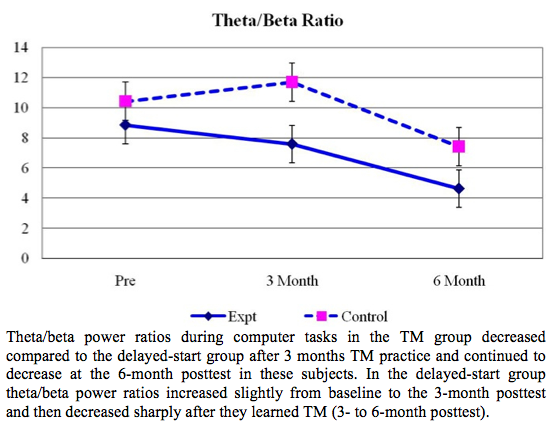
Three months of TM practice resulted in significant decreases in theta/beta ratios and increased verbal fluency.  This translates into improved executive function and more efficient cognitive processing.

During the first 3 months of the study, the theta/beta ratios of the control group (delayed start) actually increased. After learning, and practicing TM for 3 months, this group experienced dramatic decreases in theta/beta ratios and increased verbal fluency as well.

Student and Parent Surveys
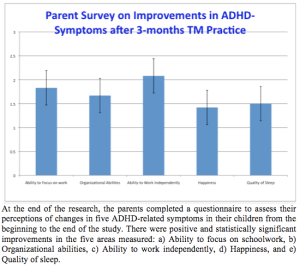
Students reported that the TM technique was enjoyable and easy to do. They felt calmer, less stressed, and better able to concentrate on their schoolwork. They also said they were happier since they started TM. This correlated with reports from the parents.

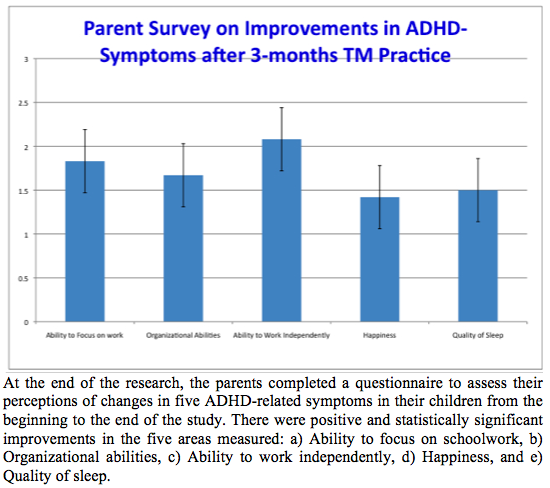
At the end of the research, the parents completed a questionnaire to assess their perceptions of changes in five ADHD-related symptoms in their children from the beginning to the end of the study. There were positive and statistically significant improvements in the five areas measured: a) Ability to focus on schoolwork, b) Organizational abilities, c) Ability to work independently, d) Happiness, and e) Quality of sleep.

Promising Results

The combined results were significant. There was a 48% reduction in the theta/beta power ratios and a 30% increase in brain coherence after the 6-month period. Studies have shown that pharmaceuticals decrease theta/beta power ratios by 3%, and neurofeedback by 25%.

“These are very encouraging findings,” said Dr. Stixrud. “Significant improvement in the theta/beta ratio without medication and without having to use any expensive equipment is a big deal, as is significant improvement in student happiness and student academic functioning reported by the parents.”

“While stimulant medication is very beneficial for some of my clients with ADHD,” Stixrud added, “the number of children who receive great benefit from medicine with minimal side-effects is relatively small. The fact that TM appears to improve attention and executive functions, and significantly reduces stress with no negative side-effects, is clearly very promising.” Stixrud said he hoped these findings would lead to more research on the use of TM with children and adolescents.

In conclusion, these findings warrant additional research to assess the impact of Transcendental Meditation practice as a non-drug treatment for ADHD, and to track meditating students’ improved academic achievements.

The study was funded by a grant from the David Lynch Foundation.

###

FACT SHEET

Attention-Deficit/Hyperactivity Disorder (ADHD)

  • Attention-deficit/hyperactivity disorder (ADHD)—characterized by inattentiveness, impulsivity, and hyperactivity—is diagnosed in almost 10% of children ages 4-17 years, representing 5.4 million children.
  • The Center for Disease Control and Prevention reported among children with current ADHD, 66.3% were taking medication for the disorder. In total, 4.8% of all children ages 4-17 years (2.7 million) were taking medication for ADHD. The majority of them stay on it into adulthood.
  • The rate of prescriptions for Attention-Deficit/Hyperactivity Disorder in the U.S. has increased by a factor of five since 1991—with production of ADHD medicines up 2,000 percent in 9 years.
  • The commonly used drugs for ADHD are stimulants (amphetamines). These drugs can cause persistent and negative side-effects, including sleep disturbances, reduced appetite, weight loss, suppressed growth, and mood disorders. The side-effects are frequently treated with additional medications to manage insomnia or mood swings. Almost none of the medications prescribed for insomnia or mood disturbances are approved by the Food and Drug Administration (FDA) for use with children.
  • The long-term health effects of ADHD medications are not fully known, but evidence suggests risks of cardiac disorders and sudden death, liver damage and psychiatric events. It has also been found that children on long-term medication have significantly higher rates of delinquency, substance use, and stunted physical growth.
  • A new study, Study raises questions about long-term effects of ADHD medication, the first of its kind, released February 17, 2010 by the Government of Western Australia’s Department of Health, found that “long-term use of drugs such as Ritalin and dexamphetamine may not improve a child’s social and emotional well-being or academic performance.” The chair of the Ministerial Implementation Committee for Attention Deficit Hyperactivity Disorder in Western Australia said in the Department’s press release, “We found that stimulant medication did not significantly improve a child’s level of depression, self perception or social functioning and they were more likely to be performing below their age level at school by a factor of 10.5 times.”

The Transcendental Meditation Technique

  • The Transcendental Meditation technique is an effortless technique practiced 10-20 minutes twice a day sitting comfortably with the eyes closed.
  • TM is not a religion or philosophy and involves no new beliefs or change in lifestyle.
  • Over 350 peer-reviewed research studies on the TM technique confirm a range of benefits for mind, body and behavior.
  • Several studies have compared the effects of different meditation practices and found that Transcendental Meditation provides deeper relaxation and is more effective at reducing anxiety, depression and hypertension than other forms of meditation and relaxation. In addition, no other meditation practice shows the widespread coherence throughout all areas of the brain that is seen with Transcendental Meditation.
  • The Transcendental Meditation technique is taught in the United States by a non-profit, educational organization.

Source: EurekAlert!

Some Media Coverage: PhysOrg.com: New study shows Transcendental Meditation improves brain functioning in ADHD Students, PsychCentral.com: Transcendental Meditation Lessens Kids’ ADHD Symptoms, eMaxHealth: Transcendental Meditation Improves ADHD Symptoms, Academic SkillsADHD/ADD Natural Remedy Report: New study shows Transcendental Meditation improves brain functioning in ADHD students, GGN-Education News: New study shows Transcendental Meditation improves brain functioning in ADHD students, Part 2, Part 3, Part 4, Part 5; The Times of India: Transcendental meditation for the brain, Health24: Meditation boosts brain functioning, RedOrbit: New Study Shows Transcendental Meditation Improves Brain Functioning In ADHD Students, The Behavioral Medicine Report: Transcendental Meditation Improves Brain Functioning In Students With ADHD, Science News Line medicine, Science Codex, Transcendental Meditation Blog: New study finds TM boosts brain functioning and helps students with ADHD, GoodTherapy.org: Children with ADHD May Benefit from Transcendental Meditation, and many others.

A Transcendental Cure for Post-Traumatic Stress by David Lynch and Norman E. Rosenthal

July 13, 2011
THE WALL STREET JOURNAL OPINION JULY 13, 2011
A Transcendental Cure for Post-Traumatic Stress
One study of soldiers showed a 50% reduction in symptoms after eight weeks of meditation.

By DAVID LYNCH and NORMAN E. ROSENTHAL

War wounds come in many forms. Some are obvious, such as scars, gashes and amputations. Others, the psychological ones, are less visible but equally devastating. The numbers in this second group are staggering: The military’s latest mental health survey of combat troops in Afghanistan found that 20%—one in five—suffer from post-traumatic stress disorder.

People with combat-related PTSD often suffer from periods of emotional numbness and depression that may coexist or alternate with intense anxiety and delusional thinking. Their days may be afflicted by flashbacks to traumatic situations. Their nights are often disrupted by sleeplessness and nightmares, from which they awake drenched in sweat as though back on the battlefield.

Yet most veterans with PTSD do not receive adequate treatment for various reasons, including fear of stigma, a dearth of effective treatments, and insufficient government resources. Gen. Peter Chiarelli, vice chief of staff of the U.S. Army, recently acknowledged that, “The therapies used for treatment of brain injuries lag behind the advanced medical science employed for treating mechanical injuries.”

Clearly, there is a need for new, creative approaches: Transcendental Meditation, better known as TM, is a promising candidate. An ancient Vedic technique developed in India, TM was brought to the West in the late 1950s by Maharishi Mahesh Yogi. It involves sitting comfortably with eyes closed for 20 minutes twice a day while thinking a mantra. It does not require adherence to any religious belief system or ritual practices. Yet to date there are over 340 peer-reviewed papers describing the beneficial effects of TM on the mind and body.

lynch

The David Lynch Foundation recently hosted an event to help raise funds to teach TM to our wounded warriors returning home from Iraq and Afghanistan. We heard from veterans of three wars: Jerry Yellin, a fighter pilot in World War II who flew 19 missions over Japan; Dan Burks, who served in Vietnam; and David George, a veteran of Operation Iraqi Freedom. Despite differences in age and wartime experiences, these men had two things in common: All suffered terribly from PTSD, and all experienced tremendous relief from TM. Life became once again peaceful and even joyful for them.

What was clear from these men’s stories was how great a toll their symptoms took on their families, as well as on themselves. In a poignant video, Mr. George’s mother described the transformation of her son from a courteous young man into a hard-drinking, depressed and deeply disturbed veteran, who she feared would take his own life or someone else’s.

All that changed when Mr. George began to meditate on a regular basis. According to Ms. George, TM saved her son’s life.

In a study of Vietnam vets conducted by James S. Brooks and Thomas Scarano and published in the Journal of Counseling and Development in November 1985, TM outperformed the conventional psychotherapy of the day. More recently, a pilot study of five Iraq and Afghanistan veterans published in the June 2011 issue of Military Medicine showed a 50% reduction in PTSD symptoms after just eight weeks of practicing TM.

There is a scientific basis for the observed benefits of TM for combat-related PTSD. In several studies, TM has been shown to buffer fight-or-flight responses, which are thought to be overactive in people with PTSD, as evidenced by their hypervigilance, anxiety and exaggerated startle responses.

In addition, TM has been found to reduce blood pressure and decrease the risk of heart attacks and strokes—other conditions in which an overactive fight-or-flight response may play a role. In a similar manner, TM may modulate nervous system responses, thereby allowing affected veterans to relax and leave behind the traumas of war.

Regardless of how TM helps, the mounting evidence leads to one conclusion: If a simple, low-cost technique like TM can substantially alleviate the suffering of even some of the thousands of veterans afflicted with PTSD, how can we afford not to give it a try?

Mr. Lynch is a filmmaker and the founder of the David Lynch Foundation. Dr. Rosenthal is a clinical professor of psychiatry at Georgetown University Medical School and the author of “Transcendence: Healing and Transformation Through Transcendental Meditation” (Tarcher-Penguin, 2011).

Photo credit: Associated Press
Link to article: http://on.wsj.com/rg8tYC

WSJ: LETTERS: VA Meditating on Good Therapies, July 22, 2011

In “A Transcendental Cure for Post-Traumatic Stress” (op-ed, July 13) David Lynch and Norman E. Rosenthal pose a challenge for the federal agency entrusted with caring for our nation’s 23 million veterans: “If a simple, low-cost technique like TM can substantially alleviate the suffering of even some of the thousands of veterans afflicted with PTSD, how can we afford not to give it a try?” In fact, Transcendental Meditation has received substantial attention at the Department of Veterans Affairs, the Department of Defense and the National Institutes of Health. Indeed, meditation and other forms of complementary and alternative medicine are already used at VA to help veterans suffering from PTSD. We have embarked on a series of clinical investigations to evaluate all forms of meditation, TM among them, in order to determine whether this promising technique can produce results consistently for our patients, and which kind of meditation, from among several practiced widely today, would be most helpful to them. VA is beginning demonstration projects across the country in different care settings. We are looking for a simple, natural, culturally neutral and repeatable technique that can augment existing PTSD treatments. These studies require us to be open to new techniques for prevention and treatment, as well as structured in our approach to determining their value and efficacy. The studies already conducted, and those currently underway, are listed at http://tinyurl.com/3gx74o3.

The promising personal experiences mentioned in the article and the dedicated efforts of our VA, DoD and NIH team offer us all hope for finding more effective treatments for PTSD. We can’t afford not to.

W. Scott Gould

Deputy Secretary

DVA

Robert A. Petzel, M.D.

Under Secretary for Health

DVA

Washington

ABC News: Study finds meditation helps soldiers overcome trauma, PTSD

June 28, 2011

Study finds meditation helps soldiers overcome trauma, PTSD

Short video link: http://bcove.me/dug2ceme

By Cynne’ Simpson WJLA – ABC 7

June 28, 2011 – 06:45 pm

More than 20 percent of soldiers returning from Iraq and Afghanistan suffer from post-traumatic stress disorder, according to the Department of Defense.

New research suggests one way to combat the symptoms is through meditation.

David George was sleeping in his cot during his deployment to Iraq when a car bomb exploded 25 yards away.

“I turn the lights on, and see a white cloud billowing into the room,” the 27-year-old recalls. “All the windows were blown out.”

Since then, he’s struggled with PTSD, is often anxious, angry and depressed. At one point, back at home in Maryland, he stopped himself from buying a pistol.

“I never bought a pistol because I was pretty sure I was going to shoot myself,” George said.

His mother noticed a change in her son’s behavior, too. “When he came back, he was not the boy I raised,” Julia Elena George said.

Medications and therapy didn’t help. George started drinking heavily.

Then he joined a study for veterans with PTSD using transcendental meditation, a mind-based practice involving repeating a mantra to focus one’s thoughts.

“It made me feel, and that’s the biggest sense I lost,” George said. “From that moment, I knew it was something I’d do for the rest of my life.”

The study’s findings are published in this month’s Military Medicine journal. The study found participants saw their symptoms reduced by half within two months of participating in the meditation.

Dr. Norman Rosenthal says transcendental meditation settles down the nervous system.

“People become calmer, less reactive, less jumpy,” he said. “I think the time is right for us to seriously consider this as a viable treatment.”

George meditates twice a day and says he finally feels like himself again.

“There’s something else than pills or therapies or substance abuse – there’s yourself that you can always count on,” he said.

George is working with operation warrior wellness and the David Lynch foundation to reach their goal to help 30,000 veterans through transcendental meditation in the next three years.

Short URL: http://wj.la/kKqDh3

Huffington Post: Transcendental Meditation: Topping The Bestseller List Since 1975

June 21, 2011
Philip Goldberg
Interfaith Minister, author of ‘American Veda:
How Indian Spirituality Changed the West’

Transcendental Meditation: Topping The Bestseller List Since 1975

Posted: 06/21/11 08:10 AM ET

When I saw a book about Transcendental Meditation (TM), written by a scientist, had landed on the New York Times bestseller list, my reaction was to quote the great Yogi of Berra: “It’s déjà vu all over again.”

In 1975, “TM: Discovering Inner Energy and Overcoming Stress” was propelled onto the list when its lead author, psychiatrist Harold Bloomfield, appeared on Merv Griffin’s syndicated TV talk show (the Oprah of its day) with TM founder Maharishi Mahesh Yogi. The book remained a bestseller for six months, and then had a solid run on the paperback list. During that period, Merv devoted a second show to Maharishi, and TM centers could barely keep up with the demand. By the end of 1976, over a million Americans had learned to meditate.

This was the culmination of a remarkable eight-year run that began when the Beatles famously learned the TM and sojourned at Maharishi’s ashram in India. Between that watershed moment and the two Merv programs, meditation moved from the counterculture to the mainstream, from weird to respectable, from youthful mind expansion to middle-age stress remedy. Now, the celebrity meditators were not rock stars but Clint Eastwood and Mary Tyler Moore, and you could not get more mainstream than the nation’s big screen hero and its TV sweetheart.

The route from esoteric mystical discipline to respectable relaxation technique was paved by science. It started in the late ’60s when a young meditator named Robert Keith Wallace was persuaded by his guru, Maharishi, to study the physiology of TM. The research became his Ph.D. dissertation, and then a Science magazine article in 1970. Wallace’s follow-up study, conducted with Harvard cardiologist Herbert Benson, was published in 1971 in The American Journal of Physiology and Scientific American. The data sparked an avalanche of research. By 1975, a substantial body of evidence had demonstrated the efficacy of meditation on various measures of physical and mental health.

Now comes another psychiatrist, Norman E. Rosenthal, with “Transcendence: Healing and Transformation through Transcendental Meditation.” Once again, celebrity endorsements add pizzazz, in this case Mehmet Oz, David Lynch, Martin Scorcese and Russell Simmons, with cameo appearances by the gray eminences, Ringo Starr and Paul McCartney. And once again science confers credibility. Whereas Bloomfield was fresh out of his Yale residency when Merv Griffin showcased his book, Rosenthal has 30 years of distinguished clinical research and more than 200 scholarly articles under his belt. And by now TM has been the subject of over 300 peer-reviewed articles. The book describes the most recent findings, many of them involving common maladies such as ADHD, PTSD and hypertension, but not limited to medical conditions.

That meditation is good for you is no longer an eye-opening news flash. But the new book’s bestsellerdom suggests that a new generation wants to hear the message. In this era of soaring anxiety, depression and health costs, perhaps the only people who don’t think that’s a good thing are the makers of pharmaceuticals.

As someone who has chronicled the transmission of Eastern spirituality to the West, I hope that this time around we can avoid some of the pitfalls of the past. As the title of Rosenthal’s book “Transcendence,” suggests, meditation is not just a medical intervention. The deeper purpose has always been the development of higher consciousness, as described in the Vedic tradition from which practices like TM derive. But when yogic methods become medicalized and their benefits quantified, they tend to get disconnected from their spiritual roots — a loss for all of us.

Another consequence of the popularization of meditation was the rise of imitation practices. Health experts, self-help mavens and entrepreneurs did everything they could to de-Hinduize and de-Indianize the practice. Recently, we’ve seen a similar tendency as practices derived from Buddhism were secularized as “mindfulness.” The advantage of this adaptation, of course, is that it makes such practices far more accessible. The downside is that something vital can be lost in translation, thereby diminishing their effectiveness. Modernizing the language is one thing, but tinkering with the ingredients of a meditation practice is not unlike changing a medical formula or a food recipe.

Finally, in the past, all forms of meditation were lumped together as if their differences were inconsequential. People who should have known better assumed that the initial TM data could be applied to just about anything that resembled meditation. That techniques practiced differently would produce identical outcomes defies logic, yet the premise was accepted on faith and promoted by both healthcare professionals and New Age promoters. Recent findings have corrected that mistake to a large extent, and current researchers are sorting out which practices produce which results under which circumstances.

The scientific investigation of ancient spiritual practices might be one of the most important advances of the modern era. But we have to proceed with care and discernment, assimilating the methods without obscuring or dishonoring their roots. If we get careless, we can dilute them, corrupt them and otherwise fail to harness their full potential. It’s happened to some extent already, and it’s happening as we speak in the trendy world of yoga studios, where complex and profound teachings are being reduced to fitness exercises. Rudyard Kipling’s assertion that “East is East and West is West and never the twain shall meet” turned out to be mistaken, to our everlasting benefit. But we have to make sure that East does not become West.

Link to article, comments, and this blogger’s books: http://www.huffingtonpost.com/philip-goldberg/transcendental-meditation_b_880098.html.

Here is the first TM bestseller, now out again: Transcendental Meditation: The Essential Teachings of Maharishi Mahesh Yogi. The classic text revised and updated by Jack Forem (Oct 8, 2012).

Listen to Philip Goldberg on KRUU FM: Cheryl Fusco Johnson interviews Philip Goldberg, author of American Veda: How Indian Spirituality Changed the West on October 12, 2012, and Dennis Raimondi interviews Philip Goldberg on Speaking Freely about his latest book American Veda on Nov 22, 2010.

Meditation Promoted For Troops With PTSD

June 9, 2011

Alternative treatment promoted for soldiers suffering from PTSD

Washington (CNN) — Celebrities and a medical researcher want to convince the Defense Department this week that meditation could help the increasing number of military personnel suffering from post-traumatic stress.

Star-studded events in New York and Washington are bringing together people experienced in transcendental meditation with soldiers suffering from post-traumatic stress disorder, or PTSD.

Designer Donna Karan hosted a reception in Manhattan on Tuesday evening, and movie director David Lynch (“Blue Velvet,” “Mulholland Drive”) and CNN anchor and correspondent Candy Crowley will headline a Washington event Wednesday to kick off a campaign the sponsors hope will teach 10,000 veterans how to meditate.

A Georgetown Medical School clinical professor, Dr. Norman Rosenthal, said he has the facts, figures and testimonials to show that meditation can be a low-cost, low-risk alternative to strong narcotics often prescribed by government doctors.

The Pentagon and the Department of Veterans Affairs “are big institutions,” Rosenthal said in a telephone interview. “Our hope is someone will raise an eyebrow and say, “Well, well.”

He includes case studies in his new book, “Transcendence-healing and Transformation through Transcendental Meditation.”

In one case, he quotes a Marine gunner on a Humvee who saw heavy fighting in Iraq. The Marine wrote that PTSD symptoms disrupted his sleep and derailed his family life upon his return to the United States, but “TM (transcendental meditation) has helped with organizing, prioritizing and just being calmer overall. I just feel better.”

Rosenthal says a simple seven-step process has quick results. “What do we have to lose? It is so cheap, and it is safe,” he told CNN.

The military, meanwhile, is facing a number of challenges over the use of powerful drugs prescribed for a variety of stress-related ailments, with increased risk of sometimes deadly, accidental overdoses. The Army’s assistant surgeon general, Brig. Gen. Richard Thomas, told CNN recently that he thinks there has been over-reliance on prescription drugs.

“It reflects how we are in society. We do have a tendency to rely on prescription meds,” he said.

And the Pentagon, according to Thomas, is receptive to nondrug treatments.

“Whether it be acupuncture or biofeedback or yoga therapy, there is a host of other things we can provide to patients to take care of them right, other than narcotics,” Thomas said at the Pentagon. “Narcotics may still have a role, but it doesn’t have as big a role and there are alternatives, and that’s the key.”

Rosenthal said he and his fellow researchers, who published their findings in the journal Military Medicine, found that meditation can help an individual control emotions and thoughts and deal with common PTSD complaints of anxiety, depression, sleeplessness and anger.

He compares his latest efforts to win government support to his early uphill battle researching and publicizing his findings after he first diagnosed seasonal affective disorder, or SAD.

His research on military PTSD and meditation has a pilot study of five veterans. He brushes aside any suggestions that this is too small a sample.

“When you get a powerful intervention, you see a signal,” Rosenthal said. “And how do you get interest without a pilot study?”

His book says of 1.64 million U.S. military personnel sent to the Iraq and Afghanistan war zones between 2001 and 2008, one in seven met criteria for PTSD.

“Half of these veterans had never sought any kind of help for their symptoms, probably because of the stigma of being labeled with a psychiatric disorder,” Rosenthal wrote. “Of those who sought help, half received inadequate treatment.”

Link to article: http://edition.cnn.com/2011/US/06/08/ptsd.meditation

This story was picked up in over 50 major US media outlets as: Meditation Promoted For Troops With PTSD.

See ABC NEWS/Health: Meditation Heals Military Vets With PTSD

See: Donna Karan and David Lynch collaborate to launch “Operation Warrior Wellness-NYC”

See EurekAlert press release on Dr. Norman Rosenthal’s pilot study: TM Reduces Veterans PTSD Symptoms by 50%

And other entries on Operation Warrior Wellness here.