Archive for the ‘Health’ Category

Russell Brand Does Stand-Up for Transcendental Meditation

November 29, 2011

Medical Unit

By Susan Donaldson James

Nov 29, 2011 2:39pm

Russell Brand Does Stand-Up for Transcendental Meditation

Comic actor Russell Brand credits his sobriety with practicing Transcendental Meditation.

Russell Brand, who credits Transcendental Meditation for helping him stay off addictions to alcohol, drugs and sex, will do a stand-up comedy show tonight at the Palace of the Fine Arts in San Francisco to benefit the David Lynch Foundation.

Brand has said publicly that meditation had helped him find a “deeper state of happiness.”  Other celebrities — including Oprah and Ellen DeGeneres — are devotees of TM.

“What it felt like to me was the dissolution of the idea of myself,” he said at a press conference last year. “Like, I felt separateness evaporated, this tremendous sense of oneness. I’m quite a neurotic thinker, quite an adrenalized person. But after meditation, I felt this beautiful serenity and selfless connection. My tendency towards selfishness, I felt that exposed as a superficial and pointless perspective to have.”

Brand, who is best known for his films, “Get Him to the Greek” and “Arthur” –  and for being the husband of pop start Katy Perry – gave up alcohol nearly a decade ago. He has said,  ”I was really, really committed to that drug addiction.”

The David Lynch Foundation, the brainchild of the filmmaker of the same name, has been committed to helping those who suffer from trauma since 2005. The often dark and abstract director credits his creativity with 37 years of meditation.

Their meditation programs have helped those in the military, who are at higher risk for post-traumatic stress and in schools where students grow up in a climate of fear with bullying, violence and substance abuse. They also work with other at-risk populations like Native Americans and the homeless.

The Lynch foundation now teaches 150,000 students for free in 350 schools around the world; 15 of them are in the United States.

Click here for video of David Lynch discussing His First Meditation.

“It’s not a religion,” Lynch told ABC last year. “It’s not against any religion, it’s not mumbo-jumbo. It truly does transform life. Kids come to school and they meditate together for 15 minutes in the morning. And before they go home they meditate for 15 minutes. A lot of them come from, you know, bad situations, and so this gives them this thing you know, at the beginning and the end of the day, the rest of the time you just watch the violence stop. Watch relationships improve. Watch happiness in the hallways, in the classroom, watch creativity flow more and more, watch that heavy weight that we are living under gently lift away.”

Brand learned TM at the foundation headquarters in Fairfield, Iowa, during a time when he was making a  documentary on happiness with directors Oliver Stone and Albert Maysles.

David Lynch Foundation Executive Director Bob Roth asked Brand if he wanted to learn TM. “I have all the time in the world,” Brand responded, according to foundation spokesman Ken Chawkin. “He taught him and he loved it and came back a second time.”

Brand went to India, where he was married to Perry last year, to research the film. The comedian is a vegetarian and devotee of Buddhism and Hari Krishna. He also practices yoga.

Oprah also meditated with 500 other women at the “dome” in Iowa, according to Chawkin. ”Her companies are now instructed as part of their daily routine,” he said. “It’s awesome. She really got it.”

On Dec. 3, Brand will join actress Ellen DeGeneres and Def Jam’s Russell Simmons in Los Angeles for another benefit performance. The foundation will webcast from their website  a live global news conference on Dec. 2 on its gift of $1 million to teach veterans to meditate. The celebrity event will be replayed online Sunday, Dec 4.

Various studies funded by the David Lynch Foundation have shown that those under stress, particularly ethnic and racial minorities, can reduce their stress levels by 36 percent by practicing TM. Students in “quiet programs” that include meditation have also shown higher rates of achievement.

 ”It allows the thinking process to naturally settle down,” said Chawkin. “And just automatically and quietly you transcend beyond to the source of thought within. You are twice as deep as the deepest point of sleep, while awake inside.”

Brand has said that his stress was rooted in his celebrity. “I used to be poor, now I’m not,” he said last year at a conference with young people. “I didn’t used to be famous, now I am. And I thought that both of these significant transitions would bring a certain amount of satisfaction.

“They did a bit, initially as being famous gives you enormous access to– given there are some young people here– partners in physical nocturnal activities.”

SHOWS:

User Comments

Brand is FUNNY but when he talks about profound stuff like how TM helps him he is REALLY good. I wish I could be there tonight!

Posted by: quirkysquirrel | November 29, 2011 November 29, 2011, 3:15 pm

I’m really impressed with David Lynch’s work as well as Russell Brand speaking up and stepping up to help promote David’s foundation. TM has been a remarkably helpful and profound practice for me, in all areas of my life. Whether you are a vet, a student, a down and out artist to be or a person who could use more chill, more health, more creativity in your life – it’s a fantastic tool.

Posted by: Tlccabin | November 29, 2011 November 29, 2011, 6:42 pm

——–

The David Lynch Foundation will host two events: a live global news conference, webcast from the Beverly Hills Hotel in Los Angeles, Friday, December 2, 11 AM (PT), 2 PM (ET); and the Third Annual David Lynch Foundation Benefit Gala, Saturday, December 3, 5 PM (PT), 8 PM (ET) at the Los Angeles County Museum of Art, which will replay online Sunday, December 4, at 5 PM (PT), 8 PM (ET). Click here for more information: http://www.davidlynchfoundation.org/emailing/2011_11_29.html.

Also see: An Evening of Stand-Up With Russell Brand — a Benefit for the David Lynch Foundation Tuesday, November 29th at the Palace of Fine Arts in San Francisco | The SF Examiner: Russell Brand makes it to the Palace | The Times of India: Russell Brand to headline comedy show for charity | Examiner.com: Russell Brand makes San Francisco laugh for The David Lynch Foundation | What do Stephen Collins, Ellen DeGeneres, Russell Brand, Russell Simmons, David Lynch and Oprah have in common?

HUFFPOST: David Lynch: Why I Meditate

November 22, 2011
David Lynch
Award-winning director, writer, producer

Why I Meditate

Posted: 11/22/11 08:23 AM ET

Dear HuffPost Friends,

I’ve been asked to write something about meditation today. A question was, “Why do I meditate?” I practice Transcendental Meditation as taught by Maharishi Mahesh Yogi. Before I started TM, I looked into many different kinds of meditation, and something about each of them said they weren’t for me. When I heard about Transcendental Meditation from my sister who had started, I liked what she told me in relation to all the other forms I had looked into. And as I’ve said, I’d heard a change in my sister’s voice. I heard more happiness and more self-assuredness. And I said, “I want this Transcendental Meditation.”

I guess people start meditation for many different reasons, but each person who starts will get the benefit they are looking for, and many other benefits as well. I became interested in meditation because I heard a phrase, “True happiness is not out there. True happiness lies within.” And this phrase had a ring of truth to me, but the phrase doesn’t tell you where the within is, nor how to get there.

One day it hit me that meditation would be the way to go within.

The beauty of Transcendental Meditation is that it gives effortless transcending. It is not a trying form of meditation, not concentration, nor contemplation. It is a unique form of meditation, a mental technique, an ancient form of meditation brought back by Maharishi for this time.

At the base of all matter and all mind there is an eternal field, which is beyond the field of relativity — it is non-relative, absolute. This field has many names. For quantum physicists it is called the Unified Field. It is also known as The Transcendent, Being, The Source, Totality, Ocean of Pure Bliss Consciousness, The Self. This field is that level of life, which has always been, it is, and will be forever.

When a human being truly transcends and experiences this deepest level of life, they’re able to infuse some of that consciousness and begin to expand whatever consciousness they had to begin with. All of us human beings have consciousness, but not every human being has the same amount. The potential for each of us is infinite consciousness, enlightenment, total fulfillment, infinite bliss, liberation.

Tied to consciousness are all-positive qualities, intelligence, creativity, happiness, love, energy, power and peace. With the regular practice of Transcendental Meditation, a person can transcend many times in each meditation and really see huge life-transforming benefits. Those all-positive qualities grow more and more each day. And the side effect is that negativity begins to receded. Stress, anxiety, tension, sorrow, depression, hate, anger and fear begin to lift and this is such a great sense of freedom for the human being. All the stressful things are still out there, all the negative things are still out there, but because the all-positive things are still growing, those negative things have less and less power to hurt us.

For me, I felt so much relief from this heavy weight of negativity lifting. And as I say, I felt the suffocating rubber clown suit of negativity dissolving, and it was such a feeling of bright freedom. I got more and more happiness in the doing of things, ideas seemed to flow more freely. I felt more energy for the work and I began to see other people as people I liked more and more. I felt healthier and more comfortable in my body. The whole world looked better.

There is an expression, “The world is as you are.” I think it means that it can be the same old world, but when we change — in a more positive way — that same old world looks better and better.

The David Lynch Foundation for Consciousness Based Education and World Peace was started to raise money to give the technique of Transcendental Meditation to any student who wanted it anywhere in the world. So far we have helped 250,000 students learn this technique and get the benefits. The foundation has also branched out to funding programs for prisoners, prison guards, children suffering from child prostitution, the homeless, Native Americans suffering from diabetes and alcoholism, veterans suffering with Post Traumatic Stress Disorder. And it’s always the same. No matter what the suffering is or how much stress or torment there is, when people get this technique they get happier. They start feeling better. They start seeing that suffering lift and they say they get their lives back and see a good future.

It’s a human being thing to transcend. Many people have transcended without a technique, but they don’t know how it happened. Transcendental Meditation is a technique that gives a person an opportunity to transcend — first time, every time.

There are so many programs in the world to help people. But unfortunately most of them are surface solutions, and surface solutions will never work. They’ll never address the deep torment, suffering, anger or hate inside the person. When a person can transcend and infuse those all-positive qualities from that beautiful field of pure consciousness within, it’s like cleaning the machine and infusing it with gold.

Einstein said you can’t solve a problem at the level of the problem, you have to solve it from beneath the problem. We can’t get deeper than the Unified Field — The Ocean of Consciousness, Being. This field is also known as the Kingdom of Heaven, which lies within. Think about it, how beautiful it is to sit quietly, close the eyes, start a technique and visit the Kingdom of Heaven each day.

Veterans suffering from Post Traumatic Stress Disorder, from what I’ve heard, are not getting the help that truly lets them have their lives back, which truly relieves their suffering in a real way. Now there have been testimonials from veterans who have gotten the technique of Transcendental Meditation, and it is beautiful to hear their stories of how this has saved their life and helped the lives of their friends and family.

Maharishi revived a great technique, which is a blessing to human beings. Take advantage of it, make hay while the sun shines.

Your friend,

David

Transcendental Meditation Effective Antidote to Record Stress Levels in School Students

November 16, 2011

Transcendental Meditation Effective Antidote
To Record Stress Levels in School Students

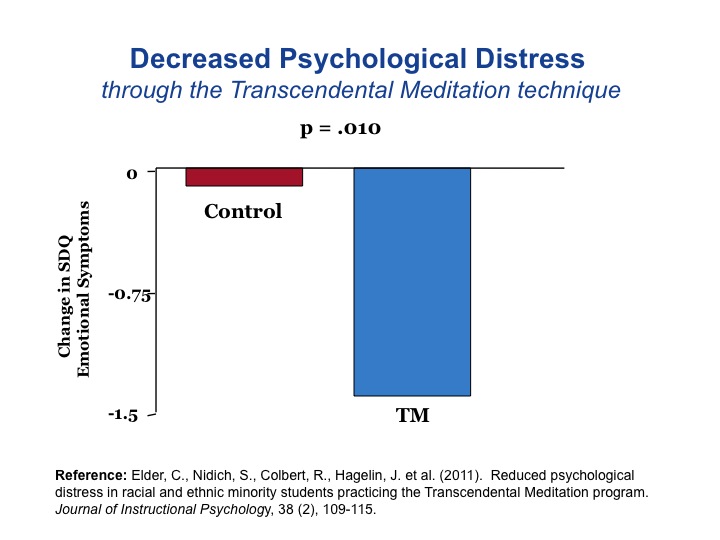
This graph shows a 36 percent reduction in psychological distress in 106 at-risk racial and ethnic minority students practicing the Transcendental Meditation technique compared to controls over a period of 4 months (p=.010). Significant decreases were also found in trait anxiety and depressive symptoms.

With record levels of student stress reported in a recent UCLA survey, can a simple stress-reducing meditation technique be a viable solution?

A new study published in the Journal of Instructional Psychology found the Transcendental Meditation (TM) technique significantly decreased psychological distress in public school students. The study, conducted with at-risk minority secondary school students, showed a 36 percent reduction in overall psychological distress. Significant decreases were also found in trait anxiety and depressive symptoms.

Rising Stress Levels Affect Emotional and Physical Health

The percentage of students in the UCLA survey reporting good or above-average high school emotional health dropped from 55.3 percent in 2009 to 51.9 percent in 2010. This marks the lowest level within the past 25 years.

Dr. Charles Elder, MD, lead author of the TM study, and investigator at Kaiser Permanente Center for Health Research, emphasized the important implications of the findings on reduced stress. “It is vital that we start addressing the high levels of emotional stress being reported by high school and college students. Decreased stress can have a positive impact on mental health, and can also reduce the risk for hypertension, obesity, and diabetes—major risk factors for heart disease,” explained Dr. Elder.

Educational research has also linked student stress to negative school behavior and poor academic performance.

Promising Findings for Education

“These new findings on reduced stress, along with the recent research on academic achievement gains, hold tremendous promise for public education,” said Sanford Nidich, EdD, principal investigator, and professor of education at Maharishi University of Management. “There is a growing body of evidence showing Transcendental Meditation to be an easy to implement, value-added educational program that promotes emotional health and increases academic achievement in at-risk students,” said Dr. Nidich.

A total of 106 secondary school students, 87% racial and ethnic minorities, took part in the study. Results showed that over a four-month period, students practicing Transcendental Meditation as part of their schools’ Quiet Time program exhibited significant reductions in psychological distress factors compared to controls.

According to James Dierke, 2008 National Association of Secondary School Principals—National Middle School Principal of the Year, “Stress is the number one enemy of public education, especially in inner-city schools. It creates tension, violence, and compromises the cognitive and psychological capacity of students to learn and grow. The TM/Quiet Time program is the most powerful, effective program I have come across in my 39 years as a public school educator for addressing this problem. It is nourishing children and providing them an immensely valuable tool for life. It is saving lives.”

The study was supported by the David Lynch Foundation.

Study Facts

  • This study evaluated change in psychological distress factors in students practicing the Transcendental Meditation program compared to non-meditating controls. A total of 106 students (68 meditating and 38 non-meditating students), took part in the study. The study included students from four public secondary schools.
  • Eighty-seven percent were racial and ethnic minority students, including 26% Hispanic, 25% African American, and 19% American Indian.
  • The Transcendental Meditation program was practiced in class twice a day as part of the schools’ Quiet Time program for four months prior to posttesting.
  • The Transcendental Meditation program was taught in the context of school-wide Quiet Time programs in which students voluntarily chose the Quiet Time program in which they wanted to participate.
  • Transcendental Meditation is a simple, natural, effortless technique that allows the mind to settle down and experience a silent yet awake state of awareness, a state of “restful alertness.” Practice of this stress-reduction program does not involve any change in beliefs, values, religion, or lifestyle.
  • Compared to eyes-closed rest, research has found that Transcendental Meditation practice is characterized by decreased activation or arousal of the autonomic nervous system, as reflected in decreased breath rate and lower sympathetic nervous system activity. The Transcendental Meditation program has been shown to increase electroencephalographic (EEG) brain integration and coherence, especially in the frontal area of the brain, responsible for higher-order processing.
  • Other published research on high school and college students has shown reduced psychological distress, improved positive coping ability, decreased blood pressure, reduced cardiovascular reactivity to stressful stimuli, reduced absenteeism, and decreased school suspensions.
  • Results of the current study indicated significant reductions in overall psychological distress (p=.010) and trait anxiety (p=.035) compared to controls. Within-in group differences in depressive symptoms were found for meditating students (p=.003).

Source: EurekAlert!

Reported on: Science Codex, sciencenewslinemedicine, PsychCentral: Meditation May Help Ease School Stress, Times of India: Beat stress with transcendental meditation (IANS), The Behavioral Medicine Report: Transcendental Meditation Significantly Decreased Psychological Distress In Public School Students, among others.

TM Blog: New research finds TM helps ease school stress, Ken Chawkin.

See related study: New research shows Transcendental Meditation improves standardized academic achievement.


Post Traumatic Stress and How Transcendental Meditation Can Help [Infographic]

November 12, 2011

Post Traumatic Stress and How Transcendental Meditation Can Help [Infographic]

Over half a million of our Veterans from Iraq and Afghanistan are suffering from Post Traumatic Stress (PTS). It stopped me in my tracks when one of my patients said, “it can happen once in your life, but one hundred times in your mind.” The echoes linger on… This is a very serious dilemma not only for our nations veterans, but for countless individuals that have experienced any variety of serious trauma in their lives. The stress surrounding the attacks from 9-11-2001 are a great example of this type of trauma on a much grander scale.

Post Traumatic Stress and How Transcendental Meditation Can Help [Infographic] is an informative graphic portraying the seriousness of Post Traumatic Stress and how Transcendental Meditation can help folks to cope with this disorder. Click on this link to see the infographic: http://www.normanrosenthal.com/blog/2011/11/post-traumatic-stress-and-how-transcendental-meditation-can-help-infographic.

Brought to you by Norman Rosenthal MD.

Traumatic stress is a type of stress that exists on an entirely different level than that of the stress you and I encounter on a daily basis. Our bodies do not know how to process the impact that these scarring events have had on us, and in return the impression left on the brain is one that needs healing and recovery to restore its natural state of holistic functioning.

My desire is to help to provide individuals with the best tools available in treating and alleviating these serious mental and physiological patterns. With knowledge, guidance and practical tools we can start to reduce the painful flashbacks from our stress born incidents of the past. A little bit of specific help to restore hope, restore balance and restore the quality of life for the millions of people who are experiencing Post Traumatic Stress.

If you found this infographic informative please feel free to embed it on your website or share it on the social networks using the functionality seen below.

Wishing you Light and Transcendence,

Norman

———————————————————

Resources:
1) Learn more about Transcendental Meditation here.
2) Learn more about what the David Lynch Foundation is doing for our
Veterans at Operation Warrior Wellness.
3) Below is a relevant video titled: Mother of Iraq War Vet says Transcendental Meditation Saved Her Son’s Life

PTSD Infographic
Post-Traumatic-Stress-Disorder-PTSD-Transcendental-Meditation Brought to you by Norman Rosenthal MD.

Chandrika Tandon Benefit Concert in Iowa Helps Launch Global Peace Initiative

November 9, 2011

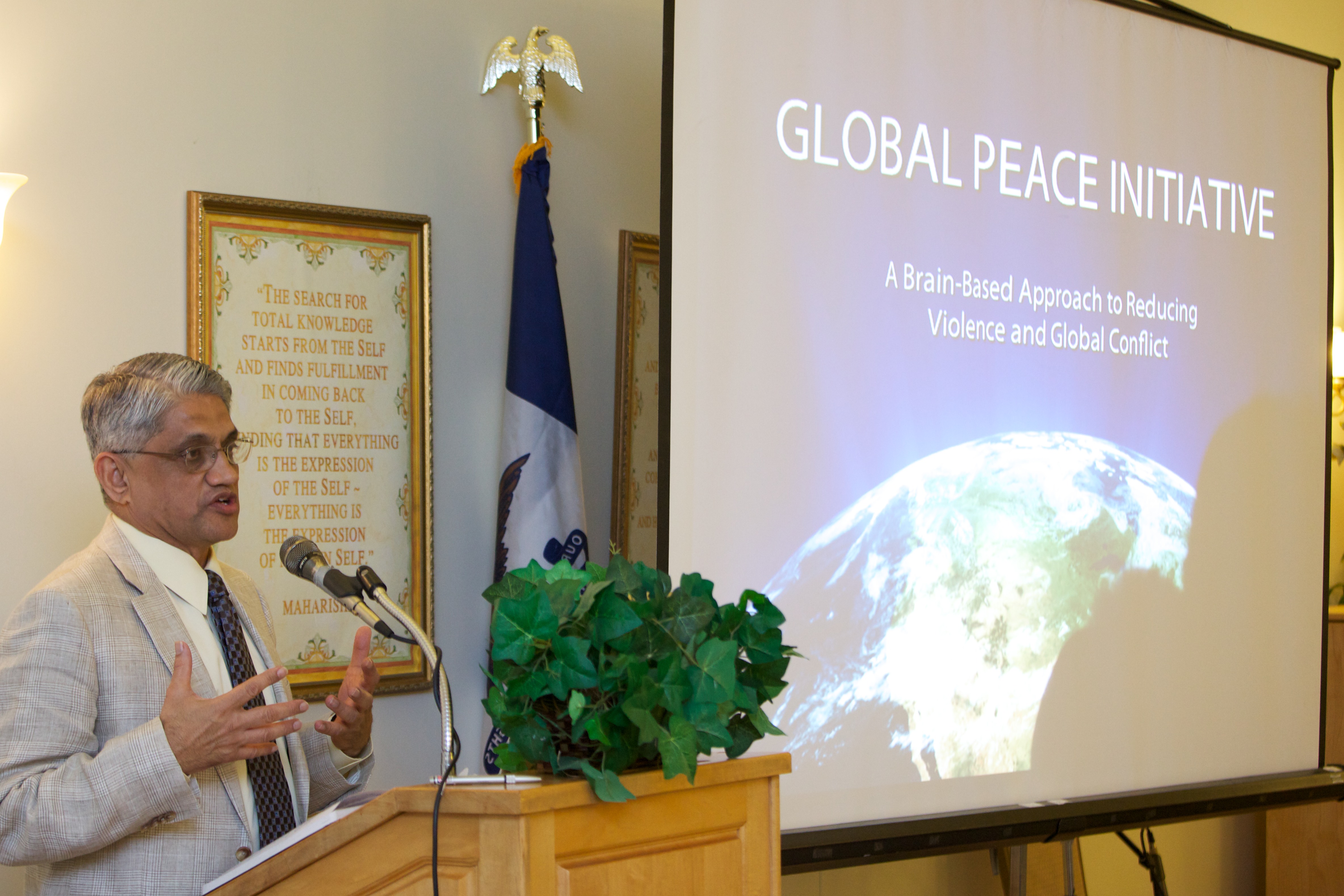
Chandrika Tandon Benefit Concert in Iowa Helps Launch Global Peace Initiative to Support 10,000 Maharishi Vedic Pandits

November 9, 2011: (MAHARISHI VEDIC CITY, IOWA) Leaders of the Global Peace Initiative hosted a Vedic Visitors Weekend, November 4 to 6, at Maharishi Vedic City in southeast Iowa, attracting Indo-Americans from cities as far away as Los Angeles and New York.

All the participants assembled for one purpose: to experience a weekend devoted to peace and all things Vedic: Vedic education, Vedic health, Vedic agriculture, and Vedic architecture.

The weekend culminated with Grammy-nominated world music artist, Chandrika Tandon, performing a stunning sold-out benefit concert at the Stephen Sondheim Theatre.

“The combination of different instruments and Chandrika’s voice revealed to me what World Music should be all about,” said Vinod Nayagar, a university student who attended the concert.

“All the sounds emerged from the same source, they resonated and built on each other’s vibrations at the subtlest, most blissful level of creation. The sounds were indistinguishable at transcendental moments—they created a harmony and unity from sound, which is the true purpose of music,” Mr. Nayagar said.

Ramani Ayer, retired CEO of the Hartford Financial Group and current Director of Development for the Global Peace Initiative, who served as a host of the weekend, said, “We invited Indo-Americans from around country to experience how powerful, valuable and relevant the practical application of ancient Vedic wisdom, as developed by Maharishi Mahesh Yogi, is to our daily lives and to the improvement of society.”

Leading Scientists Present Research on Meditation and World Peace

Fred Travis, Ph.D., Director of the Center for Brain, Consciousness, and Cognition at Maharishi University of Management in neighboring Fairfield, Iowa, is one of the world’s leading researchers on the brain, consciousness and meditation. His scientific presentation during the weekend on the effects of Transcendental Meditation on brain functioning was highlighted by slides and graphics illustrating the beneficial changes that occur as a result of regular TM practice.

From EEG signatures and connectivity maps, Dr. Travis showed how different meditation practices impact different parts of the brain. “Most meditations fall into two categories,” Dr. Travis said.

“First are ‘focused attention’ techniques, which require you to concentrate on an object, or a particular word or phrase. The second are ‘open monitoring’ techniques, which involve being mindful of your thoughts or breath without interfering with them. This approach attempts to still the mind and become an uninvolved witness to activity. But these attempts are on the surface level of the mind,” he said.

Dr. Travis then identified a third category—“automatic self-transcending”—a process that allows the mind to transcend its own activity. “This is the Transcendental Meditation technique, during which the mind transcends effortlessly, and arrives at the depth of consciousness, the source of the thinking mind, transcendental consciousness, or Samadhi,” Dr. Travis said.

Dr. Travis said that after several months of TM practice, the brain begins to demonstrate increased connectivity, even outside of meditation. “The brain functions more holistically, which accounts for the meditating student’s improved academic achievement. The student is able to absorb, integrate, and express knowledge more effectively,” Dr. Travis said.

Dr. G.V. Naidu, who traveled from St. Louis to attend the conference, said, “The scientific documentation of ‘The Neurophysiology of Enlightenment’ by Dr. Travis was impressive. And a subsequent presentation by physicist Dr. John Hagelin was a climax of the conference.”

World-Renowned Physicist Explains Global Peace Initiative

John Hagelin, Ph.D., a Harvard-trained, internationally renowned quantum physicist, provided the modern scientific understanding and corroborating scientific research documenting how groups of experts in the Transcendental Meditation and advanced TM-Sidhi program can neutralize violence and conflict and create world peace.

“Extensive research published in peer-reviewed scientific journals verifies that Transcendental Meditation dramatically reduces acute individual stress and its deleterious effects on brain and behavior far more effectively than other methods,” Dr. Hagelin said.

“But perhaps more interesting and important are the 23 published studies which show that relatively small numbers of people practicing the Transcendental Meditation and TM-Sidhi program together in a group can reduce crime, violence, and war throughout the entire population,” he said.

Citing studies conducted in the Middle East showing reductions in war death and violence by 70 percent, Dr. Hagelin said, “There is no approach to peace that has been so thoroughly tested and rigorously established. And now, since the arrival in America five years ago of the large group of Vedic Pandits, there has been a significant decrease in violent crime in America’s largest cities. We are mobilizing to add more numbers to the group, to create an even more positive effect in America.”

Thousands of Maharishi Vedic Pandits to Create Global Peace Effect through Yoga and Yagya

Ramani Ayer provided a vision of the goal of the Global Peace Initiative: To maintain permanent peace-keeping groups of 9000 Vedic Pandits in India and 1250 Vedic Pandits in the United States—the number established by research that is sufficient to create a concrete and demonstrative positive global effect.

“The Vedic Pandits’ daily practice of the TM and TM-Sidhi program establishes their consciousness in Yoga, the pure field of intelligence, at the basis of all creation. And their Vedic recitation from that deep and pure level creates a powerful influence of peace for humanity. This perfect combination of Yoga and Yagya will help create a much higher quality of life for the whole world’s population,” Mr. Ayer said.

The Global Peace Initiative is building an endowment fund to create and maintain these large groups of Vedic Pandits in perpetuity.

Maha Rudrabhishek with 121 Maharishi Vedic Pandits

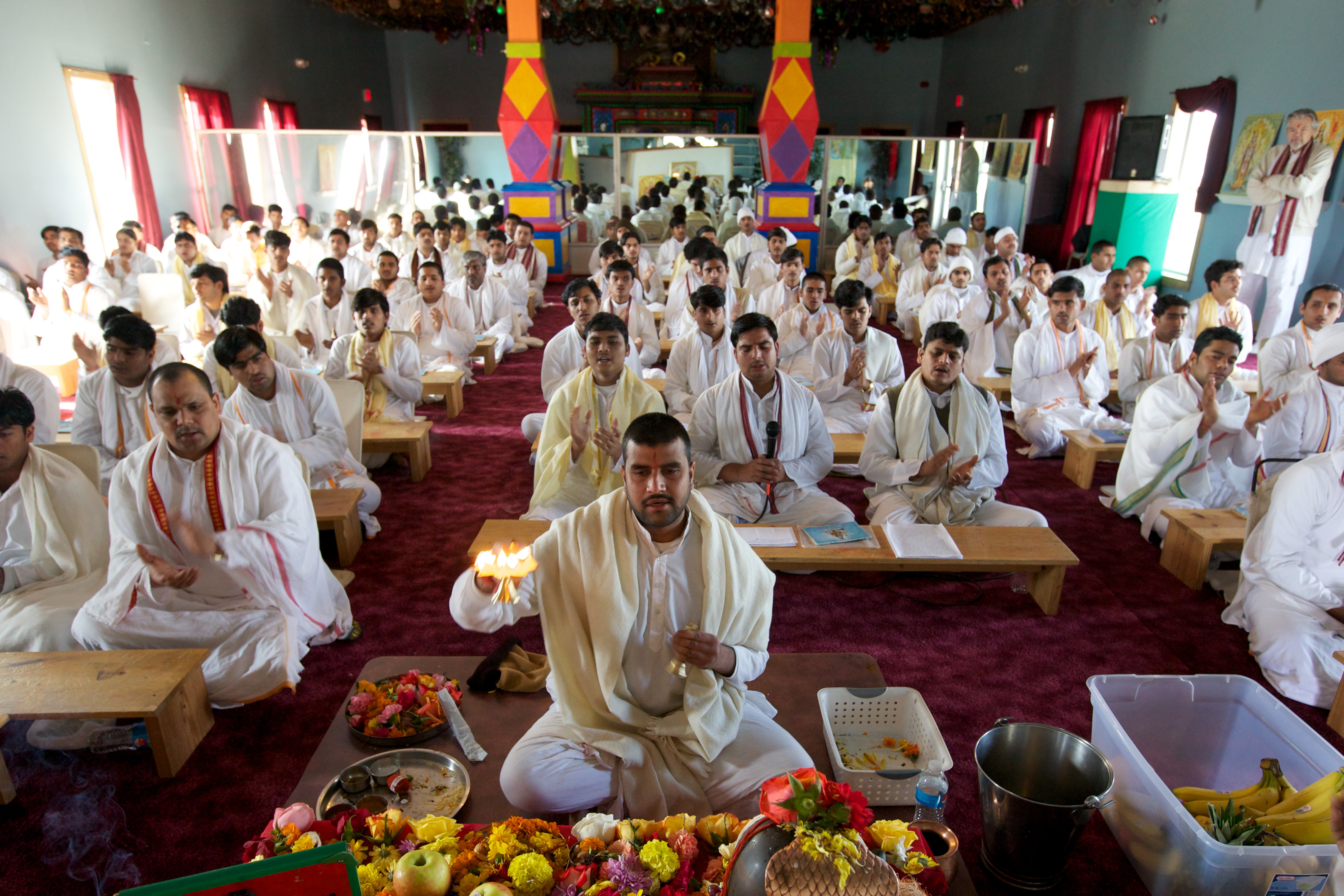
Another sublime highlight of the weekend was the performance by 121 Maharishi Vedic Pandits of Rudrabhsihek.

“It’s an amazing sight to drive over the rolling hills of Iowa and see spread before you a campus where nearly 1000 Maharishi Vedic Pandits from India reside,” said Meenakshi Ghai, from Chicago’s western suburbs, who made the four-hour drive from Chicago with her daughter-in law to attend the weekend. “It was a non-stop wonderful experience packed into 36 hours.”

Mohan Pillai from Long Island, New York, who attended the conference with his family, said, “I cannot describe in words what is was like to hear such a powerful chanting of the Rudrabhishekam. The inner feeling was so good—it was beyond words. I could understand how such large groups of well-trained Vedic Pandits can create peace.”

G.V. Naidu expressed enthusiasm for the global initiative: “We were pleasantly surprised to see that Maharishi Vedic Vishwa Vidyalaya is training thousands of Vedic Pandits here in America as well as in India. These Vedic Pandits are propagating and sustaining ancient Vedic culture. At the same time, they are conducting fundamental research on the positive effects of meditation—far more than any other organization. I wish more people will participate in future seminars conducted by Maharishi University of Management,” Mr. Naidu said.

Mr. Ayer concluded: “As Indians who cherish the Vedic tradition in our hearts, we should feel very proud that this great knowledge has given us a practical means to create peace in the world.”

For more information, visit www.GlobalPeaceInitiative.org and www.VedicPandits.org.

Also see Global Peace Initiative: 13 Questions and Answers with Ramani Ayer, Chandrika Tandon Concert to Benefit 1000 Maharishi Vedic Pandits Launches Global Peace Initiative, and Lavina Melwani interviews Chandrika Tandon on her Grammy Award nomination.

The answer to happiness lies within us. In the grips of the recession some TM can help, writes Barry Egan of The Independent

October 23, 2011

Health

The answer to happiness lies within us

In the grips of the recession some Transcendental Meditation can help, writes Barry Egan

Sunday, October 23, 2011

If there ever was a time that Ireland needed a little spirituality it is surely now.

Wise men of thought (wiser than the dour, sourpuss economists who seem to get off on telling us the bad times are only going to get badder) have long told us that meditation is a more substantial reality than that which we normally take to be reality. Many people are searching for a more meaningful existence, and Transcendental Meditation (TM) is providing the answer for some; myself included, my mum was dead a year last Sunday and TM helped me through some if not all of that darkness.

Next Tuesday, Transcendental Meditation Ireland will try to answer the need for something deeper in a country and a people shaken by recession with the public launch of the new TM website.

“It’s obvious that many people in Ireland have become very disillusioned with life,” influential TM teacher Noel O’Neill told me. “The material dream that had been held up to them has been pulled out from under their feet and many are left with nothing but debts and a life-long mortgage. Even the people who are not financially crippled are facing ever increasing levels of stress. TM is becoming increasingly recognised as a means of dealing with these stressful situations. When we practise TM we become aware of an inner aspect of our lives, a silent level of our minds which is untouched by the chaos going on around us. We discover a sense of happiness which is dependent on nothing else but ourselves, we become more self-reliant and don’t let our situation overwhelm us,” Noel says, adding that the new site — www.tm-ireland.org — contains endorsements of TM by the likes of David Lynch, Paul McCartney, Clint Eastwood, Jerry Seinfeld and a whole host of Irish TM luminaries like Dr Donn Brennan.

Hollywood actress Eva Mendes credits TM with having a positive effect on her career. In a recent interview, she spoke of the virtues of TM.

“I’m actually huge into meditation, Transcendental Meditation, and that really helps create not only a sense of balance, but serenity and a calm state of mind. It helps me deal with life’s ups and downs,” she says.

She also spoke of the influence of Hollywood director David Lynch’s book on TM and creativity, Catching the Big Fish, and how the technique has helped her as an actor.

“All aspects of life improve with TM — mental, physical and spiritual,” says Noel. “The research is there for anyone to see. Now we need a new formula for living life. We are ‘human beings’, it’s the aspect of ‘being’ that has been ignored in life. We are only aware of the surface values of life, our happiness is dependent on outside things, how much we get paid, how big your house is etc, but as we now know all these things are subject to very rapid change.

“Being, the silent field of creativity that lies deep within everyone, however, is not subject to change, and it is this aspect of life, this side of our nature that we experience and enliven when we practise TM. True lasting happiness can only come from within us.”

Noel says that there is an upsurge in interest in TM worldwide. “Oprah Winfrey surprised the ladies of Fairfield, Iowa, who practise Maharishi Mahesh Yogi‘s Transcendental Meditation when she meditated with them last Wednesday evening,” he says.

Drogheda GP Dr Alan Moran says he looked into TM, and saw how relaxed it left people, how it lowered blood pressure, and left people with an overall feeling of calmness and wellness. Their thoughts were clearer, they slept better and seemed to adjust to life’s ups and downs better.

“Daily I meet people who I feel could benefit from TM I see them suffering in large and small ways from worries and annoyances that they have allowed under their skins. People ask if I do TM, I say it’s a bit like a stockbroker who comes across a fund which is doing really well, is stable, and has a long history of doing well and paying dividends to those who are part of it. Would that stockbroker then buy shares in that fund?”

Noel O’Neill adds that the new Irish site will give up-to-the minute details of all the latest research on TM.

The site will also include details about a new book by internationally respected psychiatrist, Norman E Rosenthal, Transcendence: Healing and Transformation through Transcendental Meditation.

“The site will answer any commonly asked questions,” says Noel, who will speak at its public launch at 3pm on Tuesday in Buswells Hotel, Dublin, along with Dr Donn Brennan GP, Dr Joe Hayden (TM Ireland national director) and TM teacher John Burns.

More information on TM can be obtained by visiting www.tm-ireland.org or by contacting Noel O’Neill at 012845742/0861946792 or noeloneill@tm-ireland.org.

Originally published in http://shar.es/bhJQg

————–
Also listen to an excellent interview with Norman Rosenthal and Jenny Crwys-Williams on South Africa’s 702 Talk Radio. Click to download Podcast. It’s mentioned in this post: Meditation for Health, Happiness and Spirituality.

The Hawk Eye: Nurses heal themselves

October 17, 2011

Nurses heal themselves

Nurses use TM to help cope with stressful profession.

Monday, October 17th, 2011

John Lovretta/The Hawk Eye
From left, Terry Arellano of Burlington, Anne Dietrich of Fairfield, Amy Ruff of Fairfield, Mona Smith of Burlington and Adrienne Pelton of Fairfield gather Thursday for their weekly group practice of transcendental meditation at the Transcendental Meditation Center, 409 N. Fourth St. in Burlington. The center soon will start classes specifically targeted at nurses.

By WILLIAM SMITH
wsmith@thehawkeye.com

It’s no secret nurses often sacrifice their physical and mental health for the sake of their patients. Amy Ruff of Fairfield, who became a registered nurse 39 years ago, can attest to that.

“Being a new nurse was very stressful, and I started to realize that it was affecting my health,” she said.

Ruff was working at an intensive care unit in New Jersey at the time, and six months after she started the job, she saw a poster for a transcendental meditation lecture. Once she learned the process of TM, Ruff noticed an immediate change in her life.

“I was calmer at work, I could prioritize better, and I had more energy at the end of the day,” she said.

Ruff and her fellow TM instructors, Adrienne Pelton and Anne Dietrich, will lead a lecture dedicated to introducing nurses to TM next Wednesday at the Transcendental Meditation Center in Burlington. Their goal is to provide stress relief and higher quality of living for those who sacrifice it during their work.

“If you can think, you can meditate,” Ruff said.

The Transcendental Meditation Center in Burlington was founded last year by the TM instructors and Terry Arellano, who owns the Social Services Building the center is housed in. She said if the TM classes prove to be popular among area nurses and nurses-in-training, she will refurbish the sleeping rooms of the third floor of the building so they can act as dormitories for the female nurses.

“There will be a shortage of nurses in the United States, especially as the baby boomers age,” she said.

Learning TM is a seven-step, four-day process that requires a couple of hours of practice each day. The technique involves shutting your eyes and staying calm, allowing the mind to be free and without concentration.

Once the technique is learned, it requires much less commitment, and practitioners usually meditate twice a day for 20 minutes at a time. The Transcendental Medication Center in Burlington also has weekly group meditation sessions that coincide with sessions in Fairfield.

The idea to target area nurses came from Brandman University in Irvine, Calif., which offers continuing education credits for nurses who study TM. Arellano and Dietrich are working with Southeastern Community College about a possible relationship between the Transcendental Meditation Center and the school.

Ruff said more than 6,000 studies from 250 medical schools and universities have validated the health benefits of TM, which include increased coherence and reduced blood pressure. The practice also has been linked to decreased rates of heart disease, according to a study at the Medical College of Wisconsin in Milwaukee in collaboration with the Institute for Natural Medicine and Prevention at Maharishi University of Management in Fairfield.

Mona Smith, who has been practicing TM since 1969, said the practice allows her to live medication free. She recently attended her 50th high school reunion, and classmates could not believe she was able to live so healthy without the aid of medication.

“When I mentioned the natural ways I’ve trained, they tried to laugh it off,” she said. “People continue to underplay the naturalness of it.”

According to particle physicist John Hagelin, who is the director of the Transcendental Meditation movement in the United States, the practice can be life-changing. He stresses TM is not a religion or philosophy, it’s just a technique.

“The TM technique is the world’s most widely practiced, extensively researched and broadly prescripted program for the reduction of stress, the prevention of disease and the promotion of health,” he said.

The lecture is free and open to the public and will be 1:30 p.m. and 7:30 p.m. Oct. 26 at the Transcendental Meditation Center, 409 N. Fourth St.

For more information on learning TM locally, call the center at (319) 850-3276. Learn more at www.tm.org.

Transcending a Different Type of PTSD — Helping Children of the Night

October 11, 2011

OPINION

Transcending a Different Type of PTSD — Helping Children of the Night

By

Published October 08, 2011 | FoxNews.com

Lately there has been a storm of publicity – and deservedly so – about post-traumatic stress disorder (PTSD) in veterans of our wars in Iraq and Afghanistan.

The public has become better educated about this potentially disabling disorder and its symptoms, such as hypervigilance, an exaggerated tendency to startle, flashbacks, nightmares and emotional numbness, to name just a few.

Mental health professionals have emphasized the need to diagnose and treat PTSD wherever it arises.  In this piece, I would like to draw attention to yet another group suffering from PTSD – child victims of prostitution who, against all odds, are trying to go straight and choose a different path in life.

I recently visited a home for such children in the Los Angeles suburbs, part of an organization aptly named “Children of the Night,” which has been operating since 1979 under the guidance of its founder and director, Dr. Lois Lee.

The organization is the most comprehensive social services agency in the country for rescuing America’s children from prostitution – a term Lee prefers to “trafficking,” which she considers too sanitized and not shocking enough for a problem that ought to be shocking but too often hides in plain sight of ordinary citizens.

The story of the young prostitute usually starts with early sexual abuse by a trusted care-giver, creating a trauma that continues to fester in the developing mind and brain of the young person, often resulting in emotional and behavioral difficulties.

The young person runs away – or drifts away – from home and, vulnerable to entrusting his or her safety to untrustworthy adults, goes on to be re-abused by those who pretend to offer love and shelter.

It is an ugly story that inclines us to avert our eyes, change the channel or click on a different web link.  I ask you to resist this natural aversion because these are our children and they can be helped with proper understanding and care. — Lee estimates that her organization has assisted over 10,000 young people since its inception.

In Lee’s opinion, all these children suffer from PTSD.  They are seething with rage, which they either direct outwards – screaming, lashing out, throwing things – or inwards by cutting themselves.

Stressed out in body and mind, many complain of abdominal pains so severe that they need to be taken to the emergency room.  They suffer nightmares and sleep disorders that wake them up at all hours.  Sometimes their distress during sleep is so bad that paramedics need to wake them and help settle them down.

Consider one of these young people, “Annie,” an 18-year-old graduate of the Children of the Night.  When she first came to the program, Annie experienced many symptoms of PTSD.

Like the other girls, she would panic when she saw a black limo driving down the street with its lights off, which reminding her of the pimps in her former life.  Triggered by all sorts of fears and memories, Annie would scream and throw things.  An apparently innocent TV show might remind her of evenings when she and her pimp would watch that same show together in earlier times.  One flashback would lead to another until her system was boiling over with intolerable panic and rage.

All the children in the program receive psychotherapy, but Annie did not find it particularly useful.  One thing that has made a big difference for her is Transcendental Meditation (TM), a technique that Lee has incorporated into her program in the last few years, with excellent results.

According to Annie, TM has reduced the impact of her flashbacks, has made her less angry, and less likely to her take out her distress on others.  As she puts it, “TM helps me calm down and center myself throughout the day, and focus on my schoolwork and tasks. It has also helped me trace back my emotions to when I was really young.  I realize that I couldn’t cry or tell people they had hurt my feelings.  I chose anger instead of hurt.”

The beneficial effects of TM on the PTSD symptoms of the Children of the Night have also been documented for traumatized veterans of combat, and are consistent with the known effects of TM in settling down fight-or-flight responses, which are exaggerated in people with PTSD.

Of Dr. Lee and Children of the Night, Annie says, “The program has done everything for me.  If not for the program, I would have died on the streets.”

Annie’s words are all the more poignant as there are so many other children who have not had the good fortune to stumble across Lee and her program. Keep your eye out for them and spare a thought for how we as a society can prevent the horrible problem of child prostitution and take care of those who have already fallen prey to it.

Norman E. Rosenthal, M.D. is Clinical Professor of Psychiatry at Georgetown University Medical School and author of “Transcendence: Healing and Transformation Through Transcendental Meditation” (Tarcher-Penguin, 2011).

Also see: Children of the Night, movie director David Lynch expand work and Meditation Helps Homeless Children, and another Fox News Opinion piece by Dr. Rosenthal: Could Transcendental Meditation Help Veterans Suffering From Post-Traumatic Stress Disorder?

The Norwich Guidon: Rooks experiment with meditation

October 8, 2011

Rooks experiment with meditation

By Thomas Carson
Norwich Guidon Staff Writer
Published: Tuesday, October 4, 2011

Norwich University has received a $40,000 grant from Foundations of America to conduct a study on how to lower stress among rooks. One rook platoon is using Transcendental Meditation (TM) twice a day, every day, to see if meditating helps, according to Dr. Peg Meyer, director of academic achievement and educational effectiveness.

“The big thing about the TM practice is that it is an individual tool, people will say, ‘What about a team performance or a platoon performance’ but it is really about what it does for you,” said Shelby Wallace, the director for student success. “I have been TM’ing for almost a year now this December, and it has definitely helped with a level of prioritization.”

“I can handle situations in a more effective way, and reduce my stress, so I have seen a lot of positive results in a personal and professional way,” said Wallace.

Last February, Norwich conducted a study with the men’s lacrosse team to test TM.

“The spring study was more or less an intro for the university to take a cross section of students, staff and faculty who were trained, as well to learn a little more about the TM practice to understand if this was something that we wanted to do,” said Wallace.

After seeing good results, Meyer, Wallace and President Richard W. Schneider went to New York to meet with the David Lynch Foundation to get trained in TM and to see its effects firsthand.

After receiving the grant, Norwich sent out emails to the rooks of 4th Company, 3rd Platoon, asking if they would participate.

Twenty-eight rooks volunteered.

“I received an email, I volunteered, and now I am apart of this great study,” said Frank Ruscito, an 18-year-old freshman study of war and peace major from Rome, N.Y. “I feel it has worked better than I expected.”

“I see other people falling asleep (in class), and I am energized and focused,” Ruscito said. “I’m doing much better in my classes than I expected.”

The 4-3 platoon cadre are trained in TM and do it with the platoon, as well as by themselves when needed to. The rooks are free to meditate whenever they please as well. The platoon meditates at 0800 and between 1620 and 1630 as a platoon.

“My stress levels are down. As far as academics, everything seems to be clicking very well,” said Scott Heimann, a 18-year-old freshman computer security major from Colorado Springs, Colo. “I do believe with the help of the TM, my rookie knowledge is sticking very well.” Heimann added, “I strongly believe that I will continue TM after rookdom.”

“It has helped me with my academics tremendously. I feel more alert, I can focus better on my homework,” said Timothy Hunter, a 18-year-old freshman biology major from Stratham, N.H. Hunter also described how the effects of the TM helped him with his rookie knowledge, and how it relieved the stresses of balancing the rook environment and school work.

All the rooks who were interviewed said TM should be done by everyone; and that they will continue doing TM.

“I feel more organized, I feel I have more energy, I’m more productive, and it helps relieve stress,” said Madison Dupouy, a 22-year-old senior physics major from Saratoga Springs, N.Y.

Dupouy went to a dinner for people interested in this new study. After discovering that TM actually helped him with his academics, his stress and his energy level, Dupouy decided to get involved as one of the cadet officers who will oversee the study.

“I have always been interested in meditation,” said Brandon Jennings, a 21-year-old senior history major from Gales Ferry, Conn. Jennings found out about the study, and when he tried it for himself he noticed an improvement in his energy levels, organization habits and his academics.

“I took 23 credits with two seminar classes last semester, and I got a 3.407 GPA for the semester,” said Jennings. These good results got him interested in being a part of the study, and he became one of the officers in charge.

Related:

WebMD Feature: How Transcendental Meditation Can Improve Your Health

October 7, 2011

                  Health & Balance

How Transcendental Meditation Can Improve Your Health

New research shows that this ancient practice can increase focus, decrease stress, and manage high blood pressure.

By Annie Stuart                             Reviewed by Patricia A. Farrell, PhD

WebMD the Magazine – Feature

Two years ago, Marisa McGinnis, a 63-year-old attorney from Burlingame, Calif., suffered every parent’s worst nightmare. Her 14-year-old son took his own life. McGinnis turned to transcendental meditation (TM) to help her cope. At the Transcendental Meditation Program web site (www.tm.org), McGinnis found a nearby teacher and started practicing. “It was life-changing,” she says.

Popularized by the Beatles’ guru in the 1960s, TM is enjoying renewed interest. Celebrities including the singer Moby and actor Russell Brand are endorsing its benefits, from help for quitting addictions to improved creativity. In 2005, film director David Lynch formed a foundation to bring TM into schools, prisons, and homeless shelters, among other places.

And TM has gathered some research chops, too. Norman E. Rosenthal, MD, clinical professor of psychiatry at Washington, D.C.’s Georgetown University Medical School and author of Transcendence: Healing and Transformation Through Transcendental Meditation, recently completed a small study of TM’s effects on veterans with combat-related post-traumatic stress disorder (PTSD).

“Before our research was over, three of our clinicians had gotten TM training,” Rosenthal says. “That’s how impressed they were with what they saw.”

What Is Transcendental Meditation?

TM is one meditation technique among many. It has you silently and effortlessly recite a mantra, a soothing sound without meaning. As a result, muscles unwind, breathing slows, and the pituitary gland releases prolactin, a hormone thought to have a calming effect, Rosenthal says.

Research also shows enhanced brain activity during TM, such as increased alpha brain waves, which are linked with rest and reflection. TM increases brain wave coherence too, meaning different parts of the brain work in better harmony. That can lead to greater focus and competence. “In seasoned meditators, this coordinated response spills over into other parts of the day,” Rosenthal says.

The health benefits? Plenty, according to more than 300 peer-reviewed articles. TM-linked brain changes help interrupt the body’s stress response, helpful for people with problems ranging from anxiety to high blood pressure (HBP) and heart disease. A study of 60 African-Americans with HBP even showed a link between TM and reduced atherosclerosis.

McGinnis credits TM not only for improving her health but also for motivating her to launch a poetry web site. “There are an indescribable number of benefits of being in the present,” she says.

How to Practice TM

Those who practice TM sit 15 to 20 minutes twice daily with eyes closed and silently repeat a mantra an instructor has given them. Want to give it a try? Norman E. Rosenthal, MD, offers some tips:

Learn from an expert. TM proponents suggest a customized approach to allow for feedback and ensure you’re using the technique correctly. Instruction is a series of seven steps, with teachers providing ongoing mentoring as needed.

Go easy. With TM, there’s no need to either focus on thoughts or push them away. Simply use the mantra as the means to settle your mind.

Stick with it. Give yourself a few months of twice-daily meditation for it to become a habit. “As with any practice, it’s a skill you need to acquire,” Rosenthal says. “It took me a month or two.”

Be careful. TM should not be used as a replacement for needed health care. Be sure to ask about the training and experience of a teacher and determine whether TM has been researched for any health issues you need to address.

SOURCES:

David Lynch Foundation.

Marisa McGinnis, attorney.

Rosenthal, N. Transcendence: Healing and Transformation Through Meditation. Jeremy P. Tarcher/Penguin. 2011.

Castillo-Richamond, A., Stroke, 2000; vol 31: pp 568-73.

Orme-Johnson, D, Psychosomatic Medicine, 1987; vol 49: pp 493 – 507.

Schneider, R. American Journal of Cardiology, 2005; vol 95: pp 1060-1064.

Norman E. Rosenthal, MD, clinical professor of psychiatry, Georgetown Medical School.

Reviewed on August 12, 2011
© 2011 WebMD, LLC. All rights reserved.
————–
Also listen to an excellent interview with Norman Rosenthal and Jenny Crwys-Williams on South Africa’s 702 Talk Radio. Click to download Podcast. It’s mentioned in this post: Meditation for Health, Happiness and Spirituality.