TM Can Reduce Health Care Costs

September 13, 2011

Meditation Can Reduce Health Care Costs

By Rick Nauert PhD Senior News Editor
Reviewed by John M. Grohol, Psy.D. on September 13, 2011

Meditation Can Reduce Health Care CostsStress can contribute to a wide array of health problems, and finding ways to reduce stress could presumably impact overall health care costs as well. A new study suggests that meditation can do just that.

According to the research, people with consistently high health care costs experienced a 28 percent cumulative decrease in physician fees after an average of five years practicing the stress-reducing Transcendental Meditation technique compared with their baseline.

The study is published in the September/October 2011 issue of the American Journal of Health Promotion.

Experts have recognized that in most populations, a small fraction of people account for the majority of health care costs.

In the U.S., the highest spending 10 percent in the general population incurred 60 percent to 70 percent of total medical expenditures annually.

In the Medicare population, the highest spending 5 percent incurred 43 percent of total Medicare costs, and the highest spending 25 percent of seniors accounted for 85 percent of total expenses.

Individuals in these groups have consistently high medical bills year after year.

For many, chronic stress is the number one factor contributing to high medical expenses. Stress reduction may help reduce these costs.

This new study compared the changes in physician costs for 284 consistent high-cost participants—142 Transcendental Meditation practitioners with 142 non-practitioners, over five years in Quebec, Canada.

The non-TM subjects were randomly selected from Quebec health insurance enrollees with the same age, sex, and region to match the TM participant profiles.

The TM participants decided to begin the technique prior to choosing to enter the study. In the year before the intervention began, there were no significant differences between the groups in payments to physicians.

During the five-year assessment period, the TM group’s annual health care costs declined significantly (p = 0.004), while the comparison group’s utilization showed no significant changes.

After the first year, the TM group decreased 11 percent, and after 5 years, their cumulative reduction was 28 percent (p = 0.001).

The primary measure for assessing the effectiveness of TM practice in decreasing medical costs was the fees paid by the Quebec health insurance agency to private physicians in all settings for treating study participants.

In Canada and U.S., physician payments have been 20 percent of national health expenditures.

This study’s findings were similar to earlier ones. In a previous Canadian study, the TM group exhibited reduced medical expenses between 5 percent and 13 percent relative to comparison subjects each year for 6 consecutive years.

In a subsequent Canadian study of senior citizens, the TM group’s five-year cumulative reduction for people aged 65 years and older relative to comparison subjects was 70 percent. In a sample of American health insurance enrollees, the TM participants had reduced rates of illness in all disease categories.

An 11-year, cross-sectional study in Iowa found that subjects age 45 and over who practiced the TM technique had 88 percent fewer hospital days compared with controls. Their medical expenditures were 60 percent below the norm.

Other studies, including randomized clinical trials, indicate the TM technique can improve physical and mental health, decrease tobacco use, reduce substance abuse, and decrease other unhealthy habits and risk factors that lead to chronic disease and costly treatments.

“This article has major policy significance for saving Medicare and Medicaid without cutting benefits or raising taxes,” said the paper’s author, Robert E. Herron, Ph.D.

“Almost no intervention for cost containment has decreased medical expenditures by 28 percent over five years from a baseline. Now, it may be possible to rescue Medicare and Medicaid by adding coverage for learning the Transcendental Meditation technique.”

Source: Roth Media

APA Reference
Nauert PhD, R. (2011). Meditation Can Reduce Health Care Costs. Psych Central. Retrieved on September 13, 2011, from http://psychcentral.com/news/2011/09/13/meditation-can-reduce-health-care-costs/29373.html

Also see: High Medical Costs Decrease 28% after 5 Years of Transcendental Meditation Practice | New study: TM Reduces Health Care Costs by 28%
High Medical Costs Decrease 28% after 5 Years of Transcendental Meditation Practice

September 12, 2011

High Medical Costs Decrease 28 Percent after 5 Years of Transcendental Meditation Practice

According to a study published this week in the September/October 2011 issue of the American Journal of Health Promotion (Vol. 26, No. 1, pp. 56-60), people with consistently high health care costs experienced a 28 percent cumulative decrease in physician fees after an average of five years practicing the stress-reducing Transcendental Meditation technique compared with their baseline. Both between and within group comparisons were statistically significant. This study has major policy implications.

In most populations, a small fraction of people account for the majority of health care costs. In the U.S., the highest spending 10% in the general population incurred 60% to 70% of total medical expenditures annually. In the Medicare population, the highest spending 5% incurred 43% of total Medicare costs, and the highest spending 25% of seniors accounted for 85% of total expenses. A large number of these people have consistently high medical bills over many years. (References in article, available upon request.)

Chronic stress is the number one factor contributing to high medical expenses. Stress reduction may help reduce these costs.

This new study compared the changes in physician costs for 284 consistent high-cost participants—142 Transcendental Meditation practitioners with 142 non-practitioners, over five years in Quebec, Canada. The non-TM subjects were randomly selected from Quebec health insurance enrollees with the same age, sex, and region to match the TM participant profiles. The TM participants decided to begin the technique prior to choosing to enter the study. In the year before the intervention began, there were no significant differences between the groups in payments to physicians.

During the five-year assessment period, the TM group’s annual rate of change in payments declined significantly (p = 0.004), while the comparison group’s payments showed no significant changes. After the first year, the TM group decreased 11%, and after 5 years, their cumulative reduction was 28% (p = 0.001).

The primary measure for assessing the effectiveness of TM practice in decreasing medical costs was the fees paid by the Quebec health insurance agency to private physicians in all settings for treating study participants. In Canada and U.S., physician payments have been 20% of national health expenditures. This study’s results are important because doctors’ decisions determine most medical expenses: tests, prescription drugs, hospitalization, surgery, and other treatments.

The paper’s sole author, Robert E. Herron, Ph.D., is an independent researcher, and director of the Center for Health Systems Analysis. Dr. Herron was the first to describe the impact of the Transcendental Meditation technique on health care costs.

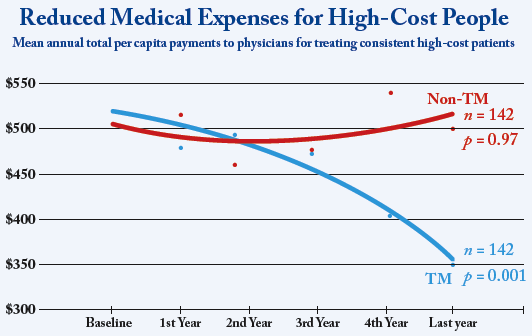
This chart shows the mean annual total per capita payments to physicians for treating consistent high-cost patients. The TM group’s physician expenses decreased by 28% over five years. The above trend lines show the general behavior of the physician fees for the two groups from the pre-intervention Baseline year through the 5 years of the study. All dollar values were adjusted for inflation and were expressed in constant 1992 Canadian dollars. P-values show the significance of the comparison of Baseline and Last Year for each group.

This study’s findings were similar to earlier ones. In a previous Canadian study, the TM group exhibited reduced medical expenses between 5% and 13% relative to comparison subjects each year for 6 consecutive years.

In a subsequent Canadian study of senior citizens, the TM group’s five-year cumulative reduction for people aged 65 years and older relative to comparison subjects was 70%. (See Meditation for Seniors May Lower Health Costs.)

In a sample of American health insurance enrollees, the TM participants had reduced rates of illness in all disease categories. An eleven-year, cross-sectional study in Iowa found that subjects age 45 and over who practiced the TM technique had 88% fewer hospital days compared with controls. Their medical expenditures were 60% below the norm.

Other studies, including randomized clinical trials, indicate the TM technique can improve physical and mental health, decrease tobacco use, reduce substance abuse, and decrease other unhealthy habits and risk factors that lead to chronic disease and costly treatments.

“This article has major policy significance for saving Medicare and Medicaid without cutting benefits or raising taxes,” said Herron. “Almost no intervention for cost containment has decreased medical expenditures by 28% over 5 years from a baseline. Now, it may be possible to rescue Medicare and Medicaid by adding coverage for learning the Transcendental Meditation technique.”

ADDENDUM

Americans are suffering from soaring levels of chronic stress due to economic problems, home foreclosures, high unemployment and underemployment, and lack of health insurance, which contributes to numerous health problems they cannot afford to treat.

The Huffington Post reported in May that U.S. health care costs per family more than doubled in nine years. Milliman, Inc., a premier global consulting and actuarial firm, released the results of their 2011 Milliman Medical Index, which measures the total cost of health care for a typical family of four covered by a preferred provider organization (PPO). The 2011 MMI cost is $19,393, an increase of 7.3% over 2010, which is the lowest annual rate of increase in more than a decade. Yet even though the rate of increase is the lowest in recent memory, the increase in total dollars—$1,319 in 2011—is the highest in the history of this study. Even with a historically low annual rate of increase, health care costs for American families reached $19,393 in 2011. In 2010, the average employee paid $8,008 for his family’s health care, up from $3,634 in 2002. To view the complete 2011 Milliman Medical Index, download the report.

At a time when health care costs are continuing to rise, the studies of Herron and his colleagues demonstrate that a natural preventative approach could help curb rising health care costs. Benjamin Franklin once said: “An ounce of prevention is worth a pound of cure.” Another way of saying it today would be, “An ounce of prevention costs considerably less than a pound of cure!”

The Transcendental Meditation Program

The Transcendental Meditation technique is an effortless procedure practiced 10-20 minutes twice a day sitting comfortably with the eyes closed.

TM is a simple natural mind-body practice that does not involve changes in personal beliefs, philosophy or lifestyle.

Over 350 peer-reviewed research studies on the TM technique confirm a wide range of benefits for mind, body and behavior.

Several studies have compared the effects of different meditation practices and found that Transcendental Meditation provides deeper rest and relaxation, and is more effective at reducing anxiety, depression and hypertension than other forms of meditation and relaxation. In addition, no other meditation practice shows the widespread coherence throughout all areas of the brain that is seen with Transcendental Meditation.

The Transcendental Meditation technique is taught in the United States by a non-profit, educational organization.

More information can be obtained by calling 888-LEARN-TM or visiting www.tm.org or www.AskTheDoctors.com.

Source: EurekAlert!

Also see: PsychCentral: TM Can Reduce Health Care Costs | TM Blog: New study: TM Reduces Health Care Costs by 28%

Persian Poetry Gets the Blues

September 10, 2011


MUSIC
AUGUST 30, 2011
Persian Poetry Gets the Blues
By EMILY ESFAHANI SMITH
New York

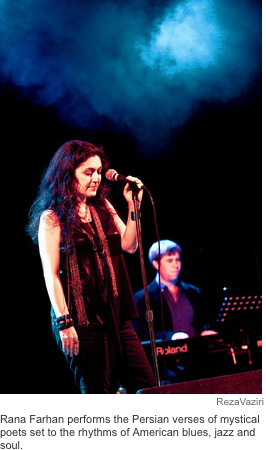
Sitting at a chic wine bar in the Flatiron district, Rana Farhan lounges back in her chair—a cup of hot black tea in her hand on this balmy August day. “It’s very hard to take classical Persian poetry and make it sound like Al Green or Billie Holiday,” she says in her husky voice. But this has been the Iranian jazz singer’s pursuit since 2005, when she stumbled upon an intoxicating and utterly fresh musical combination: singing the exquisite Persian verses of mystical poets like Rumi, Hafez and Omar Khayyám to the rhythms of cool American blues, jazz and soul.

Her latest album, “Moon and Stone,” is an expressive tribute to soul music. “I’ve been listening to a lot of Teddy Pendergrass and Otis Redding lately.” Through her raspy Iranian accent, she adds, “Oh, and Sam Cooke. I love him.” On Saturday, Ms. Farhan will be celebrating the release of her CD with a performance at Caffe Vivaldi here, followed by a tour in the coming weeks with stops at the El Rey Theatre in Los Angeles and  Yoshi’s Jazz Club in San Francisco.

While Ms. Farhan has been a renowned musician in Iran for several years now, it was not until 2009 that she grabbed the attention of the international scene with her sultry jazz song “Drunk With Love.” The song was prominently featured in the heart-wrenching Iranian movie “No One Knows About Persian Cats.” The film, which won an award at the 2009 Cannes Film Festival, tells the story of Iran’s underground indie-rock scene.

Sung passionately in Farsi, “Drunk With Love” is from a Rumi poem that celebrates a sensual—even erotic—passion for the divine: “Oh love . . . the king of kings has gotten drunk, / Get up, grab his curls and pull him near. / Every thought that comes into my heart speaks of the Lover, / I’ll put my life before him, I want to kiss him and fill his mouth with gold, / face like a rose, voice of a nightingale, / I want to fulfill all his desires. . . .”

This is a far cry from the heartless Islam of Iran’s anti-American mullahs. But Iran was a different country during Ms. Farhan’s youth—it was the place that stirred her jazzy muse; it was her home. During her carefree childhood, before the Islamic Revolution, Western media could flow freely into Iran’s urban centers. One of Ms. Farhan’s haunts back then was a “cool” used-record store in Tehran called Beethoven. There, she could get her hands on the latest American sounds—Janis Joplin, the Rolling Stones and Johnny Winter, for instance.

“I fell in love with the blues early on,” she tells me. Specifically, she fell intensely in love with Billie Holiday. “I’ve read every single biography of her.”

Ms. Farhan says that she “was constantly trying to figure out how to sing Persian poetry to the blues.” In Iran, classical poetry is a cherished part of the traditional music culture, the same way that jazz and blues define U.S. music culture. Even Iranians who cannot read or write grow up learning the poems of Rumi by heart. Ms. Farhan says she and her family would read classical Persian poetry together on their vacations. “The way I see the poems as blues really comes from my father,” she says.

But Iran’s 1979 revolution changed life completely for Ms. Farhan, who was a student at the Tehran University of Fine Arts at the time. With the establishment of an Islamic theocracy, women’s freedoms were radically and suddenly restricted. Today, women are not allowed to perform before mixed-sex audiences.

So Ms. Farhan fled her home country and came to New York, carrying in her mind a trove of Persian poetry—and her childhood desire to blend it with raw American blues.

Years later, she finally managed to get these two unlikely lovers together. It was 2005 and she was living in Manhattan when she stumbled across a guitar case sitting in a pile of trash on the sidewalk outside of her apartment. Inside the case was a beat-up guitar. Ms. Farhan was offended that someone had thrown away a perfectly good instrument, so she took it to her producer, the guitarist Steven Toub, and the two of them cleaned it up and put new strings on it.

“Then,” Ms. Farhan begins, “Steve started randomly playing a blues riff on it. Rumi’s book was laying open nearby, so I started singing in Farsi [the poem] ‘Rumi’s Prayer.'” To their astonishment, they had a sexy blues number on their hands. It was Lady Day meets the 13th-century Islamic world. And, like so many of Rumi’s poems, the song was about God, the Beloved.

They promoted the track to their friends and fans, and as Ms. Farhan recalls, “the whole thing exploded. Everybody loved it.” With that enthusiastic response from both U.S. and international listeners, Ms. Farhan and Mr. Toub released a full-length CD of Persian jazz in 2007. The album, called “I Return,” featured the poetry of Hafez and Rumi. “That year was Rumi’s 800th birthday, and it was like—yeah! Rumi wanted jazz for his birthday,” Ms. Farhan says with a laugh.

Finishing up her tea and cookies, Ms. Farhan notes that mixing “the best of Iranian culture” with “the best of American culture” is not as far-fetched as it seems. “Rumi and Hafez were the blues of their time.” Humming a melody from her new CD, she explains, “When you put their verses with the blues, it’s like they’ve always belonged there.”

Ms. Smith is managing editor of the Hoover Institution journal Defining Ideas and assistant editor of The New Criterion.

Copyright 2011 Dow Jones & Company, Inc. All Rights Reserved

Rana Farhan: Website, MySpace, Facebook, YouTube, TwitterWiki 

Listen to Rana Farhan sing this beautiful song, Tangled, from her new CD, Moon And Stone, a unique fusion of classical Persian poetry with contemporary blues and jazz.

Fairfield Resident Helps Veterans Recover

September 10, 2011

Eastern Iowa News Now

Fairfield Resident Helps Veterans Recover

Posted September 9, 2011 10:50 pm
by Kathleen Serino/SourceMedia Group News

FAIRFIELD – Meditation is the best medicine for military veterans, some say.

Filmmaker David Lynch is set to announce on Sunday a $500,000 matching grant to teach Transcendental Meditation to veterans and active military with Post-Traumatic Stress Disorder (PTSD), according to a news release from Operation Warrior Wellness, an outreach campaign sponsored by the David Lynch Foundation.

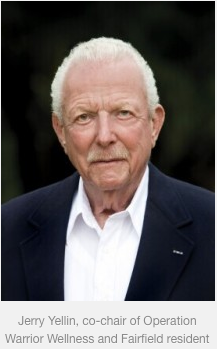
Lynch is inviting major donors to match the grant, which he hopes will be met by Veteran’s Day, Nov. 11, the release says. And Hollywood actors like Russell Brand and Paul McCartney are responding, said Jerry Yellin, co-chair of the initiative that he helped create in March 2010.

Yellin, a World War II veteran, Fairfield resident and author of “The Resilient Warrior, Healing the Hidden Wounds of War,” said he is currently giving four free presentations to 150 veterans in Minnesota on behalf of the campaign.

The 87-year-old said he suffered from PTSD for 30 years before he found Transcendental Meditation (TM), and now talks to veterans, active soldiers and their families about his story and how much it helped him recover.

“These guys are doing exactly what they should be doing and I hope they get their funding,” said Norman Rosenthal, MD, psychiatrist and clinical professor at Georgetown University.

Rosenthal, 61, a researcher on TM and PTSD said, “This very gentle technique had a very powerful effect within a month.”

“It relieves stress, and all of these guys have gone through stress. Big time,” said Yellin of the TM technique.

Yellin said his outreach continues with wife, Helene, and Vietnam veteran Dan Burks, also from Fairfield, to visit military bases, academies and other military organizations.

This entry was posted in War and tagged David Lynch, Fairfield Iowa, Jerry Yellin, Operation Warrior Wellness. Bookmark the permalink.

Responses:

Ken Chawkin says:
September 10, 2011 at 10:39 am

Thank you, Kathleen, for this inspiring and hopeful story. For more information, visit http://www.operationwarriorwellness.org/.

Also seeStar Tribune: Meditation brings peace to war vets | Medication or Meditation for Veterans with PTSD? | The Chippewa Herald: Soldiers with PTSD may benefit from meditation technique | WEAU13News: Veterans learn about meditation for treating post traumatic stress (includes video) | TwinCities.com Pioneer Press: Ruben Rosario: Recovered veteran’s latest mission: helping those like him | Global Good News: Health: Recovered veteran’s latest mission: helping those like him | Stars and Stripes: Celebrities push for transcendental meditation to treat PTSD


Medication or Meditation for Veterans with PTSD?

September 9, 2011

 National Office • 654 Madison Avenue • Suite 806 • New York, NY 10065 Tel: 212-644-9880 • OperationWarriorWellness.org

MEDICATION OR MEDITATION
FOR VETERANS WITH PTSD?

Filmmaker David Lynch Announces $500,000 Matching Grant
to Teach Transcendental Meditation to 10,000 Veterans

Iconic filmmaker David Lynch will announce this September 11 a $500,000 matching grant to be used to teach the Transcendental Meditation technique to 10,000 veterans with post-traumatic stress disorder (PTSD) and their families.

Lynch is inviting philanthropists and foundations to match the offer by Veterans Day, November 11, 2011.

Hollywood directors Clint Eastwood, Martin Scorsese, and George Lucas, as well as Dr. Mehmet Oz, Paul McCartney, Jerry Seinfeld, and Russell Brand have joined Lynch in support of the outreach.

Lynch’s veteran’s initiative comes from Operation Warrior Wellness (OWW), a division of the David Lynch Foundation, a 501(c)(3) nonprofit established in 2005 to bring Transcendental Meditation to at-risk populations.

Jerry Yellin, a distinguished World War II fighter pilot and national co-chair of Operation Warrior Wellness, said the need is urgent for Lynch’s initiative. “We are in a crisis of epidemic proportions. More soldiers died from suicide last year than died in combat. This is unconscionable. We must give our active duty personnel and our veterans something more than a handful of pills to help them overcome the nightmare of PTSD. Research shows Transcendental Meditation is the best way to go.”

Ed Schloeman, a Marine Vietnam service disabled veteran and national co-chair of Operation Warrior Wellness, says Americans need to help their military, now:  “I call on civilian America to support the men and women who are returning from Iraq and Afghanistan—alive but wounded. Let’s come together for our military, as they have come together for us.”

Evidence-Based Meditation

According to Norman Rosenthal, M.D., psychiatrist, clinical professor of psychiatry at Georgetown University Medical School, and author of the New York Times bestseller, Transcendence, research on the Transcendental Meditation technique on OEF-OIF veterans as well as Vietnam veterans demonstrates its effectiveness for reducing symptoms of PTSD—and treating a number of the disorders associated with the illness. Findings include:

Reduced PTSD: 40 to 50 percent reduction in PTSD symptoms, including depression, anxiety, flashbacks, and insomnia (see PTSD)

Greater resiliency: Reduced stress levels and quicker recovery from stress (see Resiliency to stress)

Reduced cardiovascular disease: Decreased blood pressure, harmful cholesterol, and atherosclerosis; and a 47 percent reduction in cardiovascular-related mortality (see Cardiovascular disease)

Decreased substance abuse: Decreased smoking, alcohol, and drug abuse (see Substance abuse)

Decreased medical expenditures: 14 percent reduction in annual medical expenditures, as compared to the norm (see Decreased healthcare utilization)

“Operation Warrior Wellness is giving our dedicated service men and women a meditation technique that is a traumatic stress buster—it’s not hocus-pocus,” said David Lynch. “When they get this simple, effortless technique they will get their lives back.”

Operation Warrior Wellness is working with veterans’ service organizations, army bases, and military colleges to bring Transcendental Meditation to active duty personnel and veterans and their families.

• For more information on how to contribute to the matching grant campaign of Operation Warrior Wellness, please contact Heather Hartnett at 212-644-9880, or email Heather@OperationWarriorWellness.org.

• Veterans of four wars, from WWII to the present, launched the OWW initiative in December 2010. Researchers and celebrities joined founding veterans Jerry Yellin, Ed Schloeman, and Col. Brian Rees, MD, at a press conference and inaugural gala event at the Metropolitan Museum of Art in New York City.

• In June this year, CNN anchor, Candy Crowley, hosted an event honoring the initiative at American University in Washington, DC. Crowley concluded: “The initial research offers so much hope: reduced anxiety, depression, hypervigilance, and insomnia, as well as reductions in substance abuse, violent behavior, and suicidal tendencies—better than many things being tried and at far less a cost.”

• For recent press coverage of Operation Warrior Wellness visit the OWW News and Archives.

• More news coverage, including  interviews, and the NYC OWW launch at Urban Zen, is also available on this blog’s archive.

• To arrange press interviews with leaders of Operation Warrior Wellness, please contact Steve Yellin at 641-455-9999, or email Steven@OperationWarriorWellness.org.

News Reports: , Paul McCartney Examiner: Paul McCartney lends support to 9/11 TM veterans outreach | The PR Newswire press release, Medication or Meditation for Veterans With PTS?, was also posted by: The Sacramento Bee | MarketWatchDigitalJournal.com | Hola Arkansas | SunHerald.com | SYS-CON MediaRedOrbitMedIndia | Virtual Press Office: Filmmaker David Lynch Announces $500,000 Matching Grant to Teach Transcendental Meditation to 10,000 Veterans | SourceMedia Group: Kathleen Serino for Eastern Iowa News Now: Fairfield Resident Helps Veterans Recover (more articles listed there) | Odewire: Diving deep with David Lynch | Wall Street Journal: A Transcendental Cure for Post-Traumatic Stress by David Lynch and Norman E. Rosenthal | Huffington Post: What Meditation Did for Me: A War Vet’s Story.

SIERRA: AMERICA’S COOLEST SCHOOLS: Maharishi University of Management

August 22, 2011

The Nonconformist Class | AMERICA’S COOLEST SCHOOLS

Going green may finally be “normal,” but some schools with eco-agendas remain miles from mainstream

By Tim McDonnell

Maharishi University of Management

Courtesy of Shane Ernest

The Beatles’ onetime spiritual adviser, the late Maharishi Mahesh Yogi (sometimes called the “giggling guru”), founded Maharishi University of Management, in Fairfield, Iowa, as a place for “consciousness-based education.” The school’s buildings face east and have a central nucleus, and rooms are aligned with the sun’s movement according to the strictures of an ancient Indian architectural style. The first U.S. university to offer a four-year degree in sustainable living, MUM balances modern clean technology and 5,000-year-old Vedic philosophy based on Sanskrit texts.

The dining hall serves food that’s entirely vegetarian and organic. To graduate, each student is required to have maintained a plot on the campus’s farm. Above, students celebrate the completion of their permaculture class with a feast made of ingredients harvested from their gardens.

Attending to the earth is hardwired into the school’s signature (and trademarked!) practice, Transcendental Meditation. From it, says Robbie Gongwer, the program developer for MUM’s Sustainable Living Center, “students get this subjective experience of an interconnectedness to life.”

At last—the truth about Frankenstein

August 19, 2011

This is one of my favorite poems, written by a good friend and a fine poet, Bill Graeser. The title now links to his new website where the poem has since been divided into seven stanzas. 

What You May Not Know About Frankenstein

Although he had not the hands to crochet, the patience to build birdhouses or the nerve to push a hook through a worm in the hope of pulling a fish from the sea, he did write poems and wrote often and late into the night.  Was it pain that made him write?  The pain of all those stitches, of shoes that despite their size were still too small?  Was it psychological pain of social non-acceptance?  Or the electricity that years later still snapped between his fingers?

No, it was simply what his brain wanted to do, the brain they dug up and sowed into his head, it was just grave-robbing luck.  At poetry readings, where everyone is welcome, he read his poems sounding like a man who having fallen into a well and cried out for years was now finally being heard.

Like this there are many so-called monsters with poems to share.  The same is true of angels, of gangsters, shepherds, anyone who fits words together like body parts, revises, revises again, until magically, beautifully, lightning leaps from the pen and the poem opens its eyes, sits up from the page, staggers into the world, and whether it is seen as monster, or friend, it is alive, every word it says is real and it comes not from the grave, but from the sky.

© Bill Graeser

Also see Bill Graeser memorializes Ansel Adams in his award-winning poem “Magic Light”.

In an interview for the Fall 2001 issue of Paris Review, George Plimpton asks US Poet Laureate Billy Collins to describe what it takes to be a poet.

Read the rest of this entry »

Maharishi University MBA Students Win National Business Simulation Competition

August 19, 2011

Maharishi University of Management MBA Students Place First in National Business Simulation Competition

Also see: Students Place 1st in National Business Simulation and MBA Students Win National Business Competition and this video: CAPSIM winners: MBA teams at Maharishi University of Management

L-R: Peng Wang (China), Ganesh Baniya (Nepal), Abdul Sheikh (Pakistan), Chittaranjan Sahu (India)

Competing against 137 other MBA teams from universities nationwide, a team of four MBA students from Maharishi University of Management recently placed first in a business simulation competition.

Taking place over a six-month period, the simulation had students guide a fictitious company through eight rounds of decision-making, with each round representing a year of business activity.

According to professor Andy Bargerstock, who teaches the simulation in his course titled “U.S. and International Accounting Practices,” the students had to analyze and assess a variety of reports about the industry, competitors, and its own past performance results.

For their simulated company to perform well, the students must decide on research and development strategies, marketing tactics, sales and production forecasts, financing requirements, human resource management tactics, and total quality management initiatives.

The simulation, created by the CAPSIM Foundation, evaluates students on the growth of their company, based on financial results, customer perspectives, internal business development, and learning and growth initiatives.

“Strong analytical skills and informed intuition are valuable for simulation decision-making,” Dr. Bargerstock said. “When our MBA students perform so well against some of the best business schools in the U.S., it validates the quality of their decision-making skills and builds confidence that they can compete in the international business environment.”

The four-member winning MUM team consisted of students from around the world: Nepal, Pakistan, India, and China. In addition, a second team from MUM finished among the top 20%, comprising students from Iran, Cameroon, and Barbados.

Universities who participate regularly in this simulation include Harvard, Cornell, UC-Berkeley, Northwestern, Vanderbilt, the University of North Carolina, Pittsburgh, Boston College, the University of Iowa, and Iowa State, among others.

The game scenario took place in the sensor products industry and began with the premise that the Securities Exchange Commission had broken a monopoly into smaller companies. Each team assumed the role of a company and began with an equal market share and financial resources.

Bargerstock said that the winning team attributed their success to a combination of good decisions about product pricing, building customer awareness, product innovation, automation of production facilities, controlled expansion of capacity, cost control, training and development of personnel, and sound financing strategies.

The simulation creator, Capsim Management Simulations, Inc. of Northfield, Illinois, is the largest business game provider in the U.S.

Also listen to the Sept 8 KMCD MUM Spotlight Show as MUM Professor Andy Bargerstock and MBA student Ganesh Baniya discuss the Accounting MBA program at MUM and their team’s recent win, placing first in the nation, in a national business simulation competition created by the CAPSIM Foundation.

For more information on MUM’s Accounting MBA program visit: http://www.mum.edu/accountingmba

Also see Iowa and Nepal Rotary Clubs Provide Well for City in Nepal, and Maharishi University’s Rao and Bargerstock published in Management Accounting Quarterly.

David Lynch Foundation Television to premiere David S. Ware: A World of Sound

August 18, 2011

“It’s like you’re trying to cognize a world of sound.” — David S. Ware

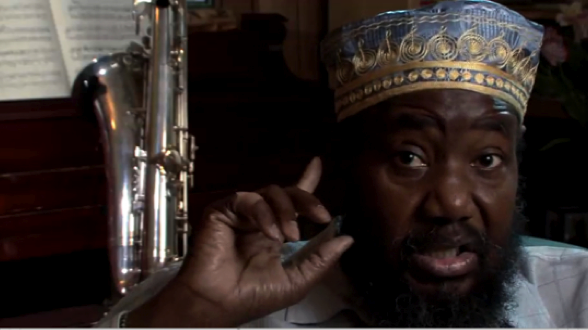
David S. Ware cognizes and manifests a world of sound. On August 30th 2011, David S. Ware: A World of Sound will premiere on David Lynch Foundation Television. The film profiles one of the most original minds in jazz history – saxophonist/composer/bandleader David S. Ware. In 2010, BBC reviewer Daniel Spicer wrote, “Ware’s playing is astonishing, pushing the limits of brain, fingers and equipment, ideas rushing out in a stream of furious, liquid invention, with an almost superhuman precision.”

“You learn to listen to music with sort of a third ear.” — David S. Ware

David counts Sonny Rollins as an early mentor, from whom he learned circular breathing in 1966 while still a teenager. By the 1980’s, David’s concerns as a saxophonist had shifted away from the rush and fury of extended improvisations, and into the area of concentrated thematic development. He formed the David S. Ware Quartet in 1989 to put these ideas into practice, and they became known as the reigning advanced jazz super-group of the 90’s and into the new millennium. Since that Quartet’s disbanding in 2007, Ware has found expression in a number of different forms; including solo performances and a new quartet entitled Planetary Unknown.

A World of Sound is the latest film by DLF.TV’s Amine Kouider, who has previously profiled several other innovative artists, including installation and performance artist S.B. Woods and Malek Salah, a pioneer of the modern art scene in Algeria.

At Amine and David’s first meeting, David said bluntly, “Good luck trying to finish this film.” The luck turned out to be much needed, as A World of Sound ended up taking over two years to finish. But, when finally completed, film director and DLF.TV founder David Lynch offered high praise, telling Amine, “How cool is cool? … I love this guy, David S. Ware … and I love this film you’ve made for him, Amine … Really good to have documented this great man and his music and his spirit.”

The film (13:36) premieres August 30, 2011 on http://DLF.TV. Also see exclusive bonus footage (8:01) of David S. Ware playing at home.

For more info on David S. Ware, visit http://www.davidsware.com and http://www.aumfidelity.com.

News Coverage: Chicago Reader: Bleader: Saxophonist David S. Ware, sound and vision | JazzTimes: David S. Ware Documentary to Air Aug. 30: Saxophonist’s relationship with Transcendental Meditation will be explored | Ottawa Citizen: Jazzblog: David Lynch on David S. Ware | Listen to Mike Ragogna’s 2.0 interview (43:48) 20110828 – David S. Ware  on solar-powered KRUU-LP 100.1 FM. It was transcribed, edited, and posted in Mike Ragogna’s blog on The Huffington Post: A World Of Sound: Chatting & Improvising With David S. Ware | Also available on Allie Is Wired | TM Blog: David S. Ware: A jazz musician with “a world of sound”

Interesting interview in All About Jazz: David S. Ware: Planetary Musician

See Beautiful film on Algerian artist Malek Salah by Amine Koudier.

DETAILS: critical eye: Meditation Nation

August 14, 2011

Meditation Nation

Power brokers no longer motivate or medicate—they meditate. How Transcendental Meditation returned as the new status symbol.

Photograph by Adam Voorhes
September 2011 Issue

A funny thing happened on the way to enlightenment. The quest got stripped of yogic posturing, Buddhist trappings, and even the last vestige of spirituality and turned into a search for the kind of clarity that might help us all in our worldly pursuits. Which is why movers and shakers are again embracing that seventies mainstay Transcendental Meditation. You’re likely to hear it spoken of reverentially in interviews: Russell Brand, whose wildman behavior was cartoonish in its intensity, credits TM with helping him to conquer his heroin, sex, and alcohol addictions. “After meditation,” he has said, “I felt this beautiful serenity and selfless connection.” And where celebrities venture (the latest wave of TM-ers includes the likes of Hugh Jackman and Naomi Watts), many of us are likely to follow. The rolls of practitioners have tripled in the past three years, according to the Transcendental Meditation Program, the practice’s national organization.

“The game-changer, I think, is David Lynch and his foundation,” says Dr. Norman E. Rosenthal, the Georgetown University psychiatry professor who wrote the recent best seller Transcendence: Healing and Transformation Through Transcendental Meditation. Lynch, the surrealist director of Twin Peaks, Blue Velvet, and Mulholland Dr., had been quietly practicing TM since, yes, the seventies, but about six years ago he came out of the closet, launching a foundation to promote the practice and later publishing a manifesto, Catching the Big Fish: Meditation, Consciousness, and Creativity.

It’s a process perfectly matched to our self-interested times—”no pain, but a lot of gain,” according to Rosenthal. Bob Roth, an executive director of the David Lynch Foundation, who taught TM to Brand and Moby, explains that when the mind has been calmed with the help of a mantra, a Sanskrit word given to each TM grad, it will effortlessly sink below the level of thought to “pure consciousness.” Practically speaking, sit in a chair, close your eyes, and silently repeat the mantra for 20 minutes. Once you get the hang of it, Lynch says, you cut the elevator cables of your normal-thinking mind to descend to a place that feels different. You may experience a connection with the universe or a mental light show, what Rosenthal calls “four-star graphic effects.” At the very least, you should be blissfully relaxed, which is the foundation of the health benefits that have been measured in the medical research amassed, much of it funded by the government. The deep tranquillity TM promotes quiets the body’s “fight or flight” stress response, lowering blood pressure and anxiety and combating depression.

Maharishi Mahesh Yogi, the so-called giggling guru, who hosted the Beatles and Mia Farrow, among others, was the innovator who stripped Hindu meditation practice of its religious baggage and repackaged it as a systematic, stress-reducing, creativity-building technique. Lynch, a disciple, is responsible for adding a fresh civic-mindedness to the game. His foundation aims to bring TM free of charge to those most in need of its calming effects—at-risk kids, prison inmates, veterans suffering from post-traumatic stress. That, of course, means fund-raising benefits, which means reeling in rich folk and entertainers (many introduced to TM by Lynch and Roth), all of which attracts media coverage and an increased brand awareness among those in the general public who might be willing to shell out $1,500 for the basic course.

“It was straight out of The Great Gatsby,” Rosenthal says of the poolside benefit party thrown this past June at the Malibu home of Juicy Couture cofounder Pam Levy and her TV-director husband, Jefery Levy. One imagines the vibes spreading to their neighbor Ryan Kavanaugh, CEO of Relativity Media, the freshly minted Converse-wearing, 36-year-old movie mogul who practices TM twice a day. Kavanaugh, who started out as a stockbroker, has leveraged his connections by allying with the New York hedge fund Elliot Associates, among other investors, giving his company the billions required to dominate Hollywood film production. But his secret weapon is his risk-assessment algorithm, a high-tech quantitative analysis of the big picture that he says allows him to make money even on box-office dogs.

As the New York hard-chargers who flock to the TM courses Roth teaches at the Center for Leadership Performance soon learn, this kind of success is not coincidental. According to published research, TM enhances neural activity in the part of the brain that houses the decision-making “executive center.” “The businesspeople say they’re more focused during the day,” Roth says. As do the other Gotham heavy hitters who’ve evangelized for TM and the Lynch Foundation, from Jerry Seinfeld and Heather Graham to Ben Foster and Howard Stern. Leave it to Mr. Katy Perry himself, speaking at a gala fund-raiser at the Metropolitan Museum of Art this past winter, to get at the essence of TM’s guilt-free marriage of creativity and commerce: “I literally had an idea drop into my brain the other day while I was meditating which I think is worth millions of dollars.”

Also on Details.com
Celebrity Om-Meter: The Top 10 Moments in Meditation History
Retreat, Relax, Recharge: Inside the World’s Best Spas
How to Avoid the Office Strain
Guy-Friendly Alternatives to Yoga

Prop Styling by Robin Finlay