Archive for the ‘Poetry’ Category

William Stafford—Ask Me

January 15, 2011

Ask Me

Some time when the river is ice ask me
mistakes I have made. Ask me whether
what I have done is my life. Others
have come in their slow way into
my thought, and some have tried to help
or to hurt: ask me what difference
their strongest love or hate has made.

I will listen to what you say.
You and I can turn and look
at the silent river and wait. We know
the current is there, hidden; and there
are comings and goings from miles away
that hold the stillness exactly before us.
What the river says, that is what I say.

—William Stafford

See a cosmic expression of how the river relates to Hafiz’s life in his poem, A River Understands, in my year-end post Winding up the year with inspiration from Hafiz.

See other poems by William Stafford posted here.

UPDATE (May 1, 2018): A little over seven years since posting this poem, I found a video of him reading it. William Stafford was a guest speaker at the City Club of Portland on July 25, 1986. He spoke about writing and teaching, read some of his poems, and answered questions. The video, listed as You Must Revise Your Life, the title of his new poetry book at the time, was the first book I had ever read of his. It opened up a whole new world of possibilities to me as a writer. He concluded with reading Ask Me. It’s one of my favorite Stafford poems along with The Way It Is, You and Art, When I Met My Muse, Something That Happens Right Now, and others posted on my blog, including the last poem he wrote the day he died, “Are you Mr. William Stafford?”.

Henry Lyman interviewed William Stafford for NPR’s series, Poems to a Listener, later posted on YouTube. Stafford reads several of his poems, including Ask Me. The wonderful discussion that follows this poem is about how Stafford turns “mistakes” into lines of poetry.

I later found him read Ask Me at The Poetry Center at Passaic County Community College’s Distinguished Poets Series in 1986.

Seeing Is Being

January 14, 2011

“The sight occupies the seer, transforms seer into sight.”
Maharishi Mahesh Yogi (Life Magazine, November 1990)

Seeing Is Being

Seeing outside the Self
Forgetting the Inner Light
The Seer becomes the Sight
Transforming Day to Night

Living Night for Day
The Seer can’t find The Way
Mistaking Sight for Seer
Becoming what’s on the Mirror
Forsaking what’s truly Dear

When Self is finally Clear
We Remember How we’re Here
It’s the One Becoming the Three
The Way To See Is To Be
Since Seer Sight and Seeing
Are All Three Ways of Being
And Being Is Being Being Being*

© Ken Chawkin

————————————–

*From a Q & A session:
Course participant: Maharishi, What is Being?
Maharishi: (laughs) Being? Being is Being Being Being.
Then Maharishi and everyone laugh.

I read that poem at a World Peace Assembly in Maharishi University’s Golden Dome in the early 90’s. It was followed by The Enlightened Heart, a poem by Ken Chawkin.

Also relevant: Maharishi describes the nature of inner life: bondage and liberation, and gaining bliss consciousness through Transcendental Meditation.

This Enduring Gift-A Flowering of Fairfield Poetry

January 6, 2011

This Enduring Gift

A Flowering of Fairfield Poetry

76 Poets Who Found Common Ground in One Small Prairie Town

Compiled and selected with introductions by Freddy Niagara Fonseca and a foreword by Donovan. Endorsed by two US Poets Laureate. Paperback and Hardcover versions with 300 poems, 16 chapters and 796 pages. Publisher: 1st World Publishing. Links to TEG‘s Website and Facebook.

Pictured below, Freddy invites Roger Pelizzari to read his poem, The Beginning of Real Time, during the book launch at Revelations Cafe and Bookstore in Fairfield, Iowa, September 24, 2010.

The room was filled with poets and guests that night. I’m sitting in the front row, and was also invited to read a poem. Since we were running out of time, I read the short tanka. Here are my poems, selected from the ones submitted, published in This Enduring Gift: Five Haiku, the tanka, Cold Wet Night, and Poetry—The Art of the Voice, which was later selected as the POEM OF THE DAY: Poetry – The Art of the Voice, by Ken Chawkin.

Poetry—The Art of the Voice

January 6, 2011

Poetry—The Art of the Voice is another one of my poems published in This Enduring Gift – A Flowering of Fairfield Poetry, 2010. Editor Freddy Niagara Fonseca posted this poem on his Amazon.com page: VISITING POET Ken Chawkin: Poetry – The Art of the Voice, which links to the complete version on his Live Journal.

Poetry—The Art of the Voice

How fine will your breath become
from listening to these words?
How soft will they seem to be
as they settle through the mind
like silent snowflakes falling
from a windless winter sky?

I often marvel at the mystery—
how words can work
on a listener’s heart and mind,
upon hearing a poet’s thoughts,
a poet’s breath, flowing
from an inner voice—

a windless wind, speaking
through a voiceless voice.

© Ken Chawkin
Published in This Enduring Gift – A Flowering of Fairfield Poetry, 2010
http://www.thisenduringgift.com

This poem came out of the inspiration listening to the Diane Rhem Show: Bill Moyers on Poetry, when she invited him on to talk about his latest PBS special on the Poetry Festival he had attended and filmed, and his new book of it, “Fooling With Words: A Celebration of Poets and Their Craft” (William Morrow). They had invited 3 poets: Marge Piercy, former poet laureate Mark Strand, and Jane Hirschfield, to call in and discuss the inspiration for a poem they had written and share it with the listening audience. The effect on the Festival audiences was also discussed. See , with links to the program, book, and each poet reading their poem.

When the call went out for poems from Fairfield poets for This Enduring Gift-A Flowering of Fairfield Poetry, I sent it in along with some haiku and a tanka. It was published and later selected as the POEM OF THE DAY: Poetry – The Art of the Voice, by Ken Chawkin.

Cold Wet Night (a tanka)

January 6, 2011

Cold Wet Night
A Tanka

Rain on the trailer
Beating down its dismal song
Drop, by cold, wet, drop

A monotonous rhythm
Driving home … the loneliness

© Ken Chawkin
Fairfield, Iowa
Dec 20, 2006

Published in This Enduring Gift – A Flowering of Fairfield Poetry, 2010. See my other published poems in that book.

This poem was written in the presence of my muse, Sally Peden (Sali), as I was demonstrating to her how easy it was to write a haiku, which extended to this tanka. It tells the story of what was happening at the time. It was a very blissful process. Nothing depressing or lonely about it. I just selected the words that best conveyed such an image and accompanying mood.

Three years later things would change. On Jan 19, 2010, Sali would have to move into Parkview Care Center because of her dementia. Over 9 years later, I wrote this short, sad, 4-line Teapot Poem. In the 5th Response, I explain how it came to be written. Using the creative process described there brought relief from the grief I was feeling at the time.

— Written and compiled (citing sources) by Ken Chawkin for The Uncarved Blog.

Five Haiku

January 6, 2011

Five Haiku was published in This Enduring Gift — A Flowering of Fairfield Poetry, 2010. These 5 haiku were selected from 13 Ways to Write Haiku: A Poet’s Dozen, where they were originally published in The Dryland Fish, An Anthology of Contemporary Iowa Poets, 2003. The University of Iowa’s “Iowa Writes” program heard of This Enduring Gift and asked the Fairfield Poets to submit our poems to them. They published Five Haiku on The Daily Palette, January 5, 2011.

Five Haiku

Defined

3 lines, 2 spaces,
17 feet to walk thru;
then,  the unending

Translated
(Inspired by Australian artist Gareth Jones-Roberts’ painting
Egrets in Morning Light
)

on the edge of space
two egrets in morning light
woken from a dream

The Fall

sudden drop of leaves
a negligée to the floor
trees stand stark naked

Winter Memo

On seeing snowflakes
written on a piece of bark
I copied this down

Forest Flowers

tiny white flowers
a constellation of stars
so low yet so high

© Ken Chawkin

Also see Another Fall Haiku

— Written and compiled (citing sources) by Ken Chawkin for The Uncarved Blog.

As Above, So Below

December 24, 2010

About 20 years ago, my 6 year-old daughter Shara brought home a large leaf. The outer skin had worn off revealing an intricate skeletal structure. It looked like a miniature replica of a tree. That image and theme inspired this poem. A few years later I wrote Pine Cone Trees, which brought about a variation on this theme. In both cases the last lines surprised me with their spiritual revelations.

As Above, So Below
Yatha pinde, tatha Brahmande*

As above
so below
allowing Love
to help things grow

Repeating the pattern
to copy each other
in the daughter
is the Mother

In each snowflake
a glistening star
this whole universe
is what we are

In each leaf
we see a tree
for every branch
a capillary

In each tree
not seen are seeds
and in each seed
is found a tree

So are we
found in Thee
as Thou oh Lord
in each of me

© Ken Chawkin
Fall, 1990, Fairfield, Iowa

*As is the atom, so is the universe.
As is the microcosm, so is the macrocosm.

From the Vedas and Upanishads.

*This Vedic expression, Yatha pinde, tatha Brahmande, is explained by Maharishi Mahesh Yogi in this video: “As is the cosmic life, so is the individual life,” and “The individual is cosmic.”

I originally read this poem to conclude the February 26, 2020 broadcast of MIU Radio KHOE’s Let Your Heart Sing, #62, “A New Variety Show.” You can listen to that segment on YouTube starting at 29:29–30:30.

13 Ways to Write Haiku: A Poet’s Dozen

December 17, 2010

I posted Five Haiku, published in THIS ENDURING GIFT – A Flowering of Fairfield Poetry, 2010. They were selected by editor Freddy Fonseca from: 13 Ways to Write Haiku: A Poet’s Dozen, originally published in The Dryland Fish, An Anthology of Contemporary Iowa Poets, 2003, edited by Matthew MacLeod. The 5 haiku already selected were: Defined, Translated, The Fall, Winter Memo, and Forest Flowers, numbers I, IV, VII, XI, and VIII, respectively. Rather than present the remaining 8 haiku, here is the complete collection in their original order.

13 Ways to Write Haiku: A Poet’s Dozen

I
Defined

3 lines, 2 spaces,
17 feet to walk thru;
then,   the unending

II
Discovered

a poem unfolds
as words take their place in line
this one’s a haiku

III
Transformed

Caterpillars spin
increments of commitment;
Butterflies fly free!

IV
Translated
(Inspired by Gareth Jones–Roberts’ painting “Egrets in Morning Light”)

on the edge of space
two egrets in morning light
woken from a dream

V
Galiano Island

West   Coast   Island   Time
Nothing   Moves,   Nothing   Changes;
Roosters   Crow   At   Noon!

VI
Cliffhouse Deck at Dusk
Inspired during a visit to Galiano Island

Tiny bells call me
Arbutus blossoms falling
Sounding the Silence

VII
The Fall

sudden drop of leaves
a negligée to the floor
trees stand stark naked

VIII
Forest Flowers

tiny white flowers
a constellation of stars
so low yet so high

IX
Be Spring

Brown Branch Bursting Buds
Beneath Benevolent Beams
Boughs Bearing Beauty

X
I Wonder

Do trees have a say
When to drop anchors away
As ripe acorns fall?

XI
Winter Memo

On seeing snowflakes
written on a piece of bark
I copied this down

XII
Foggy Perception

a yellow raincoat
from out of a thick white fog
appears      to be seen

XIII
Concrete Impression

cement truck droppings
on the road     solidified
········like elephant dung

© Ken Chawkin

Also see Another Fall Haiku

 — Written and compiled (citing sources) by Ken Chawkin for The Uncarved Blog.

Pine Cone Trees

December 12, 2010

(more…)

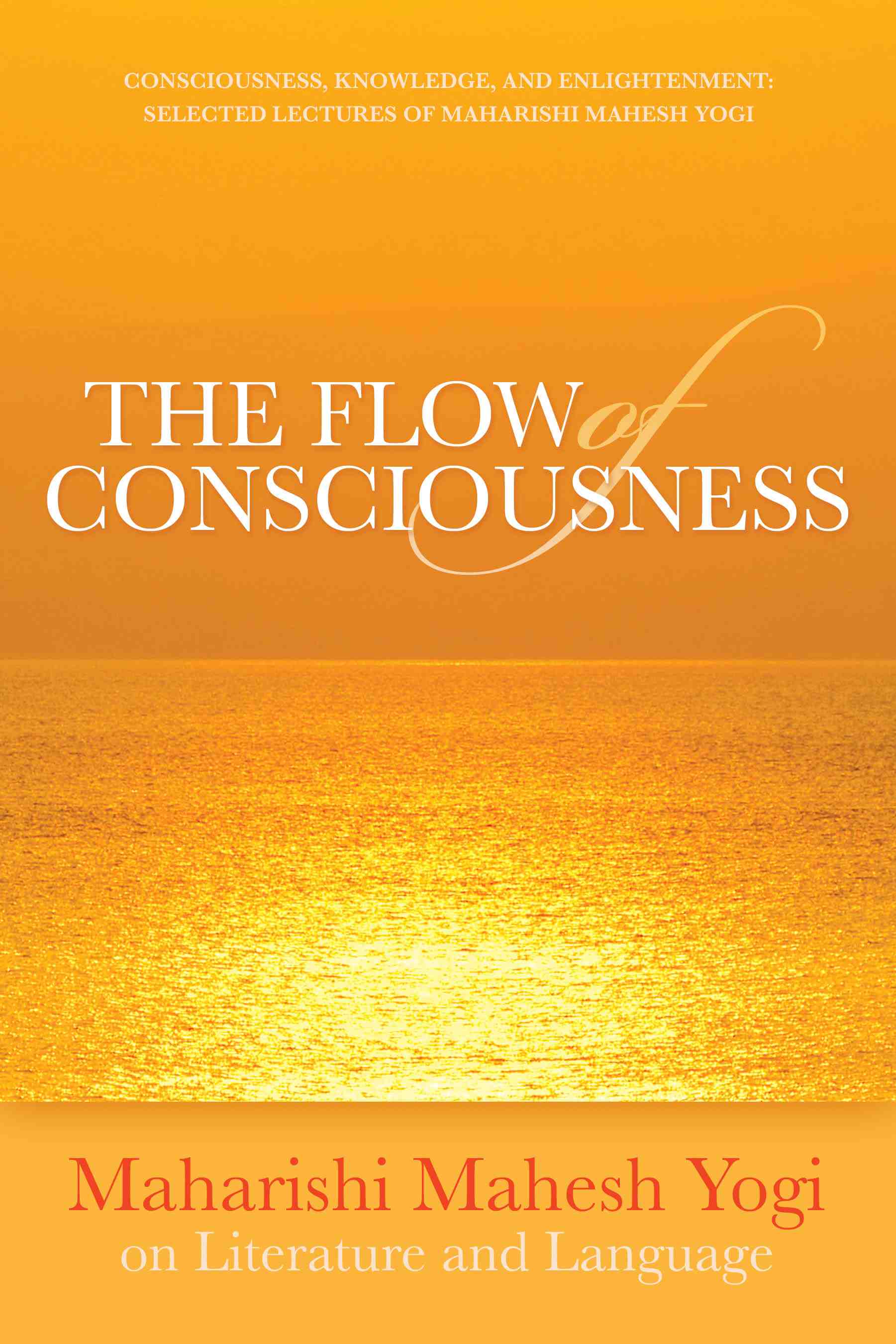
The Flow of Consciousness: Maharishi Mahesh Yogi on Literature and Language

November 3, 2010

THE FLOW OF CONSCIOUSNESS: Maharishi Mahesh Yogi on Literature and Language, 1971 to 1976, edited by Rhoda F. Orme-Johnson, Ph.D. and Susan K. Anderson, Ph.D.

For the first time, a selection of talks by Maharishi Mahesh Yogi, the founder of Maharishi University of Management, has been transcribed and published, with this volume on literature and language projected to be the first in a series publishing talks in many different disciplines. In response to MUM faculty talks on art, literature, government, education, and many other disciplines, Maharishi would give his profound insights into that discipline, a direction for research scholars, and a vision of how the study of consciousness would enrich and develop each area of academic inquiry and personal experience. A number of the talks were in response to presentations given at international symposia by leading scholars in their field, Nobel laureates, and such eminent professionals as R. Buckminster Fuller.

Over the years, Maharishi Mahesh Yogi recorded brilliant and inspiring lectures on the literary process, as well as critical theory and technique, emphasizing the relevance of the state of consciousness of both writer and reader. He explained how only from an expanded basis can the writer spontaneously experience and express refined emotions and ideas and only from such a basis can the reader hope to understand and enjoy such writings. Literature itself can be a means to evolve one’s consciousness through sounds, rhythms, and meanings, swinging the reader’s attention from concrete to abstract, purifying consciousness and producing bliss. A fully developed consciousness can express the ocean in a drop, and from that drop flows a river of meaning, power, and enjoyment.

Immersing oneself in the transcripts of Maharishi’s lectures allows readers to feel his presence, to hear his voice, his rhythms of speech, his humor, and to appreciate his skill as a teacher. His exposition of the power of poetry, particularly the poetry of the Veda, gives the reader a taste of his intellect and his profound understanding of language and literature. It is a journey through a great mind and an exploration of a topic familiar and beloved by all.

This volume is a valuable resource to teachers, students, and all readers of literature, to all those interested in higher human development and the literary process.

The 350-page book includes 14 talks given in the years 1971–76 and is available at Maharishi International  University Press.

The Review wrote an informative article, the first of six, in issue Vol. 26, #4, November 3, 2010, announcing the publication: First-Ever Book of Maharishi’s Lectures Explores Literature and Language.

MIU Press later offered The Flow of Consciousness with The Unmanifest Canvas as a discounted Art Book Combo.

Dean of Faculty Cathy Gorini spoke with Dr. Rhoda Orme-Johnson, the first interview in a new series on KHOE titled, “A Chat With The Dean.” This discussion focused on Dr. Orme-Johnson’s new book, “The Flow Of Consciousness,” transcripts of Maharishi Mahesh Yogi’s lectures. Drs. Gorini and Orme-Johnson settle into a warm discourse on the significance of Maharishi’s lectures, in particular, the field of literature. Recorded Oct 26, 2010. (mp3 47 mins, 16 MB)

(more…)