Archive for the ‘Poetry’ Category

As Above, So Below

December 24, 2010

About 20 years ago, my 6 year-old daughter Shara brought home a large leaf. The outer skin had worn off revealing an intricate skeletal structure. It looked like a miniature replica of a tree. That image and theme inspired this poem. A few years later I wrote Pine Cone Trees, which brought about a variation on this theme. In both cases the last lines surprised me with their spiritual revelations.

As Above, So Below
Yatha pinde, tatha Brahmande*

As above
so below
allowing Love
to help things grow

Repeating the pattern
to copy each other
in the daughter
is the Mother

In each snowflake
a glistening star
this whole universe
is what we are

In each leaf
we see a tree
for every branch
a capillary

In each tree
not seen are seeds
and in each seed
is found a tree

So are we
found in Thee
as Thou oh Lord
in each of me

© Ken Chawkin
Fall, 1990, Fairfield, Iowa

*As is the atom, so is the universe.
As is the microcosm, so is the macrocosm.

From the Vedas and Upanishads.

*This Vedic expression, Yatha pinde, tatha Brahmande, is explained by Maharishi Mahesh Yogi in this video: “As is the cosmic life, so is the individual life,” and “The individual is cosmic.”

I originally read this poem to conclude the February 26, 2020 broadcast of MIU Radio KHOE’s Let Your Heart Sing, #62, “A New Variety Show.” You can listen to that segment on YouTube starting at 29:29–30:30.

— Written and compiled (citing sources) by Ken Chawkin for The Uncarved Blog.

13 Ways to Write Haiku: A Poet’s Dozen

December 17, 2010

I posted Five Haiku, published in THIS ENDURING GIFT – A Flowering of Fairfield Poetry, 2010. They were selected by editor Freddy Fonseca from: 13 Ways to Write Haiku: A Poet’s Dozen, originally published in The Dryland Fish, An Anthology of Contemporary Iowa Poets, 2003, edited by Matthew MacLeod. The 5 haiku already selected were: Defined, Translated, The Fall, Winter Memo, and Forest Flowers, numbers I, IV, VII, XI, and VIII, respectively. Rather than present the remaining 8 haiku, here is the complete collection in their original order.

13 Ways to Write Haiku: A Poet’s Dozen

I
Defined

3 lines, 2 spaces,
17 feet to walk thru;
then,   the unending

II
Discovered

a poem unfolds
as words take their place in line
this one’s a haiku

III
Transformed

Caterpillars spin
increments of commitment;
Butterflies fly free!

IV
Translated
(Inspired by Gareth Jones–Roberts’ painting “Egrets in Morning Light”)

on the edge of space
two egrets in morning light
woken from a dream

V
Galiano Island

West   Coast   Island   Time
Nothing   Moves,   Nothing   Changes;
Roosters   Crow   At   Noon!

VI
Cliffhouse Deck at Dusk
Inspired during a visit to Galiano Island

Tiny bells call me
Arbutus blossoms falling
Sounding the Silence

VII
The Fall

sudden drop of leaves
a negligée to the floor
trees stand stark naked

VIII
Forest Flowers

tiny white flowers
a constellation of stars
so low yet so high

IX
Be Spring

Brown Branch Bursting Buds
Beneath Benevolent Beams
Boughs Bearing Beauty

X
I Wonder

Do trees have a say
When to drop anchors away
As ripe acorns fall?

XI
Winter Memo

On seeing snowflakes
written on a piece of bark
I copied this down

XII
Foggy Perception

a yellow raincoat
from out of a thick white fog
appears      to be seen

XIII
Concrete Impression

cement truck droppings
on the road     solidified
········like elephant dung

© Ken Chawkin

Also see Another Fall Haiku

 — Written and compiled (citing sources) by Ken Chawkin for The Uncarved Blog.

Pine Cone Trees

December 12, 2010

(more…)

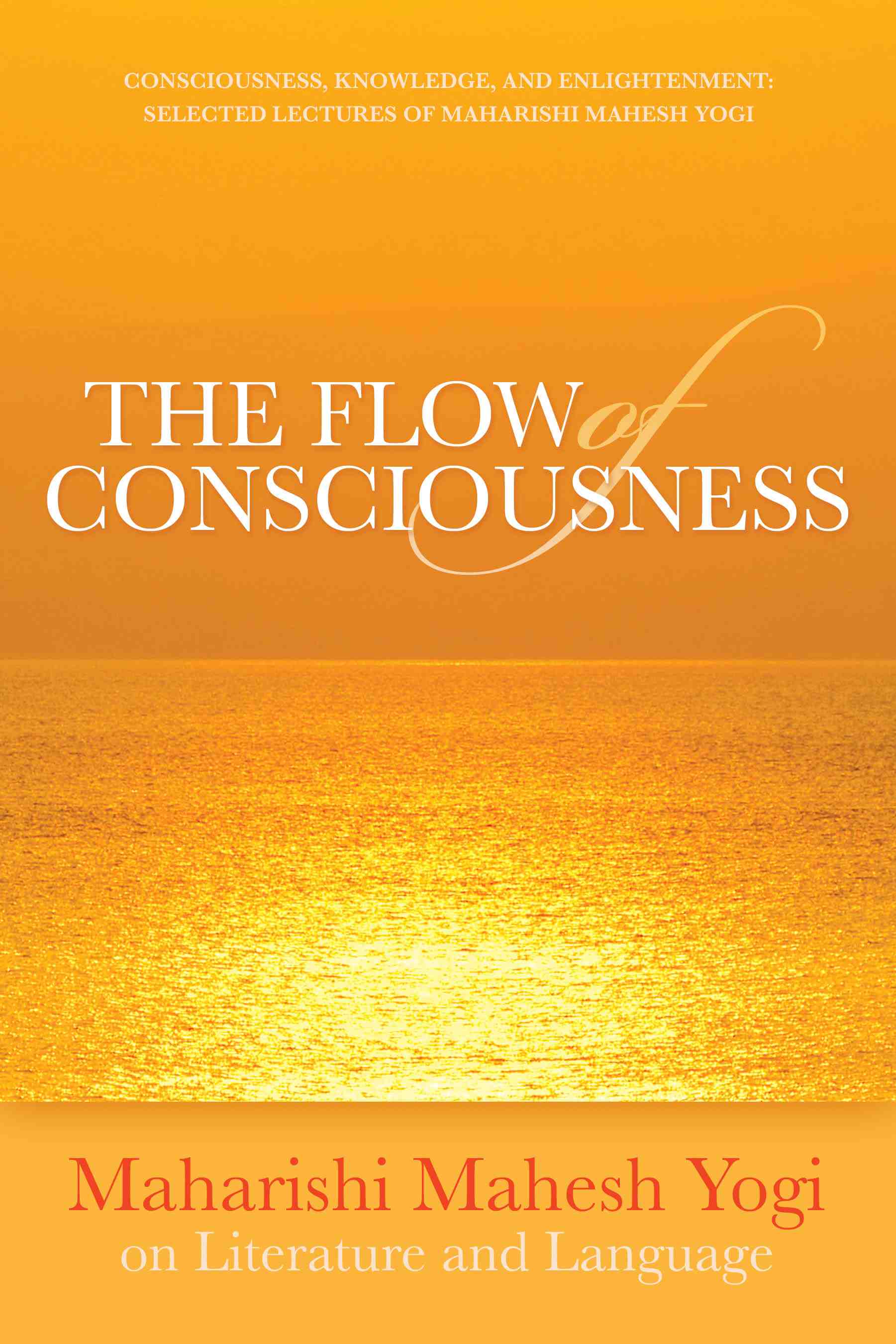
The Flow of Consciousness: Maharishi Mahesh Yogi on Literature and Language

November 3, 2010

THE FLOW OF CONSCIOUSNESS: Maharishi Mahesh Yogi on Literature and Language, 1971 to 1976, edited by Rhoda F. Orme-Johnson, Ph.D. and Susan K. Anderson, Ph.D.

For the first time, a selection of talks by Maharishi Mahesh Yogi, the founder of Maharishi University of Management, has been transcribed and published, with this volume on literature and language projected to be the first in a series publishing talks in many different disciplines. In response to MUM faculty talks on art, literature, government, education, and many other disciplines, Maharishi would give his profound insights into that discipline, a direction for research scholars, and a vision of how the study of consciousness would enrich and develop each area of academic inquiry and personal experience. A number of the talks were in response to presentations given at international symposia by leading scholars in their field, Nobel laureates, and such eminent professionals as R. Buckminster Fuller.

Over the years, Maharishi Mahesh Yogi recorded brilliant and inspiring lectures on the literary process, as well as critical theory and technique, emphasizing the relevance of the state of consciousness of both writer and reader. He explained how only from an expanded basis can the writer spontaneously experience and express refined emotions and ideas and only from such a basis can the reader hope to understand and enjoy such writings. Literature itself can be a means to evolve one’s consciousness through sounds, rhythms, and meanings, swinging the reader’s attention from concrete to abstract, purifying consciousness and producing bliss. A fully developed consciousness can express the ocean in a drop, and from that drop flows a river of meaning, power, and enjoyment.

Immersing oneself in the transcripts of Maharishi’s lectures allows readers to feel his presence, to hear his voice, his rhythms of speech, his humor, and to appreciate his skill as a teacher. His exposition of the power of poetry, particularly the poetry of the Veda, gives the reader a taste of his intellect and his profound understanding of language and literature. It is a journey through a great mind and an exploration of a topic familiar and beloved by all.

This volume is a valuable resource to teachers, students, and all readers of literature, to all those interested in higher human development and the literary process.

The 350-page book includes 14 talks given in the years 1971–76 and is available at Maharishi International  University Press.

The Review wrote an informative article, the first of six, in issue Vol. 26, #4, November 3, 2010, announcing the publication: First-Ever Book of Maharishi’s Lectures Explores Literature and Language.

MIU Press later offered The Flow of Consciousness with The Unmanifest Canvas as a discounted Art Book Combo.

Dean of Faculty Cathy Gorini spoke with Dr. Rhoda Orme-Johnson, the first interview in a new series on KHOE titled, “A Chat With The Dean.” This discussion focused on Dr. Orme-Johnson’s new book, “The Flow Of Consciousness,” transcripts of Maharishi Mahesh Yogi’s lectures. Drs. Gorini and Orme-Johnson settle into a warm discourse on the significance of Maharishi’s lectures, in particular, the field of literature. Recorded Oct 26, 2010. (mp3 47 mins, 16 MB)

(more…)

Being in Nature—a gift from a tree

October 20, 2010

We often hear about the benefits of being in nature. I remembered an experience I had with a tree when I went for a winter walk with a friend on the University Endowment Lands in Vancouver, British Columbia, Canada during the mid-1990s.

I stopped in front of a particular tree to admire its intricate bark structure up close. I felt a ray of loving attention come from the tree into my heart-mind with these words: “the realness of natural things, the nearness of you.” It was an unexpected intimate experience and I quickly wrote the words down for further exploration. The next morning, I rewrote them as a two-line stanza, and then sequential stanzas naturally unfolded sharing its wisdom. It was as if I had been given a creative seed and it sprouted into a poem.

This gift from the tree was much appreciated. The experience reiterated what Mary Oliver described in her poem, Praying. It was a “doorway into thanks, and a silence in which another voice may speak.” It also reminded me of what Mary Oliver told Krista Tippett in an interview, that attention is the beginning of devotion.

I later titled the poem Being in Nature, implying a double meaning for the word, being, from both sides of the experience. Its sequel, trees, was about the nature of trees, and what we can learn from them.

Being in Nature
a gift from a tree

The Realness of Natural Things
The nearness of you

The Beauty that Nature Brings
When seeing is true

The Silence that Inward Sings
When hearing is clear

The Harmony Between all Beings
It exists right here!

© Ken Chawkin

More poems about trees

See trees—a poem about the nature of trees, a sequel to Being in Nature—a gift from a tree. Both written mid-1990′s during winter in Vancouver, BC. What Do Trees Do? Something to think about was written when I was living in North Vancouver.

CRYSTAL MORNING was written in Fairfield, Iowa in the late 1980s.

Pine Cone Trees was written in Houston, Texas in the mid-1990s.

Willow Tree – a tanka – from a tree’s perspective followed by Friendship – another tree tanka were written in May and August 2010, years after I had returned to Fairfield, Iowa.

See Mary Oliver’s poem, Praying, is a lesson on attention, receptivity, listening and writing.

An early encounter with nature inspired my creativity. It turned into my first published poem, which won an award: ODE TO THE ARTIST, Sketching Lotus Pads at Round Prairie Park.

UPDATE: Reading “Being in Nature” on Let Your Heart Sing

I read ‘Being in Nature: A Gift from a Tree’ on ‘Let Your Heart Sing’ radio show #93: “John Stein’s Interview + Environmental Songs.” The poem completed that show, which first aired during the last week of May 2019.

Sheila Moschen created and hosted a series of 108 shows for KHOE World Radio, 90.5 FM, which air Wednesdays at 1 & 7 PM. The station broadcasts and streams from the campus of Maharishi International University in Fairfield, Iowa.

Sheila said 90 of her “Let Your Heart Sing” shows are on YouTube, and 68 of them include photos of the singers. You can hear me read my poem, with visuals, starting at 30:53.

New addition: “The first line is the DNA of the poem.” — Billy Collins

Years later I read about this notion of how a line of poetry can come to you and develop into a poem. Billy Collins explained this to George Plimpton in an interview for The Paris Review’s The Art of Poetry No. 83. He said: “I think what gets a poem going is an initiating line. ….. I can tell that the line wants to continue. If it does, I can feel a sense of momentum—the poem finds a reason for continuing. The first line is the DNA of the poem; the rest of the poem is constructed out of that first line. The first few lines keep giving birth to more and more lines.”

I certainly found that to be the case in writing down Being in Nature, especially since I was open and innocently receptive to what was unexpectedly, surprisingly, being given, and which later gave birth to subsequent stanzas, the whole poem. 

Mary Oliver and Billy Collins each approach writing a poem from their own perspective. I found both explanations of their experiences truthful, a confirmation of my own. They are two different, but valid angles on the same subject, of how a poem is written and comes into being.

For more on ‘George Plimpton interviewed Billy Collins for The Paris Review’, see the second half of Billy Collins discusses the value of getting to the end of a poem and what can happen afterwards. Also see this article Billy Collins wrote In Memoriam for The Paris Review about Mary Oliver, recalling a time they gave a poetry reading together: When Mary Oliver Signed Books. (PDF) I also wrote a memorial piece after I discovered she had left us: RIP: Mary Oliver. Thank you for sharing your poetic gifts with us. They are a national treasure!

— Written and compiled (citing sources) by Ken Chawkin for The Uncarved Blog.

UNDECIDED (Love Tanka Number One)

October 16, 2010

UNDECIDED
Love Tanka Number One

How can you tell me
You want to meet me halfway
You’ve yet to begin

Love is non-negotiable
You’re either out or you’re in

Ken Chawkin
January 30, 2006
Fairfield, Iowa

(A prelude to COMMITTED)

108 line poem for Maharishi (April 5, 2002)

October 1, 2010

This poem was written in honor of Maharishi on April 5, 2002, in Fairfield, Iowa, as a token of appreciation for all the gifts of knowledge and love He gave us and brought to the world; and for the few but meaningful comments He said about me while working on a project with a buddy in 2001. Maharishi’s upliftment, humor, care and concern for my welfare were beyond anything I would have imagined. This poem was printed out and placed on His desk by a friend in Holland but I don’t know if He ever saw or heard it. Some things have changed, like the Pandits now forming at the Brahmasthan of India. But I am posting it as it was written, in memory of my having learned TM 43 years ago on September 30, 1967, in Montreal, Quebec, Canada. I met Maharishi in person for the first time 9 months later at Lake Louise, a most memorable occasion captured beautifully in the CBC TV documentary, Maharishi at Lake Louise, posted on this blog. Several other interactions occurred between Maharishi and my family, all governors, throughout our lives—precious moments to last a lifetime.

Two Love Tanka

September 23, 2010

Love Tanka I

No matter the place
Home is being together
The Soul is settled

Disease may separate us
But Love takes care of our hearts

.

Love Tanka II

For peace to be here
The Soul has to be settled
And the Heart nurtured

Disease brings Separation;
Compassion, Devotion—Love

.

Ken Chawkin
September 22, 2010, 9 p.m.
With Sali at Parkview Care Center
Fairfield, Iowa, USA

.

Also see UNDECIDED and COMMITTED

What Do Trees Do? Something to think about

August 2, 2010

Since we’re on the subject of trees, and comments about them, here’s something I wrote about 15 years ago when I was living in North Vancouver, British Columbia, Canada. I was renting an upstairs room in a boarding house. Looking outside my window onto the backyard I saw the tops of large evergreen trees. I remembered reading about the special qualities of trees, and with the destruction of forests, decided to tell their story in the form of a childlike rhyme—a nursery rhyme for adults. Something to think about……

What Do Trees Do?

What do trees do?
I wonder? Do you?

We purify water. We purify air.
We take all the stress out of the atmosphere.
We store up the knowledge of all of the ages.
We acknowledge the gifts of all of the sages.
They kept cool and rested under our arms.
We were their shelter from all of life’s harms.

We hold up your children as they swing on our boughs.
When it rains, we keep animals dry, especially cows.
We give you our wood to build for your homes.
We make room for squirrels, birds, elves, and gnomes.
We give you sweet fruits and nuts to eat
And rock your babies gently to sleep.
We communicate with stars and bring down their light
And make sure you’re sleeping safely all through the night.

So the next time you’re planning to cut us all down,
Just think; all the good things we do, won’t be around.

And eventually neither will you.
I added this ‘cuz it’s true!

—Ken Chawkin

You can hear me read this poem on Let Your Heart Sing Radio Show #70.

Also see: Willow Tree a tanka – from a tree’s perspective. I also read that poem on Sheila Moschen’s Let Your Heart Sing, Variety Show #61.

And: Friendshipanother tree tanka, which I read on Sheila Moschen’s Let Your Heart Sing, Variety Show #76.

Press-Citizen Editorial on Borderlines: Drawing Border Lives

August 2, 2010

Our View – Humanity behind immigration debate

Press-Citizen Editorial Board • July 21, 2010

One of the oft-cited limitations of contemporary American poetry — including the poetry produced by graduates of the Iowa Writers’ Workshop — is its inaccessibility. Readers often have to be as well-trained and academically astute as the poets themselves to appreciate all the nuances, sly allusions and small linguistic experiments. And the poets seldom offer a helpful hand to readers struggling to find meaning or purpose in the words.

That’s definitely not the case with the “Borderlines: Drawing Border Lives/Fronteras: Dibujando las vidas fronterizas” (Wings Press), a recent book project by poet Steven P. Schneider and artist Reefka Schneider. Not only have the husband and wife team paired every poem with the drawing that initially inspired it, but the book stage of the Schneiders’ broader project evolved from exhibits that the couple took on the road to schools and other educational settings throughout south Texas.

Steven Schneider, a 1977 graduate of the Iowa Writers’ Workshop who now teaches at the University of Texas-Pan American, said the couple has long had an educational purpose in mind for the project. They describe “Borderlines/Fronteras” as a text — appropriate for use in high school and college classes as well as for everyday reading — that demonstrates how to cross the borders between:

• Art and poetry.

• Academically aware poetry and a broader, popular audience.

• English and Spanish.

• The physical border between the U.S. and Mexico and the different ways that imaginary line echoes symbolically throughout both nations.

The “Borderlines/Fronteras” project began in 2001, when Steven Schneider came to teach in Texas, and Reefka Schneider began to draw portraits of people on both sides of the border. Once Reefka had amassed more than 100 drawings, Steven chose the 25 most engaging and began a four-year process of writing poems in response to the visual images. He then worked with bilingual poet José Antonio Rodriguez to translate the poetry so that reading through “Borderlines/Fronteras” would be a dual-language, integrated-arts experience.

With readings scheduled in New York, Rhode Island, Florida, New Mexico and Iowa City (7 p.m. today at Prairie Lights), the Schneiders now are hoping to attract a broader, national audience for the book stage of their project. (Interested readers can follow the couple’s progress at http://poetry-art.com.)

“The border has moved north,” Steven Schneider said. “There is still the Rio Grande, of course. But (through farm labor and working in meatpacking plants) the influx of immigrants from Mexico and Latin America has come as far north as states like Iowa, Nebraska and Minnesota.”

At the very least, “Borderlines/Fronteras” is a helpful primer for anyone looking to improve their Spanish or English reading skills. At its best, however, “Borderlines/Fronteras” is a model for the type of cross cultural understanding and communication that needs to take place to ensure a healthy and comprehensive national debate on immigration issues.

Sandra Cisneros, a workshop graduate and MacArthur fellow who has spent decades urging writers to be more culturally relevant, describes the Schneiders’ poetic/artistic portraits as, “Ordinary folks rendered with love, compassion and intimacy at a time in which love, compassion, and intimacy are in short supply on borders, especially when it comes to the Tex/Mex border.”

Thus “Borderlines/Fronteras” also is welcome reminder that legacy of the Iowa Writers’ Workshop is not just the linguistically and formally challenging work of poets such as Pulitzer Prize-winner Jorie Graham. The workshop’s legacy also includes the poets and writers such as Cisneros and former U.S. Poet Laureate Rita Dove who continually call on literary artists to be more actively, socially and politically engaged in the world around them.

“Our View” represents the consensus opinion of the Press-Citizen Editorial Board — which includes General Manager Daniel W. Brown, Executive Editor Jim Lewers, Opinion Editor Jeff Charis-Carlson, Specialty Publications Editor Tricia DeWall and community members Shams Ghoneim, Angie Blanchard-Manning and Amy Sundermann.