Archive for the ‘Other poems’ Category

The nurturing effect of rainwater in Mary Oliver’s poems Lingering In Happiness At Blackwater Pond

March 13, 2019

These two poems by Mary Oliver describe the nurturing effect of rainwater in nature deep within the body of the earth and inside her own.

LINGERING IN HAPPINESS

After rain after many days without rain,
it stays cool, private and cleansed, under the trees,
and the dampness there, married now to gravity,
falls branch to branch, leaf to leaf, down to the ground

where it will disappear—but not, of course, vanish
except to our eyes. The roots of the oaks will have their share,
and the white threads of the grasses, and the cushion of moss;
a few drops, round as pearls, will enter the mole’s tunnel;

and soon so many small stones, buried for a thousand years,
will feel themselves being touched.

— Mary Oliver, Why I Wake Early (2004), Devotions (2017)

AT BLACKWATER POND

At Blackwater Pond the tossed waters have settled
after a night of rain.
I dip my cupped hands. I drink
a long time. It tastes
like stone, leaves, fire. It falls cold
into my body, waking the bones. I hear them
deep inside me, whispering
oh what is that beautiful thing
that just happened?

— Mary Oliver, At Blackwater Pond (2006), Devotions (2017)

See this remembrance of Mary Oliver with links to more of her poems.

Both of these poems remind me of this short poem by William Stafford.

B.C.

The seed that met water spoke a little name.

(Great sunflowers were lording the air that day;
this was before Jesus, before Rome; that other air
was readying our hundreds of years to say things
that rain has beat down on over broken stones
and heaped behind us in many slag lands.)

Quiet in the earth a drop of water came,
and the little seed spoke: “Sequoia is my name.”

A keen, patient observer of nature, Mary Oliver’s poetry shone a light on the creatures around her

March 13, 2019

I long to be the empty, waiting, pure, speechless receptacle.

From a young age, Mary Oliver loved the great poets—Wordsworth, Whitman, Emerson and Thoreau. They were her companions. She was destined to become a great poet herself.

To commune with the muse is every poet’s wish, and she succeeded. A keen, patient observer of nature, Oliver honored the creatures around her through her poetry. To do them justice she always strove to be an “empty, waiting, pure, speechless receptacle.”

Go easy, be filled with light, and shine.

Nature was her teacher. When she was among the trees, she felt uplifted by them. “I would almost say that they save me, and daily.” Sometimes sensing her low self-esteem, they would tell her to “Stay awhile.” She would see the light flowing from their branches.

They would remind her, “It’s simple,” and encourage her, “and you too have come into the world to do this, to go easy, to be filled with light, and to shine.” And she did! These two poems track part of her journey.

BLUE IRIS

Now that I’m free to be myself, who am I?
Can’t fly, can’t run, and see how slowly I walk.
Well, I think, I can read books.

……………“What’s that you’re doing?”
the green-headed fly shouts as it buzzes past.

I close the book.

Well, I can write down words, like these, softly.

“What’s that you’re doing?” whispers the wind, pausing
in a heap just outside the window.

Give me a little time, I say back to its staring, silver face.
It doesn’t happen all of a sudden, you know.

“Doesn’t it?” says the wind, and breaks open, releasing
distillation of blue iris.

And my heart panics not to be, as I long to be,
the empty, waiting, pure, speechless receptacle.

— Mary Oliver, Blue Iris: Poems and Essays (2006), Devotions (2017)

WHEN I AM AMONG THE TREES

When I am among the trees,
especially the willows and the honey locust,
equally the beech, the oaks and the pines,
they give off such hints of gladness.
I would almost say that they save me, and daily.

I am so distant from the hope of myself,
in which I have goodness, and discernment,
and never hurry through the world
…..but walk slowly, and bow often.

Around me the trees stir in their leaves
and call out, “Stay awhile.”
The light flows from their branches.

And they call again, “It’s simple,” they say,
“and you too have come
into the world to do this, to go easy, to be filled
with light, and to shine.”

— Mary Oliver, Thirst (2006), Devotions (2017)

Mary OIiver read When I Am Among The Trees (22:08) and Blue Iris (26:48) among other well-known poems on Oct 15, 2012 at the 92nd Street Y for her new poetry book, A Thousand Mornings.

I later found this earlier video clip posted on Instagram by maryoliverofficial of Mary Oliver reading Blue Iris at the Lannan Foundation in 2001.

Visit her official website maryoliver.com for her books of Poetry, Prose, and her Bio, which lists her books and awards, and includes a special Tribute. On September 23, 2019, thousands of fans came together at the 92nd Street Y in New York and online via livestream for A Tribute to Mary Oliver. Friends and fellow writers read from the work of Mary Oliver, who died January 17, 2019. It was recorded and later posted March 27, 2020 on YouTube. Watch this extraordinary event led by Coleman Barks, Secretary Hillary Rodham Clinton, Eve Ensler, Bill Reichblum, Maria Shriver, Lisa Starr, Lindsay Whalen, and John Waters. It was sponsored by the 92nd Street Y, the Academy of American Poets, Penguin Press, and the Poetry Society of America.

See this remembrance of Mary Oliver with links to more of her poems.

— Written and compiled (citing sources) by Ken Chawkin for The Uncarved Blog.

Mary Oliver’s poem, The Loon, may leave you suspended, like the poet in the early morning

March 8, 2019

To get a feeling for what Mary Oliver heard and how it affected her, listen to this video, Voices: Common Loon, before reading her poem, The Loon.

                                   THE LOON

Not quite four a.m., when the rapture of being alive
strikes me from sleep, and I rise
from the comfortable bed and go
to another room, where my books are lined up
in their neat and colorful rows. How

magical they are! I choose one
and open it. Soon
I have wandered in over the waves of the words
to the temple of thought.

…………………………………And then I hear
outside, over the actual waves, the small,
perfect voice of the loon. He is also awake,
and with his heavy head uplifted he calls out
to the fading moon, to the pink flush
swelling in the east that, soon,
will become the long, reasonable day.

……………………………………………….Inside the house
it is still dark, except for the pool of lamplight
in which I am sitting.

……………………………I do not close the book.

Neither, for a long while, do I read on.

— Mary Oliver, What Do We Know (2002), Devotions (2017)

See this remembrance of Mary Oliver with links to more of her poems.

RIP: Mary Oliver. Thank you for sharing your poetic gifts with us. They are a national treasure!

January 17, 2019

maybe death
isn’t darkness, after all,
but so much light
wrapping itself around us–

From White Owl Flies Into And Out Of The Field by Mary Oliver

Jan 17, 2019: I received news this morning that Mary Oliver had passed. I was shocked. Strange how just two days ago I had posted and sent out one of her beautiful, wise poems, Sunrise.

Later tonight I checked and the internet was flooded with the news. A friend forwarded this email from Suzanne Lawlor: RIP Mary Oliver. I am very sorry to share this sad news about Mary Oliver, one of my favorite poets. This is what was sent out today. (I added the dates.)

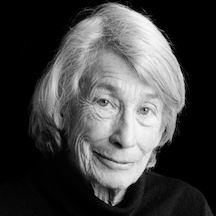
Mary Oliver, beloved poet and bard of the natural world, died on January 17 at home in Hobe Sound, Florida. She was 83. (Born: Sept 10, 1935)
mary oliver photo

Mary Oliver (1935-2019)

Oliver published her first book, No Voyage, in London in 1963, at the age of twenty-eight. The author of more than 20 collections, she was cherished by readers, and was the recipient of numerous awards, including the 1984 Pulitzer Prize for American Primitive, and the 1992 National Book Award for New and Selected Poems, Volume One. She led workshops and held residencies at various colleges and universities, including Bennington College, where she held the Catharine Osgood Foster Chair for Distinguished Teaching until 2001. It was her work as an educator that encouraged her to write the guide to verse, A Poetry Handbook (1994), and she went on to publish many works of prose, including the New York Times bestselling essay collection, Upstream (2016). For her final work, Oliver created a personal lifetime collection, selecting poems from throughout her more than fifty-year career. Devotions was published by Penguin Press in 2017.

For me the door to the woods is the door to the temple.

Her poetry developed in close communion with the landscapes she knew best, the rivers and creeks of her native Ohio, and, after 1964, the ponds, beech forests, and coastline of her chosen hometown, Provincetown. She spent her final years in Florida, a relocation that brought with it the appearance of mangroves. “I could not be a poet without the natural world,” she wrote. “Someone else could. But not me. For me the door to the woods is the door to the temple.” In the words of the late Lucille Clifton, “She uses the natural world to illuminate the whole world.”

In her attention to the smallest of creatures, and the most fleeting of moments, Oliver’s work reveals the human experience at its most expansive and eternal.

In her attention to the smallest of creatures, and the most fleeting of moments, Oliver’s work reveals the human experience at its most expansive and eternal. She lived poetry as a faith and her singular, clear-eyed understanding of verse’s vitality of purpose began in childhood, and continued all her life. “For poems are not words, after all, but fires for the cold, ropes let down to the lost, something as necessary as bread in the pockets of the hungry.”

For poems are not words, after all, but fires for the cold, ropes let down to the lost, something as necessary as bread in the pockets of the hungry. 

— Mary Oliver, “A Poetry Handbook”, p.136

When Death Comes

When death comes
like the hungry bear in autumn;
when death comes and takes all the bright coins from his purse

to buy me, and snaps the purse shut;
when death comes
like the measle-pox;

when death comes
like an iceberg between the shoulder blades,

I want to step through the door full of curiosity, wondering:
what is it going to be like, that cottage of darkness?

And therefore I look upon everything
as a brotherhood and a sisterhood,
and I look upon time as no more than an idea,
and I consider eternity as another possibility,

and I think of each life as a flower, as common
as a field daisy, and as singular,

and each name a comfortable music in the mouth,
tending, as all music does, toward silence,

and each body a lion of courage, and something
precious to the earth.

When it’s over, I want to say: all my life
I was a bride married to amazement.
I was the bridegroom, taking the world into my arms.

When it’s over, I don’t want to wonder
if I have made of my life something particular, and real.
I don’t want to find myself sighing and frightened,
or full of argument.

I don’t want to end up simply having visited this world.

###

In this poem, When Death Comes, Mary Oliver, who was seriously ill at the time, seemed to be contemplating her own mortality. Her perspectives on life and time were changing: “and I look upon time as no more than an idea, / and I consider eternity as another possibility,”. This reminds me what Maharishi said on the subject: “Time is a conception to measure eternity.”

I’ve posted a few of her astonishing poems: The Journey; Wild Geese; Swan; Praying; Varanasi; The Summer Day (“The Grasshopper”); At the Lake; One; White Owl Flies Into And Out Of The Field; Sunrise; The Loon; Blue Iris; When I Am Among The Trees; Lingering In Happiness; At Blackwater Pond; Don’t Hesitate; Mockingbirds; Messenger; Little Dog’s Rhapsody in the Night; Coming Home; Everything That Was Broken; Nothing Is Too Small Not To Be Wondered About (“The Cricket”); Mindful; Swimming, One Day in August; Red Bird Explains Himself; and When Death Comes, included here in her obituary posted on Jan 17, 2019.

On January 21, 2019, Here & Now‘s Robin Young talked with author Ruth Franklin about award-winning poet Mary Oliver’s legacy: Remembering The ‘Ecstatic Poet’ Mary Oliver, Who Wrote About The Natural World. Franklin wrote a profile of Oliver for The New Yorker (November 20, 2017): What Mary Oliver’s Critics Don’t Understand. Robin plays an excerpt of Oliver being interviewed by Krista Tippett: On Being, Mary Oliver Listening To The World. Mary told Krista: “I got saved by poetry, and I got saved by the beauty of the world.

I transcribed part of their discussion in this footnote to her poem, Messenger, where she says that attention is the beginning of devotion.

On October 18, 2016, Fresh Air’s Maureen Coorigan gave a wonderful book review of the poet’s New York Times essay collection: Mary Oliver Issues A Full-Throated Spiritual Autobiography In ‘Upstream’.

Today, on the day of her passing, the 92nd Street Y posted their Oct 15, 2012 recording of Mary Oliver reading from her new poetry book, A Thousand Mornings, and some of her other well-known poems.

On January 22, 2019, The Paris Review published an In Memoriam from Billy Collins. He wrote about a time (“one evening in October 2012”) when he and Mary Oliver shared the stage for a poetry reading “at an immense performing arts center in Bethesda, Maryland.” What he remembers “best was the book signing that followed. … I couldn’t help noticing how emotional many of Mary’s readers became in her presence. They gushed about how much her poems meant to them, how her poems had comforted them in dire times, how they had been saved by her work.” See his revealing conclusion to When Mary Oliver Signed Books. (PDF)

Quotefancy published TOP 20 Mary Oliver Quotes from her poems. Famous Poets and Poems lists 87 of Mary Oliver’s poems.

Mary Oliver’s essential message for living a full life

Mary Oliver said: “To pay attention, this is our endless and proper work.” She elaborated it in this 3-line poem, Instructions for living a life: Pay attention. / Be astonished. / Tell about it. And did she ever! It’s how she lived her life, and told us all about it in the gift of her amazing poetry.

A Tribute to Mary Oliver

On September 23, 2019, 8 months and 5 days after her passing, thousands of fans came together at the 92nd Street Y in New York and online via livestream for A Tribute to Mary Oliver. Friends and fellow writers read from Mary’s works. It was recorded, then posted 6 months and 4 days later, on March 27, 2020.

Bill Reichblum, literary executor of the Mary Oliver Estate, spoke first (1:13); followed by May Oliver’s official biographer, Lindsay Whalen (7:00); welcomed with long applause, Secretary Hillary Rodham Clinton (12:36); Maria Shriver (18:11); Coleman Barks (28:04); Lisa Starr (33:05); Eve Ensler (50:30); John Waters (58:10); and Mary Oliver (1:04:43), reciting Wild Geese from that Oct 2012 recording at the 92nd Street Y. The event was sponsored by the 92nd Street Y, the Academy of American Poets, Penguin Press, and the Poetry Society of America.

An earlier tribute sponsored by WBUR CitySpace was posted May 6, 2019. A panel of poets whose works and lives have been impacted by Mary Oliver’s work read from her poetry and participated in a Q&A. Helene Atwan, Director, Beacon Press, shared wonderful personal stories of Mary Oliver (10:05–12:35, 50:31–52:49, 58:01–24, 1:01:46–1:05:31, which included the poem, The Poet Goes to Indiana, and in the Q&A, which starts at 1:13:51 to the end.) Following the conversation, (1:06:01) special guest poet Steven Ratiner discussed his interview with Mary Oliver and the dynamics she described in the creation of a poem and its effect on a reader—the power of art to change lives, (1:10:10). He then presented an archival video of Mary Oliver reading her poem, The Swan. See A Tribute to Mary Oliver.

On January 17, 2019, Maria Shriver posted a message on her Facebook about Mary Oliver’s poetry and their friendship. Reflecting on Mary Oliver’s Life and Work: “May God bless you, Mary Oliver, as you enter this next journey. Thank you for inspiring me and so many others. I love your poetry, and I love sharing it with you today.” She read three of her favorite poems: Wild Geese, The Summer Day, and The Journey.

Eight years earlier on, Oprah had invited Maria Shriver to conduct The Exclusive O Interview with Mary Oliver, which came out March 9, 2011: Maria Shriver Interviews the Famously Private Poet Mary Oliver.

I later found The New York Times obituary published January 17, 2019: Mary Oliver, 83, Prize-Winning Poet of the Natural World, Is Dead.

Online Resources for Mary Oliver

Visit the official website maryoliver.com for books of Poetry, Prose, and her Bio, which lists her books and awards, and includes a special Tribute. Also visit maryoliverofficial, the official Instagram of beloved poet Mary Oliver managed by her estate, NW Orchard. Subscribe to read Mary’s poems never published in collections.

— Written and compiled (citing sources) by Ken Chawkin for The Uncarved Blog.

Mary Oliver’s poem, Sunrise, gives us a larger, wiser perspective on life

January 15, 2019

Mary Oliver is the high priestess of poetry. She translates Earth’s wisdom through her own way of looking at things. I love her insights. They sneak up on you. I smile every time I come to the end of this poem with it’s wise conclusion.

thehillsriversunrise

Sunrise

by Mary Oliver

You can
die for it–
an idea,
or the world. People

have done so,
brilliantly,
letting
their small bodies be bound

to the stake,
creating
an unforgettable
fury of light. But

this morning,
climbing the familiar hills
in the familiar
fabric of dawn, I thought

of China,
and India
and Europe, and I thought
how the sun

blazes
for everyone just
so joyfully
as it rises

under the lashes
of my own eyes, and I thought
I am so many!
What is my name?

What is the name
of the deep breath I would take
over and over
for all of us? Call it

whatever you want, it is
happiness, it is another one
of the ways to enter
fire.

(From: New and Selected Poems)

Photo of The Hills in New Zealand at sunrise found on Photography Begins.

This wonderful conclusion reminds me of a poem by another great female poet: We have reasons to be sad, but happiness cannot be pinned down, explains poet Naomi Shihab Nye.

You can see more poems by Mary Oliver posted on this blog.

Mary Oliver is definitely in touch with her muse, is at one with her. It reminds me of a line in this great little poem by William Stafford—When I Met My Muse.

Thanks to Joe Riley of Panhala for sharing Mary Oliver’s poem Sunrise. To subscribe to Panhala, send a blank email to Panhala-subscribe@yahoogroups.com.

Upon learning of her passing, I posted this remembrance of Mary Oliver.

David Whyte’s poem, The Journey, describes a leaving as a new beginning, as did Mary Oliver

January 15, 2019

Having read The Journey by Mary Oliver, I found a poem by David Whyte with the same title. Oliver’s poem is about leaving her suffocating home to live her own life, breaking away from other voices to discover her own.

Whyte said he secretly wrote The Journey for a friend who’s life had come undone to give her hope for renewal. She was going through another kind of leaving, from a long-term marriage. He describes it in the introduction to this poem, which you can hear him read below.

Above the mountains
the geese turn into
the light again

Painting their
black silhouettes
on an open sky.

Sometimes everything
has to be
inscribed across
the heavens

so you can find
the one line
already written
inside you.

Sometimes it takes
a great sky
to find that

first, bright
and indescribable
wedge of freedom
in your own heart.

Sometimes with
the bones of the black
sticks left when the fire
has gone out

someone has written
something new
in the ashes of your life.

You are not leaving.
Even as the light fades quickly now,
you are arriving.

From House of Belonging by David Whyte

I’ve posted two other poems of his: David Whyte describes the mysterious way a poem starts inside you with the lightest touch and What To Remember When Waking by David Whyte.

My haiku response to Billy Collins’ poem, Japan

January 3, 2019

I love the poetry of Billy Collins and have a few favorite poems, readings, and interviews posted on my blog. They’re so accessible and humorous.

His poem, Japan, is about a favorite haiku. He wrote each of the 12 stanzas to look like a 3-line haiku. The imagery in the last half of the poem unravels in the most mind-bending of ways as he interchanges perspectives! You can hear Billy Collins read Japan on YouTube.

I remember first reading it in his collection, Sailing Alone Around the Room, I bought over 15 years ago. Today, I found my two-haiku response written on a napkin among scraps of paper. It was also on the back of the receipt, bookmarking that poem! It inspired me to post both.

Today I pass the time reading
a favorite haiku,
saying the few words over and over.

It feels like eating
the same small, perfect grape
again and again.

I walk through the house reciting it
and leave its letters falling
through the air of every room.

I stand by the big silence of the piano and say it.
I say it in front of a painting of the sea.
I tap out its rhythm on an empty shelf.

I listen to myself saying it,
then I say it without listening,
then I hear it without saying it.

And when the dog looks up at me,
I kneel down on the floor
and whisper it into each of his long white ears.

It’s the one about the one-ton
temple bell
with the moth sleeping on its surface,

and every time I say it, I feel the excruciating
pressure of the moth
on the surface of the iron bell.

When I say it at the window,
the bell is the world
and I am the moth resting there.

When I say it into the mirror,
I am the heavy bell
and the moth is life with its papery wings.

And later, when I say it to you in the dark,
you are the bell,
and I am the tongue of the bell, ringing you,

and the moth has flown
from its line
and moves like a hinge in the air above our bed.

###

My humorous response to the moth and temple bell in the poem.

Haiku for Billy Collins’ poem, Japan, by Ken Chawkin

The weight of a moth
on a one-ton temple bell
excruciating

The sound of the bell
all hinges on the moth’s tongue
tapping the surface

###

On a more serious note, using the imagery of a tower bell, read a profound poem by Rainer Maria Rilke posted in my Response below, and in this PDF: Sonnets to Orpheus, Part Two, XXIX. Source: In Praise of Mortality: Selections from Rainer Maria Rilke’s Duino Elegies and Sonnets to Orpheus, translated and edited by Anita Barrows and Joanna Macy. On Being posted Joanna Macy reciting it: Let This Darkness Be a Bell Tower.

Thomas Merton’s golden poem, Song for Nobody

October 27, 2018

Another poem from Soul Food: Nourishing Poems for Starved Minds is Song for Nobody by Thomas Merton. This golden poem is Beautiful, Enigmatic, and Profound. Below are some reactions to it as I try to fathom the poet’s spiritual perspective. If you have any comments please feel free to post them below. I’d be curious to hear your take on it.

Black-Eyed-Susan Flower

Song for Nobody
by Thomas Merton

A yellow flower
(Light and spirit)
Sings by itself
For nobody.

A golden spirit
(Light and emptiness)
Sings without a word
By itself.

Let no one touch this gentle sun
In whose dark eye
Someone is awake.

(No light, no gold, no name, no color
And no thought:
O, wide awake!)

A golden heaven
Sings by itself
A song to nobody.

(more…)

Two profound poems by Stephen Levine: in the realm of the passing away & millennium blessing

October 16, 2018

I just discovered a fine poet, Stephen Levine, on this wonderful blogspot, THE BEAUTY WE LOVE. He was an American poet, author and teacher best known for his work on death and dying. He drew upon the teachings of a variety of wisdom traditions. Stephen and his wife Ondrea were also grief counselors. His poetry offers much wisdom on this subject. Here are two beautiful poems that deal with the ephemeral nature of existence; its deathless, limitless source; and a grace that draws us to it, our ultimate destination — in the realm of the passing away and millennium blessing — both taken from his book, Breaking the Drought: Visions of Grace.

In the realm of the passing away

This is the realm of the passing away. All that
exists does not for long.
…….Whatever comes into this world never stops sliding
toward the edge of eternity.
…….Form arises from formlessness and passes back,
arising and dissolving in a few dance steps between
creation and destruction.
…….We are born passing away.
…….Seedlings and deadfall all face forward.
…….Earthworms eat what remains.
…….We sing not for that which dies but for that which
never does.

* * *

Millennium blessing

There is a grace approaching
that we shun as much as death,
it is the completion of our birth.

It does not come in time,
…….but in timelessness
when the mind sinks into the heart
and we remember.

It is insistent grace that draws us
to the edge and beckons us surrender
safe territory and enter our enormity.

We know we must pass
…….beyond knowing
and fear the shedding.

But we are pulled upward
…….none-the-less
through forgotten ghosts
…….and unexpected angels,
luminous.

And there is nothing left to say
but we are That.

And that is what we sing about.

* * *

Stephen Levine (July 17, 1937 – January 17, 2016)

* * *

Related posts worth seeing: Rainer Maria Rilke’s poem, Buddha in Glory, reminds us of our eternal nature within || John Glenday’s poem, Concerning the Atoms of the Soul, illuminates and nourishes the mind || The temporary paradox of death in life: writing a tanka for our family pet on his passing || A white owl hunting in and out of the snow helps Mary Oliver see death as spiritual transformation || When Death Comes, a poem by Mary Oliver included in this memorial post for her. || Two thoughtful poems by Rhoda Orme-Johnson: When We Are Insubstantial & When You Are Young || Colin Hay’s song—I Just Don’t Think I’ll Ever Get Over You—is so relevant during these tough times || Undifferentiated, a poem I wrote in India processing my final moments with Sali when she had passed around 7 weeks earlier in Fairfield, Iowa. It was a realization that came to me 5 days after spreading her ashes from a boat on the Narmada River during a most auspicious day.

Added Nov 2, 2022: What the Living Do—Marie Howe’s ‘letter’ to her brother—an elegy to loss and how she lives with it.

These “death poems” by Charles Bukowski during the last years of his life are some of the best he ever wrote: a song with no end and The Laughing Heart.

— Written and compiled (citing sources) by Ken Chawkin for The Uncarved Blog.

Wendell Berry’s stepping over stones in a stream shows us how he writes a poem and takes a stand

September 5, 2018

“What I stand for is what I stand on.” — Wendell Berry

I love the playful music in this brilliant little poem by Wendell Berry from Leavings: Poems. As if imitating the sounds and poetry of nature, Berry’s stepping over stones in a flowing stream demonstrates his own creative flow, the way he uses words to show us how he writes a poem, and takes a stand for nature and his place in it.

The Book of Camp Branch

How much delight I’ve known
in navigating down the flow
by stepping stones, by sounding
stones, by words that are
stepping and sounding stones.

Going down stone by stone,
the song of the water changes,
changing the way I walk
which changes my thought
as I go. Stone to stone
the stream flows. Stone to stone
the walker goes. The words
stand stone still until
the flow moves them, changing
the sound – a new word –
a new place to step or stand.

Here’s another of his poems I posted: Wendell Berry’s “No going back” is about the generosity of the evolving self through time.

For more on this environmental legend and writer, see Wendell Berry: Poet and Prophet. Produced by Bill Moyers, it aired on PBS 10/03/13.

Just added another poem: The Peace of Wild Things by Wendell Berry, with a link to On Being of him reading this poem and 5 others.