Archive for the ‘Other poems’ Category

Breath and fire in the heart feed each other as essential creative forces in Erica Jong’s poetry

April 11, 2020

I’ll admit my ignorance here. All I remember of Erica Jong was her early 70’s infamous best-selling novel, Fear of Flying. I had no idea that she had become such a prolific award-winning writer. Besides being a famous author, she is also a fine poet. She says, “The poetry is the source of absolutely everything I do.” I discovered some of her impressive poems looking inside Becoming Light: New and Selected Poems, and on poetry websites PoemHunter and Poeticous.

Filled with life and passion, Jong uses breath, air, wind, “prana whistling in the dark;” and fire, “a flame in the heart,” “a living lantern,” as imaginary ways to describe the creative forces within the heart of a poet. They are beautifully expressed in these 3 poems: Alphabet Poem: To the Letter I, Poem to Kabir, and Zen & the Art of Poetry. There may be other poems with these motifs I have yet to discover, but these caught my attention for their shared imagery and theme of being a poet, a writer.

Alphabet Poem: To the Letter I (12th/last stanza, 3rd poem in Becoming Light) 

We are all one poet 
and always 
we have one 
communal name, 
god's name, nameless, 
a flame in the heart, 
a breath, 
a gust of air, 
prana whistling in the dark. 
i dies— 
but the breath 
lingers on 
through the medium 
of the magic 
alphabet 
and in its wake 
death is no more 
than metaphor. 

Poem to Kabir   

Kabir says 
the breath inside the breath 
is God   

& I say to Kabir 
you are the breath inside that breath 
which is not to say 
that the poet is God–   

but only that God 
uses the poet 
as the wind 
uses 
a sail.

Zen & the Art of Poetry
 
Letting the mind go,
letting the pen, the breath,
the movement of images in & out
of the mouth
go calm, go rhythmic
as the rise & fall of waves,
as one sits in the lotus position
over the world,
holding the pen so lightly
that it scarcely stains the page,
holding the breath
in the glowing cage of the ribs,
until the heart
is only a living lantern
fueled by breath,
& the pen writes
what the heart wills
& the whole world goes out,
goes black,
but for the hard, clear stars
below.

In the last section of What You Need to Be a Writer, Jong comes clean, listing her fears, then describes what it really takes to be a writer — having something to say so intensely, that it “burns like a coal in your gut…pounds like a pump in your groin,” and concludes with having “the courage to love like a wound that never heals.” Ah, the human condition.

& then there’s all 
I did not 
say:   

to be
a writer
what you need
is
 
something
to say:
 
something
that burns
like a hot coal
in your gut
 
something
that pounds
like a pump
in your groin
 
& the courage
to love
like a wound
 
that never
heals.

In a Mother’s Day Playboy interview last year, the first question daughter and writer Molly Jong-Fast asks her mother is how she knows things, especially what’s happening to women in the socio-political arena. Jong answers: “I think a writer is someone who lives like a wound that never heals. And if you’re a writer, you feel the rumblings in the air.” It’s interesting how she uses the same metaphor for a writer to love or live like “a wound that never heals.” How she’s been bravely living her life.

The Poetry and Color of Love for Valentine’s Day

February 15, 2020

Donna Warwick posted this digital painting on her Instagram artsfusionist: “Happy Valentines Day Everyone ! I Love Hue!”

Good homonym! This is so vibrant, like a beating heart! Can you feel it?

Hope you all enjoyed a Happy Valentine’s Day. Whether you were with someone or by yourself, Love Is Love. I emailed most of this content below for Valentine’s Day and decided to post it afterwards with some additions.

The Poetry of Love

For those alone, here is an uplifting poem reminding us to love ourselves: Love after Love, by Derek Walcott, resonates deeply when you first acknowledge yourself. Includes videos of him reading his poetry.

For those sharing love, [i carry your heart with me(i carry it in] by E.E. Cummings is a most beautiful poem about the intimate unity of the lover and the beloved within his heart.

And Emily Dickinson succinctly describes the eternal nature of Love in this short but powerful poem.

Since it was Valentine’s Day, again, I thought I’d mention last year’s post. The audio links have been updated: Dan Fogelberg’s song, Longer, and my 3 love poems complete today’s Valentine’s Day Show. The poems were written for and inspired by my muse and sweetheart Sali. The first two were written earlier in our relationship, the last one after she passed.

The Color of Love

When it comes to art, one artist stands out for me—Marc Chagall. The love for his wife is expressed in his art; his art expresses love in color. He says, “In our life there is a single color, as on an artist’s palette, which provides the meaning of life and art. It is the color of LOVE.”

In our life there is a single color, as on an artist’s palette, which provides the meaning of life and art. It is the color of LOVE. — Marc Chagall

This blog post contains the Canadian documentary film, Marc Chagall: The Colours of Love, and 2 short videos. They cover his life and work, and the love of his life, his muse and wife, Bella. Marc Chagall’s paintings contain beautiful colors of love and a joyful floating lightness of being.

These images are from those films: closeups from an early painting of Chagall’s then fiancée Bella Rosenfeld; of Bella and Marc Chagall in Les Amoureux [Lovers] (1928); and in L’Anniversaire [The Birthday] (1915).

Closeup of Bella Rosenfeld, Marc Chagall’s fiancée
Top section of Les Amoureux (1928)
L’Anniversaire (1915)

The Chagall documentary ends with these words about the poet-artist: “He has painted the unity of the universe in all things. His song of songs is really a song of love, like a bouquet of flowers. Marc Chagall’s light, his message, his life, has been a gift to us all.”

May Love Always Be—within and among us expressed in poetry and art.

— Written and compiled (citing sources) by Ken Chawkin for The Uncarved Blog.

John O’Donohue’s 4 short lines say it all for poets

January 27, 2020

These 4 short lines by John O’Donohue describe how he lived his creative life—amazed by each revelatory moment, turning them into poems.

Fluent

I would love to live
Like a river flows,
Carried by the surprise
Of its own unfolding.

— John O’Donohue

I found an interview (What is Beauty?) where John O’Donohue tells Barry Kibrick of Between the Lines how he wrote Fluent and reads it at 22:07.

Enjoy 3 more of his lovely poems: A Blessing of Solitude (Anam Cara: A Book of Celtic Wisdom); The Inner History of a Day and For a New Beginning (To Bless the Space Between Us: A Book of Blessings).

Listen to John O’Donohue — The Inner Landscape of Beauty recorded for The On Being Project, which aired February 28, 2005, Krista Tippett’s Best Loved & Most Shared conversations.

Mary Oliver lived her life that way: “To pay attention, this is our endless and proper work,” and put it into a 3-line poem, Instructions for living a life: Pay attention. / Be astonished. / Tell about it

William Stafford expressed the same notion in his talks and poems of being innocent, spontaneous, and responding creatively in the moment: A Course in Creative Writing, You and Art, and When I Met My Muse.

This poem my son wrote when he was in 6th grade epitomizes this idea: INSPIRATION, a poem by Nathanael Chawkin.

These poems I wrote on the process share in that same sentiment: Writing; Storytelling; and Sometimes Poetry Happens, which turned out to be a commentary on this revealed poem, ODE TO THE ARTIST: Sketching Lotus Pads at Round Prairie Park.

In our efforts to fluently express ourselves, writing, primarily, is a process of self-discovery. Burghild Nina Holzer says journal writing allows us to discover who we are and what we have to say.

Talking to paper is talking to the divine. Paper is infinitely patient. Each time you scratch on it, you trace part of yourself, and thus part of the world, and thus part of the grammar of the universe. It is a huge language, but each of us tracks his or her particular understanding of it.

WHO ARE YOU?, a poem in the film, Words and Pictures, invites us to write and discover who we are. There’s a fascinating story behind it.

In Learning by Teaching, Donald M. Murray said: The most accurate definition of writing, I believe, is that it is the process of using language to discover meaning in experience and to communicate it.

In this collection of Writers on Writing–What Writing Means To Writers, Donald Hall wrote:

A good writer uses words to discover, and to bring that discovery to other people. He rewrites so that his prose is a pleasure that carries knowledge with it. That pleasure-carrying knowledge comes from self-understanding, and creates understanding in the minds of other people.

 — Written and compiled (citing sources) by Ken Chawkin for The Uncarved Blog.
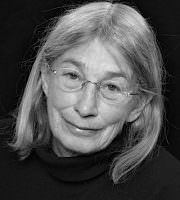
Mary Oliver is the Messenger for Thanksgiving

November 28, 2019

Mary Oliver’s poem, Messenger, was written in her own unique voice, but it must have been influenced by her favorite American poet, Walt Whitman. It’s a perfect poem to share for Thanksgiving, since her poetry is a thanksgiving for being alive in the world, appreciating every living thing in it, and singing their praises. “My work is loving the world…mostly standing still and learning to be astonished…which is mostly rejoicing…which is gratitude…a mouth with which to give shouts of joy.”

My work is loving the world.
Here the sunflowers, there the hummingbird—
equal seekers of sweetness.
Here the quickening yeast; there the blue plums.
Here the clam deep in the speckled sand.
 
Are my boots old? Is my coat torn?
Am I no longer young, and still half-perfect? Let me
keep my mind on what matters,
which is my work,
 
which is mostly standing still and learning to be
astonished.
The phoebe, the delphinium.
The sheep in the pasture, and the pasture.
Which is mostly rejoicing, since all the ingredients are here,
 
which is gratitude, to be given a mind and a heart
and these body-clothes,
a mouth with which to give shouts of joy
to the moth and the wren, to the sleepy dug-up clam,
telling them all, over and over, how it is
that we live forever.

You can read more about Mary Oliver and her astonishing poetry in this memorial acknowledgment of her poetic legacy to us.

Here is an added footnote: “Attention is the beginning of devotion.”

I remember Maharishi telling us that whatever we put our attention on will grow stronger in our life. The cornerstone to Mary Oliver’s appreciation of and love for the natural world around her was the power of her attention. She was awake to everything and was always astonished. Her sustained empathic attention to the land and its inhabitants inspired devotional poetry. In this interview, On Being’s Krista Tippett asks Mary Oliver about the role of attention in her work.

Ms. Tippett: I’d like to talk about attention, which is another real theme that runs through your work, both the word and the practice. I know people associate you with that word. But I was interested to read that you began to learn that attention without feeling is only a report. That there is more to attention than for it to matter in the way you want it to matter. Say something about that learning.

Ms. Oliver: You need empathy with it rather than just reporting. Reporting is for field guides. And they’re great. They’re helpful. But that’s what they are. They’re not thought provokers. They don’t go anywhere. And I say somewhere that attention is the beginning of devotion, which I do believe. But that’s it. A lot of these things are said but can’t be explained.

You can listen to and read a transcript of the whole interview.

Mary Oliver’s essential message for living a full life

Mary Oliver said: “To pay attention, this is our endless and proper work.” She elaborated it in this 3-line poem, Instructions for living a life: Pay attention. / Be astonished. / Tell about it. And did she ever! It’s how she lived her life, and told us all about it in the gift of her amazing poetry.

Other relevant posts: Mary Oliver’s poem, Praying, is a lesson on attention, receptivity, listening and writing and her poem, Mindful, Attentive to and delighting in her surroundings, Mary Oliver lived a life writing astonishing poetry.

— Written and compiled (citing sources) by Ken Chawkin for The Uncarved Blog.
In her poem, Mockingbirds, Mary Oliver teaches us how to listen, and be transformed by wonder

October 22, 2019

Our attention is the greatest gift we can give to someone, or something. It can transform our world. Mary Oliver’s poem, Mockingbirds, teaches us how to listen, and experience the wonders around us.

Mockingbirds

by Mary Oliver

This morning
two mockingbirds
in the green field
were spinning and tossing

the white ribbons
of their songs
into the air.
I had nothing

better to do
than listen.
I mean this
seriously.

In Greece,
a long time ago,
an old couple
opened their door

to two strangers
who were,
it soon appeared,
not men at all,

but gods.
It is my favorite story–
how the old couple
had almost nothing to give

but their willingness
to be attentive–
but for this alone
the gods loved them

and blessed them–
when they rose
out of their mortal bodies,
like a million particles of water

from a fountain,
the light
swept into all the corners
of the cottage,

and the old couple,
shaken with understanding,
bowed down–
but still they asked for nothing

but the difficult life
which they had already.
And the gods smiled, as they vanished,
clapping their great wings.

Wherever it was
I was supposed to be
this morning–
whatever it was I said

I would be doing–
I was standing
at the edge of the field–
I was hurrying

through my own soul,
opening its dark doors–
I was leaning out;
I was listening.

###

Mary Oliver left us at the beginning of this year. To learn more about this amazed poet and her amazing poetry, see: RIP: Mary Oliver. Thank you for sharing your poetic gifts with us. They are a national treasure!

— Written and compiled (citing sources) by Ken Chawkin for The Uncarved Blog.

Tony Walsh @LongfellaPoet’s poem, Take This Pen, inspires Brits to contribute to @PoetryDayUK

September 7, 2019

National Poetry Day, the UK-wide celebration of poetry, celebrates its 25th anniversary on 3 Oct: the theme is truth. Enjoy, discover & share!

I came across this tweet by Tony Walsh @LongfellaPoet about this event: Delighted to share this. Please watch/tag/share. It’s my poem Take This Pen, beautifully illustrated by the wonderful @chrisriddell50. It’s an inspiration piece to launch #tellyourtruthpoem for @PoetryDayUK.

Enjoy this powerful poem and video that is sure to inspire young and old alike to creatively express their own truth in a poem. Read more on this international superstar poet, teacher, and performer Tony Walsh Poet.

Very relevant is this poem, WHO ARE YOU? in the 2013 film, Words and Pictures, inviting students to create and become who they are.

Here’s one of my earliest poems about this magical creative process: Sometimes Poetry Happens: a poem about the mystery of creativity.

My son wrote this wise and amazing poem when he was 11 years old: INSPIRATION, a poem by Nathanael Chawkin.

This post—The perils of praise or blame for young writers. New ways to help students find their own voice—is a treasure trove of knowledge and teaching strategies by poets, writers, and innovative educators.

A powerful message in a Shadow and Light poem

August 31, 2019

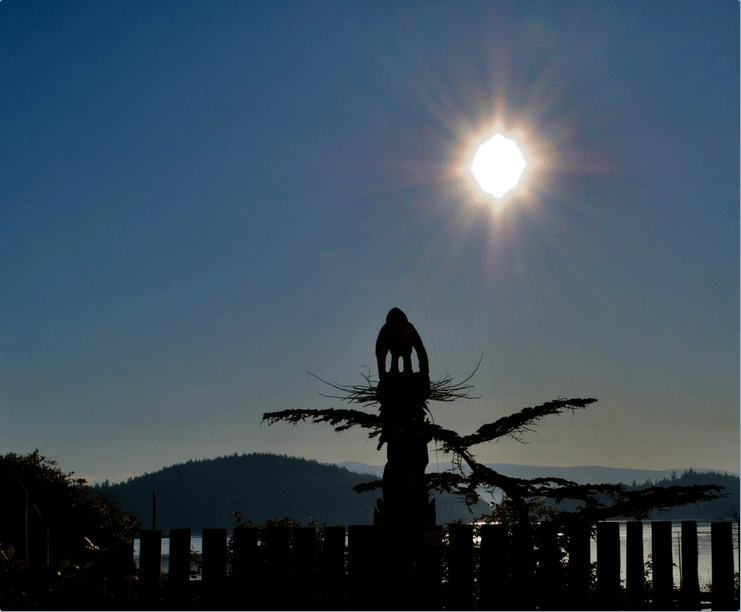
Here is another beautiful blog post by westcoastwoman. I had liked and posted an earlier one, Afterglow. She said this photo became the muse for the poem. It was a happy accident. In our discussion she “tried to photograph this totem at daybreak and twilight and finally in frustration a full on ‘throw away’ sun-in-the-lens shot. This is the one that stuck for me. Shadow and Light ….. loved it.” Yes, it is stunning, and the short, succinct poem it inspired delivers a powerful message!

Shadow and Light

August 30, 2019

©westcoastwoman “hollyhock”

Don’t look…..
into the Light
Don’t shoot…..
into the Light

Rules…

Light exposes shadow,
Shadow, Light.

Rules…

Meant to be broken
Light without Shadow
Half Life
Half Love
Half Question

Unlived, Unloved, Unspoken.

©westcoastwoman 2019

Poem for Sali—An Undying Love—heals the heart

June 28, 2019

Interestingly, on Monday morning, at the end of my meditation, I had this loving feeling in my heart, thinking of Sali. So I wrote this poem for her. It contains two haiku and a last line, which brought a quiet healing, knowing the bond of love is eternal; death cannot touch it. I remembered the jyotish reading Sali received from Pandit Shastriji with the nadi leaves, where he told us of some of our past lives together. She had later conveyed a message to me, that we would share again “The Peace that Passeth Understanding” I had written about after she had passed. See “Final entries leading up to and after Sali’s passing.”

An Undying Love

Still love you Sali
An undying kind of Love
That lasts Forever

Souls from the same Source
Incarnating together
Lifetime to lifetime

This thought brings peace to my heart

© Ken Chawkin
Monday, June 24, 2019
Fairfield, Iowa, USA

See these two earlier blog posts, written around a year apart on full moon nights, about the joy we shared together: Capturing an authentic moment in writing, and Haiku of the Heart – for Sali.

This year, Sheila Moschen had asked me to read three of my love poems to conclude her Valentine’s Day Show, Let Your Heart Sing, on KHOE.

Sali can be seen meditating in this 1973 Finnish TV interview with TM founder Maharishi Mahesh Yogi.

July 2, 2019 Update: I am reminded of this appropriate quote from the Zen poet Ryokan I had included in a post about his poetry. The last half of it is how I feel about the eternal nature of love I share(d) with Sali.

“In all ten directions of the universe, there is only one truth. When we see clearly, the great teachings are the same. What can ever be lost? What can be attained? If we attain something, it was there from the beginning of time. If we lose something, it is hiding somewhere near us.”

Bad habits are hard to break. This short poem by Portia Nelson illustrates that fact with a way out.

May 21, 2019

Here is an interesting poem by Portia Nelson: Autobiography in Five Short Chapters, from her 1993 book, There’s a Hole in My Sidewalk: The Romance of Self-Discovery.

Autobiography in Five Short Chapters

Chapter 1  

I walk down the street.
There is a deep hole in the sidewalk.
I fall in.
I am lost … I am helpless.
It isn’t my fault.
It takes forever to find a way out.  

Chapter 2  

I walk down the same street.
There is a deep hole in the sidewalk.
I pretend I don’t see it.
I fall in again.
I can’t believe I am in the same place.
But it isn’t my fault.
It still takes a long time to get out.  

Chapter 3  

I walk down the same street.
There is a deep hole in the sidewalk.
I see it is there.
I still fall in … it’s a habit.
My eyes are open.
I know where I am.
It is my fault.
I get out immediately.  

Chapter 4  

I walk down the same street.
There is a deep hole in the sidewalk.
I walk around it.  

Chapter 5  

I walk down another street.  

* * * * *

This little metaphorical story has helped those dealing with bad habits, addictions, tunnel vision, ultimately the mistake of the intellect. It shows a way out of our ignorance and misery by acknowledging our mistakes and not repeating them. Becoming more conscious we can change for the better, taking responsibility for our destiny. Of course, only reading this poem won’t get the job done. We also need to change our consciousness. Change begins within, and learning to meditate can also help. It’s the 12th step of any Twelve-Step Program. The David Lynch Foundation offers scholarships to those in need to learn the Transcendental Meditation technique and improve their lives from within.

Found this relevant quote: “He who blames others has a long way to go on his journey. He who blames himself is halfway there. He who blames no one has arrived.” ― The 36 Stratagems in Ancient China War: 三十六计

After looking through a telescope Louise Glück identified with the silent enormity of the stars

April 28, 2019

I recently discovered poets writing about telescopes, like Ted Kooser and Kenneth Rexroth, what they saw through them, and how they were transformed by the experience. Here is a poem called Telescope (Averno: Poems) by Pulitzer Prize winner (1993) Louise Glück. It was among the poems she read during a Lannan Literary Event (May 11, 2016).

The Great Cluster in the constellation Hercules

Telescope

There is a moment after you move your eye away
when you forget where you are
because you’ve been living, it seems,
somewhere else, in the silence of the night sky.

You’ve been stopped being here in the world.
You’re in a different place,
a place where human life has no meaning.

You’re not a creature in a body.
You exist as the stars exist,
participating in their stillness, their immensity.

Then you’re in the world again.
At night, on a cold hill,
taking the telescope apart.

You realize afterward
not that the image is false
but the relation is false.

You see again how far away
each thing is from every other thing.

Louise Glück

Louise Glück reads Telescope at a Lannan Literary Event

Kenneth Rexroth also describes a loss of body awareness and identifies with the enormity of the star-filled summer night sky while looking through a telescope. Here’s an excerpt from The Heart of Herakles.

My body is asleep. Only
My eyes and brain are awake.
The stars stand around me
Like gold eyes, I can no longer
Tell where I begin and leave off.

Breaking News from The Nobel Prize (Oct 8, 2020): The 2020 Nobel Prize in Literature is awarded to the American poet Louise Glück “for her unmistakable poetic voice that with austere beauty makes individual existence universal.” They posted these Biobibliographical notes.

Presentation of the 2020 Nobel Prize in Literature

Watch the very moment 2020 Literature Laureate Louise Glück received her Nobel Prize medal and diploma. Glück received the prize “for her unmistakable poetic voice that with austere beauty makes individual existence universal”. (This presentation took place over 2 months later still during the time of the coronavirus so she and her presenter were wearing masks.)

Read more about this poet in a Poets & Writers interview: Internal Tapestries: A Q&A With Louise Glück. (September/October 2014)

The heart of The Red Poppy in Louise Glück’s poem speaks to us from a different perspective

Oct 13, 2023: Reuters: US Nobel-winning poet Louise Gluck dies at 80