This poem, One, by Mary Oliver, published in Why I Wake Early, shows us the beauty and fragility of the world and our place in it together. See more beautiful poems by this poet posted here.
One
The mosquito is so small
it takes almost nothing to ruin it.
Each leaf, the same.
And the black ant, hurrying.
So many lives, so many fortunes!
Every morning, I walk softly and with forward glances
down to the ponds and through the pinewoods.
Mushrooms, even, have but a brief hour
before the slug creeps to the feast,
before the pine needles hustle down
under the bundles of harsh, beneficent rain.
How many, how many, how many
make up a world!
And then I think of that old idea: the singular
and the eternal.
One cup, in which everything is swirled
back to the color of the sea and sky.
Imagine it!
A shining cup, surely!
In the moment in which there is no wind
over your shoulder,
you stare down into it,
and there you are,
your own darling face, your own eyes.
And then the wind, not thinking of you, just passes by,
touching the ant, the mosquito, the leaf,
and you know what else!
How blue is the sea, how blue is the sky,
how blue and tiny and redeemable everything is, even you,
even your eyes, even your imagination.
In this video, Naomi explains how some poems are given to her, when she listens. The first poem, on happiness, came after she and her husband were married. The second poem, on kindness, came after an unsettling event took place on their honeymoon. They had been robbed while traveling on a bus in South America and lost everything. After she wrote the poem, help came in unexpected ways.*
Having both poems read by the poet in this grouping is special! Thanks to Pamela Robertson-Pearce who filmed Naomi Shihab Nye during her visit to the Aldeburgh Poetry Festival in 2006, and to Neil Astley who posted the video for Bloodaxe Books.
One of Naomi’s favorite poets, and mine too, is William Stafford. He said this about her poetry: “In the current literary scene one of the most heartening influences is the work of Naomi Shihab Nye. Her poems combine transcendent liveliness and sparkle along with warmth and human insights. She is a champion of the literature of encouragement and heart. Reading her work enhances life.”
So Much Happiness
It is difficult to know what to do with so much happiness. With sadness there is something to rub against, a wound to tend with lotion and cloth. When the world falls in around you, you have pieces to pick up, something to hold in your hands, like ticket stubs or change.
But happiness floats. It doesn’t need you to hold it down. It doesn’t need anything. Happiness lands on the roof of the next house, singing, and disappears when it wants to. You are happy either way. Even the fact that you once lived in a peaceful tree house and now live over a quarry of noise and dust cannot make you unhappy. Everything has a life of its own, it too could wake up filled with possibilities of coffee cake and ripe peaches, and love even the floor which needs to be swept, the soiled linens and scratched records . . .
Since there is no place large enough to contain so much happiness, you shrug, you raise your hands, and it flows out of you into everything you touch. You are not responsible. You take no credit, as the night sky takes no credit for the moon, but continues to hold it, and share it, and in that way, be known.
In this video, recorded at the Wisdom Ways Center for Spirituality, Palestinian American poet, writer, teacher Naomi Shihab Nye (1952) shares how she wrote one of her favorite poems, Kindness, and then reads it. It came to her, mysteriously, after a dramatic situation, in which she and her husband were robbed during their honeymoon while traveling by bus in South America. When she sat down to write, she said it just came to her. “I actually was the secretary for Kindness.”
Kindness
Before you know what kindness really is you must lose things, feel the future dissolve in a moment like salt in a weakened broth. What you held in your hand, what you counted and carefully saved, all this must go so you know how desolate the landscape can be between the regions of kindness. How you ride and ride thinking the bus will never stop, the passengers eating maize and chicken will stare out the window forever.
Before you learn the tender gravity of kindness you must travel where the Indian in a white poncho lies dead by the side of the road. You must see how this could be you, how he too was someone who journeyed through the night with plans and the simple breath that kept him alive.
Before you know kindness as the deepest thing inside, you must know sorrow as the other deepest thing. You must wake up with sorrow. You must speak to it till your voice catches the thread of all sorrows and you see the size of the cloth. Then it is only kindness that makes sense anymore, only kindness that ties your shoes and sends you out into the day to mail letters and purchase bread, only kindness that raises its head from the crowd of the world to say It is I you have been looking for, and then goes with you everywhere like a shadow or a friend.
Kim Rosen (kimrosen.net) interviewed Naomi Shihab Nye, and other poets, for Spirituality & Health. In The Incomparable Naomi Shihab Nye on Kindness, Nye shared more details about that incident, which took place in Columbia in 1978. She also spoke about the power of poetry to transform lives. We want another kind of story, she said, one that helps us feel connected with one another. She feels good poems can harmonize and refocus us, create empathy, more understanding, and lead to more peace in the world.
Also see So Much Happiness, from the same volume of poetry. In the accompanying video, Naomi Shihab Nye reads both poems.
The ending to “Kindness” reminds me in a way of the theme of Derek Walcott’s poem, Love after Love, when you recognize your essential nature, as if for the first time. Love and Kindness are interchangeable, where being kind to yourself is loving yourself, the basis for loving others.
Here is that video of Naomi Shihab Nye reading “Kindness” and telling the story of how it came to her. For some unknown reason I could only embed it at the end of this post.
— Written and compiled (citing sources) by Ken Chawkin for The Uncarved Blog.
A previous post dealt with poets and artists who were Touched With Fire and created unusually beautiful works of art. Their poems and paintings were thought to be fueled by madness rather than a uniquely creative gift, possibly combined with a type of manic-depression.
Claude Monet “Water Lilies” (1906) The Art Institute of Chicago (Mr. and Mrs. Martin A. Ryerson Collection)
Lisel Mueller on Claude Monet’s vision
Here is a different twist on another kind of perceived abnormality. This poem’s title, Monet Refuses the Operation, leads the reader to believe that Oscar-Claude Monet, founder of French Impressionism, was in need of an eye operation because of the way he painted.
But Nobel laureate Lisel Mueller gives us a different take on what may have been clinically diagnosed as failing eyesight due to cataracts, for the growth of a more profound spiritual vision—a ripened appreciation of nature, and a deeper more unified understanding of life.
Monet Refuses the Operation
By Lisel Mueller
Doctor, you say that there are no haloes
around the streetlights in Paris
and what I see is an aberration
caused by old age, an affliction.
I tell you it has taken me all my life
to arrive at the vision of gas lamps as angels,
to soften and blur and finally banish
the edges you regret I don’t see,
to learn that the line I called the horizon
does not exist and sky and water,
so long apart, are the same state of being.
Fifty-four years before I could see
Rouen cathedral is built
of parallel shafts of sun,
and now you want to restore
my youthful errors: fixed
notions of top and bottom,
the illusion of three-dimensional space,
wisteria separate
from the bridge it covers.
What can I say to convince you
the Houses of Parliament dissolve
night after night to become
the fluid dream of the Thames?
I will not return to a universe
of objects that don’t know each other,
as if islands were not the lost children
of one great continent. The world
is flux, and light becomes what it touches,
becomes water, lilies on water,
above and below water,
becomes lilac and mauve and yellow
and white and cerulean lamps,
small fists passing sunlight
so quickly to one another
that it would take long, streaming hair
inside my brush to catch it.
To paint the speed of light!
Our weighted shapes, these verticals,
burn to mix with air
and changes our bones, skin, clothes
to gases. Doctor,
if only you could see
how heaven pulls earth into its arms
and how infinitely the heart expands
to claim this world, blue vapor without end.
Source: Second Language (Louisiana State University Press, 1996)
The cataracts did cloud Monet’s vision, and hindered his perception, but he had reached a level of mastery that allowed him to paint with his heart. In the words of The Little Prince, “And now here is my secret, a very simple secret; it is only with the heart that one can see rightly, what is essential is invisible to the eye.” —Antoine de Saint-Exupery
Later in life, Monet discovered a different way of seeing and created a new way of painting. Another poet, William Stafford, wrote about youth and the mature artist in You and Art. The poem describes, in its own unique way, this spiritual transformation that takes place later in life.
You and Art
By William Stafford
Your exact errors make a music
that nobody hears.
Your straying feet find the great dance,
walking alone.
And you live on a world where stumbling
always leads home.
Year after year fits over your face—
when there was youth, your talent
was youth;
later, you find your way by touch
where moss redeems the stone;
and you discover where music begins
before it makes any sound,
far in the mountains where canyons go
still as the always-falling, ever-new flakes of snow.
In Mueller’s poem, these lines and conclusion hint at Monet’s expanded unified state of heart and mind: ‘to learn that the line I called the horizon does not exist and sky and water, so long apart, are the same state of being.’ and ‘how infinitely the heart expands to claim this world, blue vapor without end.’
The conclusion to this other poem by William Stafford, Something That Happens Right Now, reminds me of a similar unbounded perception: ‘but I would be everywhere, as I am right now, a thin tone like the wind, a sip of blue light—no source, no end, no horizon.’
Premiered last year at SXSW, with a theatrical run this spring, and now on DVD, Paul Dalio’s first full-length feature film, Touched With Fire, is a love story between two bipolar poets that reveals the relationship between illness and creativity.
Dalio was inspired by Kay Redfield Jamison’s book, Touched with Fire: Manic-Depressive Illness and the Artistic Temperament, which explores the link between great art and bipolar disorder. He read that many famous writers, poets, and artists suffered from this mania and may have produced their work because of it. Their genius was touched with fire.
This was a welcome relief for Paul who had become bipolar. He now saw himself no longer in clinical terms as a social outcast without a cure, but as a creative artist who was dealing with a neurological imbalance.
The most well known example of that heightened state was Vincent Van Gogh’s Starry Night. The painting is a kind of leitmotif throughout the film, even materializing as a literal hallucination by the main characters.
Reflecting on his own experience of being bipolar, Paul wanted people suffering with the illness, and those concerned with their health, to better understand what they are going through, that they are not necessarily crazy, perhaps gifted, and to help remove the stigma associated with the disease.
He compares the manic highs and depressive lows of the disease to the seasons. The film’s palatte of colors reflects the changing emotions within and between the main characters. Attempts to control these mood swings with drugs create deadening side effects, part of the conflict within their relationship.
In his Huffington Post blog, Touched With Fire, Paul asks: How much more receptive would a patient be to treatment if the patient was told that the treatment was to nurture a gift they had, instead of terminate a disease they had?
Director Dalio gave author/psychologist Kay Redfield Jamison a role in the film as herself, to explain how the right balance of medication can help rather than hinder a manic personality. Marco is concerned that the medications are stopping him from feeling any emotions, and is destroying his creativity. From her own experience, Kay shares with them how “medication can tamp the fire down a bit without losing that gift.” She tells him, with the right dosage, which takes time, she became even more productive than before becoming bipolar.
Cast and Crew
Paul Dalio wrote, directed, edited and scored Touched With Fire, his feature-film debut starring Katie Holmes and Luke Kirby, with other performances by Griffin Dunne, Christine Lahti and Bruce Altman.
Paul’s longtime friend, Jeremy Alter, produced the film, along with Kristina Nikolova, Paul’s wife and fellow student at the NYU Film School, who convinced him to make this semi-autobiographical film. Their teacher, Spike Lee, is the executive producer.
The brilliant acting in this passionately moving film is intensely engaging. Holmes (Carla) and Kirby (Marco) play two poets with bipolar disorder whose art is fueled by their emotional extremes. When they meet in a treatment facility, their chemistry is instant and intense driving each other’s mania to new heights. They pursue their passion, which breaks outside the bounds of sanity, swinging them from fantastical highs to tormented lows until they ultimately must choose between sanity and love. Watch the official trailer.
Comments from the Critics
The New York Times Critic’s Pick wrote: “Luke Kirby and Katie Holmes boldly meet the challenge of playing bright, high-strung artists. An extraordinarily sensitive, nonjudgmental exploration of bipolar disorder and creativity.” Read the Review: ‘Touched With Fire,’ a Love Story Between Two Bipolar Poets.
This is a powerful film! We witness their struggles from the inside out. More reviews are listed on the film’s website.
The Role of Poetry in the Film
In one of the interviews from the Special Features of the DVD, Paul Dalio talks about the value of poetry in his life, and for the main characters in the film. “It was only when I met my wife that my heart became more tender, and I actually started reading poetry, which I never did, and I started writing poetry.”
Paul describes the transforming power of poetry to heal and create beauty. He speaks from his own personal experience as someone who has dealt with the ups and downs of this disorder while trying to become a writer, composer, and filmmaker. The film is an amazing testament to his artistic achievement! See his bio under Cast & Crew for more details.
“Poetry at its best has the deepest expression of being in the worst hell, and having no choice but to bring some kind of aesthetic meaning to it, and some kind of beauty to it, just to even cope with it. (and) Only by being forced down there to such a hell are you forced to bring that much beauty to that hell, and in the process it becomes a healing. And so it was natural how it wove itself into the film, as these two characters use it to cope with their psychosis, and to deal with coming out of their situation.”
Charlie Rose: ‘Touched With Fire’ (Feb. 4, 2016) Director and writer Paul Dalio, actor Luke Kirby, and psychologist Kay Jamison discuss the movie “Touched with Fire” and the connections between bipolar disorder and creativity. (18:51) Paul does mention his use of medication and meditation, which he elaborates upon in this next video.
At a David Lynch Foundation-hosted screening of the film, Paul opened up about his own struggles with bipolar and how pivotal the practice of Transcendental Meditation has proved to be in living a happy, healthy, and creatively rich life. “TM is the difference between surviving with bipolar and thriving with bipolar. I never stopped meditating, without fail,” he says. “That’s when my doctor, Norman Rosenthal, witnessed the power of TM and was so blown away he decided to do a study on the effects of TM.” Paul was responsible for Dr. Rosenthal restarting his long-lapsed TM practice, which led to the publication of two best-selling books on the subject. Visit NORMAN ROSENTHAL, MD for details. See Thriving with Bipolar – A Conversation with Writer/Director Paul Dalio.
Video of Marbling Art Animation of Starry Night and Van Gogh
Check out this amazing video on marbling art animation of Starry night and a Van Gogh self-portrait: Van Gogh on Dark Water Animation. The Turkish artist is Garip Ay, and the ancient technique of painting on water to marble paper is called Ebru.
The Unexpected Math Behind Van Gogh’s “Starry Night”
Physicist Werner Heisenberg said, “When I meet God, I am going to ask him two questions: why relativity? And why turbulence? I really believe he will have an answer for the first.” As difficult as turbulence is to understand mathematically, we can use art to depict the way it looks. Natalya St. Clair illustrates how Van Gogh captured this deep mystery of movement, fluid and light in his work. Visit TED-Ed for more.
Fast forward: A new study found that the skies in Van Gogh’s “Starry Night” align with current models of atmospheric turbulence. NBC News’ Ellison Barber spoke with astrophysicist Adam Frank on the science behind the iconic swirly sky. See this fascinating and revealing report: New research finds Van Gogh’s ‘Starry Night’ skies align with physics.
Don McLean’s song to “Vincent” (Starry, Starry Night)
Don McLean’s compassionate acknowledgement in song to “Vincent” (Starry, Starry Night), was used with images of Vincent Van Gogh’s paintings, and lyrics to the song, in this beautiful video compiled by a YouTuber who uploaded it to explain his love of Van Gogh’s art to a dear friend whose first language is not English. The video has been seen over 71 million times with thousands posting comments! He never imagined it would have received so many views and comments, and is glad he was able to share it. Not many dry eyes are left after hearing/seeing it.
This is my favorite poem by William Stafford—The Way It Is. I had found a verse from one of the Vedas that extends the theme in the poem to its ultimate conclusion and added it after his poem. I call the grouping uncommon thread … cosmic thread.
Daniel Sperry is an innovative, genre-stretching cellist, composer, and evocateur from Ashland, OR, who specializes in creating Musical Portraits for individuals as markers for special occasions and as gifts for loved ones. He performs all over the country in house concerts featuring these portraits, the poetry of Rumi, Hafiz and others along with his original music, opera arias, and standards.
Below is the last poem William Stafford wrote in his Daily Writings, the morning of the day he died. He was 79 (Jan 17, 1914–Aug 28, 1993).
An unintended prophetic literary epitaph, you wonder if he knew on some deep level that his life was coming to a close?
In a way, the poem beautifully sums up his life as an awake poet, effortlessly creating (It was all easy) from the revelatory moment where, “For that instant, conceiving is knowing; the secret life in language reveals the very self of things.”*
Kim Stafford says a friend told him his father’s “imagination was tuned to the moment when epiphanies were just about to come into being.” Kim continues: At such a moment, ambition could be fatal to what we seek. Take a deep breath and wait. What seeks you may then appear.**
There is a reproduction of this poem in his own handwriting opposite the inside title of his posthumously published book, The Way It Is: New & Selected Poems, William Stafford, Graywolf Press (1999).
There was no title to the handwritten poem, just the date of the entry, 28 August 1993. It appears on page 46, and underneath the date is the title:
“Are you Mr. William Stafford?”
“Are you Mr. William Stafford?” “Yes, but. . . .”
Well, it was yesterday. Sunlight used to follow my hand. And that’s when the strange siren-like sound flooded over the horizon and rushed through the streets of our town. That’s when sunlight came from behind a rock and began to follow my hand.
“It’s for the best,” my mother said—”Nothing can ever be wrong for anyone truly good.” So later the sun settled back and the sound faded and was gone. All along the streets every house waited, white, blue, gray; trees were still trying to arch as far as they could.
You can’t tell when strange things with meaning will happen. I’m [still] here writing it down just the way it was. “You don’t have to prove anything,” my mother said. “Just be ready for what God sends.” I listened and put my hand out in the sun again. It was all easy.
Well, it was yesterday. And the sun came, Why It came.
*Early Morning: Remembering My Father, William Stafford, by Kim Stafford, Graywolf Press (2002), page 289, referencing his National Book Award Acceptance Speech in 1963.
**Ibid, page 136. “What seeks you may then appear” and in the poem, “Just be ready for what God sends” remind me of the ancient rishis, the Vedic seers who were so awake inside that they heard the Veda humming to itself within their own consciousness; they cognized the richas, the hymns of the Veda that sought them out.
That quality of wakefulness, innocence and readiness—a subtle receptivity to what may be given, or realized, is described in Rk Veda, 5.44.14: Yo jagara tam richa kamayante. He who is awake, the richas seek him out. (Peter Freund’s Favorite Sanskrit Expressions, page 3.)
See Maharishi Mahesh Yogi describe the process of Vedic cognition during a 1976 European symposium on Science and Consciousness: He Who Is Awake the Hymns Seek Him Out.
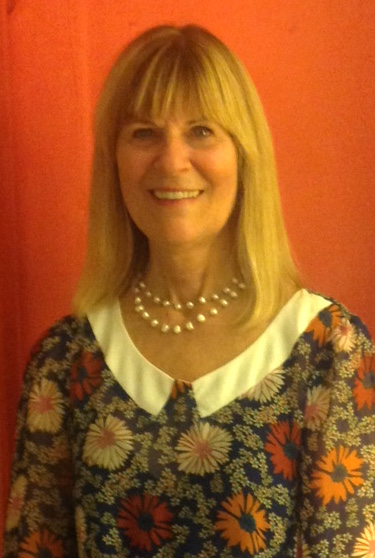
Last Friday night, as I was walking into Revelations for some dinner, I saw a sign in the window for a poetry reading by a friend I knew. It also said a birthday cake would be shared afterwards. I bought a big bowl of soup and headed downstairs. The place was packed and I had to stand at the back by a desk having my soup. The birthday poet was Karen Karns. Her husband, Don (aka, Ark-hal) Karns, offered me his seat, but the owner brought me a chair in time. Don, Karen and I used to work together as Maharishi Ayurveda technicians in the late ’80’s & early 90’s.
Karen Karns has a Masters in Divinity from Earlham School of Religion, a Quaker seminary, and is a Life Counselor. She has twenty years of experience in Fairfield, Iowa offering individual, pre-marital & couples counseling, which she continues to do in the afternoons. As a Sidha, Karen has been on the Invincible America Assembly continuously since its inception in 2006!
I’ve always found Karen to be a very friendly, cheerful, compassionate and gentle person. You’d never know she had reached retirement age. Maybe all that meditation has kept her looking eternally young and beautiful, inside and out!
Now I discover she’s a poet! Karen was shy about reading her poems in front of an audience, but she did well. The last poem took our collective breath away as she shared an intimate experience of a poem coming to her during a deep meditation in the Ladies Golden Dome.
When a poem comes to you and you don’t write it down, you never forgive yourself. That’s what happened to Karen the first time. But, luckily for her, and us, it came back again during her next meditation in the dome and she quickly wrote it down. This happened during Guru Purnima this year, a special gift. I’ll let her words speak for themselves as the poem asks us, tells us, what could be more intimate.
WHAT COULD BE MORE INTIMATE
than these shimmering sheets of light
enfolding the features of each face
as we meditate in silence together,
our spines, divining rods for the deepest
currents and reservoirs of peace.
What could be more intimate
than to be held captive by this
moment, its piracy complete
with all the spoils and riches
from past and future laid
immediately at our feet.
What could be more intimate
than this play of hide and seek,
peeking around corners, into doors—
only to find ourselves hidden
in the marrow of every beam
and rafter in our own huge house.
What could be more intimate
than the waking up of sleep
inside itself
spellbound by the sound
of its own sweet voice
humming an ancient lullaby.
What could be more intimate
than the filling and emptying,
the steady pump of liquid love
as it funnels its way into the portals
and pathways of our bodies, joyfully
mothering each tender cell.
What could be more intimate
than the downpour and drench of bliss.
What could be more intimate than this?
Karen Karns
Guru Purnima 2015
I was so blown away I had to post it on my blog. Luckily she agreed, so I could share it with all of you. I also took her photo to go with the poem.
When I asked Karen if she just wrote it down as a scribe or if she had to work at it, she replied, “I scribed and scrubbed both,” with a smiley face.
That’s been my experience too—creative expression is a collaborative process, especially when the muse whispers something to you! You start with a seed idea, words, even lines, if you’re lucky, and you work at it until it’s done, you polish it until it’s right. Karen sure got this one right!
The discussion on Vedic cognition at the end of “Are you Mr. William Stafford?” is very relevant to Karen’s experience as a poet!
Valerie is a great writer. She’s colorful, direct, and pulls no punches. Her effervescent personality shines through the amazing stories she shares with her readers, awakening them to their own inherent greatness.
The book is divided into short easy-to-read chapters packed with practical insightful wisdom. It’s also an inspirational testimony to the transformational power of TM, and I am enjoying reading every word of it!
Valerie sent us this intro to her story.
Awakening to Me
In 2011, I woke up and realized everything I thought I knew was wrong.
~ Valerie Gangas
For as long as I can remember, I have been running. Waking up in the morning and running to the gym. Running to the hospital to support my mother, who battled cancer for 13 years. Running to my job, managing an extremely busy Chicago restaurant/bar. Running from boyfriend to boyfriend. Running from one social event to another. Running to deal with the pressures modern women face to be perfect, to get the job done right, to be a caretaker, to look good—let’s face it: to be Wonder Woman.
Then one day, I was forced to stop running.
In late 2010, the restaurant I’d managed for 15 years was sold . . . but it turned out to be a weird sort of blessing, in that I got to spend day and night with my beautiful mother who, by Thanksgiving that year only had a couple of months left on the planet.
All of this time, I had been on a steady diet of double espressos, bottles of Cabernet and late nights eating steaks, cooked rare. (Did I mention I don’t eat meat?)
I was losing my mind as I watched her slowly slip away. I’d had a bad case of insomnia for years, my depression was deepening, and the distractions I’d held up like masks were no longer working well . . . make that, at all.
My mom passed away on January 25, 2011. And my world went black.
After she died, I felt like I’d died right along with her. I was out of a job, suicidal and completely unhealthy. My “diet”—mainly fueled by booze and caffeine—had caught up with me. I was the thinnest I’d been since high school, and my nerves were on fire. And it was like Groundhog’s Day—every night was the same scene. Go to bed, wake up at 3 a.m., stare at the ceiling, my thoughts reeling, feeling like complete crap, until I had to get up a couple hours later. Then my “day cycle” would start again. Down some caffeine, make myself workout (I had to fit in my cocktail dresses, duh!) and then never stop throughout the workday, ‘til I collapsed later that night.
Reflecting back, thoughts of suicide regularly arose in my mind. I didn’t feel like I could go on without my mom, who’d been my best friend. Clearly, I was a broken woman. Yes, I had been seeing a therapist and was trying to get my head above water. But nothing seemed to be working. My suicidal thoughts were getting stronger and stronger. I had gone so far as to ask my aunt and uncle to take my dog (I couldn’t bear messing up her little life), and I didn’t get a new car when my lease was up . . . because people who are going to kill themselves don’t need a car. I also wrote out my will.
Yep, I was gearing up to end my life.
One particularly horrible day I was on my knees in the shower, when I just collapsed and screamed out, “God, Mom, anyone, please help me kill myself or please save me!” In that moment, I completely surrendered. I was nothing. I was no one. And I completely gave myself and my fate over to God.
A week later, a friend suggested I learn Transcendental Meditation (TM). My only hope, at the time, was that I would be able to get some sleep. I hadn’t read anything about meditation, hadn’t thought about it or even wondered about it. But I was in such a dark place, one morning I made the call.
Within days, I borrowed that same friend’s car and drove to a Transcendental Meditation center in Chicago. The home which doubled as a TM center had a feeling of calm I couldn’t quite put my finger on—the air seemed lighter, somehow, and the view was all lake. Even upon entering the center’s lobby, I felt a bit calmer. Huh, I thought, these people who work here are super different. They were so chilled and completely filled with love . . . it was immediately clear to me they were there to help me. My next thought was, I’m here, so I might as well learn how to do this.
I sat down with my teacher and after a short, but beautiful ceremony, I was given my “mantra”—a sound she said my awareness would naturally follow, as it subsided into the depths of silence in my mind. When we both closed our eyes, I easily and effortlessly said the mantra to myself less than five times . . . and just like that, I was gone. I dove into a part of my body and mind I never knew existed—boundless, limitless and totally awesome. Yes-sir, something major had just happened . . . but soon I was discovering I’d only glimpsed the tip of the iceberg.
Driving home down Lake Shore Drive, I immediately began noticing how the world seemed so much different to me than it had on my way to the center. The colors all around me were more vivid, the sounds of the birds felt like sweet music to my ears, I seemed to be connected to all of the trees I saw . . . and above all, I felt happy. But, my mind called out to me, Is this really happening?! Do I really feel happy? How? Why?What the hell?
Fortunately, the essence of that experience stuck and stayed, and I came to find it was in fact “real”—that in twenty minutes, my whole life had changed. I woke up and realized everything I thought I knew was wrong. My life was no longer defined by outer circumstances. I was having a direct experience of what I have come to know as my true Self.
I cannot explain what followed . . . you know, the why of it. Within weeks of learning to meditate, I was standing in front of Oprah Winfrey, explaining how her newfound TM practice was going to make her limitless and boundless. Now, one would think standing in front of one of the most powerful women in the world would cause some serious butterflies in the stomach. But this wasn’t my experience. In that moment, when I stood at the front of the room and described my journey to her, I could only “see” her. The fame and the power didn’t exist. I was only concerned with helping the beautiful human in front of me the only way I knew how . . . with honesty, passion and a dash of humor.
I walked out of Harpo Studios that Friday morning and knew I was about to head down a very different life path. My soul and heart were breaking open and I was watching the right words leave my lips before my mind could even think them. I felt the power of the whole universe in my little body. That day, I decided to give everything I had to try to bring peace and goodness to the world. To do my part.
It has actually taken me the past few years to really understand this new way of living: that is, from the inside out. I felt compelled to write in my journal every night. I mean, the realizations I was having were just too profound not to write them down. I turned what I wrote about into a manuscript . . . and today I am proud to say I have just published my first book, Enlightenment Is Sexy: Every Woman’s Guide To A Magical Life. I’ve also started a brand I love and have continued to speak about consciousness, happiness, freedom, and above all, Transcendental Meditation.
Learning to meditate saved my life . . . but it also gave me more than I could have ever dreamt of: awakening to the real me.
###
George Foster of Foster Covers, with help from wife Mary, designed the colorful cover! Order the book on Amazon and read the nice comments.
Here’s a photo of the three of them during Valerie’s book-signing at Health & Wholeness on a 1st Friday’s Art Walk in Fairfield, Iowa.
I received an email this morning from a member of the TMhomeTeam, an international Transcendental Meditation news website. I’ve admired their wonderful work over the years representing TM internationally, especially their interesting interviews with famous, and not so famous people who have benefited from this unique meditation practice.
They wrote to say the article they had been putting together about me was now up. As a publicist who is always concerned with properly promoting other people and their work, this was a complete turnaround for me. I very much enjoyed sharing stories with Liisa of how I started TM, my work as a publicist, and the wonders of the creative process writing poetry. So when I read her article I was very moved; she did an excellent job representing me!
The article is currently featured on their home page and under the People section. I invite you to visit their website and enjoy reading it. They also did a lovely job laying it out with personal photos and two of my poems.
I am thrilled to share this milestone with you! Click on the title of the article to take you there.
In 1967, Ken Chawkin walked into the local TM centre without any intention of learning Transcendental Meditation. He simply wanted to buy a copy of The Science of BeingandArt of Living written by Maharishi Mahesh Yogi.
 In this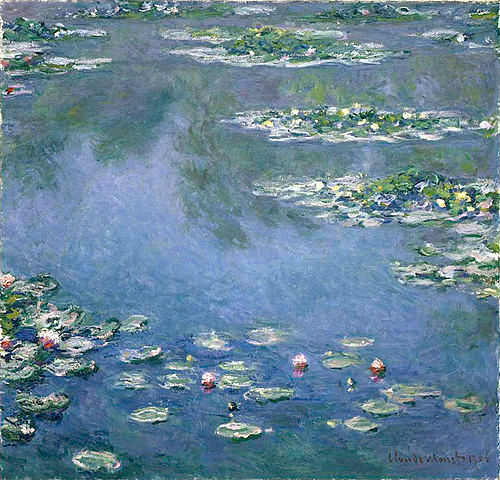
 Premiered last year at SXSW, with a theatrical run this spring, and now on DVD, Paul Dalio’s first full-length feature film,

 The Uncarved Blog