Archive for the ‘Education’ Category

San Francisco Bay Area News: From time-out to quiet time: meditation comes to SF schools

February 12, 2011

Education

From time-out to quiet time: meditation comes to SF schools

By Natalie Jones on February 10, 2011 – 5:01pm

Innovative ideas are often born in California. This is the home of Silicon Valley, after all. But, that spirit of innovation isn’t limited to finding more ways to plug in to the world of high tech. Innovation also means finding ways to disconnect from it all. This kind of innovation is taking place in three San Francisco public schools that have started school-wide meditation programs. The hope is that a little quiet time and mindfulness will help facilitate learning.

It’s all paid for with private money, and one school says it’s seeing results. Natalie Jones reports on how it works.

*     *     *

NATALIE JONES: Middle schools do not tend to be quiet places. For many people, middle school is hard enough in the best of circumstances. For students growing up in rough neighborhoods or dealing with difficult family issues, it can be especially stressful.

That’s why four years ago, James Dierke, principal of Visitacion Valley Middle School in San Francisco, decided to implement a meditation program for the entire school to see if it would help students and teachers deal with stress and focus on schoolwork.

JAMES DIERKE: There’s individual stresses of just being a teenager, there’s family stress, there’s community stress, and all those things multiply within a person. So this is something that everyone can do and doesn’t require a tremendous amount of effort on their part but has great results.

The program is called Quiet Time, and it teachers students the practice of Transcendental Meditation.

PA SYSTEM ANNOUNCEMENT: Please excuse this interruption, teachers and students, please prepare for Quiet Time, please prepare for Quiet Time.

Mr. Tagaloa’s homeroom is getting ready for the morning meditation session – they do fifteen minutes at the beginning of their school day, and fifteen minutes at the end.

VAO TAGALOA: Going to start our Quiet Time, let’s start by sitting up straight…close the eyes….let’s enjoy.

The dozen or so 8th graders in the room turn to face front, shut their eyes, and stay that way for a full fifteen minutes, without breaking the silence or fidgeting.

Visitacion Valley is one of the more challenged schools in the district – about two thirds of its students were getting free or reduced lunch last year, and the percentage of students proficient in basic subjects is lower than both the district-wide and the state-wide percentage.

In the last three months alone, there have been two homicides and more than a hundred assaults within just a mile radius of the school. Principal Dierke compares growing up in the neighborhood to living a war zone.

DIERKE: A lot of our kids come down with post-traumatic stress, just like you would if you lived in Iraq. So it’s hard to turn that off when you come in the school building when you sit down and try to study.

Post-traumatic stress is a hard thing to combat, but there are signs that Quiet Time is effective. Since the program started, test scores have gone up a little bit, attendance rates have gone up a little bit, and suspension rates have gone down, although the changes are only by a few percentage points. Most of the evidence of the program is anecdotal. Students and teachers participate willingly and say it’s helpful for them, and surveys that school has done return positive feedback. Though not everyone was enthusiastic at the beginning.

TRISTAN: Well, when they first took me in to train, I wasn’t so sure about the program…

Tristan is an 8th-grader, and has been doing meditation at school since 6th grade.

TRISTAN: But when I started to get into it and started to do it every day I noticed that it really helped me because I was sort of a trouble child, and then when I started to meditate I started to become a leader, I got good grades, so it was really helpful.

Students do have the option of doing something else quiet, such as reading, but Principal Dierke says only a few have chosen to do that. He’s also had strong support from parents.

DIERKE: In the last four years that we’ve been involved in this, I haven’t had one negative parent complaint.

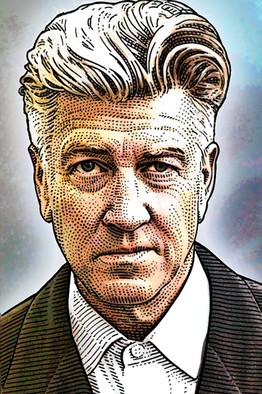
The program, which for this school year costs about $175,000, is funded almost exclusively by the David Lynch Foundation, an organization set up by the filmmaker David Lynch, who’s known for surreal films such as Mulholland Drive and the TV series Twin Peaks. The organization’s goal is to provide Transcendental Meditation in schools and communities that could benefit from stress reduction. The rest of the funds come from private donations, which pay for 3.5 full time staff members who are trained to teach meditation. They spend their time teaching new students, helping returning students remember how to use the method, and training the teachers.

Two other schools in San Francisco are also trying the program – Everett Middle School and John O’Connell High School. They haven’t been doing it as long as Visitacion Valley, but they’re all hoping that meditation can create a refuge for students who wouldn’t otherwise have one.

For Crosscurrents, I’m Natalie Jones.

Natalie Jones is a reporter with the UC Berkeley Graduate School of Journalism.

So, what do you think about meditation for school kids? Would you be behind that? Let us know at 415-264-7106, or send us an email.

Related Tags

Also mentioned on sfist: David Lynch Helps S.F. Schools Meditate, and in SCOPE, Stanford School of Medicine, under Alternative Medicine: Meditation in the classroom: Program helps at-risk kids.

Also see: The San Francisco Examiner—Meditation program mends troubled Visitacion Valley Middle School

And: New research shows Transcendental Meditation improves standardized academic achievement

And the TM Blog report with video: “Meditation mends troubled school in San Francisco” – SF Examiner

And here’s a wonderful report from the The George Lucas Educational Foundation (GLEF): Edutopia: SF School Uses TM to Overcome Problems.

Brain Researchers Demonstrate How Students Can Overcome Stress And Function Like Top Achievers

February 1, 2011

Prominent Brain Researchers Demonstrate
How Students Can Overcome Stress Crisis
And Function Like Top Achievers

Free Public Lecture: February 8, 2011, 5 p.m.
Location: Harper Memorial, #103, 1116 E. 59th Street, Chicago, IL 60637
Sponsored by: Students Transcendental Meditation Association, University of Chicago
Contact: Dr. Carla Brown: 773–324–8695, chicago@tm.org

How can today’s students overcome the debilitating effects of heavy stress – made even more difficult by the economy – in order to perform at their best?  It is indeed possible, and two prominent brain researchers will demonstrate how and share their compelling research findings on Tuesday, February 8, during a free public lecture at the University of Chicago. Check below for a listing of other lectures at different locations throughout the week.

Dr. William Stixrud, Ph.D., a prominent clinical neuropsychologist from Silver Spring, M.D., and Dr. Fred Travis, a neuroscientist and Director of the Center for Brain, Consciousness and Cognition at Maharishi University of Management in Fairfield, IA, will discuss how meditation can affect functional integration of the brain and enable changes that result in dramatic reductions in stress hormones and cardiovascular disease.

Both doctors agree that students can use these same meditation techniques to help them reduce and overcome stress and pressure, perform better, and engender increased well being and contentment.

Last week the New York Times covered a survey of 200,000 college freshmen that found that their emotional health was at the lowest level surveyed in 25 years. Dr. William Stixrud, who specializes in work with children and adolescents, responded,

“It is possible for students to ‘have it all’—to experience high achievement in a competitive world and still have happiness and peace of mind.”

Dr. Stixrud’s 2008 research found that middle school students with ADHD who practiced the Transcendental Meditation technique twice a day in school experienced over 50% reduction in stress and anxiety, and improvements in ADHD symptoms.

During the lecture on February 8, Dr. Travis will also present a live demonstration of changed brain activity as a result of the Transcendental Meditation® technique and will discuss differences in TM from other mental techniques.

In 2009 Dr. Travis collaborated with the American University Department of Psychology in Washington, D.C. in the first random assignment study of effects of meditation practice on brain and physiological functioning in college students International Journal of Psychophysiology, 2009. Dr. Travis and colleagues randomly assigned American University students to practice the Transcendental Meditation technique. Measured during the height of exam pressures, these students exhibited functional brain integration resembling that of gold medal athletes.

Non-meditating controls in this experiment were overwhelmed and displayed significantly less brain integration, which is brain functioning that was more fragmented and disorganized. Students reported being more anxious and irritable, reflecting the detrimental effects of college life on the students.

According to a study published in the American Journal of Hypertension, December 2009, the Transcendental Meditation technique was shown to be an effective method of reducing blood pressure, anxiety, depression, and anger among at-risk college students.

“The problem is stress,” says Dr. Stixrud, who has studied and lectured frequently on the effects of stress on the brain, particularly the developing brain. Dr. Stixrud added,

“The effects of stress are not pretty. Not only does stress interfere with functions such as attention, memory, organization, and integration, but prolonged stress actually kills brain cells and shrinks the brain’s main memory structures. In fact, the top stress researchers in the world report that lifelong stress level is the best predictor of risk for Alzheimer’s disease and other forms of dementia. In light of this research, I am increasingly struck by how counterproductive it is for students to learn in highly stressful contexts, since stress not only interferes with their learning and retention in the short run but also burns out their brains in the long run.”

FREE PUBLIC LECTURE SERIES:

Diamond Bank, Conference Room, 1800 W. North Avenue, Chicago, IL — Tuesday, February 8th, 11:30 am

University of Chicago, Harper Memorial, #103, 1116 E. 59th Street, Hyde Park, Chicago, IL — Tuesday, February 8th, 5 pm, sponsored by: Students Transcendental Meditation Association

Joliet Junior College, 1215 Houbolt Road, Rm. D 2001, Joliet, Il — Wednesday, February 9th, 1:15 pm. For information, call Pat Tinken 815 280 6660

Oak Park Public Library, Veterans Room (2nd Floor), 834 Lake St., Oak Park, IL — Saturday, February 12th, 2 pm

LINKS:

New York Times: Record Level of Stress Found in College Freshmen
College freshmen at 25-year low in emotional health, study says
Dr. Travis: Live demonstration: What happens when you meditate?

Dr. Travis: Transcending & Brain Research
Dr. Travis: What’s missing from education?
Also see: David Lynch Foundation: School Projects

UK: Meditation school to transfer to state sector

January 29, 2011

Education

Meditation school to transfer to state sector

By Richard Garner, Education Editor

Saturday, 29 January 2011

Britain is set to get its first state school dedicated to the values of transcendental meditation. A private school run by followers of the Maharishi Mahesh Yogi will transfer to the state sector in September.

The Maharishi School in Ormskirk, Lancashire, has been given the green light to be part of the first tranche of Education Secretary Michael Gove’s “free” schools.

Mr Gove announced yesterday that 35 “free school” applications had received the go-ahead. In all, 249 applications have been received by the Department for Education to join the scheme. Under the “free schools” policy, parents, teachers and charities can open schools – funded by the taxpayer.

Pupils at the Maharishi School – for four-to-16-year-olds – have three 10-minute every day. The school has smaller-than-average classes and just 80 pupils. It says meditation calms pupils, making it easier to learn, and claims it could double its numbers with state support. Head Derek Cassells said: “All scientific research shows transcendental meditation brings more balance to the brain… It helps with behaviour and improved relationships with other people.”

His school’s philosophy is that of the Maharishi, pictured, whose movement gained prominence in the 1960’s when The Beatles became converts.

Mr Gove said ministers hoped every new state school would be an academy or “free” school. He spoke ahead of a conference on “free” schools today when he will be accompanied by leaders of the Charter school movement in the United States – which is advising ministers on the “free” schools’ policy.

Charter schools do not recognise teacher unions, but Mr Gove said it would be up to individual school heads to decide if they do. US education experts said it was essential schools could “terminate” weak teachers.

Joel Klein, former chancellor of the New York City Department of Education, said that there must be “reasonable processes in place for terminating non-performing and under-performing teachers.”

Filmmaker David Lynch Introduces Veterans to Meditation

November 26, 2010

The Wall Street Journal Greater New York
Filmmaker Introduces Veterans to Meditation

David Lynch is looking to make the world a little quieter.

The filmmaker behind the movies “Blue Velvet” and “Mulholland Drive” is giving $100,000 to launch Operations Warrior Wellness, an initiative to help 10,000 veterans overcome Post-Traumatic Stress Disorder and other war-related illnesses through transcendental meditation, which he says creates “professional peacemakers.”

DONOR

Backed by the likes of actors Clint Eastwood, directors George Lucas and Martin Scorsese, Mr. Lynch will announce the new program next month at a gala at the Metropolitan Museum of Art.

In 2005, Mr. Lynch started the David Lynch Foundation for Consciousness-Based Education and World Peace and since then has donated half a million dollars to help finance scholarships for 150,000 students who are interested in learning transcendental meditation. The foundation has also funded research at institutions such as the University of Connecticut and the University of Michigan on the health benefits of the meditation technique.

Called “Quiet Time in Schools,” students and teachers meditate for 10 minutes at the beginning and end of each day. The funds pay to train educators and parents on how to administer and teach the method.

“Soon grades and attendance go up 20% to 30% and suspensions and expulsions go down,” Mr. Lynch says. “Instead of giving the kids drugs like Ritalin that just numb them, we give them a technique to reduce stress and focus better.”

Mr. Lynch, who is 64 years old, began meditating about 40 years ago using this method, which was introduced to the West nearly half a century ago by Indian guru Maharishi Mahesh Yogi. The technique is typically practiced twice a day for 20 minutes and used to eliminate stress, promote good health and gain deep relaxation.

Adapting the technique for college campuses, elementary schools, after-school clubs and hospital-wellness programs, Mr. Lynch says he has been able to improve academic performance and creativity in students. It has also been taught to men and women in homeless shelters and in prisons.

Now, Mr. Lynch wants to bring this approach to help the thousands of war veterans returning from Iraq and Afghanistan.

“These men and women have a lot of honor for what they have been through and don’t want to appear weak or admit suffering,” he says, pointing to high suicide rates and incidence of PTSD among veterans.

To that end, he says he wants to work through veteran associations and support groups to bring them this meditation technique.

“Clint Eastwood is about as macho as they get and he’s been meditating longer than I have,” he says. “We’re behind this technique and we think it can help veterans reclaim their lives and save themselves, their families and their friendships.”

The Iowa Source: MUM Sustainable Living Center

November 21, 2010

The Iowa Source cover story on MUM’s SLC written by Linda Egenes

Building the Future: MUM’s Sustainable Living Center
New Zero-carbon Classroom Showcases Green Living
http://www.iowasource.com/fairfield/2010_11_slc.html

Sustainable Living Center: It Takes a Team to Go Green
http://www.iowasource.com/fairfield/2010_11_slc_team.html

For more information and videos of the phases of construction plus a TV news report visit Sustainable Living Center. Also see YouTube videos at mumslc from Earth Day 2010, a Sustainable Living Center Tour Dec 2010, and Building Progress Reports 1, 2, 3, & 4. To find out more about a degree program in Sustainable Living, visit: http://sustainableliving.mum.edu.

BUILDINGS Magazine Sept/Oct 2011: A Zero Utility Bill Building

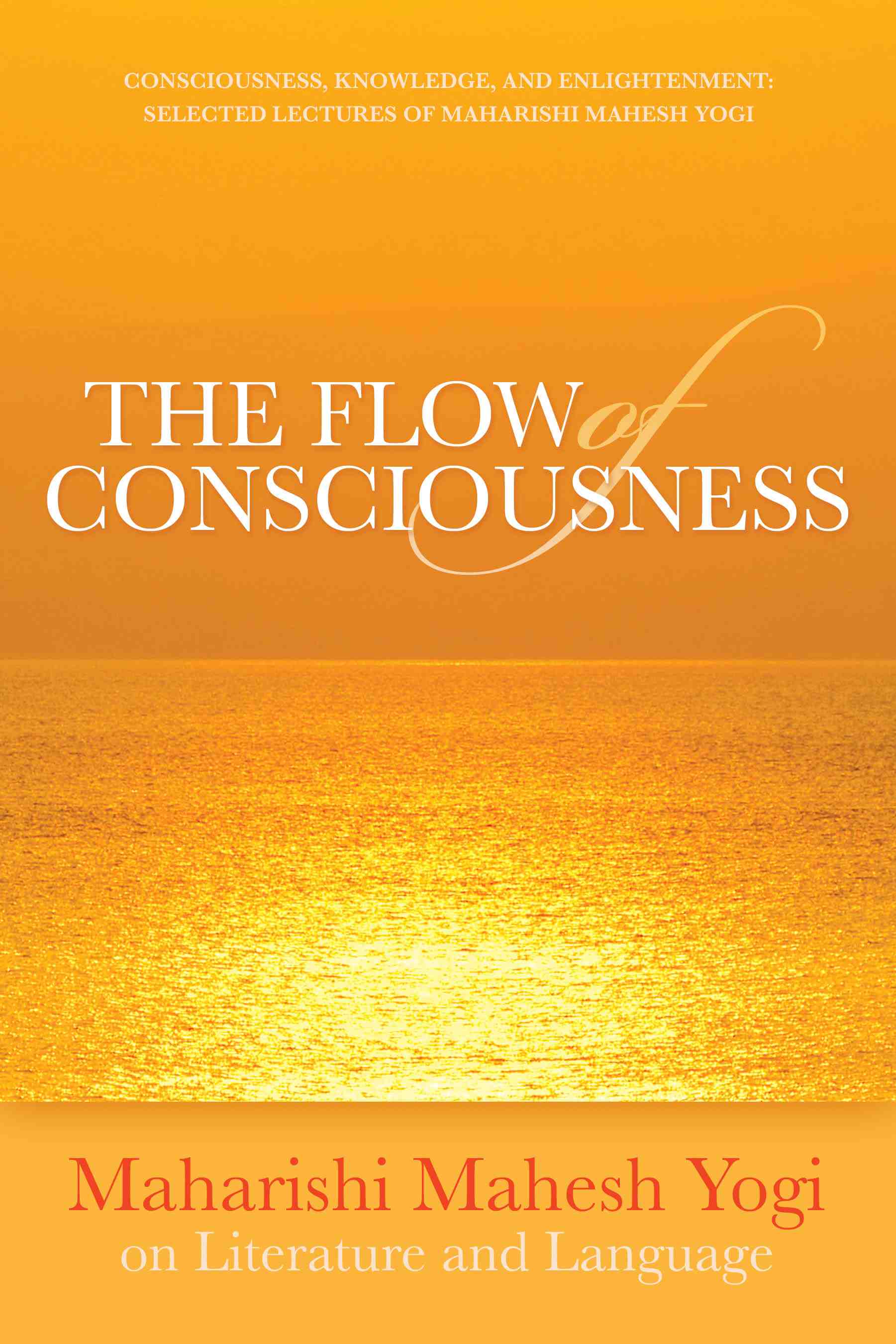
The Flow of Consciousness: Maharishi Mahesh Yogi on Literature and Language

November 3, 2010

THE FLOW OF CONSCIOUSNESS: Maharishi Mahesh Yogi on Literature and Language, 1971 to 1976, edited by Rhoda F. Orme-Johnson, Ph.D. and Susan K. Anderson, Ph.D.

For the first time, a selection of talks by Maharishi Mahesh Yogi, the founder of Maharishi University of Management, has been transcribed and published, with this volume on literature and language projected to be the first in a series publishing talks in many different disciplines. In response to MUM faculty talks on art, literature, government, education, and many other disciplines, Maharishi would give his profound insights into that discipline, a direction for research scholars, and a vision of how the study of consciousness would enrich and develop each area of academic inquiry and personal experience. A number of the talks were in response to presentations given at international symposia by leading scholars in their field, Nobel laureates, and such eminent professionals as R. Buckminster Fuller.

Over the years, Maharishi Mahesh Yogi recorded brilliant and inspiring lectures on the literary process, as well as critical theory and technique, emphasizing the relevance of the state of consciousness of both writer and reader. He explained how only from an expanded basis can the writer spontaneously experience and express refined emotions and ideas and only from such a basis can the reader hope to understand and enjoy such writings. Literature itself can be a means to evolve one’s consciousness through sounds, rhythms, and meanings, swinging the reader’s attention from concrete to abstract, purifying consciousness and producing bliss. A fully developed consciousness can express the ocean in a drop, and from that drop flows a river of meaning, power, and enjoyment.

Immersing oneself in the transcripts of Maharishi’s lectures allows readers to feel his presence, to hear his voice, his rhythms of speech, his humor, and to appreciate his skill as a teacher. His exposition of the power of poetry, particularly the poetry of the Veda, gives the reader a taste of his intellect and his profound understanding of language and literature. It is a journey through a great mind and an exploration of a topic familiar and beloved by all.

This volume is a valuable resource to teachers, students, and all readers of literature, to all those interested in higher human development and the literary process.

The 350-page book includes 14 talks given in the years 1971–76 and is available at Maharishi International  University Press.

The Review wrote an informative article, the first of six, in issue Vol. 26, #4, November 3, 2010, announcing the publication: First-Ever Book of Maharishi’s Lectures Explores Literature and Language.

MIU Press later offered The Flow of Consciousness with The Unmanifest Canvas as a discounted Art Book Combo.

Dean of Faculty Cathy Gorini spoke with Dr. Rhoda Orme-Johnson, the first interview in a new series on KHOE titled, “A Chat With The Dean.” This discussion focused on Dr. Orme-Johnson’s new book, “The Flow Of Consciousness,” transcripts of Maharishi Mahesh Yogi’s lectures. Drs. Gorini and Orme-Johnson settle into a warm discourse on the significance of Maharishi’s lectures, in particular, the field of literature. Recorded Oct 26, 2010. (mp3 47 mins, 16 MB)

(more…)

KTVO: Maharishi runners prepare for Turkey Trot

October 23, 2010

Maharishi runners prepare for Turkey Trot
by Kisha Henry
Thursday, October 21, 2010

Click here to see video.

FAIRFIELD, IOWA — The Maharishi School Running Club has their eye on some turkeys.

The runners are preparing to participate in their next race.

“The next run is the Fairfield Turkey Trot and it’s a fundraiser for the Roosevelt Recreation Center here in Fairfield and they have it every year and it’s going be November 13 at the Water Works Park,” said Coach Peter Mannisi. “We’ve run the last two years and they give turkeys to the age group winner, and the first year we won two turkeys, last year we won three turkeys, so hopefully we’ll win more turkeys this year.”

The runners have been preparing in many different ways, including meditation.

“When you meditate, you go to this really profound and deep state of relaxation and when you tap into this, there’s this limitless source of energy, this inner reservoir of energy that you can tap into and it’s really powerful,” said Oliver Huntley, runner. “I find that when I can achieve that meditative state when I’m running, I can actually tap into that inner reservoir of energy while I’m running and it has effects, I can run harder, I can run faster, I can run for longer.”

Huntley will not be competing in the Turkey Trot due to an injury, but he says the meditation is helping his recovery time.

Some runners will even participate barefoot.

“I live barefooted and that’s why I run barefooted,” said Beau Blakely, who finished first in his last race. “It wasn’t too hard. The road was pretty clean, so if there’s gravel in the road, that hurts, but generally it was pretty clean.”

Blakely works out for an hour each day and walks everywhere, rather than driving, in order to do well in his races.

Dr. John Hagelin: Look Within to Understand the Universe

October 2, 2010

Supreme Master Television sent their film crew here last year to produce several respectful profiles on Consciousness-Based Education at Maharishi School and Maharishi University of Management, and also featured our organic vegetarian food services. They produced a feature on the Maharishi Effect for World Peace, and one on Dr. Fred Travis, director for MUM’s Center for Brain, Consciousness and Cognition, for their “Science & Spirituality” series. They recently returned to conduct an interview with Dr. John Hagelin for the same program.

Supreme Master Television’s profile on Dr. Hagelin: “Dr. John Hagelin: Look Within to Understand the Universe” aired in two parts on their “Science & Spirituality” program: Part 1 (Aug. 30, Mon) and Part 2 (Sept. 27, Mon) at 4am, 10am, 4pm, 10pm in Central Time. This excellent interview has now been archived and can be viewed in two parts:

Part 1: http://www.suprememastertv.com/bbs/tb.php/download/8239
Part 2: http://www.suprememastertv.com/bbs/tb.php/download/8399

The main philosophy of Supreme Master Television is vegetarianism to save the planet. They enjoyed coming here, meeting everyone, and especially loved eating our organic vegetarian and vegan food. Their motto is: Be Veg, Go Green 2 Save the Planet www.suprememastertv.com

Other videos worth watching: Conscious TV: John Hagelin – The Core of Nature and John Hagelin, Ph.D., Speaks on the Nature of Consciousness and the Universe. And this interview: John Hagelin — “Only Higher Consciousness Can Transform Our World” — Beyond Awakening Blog.

Workshop Makes Case for Meeting Architecture 2030 Challenge Today

September 27, 2010

COSC hosts “2030 Now: Case Study of MUM’s Sustainable Living Center” on Sept. 28 in Des Moines.

West Des Moines, IA (September 24, 2010) –With buildings consuming more energy than any other sector, Architecture 2030 issued The 2030 Challenge to the global architecture and building community, asking them to meet sustainability standards of a zero carbon footprint by year 2030. As of July 2010 40% of all U.S. architecture firms have adopted the Challenge.

Center on Sustainable Communities (COSC) hosts a dynamic green building workshop that illustrates how to attain The 2030 Challenge right now, using readily available building technology and products. Fairfield’s Maharishi University of Management (MUM) Sustainable Living Center is the first of its kind and is the subject of “2030 Now: Case Study of MUM’s Sustainable Living Center” happening on Tuesday, Sept. 28 from 5:00-7:00pm at the John & Mary Pappajohn Education Center located at 1200 Grand Avenue in Des Moines. The workshop is free and those interested in attending are asked to register by contacting COSC’s Leslie Berckes at 515-707-2787 or Leslie@icosc.com.

Presenters of the program include Masaki Furukawa, architect of the Sustainable Living Center, and Dal Loiselle, developer and general contractor. Together, they will review how the Sustainable Living Center surpasses LEED platinum standards, complies with the Living Building Challenge and has already achieved The 2030 Challenge by using methods and materials readily available in Iowa now.

“2030 Now: Case Study of MUM’s Sustainable Living Center” is an extension of COSC’s Re-Building a Sustainable Iowa statewide training program. COSC is able to temporarily offer its Re-Building a Sustainable Iowa sessions for free through funding from the Iowa Department of Economic Development and the U.S. Department of Housing and Urban Development.

About COSC

Center on Sustainable Communities (COSC) is a non-profit membership organization founded in 2005 that serves as Iowa’s trusted educational resource for sustainable building. As the recognized leader in providing education and connecting resources, COSC empowers individuals and communities to make everyday decisions that promote sustainability, resulting in a better quality of life for all Iowans. COSC’s schedule of residential, commercial and energy-specific workshops can be found at www.icosc.com.

###

Contacts:

Lynnae Hentzen, Co-Founder/Executive Director
COSC – Center on Sustainable Communities
515-707-0732, Lynnae@icosc.com

Siobhan Spain, Communications Specialist
COSC – Center on Sustainable Communities
515-707-2783, Siobhan@icosc.com

Embody: focus on TM: Iconic Filmmaker David Lynch has a viable solution to a pressing problem

September 9, 2010

This excellent cover feature article on David Lynch and TM is featured in the focus on section of the Autumn 2010 issue of Embody, a British national magazine for members of CThA, the Complementary Therapists Association. The article, TRANSCENDENTAL MEDITATION, Iconic Filmmaker David Lynch has a viable solution to a pressing problem, pages 10-13, is written by Norman Zierold, and reprinted with permission by the Complementary Therapists Association www.ctha.com. The article is not available online but you can download a PDF of it here: David Lynch EMAUT10.

Two other TM-related articles in the Industry News of this issue include Invincible Defense Technology and Doctors Prescribe Meditation on pages 16–17: P16-17 EMAUT10.

Here is a more recent article: THE REMARKABLE DAVID LYNCH FOUNDATION — written by Norman Zierold for Healthy Referral.

Enjoy this delightful article on Norman Zierold: The Chronicle of Higher Education: Notes From Academe: The Spokesman Who Kept Calling.