Archive for October, 2011

Lady Lullaby Sings Welcome Home to Love and Dance Like The Wind

October 8, 2011
Jane Roman Pitt, aka Lady Lullaby, sings Welcome Home to Love and Dance Like The Wind for her album Midnight Lullaby.
Recorded and produced in Nashville with award-winning Mac Gayden and musicians, Midnight Lullaby is a great CD, for babies, and adults. Lullabies by well-known artists Sade, The Beatles, Bob Dylan, Wilco, Tom Waits, Donovan, Dixie Chicks, Hugh Prestwood, and Josh Ritter, are sung by Lady Lullaby, Jane Roman Pitt. Two of her own songs are on this album. Welcome Home to Love is a definite hit! Another beautiful song written and performed by Jane and the band that didn’t make it onto the CD is Dance Like The Wind. You used to be able to listen to it at the bottom of Jane’s blog post for April called The Rhythm of Life, but it’s now on her YouTube Channel. Here are other links to her website and blog listing the songs, artists, and musicians; and sites to sample and purchase MP3 or the CD: http://ladylullaby.comLady Lullaby | Welcome Home to Love | http://www.cdbaby.com. Enjoy!

See a beautiful new video of Jane’s song, Iowa Gold, produced by Ken West with his photographs of Iowa landscapes: Fairfield Artists and Musicians Share in Iowa Gold.

Jane made a second award-winning album with a different band. Road to Dreamland contains soothing bedtime cover songs for everyone from babies to grown ups. A different arrangement of Dance Like the Wind made it onto this album.

Jane’s music can be heard on Apple Play | Spotify | YouTube | Amazon.

On October 4, 2020, TM Talks host Mario Orsatti interviewed Jane Roman Pitt on The Calming Power of Music During Uncalm Times. (52:06)

Jane Roman Pitt wrote an article for the Winter/Spring 2023 issue of Grand Magazine: The lullaby instinct: not just for babies, pages 10 & 11.

The Norwich Guidon: Rooks experiment with meditation

October 8, 2011

Rooks experiment with meditation

By Thomas Carson
Norwich Guidon Staff Writer
Published: Tuesday, October 4, 2011

Norwich University has received a $40,000 grant from Foundations of America to conduct a study on how to lower stress among rooks. One rook platoon is using Transcendental Meditation (TM) twice a day, every day, to see if meditating helps, according to Dr. Peg Meyer, director of academic achievement and educational effectiveness.

“The big thing about the TM practice is that it is an individual tool, people will say, ‘What about a team performance or a platoon performance’ but it is really about what it does for you,” said Shelby Wallace, the director for student success. “I have been TM’ing for almost a year now this December, and it has definitely helped with a level of prioritization.”

“I can handle situations in a more effective way, and reduce my stress, so I have seen a lot of positive results in a personal and professional way,” said Wallace.

Last February, Norwich conducted a study with the men’s lacrosse team to test TM.

“The spring study was more or less an intro for the university to take a cross section of students, staff and faculty who were trained, as well to learn a little more about the TM practice to understand if this was something that we wanted to do,” said Wallace.

After seeing good results, Meyer, Wallace and President Richard W. Schneider went to New York to meet with the David Lynch Foundation to get trained in TM and to see its effects firsthand.

After receiving the grant, Norwich sent out emails to the rooks of 4th Company, 3rd Platoon, asking if they would participate.

Twenty-eight rooks volunteered.

“I received an email, I volunteered, and now I am apart of this great study,” said Frank Ruscito, an 18-year-old freshman study of war and peace major from Rome, N.Y. “I feel it has worked better than I expected.”

“I see other people falling asleep (in class), and I am energized and focused,” Ruscito said. “I’m doing much better in my classes than I expected.”

The 4-3 platoon cadre are trained in TM and do it with the platoon, as well as by themselves when needed to. The rooks are free to meditate whenever they please as well. The platoon meditates at 0800 and between 1620 and 1630 as a platoon.

“My stress levels are down. As far as academics, everything seems to be clicking very well,” said Scott Heimann, a 18-year-old freshman computer security major from Colorado Springs, Colo. “I do believe with the help of the TM, my rookie knowledge is sticking very well.” Heimann added, “I strongly believe that I will continue TM after rookdom.”

“It has helped me with my academics tremendously. I feel more alert, I can focus better on my homework,” said Timothy Hunter, a 18-year-old freshman biology major from Stratham, N.H. Hunter also described how the effects of the TM helped him with his rookie knowledge, and how it relieved the stresses of balancing the rook environment and school work.

All the rooks who were interviewed said TM should be done by everyone; and that they will continue doing TM.

“I feel more organized, I feel I have more energy, I’m more productive, and it helps relieve stress,” said Madison Dupouy, a 22-year-old senior physics major from Saratoga Springs, N.Y.

Dupouy went to a dinner for people interested in this new study. After discovering that TM actually helped him with his academics, his stress and his energy level, Dupouy decided to get involved as one of the cadet officers who will oversee the study.

“I have always been interested in meditation,” said Brandon Jennings, a 21-year-old senior history major from Gales Ferry, Conn. Jennings found out about the study, and when he tried it for himself he noticed an improvement in his energy levels, organization habits and his academics.

“I took 23 credits with two seminar classes last semester, and I got a 3.407 GPA for the semester,” said Jennings. These good results got him interested in being a part of the study, and he became one of the officers in charge.

Related:

BUILDINGS Magazine: A Zero Utility Bill Building

October 8, 2011

BUILDINGS Magazine
September 2011

You can read this article below, but there are two other ways to better see what it looks like online, in a digital version of the magazine: click here to browse the enhanced, rich media version from cover to cover: article is on pages 24-26, includes pop-out video, or click here to just see the article.

A Zero Utility Bill Building

One zero utility bill university is boldly pursuing off-grid for electricity, water, and sewer

By Jennie Morton

You wouldn’t expect to find a building of the future nestled in the hills of Iowa, but the Sustainable Living Center (SLC) is all about breaking the mold.

Commissioned by the Maharishi University of Management, the facility is a forward-looking project that draws from an “East Meets West” approach to sustainability. It is the first to integrate four separate building challenges: LEED Platinum, the Living Building Challenge, Building Biology, and Maharishi Vedic Architecture.

The result of combining ancient philosophies with the latest green technologies? A 6,900-square-foot building that’s off-grid for electricity, water, and sewer.

An Ambitious Plan
Since its inception, the Sustainable Living Center has evolved from an environmentally conscious project to one that minimizes its impact right down to the paint on the walls. Unlike other new buildings on campus, the design requirements were voiced by the faculty, students, and community members. While their first visions of the center were less far-reaching, the future occupants insisted on a building that teaches.

“Why off-grid? It’s never been done for a campus building as far as we know, and we wanted to demonstrate that it can be done,” explains David Fisher, director of the SLC and a university professor. “This is where the industry needs to go next, but they won’t do it unless they see it first. This will help to expand their vision of what is possible.”

One also doesn’t think of the Midwest as a hotbed for sustainable architecture, but it’s for this very reason that Maharishi University wasn’t thwarted. “Contrary to popular opinion, the Midwest is ideal for an off-grid building. It’s hard to imagine a place with more extremes with temperature, weather, and humidity. But if you can do it here, then you can do it anywhere,” Fisher says.

Overcoming Challenges
An intricately planned building of this magnitude requires an element of patience to temper unexpected complications. The first challenge was funding. Because the university was focused on another large project at the time, the SLC needed to secure funds from the onset. Once some excitement had been generated, the recession hit and stalled progress. Consequently, the center is being built in stages.

This economic reality may mean the building will go online without all the features required to be fully off-grid. However, the university remains optimistic. “Even short of the full goal, the building will compare favorably with, and even go further, than most green buildings,” says Fisher.

Conflicting opinions on green strategies were also a factor that had to be addressed to find consensus in the design. “People often have very sharp differences for the best way to go green,” Fisher says.

For instance, how does one determine whether in-floor radiant heating or a forced air system is the most suitable option when both reduce energy consumption? Fisher says many conversations like these were necessary to achieve the most optimal version of the building.

While the four challenges provided many options for sustainability, some produced a conflict of interest. For example, LEED honors recycled content, while Vedic Architecture supports the use of virgin materials only. The Living Building Challenge requires the protection or restoration of natural habits on the site, but only LEED specifies light pollution reduction.

“However, one reason for doing all four certifications is to try to be as inclusive as possible of different people’s ideas of what should be in a green building,” Fisher explains.

Another stumbling block came in the form of climate change, which impacted the center’s renewable energy output. “We discovered that the number of cloudy, wintery days with low temperatures and wind has increased more in the past 5 years than it has the last 20 years,” says Fisher. “We also found out that rainfall has gone up by 4 to 5 inches a year. We had to do some redesigning when we learned this.”

Creativity Yields Results
If you’ve assumed this progressive building is using cutting-edge or proprietary systems to get to its goal, you’d be mistaken. The university prides itself on using “state-of-the-shelf” technologies to prove that its goal can be achieved in the here and now with well-proven equipment and supplies, says Fisher.

This led to some out-of-the-box strategies to find solutions to common problems:

• “One strategy was instead of trying to make a building have a comfortable temperature at any humidity, we lowered the humidity. We know high humidity, whether cold or warm, makes people uncomfortable,” explains Fisher. “So we keep the humidity controlled with desiccant cooling, which actually provides a wider temperature range as a buffer.”

• Students drove innovation by insisting the amount of concrete in the building be reduced, so an alternative to cinder blocks had to be found. A nearby construction project excavated a ridge and the students saw the displaced soil as a resource. They ran a compressed earth block machine to compact the dirt into blocks. These became the thermal mass to help insulate the building and were also used for interior walls in classrooms and hallways.

• To negate any VOCs, even the paint on the walls has a biological origin. Earth plasters are mixed with sand and cow manure, paints have a powder milk base, and most pigments are derived from clays, minerals, or spices. “People today have a heightened awareness of what kinds of building materials are toxic or produce off-gassing,” says David Todt, vice president of expansion. “It’s important to demonstrate the kinds of techniques that will result in a more healthy building for people to work in.”

• To achieve zero-water status, extensive rainwater harvesting will be used and filtered with UV light for drinking water and toilets. All black and grey water will be processed in a septic tank and then by a peat moss system for irrigation needs.

Justifying the Cost
Though construction is still underway and anticipated to be completed within the next year, the final costs per square foot are projected to be $450. Fischer is quick to point out that while sizeable, the costs aren’t much higher than a typical LEED project.

Some have criticized the project as being twice as expensive as LEED, but those numbers are based on a certified project only, he says. Average costs for LEED Platinum projects are typically around $350 a square foot. The extra $100 for the SLC is balanced by the additional three certifications and the elimination of grid ties.

Given the high costs, Todt recognizes that the university’s commitment to sustainability won’t be easy for everyone to duplicate. “We know it’s not commercially feasible for everyone to do an off-grid building like we have,” Todt admits. “But this is a demonstration project – it makes a statement that this is the way we need to go in the future. If that means someone is doing a normal building and decides to go the extra mile with efficiency in one system, that’s what we want to help motivate.”

Fisher also stresses the benefits of grid independence. Calling the SLC a zero utility bill building, he hopes the building’s example will prompt others to think about a future that makes an off-grid facility a savvy move.

“We encourage others to keep in mind the effects of peak oil, climate change, and energy descent as you design your green building,” recommends Fisher. “You can have it all, and you can have it now. It’s just a matter of deciding if it’s worth it to you.”

Jennie Morton (jennie.morton@buildings.com) is assistant editor of BUILDINGS.

WebMD Feature: How Transcendental Meditation Can Improve Your Health

October 7, 2011

                  Health & Balance

How Transcendental Meditation Can Improve Your Health

New research shows that this ancient practice can increase focus, decrease stress, and manage high blood pressure.

By Annie Stuart                             Reviewed by Patricia A. Farrell, PhD

WebMD the Magazine – Feature

Two years ago, Marisa McGinnis, a 63-year-old attorney from Burlingame, Calif., suffered every parent’s worst nightmare. Her 14-year-old son took his own life. McGinnis turned to transcendental meditation (TM) to help her cope. At the Transcendental Meditation Program web site (www.tm.org), McGinnis found a nearby teacher and started practicing. “It was life-changing,” she says.

Popularized by the Beatles’ guru in the 1960s, TM is enjoying renewed interest. Celebrities including the singer Moby and actor Russell Brand are endorsing its benefits, from help for quitting addictions to improved creativity. In 2005, film director David Lynch formed a foundation to bring TM into schools, prisons, and homeless shelters, among other places.

And TM has gathered some research chops, too. Norman E. Rosenthal, MD, clinical professor of psychiatry at Washington, D.C.’s Georgetown University Medical School and author of Transcendence: Healing and Transformation Through Transcendental Meditation, recently completed a small study of TM’s effects on veterans with combat-related post-traumatic stress disorder (PTSD).

“Before our research was over, three of our clinicians had gotten TM training,” Rosenthal says. “That’s how impressed they were with what they saw.”

What Is Transcendental Meditation?

TM is one meditation technique among many. It has you silently and effortlessly recite a mantra, a soothing sound without meaning. As a result, muscles unwind, breathing slows, and the pituitary gland releases prolactin, a hormone thought to have a calming effect, Rosenthal says.

Research also shows enhanced brain activity during TM, such as increased alpha brain waves, which are linked with rest and reflection. TM increases brain wave coherence too, meaning different parts of the brain work in better harmony. That can lead to greater focus and competence. “In seasoned meditators, this coordinated response spills over into other parts of the day,” Rosenthal says.

The health benefits? Plenty, according to more than 300 peer-reviewed articles. TM-linked brain changes help interrupt the body’s stress response, helpful for people with problems ranging from anxiety to high blood pressure (HBP) and heart disease. A study of 60 African-Americans with HBP even showed a link between TM and reduced atherosclerosis.

McGinnis credits TM not only for improving her health but also for motivating her to launch a poetry web site. “There are an indescribable number of benefits of being in the present,” she says.

How to Practice TM

Those who practice TM sit 15 to 20 minutes twice daily with eyes closed and silently repeat a mantra an instructor has given them. Want to give it a try? Norman E. Rosenthal, MD, offers some tips:

Learn from an expert. TM proponents suggest a customized approach to allow for feedback and ensure you’re using the technique correctly. Instruction is a series of seven steps, with teachers providing ongoing mentoring as needed.

Go easy. With TM, there’s no need to either focus on thoughts or push them away. Simply use the mantra as the means to settle your mind.

Stick with it. Give yourself a few months of twice-daily meditation for it to become a habit. “As with any practice, it’s a skill you need to acquire,” Rosenthal says. “It took me a month or two.”

Be careful. TM should not be used as a replacement for needed health care. Be sure to ask about the training and experience of a teacher and determine whether TM has been researched for any health issues you need to address.

SOURCES:

David Lynch Foundation.

Marisa McGinnis, attorney.

Rosenthal, N. Transcendence: Healing and Transformation Through Meditation. Jeremy P. Tarcher/Penguin. 2011.

Castillo-Richamond, A., Stroke, 2000; vol 31: pp 568-73.

Orme-Johnson, D, Psychosomatic Medicine, 1987; vol 49: pp 493 – 507.

Schneider, R. American Journal of Cardiology, 2005; vol 95: pp 1060-1064.

Norman E. Rosenthal, MD, clinical professor of psychiatry, Georgetown Medical School.

Reviewed on August 12, 2011
© 2011 WebMD, LLC. All rights reserved.
————–
Also listen to an excellent interview with Norman Rosenthal and Jenny Crwys-Williams on South Africa’s 702 Talk Radio. Click to download Podcast. It’s mentioned in this post: Meditation for Health, Happiness and Spirituality.

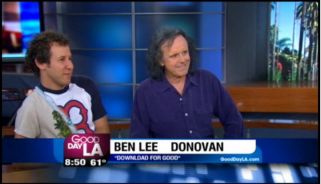
Donovan and Ben Lee on Good Day LA

October 5, 2011

Wednesday, 05 Oct 2011, 12:38 PM PDT\

Video from: Good Day LAVideo from Good Day LA: Good Day LA interview video.

Los Angeles – Singer and guitarist Donovan, and his son-in-law Ben Lee… who is an award-winning musician and actor… have teamed up with other artists, including Tom Waits, Iggy Pop, and Peter Gabriel for David Lynch’s Download for Good charity compilation.

The 33-track album is available exclusively on iTunes and all the proceeds from the downloads go directly to the David Lynch Foundation, a non-profit organization which brings the Transcendental Meditation technique to underserved populations.

On Wednesday, both Donovan and Ben talked to us live on GDLA about their involvement with the project.

Willow Tree Tanka II

October 3, 2011

It’s a long story, but some people drive on the front lawn, under and through the willow tree branches, to get to the next-door neighbor, something I wasn’t too happy about. One of the visitors complained about the long willowy branches getting in the way, which prompted the management to trim them back. Not something I cared to see happen. Sort of like getting a brushcut when you preferred keeping a pompador. Welcome to the Midwest!

Willow Tree Tanka II
(in reverse)

Why the Willow Tree complained
After its branches were cut

They say I’m too long
You can’t let your hair down here
So they cut me short

Ken Chawkin
Oct 3, 2011
Fairfield, Iowa

See the first poem: Willow Tree – a tanka – from a tree’s perspective.