Posts Tagged ‘Mary Oliver’

Mary Oliver’s poem, The Loon, may leave you suspended, like the poet in the early morning

March 8, 2019

To get a feeling for what Mary Oliver heard and how it affected her, listen to this video, Voices: Common Loon, before reading her poem, The Loon.

                                   THE LOON

Not quite four a.m., when the rapture of being alive
strikes me from sleep, and I rise
from the comfortable bed and go
to another room, where my books are lined up
in their neat and colorful rows. How

magical they are! I choose one
and open it. Soon
I have wandered in over the waves of the words
to the temple of thought.

…………………………………And then I hear
outside, over the actual waves, the small,
perfect voice of the loon. He is also awake,
and with his heavy head uplifted he calls out
to the fading moon, to the pink flush
swelling in the east that, soon,
will become the long, reasonable day.

……………………………………………….Inside the house
it is still dark, except for the pool of lamplight
in which I am sitting.

……………………………I do not close the book.

Neither, for a long while, do I read on.

— Mary Oliver, What Do We Know (2002), Devotions (2017)

See this remembrance of Mary Oliver with links to more of her poems.

RIP: Mary Oliver. Thank you for sharing your poetic gifts with us. They are a national treasure!

January 17, 2019

maybe death
isn’t darkness, after all,
but so much light
wrapping itself around us–

From White Owl Flies Into And Out Of The Field by Mary Oliver

Jan 17, 2019: I received news this morning that Mary Oliver had passed. I was shocked. Strange how just two days ago I had posted and sent out one of her beautiful, wise poems, Sunrise.

Later tonight I checked and the internet was flooded with the news. A friend forwarded this email from Suzanne Lawlor: RIP Mary Oliver. I am very sorry to share this sad news about Mary Oliver, one of my favorite poets. This is what was sent out today. (I added the dates.)

Mary Oliver, beloved poet and bard of the natural world, died on January 17 at home in Hobe Sound, Florida. She was 83. (Born: Sept 10, 1935)
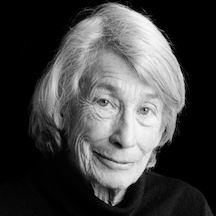
mary oliver photo

Mary Oliver (1935-2019)

Oliver published her first book, No Voyage, in London in 1963, at the age of twenty-eight. The author of more than 20 collections, she was cherished by readers, and was the recipient of numerous awards, including the 1984 Pulitzer Prize for American Primitive, and the 1992 National Book Award for New and Selected Poems, Volume One. She led workshops and held residencies at various colleges and universities, including Bennington College, where she held the Catharine Osgood Foster Chair for Distinguished Teaching until 2001. It was her work as an educator that encouraged her to write the guide to verse, A Poetry Handbook (1994), and she went on to publish many works of prose, including the New York Times bestselling essay collection, Upstream (2016). For her final work, Oliver created a personal lifetime collection, selecting poems from throughout her more than fifty-year career. Devotions was published by Penguin Press in 2017.

For me the door to the woods is the door to the temple.

Her poetry developed in close communion with the landscapes she knew best, the rivers and creeks of her native Ohio, and, after 1964, the ponds, beech forests, and coastline of her chosen hometown, Provincetown. She spent her final years in Florida, a relocation that brought with it the appearance of mangroves. “I could not be a poet without the natural world,” she wrote. “Someone else could. But not me. For me the door to the woods is the door to the temple.” In the words of the late Lucille Clifton, “She uses the natural world to illuminate the whole world.”

In her attention to the smallest of creatures, and the most fleeting of moments, Oliver’s work reveals the human experience at its most expansive and eternal.

In her attention to the smallest of creatures, and the most fleeting of moments, Oliver’s work reveals the human experience at its most expansive and eternal. She lived poetry as a faith and her singular, clear-eyed understanding of verse’s vitality of purpose began in childhood, and continued all her life. “For poems are not words, after all, but fires for the cold, ropes let down to the lost, something as necessary as bread in the pockets of the hungry.”

For poems are not words, after all, but fires for the cold, ropes let down to the lost, something as necessary as bread in the pockets of the hungry. 

— Mary Oliver, “A Poetry Handbook”, p.136

When Death Comes

When death comes
like the hungry bear in autumn;
when death comes and takes all the bright coins from his purse

to buy me, and snaps the purse shut;
when death comes
like the measle-pox;

when death comes
like an iceberg between the shoulder blades,

I want to step through the door full of curiosity, wondering:
what is it going to be like, that cottage of darkness?

And therefore I look upon everything
as a brotherhood and a sisterhood,
and I look upon time as no more than an idea,
and I consider eternity as another possibility,

and I think of each life as a flower, as common
as a field daisy, and as singular,

and each name a comfortable music in the mouth,
tending, as all music does, toward silence,

and each body a lion of courage, and something
precious to the earth.

When it’s over, I want to say: all my life
I was a bride married to amazement.
I was the bridegroom, taking the world into my arms.

When it’s over, I don’t want to wonder
if I have made of my life something particular, and real.
I don’t want to find myself sighing and frightened,
or full of argument.

I don’t want to end up simply having visited this world.

###

In this poem, When Death Comes, Mary Oliver, who was seriously ill at the time, seemed to be contemplating her own mortality. Her perspectives on life and time were changing: “and I look upon time as no more than an idea, / and I consider eternity as another possibility,”. This reminds me what Maharishi said on the subject: “Time is a conception to measure eternity.”

I’ve posted a few of her astonishing poems: The Journey; Wild Geese; Swan; Praying; Varanasi; The Summer Day (“The Grasshopper”); At the Lake; One; White Owl Flies Into And Out Of The Field; Sunrise; The Loon; Blue Iris; When I Am Among The Trees; Lingering In Happiness; At Blackwater Pond; Don’t Hesitate; Mockingbirds; Messenger; Little Dog’s Rhapsody in the Night; Coming Home; Everything That Was Broken; Nothing Is Too Small Not To Be Wondered About (“The Cricket”); Mindful; Swimming, One Day in August; Red Bird Explains Himself; and When Death Comes, included here in her obituary posted on Jan 17, 2019.

On January 21, 2019, Here & Now‘s Robin Young talked with author Ruth Franklin about award-winning poet Mary Oliver’s legacy: Remembering The ‘Ecstatic Poet’ Mary Oliver, Who Wrote About The Natural World. Franklin wrote a profile of Oliver for The New Yorker (November 20, 2017): What Mary Oliver’s Critics Don’t Understand. Robin plays an excerpt of Oliver being interviewed by Krista Tippett: On Being, Mary Oliver Listening To The World. Mary told Krista: “I got saved by poetry, and I got saved by the beauty of the world.

I transcribed part of their discussion in this footnote to her poem, Messenger, where she says that attention is the beginning of devotion.

On October 18, 2016, Fresh Air’s Maureen Coorigan gave a wonderful book review of the poet’s New York Times essay collection: Mary Oliver Issues A Full-Throated Spiritual Autobiography In ‘Upstream’.

Today, on the day of her passing, the 92nd Street Y posted their Oct 15, 2012 recording of Mary Oliver reading from her new poetry book, A Thousand Mornings, and some of her other well-known poems.

On January 22, 2019, The Paris Review published an In Memoriam from Billy Collins. He wrote about a time (“one evening in October 2012”) when he and Mary Oliver shared the stage for a poetry reading “at an immense performing arts center in Bethesda, Maryland.” What he remembers “best was the book signing that followed. … I couldn’t help noticing how emotional many of Mary’s readers became in her presence. They gushed about how much her poems meant to them, how her poems had comforted them in dire times, how they had been saved by her work.” See his revealing conclusion to When Mary Oliver Signed Books. (PDF)

Quotefancy published TOP 20 Mary Oliver Quotes from her poems. Famous Poets and Poems lists 87 of Mary Oliver’s poems.

Mary Oliver’s essential message for living a full life

Mary Oliver said: “To pay attention, this is our endless and proper work.” She elaborated it in this 3-line poem, Instructions for living a life: Pay attention. / Be astonished. / Tell about it. And did she ever! It’s how she lived her life, and told us all about it in the gift of her amazing poetry.

A Tribute to Mary Oliver

On September 23, 2019, 8 months and 5 days after her passing, thousands of fans came together at the 92nd Street Y in New York and online via livestream for A Tribute to Mary Oliver. Friends and fellow writers read from Mary’s works. It was recorded, then posted 6 months and 4 days later, on March 27, 2020.

Bill Reichblum, literary executor of the Mary Oliver Estate, spoke first (1:13); followed by May Oliver’s official biographer, Lindsay Whalen (7:00); welcomed with long applause, Secretary Hillary Rodham Clinton (12:36); Maria Shriver (18:11); Coleman Barks (28:04); Lisa Starr (33:05); Eve Ensler (50:30); John Waters (58:10); and Mary Oliver (1:04:43), reciting Wild Geese from that Oct 2012 recording at the 92nd Street Y. The event was sponsored by the 92nd Street Y, the Academy of American Poets, Penguin Press, and the Poetry Society of America.

An earlier tribute sponsored by WBUR CitySpace was posted May 6, 2019. A panel of poets whose works and lives have been impacted by Mary Oliver’s work read from her poetry and participated in a Q&A. Helene Atwan, Director, Beacon Press, shared wonderful personal stories of Mary Oliver (10:05–12:35, 50:31–52:49, 58:01–24, 1:01:46–1:05:31, which included the poem, The Poet Goes to Indiana, and in the Q&A, which starts at 1:13:51 to the end.) Following the conversation, (1:06:01) special guest poet Steven Ratiner discussed his interview with Mary Oliver and the dynamics she described in the creation of a poem and its effect on a reader—the power of art to change lives, (1:10:10). He then presented an archival video of Mary Oliver reading her poem, The Swan. See A Tribute to Mary Oliver.

On January 17, 2019, Maria Shriver posted a message on her Facebook about Mary Oliver’s poetry and their friendship. Reflecting on Mary Oliver’s Life and Work: “May God bless you, Mary Oliver, as you enter this next journey. Thank you for inspiring me and so many others. I love your poetry, and I love sharing it with you today.” She read three of her favorite poems: Wild Geese, The Summer Day, and The Journey.

Eight years earlier on, Oprah had invited Maria Shriver to conduct The Exclusive O Interview with Mary Oliver, which came out March 9, 2011: Maria Shriver Interviews the Famously Private Poet Mary Oliver.

I later found The New York Times obituary published January 17, 2019: Mary Oliver, 83, Prize-Winning Poet of the Natural World, Is Dead.

Online Resources for Mary Oliver

Visit the official website maryoliver.com for books of Poetry, Prose, and her Bio, which lists her books and awards, and includes a special Tribute. Also visit maryoliverofficial, the official Instagram of beloved poet Mary Oliver managed by her estate, NW Orchard. Subscribe to read Mary’s poems never published in collections.

— Written and compiled (citing sources) by Ken Chawkin for The Uncarved Blog.

David Whyte’s poem, The Journey, describes a leaving as a new beginning, as did Mary Oliver

January 15, 2019

Having read The Journey by Mary Oliver, I found a poem by David Whyte with the same title. Oliver’s poem is about leaving her suffocating home to live her own life, breaking away from other voices to discover her own.

Whyte said he secretly wrote The Journey for a friend who’s life had come undone to give her hope for renewal. She was going through another kind of leaving, from a long-term marriage. He describes it in the introduction to this poem, which you can hear him read below.

Above the mountains
the geese turn into
the light again

Painting their
black silhouettes
on an open sky.

Sometimes everything
has to be
inscribed across
the heavens

so you can find
the one line
already written
inside you.

Sometimes it takes
a great sky
to find that

first, bright
and indescribable
wedge of freedom
in your own heart.

Sometimes with
the bones of the black
sticks left when the fire
has gone out

someone has written
something new
in the ashes of your life.

You are not leaving.
Even as the light fades quickly now,
you are arriving.

From House of Belonging by David Whyte

I’ve posted two other poems of his: David Whyte describes the mysterious way a poem starts inside you with the lightest touch and What To Remember When Waking by David Whyte.

A white owl hunting in and out of the snow helps Mary Oliver see death as spiritual transformation

January 13, 2018

snowyowl-mandel

White Owl Flies Into And Out Of The Field

Coming down
out of the freezing sky
with its depths of light,
like an angel,
or a Buddha with wings,
it was beautiful
and accurate,
striking the snow and whatever was there
with a force that left the imprint
of the tips of its wings–
five feet apart–and the grabbing
thrust of its feet,
and the indentation of what had been running
through the white valleys
of the snow–

and then it rose, gracefully,
and flew back to the frozen marshes,
to lurk there,
like a little lighthouse,
in the blue shadows–
so I thought:
maybe death
isn’t darkness, after all,
but so much light
wrapping itself around us–

as soft as feathers–
that we are instantly weary
of looking, and looking, and shut our eyes,

not without amazement,
and let ourselves be carried,
as through the translucence of mica,
to the river
that is without the least dapple or shadow,
that is nothing but light–scalding, aortal light–
in which we are washed and washed
out of our bones.

House of Light, 1990 © Mary Oliver

See this remembrance of Mary Oliver with links to more of her poems.

The ideas and imagery of light and dark that Mary Oliver uses remind me of William Stafford’s poem, Rx Creative Writing: Identity, where he describes “then that bone light belongs inside of things. You touch or hear so much yourself there is no dark. You know so sure there burns a central vividness.”

— Written and compiled (citing sources) by Ken Chawkin for The Uncarved Blog.

This One by Mary Oliver shows us the beauty and fragility of the world and our place in it together

February 17, 2017

This poem, One, by Mary Oliver, published in Why I Wake Early, shows us the beauty and fragility of the world and our place in it together. See more beautiful poems by this poet posted here.

One

The mosquito is so small
it takes almost nothing to ruin it.
Each leaf, the same.
And the black ant, hurrying.
So many lives, so many fortunes!
Every morning, I walk softly and with forward glances
down to the ponds and through the pinewoods.
Mushrooms, even, have but a brief hour
before the slug creeps to the feast,
before the pine needles hustle down
under the bundles of harsh, beneficent rain.

How many, how many, how many
make up a world!
And then I think of that old idea: the singular
and the eternal.
One cup, in which everything is swirled
back to the color of the sea and sky.
Imagine it!

A shining cup, surely!
In the moment in which there is no wind
over your shoulder,
you stare down into it,
and there you are,
your own darling face, your own eyes.
And then the wind, not thinking of you, just passes by,
touching the ant, the mosquito, the leaf,
and you know what else!
How blue is the sea, how blue is the sky,
how blue and tiny and redeemable everything is, even you,
even your eyes, even your imagination.

Change begins within, and it starts with me.

January 26, 2017

It Is I Who Must Begin

It is I who must begin.
Once I begin, once I try —
here and now,
right where I am,
not excusing myself
by saying things
would be easier elsewhere,
without grand speeches and
ostentatious gestures,
but all the more persistently
— to live in harmony
with the “voice of Being,” as I
understand it within myself
— as soon as I begin that,
I suddenly discover,
to my surprise, that
I am neither the only one,
nor the first,
nor the most important one
to have set out
upon that road.

Whether all is really lost
or not depends entirely on
whether or not I am lost.

~ Vaclav Havel ~

(Teaching with Fire: Poetry That Sustains the Courage to Teach, ed. by S.M. Intrator and M. Scribner)

This reminds me of Mary Oliver’s poem, The Journey, where leaving home is necessary to “save the only life you could save” and discover what it’s meant to be. Then you can change it, begin it; for as Kukai said in his poem, Singing Image of Fire, “all things change when we do.” Change begins within, and it starts with me.

The job of a poet — someone’s gotta do it!

May 27, 2015

The job of a poet is translating what he or she is experiencing into words. If it resonates with other people’s experience, allows them to identify with what’s in the poem in a way they could not have expressed as well with words, and gives them pleasure, then it’s a good poem.

While in NYC recently, my son commented on my m.o. as a poet, how I notice things, name and say what I’m experiencing at the time. So I wrote this simple haiku for him, a sort of job description.

Experiencing
Noticing … Naming … Saying
Job of a Poet

Case in point, when I was returning from Iowa City last week, I dropped in to see Sali. She was still in her bed; they hadn’t gotten her up yet for dinner. I held her hand and spoke to her, telling her how much I loved her. A part of me was noticing how I was feeling, what was happening within and between us. From that experience, I wrote this haiku for her.

The thrill of the heart
Holding hands and loving you
The peace that follows

Some of Mary Oliver’s poems are exquisite: At the Lake, Summer Day, Varanasi, Praying, Wild Geese, and The Journey.

Here are two poems about “The Poet” one I wrote about Bill Graeser, and one Rolf Erickson wrote about me.

I also posted a brilliant poem that Bill Graeser wrote about an unusual poet: What You May Not Know About Frankenstein.

And here is a poem about the experience of listening to Poetry – The Art of the Voice.

Both haiku were written May 18, 2015, in Fairfield, Iowa © Ken Chawkin

Mary Oliver’s transcendent experience At the Lake, put into words, might leave you breathless

May 27, 2015

At the Lake

A fish leaps like a black pin — then — when the starlight strikes its side —

like a silver pin. In an instant the fish’s spine alters the fierce line of rising

and it curls a little — the head, like scalloped tin, plunges back, and it’s gone.

This is, I think, what holiness is: the natural world, where every moment is full

of the passion to keep moving. Inside every mind there’s a hermit’s cave full of light,

full of snow, full of concentration. I’ve knelt there, and so have you,

hanging on to what you love, to what is lovely. The lake’s

shining sheets don’t make a ripple now, and the stars are going off to their blue sleep,

but the words are in place — and the fish leaps, and leaps again from the black plush of the poem, that breathless space.

~ Mary Oliver ~

(White Pine)

Rolf Erickson’s Mirror Lake creates a cosmic connection for the reader.

Enjoy these other lovely poems by Mary Oliver: Summer Day, Varanasi, Praying, Wild Geese, Sunrise, White Owl Flies Into And Out Of The Field, The Journey, One, The Loon, and When Death Comes, which was included in her obituary Jan 17, 2019.

See this remembrance of Mary Oliver (1935-2019) and her astonishing poetry, with links to articles, interviews, and readings, as well as more of her favorite poems I’ve loved and posted over the years.

— Written and compiled (citing sources) by Ken Chawkin for The Uncarved Blog.

Mary Oliver’s Summer Day is filled with wonder

June 23, 2014

The Summer Day

Who made the world?
Who made the swan, and the black bear?
Who made the grasshopper?
This grasshopper, I mean–
the one who has flung herself out of the grass,
the one who is eating sugar out of my hand,
who is moving her jaws back and forth instead of up and down,
who is gazing around with her enormous and complicated eyes.
Now she lifts her pale forearms and thoroughly washes her face.
Now she snaps her wings open, and floats away.

I don’t know exactly what a prayer is.
I do know how to pay attention, how to fall down
into the grass, how to kneel down in the grass,
how to be idle and blessed, how to stroll through the fields,
which is what I have been doing all day.
Tell me, what else should I have done?
Doesn’t everything die at last, and too soon?
Tell me, what is it you plan to do
with your one wild and precious life?

~ Mary Oliver ~

(New and Selected Poems, Volume I)

The question that Mary Oliver asks her readers at the end of this poem reminds me of the ones she asks at the end of her Swan poem. 

Related: Mary Oliver’s poem, Praying, is a lesson on attention, receptivity, listening and writing, and Mary Oliver’s transcendent experience At the Lake, put into words, might leave you breathless.

Other poems: The Journey by Mary Oliver | Wild Geese by Mary Oliver, photo by Ken West | Varanasi by Mary Oliver in A Thousand Mornings.

See this remembrance of Mary Oliver with links to more of her poems.

Varanasi by Mary Oliver in A Thousand Mornings

March 16, 2013

I previously posted Mary Oliver’s poem, Praying, and Philip Goldberg emailed me to say that someone recently showed him the last poem in her new collection (A Thousand Mornings). He said, “It’s called ‘Varanasi,’ and it’s exquisite.” I started looking for it and found the poem posted by another poet, Bob Arnold, on his website. After reading it I agreed – it’s stunning! That’s why I’m posting it here for you to enjoy. I also came across a musical video of the poem with images from the Ganges. After you’ve read the poem, see Diane Walker’s poetic reaction to it below. But take a break from this busy introduction, and then enjoy the enlightened peaceful simplicity of Mary Oliver’s visit to Varanasi.

VARANASI

Early in the morning we crossed the ghat,

where fires were still smoldering,

and gazed, with our Western minds, into the Ganges.

A woman was standing in the river up to her waist;

she was lifting handfuls of water and spilling it

over her body, slowly and many times,

as if until there came some moment

of inner satisfaction between her own life and the river’s.

Then she dipped a vessel she had brought with her

and carried it filled with water back across the ghat,

no doubt to refresh some shrine near where she lives,

for this is the holy city of Shiva, maker

of the world, and this is his river.

I can’t say much more, except that it all happened

in silence and peaceful simplicity, and something that felt

like that bliss of a certainty and a life lived

in accordance with that certainty.

I must remember this, I thought, as we fly back

to America.

Pray God I remember this.

_______________________

Mary Oliver
A Thousand Mornings
(Penguin, 2012)

Now read this beautiful poetic reaction to the poem, Mary Oliver’s Varanasi, that Diane Walker, a contemplative photographer, posted on her website.

Among the NPR Poetry series is this interview ‘A Thousand Mornings’ With Poet Mary Oliver. You can also read the transcript here. I especially love this remark she makes about poetry:

“One thing I do know is that poetry, to be understood, must be clear. It mustn’t be fancy. I have the feeling that a lot of poets writing now are – they sort of tap dance through it. I always feel that whatever isn’t necessary shouldn’t be in a poem.”

Enjoy this wonderful Maria Shriver Interview With Mary Oliver.

See this remembrance of Mary Oliver with links to more of her poems.

Speaking of another famous American visiting the Ganges, see Prudence Farrow — subject of the Beatles song Dear Prudence — visits India’s Kumbh Mela.