Business Insider: Clusterstock: Ray Dalio Explains How The Beatles Inspired Him To Meditate

October 26, 2010

Ray Dalio Explains How The Beatles Inspired Him To Meditate

Courtney Comstock | Oct. 26, 2010, 1:16 PM

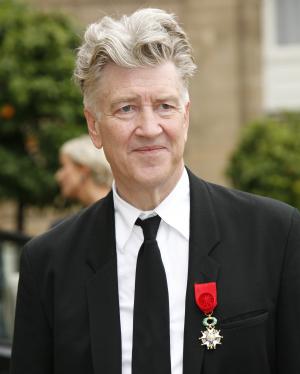
Ray Dalio’s $1.23 million donation to David Lynch, the man who started an educational movement that hopes to found 71 “peace universities” to teach students about “Transcendental Meditation,” which we discovered yesterday, was just the beginning of what what we’d find about Dalio and Transcendental Meditation.

Turns out, a video of Dalio, the billionaire hedge fund manager of Bridgewater, talking about meditation, which we originally thought was taken down, is still online on another website. We’ve ripped and embedded it below.

In it, Dalio even has a hedge fund joke about meditation – “If you have that state of mind… it’s a heck of a return on an investment for 20-40 minutes a day.”

But first thing’s first. The kind of meditation Dalio does isn’t the cheesy, hippy kind.

“This is a very practical thing,” says Dalio in the video.

“I just want to make sure that point across – because people think it’s kind of an exotic thing or you light candles or have incense and that kind of a thing. I’m talking about a practical thing that makes life go better.”

Dalio explains what meditation does for him:

“I was about twenty and the Beatles were meditating and I heard about it and they had a center in New York and I came to the center and I learned about it.”

“I became much more centered. School was very easy for me. School wasn’t easy before… As a result, I also became calmer and so how I would deal with the world was more like a martial arts expert in a sense that I could flow with things and understand them better and react to them better. I was more in control.”

“I notice a difference from the moment I meditate. I can be stressed, or tired, and I can go into a meditation and it all just flows off of me. I’ll come out of it refreshed and centered and that’s how I’ll feel and it’ll carry through the day.”

“I think it’s the single most important reason for whatever success I’ve had.”

KTVO: Maharishi runners prepare for Turkey Trot

October 23, 2010

Maharishi runners prepare for Turkey Trot
by Kisha Henry
Thursday, October 21, 2010

Click here to see video.

FAIRFIELD, IOWA — The Maharishi School Running Club has their eye on some turkeys.

The runners are preparing to participate in their next race.

“The next run is the Fairfield Turkey Trot and it’s a fundraiser for the Roosevelt Recreation Center here in Fairfield and they have it every year and it’s going be November 13 at the Water Works Park,” said Coach Peter Mannisi. “We’ve run the last two years and they give turkeys to the age group winner, and the first year we won two turkeys, last year we won three turkeys, so hopefully we’ll win more turkeys this year.”

The runners have been preparing in many different ways, including meditation.

“When you meditate, you go to this really profound and deep state of relaxation and when you tap into this, there’s this limitless source of energy, this inner reservoir of energy that you can tap into and it’s really powerful,” said Oliver Huntley, runner. “I find that when I can achieve that meditative state when I’m running, I can actually tap into that inner reservoir of energy while I’m running and it has effects, I can run harder, I can run faster, I can run for longer.”

Huntley will not be competing in the Turkey Trot due to an injury, but he says the meditation is helping his recovery time.

Some runners will even participate barefoot.

“I live barefooted and that’s why I run barefooted,” said Beau Blakely, who finished first in his last race. “It wasn’t too hard. The road was pretty clean, so if there’s gravel in the road, that hurts, but generally it was pretty clean.”

Blakely works out for an hour each day and walks everywhere, rather than driving, in order to do well in his races.

Being in Nature—a gift from a tree

October 20, 2010

We often hear about the benefits of being in nature. I remembered an experience I had with a tree when I went for a winter walk with a friend on the University Endowment Lands in Vancouver, British Columbia, Canada during the mid-1990s.

I stopped in front of a particular tree to admire its intricate bark structure up close. I felt a ray of loving attention come from the tree into my heart-mind with these words: “the realness of natural things, the nearness of you.” It was an unexpected intimate experience and I quickly wrote the words down for further exploration. The next morning, I rewrote them as a two-line stanza, and then sequential stanzas naturally unfolded sharing its wisdom. It was as if I had been given a creative seed and it sprouted into a poem.

This gift from the tree was much appreciated. The experience reiterated what Mary Oliver described in her poem, Praying. It was a “doorway into thanks, and a silence in which another voice may speak.” It also reminded me of what Mary Oliver told Krista Tippett in an interview, that attention is the beginning of devotion.

I later titled the poem Being in Nature, implying a double meaning for the word, being, from both sides of the experience. Its sequel, trees, was about the nature of trees, and what we can learn from them.

Being in Nature
a gift from a tree

The Realness of Natural Things
The nearness of you

The Beauty that Nature Brings
When seeing is true

The Silence that Inward Sings
When hearing is clear

The Harmony Between all Beings
It exists right here!

© Ken Chawkin

More poems about trees

See trees—a poem about the nature of trees, a sequel to Being in Nature—a gift from a tree. Both written mid-1990′s during winter in Vancouver, BC. What Do Trees Do? Something to think about was written when I was living in North Vancouver.

CRYSTAL MORNING was written in Fairfield, Iowa in the late 1980s.

Pine Cone Trees was written in Houston, Texas in the mid-1990s.

Willow Tree – a tanka – from a tree’s perspective followed by Friendship – another tree tanka were written in May and August 2010, years after I had returned to Fairfield, Iowa.

See Mary Oliver’s poem, Praying, is a lesson on attention, receptivity, listening and writing.

An early encounter with nature inspired my creativity. It turned into my first published poem, which won an award: ODE TO THE ARTIST, Sketching Lotus Pads at Round Prairie Park.

UPDATE: Reading “Being in Nature” on Let Your Heart Sing

I read ‘Being in Nature: A Gift from a Tree’ on ‘Let Your Heart Sing’ radio show #93: “John Stein’s Interview + Environmental Songs.” The poem completed that show, which first aired during the last week of May 2019.

Sheila Moschen created and hosted a series of 108 shows for KHOE World Radio, 90.5 FM, which air Wednesdays at 1 & 7 PM. The station broadcasts and streams from the campus of Maharishi International University in Fairfield, Iowa.

Sheila said 90 of her “Let Your Heart Sing” shows are on YouTube, and 68 of them include photos of the singers. You can hear me read my poem, with visuals, starting at 30:53.

New addition: “The first line is the DNA of the poem.” — Billy Collins

Years later I read about this notion of how a line of poetry can come to you and develop into a poem. Billy Collins explained this to George Plimpton in an interview for The Paris Review’s The Art of Poetry No. 83. He said: “I think what gets a poem going is an initiating line. ….. I can tell that the line wants to continue. If it does, I can feel a sense of momentum—the poem finds a reason for continuing. The first line is the DNA of the poem; the rest of the poem is constructed out of that first line. The first few lines keep giving birth to more and more lines.”

I certainly found that to be the case in writing down Being in Nature, especially since I was open and innocently receptive to what was unexpectedly, surprisingly, being given, and which later gave birth to subsequent stanzas, the whole poem. 

Mary Oliver and Billy Collins each approach writing a poem from their own perspective. I found both explanations of their experiences truthful, a confirmation of my own. They are two different, but valid angles on the same subject, of how a poem is written and comes into being.

For more on ‘George Plimpton interviewed Billy Collins for The Paris Review’, see the second half of Billy Collins discusses the value of getting to the end of a poem and what can happen afterwards. Also see this article Billy Collins wrote In Memoriam for The Paris Review about Mary Oliver, recalling a time they gave a poetry reading together: When Mary Oliver Signed Books. (PDF) I also wrote a memorial piece after I discovered she had left us: RIP: Mary Oliver. Thank you for sharing your poetic gifts with us. They are a national treasure!

— Written and compiled (citing sources) by Ken Chawkin for The Uncarved Blog.

Are all meditation techniques the same?

October 19, 2010

Are all meditation techniques the same?

Reproduced from the Transcendental Meditation Blog

by Ken Chawkin on September 22, 2010

As doctors increasingly prescribe meditations to patients for stress-related disorders, scientists are gaining a better understanding of how different techniques from a wide of traditions, both modern and ancient, produce different results.

A new paper published this past summer in Consciousness and Cognition discusses three categories to organize and better understand meditation:

1. Focused attention—concentrating on an object, idea, or emotion;

2. Open monitoring—being mindful of one’s breath, thoughts or feelings;

3. Automatic self-transcending—meditations that transcend their own activity

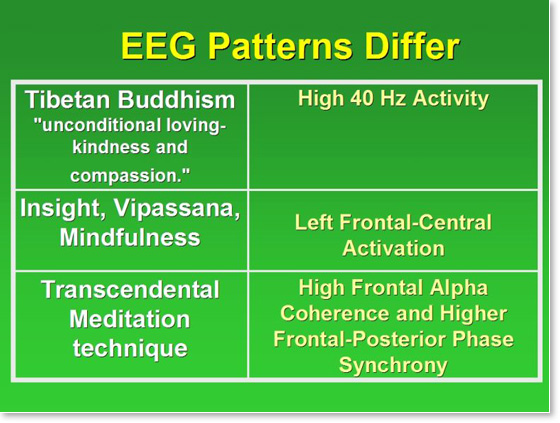
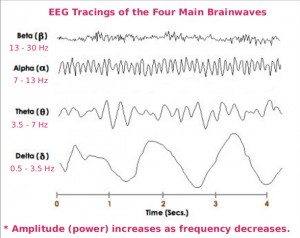
Each category was assigned EEG bands, based on reported brain patterns during mental tasks, and meditations were categorized based on their reported EEG.

”The idea is that meditation is, in a sense, a ‘cognitive task,’ and EEG frequencies are known for different tasks,” said Fred Travis, Ph.D., co-author, and Director of the Center for Brain, Consciousness, and Cognition at Maharishi University of Management.

Focused attention, characterized by beta/gamma activity, included meditations from Tibetan Buddhist (loving kindness and compassion), Buddhist (Zen and Diamond Way), and Chinese (Qigong) traditions.

Open monitoring, characterized by theta activity, included meditations from Buddhist (Mindfulness, and ZaZen), Chinese (Qigong), and Vedic (Sahaja Yoga) traditions.

Automatic self-transcending, characterized by alpha1 activity, included meditations from Vedic (Transcendental Meditation) and Chinese (Qigong) traditions.

Between categories, the included meditations differed in focus, subject/object relation, and procedures. These findings shed light on the common mistake of averaging meditations together to determine mechanisms or clinical effects.

”Meditations differ in both their ingredients and their effects, just as medicines do. Lumping them all together as ‘essentially the same’ is simply a mistake,” said Jonathan Shear, Ph.D., co-author, professor of philosophy at Virginia Commonwealth University in Richmond. Dr. Shear is also the author of several books on meditation, including the well-known book, The Experience of Meditation which presents an introduction to the major meditation traditions of the world.

”Explicit differences between meditation techniques need to be respected when researching physiological patterns or clinical outcomes of meditation practices,” said Dr. Travis. ”If they are averaged together, then the resulting phenomenological, physiological, and clinical profiles cannot be meaningfully interpreted.”

Web references:
Talk by Dr. Travis, “Are all meditations the same?”
Transcendental Meditation Brain Research

Read more, including Comments

Related posts: Tagged as: Research

New studies show reduced depression with Transcendental Meditation

Also see: and THP: How Meditation Techniques Compare and Are all meditation techniques the same?

See infographic and video on three categories of meditation.

UNDECIDED (Love Tanka Number One)

October 16, 2010

UNDECIDED
Love Tanka Number One

How can you tell me
You want to meet me halfway
You’ve yet to begin

Love is non-negotiable
You’re either out or you’re in

Ken Chawkin
January 30, 2006
Fairfield, Iowa

(A prelude to COMMITTED)

Buddy Biancalana Brings Zone Training To D.C. – The Washington Post – D.C. Sports Bog

October 13, 2010

Buddy Biancalana brings zone training to D.C.


Comedian/talk show host David Letterman, right, presents Kansas City Royals shortstop Buddy Biancalana with a gadget comparing his baseball hits total to that of Pete Rose’s noting in jest that Biancalana is only 4,000 or so behind, during the show in New York on Wednesday, Nov. 6, 1985. Biancalana gained fame when he helped the Royals win the World Series against the Cardinals, after hitting only .188 during the season. (AP Photo/Richard Drew)
 
KC Royals runner Buddy Biancalana and Royals on-deck hitter Willie Wilson (6) look to umpire Billy Williams, right, for the decision as St. Louis Cardinals catcher Darrell Porter (15) rolls away in the seventh inning of the World Series, Sunday, Oct. 21, 1985, Kansas City, Mo. Williams ruled Biancalana was out while trying to score from second base. (AP Photo)

D.C. Sports Bog by Dan Steinberg
Wednesday, October 13, 2010; D2

Twenty-five years ago this week, Buddy Biancalana became famous. The starting shortstop for the Kansas City Royals, Biancalana — a career .194 hitter at the time, who had more errors than RBI in the 1985 season — hit .278 in the ’85 World Series. He didn’t make an error, drove in the winning run in Game 5, had the second-best OBP on his team (behind only George Brett), was regularly heralded by David Letterman (who’d been running a weeks-long Biancalana gag) and was lauded in headlines like this one, from the San Diego Union-Tribune: “Biancalana outdoes himself in bid for Series MVP.”

“‘Pitching and Buddy Biancalana!” Brett said in the victorious clubhouse, when asked why the Royals had won.

So that was kind of weird.

“I felt I couldn’t do anything wrong,” Biancalana told me this week, a quarter-century after he helped the Royals win that World Series. “It was the best baseball I had ever played. And then, 18 months later, I was out of the Major Leagues. I had no idea how to repeat it.”

Biancalana said he tried to emerge from his post-Series baseball struggles in the typical way: by working on his mechanics again and again, trying to find the correct and repeatable motions. It didn’t work. He said he didn’t worry about his brain, because “there was just not much knowledge about the mind-body connection.” He struggled with back injuries, and soon retired without ever recapturing the feeling he had in the ’85 Series.

“It was very frustrating,” he said. “There are a lot of athletes that have these experiences. They feel incredible freedom, and then the next day it’s gone.”

Which is why Biancalana’s latest act involves helping other athletes — amateur and professional — capture that feeling. Based out of Reston, Biancalana and his business partner — former collegiate tennis star Steven Yellin — coach athletes on how to “quiet their minds” and let their bodies take over. They just released a book — The 7 Secrets of World Class Athletes — and are teaching their system to members at local clubs including Congressional and Washington Golf and Country Club.

He recently gave a tutorial to John Lyberger, the director of golf at Congressional, and “a light bulb went on right away,” Lyberger told me.

“He doesn’t teach mechanics; he teaches that mind-body connection, which is what I feel is that missing link in golf,” Lyberger said. “When people get bogged down in mistakes, the conscious thoughts get in the way. He teaches you how to play in the subconscious, where you perform at your highest effective level.”

Never having been a World Series hero myself, I have limited experience with playing anything in the subconscious. The nearest thing I could come up with was my days of playing late-night billiards, where it seemed that my mind-body connection won a lot more games after my mouth-bottle connection had completed a few fermented gulps.

Now, Biancalana stressed that he is not recommending drunk athletic training, but he said it’s sort of a similar idea:

“After you’ve practiced something numerous times, the pre-frontal cortex is no longer needed,” he said. “The problems occur when it wants to get involved, wants to act as a security blanket.”

Biancalana said he and Yellen have worked with neuroscientists and monitored EEG tests, have tried their methods with musicians and athletes of varying levels. But the one thing I still wondered was why Biancalana — whose “batting average resembles the value of an Italian lira,” according to a Post story published 25 years ago — had that one month in the zone.

The former shortstop said he still doesn’t know. He remembered sitting at his stall before Game 1 of the World Series, waiting to be called out to the dugout.

“All of the sudden, this wave of fear almost bowled me over,” he told me, “like ‘Oh my, this is a big deal.’ It was the first time in my life I really identified fear and just sat with it. It became a great ally of mine in the World Series. I got on the other side of it, and it really freed me up to play as well as I can play. That’s really the only explanation I can come up with for why it happened to me.”

By Dan Steinberg  | October 12, 2010; 2:55 PM ET Categories:  Golf, MLB

—————

Biancalana’s latest hit helps athletes capture that feeling
Washington Post – ‎”Pitching and Buddy Biancalana!” Brett said in the victorious clubhouse, when asked why the Royals had won. “I felt I couldn’t do anything wrong,” …

——————

“These guys have discovered something in sports that is going to have a huge impact wherever it is taught” George Brett, Baseball Hall of Fame

Contact: Steven Yellin, President, PMPM Sports: www.zonetraining.net

See this new interview with Buddy Biancalana on MLB Network, May 16, 2011, discussing his new book, The 7 Secrets of World Class Athletes he co-authored with Steven Yellin.

Ari Berman: On Becoming a Political Writer

October 11, 2010

Ari Berman: On Becoming a Political Writer

Going Off the Beaten Path for “Herding Donkeys”

by Cheryl Fusco Johnson
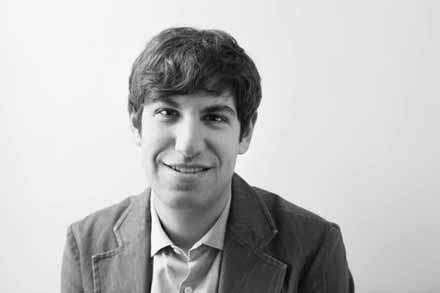
Ari Berman is a contributing writer for The Nation magazine and an Investigative Journalism Fellow at The Nation Institute.

Ari Berman, born in New York City, raised in Fairfield, Iowa, and a former high school journalism student of mine, recently penned Herding Donkeys: The Fight to Rebuild the Democratic Party and Reshape American Politics (Farrar, Straus and Giroux, 2010).  Released last month, his book has already garnered a starred review from Kirkus Reviews and laudatory comments from political writers Jonathan Alter, John Heilemann, Joe Conason, and Michael Tomasky. While visiting Fairfield recently to attend his ten-year high school reunion, Ari sat down with me for a chat.

When you attended the Medill School of Journalism at Northwestern University, did you plan to become a political reporter?

When I went to journalism school, I was interested in politics but didn’t necessarily know that I wanted to do that. In my junior year, I studied International Affairs abroad in Geneva at the United Nations. This was the time the debate over the war in Iraq was going on in America. I was following it from afar and getting the European perspective on it. I was absolutely furious. I thought the case for war in Iraq was completely fabricated by the Bush administration. That seemed so obvious in Europe. When I was in Geneva, I realized the entire world’s agenda was dictated by what went on in Washington. You had to follow Washington if you cared about the rest of the world.

How did your career as a book author begin?

At The Nation, I wrote this blog called The Daily Outrage, and Nick Ellison, this pretty big agent from New York, liked those columns. He wanted me to compile all the Daily Outrages into a book and expand on them.

Why didn’t you?

I felt they weren’t good enough to be a book. After I started working at The Nation, people started telling me, “You should write a book.” And I said, “I’m not writing a book until I can write a good book.” Nick and I bandied about ideas. He wanted me to do a book about the culture of Washington; that was a great idea. For two years, I was in D.C. at The Nation’s Washington Bureau. I covered Capitol Hill. I was really familiar with domestic policy. My office was across the street from the Senate.  I was in D.C. the day of Hurricane Katrina, and I left in September 2007 as the presidential campaign was heating up. But I didn’t want to immerse myself in Washington.

How did the idea for Herding Donkeys arise?

The Nation has a book imprint, and I’m friends with one of the editors. After the election, he said, “You should do a book about Howard Dean and the 50-state strategy. That was Obama’s strategy. Write a biography of the strategy.”

It was funny because literally at that moment I was doing an article saying that Obama’s strategy was Dean’s strategy. I had never really thought it could be a book, but why couldn’t it be? I felt passionate about it: it would be impactful. It wouldn’t be something people picked up one day and discarded the next. I wanted to write something durable. People can look at this in ten years and see what happened in this era.

I saw what Obama was doing as a natural outgrowth of what Dean was trying to do, which was change the [Democratic] party, get people involved, build a 50-state campaign. Get as many people involved in as many different ways in as many different places as possible.

I wanted to tell the evolution of that grassroots movement from Dean to Obama as a history. I knew it was relevant for today. I also knew this doesn’t end when Obama becomes president. I also wanted to look at what happens now. What happens next? That grassroots movement has been largely neglected by the Obama White House. The Republicans used Obama’s playbook better than he did.

TO READ THE REST OF THIS ARTICLE CLICK ON THIS URL: http://www.iowasource.com/books/2010_10_ari_berman.html

On Thursday, Oct. 21, 2010, at 7 p.m., Ari will read from Herding Donkeys at Prairie Lights Bookstore, 15 S. Dubuque St. in Iowa City.

For more information about the book and website, visit http://herdingdonkeys.com/.

Addendum: On Oct 7, 2010, Ari Berman was interviewed on MSNBC’s Morning Joe about his book, Herding Donkeys, Howard Dean and the Democratic Party. Ari was also a KRUU host on Politickin’ with Ari for a year and a half and as of this posting will be the featured guest on Speaking Freely with Dennis on Thursday, October 12th at 1 pm, rebroadcast  Thursday, October 14th at 8am. www.kruufm.com.

Ari also appeared on Dylan Ratigan’s MSNBC show for the first time this week to talk about Herding Donkeys on the topic of “Has Obama forgotten his campaign slogan?” It was a very interesting discussion and the producers nicely fit him in between the rescue of miners 22 and 23. Here’s the clip: http://herdingdonkeys.com/2010/10/14/dylan-ratigan/

You can buy Herding Donkeys: The Fight to Rebuild the Democratic Party and Reshape American Politics on Amazon and simultaneously benefit the Maharishi School, Ari’s alma mater, by ordering it from this website: http://maharishischooliowa.org/alumni/alumni-news/ari-berman.

UPDATE: August 2015

Close to five years later Ari Berman published his second book, Give Us the Ballot: The Modern Struggle for Voting Rights in America, which came out on the 50th anniversary of the Voting Rights Act. Publishers Weekly called it one of the most anticipated books of the fall, proclaiming: “Berman does a superb job of making the history of the right to vote in America not only easily understandable, but riveting.”

On August 5 the New York Times featured an Op-Ed piece by Ari Berman: Why the Voting Rights Act Is Once Again Under Threat.

On August 5 Democracy Now interviewed Ari Berman about voting rights: Give Us the Ballot: The Struggle Continues 50 Years After Signing of the 1965 Voting Rights Act. And Part Two: Ari Berman: Virtually Every GOP Candidate Has Been on Wrong Side of Voting Rights Issues.

On August 6 Ari Berman was invited to Washington, DC to participate on a distinguished panel commemorating the 50th Anniversary of the Voting Rights Act. The presentations took place under the auspices of the White House in the presence of President Barack Obama. See photos below.

On August 10th Ari Berman was interviewed on NPR with Fresh Air’s Terry Gross: Block The Vote: A Journalist Discusses Voting Rights And Restrictions.

On August 12 The Fairfield Ledger ran a cover story: Fairfield native on White House panel. At the end of the article Ari says some nice things about the supportive community of Fairfield. “Even if you leave, you’re always connected to it,” Berman said. “A lot of my friends who were at the book launch were from Fairfield — Fairfield goes everywhere.”

On August 13 The Fairfield Weekly Reader published an article: Give Us The Ballot: New book by Fairfield native Ari Berman receives early praise.

On August 24 Sarah Begley mentioned Ari Berman’s book in her Time Magazine column, The Nutshell: Give Us the Ballot.

If you would like to keep abreast of Ari’s activities, there is an events calendar on his website, in addition to videos of his recent interviews and other updates. http://ari-berman.com/

White House PanelReblogged with this link: http://wp.me/pD0BA-9KC

The Cultural Oasis of The Midwest: Fairfield, Iowa

October 10, 2010

The Cultural Oasis of The Midwest : Fairfield, IA

By Cory Ellerd

Nestled for miles by calmly rolling fields and fertile cropland, Fairfield, Iowa, has always been a dynamic, ahead of the curve little town, despite a modest population that averages around 10,000. Fairfield has the county government and sponsored Iowa’s first state fair in 1854. Andrew Carnegie built the first of 1,689 public libraries just south of the Fairfield square. Almost two dozen buildings in Fairfield have qualified for a listing on the National Register of Historic Buildings, including a turreted Victorian mansion two blocks east of downtown.

From industry to education to green living, Fairfield, Iowa, has consistently made its mark.

The influential Louden Machinery Company, based in Fairfield, developed labor-saving equipment that influenced farming from coast to coast. Today, Fairfield’s lively entrepreneurial climate has earned it the nickname “Silicorn Valley.” Unique retail shops make Fairfield a popular destination point for the region. Among the one-of-a-kind stores are the whole foods grocery store Everybody’s, the kitchen, cooking, and knitting store At Home, the alternative health store Thymely Solutions, and the children’s toy store Finnywick’s.

Parsons College (1875-1973) established one of the most innovative educational programs of its time. It became known as the “Second Chance” college, attracting a national student body. In 1974, Maharishi University of Management bought the campus and moved its student body from California to the Heartland. The accredited university offers a range of classes and an environment where everyone meditates. Students, faculty, and staff all observe Transcendental Meditation. Many new residences and classrooms have been built in recent years, and the new all-green Sustainable Living building is now under construction.

With the Sustainable Living at MUM, the City of Fairfield has also jumped on the green bandwagon. MSN.com named Fairfield Mayor Ed Malloy one of the greenest mayors in the country, on par with Portland, New York, and Chicago! “I believe Fairfield is poised to become a model sustainable city reaping the benefits of energy conservation, smart technology, renewable energy, and green entrepreneurship,” said Mayor Malloy. In 2009 the city hired its own Sustainability Coordinator, the dynamic Scott Timm, who organized Backyard Conservation workshops, conducted energy-efficiency studies on commercial buildings, and published the Fairfield’s Go Green Guide.

Fairfield’s extensive trail system attracts many hikers and bikers, who can travell for miles through town, country, and woods, all on well-maintained gravel paths. The Fairfield Park & Rec’s indoor pool recently installed a new filtration system that dramatically reduces the use of chlorine.

One evening each month, Fairfield lights up the square for the 1st Fridays Art Walk. Galleries and shops open their doors for a night of fine arts, music, entertainment, and neighborly fun. All year round, the new Fairfield Arts and Convention Center (FACC) hosts a stellar roster of entertainment, from concerts and dance productions, to plays and events. America’s most influential musical theater artist, Stephen Sondheim, generously granted permission to use his name for FACC’s 520-seat theater. The Stephen Sondheim Center for the Performing Arts is also home to Fairfield’s Way Off Broadway theater company.

Media around the country have recurrently recognized Fairfield as a shining star in the Midwest. In 2006, Mother Earth News writer Lynn Byczynski chose Fairfield, Iowa, as one of “12 Great Places You’ve Never Heard Of.”

(ArticlesBase SC #3386032)

For more Info, check out these links: Fairfield, IA, Fairfield Iowa, and Iowa.

To read more articles on Fairfield, Iowa, visit the Fairfield article archive in The Iowa Source.

Donovan Nominated For Induction Into The 2011 Rock And Roll Hall Of Fame

October 4, 2010

The first British folk troubadour who truly captured the imaginations of early Beatles-era fans on both sides of the Atlantic, Donovan Leitch made the transition from a scruffy blue-jeaned busker into a brocaded hippie traveler on Trans Love Airways. As a folkie on the road with Gypsy Dave, Donovan became a Dylanesque visual presence on the BBC’s Ready Steady Go! starting in 1964 and released several classics: “Catch the Wind,” “Colours,” Buffy Ste.-Marie’s “Universal Soldier,” “To Try for the Sun” and more. That changed in 1966, as he came under the production arm of UK hit-maker Mickie Most, and was signed by Clive Davis to Epic Records in the U.S. Donovan ignited the psychedelic revolution virtually single-handedly when the iconic single “Sunshine Superman” was released that summer of ’66 (and the LP of the same name with “Season of the Witch”). His heady fusion of folk, blues and jazz expanded to include Indian music and the TM (transcendental meditation) movement. Donovan was at the center of the Beatles’ fabled pilgrimage to the Maharishi’s ashram in early ’68 (where, it is said, he taught guitar finger-picking techniques to John Lennon and Paul McCartney). Donovan’s final Top 40 hit with Most was “Goo Goo Barabajagal (Love Is Hot)” in the summer ’69, backed by the Jeff Beck Group. Donovan continued to record and tour sporadically during the 70s and 80s. During the 1990s, Rick Rubin (after working with Johnny Cash) produced Donovan’s Sutras. In the six years since Beat Café (2004), we’re learning just how much we miss Donovan.

Sources: MI2N Music Industry News Network [10-03-2010]
Rock and Roll Hall of Fame
donovanofficial: Donovan nominated for the Rock and Roll Hall of Fame

SEE: Donovan Inducted into Rock and Roll Hall of Fame

David Lynch receives Cologne Film Award

October 3, 2010

COLOGNE, Germany — David Lynch hasn’t turned his back on Hollywood entirely, but the four-time Oscar nominee is focusing more on the art of painting and photography than film as his non-cinematic work begins to receive worldwide attention.

“I’m trying to catch ideas for a film but I don’t have the ideas yet,” the director of “Blue Velvet” and “Mulholland Dr.” told an audience in Cologne Friday, where he received the city’s Film Prize for his life’s work.

The award ceremony was the climax of the 20th media festival and confab the Cologne Conference.

While the idiosyncratic director has been linked to a CGI project called “Snootworld,” Lynch said the only film he is working on at the moment is his documentary on the Maharishi Mahesh Yogi, founder of Transcendental Meditation. Lynch has been a practitioner and proselytizer of TM for decades. The director was recently in India shooting interviews for the project.

“I’m not a documentary film maker, but I’ll give it a try,” Lynch said.

Lynch’s last feature, “Inland Empire” (2006) received mixed reviews and grossed just $4 million worldwide.

But his painting, photography and sculpture, work he has continued to produce between film projects, is reaching an ever-larger audience. Since a major exhibit of his paintings and photography in Paris three years ago, Lynch has held exhibitions around the world. He recently held a joint exhibit together with shock-rocker Marilyn Manson at the Vienna Kunsthalle this summer. A new exhibit of his work opens this month in Osaka, Japan.

On October 9, Lynch will receive the Goslar Kaiserring, one of Germany’s highest artistic honors. Previous winners include painter Willem de Kooning, “wrap artist” Christo and sculptor and art film director Matthew Barney.

Source: The Hollywood Reporter