The Cultural Oasis of The Midwest: Fairfield, Iowa

October 10, 2010

The Cultural Oasis of The Midwest : Fairfield, IA

By Cory Ellerd

Nestled for miles by calmly rolling fields and fertile cropland, Fairfield, Iowa, has always been a dynamic, ahead of the curve little town, despite a modest population that averages around 10,000. Fairfield has the county government and sponsored Iowa’s first state fair in 1854. Andrew Carnegie built the first of 1,689 public libraries just south of the Fairfield square. Almost two dozen buildings in Fairfield have qualified for a listing on the National Register of Historic Buildings, including a turreted Victorian mansion two blocks east of downtown.

From industry to education to green living, Fairfield, Iowa, has consistently made its mark.

The influential Louden Machinery Company, based in Fairfield, developed labor-saving equipment that influenced farming from coast to coast. Today, Fairfield’s lively entrepreneurial climate has earned it the nickname “Silicorn Valley.” Unique retail shops make Fairfield a popular destination point for the region. Among the one-of-a-kind stores are the whole foods grocery store Everybody’s, the kitchen, cooking, and knitting store At Home, the alternative health store Thymely Solutions, and the children’s toy store Finnywick’s.

Parsons College (1875-1973) established one of the most innovative educational programs of its time. It became known as the “Second Chance” college, attracting a national student body. In 1974, Maharishi University of Management bought the campus and moved its student body from California to the Heartland. The accredited university offers a range of classes and an environment where everyone meditates. Students, faculty, and staff all observe Transcendental Meditation. Many new residences and classrooms have been built in recent years, and the new all-green Sustainable Living building is now under construction.

With the Sustainable Living at MUM, the City of Fairfield has also jumped on the green bandwagon. MSN.com named Fairfield Mayor Ed Malloy one of the greenest mayors in the country, on par with Portland, New York, and Chicago! “I believe Fairfield is poised to become a model sustainable city reaping the benefits of energy conservation, smart technology, renewable energy, and green entrepreneurship,” said Mayor Malloy. In 2009 the city hired its own Sustainability Coordinator, the dynamic Scott Timm, who organized Backyard Conservation workshops, conducted energy-efficiency studies on commercial buildings, and published the Fairfield’s Go Green Guide.

Fairfield’s extensive trail system attracts many hikers and bikers, who can travell for miles through town, country, and woods, all on well-maintained gravel paths. The Fairfield Park & Rec’s indoor pool recently installed a new filtration system that dramatically reduces the use of chlorine.

One evening each month, Fairfield lights up the square for the 1st Fridays Art Walk. Galleries and shops open their doors for a night of fine arts, music, entertainment, and neighborly fun. All year round, the new Fairfield Arts and Convention Center (FACC) hosts a stellar roster of entertainment, from concerts and dance productions, to plays and events. America’s most influential musical theater artist, Stephen Sondheim, generously granted permission to use his name for FACC’s 520-seat theater. The Stephen Sondheim Center for the Performing Arts is also home to Fairfield’s Way Off Broadway theater company.

Media around the country have recurrently recognized Fairfield as a shining star in the Midwest. In 2006, Mother Earth News writer Lynn Byczynski chose Fairfield, Iowa, as one of “12 Great Places You’ve Never Heard Of.”

(ArticlesBase SC #3386032)

For more Info, check out these links: Fairfield, IA, Fairfield Iowa, and Iowa.

To read more articles on Fairfield, Iowa, visit the Fairfield article archive in The Iowa Source.

Donovan Nominated For Induction Into The 2011 Rock And Roll Hall Of Fame

October 4, 2010

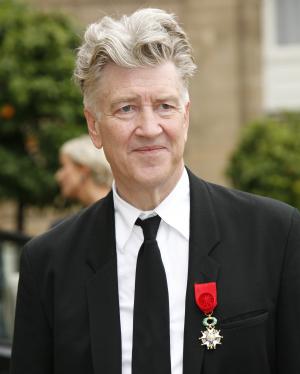
The first British folk troubadour who truly captured the imaginations of early Beatles-era fans on both sides of the Atlantic, Donovan Leitch made the transition from a scruffy blue-jeaned busker into a brocaded hippie traveler on Trans Love Airways. As a folkie on the road with Gypsy Dave, Donovan became a Dylanesque visual presence on the BBC’s Ready Steady Go! starting in 1964 and released several classics: “Catch the Wind,” “Colours,” Buffy Ste.-Marie’s “Universal Soldier,” “To Try for the Sun” and more. That changed in 1966, as he came under the production arm of UK hit-maker Mickie Most, and was signed by Clive Davis to Epic Records in the U.S. Donovan ignited the psychedelic revolution virtually single-handedly when the iconic single “Sunshine Superman” was released that summer of ’66 (and the LP of the same name with “Season of the Witch”). His heady fusion of folk, blues and jazz expanded to include Indian music and the TM (transcendental meditation) movement. Donovan was at the center of the Beatles’ fabled pilgrimage to the Maharishi’s ashram in early ’68 (where, it is said, he taught guitar finger-picking techniques to John Lennon and Paul McCartney). Donovan’s final Top 40 hit with Most was “Goo Goo Barabajagal (Love Is Hot)” in the summer ’69, backed by the Jeff Beck Group. Donovan continued to record and tour sporadically during the 70s and 80s. During the 1990s, Rick Rubin (after working with Johnny Cash) produced Donovan’s Sutras. In the six years since Beat Café (2004), we’re learning just how much we miss Donovan.

Sources: MI2N Music Industry News Network [10-03-2010]
Rock and Roll Hall of Fame
donovanofficial: Donovan nominated for the Rock and Roll Hall of Fame

SEE: Donovan Inducted into Rock and Roll Hall of Fame

David Lynch receives Cologne Film Award

October 3, 2010

COLOGNE, Germany — David Lynch hasn’t turned his back on Hollywood entirely, but the four-time Oscar nominee is focusing more on the art of painting and photography than film as his non-cinematic work begins to receive worldwide attention.

“I’m trying to catch ideas for a film but I don’t have the ideas yet,” the director of “Blue Velvet” and “Mulholland Dr.” told an audience in Cologne Friday, where he received the city’s Film Prize for his life’s work.

The award ceremony was the climax of the 20th media festival and confab the Cologne Conference.

While the idiosyncratic director has been linked to a CGI project called “Snootworld,” Lynch said the only film he is working on at the moment is his documentary on the Maharishi Mahesh Yogi, founder of Transcendental Meditation. Lynch has been a practitioner and proselytizer of TM for decades. The director was recently in India shooting interviews for the project.

“I’m not a documentary film maker, but I’ll give it a try,” Lynch said.

Lynch’s last feature, “Inland Empire” (2006) received mixed reviews and grossed just $4 million worldwide.

But his painting, photography and sculpture, work he has continued to produce between film projects, is reaching an ever-larger audience. Since a major exhibit of his paintings and photography in Paris three years ago, Lynch has held exhibitions around the world. He recently held a joint exhibit together with shock-rocker Marilyn Manson at the Vienna Kunsthalle this summer. A new exhibit of his work opens this month in Osaka, Japan.

On October 9, Lynch will receive the Goslar Kaiserring, one of Germany’s highest artistic honors. Previous winners include painter Willem de Kooning, “wrap artist” Christo and sculptor and art film director Matthew Barney.

Source: The Hollywood Reporter

Dr. John Hagelin: Look Within to Understand the Universe

October 2, 2010

Supreme Master Television sent their film crew here last year to produce several respectful profiles on Consciousness-Based Education at Maharishi School and Maharishi University of Management, and also featured our organic vegetarian food services. They produced a feature on the Maharishi Effect for World Peace, and one on Dr. Fred Travis, director for MUM’s Center for Brain, Consciousness and Cognition, for their “Science & Spirituality” series. They recently returned to conduct an interview with Dr. John Hagelin for the same program.

Supreme Master Television’s profile on Dr. Hagelin: “Dr. John Hagelin: Look Within to Understand the Universe” aired in two parts on their “Science & Spirituality” program: Part 1 (Aug. 30, Mon) and Part 2 (Sept. 27, Mon) at 4am, 10am, 4pm, 10pm in Central Time. This excellent interview has now been archived and can be viewed in two parts:

Part 1: http://www.suprememastertv.com/bbs/tb.php/download/8239
Part 2: http://www.suprememastertv.com/bbs/tb.php/download/8399

The main philosophy of Supreme Master Television is vegetarianism to save the planet. They enjoyed coming here, meeting everyone, and especially loved eating our organic vegetarian and vegan food. Their motto is: Be Veg, Go Green 2 Save the Planet www.suprememastertv.com

Other videos worth watching: Conscious TV: John Hagelin – The Core of Nature and John Hagelin, Ph.D., Speaks on the Nature of Consciousness and the Universe. And this interview: John Hagelin — “Only Higher Consciousness Can Transform Our World” — Beyond Awakening Blog.

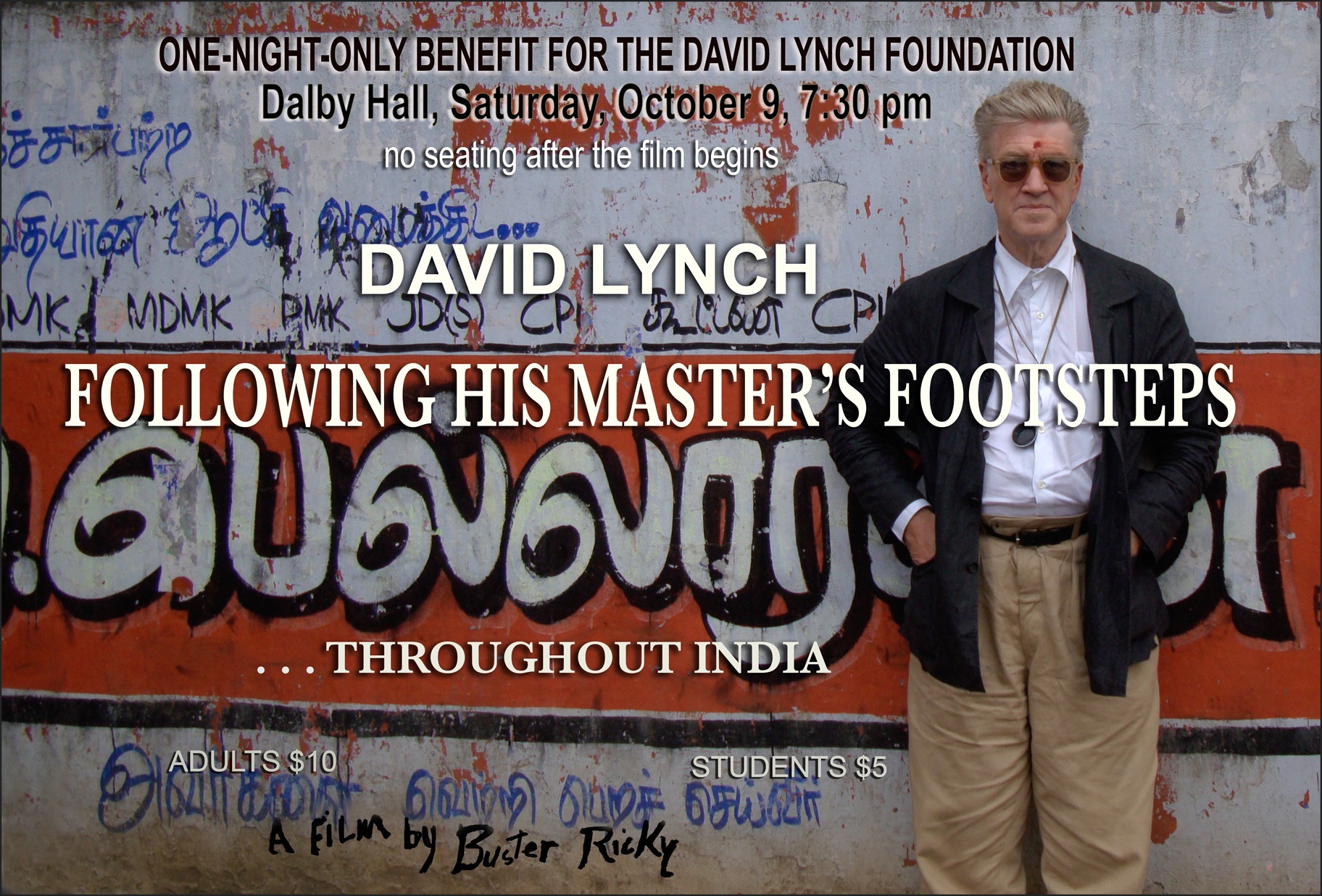
New film by Richard Beymer on David Lynch Following His Master’s Footsteps Throughout India

October 1, 2010

You are Invited to a Sneak Preview

Richard Beymer’s Stunning New Film from India
“David Lynch Follows His Master’s Footsteps”

Saturday, October 9 • 7:30 pm
Dalby Hall, Argiro Center • Maharishi University of Management

$10 General Admission • $5 Students

Tickets can be purchased at MUM Bookstore & Flying Leap Art Space

All proceeds go to the Maharishi School of the Age of Enlightenment

Be in your seat promptly at 7:30 p.m!
There will be no seating once the film begins!

In December 2009, David Lynch retraced Maharishi’s travels across India in the years before Maharishi inaugurated his Spiritual Regeneration Movement in 1957. Richard Beymer’s stunning new documentary follows David up into the Himalayas, to Jyotir Math, where Maharishi spent much of 13 years with his teacher, Guru Dev; and to Uttar Kashi, where Maharishi spent two years in silence following the passing of Guru Dev in 1953. We go with David to Jabalpur, near the birthplace of Maharishi; and to Ramashram, Kanyakumari, and Trivendrum–all rare and special sites integral to the founding of Maharishi’s movement. Richard’s filmmaking is artful, magnificent, and captures the behind-the-scenes look and feel as David and his traveling buddy, Bob Roth, make their way with awe, humor, and dogged persistence to each new destination. See David Lynch at his best: wise, funny, insightful, and inspired.

Source: PEACETOWN, USA

108 line poem for Maharishi (April 5, 2002)

October 1, 2010

This poem was written in honor of Maharishi on April 5, 2002, in Fairfield, Iowa, as a token of appreciation for all the gifts of knowledge and love He gave us and brought to the world; and for the few but meaningful comments He said about me while working on a project with a buddy in 2001. Maharishi’s upliftment, humor, care and concern for my welfare were beyond anything I would have imagined. This poem was printed out and placed on His desk by a friend in Holland but I don’t know if He ever saw or heard it. Some things have changed, like the Pandits now forming at the Brahmasthan of India. But I am posting it as it was written, in memory of my having learned TM 43 years ago on September 30, 1967, in Montreal, Quebec, Canada. I met Maharishi in person for the first time 9 months later at Lake Louise, a most memorable occasion captured beautifully in the CBC TV documentary, Maharishi at Lake Louise, posted on this blog. Several other interactions occurred between Maharishi and my family, all governors, throughout our lives—precious moments to last a lifetime.

Workshop Makes Case for Meeting Architecture 2030 Challenge Today

September 27, 2010

COSC hosts “2030 Now: Case Study of MUM’s Sustainable Living Center” on Sept. 28 in Des Moines.

West Des Moines, IA (September 24, 2010) –With buildings consuming more energy than any other sector, Architecture 2030 issued The 2030 Challenge to the global architecture and building community, asking them to meet sustainability standards of a zero carbon footprint by year 2030. As of July 2010 40% of all U.S. architecture firms have adopted the Challenge.

Center on Sustainable Communities (COSC) hosts a dynamic green building workshop that illustrates how to attain The 2030 Challenge right now, using readily available building technology and products. Fairfield’s Maharishi University of Management (MUM) Sustainable Living Center is the first of its kind and is the subject of “2030 Now: Case Study of MUM’s Sustainable Living Center” happening on Tuesday, Sept. 28 from 5:00-7:00pm at the John & Mary Pappajohn Education Center located at 1200 Grand Avenue in Des Moines. The workshop is free and those interested in attending are asked to register by contacting COSC’s Leslie Berckes at 515-707-2787 or Leslie@icosc.com.

Presenters of the program include Masaki Furukawa, architect of the Sustainable Living Center, and Dal Loiselle, developer and general contractor. Together, they will review how the Sustainable Living Center surpasses LEED platinum standards, complies with the Living Building Challenge and has already achieved The 2030 Challenge by using methods and materials readily available in Iowa now.

“2030 Now: Case Study of MUM’s Sustainable Living Center” is an extension of COSC’s Re-Building a Sustainable Iowa statewide training program. COSC is able to temporarily offer its Re-Building a Sustainable Iowa sessions for free through funding from the Iowa Department of Economic Development and the U.S. Department of Housing and Urban Development.

About COSC

Center on Sustainable Communities (COSC) is a non-profit membership organization founded in 2005 that serves as Iowa’s trusted educational resource for sustainable building. As the recognized leader in providing education and connecting resources, COSC empowers individuals and communities to make everyday decisions that promote sustainability, resulting in a better quality of life for all Iowans. COSC’s schedule of residential, commercial and energy-specific workshops can be found at www.icosc.com.

###

Contacts:

Lynnae Hentzen, Co-Founder/Executive Director
COSC – Center on Sustainable Communities
515-707-0732, Lynnae@icosc.com

Siobhan Spain, Communications Specialist
COSC – Center on Sustainable Communities
515-707-2783, Siobhan@icosc.com

Two Love Tanka

September 23, 2010

Love Tanka I

No matter the place
Home is being together
The Soul is settled

Disease may separate us
But Love takes care of our hearts

.

Love Tanka II

For peace to be here
The Soul has to be settled
And the Heart nurtured

Disease brings Separation;
Compassion, Devotion—Love

.

Ken Chawkin
September 22, 2010, 9 p.m.
With Sali at Parkview Care Center
Fairfield, Iowa, USA

.

Also see UNDECIDED and COMMITTED

THP: How Meditation Techniques Compare

September 23, 2010

Posted: September 22, 2010 04:50 PM

How Meditation Techniques Compare — Zen, Mindfulness, Transcendental Meditation and more

Meditation shopping? Sounds like an oxymoron, right? Yet millions of Americans are seeking tools to turn within. As a nation we’ve tried to fix our problems with everything from psychotherapy and Prozac to positive thinking and politics. Now people everywhere are ready to close their eyes and take a dive — not to escape, but to more fully be.

Having lectured on meditation for 25 years, I find that audiences no longer need to be convinced of meditation’s practical benefits. But people do often ask, “Aren’t all meditation techniques basically the same?”

Experts in the venerated traditions of meditation have always marveled at the mind’s subtlety, appreciating its keen responsiveness and sensitivity to different mental procedures. Great master teachers of meditation have recognized that the various techniques engage the mind in different ways and naturally produce different results. With advancements in neurophysiology, scientists are now identifying distinctions among varieties of meditation practices.

The Myth of the Relaxation Response

The old “scientific” myth that meditation practices all induce the same, general state of physiological rest — called the “relaxation response” — has been overturned. Though many practices provide relaxation, decades of research show that not all techniques produce the same physiological, psychological or behavioral effects.1

Recently a doctor came to me for meditation instruction. He had learned a “relaxation response” technique in a class on integrative medicine during his training at Harvard. He was attracted to meditation by the promise of deeper insight into consciousness — access to the mind’s hidden, transcendent potentialities. He enjoyed the relaxation technique but yearned for deeper experience and understanding.

Reviewing the science journals, the doctor arrived at the same conclusion reached by leading meditation researchers: the “relaxation” model was based on inconclusive evidence and had never been substantiated. Hundreds of published studies on meditation techniques show varying effects from different practices — ranging from measures of rest much deeper than the “relaxation response” to physiological states no different from sliding back into your easy chair.

The emerging paradigm: three major categories of meditation

Meditation labs have sprung up at universities across the country–places such as Yale, UCLA, University of Oregon, UW Madison and Maharishi University of Management. Their contributions have helped researchers identify three major categories of techniques, classified according to EEG measurements and the type of cognitive processing or mental activity involved:

  • Controlled focus: Classic examples of concentration or controlled focus are found in the revered traditions of Zen, Tibetan Buddhism, Qiqong, Yoga and Vedanta, though many methods involve attempts to control or direct the mind. Attention is focused on an object of meditation–such as one’s breath, an idea or image, or an emotion. Brain waves recorded during these practices are typically in the gamma frequency (20-50 Hz), seen whenever you concentrate or during “active” cognitive processing.2
  • Open monitoring: These mindfulness type practices, common in Vipassana and Zazen, involve watching or actively paying attention to experiences–without judging, reacting or holding on. Open monitoring gives rise to frontal theta (4-8 Hz), an EEG pattern commonly seen during memory tasks or reflection on mental concepts.3
  • Automatic self-transcending: This category describes practices designed to go beyond their own mental activity–enabling the mind to spontaneously transcend the process of meditation itself. Whereas concentration and open monitoring require degrees of effort or directed focus to sustain the activity of meditation, this approach is effortless because there is no attempt to direct attention–no controlled cognitive processing. An example is the Transcendental Meditation technique. The EEG pattern of this category is frontal alpha coherence, associated with a distinct state of relaxed inner wakefulness.4

2010-09-22-graph.jpg
Some techniques may fall under more than one category: Guided meditation is controlled focus if the instruction is, “Hold attention on your breath.” But if the instructor says, “Now just watch your thoughts, letting them come and go,” then you’re probably doing open monitoring–and your EEG would say for sure.

Different practices, different results

Without the scientific research (or until we have a cell phone app for measuring our EEG and biochemistry), meditative states and their effects remain subjective. Brain research, along with findings on psychological and behavioral effects, gives a more objective framework for health professionals or anyone to determine which meditation technique might be most beneficial for a given purpose.

For example, research suggests that concentration techniques may improve focusing ability. A study on advanced Buddhist monks–some of whom had logged more 10,000 hours of meditation — found that concentrating on “loving kindness and compassion” increased those feelings and produced synchronous gamma activity in the left prefrontal cortex — indicating more powerful focus.

The effect of open monitoring or non-judgmental observation is said to increase even-mindedness in daily life; studies on mindfulness-type practices indicate better pain management and reduction of “negative rumination.”

For relief from stress, research suggests that an automatic self-transcending technique might serve you better than a practice that keeps the mind engaged in continuous mental effort. Because of the natural mind/body relationship, the more deeply settled the mind, the more deeply rested is the body. Studies show that the deep rest of “transcending” calms the sympathetic nervous system and restores physiological balance — lowering high blood pressure, alleviating chronic anxiety and reducing stress hormones such as cortisol.

More research is needed to verify benefits of controlled focus, but there are numerous studies on mindfulness practices and automatic self-transcending, with over 600 studies on the Transcendental Meditation technique alone.

As meditation becomes a new frontier of scientific research, more and more people are becoming aware of the mind’s enormous potential for impacting health and wellbeing. I find that most meditators are no longer concerned that a technique might come from the East or have roots in a spiritual tradition–their main concern is that the practice works, and science can help remove the guesswork.

Americans are opting for meditation to counterbalance a life that’s been plugged in, outer directed and over stimulated, and we’re turning to something as simple as our own inner silence.

Whether you’re an athlete aiming for the “zone,” an executive striving for peak performance or a harried mother needing some serenity, a reliable meditation practice can be your best friend.

1. Orme-Johnson, Walton, 1998. American Journal of Health Promotion 2(5), 297-299.
2. Lutz, Greischar, Rawlings, Ricard, Davidson, 2004. Proc Natl Acad Sci U S A 101,16369-73.
3. Cahn, Delorme, & Polich, 2010. Cognitive Processing 2010 11(1):39-56.
4. Travis et al, 2010. Cognitive Processing 11(1), 21-30.

————————————————————————————

Also see: THP: Keeping Your Prefrontal Cortex Online: Neuroplasticity, Stress and Meditation

And: Are all meditation techniques the same?

See this article and infographic on Three Categories of Meditation.

Vanity Fair’s James Wilcott: Beam Me Up, Bucky

September 16, 2010

Beam Me Up, Bucky

by James Wolcott September 15, 2010, 12:31 PM

How pleasing and inspiring it is to be able to watch two of my inspirational heroes, Maharishi Mahesh Yogi and Buckminster Fuller, engaging on stage in 1971, joined together in the spirit of optimism and mission in an orbital docking of East and West, ancient wisdom and modern science, Yankee know-how and Vedic holistics. The universality of their message is even more vital today, when so much of America wants to curl up in an angry fetal ball, resisting the future, denying global dynamics and evolving consciousness, reducing everything to Ayn Randian black-white oppositions, insisting on acting like the strutting top dog of the planet and civilization while throwing squalling tantrums over not getting its way. A quarter of this country thinks they deserve their own privileged cabin on Spaceship Earth, everyone else be damned or bombed into submission, and they’re going to end up in the cargo section if they don’t open their grizzled minds.

Such a contrast these two make: Bucky, in his professorial glasses and “second-rate bank clerk” wardrobe (his look a deliberate gambit to de-accentuate himself, as he explains here), parked behind a desk, and Maharishi, in his white robes, abundant, untamed hair, beads, sitting cross-legged on a bouquet-flanked platform. Bucky is usually thought of as “all brain,” a cosmic engineer of endless expounding, but his testimony here–about how the contemplation of suicide in 1927 pivotally turned his thought inward and then expansively outward–is quite moving and plainspoken. Those wishing to know more about Bucky and the work being conducted in his name and purpose can visit the Buckminster Fuller Institute. It’ll help spiral you above and beyond election cycles and the Wagnerian white noise of media chatter.