Archive for the ‘Writing’ Category

William Stafford—A Course in Creative Writing

January 15, 2011

A Course in Creative Writing

They want a wilderness with a map—
but how about errors that give a new start?—
or leaves that are edging into the light?—
or the many places a road can’t find?

Maybe there’s a land where you have to sing
to explain anything: you blow a little whistle
just right and the next tree you meet is itself.
(And many a tree is not there yet.)

Things come toward you when you walk.
You go along singing a song that says
where you are going becomes its own
because you start. You blow a little whistle—

And a world begins under the map.

—William Stafford

Also see William Stafford—You and Art

Poetry—The Art of the Voice

January 6, 2011

Poetry—The Art of the Voice is another one of my poems published in This Enduring Gift – A Flowering of Fairfield Poetry, 2010. Editor Freddy Niagara Fonseca posted this poem on his Amazon.com page: VISITING POET Ken Chawkin: Poetry – The Art of the Voice, which links to the complete version on his Live Journal.

Poetry—The Art of the Voice

How fine will your breath become
from listening to these words?
How soft will they seem to be
as they settle through the mind
like silent snowflakes falling
from a windless winter sky?

I often marvel at the mystery—
how words can work
on a listener’s heart and mind,
upon hearing a poet’s thoughts,
a poet’s breath, flowing
from an inner voice—

a windless wind, speaking
through a voiceless voice.

© Ken Chawkin
Published in This Enduring Gift – A Flowering of Fairfield Poetry, 2010
http://www.thisenduringgift.com

This poem came out of the inspiration listening to the Diane Rhem Show: Bill Moyers on Poetry, when she invited him on to talk about his latest PBS special on the Poetry Festival he had attended and filmed, and his new book of it, “Fooling With Words: A Celebration of Poets and Their Craft” (William Morrow). They had invited 3 poets: Marge Piercy, former poet laureate Mark Strand, and Jane Hirschfield, to call in and discuss the inspiration for a poem they had written and share it with the listening audience. The effect on the Festival audiences was also discussed. See , with links to the program, book, and each poet reading their poem.

When the call went out for poems from Fairfield poets for This Enduring Gift-A Flowering of Fairfield Poetry, I sent it in along with some haiku and a tanka. It was published and later selected as the POEM OF THE DAY: Poetry – The Art of the Voice, by Ken Chawkin.

Five Haiku

January 6, 2011

Five Haiku was published in This Enduring Gift — A Flowering of Fairfield Poetry, 2010. These 5 haiku were selected from 13 Ways to Write Haiku: A Poet’s Dozen, where they were originally published in The Dryland Fish, An Anthology of Contemporary Iowa Poets, 2003. The University of Iowa’s “Iowa Writes” program heard of This Enduring Gift and asked the Fairfield Poets to submit our poems to them. They published Five Haiku on The Daily Palette, January 5, 2011.

Five Haiku

Defined

3 lines, 2 spaces,
17 feet to walk thru;
then,  the unending

Translated
(Inspired by Australian artist Gareth Jones-Roberts’ painting
Egrets in Morning Light
)

on the edge of space
two egrets in morning light
woken from a dream

The Fall

sudden drop of leaves
a negligée to the floor
trees stand stark naked

Winter Memo

On seeing snowflakes
written on a piece of bark
I copied this down

Forest Flowers

tiny white flowers
a constellation of stars
so low yet so high

© Ken Chawkin

Also see Another Fall Haiku

— Written and compiled (citing sources) by Ken Chawkin for The Uncarved Blog.

The Flow of Consciousness: Maharishi Mahesh Yogi on Literature and Language

November 3, 2010

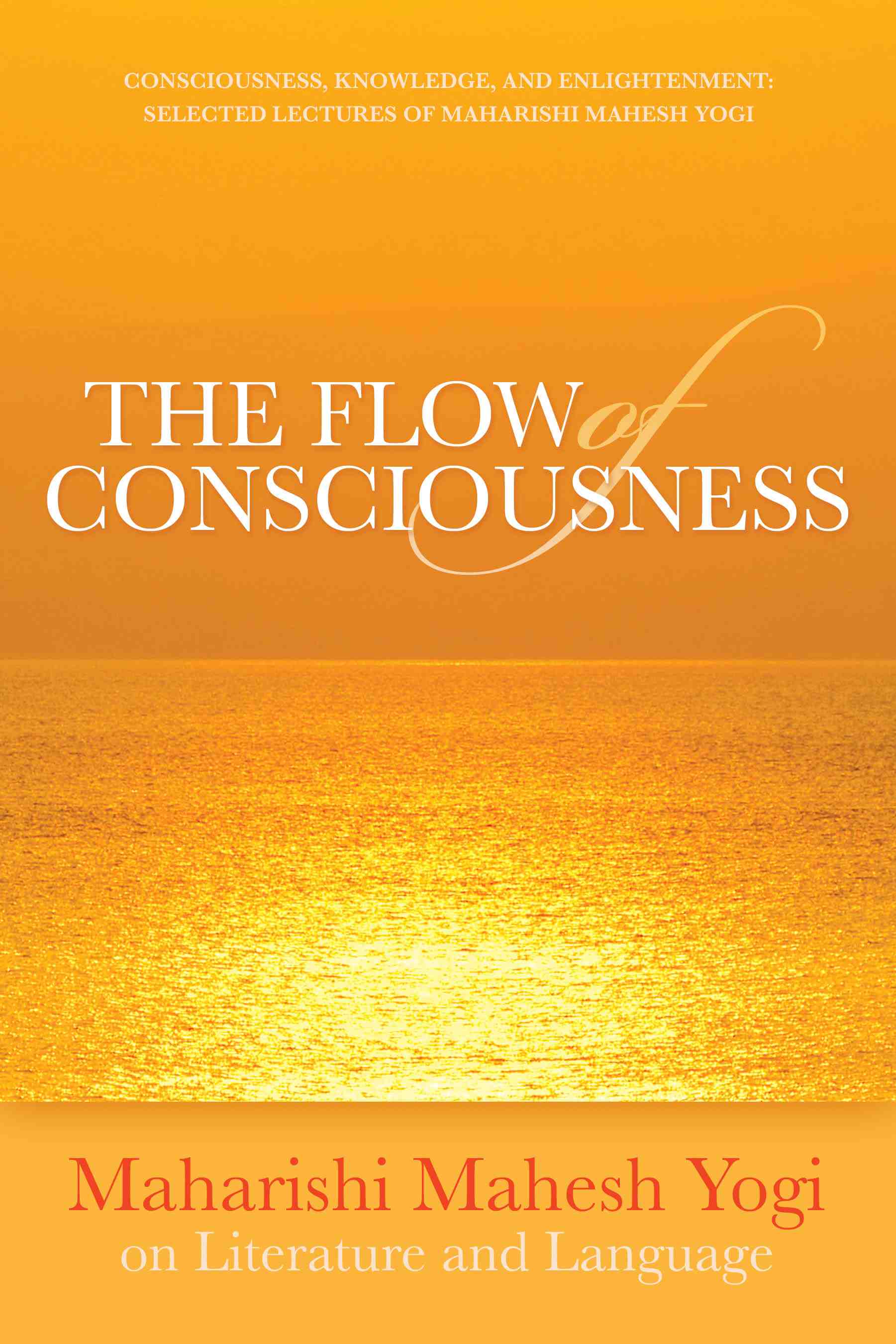
THE FLOW OF CONSCIOUSNESS: Maharishi Mahesh Yogi on Literature and Language, 1971 to 1976, edited by Rhoda F. Orme-Johnson, Ph.D. and Susan K. Anderson, Ph.D.

For the first time, a selection of talks by Maharishi Mahesh Yogi, the founder of Maharishi University of Management, has been transcribed and published, with this volume on literature and language projected to be the first in a series publishing talks in many different disciplines. In response to MUM faculty talks on art, literature, government, education, and many other disciplines, Maharishi would give his profound insights into that discipline, a direction for research scholars, and a vision of how the study of consciousness would enrich and develop each area of academic inquiry and personal experience. A number of the talks were in response to presentations given at international symposia by leading scholars in their field, Nobel laureates, and such eminent professionals as R. Buckminster Fuller.

Over the years, Maharishi Mahesh Yogi recorded brilliant and inspiring lectures on the literary process, as well as critical theory and technique, emphasizing the relevance of the state of consciousness of both writer and reader. He explained how only from an expanded basis can the writer spontaneously experience and express refined emotions and ideas and only from such a basis can the reader hope to understand and enjoy such writings. Literature itself can be a means to evolve one’s consciousness through sounds, rhythms, and meanings, swinging the reader’s attention from concrete to abstract, purifying consciousness and producing bliss. A fully developed consciousness can express the ocean in a drop, and from that drop flows a river of meaning, power, and enjoyment.

Immersing oneself in the transcripts of Maharishi’s lectures allows readers to feel his presence, to hear his voice, his rhythms of speech, his humor, and to appreciate his skill as a teacher. His exposition of the power of poetry, particularly the poetry of the Veda, gives the reader a taste of his intellect and his profound understanding of language and literature. It is a journey through a great mind and an exploration of a topic familiar and beloved by all.

This volume is a valuable resource to teachers, students, and all readers of literature, to all those interested in higher human development and the literary process.

The 350-page book includes 14 talks given in the years 1971–76 and is available at Maharishi International  University Press.

The Review wrote an informative article, the first of six, in issue Vol. 26, #4, November 3, 2010, announcing the publication: First-Ever Book of Maharishi’s Lectures Explores Literature and Language.

MIU Press later offered The Flow of Consciousness with The Unmanifest Canvas as a discounted Art Book Combo.

Dean of Faculty Cathy Gorini spoke with Dr. Rhoda Orme-Johnson, the first interview in a new series on KHOE titled, “A Chat With The Dean.” This discussion focused on Dr. Orme-Johnson’s new book, “The Flow Of Consciousness,” transcripts of Maharishi Mahesh Yogi’s lectures. Drs. Gorini and Orme-Johnson settle into a warm discourse on the significance of Maharishi’s lectures, in particular, the field of literature. Recorded Oct 26, 2010. (mp3 47 mins, 16 MB)

(more…)

Ari Berman: On Becoming a Political Writer

October 11, 2010

Ari Berman: On Becoming a Political Writer

Going Off the Beaten Path for “Herding Donkeys”

by Cheryl Fusco Johnson
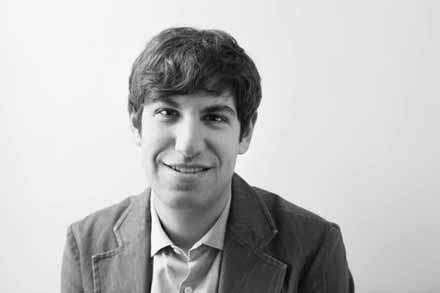
Ari Berman is a contributing writer for The Nation magazine and an Investigative Journalism Fellow at The Nation Institute.

Ari Berman, born in New York City, raised in Fairfield, Iowa, and a former high school journalism student of mine, recently penned Herding Donkeys: The Fight to Rebuild the Democratic Party and Reshape American Politics (Farrar, Straus and Giroux, 2010).  Released last month, his book has already garnered a starred review from Kirkus Reviews and laudatory comments from political writers Jonathan Alter, John Heilemann, Joe Conason, and Michael Tomasky. While visiting Fairfield recently to attend his ten-year high school reunion, Ari sat down with me for a chat.

When you attended the Medill School of Journalism at Northwestern University, did you plan to become a political reporter?

When I went to journalism school, I was interested in politics but didn’t necessarily know that I wanted to do that. In my junior year, I studied International Affairs abroad in Geneva at the United Nations. This was the time the debate over the war in Iraq was going on in America. I was following it from afar and getting the European perspective on it. I was absolutely furious. I thought the case for war in Iraq was completely fabricated by the Bush administration. That seemed so obvious in Europe. When I was in Geneva, I realized the entire world’s agenda was dictated by what went on in Washington. You had to follow Washington if you cared about the rest of the world.

How did your career as a book author begin?

At The Nation, I wrote this blog called The Daily Outrage, and Nick Ellison, this pretty big agent from New York, liked those columns. He wanted me to compile all the Daily Outrages into a book and expand on them.

Why didn’t you?

I felt they weren’t good enough to be a book. After I started working at The Nation, people started telling me, “You should write a book.” And I said, “I’m not writing a book until I can write a good book.” Nick and I bandied about ideas. He wanted me to do a book about the culture of Washington; that was a great idea. For two years, I was in D.C. at The Nation’s Washington Bureau. I covered Capitol Hill. I was really familiar with domestic policy. My office was across the street from the Senate.  I was in D.C. the day of Hurricane Katrina, and I left in September 2007 as the presidential campaign was heating up. But I didn’t want to immerse myself in Washington.

How did the idea for Herding Donkeys arise?

The Nation has a book imprint, and I’m friends with one of the editors. After the election, he said, “You should do a book about Howard Dean and the 50-state strategy. That was Obama’s strategy. Write a biography of the strategy.”

It was funny because literally at that moment I was doing an article saying that Obama’s strategy was Dean’s strategy. I had never really thought it could be a book, but why couldn’t it be? I felt passionate about it: it would be impactful. It wouldn’t be something people picked up one day and discarded the next. I wanted to write something durable. People can look at this in ten years and see what happened in this era.

I saw what Obama was doing as a natural outgrowth of what Dean was trying to do, which was change the [Democratic] party, get people involved, build a 50-state campaign. Get as many people involved in as many different ways in as many different places as possible.

I wanted to tell the evolution of that grassroots movement from Dean to Obama as a history. I knew it was relevant for today. I also knew this doesn’t end when Obama becomes president. I also wanted to look at what happens now. What happens next? That grassroots movement has been largely neglected by the Obama White House. The Republicans used Obama’s playbook better than he did.

TO READ THE REST OF THIS ARTICLE CLICK ON THIS URL: http://www.iowasource.com/books/2010_10_ari_berman.html

On Thursday, Oct. 21, 2010, at 7 p.m., Ari will read from Herding Donkeys at Prairie Lights Bookstore, 15 S. Dubuque St. in Iowa City.

For more information about the book and website, visit http://herdingdonkeys.com/.

Addendum: On Oct 7, 2010, Ari Berman was interviewed on MSNBC’s Morning Joe about his book, Herding Donkeys, Howard Dean and the Democratic Party. Ari was also a KRUU host on Politickin’ with Ari for a year and a half and as of this posting will be the featured guest on Speaking Freely with Dennis on Thursday, October 12th at 1 pm, rebroadcast  Thursday, October 14th at 8am. www.kruufm.com.

Ari also appeared on Dylan Ratigan’s MSNBC show for the first time this week to talk about Herding Donkeys on the topic of “Has Obama forgotten his campaign slogan?” It was a very interesting discussion and the producers nicely fit him in between the rescue of miners 22 and 23. Here’s the clip: http://herdingdonkeys.com/2010/10/14/dylan-ratigan/

You can buy Herding Donkeys: The Fight to Rebuild the Democratic Party and Reshape American Politics on Amazon and simultaneously benefit the Maharishi School, Ari’s alma mater, by ordering it from this website: http://maharishischooliowa.org/alumni/alumni-news/ari-berman.

UPDATE: August 2015

• Close to five years later Ari Berman published his second book, Give Us the Ballot: The Modern Struggle for Voting Rights in America, which came out on the 50th anniversary of the Voting Rights Act. Publishers Weekly called it one of the most anticipated books of the fall, proclaiming: “Berman does a superb job of making the history of the right to vote in America not only easily understandable, but riveting.”

• On August 5 the New York Times featured an Op-Ed piece by Ari Berman: Why the Voting Rights Act Is Once Again Under Threat.

• On August 5 Democracy Now interviewed Ari Berman about voting rights: Give Us the Ballot: The Struggle Continues 50 Years After Signing of the 1965 Voting Rights Act. And Part Two: Ari Berman: Virtually Every GOP Candidate Has Been on Wrong Side of Voting Rights Issues.

• On August 6 Ari Berman was invited to Washington, DC to participate on a distinguished panel commemorating the 50th Anniversary of the Voting Rights Act. The presentations took place under the auspices of the White House in the presence of President Barack Obama. See photos below.

• On August 10th Ari Berman was interviewed on NPR with Fresh Air’s Terry Gross: Block The Vote: A Journalist Discusses Voting Rights And Restrictions.

• On August 12 The Fairfield Ledger ran a cover story: Fairfield native on White House panel. At the end of the article Ari says some nice things about the supportive community of Fairfield. “Even if you leave, you’re always connected to it,” Berman said. “A lot of my friends who were at the book launch were from Fairfield — Fairfield goes everywhere.”

• On August 13 The Fairfield Weekly Reader published an article: Give Us The Ballot: New book by Fairfield native Ari Berman receives early praise.

• On August 24 Sarah Begley mentioned Ari Berman’s book in her Time Magazine column, The Nutshell: Give Us the Ballot.

If you would like to keep abreast of Ari’s activities, there is an events calendar on his website, in addition to videos of his recent interviews and other updates. http://ari-berman.com/

White House PanelReblogged with this link: http://wp.me/pD0BA-9KC
Press-Citizen Editorial on Borderlines: Drawing Border Lives

August 2, 2010

Our View – Humanity behind immigration debate

Press-Citizen Editorial Board • July 21, 2010

One of the oft-cited limitations of contemporary American poetry — including the poetry produced by graduates of the Iowa Writers’ Workshop — is its inaccessibility. Readers often have to be as well-trained and academically astute as the poets themselves to appreciate all the nuances, sly allusions and small linguistic experiments. And the poets seldom offer a helpful hand to readers struggling to find meaning or purpose in the words.

That’s definitely not the case with the “Borderlines: Drawing Border Lives/Fronteras: Dibujando las vidas fronterizas” (Wings Press), a recent book project by poet Steven P. Schneider and artist Reefka Schneider. Not only have the husband and wife team paired every poem with the drawing that initially inspired it, but the book stage of the Schneiders’ broader project evolved from exhibits that the couple took on the road to schools and other educational settings throughout south Texas.

Steven Schneider, a 1977 graduate of the Iowa Writers’ Workshop who now teaches at the University of Texas-Pan American, said the couple has long had an educational purpose in mind for the project. They describe “Borderlines/Fronteras” as a text — appropriate for use in high school and college classes as well as for everyday reading — that demonstrates how to cross the borders between:

• Art and poetry.

• Academically aware poetry and a broader, popular audience.

• English and Spanish.

• The physical border between the U.S. and Mexico and the different ways that imaginary line echoes symbolically throughout both nations.

The “Borderlines/Fronteras” project began in 2001, when Steven Schneider came to teach in Texas, and Reefka Schneider began to draw portraits of people on both sides of the border. Once Reefka had amassed more than 100 drawings, Steven chose the 25 most engaging and began a four-year process of writing poems in response to the visual images. He then worked with bilingual poet José Antonio Rodriguez to translate the poetry so that reading through “Borderlines/Fronteras” would be a dual-language, integrated-arts experience.

With readings scheduled in New York, Rhode Island, Florida, New Mexico and Iowa City (7 p.m. today at Prairie Lights), the Schneiders now are hoping to attract a broader, national audience for the book stage of their project. (Interested readers can follow the couple’s progress at http://poetry-art.com.)

“The border has moved north,” Steven Schneider said. “There is still the Rio Grande, of course. But (through farm labor and working in meatpacking plants) the influx of immigrants from Mexico and Latin America has come as far north as states like Iowa, Nebraska and Minnesota.”

At the very least, “Borderlines/Fronteras” is a helpful primer for anyone looking to improve their Spanish or English reading skills. At its best, however, “Borderlines/Fronteras” is a model for the type of cross cultural understanding and communication that needs to take place to ensure a healthy and comprehensive national debate on immigration issues.

Sandra Cisneros, a workshop graduate and MacArthur fellow who has spent decades urging writers to be more culturally relevant, describes the Schneiders’ poetic/artistic portraits as, “Ordinary folks rendered with love, compassion and intimacy at a time in which love, compassion, and intimacy are in short supply on borders, especially when it comes to the Tex/Mex border.”

Thus “Borderlines/Fronteras” also is welcome reminder that legacy of the Iowa Writers’ Workshop is not just the linguistically and formally challenging work of poets such as Pulitzer Prize-winner Jorie Graham. The workshop’s legacy also includes the poets and writers such as Cisneros and former U.S. Poet Laureate Rita Dove who continually call on literary artists to be more actively, socially and politically engaged in the world around them.

“Our View” represents the consensus opinion of the Press-Citizen Editorial Board — which includes General Manager Daniel W. Brown, Executive Editor Jim Lewers, Opinion Editor Jeff Charis-Carlson, Specialty Publications Editor Tricia DeWall and community members Shams Ghoneim, Angie Blanchard-Manning and Amy Sundermann.

Radical Peace: People Refusing War, by William T. Hathaway

June 10, 2010

Radical Peace: People Refusing War

World peace depends on our collective consciousness. – William T. Hathaway

William T. Hathaway’s latest literary work, is a return to journalism. Radical Peace: People Refusing War, presents the first-person experiences of war resisters, deserters, and peace activists in the USA, Europe, Iraq, and Afghanistan. Just released by Trine Day, it’s a journey along diverse paths of nonviolence, the true stories of people working for peace in unconventional ways. The first, Chapter 1: The Real War Heroes, and last, Chapter 15: Conscious Peace, are both posted on OpEdNews.com.

William T. Hathaway is a political journalist and a former Special Forces soldier turned peace activist whose articles have appeared in more than 40 publications, including Humanist, the Los Angeles Times, Midstream Magazine, and Synthesis/Regeneration. He won a Fullbright grant to teach at universities in Germany, where he continues to reside. He is an adjunct professor of American studies at the University of Oldenburg. William and his wife also run a small TM center there.

Hathaway is the author of A World of Hurt (Rinehart Foundation Award), CD-Ring, and Summer Snow. He is currently working on WELLSPRINGS: A Fable of Consciousness, which focuses on applying Vedic knowledge to ecology. A selection of his writing is available at www.peacewriter.org.

William also spent 7 years, from 1987-1993, as an assistant professor in the Master’s in Professional Writing at MIU, now MUM. The last chapter of Radical Peace, Conscious Peace, discusses his TM practice, and the vision of possibilities it holds for world peace. You can click on the Chapter 15 link above or read it here:

I was sitting in full lotus, body wrapped in a blanket, mind rapt in deep stillness, breathing lightly, wisps of air curling into the infinite space behind my closed eyes. My mantra had gone beyond sound to become a pulse of light in an emptiness that contained everything.

An electric shock flashed down my spine and through my body. My head snapped back, limbs jerked, a cry burst from my throat. Every muscle in my body contracted — neck rigid, jaws clenched, forehead tight. Bolts of pain shot through me in all directions, then drew together in my chest. Heart attack! I thought. I managed to lie down, then noticed I wasn’t breathing — maybe I was already dead. I groaned and gulped a huge breath, which stirred a whirl of thoughts and images.

Vietnam again: Rotor wind from a hovering helicopter flails the water of a rice paddy while farmers run frantically for cover. Points of fire spark out from a bamboo grove to become dopplered whines past my ears. A plane dives on the grove to release a bomb which tumbles end over end and bursts into an orange globe of napalm. A man in my arms shakes in spasms as his chest gushes blood.

I held my head and tried to force the images out, but the montage of scenes flowed on, needing release. I could only lie there under a torrent of grief, regret, terror, and guilt. My chest felt like it was caving in under the pressure. I clung to my mantra like a lifeline to sanity. I was breathing in short, shallow gasps, but gradually my breath slowed and deepened, the feelings became less gripping, and I reoriented back into the here and now: my small room in Spain on a Transcendental Meditation teacher training course.

I lay on my narrow bed stunned by this flashback from four years ago when I’d been a Green Beret in Vietnam. I had thought I’d left all that behind, but here it was again.

I sat up and was able to do some yoga exercises but couldn’t meditate. Instead I took a walk on the beach. For the rest of that day and the next I was confused and irritable and could hardly meditate or sleep. But the following day I felt lightened and relieved, purged of a load of trauma, and my meditations were clear. My anxiety about the war was much less; the violence was in the past, not raging right now in my head.

Gradually I became aware of a delicate joy permeating not just me but also my surroundings. I knew somehow it had always been there, inhering deep in everything, but my stress had been blocking my perception of it. I felt closer to the other people on the course, connected by a shared consciousness. Then I started feeling closer to everything around me; birds and grass, even rocks and water were basically the same as me. Our surface separations were an illusion; essentially we were all one consciousness expressing itself in different forms. Rather than being just an isolated individual, I knew I was united with the universe, joined in a field of felicity. This perception faded after a few days, but it gave me a glimpse of what enlightenment must be like.

The whole experience was a dramatic example of what Maharishi Mahesh Yogi called “unstressing,” the nervous system’s purging itself of blockages caused by our past actions. Since my past actions had been extreme, the healing process was also extreme.

I had begun meditating in 1968, several months after returning from the war. I’d come back laden with fear and anger, but I had denied those emotions, burying them under an “I’m all right, Jack,” attitude. I was tough, I could take it, I was a survivor. Within certain parameters I could function well, but when my superficial control broke down, I would fall into self-destructive depressions. I finally had to admit I was carrying a huge burden of stress, and I knew I had to get rid of that before I could live at peace with myself or anyone else.

(more…)

My Son’s Sensei: A Tanka about my son’s Aikido teacher

April 21, 2010

My Son’s Sensei
A tanka about my son’s Aikido teacher

Rooted to the ground
She repels her attackers
Flowing, not moving.

In storms, trees bear great burdens
Bending, not breaking.

—Ken Chawkin

(more…)

Sally describes her journey “To Jyotir Math” with Maharishi and scientists who met to tell the Shankaracharya about the dawning of a new age

April 17, 2010

To Jyotir Math

Late May, dusty dry hills, scrub brush, months before monsoons would come bringing green relief.

The ashram, quiet, in the fading sunlight, was impressive in these Himalayan foothills; ancient, two-storied cream stone, with saffron orange trim, the Shankarcharya’s colors, and flag flying, nestled against a hill beside Shankara’s cave and banyan tree, the same cave and tree where Shankara sat 3,000 years ago writing his commentaries with the disciples—Trotaka, Hasta-Malaka, Vartika-Kara, Padma-Pada. 3,000 years ago.

The air, though tired and dusty with summer heat, vibrated with ancient wisdom, lively still in that remote valley, hidden from time.

The great gong sounded from the ashram at sunset, calling the villagers to meet, poor peasants—the men road workers, wearing their army uniforms like badges of honor; the women, their good saris ragged to our eyes, glittered with tinseled trim and brilliant blended hand woven colors—scarlet, blue indigo and jaded greens.

They flowed like water into the meeting room—a small room, filled with greatness. Shankarcharya walked slowly into the room, an immense presence, pundits extolling his holiness with Vedic mantras. His gentle gaze, meeting our eyes, greeted the pale Americans who had come with Maharishi. He sat on Guru Dev’s throne, like a statue of stillness, waiting for us to settle, then beckoned to us gently to move forward so more of the villagers could enter the room.

The women to one side, sat apart, protected by their gentle warm togetherness, shifting, hushed whispers, pulling their saris as Maharishi and the great western scientists spoke of the dawning of a new age.

I had been there before, perhaps in a dream, of walking these hills, knowing with liquid clarity what would be around the curve, in the next cave, in the small Devi temple. I knew that holiness.

It was late, and we left quietly. Ahead of us, the village women walked slowly, heads together, chatting and laughing, apart from their men, gathering their tired children in their strong brown arms.

—Sally “Sali” Peden

——————————————

(Also see: Pilgrimage, and Timeless Journey, by Sally Peden)

Around 1995-96 Sali took some classes in the MA in Professional Writing program at Maharishi University of Management.  The poetry writing class was taught by poet Rustin Larson. It was there that she recalled and wrote about her journey to Jyotir Math in India with Maharishi Mahesh Yogi, which had taken place some 20 years earlier, in May 1975, the year Maharishi had inaugurated the Dawn of the Age of Enlightenment. For an explanation and further developments …. (more…)

Award-winning journalist pursues master’s degree at Maharishi University in Fairfield, Iowa

February 9, 2010

Daily Gate City captures awards

By the Daily Gate City
Published: Tuesday, February 9, 2010 11:48 AM CST

The Daily Gate City received six awards in this year’s Iowa Newspaper Association’s Better Newspaper Contests.

Nearly 4,000 entries in dozens of categories were judged by class, based on circulation. The Daily Gate City competed in Daily Class 1, which includes dailies with circulations of 9,999 and less.

The newspaper and staff writer Cindy Iutzi placed first in the best spot news story category with a story about a group of teenagers who floated down the Des Moines River and were stranded on an island overnight.

The Daily Gate City and Iutzi and staff writer Diane Vance finished second in the best news story category with a story about sexting, a practice in which sexually-suggestive and explicit photos are sent over cell phones.

The newspaper finished third with its coverage of education during the contest period. Most of the articles were written by Vance, who has left the paper and is pursuing a master’s degree at Maharishi University in Fairfield now.

The Daily Gate City and Iutzi received a third-place award in the best news photo category with a photo of the Parkersburg tornado taken at a storm spotters’ seminar in Keokuk.

Amanda Grotts of the DGC’s composing department placed third in the best ad designer category with a group of different ads.

In addition, the newspaper was judged third in the best newspaper Web site category.

The awards were presented Friday during the INA 2010 Convention and Trade Show in Des Moines.

The Des Moines Register was named the INA’s Newspaper of the Year for 2010. The Muscatine Journal placed first in general excellence among the Class 1 dailies.

Copyright © 2010 – Daily Gate City

Diane Vance graduated from Maharishi University of Management with a graduate degree in education, left to teach at a school, then returned to Fairfield to write, very well, for the Fairfield Ledger. Here is a personal article about her journey to Finding peace in Fairfield.